Tag Archives: CAA

Facts About the Arctic in June 2023

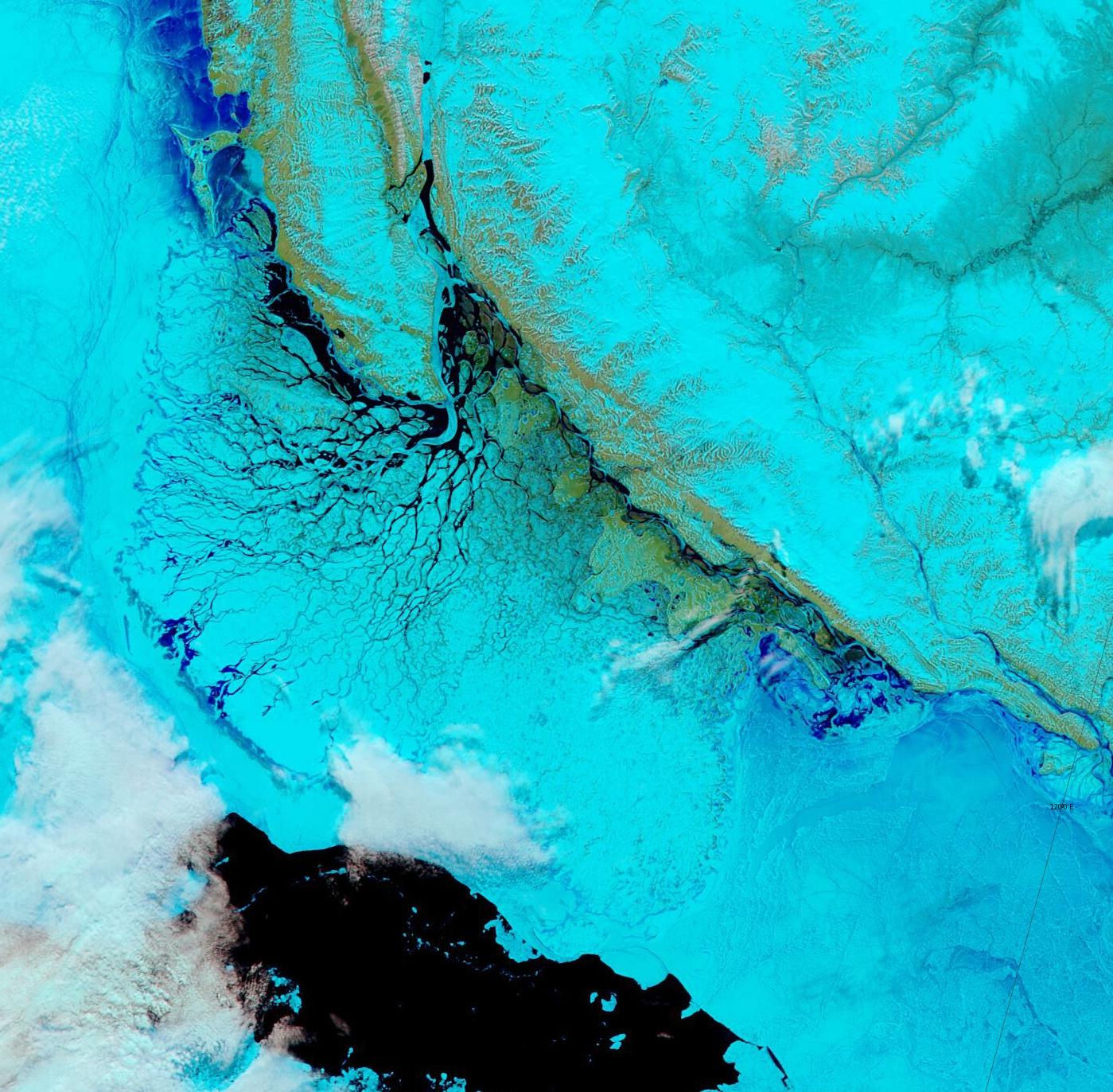
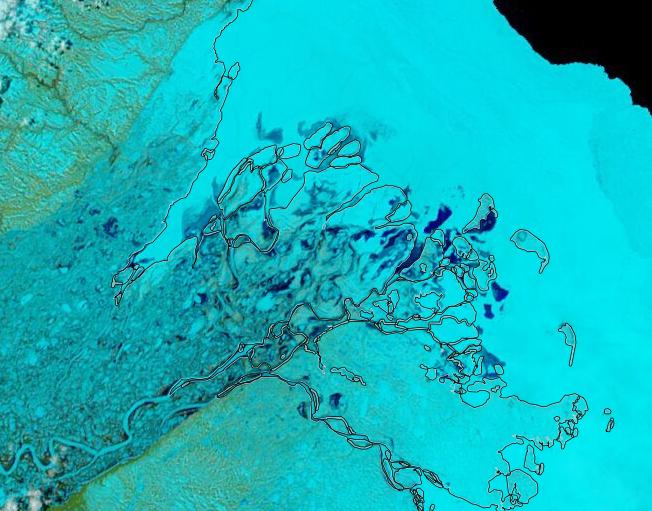
By way of a change, which is allegedly as good as a rest, let’s start the new month with a very pretty and almost cloud free “pseudo-colour” image of the Lena Delta and adjacent areas of the Laptev Sea:

“False colour” image of the Lena Delta on June 1st from the MODIS instrument on the Aqua satellite

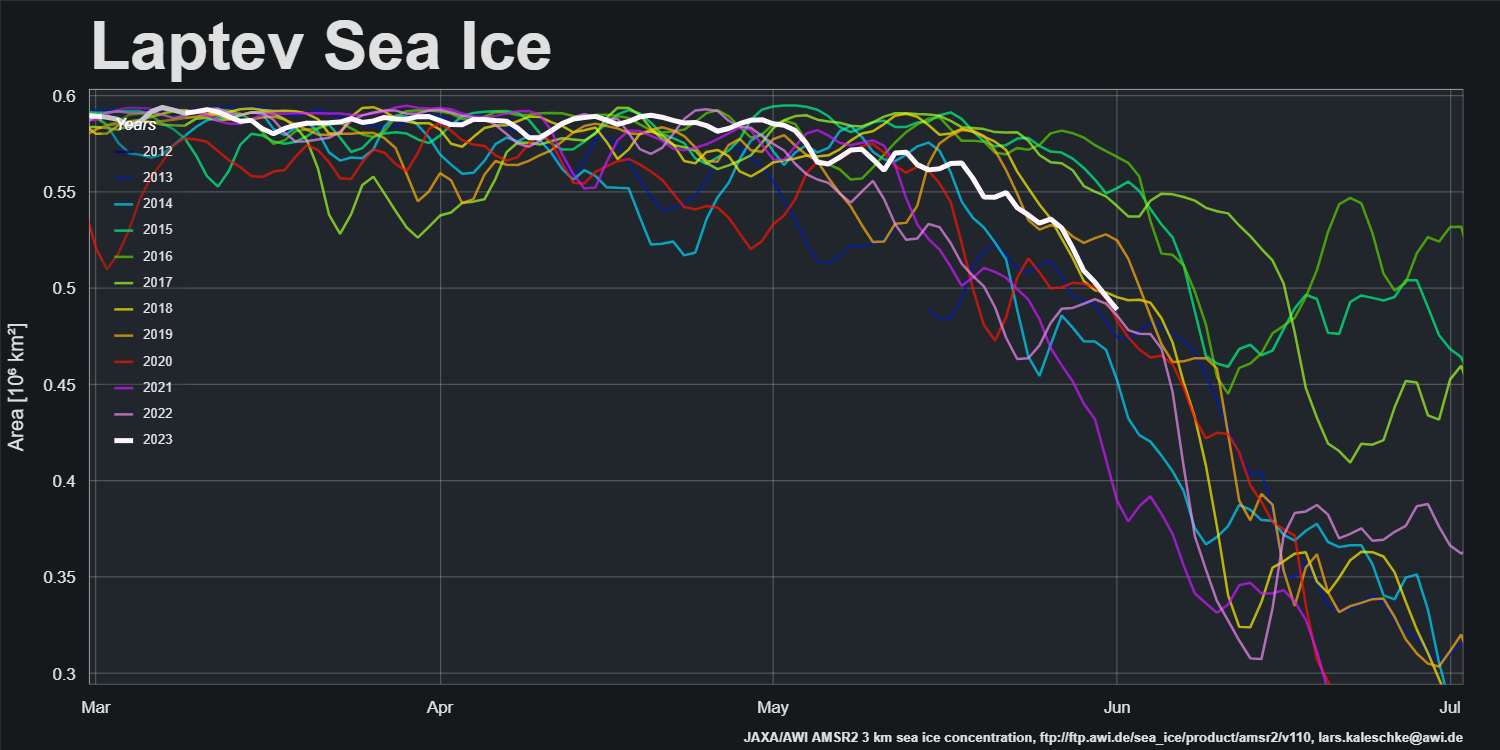
Laptev sea ice area decline has been in high gear recently:

Continue reading Facts About the Arctic in June 2023

Facts About the Arctic in May 2023

At the beginning of May AWI’s high resolution AMSR2 extent metric is at the top of the historical range:

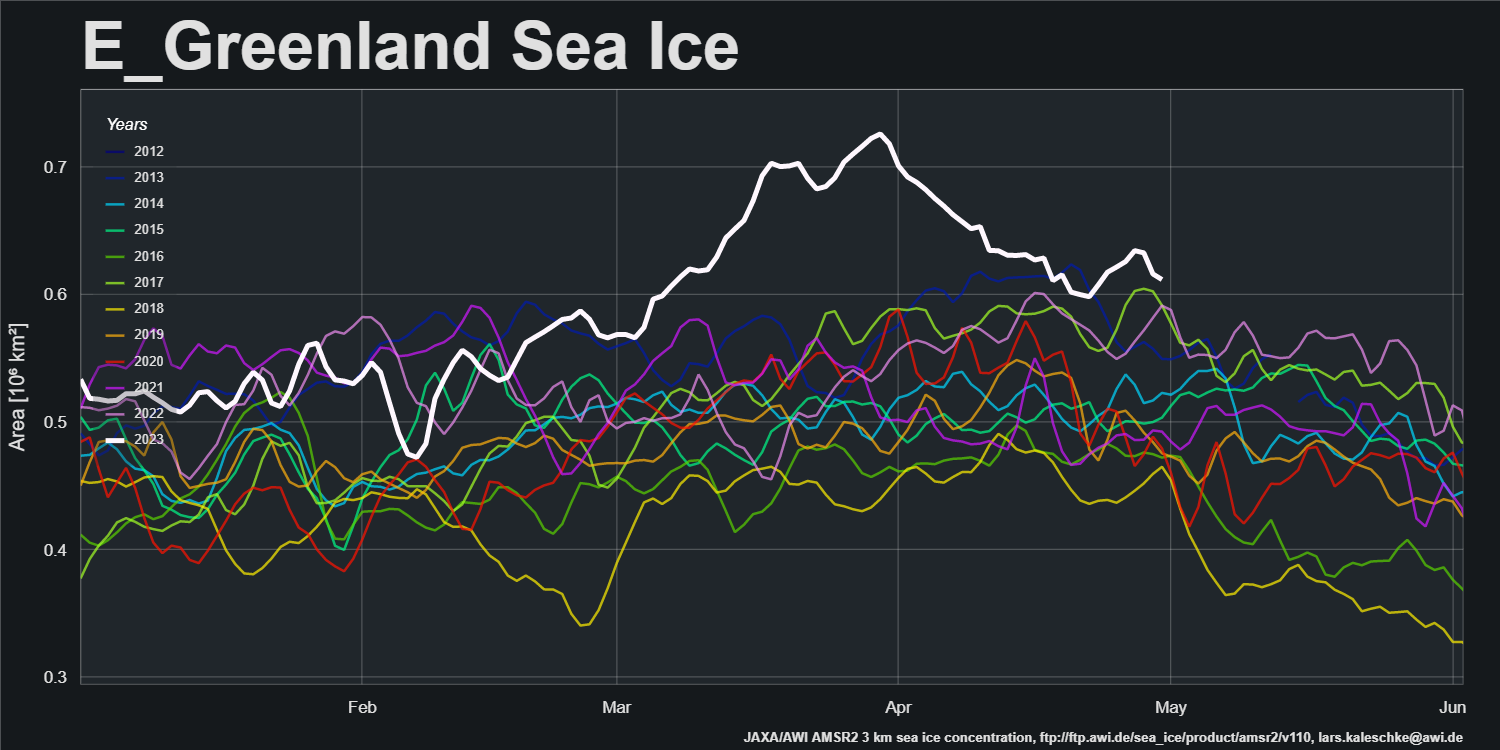
After a period of melt in the East Greenland Sea, export of sea ice from the Central Arctic via the Fram Strait has increased recently:

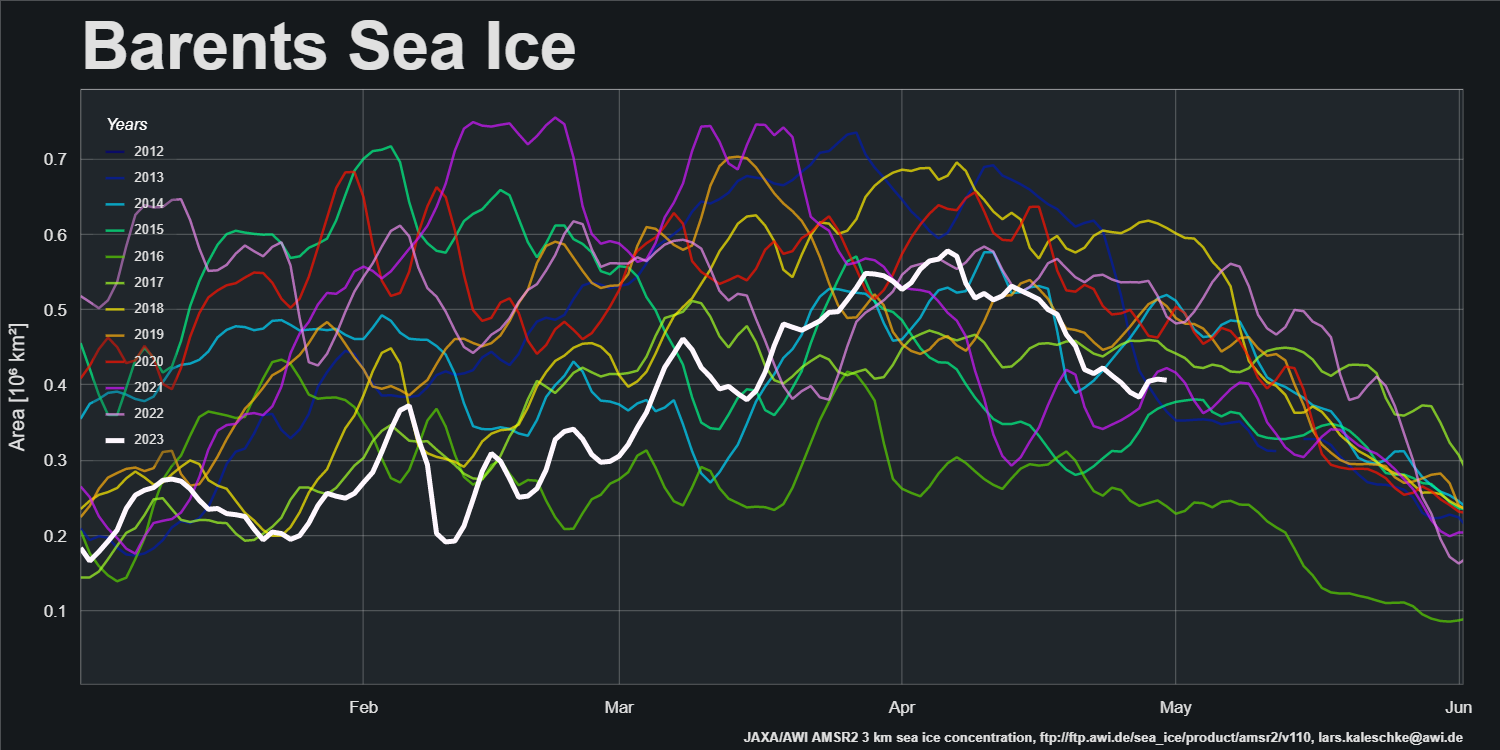
Sea ice area in the Barents Sea peaked in the first week of April and has declined steadily since then:

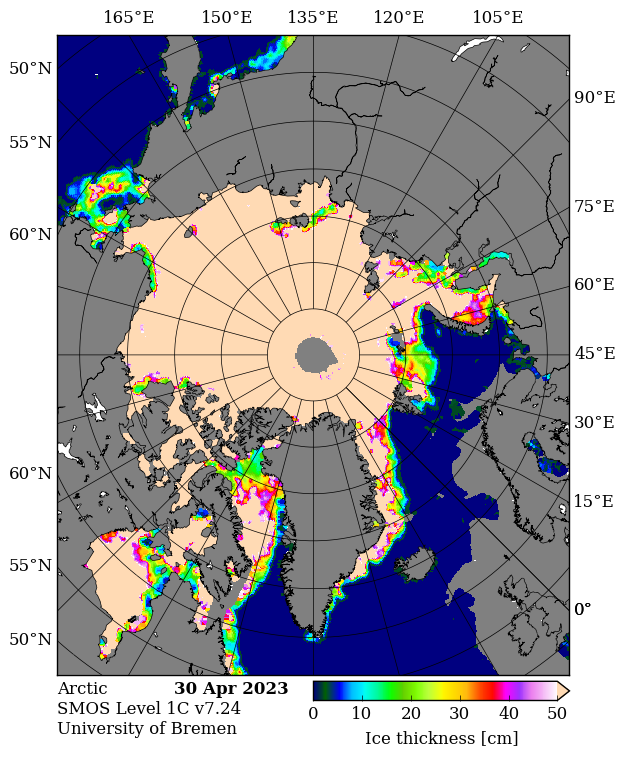
SMOS data is flowing again, and the gaps have been filled. Here’s the final pre melt ponding map of the spring:

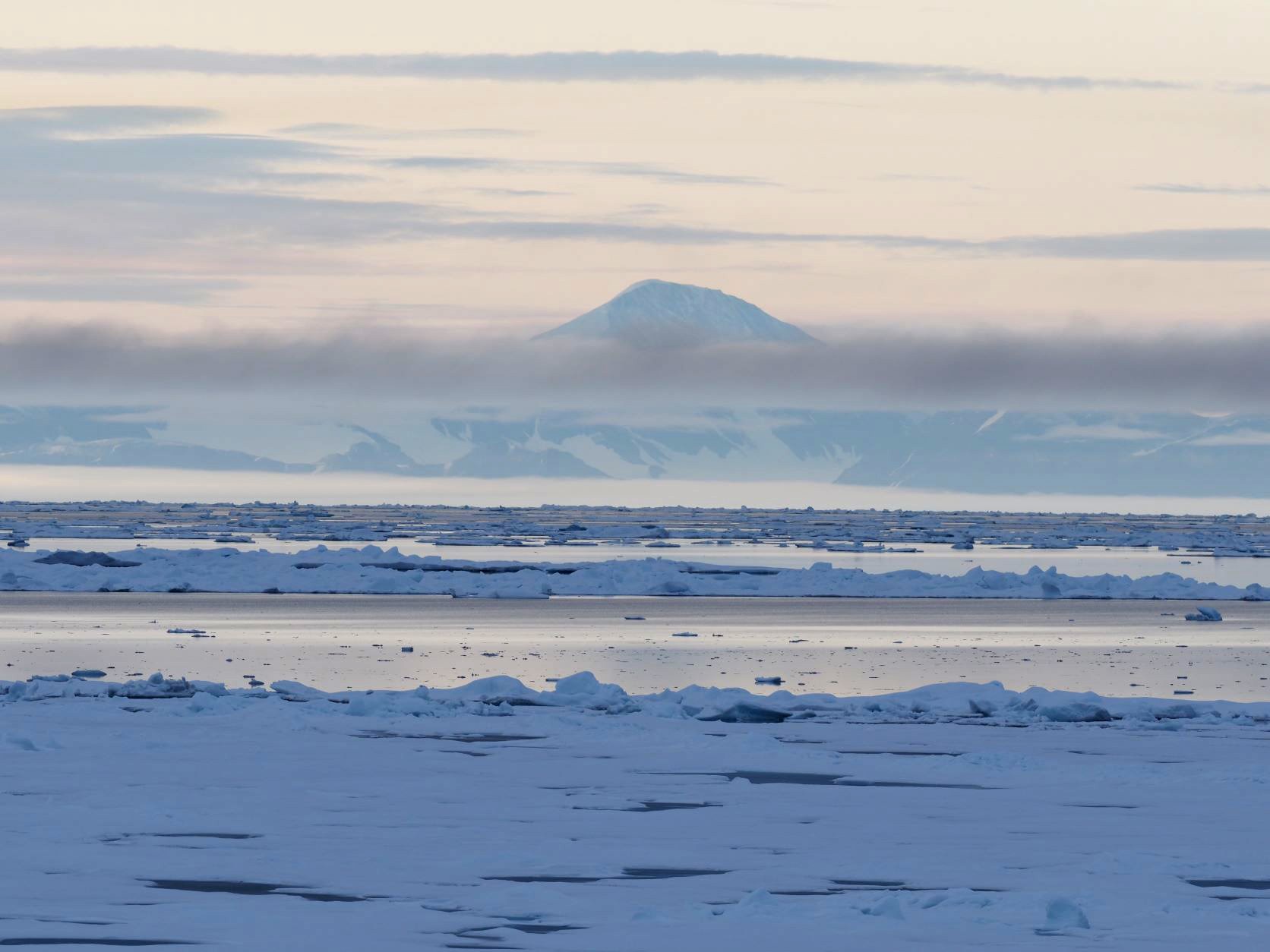
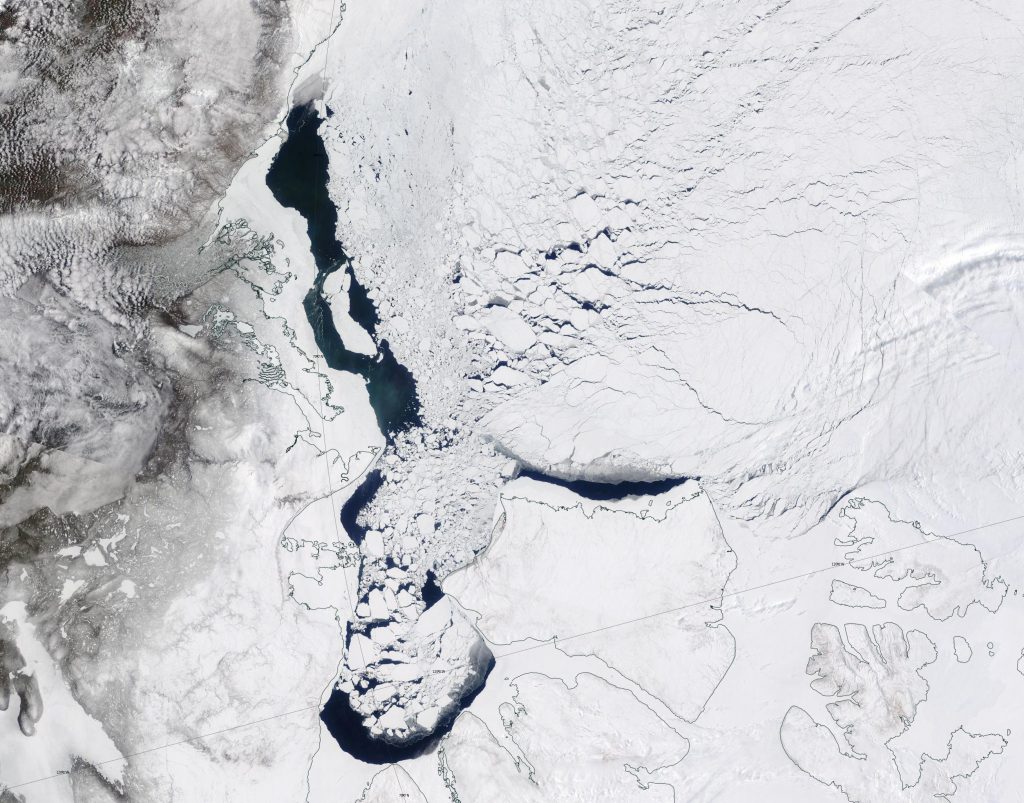
It reveals large areas of thin ice that have recently developed in the Kara Sea. Here’s a pseudo colour glimpse of the region through the clouds:

Continue reading Facts About the Arctic in May 2023

Facts About the Arctic in April 2023

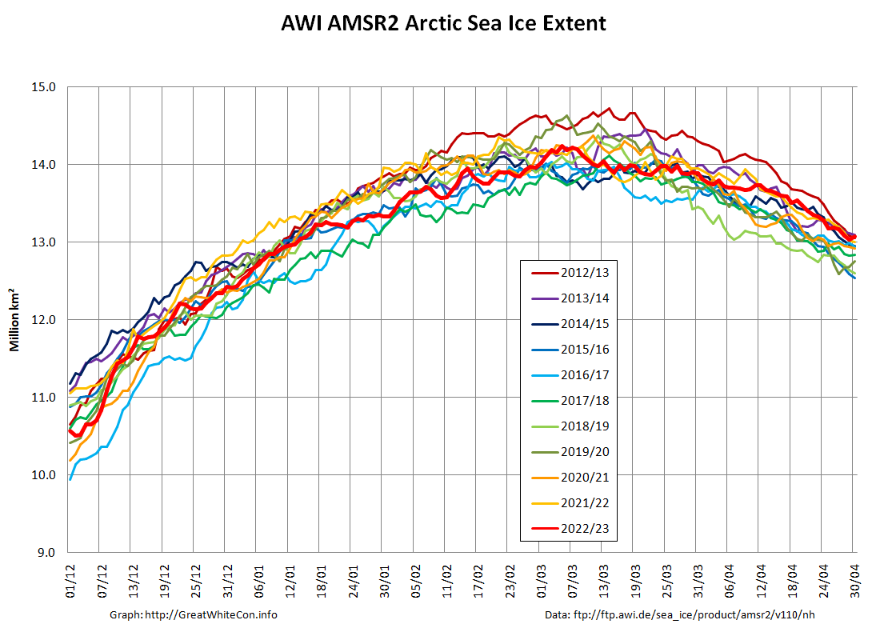
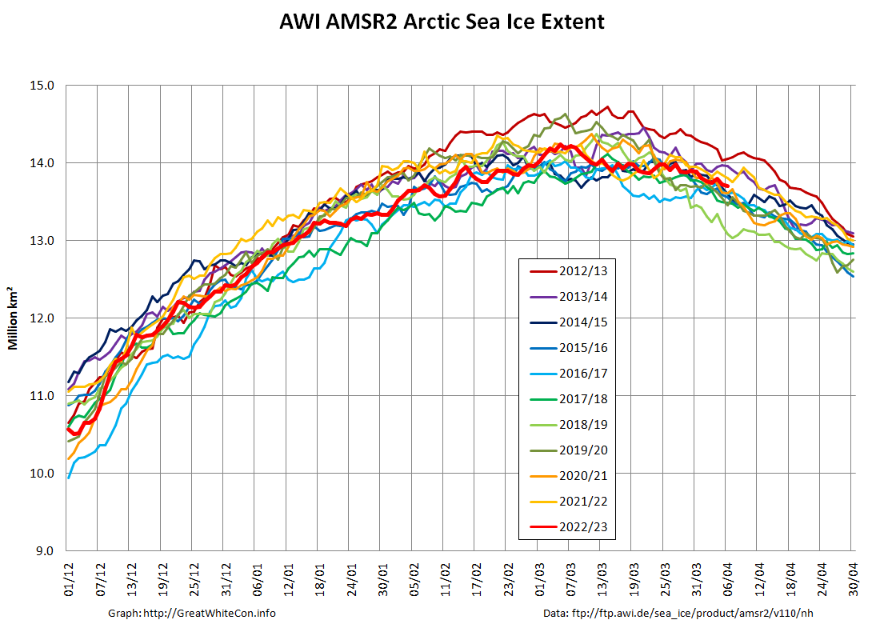
Arctic sea ice extent in early April is singularly unexceptional. Here’s the AWI AMSR2 version:

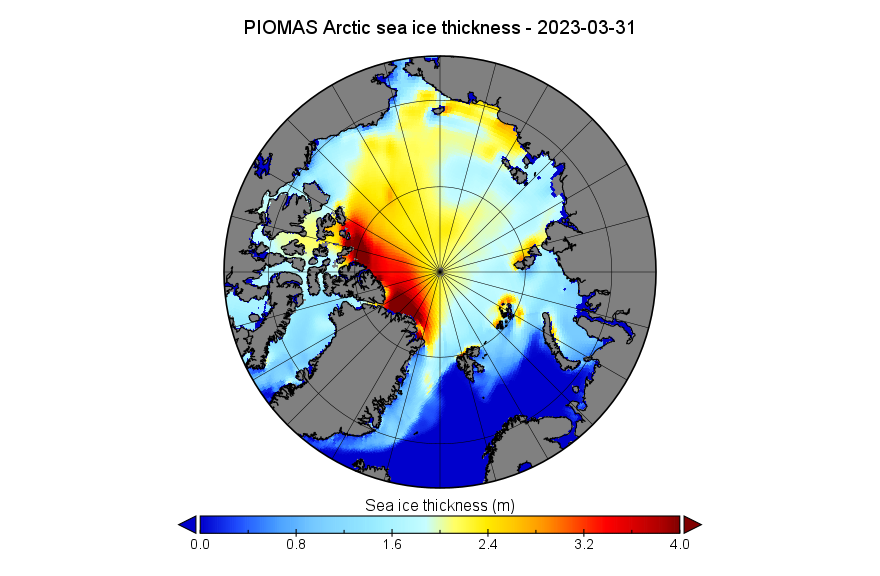
Things start to become more interesting when looking at the third dimension. Here’s the PIOMAS gridded thickness map for March 31st:

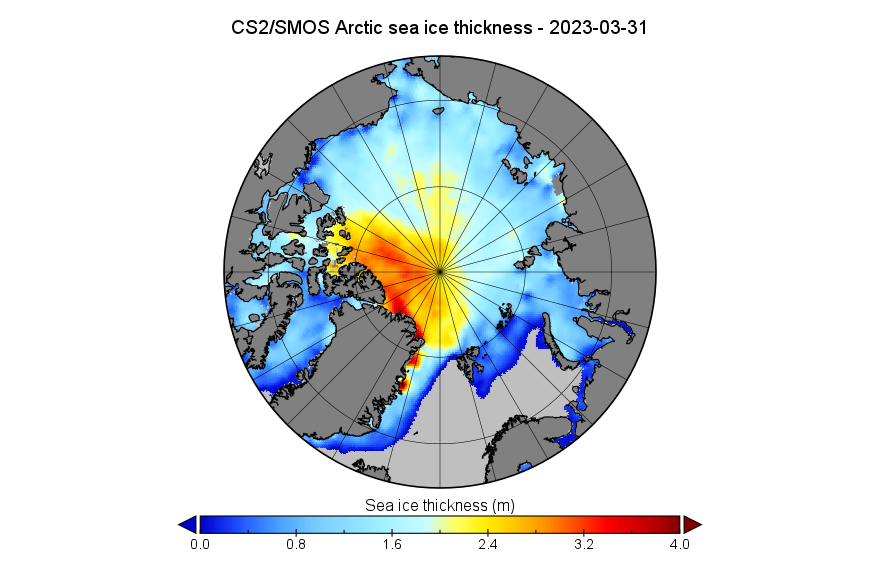
and the CryoSat-2/SMOS map for the same date:

Note the differing distribution of thick ice north of Greenland and the Canadian Arctic Archipelago between the two maps. Note also the area of thinner ice along the coast of the Beaufort Sea visible on the CS2/SMOS map.

By way of explanation for that phenomenon see the March sea level pressure map from the latest edition of the NSIDC’s Arctic Sea Ice News:

Continue reading Facts About the Arctic in April 2023

Facts About the Arctic in September 2022

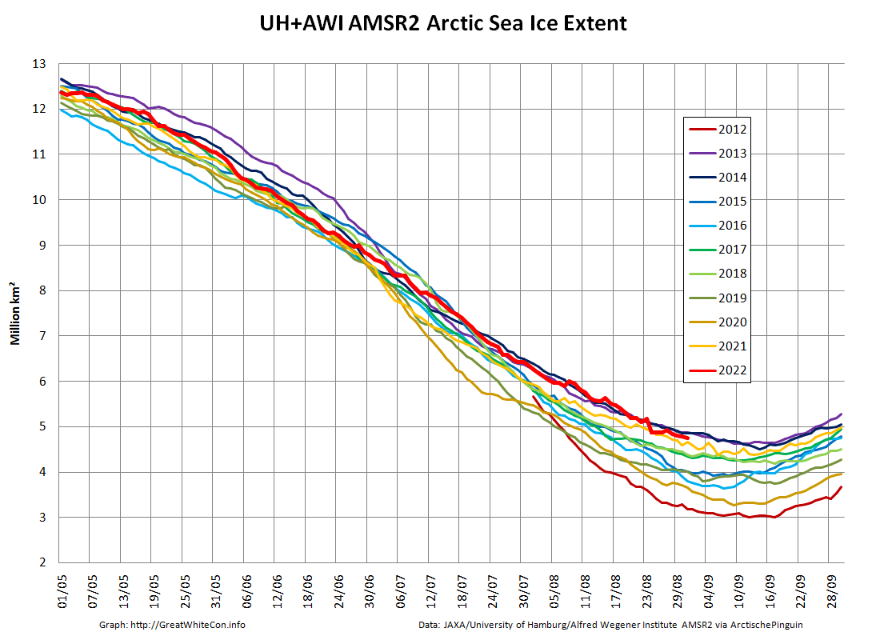
As in previous years there is already a thread devoted to this year’s minimum extent. By way of a summary here are the end of August numbers for our favourite “high resolution” AMSR2 area and extent metrics:

Extent is currently near the top of the range of the last 10 years.

We have now reached the stage of the “melting season” when “refreezing” has started in the Central Arctic but melting at the periphery is outpacing it. However the Canadian Ice Service stage of development charts now show the arrival of new ice in the high latitudes of the Canadian Arctic Archipelago:

Continue reading Facts About the Arctic in September 2022

Facts About the Arctic in September 2021

A detailed dissection of the 2021 minimum of various Arctic sea ice extent metrics can be found on a dedicated thread. All other Arctic news in September will be found below.

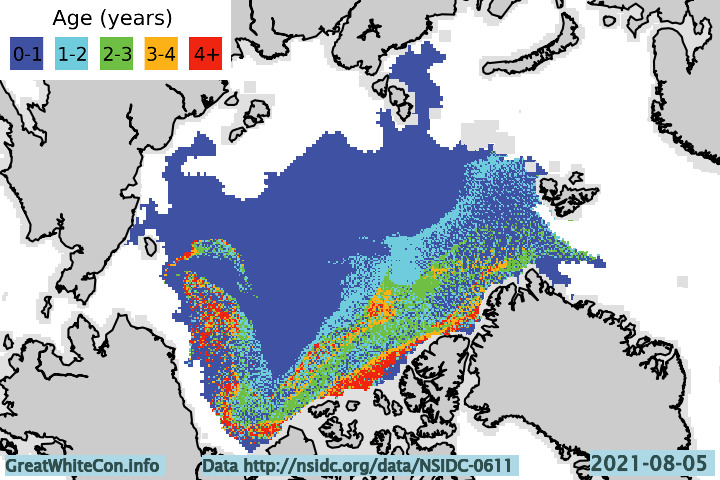
Let’s start with a map of sea ice age at the beginning of August:

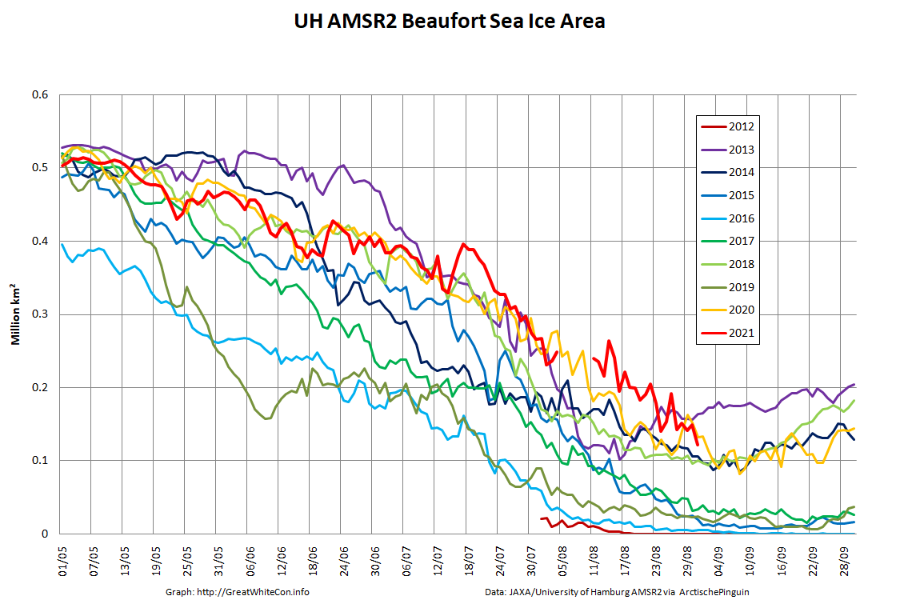
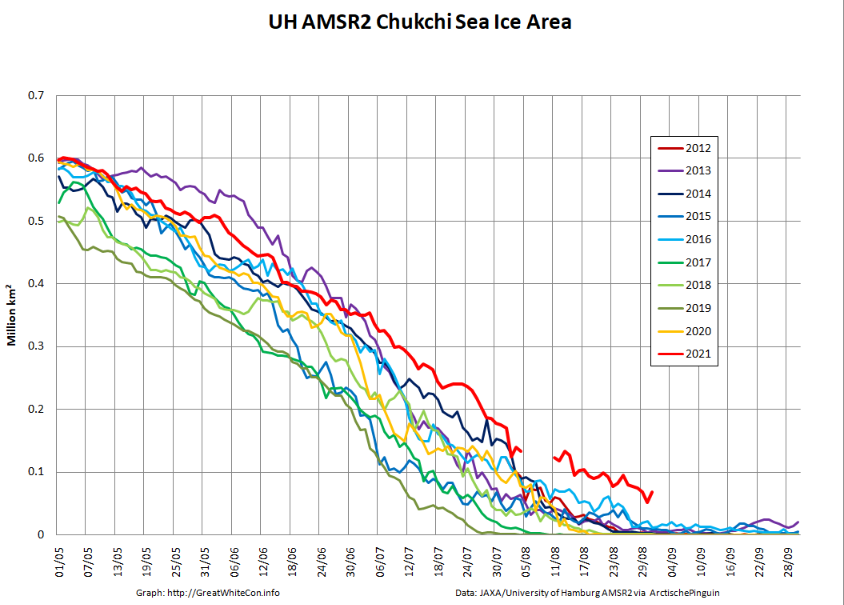
Firstly notice the absence of 3+ year old ice off the coast of north east Greenland. Also visible is a band of 4+ year old ice across the Pacific side of the Arctic Basin, which has slowed melting in the region and explains the following regional sea ice area graphs:


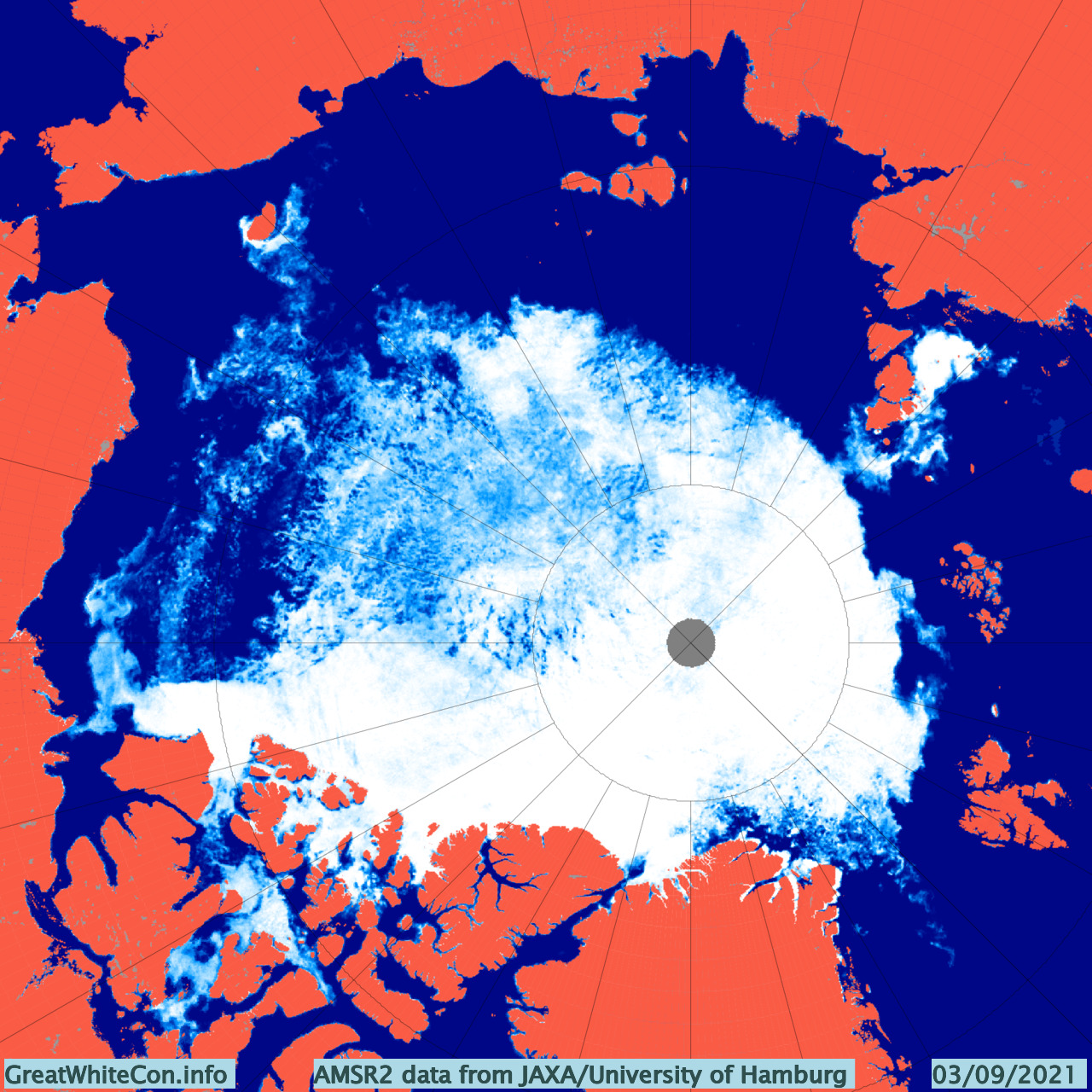
Next here’s the current AMSR2 concentration map:

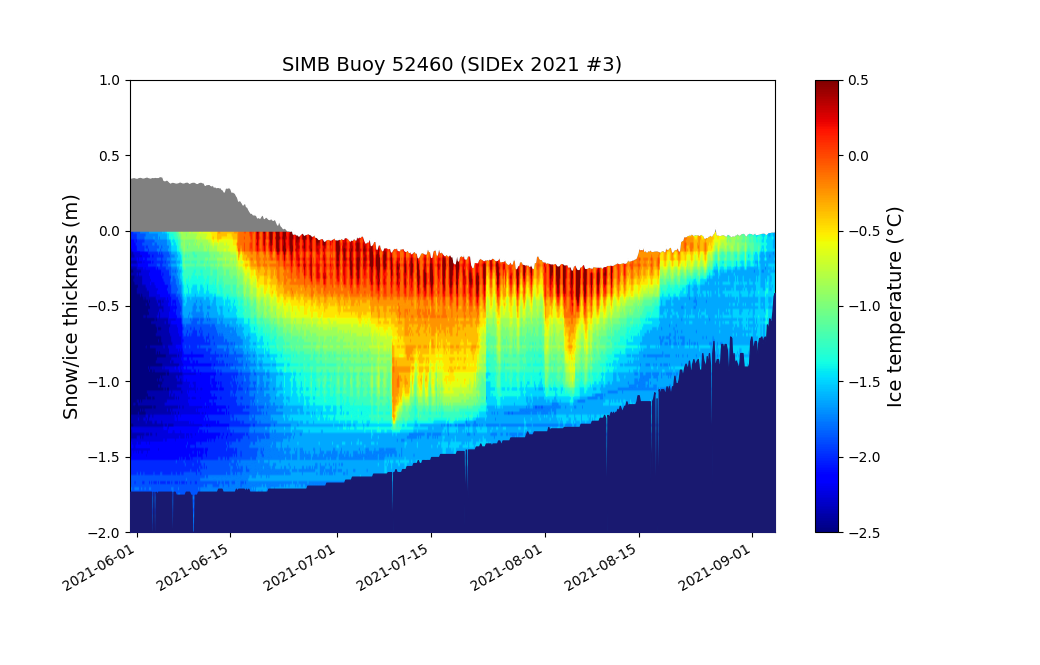
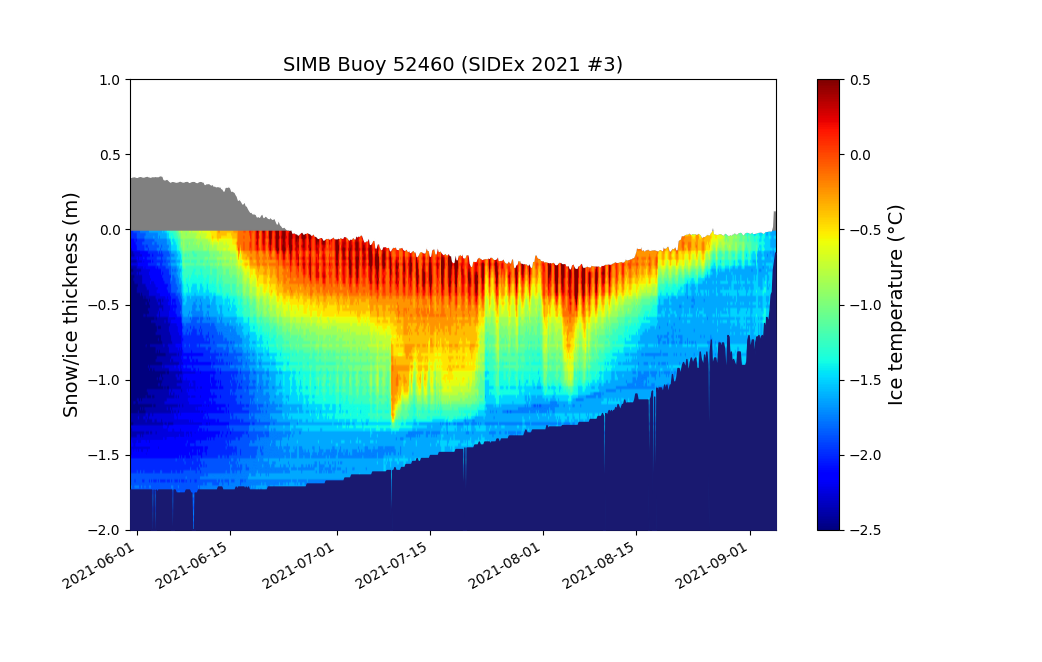
There is currently a large area of open water in the Wandel Sea to the north of Greenland. There is also an arm of old ice across the Beaufort and Chukchi Seas which is still clearly visible, but also visible is the recent reduction in sea ice concentration in the region. By way of explanation, here’s another look at the thickness of an ice floe currently situated to the north of the Chukchi at 74.84 N, 164.29 W, as measured by an ice mass balance buoy:

As the 2021 melting season draws towards its conclusion the floe is experiencing rapid bottom melt. How much longer will this floe and others like it last? Will it survive to become an “old ice” dot on next year’s ice age maps?

[Edit – September 6th]

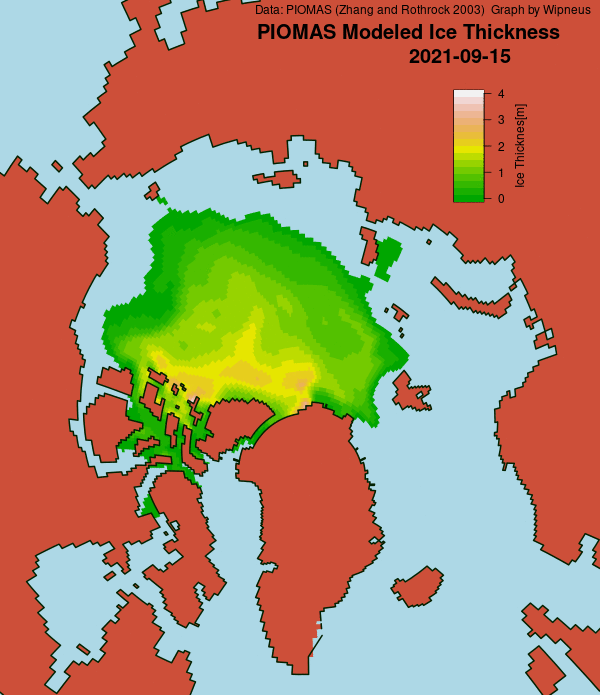
As Wipneus puts it on the Arctic Sea Ice Forum, “PIOMAS has updated the gridded thickness data up to the 31st of August”. Here’s the latest modelled thickness map, which shows the thickest remaining ice located north of the Canadian Arctic Archipelago rather than north of Greenland:

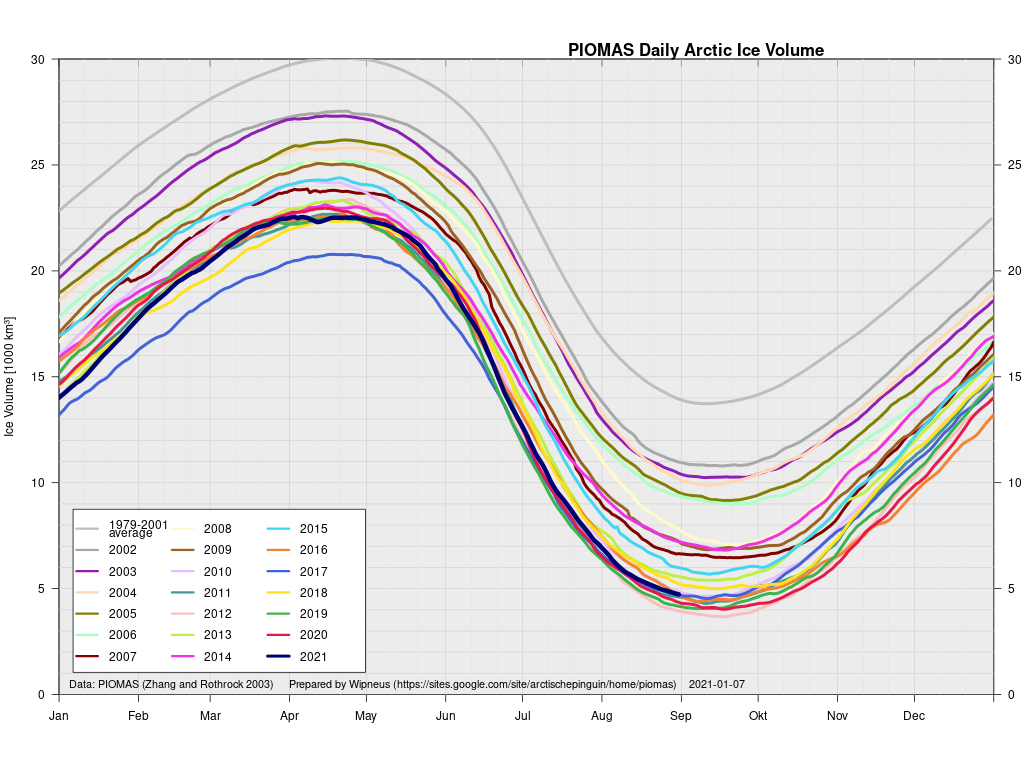
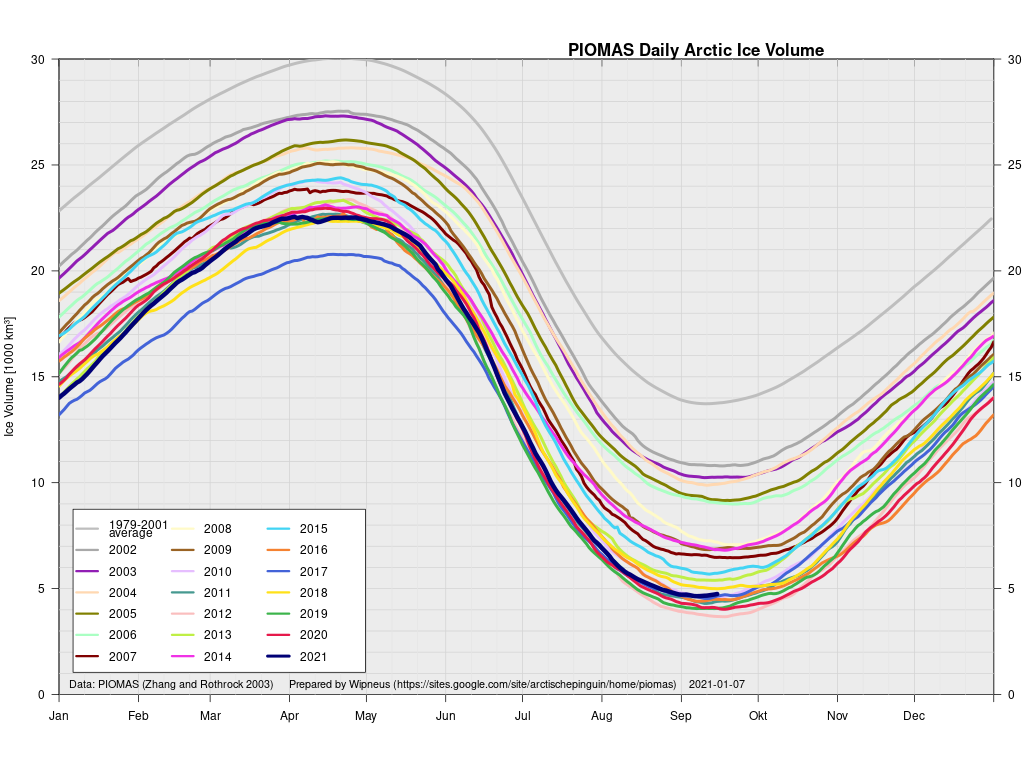
The accompanying volume graph shows 2021 in 7th lowest position, at 4.7 thousand km3:

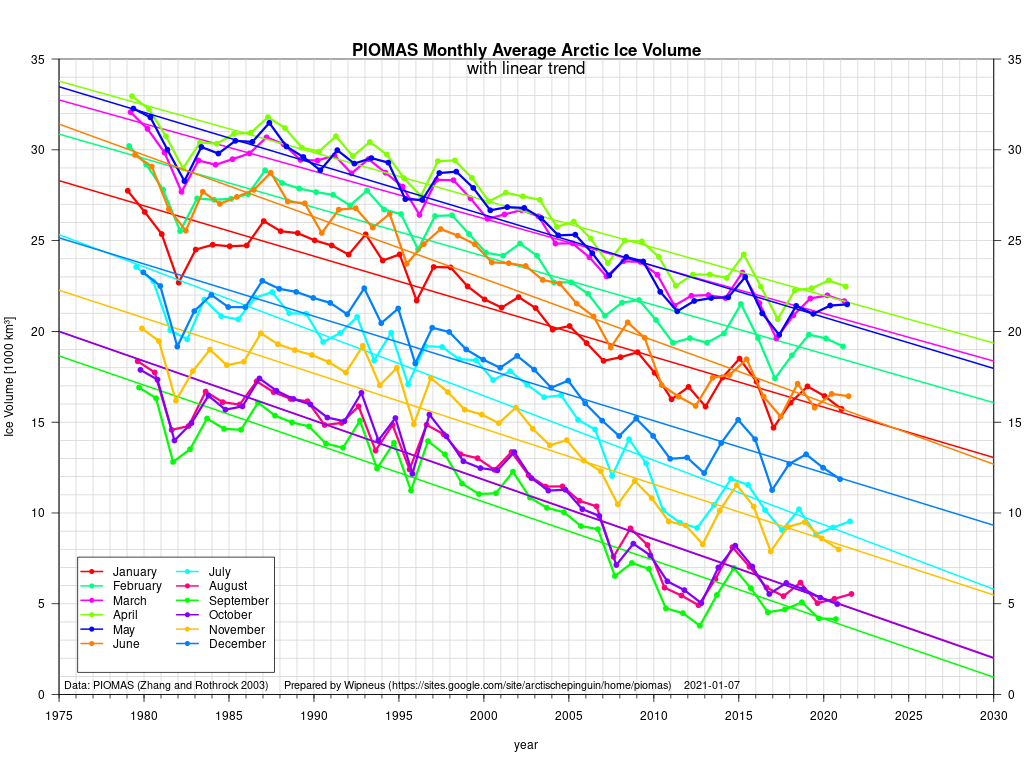
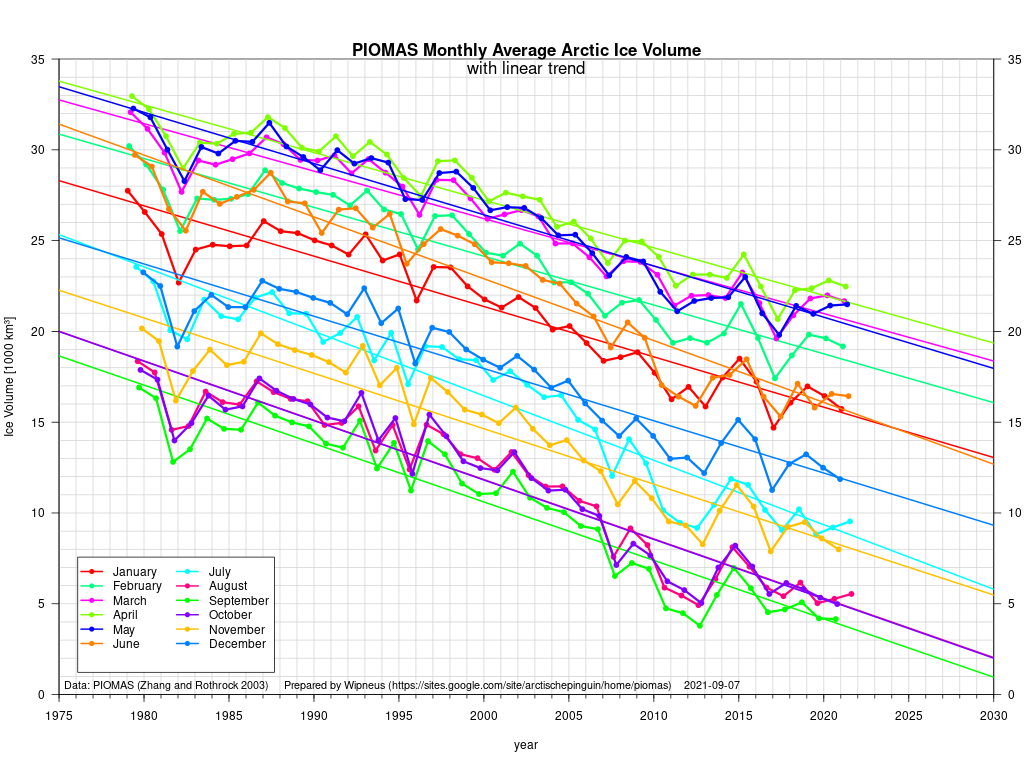
Here too are the current PIOMAS volume trends for each month of the year:

The Swedish icebreaker Oden has recently been exploring the area between northern Greenland and the North Pole as part of the Synoptic Arctic Survey expedition:

Here are the measurements of water temperature it has recorded over the past few days:

Ranging between -0.4 °C and -1.0 °C it doesn’t look as though the 2021 refreeze will be starting in the Wandel Sea just yet.

[Edit – September 10th]

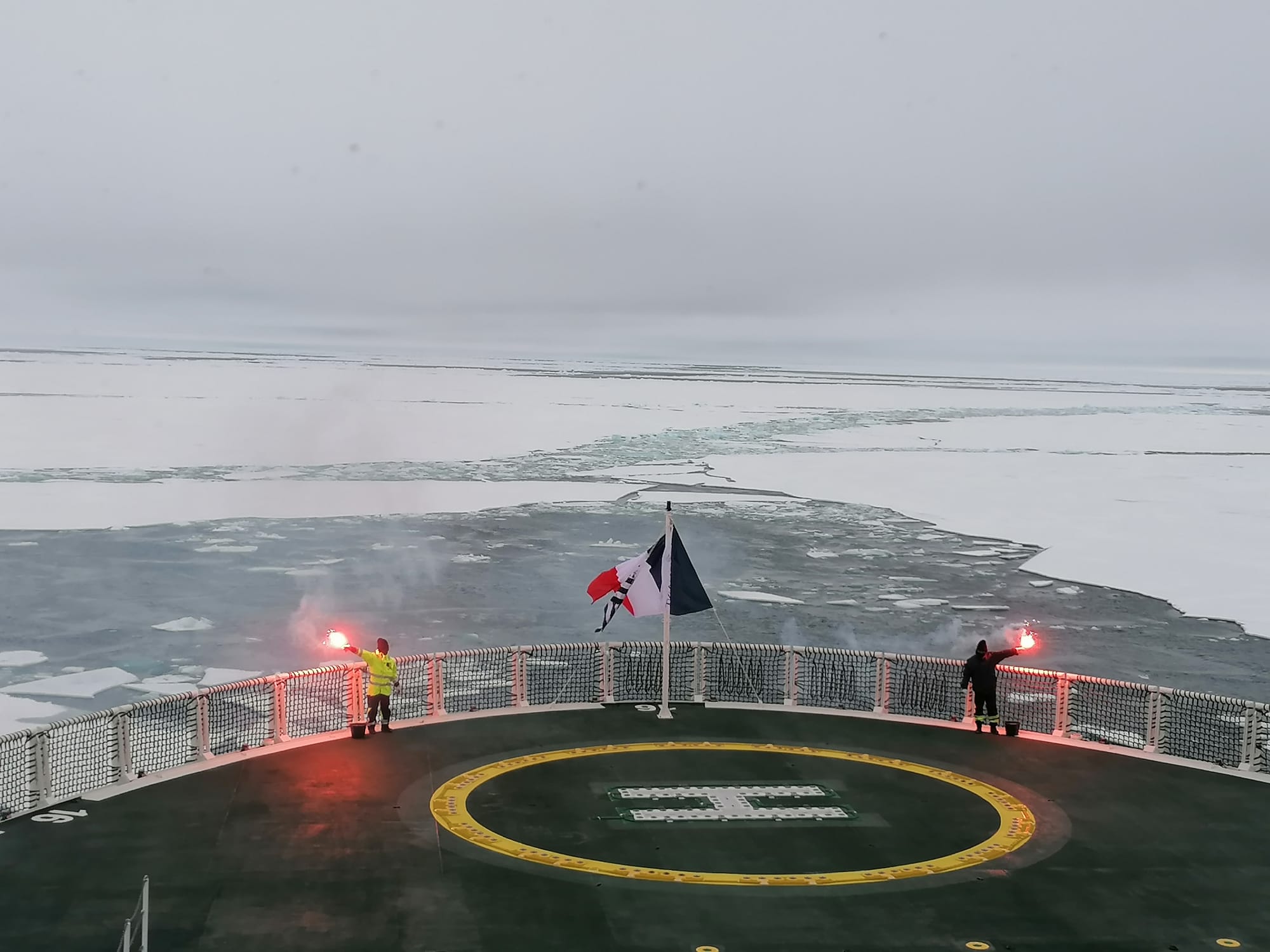
A picture of the sea ice at the North Pole from Ponant’s Le Commandant Charcot on September 6th:

[Edit – September 13th]

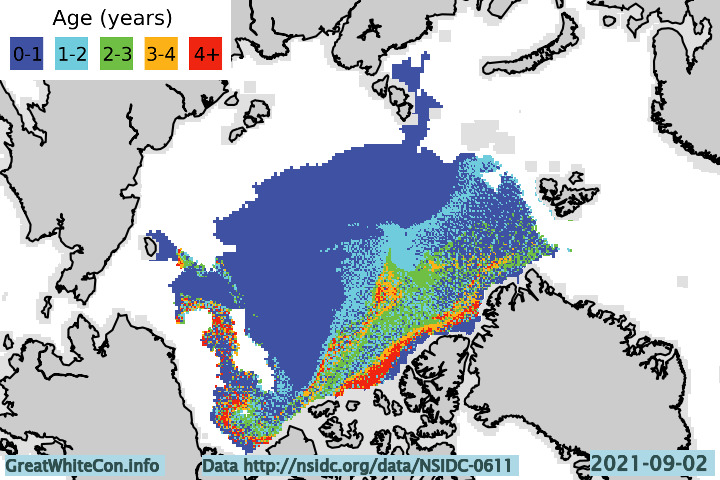
Here’s the latest NSIDC sea ice age map:

That shows plenty of old ice still left in the Beaufort Sea. However ice mass balance buoy 52460 now appears to floating free of its ice floe at 75.56 N, 165.99 W:

[Edit – September 14th]

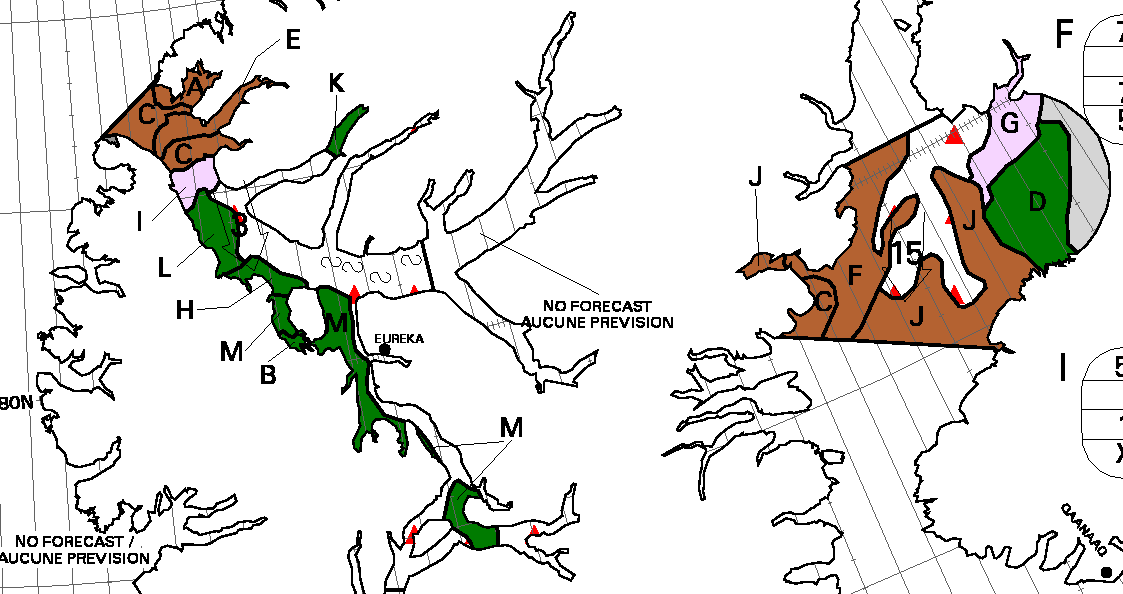
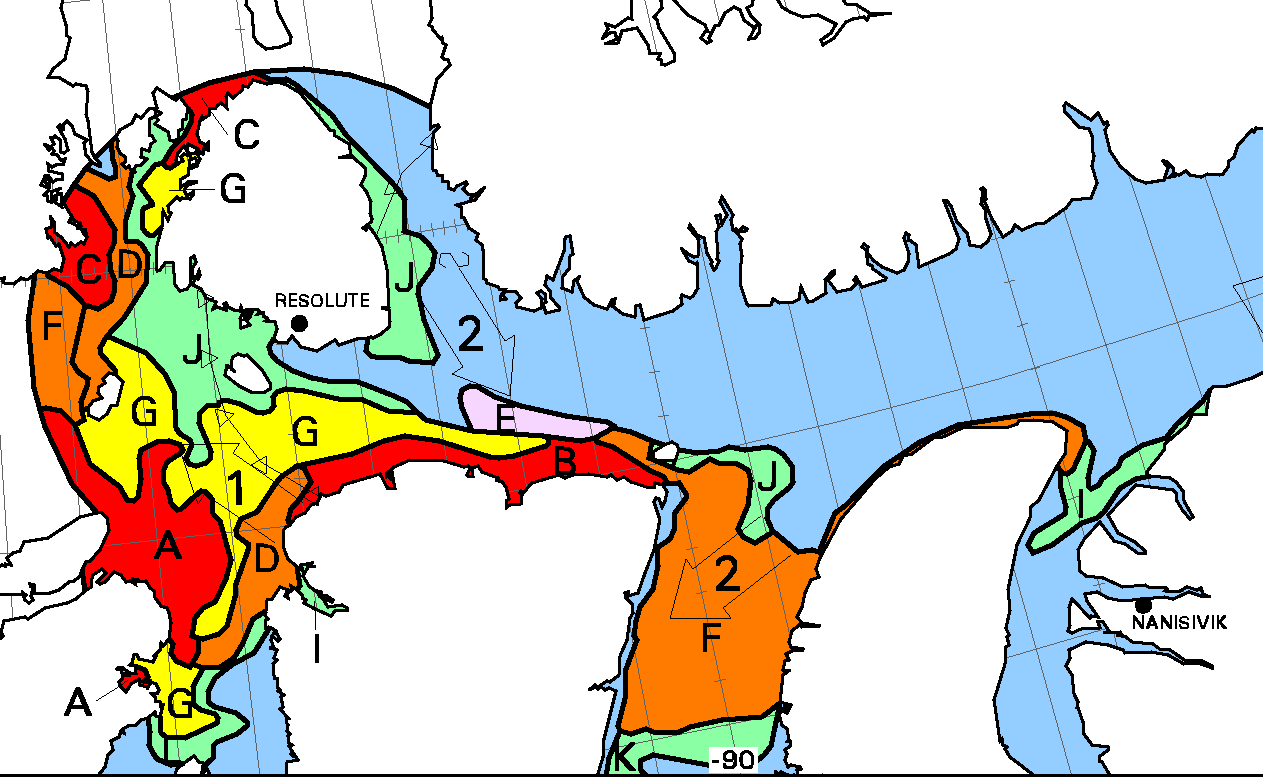
“New ice” has started to appear in previously open water on the Canadian Ice Service charts. See area E south east of Resolute:

[Edit – September 21st]

In answer to Frozen Earth’s metaphorical prayer, Wipneus has just released the mid September PIOMAS gridded thickness numbers on the Arctic Sea Ice Forum. First of all the thickness map:

followed by the volume graph:

and the monthly volume trends:

Volume calculated from the thickness data currently show that 2021’s minimum was reached on September 7th at 4.64 thousand km3, which is the 8th lowest value in the Polar Science Center’s record.

[Edit – September 23rd]

NASA have just announced a new paper about clouds in the Arctic. Highly relevant given their recent overview of the 2021 melting season!

Clouds are one of the biggest wildcards in predictions of how much and how fast the Arctic will continue to warm in the future. Depending on the time of the year and the changing environment in which they form and exist, clouds can both act to warm and cool the surface below them.

For decades, scientists have assumed that losses in Arctic sea ice cover allow for the formation of more clouds near the ocean’s surface. Now, new NASA research shows that by releasing heat and moisture through a large hole in sea ice known as a polynya, the exposed ocean fuels the formation of more clouds that trap heat in the atmosphere and hinder the refreezing of new sea ice.

The findings come from a study over a section of northern Baffin Bay between Greenland and Canada known as the North Water Polynya. The research is among the first to probe the interactions between the polynya and clouds with active sensors on satellites, which allowed scientists to analyze clouds vertically at lower and higher levels in the atmosphere.

The approach allowed scientists to more accurately spot how cloud formation changed near the ocean’s surface over the polynya and the surrounding sea ice.

Watch this space!

The Northwest Passage in 2021

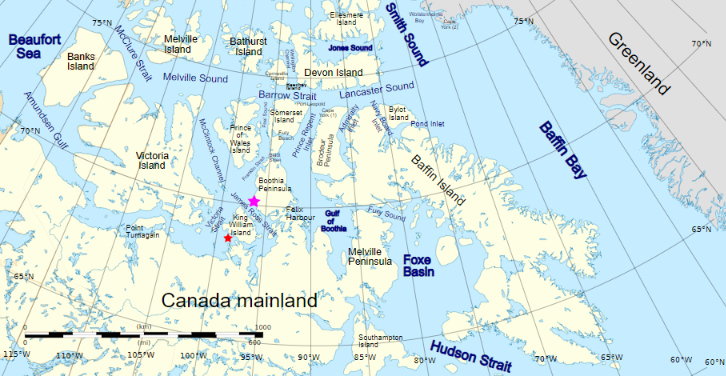
Prompted by a comment on the Northwest Passage thread from last year I’m opening the 2021 equivalent earlier than usual, in part because there’s already a lot going on of interest. First of all let’s get our bearings with the help of this map of the area:

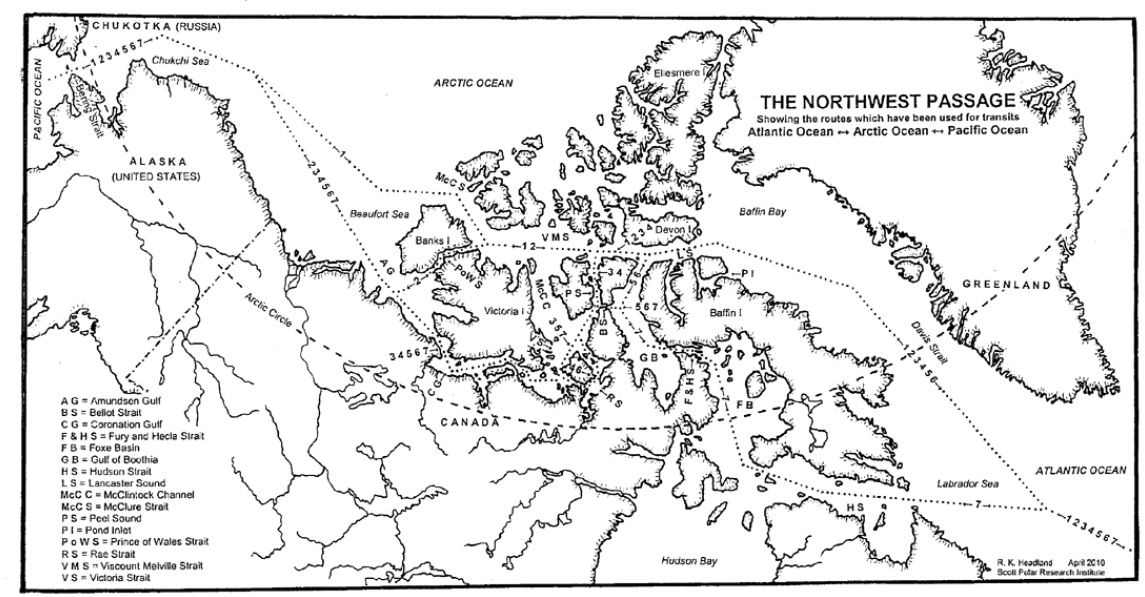
and another map detailing the routes through Canadian Arctic Archipelago that have previously been successfully traversed:

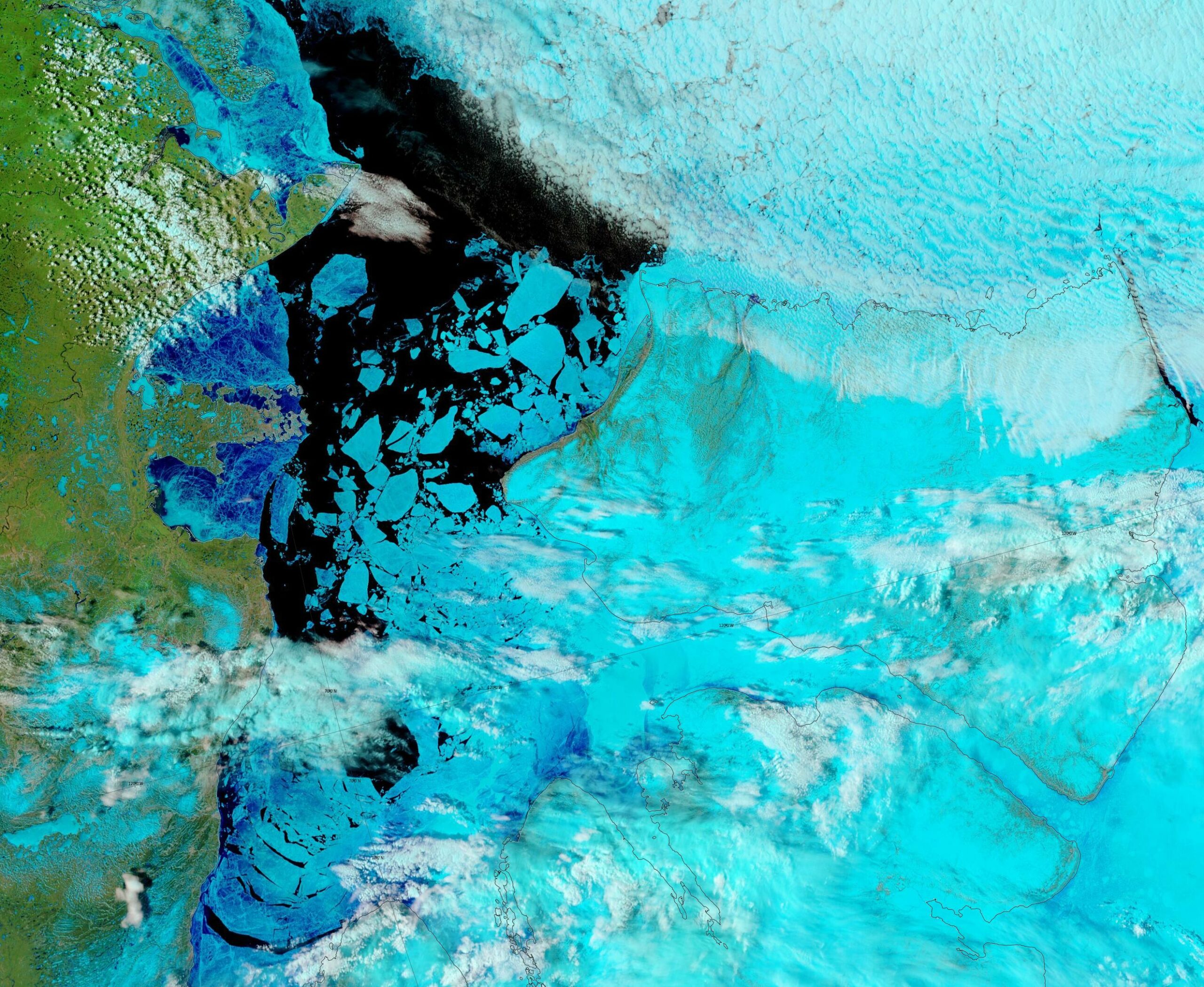
The forecast high pressure has arrived and the skies have cleared over the Beaufort Sea, which reveals that the land-fast ice off the Mackenzie Delta has started breaking up:

In addition the snow has been melting along the valley of the Mackenzie River, and the resulting increased flow at the mouth of the delta is flooding the fast ice:

Continue reading The Northwest Passage in 2021

Facts About the Arctic in September 2020

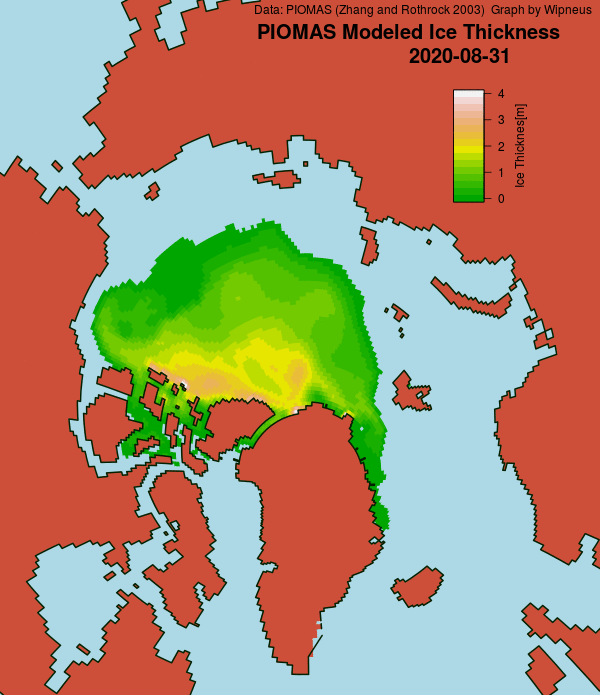
A detailed dissection of the 2020 minimum of various Arctic sea ice extent metrics can be found on a dedicated thread. All other Arctic news in September will be found below. As is usually the case, let’s set the ball rolling by taking a look at Wipneus’s visualisations of the August PIOMAS gridded thickness data:

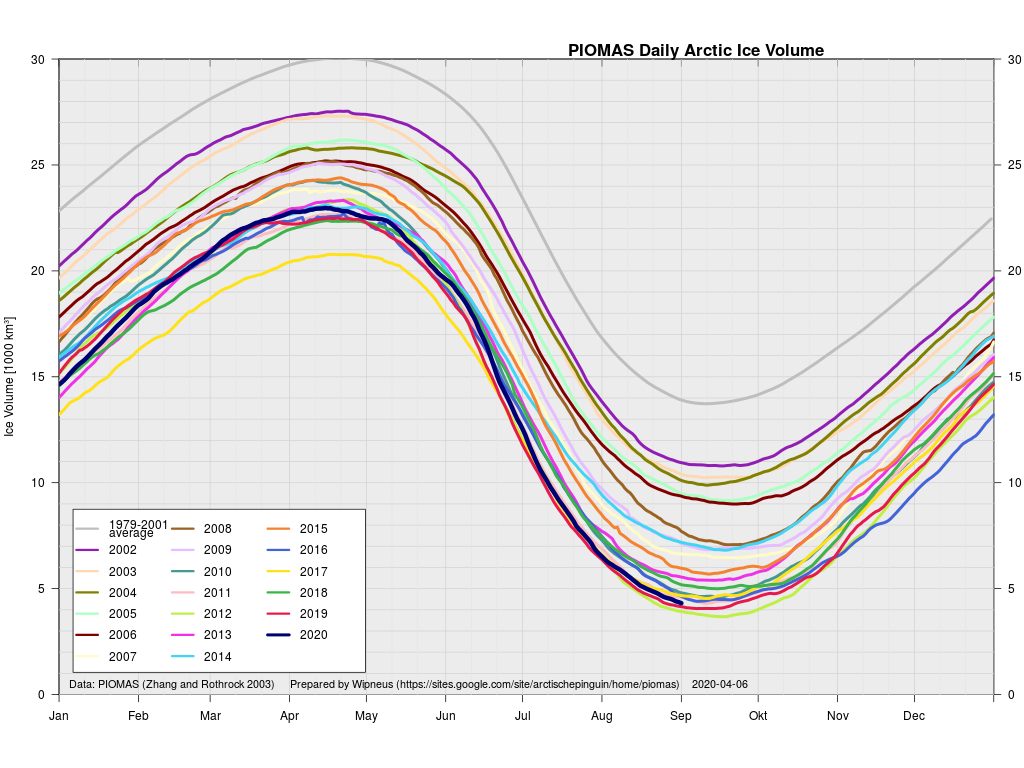
together with the computed volume:

and anomaly graphs:

PIOMAS volume at the end of August was still firmly in 3rd place behind 2012 and 2019.

Continue reading Facts About the Arctic in September 2020

Facts About the Arctic in October 2019

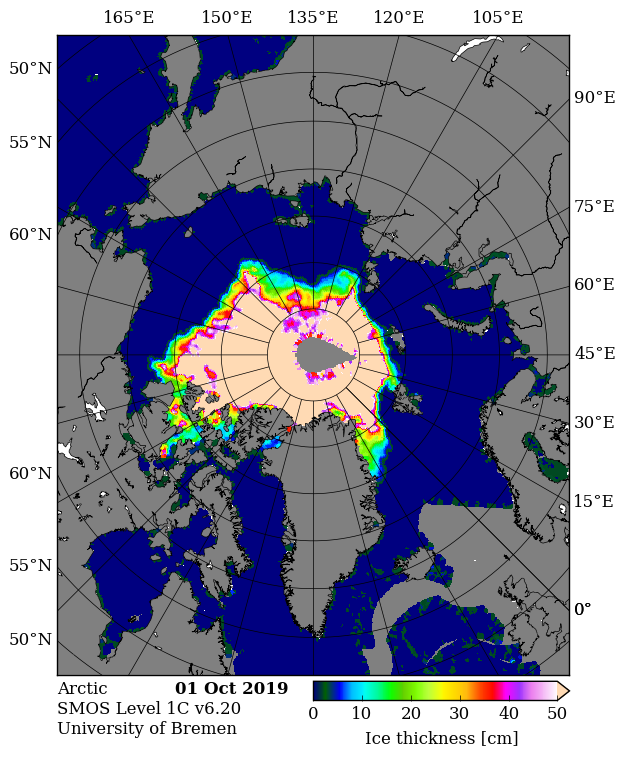
Whilst we await the PIOMAS volume numbers which generally arrive around the 5th of each month, and before we look at graphs of extent, with the refreeze well under way some “measured” thickness maps are coming back! Here’s the first SMOS map this autumn:

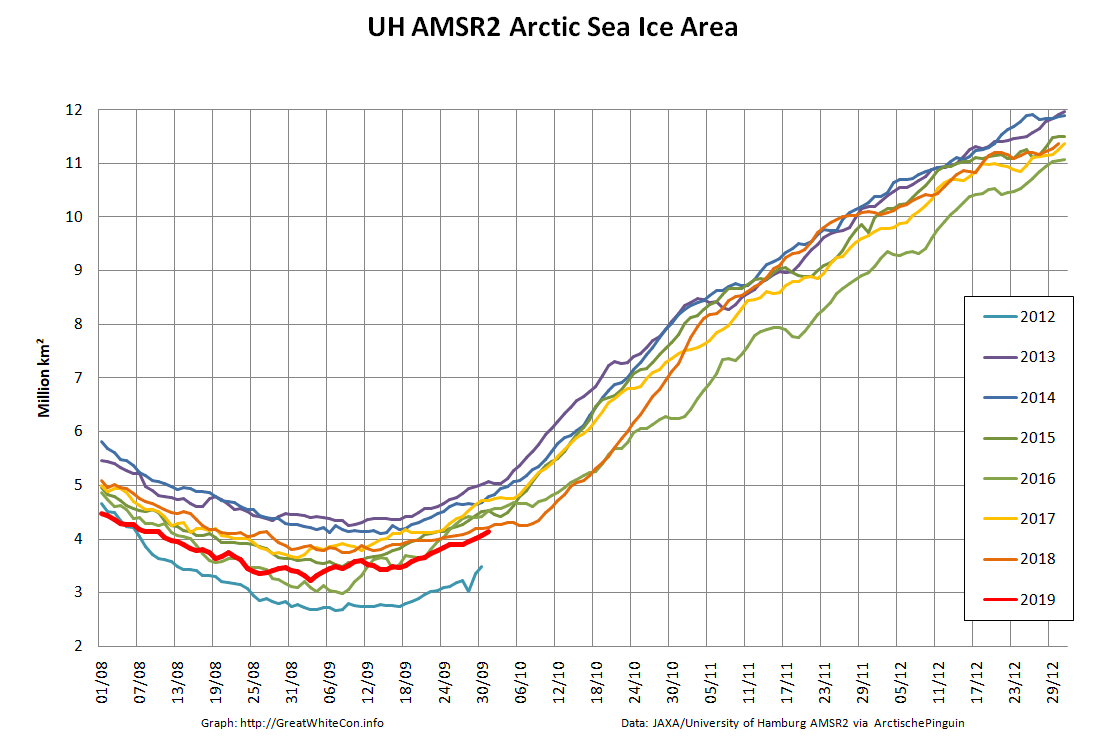
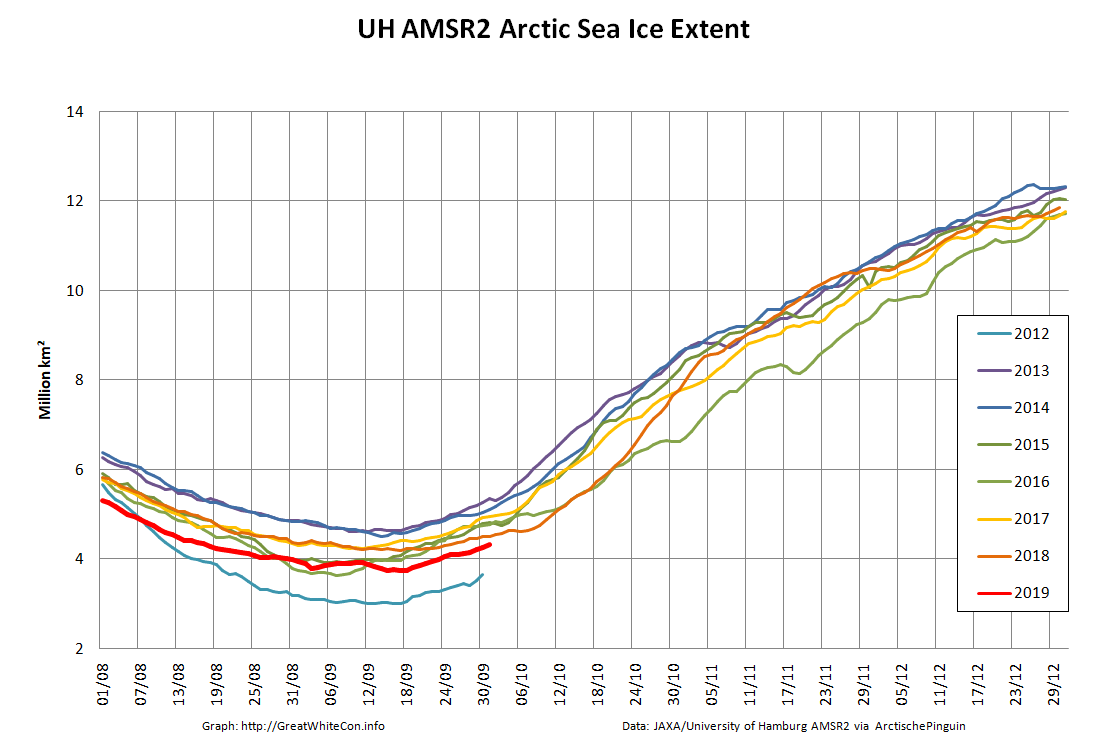
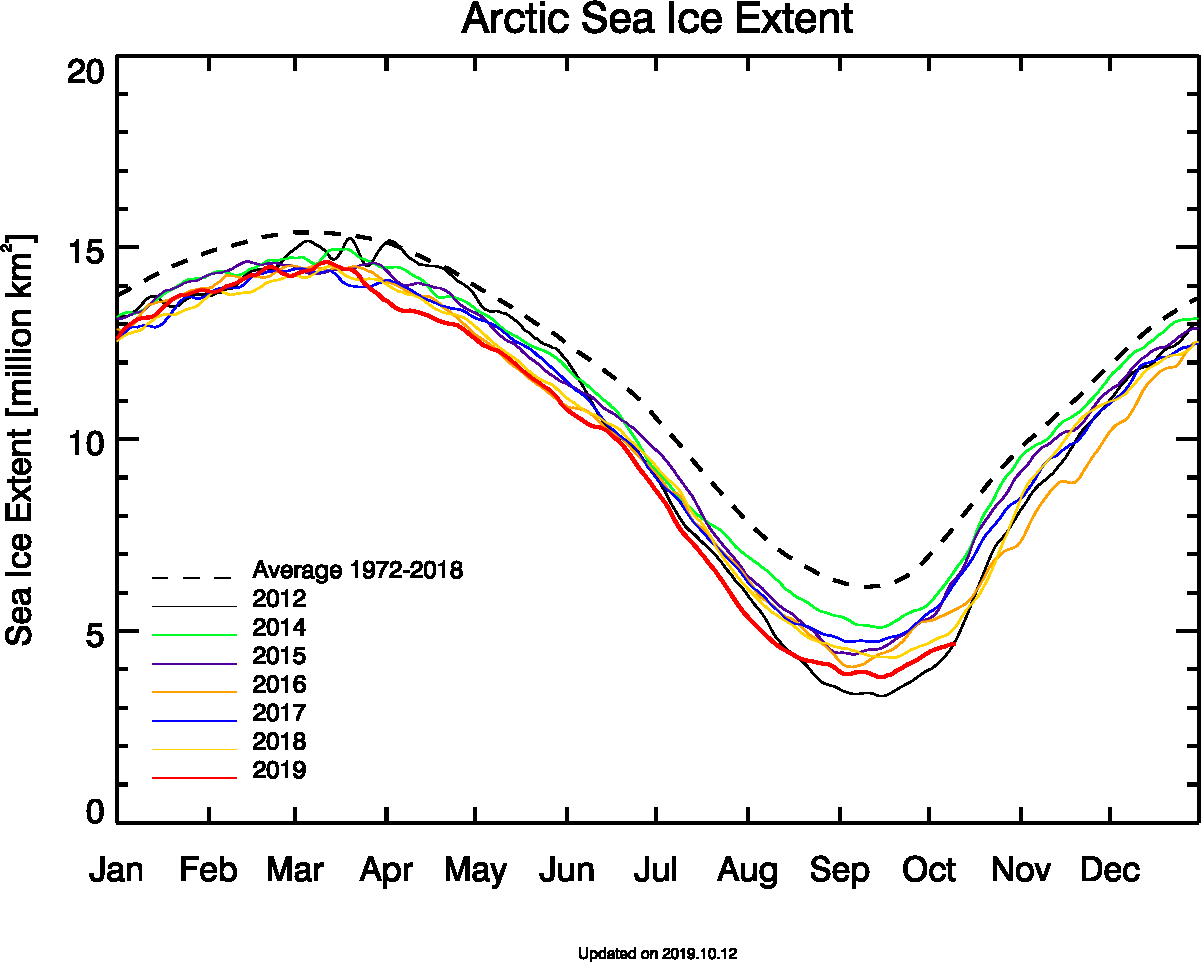
Then of course there’s our usual Arctic wide high resolution AMSR2 area and extent graphs:

They reveal both metrics currently still second lowest (in the brief AMSR2 record) after 2012. It looks as though that may well change soon, particularly area.

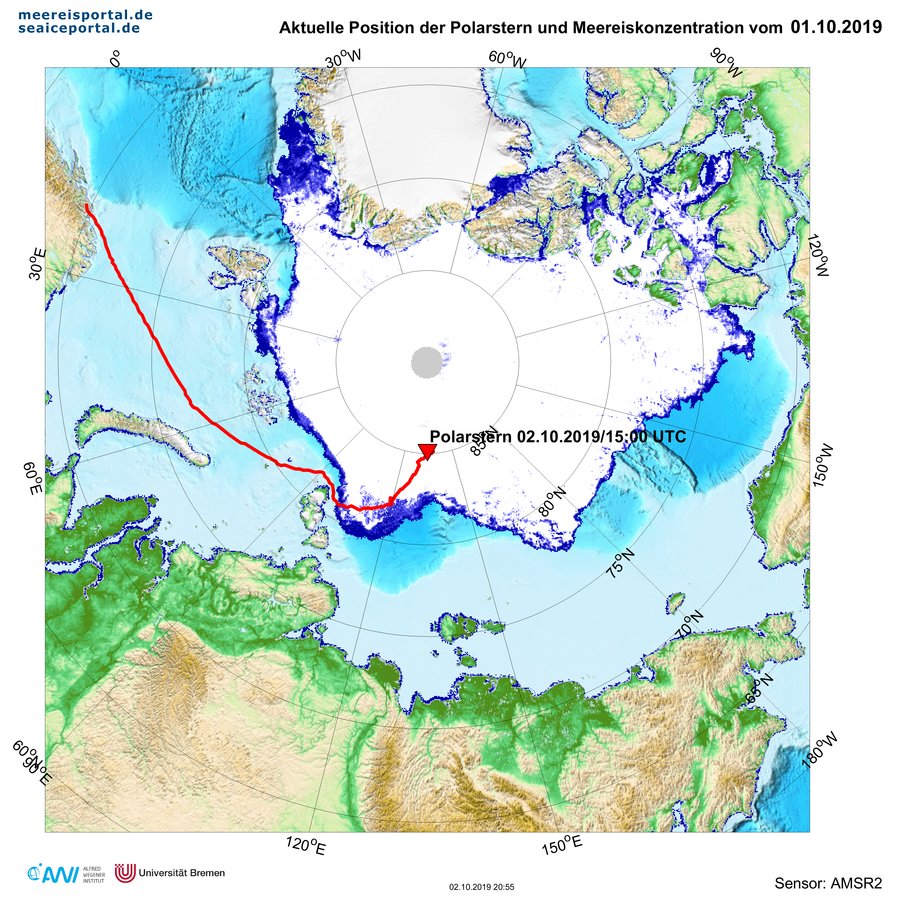
The MOSAiC Expedition has started in earnest, with Polarstern and Akademik Fedorov in amongst the sea ice at long last:

However:

[Edit – October 3rd]

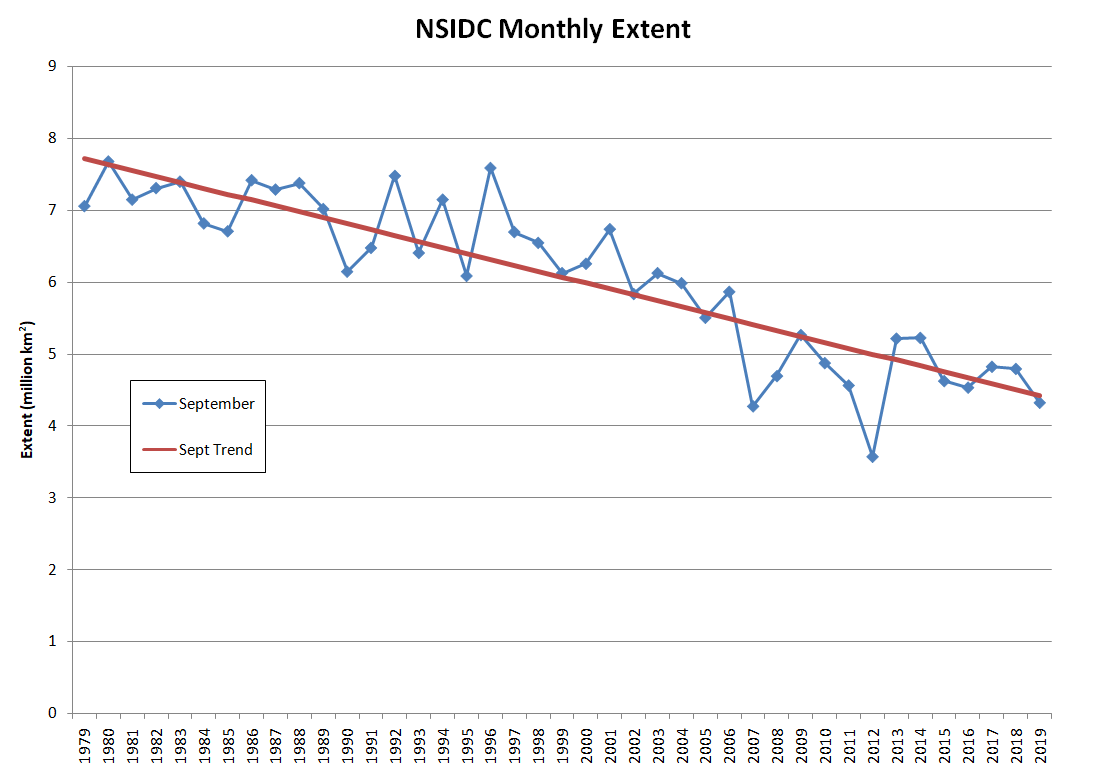
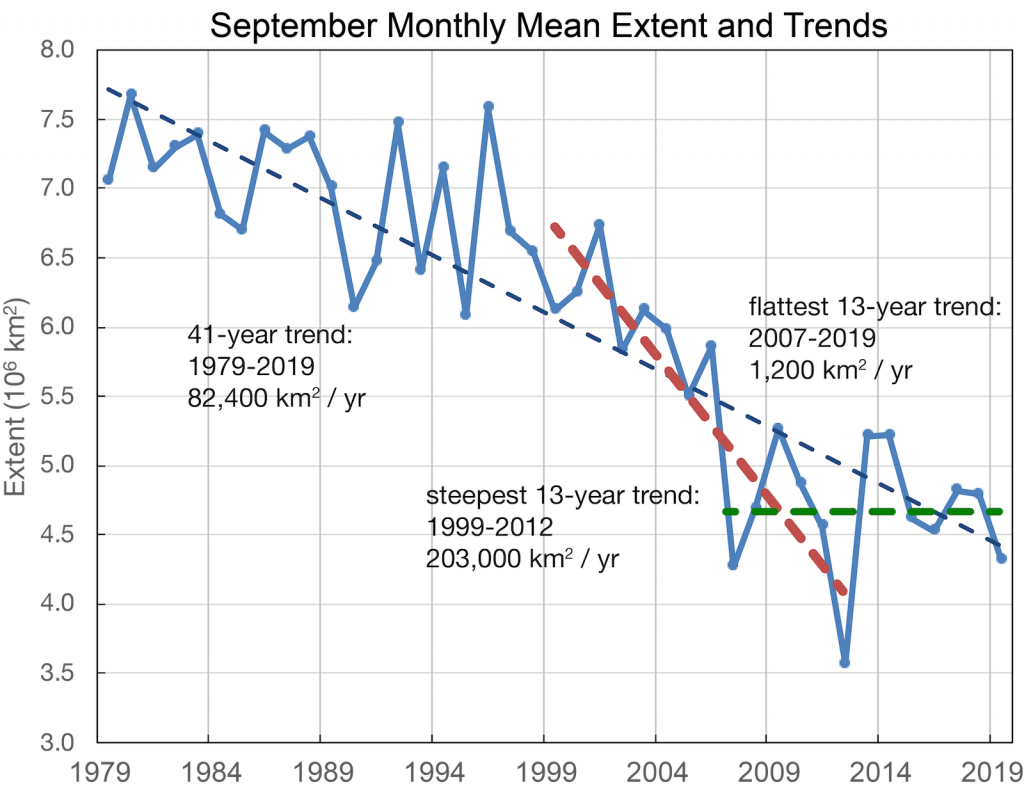
The near real time NSIDC monthly extent for September is 4.32 million km². Here’s the graph:

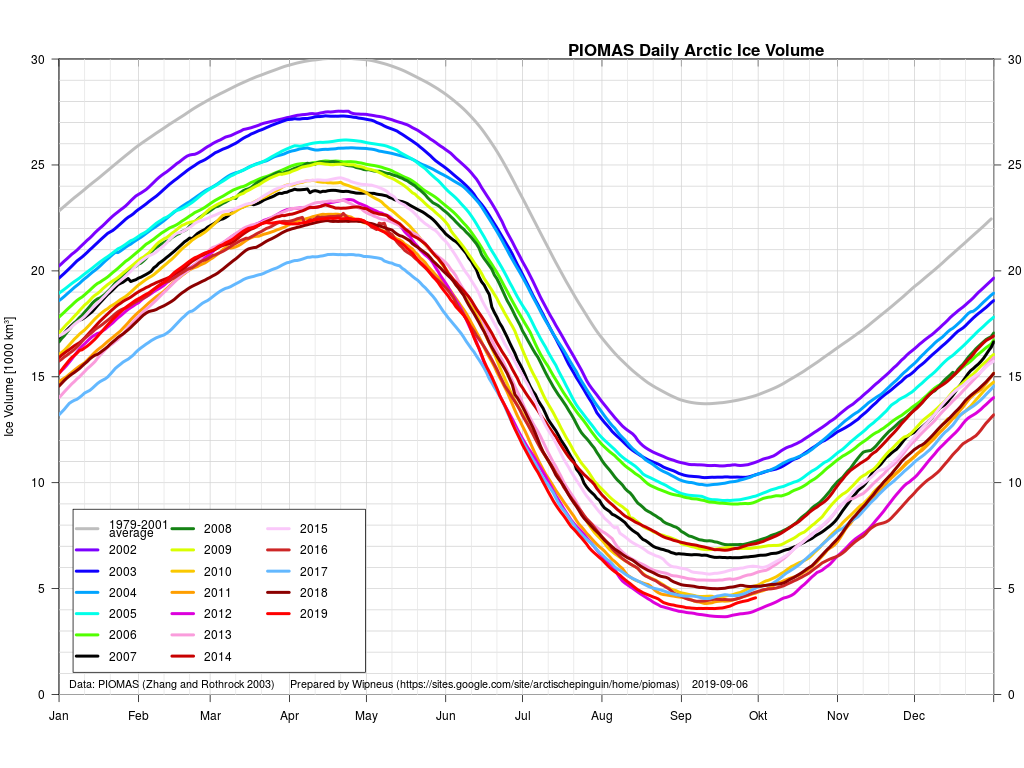
We’re eagerly awaiting the first ice mass balance buoy “near real time” data, but for now the 2019 PIOMAS minimum volume is expected to be revealed real soon now, so:

[Edit – October 5th]

As previously perfectly predicted, the PIOMAS numbers have arrived over at the ASIF. Here’s the thickness map for the end of September:

and the volume graph:

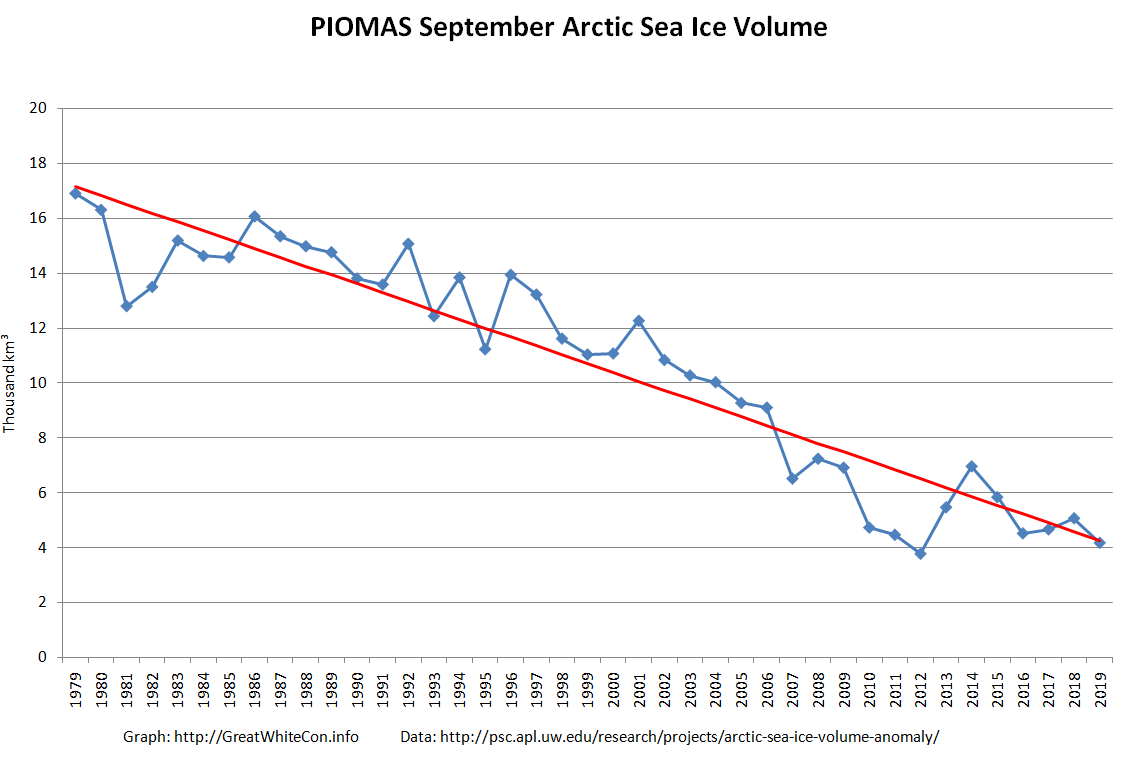
Since I’m involved is a heated “debate” about Arctic sea ice trends over at ex Prof. Judy’s, here’s an added bonus this month. The September volume trend:

[Edit – October 6th]

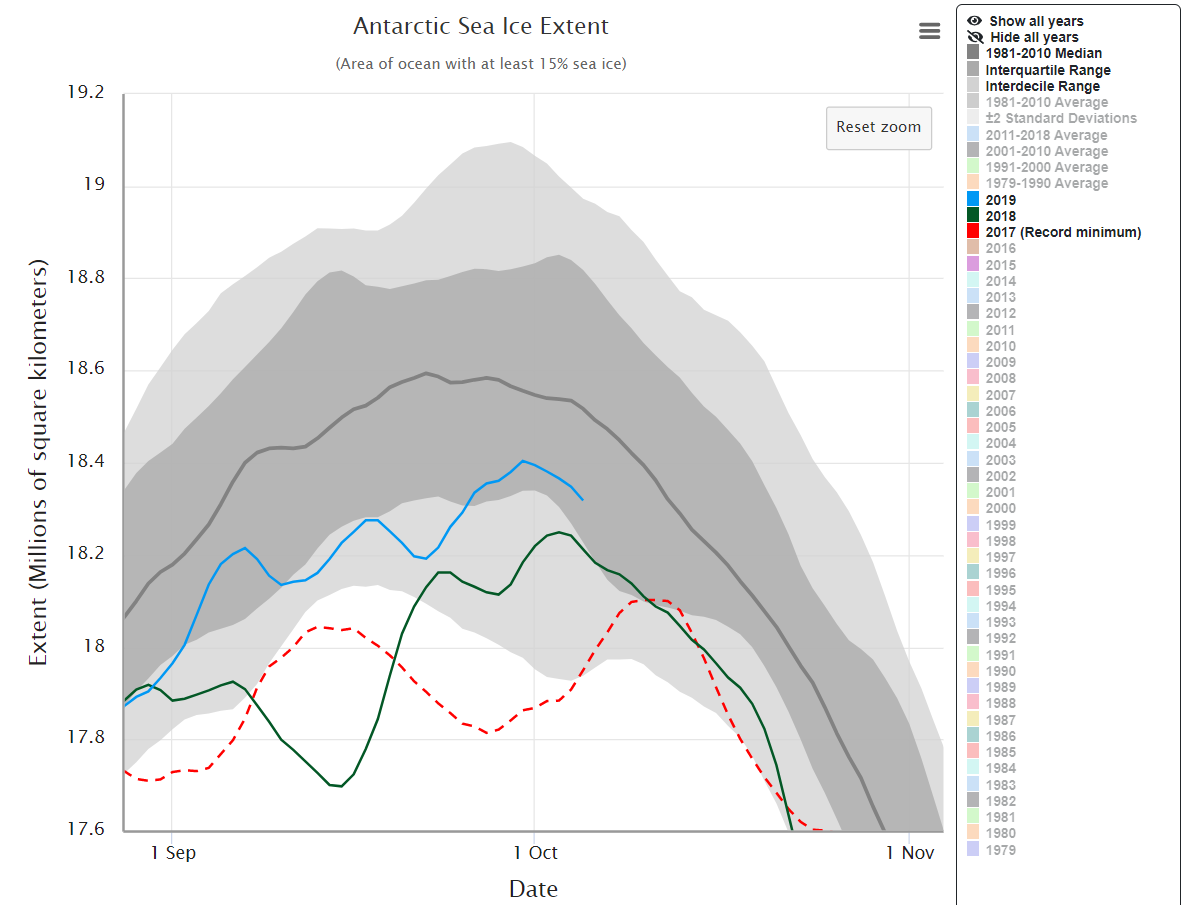
A marginally off topic excursion down under. The NSIDC 5 day average Antarctic sea extent looks to have peaked at 18.40 million km² on September 30th:

[Edit – October 7th]

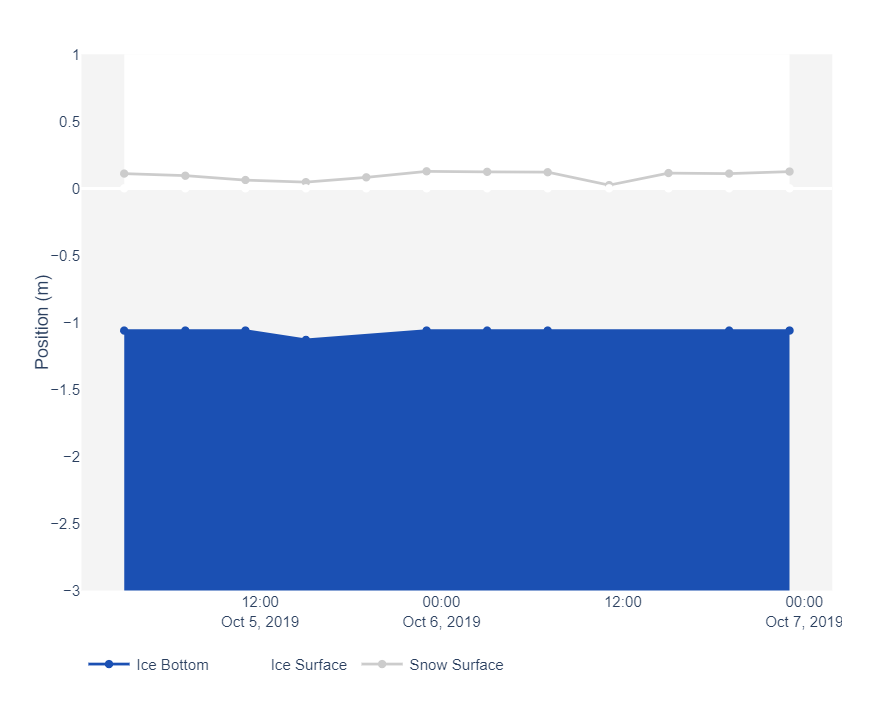
The first of the MOSAiC Expedition’s Ice Mass Balance buoys has been installed, presumably on the ice floe Polarstern is moored to. It reveals sea ice that is currently just over 1 meter thick with a sprinkling of snow on top:

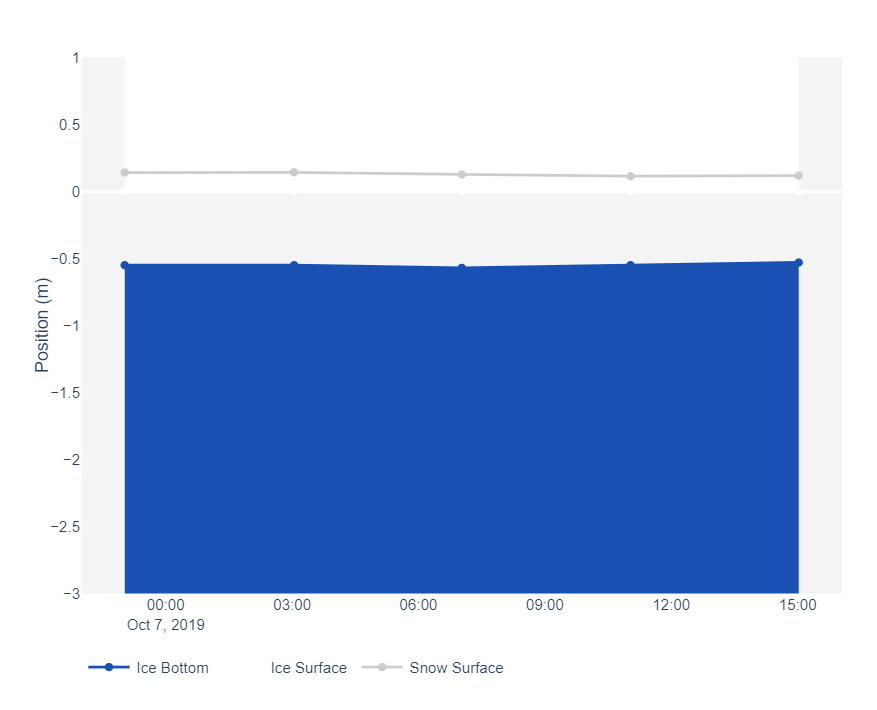
P.S MOSAiC IMB buoy #3 has gone live today too:

There’s currently only 0.5 meters of ice under this one.

[Edit – October 9th]

Here’s the latest annual PIOMAS “ice cube” animation from Andy Lee Robinson:

[Edit – October 10th]

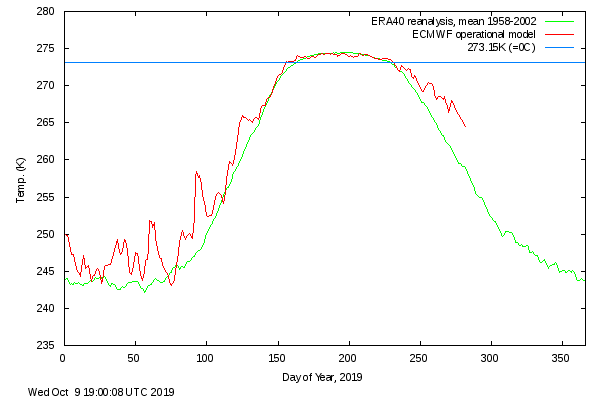
Here’s the latest DMI “high Arctic” temperature graph:

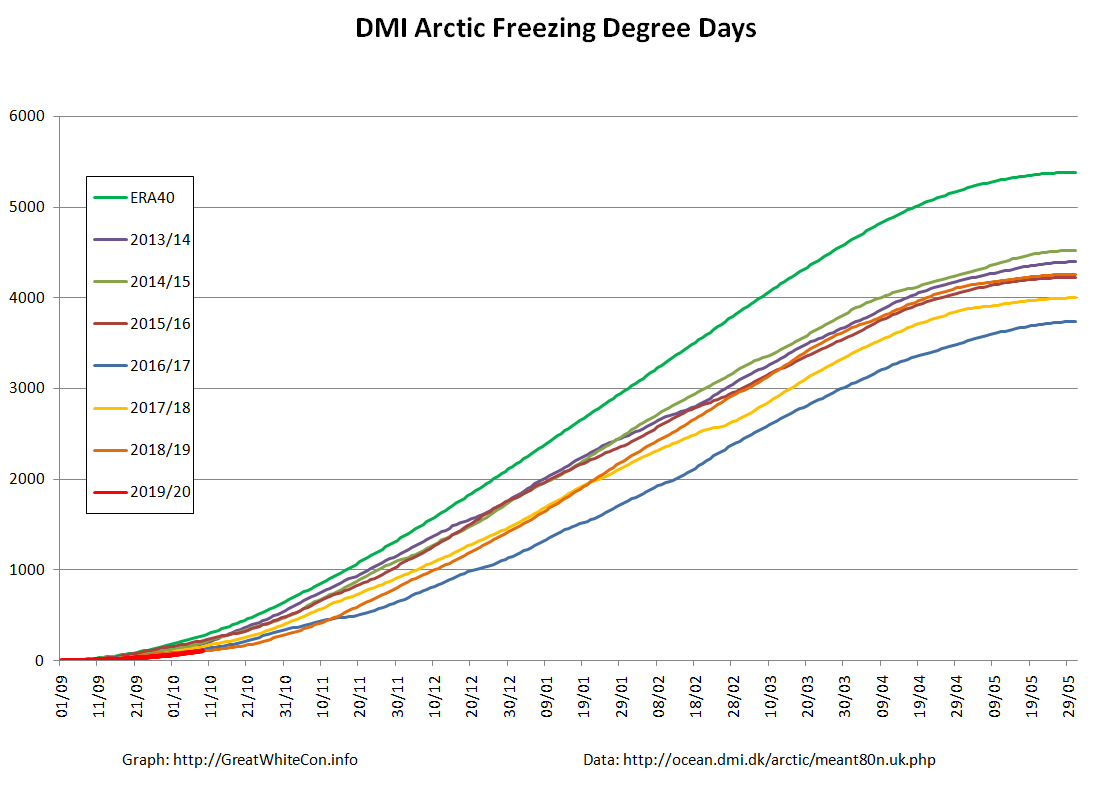
Needless to say that means the DMI Freezing Degrees Days graph is tracking the lowest readings in the DMI’s records:

[Edit – October 11th]

MOSAiC IMB buoy #2 has now been installed and is beaming back data:

The sea ice at this location is decidedly on the thin side at present. A mere 20 cm or thereabouts!

[Edit – October 12th]

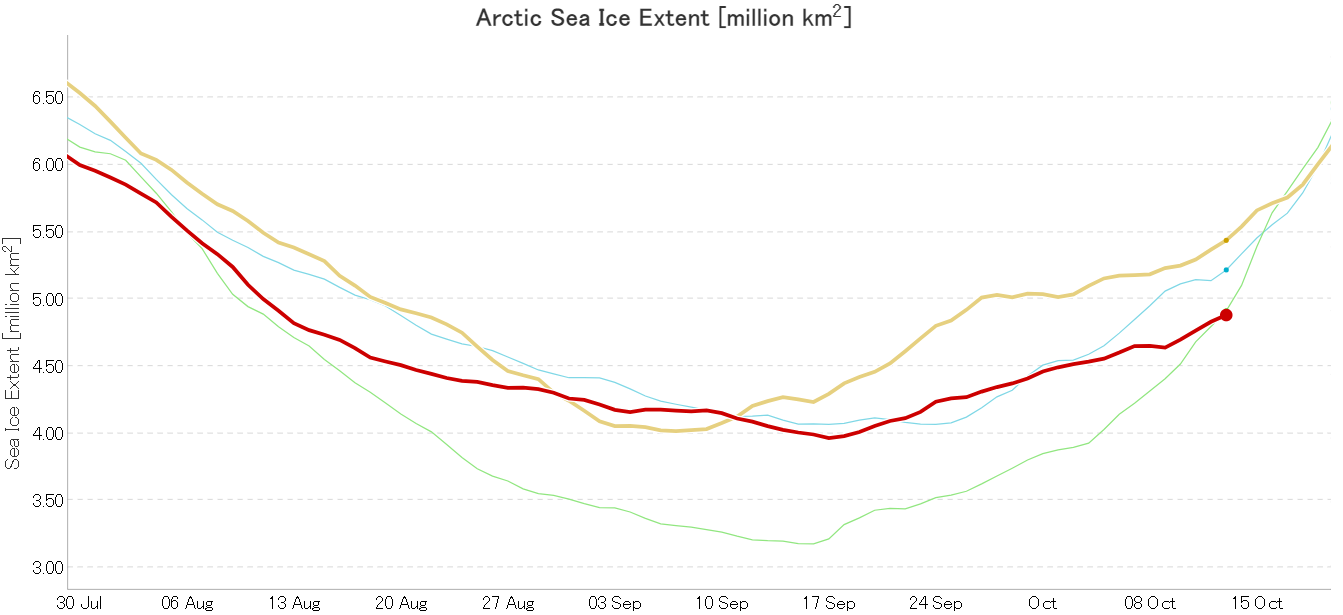
The JAXA ViSHOP web site is down at the moment, so by way of a change here is the University of Bremen’s AMSR2 based extent graph instead:

2019 Arctic sea ice is extent is now once again “lowest for the date” (since AMSRx satellite records began).

[Edit – October 14th]

The JAXA/ADS/ViSHOP web site is back online after being down over the weekend, presumably due to the effects of Typhoon Hagibis:

Sure enough the Japanese flavour of AMSR2 based extent is also now “lowest for the date”.

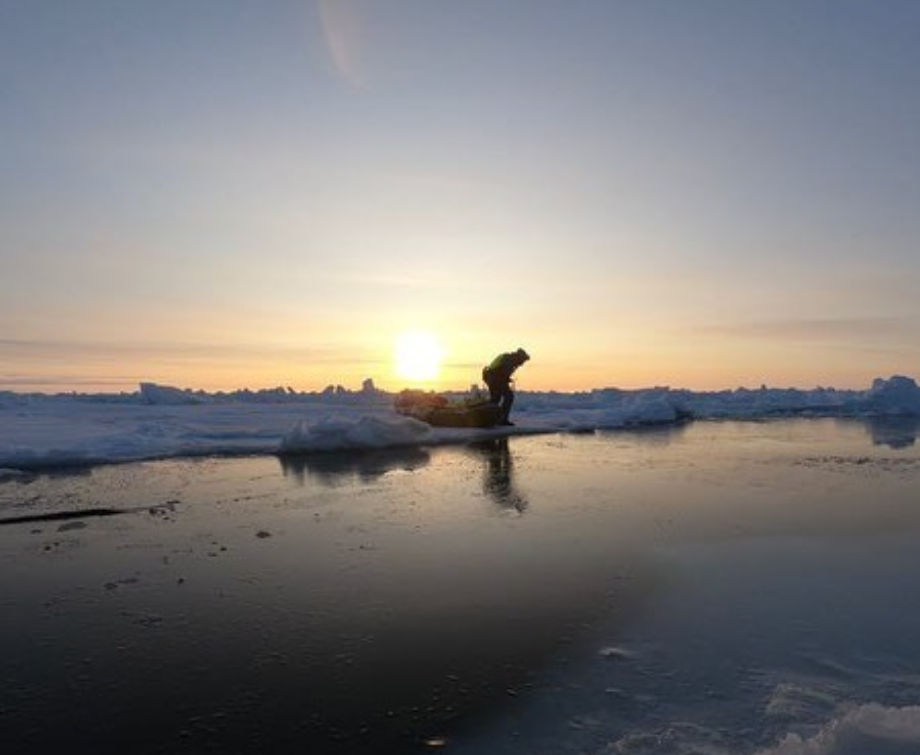
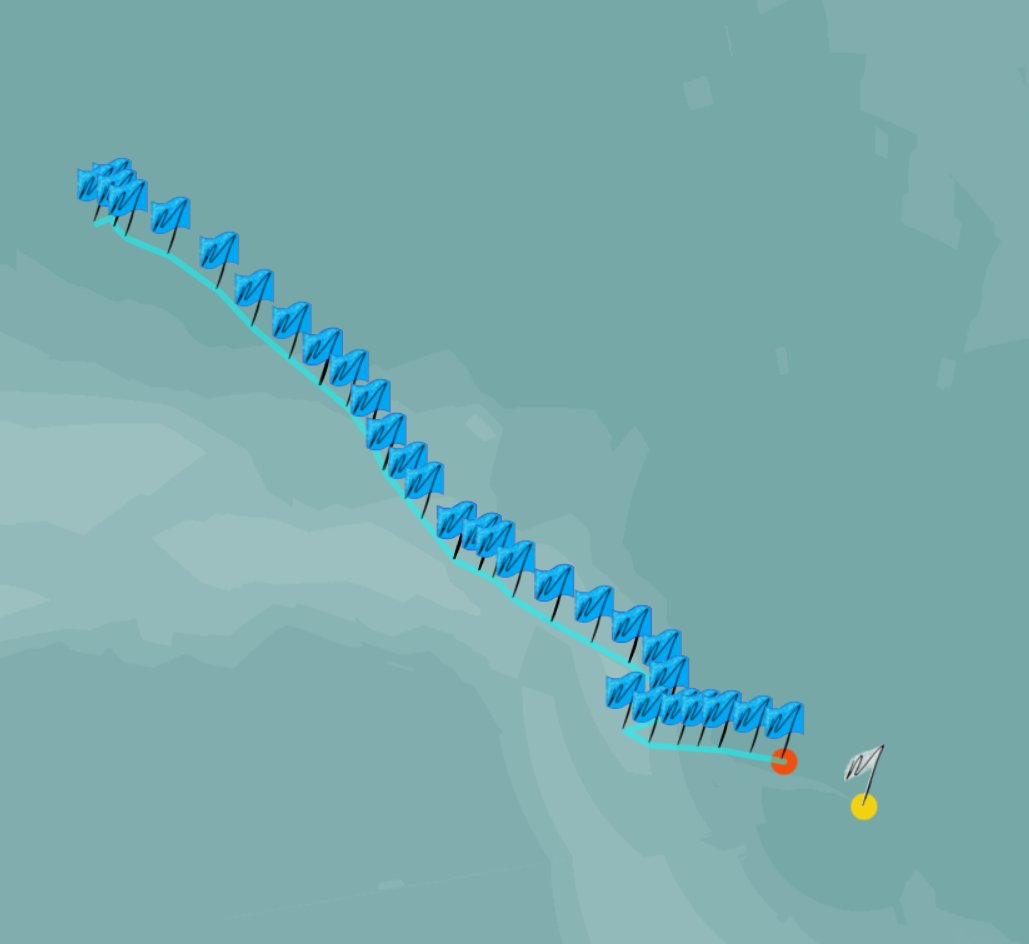
Plus a stunning image from Mike Horn and Borge Ousland as they attempt to “walk” to the North Pole then on towards Svalbard:

Mike and Borge’s current position was reported yesterday as: 89°35′51″N 140°30′32″E

[Edit – October 15th]

The latest SMOS Arctic sea ice “thinness” map shows sea ice starting to form on the shores of the Laptev Sea:

[Edit – October 16th]

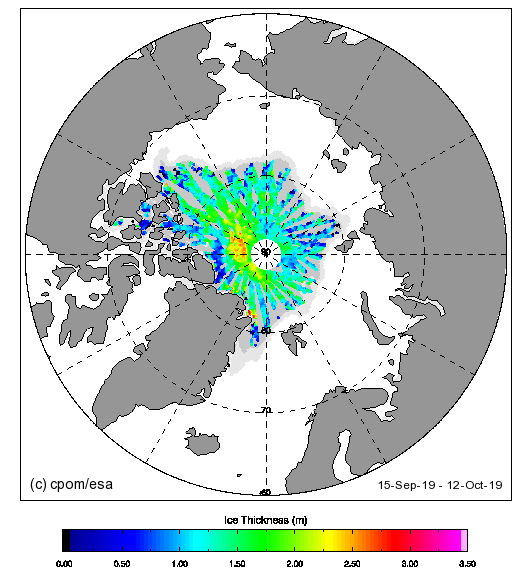
The Centre for Polar Observation and Monitoring (CPOM) have just published the first CryoSat-2 Arctic sea ice thickness map of the 2019/20 freezing season:

Note in particular the dark blue area north of the Canadian Arctic Archipelago.

[Edit – October 20th]

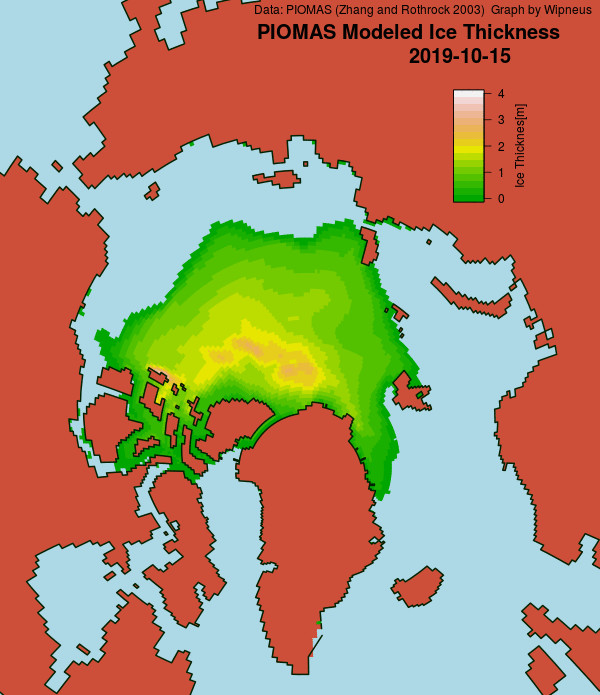
Wipneus has just crunched the October mid month PIOMAS numbers. Here are the results. Not only the modelled Arctic sea ice thickness map:

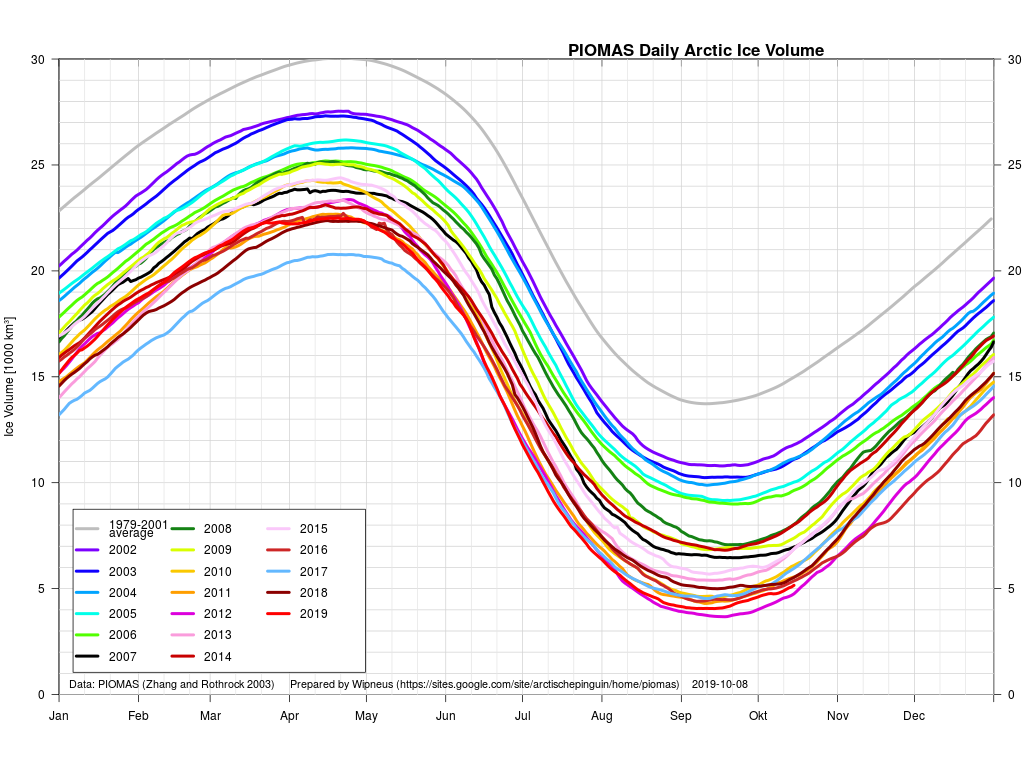
but also the Arctic sea ice volume graph:

[Edit – October 21st]

Over on Twitter Judah Cohen suggests that:

Here’s the evidence:

I have been trying to bring the implications of this to the attention of the denizens of Judith Curry’s “Climate Etc.” blog, thus far with remarkably little success! This is the gist of my argument:

See:

Warming of the interior Arctic Ocean linked to sea ice losses at the basin margins” Mary-Louise Timmermans, John Toole, Richard Krishfield (2018)

“Summer solar heat absorption by the surface waters has increased fivefold over the same time period, chiefly because of reduced sea ice coverage.”

“The effects of an efficient local ice-albedo feedback are thus not confined to the surface ocean/sea ice heat budget but, in addition, lead to increased heat accumulation in the ocean interior that has consequences far beyond the summer season.”

“In the coming years, however, excess Beaufort Gyre halocline heat will give rise to enhanced upward heat fluxes year-round, creating compound effects on the system by slowing winter sea ice growth.”

Watch this space!

The 2019 Arctic Sea Ice Metric Minima

September is here once again, so the assorted minima of a variety of Arctic sea ice metrics will be reached soon, if they haven’t happened already!

In the latter category let’s first take a look at the NSIDC’s 5 day averaged SSMIS based Arctic sea ice extent:
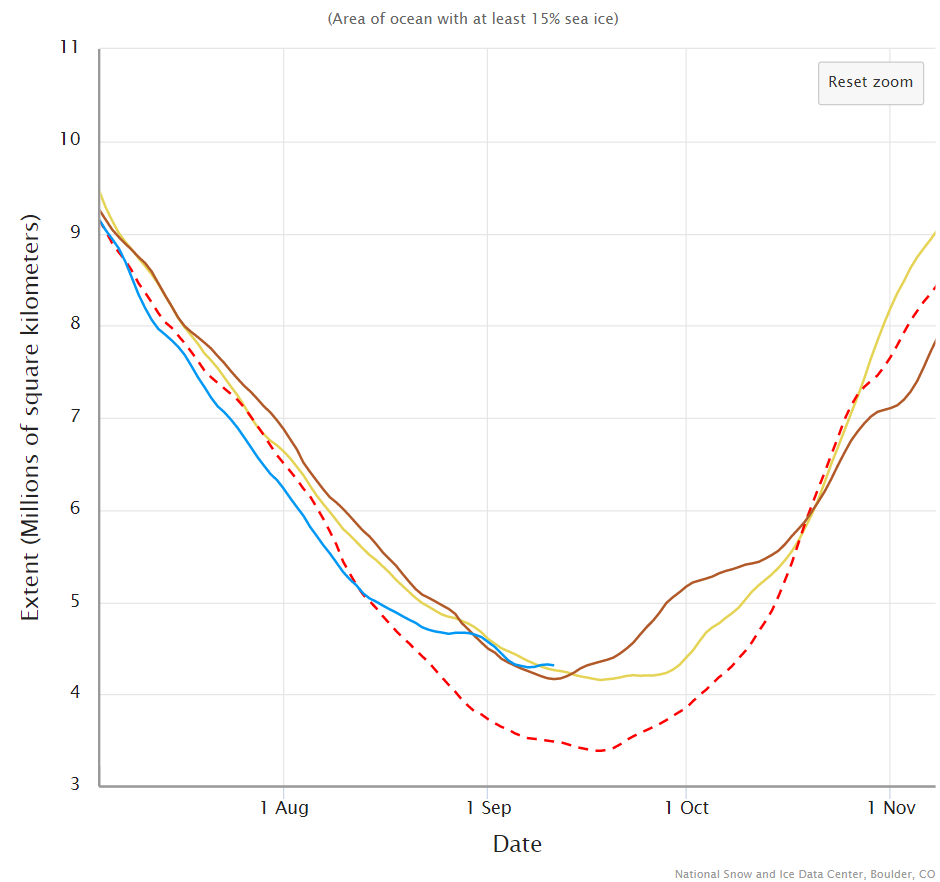
It looks entirely feasible that the current minimum of  4.29 million square kilometres on September 7th will hold for the rest of the calendar year. The daily NSIDC number is currently 4.24 million km² on September 4th.

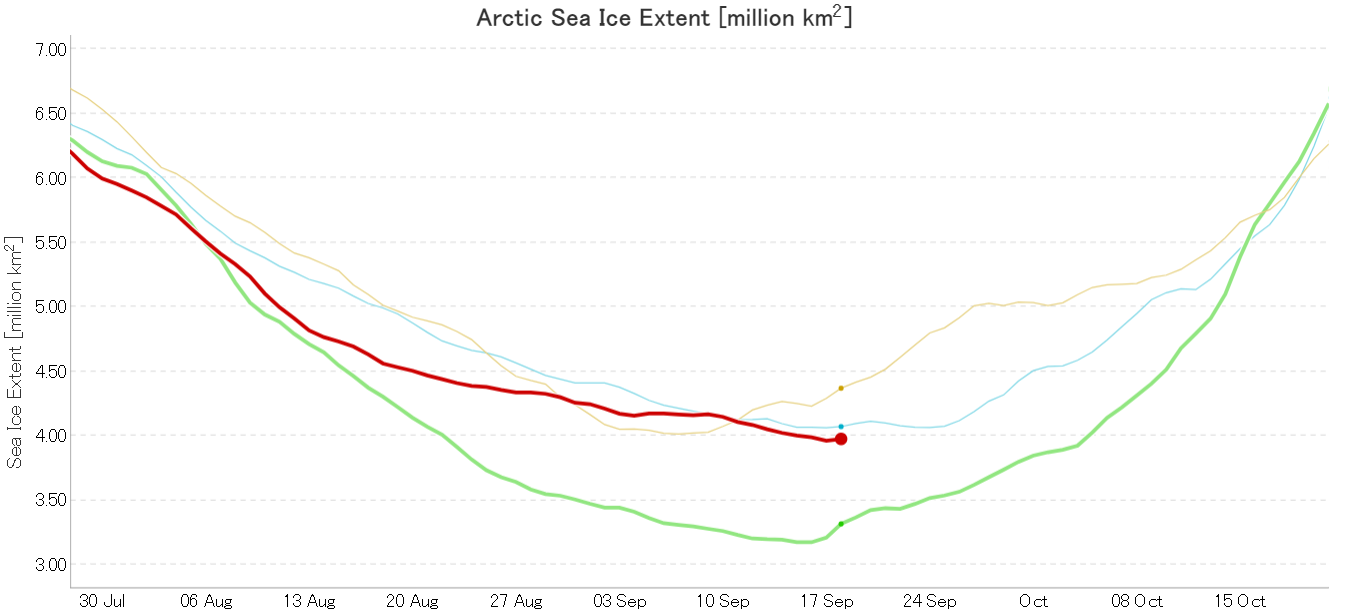
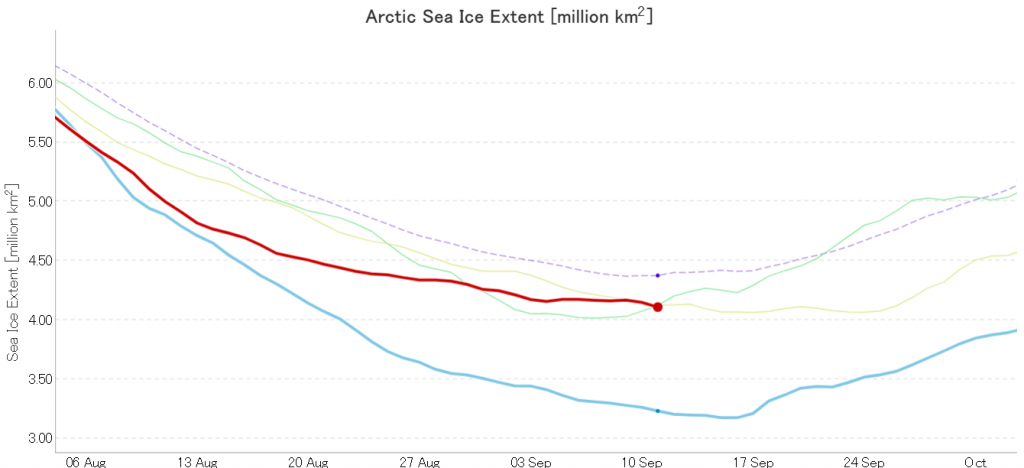
By way of contrast the JAXA/ViSHOP AMSR2 based extent hit a new low of  4.11 million  km² yesterday:
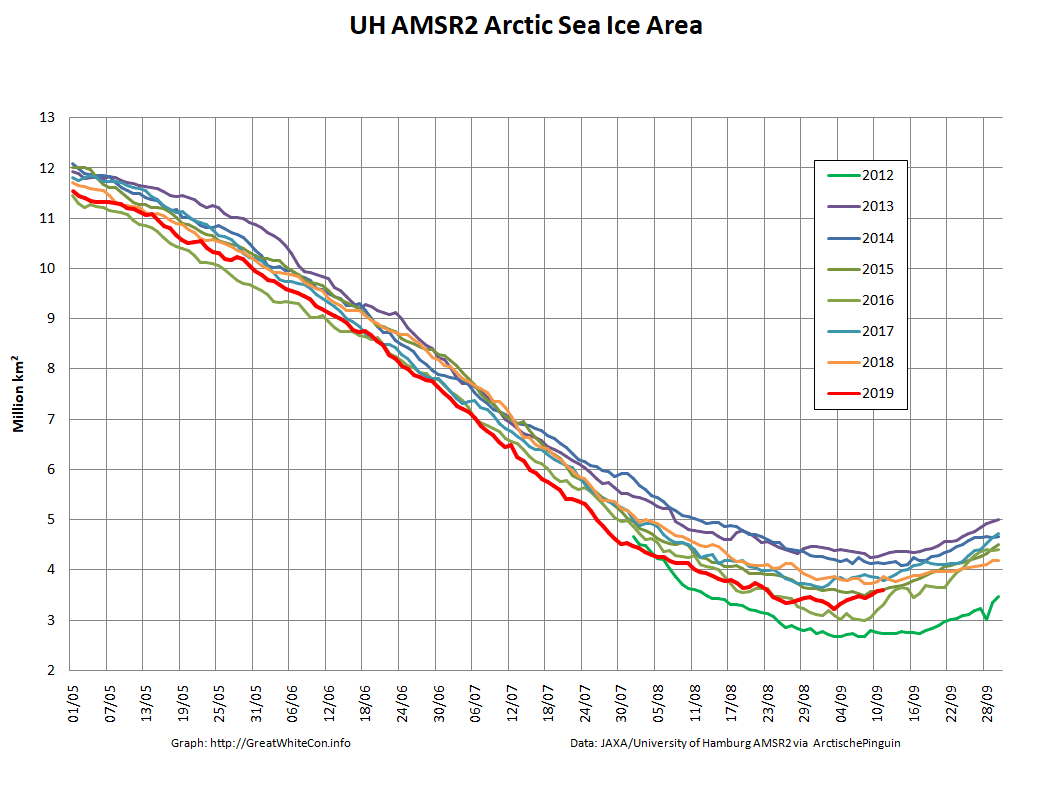
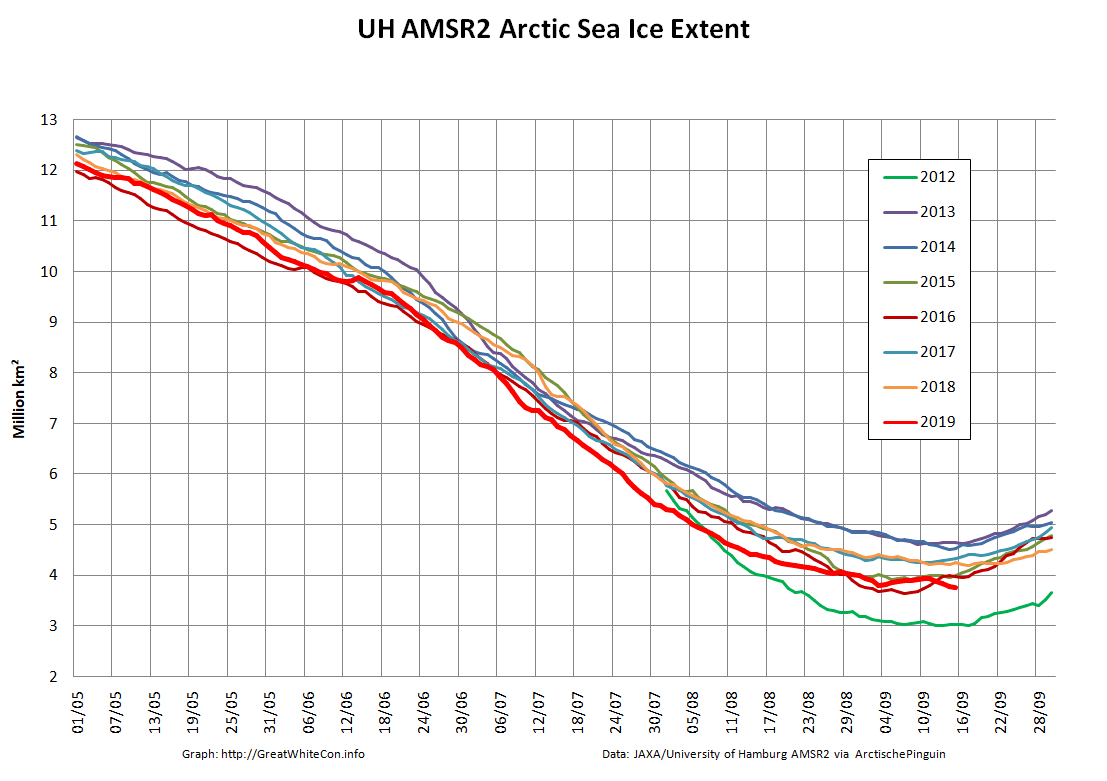
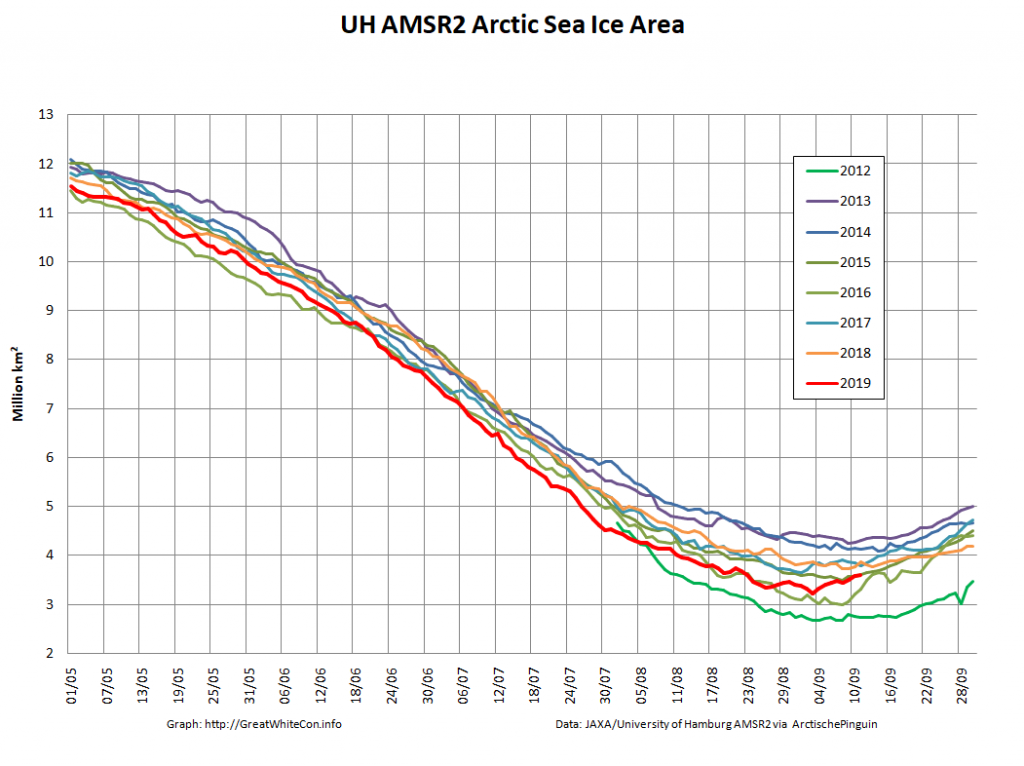
And what of our much beloved high resolution AMSR2 metrics derived by “Wipneus” from the University of Hamburg’s AMSR2 concentration data? Area certainly looks to be past the minimum for this year, whereas extent is still conceivably capable of another push lower:
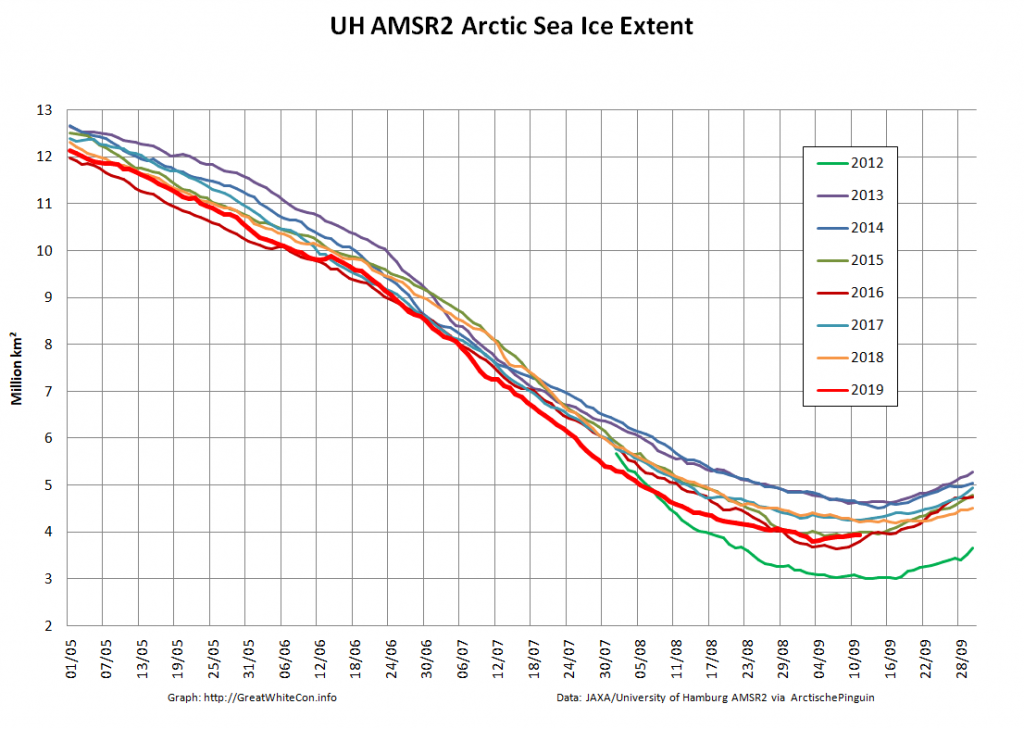
The provisional minimum extent for 2019 is 3.80 million km² on September 3rd.

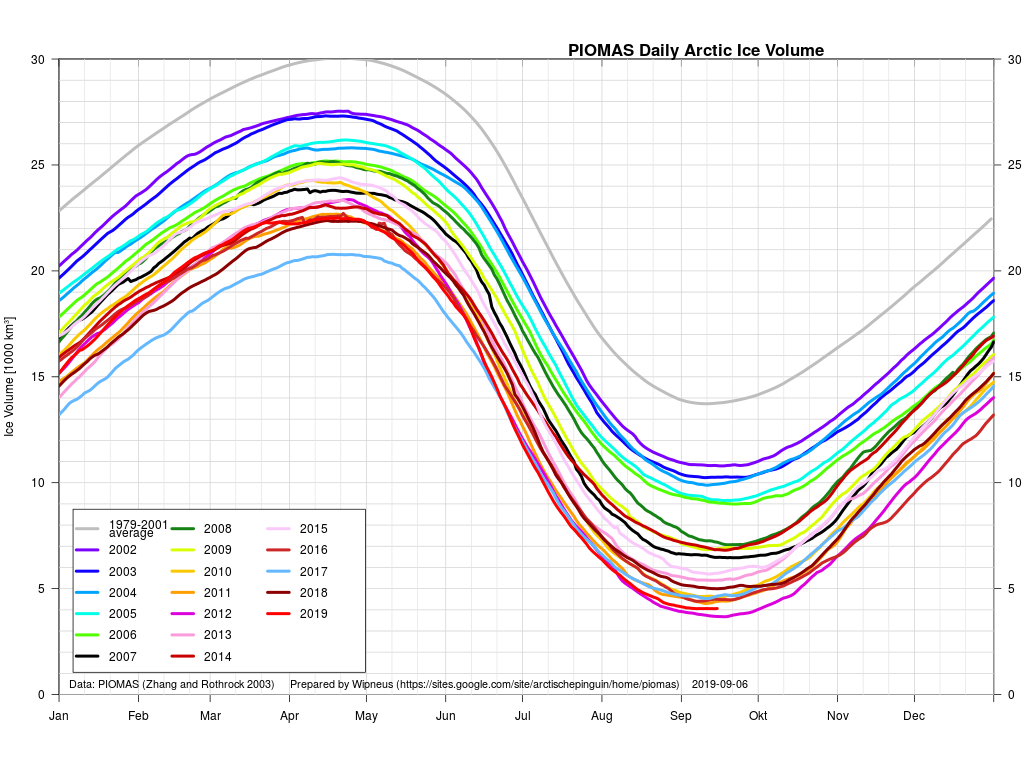
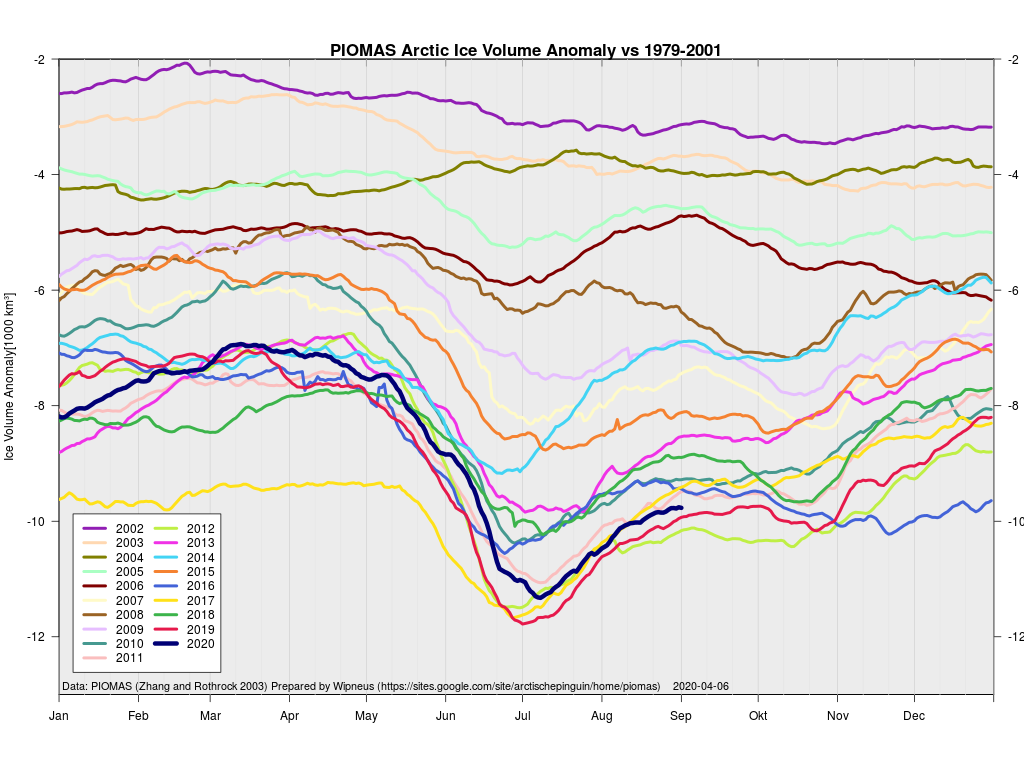
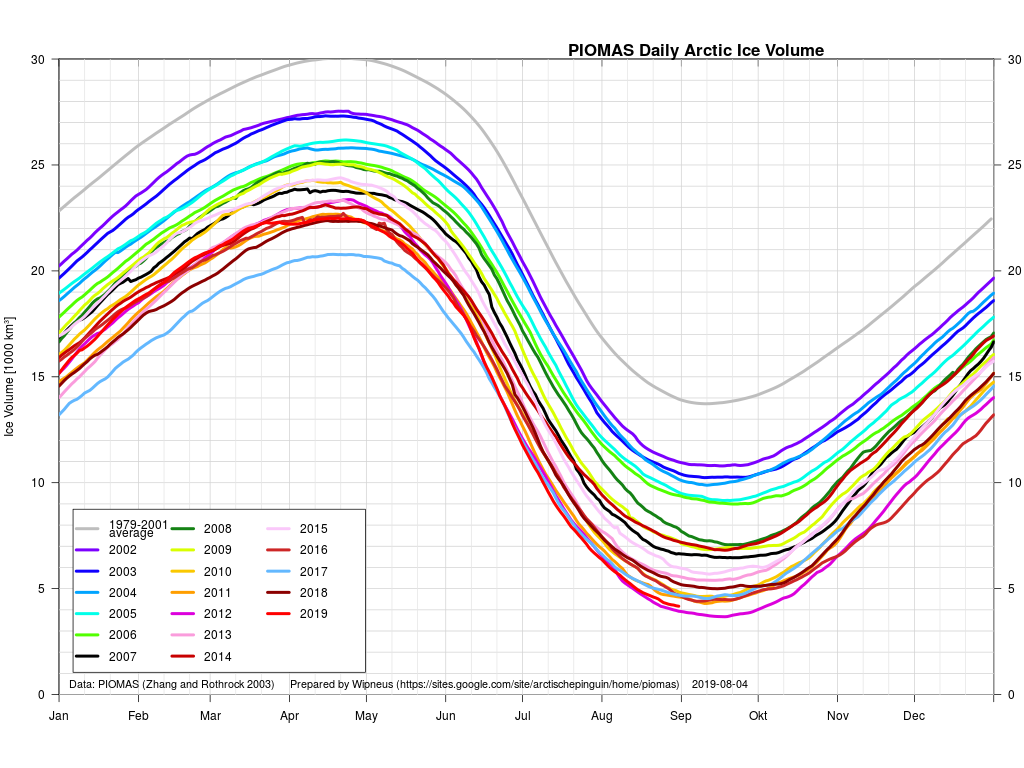
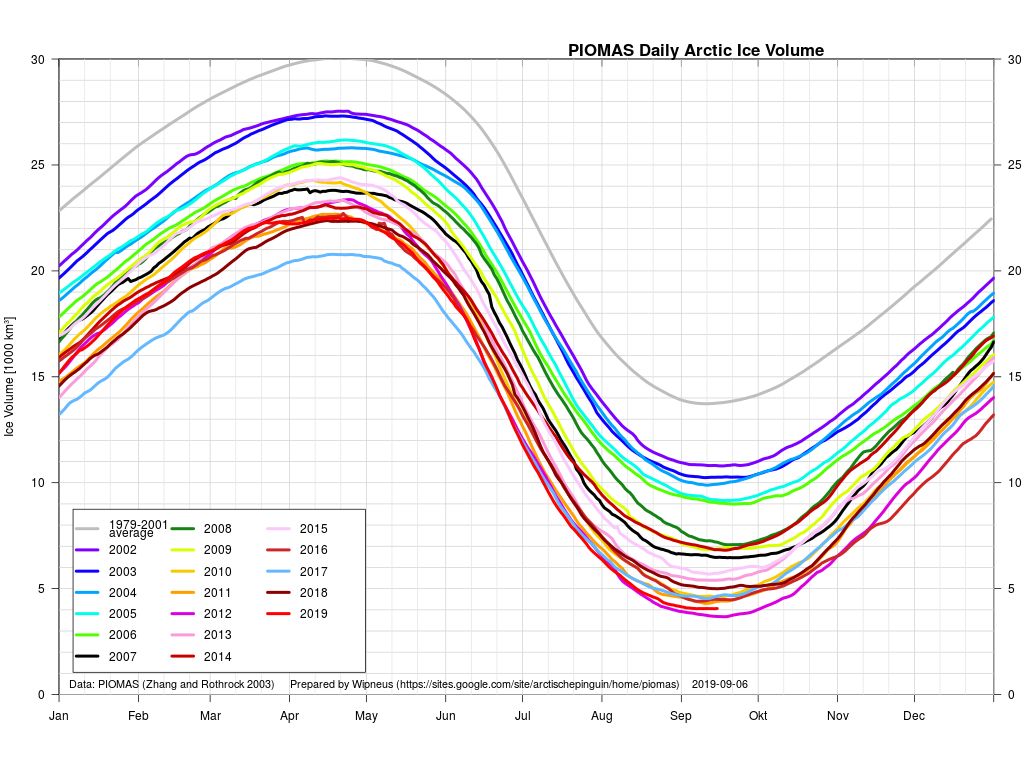
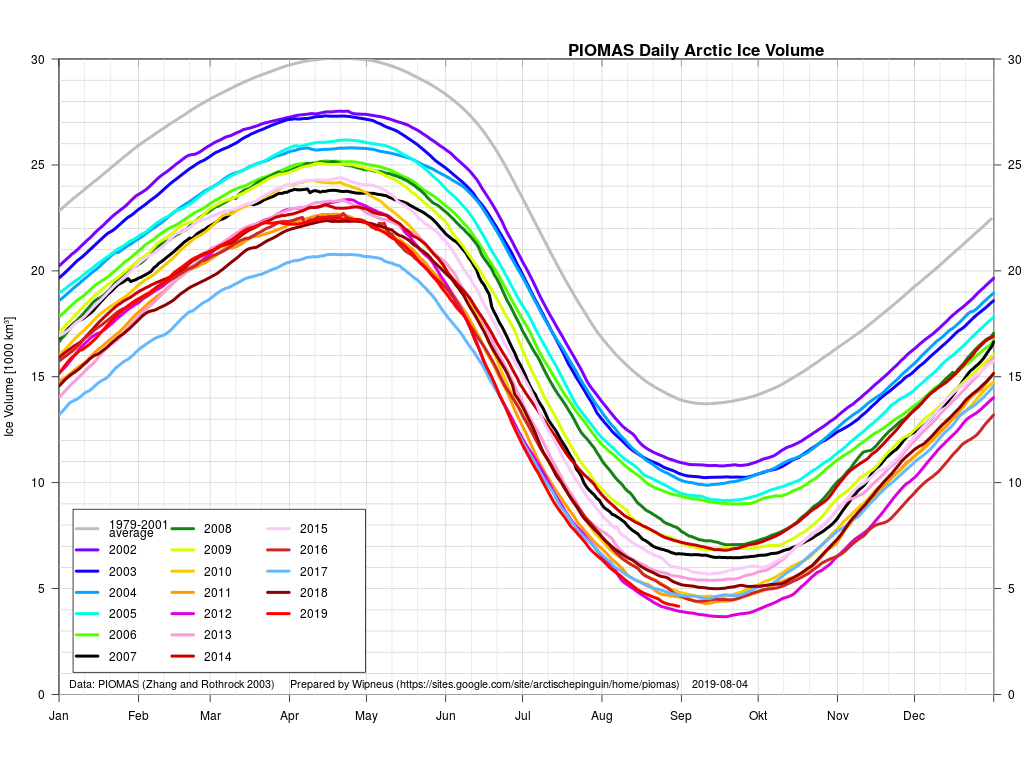
The minimum Arctic sea ice volume generally occurs slightly later than area or extent. The data certainly arrives later! Here’s the PIOMAS graph up to August 31st:
and here’s the associated thickness map:
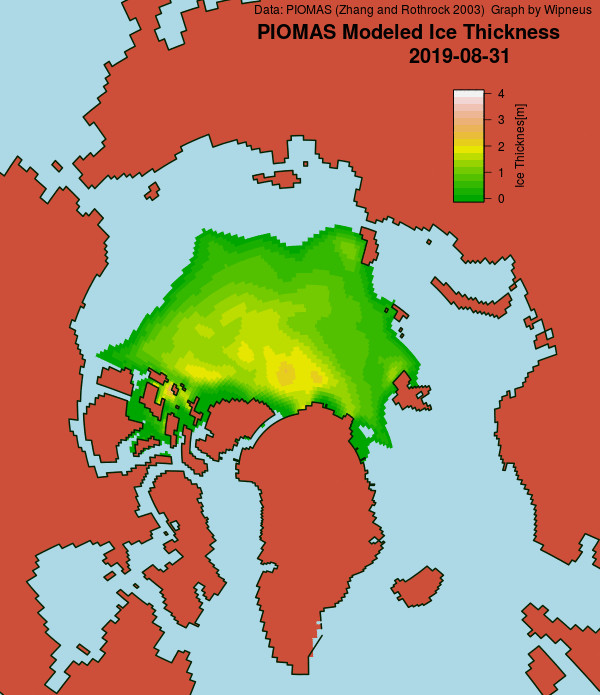
Note that Arctic wide modelled volume is only slightly higher than in 2012 at the same time of year, but there is a noticeably greater percentage gap in extent. That implies that average ice thickness across the Arctic is lower in 2019 than in 2012.

Note also that the thickest ice is no longer located along the north coasts of Greenland and the Canadian Arctic Archipelago. Here are the equivalent maps for previous years for comparison purposes:
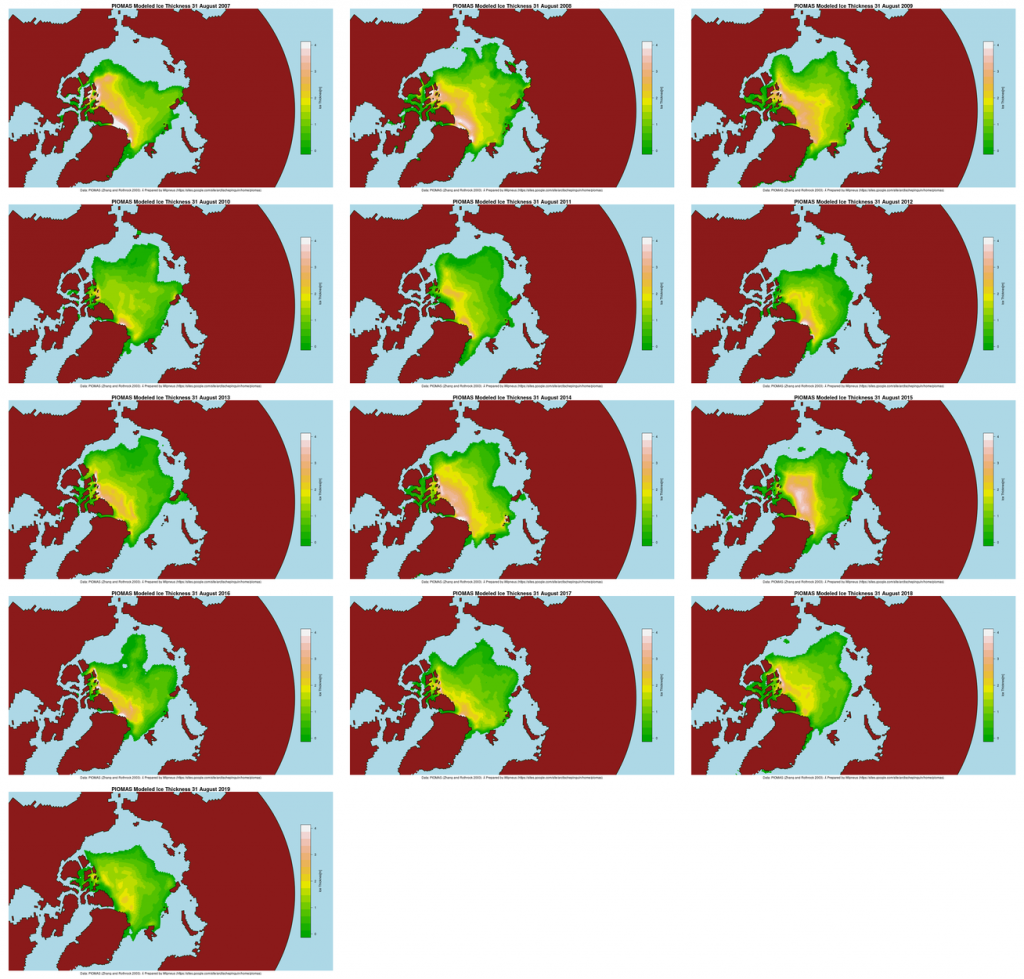
Perhaps JAXA extent will head still lower over the next few days? Perhaps PIOMAS volume will sneak below 2012 before the peripheral refreeze begins?

[Edit – September 13th]

JAXA Arctic sea ice extent has reached a new minimum of 4.09 million km².

NSIDC daily extent is currently 4.28 million km², still just above the September 4th minimum.

[Edit – September 14th]

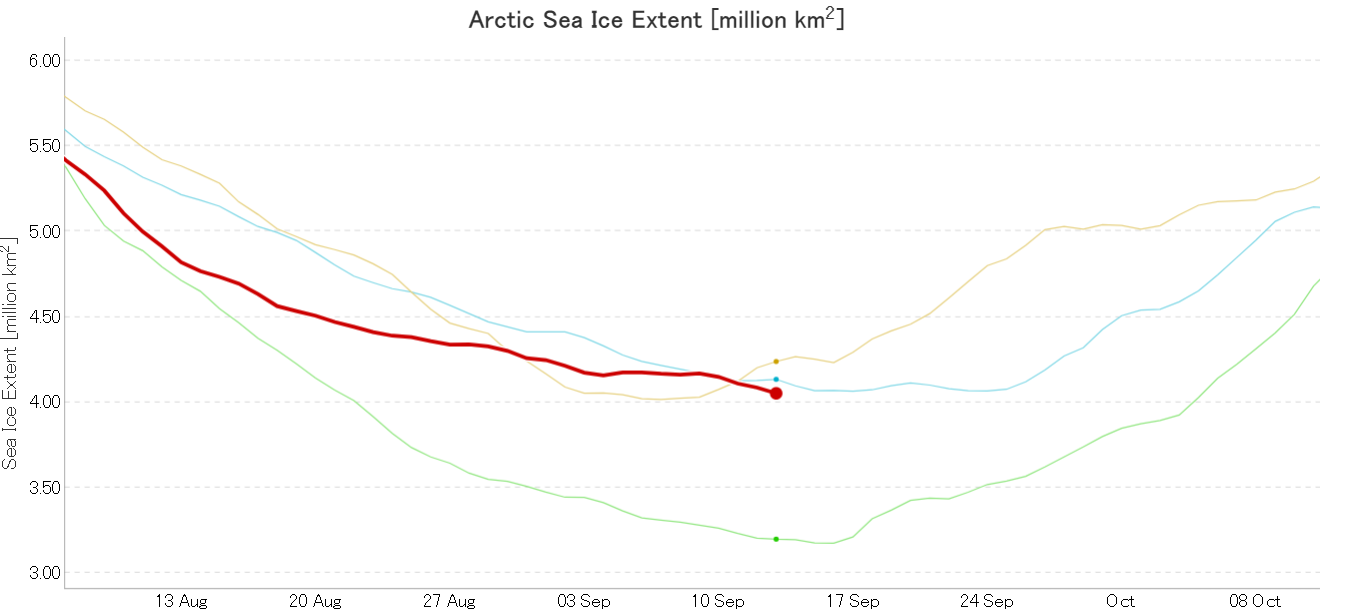
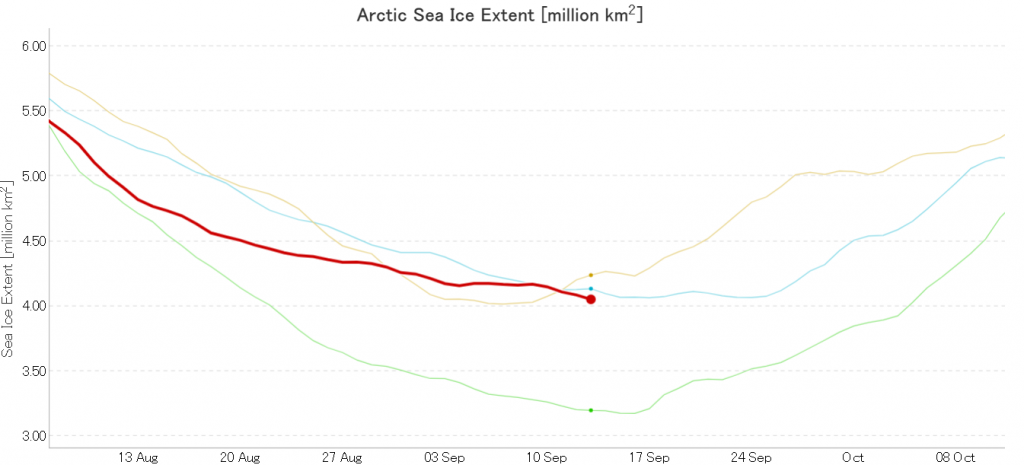
JAXA Arctic sea ice extent has reached a new minimum of 4.05 million km², which now puts it below the 2007 minimum that occurred somewhat later in September:
[Edit – September 14th PM]

NSIDC 5 day averaged extent has also (by a whisker!) reached a new minimum for the year of 4.285 million km²:
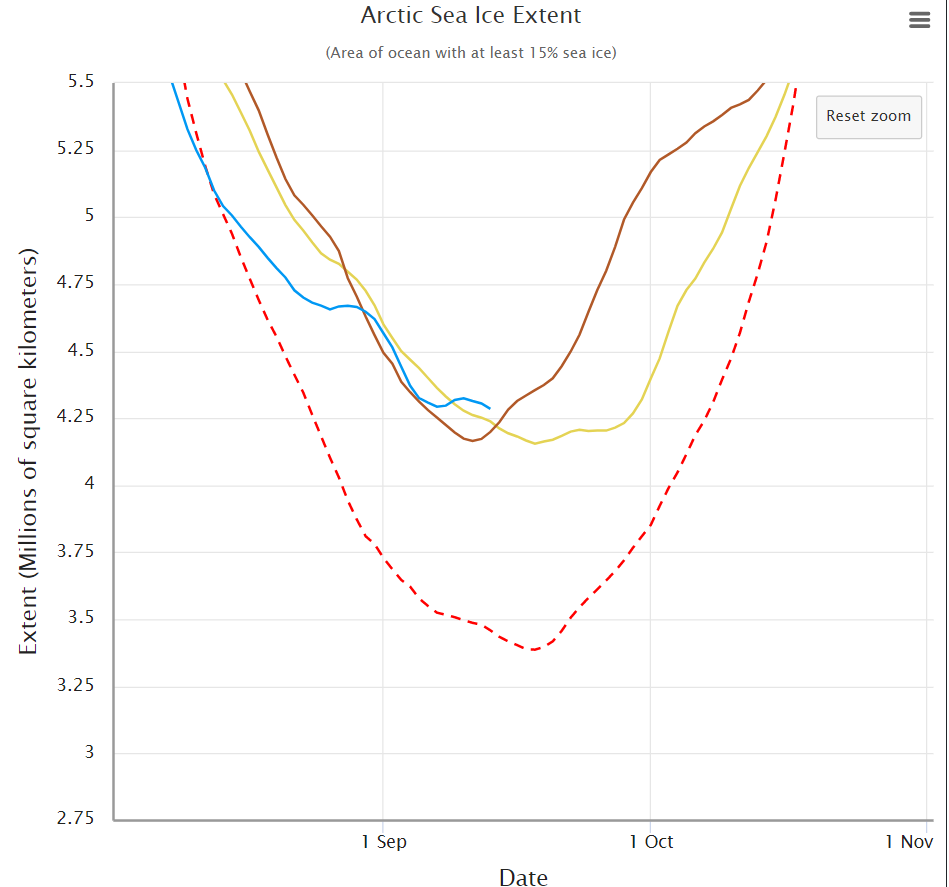
The daily number fell to 4.21 million km².

[Edit – September 15th]

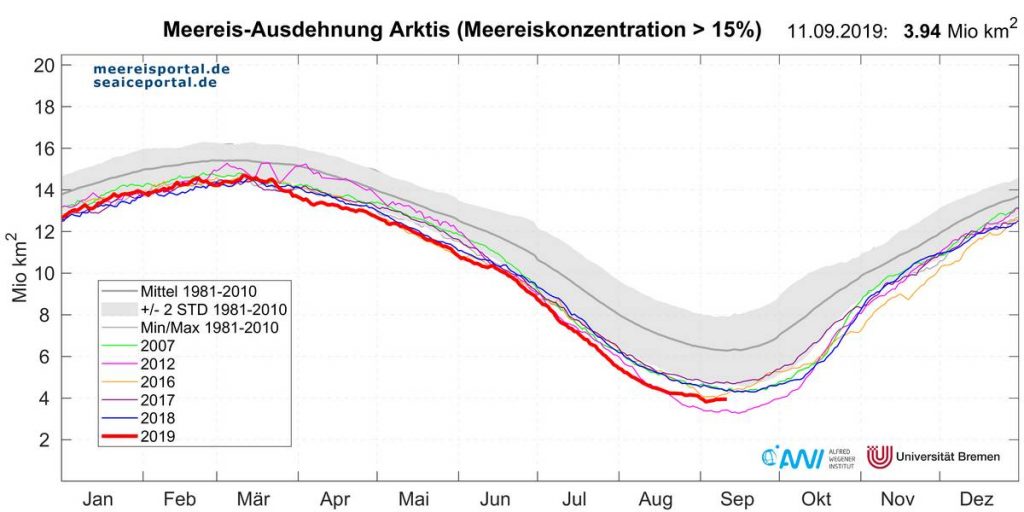
I have somewhat belatedly discovered that in the build up to the forthcoming MOSAiC Expedition the Alfred Wegener Institute recently announced  that:

The sea-ice extent in the Arctic is nearing its annual minimum at the end of the melt season in September. Only circa 3.9 million square kilometres of the Arctic Ocean are covered by sea ice any more, according to researchers from the Alfred Wegener Institute and the University of Bremen. This is only the second time that the annual minimum has dropped below four million square kilometres since satellite measurements began in 1979.
[Edit – September 16th]

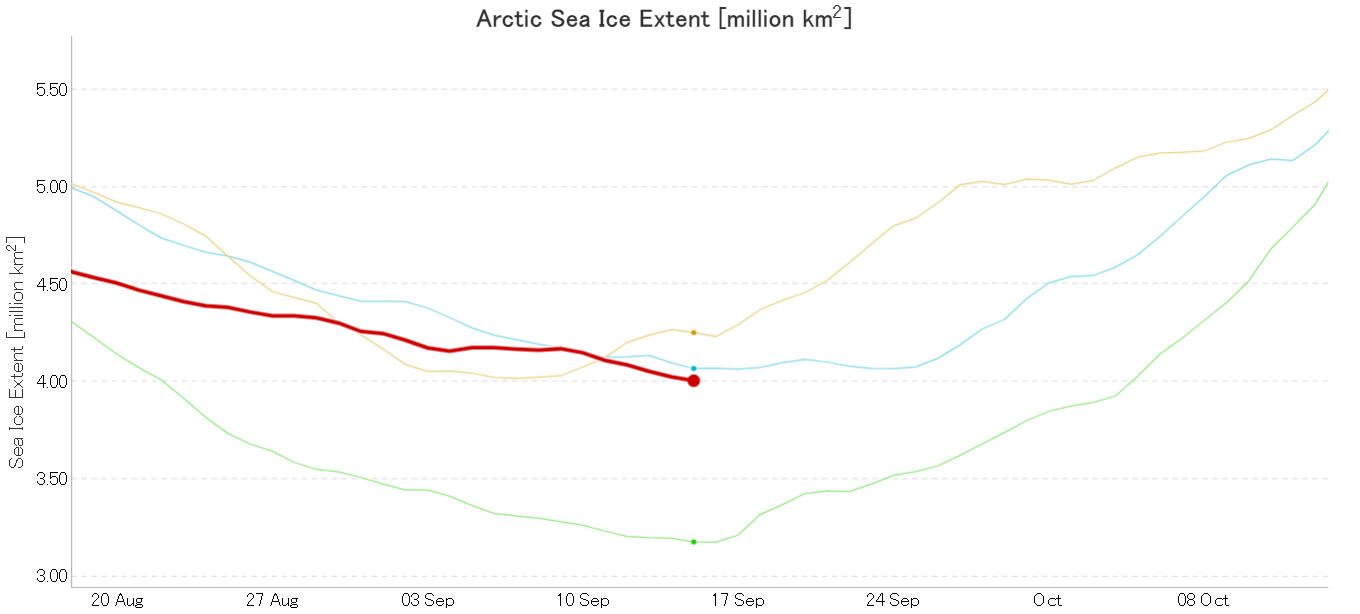
JAXA/ViSHOP extent has dropped below the 2016 minimum, and now measures 4.01 million km²:
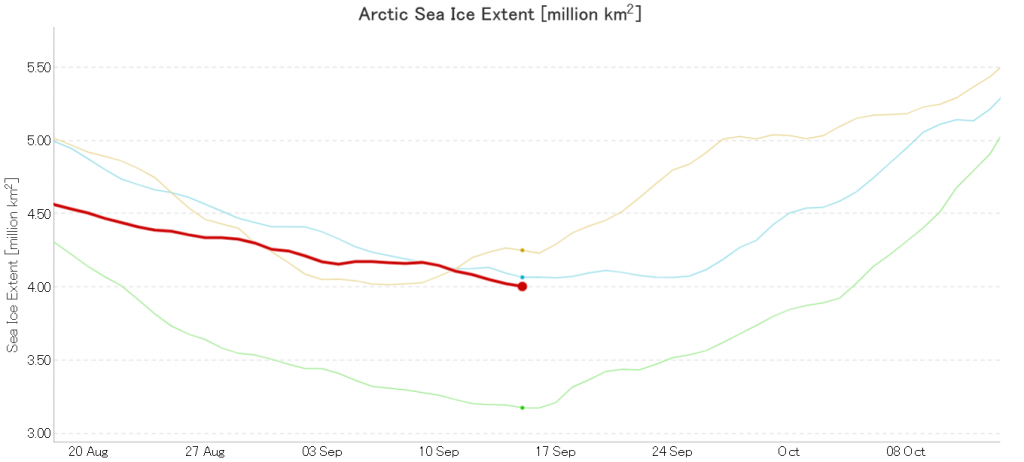
Only 2012 left to beat!

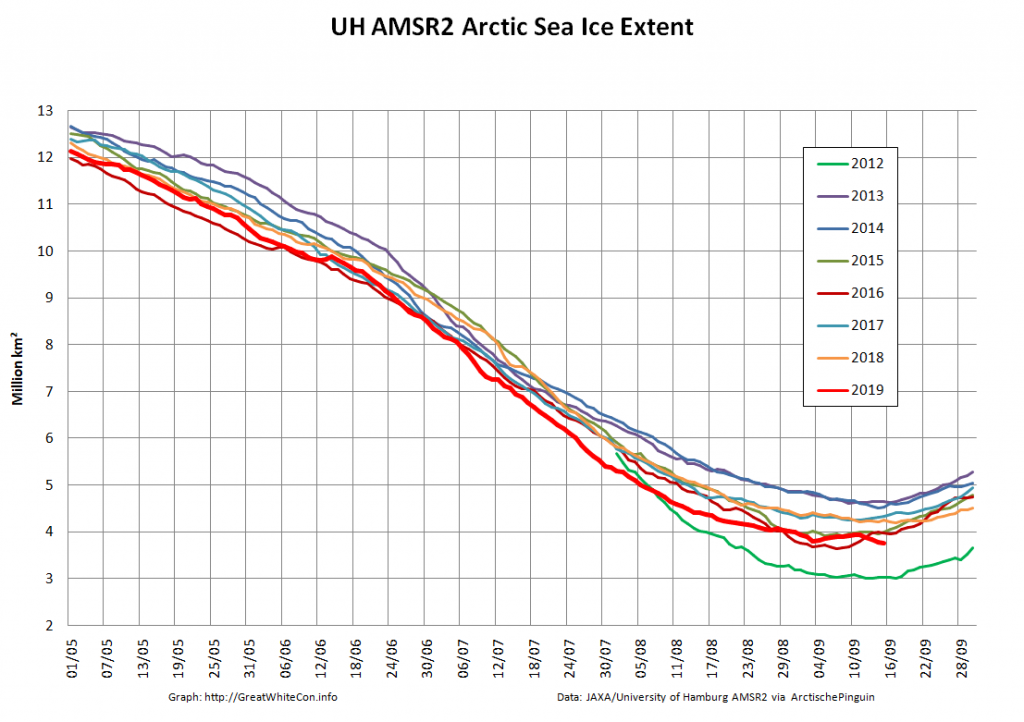
Wipneus’ high resolution AMSR2 extent has also posted a new low for the year, but still has a little way to go before passing 2016:
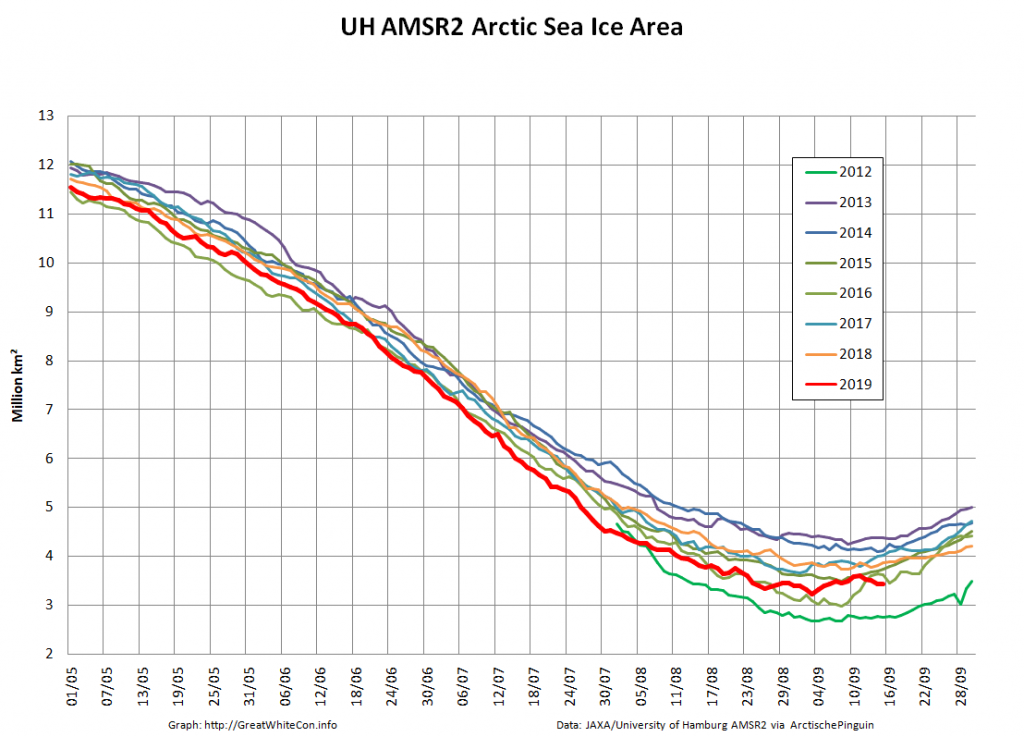
Area is also currently declining, but is still well away from a new minimum for 2019:
[Edit – September 19th]

After some more modest declines JAXA/ViSHOP extent has just increased marginally from the previous day, and now measures 3.98 million km²:
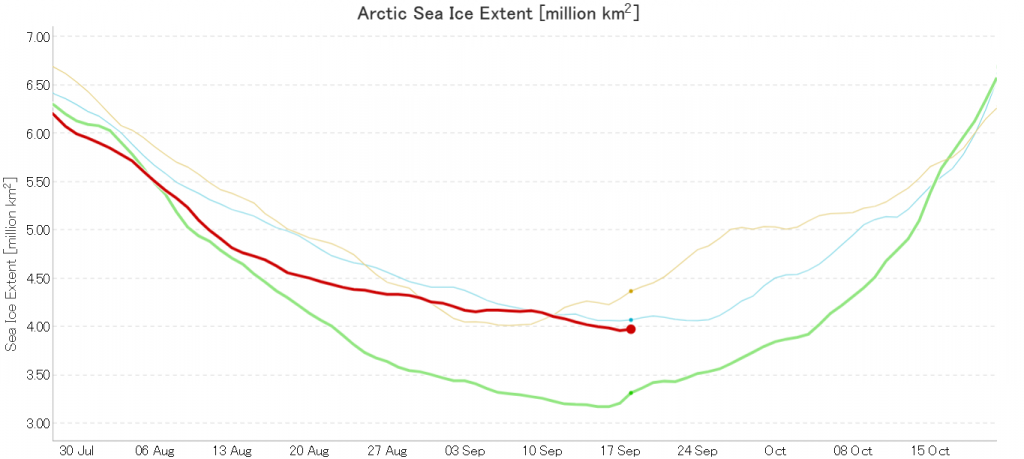
That puts the (very!) tentative minimum for 2019 at 3.96 million km² on September 17th.

[Edit – September 20th]

The mid month PIOMAS gridded thickness and volume numbers have been released:
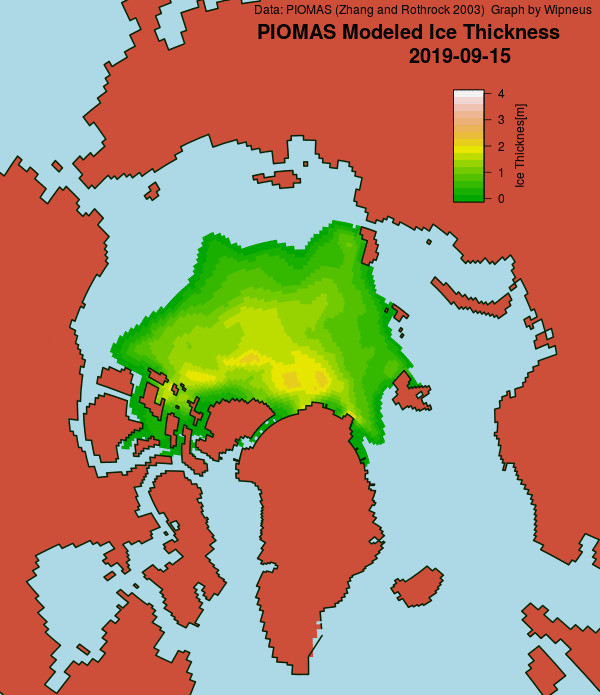
As anticipated given recent extent values, the volume difference from 2012 has increased somewhat over the last two weeks.

[Edit – September 23rd]

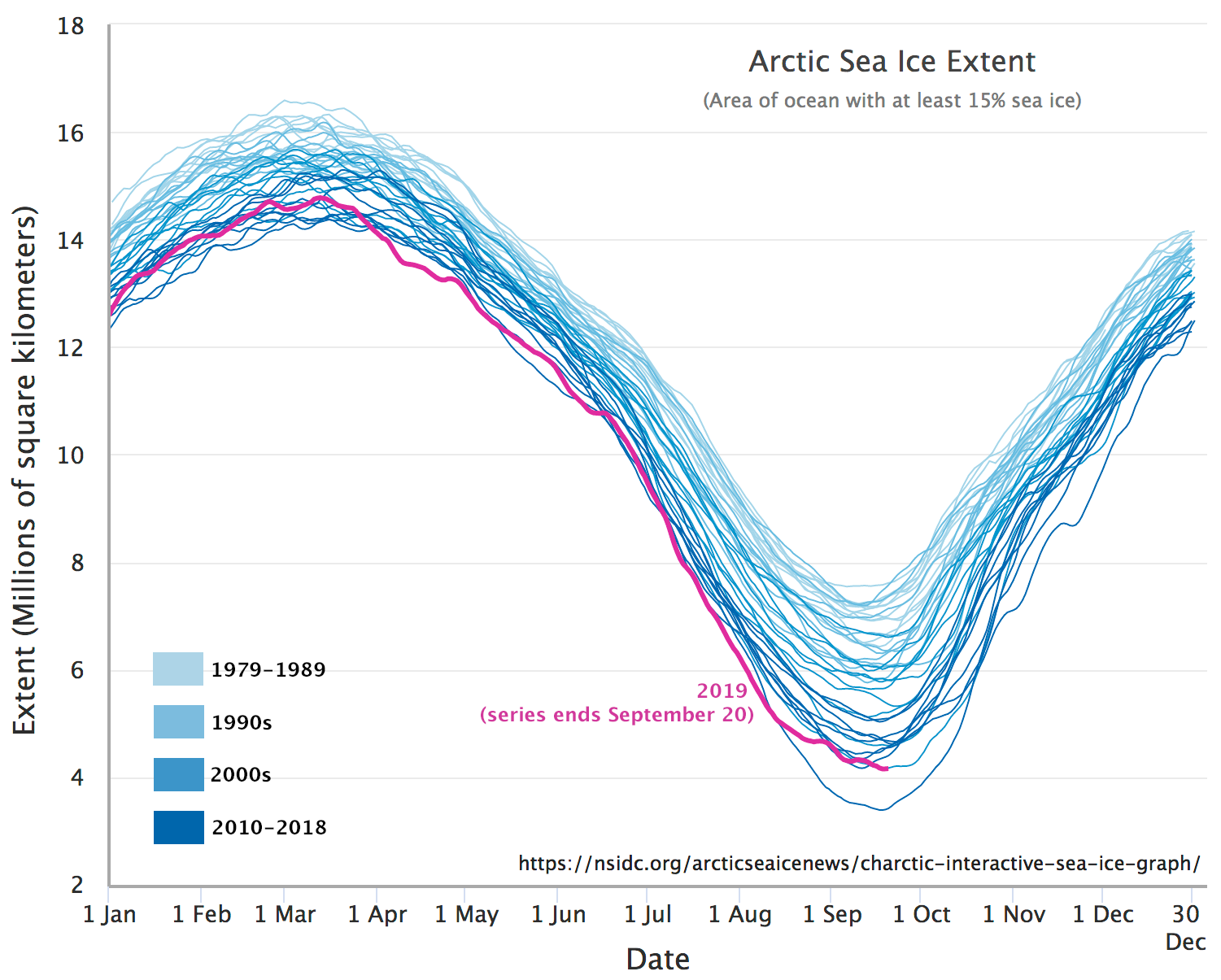
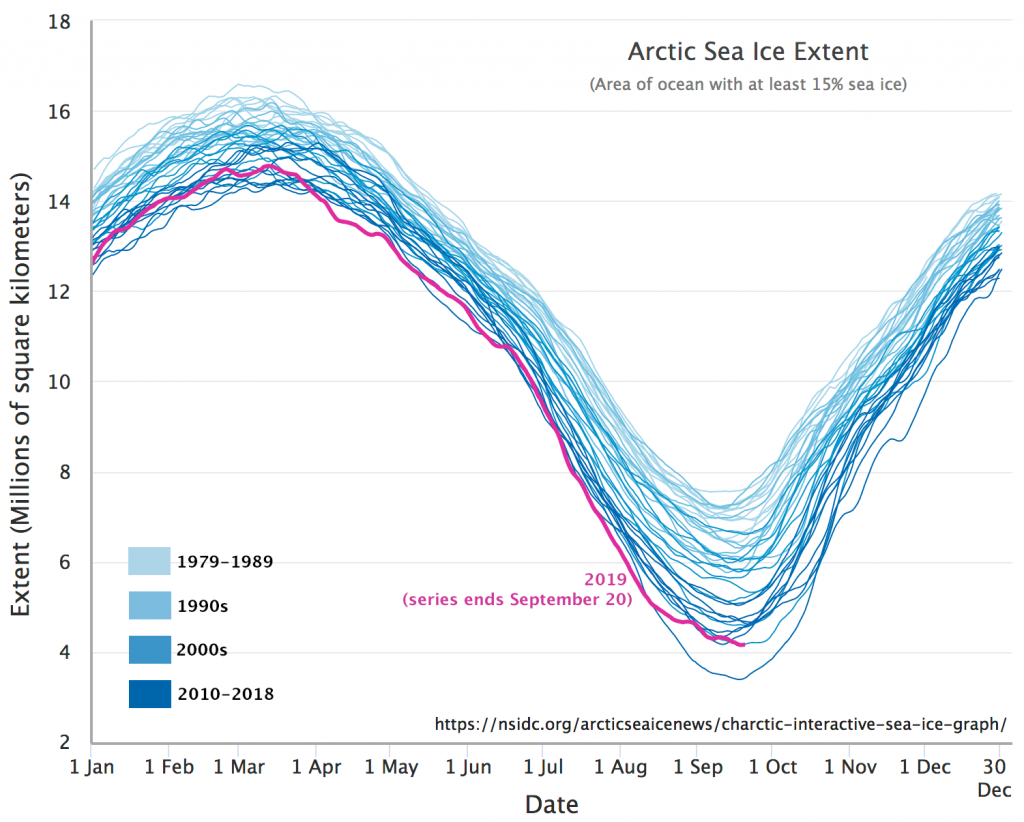
The National Snow and Ice Data Center have called the 2019 minimum in their latest edition of Arctic Sea Ice News:

On September 18, 2019, sea ice extent dropped to 4.15 million square kilometers (1.60 million square miles), effectively tied for the second lowest minimum in the satellite record along with 2007 and 2016. This appears to be the lowest extent of the year. In response to the setting sun and falling temperatures, ice extent will begin increasing through autumn and winter. However, a shift in wind patterns or a period of late season melt could still push the ice extent lower.
[Edit – September 24th]

To summarise the assorted minimum extent metrics for 2019:

University of Bremen – 3.77 million km² on September 18th, 2nd lowest behind 2012.
JAXA/ViSHOP – 3.96 million km² on September 17th, “Statistical tie” with 2016 for 2nd lowest.
NSIDC 1 day – 4.10 million km² on September 17th, “Statistical tie” with 2016 for 2nd lowest.
NSIDC 5 day – 4.15 million km² on September 18th, 2nd lowest behind 2012.

[Edit – October 1st]

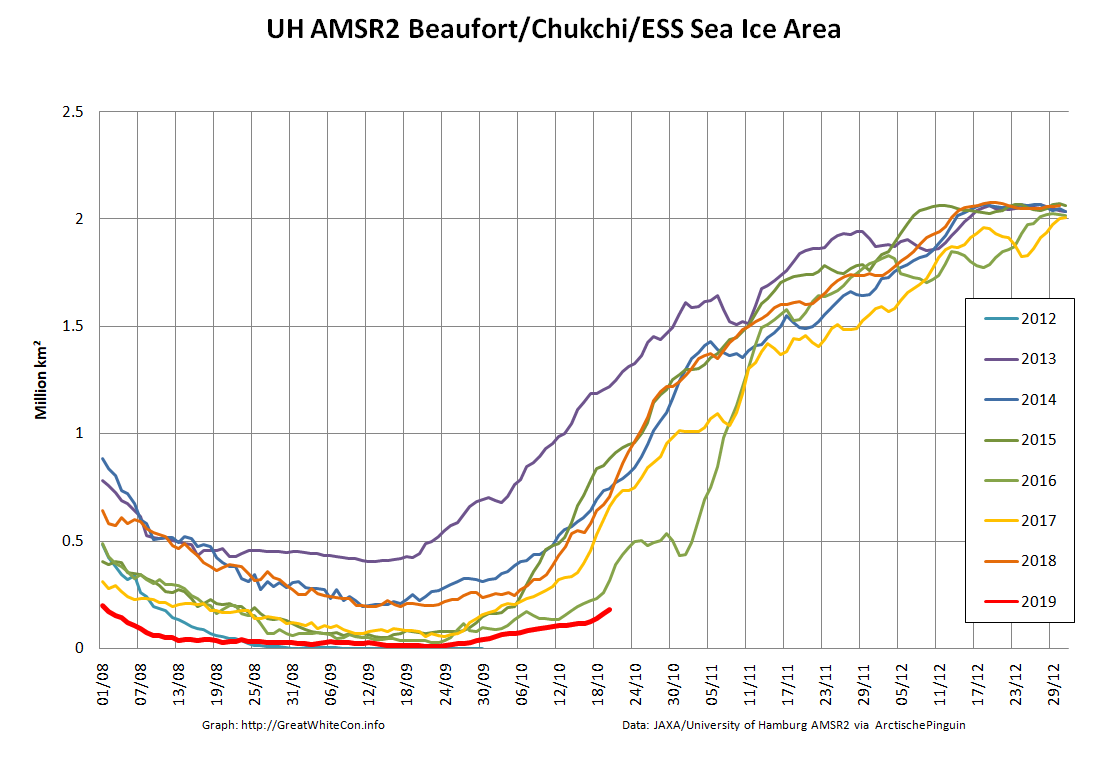
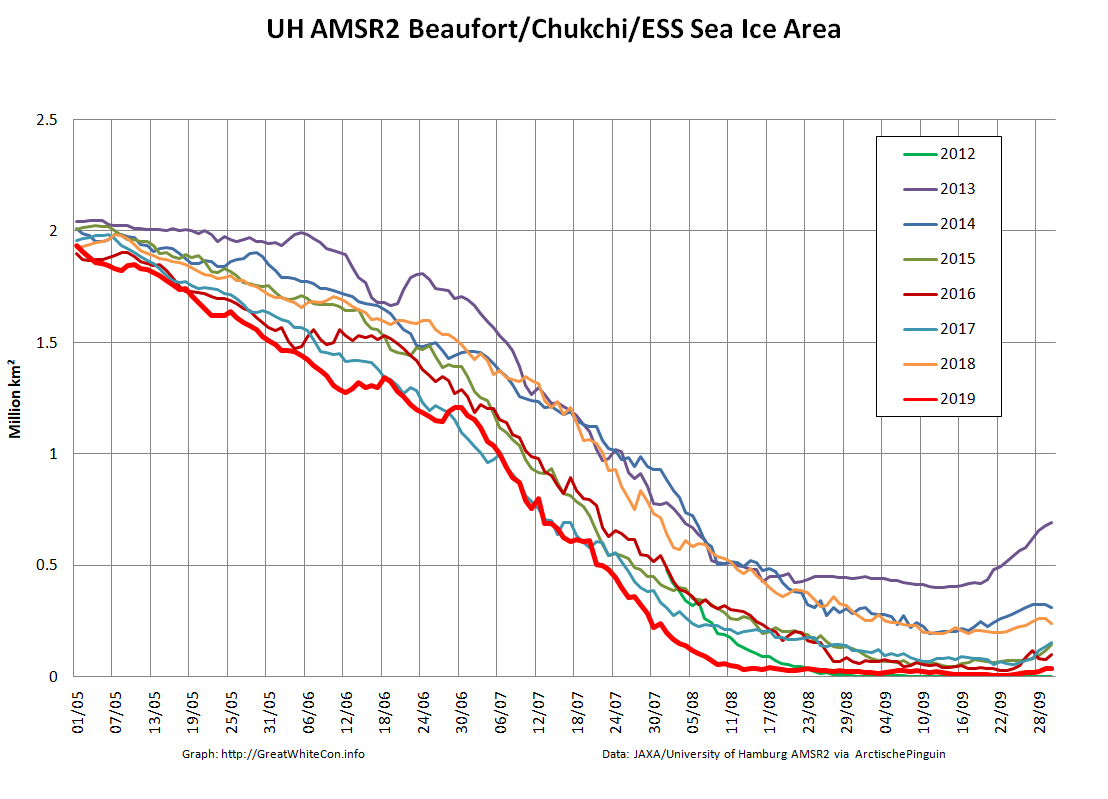
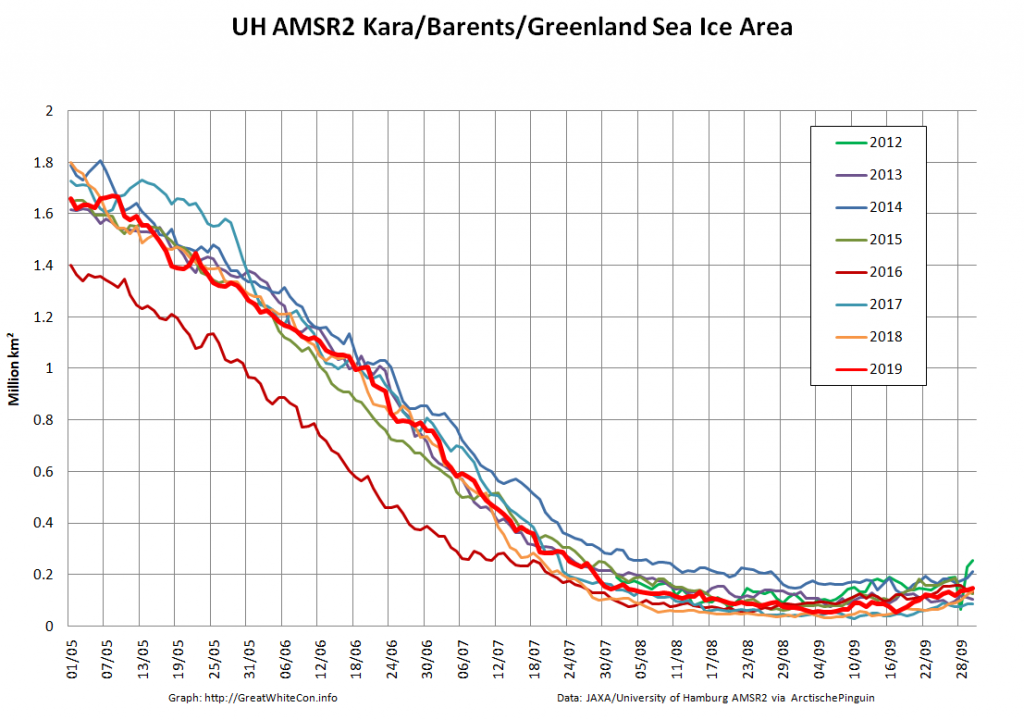
Two sides of the same coin? Sea ice area on the Pacific side of the Arctic has been at historic lows for most of the melting season:
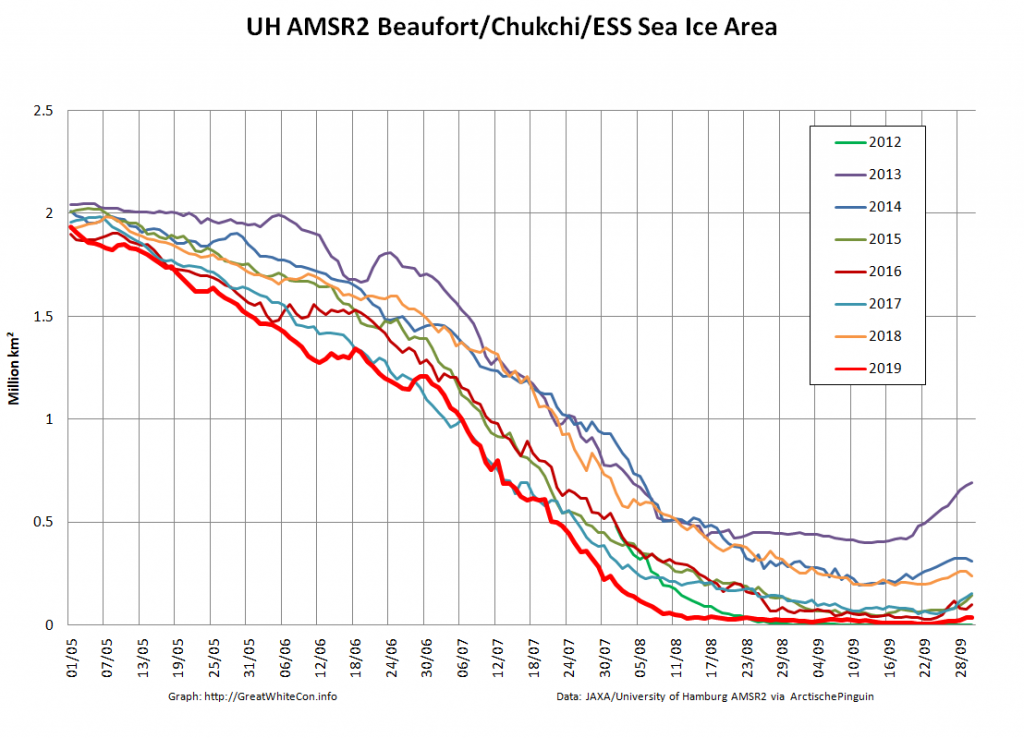
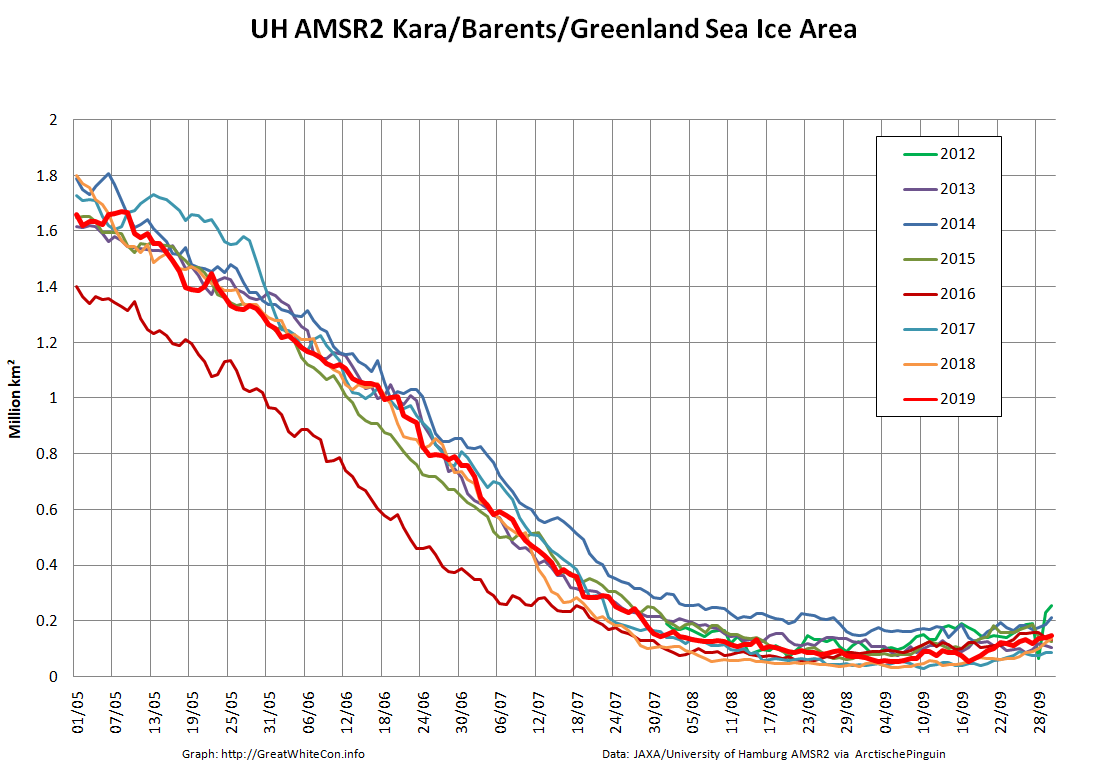
whereas on the Atlantic side:
[Edit – October 7th]
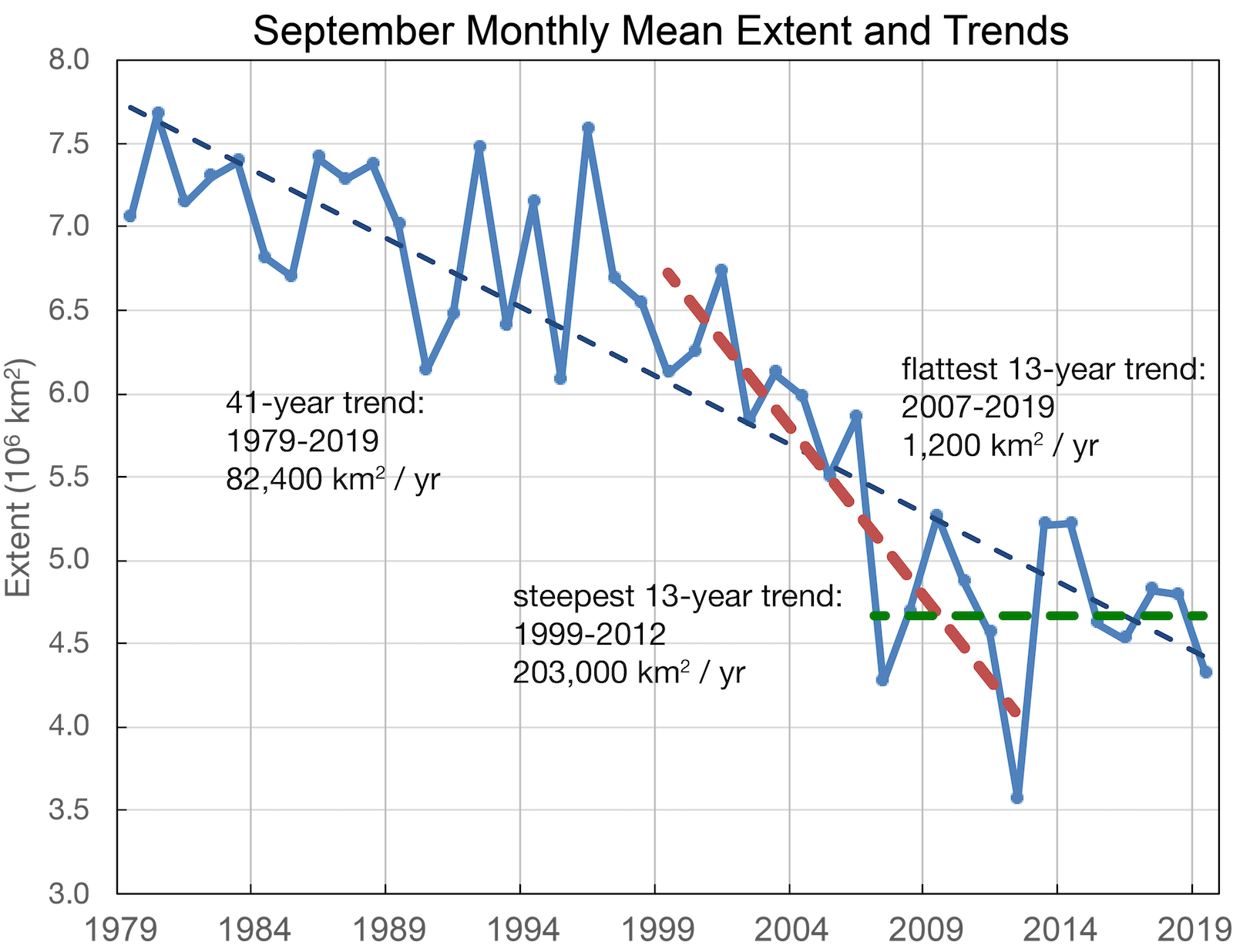
The September monthly numbers have arrived from the NSIDC, together with some intriguing annotations by Walt Meier:
Watch this space. Just in case!
The Northwest Passage in 2018

The time has come to start speculating about if, and when, the Northwest Passage will become navigable for the host of small vessels eager to traverse it this summer. Almost one month later than in 2017!
Whilst the eastern and western entrances to the assorted routes through the Canadian Arctic Archipelaga have been empty of sea ice for quite some time, the central section between Bellot Strait and Gjoa Haven and/or Cambridge Bay is still chock a block:

In the east here is a drone’s eye view of Cumming Inlet, courtesy of the Polish team of Michał and Ola Palczyński aboard S/V Crystal:

created by dji camera

It’s not entirely clear when that picture was taken, since according to Michał’s blog:

The waters beyond the Bellot Strait are covered with impassable ice, and the ice in the Beaufort Sea has 90% concentration in some places and reaches up to the shore. In this difficult situation, by 15th August two yachts have already given up and turned back to Greenland (including Blue Peter from our cove).

Here’s what lies ahead of Crystal and her remaining companions, according to the Canadian Ice Service:

Maud_201808181800

Meanwhile in the Beaufort Sea S/V Dogbark has been battling her way through that “90% concentration” sea ice. Dogbark has now made it as far as Mikkelsen Bay, just past Prudhoe Bay in Alaska:

2018-08-19_1149-DogBark

Here is the United States’ National Weather Service map of sea ice concentration in the area:

2018-08-19_NWS

According to a recent Q&A session on the Dogbark blog:

What does 7/10ths ice mean? We don’t want to know! It is more ice than we want to try and pass, that’s for sure. But the ice charts we look at refer to ice by % of sea coverage, so 7/10ths would look like water mostly covered by large, immovable objects. 5/10ths was as much as we have seen, and we got out of there as fast as we could with some help from our flying eyeball. See Dogbark’s Facebook page for a quick snippet of less dangerous ice.

Meanwhile the Canadian icebreaker CCGS Amundsen has sailed past Arctic Bay and Resolute:

Amundsen-2018-08-19_1400

I cannot help but wonder what vessels might be closely following in his wake?


[Edit – September 7th]

Finally there comes news that a “pleasure craft” has made it through the Canadian Arctic Archipelago from east to west as far as Tuktoyaktuk. I’d been wondering which vessel it was that seemed immobile near the western end of the Bellot Strait on the MarineTraffic maps. This one’s from August 19th:

MarineTraffic-2018-08-19_2330-Crop

Now I know! Thanks to a heads up on the Arctic Sea Ice Forum I’ve discovered that it’s the S/V Thor. Here’s the tracking map of his efforts to get through all the old ice in the vicinty.

2018-09-07-Thor-Bellot

The map reveals that Thor made it through the Bellot Strait on August 6th, but didn’t manage to make significant headway out of the Franklin Strait until August 28th.

Thor departed from Tuk earlier today:

Thor-2018-09-07-2000

He now only has this to contend with:

Beaufort-Conc-20180907