Last summer Ella Hibbert set off from Haslar Marina near Portsmouth in southern England alone in her yacht Yeva, intending to circumnavigate the Arctic in a single summer,.
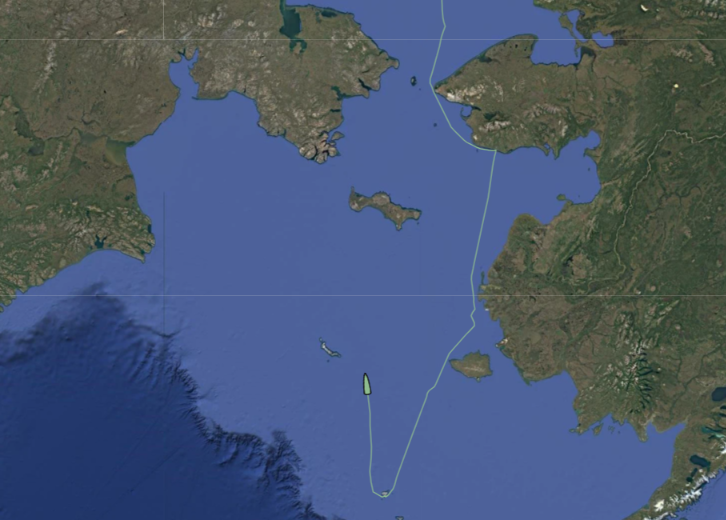
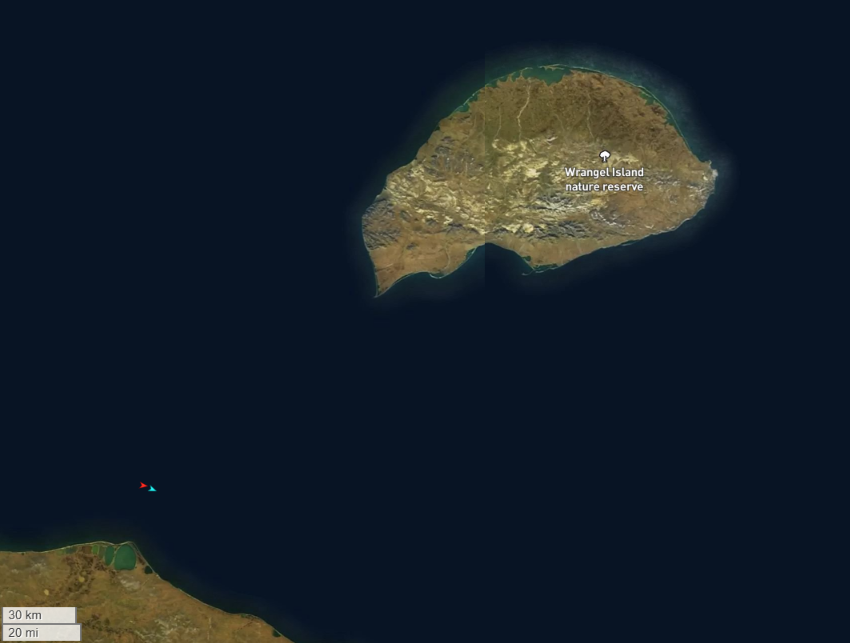
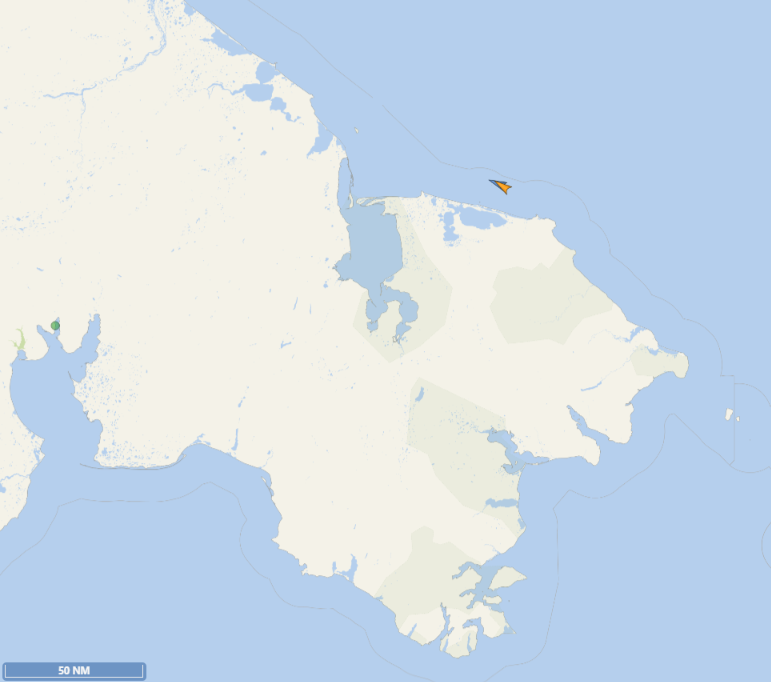
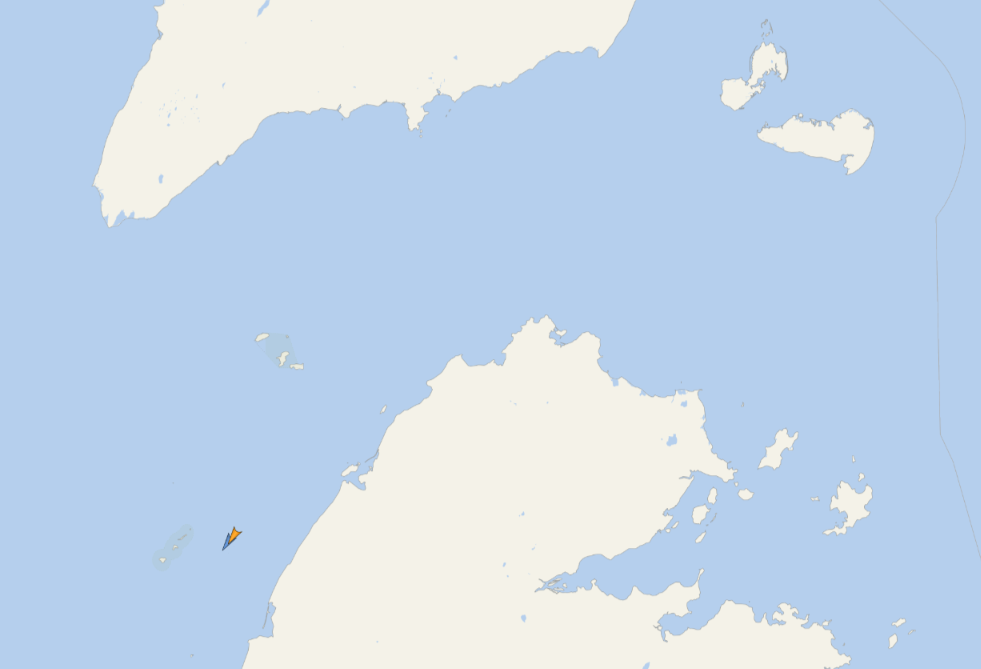
Ultimately that’s not how things turned out, and after assorted trials and tribulations on the way through the Northwest Passage, Yeva spent the winter on Saint Paul Island in the Bering Sea. Now that the sea ice is melting in the Chukchi Sea, Yeva has set off for the Bering Strait once again, this time aiming to complete her circumnavigation via the Northern Sea Route along the northern coast of Siberia. Here’s how Yeva’s tracking map looks at the moment:
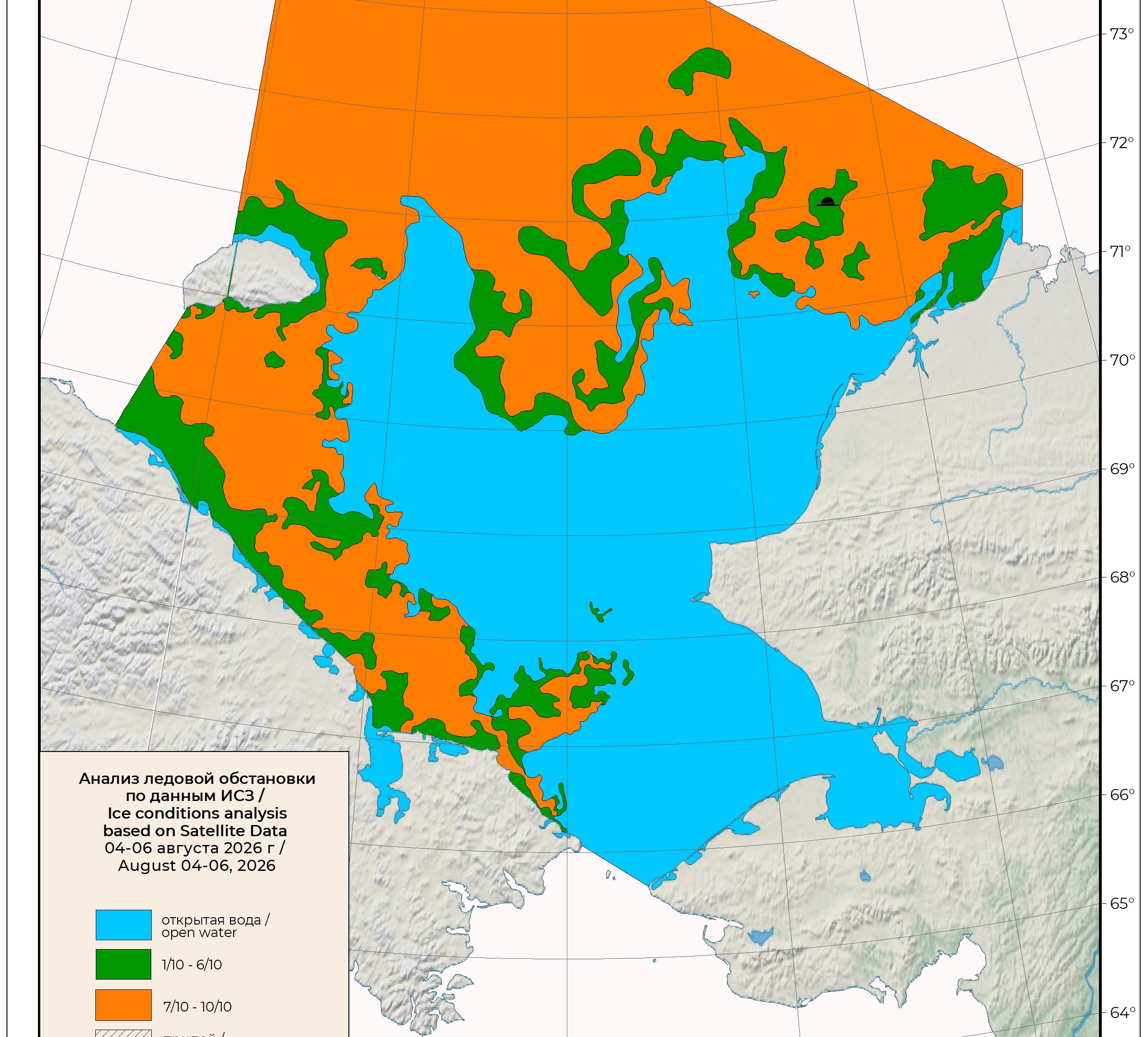
The latest sea ice concentration map from the Russian Arctic and Antarctic Research Institute shows that the way past Wrangel Island is currently blocked by a band of 7-10/10 concentration ice:
Presumably Ella is working on the assumption that further melting will have occurred by the time Yeva reaches the coast of Chukotka?
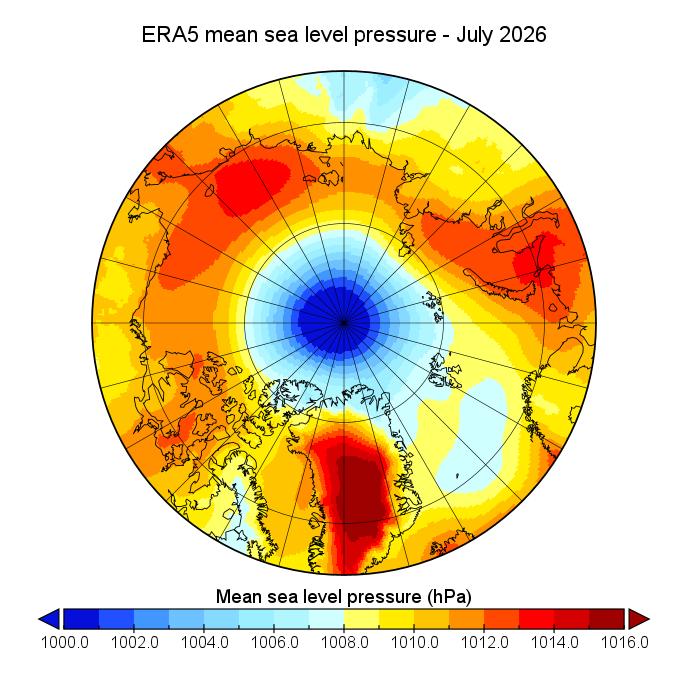
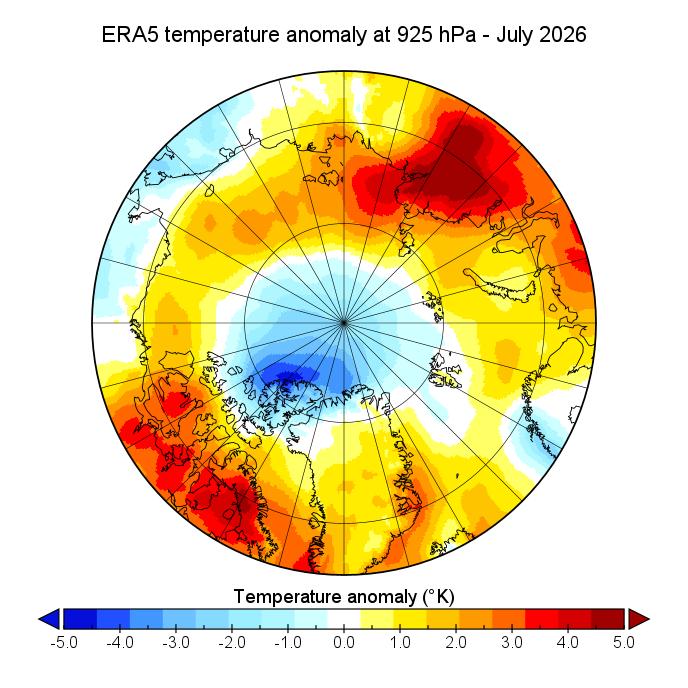
July was once again dominated by low pressure and anomalously low temperatures over the central Arctic:
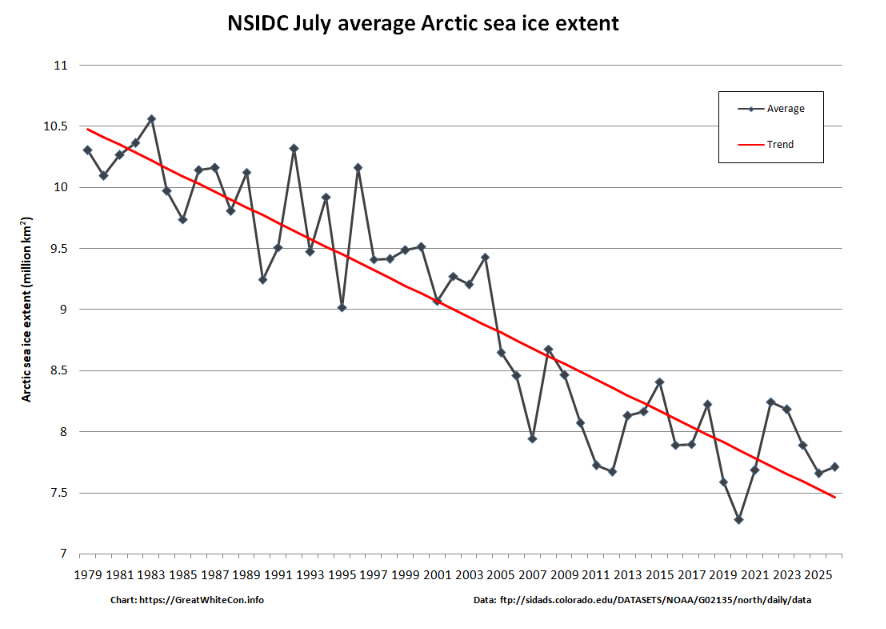
As a consequence the NSIDC monthly average extent for July was 6th lowest in their record going back to 1979:
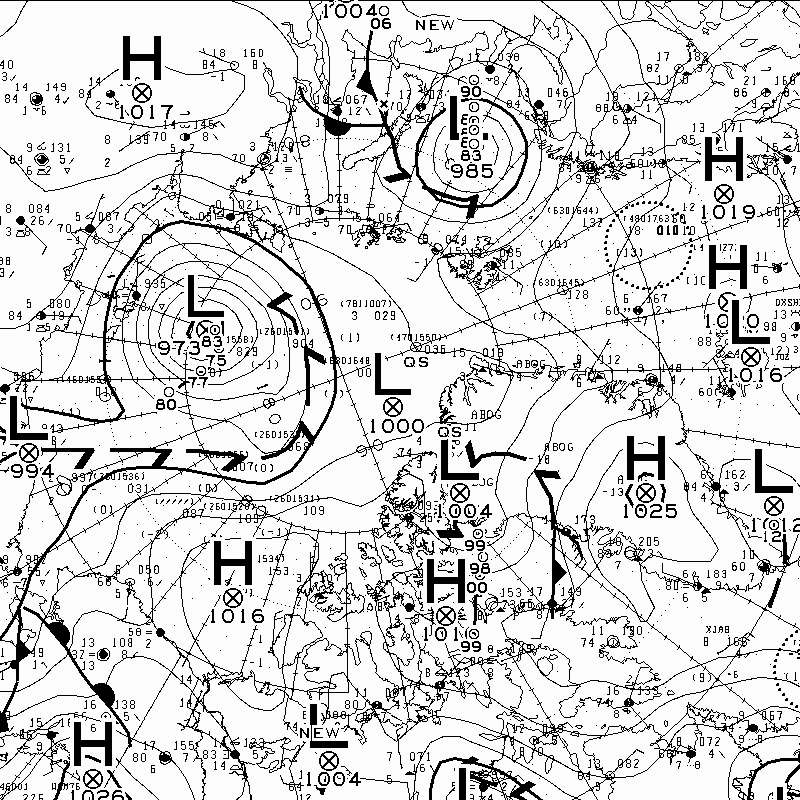
August began with low pressure still dominant. According to the Canadian Meteorological Centre yet another cyclone bottomed out with a mean sea level pressure of 973 hPa on the 4th:
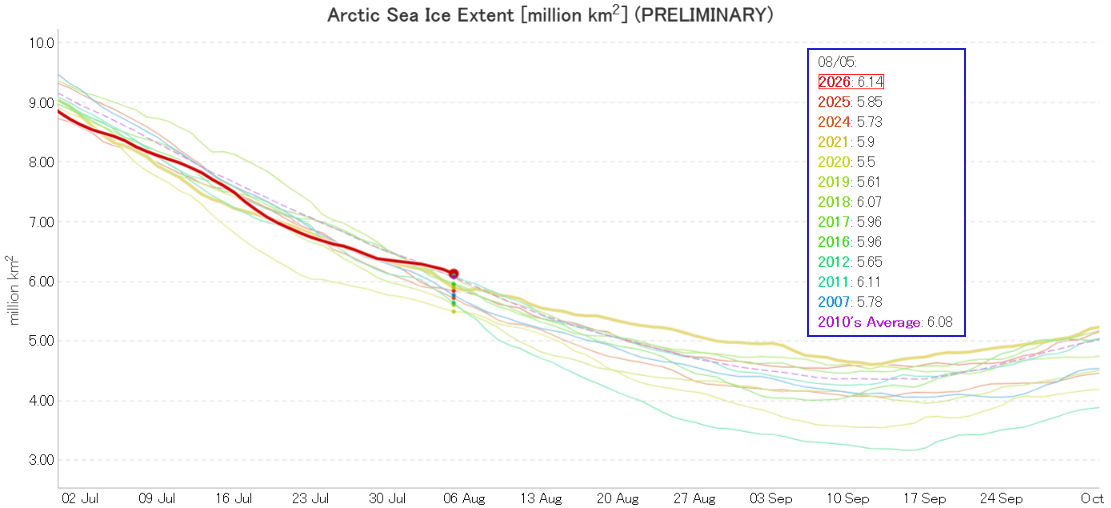
The continuing cyclonic activity has dispersed the sea ice, and JAXA extent is currently 12th lowest in their record:
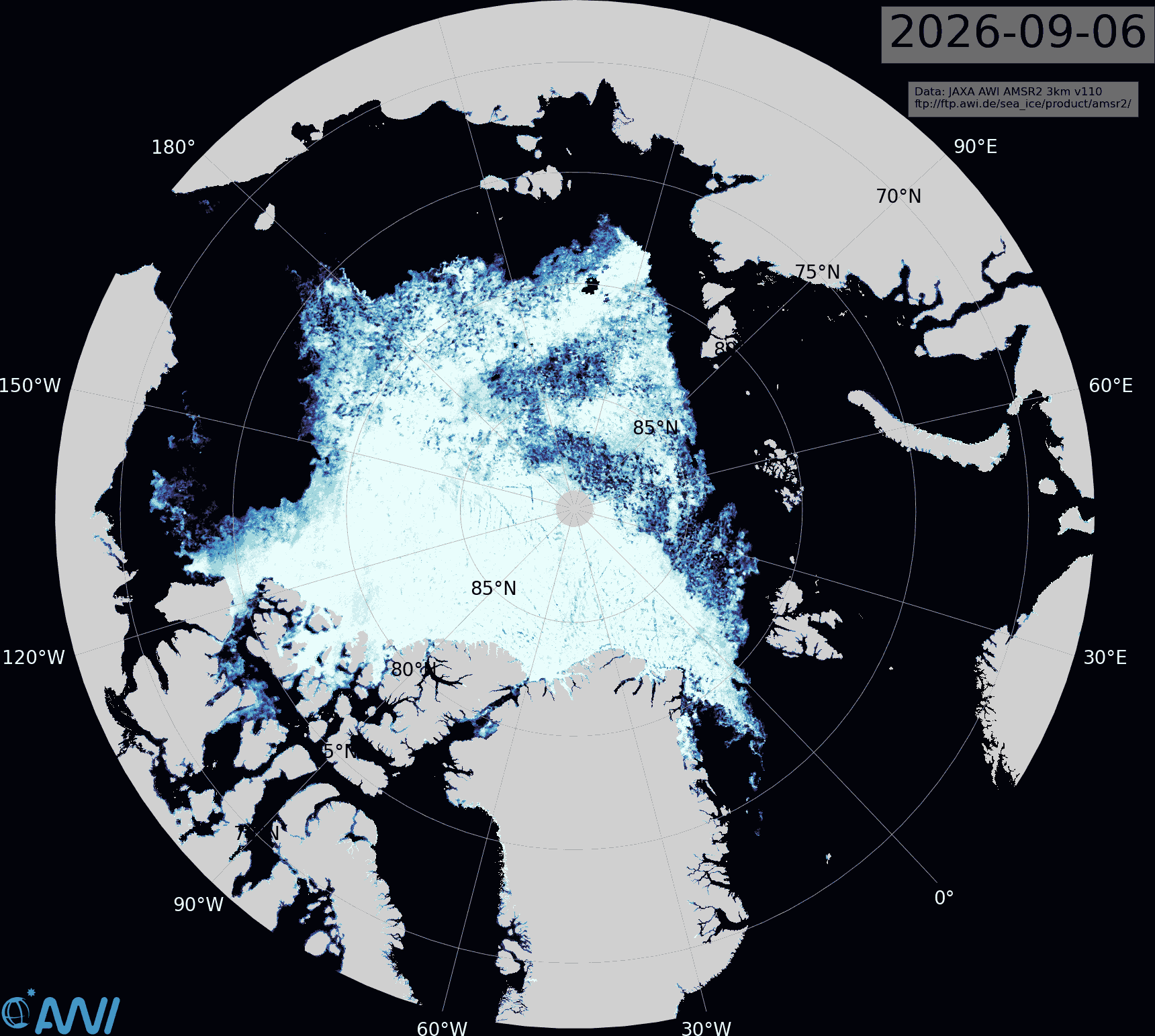
The other side of the same coin is that reduced sea ice concentration is now apparent across large areas of the Central Arctic Basin:
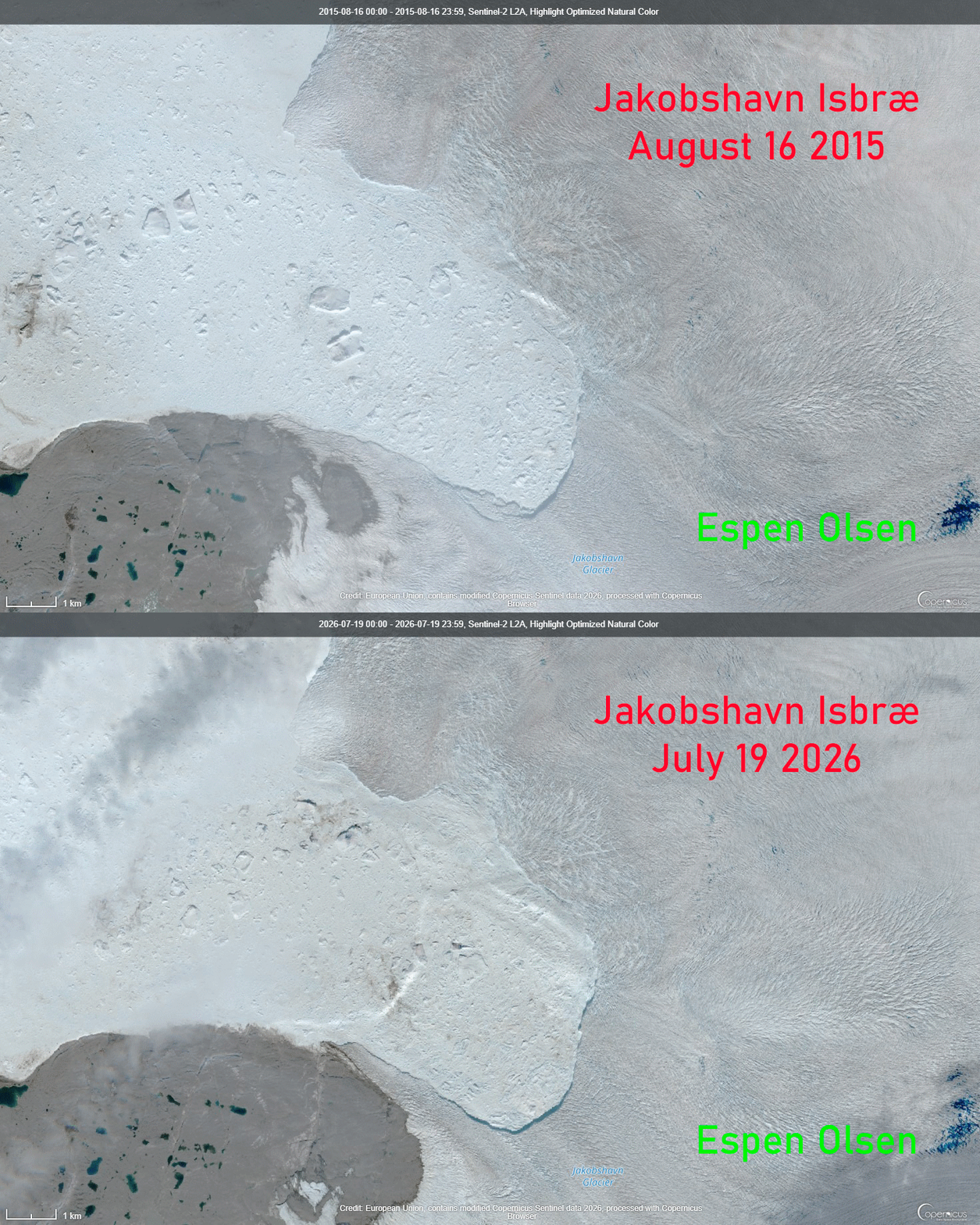
Here is an animation of recent events at the Jakobshavn Glacier, courtesy of Espen Olsen at the Arctic Sea Ice Forum. The animation compares the position of the glacier’s calving front during the previous record retreat in August 2015 with its position on July 19th 2026.
Click the image to view the animation at full resolution:
[Update – August 7th]
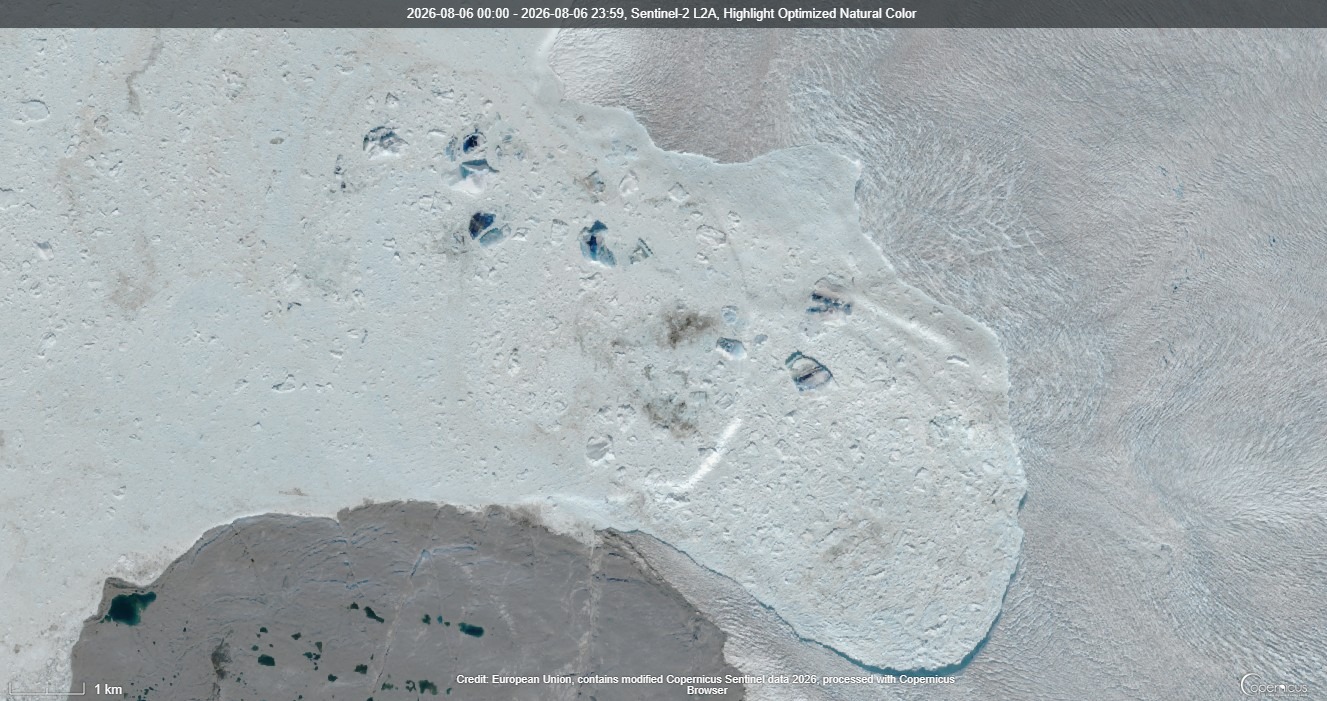
There has been another large calving of Jakobshavn Glacier, resulting in a new record retreat:
“True colour” image of Jakobshavn Glacier on August 6th from the MSI instrument on the Sentinel-2 satellites[Update – August 10th]
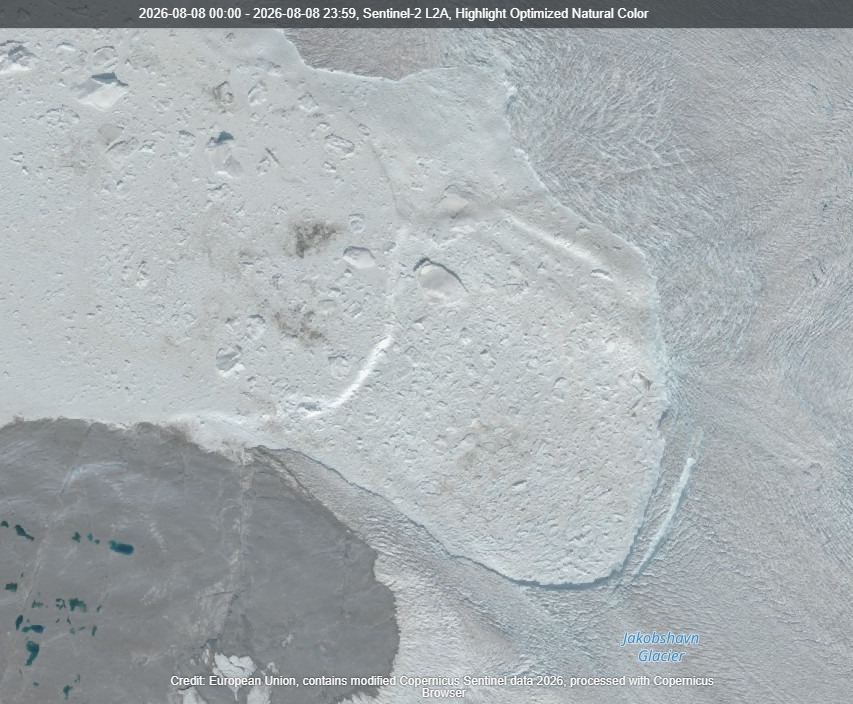
There has been yet another large calving of Jakobshavn Glacier, and hence another new record retreat:
“True colour” image of Jakobshavn Glacier on August 8th from the MSI instrument on the Sentinel-2 satellites
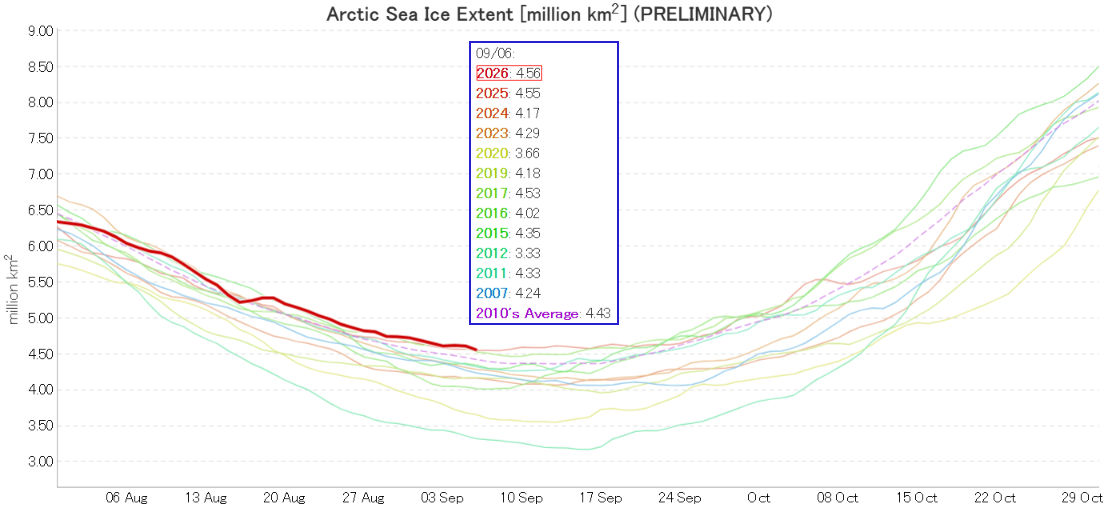
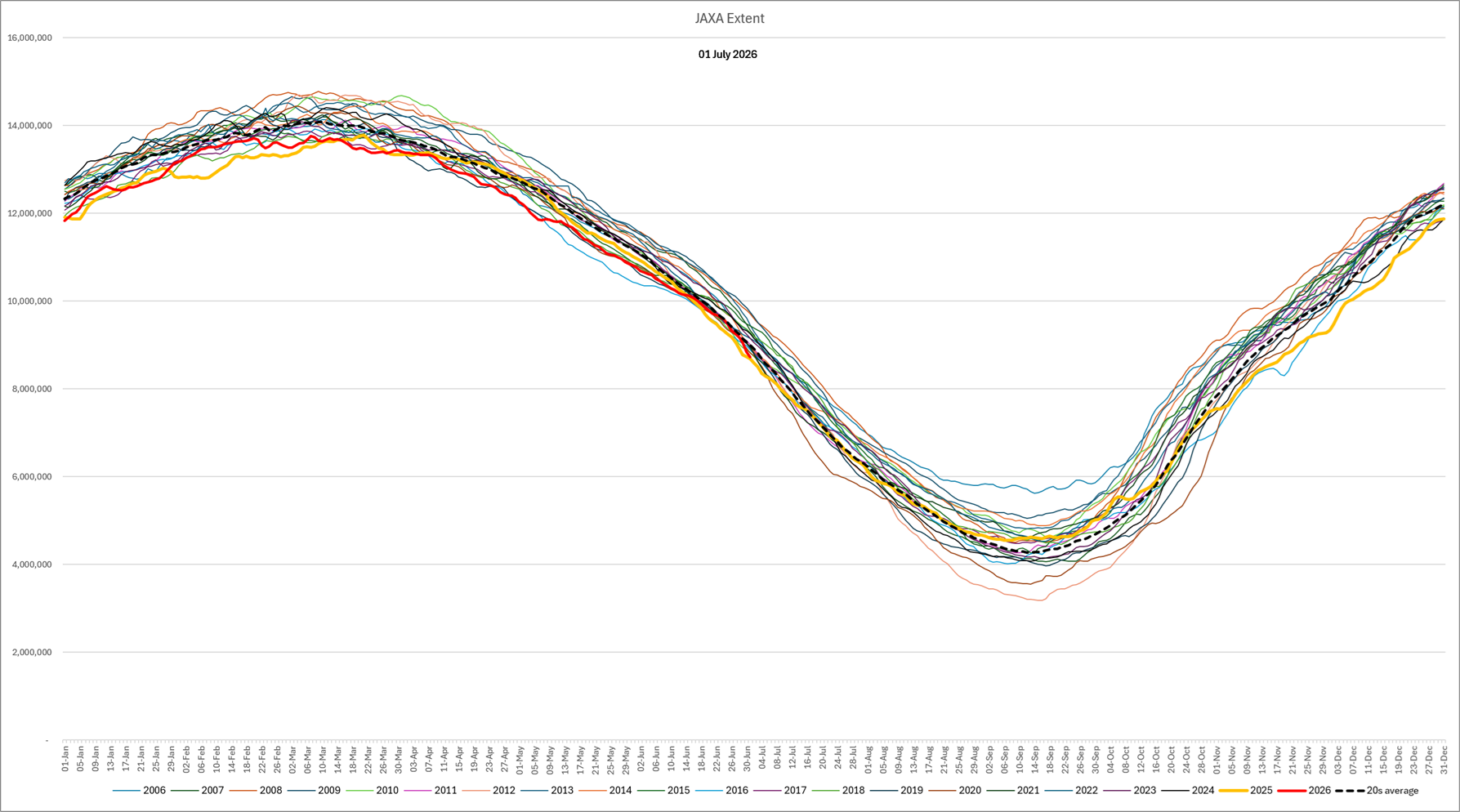
At the beginning of July the JAXA/ViSHOP web site is undergoing maintenance yet again! Here here is how their 2 day average extent graph looked for July 1st:
Extent is currently second lowest for the date, above 2025 by a whisker.
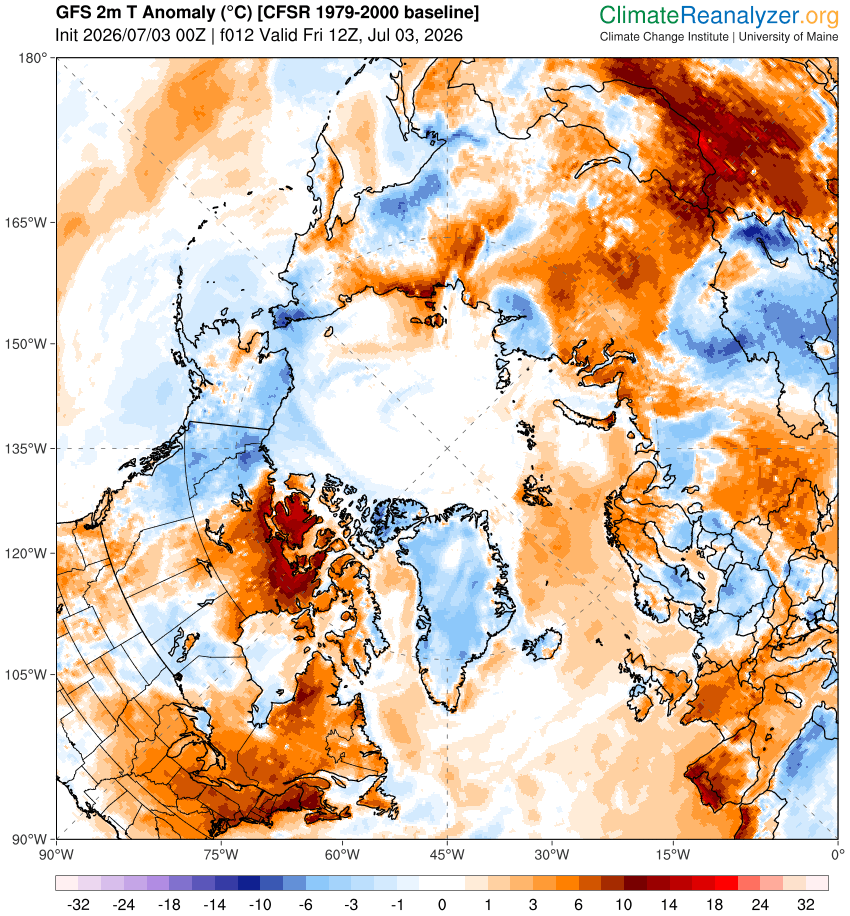
Looking next at temperature anomalies across the Arctic, the Beaufort and Chukchi Seas are slightly cooler than the 1979-2000 climatology. However, the East Siberian Sea and particularly the Canadian Arctic Archipelago are well above what used to be considered “normal”:
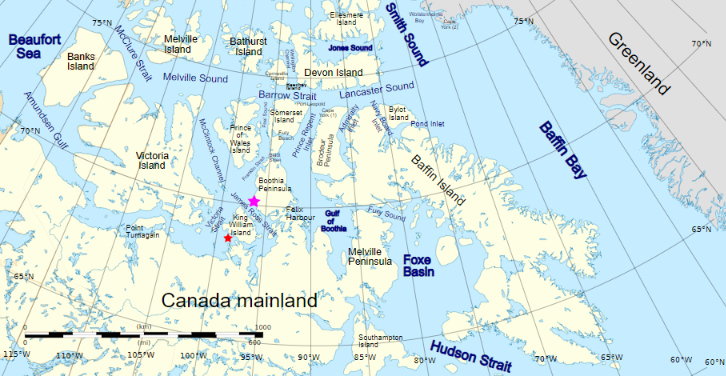
For those of you unfamiliar with the names of the assorted islands and channels of the Canadian Arctic Archipelago here is a map that hopefully helps:
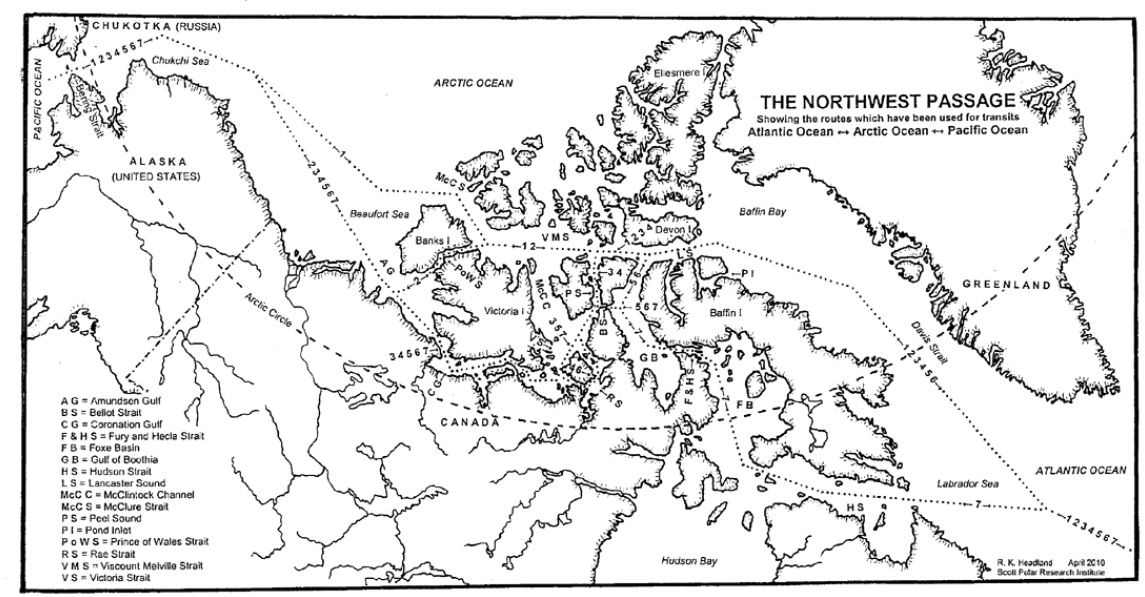
Plus another map detailing the routes through the Canadian Arctic Archipelago that have previously been successfully navigated by vessels large and small:
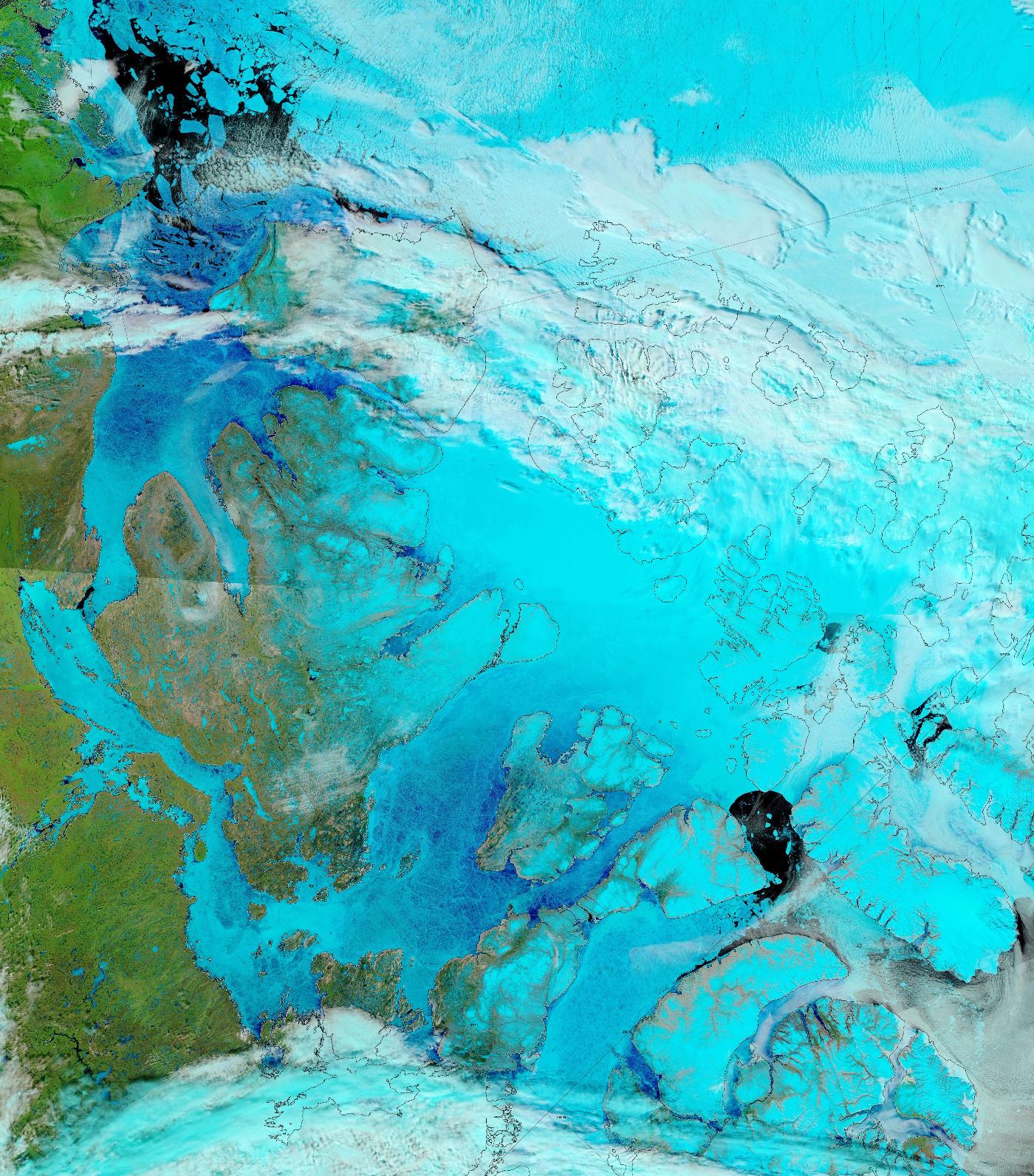
The sea ice in Lancaster Sound and the Amundsen Gulf is breaking up, and melt ponds are now visible on the fast ice across much of the southern route through the Canadian Arctic Archipelago:
“False colour” image of the Canadian Arctic Archipelago on June 17th from the MODIS instrument on the Terra satellite
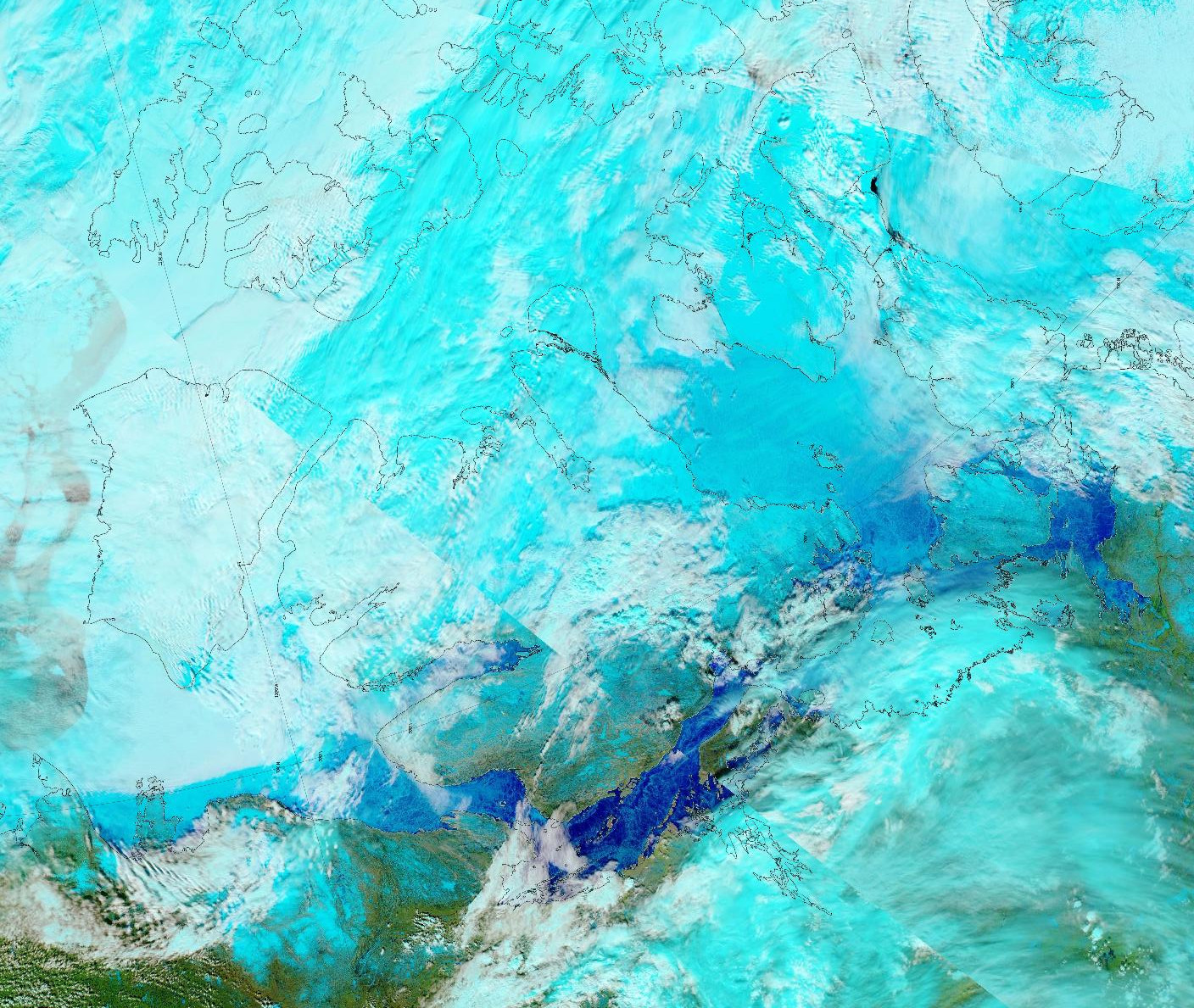
The melt ponds previously visible in the Coronation Gulf now appear to have drained:
“False colour” image of the Canadian Arctic Archipelago on June 3rd from the MODIS instrument on the Aqua satellite
It’s going to be more difficult to follow traffic on the Northern Sea Route this year, because the Russian authorities are no longer publishing daily position information for ships using the route.
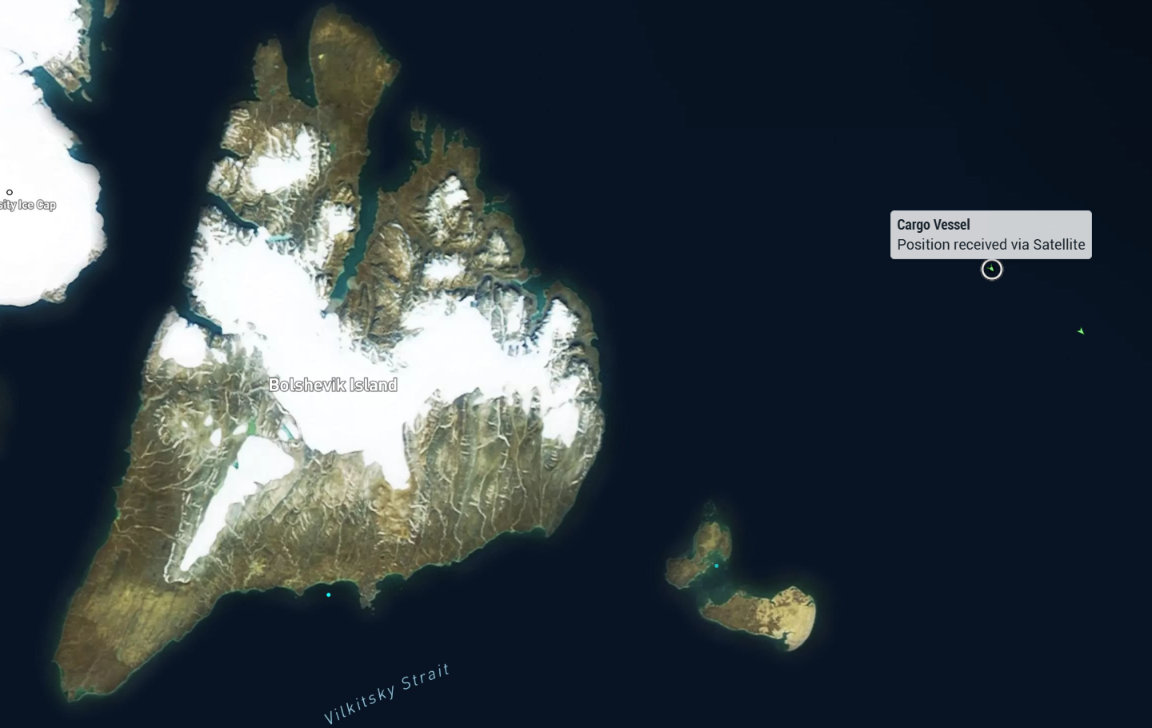
However other sources revealed that things got underway early this year. On May 29th the nuclear icebreaker Ural led LNG tanker Christophe de Margerie through the Vilkitsky Strait into the Laptev Sea:
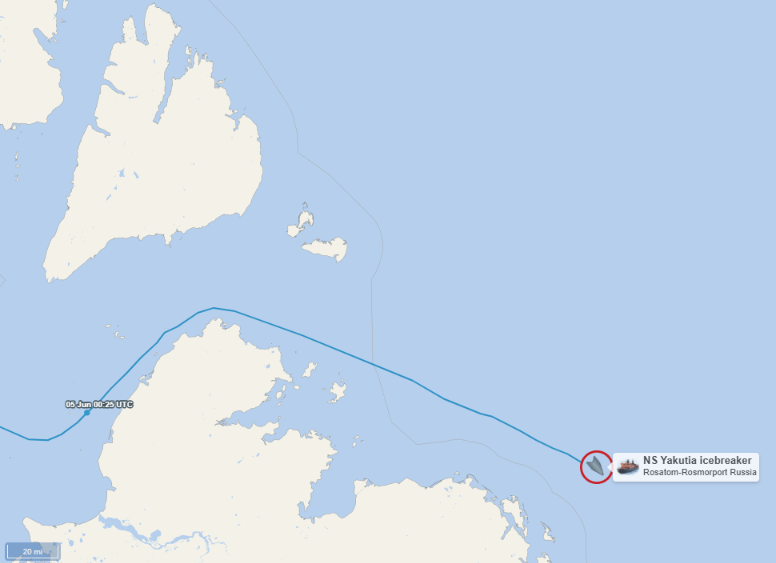
On June 5th the modest convoy is about to pass Wrangel Island into the Chukchi Sea:
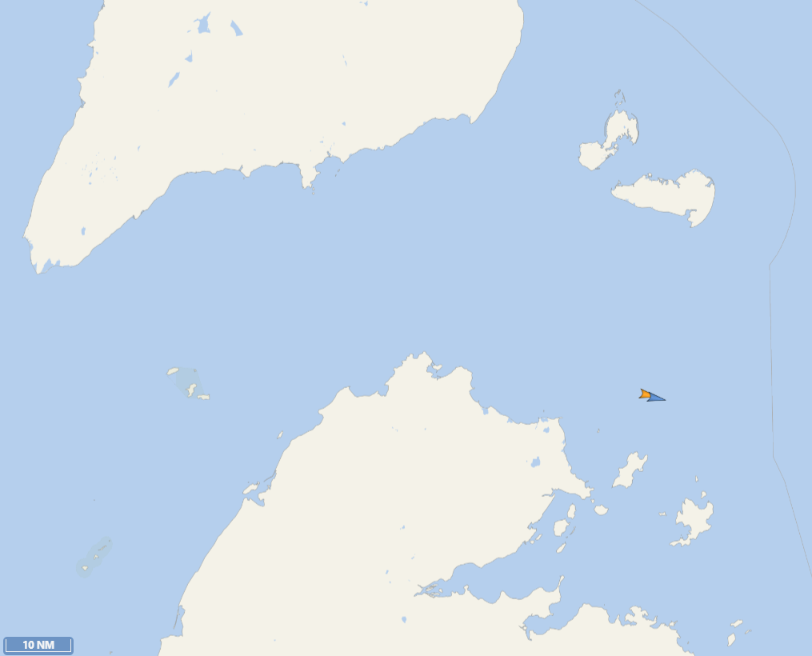
Another nuclear powered icebreaker, Yakutiya, has also just made its way through the Vilkitsky Strait heading east:
If Yakutiya is leading a convoy of one or more other vessels through the pack ice in the Laptev Sea they have all got satellite AIS turned off!
[Update – June 8th]
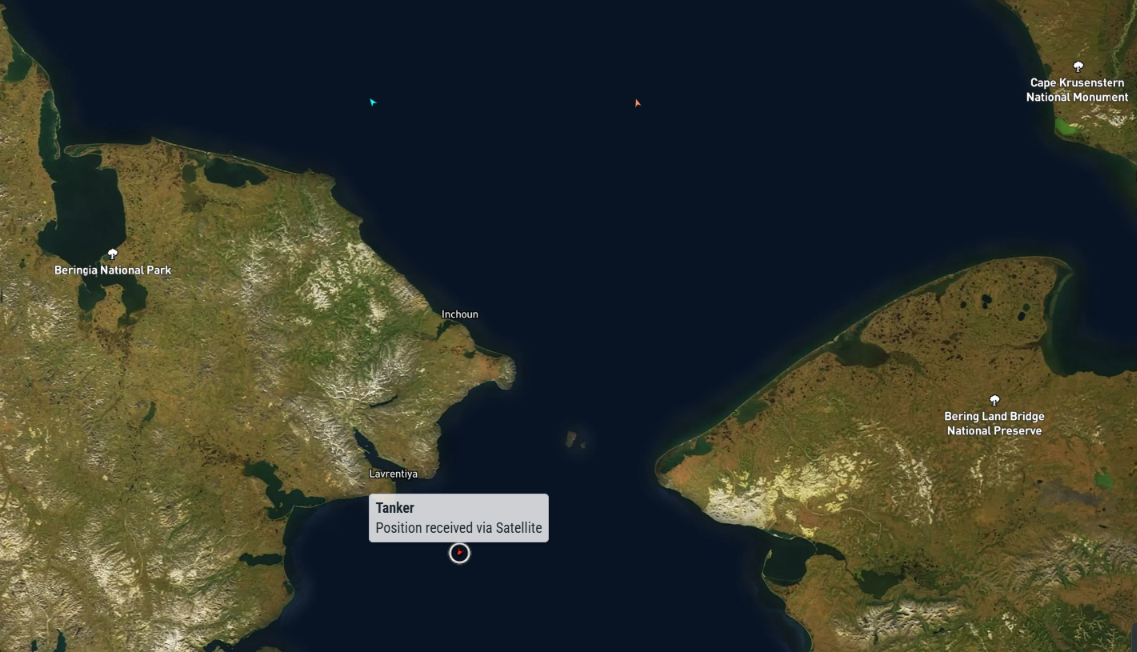
Christophe de Margerie has passed through the Bering Strait, and thus completed the first west to east voyage through the Northern Sea Route this year. Ural has been left behind in the Chukchi Sea:
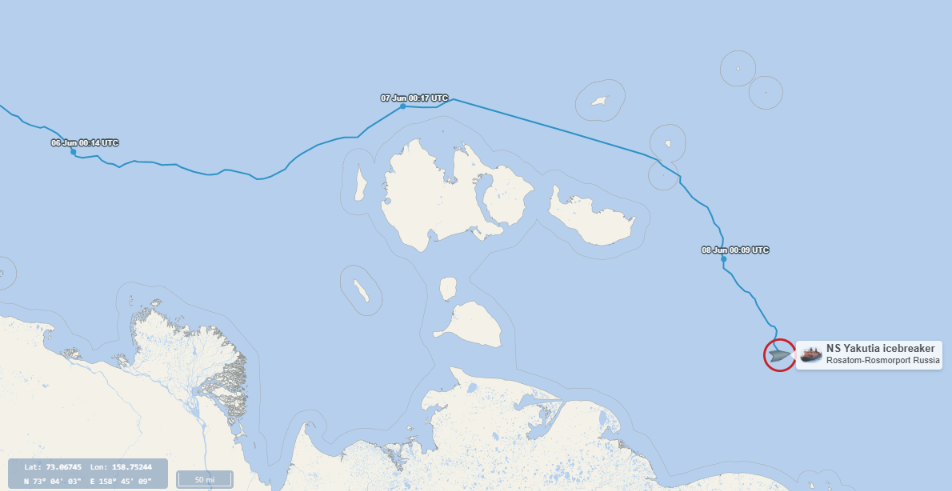
Yakutiya has travelled north of the New Siberian Islands and entered the East Siberian Sea:
[Update – June 15th]
Christophe de Margerie has just passed through the Bering Strait heading north on a return journey through the NSR. This time around Yakutiya is leading the way:
[Update – June 22nd]
Yakutiya and Christophe de Margerie have just passed through the Vilkitsky Strait heading west:
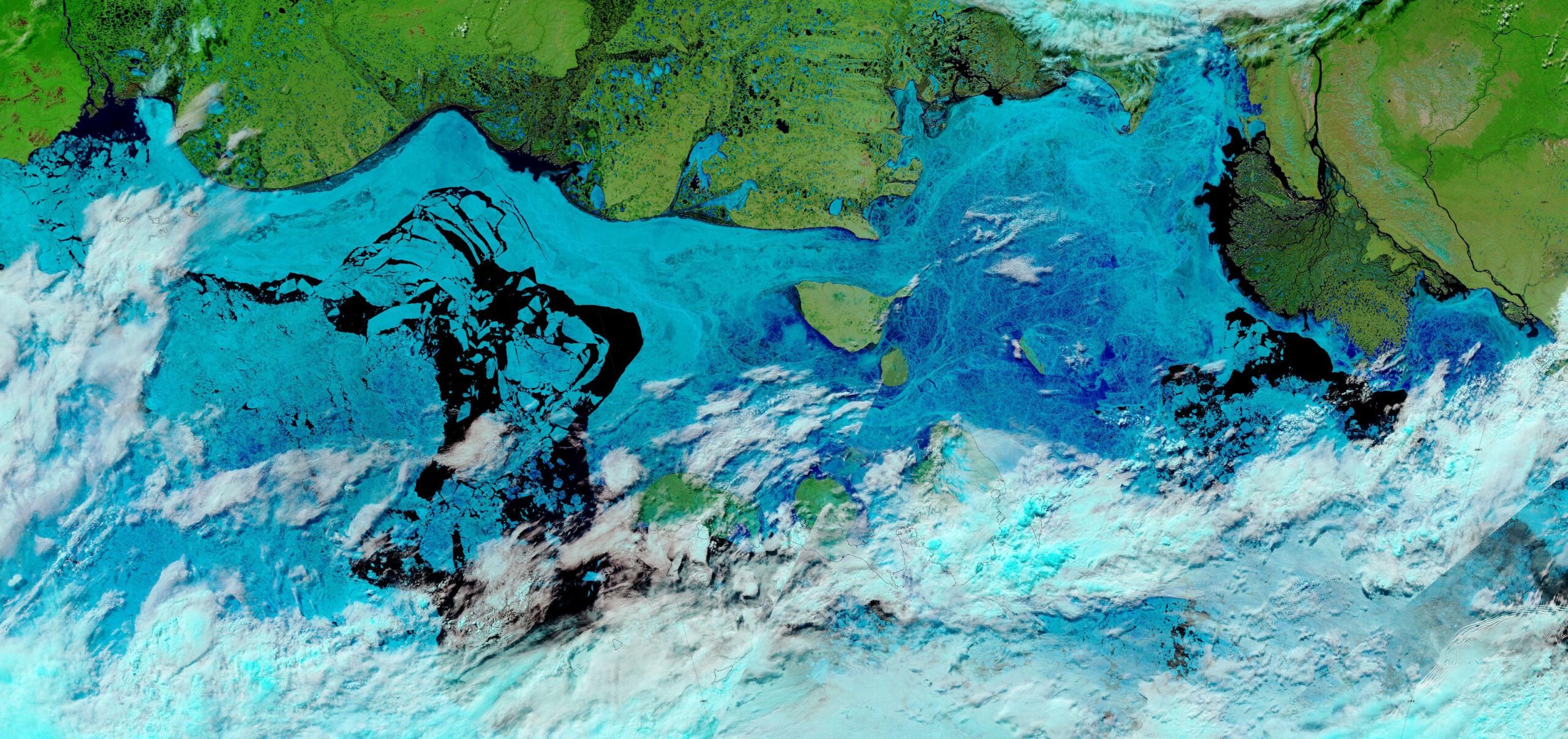
The skies were fairly clear over the central Northern Sea Route this morning, revealing the fast ice breaking up in the East Siberian Sea and plenty of melt ponds in the Laptev Sea:
“False colour” image of the Laptev and East Siberian Seas on June 22nd from the MODIS instrument on the Terra satellite
[Update – June 30th]
Christophe de Margerie is back in the Laptev Sea heading east, this time accompanied by Boris Davydov, another LNG tanker. The nuclear icebreakers are all in the Kara Sea, on the other side of the Vilkitsky Strait:
[Update – August 27th]
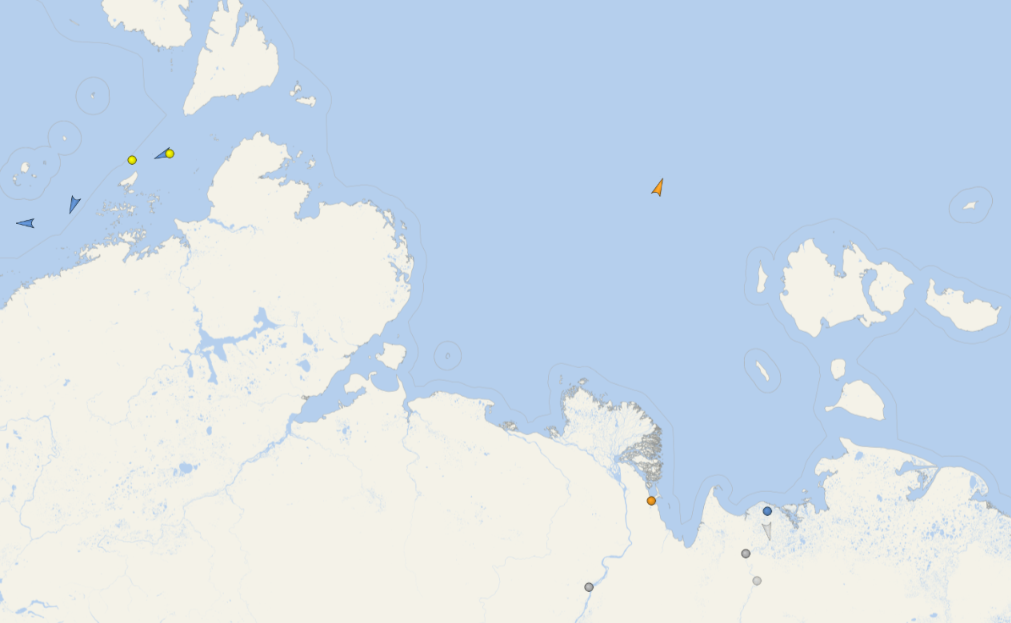
In a highly unusual occurrence, two “Capesize” bulk carriers are en route to the far east via the Northern Sea Route. Deyi Confidence and Deyi Excellence have entered the Laptev Sea by sailing around the north of Severnaya Zemlya rather than using the usual route via the Vilkitsky Strait:
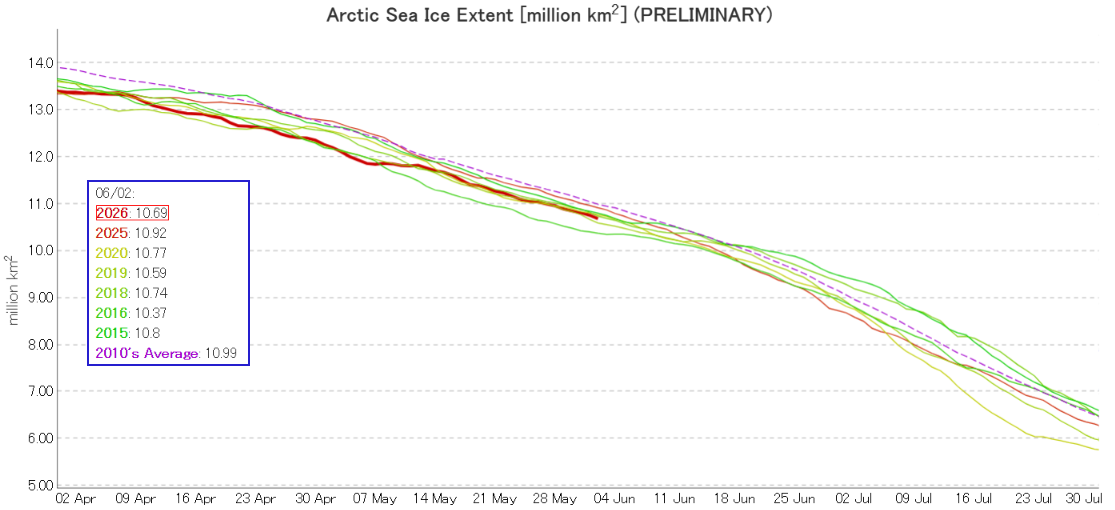
The JAXA/ViSHOP web site is currently undergoing maintenance, but here is how their 2 day average extent graph looked for June 2nd:
Extent was 3rd lowest in the JAXA record, behind 2016 and 2019.
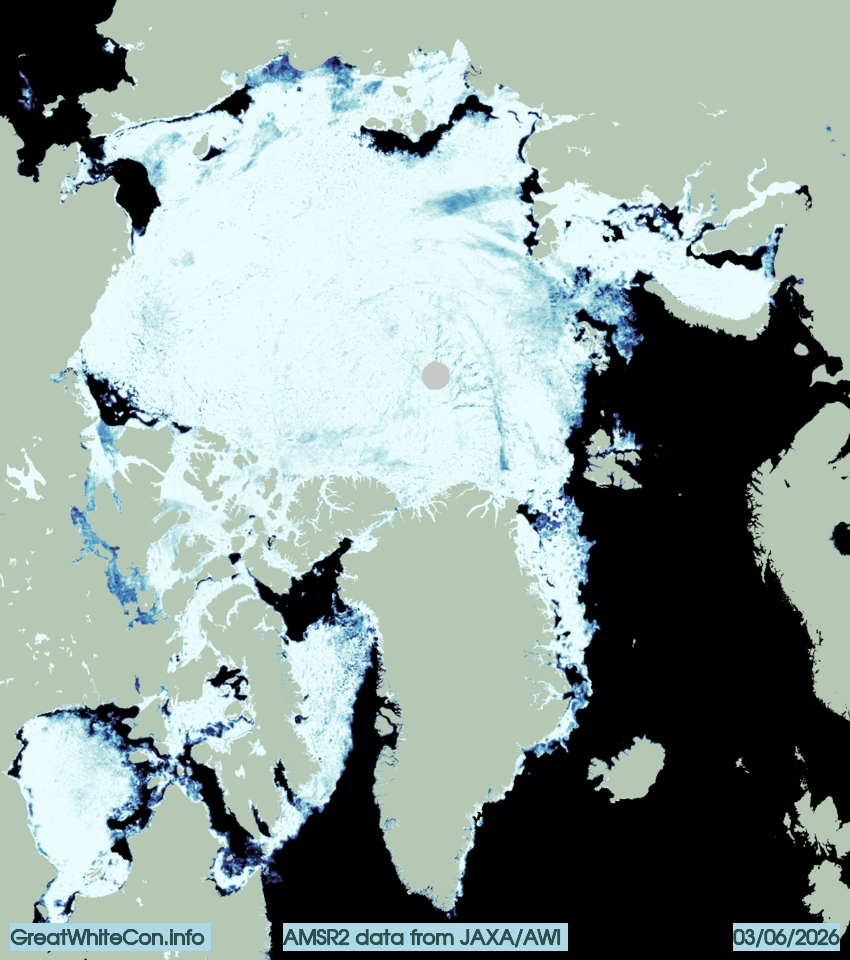
The Alfred Wegener Institute’s sea ice concentration data shows that the Bering Sea is now largely free of sea ice, and the areas of open water in the Beaufort, Chukchi, East Siberian and Laptev Seas continue to expand:
The sea ice concentration map also shows open water in much of Lancaster Sound. Also apparent is the widespread presence of melt ponds along the southern part of the Canadian Arctic Archipelago. Here’s a closer, albeit somewhat cloudy, look:
“False colour” image of the Canadian Arctic Archipelago on June 3rd from the MODIS instrument on the Aqua satellite
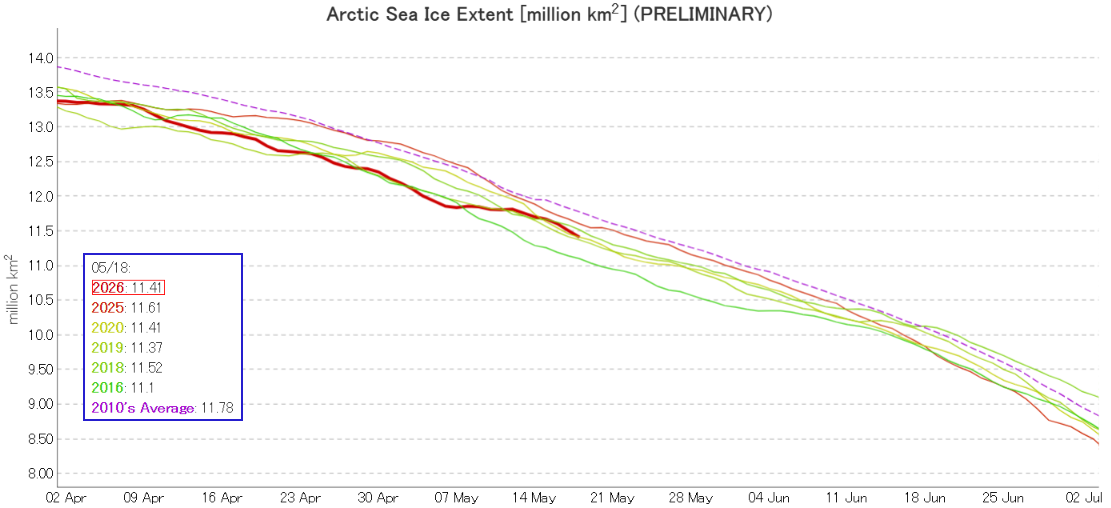
JAXA have updated their visualisations of Arctic sea ice extent data. The “traditional” 2 day average graph is now labelled “preliminary”, and currently shows 2026 in a tie with 2020 for third lowest for the date:
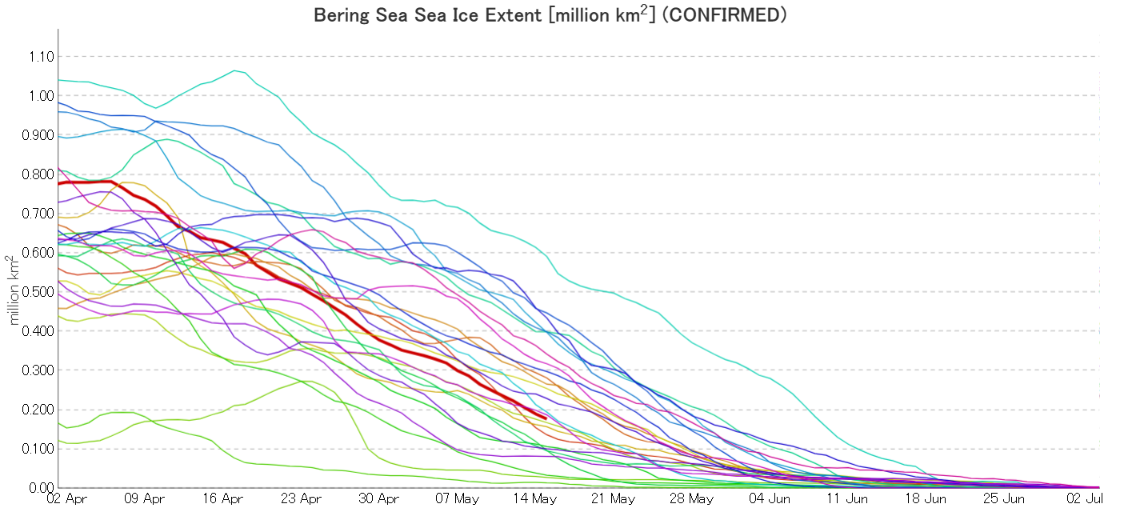
5 day averaged “confirmed” data is also available, including regional graphs. By way of example here’s JAXA’s latest extent graph for the Bering Sea, dated May 15th:
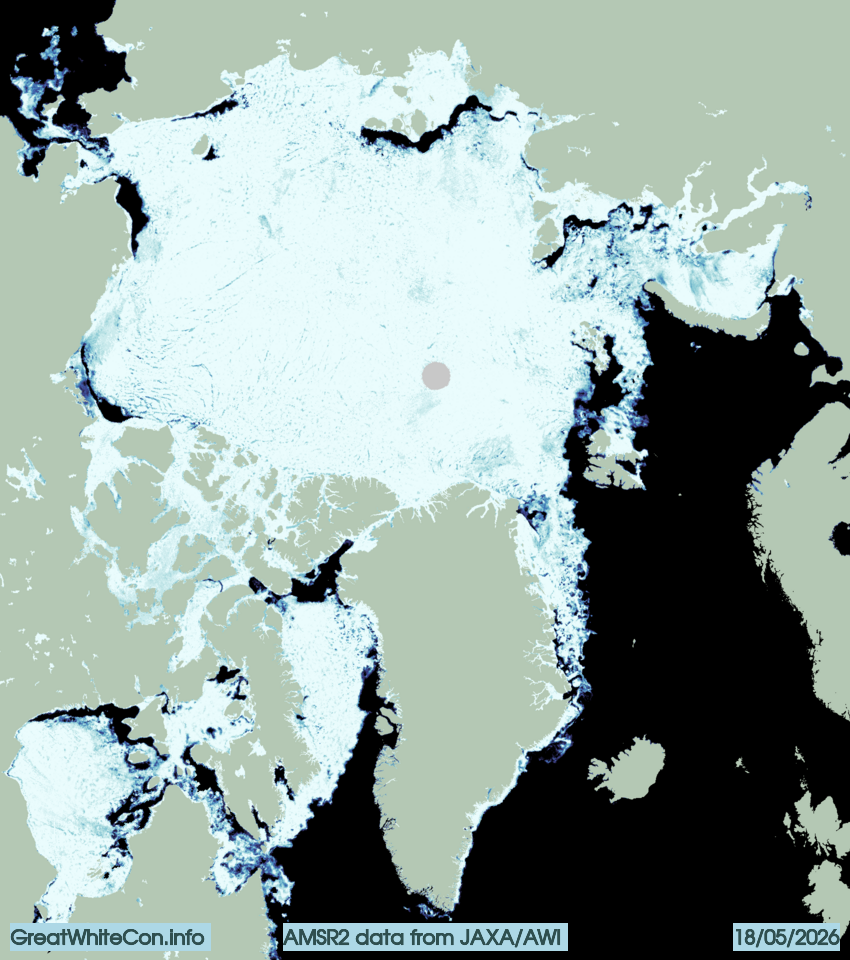
The Alfred Wegener Institute’s sea ice concentration data reveals open water in the Beaufort, Chukchi, East Siberian and Laptev Seas:
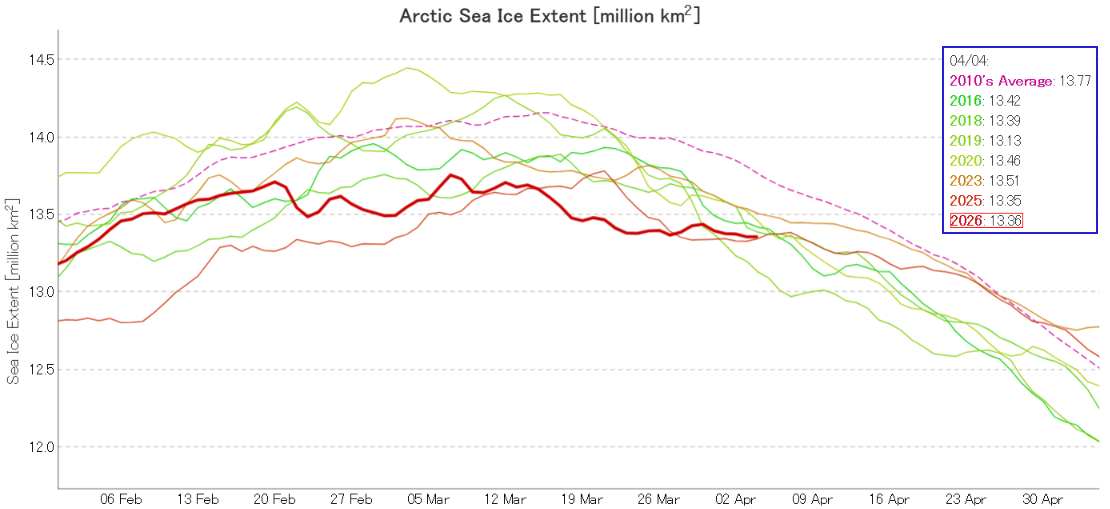
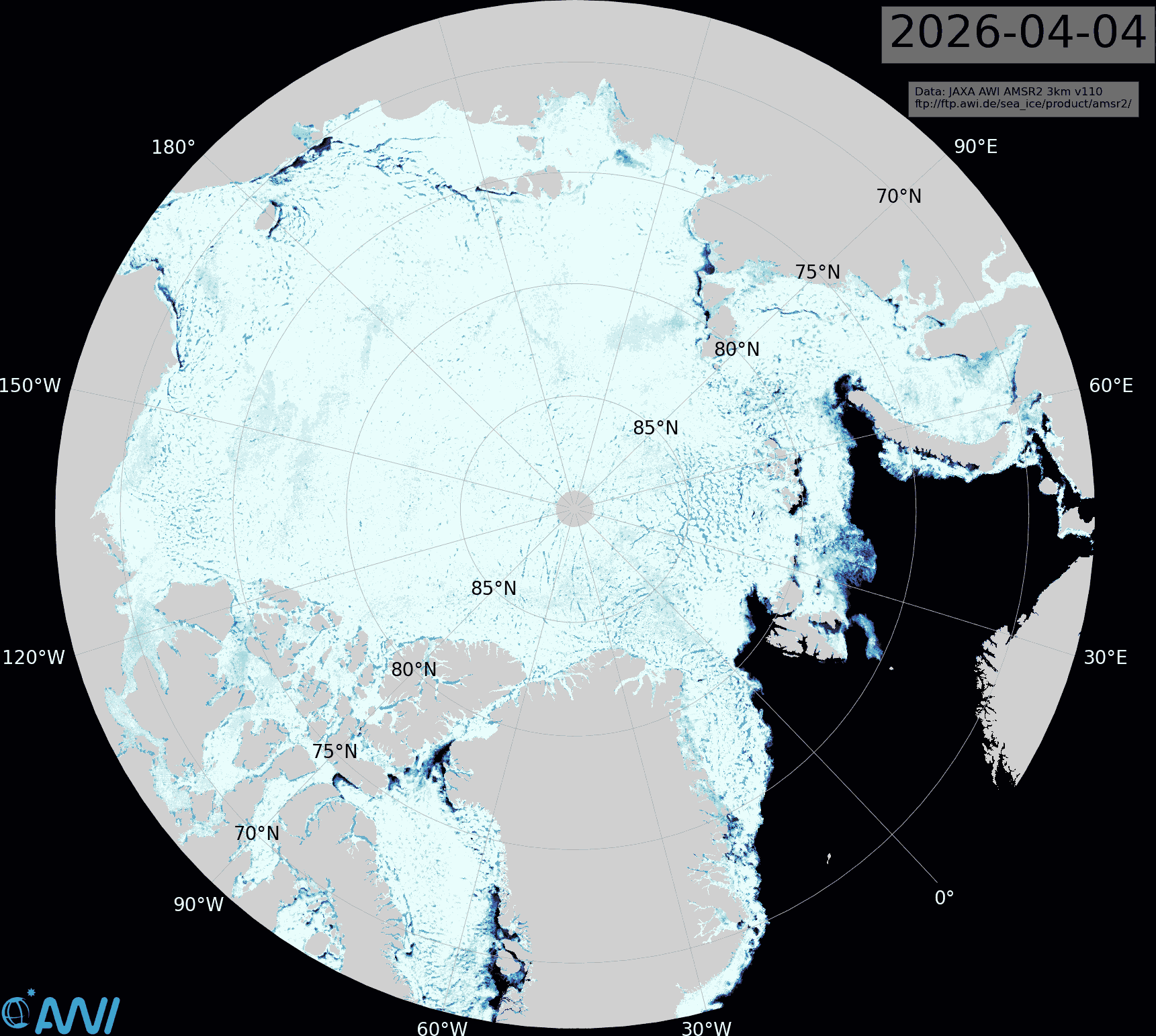
In early April JAXA Arctic sea ice extent is 3rd lowest for the date, albeit in a “statistical tie” with last year:
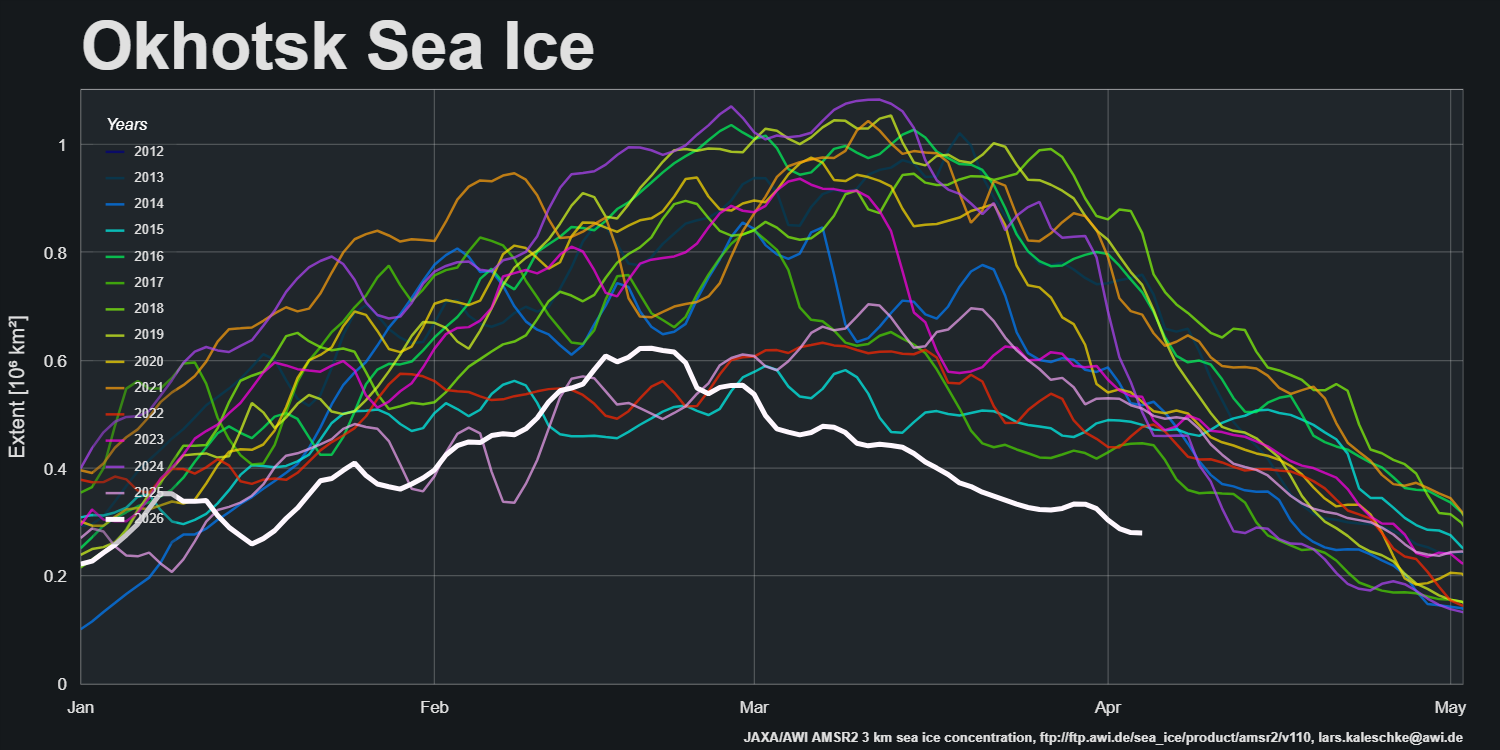
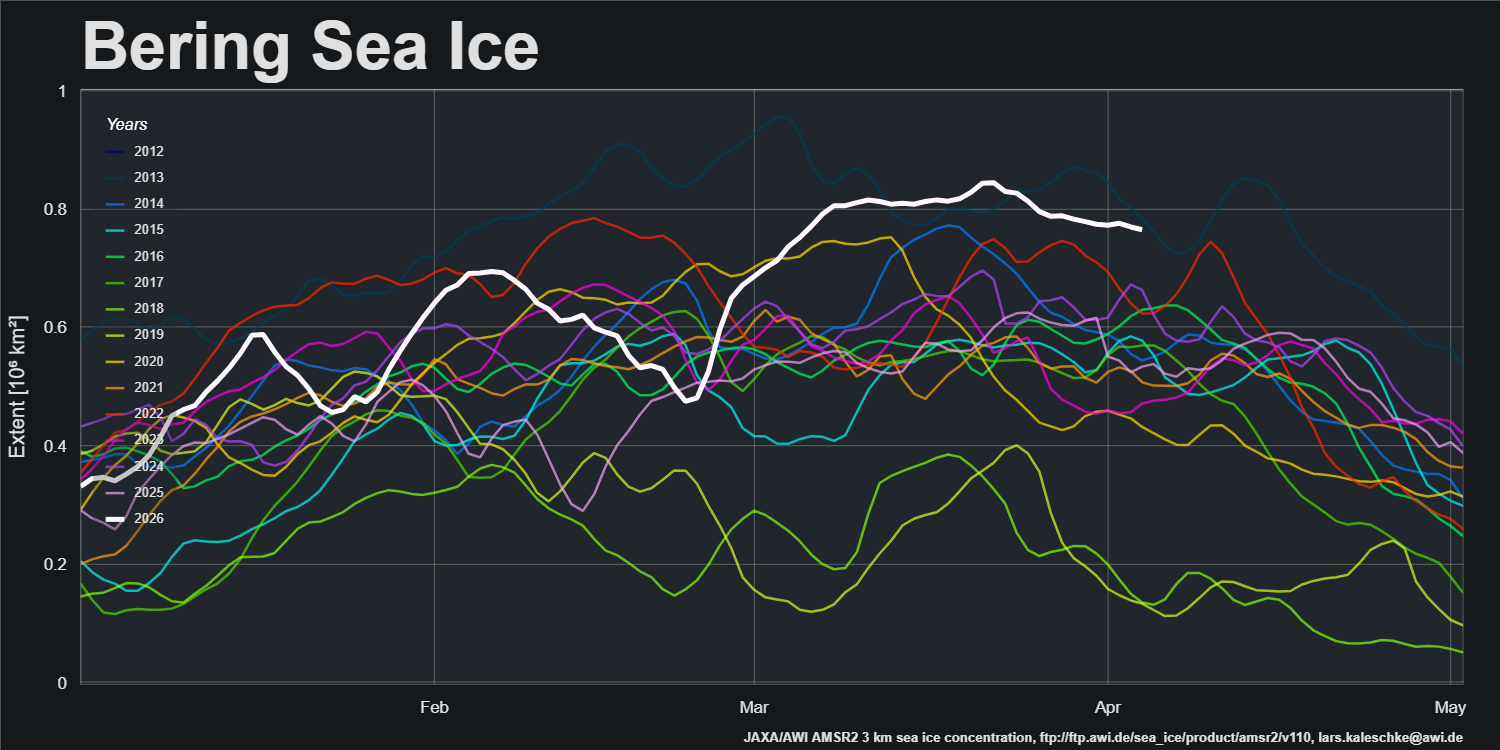
The Alfred Wegener Institute’s regional extent graphs reveal an intriguing divergence on the Pacific periphery, where sea ice extent in the Sea of Okhotsk is at an all time low for the date in the AMSR2 record:
On the other hand extent in the Bering Sea is close to an all time high:
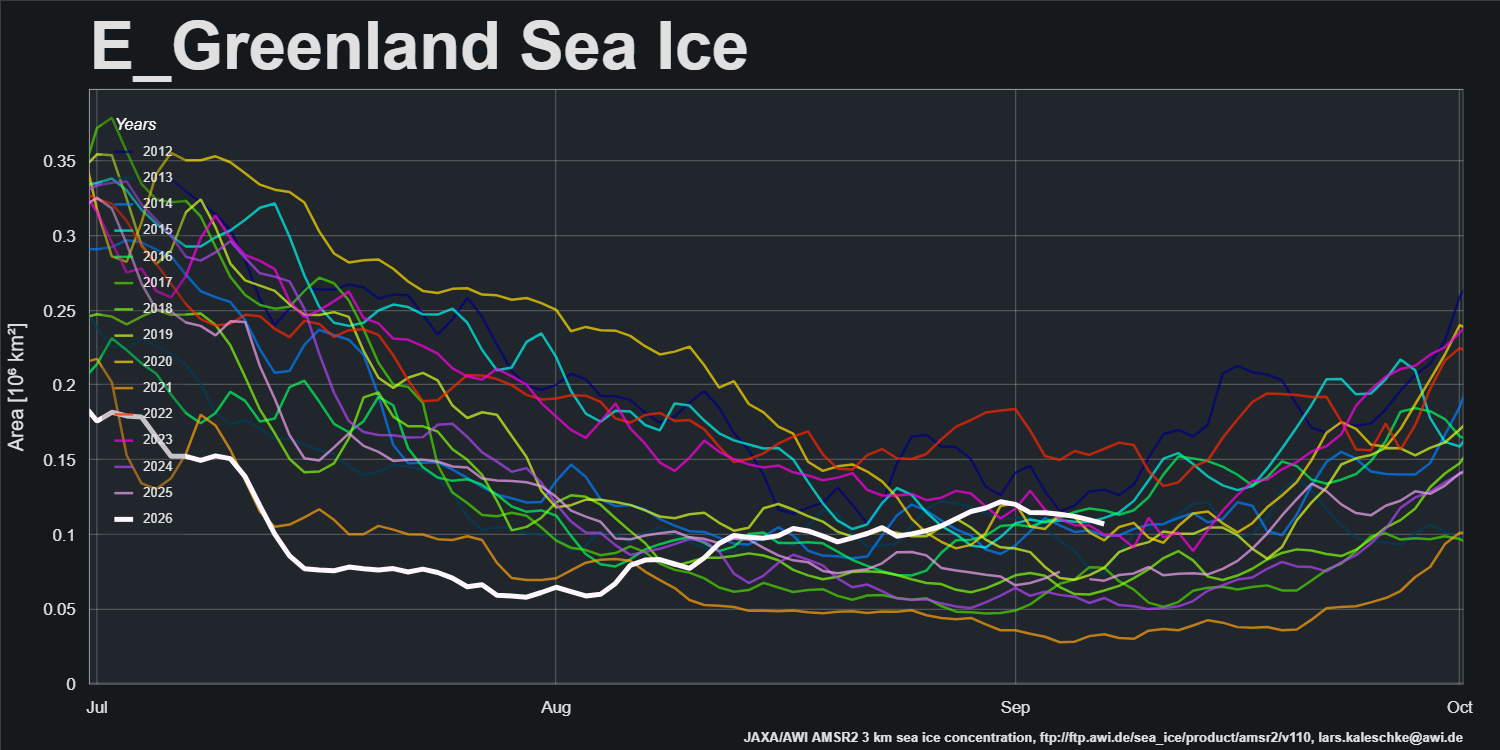
On the Atlantic periphery extent is less extreme, although there is currently open water north of Svalbard:
This website uses cookies to improve your experience. We'll assume you're ok with this, but you can opt-out if you wish. Cookie settingsACCEPT
Privacy & Cookies Policy
Privacy Overview
This website uses cookies to improve your experience while you navigate through the website. Out of these, the cookies that are categorized as necessary are stored on your browser as they are essential for the working of basic functionalities of the website. We also use third-party cookies that help us analyze and understand how you use this website. These cookies will be stored in your browser only with your consent. You also have the option to opt-out of these cookies. But opting out of some of these cookies may affect your browsing experience.
Necessary cookies are absolutely essential for the website to function properly. This category only includes cookies that ensures basic functionalities and security features of the website. These cookies do not store any personal information.
Any cookies that may not be particularly necessary for the website to function and is used specifically to collect user personal data via analytics, ads, other embedded contents are termed as non-necessary cookies. It is mandatory to procure user consent prior to running these cookies on your website.