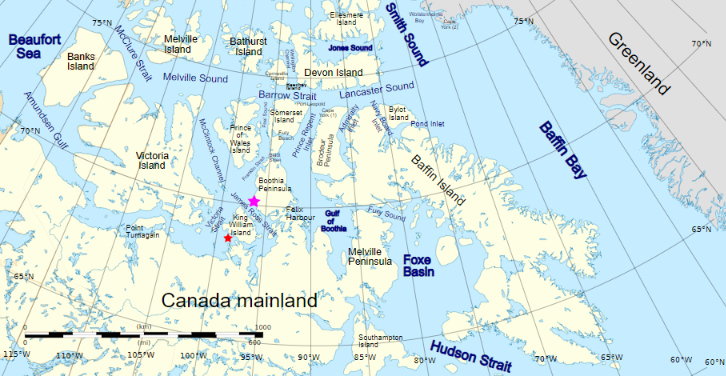
For those of you unfamiliar with the names of the assorted islands and channels of the Canadian Arctic Archipelago here is a map that hopefully helps:
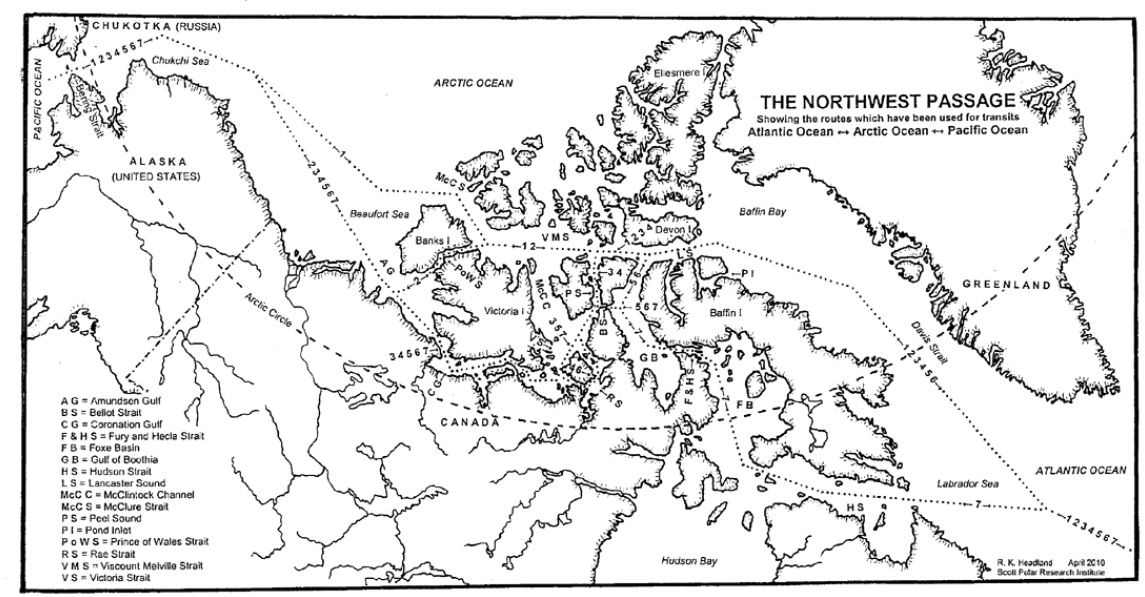
Plus another map detailing the routes through the Canadian Arctic Archipelago that have previously been successfully navigated by vessels large and small:
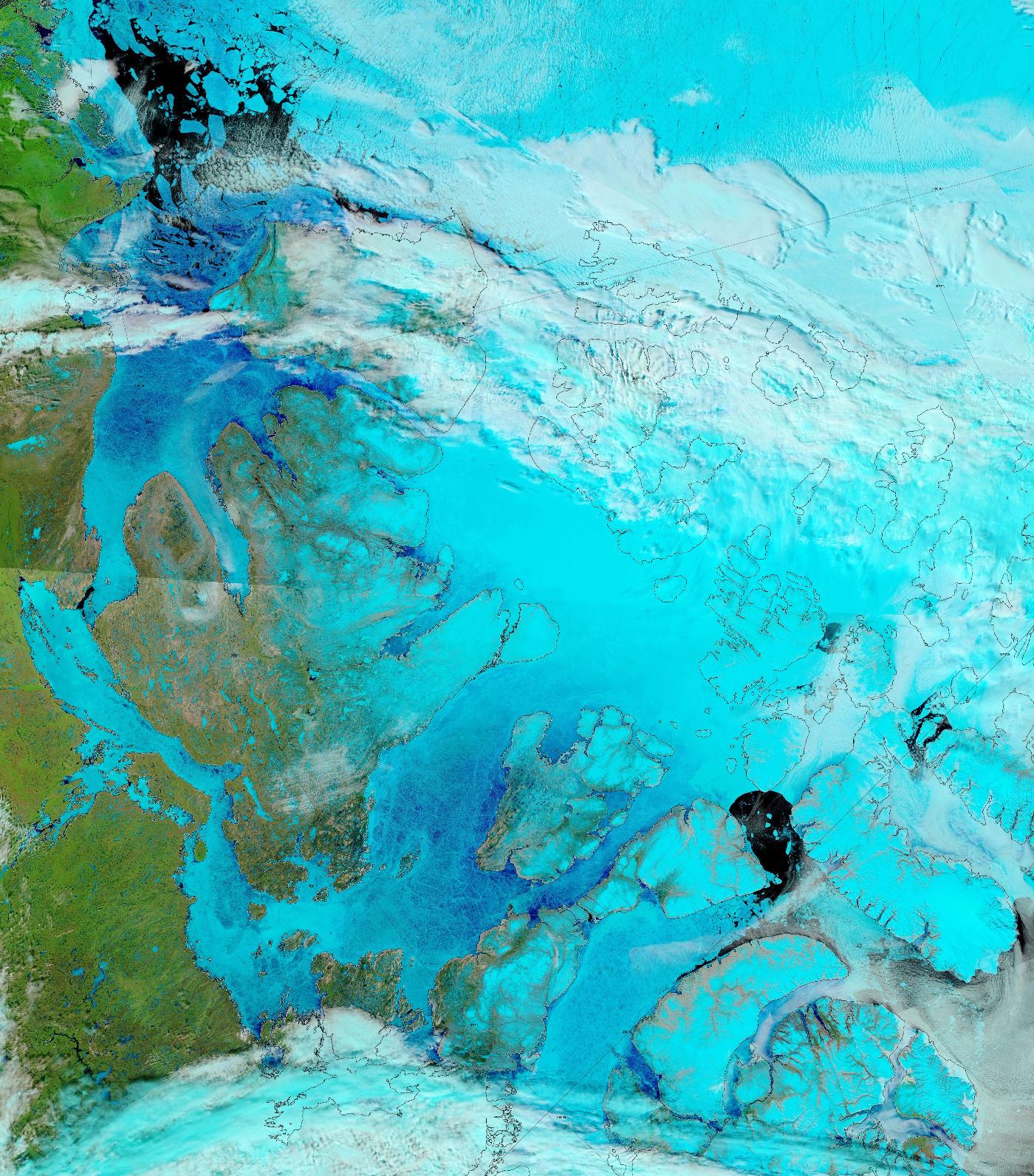
The sea ice in Lancaster Sound and the Amundsen Gulf is breaking up, and melt ponds are now visible on the fast ice across much of the southern route through the Canadian Arctic Archipelago:
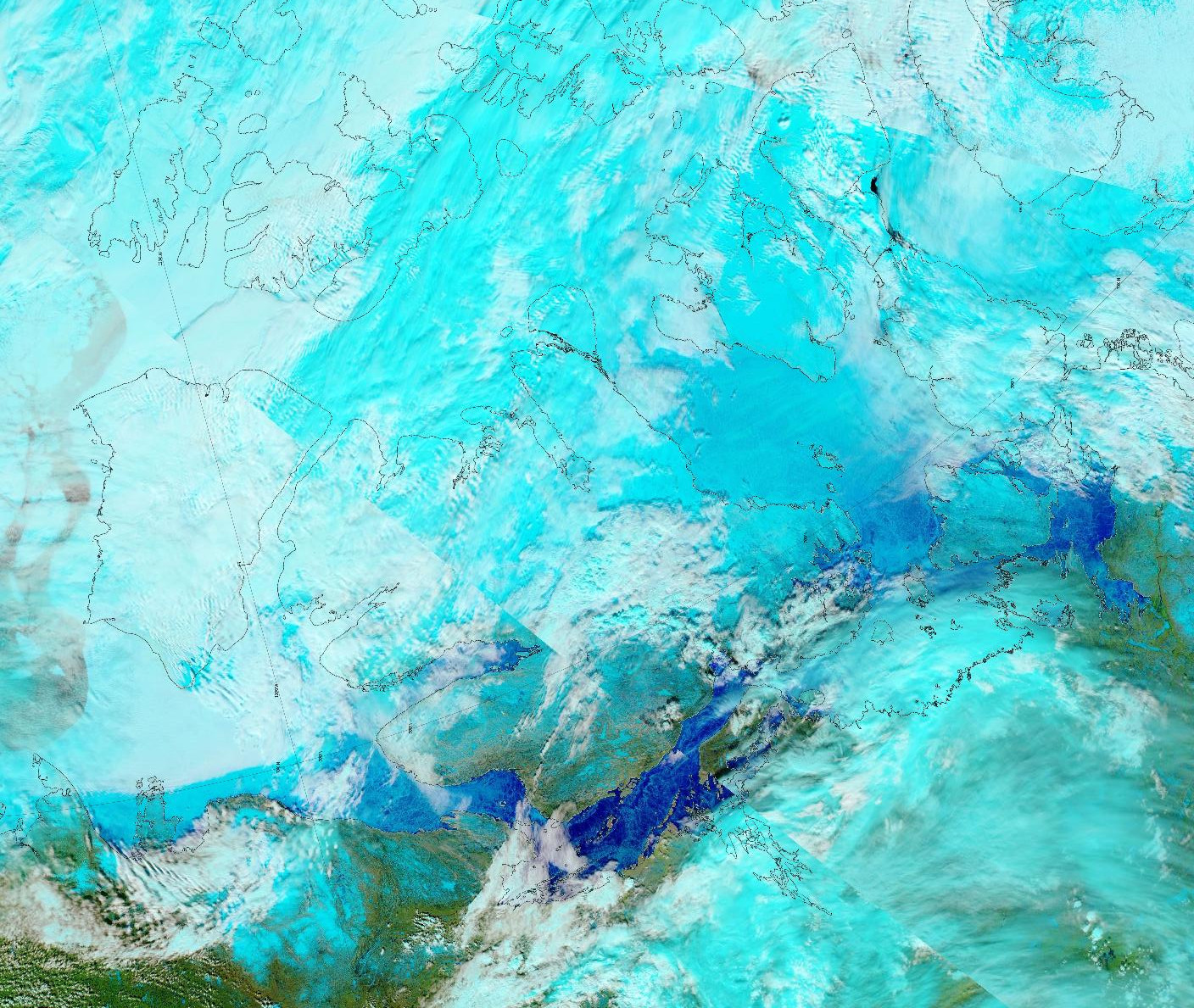
The melt ponds previously visible in the Coronation Gulf now appear to have drained:
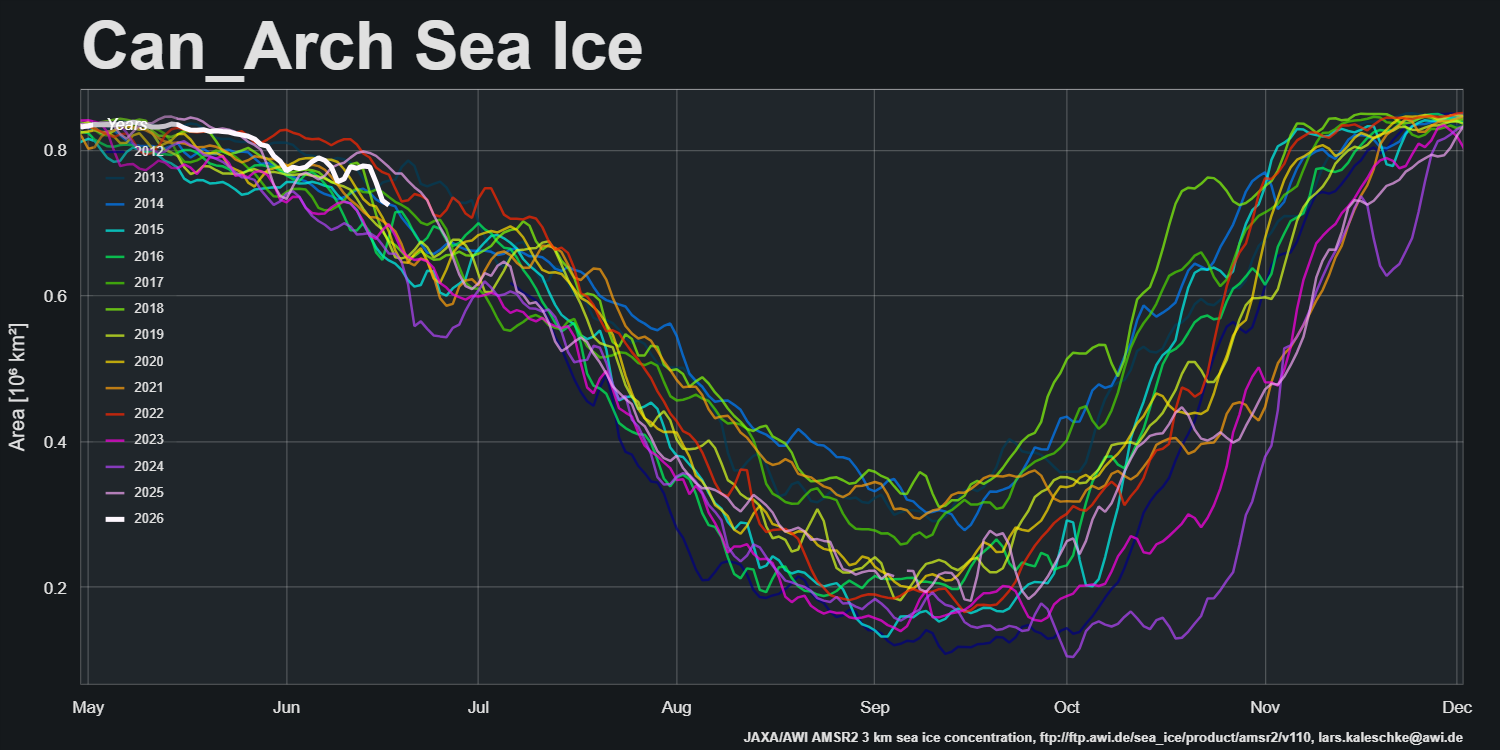
Looking at 2 dimensional data to begin with, CAA sea ice area is currently in the middle of the AMSR2 era pack:
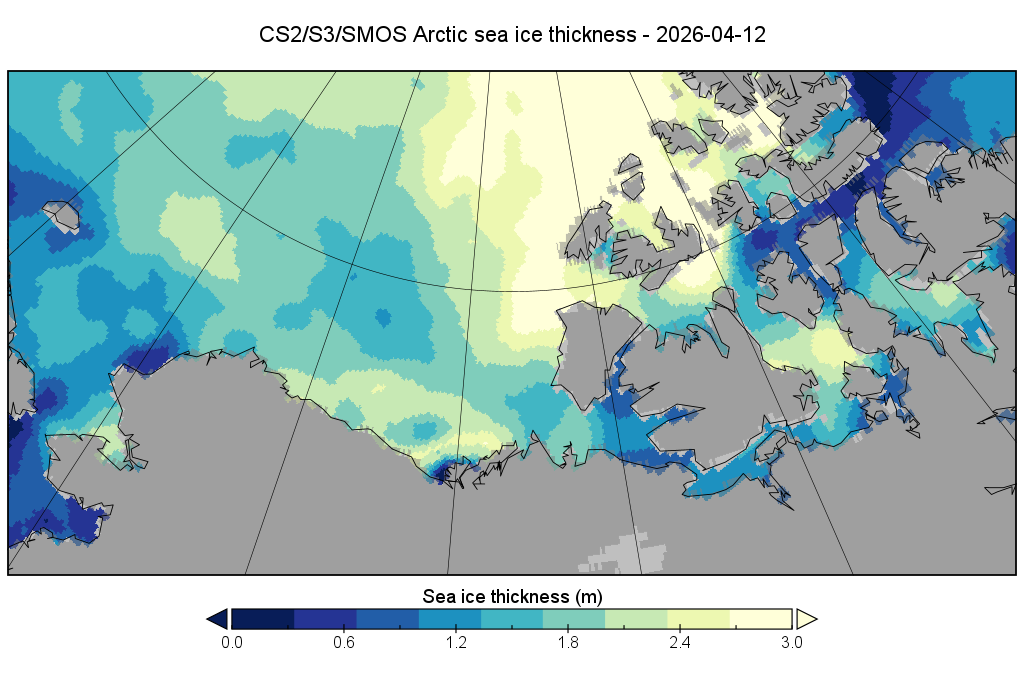
To get a better feel for what might happen during the coming summer season here too is the state of play in the third dimension, courtesy of the Alfred Wegener Institute’s last combined thickness data of the winter from the Cryosat-2, Sentinel 3 and SMOS satellites:
Let’s also take a look at the Canadian Ice Service‘s sea ice “stage of development” charts. Here’s the most recent one for the “Western Arctic”, from June 15th:
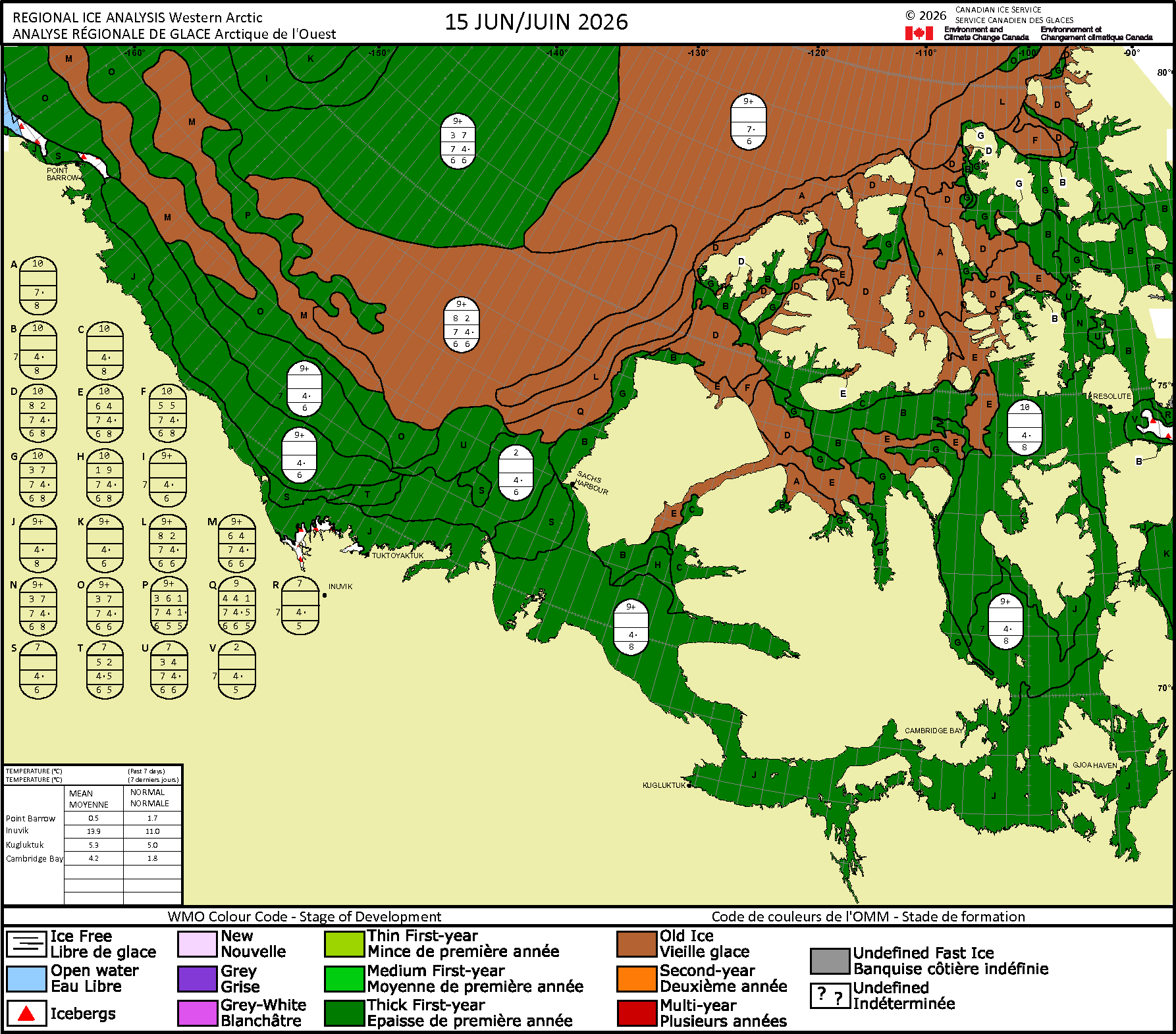
There is no old ice anywhere on the southern route, so the stage seems set for the Northwest Passage to open relatively early this summer, with a final “choke point” in the Larsen Sound/Franklin Strait region.
Note that there is a potential fly in the NWP ointment, a recurrence of last year’s winds that blew old ice in the Beaufort Sea close to shore in the Amundsen Gulf during the first half of August!
The skies over the Canadian Arctic Archipelago were fairly clear yesterday:
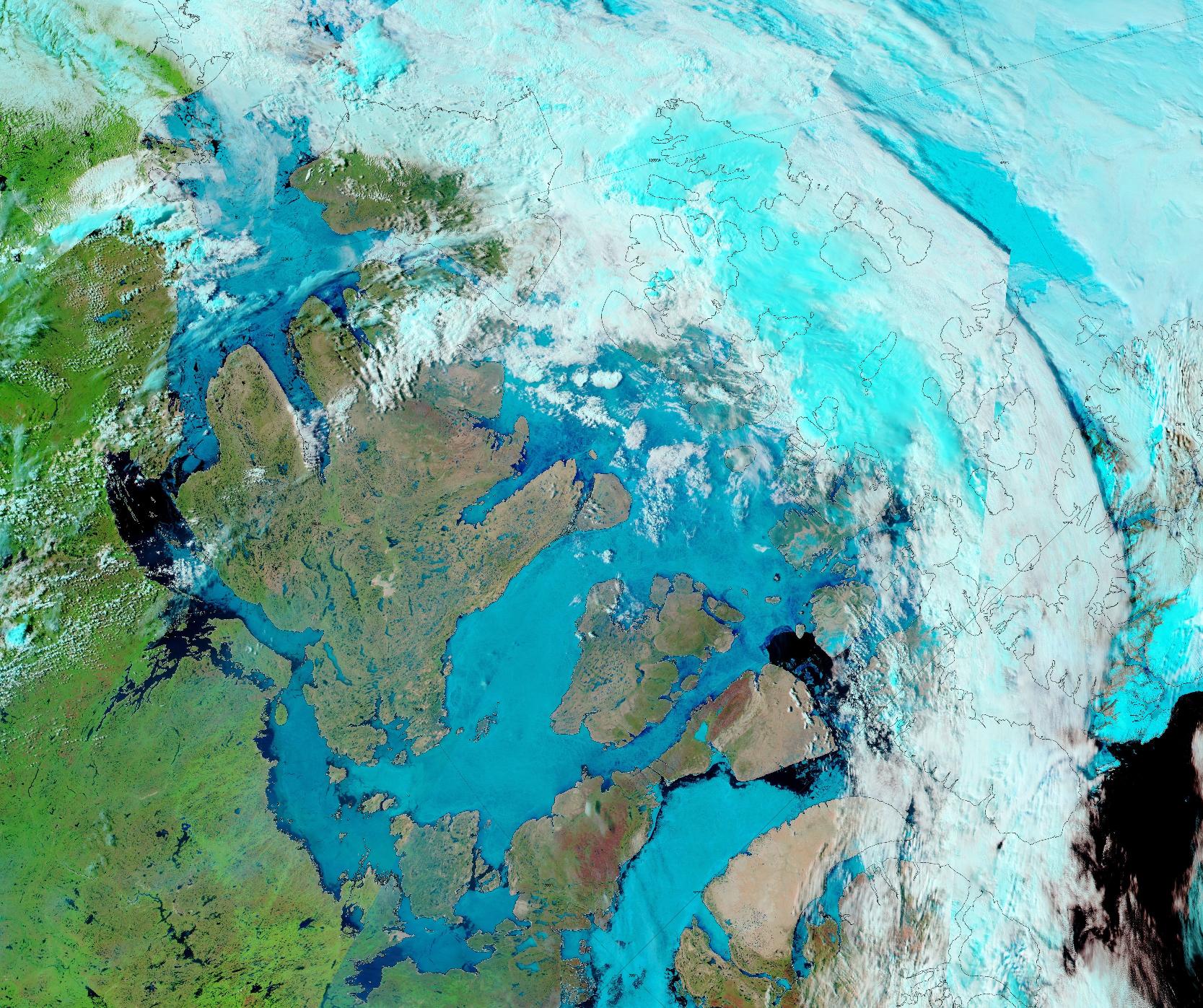
Much of the Coronation Gulf and Lancaster Sound are now free of sea ice. Peel Sound looks as though it will start breaking up in earnest in the not too distant future.
[Update – July 17th]There was another good view of the CAA from on high yesterday:
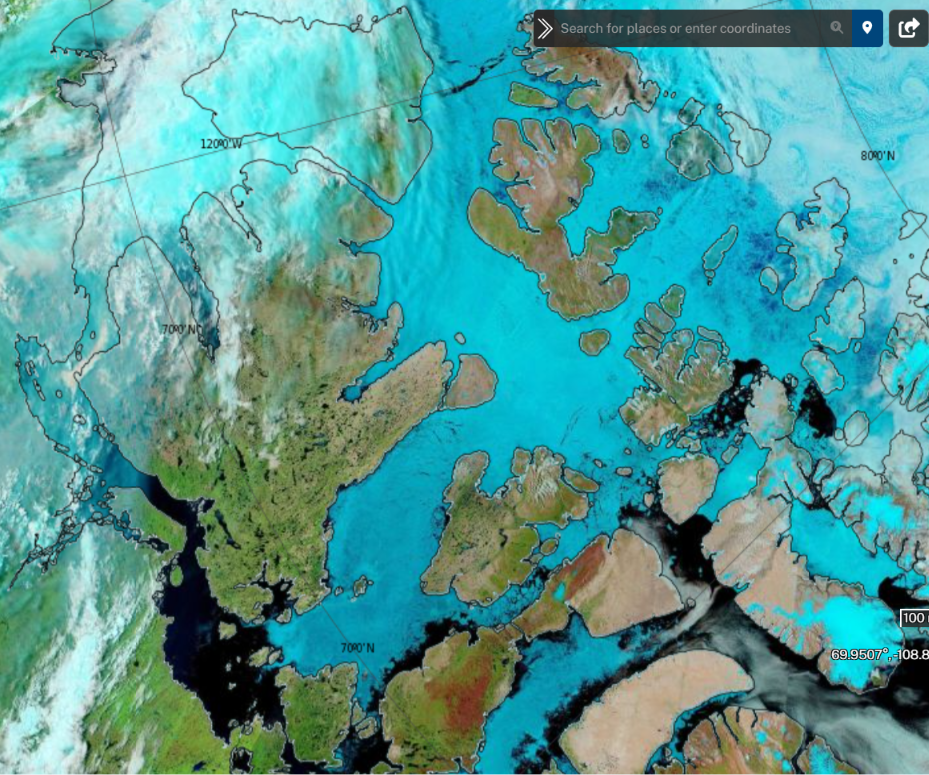
McClure Strait has started to break up, as has the southern half of Peel Sound. From there a hypothetical “small vessel” could hug the coast to Gjoa Haven, then it’s plain sailing all the way to the Amundsen Gulf
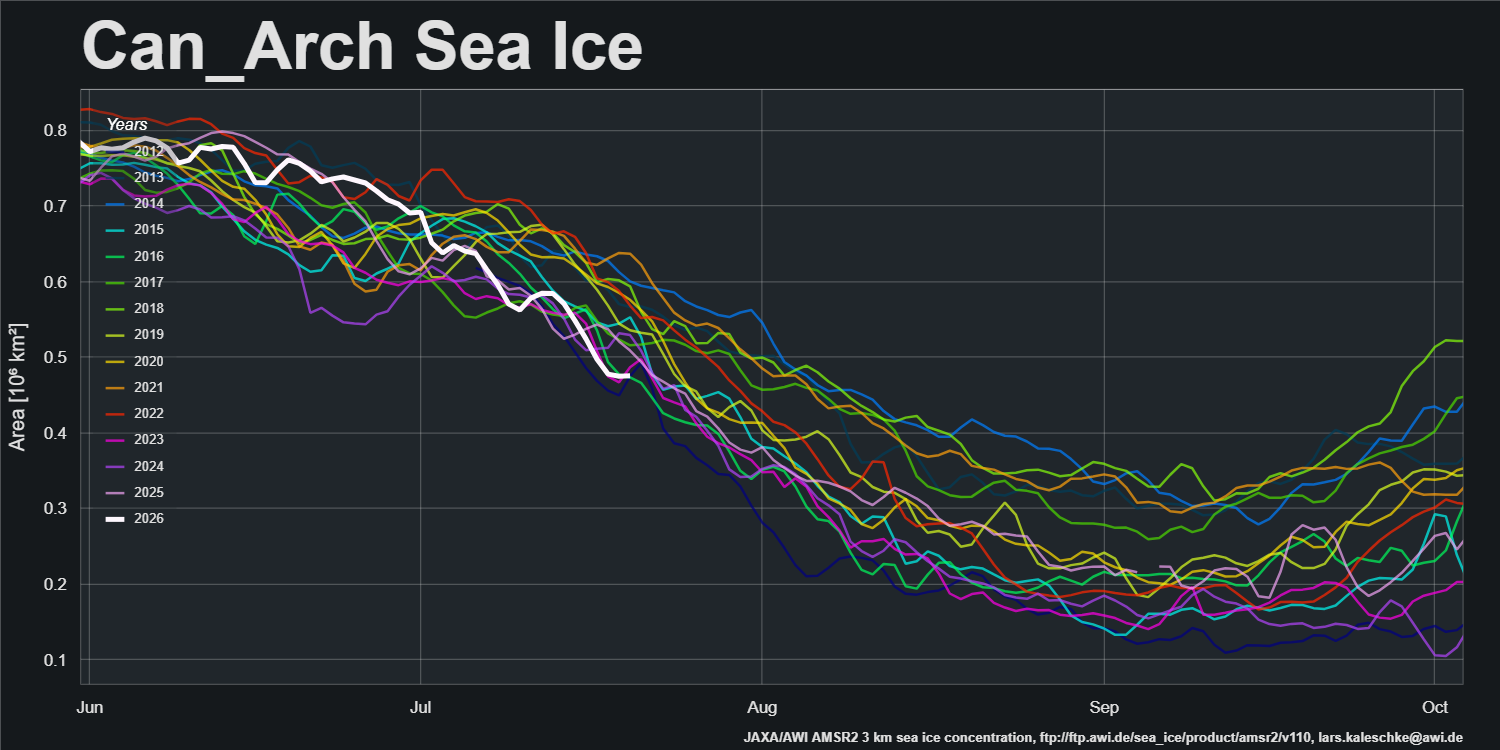
[Update – July 21st]Sea ice area in the Canadian Arctic Archipelago is very close to an all time low for the date:
However, sea ice area in the Beaufort Sea is at a maximum for the date in the AMSR2 era:
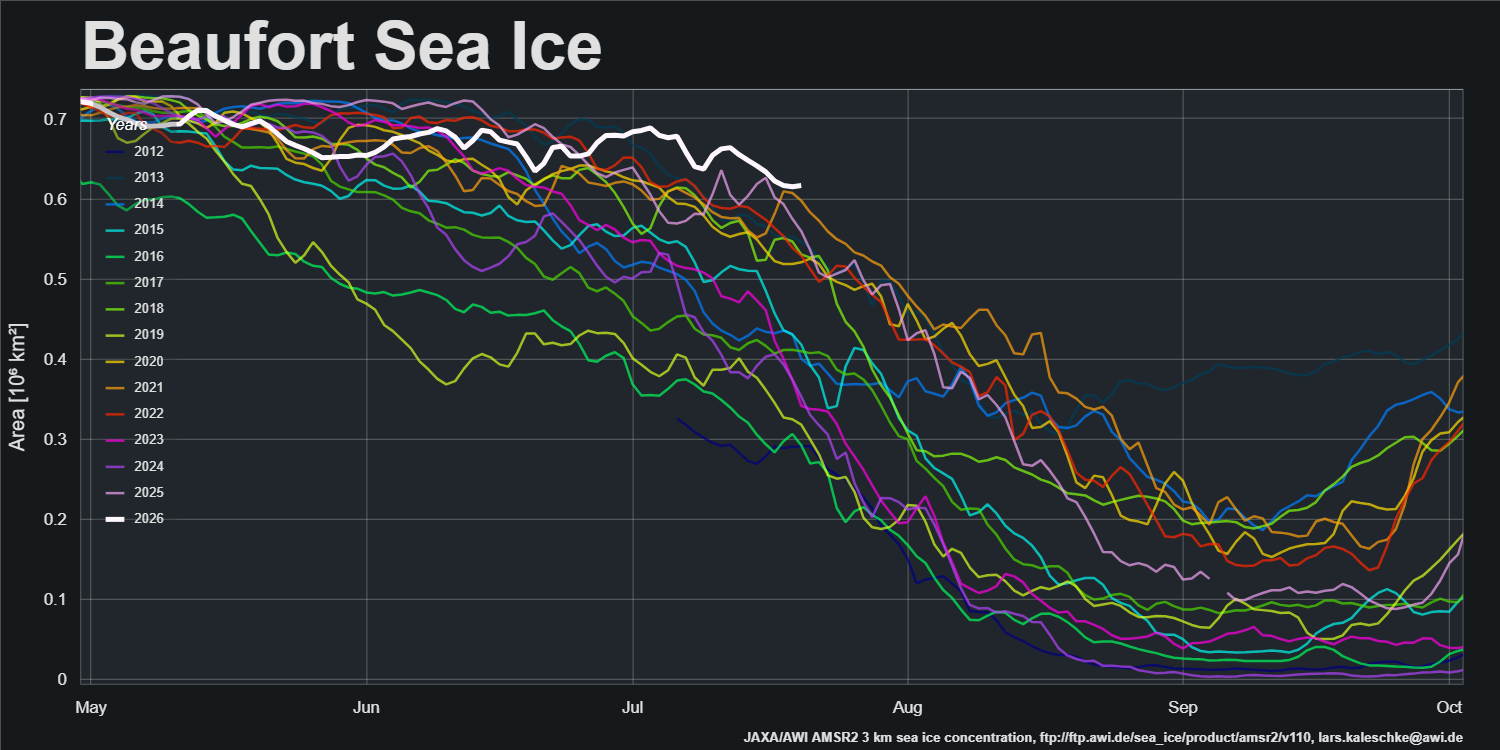
It may well be that the Beaufort Sea will provide the last “choke point” blocking the Northwest Passage before it opens this year.
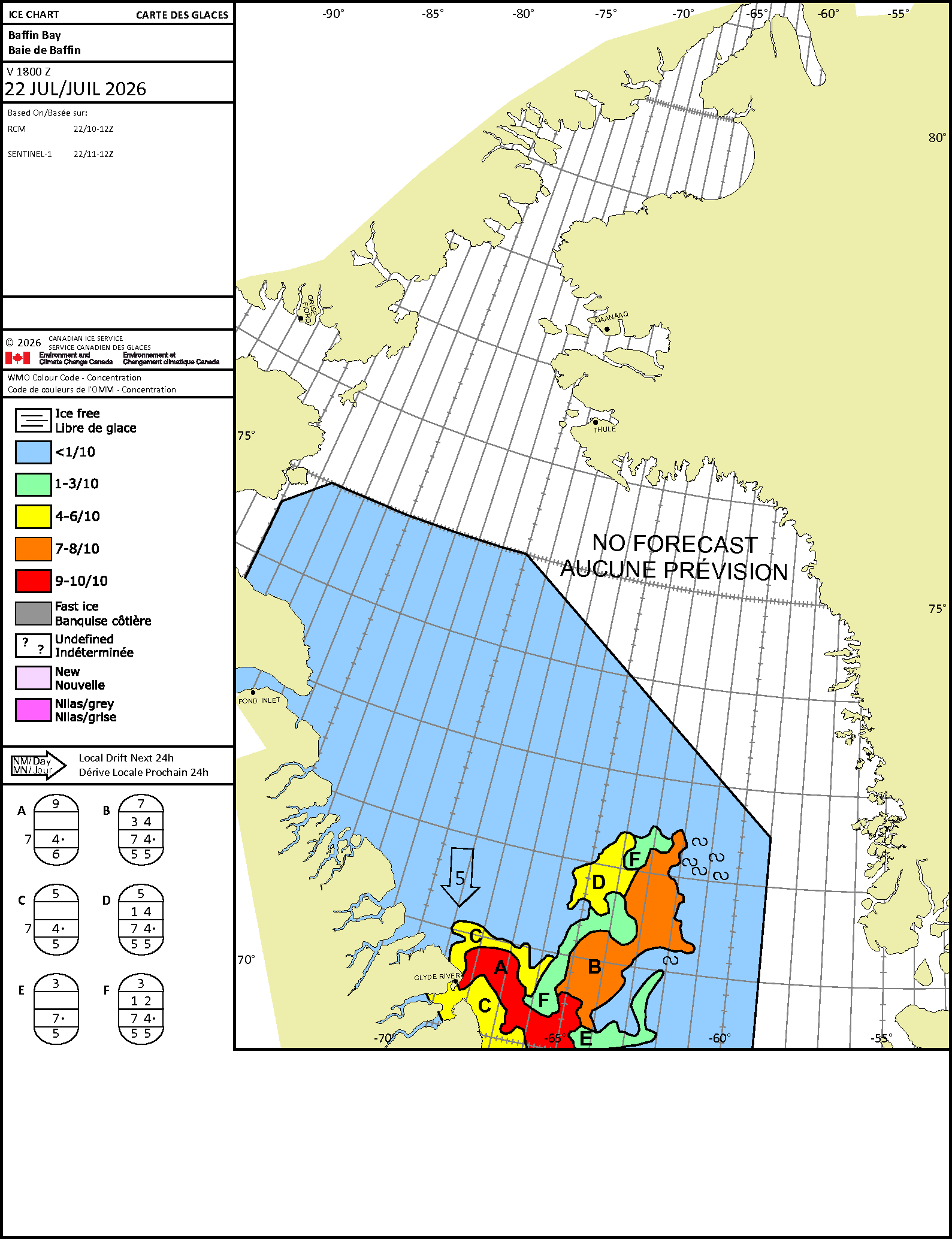
[Update – July 23rd]The latest Canadian Ice Service daily chart for Baffin Bay shows that the eastern entrance to the CAA is clear of sea ice, as it has been for weeks now:
The CIS hasn’t started daily coverage of any of the “western” sections of the NWP, so here’s the latest weekly chart:
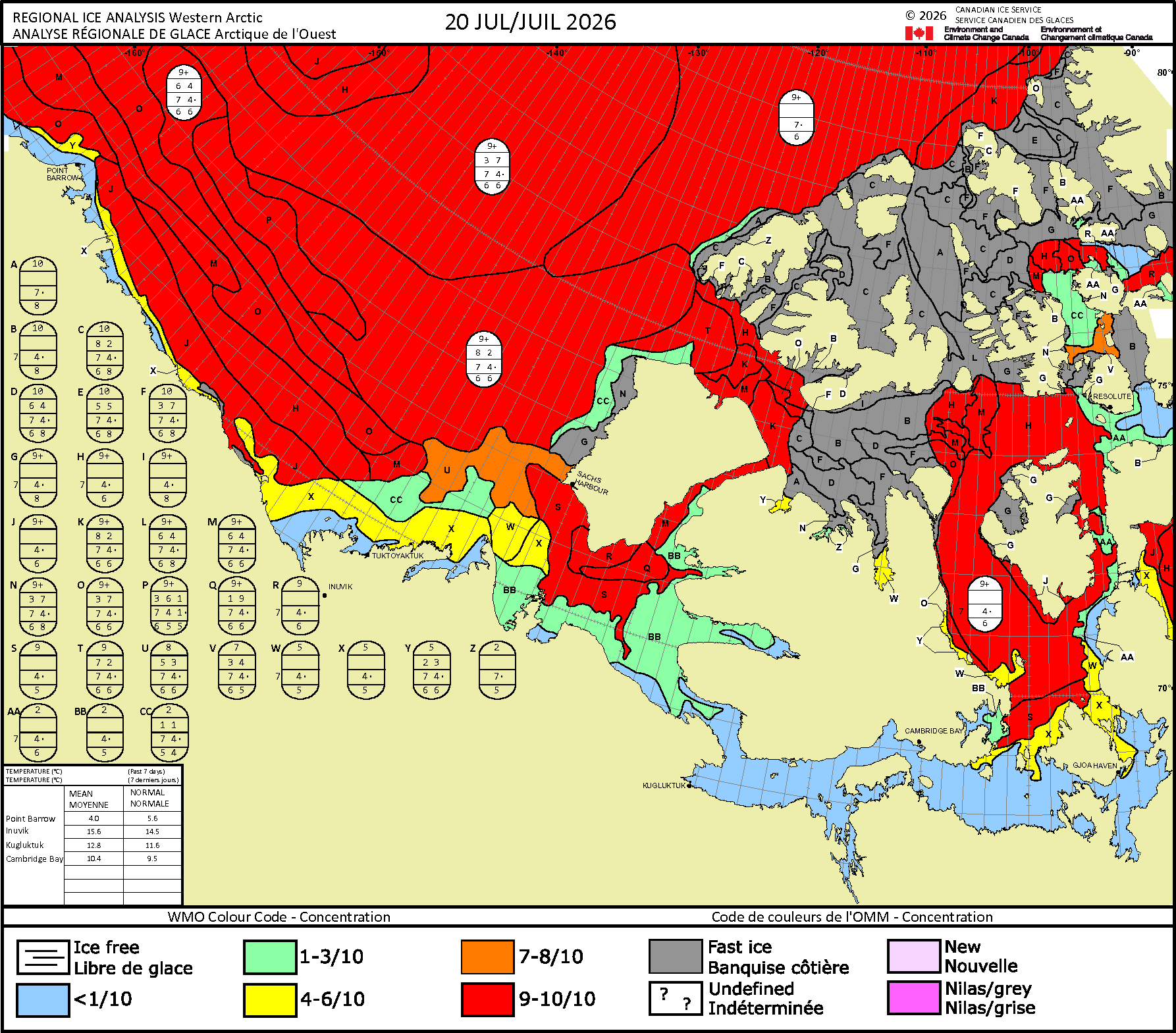
It shows <=6/10 concentration ice all the way from Bellot Strait to the Amundsen Gulf. However, Peel Sound and Prince Regent Inlet are still blocked.
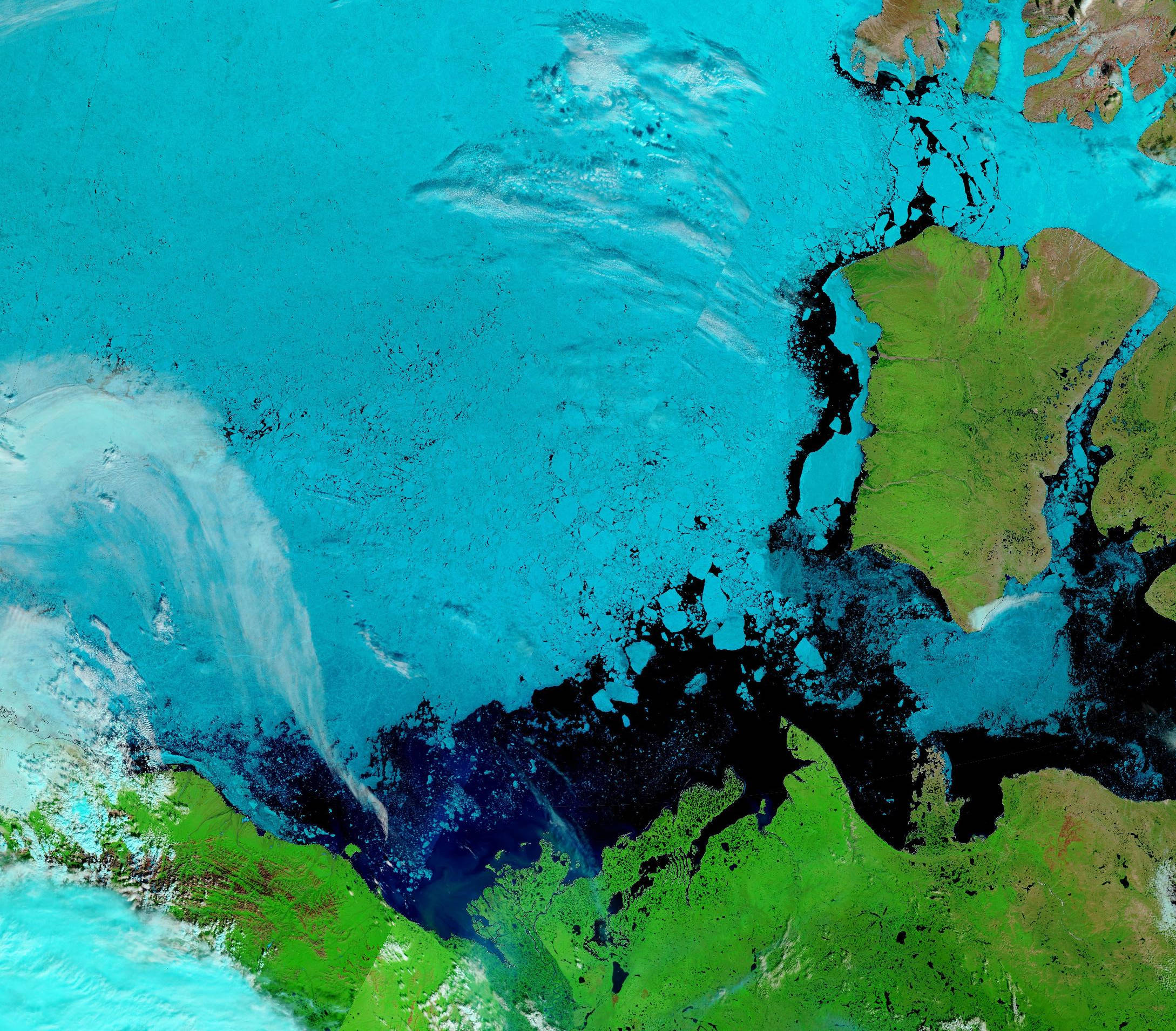
Here’s a closer look at the “choke points” in the Amundsen Gulf and Beaufort Sea shown on the concentration map above:
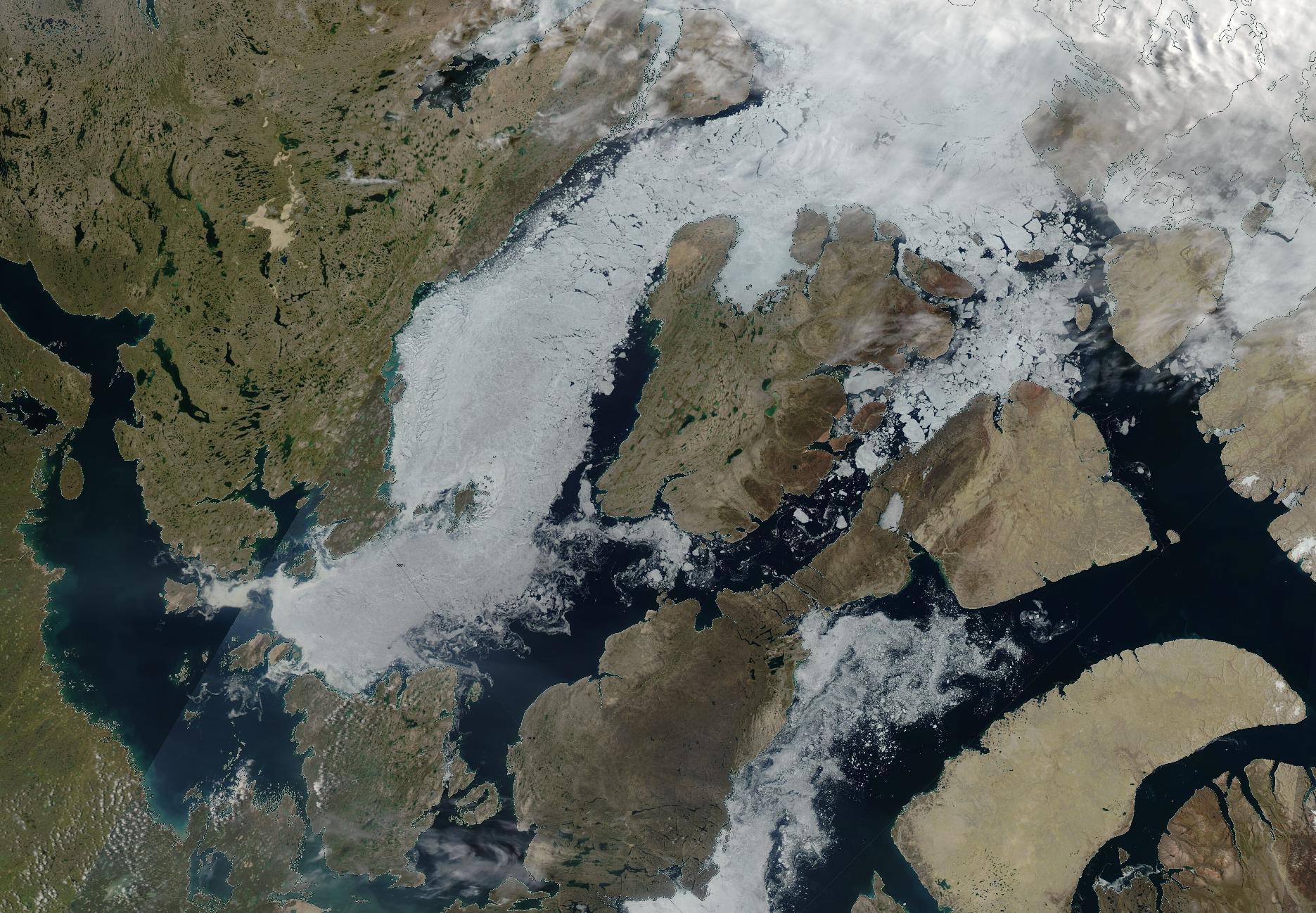
The skies were clear over the central CAA yesterday, revealing that some ice is still lingering in Prince Regent Inlet on route 6.
In the absence of clear skies over the coast of Alaska, here’s the latest National Weather Service ice concentration map:
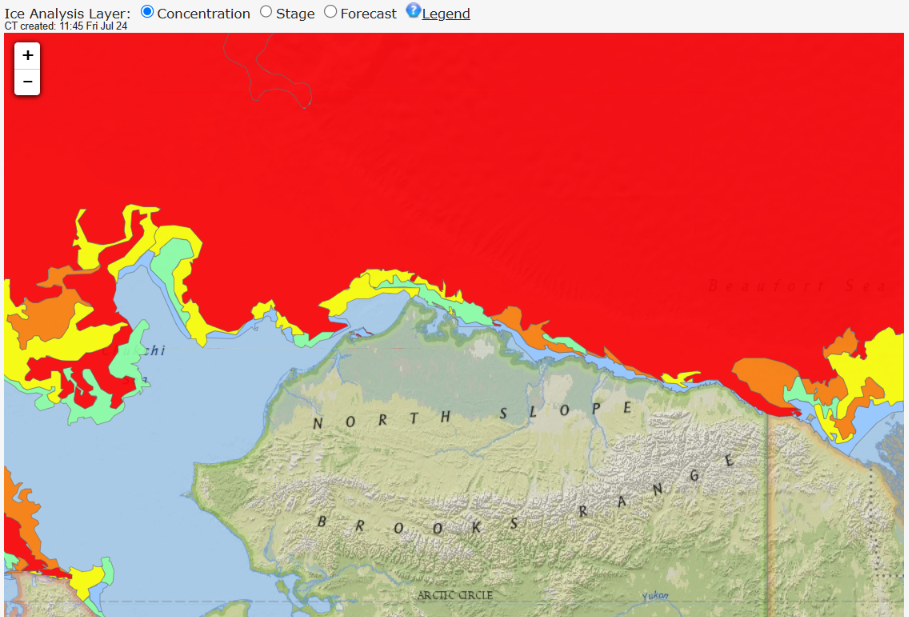
The route is still blocked near the Alaska/Yukon border.
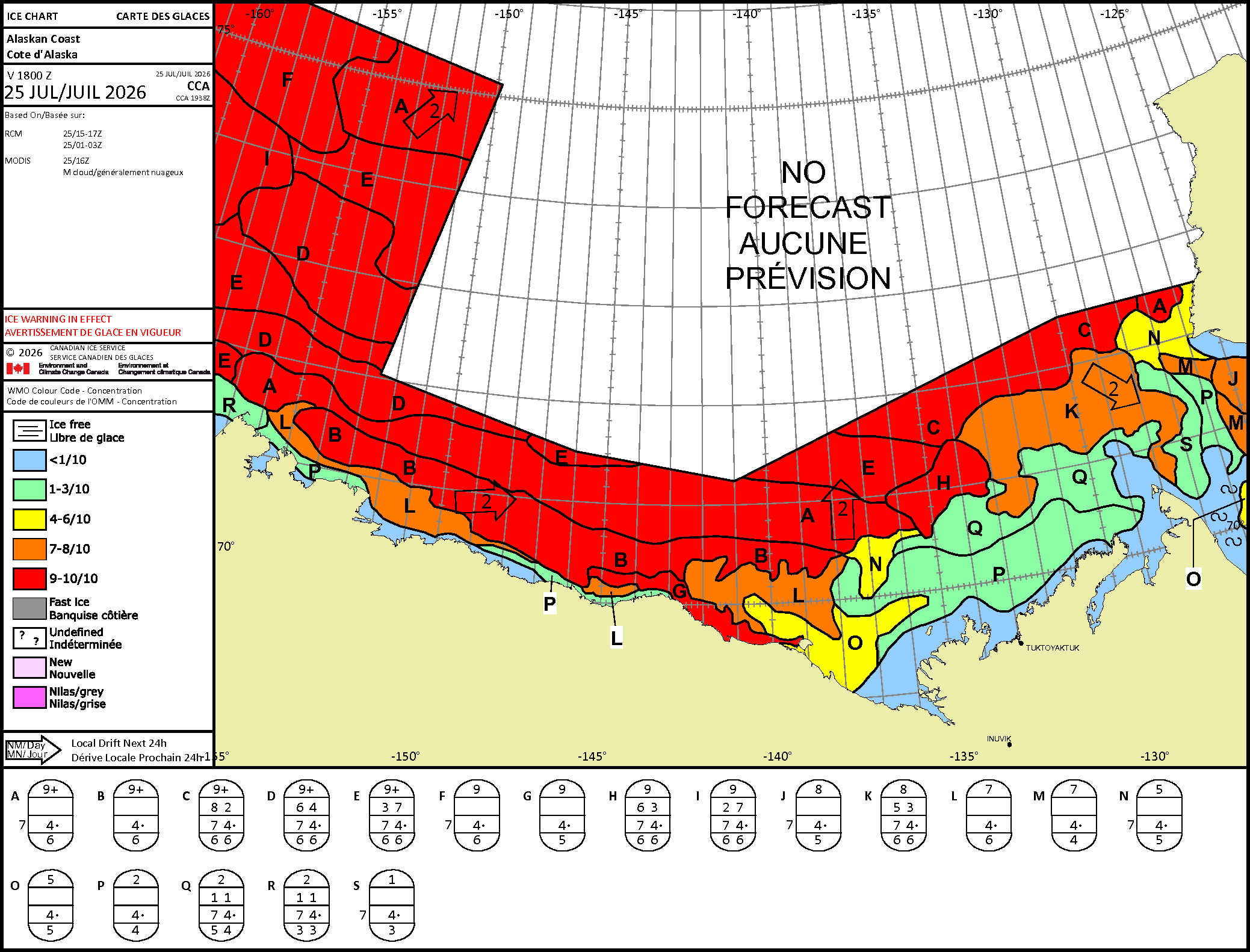
P.S. The CIS has started daily coverage of the Alaskan coast:
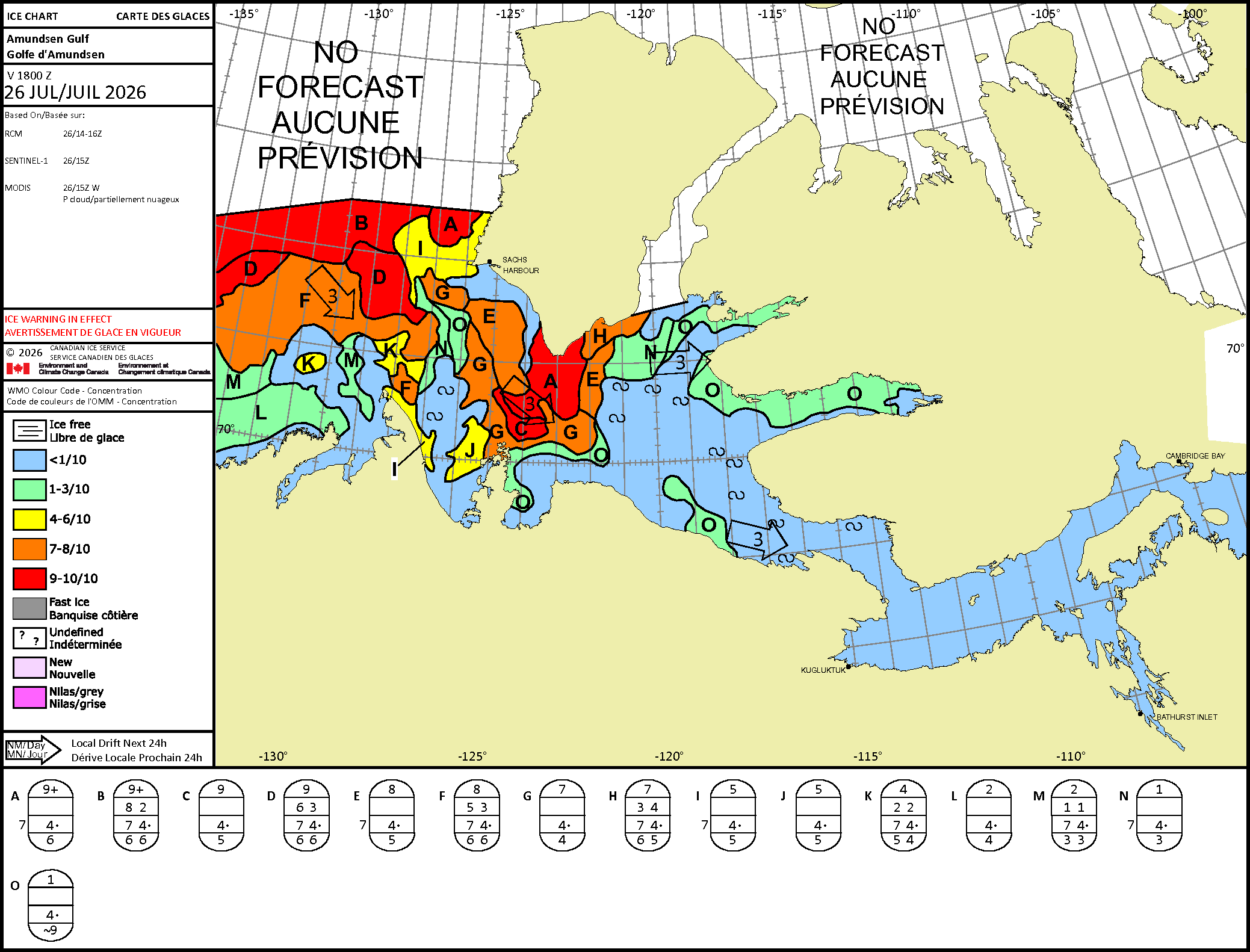
The CIS has started daily coverage of the Amundsen Gulf:
The CIS has started daily coverage of Queen Maud Gulf:
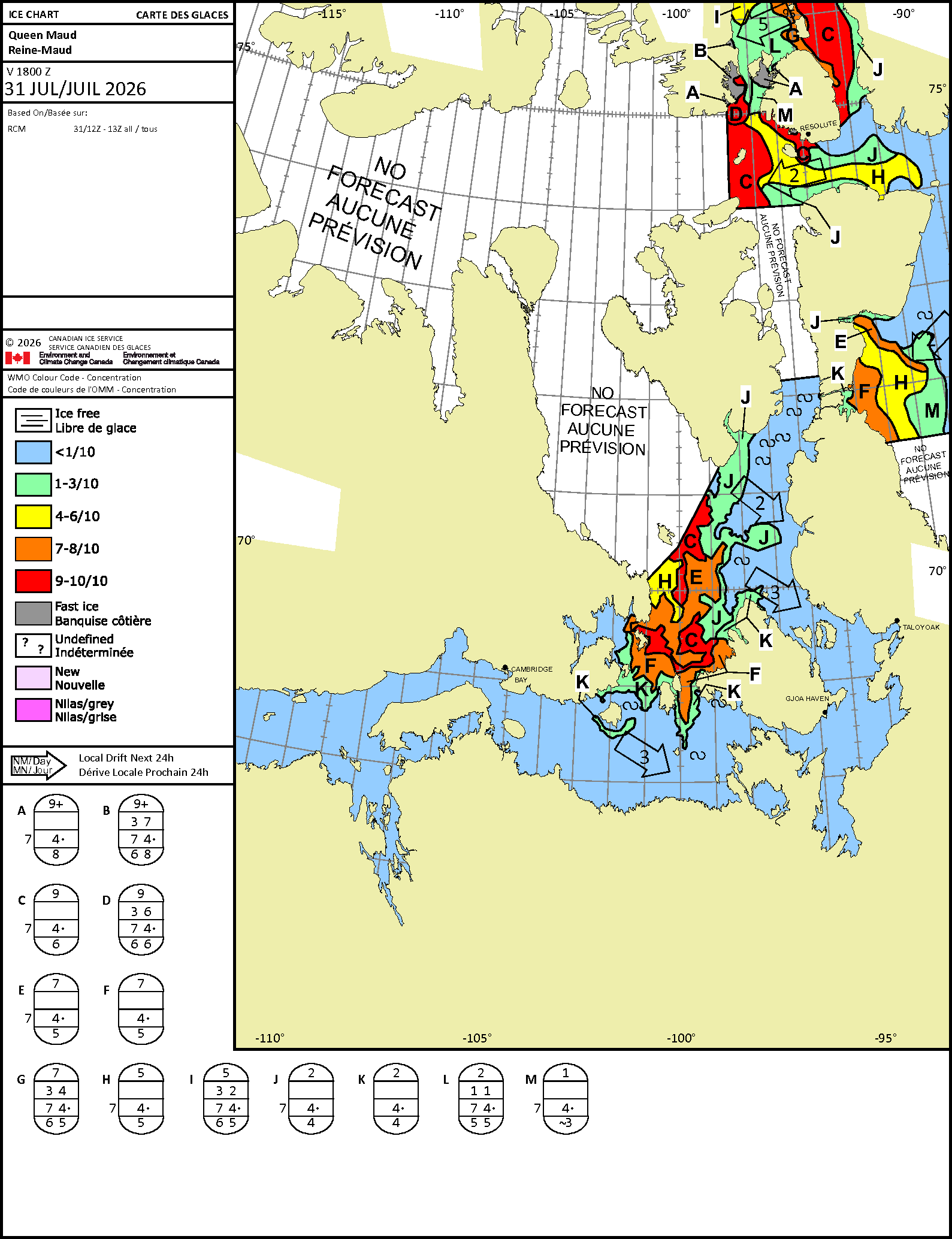
It shows that the eastern entrance to Bellot Strait is still cut off by an area of 7-8/10 concentration ice. The rest of the southern route through the CAA is navigable, but that does not apply to the Beaufort Sea:
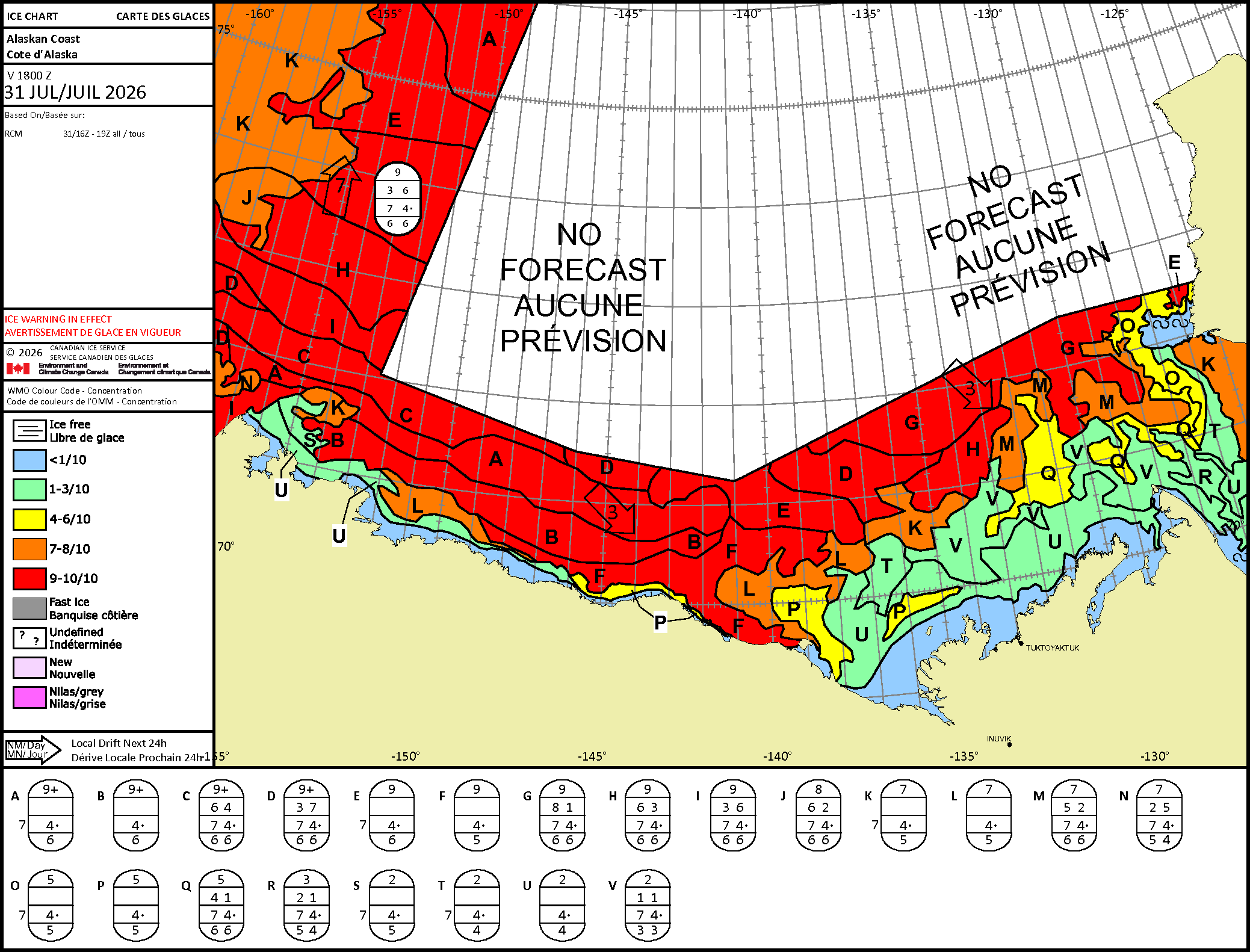
As well as the coast west of Herschel Island, the route is also now blocked by 9-10/10 concentration ice at Utqiaġvik.
[Update – August 5th]The latest CIS chart still shows that the route along the Beaufort Sea coast is still blocked by 7-8/10 concentration ice west of Herschel Island:
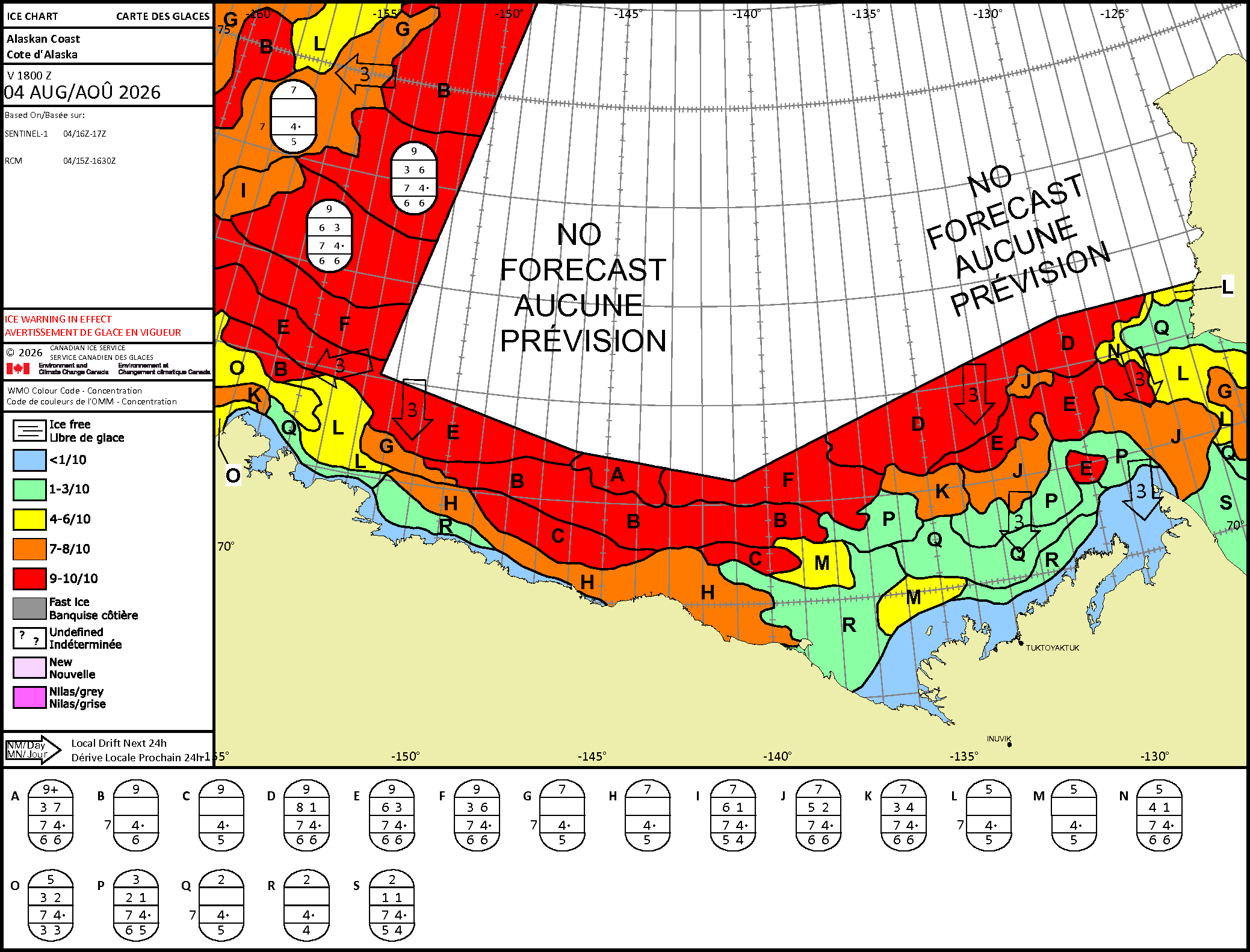
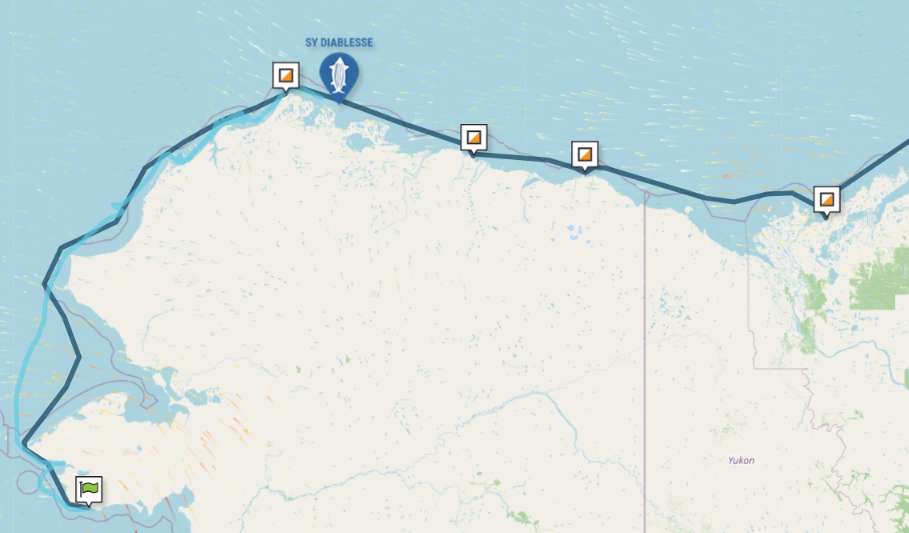
Nevertheless, SY Diablesse has rounded Point Barrow and is heading in that direction:
Travelling from east to west Alma af Frøya, a modern replica of Gjoa, is following Amundsen’s route through Peel Sound:
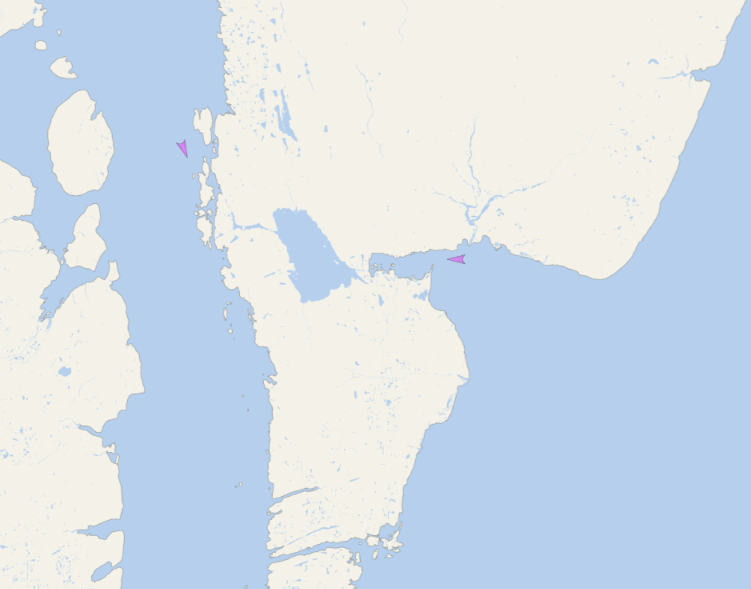
Harmattan, a more conventional yacht, spent the winter in Pond Inlet and is now heading south through Prince Regent Inlet.
[Update – August 6th]There is a curious difference of opinion between the daily and weekly CIS charts about the Beaufort Sea “choke point”:
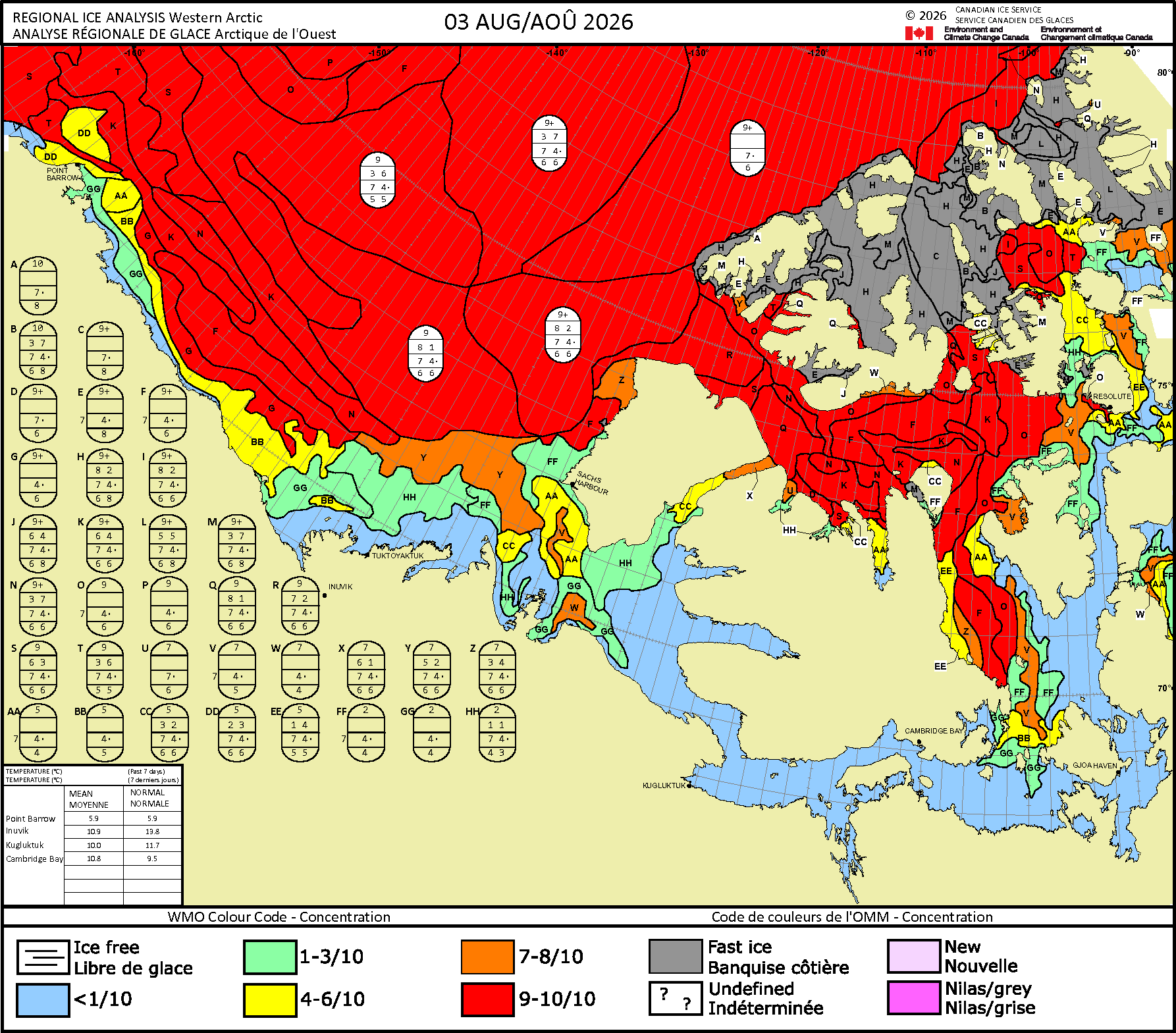
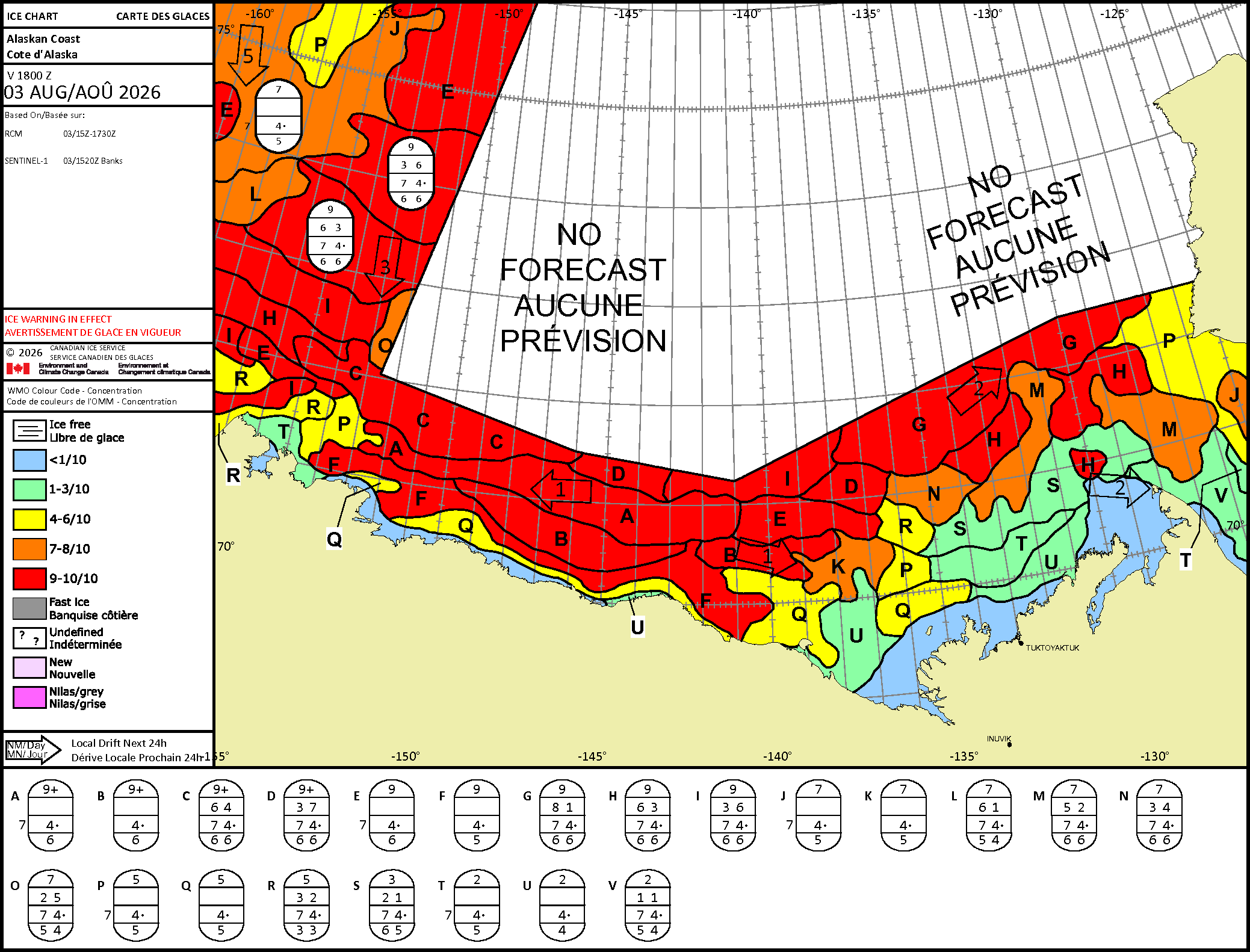
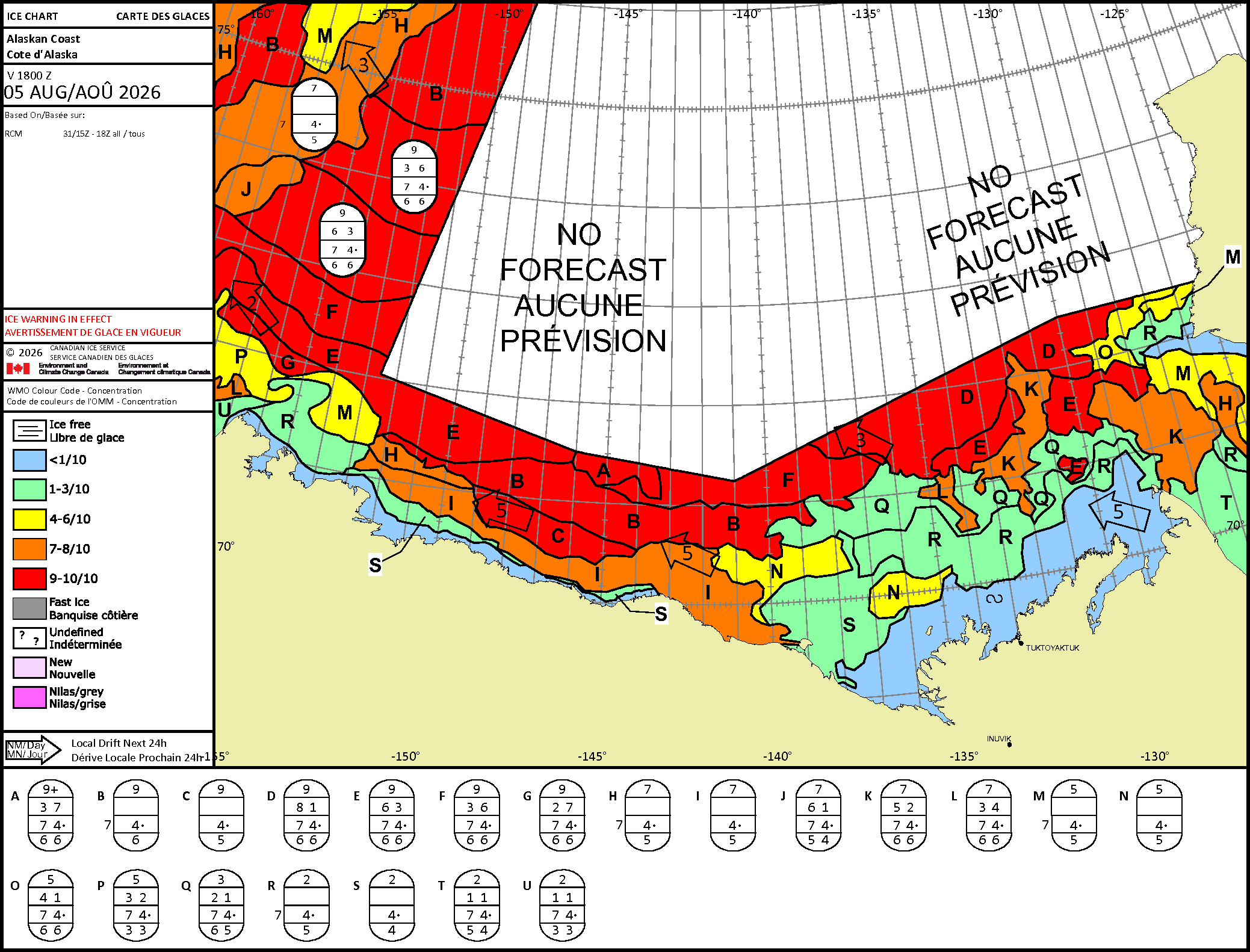
It’s been a bit cloudy, but by way of arbitration here’s what MODIS has to say on the matter:
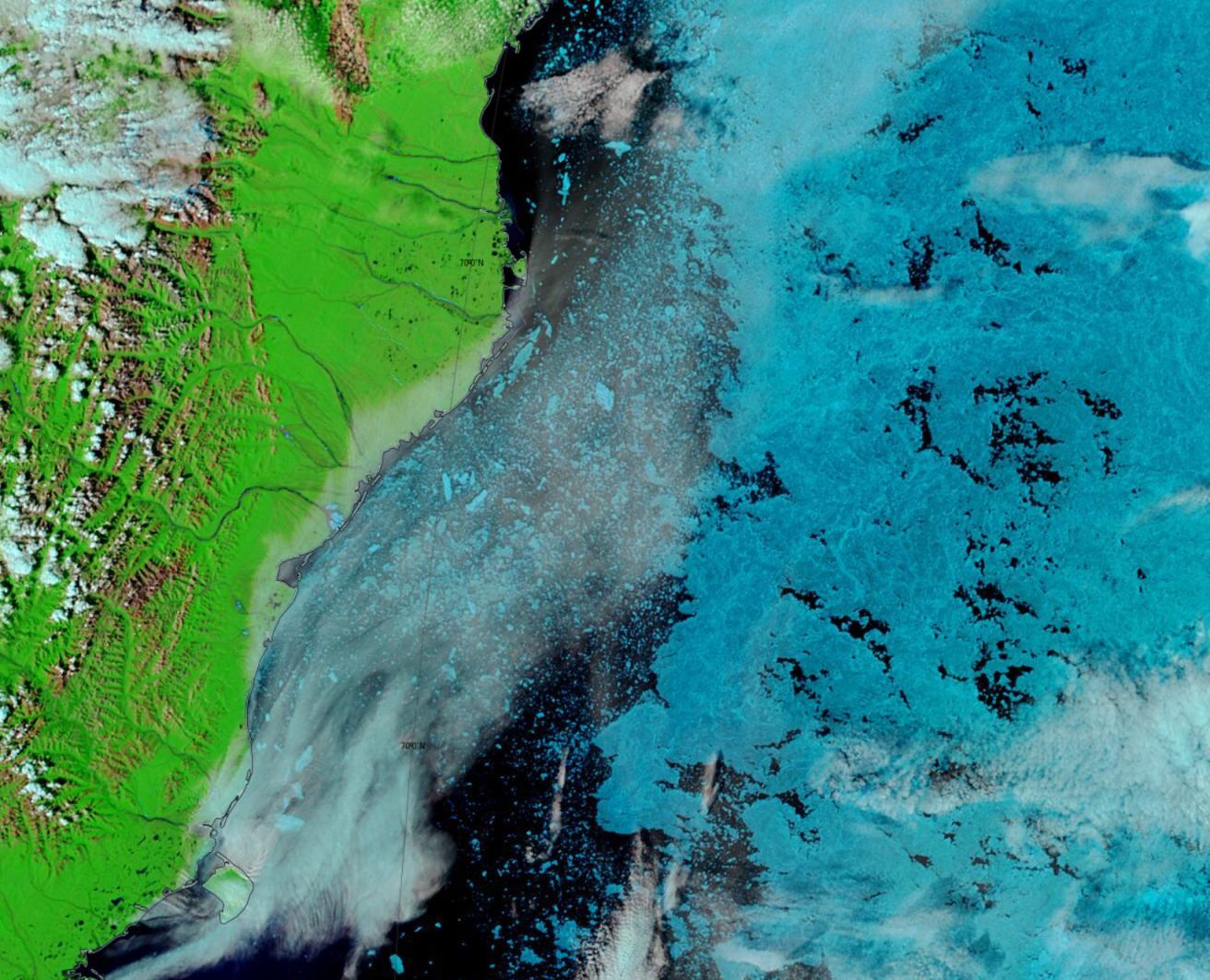
Here is a still slightly cloudy look at the area west of Herschel Island via Sentinel-2:
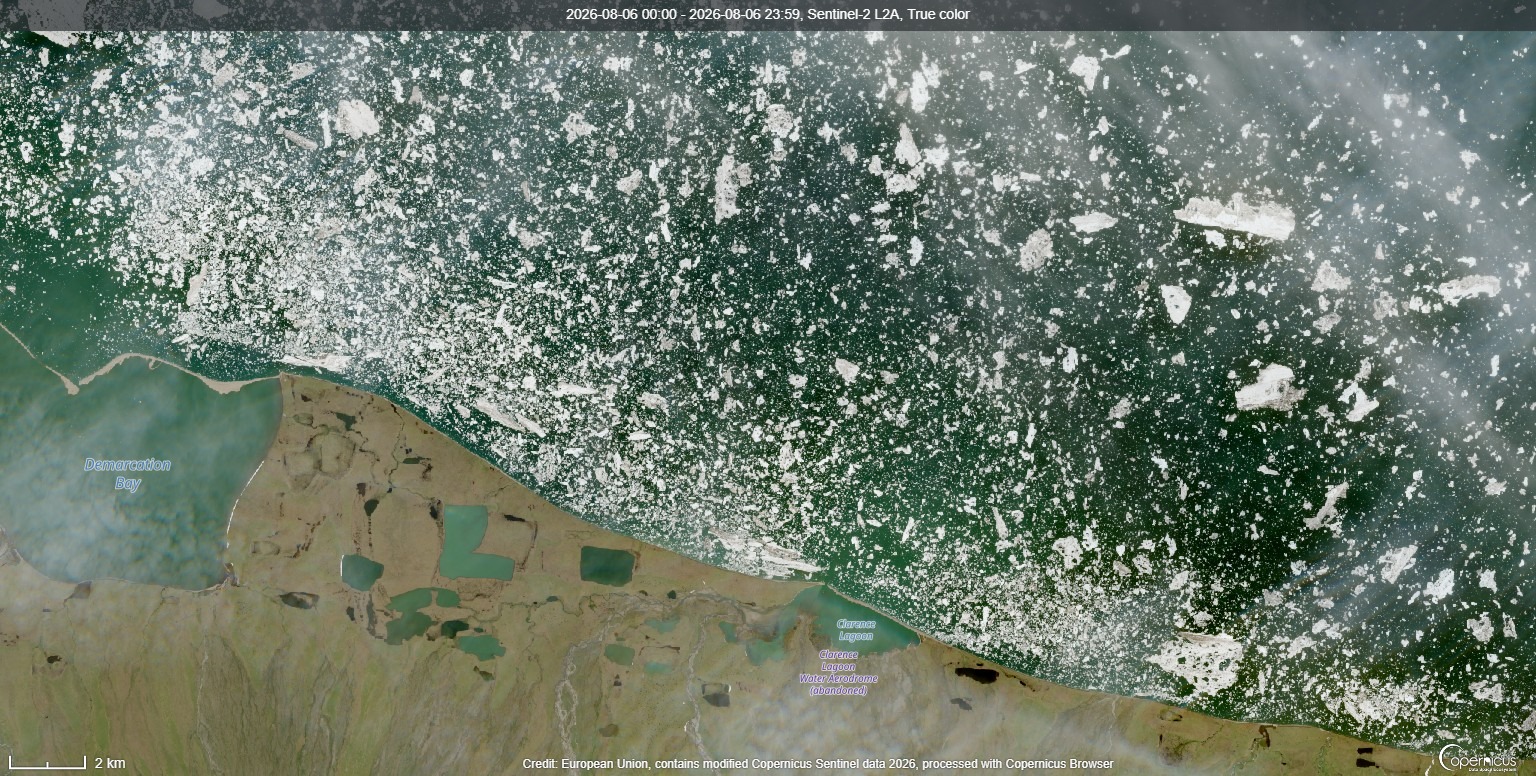
Hopefully Diablesse will have a lot less ice to contend with by the time she gets there!
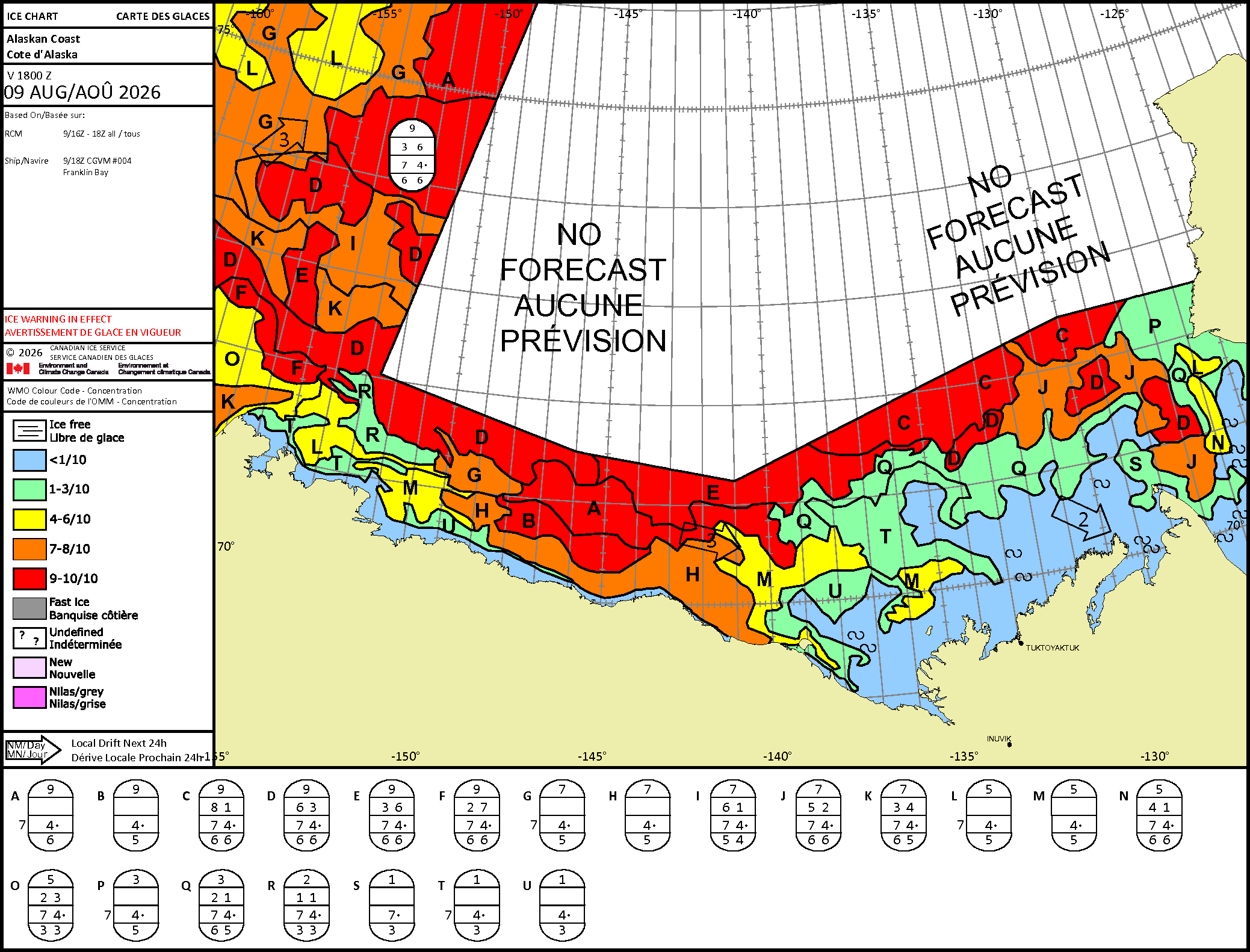
[Update – August 10th]The current CIS chart still shows a choke point of 7/10 concentration ice west of Herschel Island:
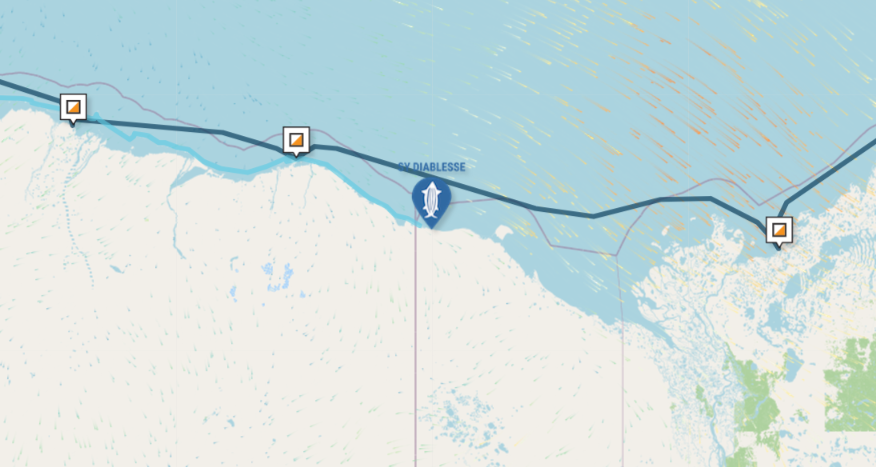
Despite that Diablesse is currently making progress through Canadian waters east of Demarcation Bay, in the midst of the area of high concentration ice:
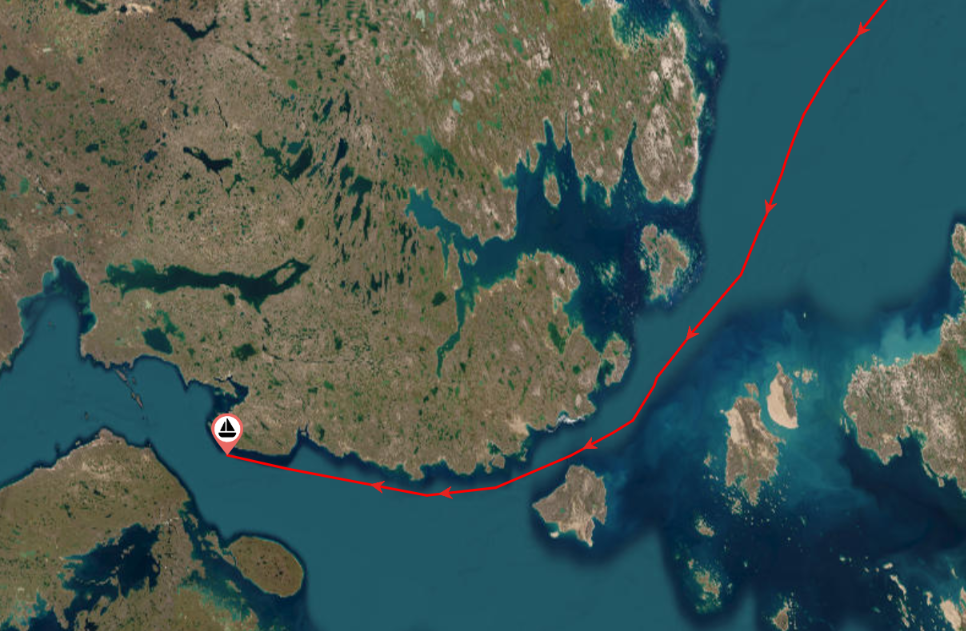
Heading in the opposite direction Blue Peter has taken the direct route through Victoria Strait, and is now nearing Cambridge Bay:
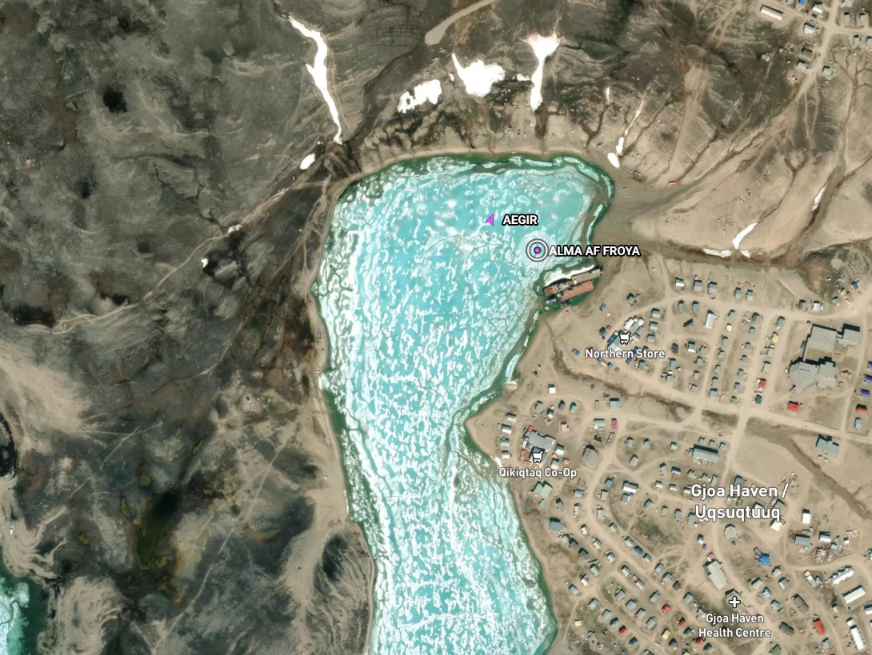
Meanwhile Alma af Frøya and Aegir are taking a break in Gjoa Haven:
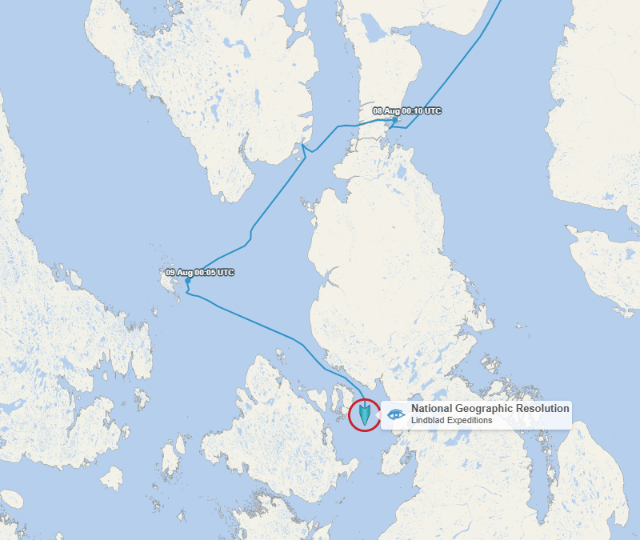
National Geographic Resolution is the first cruise ship to negotiate Bellot Strait this year, and is also now near Gjoa Haven:
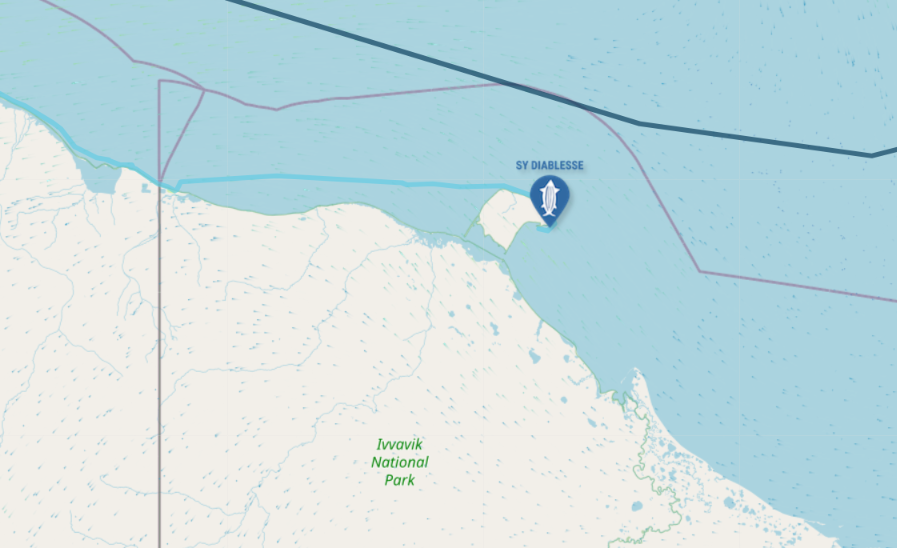
Diablesse has now reached Herschel Island, and should now have plain sailing until Cape Bathurst:
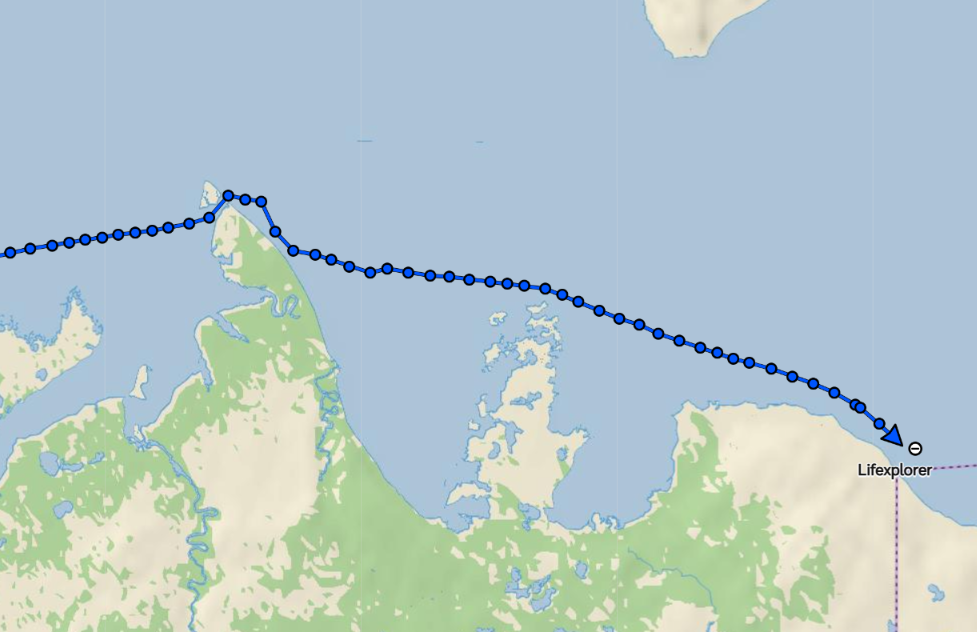
However, getting to Herschel Island was most certainly not plain sailing! Here is a more detailed tracking map for Lifexplorer, which was accompanying Diablesse on Monday:
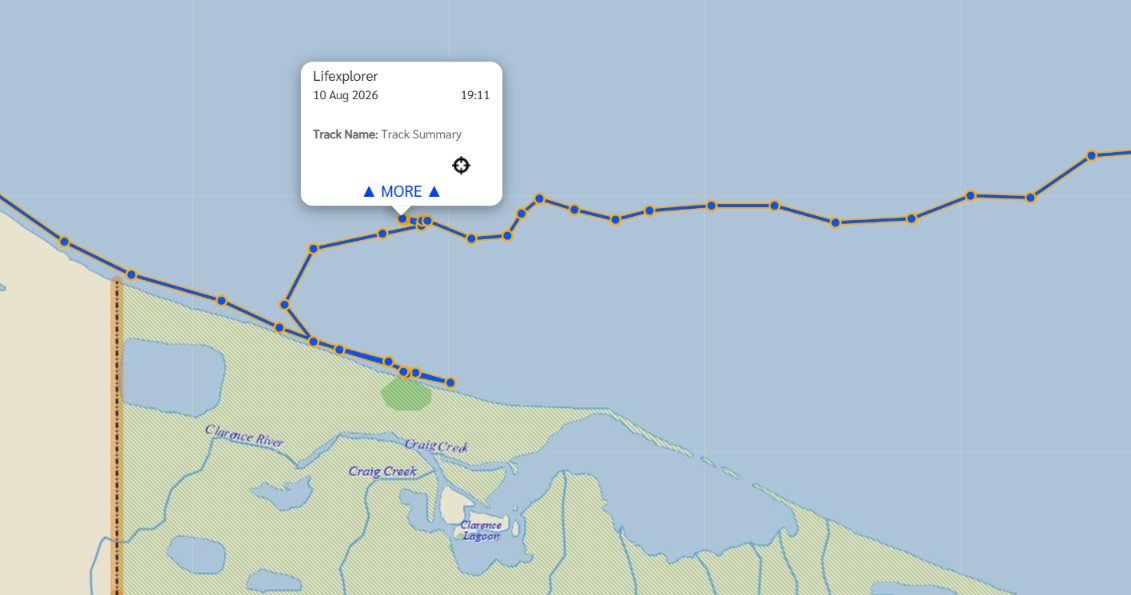
According to an automatic translation from the original Italian:
For at least 12 hours, we struggled to break through the ice pack along the maritime border between Alaska and Canada. It was a grueling time: all hands were on deck, with our two onboard drones monitoring the narrow leads ahead, the motorized dinghy providing assistance, and crew members using long, metal-tipped poles to push aside lighter ice floes. There were moments when the path seemed completely blocked, both ahead and astern. We were accompanied by Diablesse—a sailboat owned by a Mexican entrepreneur and crewed by sailors from Spain and his home country—and we were ready to join forces to break free as quickly as possible. Their mast stood about 30 meters tall—taller than ours—so one of their sailors was hoisted up to the spreaders to spot the best route. We maintained constant radio contact. We averaged a speed of two knots, with the helmsman constantly zigzagging. The air temperature hovered around two degrees Celsius, while the water temperature ranged between zero and one.
Around five in the afternoon, the ice floes become more scattered, and the sea opens up—reminiscent of the stretch that gave us a breather after the Point Barrow “bottleneck.” But the relief is short-lived: just as we are anticipating the calm waters that should await us in Herschel Island Bay in a couple of hours, I—having just taken the helm—fail to spot a semi-submerged block of ice and cause an accident. The hull comes to a sudden, jarring halt; the impact at the bow is violent. “We might have broken the propeller and rudders. Our voyage is over,” Alberto shouts as he rushes to the engine room and the bow to check for leaks. These are moments of anxiety and near-panic. Pointed poles fail to dislodge the block, which has wedged itself between the two rudders—spanning the width of the hull—in the protected area between the propeller and the stern. We launch our inflatable dinghy. There is dismay, anger, and frustration. Dark thoughts fill our minds: how could we possibly carry out repairs in this remote corner of the world?
Diablesse arrives and assists in the rescue effort. Slowly, we manage to free the starboard rudder by striking the ice with poles. Then, we tow the boat from the bow, hoping water pressure will help. It seems futile. But finally, our prayers are answered: the block rises to the surface like a monster clinging to the stern, then breaks free and drifts lazily away. A miracle occurs: the propeller turns, and the rudders work. They are scratched, and the upper part of the port blade is partially bent—the result of the breakaway mechanism designed to prevent such collisions from damaging the hull structure. In fact, the impact did not compromise the vessel’s seaworthiness. It truly seemed impossible, yet the boat held up. We resume our voyage—albeit more apprehensively—with our speed dropping from nearly seven knots to four.
Further west Alegria Marineros is currently negotiating a different stretch of icy water, having decided to stay well offshore instead of hugging the coast past Demarcation Bay:
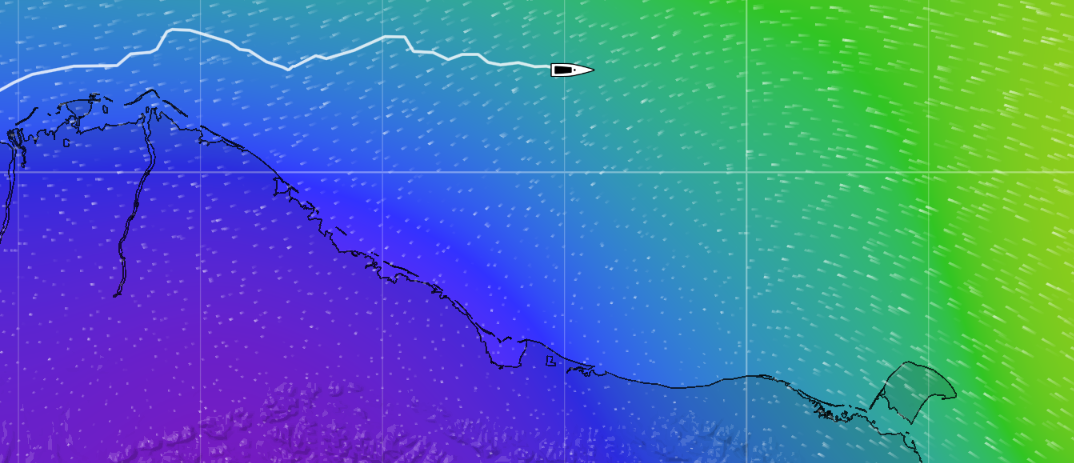
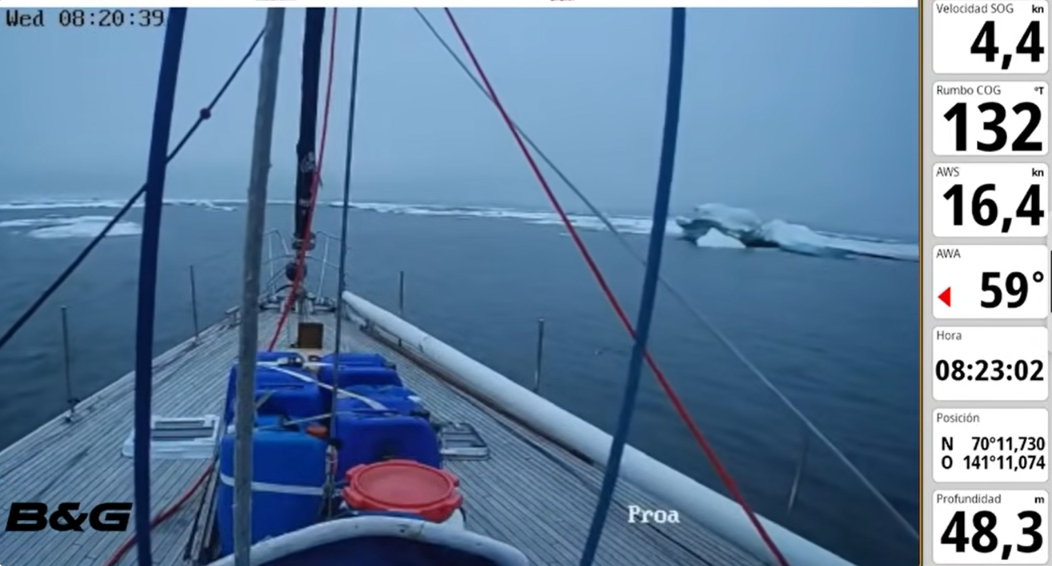
I have just discovered that a live video feed is available of her progress, direct from the Beaufort Sea:
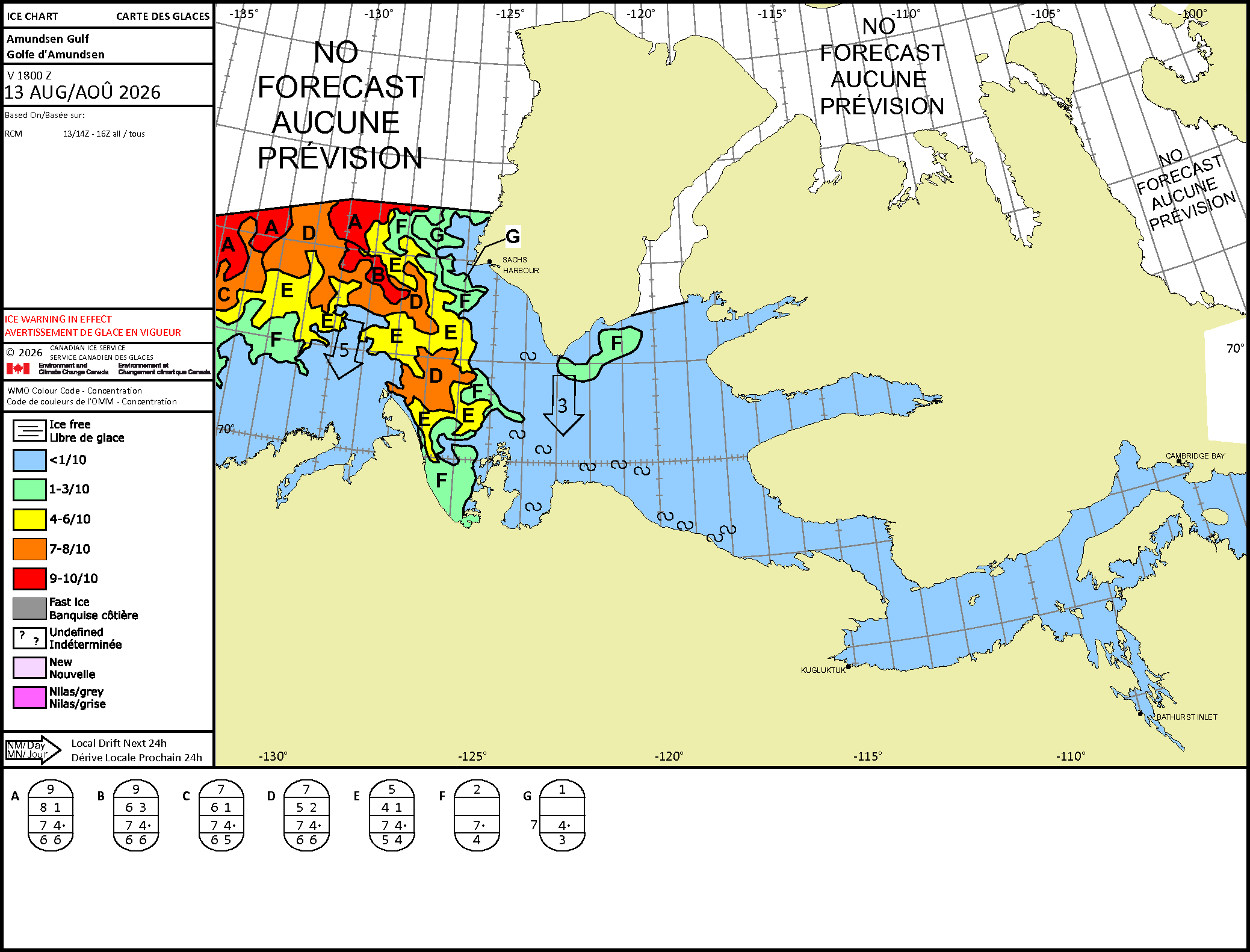
Diablesse and Alegria Marineros have stopped off in Tuktoyaktuk. However Lifexplorer kept on going and has become the first “small vessel” to round Cape Bathurst and reach the Amundsen Gulf this summer:
Having evaded an area of 7/10 concentration ice, the crew managed to make their way through the narrow band of 5/10 ice without undue delay:
National Geographic Resolution has passed through the Bering Strait, and thus become the first cruise ship to complete an east to west transit through the Northwest Passage this summer:
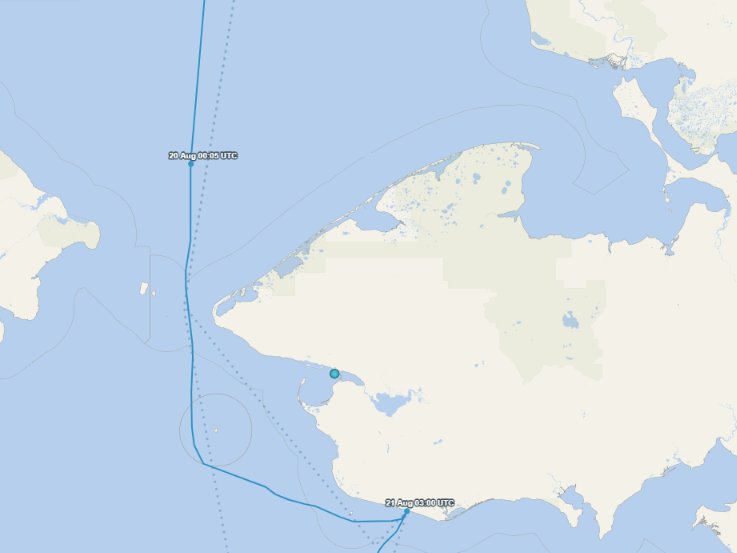
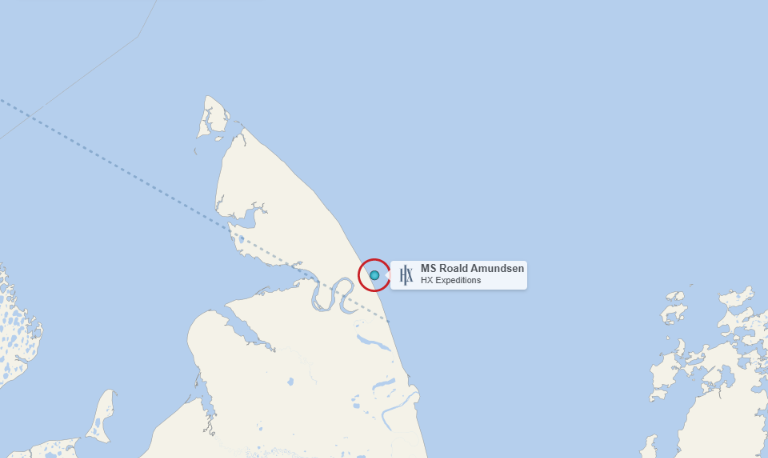
Meanwhile a couple of days ago MS Roald Amundsen fittingly became the first cruise ship to reach the Amundsen Gulf heading from west to east:
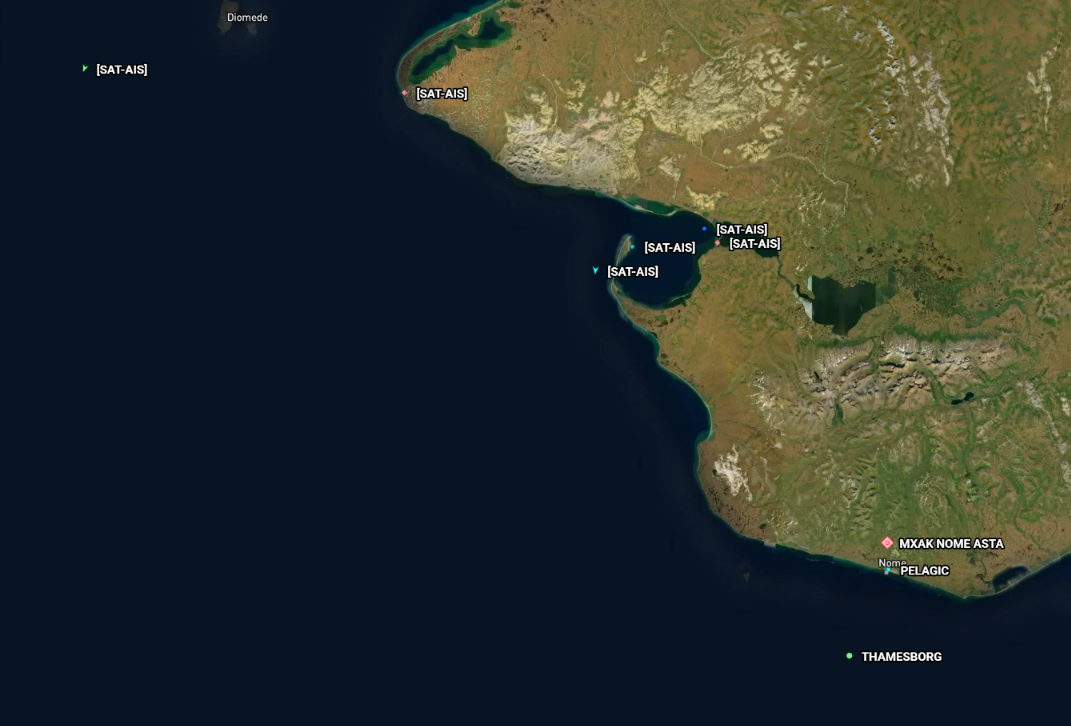
Thamesborg has passed through the Bering Strait, and thus become the first cargo ship to complete an east to west transit through the Northwest Passage this summer
Meanwhile sister ship Azoresborg is nearing the Amundsen Gulf on the first west to east transit by a cargo ship this year:
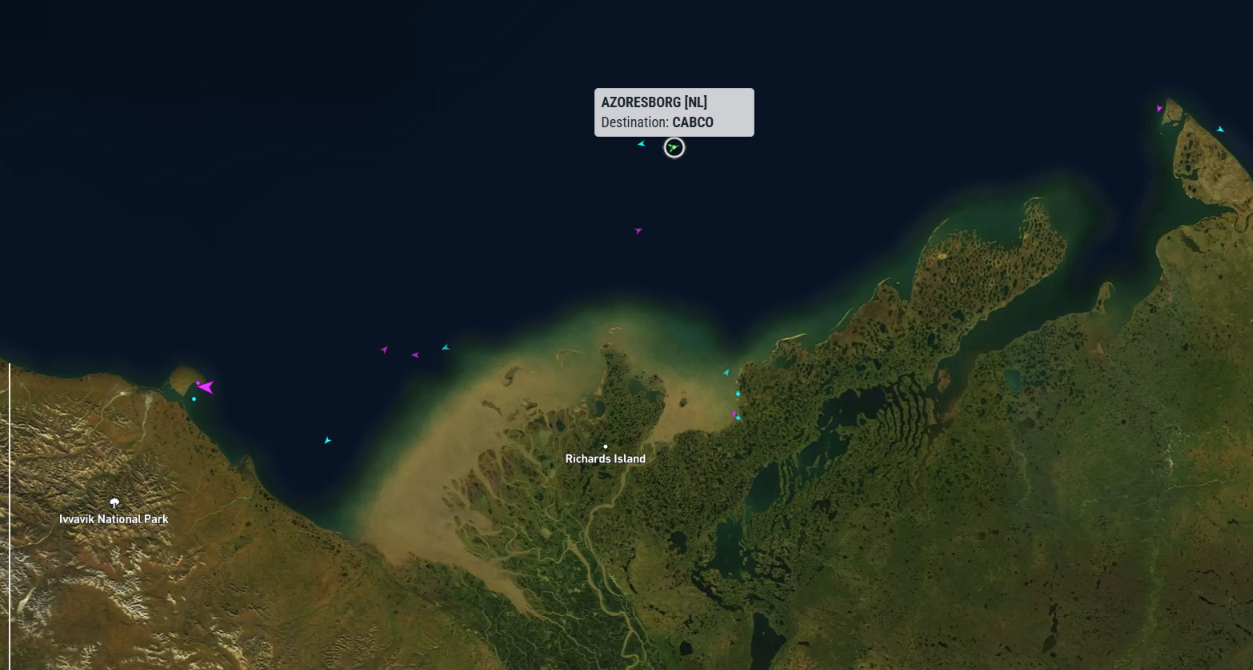
There are also a number of “pleasure craft” visible in that image. In particular, Hafiz and Blue Peter have reached Herschel Island heading west.
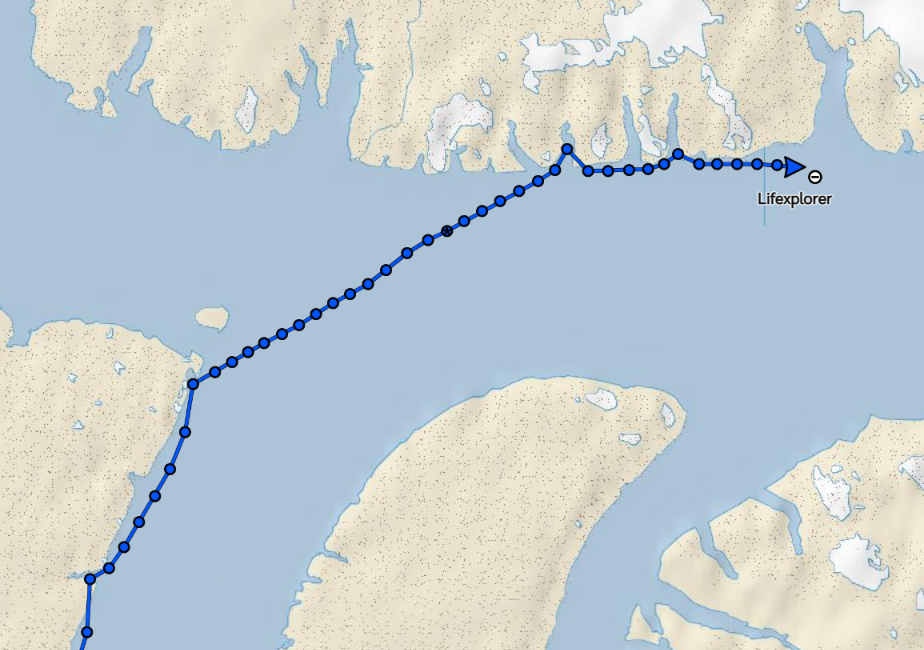
Heading the smaller pack heading east, Lifexplorer has reached Lancaster Sound:
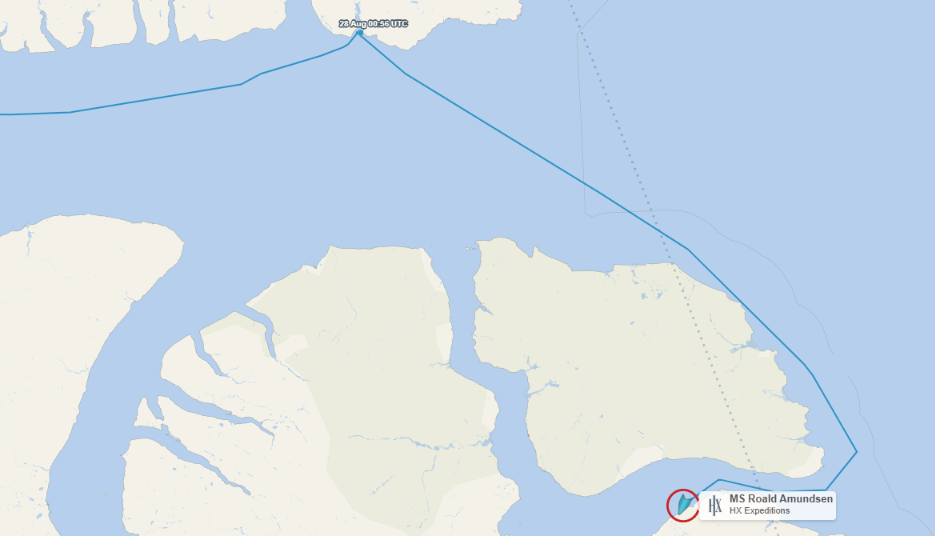
MS Roald Amundsen has reached Baffin Bay, but then popped back into the CAA to visit Pond Inlet:
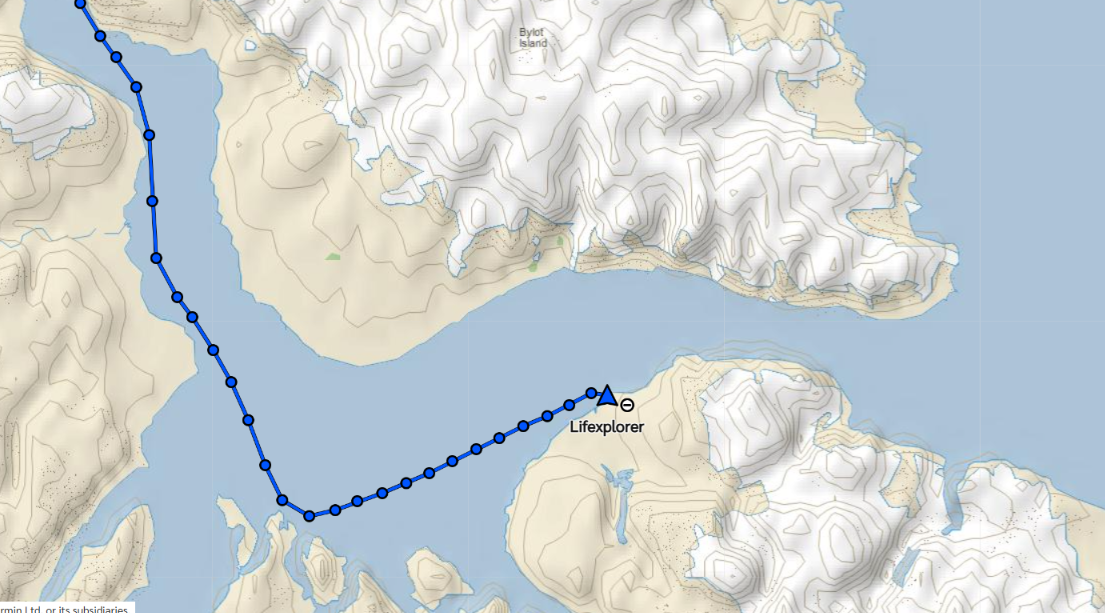
Lifexplorer is taking a break at Pond Inlet:
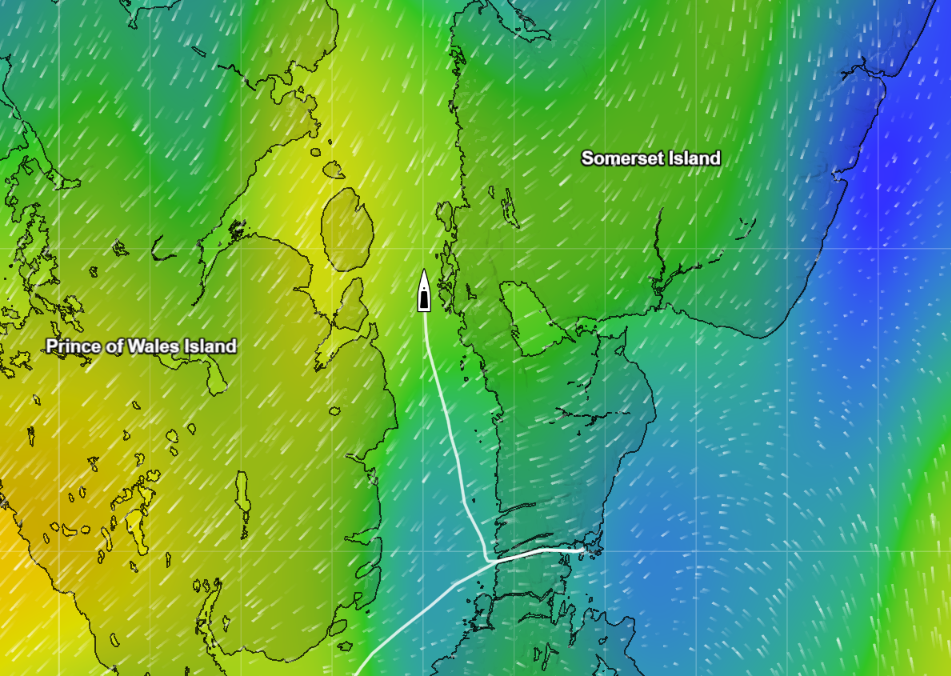
Meanwhile Alegria Marineros has taken the route less travelled through Bellot Strait. Twice in quick succession!
Emotional and After You became the first “pleasure craft” to complete the Northwest Passage this summer when they headed south through the Bering Strait yesterday. However at over 50 meters in length and lacking sails neither can really be described as a “small vessel”. Leading the pack heading westward in that category is Blue Peter, currently anchored in Kasegaluk Lagoon:
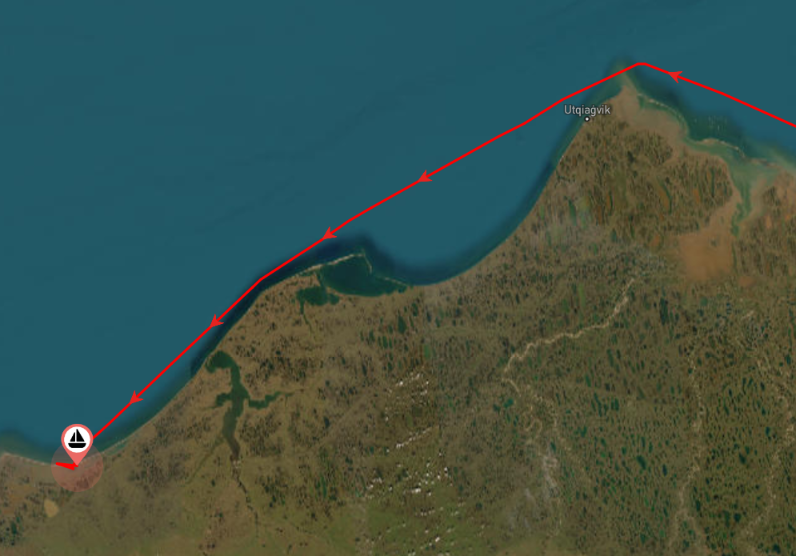
Lifexplorer has reached Greenland, and thus become the first “small vessel” to complete an eastbound voyage through the Northwest Passage this summer:
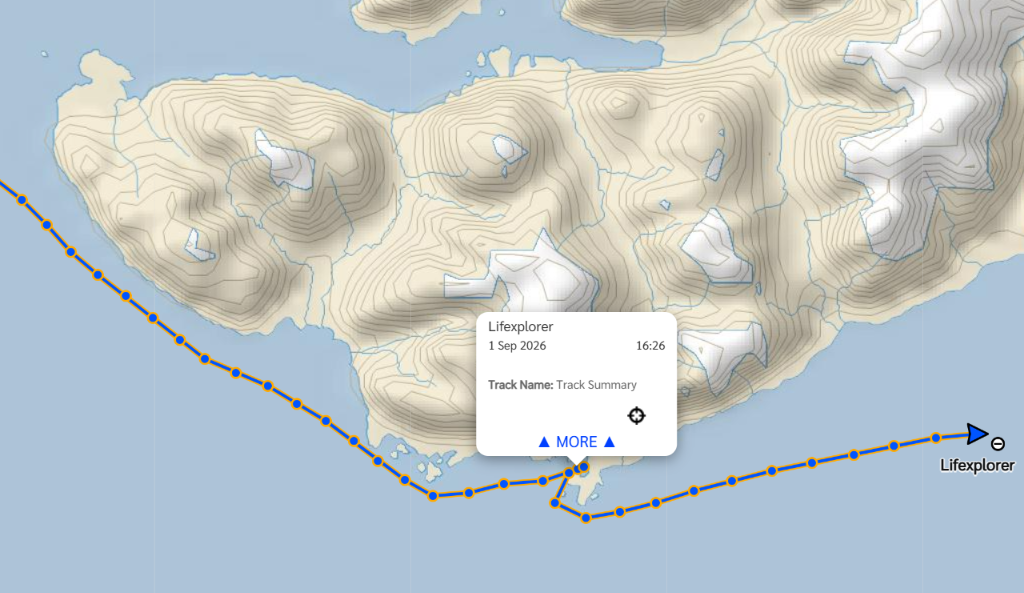
Blue Peter has passed through the Bering Strait, and thus become the first “small vessel” to complete an westbound voyage through the Northwest Passage this summer:
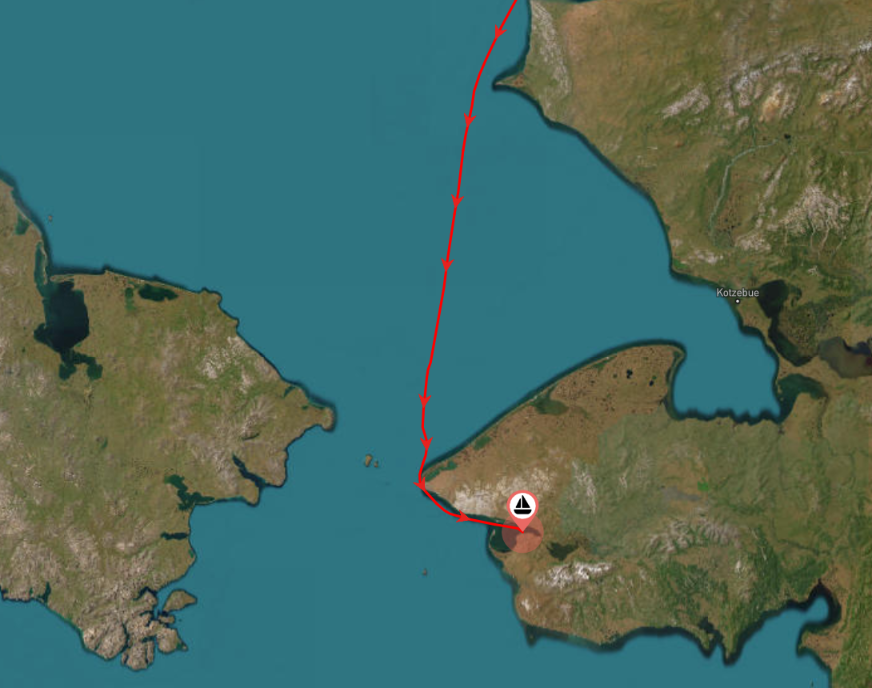
Watch this space!
Earlier this week the Guardian published a long article about a geoengineering experiment in the Northwest Passage:
Here’s a Sentinel 2 image of the area of ice referred to:
Here too is an explanatory video from the Real Ice YouTube channel:
For a critique of this form of “solar geoengineering” see also:
Just looking at the Bremen map today, the ice appears to have almost cleared the Alaskan coast.
I suppose I should be voting on ASIF, I have a feeling the North west passage might just be open by the end of July!
Unfortunately the ASIF poll is now closed. The most popular bin was for the first half of August:
The CIS hasn’t started daily coverage of any of the “western” sections of the NWP. I’m just about to add the latest weekly charts above. In the meantime here’s the latest NWS daily chart:
Note that history suggests that ice that is invisible to AMSR2 can be all too visible on MODIS and/or in the real world: