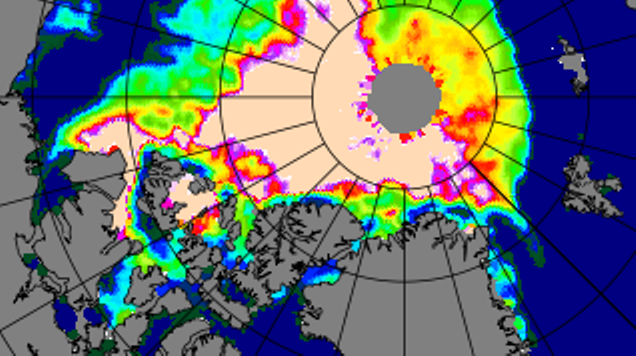
Inspired by my recent visits to Judith Curry’s blog this post will bring you links to the latest learned journal articles about Arctic sea ice. Together with occasional excursions into older and wider Arctic papers.
Judith’s “Week in Review” articles seem to last for a month, so this one will probably last for at least a year!
First up is an article apparently written by a regular reader of this humble web site! A University of Alaska article at phys.org begins:
In August 2016 a massive storm on par with a Category 2 hurricane churned in the Arctic Ocean. The cyclone led to the third-lowest sea ice extent ever recorded. But what made the Great Arctic Cyclone of 2016 particularly appealing to scientists was the proximity of the Korean icebreaker Araon.
For the first time ever, scientists were able to see exactly what happens to the ocean and sea ice when a cyclone hits. University of Alaska Fairbanks researchers and their international colleagues recently published a new study showing that sea ice declined 5.7 times faster than normal during the storm. They were also able to prove that the rapid decline was driven by cyclone-triggered processes within the ocean.
Note that it didn’t take us 5 years to write about the cyclone in question. Our article catchily entitled “The Great Arctic Cyclone of 2016” was published on August 13th 2016:
A storm is brewing in the Arctic. A big one! The crew of the yacht Northabout are currently sailing along the western shore of the Laptev Sea and reported earlier today that “The sea is calm. Tomorrow a gale 8. But this moment is perfect”.
That perfect moment will not last long.
I interviewed polar explorer David Hempleman-Adams about the succeeding moments once Northabout had returned to the UK. It seems riding out the cyclone was the most frightening experience he had ever had.
The University of Alaska article references the following peer reviewed paper:
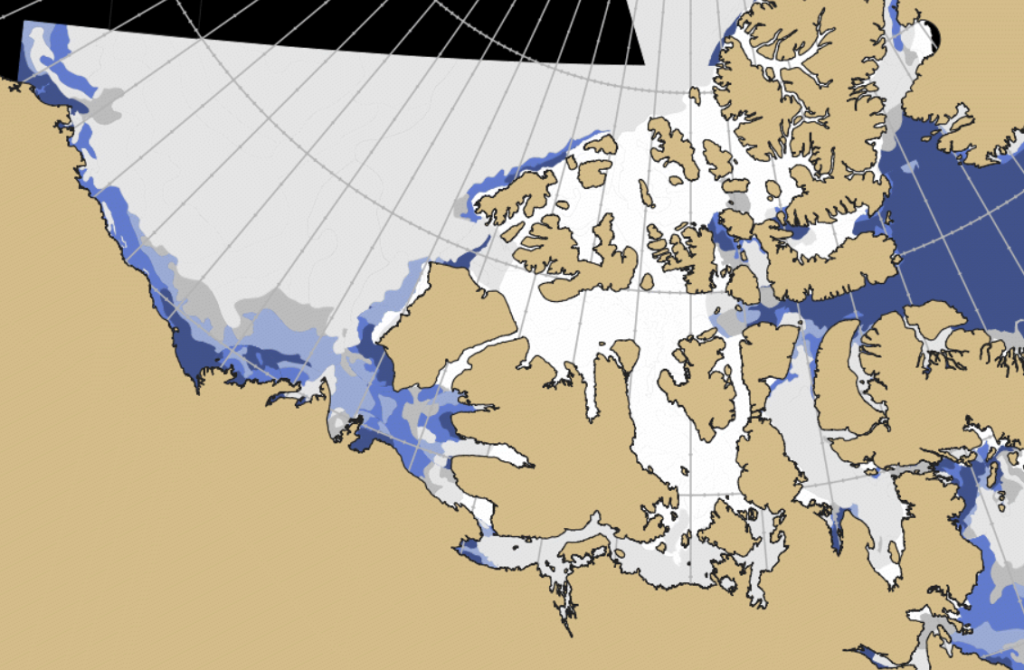
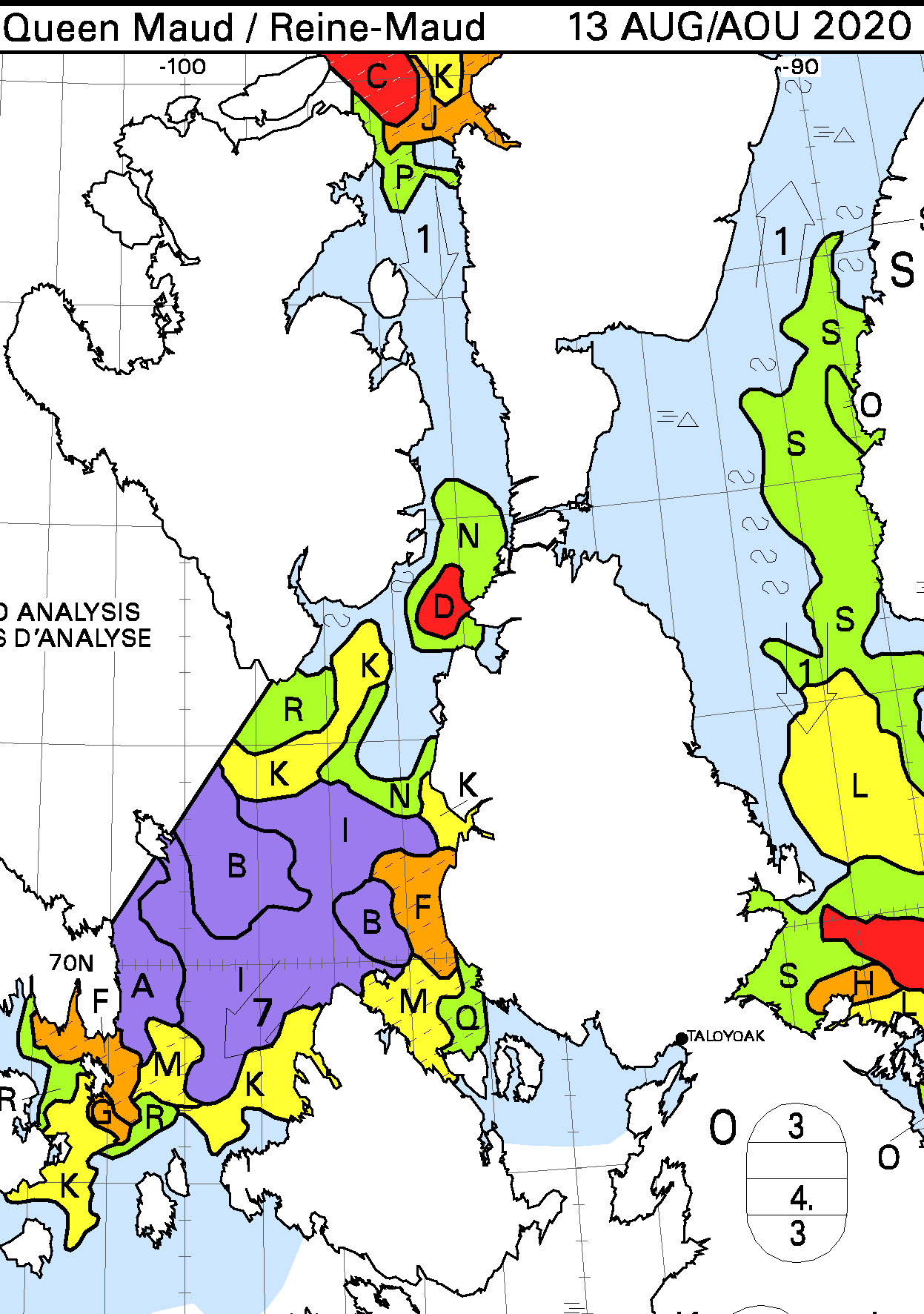
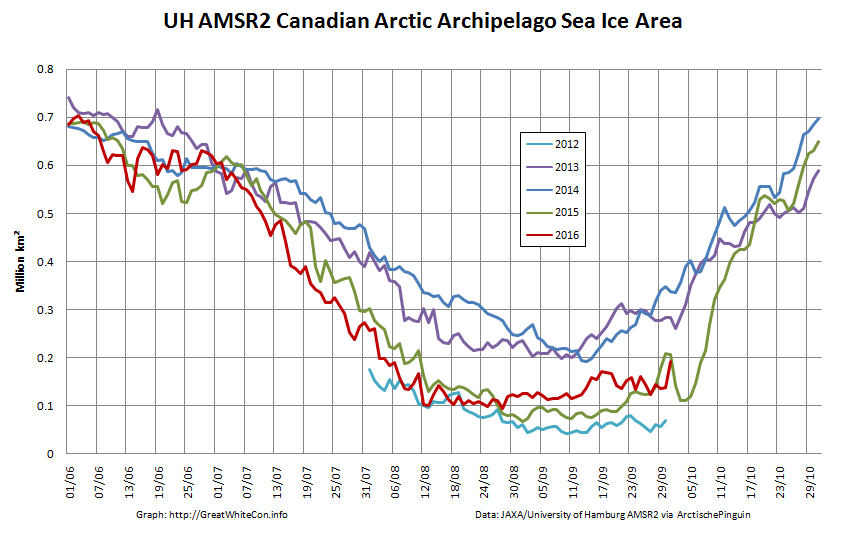
Whilst the Northern Sea Route has opened up early this year, it will be be quite some time before the Northwest Passage follows suit. Nevertheless our old friend Northabout is currently sailing in the direction of Baffin Bay, so now seems as good a time as any to start speculating about the prospects for the Summer of 2020. The passage through Lancaster Sound is already navigable:
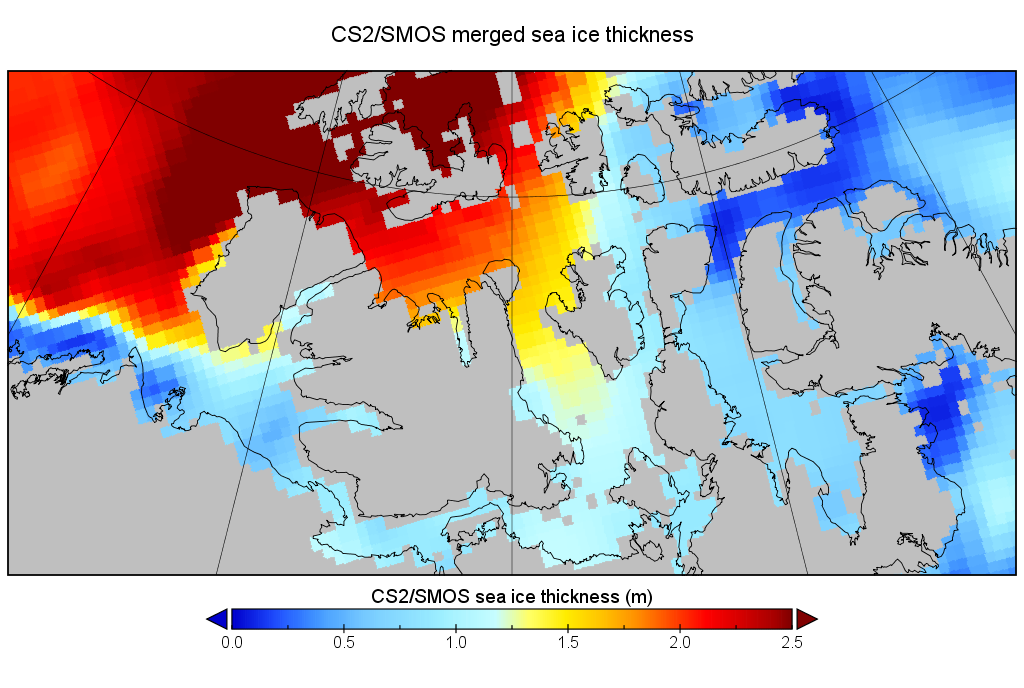
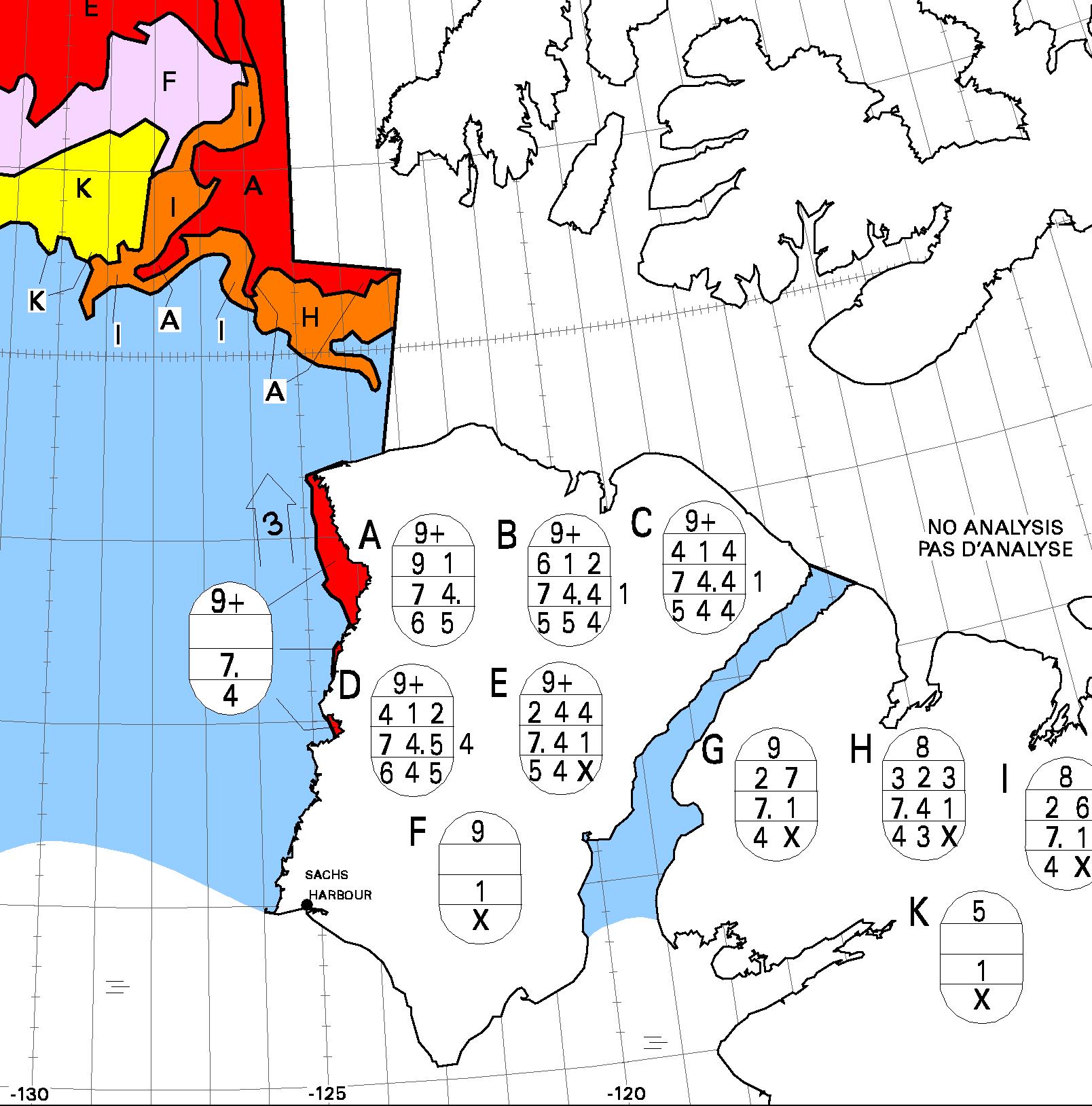
However as the Canadian Ice Service chart also shows, there are still some areas of 7-8/10 concentration along the Beaufort Sea coast en route to the Bering Strait. The central Canadian Arctic Archipelago is solid 9-10/10 at present, but what’s the prognosis? Here’s the final CryoSat-2/SMOS merged thickness map of the winter, from April 15th:
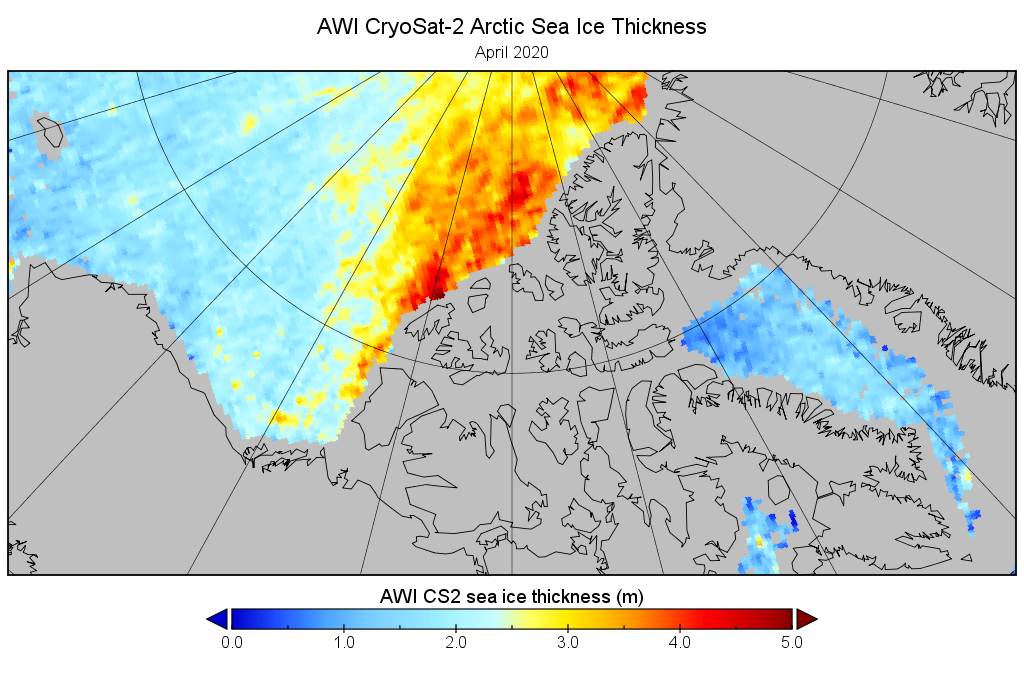
This suggests that the thickest ice on the usual route through the Northwest Passage for small vessels was around 1.2 meters in Larsen Sound. This seemed suspiciously thin to me, so next I tried the underlying Cryosat-2 data from AWI, which revealed this:
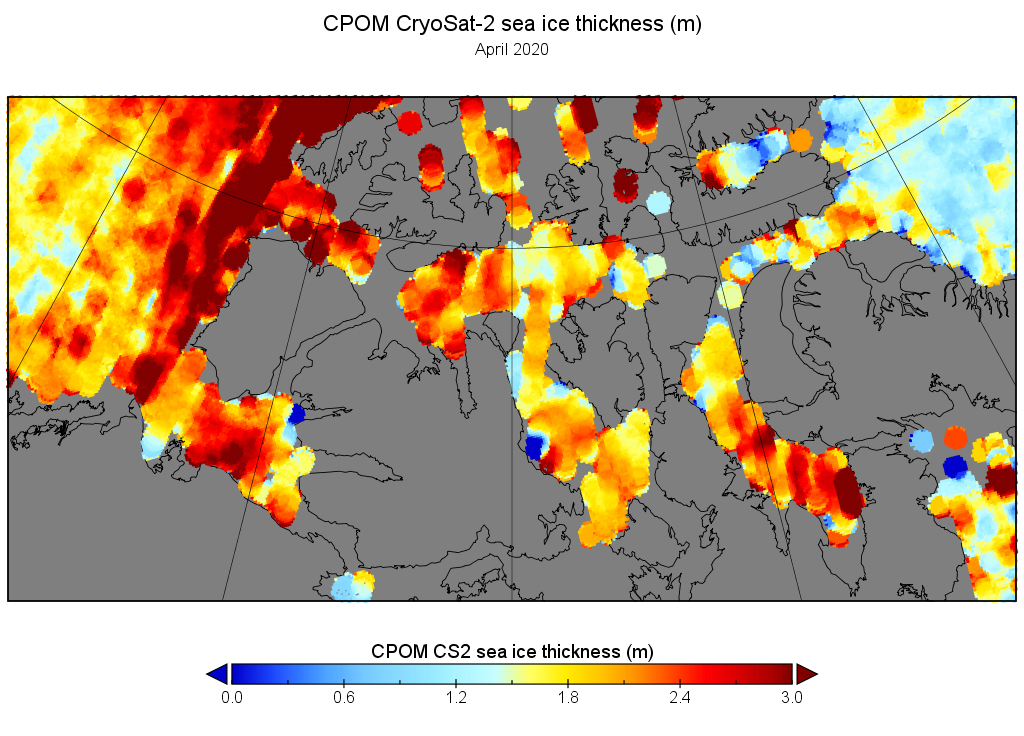
Suspicions confirmed. It looks like AWI are ignoring CS2 data in the CAA for 2020! Here’s how the CPOM Cryosat-2 numbers look for a similar date, which is hopefully nearer the reality:
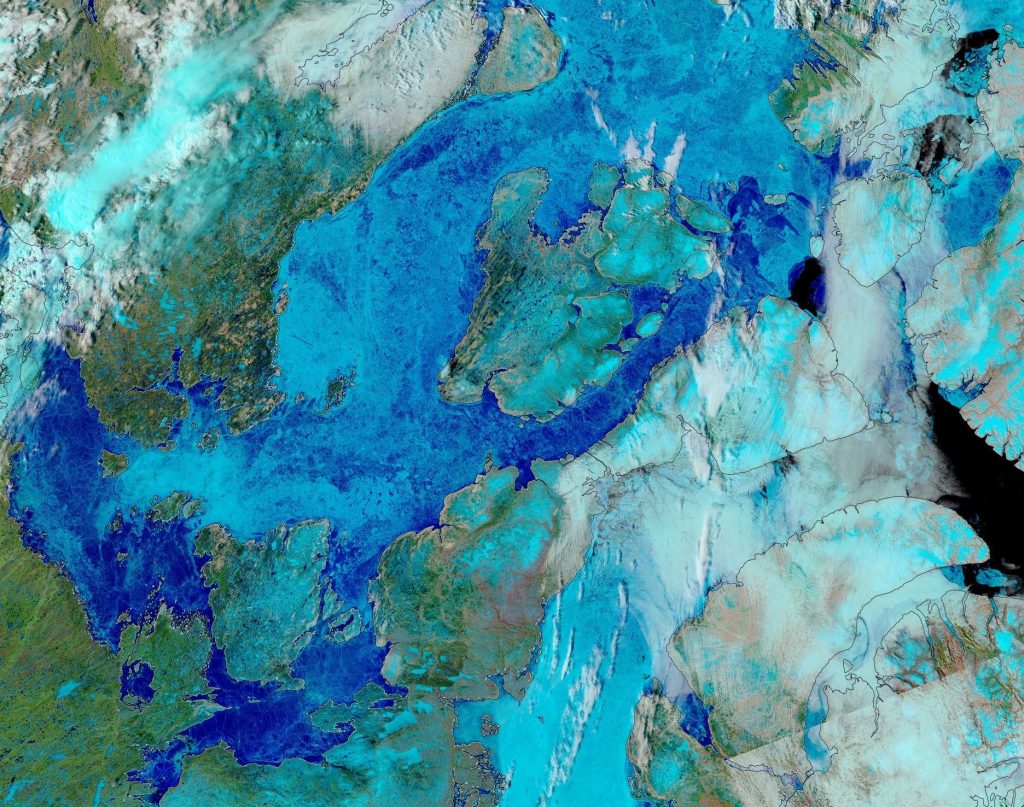
The CAA was fairly cloud free on June 23rd, and this satellite image shows that surface melt had started across the entire central section of the Northwest Passage:
NASA Worldview “false-color”image of the Canadian Arctic Archipelago on June 23rd 2020, derived from the MODIS sensor on the Terra satellite
All in all it looks to me as though “small vessels” will be able to successfully make it through the Northwest Passage later in the summer of 2020, with thicker ice drifting south into Larsen Sound from the McClintock Channel being a potential bottleneck.
[Edit – August 1st]
Whilst there are certainly some cruise ships planning on voyaging through the Northwest Passage this summer it looks as though there will be very few yachts or other small vessels. According to Transport Canada:
To better protect Arctic communities, pleasure craft are prohibited from operating in Canada’s Arctic coastal waters north of the 60th parallel until October 31, 2020, at the earliest:
to limit any potential interaction with remote and vulnerable coastal communities in consideration of minimal health care infrastructure in these waterways that notably comprise the Northwest Passage as well as the territorial sea of Canada surrounding Nunatsiavut, Nunavik and the Labrador Coast).
to allow the Canadian Coast Guard to focus efforts on essential operations including community resupply ice-breaking, environmental response, and search and rescue.
With this proviso:
In the Canadian Arctic coastal waters, the following measures will not apply to:
Foreign pleasure craft exercising their right of innocent passage within the territorial sea. However, any such transits will be subject to receipt of a 60-day written notice in advance of arrival in Canadian Arctic coastal waters to Transport Canada, and be subject to any conditions the Minister determines necessary to ensure the protection of marine personnel and of local communities (for example, additional insurance, rescue strategy).
[Edit – August 6th]
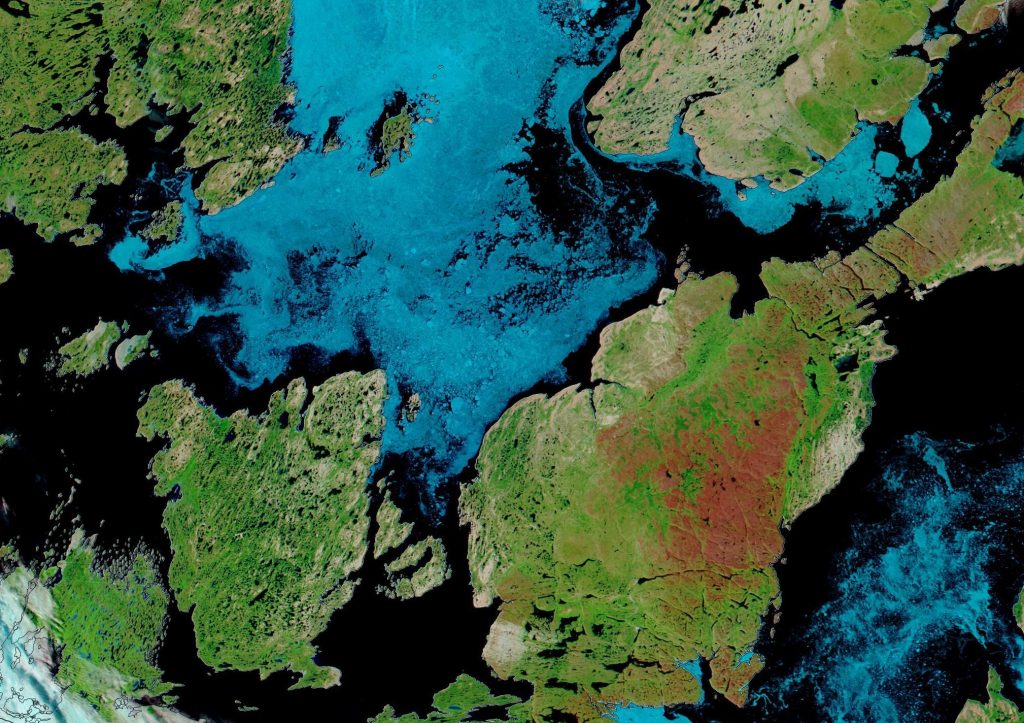
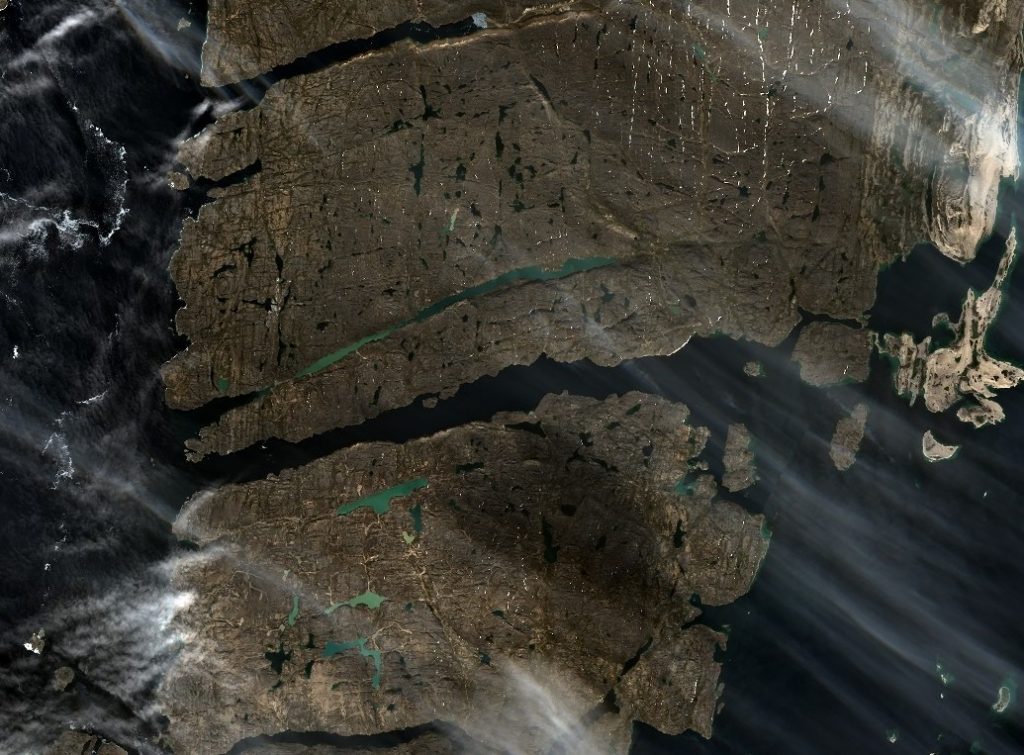
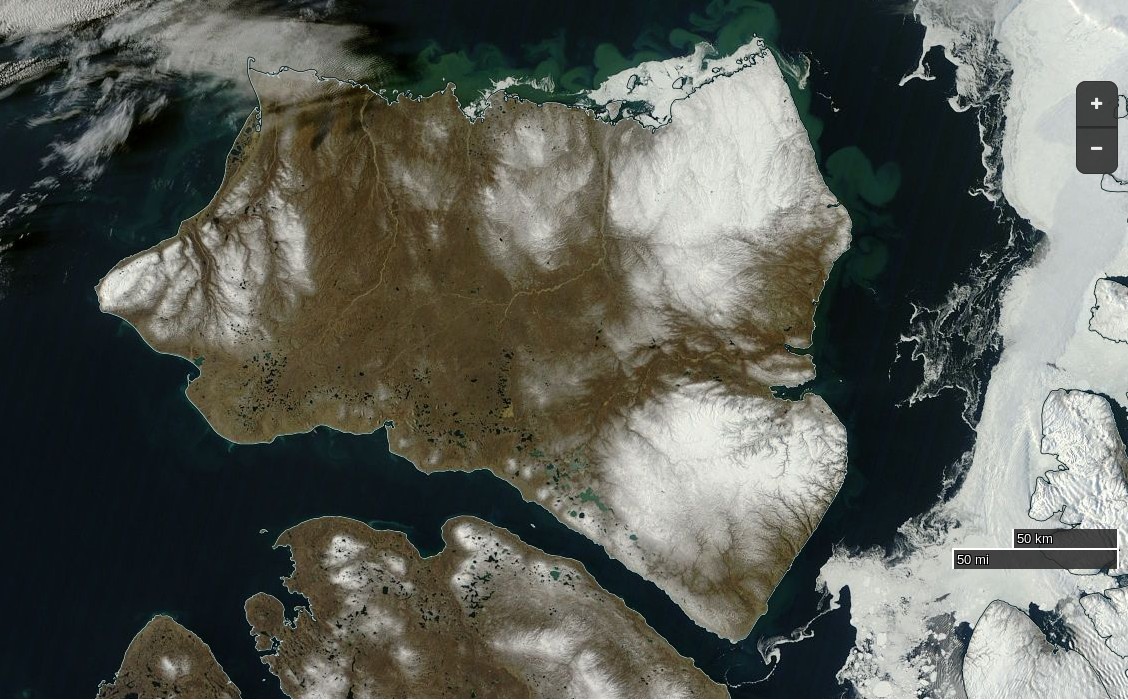
The skies were clear over the Northwest Passage yesterday, and this is what could be seen from the Aqua satellite:
I don’t know about you, but based on that image I reckon a plucky little yacht like Northabout could just about squeeze past the remaining sea ice along the coast of the Boothia Peninsula?
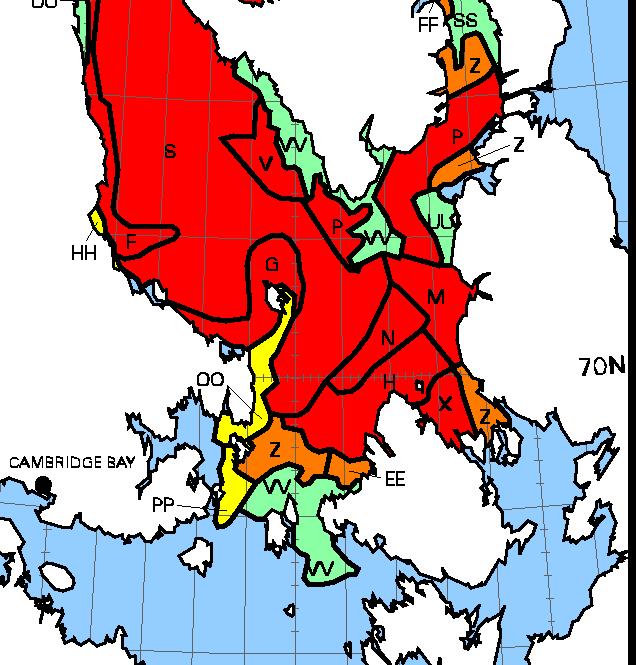
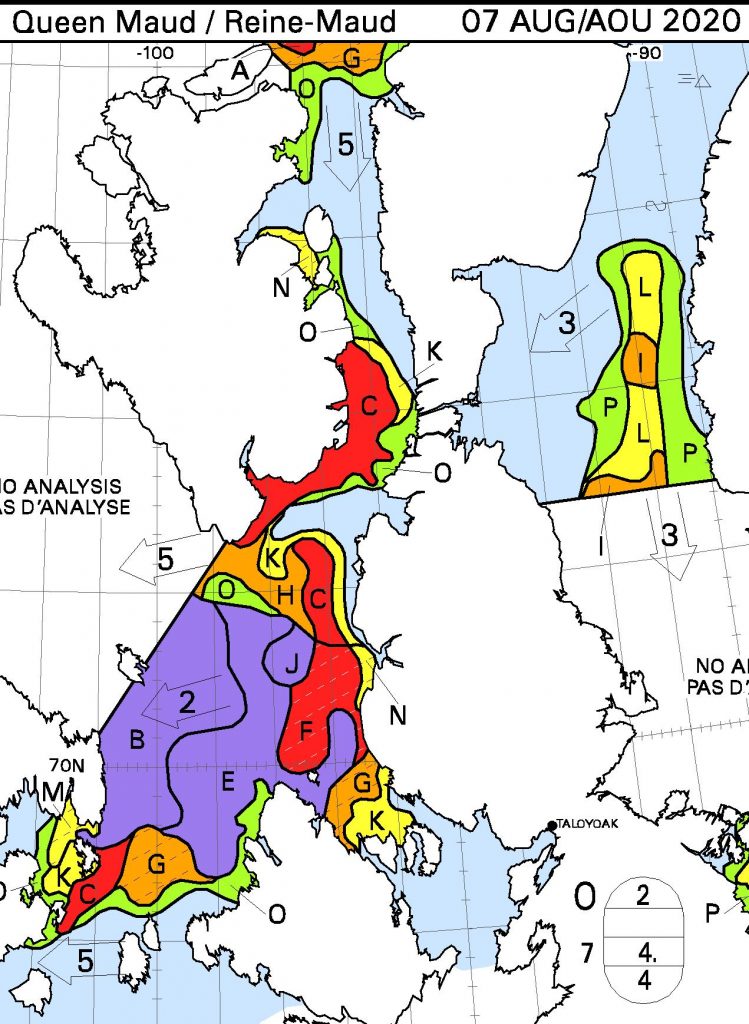
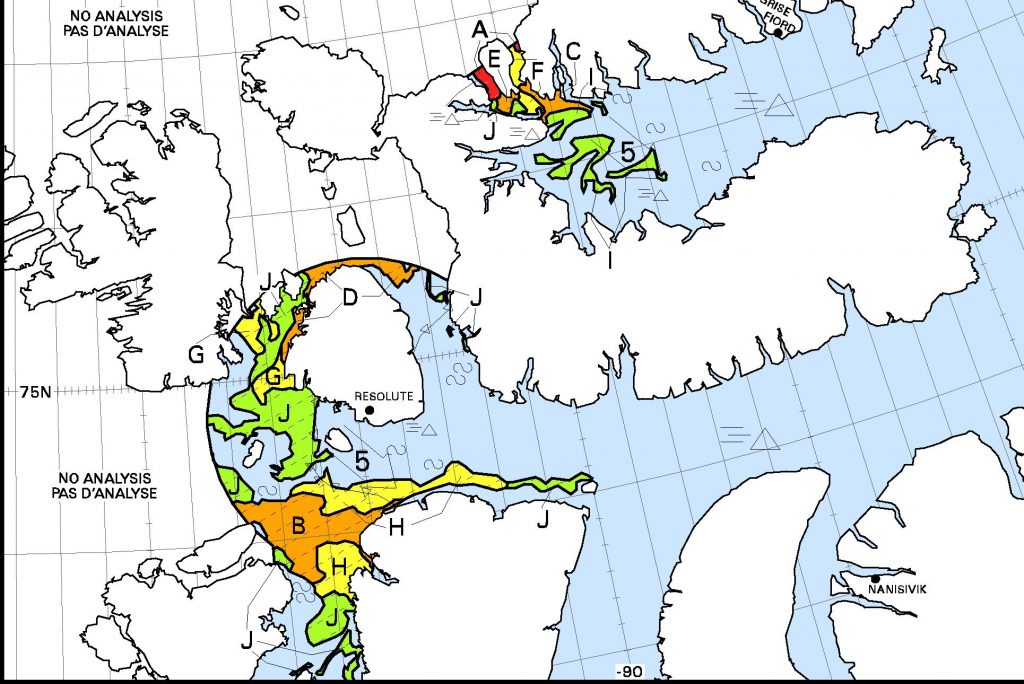
However let’s also take a look at the charts of the Canadian Ice Service shall we? The daily regional maps don’t cover the “squeeze point” yet, but the weekly map dated August 3rd reveals this:
We’re forced to conclude that officially the Northwest Passage isn’t quite “open” yet!
[Edit – August 7th]
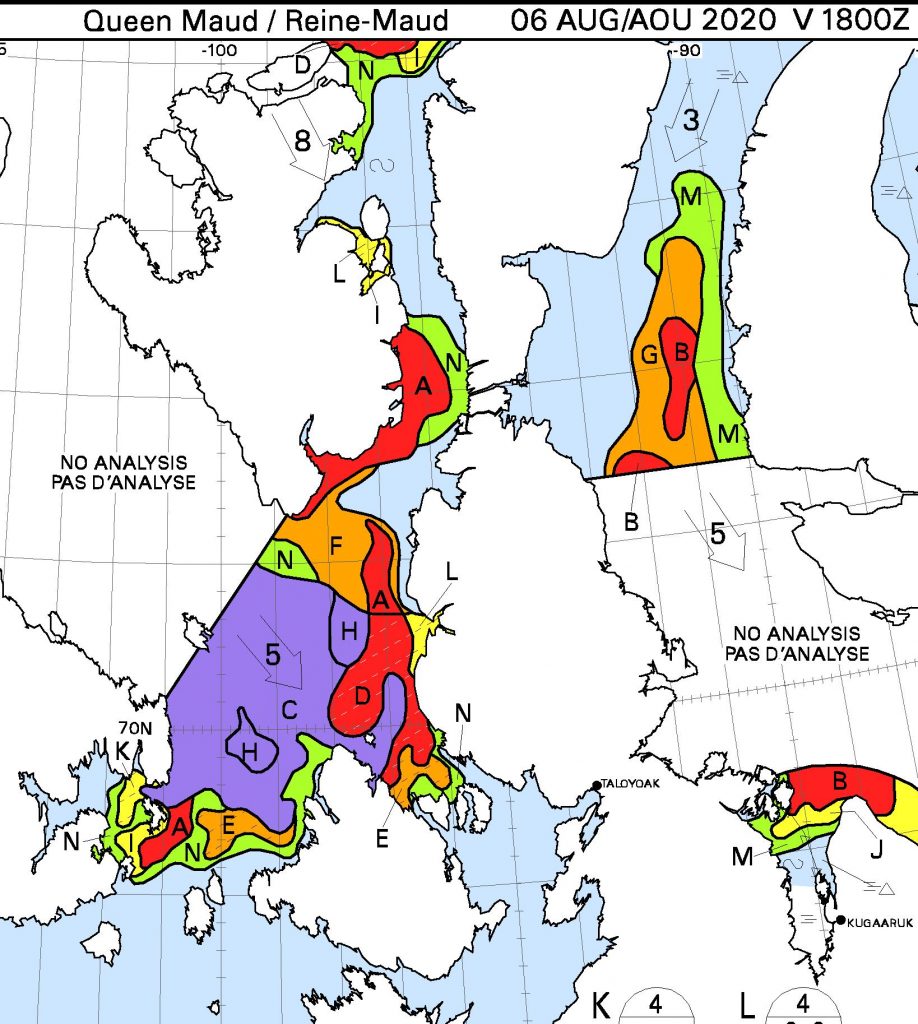
The Canadian Ice Service have extended their daily coverage to the “choke point” we looked at above:
The Northwest Passage is still not “officially” open!
[Edit – August 8th]
The southern “choke point” is still blocking the way, and winds are currently pushing ice into the north of Peel Sound:
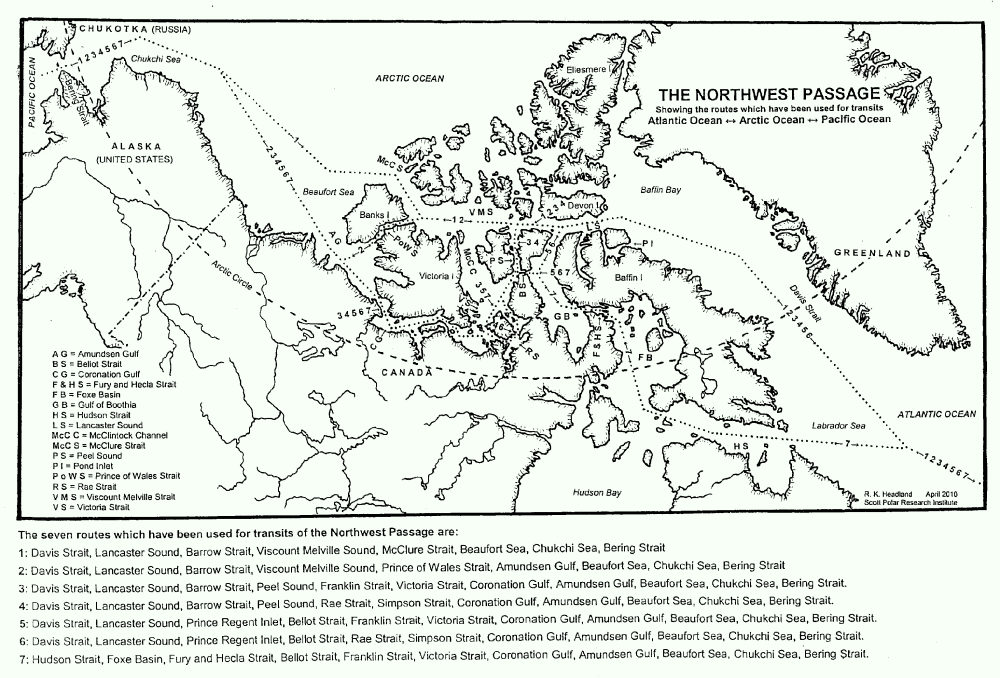
This Sentinel 2 image from August 6th shows the Bellot Strait to be completely clear of ice, so despite that route 6 through the Northwest Passage may well be very open soon.
[Edit – August 11th]
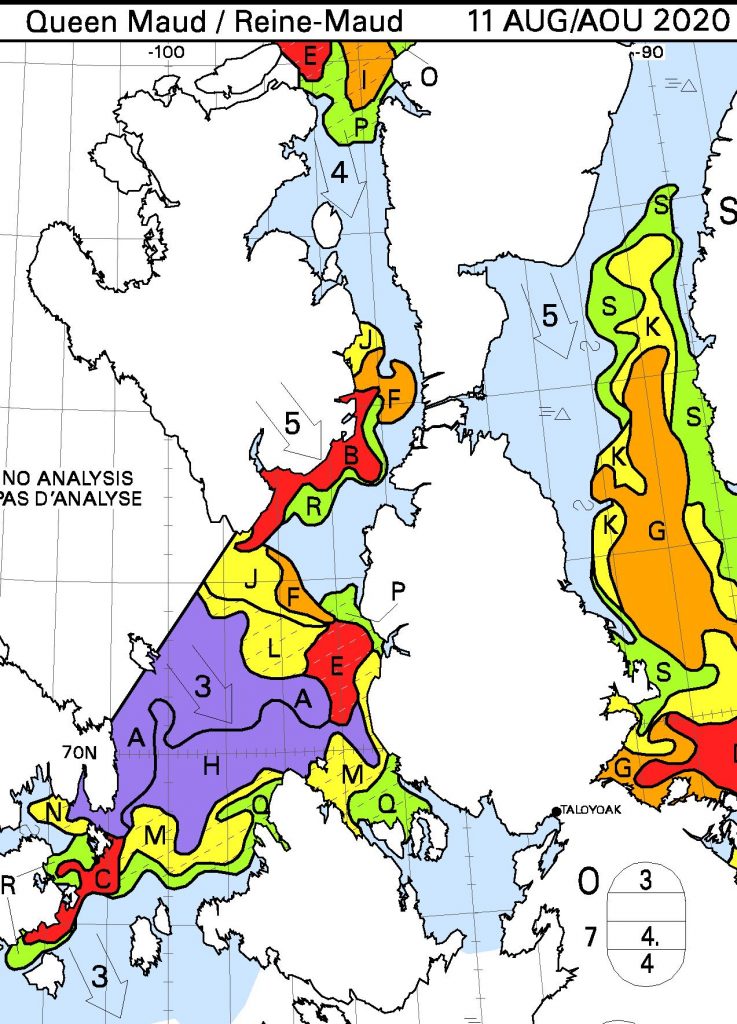
Snow White is pleased to announce that she cut the ribbon at the 2020 Northwest Passage route 6 opening ceremony earlier today:
[Edit – August 14th]
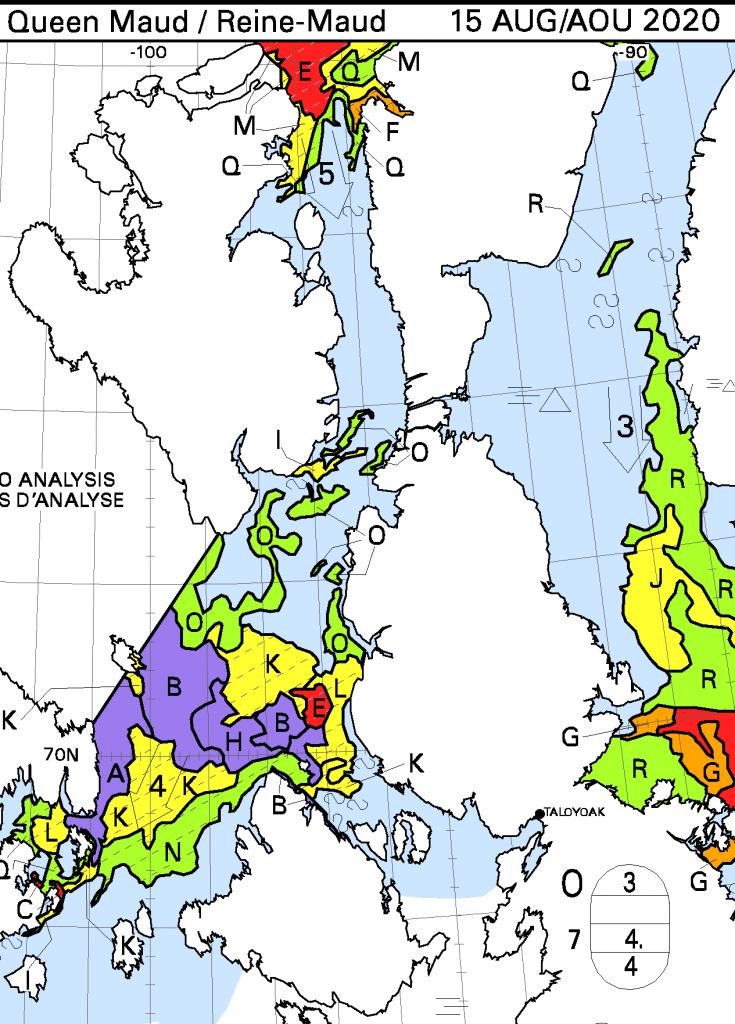
Whilst this is no doubt only temporary, the route along the coast of the Boothia Peninsula is now blocked by an area of 7-8/10 concentration ice:
[Edit – August 16th]
Route 6 is open once again, and it is also now possible to take a circuitous route around the north of both Somerset and King William Islands without encountering anything worse than 6/10 concentration ice:
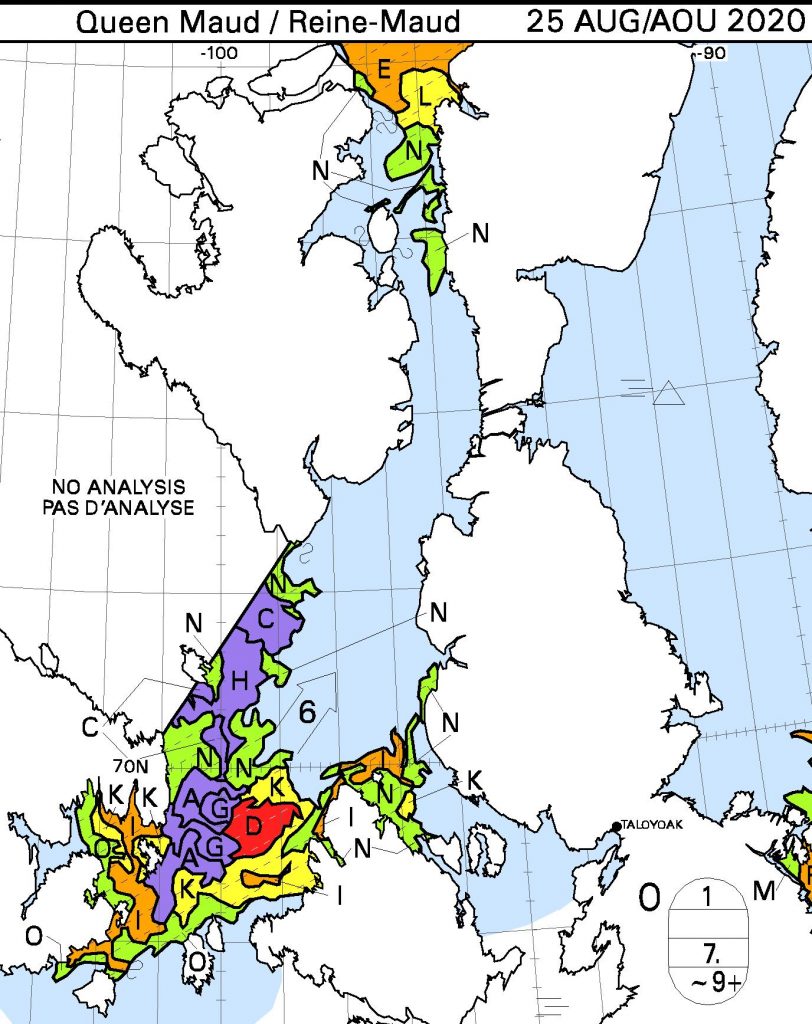
[Edit – August 25th]
As one door opens, another one closes?
[Edit – August 27th]
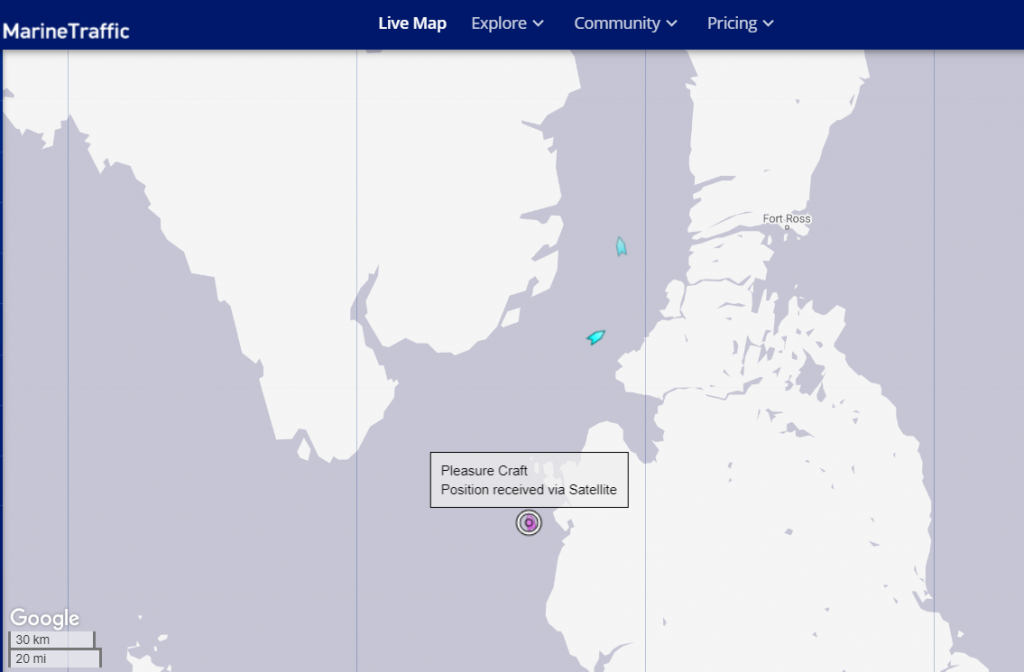
Making one of my periodic visits to MarineTraffic I couldn’t help but notice a “pleasure craft” approaching Bellot Strait!
According to the Canadian government, he has no business being there. But 72-year-old Peter Smith is sailing the Northwest Passage anyway, in violation of COVID-19-related orders prohibiting most foreign yachts from entering Canadian waters.
But according to a Facebook post on Aug. 20, Bobby Klengenberg, a local observer with the Inuit Marine Monitoring Program, spotted Smith’s custom yacht, the Kiwi Roa, off the coast of Cambridge Bay, Nunavut.
Transport Canada confirmed the sighting in an email to CBC News, and said the vessel was told “to depart Canadian waters and not make landfall.”
A spokesperson said the Canadian Coast Guard will “monitor the vessel’s transit out of the region.” If Smith is indeed found to have broken the law, they wrote, the agency “will not hesitate to take appropriate enforcement action,” including penalties of up to $5,000.
Regular readers may recall our coverage of the plucky little yacht Northabout’s circumnavigation of the Arctic in 2016? We are delighted to be able to inform you that (s)he is intent on heading back to the Northwest Passage once again next year, intending to travel from east to west this time around.
Meanwhile this year the plan is to visit the west coast of Greenland before returning to Jersey for the winter. Here’s how the news was announced on the local television channel here in South West England:
Northabout is the means of transport employed by Tobias Carter and Sophie Simonin of the Unu Mondo expedition as they attempt to “Enrich the Knowledge of the Arctic World with Scientific Projects” amongst other things:
Unu Mondo is a 4months sailing expedition into the Arcticaimed to gather scientific data and testimonies from local communities to better anticipate climate change and promote concrete actions.
Leaving fromSaint-Malo, France it will reach Greenland (2020) then Alaska through the famous Northwest Passage (2021), stopping on the road in the villages of the West coast of Greenland and will culminate in a documentary.
Unu Mondo team is composed of 2 skippers, a handful of scientists and a pinch of audiovisual professionals.
According to the timeline on the expedition web site Tobias and Sophie originally intended to set sail from France at the end of May. However plans seem to have changed, in part because Sophie recently tested positive for Covid-19. According to the Unu Mondo Facebook page Northabout actually set off for the Arctic from Roscoff on July 7th. Here’s the Unu Mondo Expedition’s latest bilingual video update, which amongst other things reveals Northabout’s somewhat cramped interior:
[Edit – July 14th]
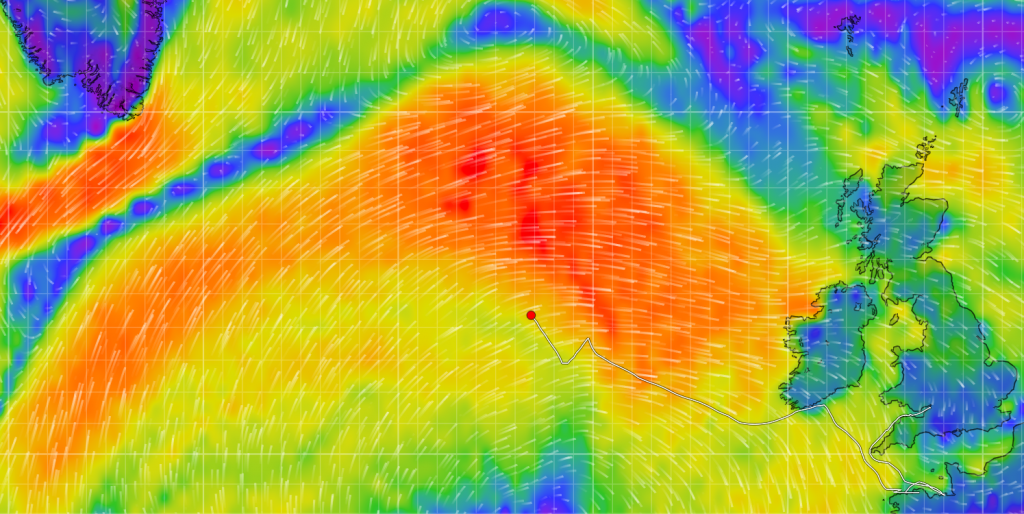
Currently Northabout has reached the middle of the North Atlantic, as revealed by the Unu Mondo live tracking map:
[Edit – July 21st]
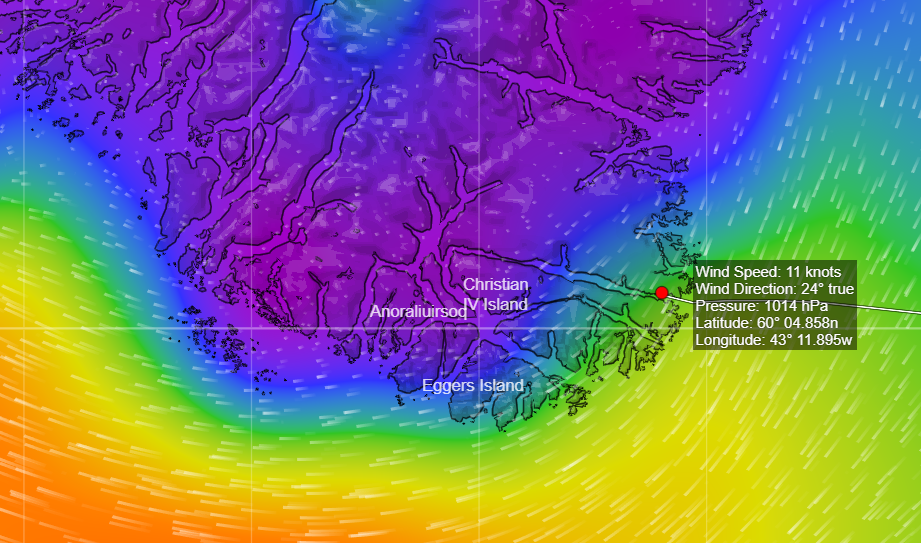
The Unu Mondo Expedition team have reached Prince Christian Sound, just north of Cape Farewell in Southern Greenland:
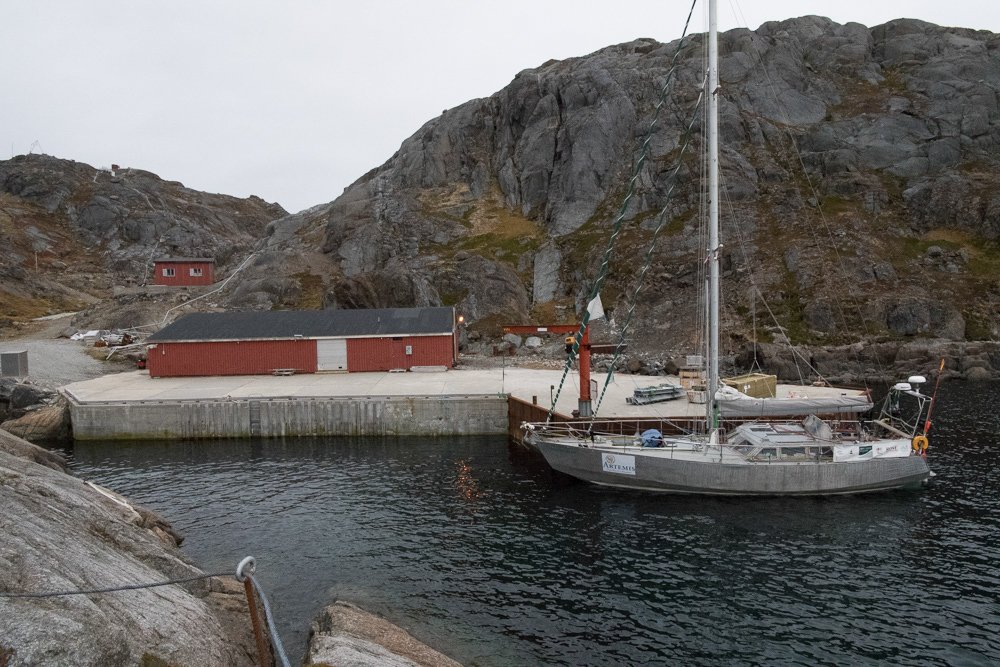
Northabout was last there in October 2016. Here’s what the scenery looks like:
When Northabout was still 400 nautical miles from Greenland the team released a Météo France drifting weather buoy into the North Atlantic:
Our regular reader(s) may recall our extended coverage on the plucky little yacht Northabout‘s ultimately successful attempt to circumnavigate the Arctic Ocean in the summer of 2016?
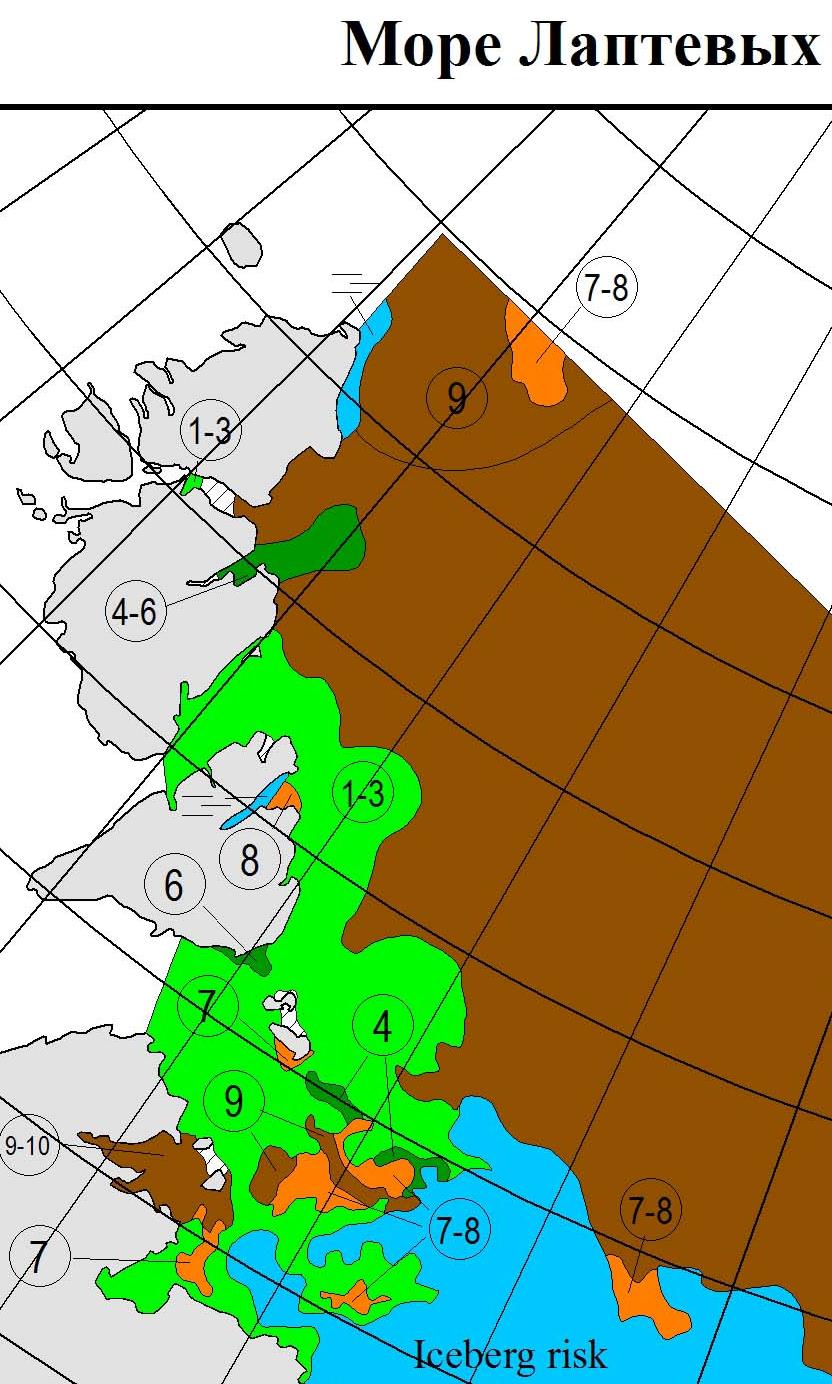
Many were the skeptics who said she stood no chance of finding a way through some “thick sea ice” apparently blocking her path across the Laptev Sea, but they were proved wrong:
As a thought experiment in the summer of 2018 we’re now thinking the unthinkable. If she put her mind to it could Northabout circumnavigate Greenland in 2018? Let’s take a look at the evidence shall we? The allegedly “oldest, thickest Arctic sea ice” north of Greenland isn’t there any more this summer:
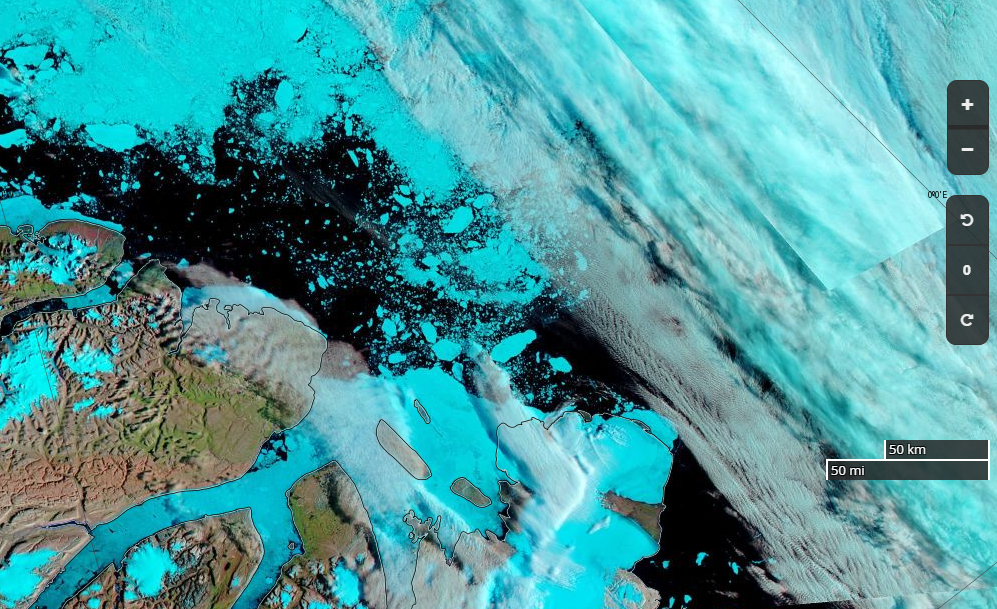
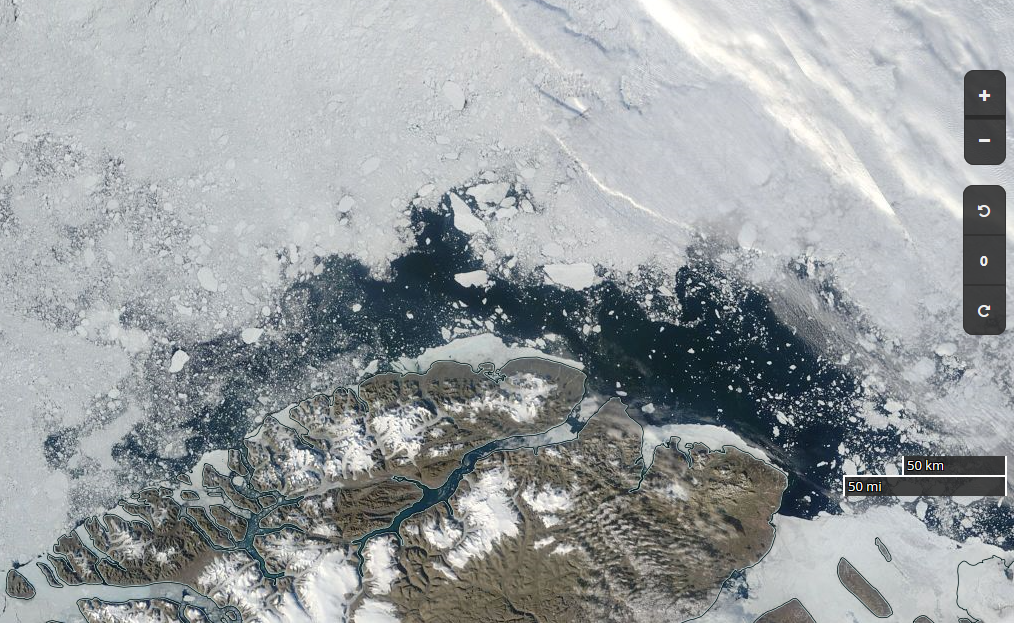
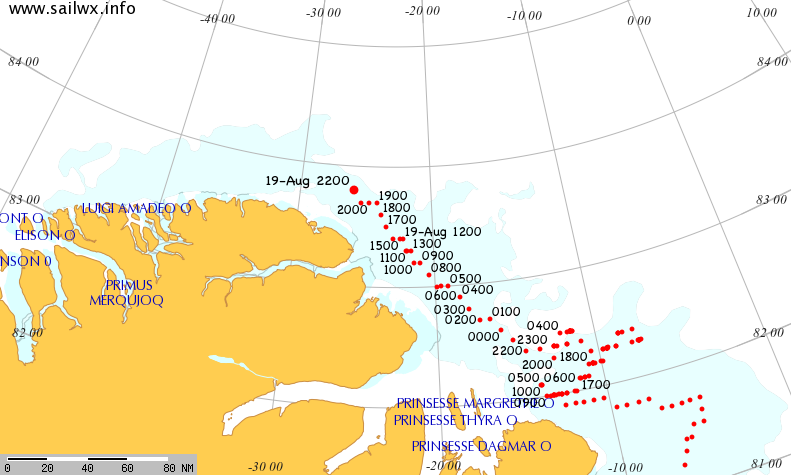
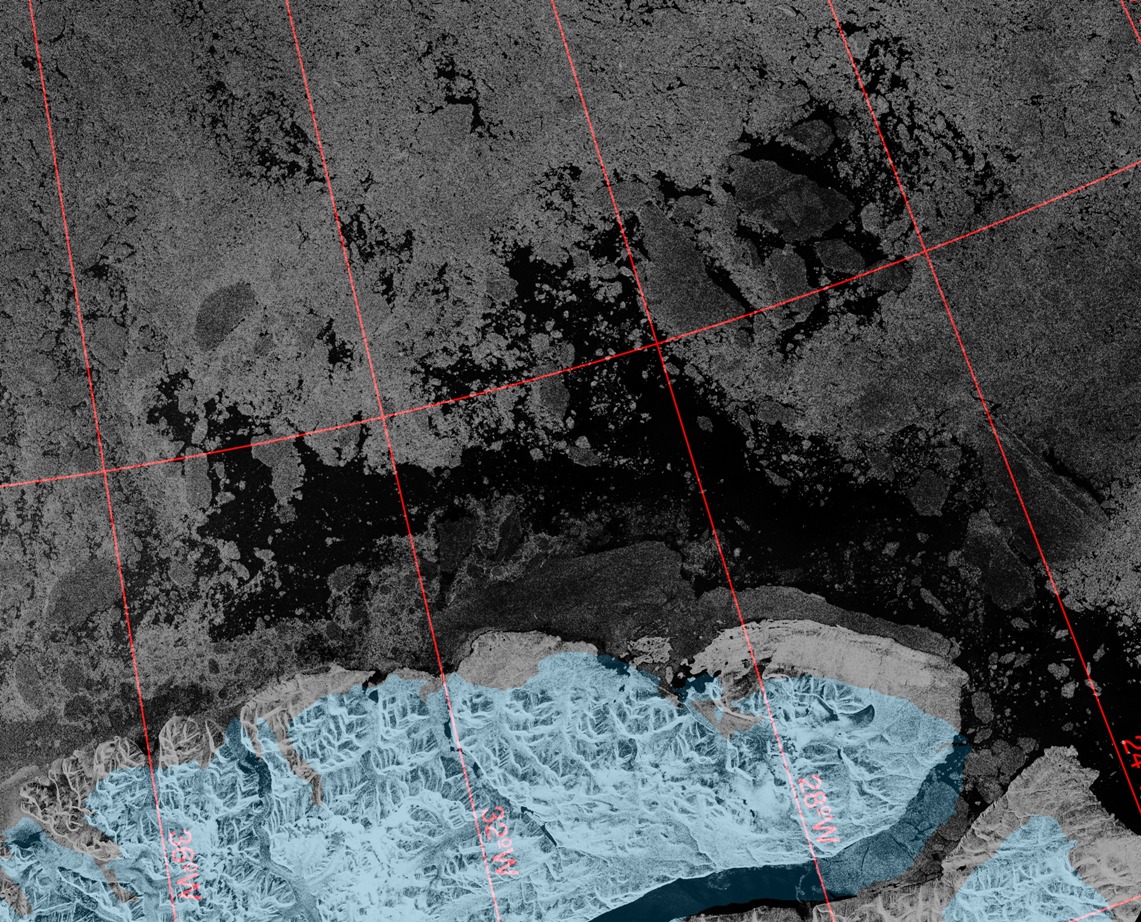
The research icebreaker Polarstern has already inspected the open waters off Kap Morris Jesup, the most northerly tip of Greenland:
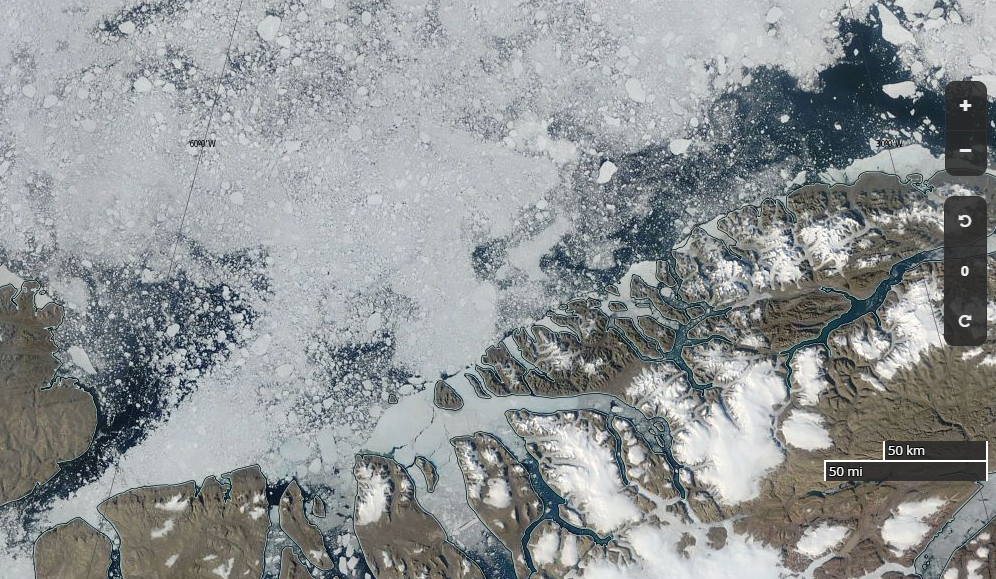
What’s more the waters of the Lincoln Sea currently look no more tricky to traverse than the Laptev Sea in August 2016:
In conclusion, for the moment at least, what’s the theoretical solution to our 2018 thought experiment?
Here’s another thought to ponder as well. I don’t suppose it’s in the Alfred Wegener Institute’s PS115 mission plan, but do you suppose Polarstern could circumnavigate Greenland at the moment?
[Edit – August 23rd]
The University of Bremen used not to publish their Arctic sea ice “thinness” maps in summer. However now they do, so here’s a close up of Northern Greenland for August 22nd:
[Edit – August 26th]
First of all here’s one of our occasional sea ice motion videos:
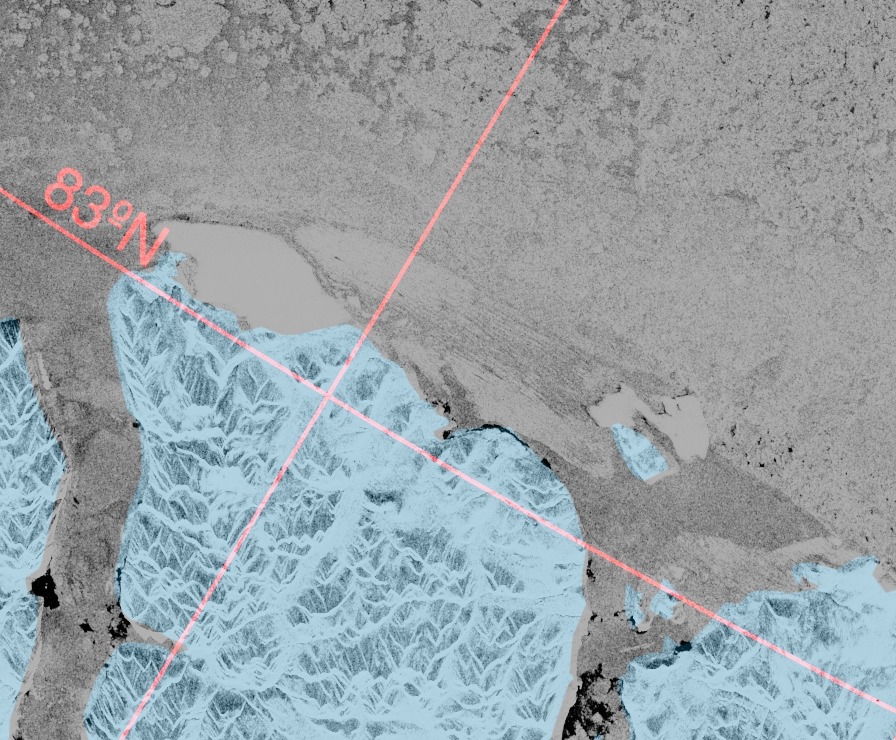
This one reveals the open water north of Greenland in February as well as the much longer event in August. Next here’s a Sentinel 1B synthetic aperture radar image of the Kap Morris Jesup area from yesterday:
Depending on whether you’re reading an “alarmist” or a “skeptical” web site you may have been told either that the Northern Sea Route is already “open” or that the “icebreaker stuck in the sea ice off Pevek” escaped very late this summer. Here at Great White Con we like to think of ourselves as “realists”, so what are the actual facts of the matter.
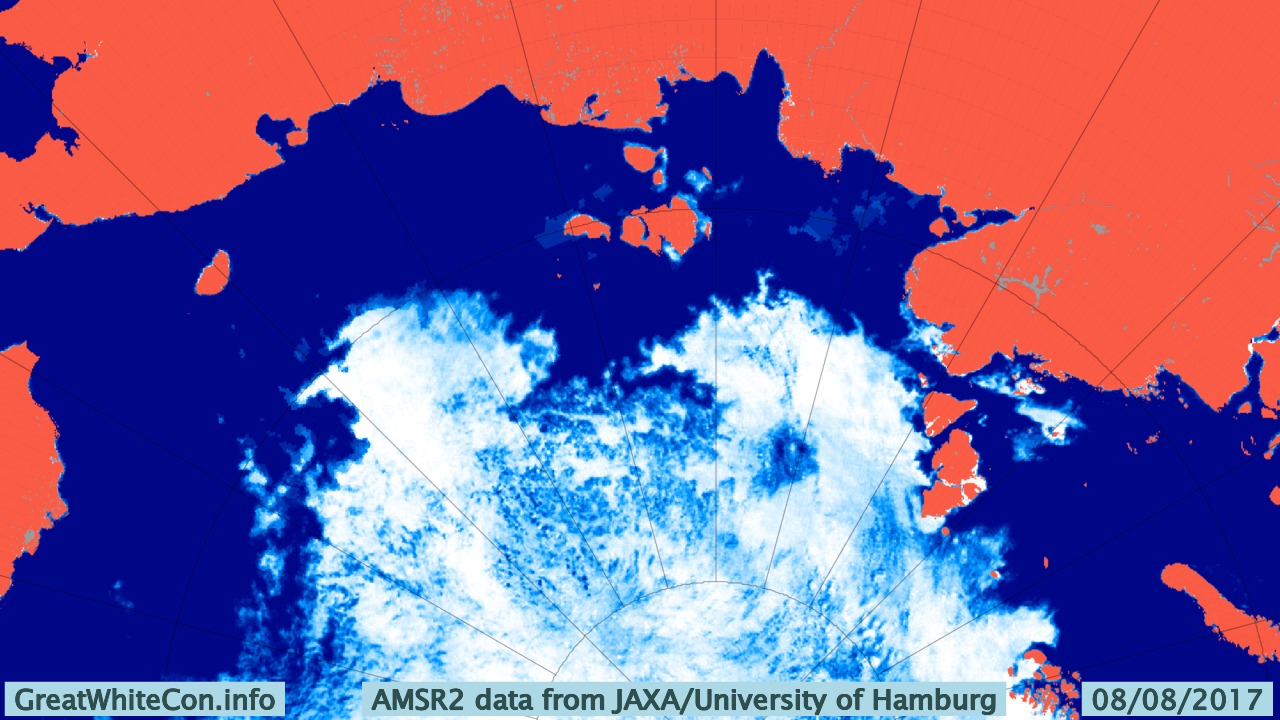
Our customary way of looking at such things is to use the Canadian Ice Service’s definition of “open” for the Northwest Passage, which seems to be 3/10 or less concentration along the entire route. That would allow an intrepid little yacht like Northabout through without too much trouble, but that point has not quite been reached yet this year. The NSR looks to be eminently “open” already if you only look at an AMSR2 concentration map:
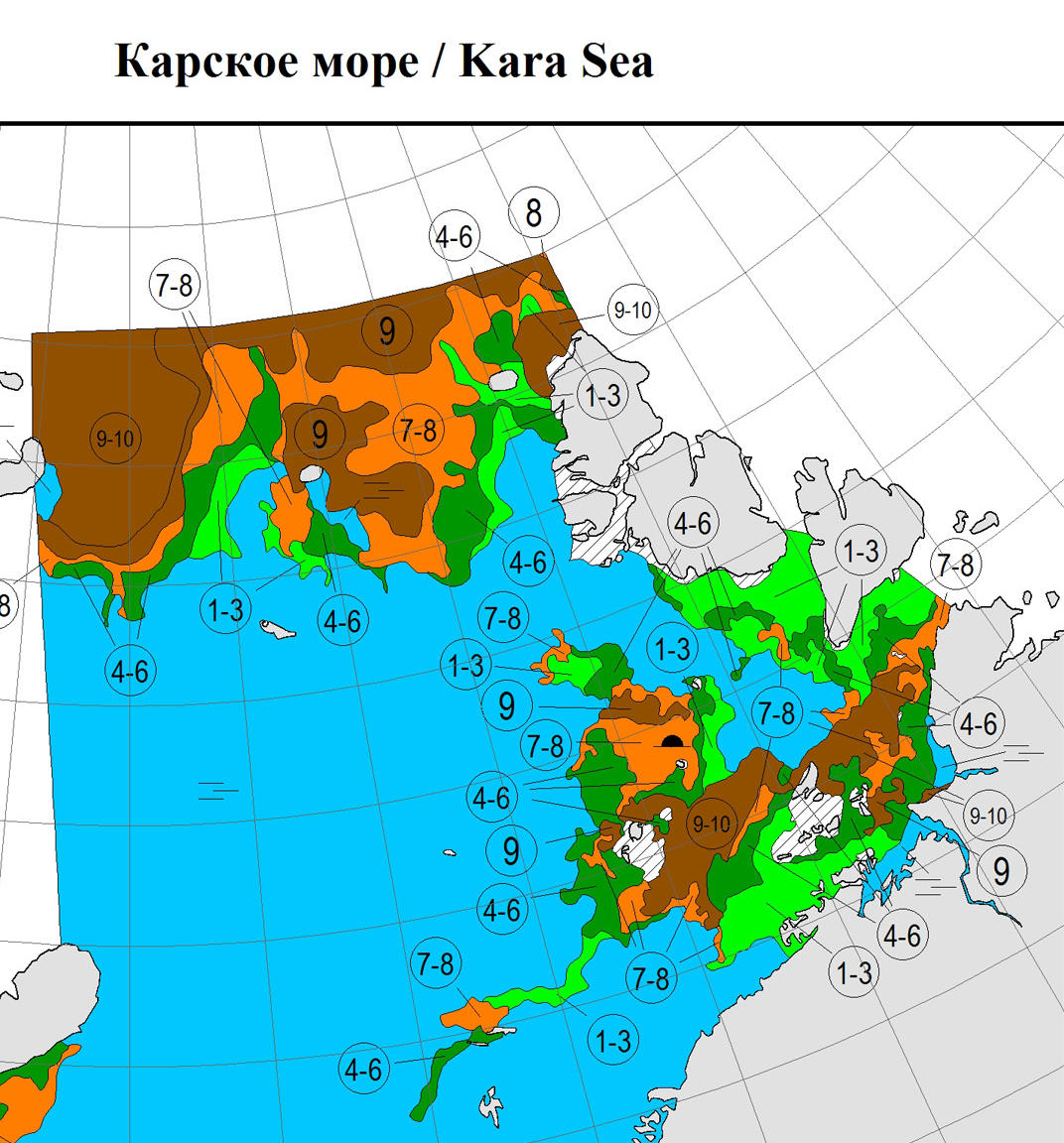
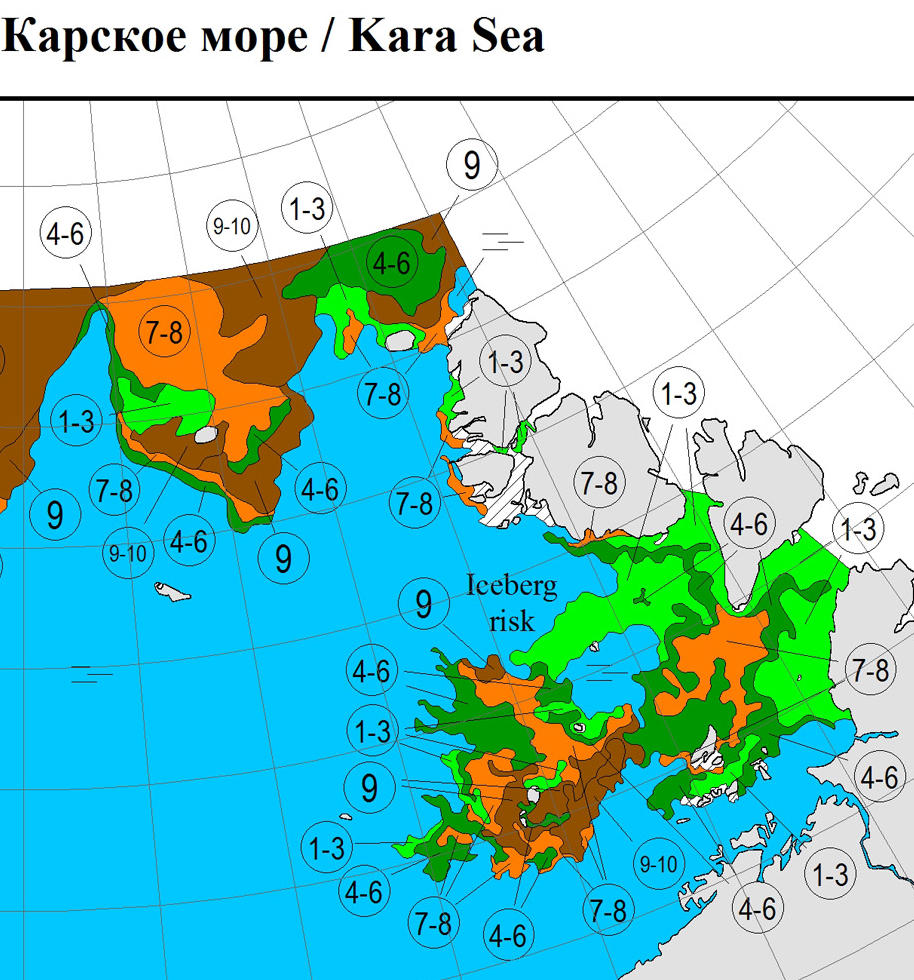
However according to the Russian Arctic and Antarctic Research Institute (AARI for short) there is still not a suitably simple way through Vilkitsky Strait. Here’s their latest ice chart of the area:
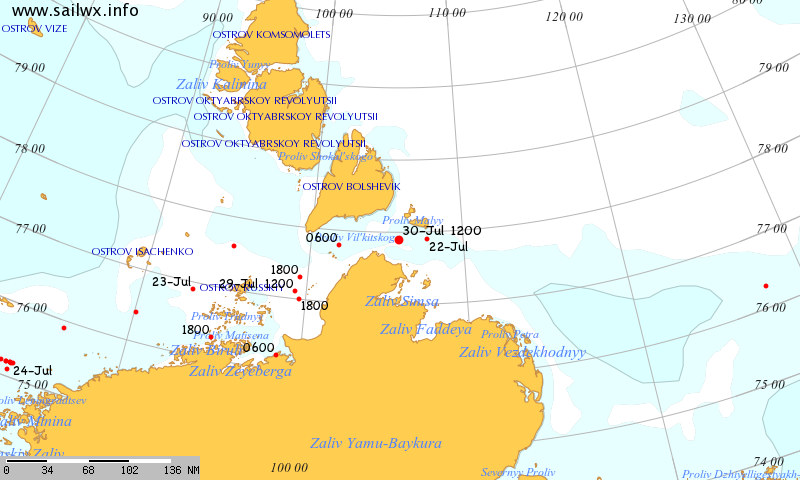
Convoys led by nuclear powered icebreakers have already passed through the Vilkitsky Strait this summer. See for example this tracking map of Yamal from a few days ago:
Also an unaccompanied liquid natural gas carrier has made it through the Vilkitsky Strait already this year. According to a Total press release:
After loading its cargo at the Snøhvit LNG export terminal in Norway, in which Total has an 18.4% interest, the Christophe de Margerie is taking the Northern Sea Route to Boryeong in South Korea, where it will deliver a cargo for Total Gas & Power. It’s the first unescorted merchant LNG vessel ever to take this route, which makes it possible to reach Asia via the Bering Strait in 15 days versus 30 days via the Suez Canal.
This technological feat was made possible through the participation of Total teams to the design of these next-generation LNG carriers. Compilations of technology, they efficiently transport large quantities of LNG year-round, without requiring escort icebreakers during the period from July to November. The Christophe de Margerie is the first of a total of 15 planned LNG carriers that will be gradually deployed.
As you can see, whilst it travels forwards in open water the Christophe de Margerie goes into reverse when breaking ice! Little yachts and other unaccompanied vessels lacking an ice class certificate will have to wait just a little longer however, unless of course they are inclined to be “intrepid”.
[Edit – August 19th]
As Cesium points out below, there is now a <= 3/10 concentration channel through the Vilkitsky Strait on the AARI maps.
Here’s a couple of Sentinel 1A tiles from this morning stitched together:
We can now safely declare the Northern Sea Route “open”, even for less intrepid little yachts.
I recently found myself in an extended discussion on Professor Judith Curry’s “Climate Etc.” blog with Tony Brown. Tony asserts that:
In 1932, a Soviet expedition led by Professor Otto Yulievich Schmidt was the first to sail all the way from Arkhangelsk to the Bering Strait in the same summer without wintering en route. After a couple more trial runs, in 1933 and 1934, the Northern Sea Route was officially defined and open and commercial exploitation began in 1935. The next year, part of the Baltic Fleet made the passage to the Pacific where armed conflict with Japan was looming.
and asks:
Are you SERIOUSLY suggesting that the northern sea route was not operable from the 1930’s onwards?
My response?
I’m still awaiting your pick of the year in the 1930s in which the NSR was most “open”. I have a sneaking suspicion it won’t conform to, for example, the current Canadian Ice Service definition.
I won’t bore you with the long list of questions I asked Tony that he has thus far failed to answer. Instead let’s take a closer look at the history of the Northern Sea Route than Tony is willing and/or able to undertake. Perhaps the most obvious place to start is the “History of the Northern Sea Route“? However this does rather gloss over the 1930s. For our initial reference let’s see what Bill Barr has to say in his “The Drift of Lenin’s Convoy in the Laptev Sea, 1937 – 1938″, published in 1980.
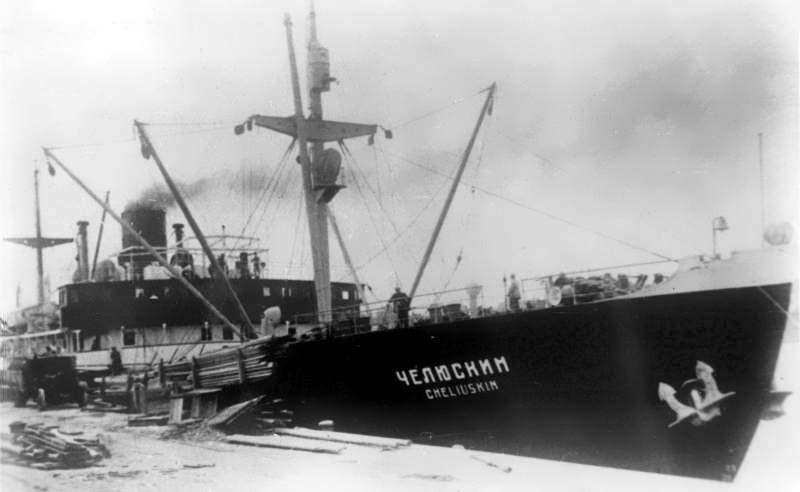
Only a few months after Sibiryukov‘s limited success in her attempt at a one-season passage of the Northern Sea Route, so eloquently embodied in her final emergence from the ice of the Chukchi Sea under improvised sails, on December 17, 1932 Sovnurkom (the Soviet of Peoples’ Commissars) took the momentous step of forming the Chief Administration of the Northern Sea Route (Gluvnoye Upruvleniye Severnogo Morskogo Puli), more commonly known as Gluvsevmorput’. Its primary task was to establish safe, reliable navigation from the White Sea to Bering Strait, but in a series of subsequent decrees over the next few years it also acquired a remarkable array of ancillary functions, and along with them, remarkably wide powers. In effect Gluvsevmorput’ was given almost complete control of the entire vast area of Siberia north of 62″ (the latitude of Yakutsk) not only in terms of transport and economic development, but also education, health services and cultural development. Even with these extensive powers, however, the new organization’s first attempt at demonstrating that it was capable of tackling its primary task was a disastrous failure. In her attempt at making a one-season passage of the Northern Sea Route in the summer of 1933 the steamer Chelyuskin became beset in the ice of the Chukchi Sea, and after drifting helplessly for several months, was ultimately crushed and sank on February 13, 1934. However, the new organization’s reputation was definitely redeemed the following year when the icebreaker Fyodor Litke reached Murmansk on September 20, 1934, having succeeded where Chelyuskin had so utterly failed.
To summarise, one of Tony’s “trial runs in 1933” was “a disastrous failure”!
On 1 October 1932 the icebreaking steamer Sibiryukov emerged from the ice in Bering Strait having completed the first one-season passage of the Northern Sea Route from Arkhangelsk. It was not an unqualified success, however; Sibiryakov had lost her propeller two weeks previously and had managed to reach the edge of the ice only under improvised sails and with a large measure of luck.
Moving on to another 1933 “trial run” Bill informs us that:
In 1933 the newly-formed Gluvsevmorput’ dispatched the first convoy of freighters via the Northern Sea Route to the mouth of the Lena to deliver cargoes bound for the Yakut ASSR. It consisted of three freighters and was escorted by the icebreaker Krasin. Despite heavy ice conditions in the Kara Sea two of the ships reached Tiksi, their destination, and unloaded their cargoes. The third ship, bound for Bukhta Nordvik with an oil exploration expedition, ran aground near its destination and turned back. Severe ice conditions in Proliv Vil’kitskogo forced all three ships to winter at the Ostrova Samuila. A shore station was built and a full scientific programme maintained all winter. Urvantsev, the chief scientist, took the opportunity to make a winter reconnaissance survey of the northern portion of Poluostrov Taymyr using half-tracks. The convoy was freed from the ice by the icebreaker Fyodor Litke in the summer of 1934 and having completed their tasks all three ships ultimately returned safely to Arkhangel’sk.
Not exactly an unqualified success either then, and certainly not a single season transit of the full Northern Sea Route! However despite all her assorted trials and tribulations the icebreaker Fyodor Litke did manage to complete a single season transit from Vladivostok to Murmansk, and according to Wikipedia “became a Soviet propaganda icon”.
Returning to Barr 1980, we discover that:
In the summer of 1935 Fyodor Litke escorted the first two laden freighters, Vantsetti and Iskra, through the Sea Route from west to east; sailing from Leningrad on July 8, they reached Vladivostok on October 8. Meanwhile two other steamers, Anadyr’ and Stalingrad, made the through-passage in the opposite direction, sailing from Vladivostok on July 23 and 25 and reaching Leningrad on October 16.
The following season (1936) saw a spectacular increase in activity along the Northern Sea Route; a total of 160 ships travelled parts of the route (the bulk of them from the west to the mouth of the Yenisey and back), while 16 vessels made the through-passage, 14 from west to east, and 2 from east to west, the latter being Vantsetti and Iskra homeward bound to Leningrad. The ships heading east included the first Soviet warships to utilize the Northern Sea Route, the destroyers Voykov and Stalin, escorted once again by Fyodor Litke
Hence 1935 and 1936 were far more successful years than the previous two, but then we come to 1937. Quoting Barr 1980 once again:
The plans for the 1937 season were equally ambitious, but by then the run of luck had ended. Due to a combination of abnormally severe ice conditions and some very unfortunate decisions as to routing of convoys and deployment of icebreakers towards the end of the season, 25 ships were obliged to winter on an emergency basis at various points in the Soviet Arctic. Perhaps the most critical aspect, however, was that of Gluvsevmorput’s fleet of icebreakers; only one, the veteran Yermak was not forced to winter in the Arctic.
One of the other questions I asked Tony Brown over at Prof. Judy’s was:
It would be helpful if you selected an ice chart from the 1930s to illustrate your point.
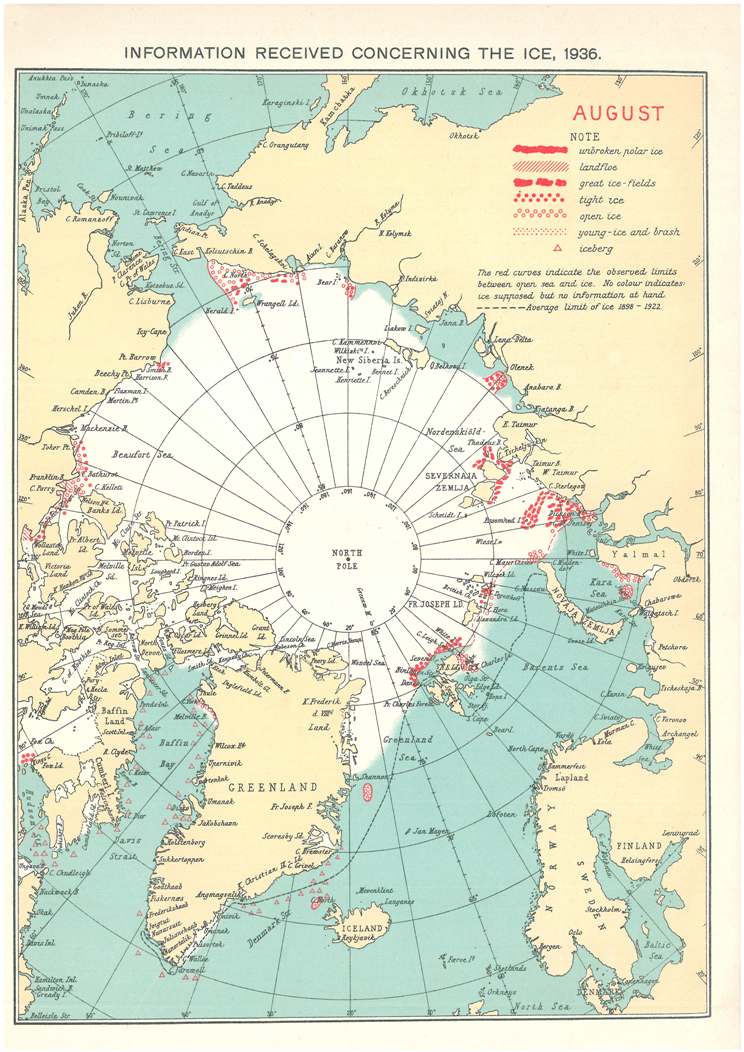
Tony still hasn’t got around to doing that, so why don’t we take a look at the August 1936 chart from the archives of the Danish Meteorological Institute:
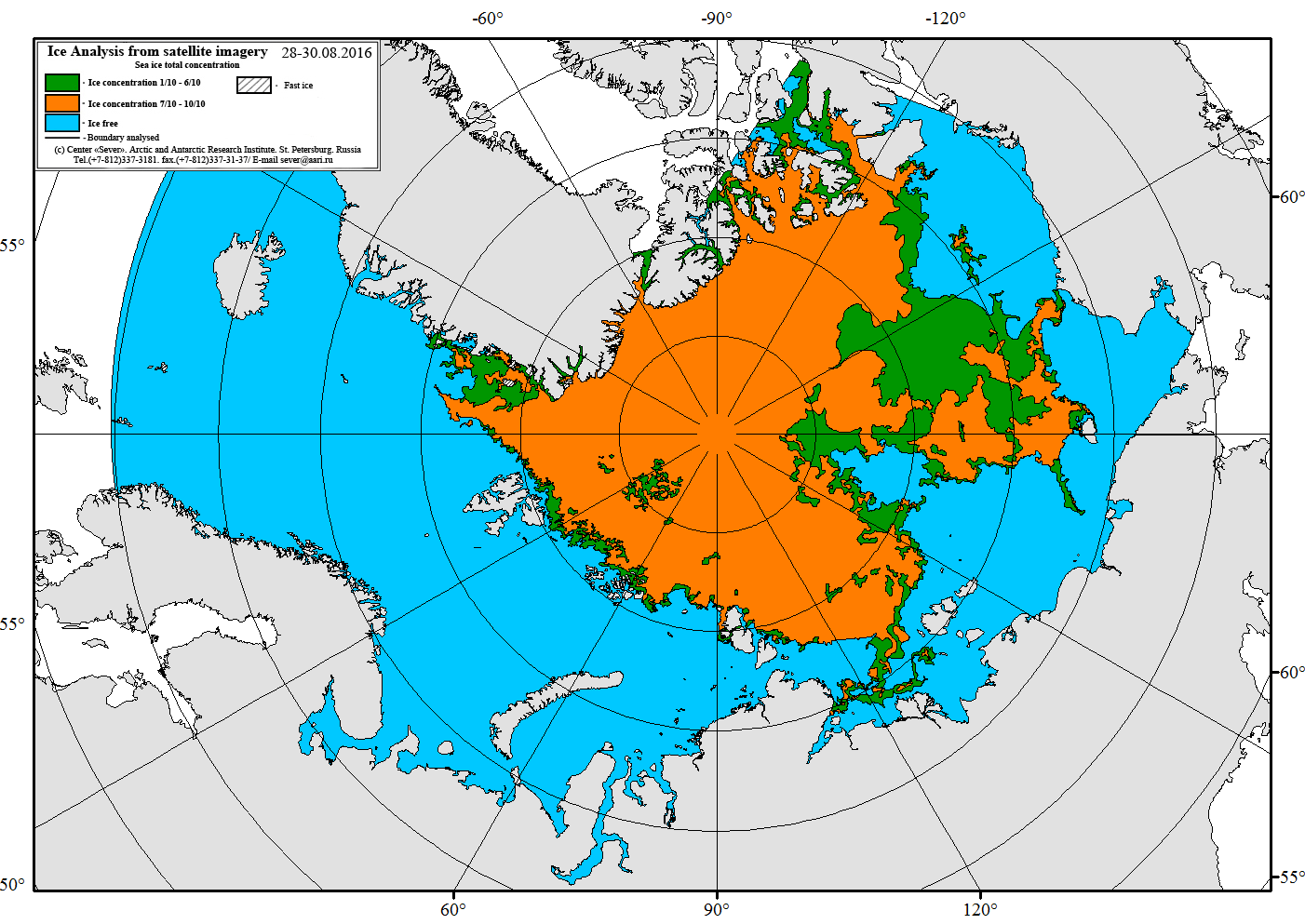
It certainly doesn’t look to me as though the entire Northern Sea Route was covered by no more than 3/10 concentration sea ice in August 1936. For comparison purposes here’s the Russian Arctic and Antarctic Research Institute ice chart for the end of August 2016:
For an eyewitness account of conditions along the Northern Sea Route in 2016 see our series of articles on the voyage of the yacht Northabout
A reader writes to ask us to explain the answer to the above question in more detail. Are you sitting comfortably once again? Then let us begin.
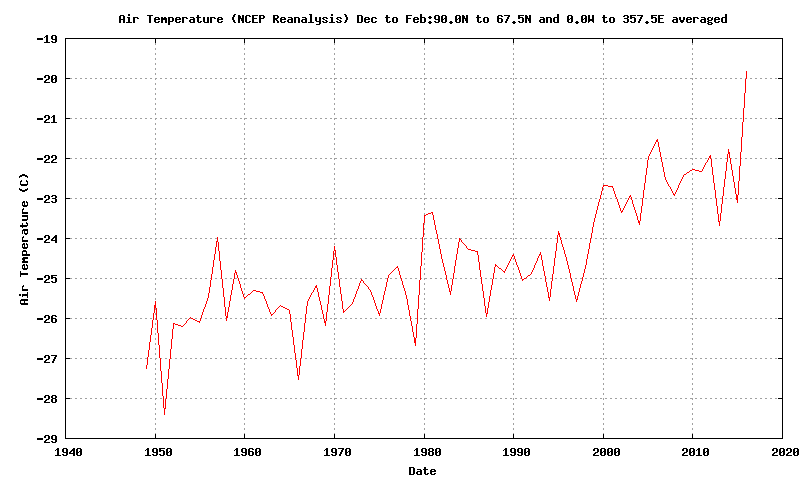
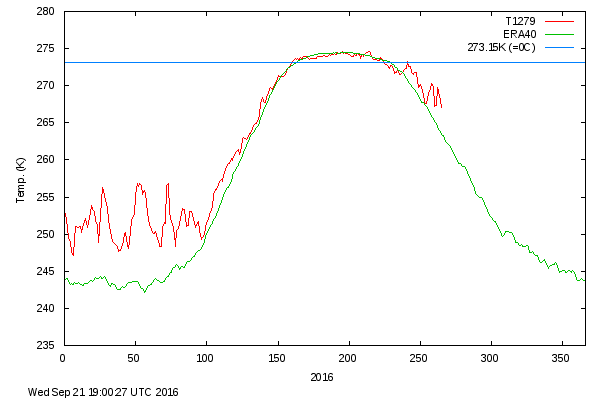
There has been a lot of unusual “weather” in the Arctic over the last twelve months. First of all there was an anomalously warm winter:
Then came what we dubbed the Great Arctic Anticyclone of 2016 in April. Take a look at what happened to the sea ice north of Alaska and Canada during the Spring and early Summer:
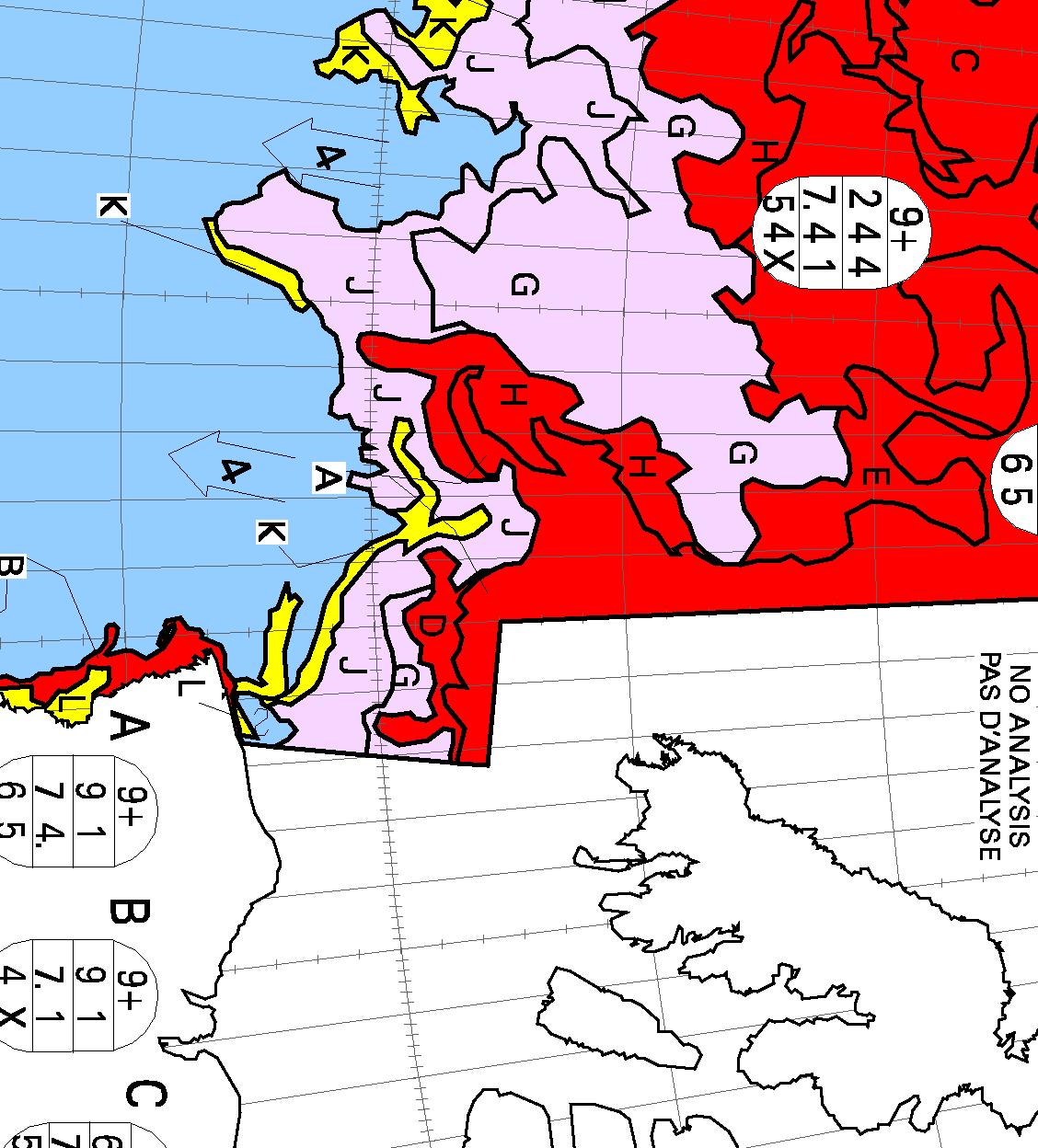
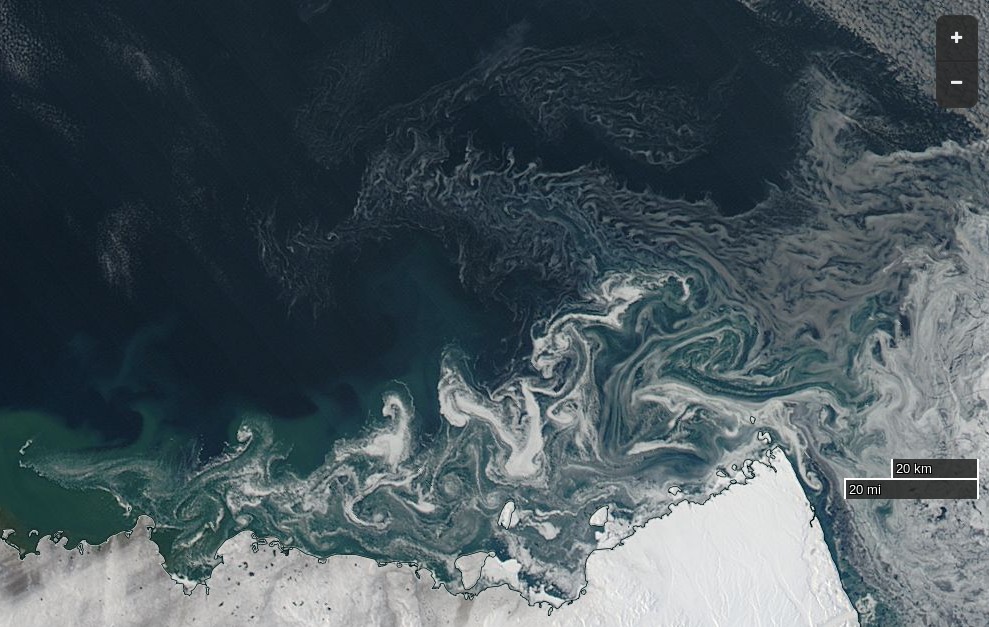
The ice was put through the mincer for the first time. Then during August there were a series of strong cyclones, collectively the Great Arctic Cyclone of 2016. The ice was put through the mincer once again, but in an anti-clockwise direction this time. Watch what happens in the Northwest Passage as summer turns to Autumn:
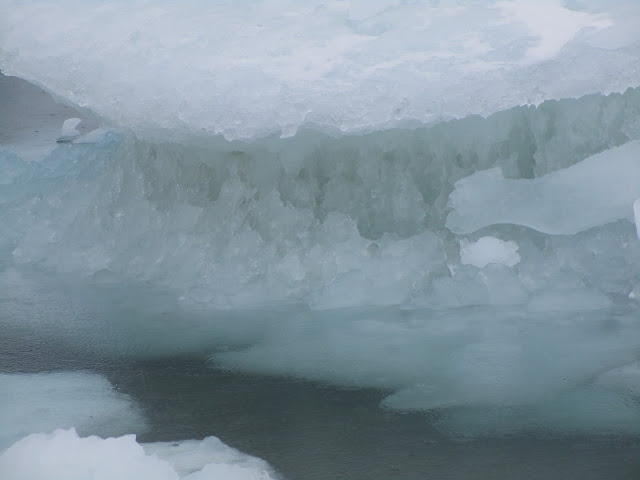
Some of the oldest, thickest ice in the Arctic has been chopped into small pieces which then easily flow through the channels of the Canadian Arctic Archipelago and into the Northwest Passage. Hence when the yacht Northabout (amongst others) was racing to reach Baffin Bay it wasn’t to avoid “the refreeze” as claimed in certain quarters. It was in fact to try and avoid the worst of the chopped up chunks of old sea ice being carried swiftly in their direction by winds and currents. Here’s what some of them looked like in close up:
The next question then becomes, if the Northwest Passage wasn’t refreezing then, is it freezing now? The answer is not yet. In fact the favourite talking point of the cryodenialista, McClure Strait at the western end of the “main” route through the Passage has recently become navigable:
NASA Worldview “true-color” image of Banks Island on September 24th 2016, derived from the MODIS sensor on the Terra satellite
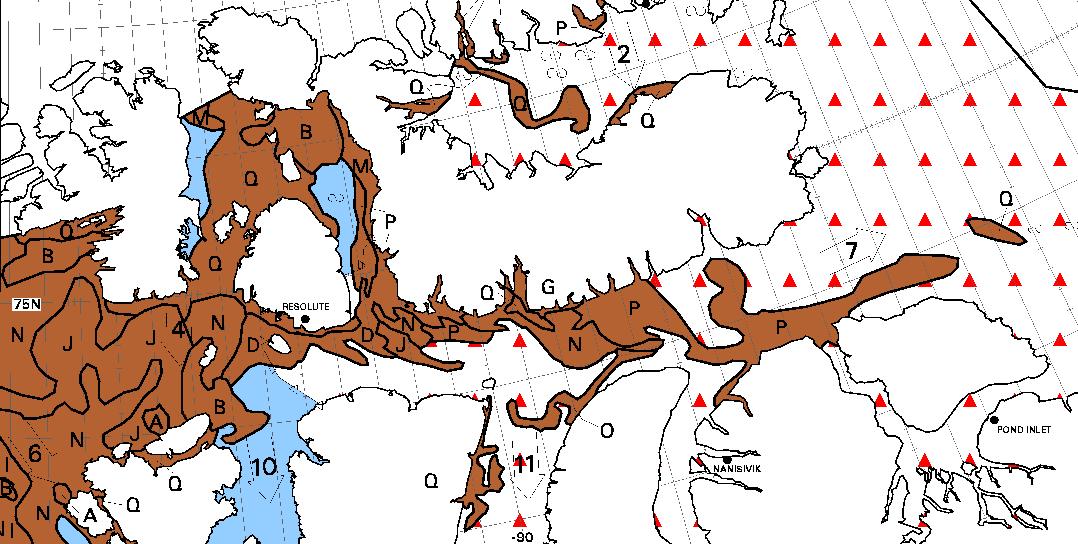
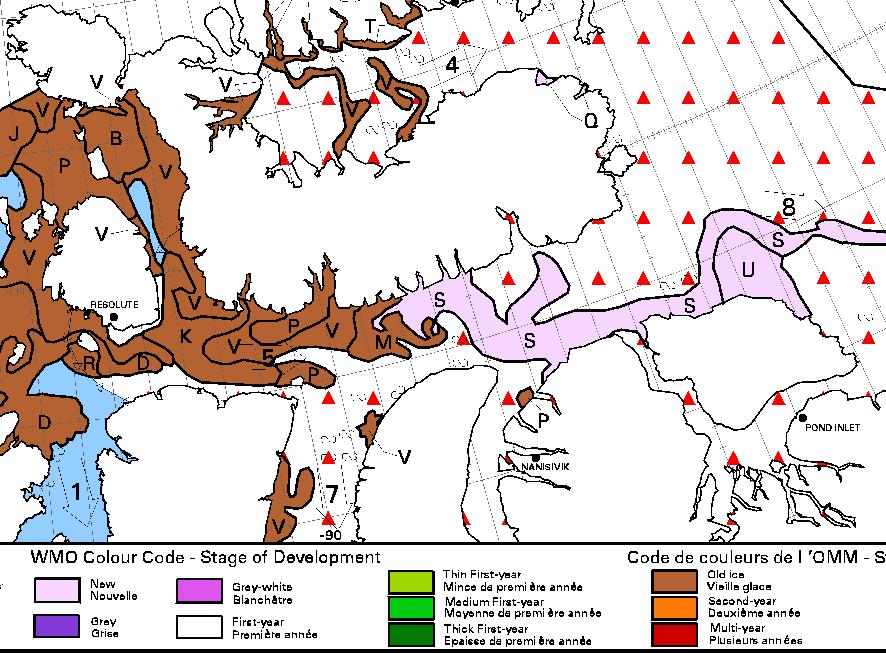
The “pretty pink” area towards the top left of the chart reveals “new ice”. The Northwest Passage will have started to refreeze when some of that shows up on a “stage of development” chart of the Passage itself, but that hasn’t happened yet. Here’s yesterday evening’s chart of the “Approaches to Resolute“:
Lots of old ice! It was raining in Resolute yesterday, and the old ice there was still melting:
[Edit – September 27th]
No sooner said than done! This evening’s ice charts from the CIS do now show some “pretty pink” new ice in the Northwest Passage:
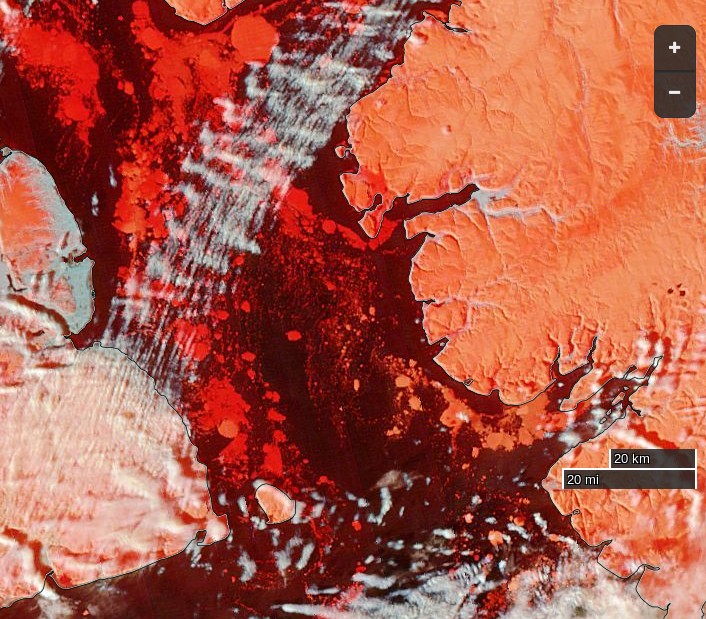
The wispy areas of new ice are also visible on this “false-color” image of the Parry Channel:
NASA Worldview “false-color” image of the Parry Channel on September 27th 2016, derived from the MODIS sensor on the Terra satellite
However even if Northabout were still in Prince Regent Inlet she wouldn’t be “trapped in ice”. There is still a way back to Bristol via Fury and Hecla Strait:
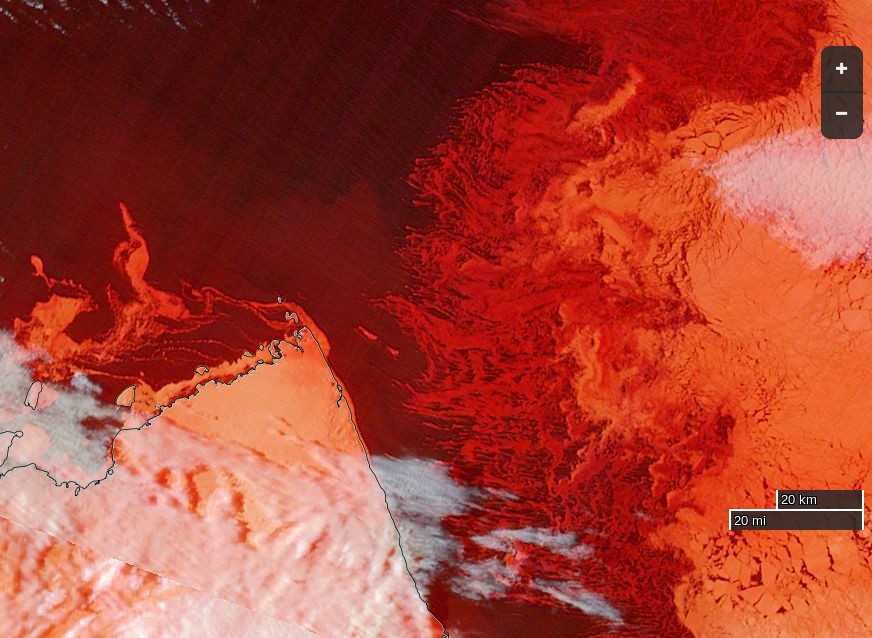
A clear view of McClure Strait from the Terra satellite in “false colour”:
NASA Worldview “false-color” image of the McClure Strait on September 30th 2016, derived from the MODIS sensor on the Terra satellite
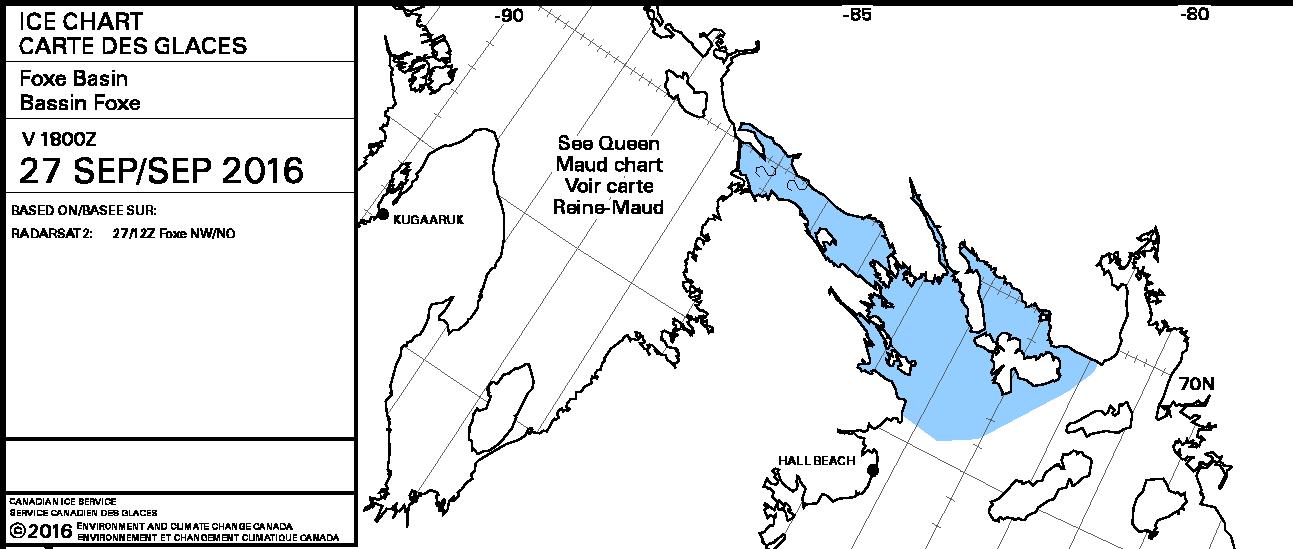
The inclusion of some infra red reveals the thicker old ice on the right noticeably paler than the new ice to its left. Compare also with the CIS ice chart, which has been rotated to match the orientation of the satellite image:
[Edit – October 2nd]
Pretty patterns in the new sea ice forming at the western entrance to McClure Strait:
NASA Worldview “true-color” image of the McClure Strait on October 1st 2016, derived from the MODIS sensor on the Aqua satellite
The freshly frozen new ice in the Northwest Passage has been spotted by the AMSR2 instrument aboard the Japanese “Shizuku” satellite:
On the latest CIS “stage of development” chart the brown “old ice” has turned to deep red “multi-year ice”, and there’s lots more pretty pink out in the Beaufort Sea:
Following another crew change the Polar Ocean Challenge team in their yacht Northabout have just left Nuuk in Greenland, bound for Bristol in South West England:
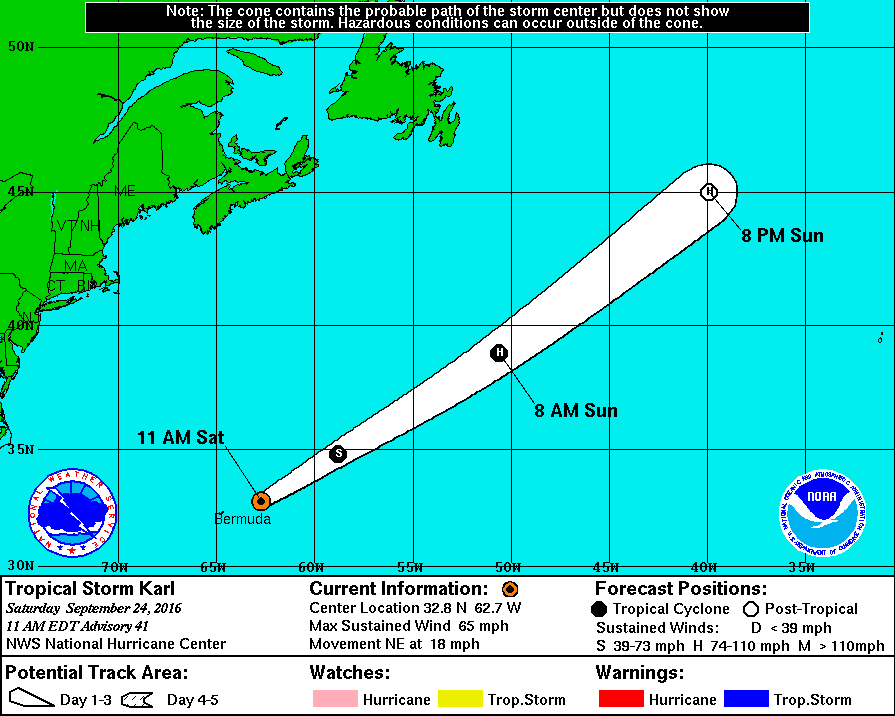
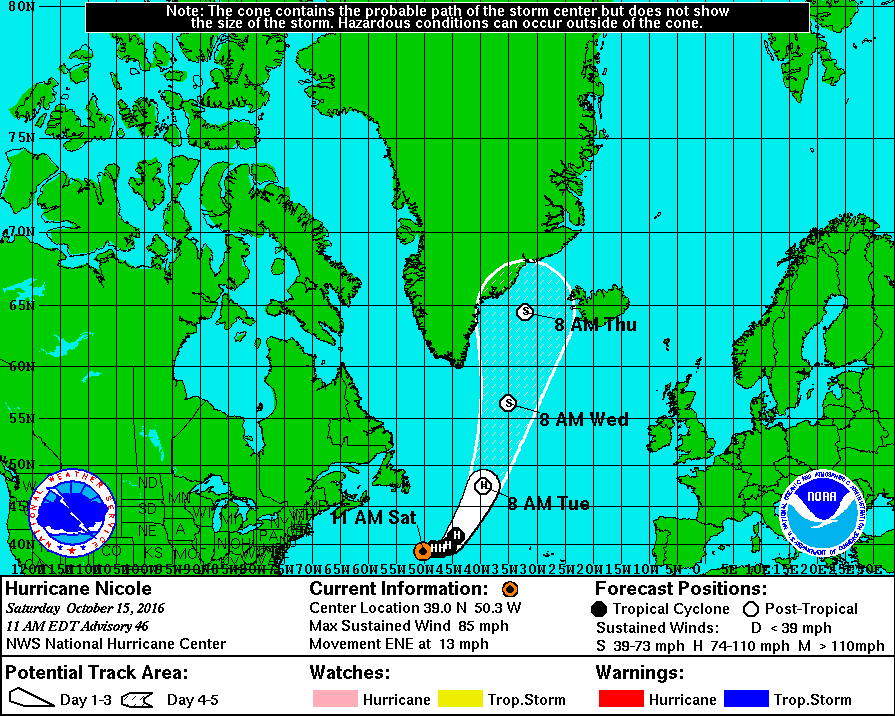
To get back to good old Blighty they are going to have to brave the North Atlantic in Autumn. Some stormy weather is likely! We’re currently keeping an eye on Tropical Storm Karl, who has just left Bermuda in his wake and is forecast to reach hurricane strength before heading off across the North Atlantic:
The latest advisory bulletin from the National Hurricane Center forecasts that:
Karl is forecast to be absorbed by an extratropical cyclone early Monday.
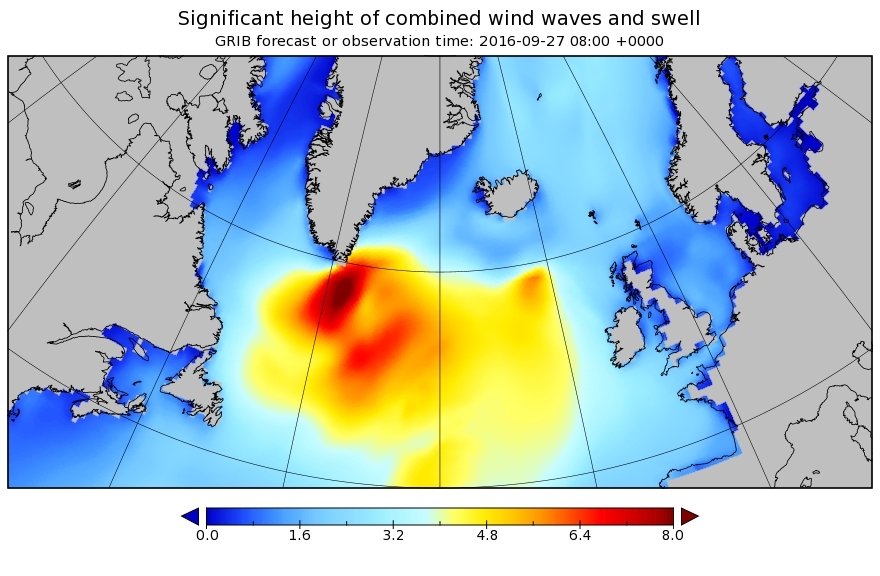
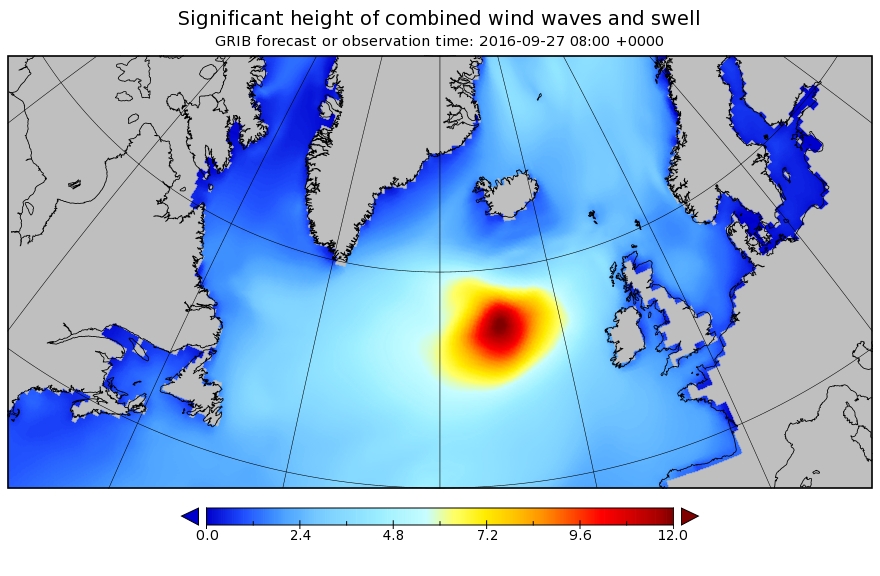
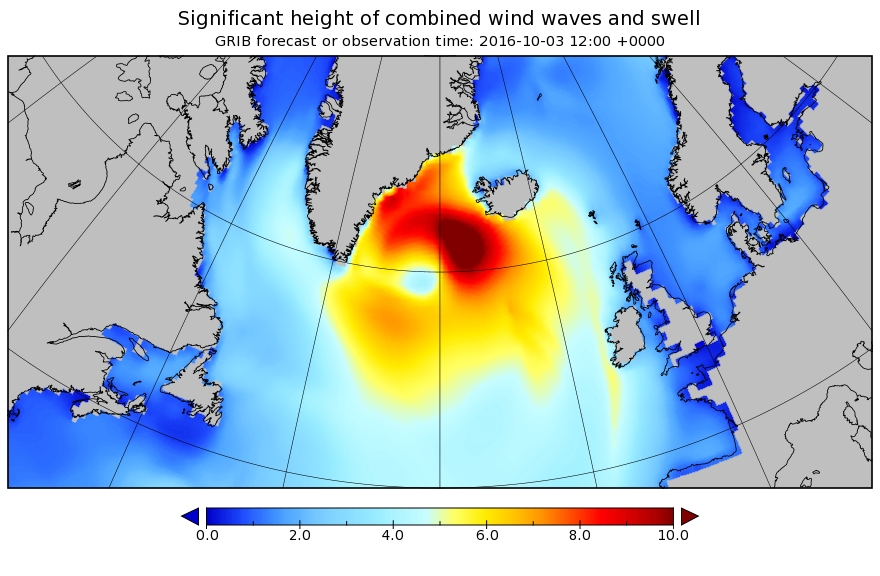
That cyclone looks set to create 8 meter waves south of Greenland! Here’s how the significant wave height forecast looks for 08:00 on Tuesday September 27th:
What happens after that remains to be seen. We will keep you posted!
[Edit – September 25th]
The new captain of Northabout, Mike Stewart, reports that:
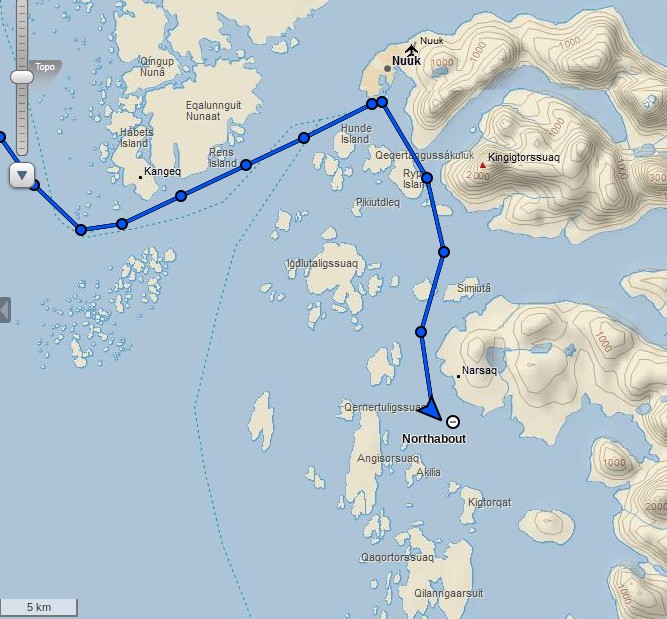
We have decided to approach things in a relaxed manner, and for the first few days, at least, we will day sail southwards amongst the islets and channels towards our departure point, in a sort of ‘shake down’ period, to get used to each other and our vessel, we will head for a remote weather station on the very south east tip of this vast and forbidding Island. More to say on that later..
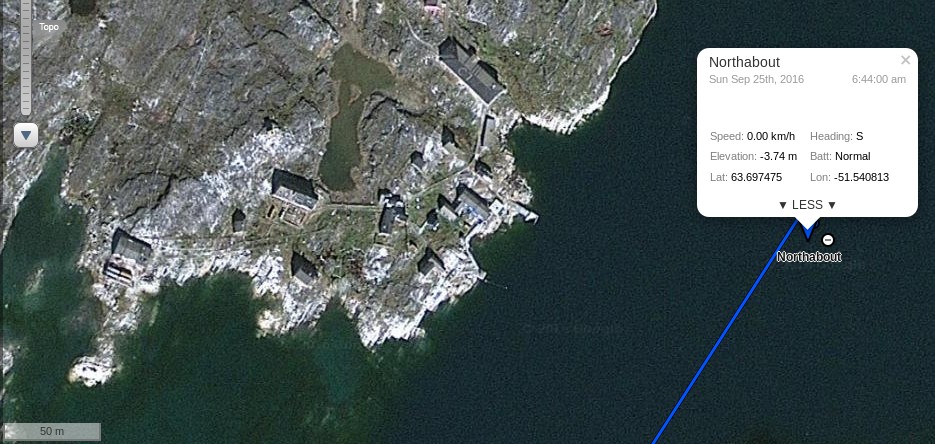
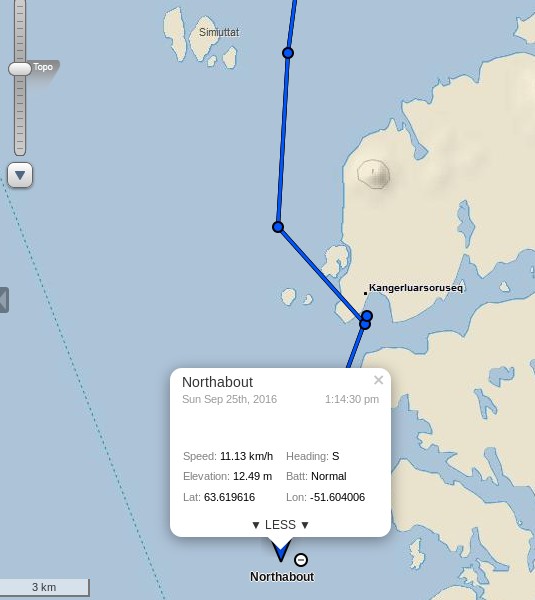
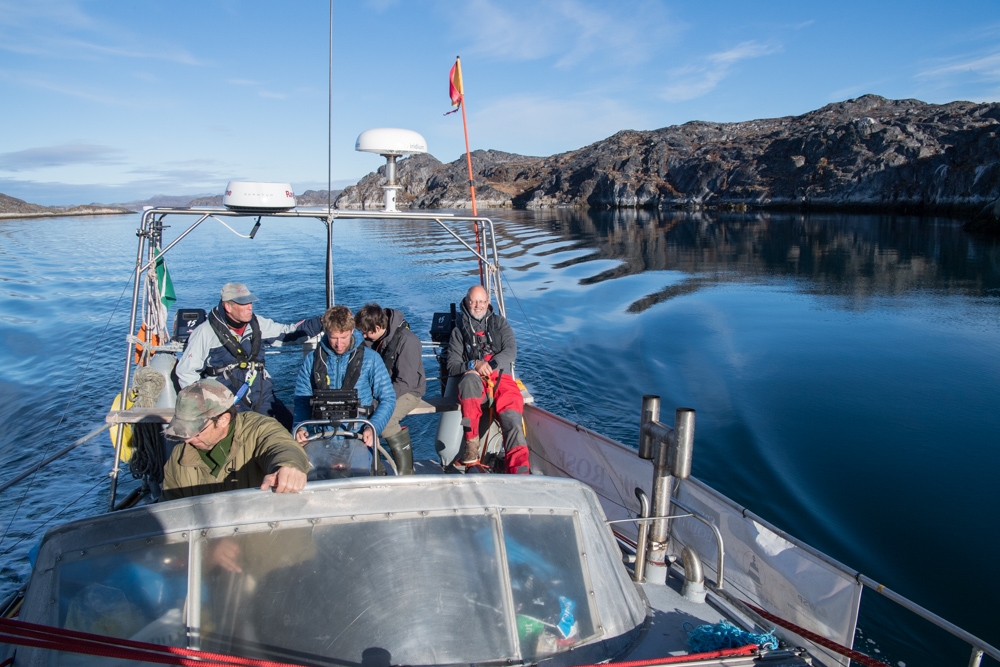
Our home for this, our first night, as a complete crew is at anchor next to a tiny abandoned port named FAERINGEHAVN. Old dead wooden whalers, ribs now showing, and sad broken down port buildings, minus roofs, are our view of the shore less that 50m away. Have a close look at the top of this image, or zoom in on the tracking on the satellite view.
We did just that:
which reveals that the new name for Færingehavn is Kangerluarsoruseq.
Mike also points out that they are not alone:
We have visitors! EAGLES QUEST II crew, (a Hong Kong registered Tayana 58 who have sailed from via Alaska), decided to tag along for a while are on their way over for a brew..
Given the storm that Karl is brewing up in their path a leisurely cruise to Cape Farewell seems like an eminently sensible idea to me!
[Edit – September 25th PM]
Northabout has now set off on the next section of her island hopping cruise to Cape Farewell:
[Edit – September 26th]
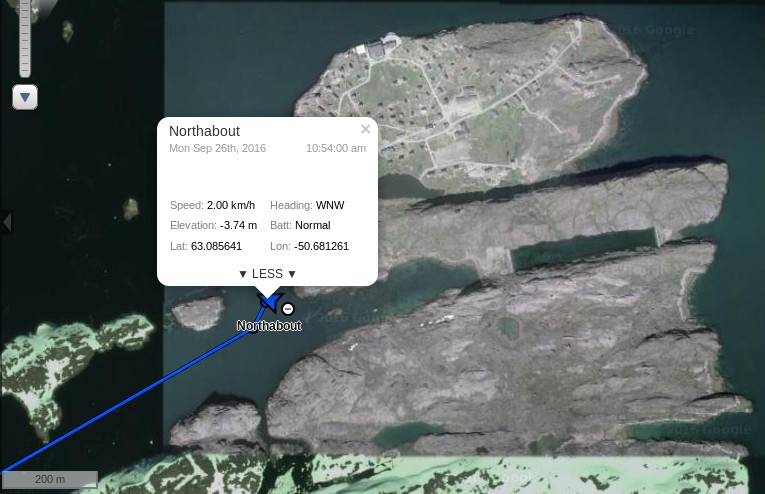
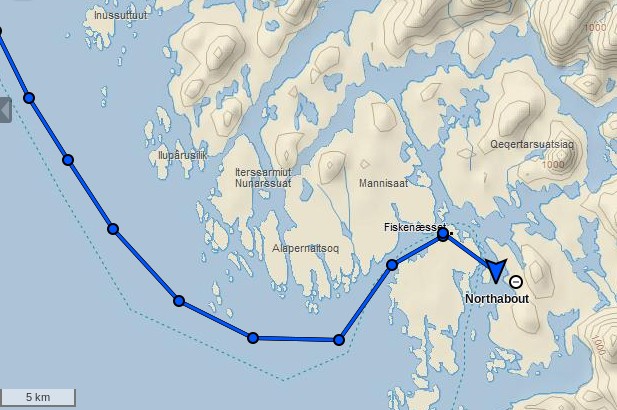
Northabout anchored for the night near Fiskenæsset (AKA Qeqertarsuatsiaat):
She has just set off hopping amongst a few more of the numerous islands off the south-west coast of Greenland:
The imminent storm swell is now forecast further out into the North Atlantic than two days ago, but has grown to a predicted 12 meters:
Note the change in scale!
[Edit – September 27th]
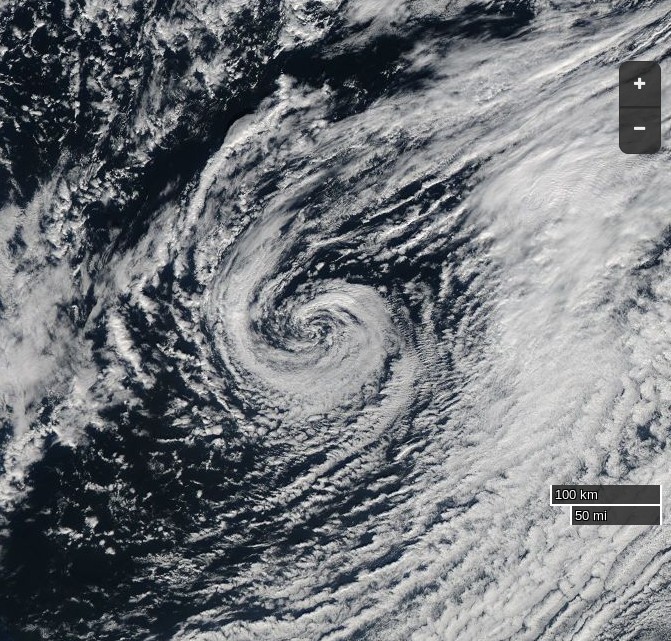
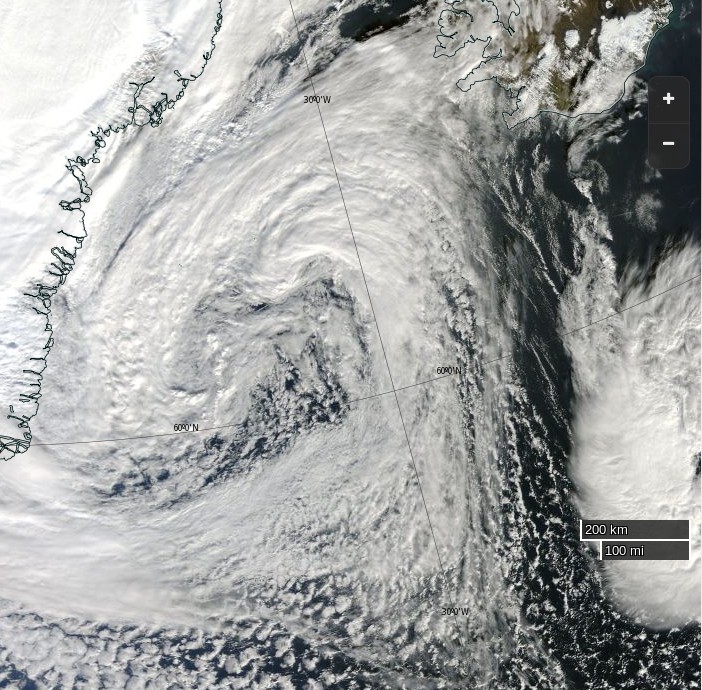
Here’s the storm currently raging in the North Atlantic:
NASA Worldview “true-color” image of the North Atlantic on September 27th 2016, derived from the MODIS sensor on the Aqua satellite
Northabout looks to have found a sheltered spot to stay the night:
It seems that her new crew have experienced plenty of fine weather recently. According to Ben Edwards:
This is ridiculous. Three days in a row and we’ve had the best weather of the entire trip. We woke up in the morning to relative warmth and clear skies our trip ashore to Qeqertarsuatsiaat was short but pleasant with a trip inside the local church.
Upon our return to Northabout we got the anchors up and motored off. We managed to get the sails up a couple of hours later and we’re now doing about eight knots. We passed a glacier earlier on which was a little odd. From where we sat it seemed huge. The head alone was several miles across. The strange thing was that it didn‘t seem to stretch down to the coast. We were fairly sure of this because we could see a line of what looked like stone between the ice and the water and there were no icebergs that we could see. If it was at the water one would expect bits to break off and form bergs. … So it seems likely that it never reached the coast.
Let’s hope that continues!
[Edit – September 30th]
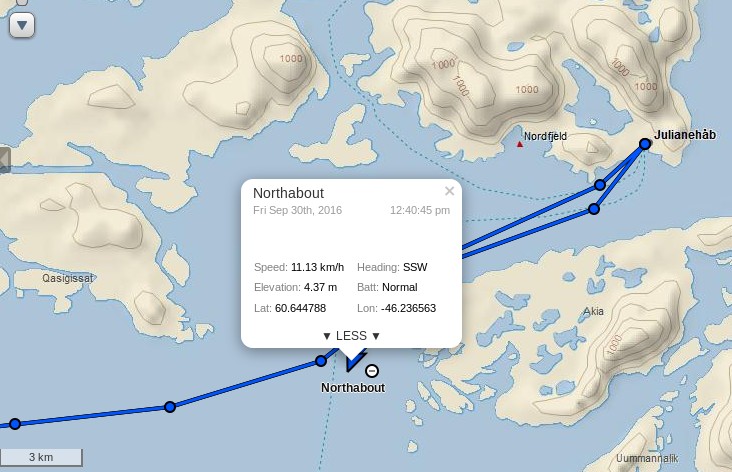
Northabout has just departed from Qaqortoq (AKA Julianehåb):
The Polar Ocean Challenge team have released a beautiful video of one of their recent sheltered spots to stay the night:
On their blog the current captain of Northabout, Mike Stewart, said yesterday:
We have successfully disembarked Steve and continued our preparation of Northabout for crossing the Atlantic. We have also re-fueled in situ courtesy of the Qaqortoq fuel supply truck, and have fitted a new house battery to bolster the hard working but a bit tired battery bank in place. This will keep our domestic amp draw supported- chart plotter, nav lights, interior lighting, electric pumps and bilge pumps etc working as they should. This also ensures that the engine start battery is kept fresh for its most important job.
I am told by the Inuit lady in the local chandlery that its going to blow hard tomorrow. We should have the wind behind us for our transit to the east, and then if all is ok run in to shelter mid afternoon.
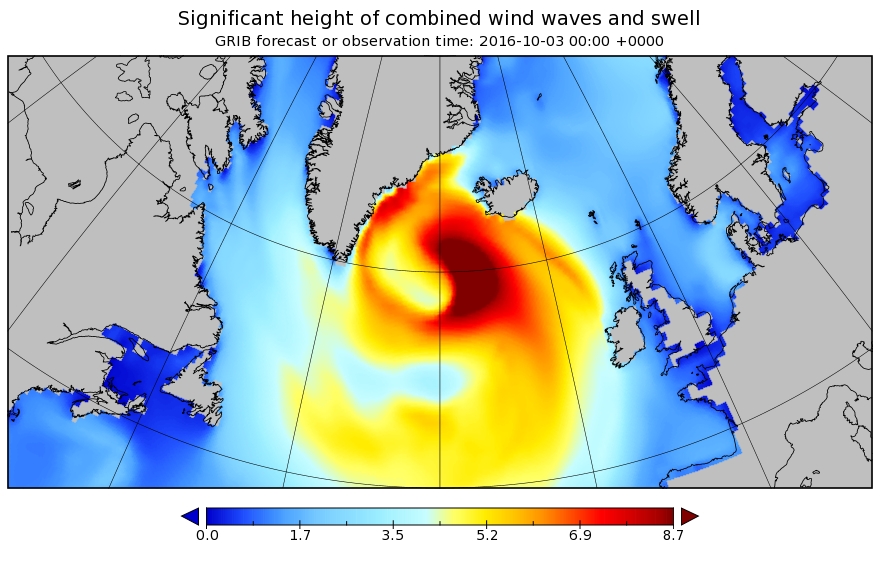
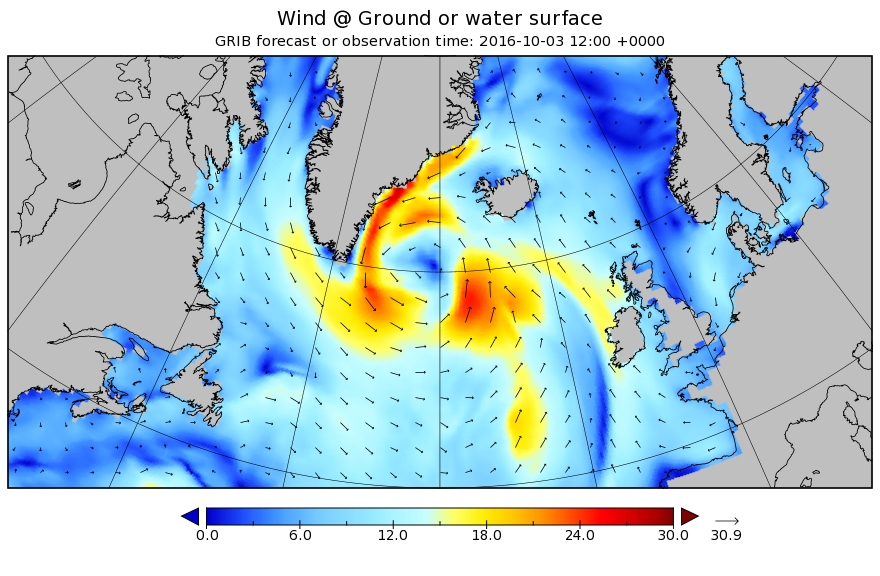
In actual fact it looks like it’s going to blow even harder in the not too distant future. Here is our North Atlantic “surf forecast” for 00:00 UTC on Monday October 3rd 2016:
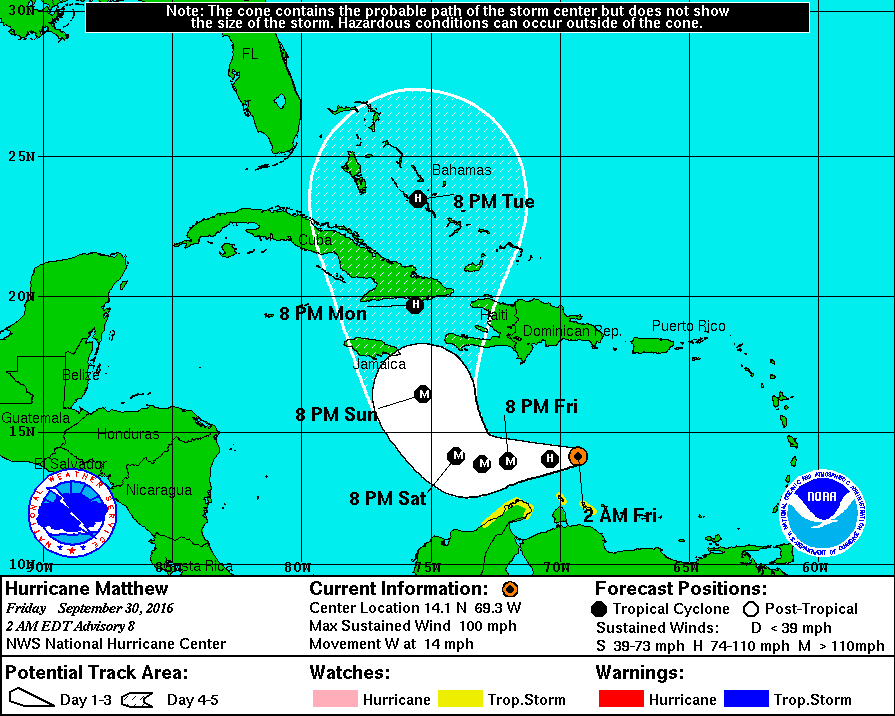
Meanwhile much further south in the Caribbean, Hurricane Matthew is forecast to become a major hurricane before reaching Cuba and then heading north across the Atlantic Ocean:
[Edit – October 1st]
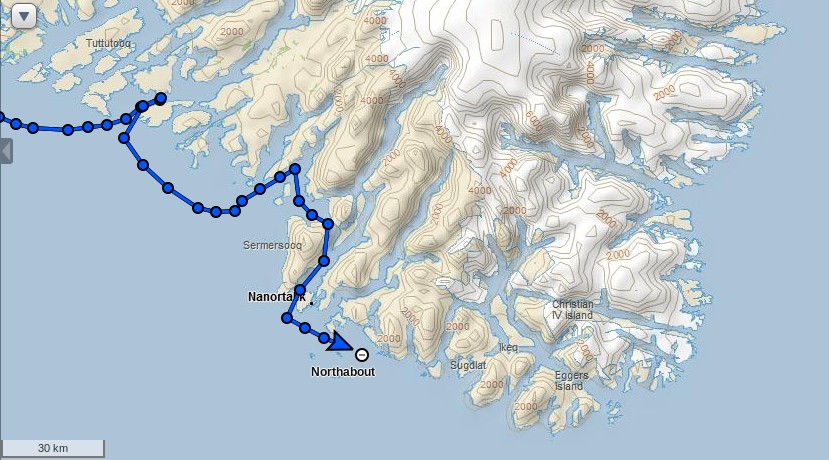
Northabout is on the move again:
It seems my assumption that she would round Cape Farewell early next week was mistaken. According to Mike Stewart:
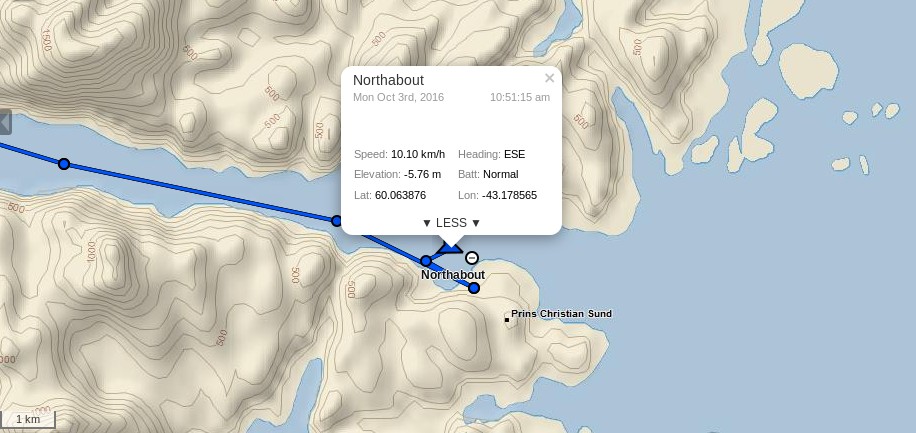
The strategy is to reach our departure point on the eastern entrance to PRINCE CHRISTIAN SOUND, which has a conveniently manned weather station and pier, in about two days sailing. This will allow us to hold in a safe area, whatever the weather in the Atlantic, and be in an ideal location to depart immediately to sea when the storm that is dominating the north Atlantic abates. After crossing Biscay 4 times this year, I have learnt that after a blow, kind of ‘riding on the back of it’ is an ideal time to head off. I recall something about the Chinese ideogram for chaos and opportunity being the same written character.. and as we have 3 Chinese sailors around half a mile behind us right now, I’ll use that to describe the general strategy I have in mind. Actually looks good for a Tuesday pm departure into decaying westerlies around 30-35 KTS.
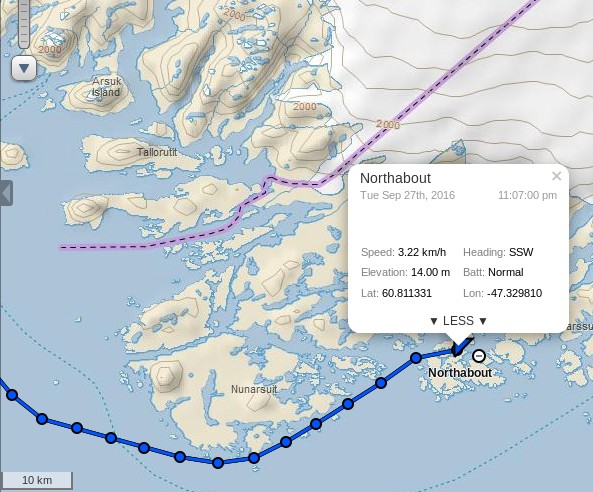
If you look at the map above the planned route will take Northabout through the islands of Southern Greenland, passing to the north of Christian IV Island.
She is now heading in the direction of the Irminger Sea:
Beyond that the wilds of the North Atlantic beckon, where there is still a fair old storm raging!
It looks as though the Polar Ocean Challenge team are hoping to get a good head start on their voyage back to Bristol from the strong winds in the wake of that storm, but there’s also some big waves to contend with:
Differing accounts from Northabout in the stormy North Atlantic today! Skipper Mike Stewart reports that:
There is another low that will affect us in the next 24 hours, this will be through by tomorrow midnight, and most of its associated wind is westerly or northerly in our bit, anyway we take what we get here, its as simple as that. We have handled this at 50 KT with around 7m seas, (occasionally 8-9m) so our confidence levels are good. I heaved the boat to for a few minutes to test how she behaved, and she was ‘OK’ sitting duck like as the rollers powered through beneath us. During the evening, we were hit by one breaker, as always, theres a set bigger than the rest, and of course one broke over the boat, we were lifted and pushed sideways like a cork, but did not go over to any degree, which says volumes for our stability curve.
My first watch was from 1400 to 1600, and was quite an experience. I attached my harness before leaving the main cabin – I leave it permanently attached in the cockpit, a tip from a recent letter in Yachting Monthly – attached the second hook to another point near the wheel, and then took over from David. Looking around at the conditions a loud “Yeehaaar!” left my mouth and was whipped away by the wind. The seas were magnificent, lashed by the wind and spewing spume from the top, as Northabout gamely reached across the tops under reefed staysail.
So the night hath passed and we’re still alive. To me it feels like it was a bit of a close run thing…
I did my watch (eight to ten) and went straight to bed, not that that saved me. Twenty minutes later I rushed to the toilet and threw up my breakfast of porridge and tea. I then went back to bed, the swell got larger, the wind got stronger, I went back to toilet. This continued for the next ten hours. In total I threw up six times, a personal best.
Tomorrow is another day!
[Edit – October 8th]
David Wynne Davies reports from the middle of the North Atlantic:
Half way point to Ireland reached yesterday. Progress had been impeded by headwinds but with the wind now backed to the South and on the beam we were making 7kts. In order to catch up lost time the mainsail as well as the genoa were hoisted supported by the engine although increasing winds this afternoon (gusting 50kts squalls) prompted us to reduce to 3 reefs and a reduced staysail.
Everything then was cracking on beautifully in fairly rough seas – until the engine splutters and dies. Mike switched fuel tanks in the belief that the forward port tank may have been contaminated or be getting close to having to be switched over. Engine starts, but again stops suddenly. After further consideration the starboard fuel tanks were tested, and the engine started to run smoothly again. We will have to figure out why the port fuel tanks are not feeding through.
Last night to conserve fuel we stayed under sail started off making 5.5 kts. The wind is expected to ease over the next few days, and helpfully be on the nose when we cross the St George’s Channel. Let’s hope that the high pressure over UK moves away before then and that we can benefit from Westerlies.
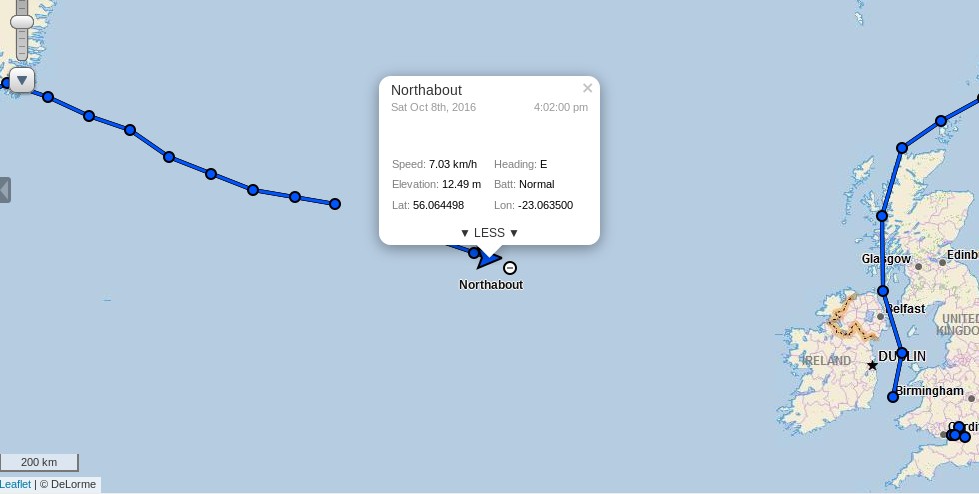
Possibly related to the spluttering engine, Northabout’s live tracking ceased to function for a while yesterday:
After an anxious wait it burst back into life, and confirms Northabout’s steady progress towards a welcome pint of Guinness in Ireland:
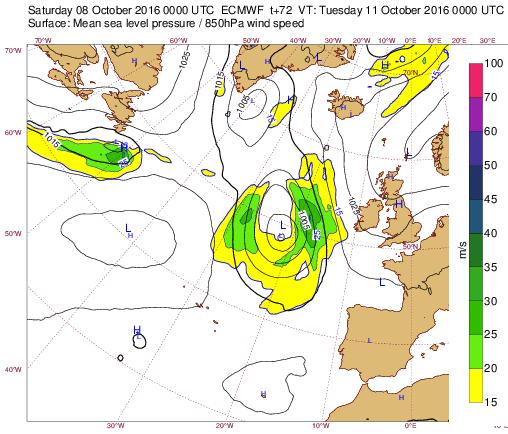
Here’s the ECMWF MSLP forecast for Tuesday morning revealing the approach of another low pressure system, which Northabout is no doubt hoping to avoid as far as possible:
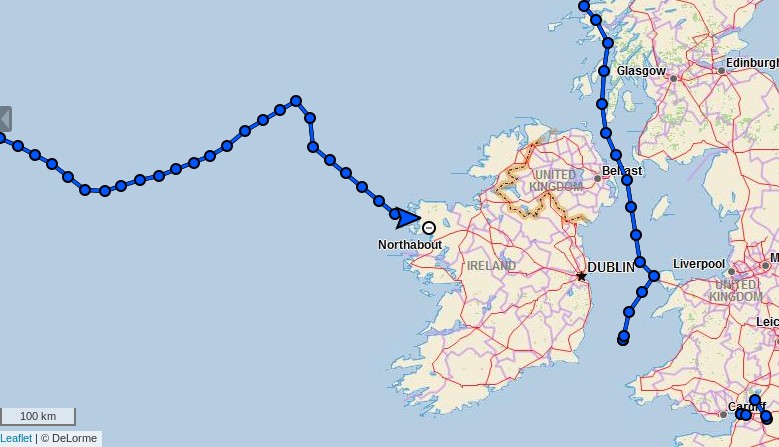
[Edit – October 12th]
After a major, weather enforced detour:
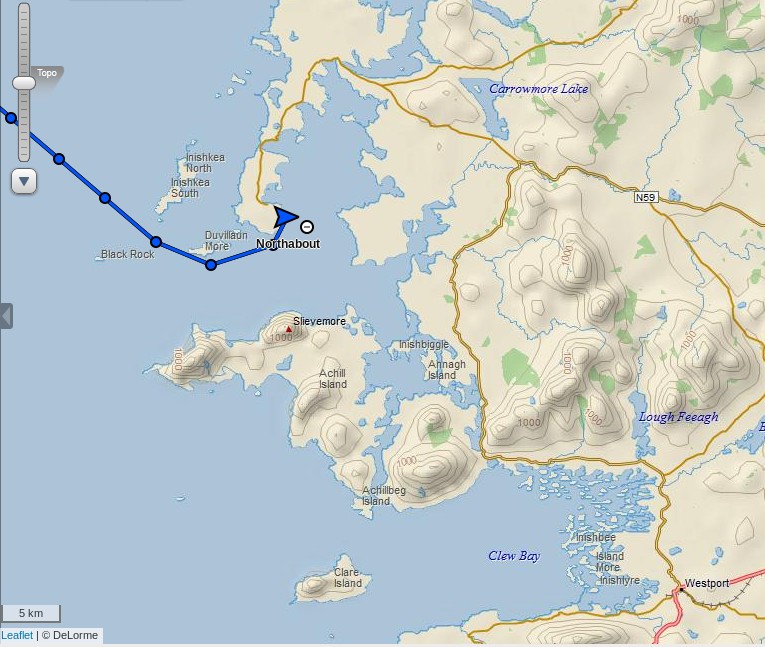
Northabout has just reached Ireland! After a recent blog post mentioned the town I thought they were heading for Clew Bay and Westport:
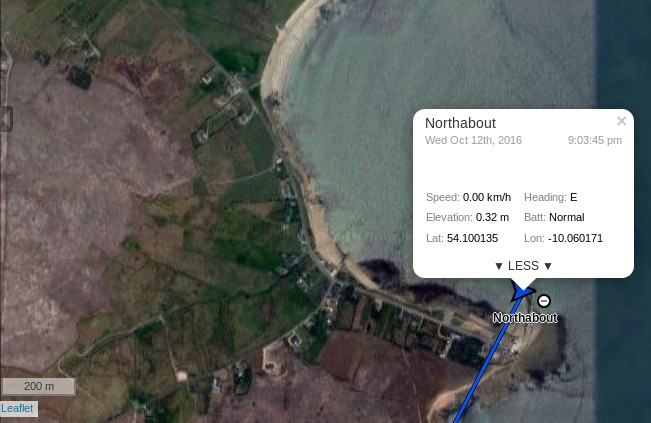
However they have stopped for the night north of there, at Blacksod Bay:
I hope there’s a hostelry available to serve the crew their longed for pints of Guinness. Then it’s on to Westport tomorrow.
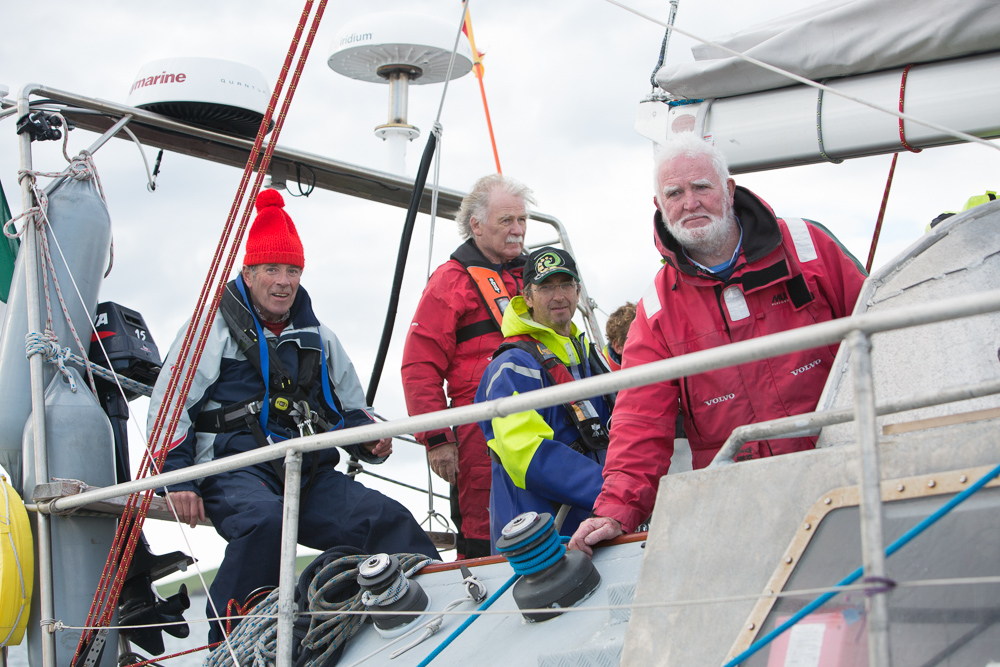
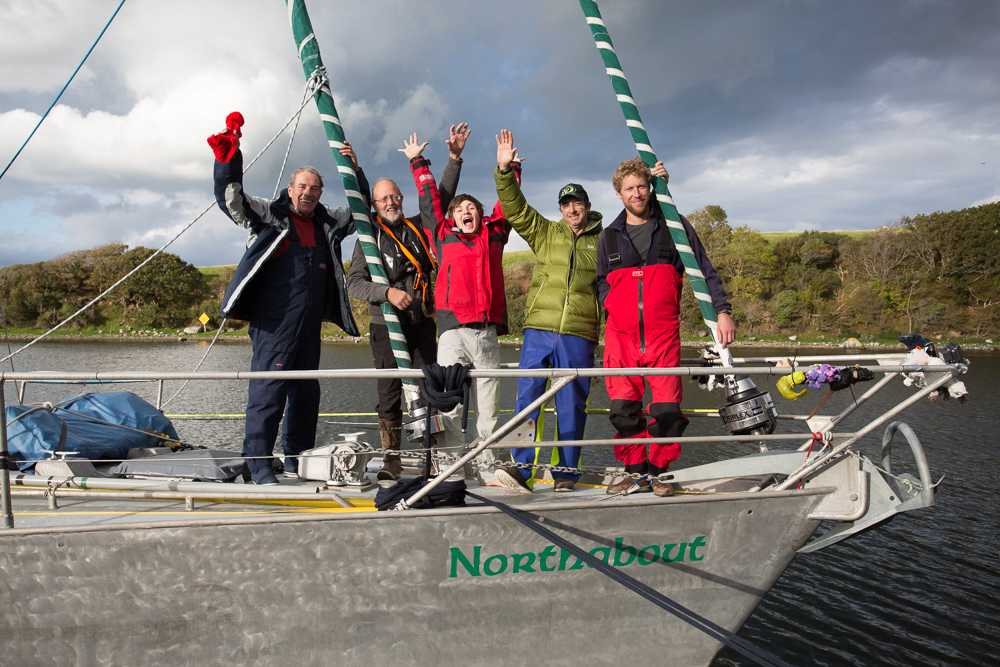
We arrived at Blacksod in darkness on Thursday evening to an unforgettable welcome from Jarlath, Mike, Tom and Mr Sweeney (the lighthouse keeper). Frances Gard was there too having hitched a lift after her Ryanair flight from Bristol.
With great enthusiasm they took our lines and promptly escorted us to a local hostelry. By golly, Guinness is indeed good for you at times like that! In true style, out came the fiddle and accordion with songs about Lord Franklin and other maritime disasters (all uplifting stuff!).
Yesterday we slipped Blacksod for Westport with Jarlath on board. Bringing Northabout back to Westport, where Jarlath had built her in 2001, was a poignant moment.
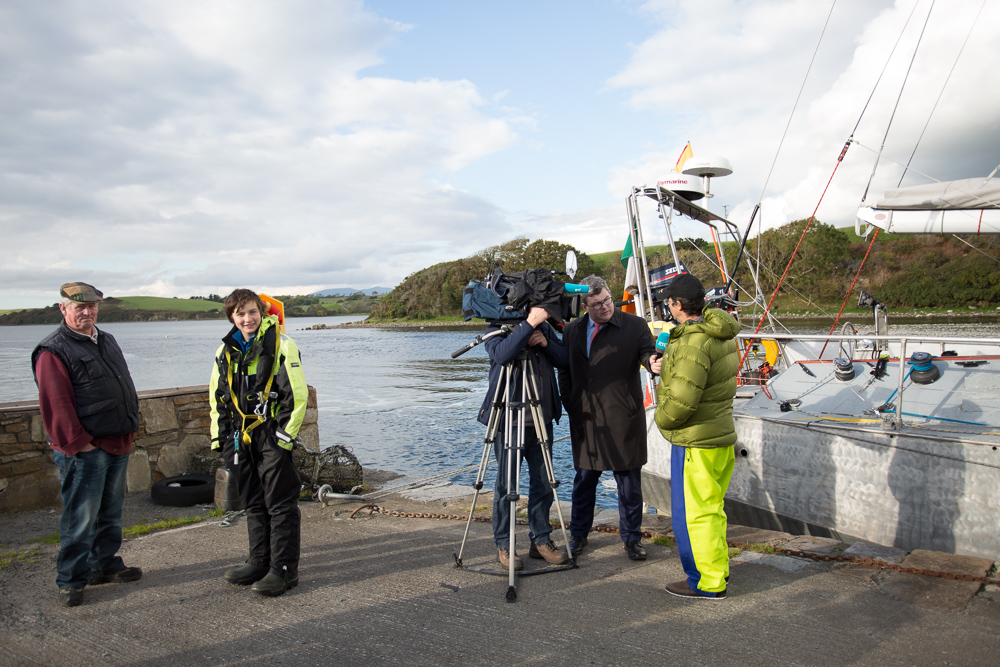
RTE News and several journalists were on the quay to record the event which was subsequently aired on the national TV news last night.
The sun is shining brightly again today although a front is expected tonight bringing heavy rain – but more importantly a wind shift. We leave for Dingle this afternoon after a most remarkable 36 hours during which we were treated to terrific hospitality. Many thanks to the hosting party who incidentally sailed Northabout through the NE and NW Passages over two seasons some years ago. So they fully recognise what this expedition had achieved.
[Edit – October 15th]
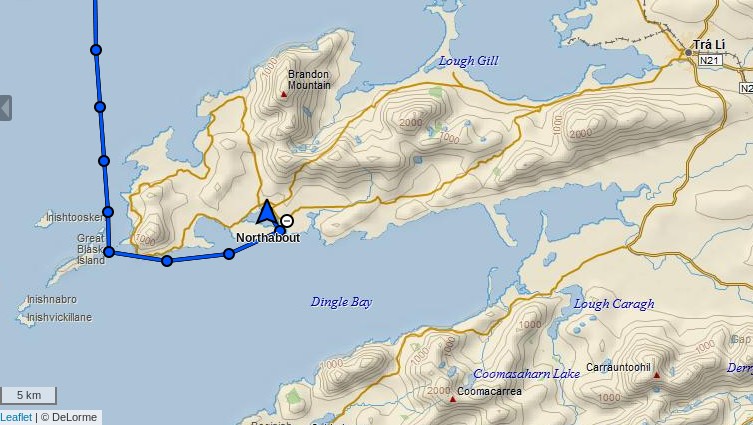
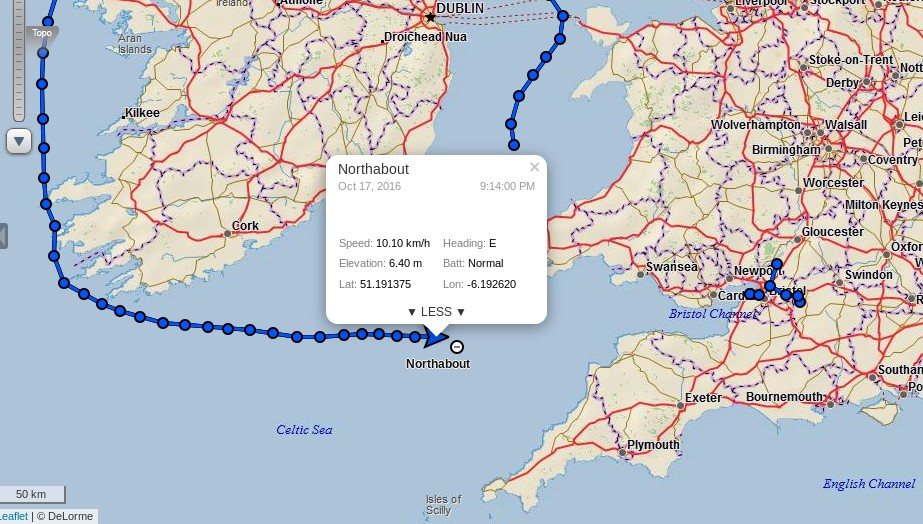
Having departed from Westport on yesterday evening’s high tide Northabout has now arrived in Dingle:
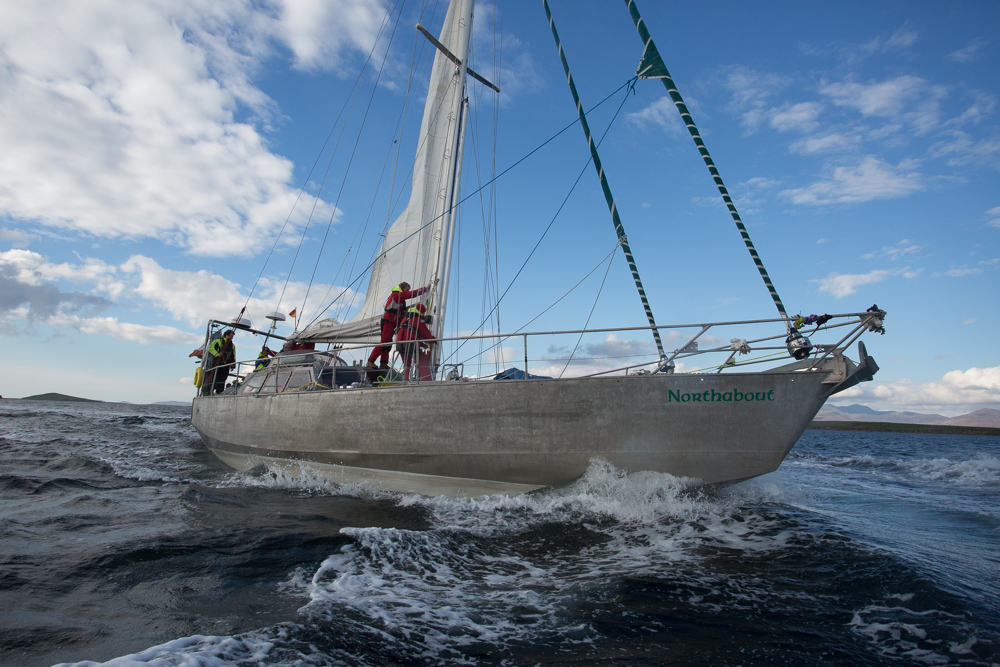
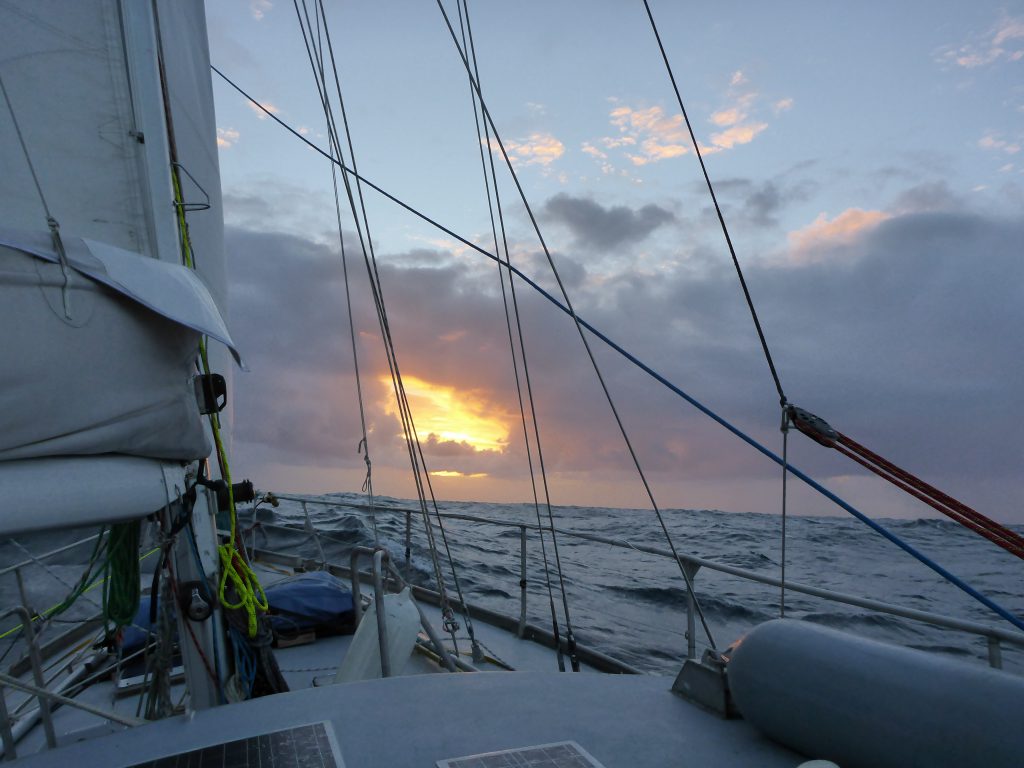
Beautiful morning, sun shining, a decent breeze from behind, and rolling down the Atlantic swells under full foresail at a steady 6kts, with bursts to 9kts if the waves pick us up. We are now well into the Celtic Sea, past Cork in the north, and enjoying the run home. We saw a dolphin last night, and four this morning so far.
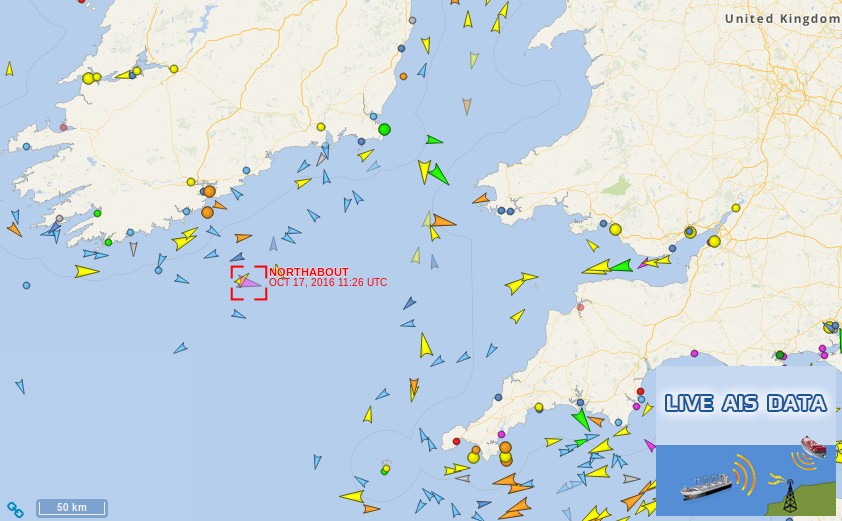
Skipper Mike is keeping us on our toes, with no relaxing – constant AIS watch, and looking out for boats without AIS on radar.
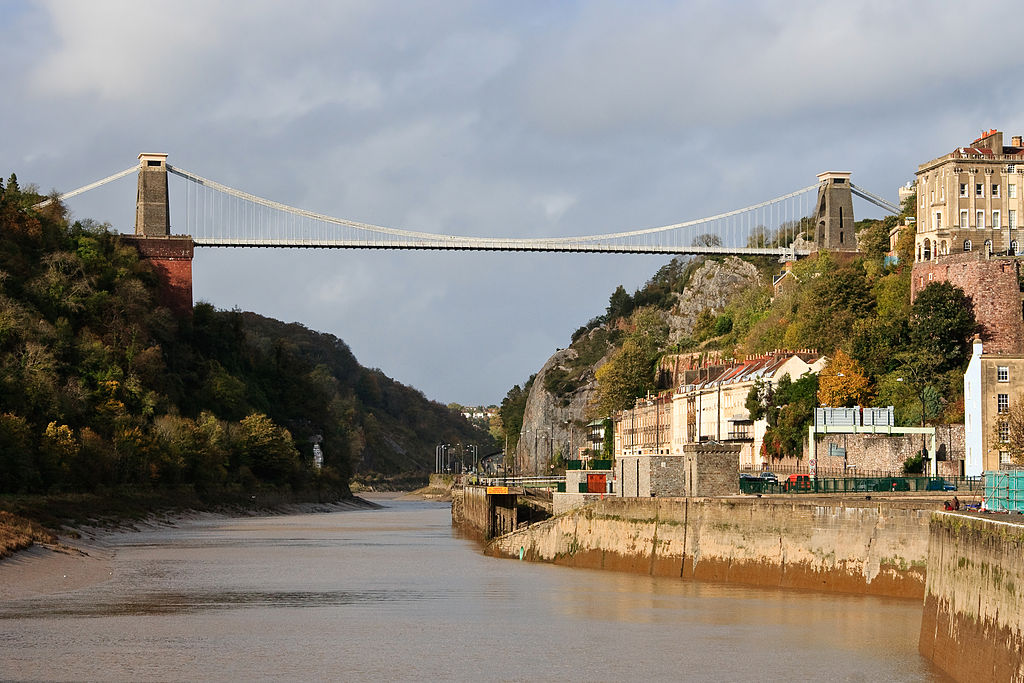
Assuming Northabout manages to safely avoid all the shipping in the Bristol Channel, on Thursday morning she is due to sail along the River Avon under Isambard Kingdom Brunel‘s Clifton Suspension Bridge:
With the wind and swell behind us we were doing twelve knots at times with an average of about seven. Amazingly that continued and continues to continue as we continue to head east.
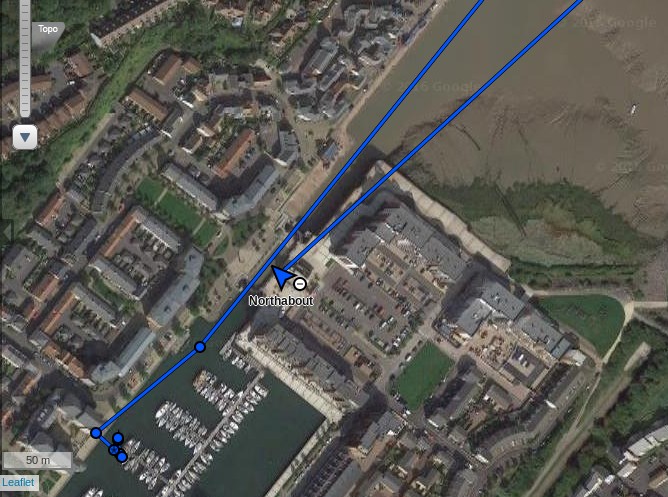
Perhaps slightly ahead of schedule, Northabout has now arrived in Portishead:
The other blue line in the picture was recorded way back in June!
Halloween is a little way away still, but nonetheless I have a horror story to tell you. Are you sitting comfortably?
As our regular reader(s) will be aware we have been following the fortunes of the plucky little yacht Northabout on her Arctic circumnavigation with great interest. That includes the series of reports about the voyage on the BBC Radio 4 Today programme. Even recent passers by may have noticed that we were none too pleased with the most recent episode in the series!
Now comes news that one of the numerous usual suspects has been blathering about both the Polar Ocean Challenge expedition and that BBC Radio 4 programme. Enter stage right James Delingpole at Breitbart. Under the catchy but erroneous headline:
The Polar Ocean Challenge expedition – aka Ship of Fools II – has escaped from the Arctic by the skin of its teeth. It was supposed to show how amazingly navigable the Arctic Circle has become now that climate change is supposedly melting the polar ice caps at a dangerous and unprecedented rate. But according to one observer who has followed their progress closely (see comments at Paul Homewood‘s place), the intrepid explorers – including a 14-year-old boy – came within just two days of calamity, after being hampered by unexpectedly large quantities of a mysterious substance apparently made of frozen water.
Regular readers will recall that not a lot of people know that Paul Homewood is the proprietor of a production line of porky pies full of horrifying Arctic anomalies. Mr. Delingpole references one batch of such Halloween howlers, wittily entitled:
The southern NWP route is now closed at the NE exit, with northern Prince Regent Sound blocked by 9/10 ice in freeze up mode. Exactly where they barely made it through after hours of probing on 9/12. Northabout made it through NWP with just two days to spare. Had they taken the planned 2 days resupplying in Barrow rather than 1, and the planned one day call at Cambridge Bay (meeting up with Polar Bound), they would not have made it out and would have had to turn around and overwinter at Cambridge Bay. It was that close.
Now how can I put this politely? That is pure unadulterated balderdash. If Mr. Delingpole thinks that a comment on a known “snow blind” blog constitutes evidence of anything he needs one of his heads examined. Deconstructing all the mistakes in just this one article about both Northabout and the BBC’s climate change coverage will involve a series with more episodes than BBC Radio 4s! However we have to start somewhere, so let’s examine this assertion first shall we?
Paul Homewood notes… it’s also the earliest minimum since 1997, indicating that the Arctic is currently experiencing a very cold spell.
Some skeptical fellows over on Twitter disagreed with me about the facts of the matter. This is how that “debate” proceeded:
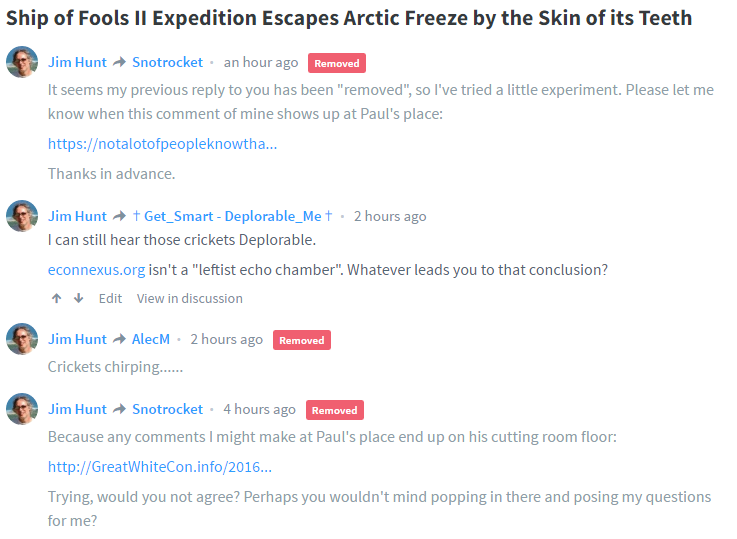
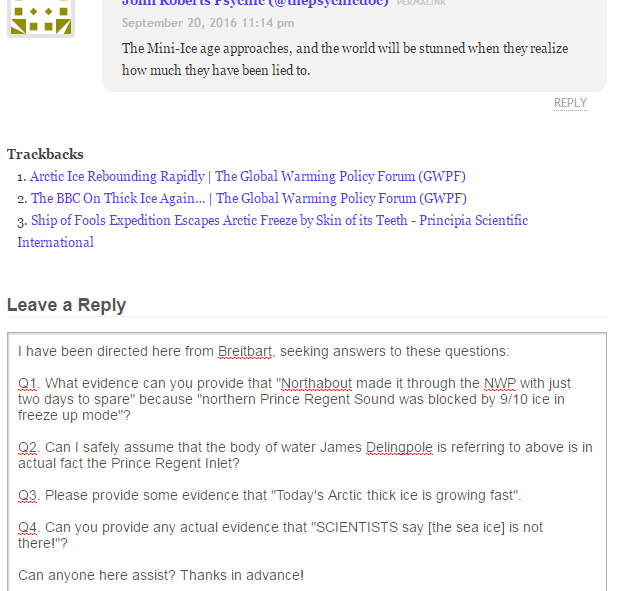
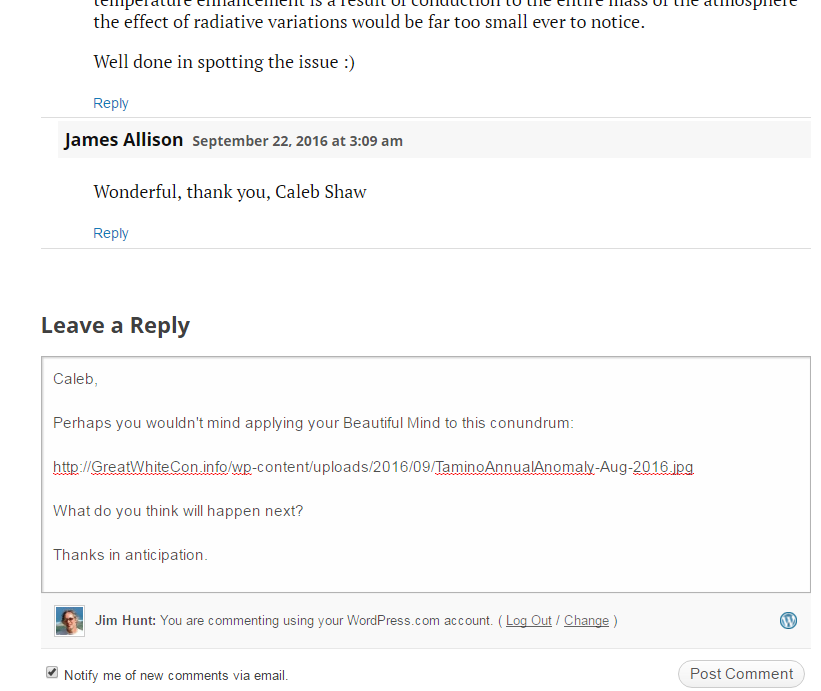
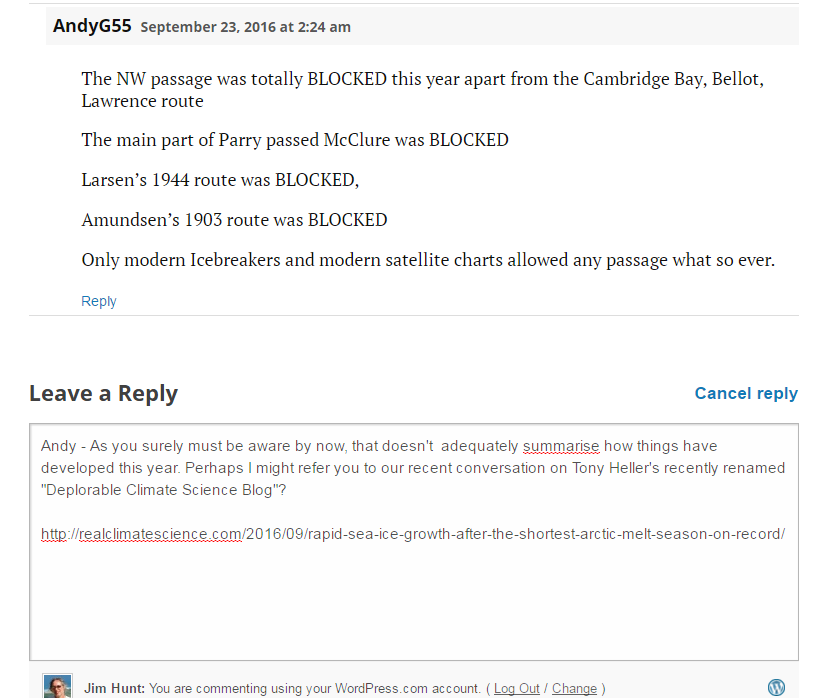
In other news Anthony Watts has today published a guest post about Arctic sea ice by one Caleb Shaw on his Watts Up With That blog. I thought I’d pose Paul and Caleb some relevant questions, but a team of Gremlins seem to have been hard at work stealing my pertinent comments before the assorted [mods] could approve them. By way of example, from Breitbart:
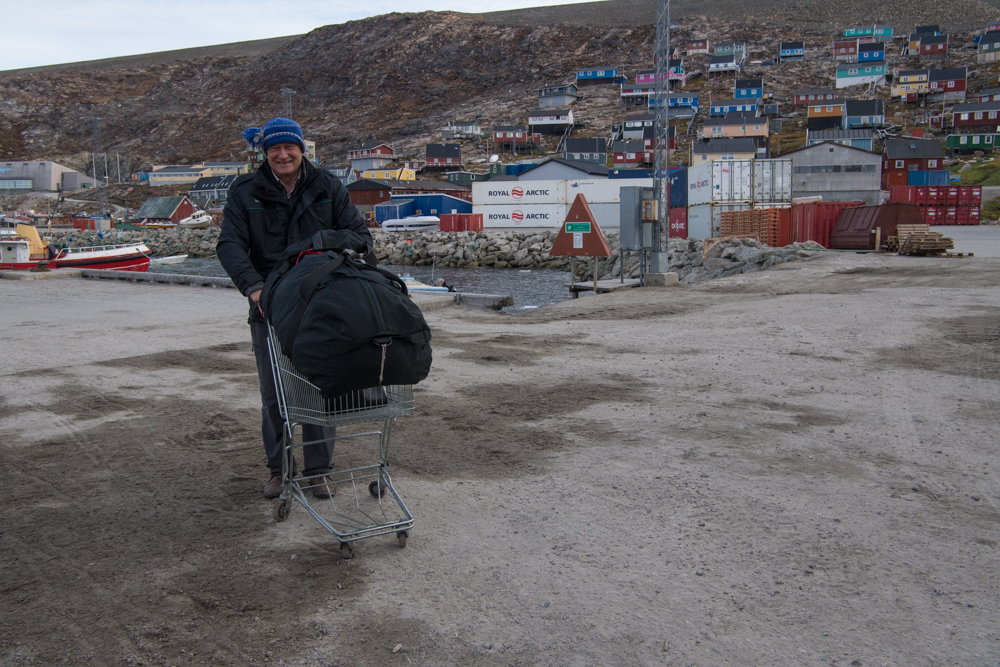
The BBC Radio 4 Today programme broadcast another one of their regular updates on the progress of the Polar Ocean Challenge expedition. On this occasion they were able to interview David Hempleman-Adams, the leader of the expedition. That’s because David disembarked from the yacht Northabout at Upernavik in Greenland:
By now David is back in Blighty, in Swindon to be precise. Here’s a brief extract from his interview with Sarah Montague this morning.
David pointed out that:
We’re not scientists. We weren’t collecting scientific data, and it’s wrong to suggest that our trip, this adventure, will show that there’s less ice. What we’re trying to do is make people more aware of the hundreds of scientists who are doing good work and who actually do show that.
At this juncture you might have supposed that one or more of those “hundreds of scientists” might have been mentioned, but you would have been wrong. Shortly thereafter Sarah asked David:
You will know though that the well known science writer Matt Ridley has written about your expedition and said look there are times in the past where routinely ice has disappeared during the summer, and his argument is that really it doesn’t matter, it doesn’t actually tell us anything.
I fondly imagine that at this juncture David raised his eyes to the heavens over Swindon. After all he’d already explained to Sarah that, rather like Matt Ridley, he isn’t a scientist. What he actually then said was:
Sure. You know I do know that he’s written that, and other people. But if you look on balance, and you know I’m just one of the general public, if you look on balance, if you look at 99% of the scientists they’re all saying that we’ve got a problem and if you look at the trends, and of course there are trends over the years but what we’re seeing now is really rapid change. If you look at the, as I said, the Northwest Passage it is quite frightening. We didn’t actually see any ice for the entire route up until the Lancaster Sound, which is worrying whatever scientists say or the naysayers say. It is a worrying trend.
And if you look at the cultures, I’ve been going up there for 30 years now, it’s not just sea ice. If you look at these small, little Inuit villages and seen the impact of the climate on some of these places, you know there’s been dramatic change over the last 30 years.
At which juncture Sarah thanked David Hempleman-Adams and Nick Robinson said:
The time is now 26 minutes past eight, and Rob’s got the sports news.
It’s nice to know where the BBC’s priorities lie, and that they prefer to publicise the views of a “coal baron” rather than one or more of “the hundreds of scientists who are doing good work” on the subject of sea ice.
Should you be wondering at this juncture how the opinions of Matt Ridley are at variance with the actual facts take a look at the August 29th article of his in The Times of London that Sarah Montague was referring to:
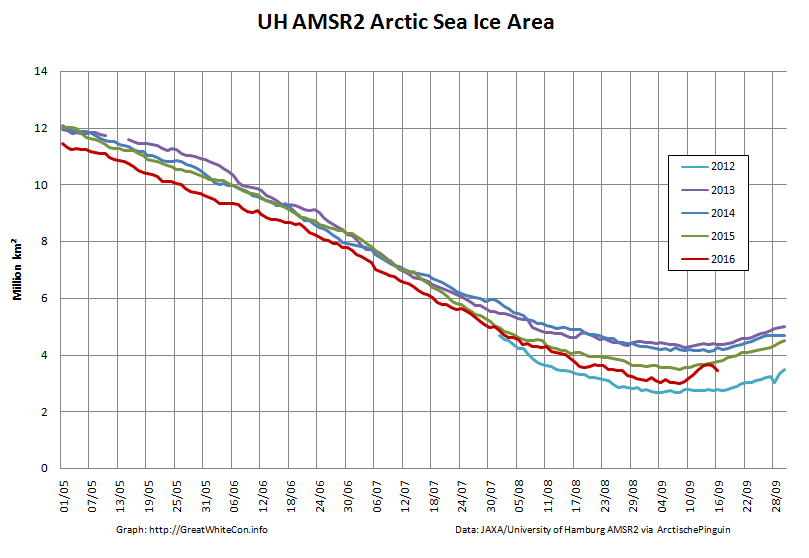
The sea ice in the Arctic Ocean is approaching its annual nadir. By early September each year about two thirds of the ice cap has melted, then the sea begins to freeze again. This year looks unlikely to set a record for melting, with more than four million square kilometres of ice remaining, less than the average in the 1980s and 1990s, but more than in the record low years of 2007 and 2012.
This will disappoint some. An expedition led by David Hempleman-Adams to circumnavigate the North Pole through the Northeast and Northwest passages, intending to demonstrate “that the Arctic sea ice coverage shrinks back so far now in the summer months that sea that was permanently locked up now can allow passage through”, was recently held up for weeks north of Siberia by, um, ice. They have only just reached halfway.
However it’s also extremely misleading. The yacht Northabout reached the International Date Line spot on the original Polar Ocean Challenge schedule, and earlier than previous successful polar circumnavigations managed to achieve.
Must I go on? I suppose so! Skipping several more untruths, a bit later Matt opines:
Would it matter if it did all melt one year? Here’s the point everybody seems to be missing: the Arctic Ocean’s ice has indeed disappeared during summer in the past, routinely. The evidence comes from various sources, such as beach ridges in northern Greenland, never unfrozen today, which show evidence of wave action in the past. One Danish team concluded in 2012 that 8,500 years ago the ice extent was “less than half of the record low 2007 level”. A Swedish team, in a paper published in 2014, went further: between 10,000 years ago and 6,000 years ago, the Arctic experienced a “regime dominated by seasonal ice, ie, ice-free summers”.
Here’s a thought for you to consider Matt. What was the population of London between 10,000 years ago and 6,000 years ago? How about Miami or the Big Apple, or Dhaka for that matter? Has it ever crossed your mind to enquire what the human population of the whole of Planet Earth was “during parts of the early and middle Holocene”, and what sea level around the World might have been at that time?
Answers on a postcard please, in the space provided for that purpose below. We’ll forward them on to the BBC. I don’t suppose Matt will be interested though.
Sarah Montague was interviewing David Hempleman-Adams about the Polar Ocean Challenge expedition to circumnavigate the Arctic. David pointed out that “We’re not scientists” and “What we’re trying to do is make people more aware of the hundreds of scientists who are doing good work”. If 3rd party comment was deemed necessary at this juncture then it should have included at least one of those “hundreds of scientists”. Not just Matt Ridley, whose recent article in The Times that Sarah was alluding to was riddled with factual errors, amongst its other failings. See above.
One can only assume that the BBC was attempting to achieve some sort of “balance”? They failed miserably. I’m a long ex academic, but for another perspective on that failure here’s one from a practicing astrophysicist:
Note also the comments. David Hempleman-Adams wasn’t even given adequate time to fully respond to the nonsense printed in The Times and regurgitated by BBC Radio 4 before it was “Rob’s got the sports news.”
As David put it “I’m just one of the general public”. If the BBC wanted to present a balanced report a specialist in the subject should have been invited to comment. There’s loads of them gathered in London as we speak:
Arctic sea ice is in the news, but what's really going on? Join us tmrw to dig into the details with the scientists: https://t.co/E3lc2PEG3u
Why not ask one of them for their views on declining sea ice? Helen Czerski works as a science presenter for the BBC doesn’t she? She may not be a sea ice specialist, but ask her for her opinion on this charade.
To summarise, either Matt Ridley has no idea what he’s talking about or he has an agenda. In either case reporting his views without adequate “balancing” comment badly lets down BBC Radio 4 listeners. How do you intend to remedy this?
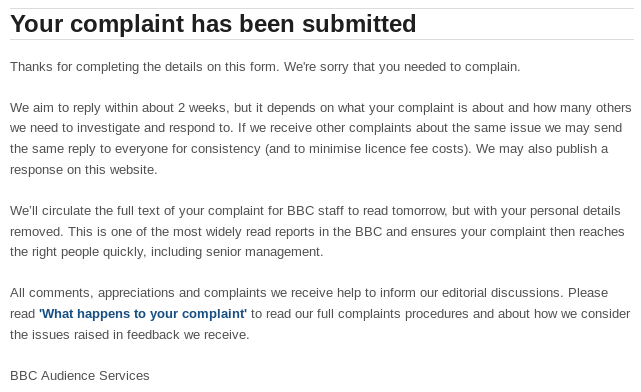
Here is the BBC’s response so far:
[Edit – September 27th]
I have now received an emailed response from the BBC. Here it is:
Thank you for contacting us regarding Radio 4’s ‘Today’ which was broadcast on 19 September.
I understand you felt that the interview with David Hempleman-Adams was of a poor quality, that you considered it inappropriate for Sarah Montague to quote from an article written by Matt Ridley and that a “specialist in the subject should have been invited to comment”.
We are naturally very sorry when we hear that members of our audience have been left disappointed with an interview. We try very hard to produce a wide range of high quality shows and services which we hope will appeal to listeners.
It is not always possible or practical to reflect all the various aspects of a subject within one individual item. Editors are charged to ensure that over a reasonable period they reflect the range of significant views, opinions and trends in their subject area.
We do not seek to denigrate any view or to promote any view. Our aim is always to provide enough information on the stories we cover and to let our listeners make up their own minds. Nevertheless, I would like to assure you that we value your feedback on this matter.
All complaints are sent to senior management and programme makers every morning and we included your points in this overnight report. These reports are among the most widely read sources of feedback in the BBC and ensures that your complaint has been seen by the right people quickly. This helps inform their decisions about current and future output.
Thank you once again for getting in touch.
BBC Complaints Team
NB This is sent from an outgoing account only which is not monitored. You cannot reply to this email address but if necessary please contact us via our webform quoting any case number we provided.
As you can probably imagine, I am far from satisfied with the Beeb’s response thus far!
[Edit – September 28th]
Shock News! I’ve received another communication from the BBC!! In fact I received it twice!!! Here is what it says:
Dear Mr. Hunt
I’m Sam Smith, Head of BBC Audience Services – thank you for getting in touch with the BBC recently.
I wonder if you’d be interested in taking part in a short survey?
It’s to learn more about how you got on, and how we can improve.
All feedback – good or bad – gets passed back to the person that handled your contact.
The survey is carried out by an independent agency called ICM. It takes around 10 minutes to complete, and you just need to click the link below or paste it into your browser:
[Link redacted]
(ICM is a member of the Market Research Society and abides by its strict code of conduct at all times. You will not receive any emails, sales calls or literature as a result of taking part in this survey, and your personal data will only be used for the purpose of helping us to understand our audiences better. If you have any difficulties with the survey, please e-mail [email protected])
Thanks again – we’d love to hear from you.
Sam Smith
Head of BBC Audience Services
Ps. It’s not possible to reply to this address, but please use one of our webforms – quoting your case number – if you need anything else.
Am I “interested in taking part in a short survey”?
[Edit – September 29th]
As luck would have it I decided that I was interested:
Them:
Please tell us in detail why you decided to contact the BBC.
Please think about what made you decide to get in touch, why this was important to you, and what you hoped would happen as a result.
Us:
Quoting from my original complaint, I have already published my thoughts on the matter:
“At this juncture you might have supposed that one or more of those “hundreds of scientists” [mentioned by David Hempleman-Adams] might have been mentioned, but you would have been wrong.”
“Should you be wondering at this juncture how the opinions of Matt Ridley are at variance with the actual facts take a look at the August 29th article of his in The Times of London that Sarah Montague was referring to.”
“To summarise, either Matt Ridley has no idea what he’s talking about or he has an agenda. In either case reporting his views without adequate “balancing” comment badly lets down BBC Radio 4 listeners. How do you intend to remedy this?”
I “hoped for” a substantive answer to that final question. I have yet to receive one!
Them:
When you decided to contact the BBC, what did you think would happen next?
Please think about who you expected to respond, what information you expected the response to provide and what you expected would happen as a result.
Us:
Based on my past experience I expected another “canned” reply and no substantive response:
Thus far my exceedingly limited expectations have been fulfilled exactly!
Them:
Please tell us a bit more about what you thought about the response you received.
You may like to think about the language used, the tone of the response, what information it gave you, and what you thought was good about it.
Us:
See my previous responses.
There was nothing good about it.
Them:
What, if anything, could have been better about the response you received?
Please think about any aspect which could be improved – for example the tone of the response, the level of detail it gave, and anything you thought was missing.
Us:
The novelty of these questions is wearing off.
See my previous responses.
A substantive answer to my final question would have improved the BBC’s response.
Them:
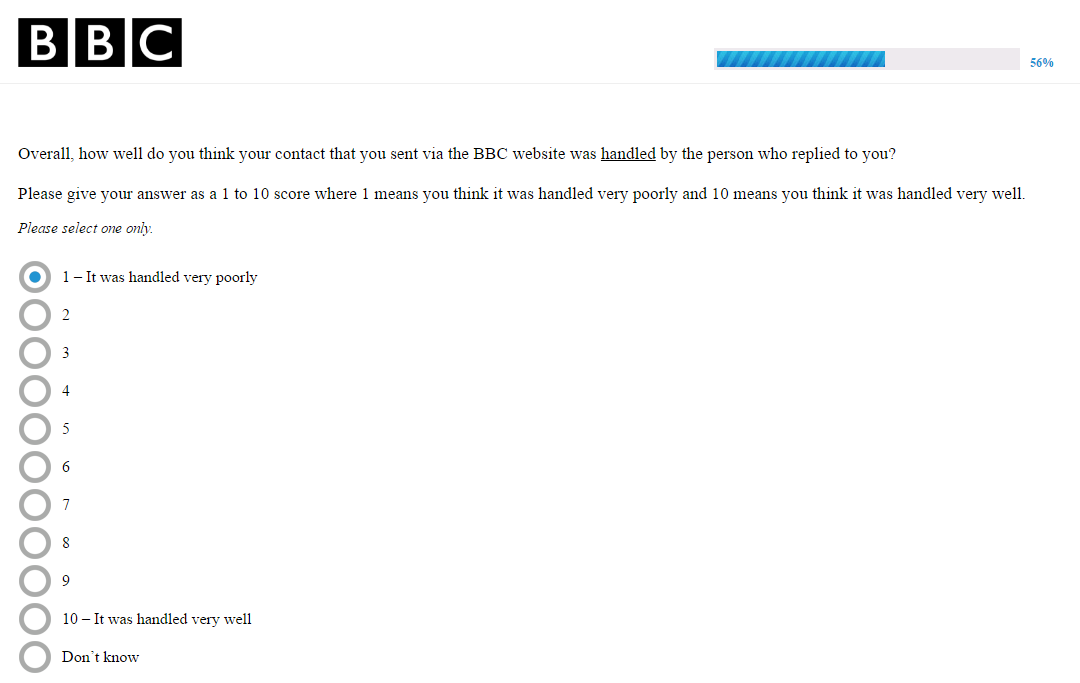
How would you rate the response you received on the following attributes? Please rate each attribute out of 10 where 1 is ‘strongly disagree’ and 10 means ‘strongly agree’.
Please remember we are asking you to rate the specific response you received and not any other aspect of the BBC, such as its programming.
Us:
Them:
Finally, are there any other comments you would like to make about your contact experience with the BBC that we haven’t covered, or any comments you would like to make about this survey?
Us:
Yes. I’d like to ask two questions:
1) What is the point of all the “intrusive” questions I’ve just been asked?
2) Why hasn’t the BBC provided a substantive answer to the final question in my original complaint?
Them:
Thank you for taking the time to complete this questionnaire.
To exit the questionnaire you can either navigate to another website or close this window.
Us:
We’ll keep you posted!
This website uses cookies to improve your experience. We'll assume you're ok with this, but you can opt-out if you wish. Cookie settingsACCEPT
Privacy & Cookies Policy
Privacy Overview
This website uses cookies to improve your experience while you navigate through the website. Out of these, the cookies that are categorized as necessary are stored on your browser as they are essential for the working of basic functionalities of the website. We also use third-party cookies that help us analyze and understand how you use this website. These cookies will be stored in your browser only with your consent. You also have the option to opt-out of these cookies. But opting out of some of these cookies may affect your browsing experience.
Necessary cookies are absolutely essential for the website to function properly. This category only includes cookies that ensures basic functionalities and security features of the website. These cookies do not store any personal information.
Any cookies that may not be particularly necessary for the website to function and is used specifically to collect user personal data via analytics, ads, other embedded contents are termed as non-necessary cookies. It is mandatory to procure user consent prior to running these cookies on your website.