Category Archives: News

Koonin’s Unsettled Science – The Movie(s)

We have previously mentioned the Wall Street Journal’s assorted activities promoting the new book by Steven E. Koonin which possesses the rather long winded title of “Unsettled: What Climate Science Tells Us, What It Doesn’t, and Why It Matters.”

We further speculated that assorted things that climate science tells us which Dr. Koonin neglected to mention in his book would also not appear in moving pictures expounding his “message”. That has indeed proved to be the case. You can see a copy of the book in question handily placed on a bookshelf behind Steve Koonin in this interview with Paul Gigot for the Wall Street Journal:

By way of introduction Paul enquires:

What isn’t settled in your mind?

Steve responds:

What isn’t settled is how the climate is going to respond to growing human influences, and how that response will affect society and ecosystems.

A little later Paul asserts that:

There’s no question that fossil fuel extraction and burning adds carbon dioxide and methane and other things into the atmosphere. Is the issue just how the interactions work and how much warming they will cause? I mean Al Gore keeps telling us for example that if you look at the graph of CO2 emissions it’s going up, therefore there’s a direct correlation between that and temperature. I think you’re saying “that’s not true”?

to which Steve responds:

That’s not true! For example, when you look at the record global temperature went down between 1940 and 1970 even as greenhouse gases increased. That’s got to tell you immediately that things are a little more complicated than just greenhouse gases are warming the Earth.

So there you have it. Al Gore is a mere straw man, easily knocked down with a cherry pick without even bothering to mention any of the underlying science.

Paul moves on to mention in passing our favourite topic here at the Great White Con:

Now what about the idea that if we continue to warm you’re seeing all these consequence in terms of much more severe weather events, you’re seeing rising oceans, you’re seeing the melting of the polar ice caps. All of that sort of blends together into a kind of disastrous scenario. Are you saying that those are also just simply exaggerated?

Steve responds eagerly:

Yes they are! And let me give you some factoids.

Unsettlingly none of the factoids he gives us mention Arctic sea ice, a topic which Professor Koonin appears to be strangely ignorant of. Perhaps that’s because whichever way you try to slice and dice it that’s still the ultimately unavoidable giant canary in the climate coal mine?

[Edit – May 11th]

Needless to say Steve Koonin has also been interviewed by Tucker Carlson for Fox News. Needless to say the clip once again opens with a speech by that well known climate scientist, Joe Biden. Needless to say there is no mention of the giant canary in the Arctic coal mine once again. Tucker makes no reference to Greenland either, which does at least merit a mention in Steve’s book. Take a look:

Tucker opens his questioning with:

A hurricane will arise out of the Caribbean. We’ll have a heat wave. We’ll have a cold snap. All of them are attributed reflexively to climate change. How certain can we be that climate change causes those events?

Steve responds:

When you read the official reports from the UN and the US Government you find some surprises. For example, even though the globe has warmed by about 2 degrees Fahrenheit over the last century the incidence of heat waves across the 48 states is no greater than it was in 1900, and the highest temperatures haven’t gone up in 60 years.

We have been able to find no detectable influence on hurricanes from humans, and the models that we use to predict future climates have become more uncertain even as they’ve become more sophisticated. All of these things suggest that people who say that “we’ve broken the climate” and face certain doom unless we take drastic action are just misinformed about what the official reports actually say.

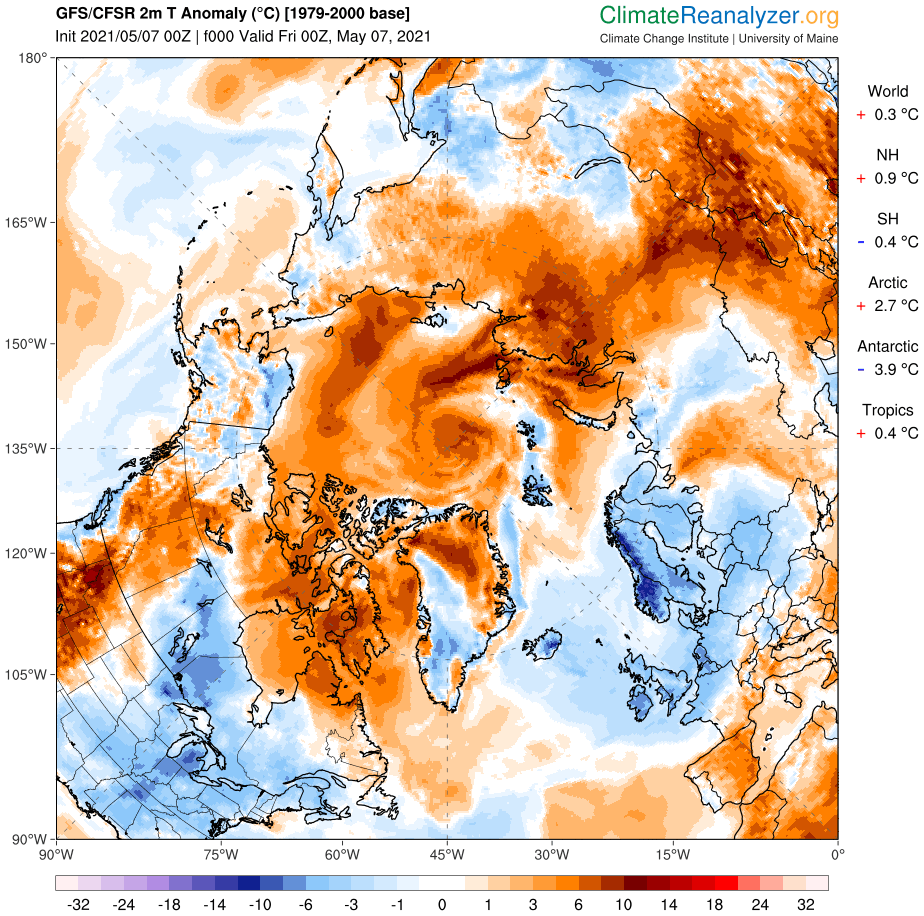
Despite the fact that Fox display some stock footage of sea ice during the interview, Tucker and Steve seem strangely unaware that those 48 states do not constitute the entire globe, or that there was a 2.7 degrees Celsius “heat wave” in the Arctic even as the interview was being conducted:

A little later in the interview Steve says:

We need to have an accurate portrayal of what we know and what we don’t know, and then we can have the debate about what to do about it, without using science as a weapon.

Sadly Steve seems strangely unaware that evidently you’re not going to get the accurate portrayal he recommends via Fox News!

[Edit – May 14th]

Steven Koonin has also been interviewed on CNBC’s Squawk Box, where Joe Kernen’s introduction gives you a strong flavour of what’s to come:

Corporations are spending billions to reduce their so called carbon footprint. President Biden’s infrastructure plan is loaded with subsidies for green industries. In fact if the new green deal ever was passed it wouldn’t be billions, it would be trillions.

Our next guest questions the conventional wisdom on climate science and it’s impact on business and the US economy. Steven Koonin served as the chief scientist in the Obama energy department, and is currently a professor at NYU and the author of “Unsettled: What Climate Science Tells Us, What It Doesn’t, and Why It Matters” :

Steve begins by assuring Joe’s audience that:

Everything I’ve written in this book comes almost directly from the official UN and US Government assessment reports, so this is not Steve talking really, but it is the consensus science.

For some strange reason Steve neglected to include the phrase “ignored and/or cherry picked” in front of “official UN and US Government assessment reports”. He then spouts his by now familiar schtick about “heatwaves in the US”, “hurricanes” and “global wildfires”. Joe then moves the conversation on to the economy:

Will there be an unnecessary negative effect on GDP, on corporations, if they pursue this when it’s not really necessary?

To which Dr. Koonin, as Joe calls him, responds:

I like to say you change the energy system by orthodonture rather than tooth extraction. And so if we do want to reduce carbon emissions we need to do it at a more thoughtful pace and in a more thoughtful way than is being proposed, and moreover we need to get the rest of the world to come along with us if it’s going to have any impact at all…

As [John] Kerry has said, unless the rest of the world comes along US efforts are futile.

So yet again no mention of the IPCC’s “consensus science” regarding Arctic sea ice or even the Greenland Ice Sheet. I cannot help but wonder where Steve’s talking head will appear next on United States’ viewers screens, but on past performance it seems unlikely that the cryosphere will merit a mention.

Watch this space!

Allegedly “Unsettled Science” by Steven Koonin et al.

In our recent article about the forthcoming G7 Summit in Cornwall we suggested that:

Climate change is top of the G7 agenda along with Covid-19, and you can rest assured that vested interests will not miss any opportunity to promote those interests over the next two months and beyond.

That has indeed proved to be the case! Let us count the ways.

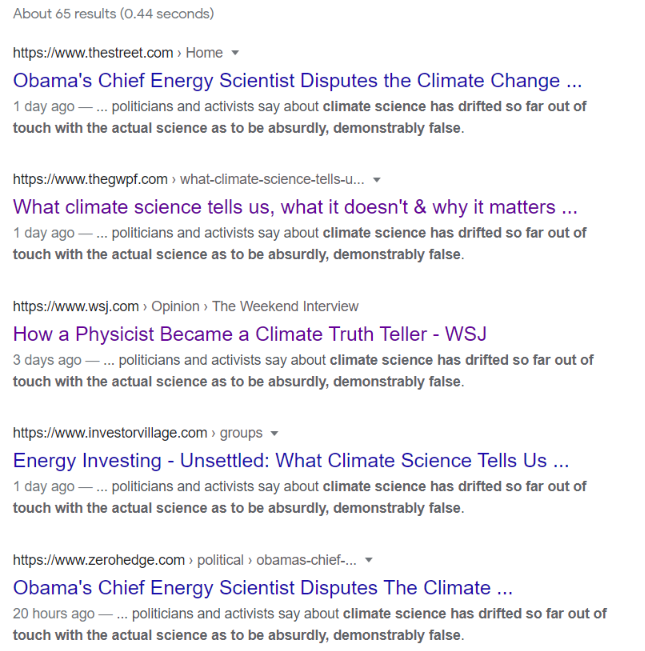
Steven Koonin’s new book “Unsettled: What Climate Science Tells Us, What It Doesn’t, and Why It Matters” is being promoted (left?), right and centre by a veritable cornucopia of the usual suspects. In an endeavour to explain (to the mythical (wo)man in the street?) the ways in which “A lie will fly around the whole world while the truth is getting its boots on” I’ve performed a Google search for the phrase “climate science has drifted so far out of touch with the actual science as to be absurdly demonstrably false” by way of a demonstration:

65 “demonstrably false” clones of the WSJ article, and counting……

[Edit – April 24th]

This morning’s update on my “demonstration” Google search.

There are now 241 “demonstrably false” Kooninism clones, and counting……

Continue reading Allegedly “Unsettled Science” by Steven Koonin et al. →

Stop Attempts To Criminalise Nonviolent Climate Protest?

It may not have come to your attention yet, but a long list of over 400 climate scientists have recently signed an “open letter” to the UK and other Governments requesting:

As academics researching climate and environmental change, we have been encouraged to see increased focus on climate in politics and society in recent years. Considering the current trajectory of planetary change, such attention is welcome, even though action is still lacking. We know that our research alone was not enough for this recent awakening to climate breakdown as an existential crisis for humanity, and recognise that protest movements around the world have raised the alarm…

But around the world today, those who put their voices and bodies on the line to raise the alarm are being threatened and silenced by the very countries they seek to protect. We are gravely concerned about the increasing criminalisation and targeting of climate protestors around the world…

With the upcoming Conference of the Parties of the UN Climate Change Convention (COP26) in Glasgow, and the urgency for global action accelerating as global warming already reaches 1.2°C, 2021 is a critical year for climate governance. It has become abundantly clear that governments don’t act on climate without pressure from civil society: threatening and silencing activists thus seems to be a new form of anti-democratic refusal to act on climate.

See for example this tweet from “Scientist Rebellion”, the militant academic wing of Extinction Rebellion UK?

The signatories to the open letter include a long list of well known names:

We, the undersigned, therefore urge all governments, courts and legislative bodies around the world to halt and reverse attempts to criminalise nonviolent climate protest.

  • Professor Julia Steinberger, Universities of Lausanne & Leeds
  • Dr Oscar Berglund, University of Bristol
  • Distinguished Professor Michael Mann, Penn State University
  • Professor Piers Foster, University of Leeds
  • Dr Leah Goldfarb, Universite Paris Saclay
  • Professor Catherine Mitchell University of Exeter
  • Dr Peter Gleick, Pacific Institute
  • Professor Stefan Rahmstorf, University of Potsdam

etc. etc.

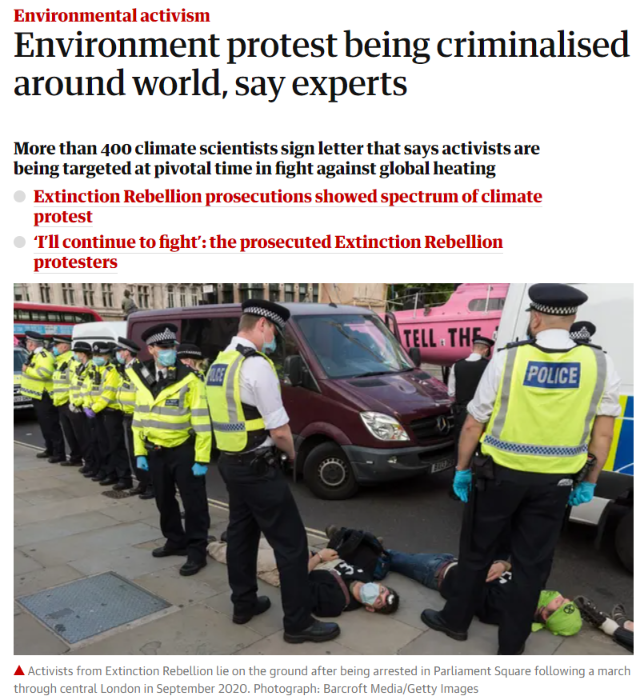
On Monday the Guardian newspaper published an article about the climate scientist’s open letter:

That article has now disappeared from public view:

Continue reading Stop Attempts To Criminalise Nonviolent Climate Protest? →

Facts About the Arctic in April 2021

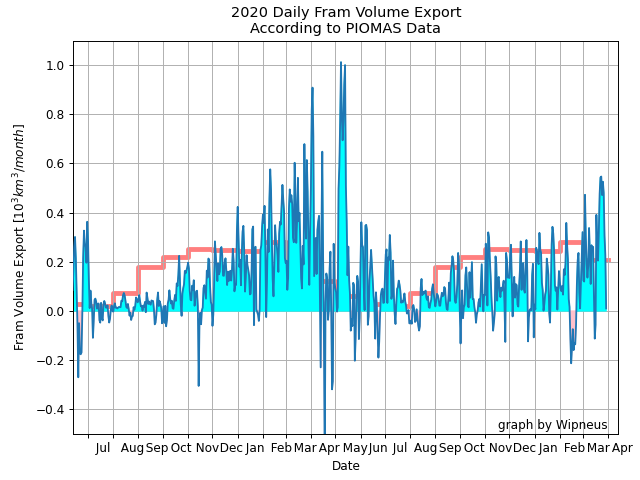
As part of his March PIOMAS gridded sea ice thickness update Wipneus also produced this graph of sea ice export from the central Arctic via the Fram Strait:

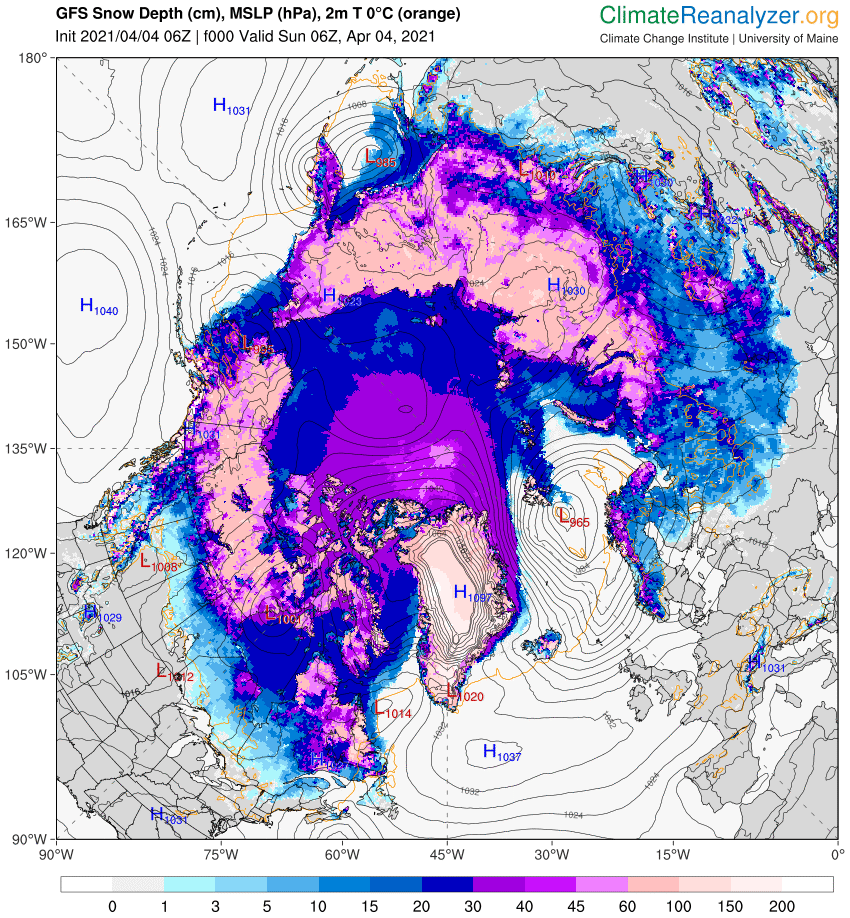
So far this winter export has been remarkably subdued, but that has now changed. A persistent dipole with high pressure over Greenland and low pressure over the Barents Sea is generating strong northerly winds in the Fram Strait, and even bringing some April snow showers to South West England:

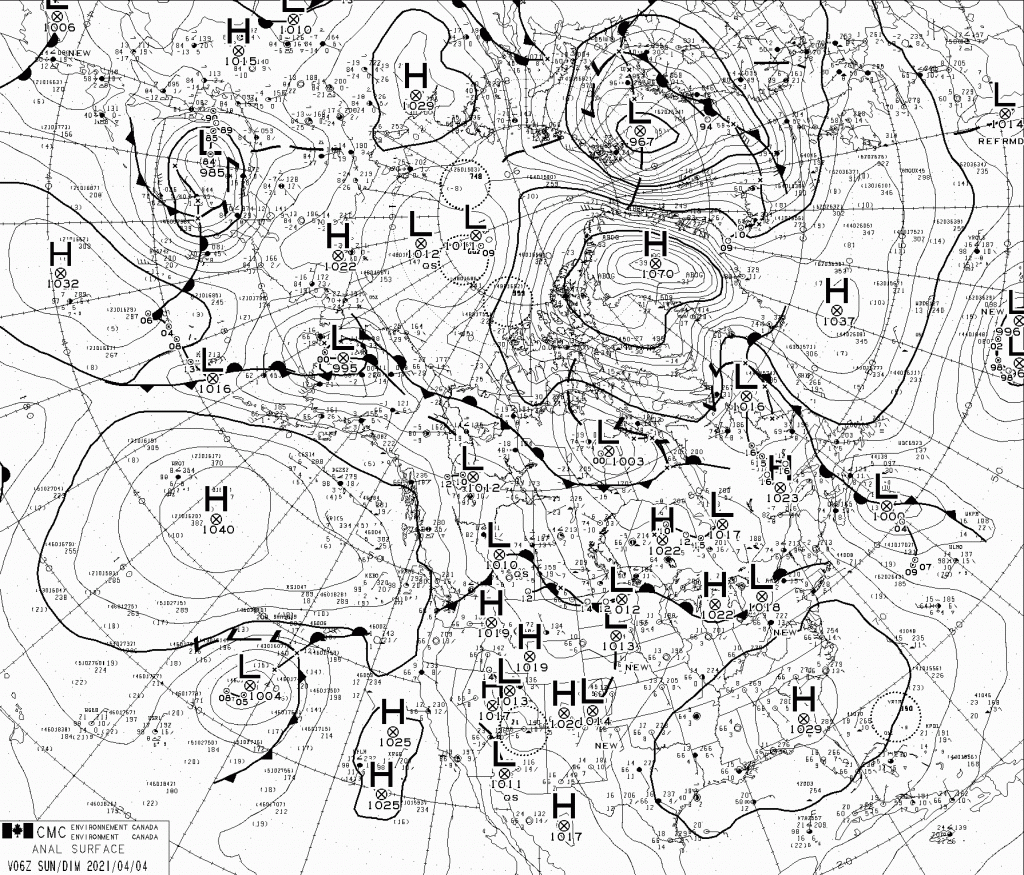
Precisely how high the pressure has been over Greenland is the subject of much debate. See for example this discussion on the Arctic Sea Ice Forum about whether a new world high pressure record has just been set. Different weather forecasting models have come to very different conclusions about the mean sea level pressure of a high pressure area situated over the Greenland ice sheet, which reaches an altitude of over 3,000 metres. Here’s GFS for example, showing 1097 hPa at 06Z on April 4th:

whereas the Canadian Meteorological Centre synopsis for the same time shows a mere 1070 hPa:

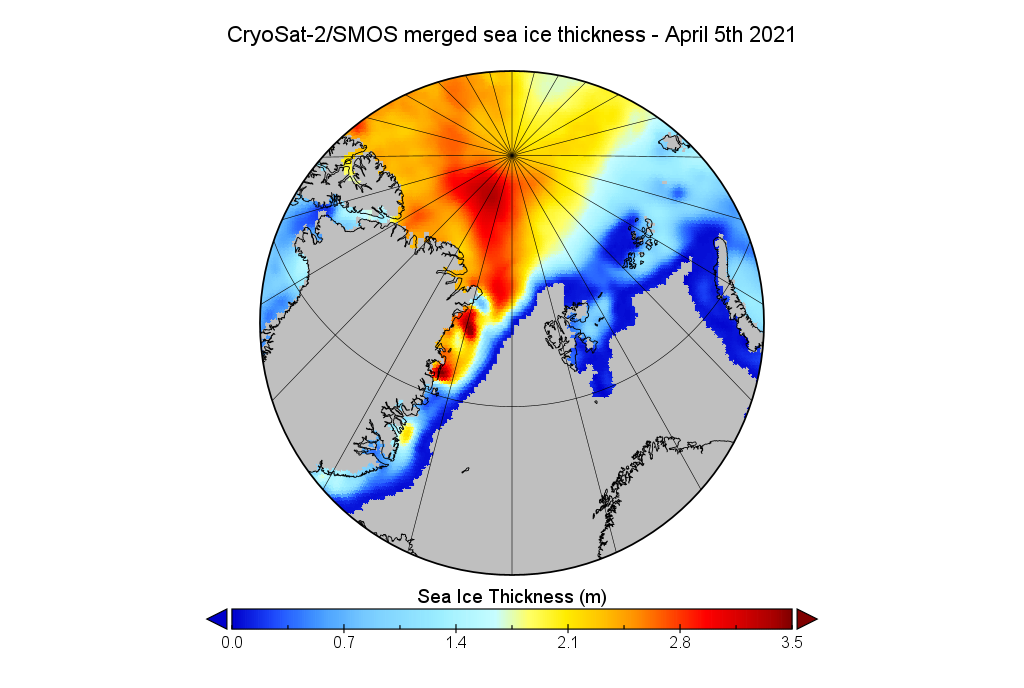
At least all the assorted models agree that the isobars are closely packed over the Fram Strait, and hence some of the thickest sea ice remaining in the Arctic is currently heading towards oblivion in the far north Atlantic Ocean:

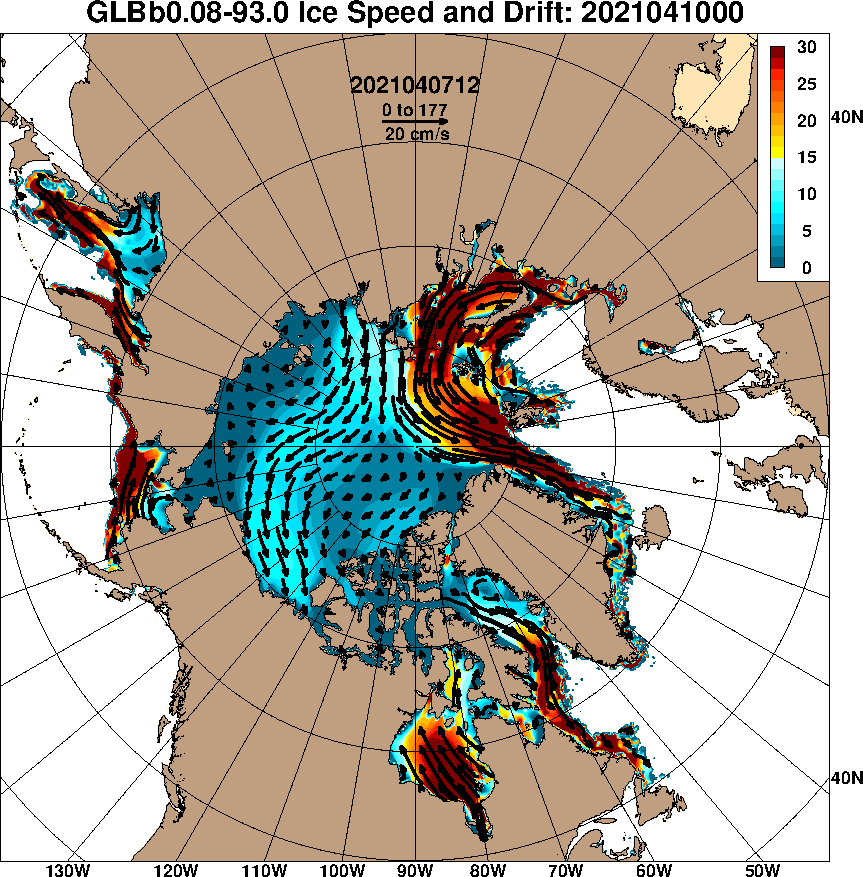
Here’s the US Navy’s sea ice drift forecast for Saturday 10th:

Continue reading Facts About the Arctic in April 2021 →

Facts About the Arctic in November 2020

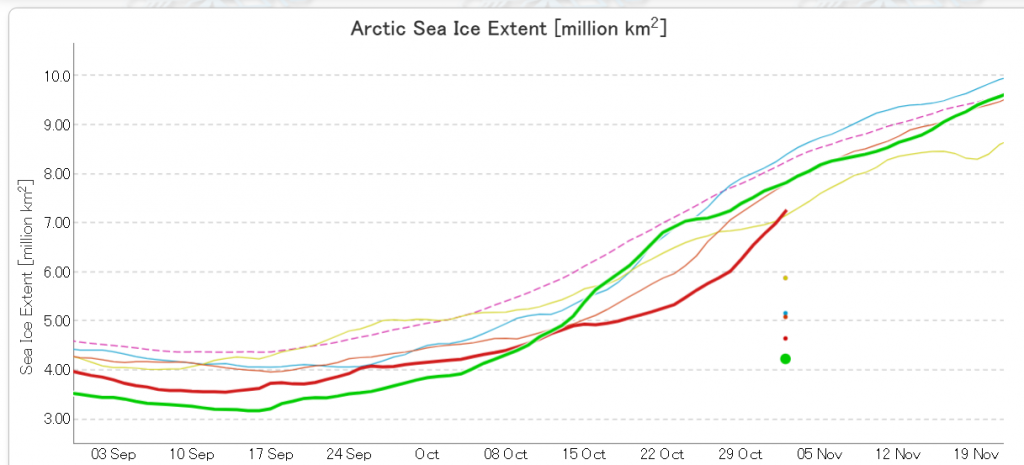
Arctic sea ice volume is of course far more important in the grand scheme of things. However sea extent is easier to measure, and the JAXA AMSR2 flavour thereof has now nudged into second place for the date above 2016:

[Edit – November 4th]

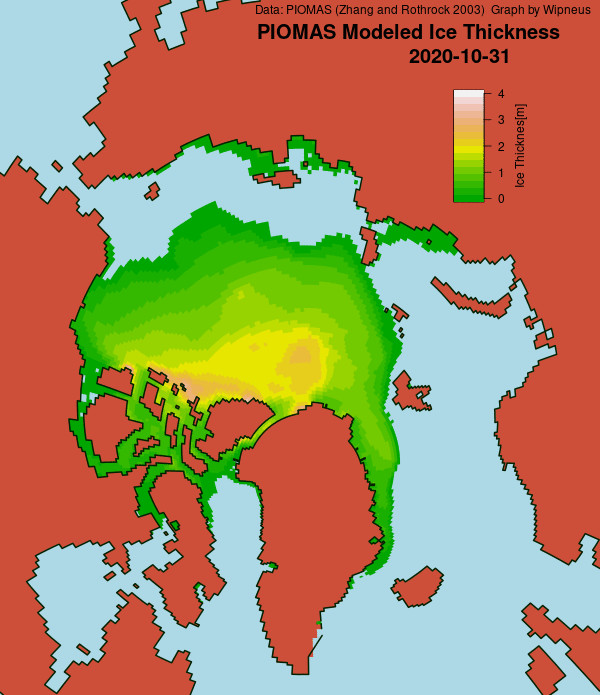
The PIOMAS gridded thickness numbers have been released, to reveal this end of October thickness map:

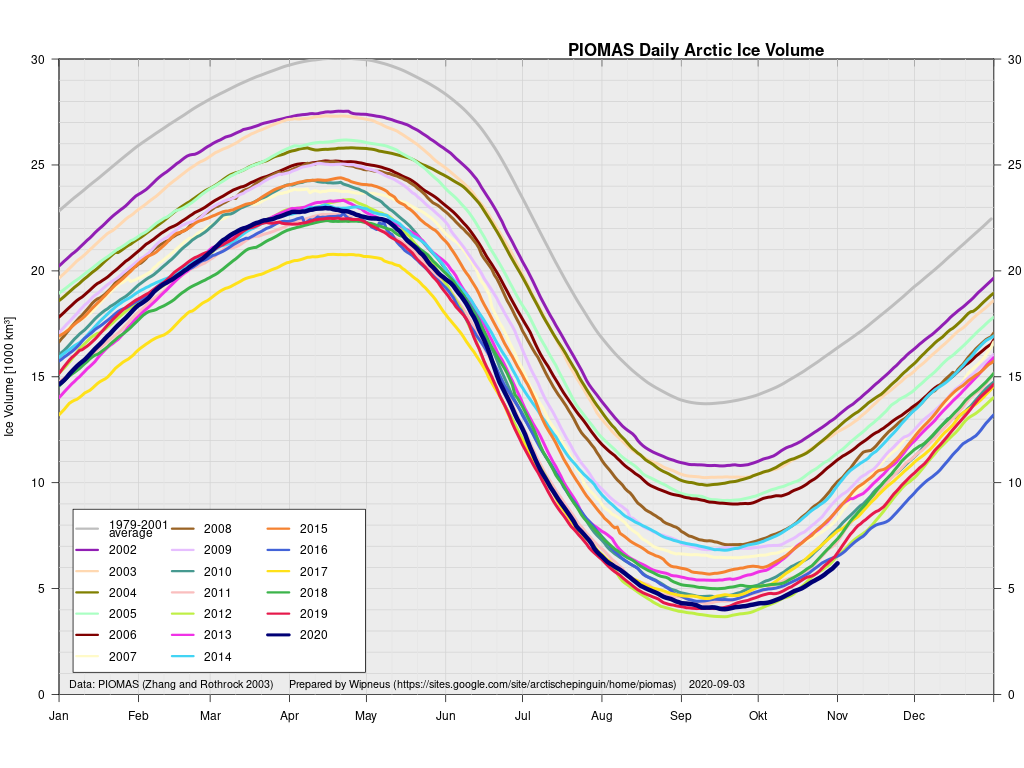
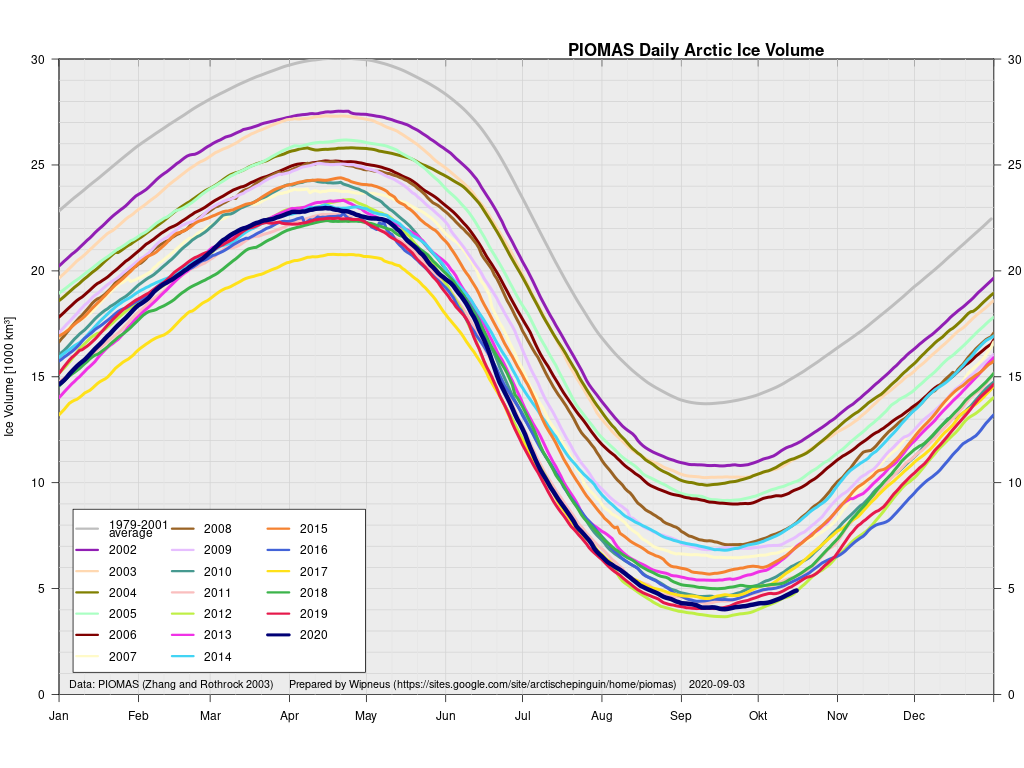
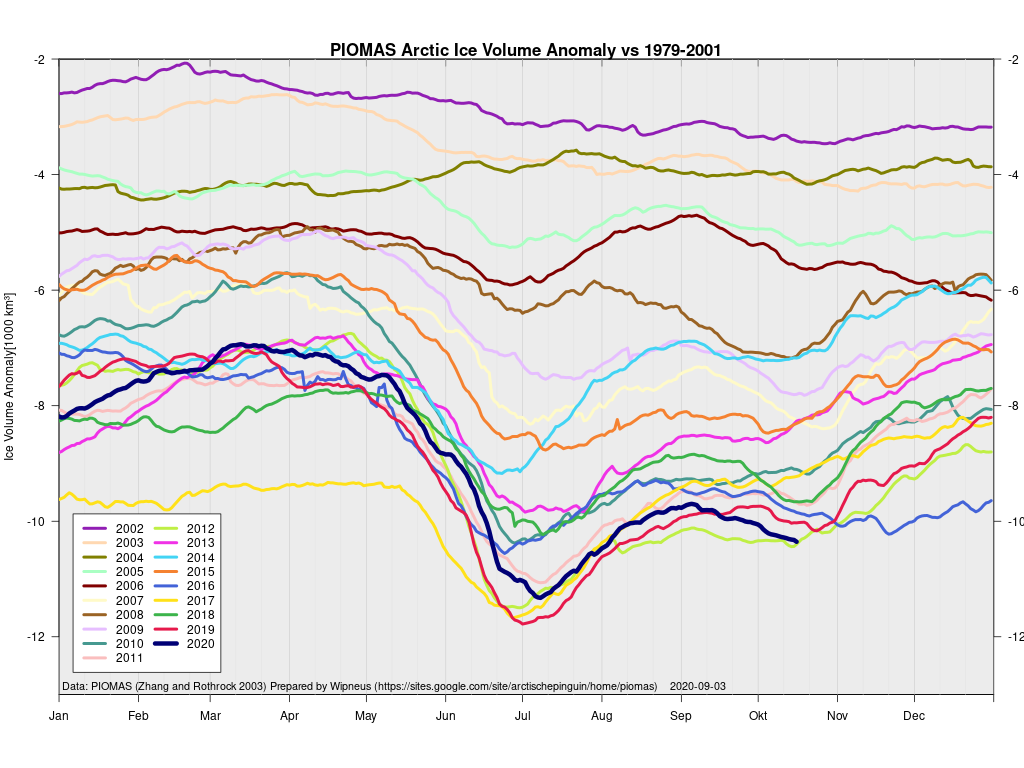
and these calculated volume graphs:

These show Arctic sea ice volume to be lowest for the date, even if extent has slipped into 2nd place.

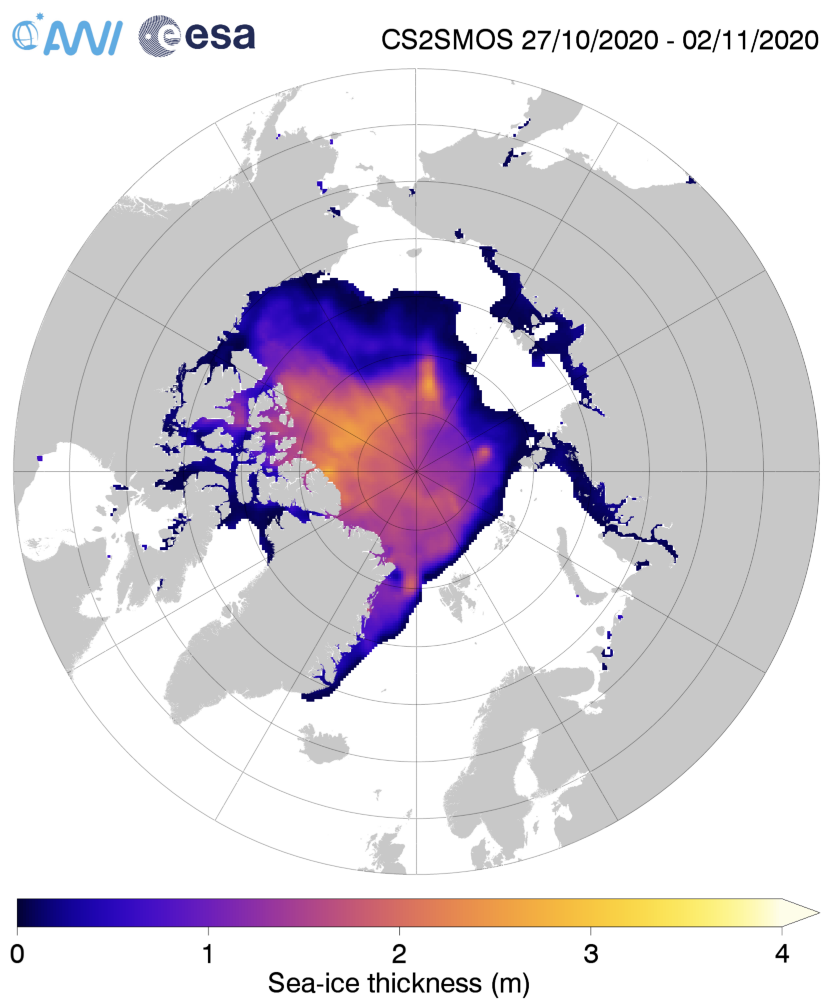
For comparison purposes here too is the latest AWI CryoSat-2/SMOS merged thickness map:

Continue reading Facts About the Arctic in November 2020 →

Facts About the Arctic in October 2020

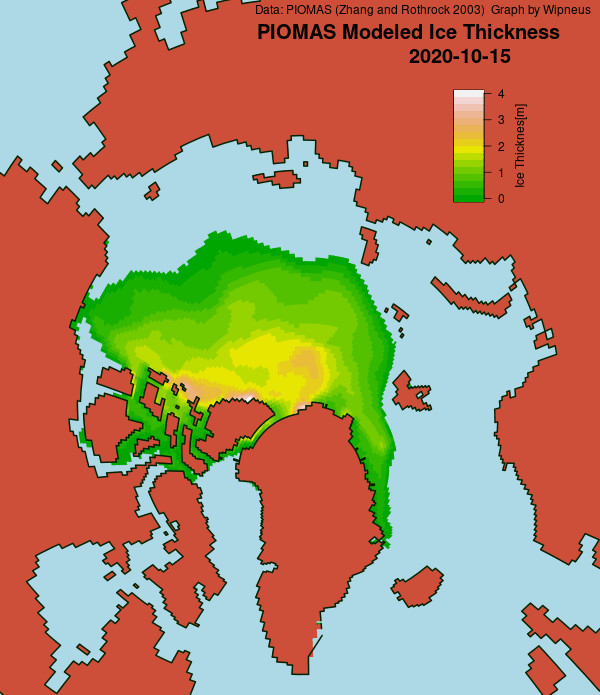
Let’s start this somewhat belated article by looking at Arctic sea ice volume. The mid month PIOMAS gridded thickness numbers have been released to reveal these volume graphs:

Minimum volume for 2021 was 4.03 thousand km3 on September 17th, 2nd lowest in the PSC record.

Modelled volume is now in a “statistical tie” with 2012 for lowest on record for mid October. Here too is the PIOMAS thickness map:

Meanwhile for comparison purposes here is the first merged Cryosat-2/SMOS thickness map of the 2020/21 freezing season, hot off the presses at the Alfred Wegener Institute:

Continue reading Facts About the Arctic in October 2020 →

Facts About the Arctic in September 2020

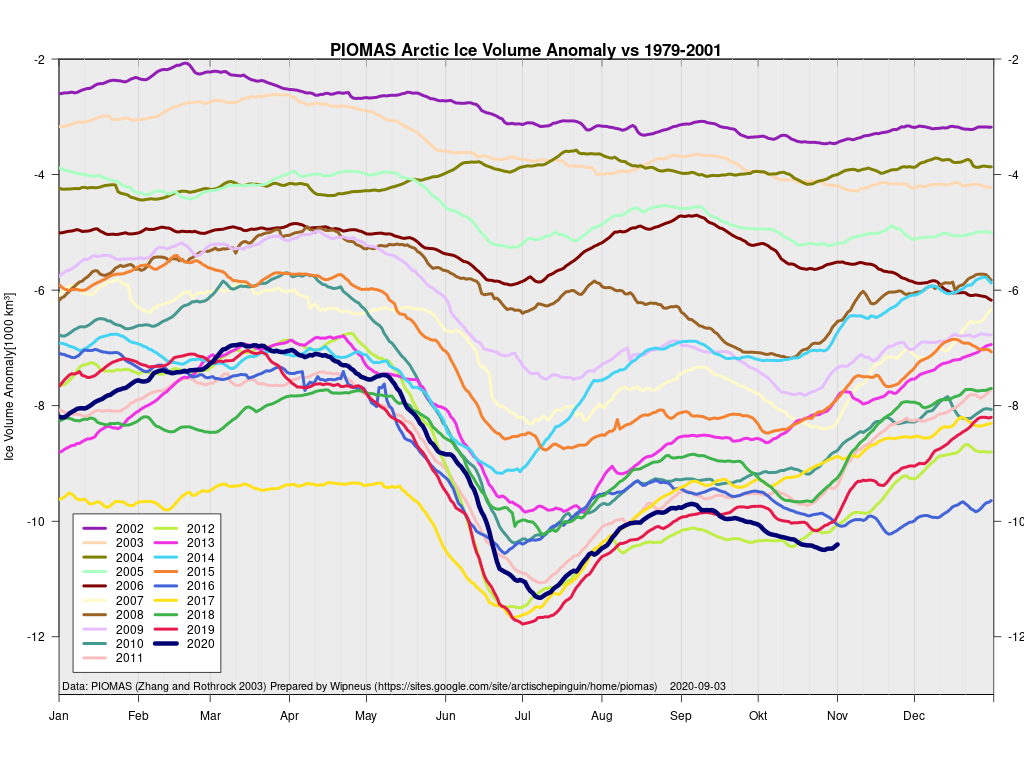
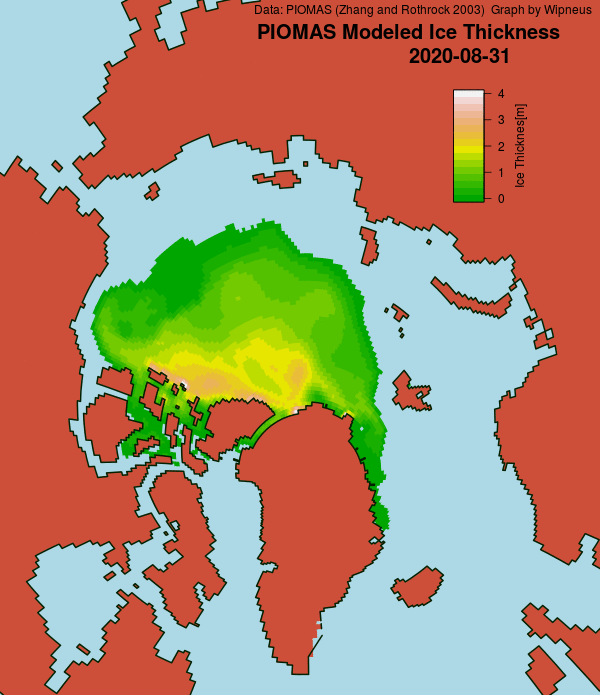
A detailed dissection of the 2020 minimum of various Arctic sea ice extent metrics can be found on a dedicated thread. All other Arctic news in September will be found below. As is usually the case, let’s set the ball rolling by taking a look at Wipneus’s visualisations of the August PIOMAS gridded thickness data:

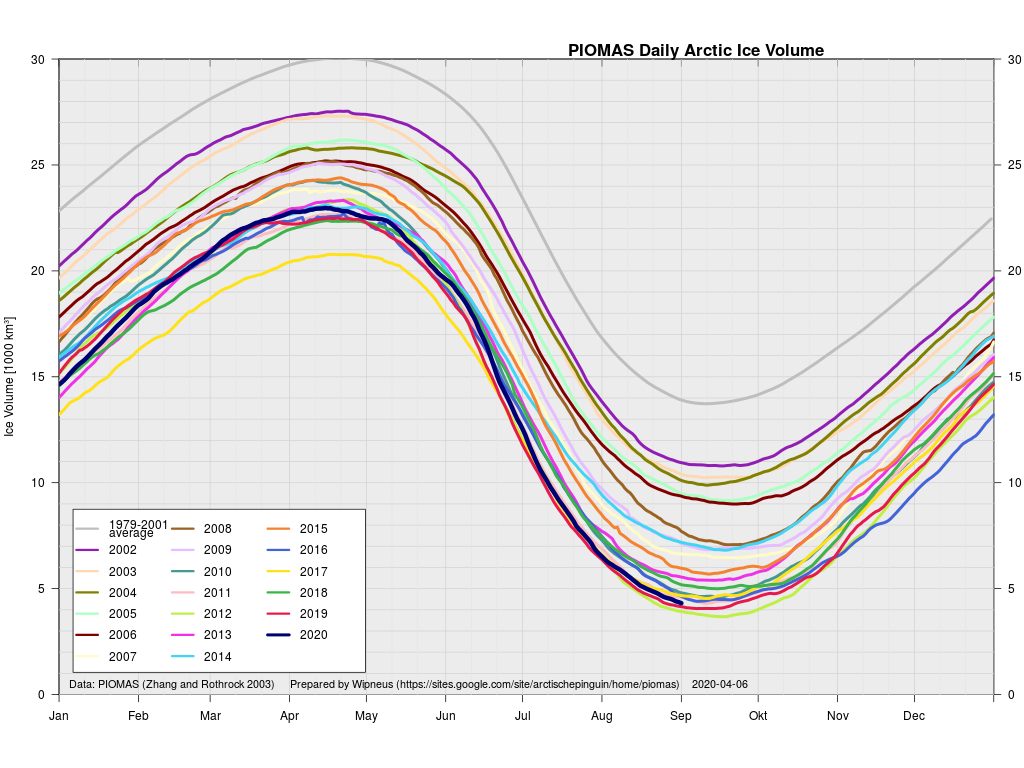
together with the computed volume:

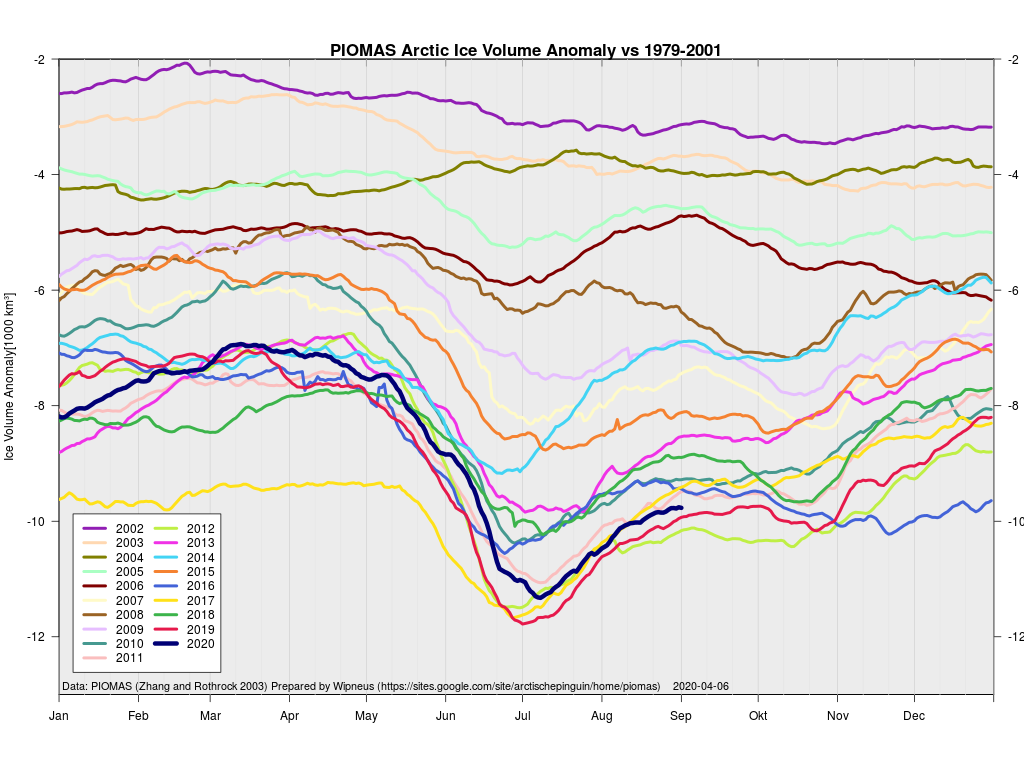
and anomaly graphs:

PIOMAS volume at the end of August was still firmly in 3rd place behind 2012 and 2019.

Continue reading Facts About the Arctic in September 2020 →

The 2020 Arctic Sea Ice Minimum Extent

I’ve been waiting for the results of the ARCUS SIPN August call, but despite the timetable specifying “26 August 2020 (Wednesday)” they’ve still not been published and I can wait no longer!

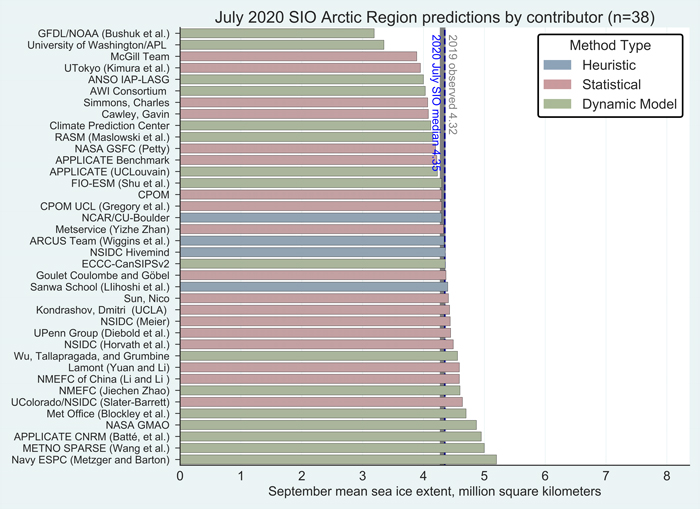
Hopefully the August “predictions” will be available soon, but for the moment let’s take a look at the July 2020 Sea Ice Outlook instead:

For the Arctic, the median July Outlook for September 2020 average sea-ice extent is 4.36 million square kilometers, essentially identical to the median prediction in the June report, with quartiles of 4.1 and 4.6 million square kilometers. For comparison, the historical record September low over the period of satellite observations was set in 2012 at 3.57 million square kilometers, and the second lowest record was 4.27 million square kilometers set in 2007. This year’s projection is close to the 2019 observed September sea-ice extent of 4.32 million square kilometers. As was also the case for the June report, only two of the outlooks project September sea-ice extent below the 2012 record. The consensus judgement against a new record low September sea-ice extent hence remains unchanged. Interestingly, as of this report, observed extent stands at a record low for this time of year.

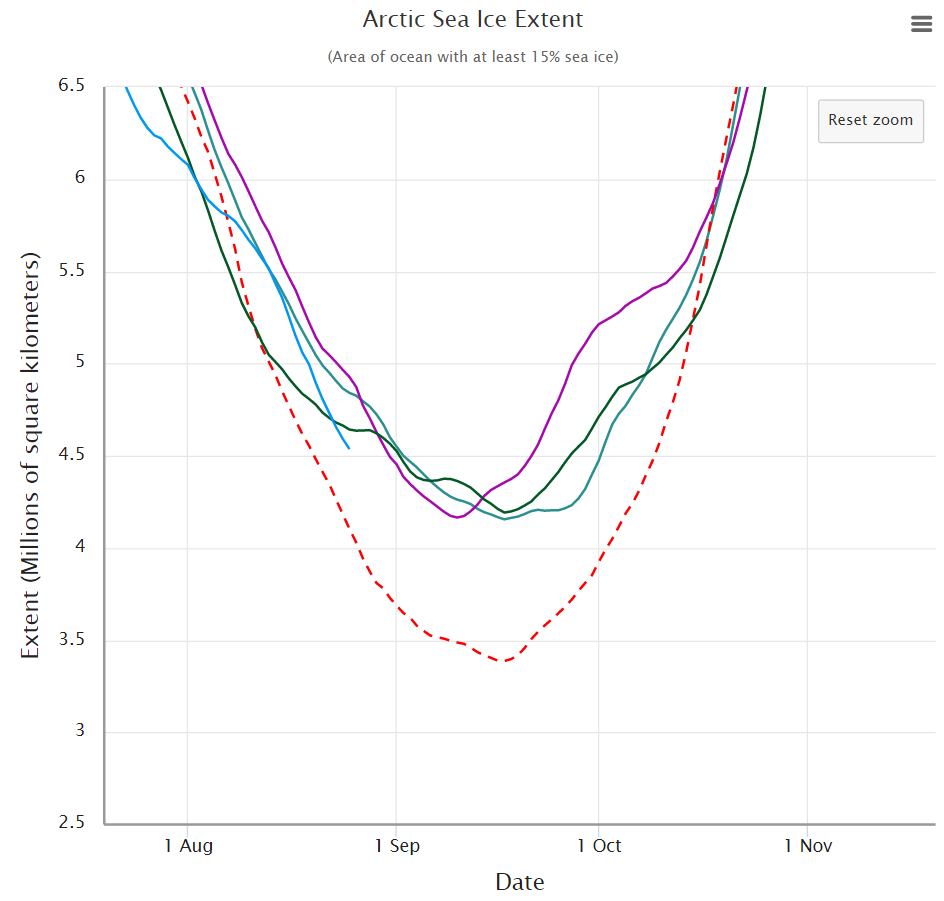
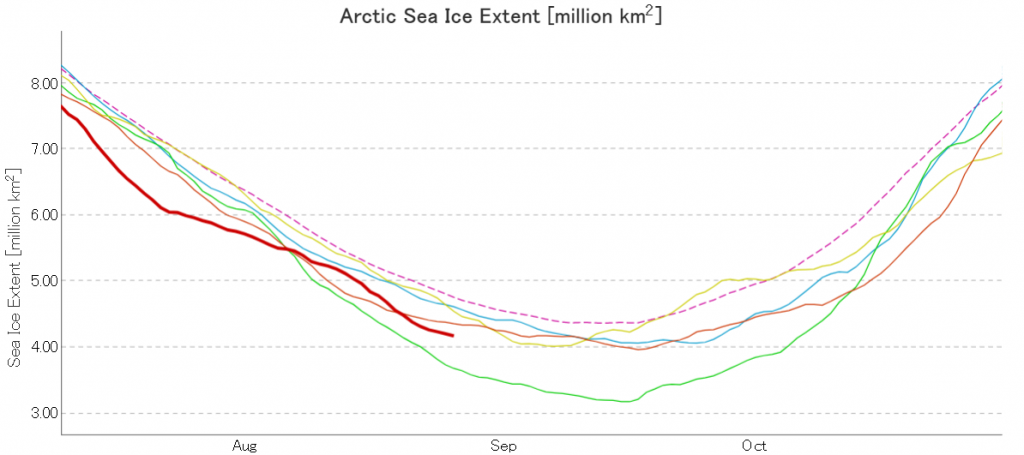
Note that those numbers represent “September 2020 average sea-ice extent” and not the daily minimum. Let’s now take a look at the assorted different flavours of “Arctic sea ice extent” metric. Firstly here’s the NSIDC’s “Charctic” 5 day average extent:

Next here’s JAXA/ViSHOP extent, generally assumed to be a “2 day average”:

Next here’s the DMI version, which neglects to include 2012:

Continue reading The 2020 Arctic Sea Ice Minimum Extent →

Past Evidence Supports Complete Loss of Arctic Sea-ice by 2035

Our title today is shamelessly plagiarised from the “Watts Up With That” blog of our old friend Anthony Watts. However daring to be different we have redacted the initial word “Claim -“.

The WUWT blog post is bylined “Charles Rotter”, and refers to a new paper in the journal Nature Climate Change entitled “Sea-ice-free Arctic during the Last Interglacial supports fast future loss“. Here’s an extract from the abstract:

The Last Interglacial (LIG), a warmer period 130,000–116,000 years before present, is a potential analogue for future climate change. Stronger LIG summertime insolation at high northern latitudes drove Arctic land summer temperatures 4–5 °C higher than in the pre-industrial era. Climate model simulations have previously failed to capture these elevated temperatures, possibly because they were unable to correctly capture LIG sea-ice changes. Here, we show that the latest version of the fully coupled UK Hadley Center climate model (HadGEM3) simulates a more accurate Arctic LIG climate, including elevated temperatures. Improved model physics, including a sophisticated sea-ice melt-pond scheme, result in a complete simulated loss of Arctic sea ice in summer during the LIG, which has yet to be simulated in past generations of models. This ice-free Arctic yields a compelling solution to the long-standing puzzle of what drove LIG Arctic warmth and supports a fast retreat of future Arctic summer sea ice.

There’s no mention of “2035” in there, so let’s look instead at yesterday’s press release from the British Antarctic Survey:

Continue reading Past Evidence Supports Complete Loss of Arctic Sea-ice by 2035 →

Facts About the Arctic in August 2020

A new month begins today, and at the moment it looks as though it’s going to be the most interesting one since August 2012. Here once again is the satellite image of the enormous cyclone that was spinning over the Beaufort/Chukchi Seas just a few days ago:

Here too is the effect of the cyclone on the trajectory of the JAXA Arctic sea ice extent graph:

Here too is the current prognosis of the late Andrew Slater’s “Slater Probabilistic Ice Extent” 50 day forecast:

The cyclone has obviously resulted in a reduction in the rate of extent decline, but take a look at the high resolution AMSR2 “compaction” graph:

The gaps between the remaining sea ice floes have evidently increased, and hence the ice area is declining more rapidly than its extent.

[Edit – August 2nd]

Here’s an animation, based on the University of Hamburg’s AMSR2 concentration maps, which reveals the motion of the sea ice across the Beaufort and Chukchi Seas for the last two months:

Note in particular the side effects of the recent cyclone, visible at the end of the video.

Here too is a close up of the current state of the remaining ice in the Chukchi Sea, snapped by the Suomi NPP satellite through a gap in the clouds:

Plus the current open water north of Greenland. Perhaps once Polarstern has been flushed out into the open water of the Fram Strait at the end of the MOSAiC expedition she could take another look at this almost completely unexplored area of the Arctic Ocean?

[Edit – August 6th]

The latest gridded thickness data has been released by the PIOMAS team, and here are Wipneus’s visualisations:

According to the Polar Science Center:

Average Arctic sea ice volume in July 2020 was 9,300 km3. This value is  only 400 km3 above the  record minimum  value of 8,900 km3 set in 2019. This makes 2020 the fourth lowest on record for July with 2012, 2017,2019 falling just below 2020.

JAXA extent is still lowest for the date, but following the recent cyclone it looks as though it will not maintain that position for much longer:

Now we’re in the month of August it’s possible to do a direct comparison with AMSR2 data for 2012. Here’s sea ice area for the Central Arctic Basin:

[Edit – August 8th]

All of a sudden JAXA extent is in 3rd place in the race to the minimum:

However let’s also take a close look at the state of the sea ice in the Beaufort and Wandel Seas shall we?

At this juncture I reckon that come mid September second place is now more likely than first. However as always, it still all depends on the weather.

[Edit – August 9th]

Surprising as it may seem, high resolution AMSR2 Central Arctic Basin sea ice area has so far managed to keep up with the precipitous drop in 2012:

North of Greenland the clouds have cleared closer to the North Pole, to reveal this:

Fresh this morning from Terra, a rather cloudy view of the devastation near 80N, 150W:

[Edit – August 10th]

In a not entirely unexpected development one of ex Prof. Judy’s denizens is quibbling about the current condition of sea ice in the Arctic. Hence here is a close up of some “gaping holes in the sea ice cover” at 88N between Greenland and the North Pole:

[Edit – August 13th]

A nice clear view this morning of the marginal ice zone of the “Laptev Bite” and thereabouts from the Suomi satellite :

[Edit – August 16th]

JAXA AMSR2 extent has fallen below 5 million km²:

Having been flushed out of the Central Arctic through the Fram Strait the polar research vessel Polarstern is back, seemingly intent on taking a close look at the North Pole:

[Edit – August 19th]

The mid month PIOMAS gridded thickness numbers have been published:

According to the Polar Science Center model Arctic sea ice volume is currently third lowest after 2012 and 2019.

[Edit – August 24th]

Arctic sea ice area based on NSIDC concentration data is now in a “statistical tie” with 2012 for the honour of “lowest for the date” in the satellite record:


High resolution AMSR2 area isn’t far behind:

[Edit – August 24th]

A nice clear view of the disintegrating sea ice north of the East Siberian and Chukchi Seas yesterday:

Watch this space very closely for the next few weeks!