Tag Archives: Concentration

Facts About the Arctic in December 2025

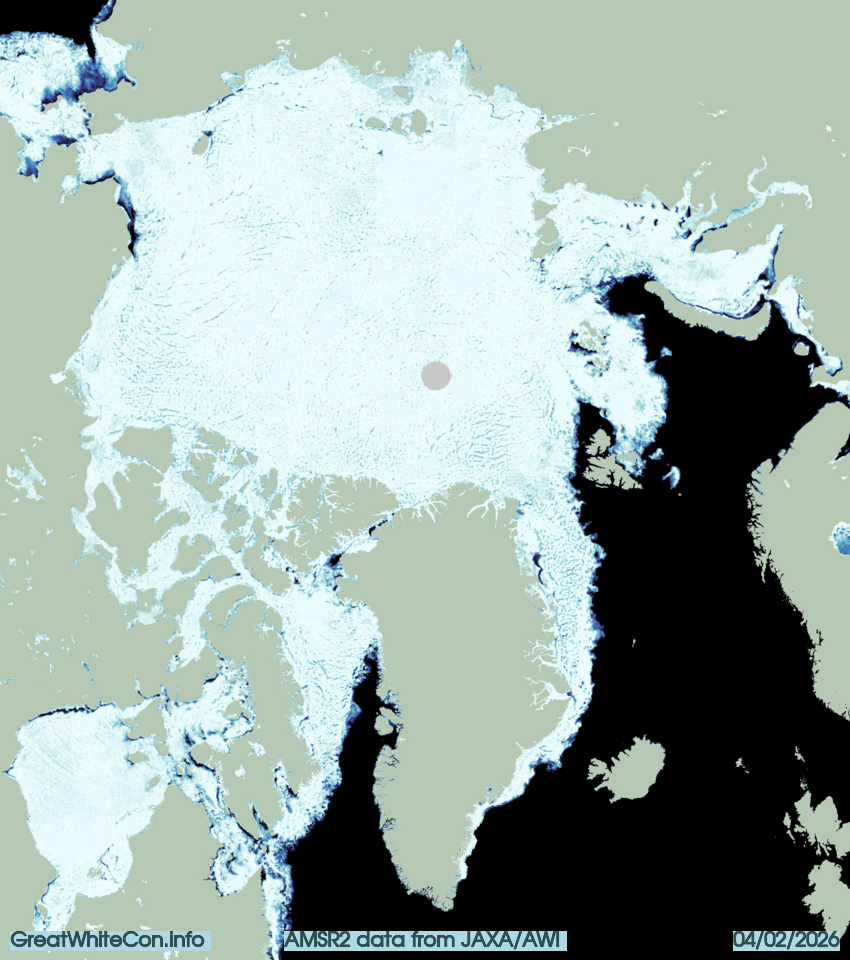
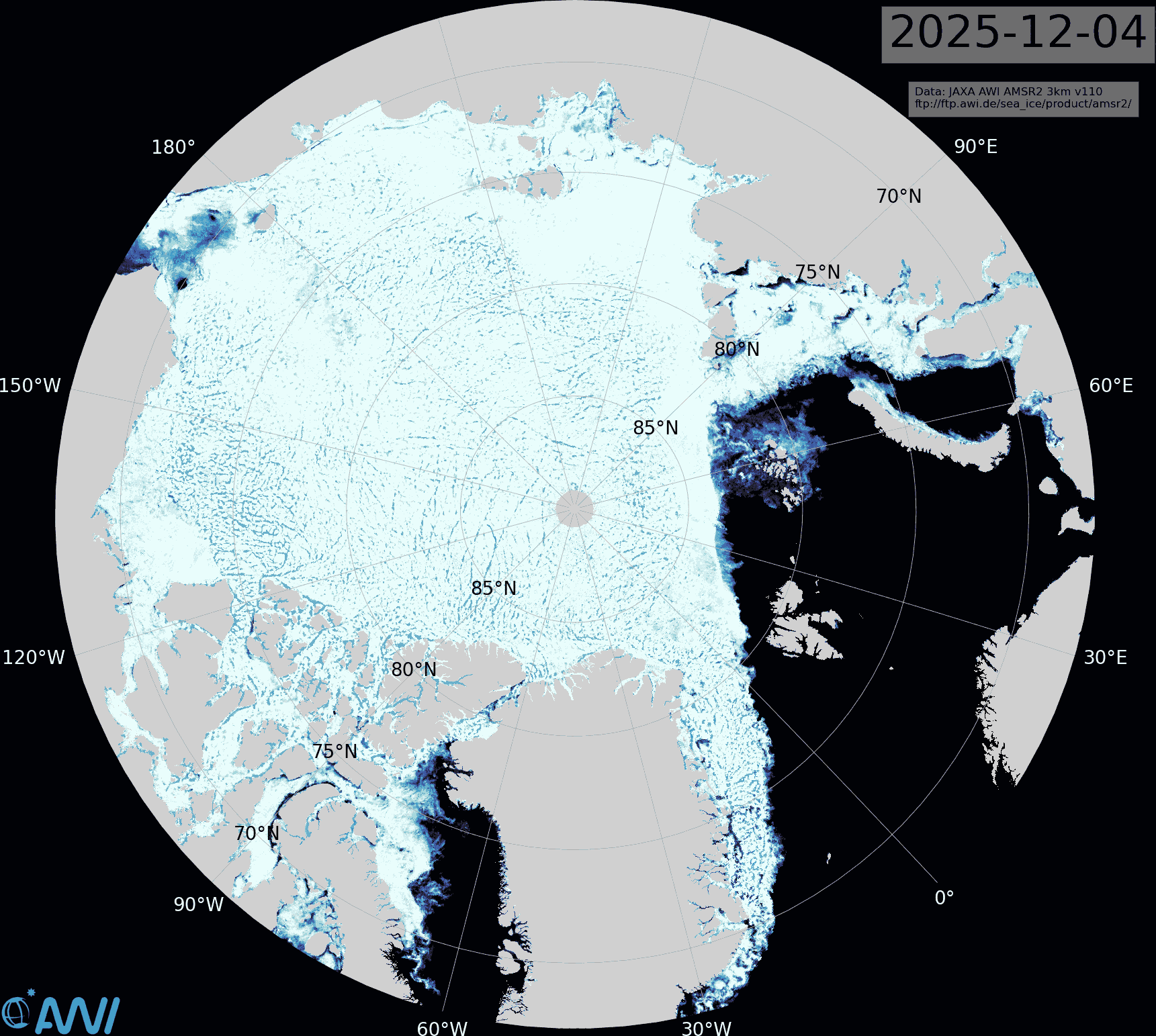
The latest Alfred Wegener Institute sea ice concentration map shows that the Pacific side of the Central Arctic Basin is now almost completely refrozen:

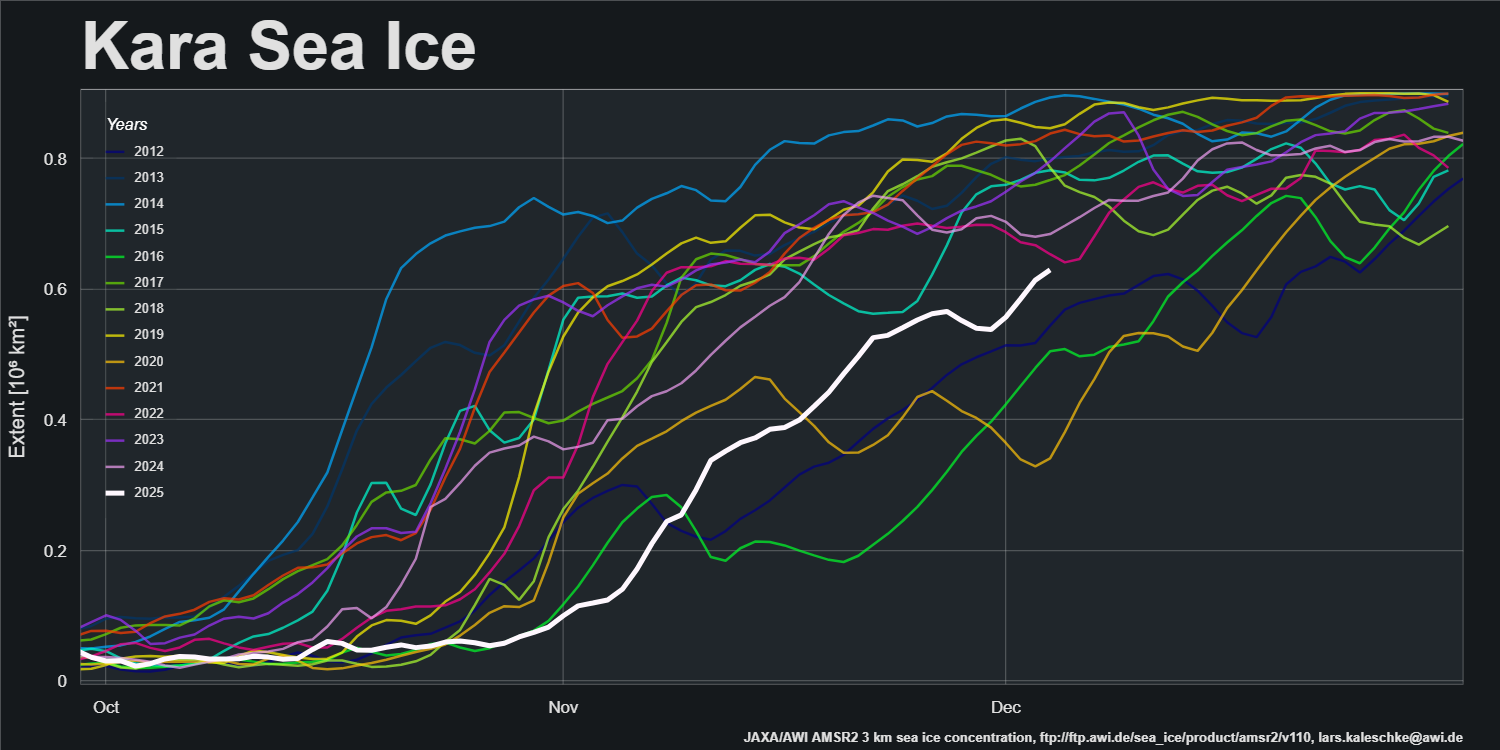
On the Atlantic side of the Arctic the Kara Sea is rapidly refreezing:

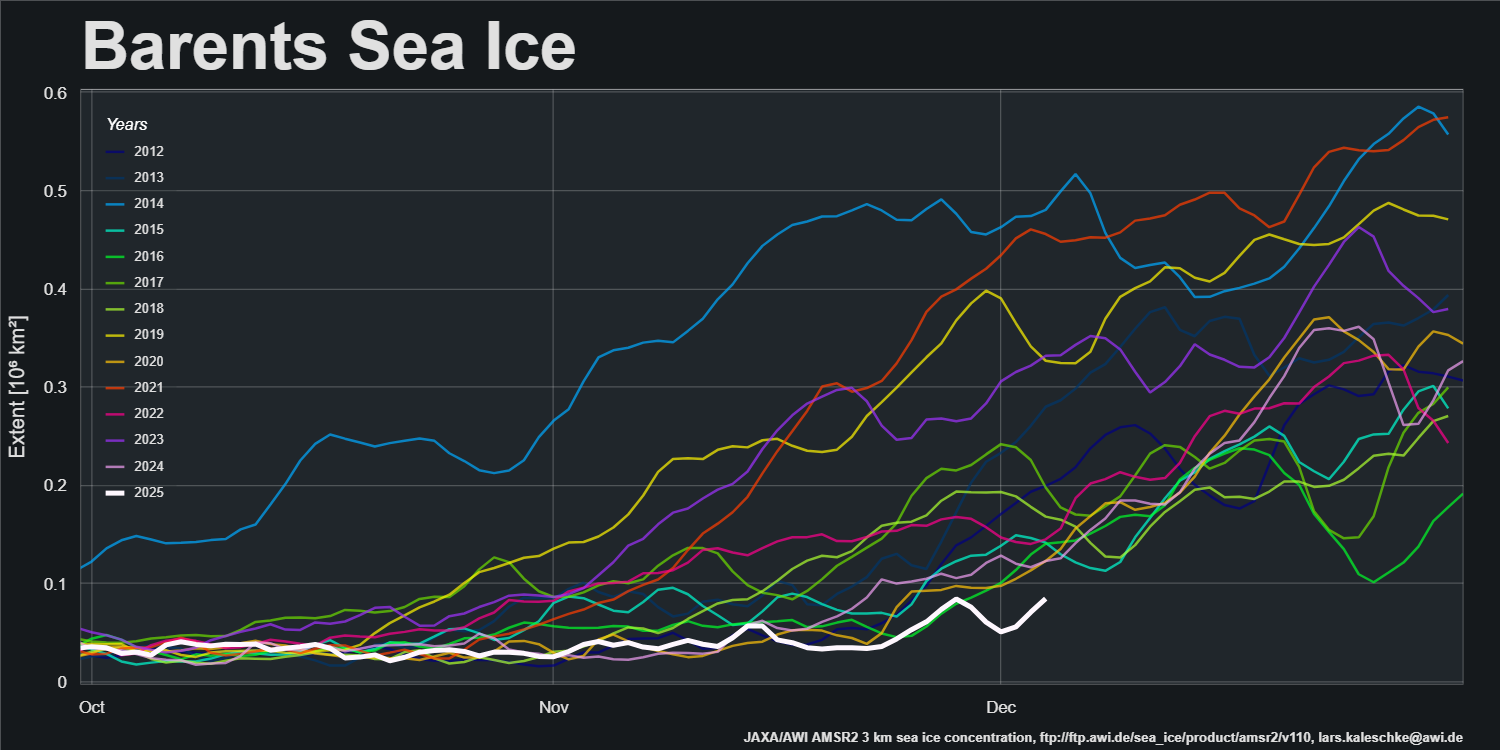
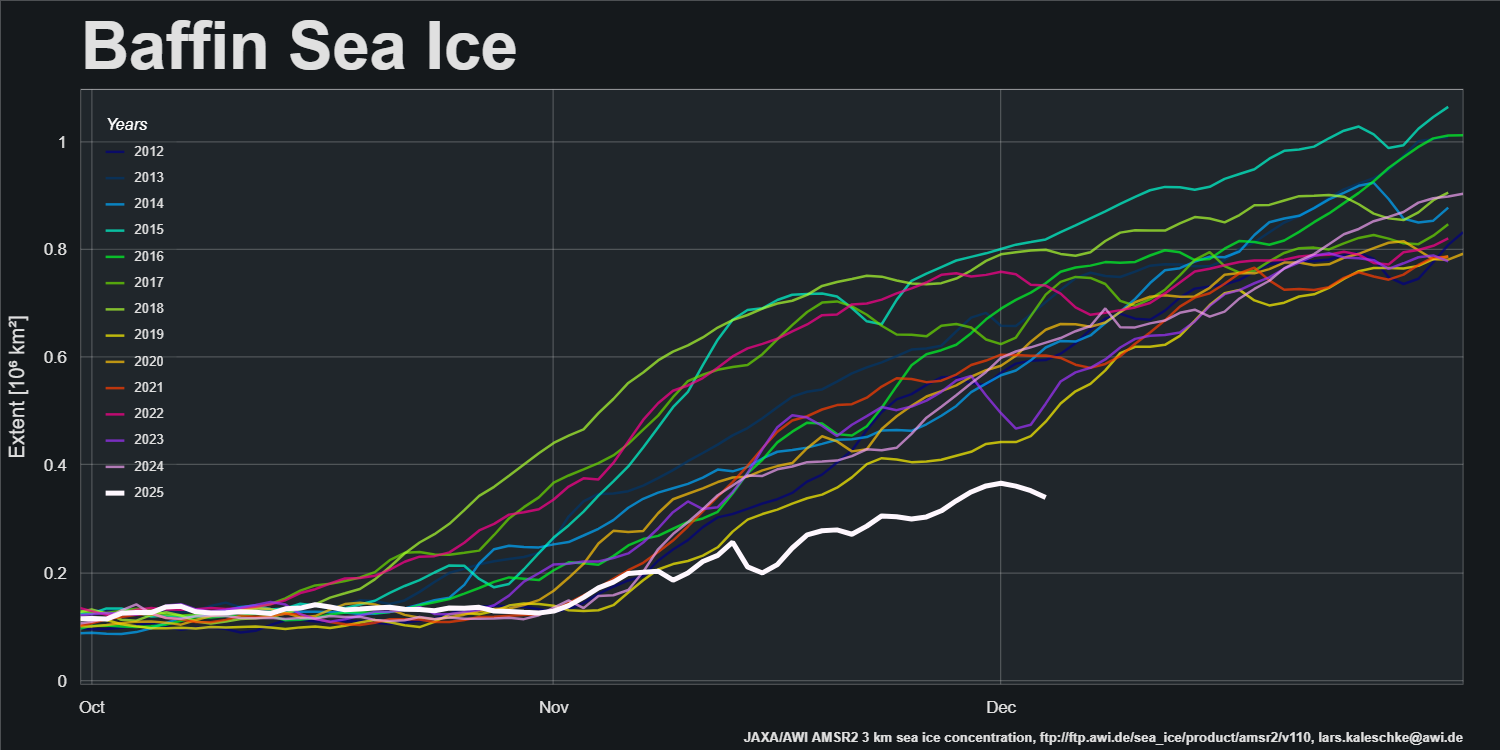
However, sea ice extent in the Barents Sea and Baffin Bay is currently lowest for the date in the AMSR2 record:

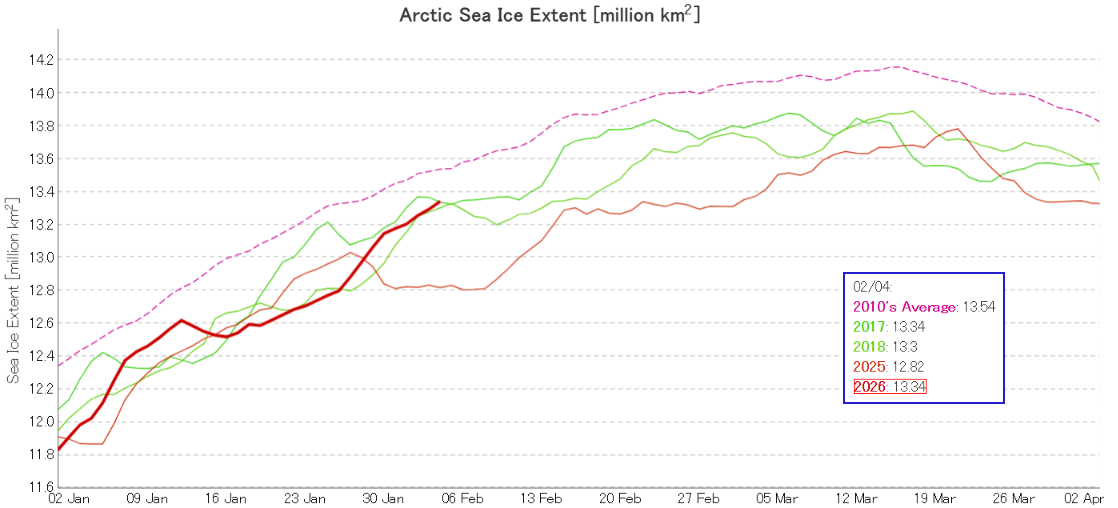
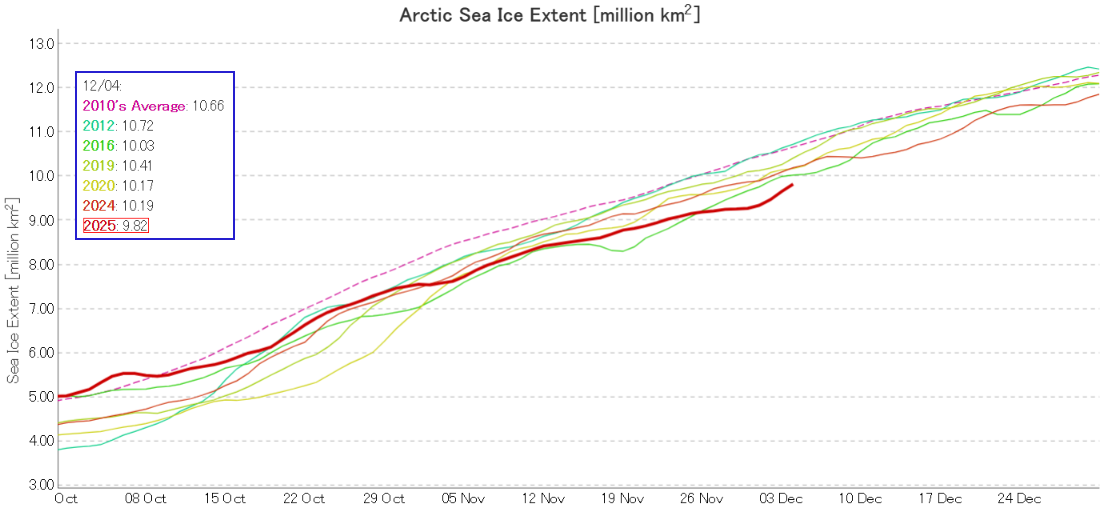
Pan Arctic JAXA/ViSHOP extent is currently lowest for the date in the satellite era:

Continue reading Facts About the Arctic in December 2025

Facts About the Arctic in September 2025

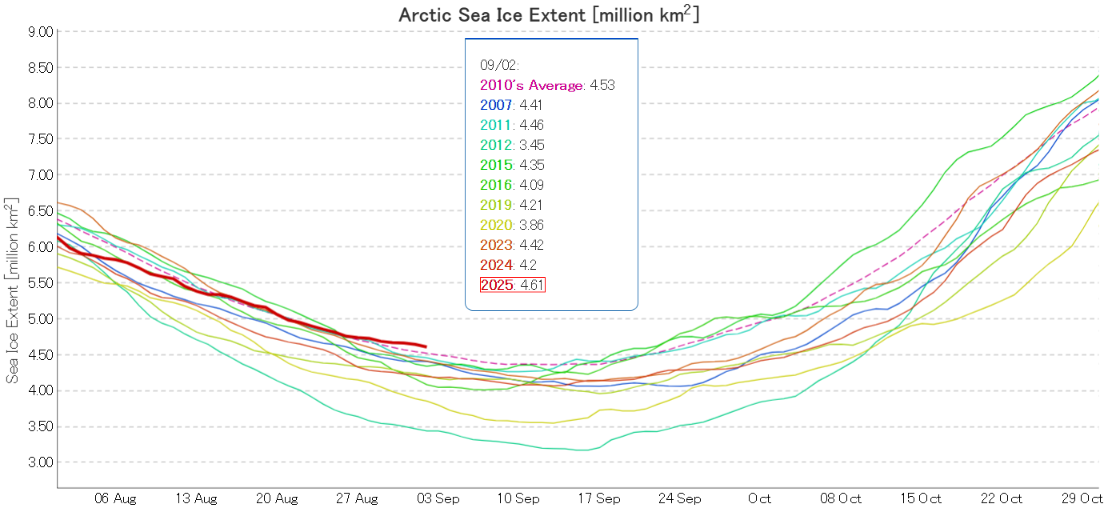
At the beginning of last month JAXA/ViSHOP extent was third lowest for the date in the satellite era. With the date of the 2025 minimum extent rapidly approaching that is no longer the case:

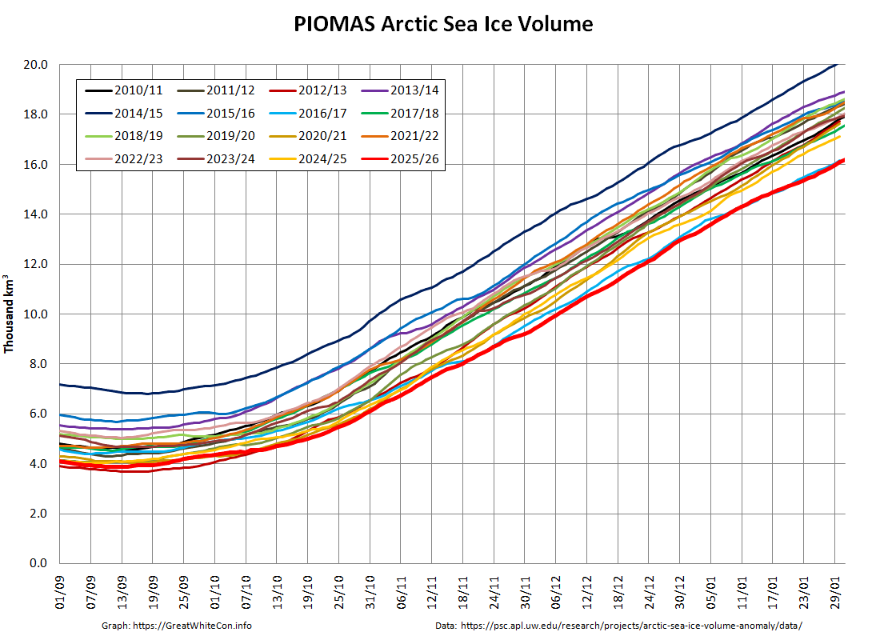
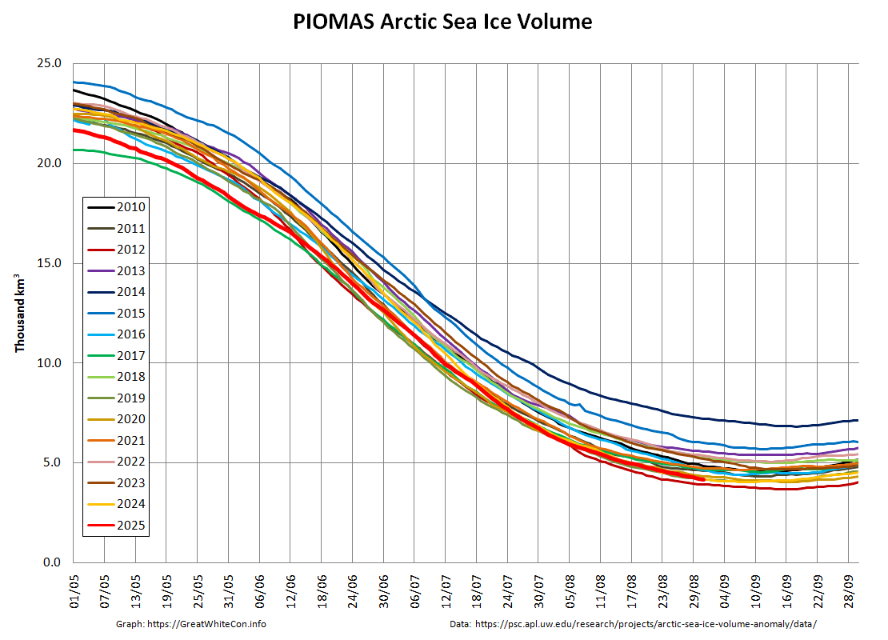
Whilst JAXA extent is now 10th lowest, PIOMAS volume remains second lowest for the date:

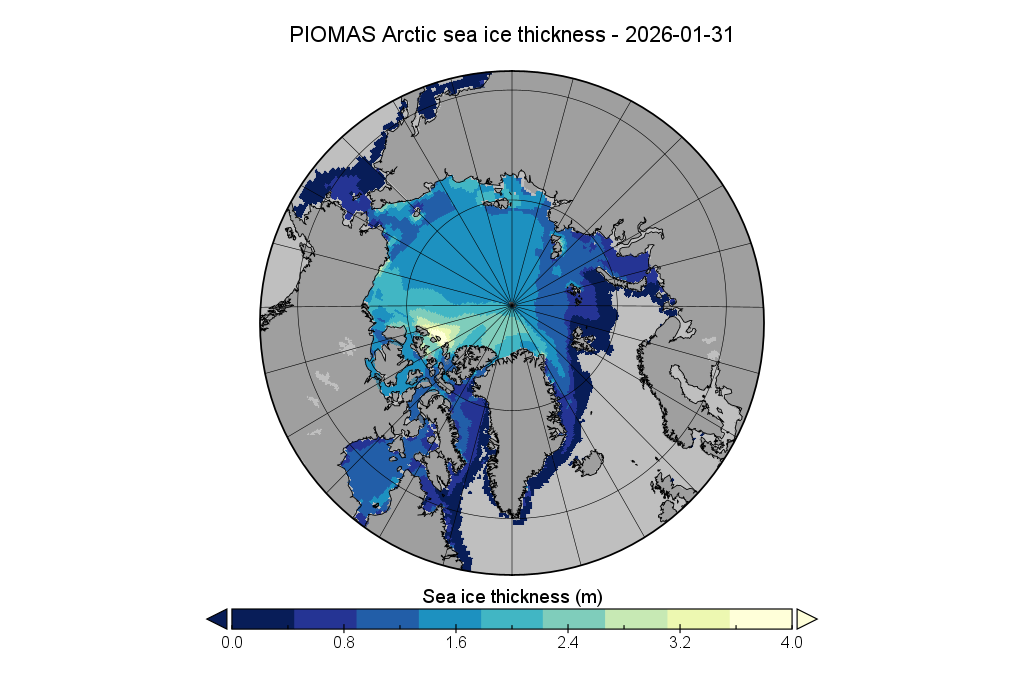
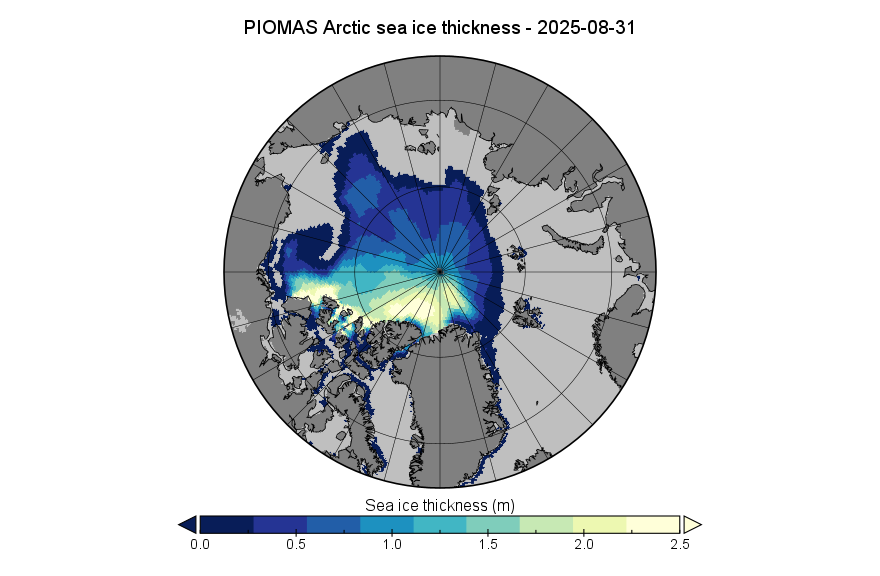
Here’s the associated thickness map. Note the change of scale from last month

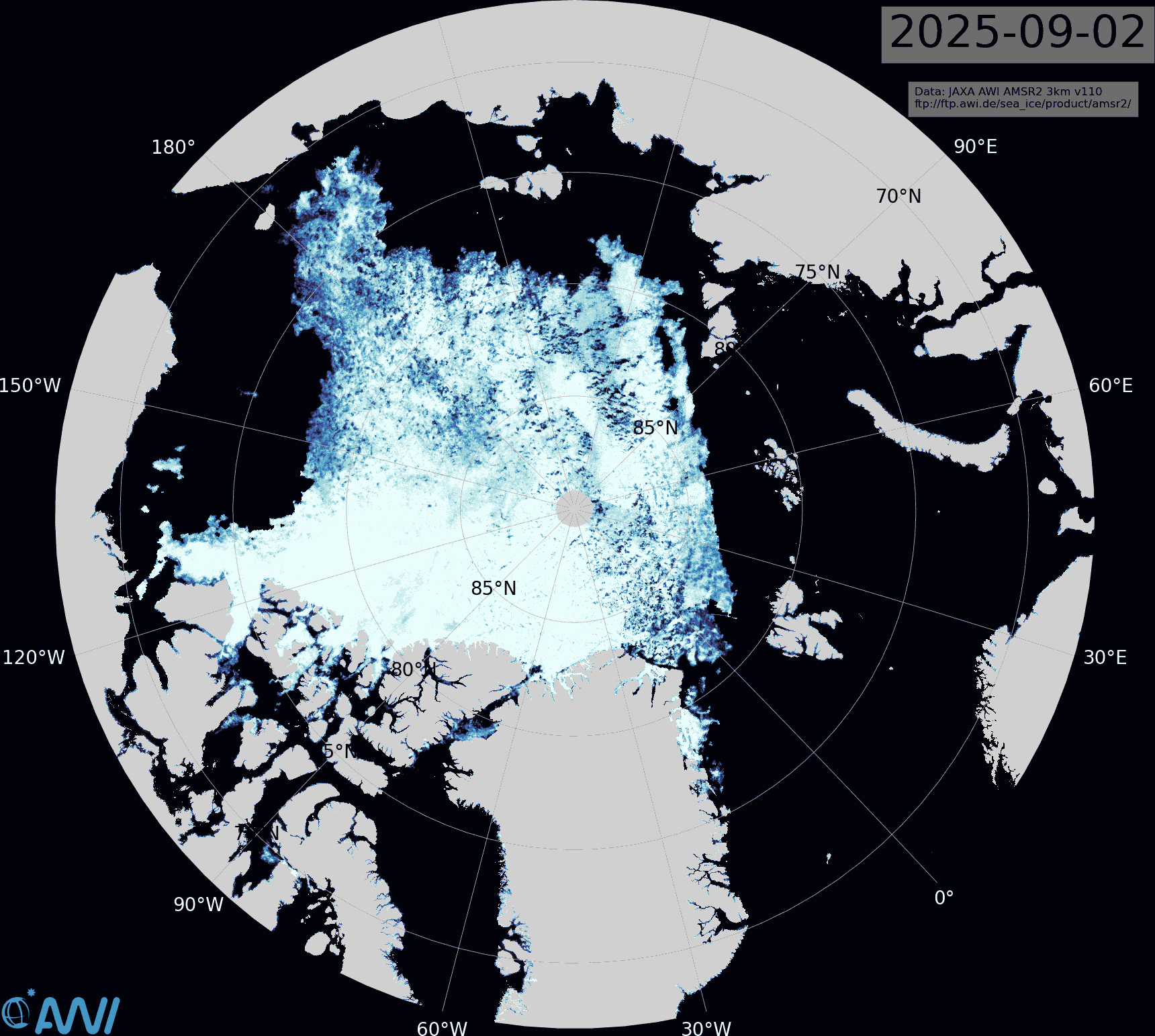
Compare and contrast that map with the AWI’s sea ice concentration map, particularly in the Beaufort Sea area:

Continue reading Facts About the Arctic in September 2025

Facts About the Arctic in September 2024

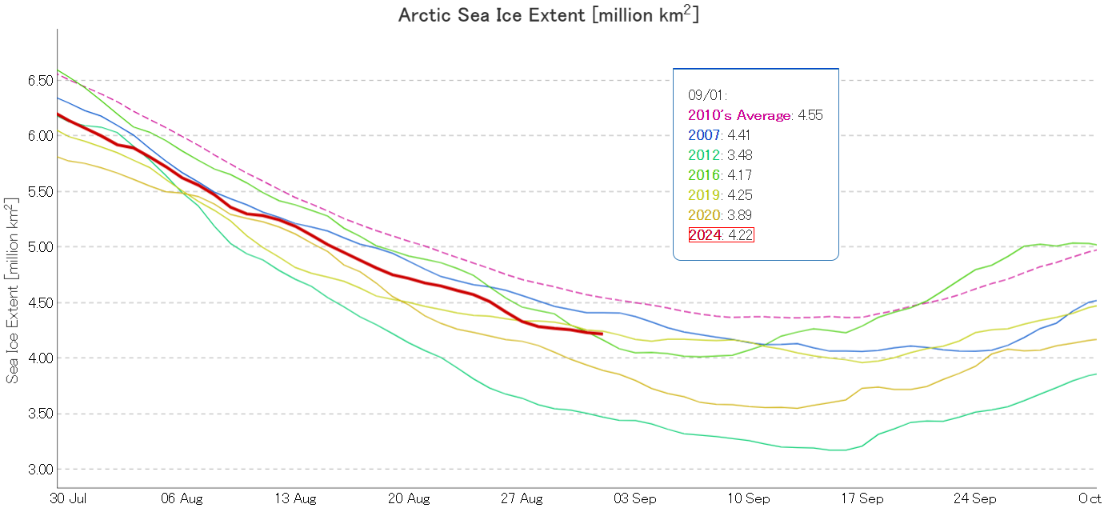
At the beginning of September JAXA/ViSHOP extent was 4th lowest for the date in the satellite era:

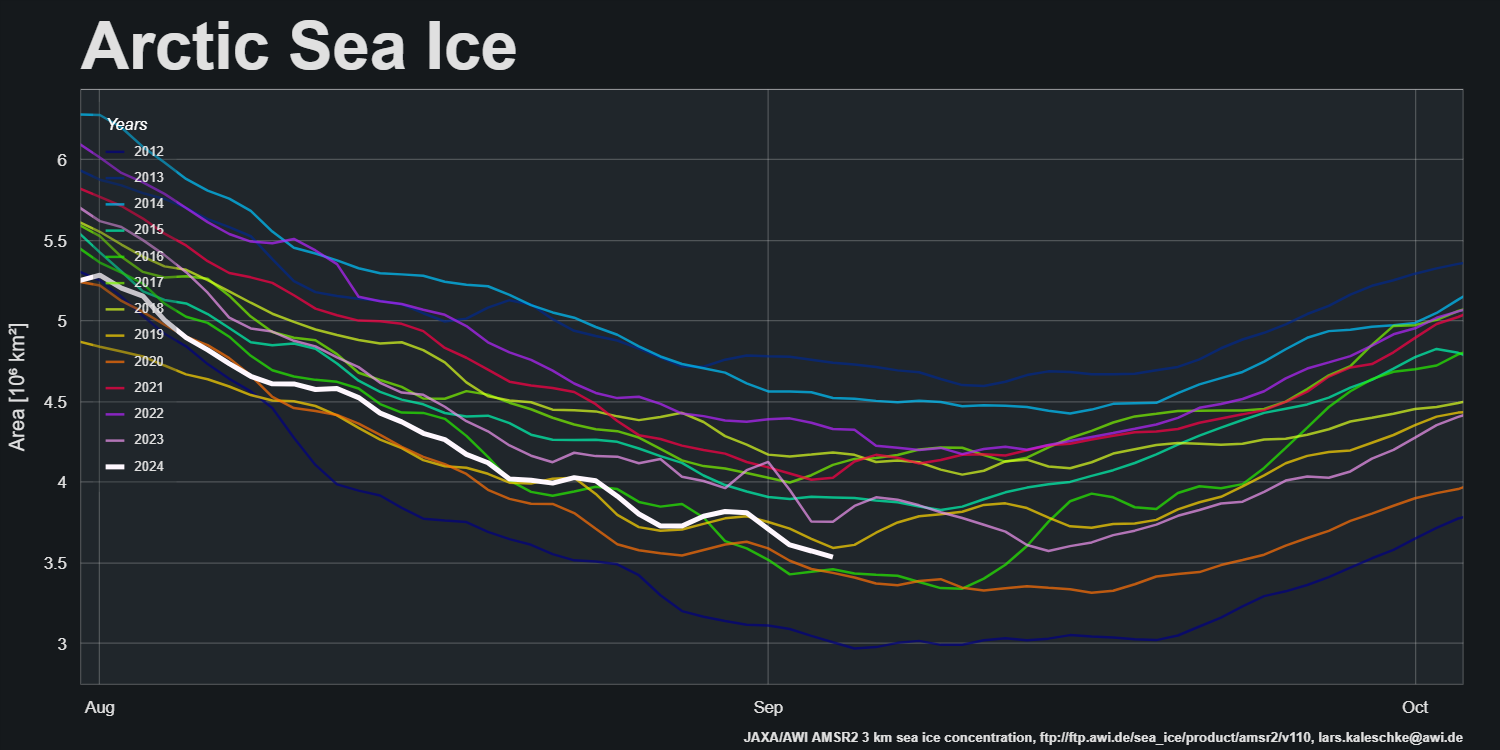
For much more detail on sea ice extent for the next few weeks please see the dedicated 2024 minimum thread. However, note that as extent has been flatlining sea ice area is still declining:

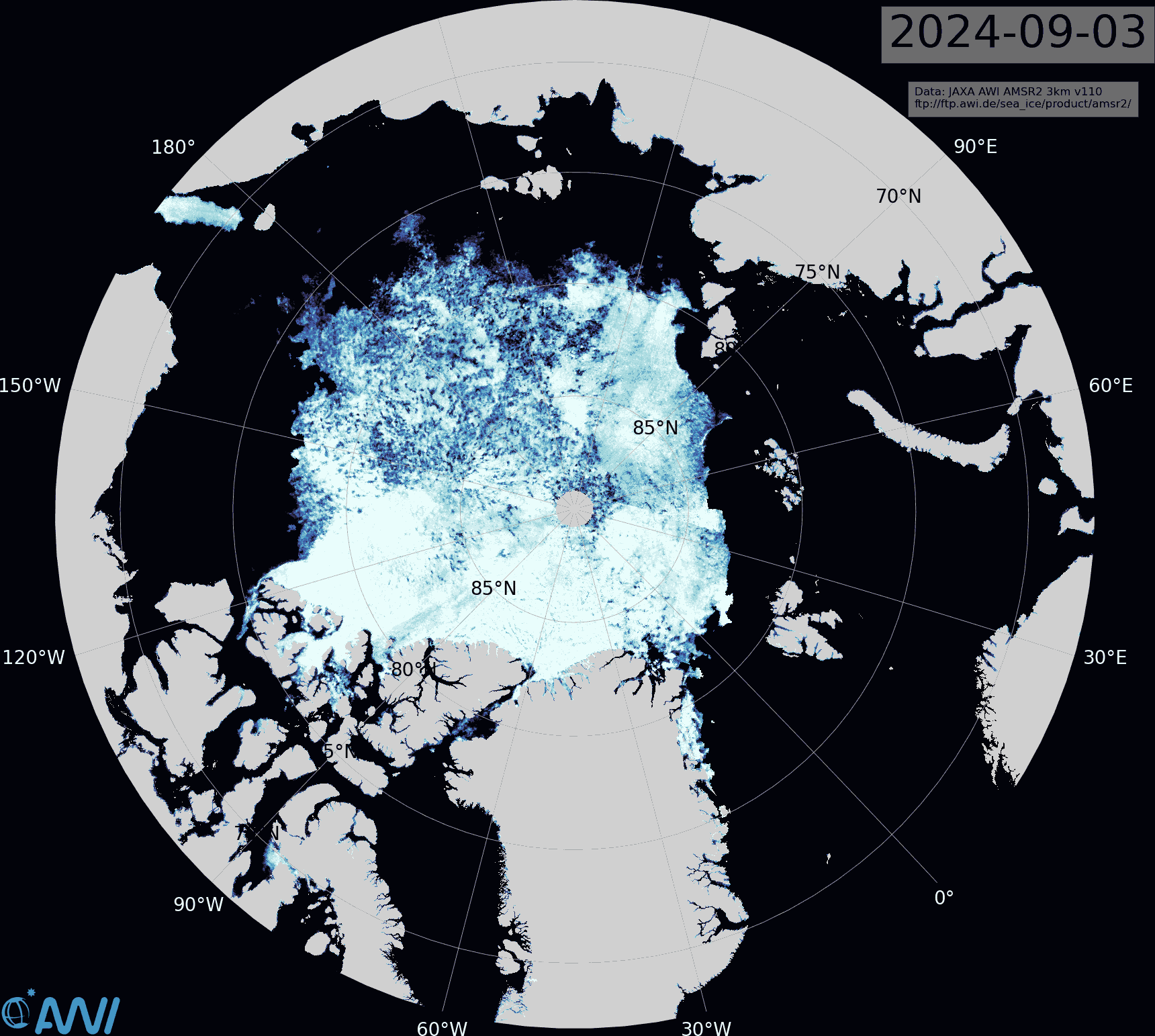
The latest AMSR2 sea ice concentration map from the Alfred Wegener Institute reveals that the area of thick ice in the Chukchi Sea has still not melted:

The most recent sea ice age map currently available dates from the beginning of August. Comparison with the concentration map shows that most of the remaining first year ice is highly fragmented, even close to the North Pole:

Continue reading Facts About the Arctic in September 2024

Facts About the Arctic in August 2024

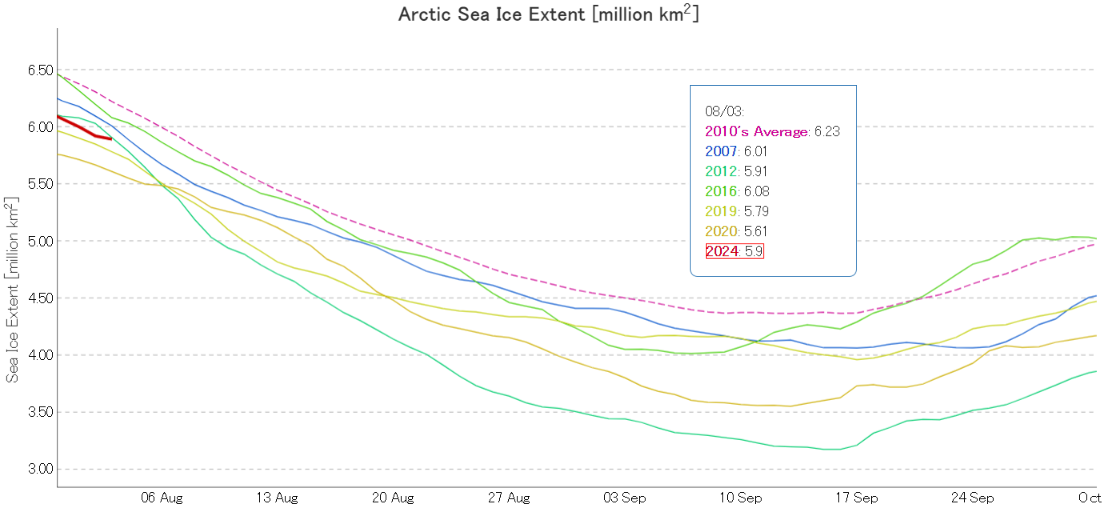
At the beginning of August JAXA/ViSHOP extent is 3rd lowest for the date in the satellite era:

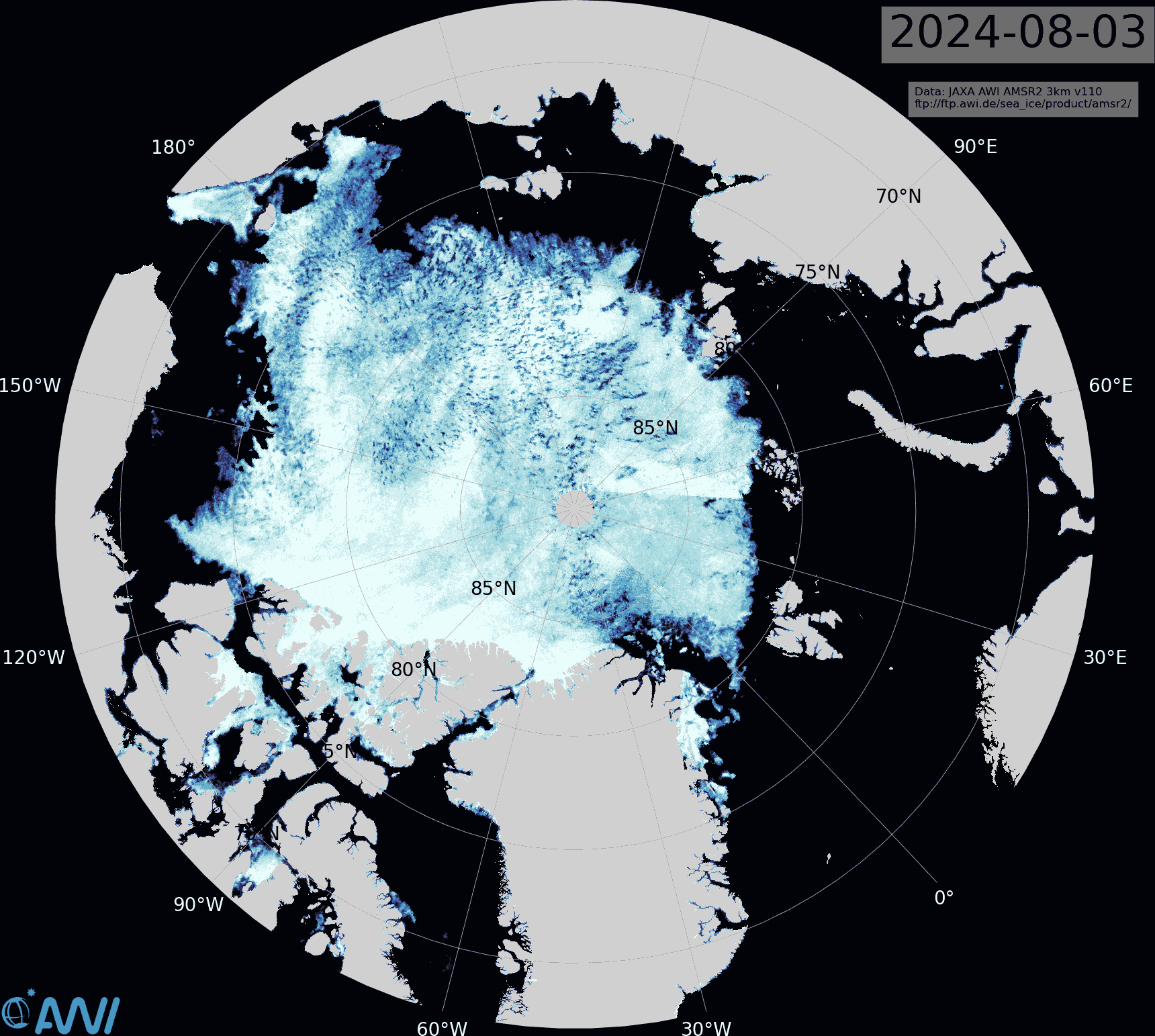
In 2012 extent had just started its unprecedented plunge towards the record September minimum, and 2024 seems certain to cross above the 2012 curve shortly. However, the latest AMSR2 sea ice concentration map from the Alfred Wegener Institute reveals areas of open water across the majority of the Central Arctic Basin:

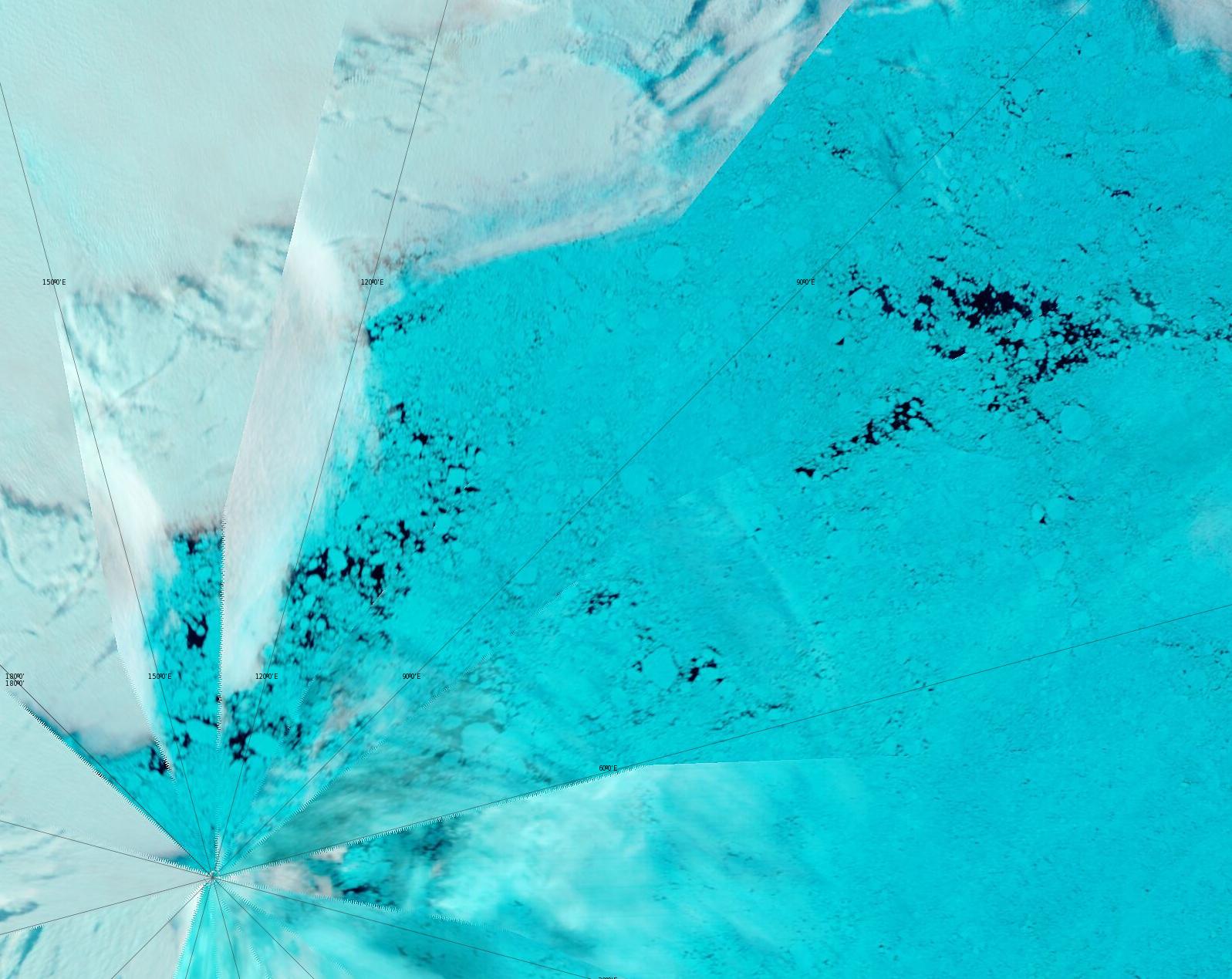
In particular the sea ice between the North Pole and northern Greenland is remarkably fragmented:

“False colour” image of the North Pole on August 3rd from the MODIS instrument on the Terra satellite
Continue reading Facts About the Arctic in August 2024

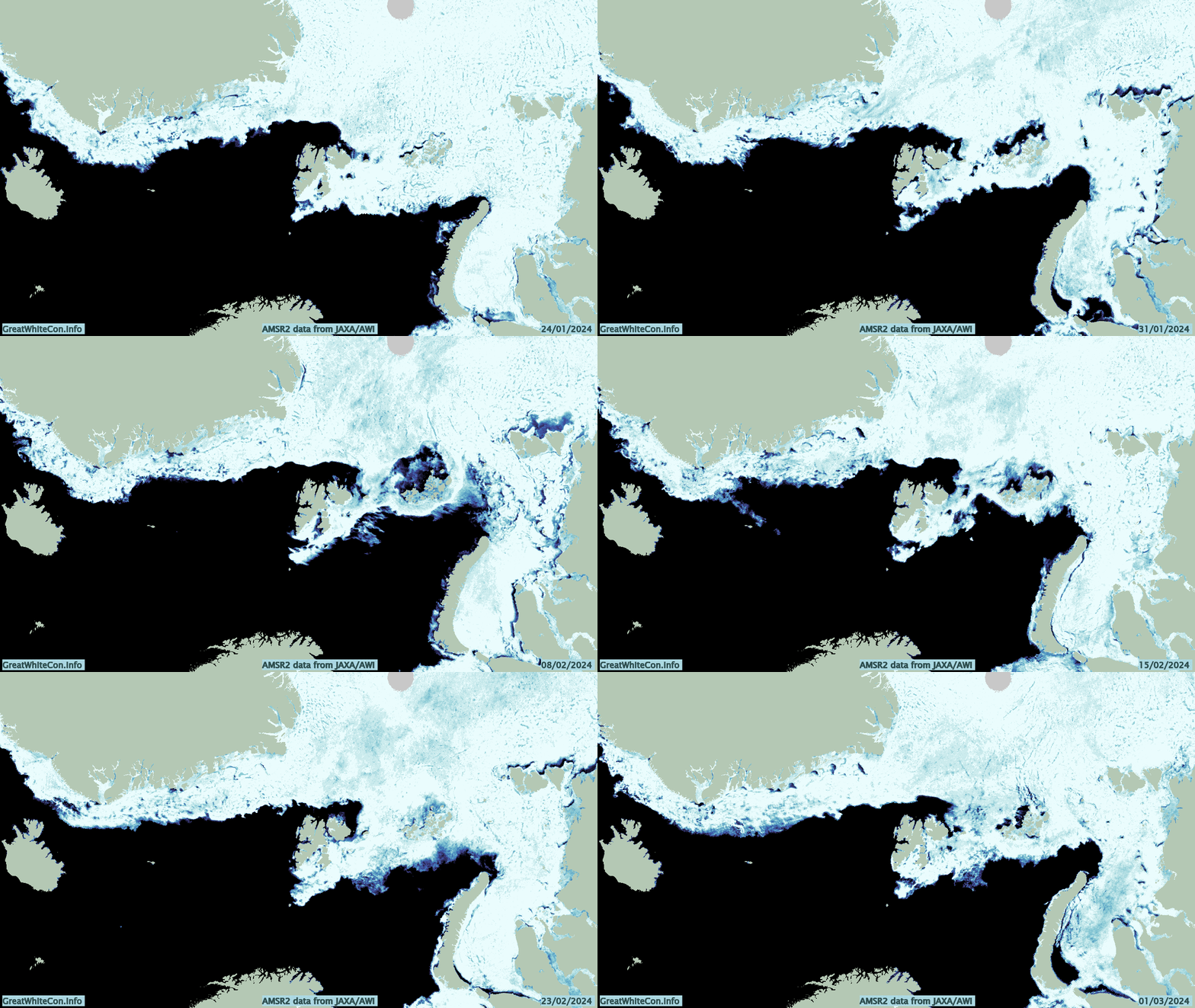
Facts About the Arctic in March 2024

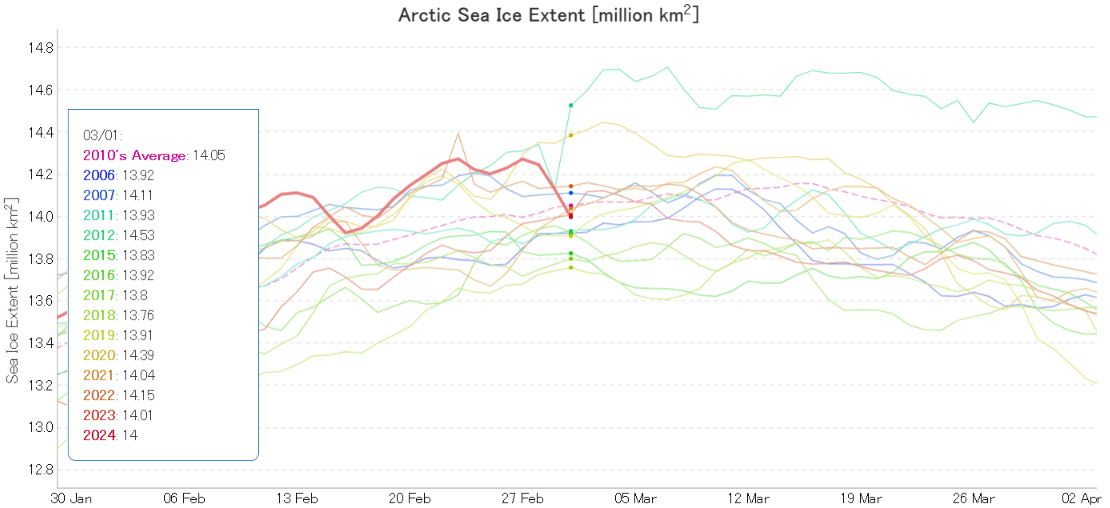
It looks as though the 2024 Arctic sea ice melting season has begun. For much greater detail see the 2024 maximum extent thread. However, here’s the latest JAXA Arctic sea ice extent graph:

Here too is an animation of sea ice motion on the Atlantic periphery, showing the effect of the passage of several Arctic cyclones through the area over the past 5 weeks or so:

[Update – March 4th]

My usual start of month processing hasn’t gone according to plan. Thanks to Lars Kaleschke at the Alfred Wegener Institute for the following information:

SMOS went into safe mode on 22 February 2024 at 05:10 UTC for reasons that are still under investigation.

The spacecraft has been back in nominal mode since 25 February 2024 and on 27 February 2024, the MIRAS instrument was switched on and is currently performing well.

The reload of the nominal acquisition planning is underway, and if all science data quality checks are positive, nominal data production and dissemination will resume in the coming days.

Continue reading Facts About the Arctic in March 2024

The Northwest Passage in 2023

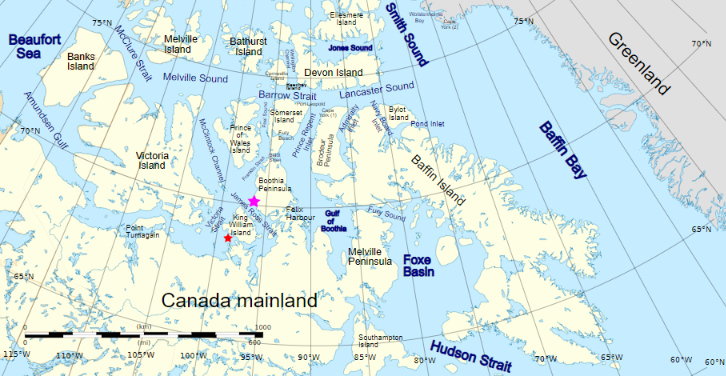
Prompted by a comment by Tom in the June open thread, the time has evidently come to open the 2023 Northwest Passage passage thread. First of all let’s get our bearings with the help of this map of the area:

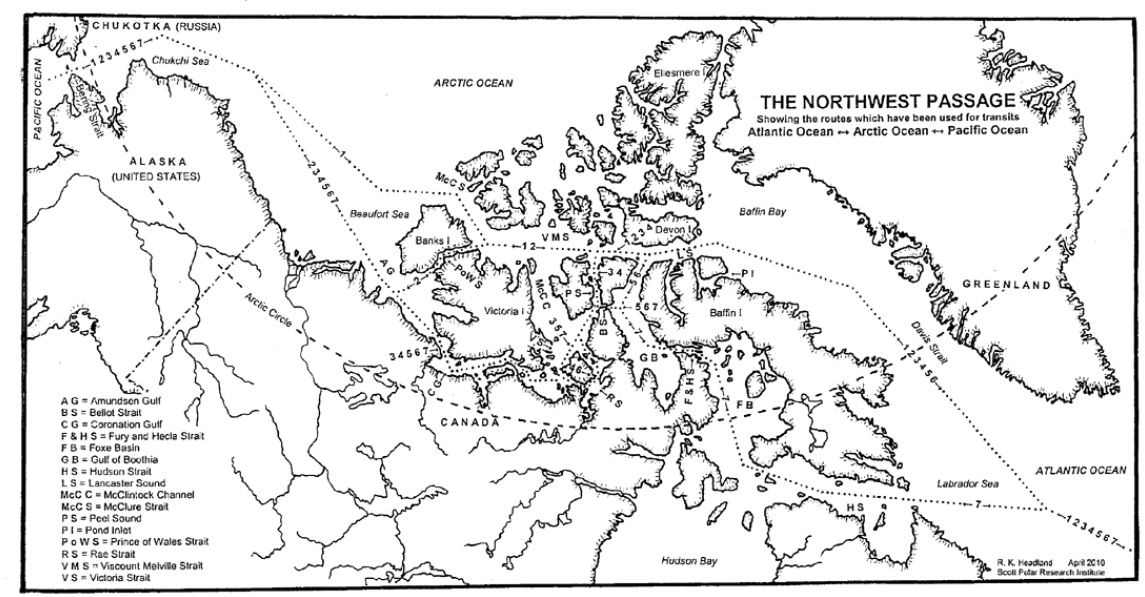
and another map detailing the routes through Canadian Arctic Archipelago that have previously been successfully traversed:

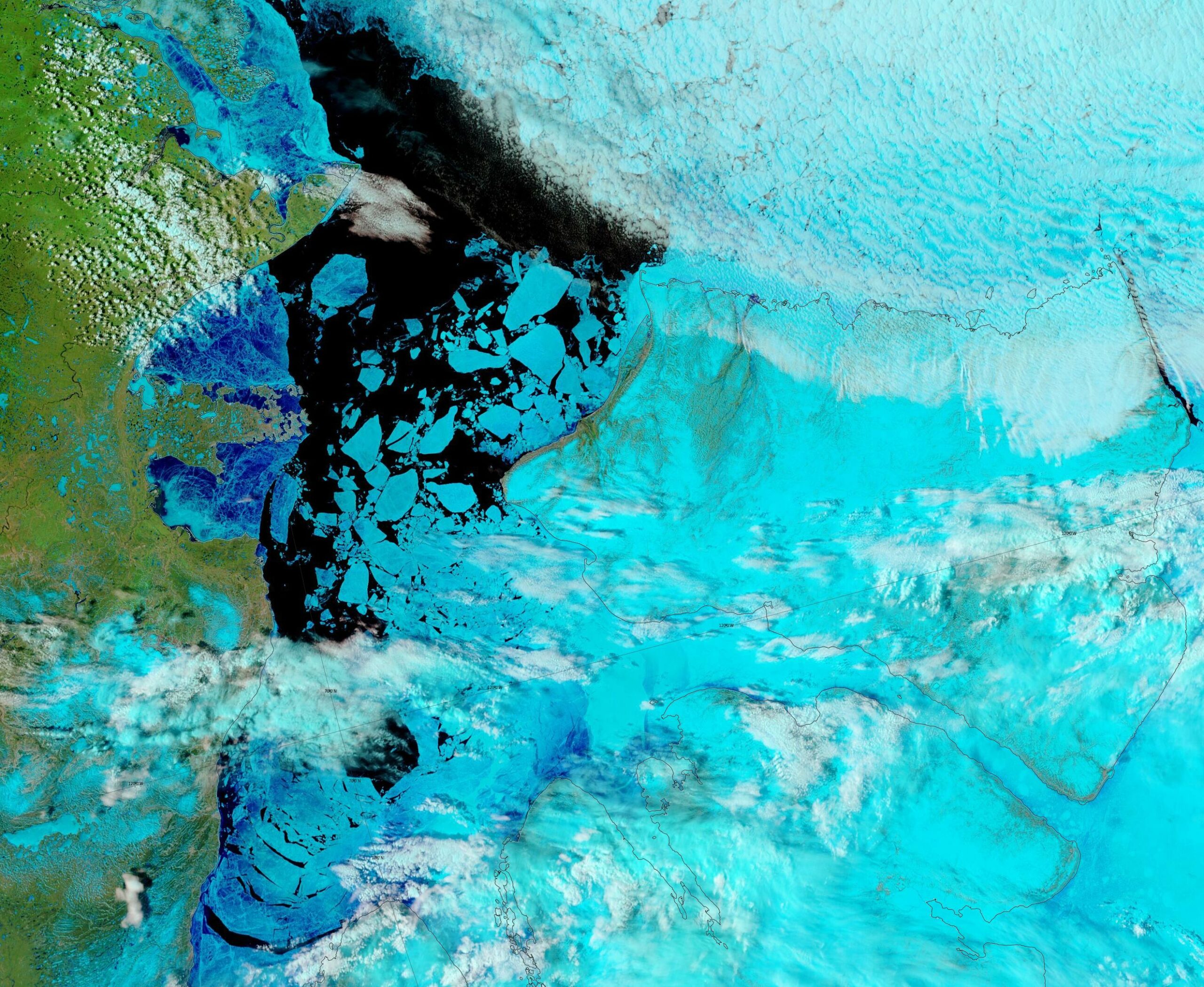
As our starter for ten for 2023, there is already plenty of open water in the Amundsen Gulf, together with plenty of melt ponding on the remaining fast ice in Franklin and Darnley Bays:

“False colour” image of the Lena Delta on June 3rd from the MODIS instrument on the Terra satellite
Continue reading The Northwest Passage in 2023

Facts About the Arctic in December 2022

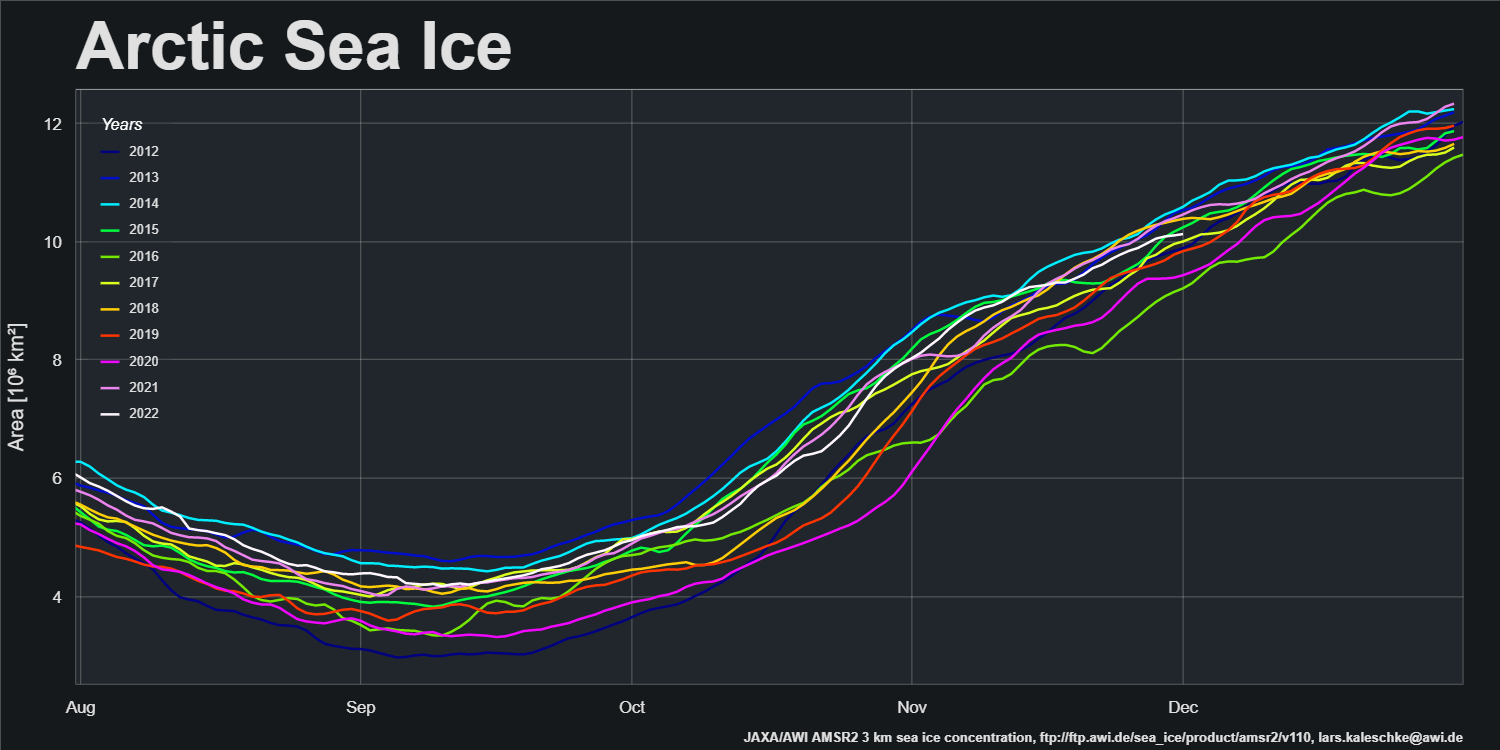
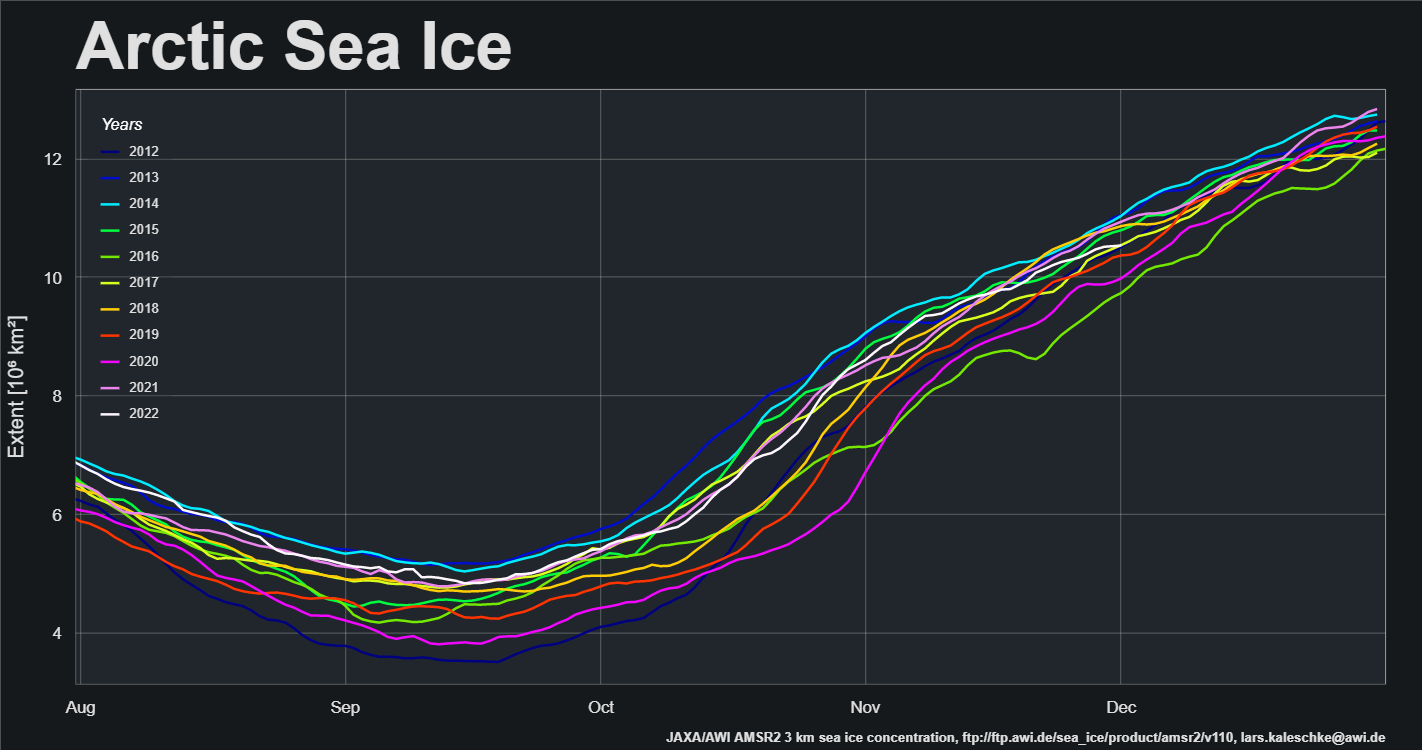
A new month is upon us and Christmas is coming! Here’s another look at Lars Kaleschke’s high resolution AMSR2 area and extent graphs for the Arctic as a whole:

Extent increase stalled for the last few days of November, and as a result extent is now in a “statistical tie” with 2017 for 4th lowest extent for the date in the AMSR2 record.

Continue reading Facts About the Arctic in December 2022

Facts About the Arctic in October 2022

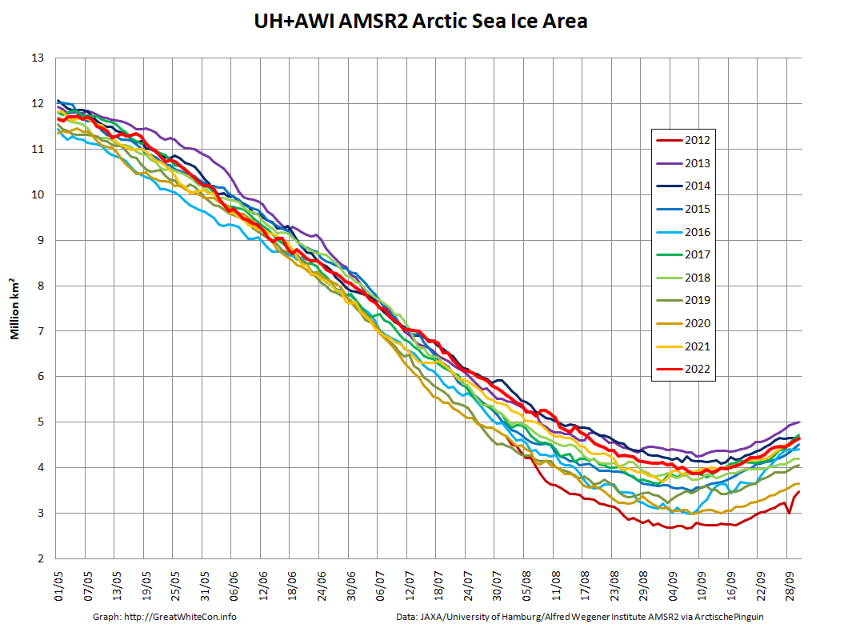
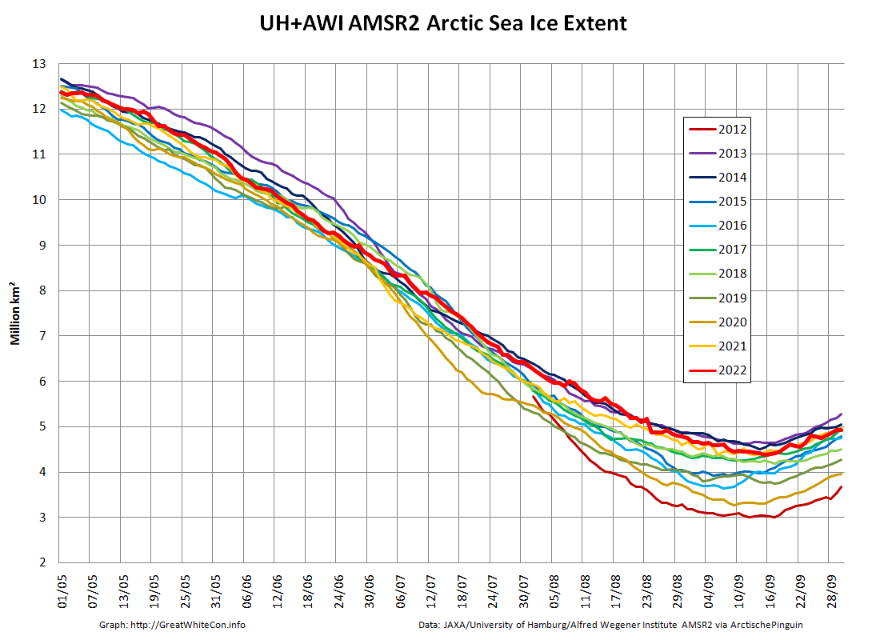
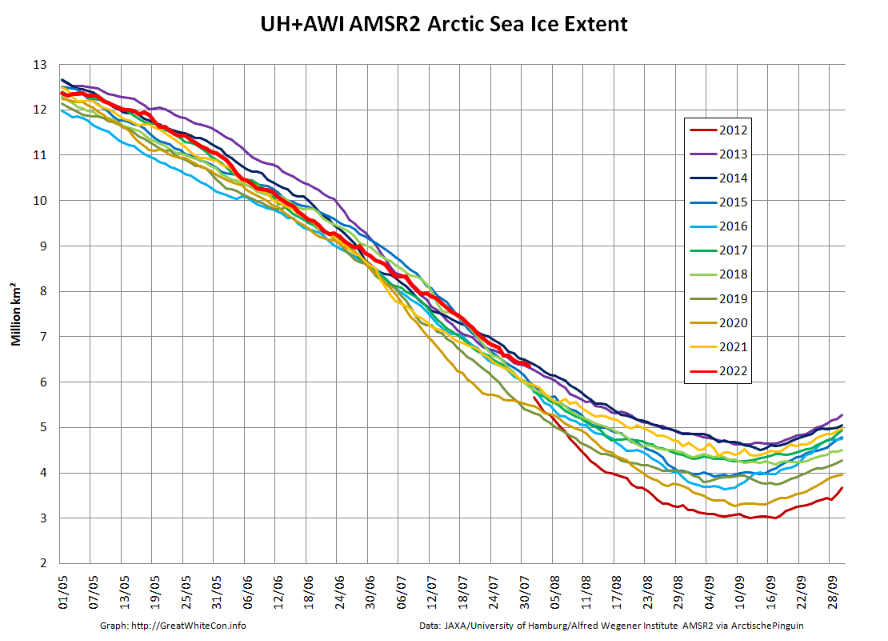
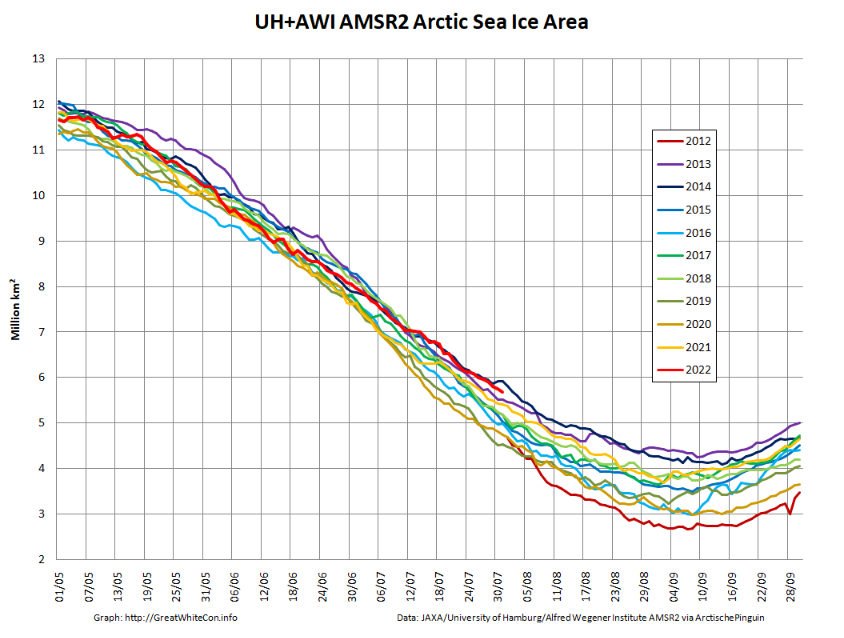
The 2022/23 freezing season has begun, so to begin with here are Arctic sea ice area and extent during its early stages:

Both metrics are currently tracking 2021 quite closely.

Here too is an AMSR2 animation of the transition from melting to freezing in the Central Arctic. Click to animate, and be warned that the file size is almost 10 Mb:

[Edit – October 4th]

Another big storm is heading for the Chukchi Sea. The GFS forecast currently shows a sub 960 hPa low developing on Thursday:

Continue reading Facts About the Arctic in October 2022

Facts About the Arctic in August 2022

We’ll start the new month in traditional fashion. Here’s the high resolution AMSR2 sea ice extent and area:

Extent decline in July proved to be somewhat sluggish by recent standards. A week ago I posed the question:

Is 2022 more likely to follow the path of 2012, 2013 or 2016 to this year’s minimum?

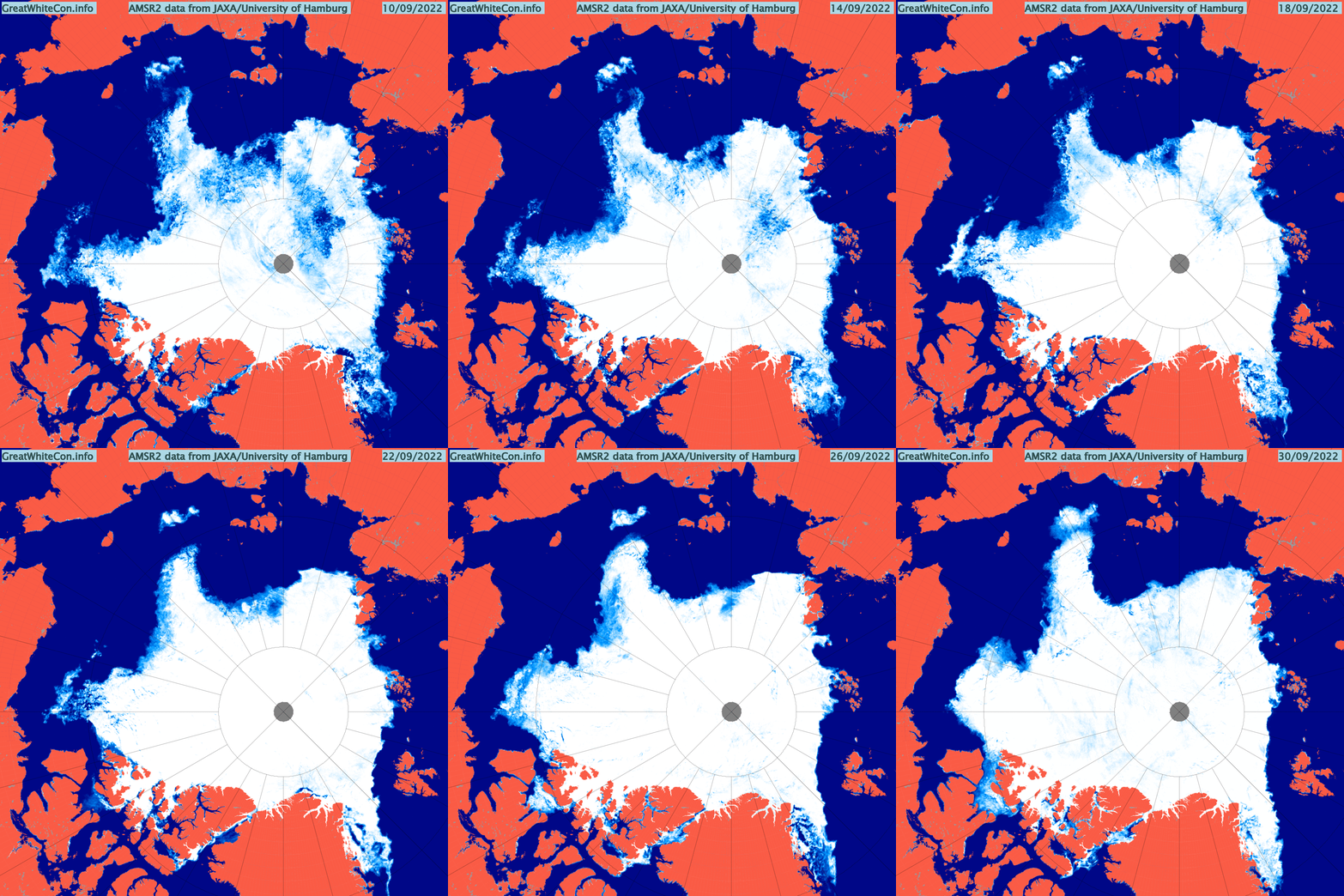
At the moment the answer seems to be “2013 Jim!”. However what about the condition of all that ice? Here’s the latest AMSR2 concentration map:

Continue reading Facts About the Arctic in August 2022

The North Pole in the Summer of 2022

After a long hiatus courtesy of the demise of the annual Barneo ice camp and the Covid-19 pandemic we are pleased to be able to report that an ice mass balance buoy has once again been installed on a floe in the vicinity of the North Pole. Here’s the evidence:

The ship in the background is not a traditional research icebreaker. It is Ponant Cruises’ Le Commandant Charcot, one of a number of new ice hardened cruise ships voyaging across the Arctic Ocean and adjacent seas. Le Commandant Charcot reached 90N on July 13th:

Continue reading The North Pole in the Summer of 2022