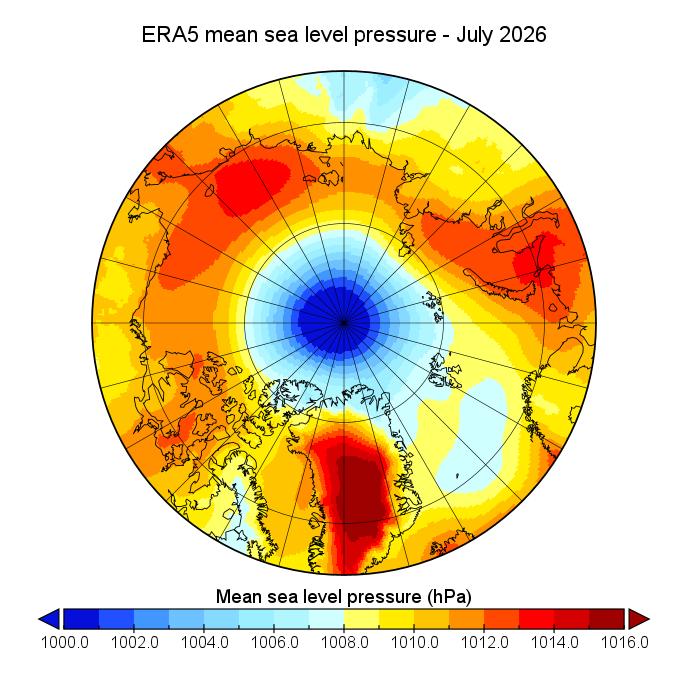
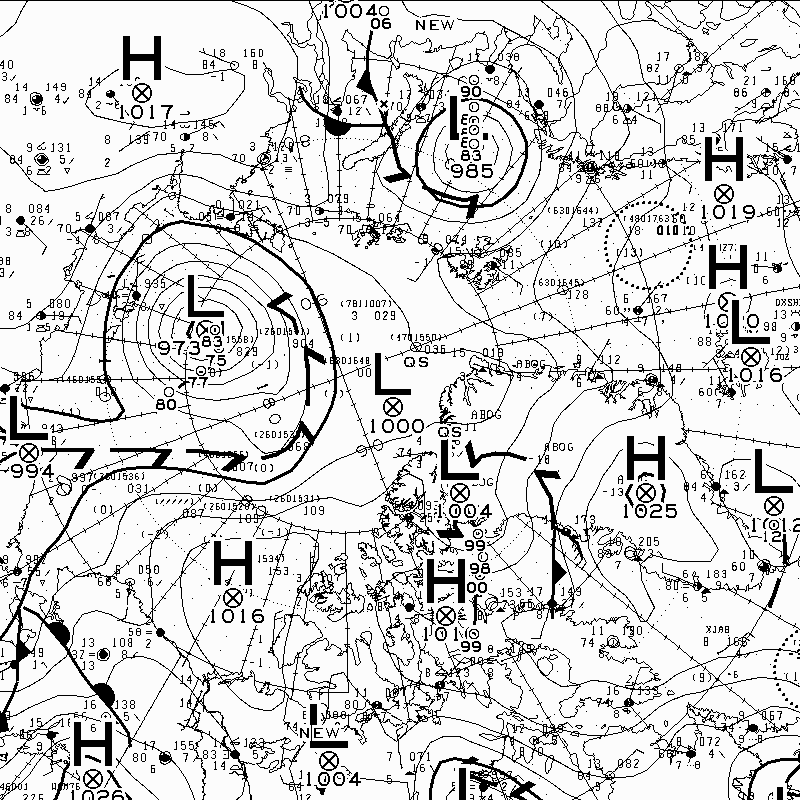
July was once again dominated by low pressure and anomalously low temperatures over the central Arctic:
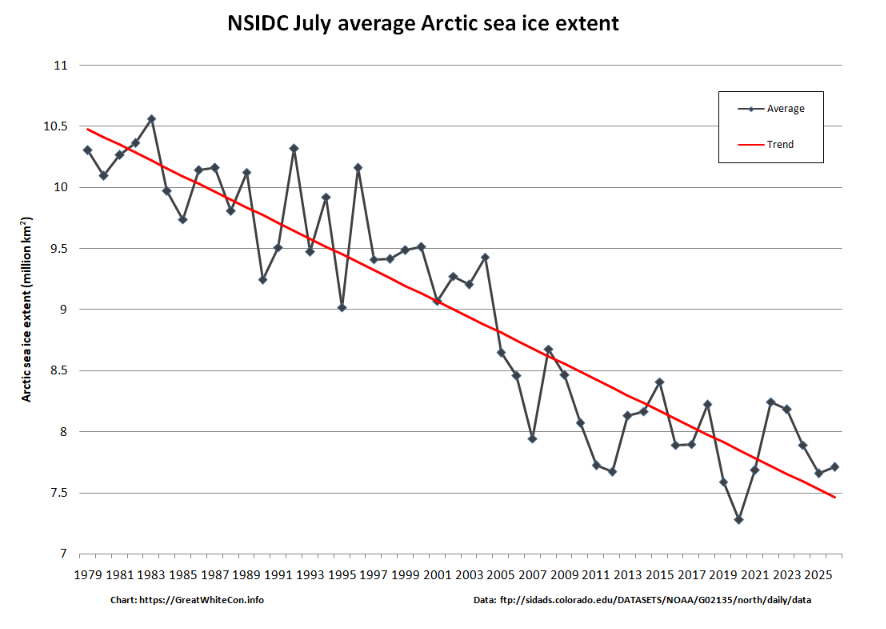
As a consequence the NSIDC monthly average extent for July was 6th lowest in their record going back to 1979:
August began with low pressure still dominant. According to the Canadian Meteorological Centre yet another cyclone bottomed out with a mean sea level pressure of 973 hPa on the 4th:
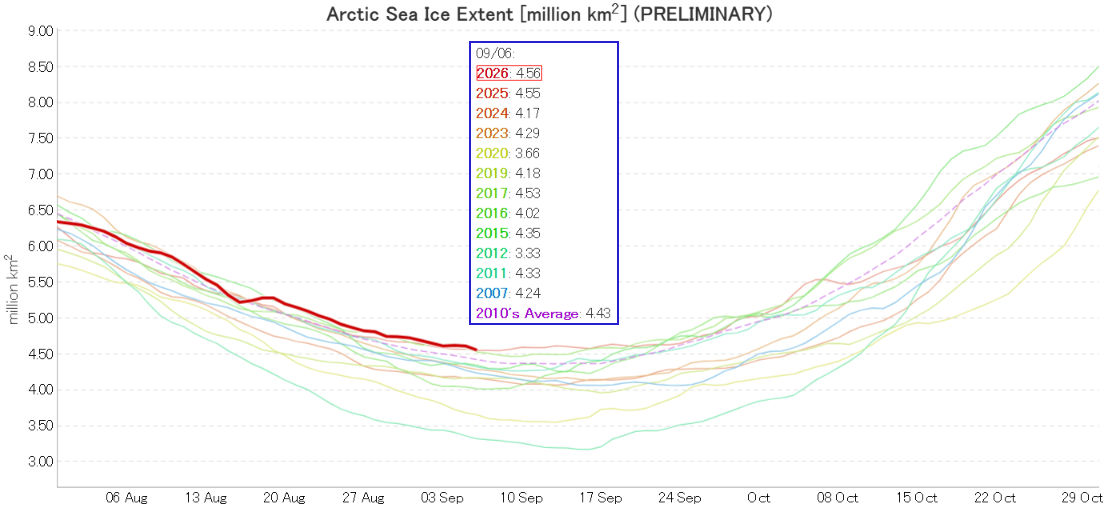
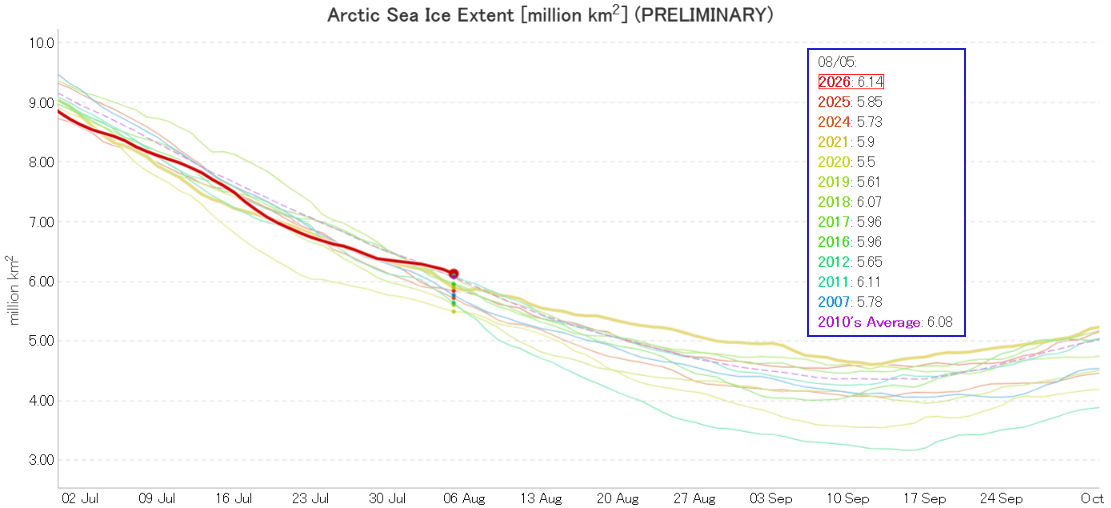
The continuing cyclonic activity has dispersed the sea ice, and JAXA extent is currently 12th lowest in their record:
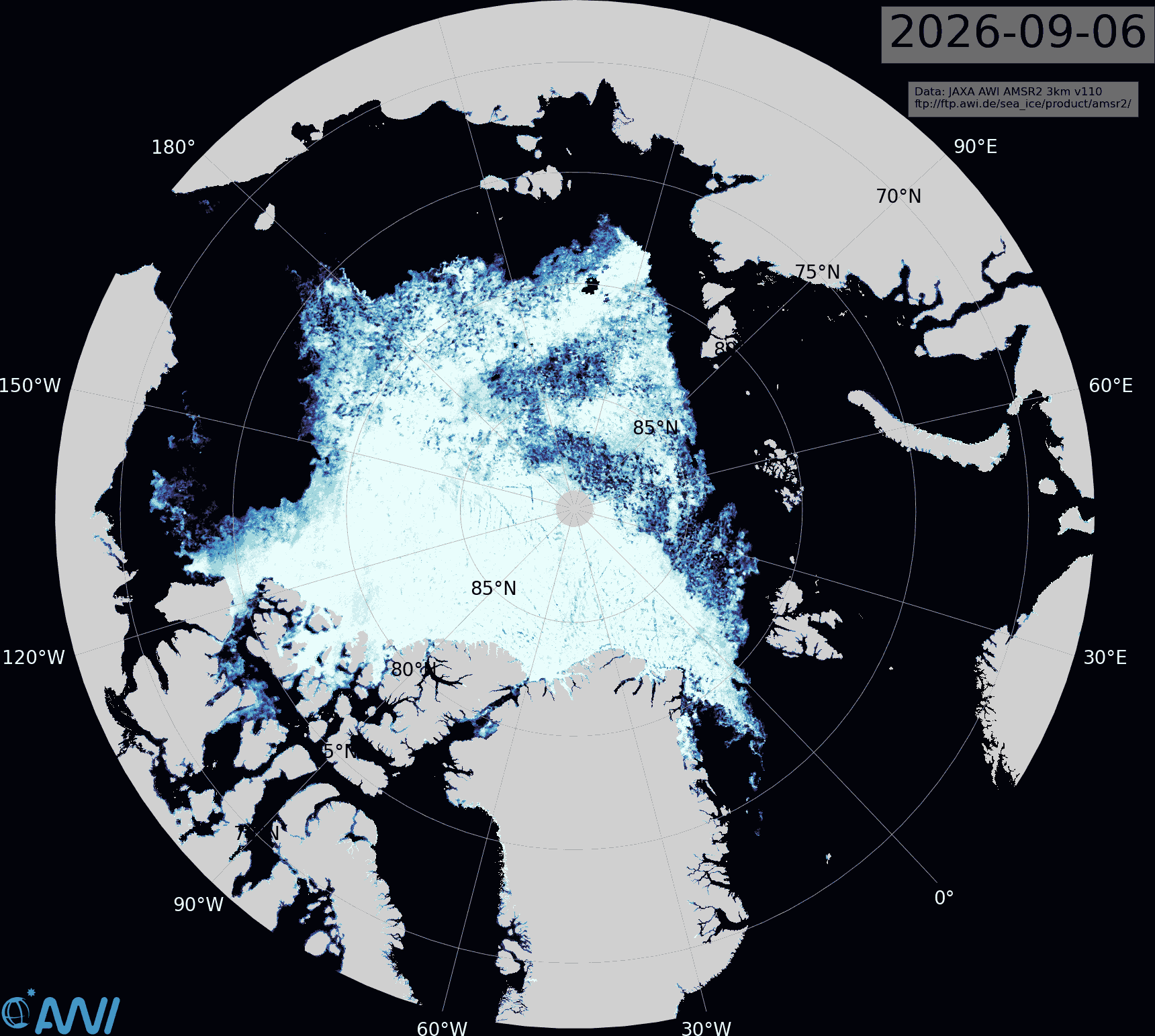
The other side of the same coin is that reduced sea ice concentration is now apparent across large areas of the Central Arctic Basin:
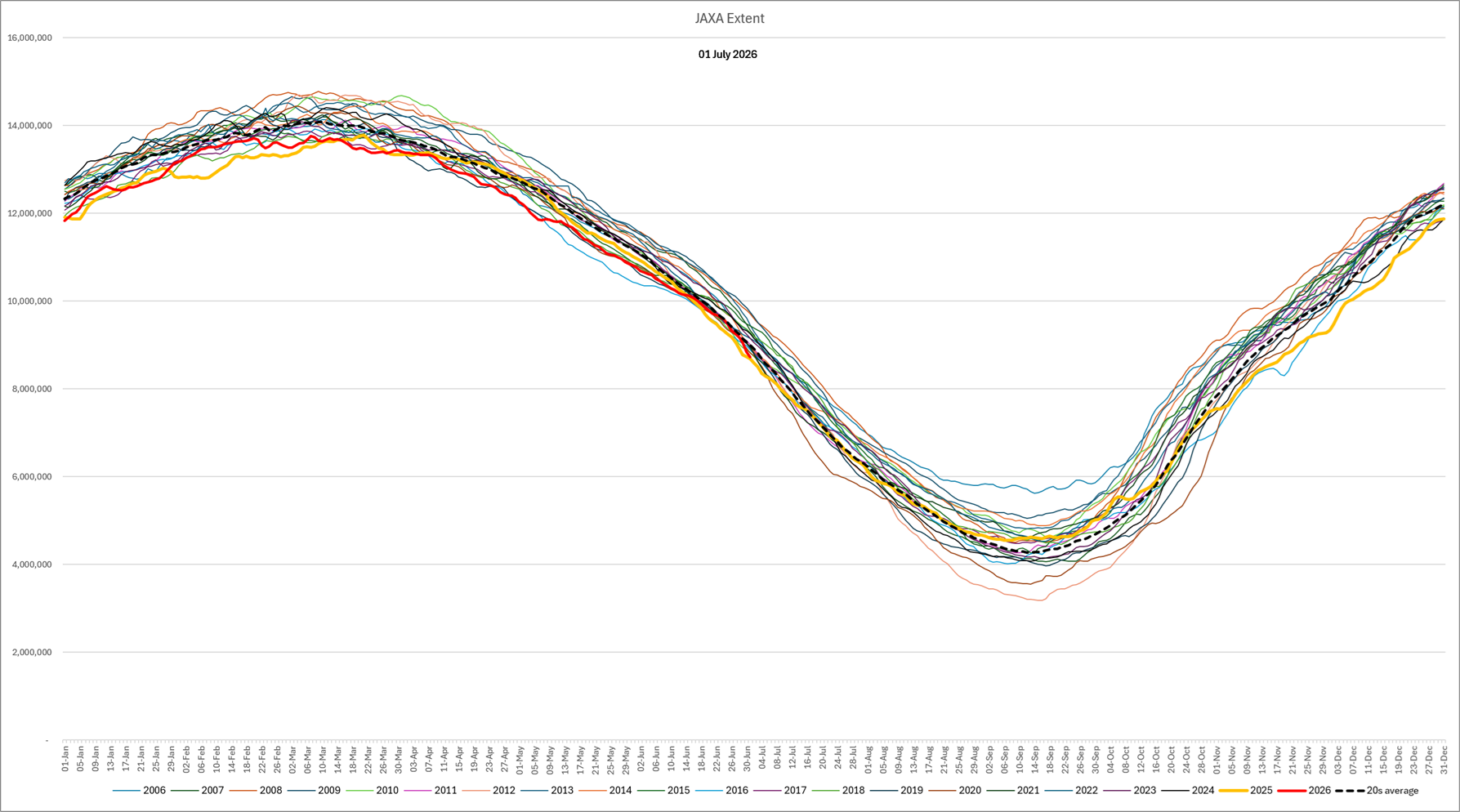
At the beginning of July the JAXA/ViSHOP web site is undergoing maintenance yet again! Here here is how their 2 day average extent graph looked for July 1st:
Extent is currently second lowest for the date, above 2025 by a whisker.
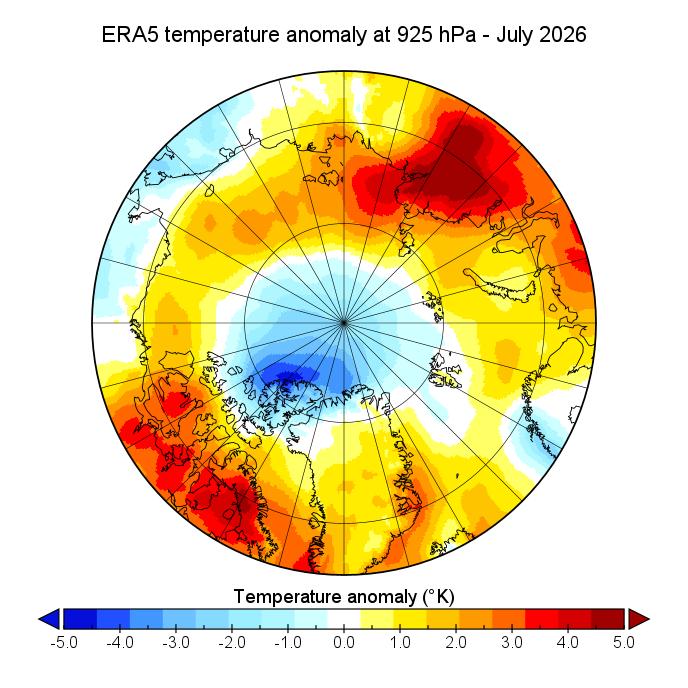
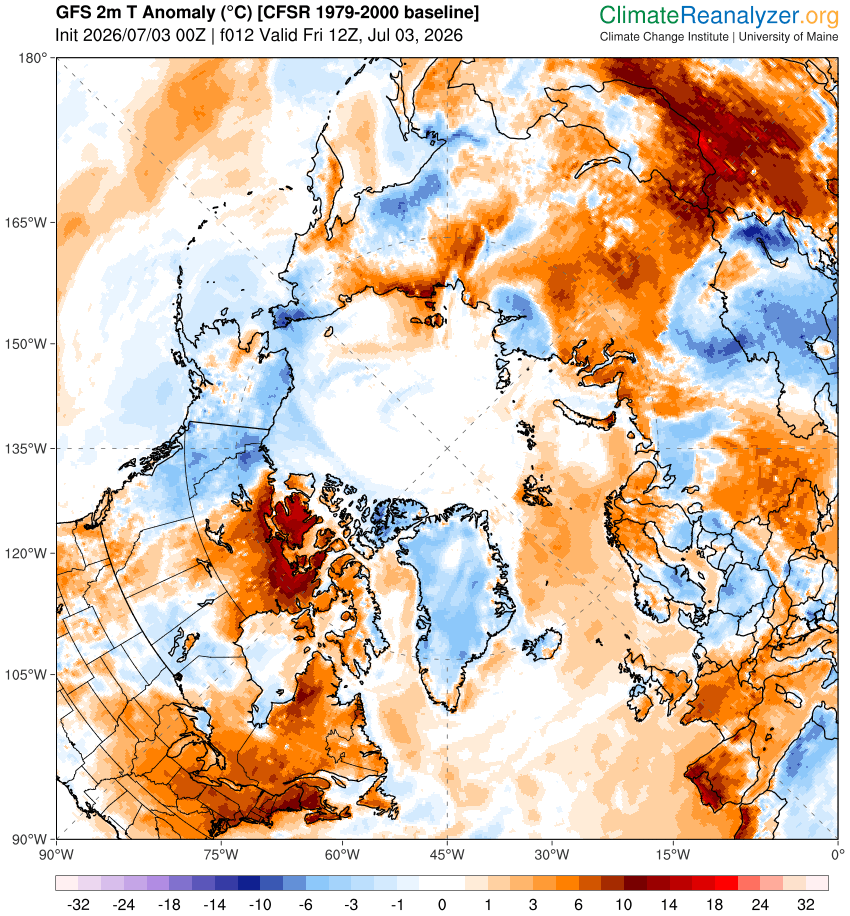
Looking next at temperature anomalies across the Arctic, the Beaufort and Chukchi Seas are slightly cooler than the 1979-2000 climatology. However, the East Siberian Sea and particularly the Canadian Arctic Archipelago are well above what used to be considered “normal”:
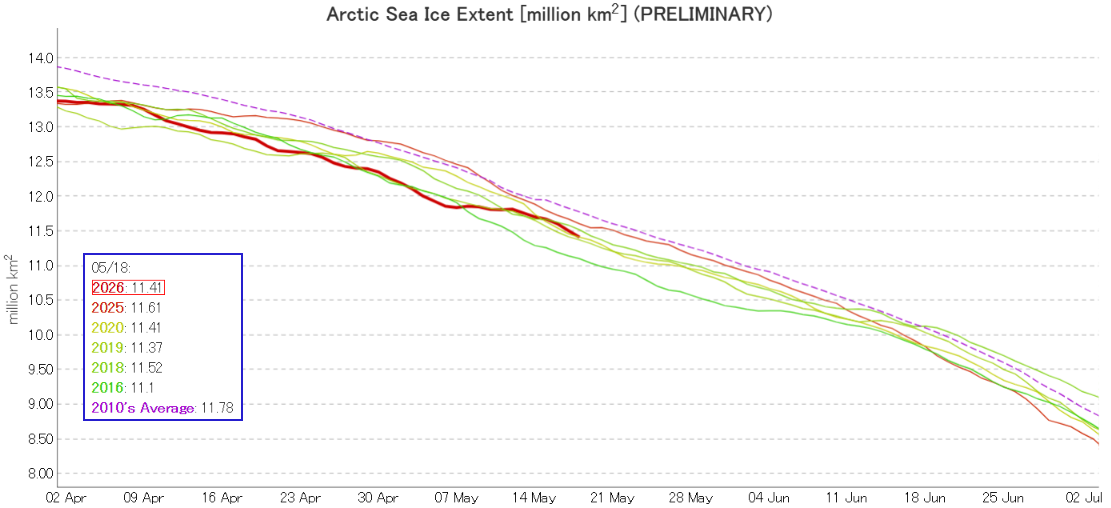
JAXA have updated their visualisations of Arctic sea ice extent data. The “traditional” 2 day average graph is now labelled “preliminary”, and currently shows 2026 in a tie with 2020 for third lowest for the date:
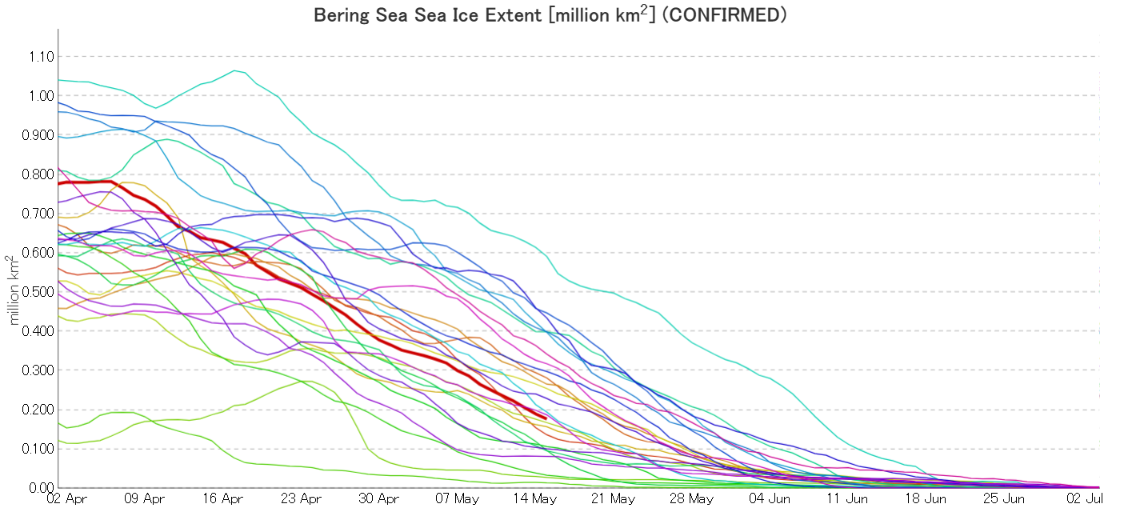
5 day averaged “confirmed” data is also available, including regional graphs. By way of example here’s JAXA’s latest extent graph for the Bering Sea, dated May 15th:
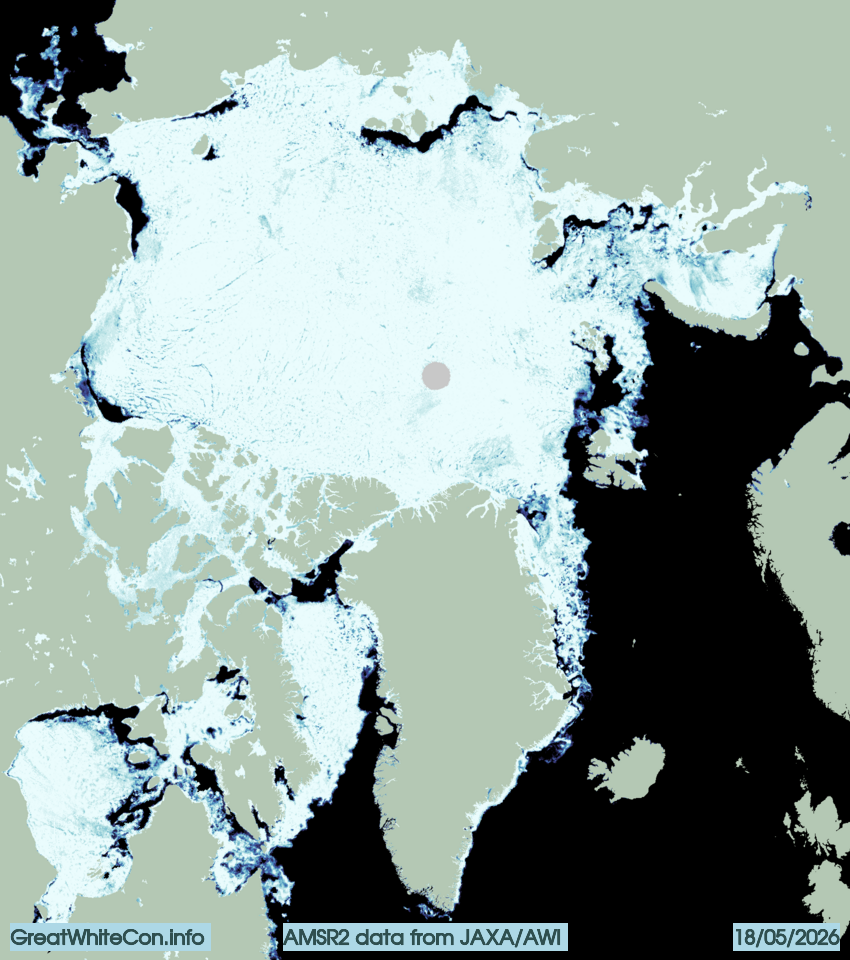
The Alfred Wegener Institute’s sea ice concentration data reveals open water in the Beaufort, Chukchi, East Siberian and Laptev Seas:
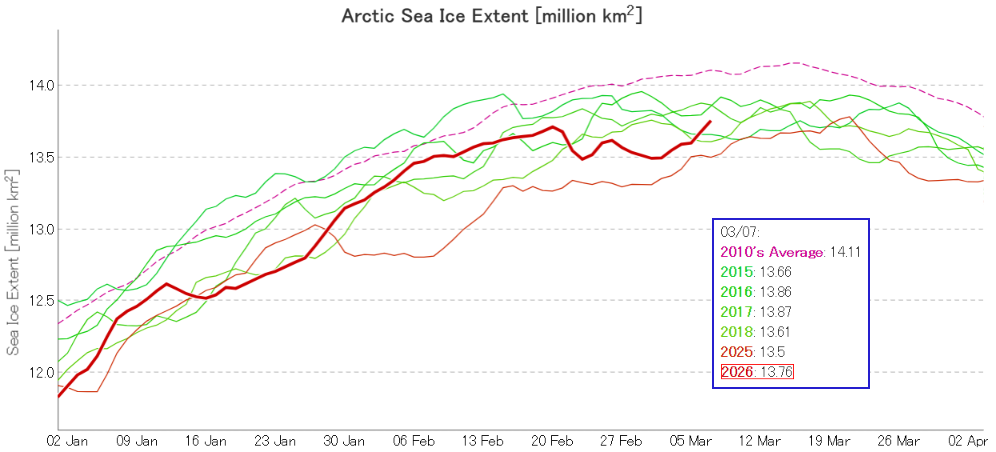
JAXA Arctic sea ice extent has just reached a new high for the year. At 13.76 million km² extent is currently 4th lowest for the date, just below last year’s maximum of 13.78 million km²:
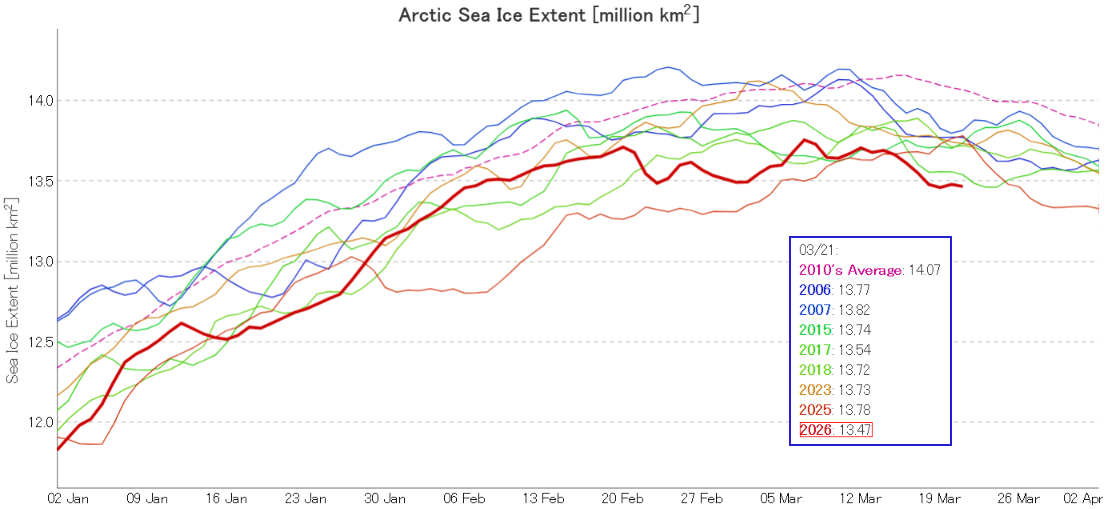
JAXA extent is currently lowest for the date in their record going back to 1979. It’s highly likely that the metric peaked on March 7th which is a new record low maximum, albeit by a mere 20 thousand km²:
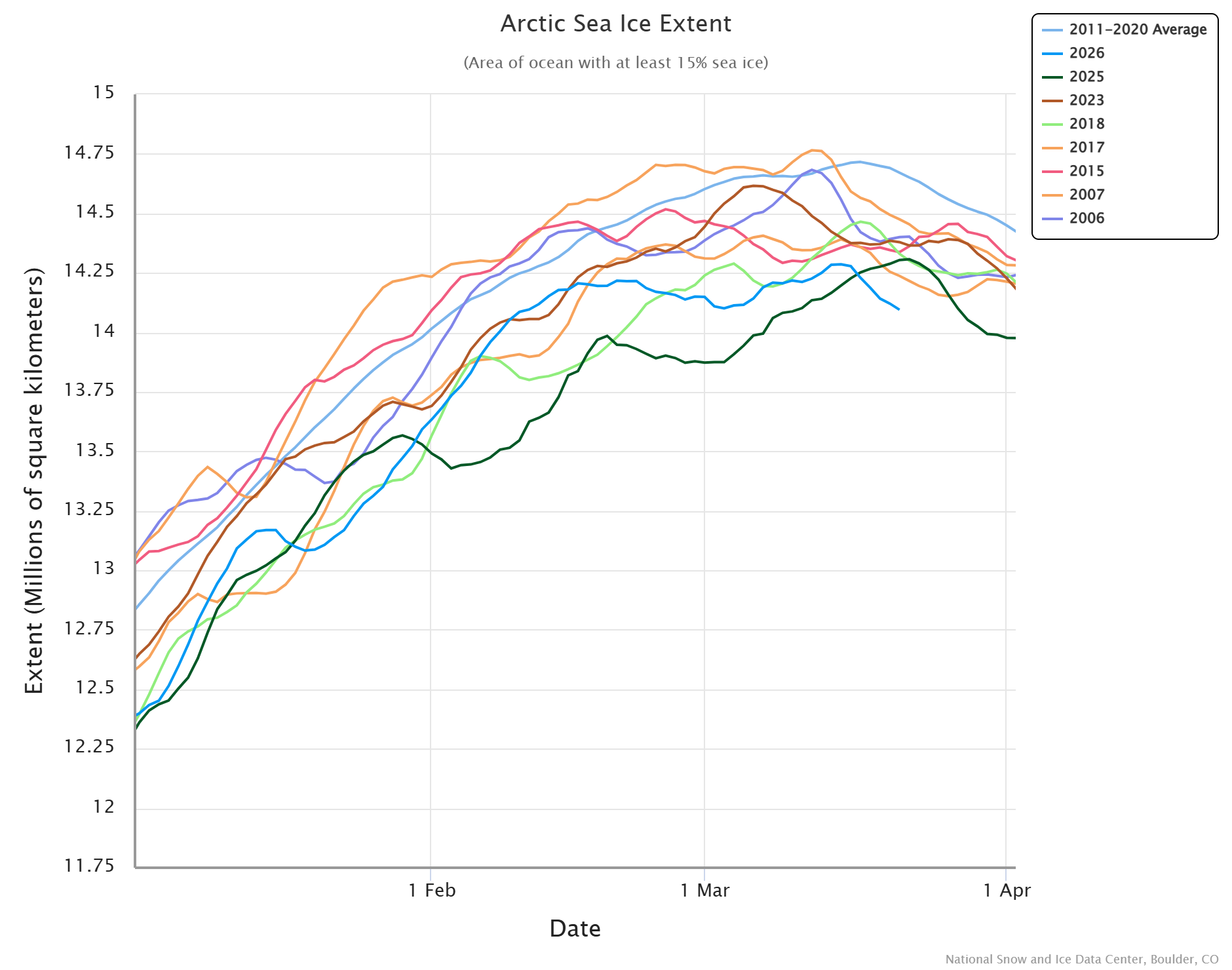
By way of a contrast, the National Snow and Ice Data Center’s 5 day averaged extent maximum of 14.29 million km² was reached on March 15th:
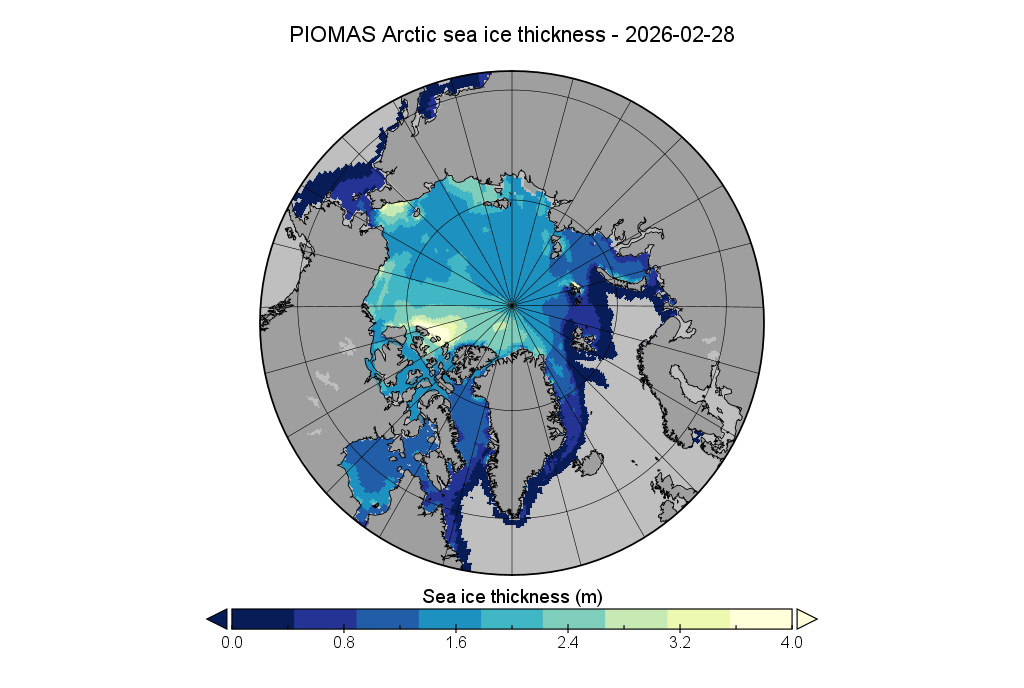
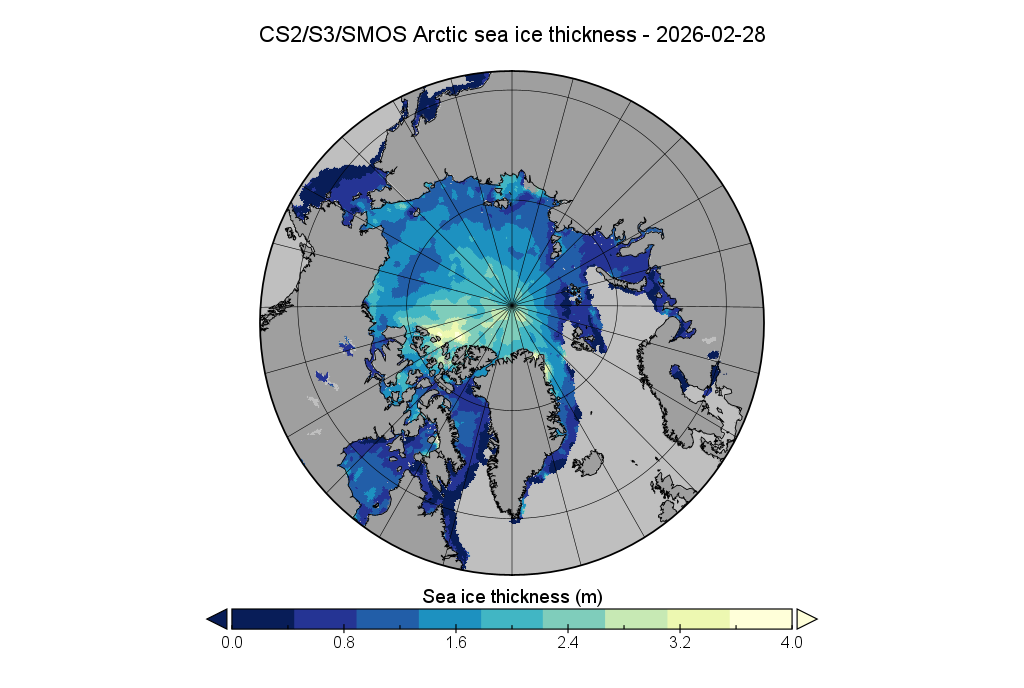
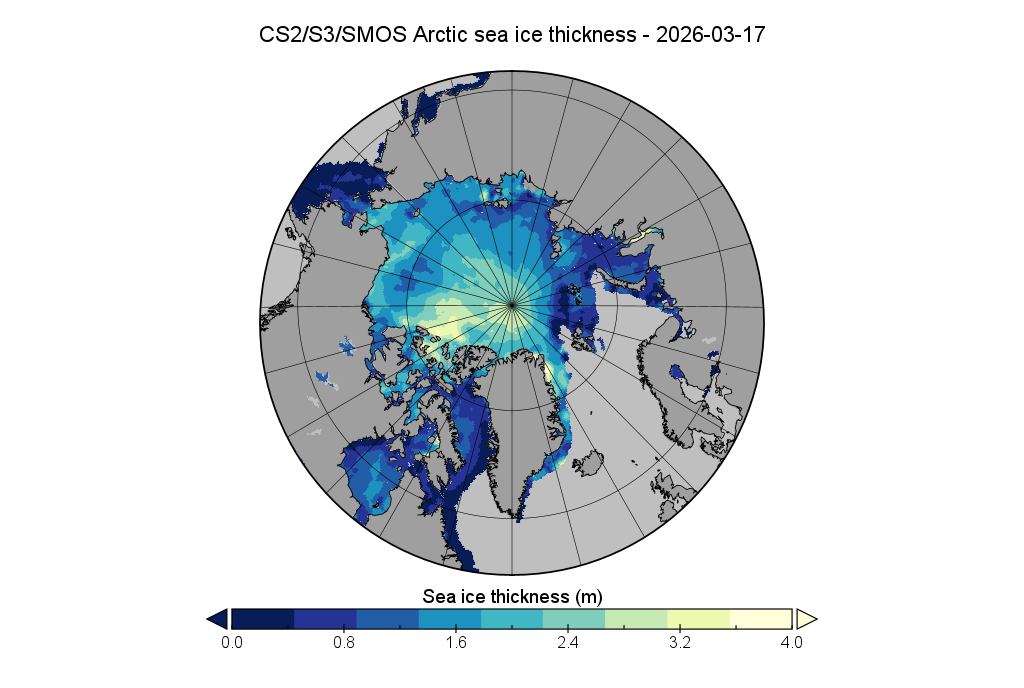
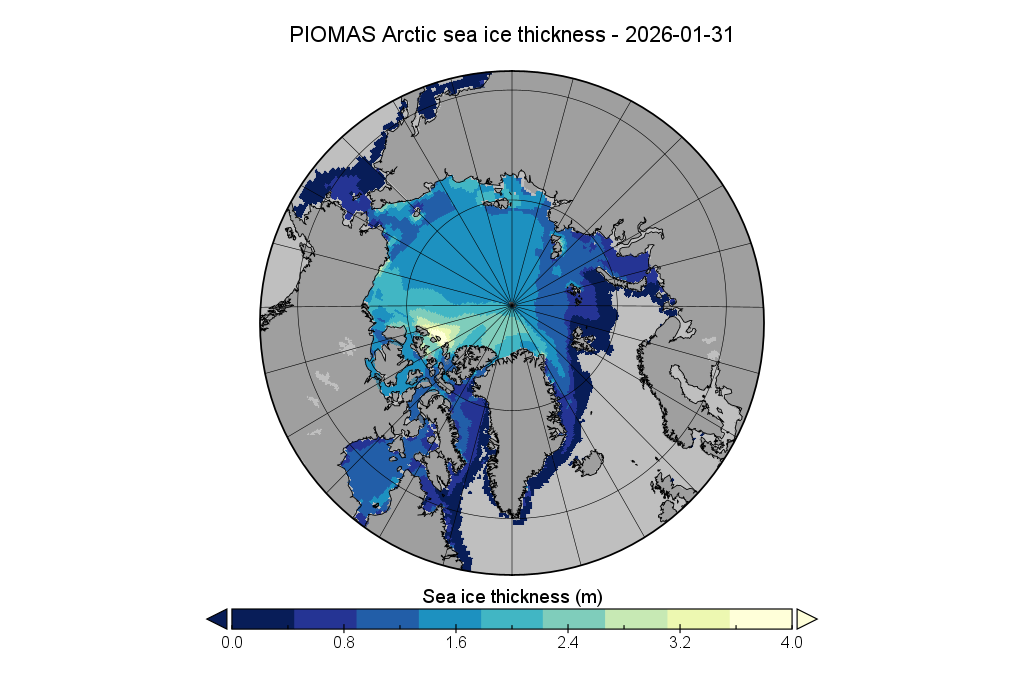
Here is the mid month update on the AWI’s CryoSat-2/Sentinel 3/SMOS Arctic sea ice thickness map:
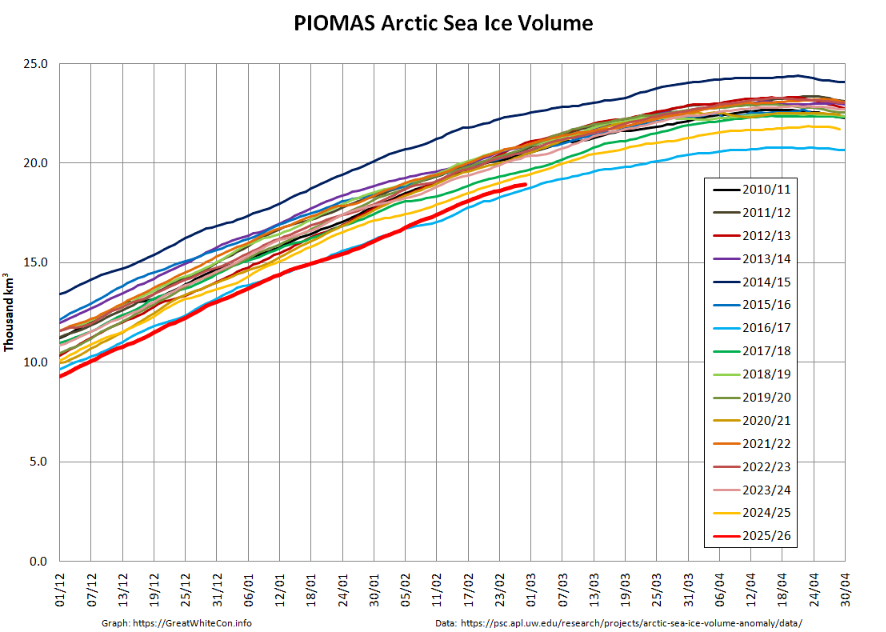
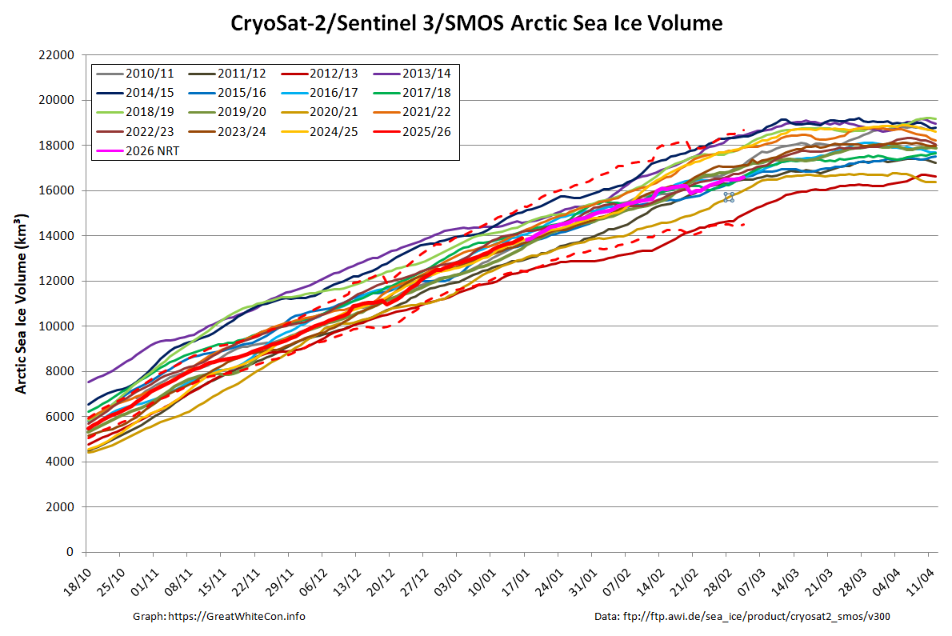
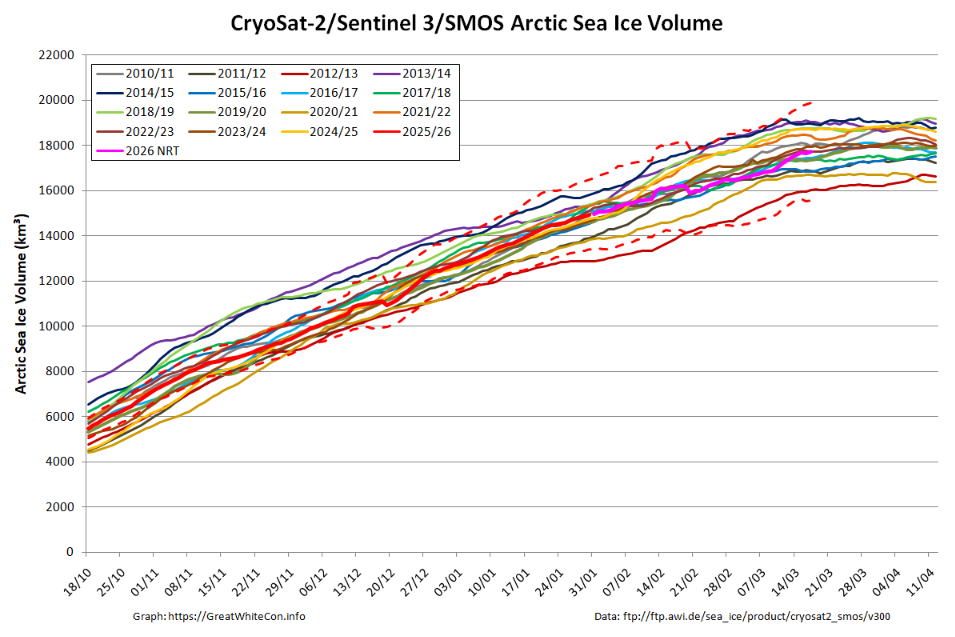
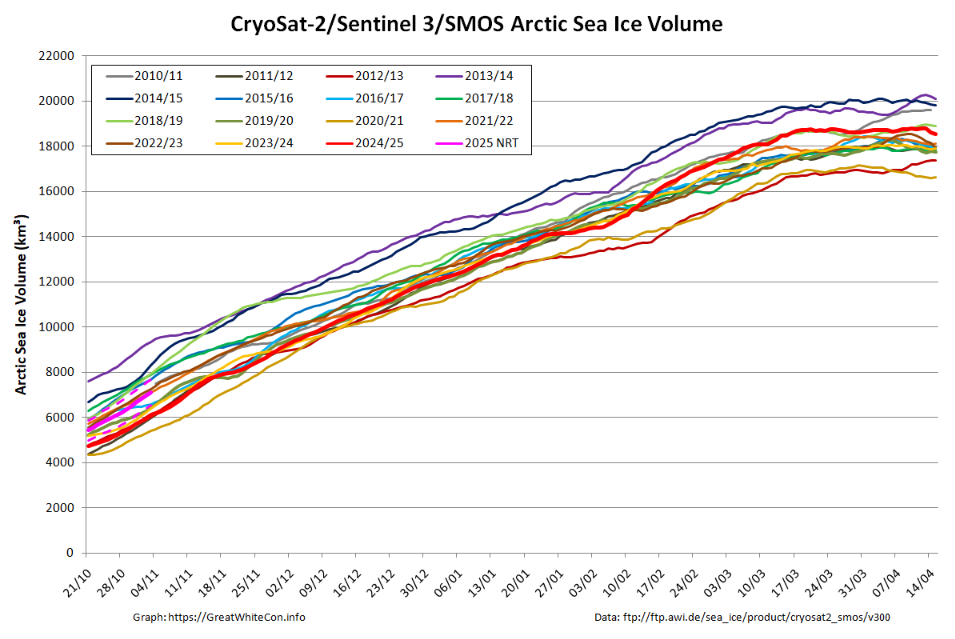
Here too is the associated sea ice volume graph:
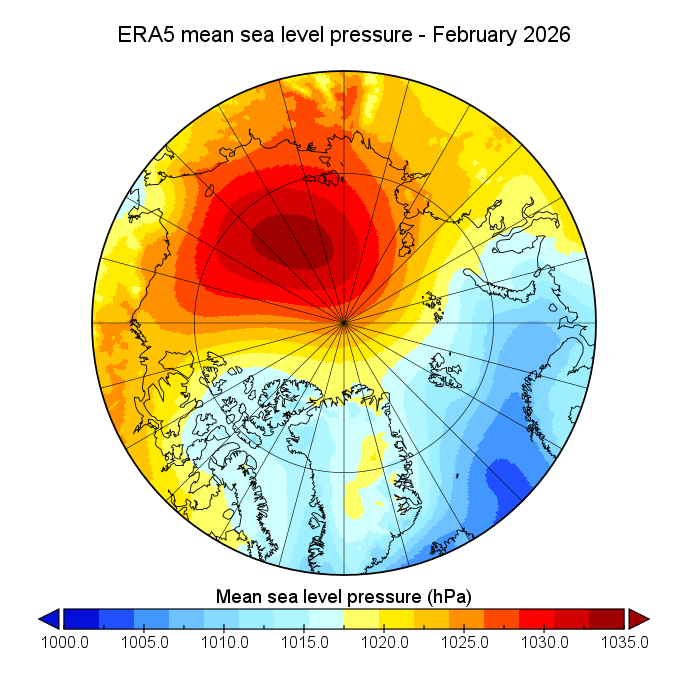
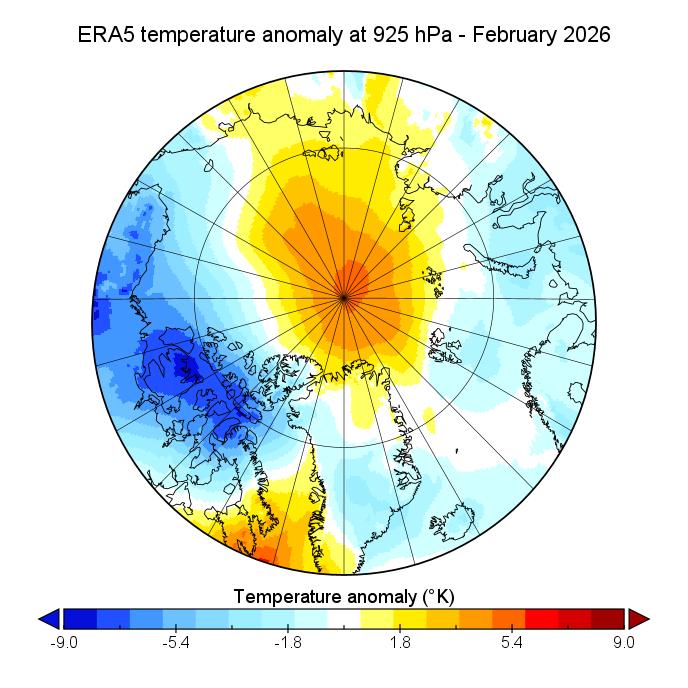
Next here are the ERA5 MSLP and 925 hPa air temperature anomaly maps for February 2026, now in “Greenland down” orientation to match the thickness maps:
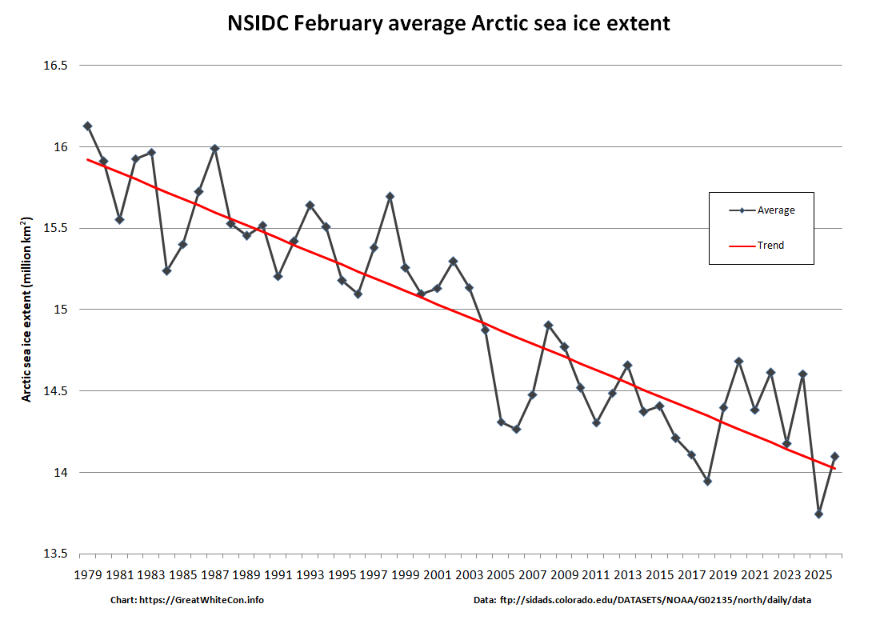
together with the NSIDC monthly average extent graph for February:
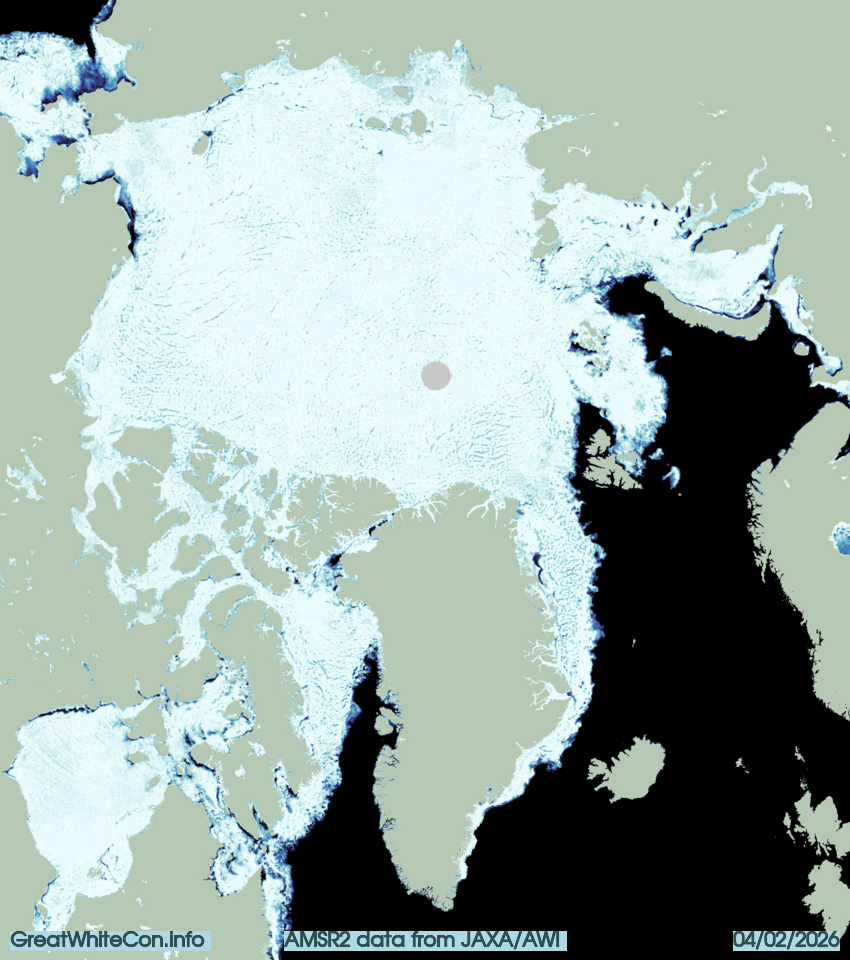
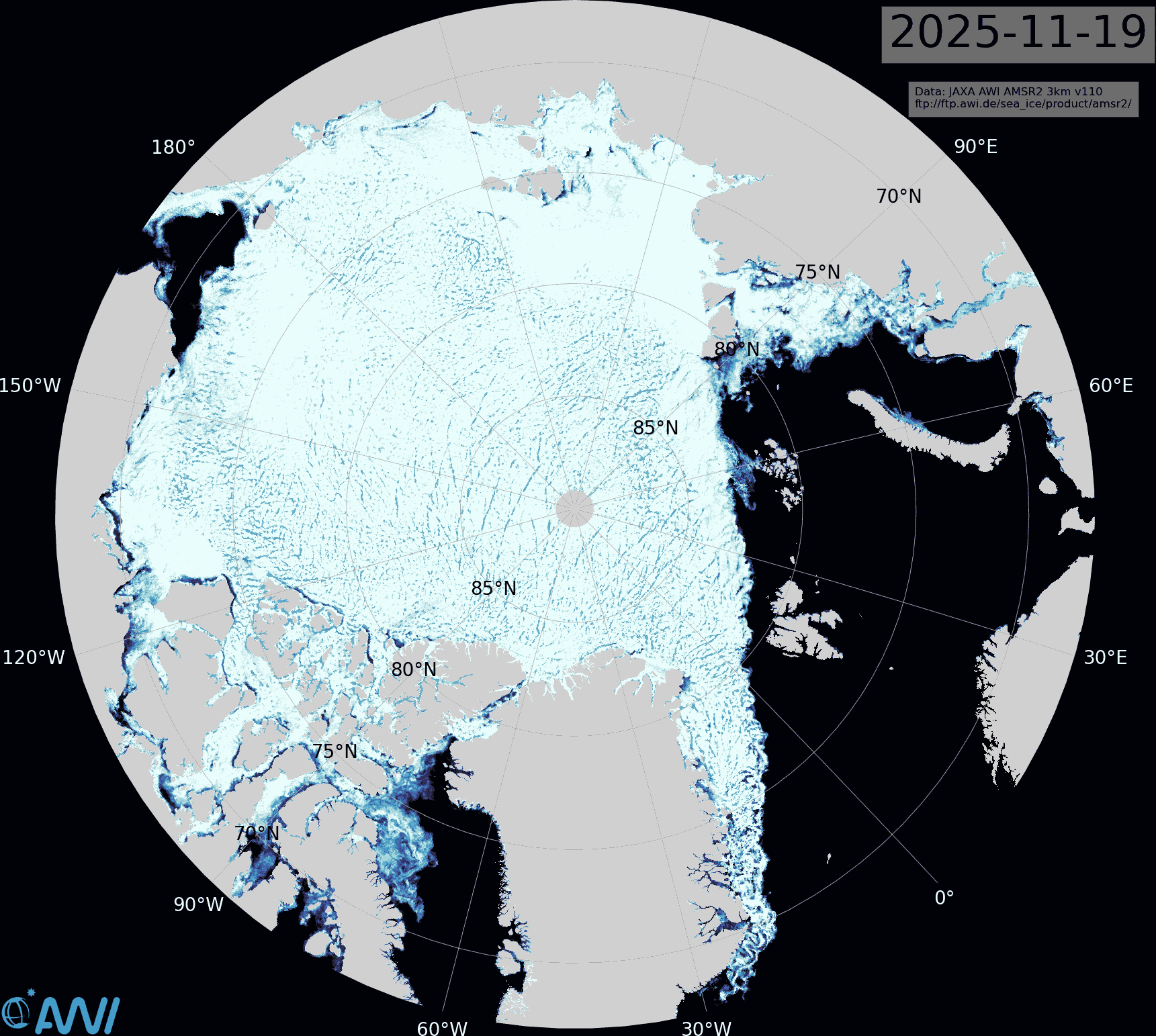
Hudson Bay has fully frozen over during January. However, there is still open water north of Svalbard and in the North Water Polynya. It’s even possible to go swimming in the Nares Strait according to the latest AMSR2 concentration map from the Alfred Wegener Institute:
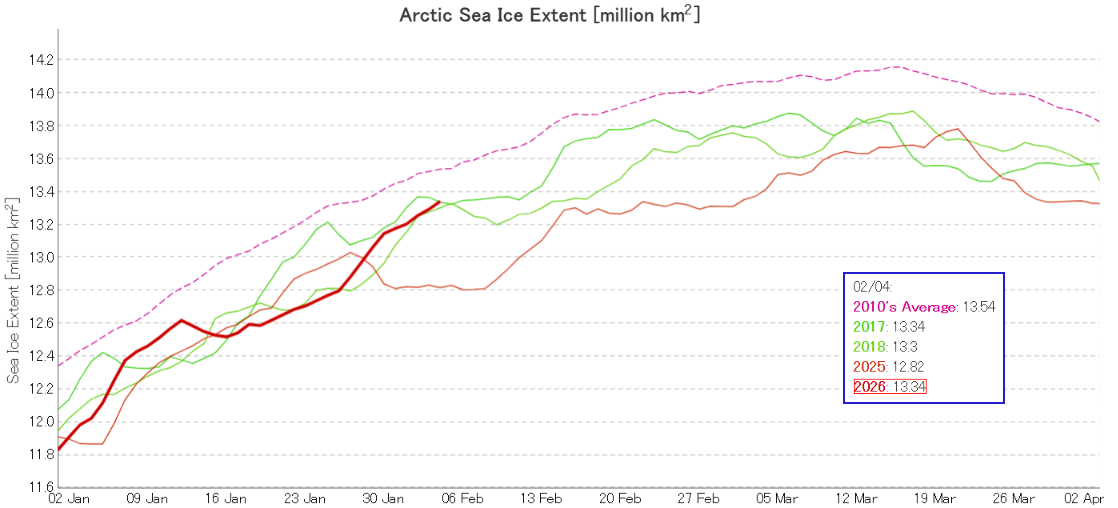
JAXA extent is currently 3rd lowest for the date, in a “statistical tie” with 2017:
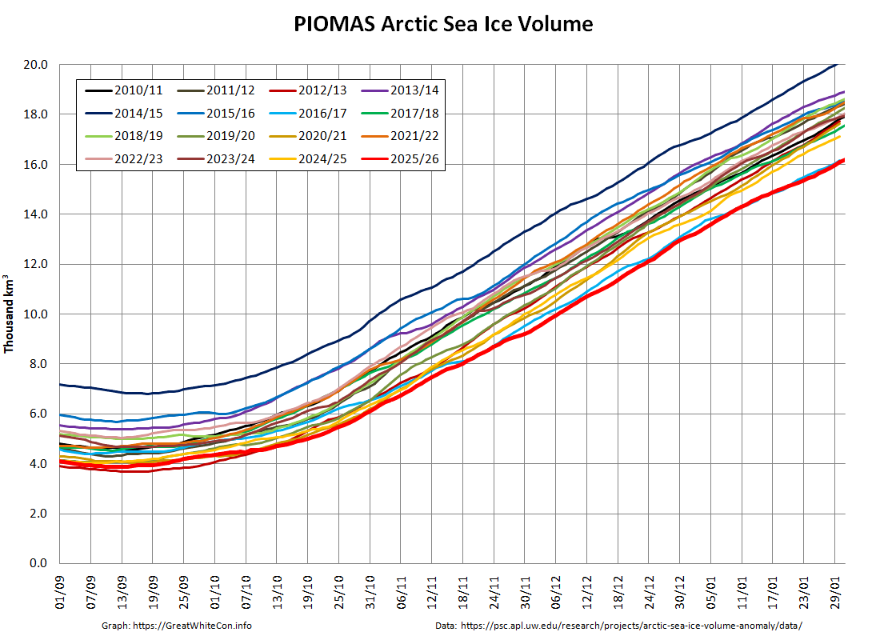
Looking at the third dimension next, PIOMAS volume was second lowest for the date by a whisker at the end of January:
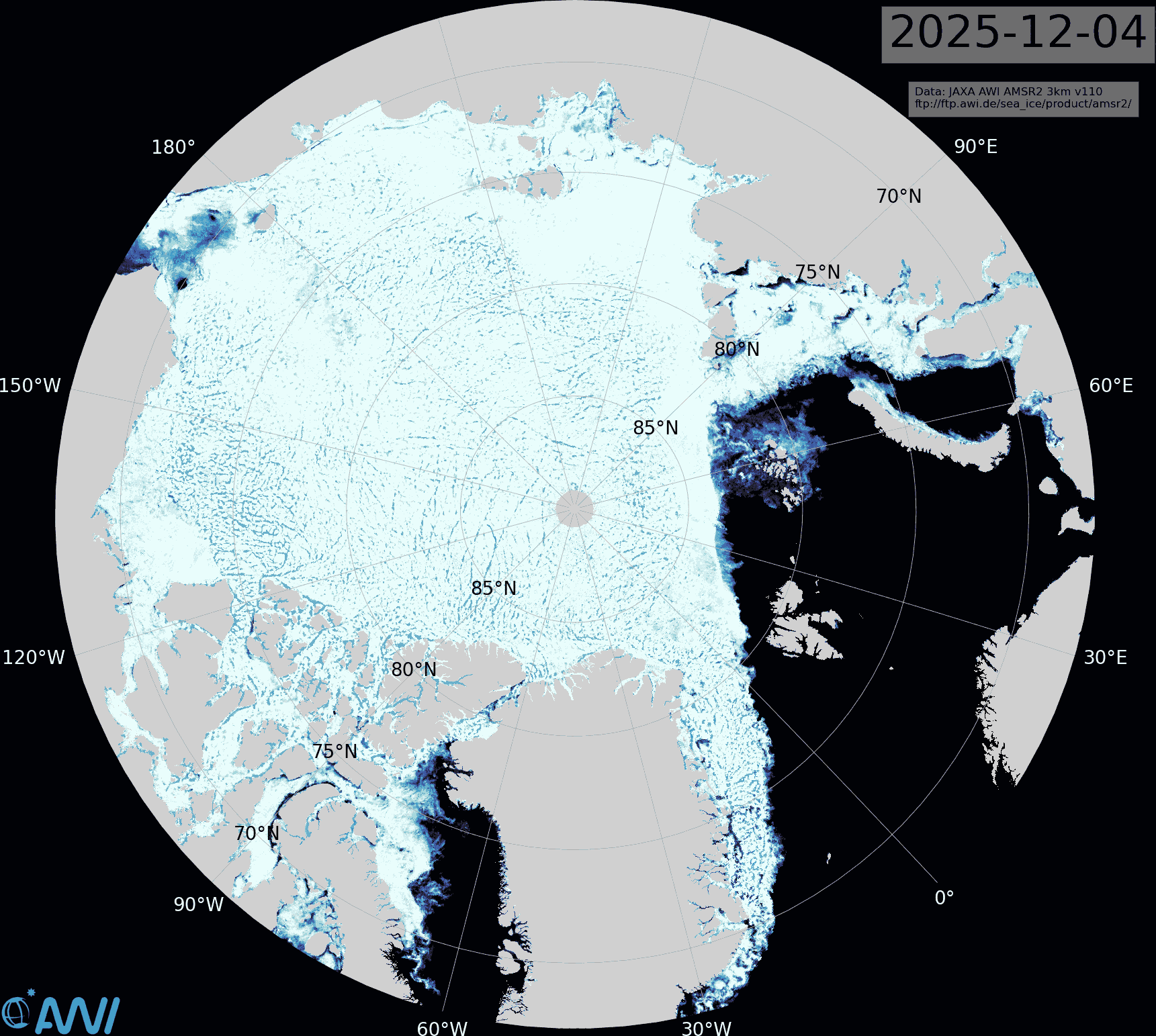
The latest Alfred Wegener Institute sea ice concentration map shows that the Pacific side of the Central Arctic Basin is now almost completely refrozen:
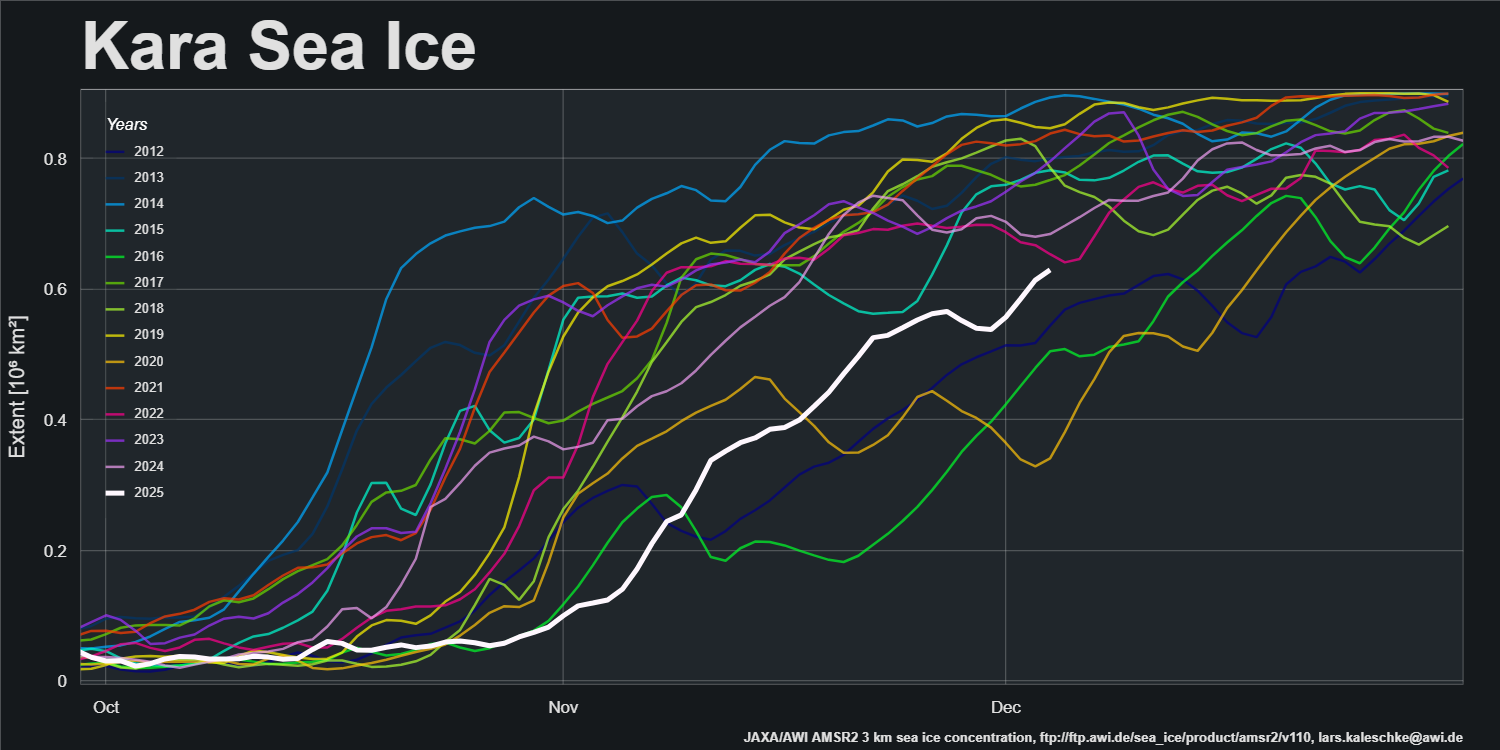
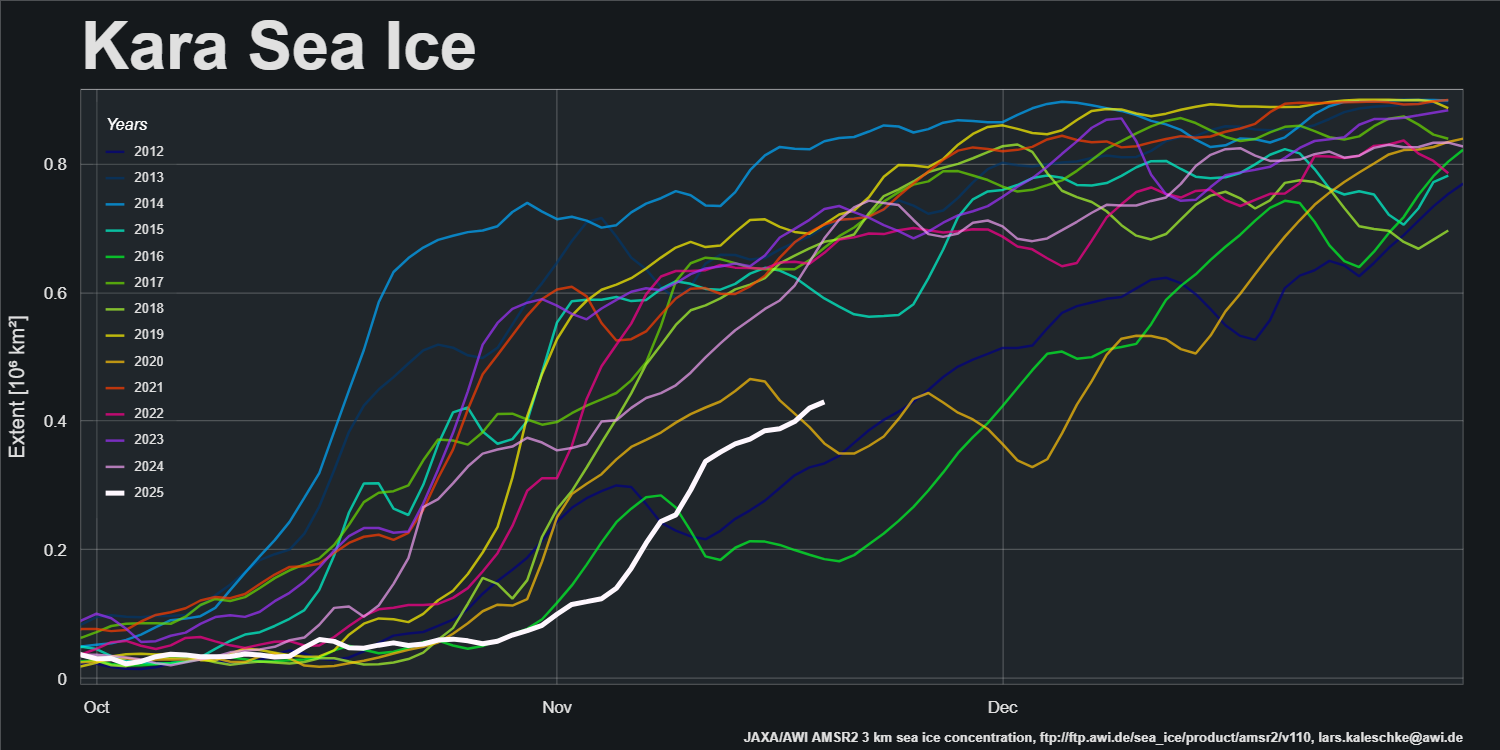
On the Atlantic side of the Arctic the Kara Sea is rapidly refreezing:
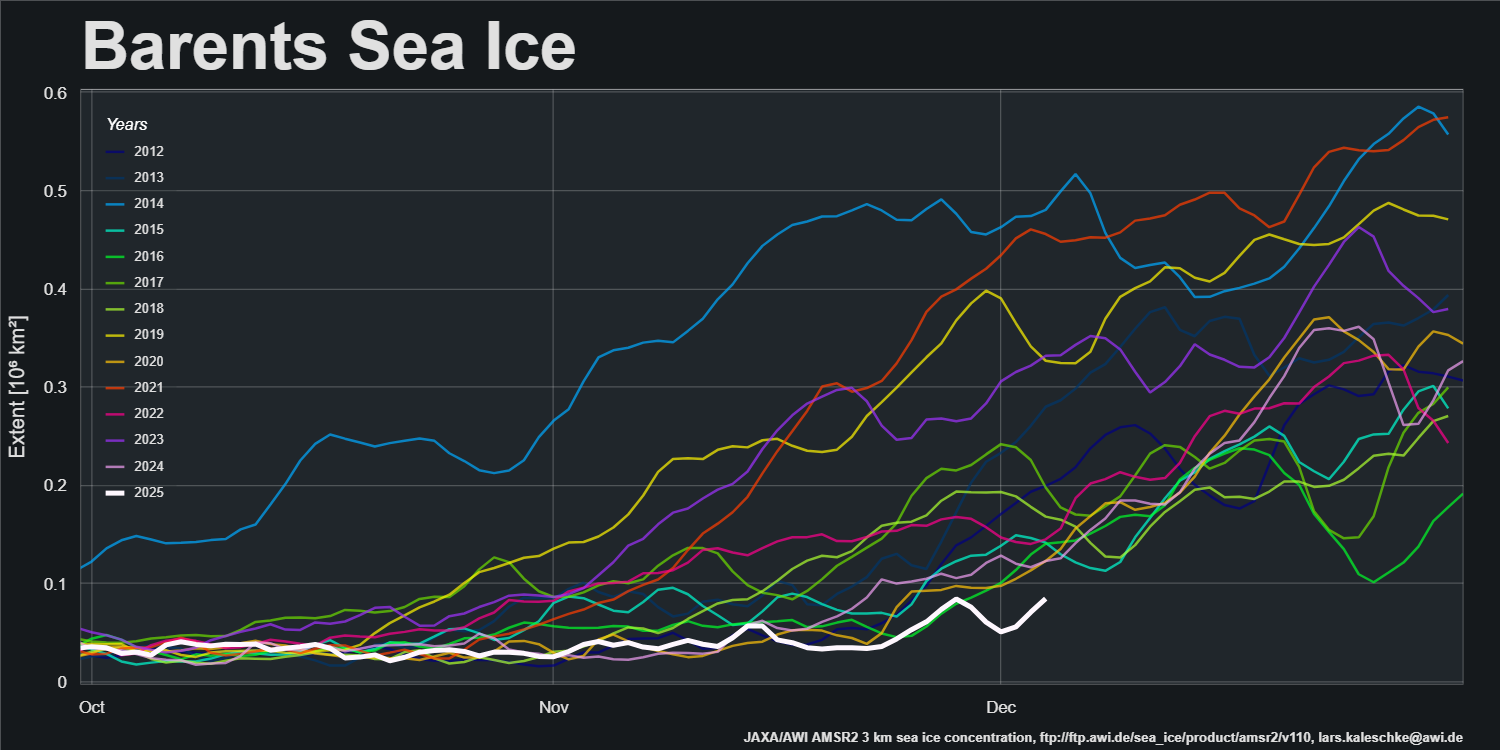
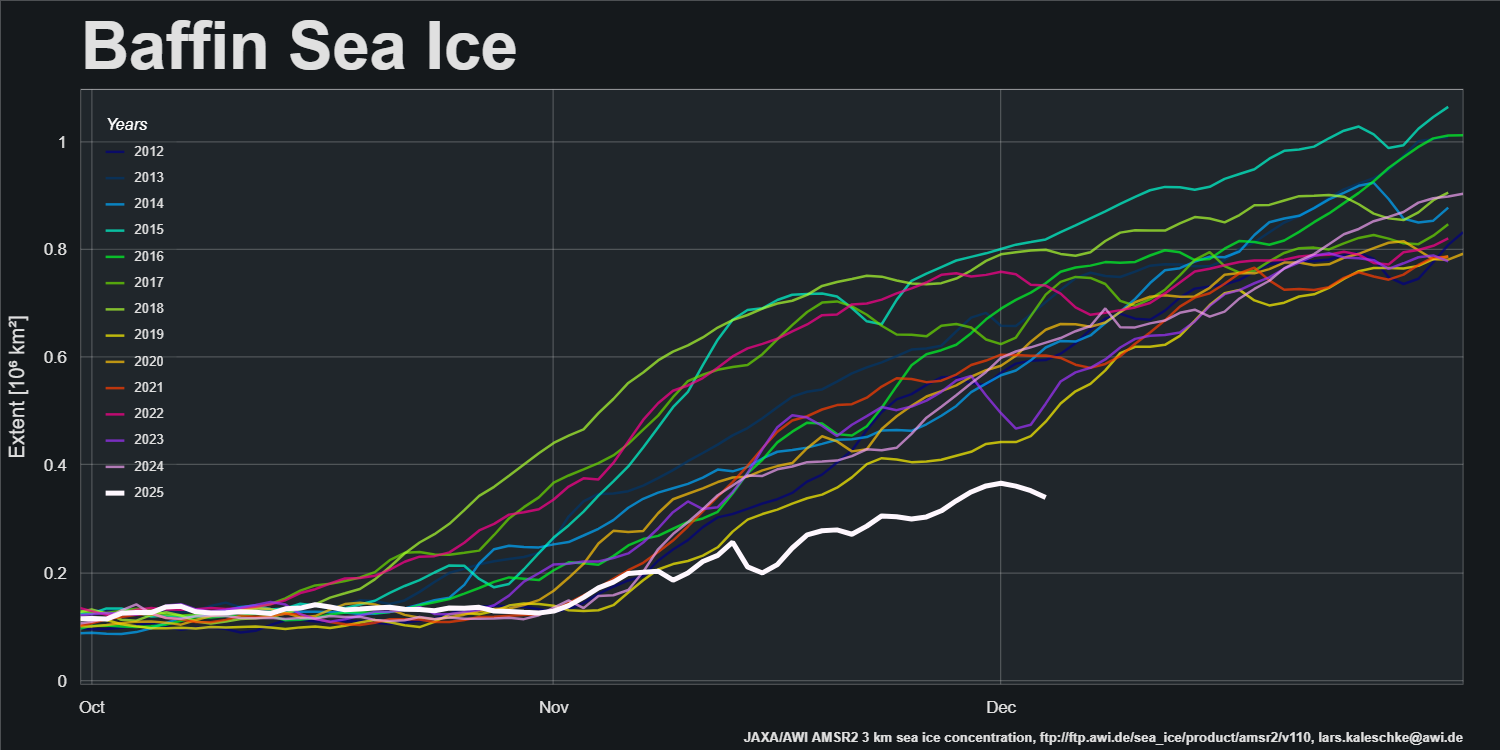
However, sea ice extent in the Barents Sea and Baffin Bay is currently lowest for the date in the AMSR2 record:
Pan Arctic JAXA/ViSHOP extent is currently lowest for the date in the satellite era:
The latest Alfred Wegener Institute sea ice concentration map shows the East Siberian and Laptev Seas almost completely refrozen. However, refreeze of the Kara Sea has barely begun:
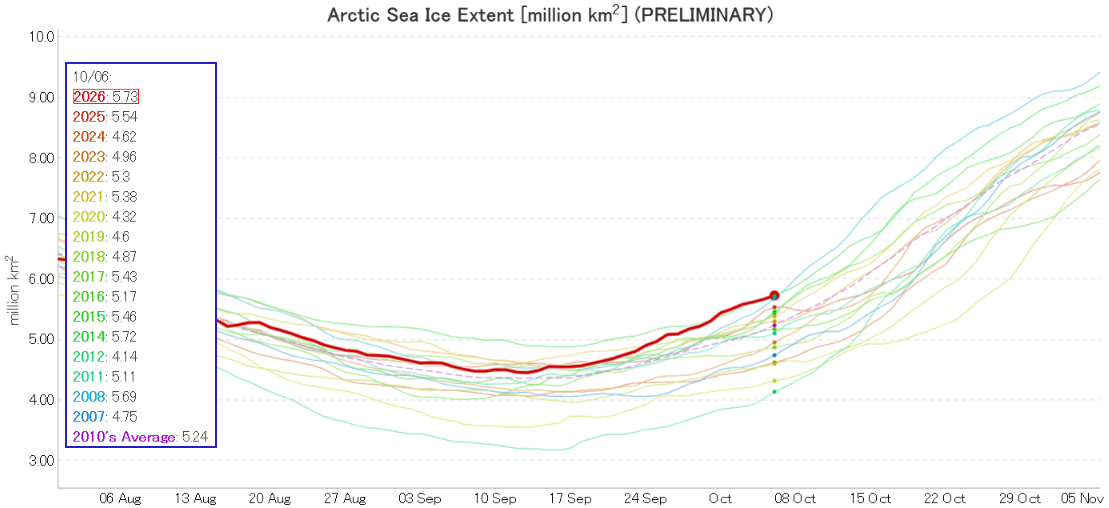
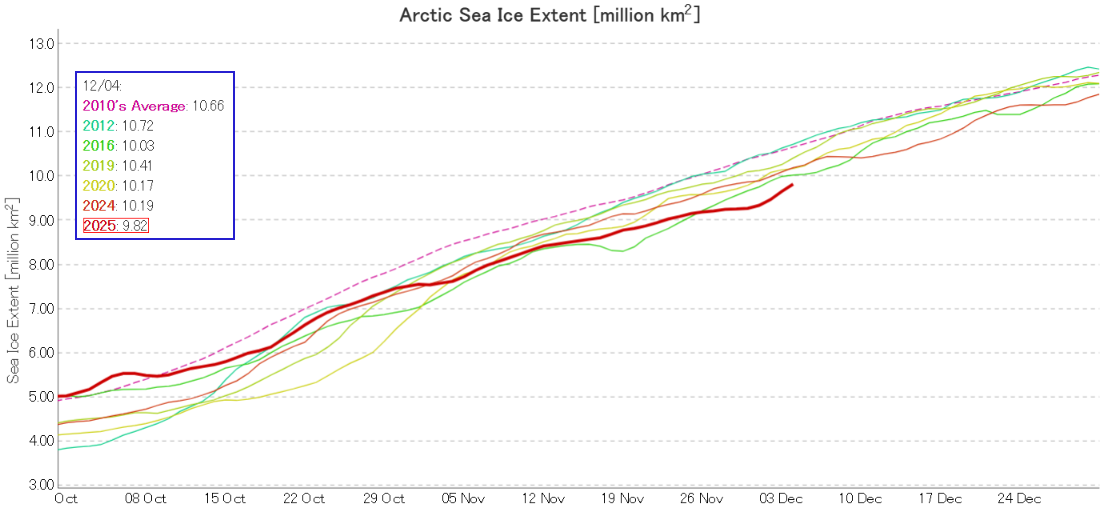
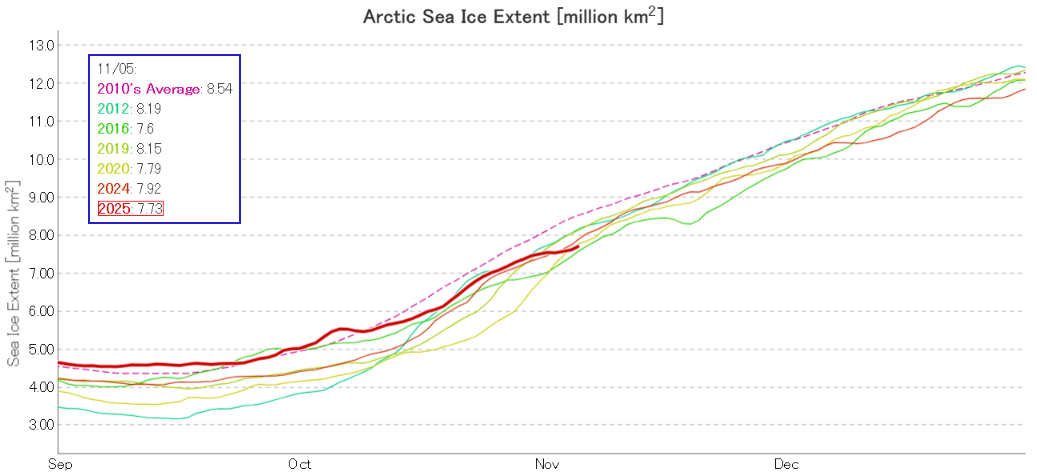
Across the Arctic as a whole the refreeze has slowed significantly, and JAXA/ViSHOP extent is now 2nd lowest in the satellite era:
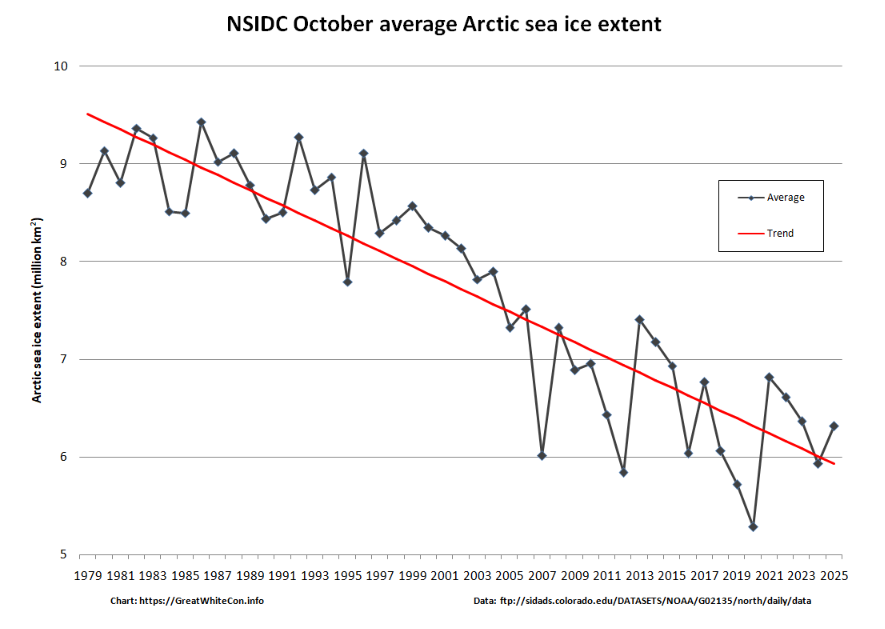
However, average NSIDC extent for the month of October was higher than last year and above the linear trend:
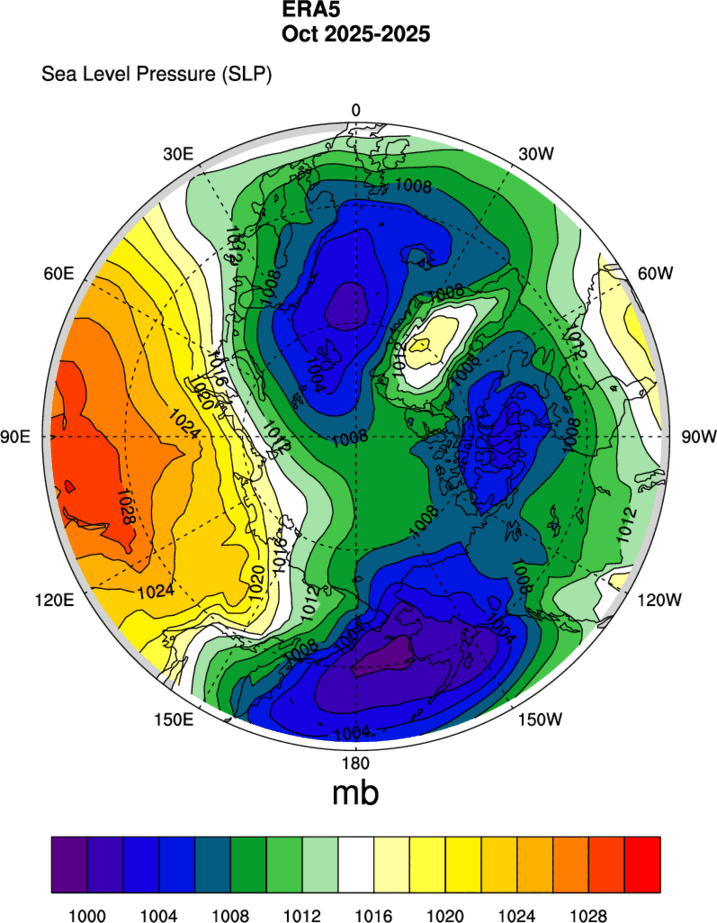
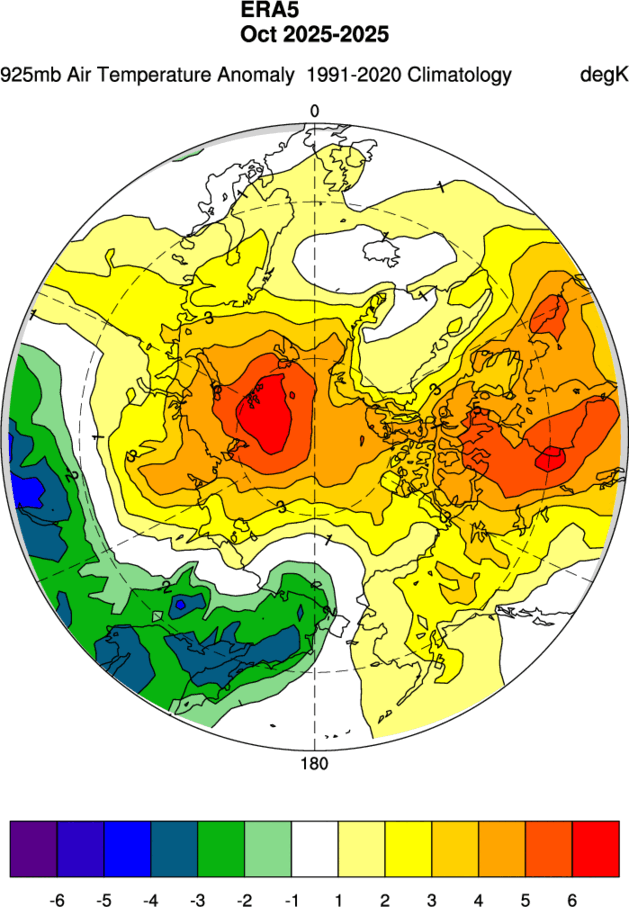
The ERA5 MSLP map for October shows high pressure over Siberia, associated with lower than normal air temperatures at 925 hPa across the region. However, temperatures across almost the entire Arctic Ocean were above normal:
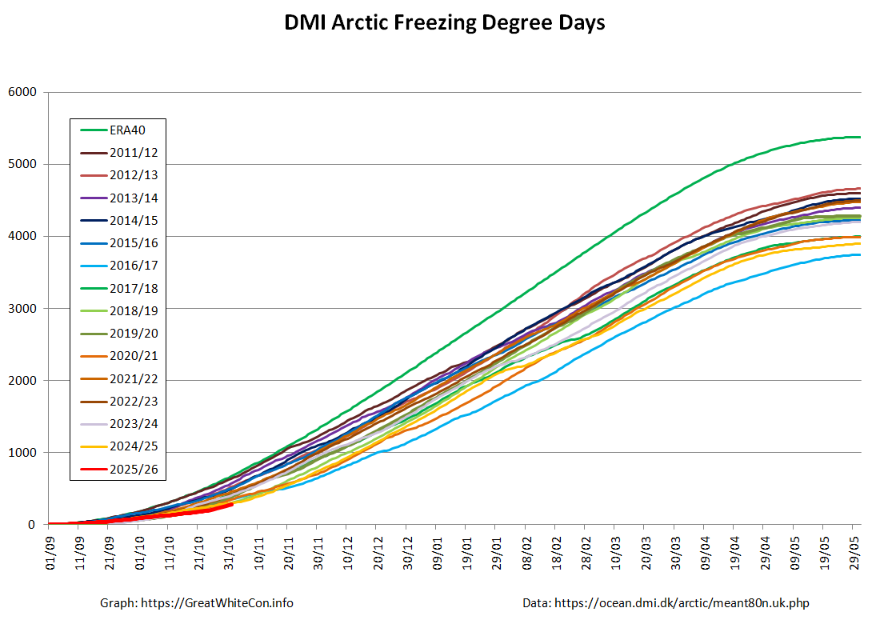
High Arctic freezing degree days based on DMI >80N data were lowest for the date at the beginning of November:
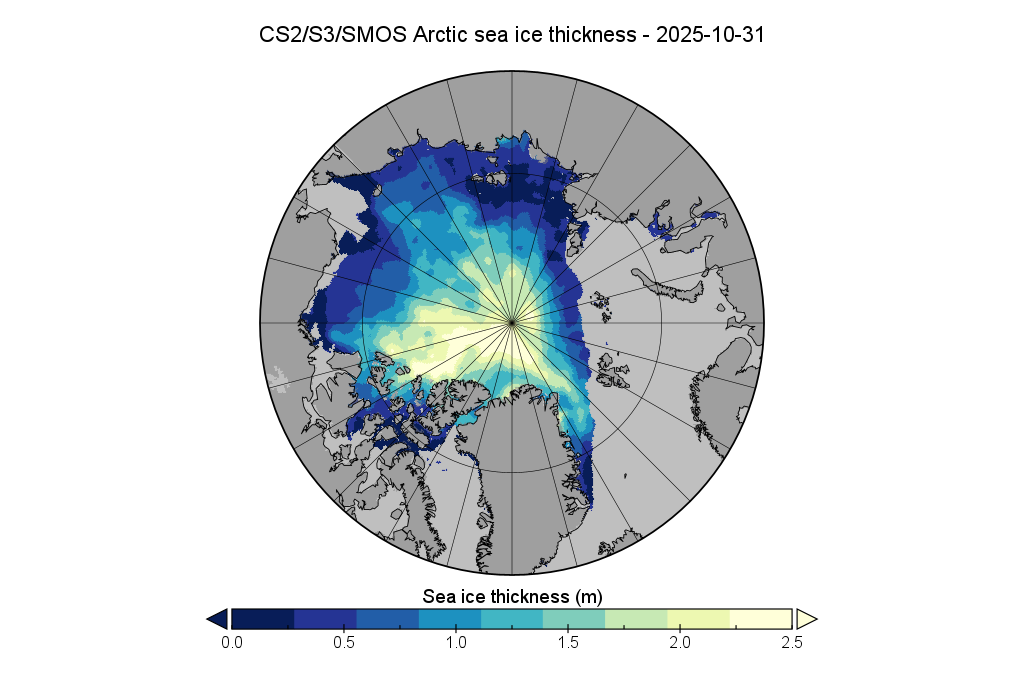
Bear in mind the caveats about the current lack of reliable SMOS data on the Atlantic side of the Arctic, and that Sentinel 3 data is only incorporated from Autumn 2023.
[Update – November 20th]
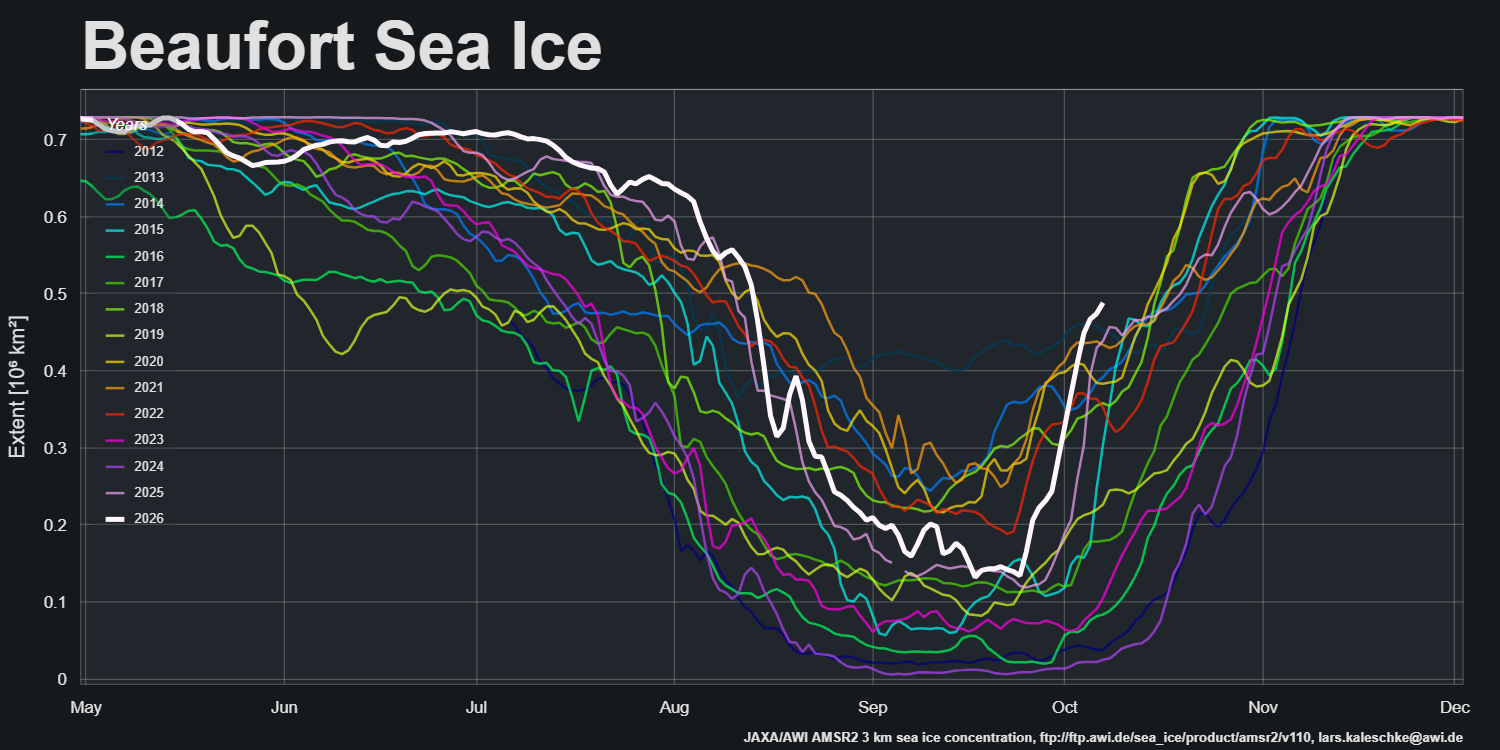
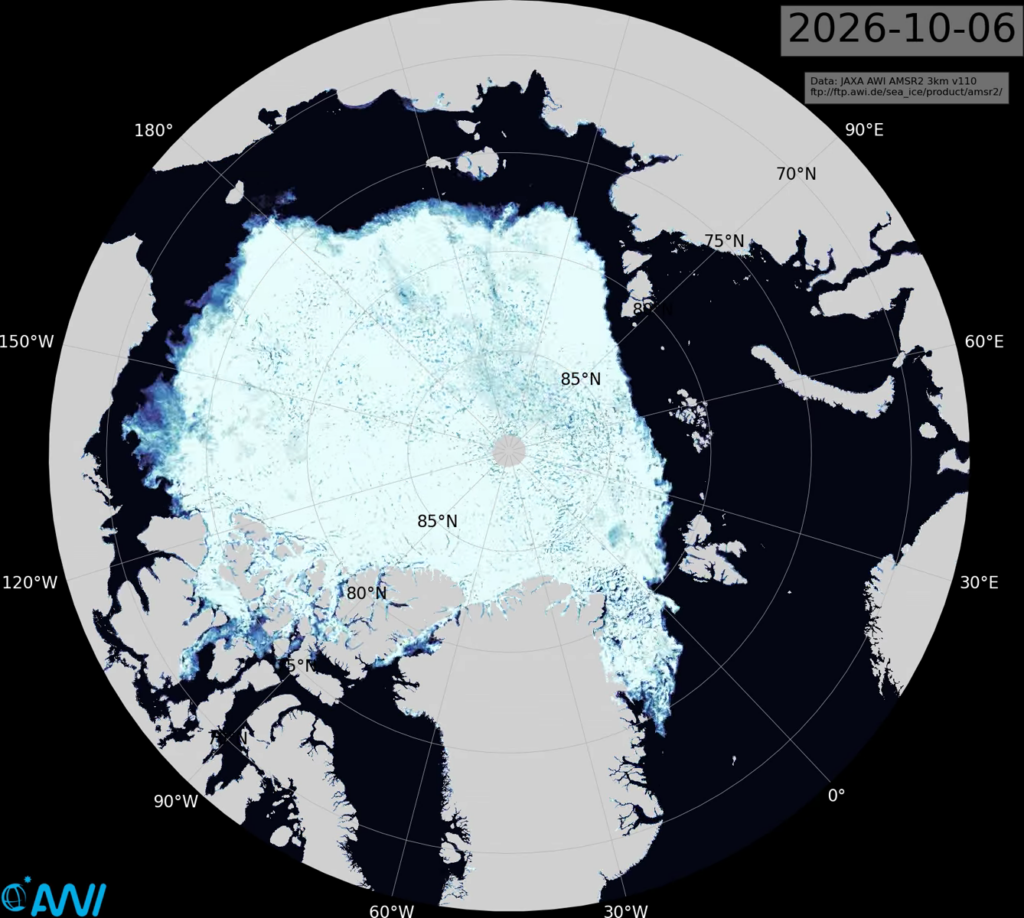
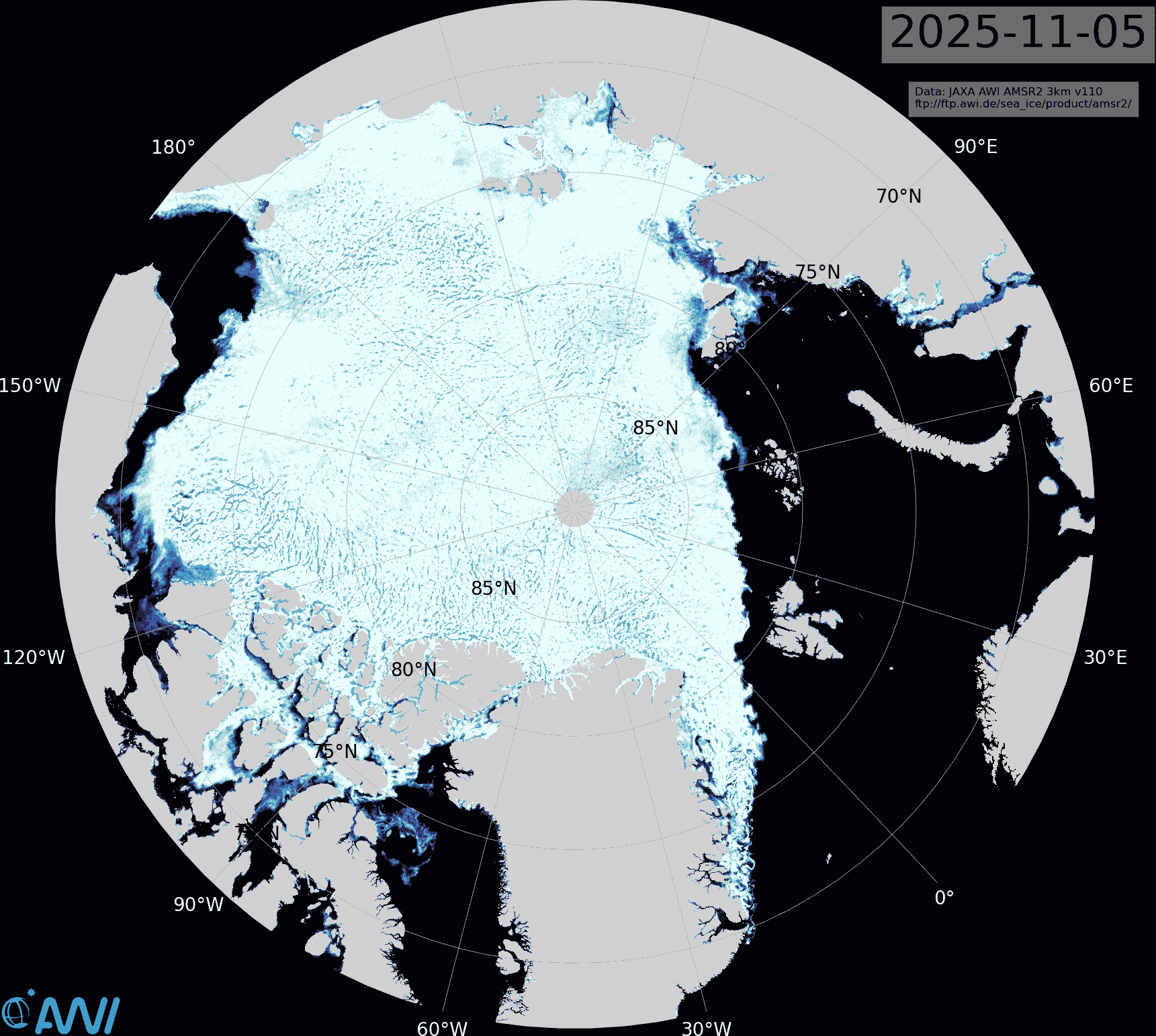
Refreeze of the Beaufort Sea is complete, and refreeze of the Kara Sea has started in earnest:
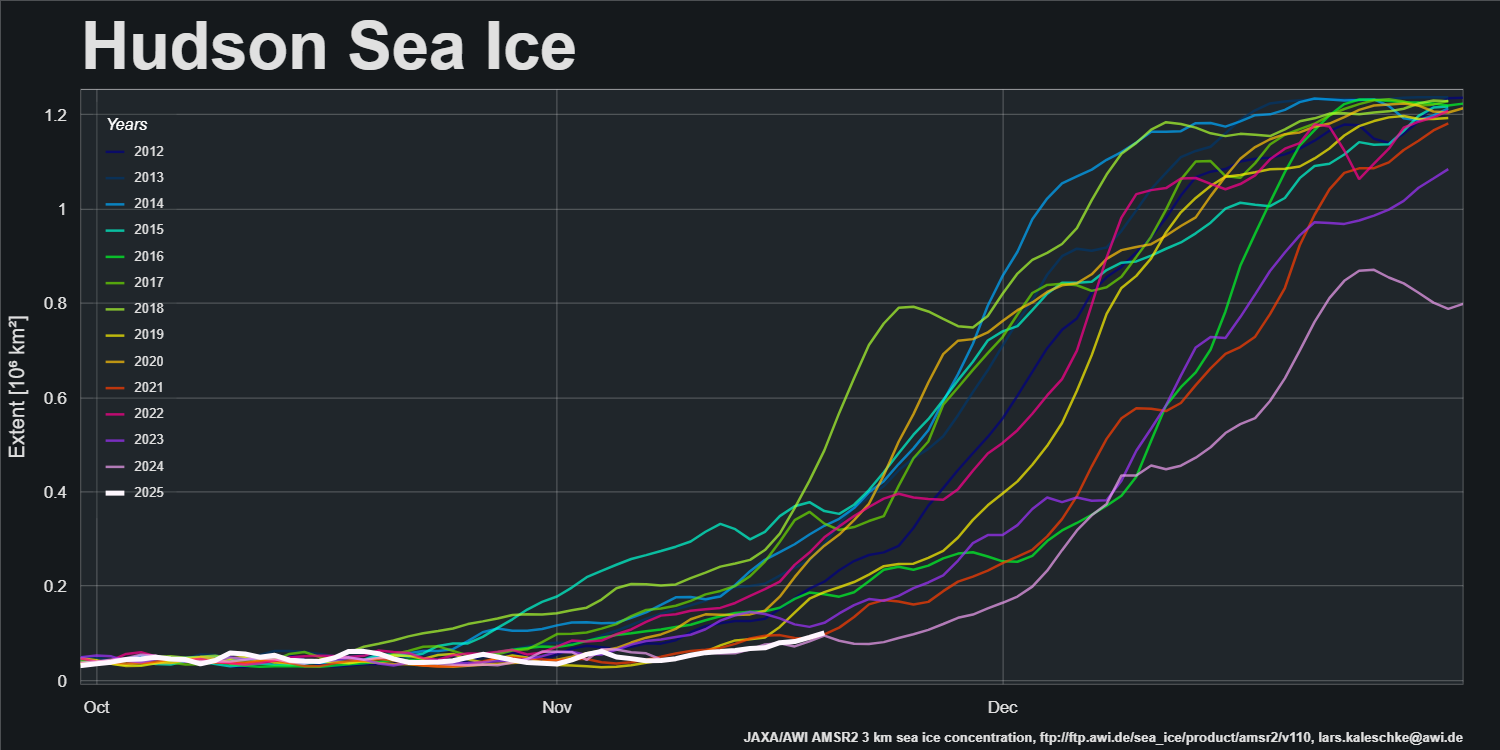
However, the Barents Sea is still sea ice free and refreeze of Hudson Bay has barely begun:
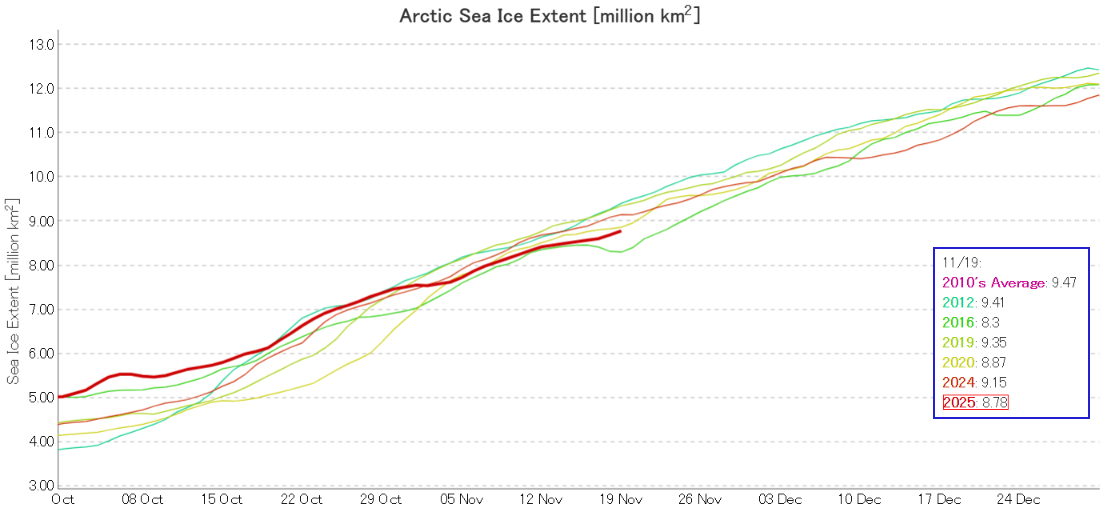
JAXA extent is still second lowest for the date:
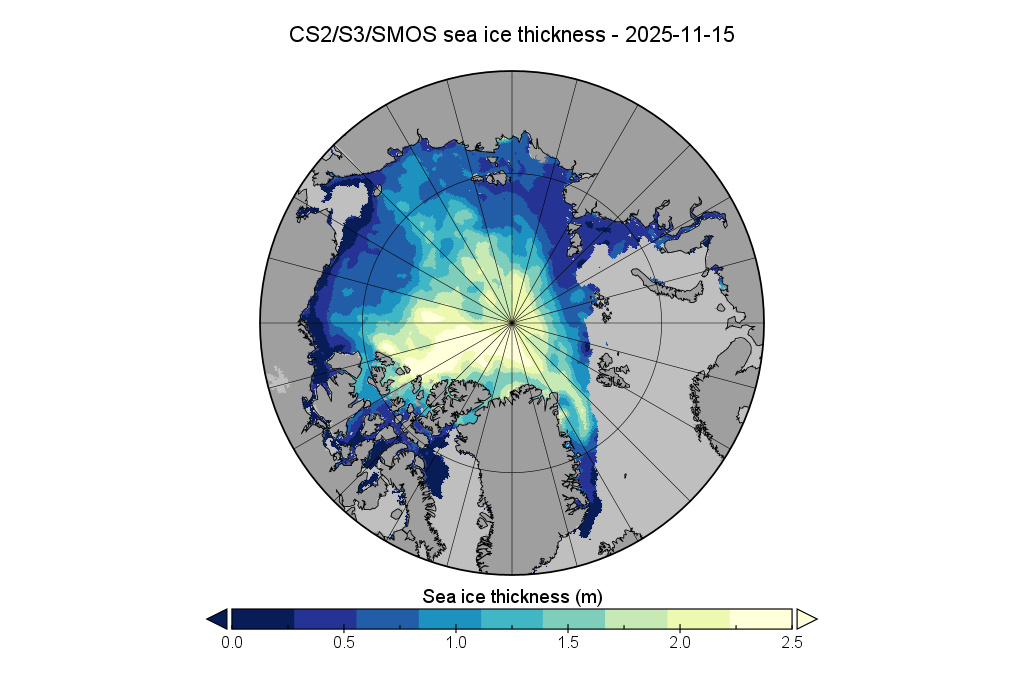
The PIOMAS gridded thickness data for October has yet to be corrected, but here is the mid month thickness map from AWI:
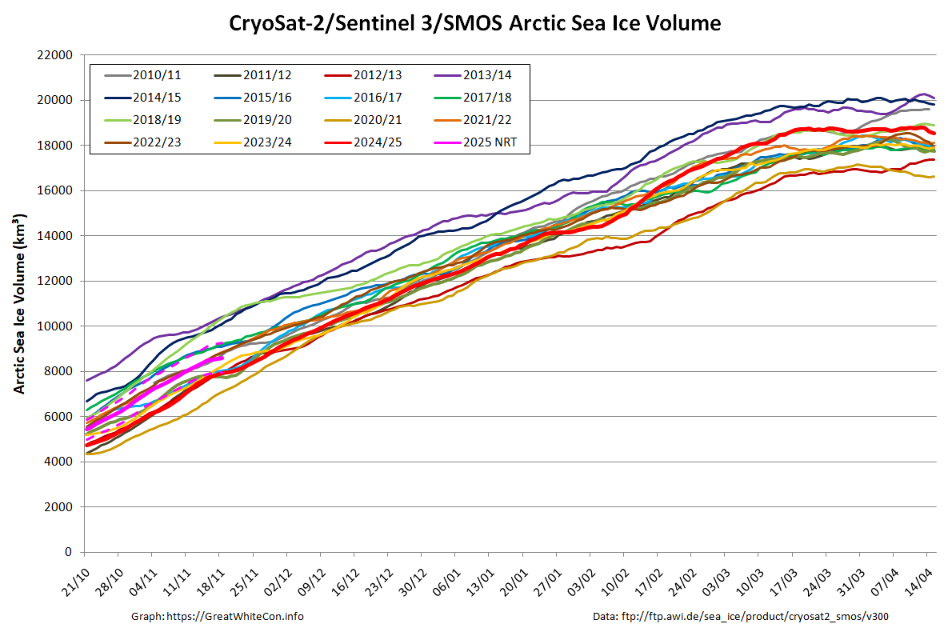
Here too is the associated volume graph:
[Update – November 27th]
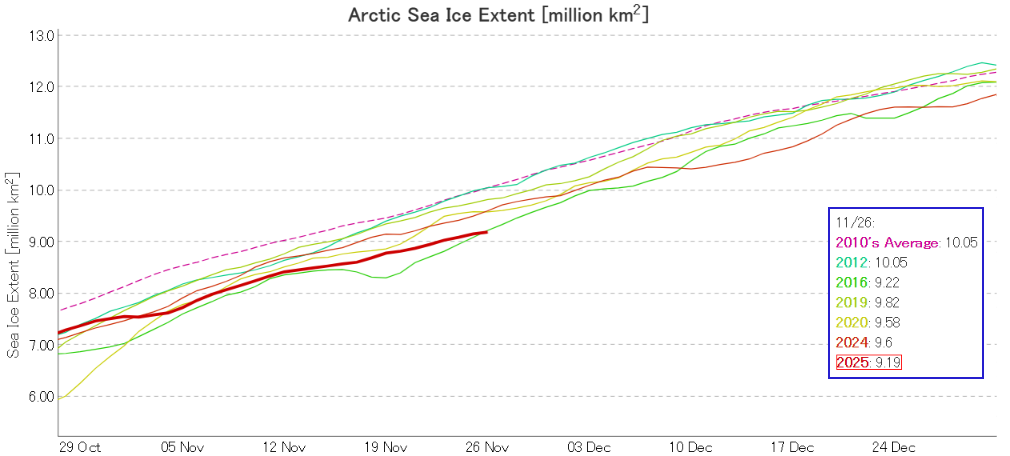
JAXA/ViSHOP extent is now lowest for the date in their record going back to 1978:
[Update – December 5th]
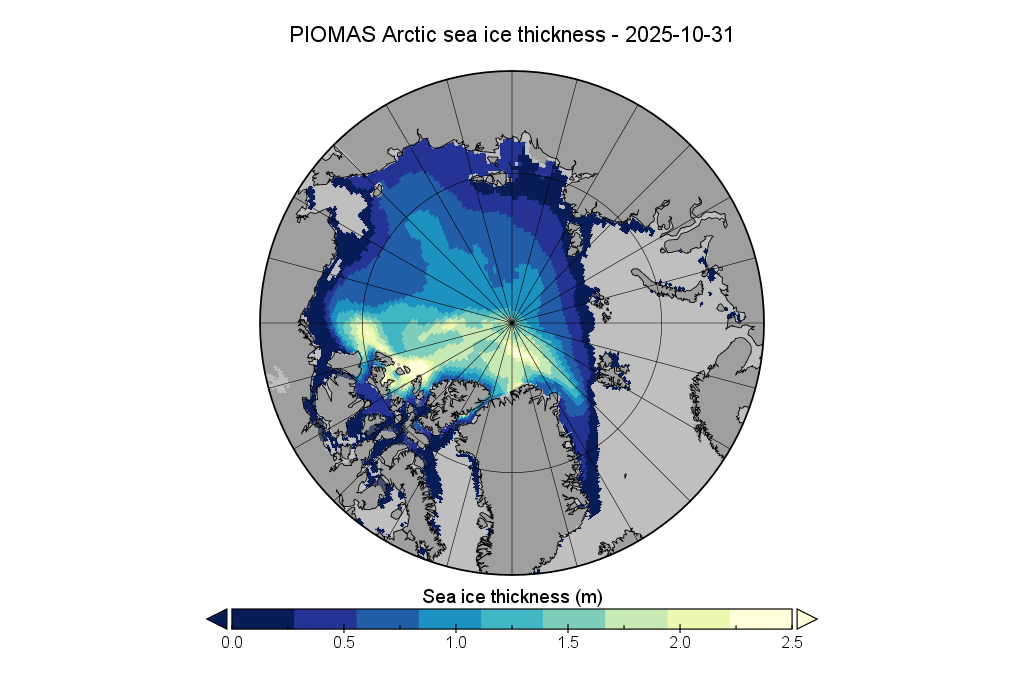
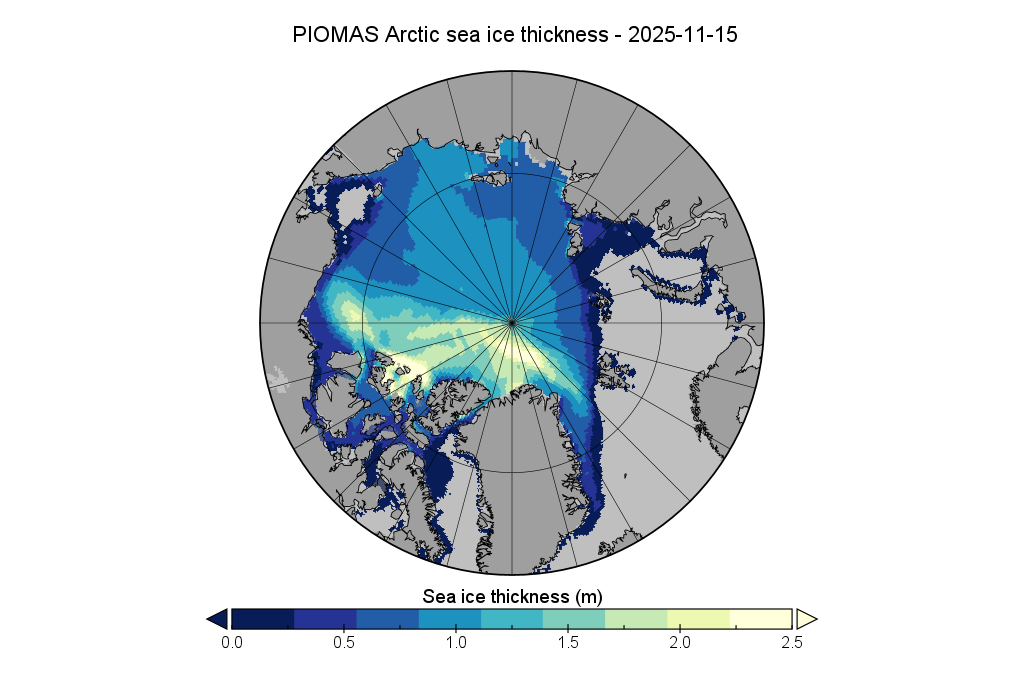
The PIOMAS team have finally published gridded thickness data for October and November, so here are the October 31st and November 15th thickness maps:
The conversation continues over on the December open thread, including the latest PIOMAS data.
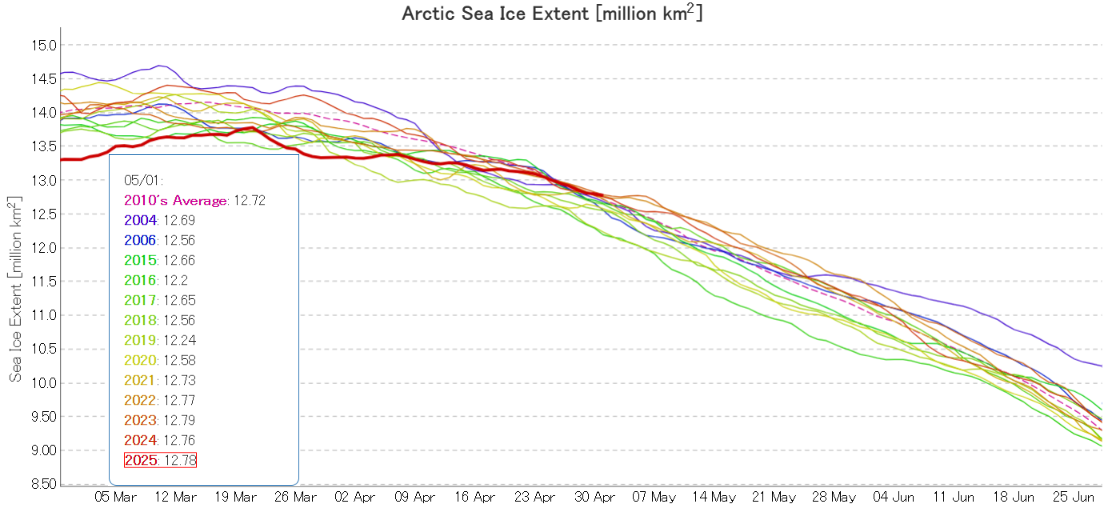
JAXA/ViSHOP extent is no longer “lowest for the date”! After “flatlining” for most of April the metric is now in the midst of a close knit group of the other years in the 2020s:
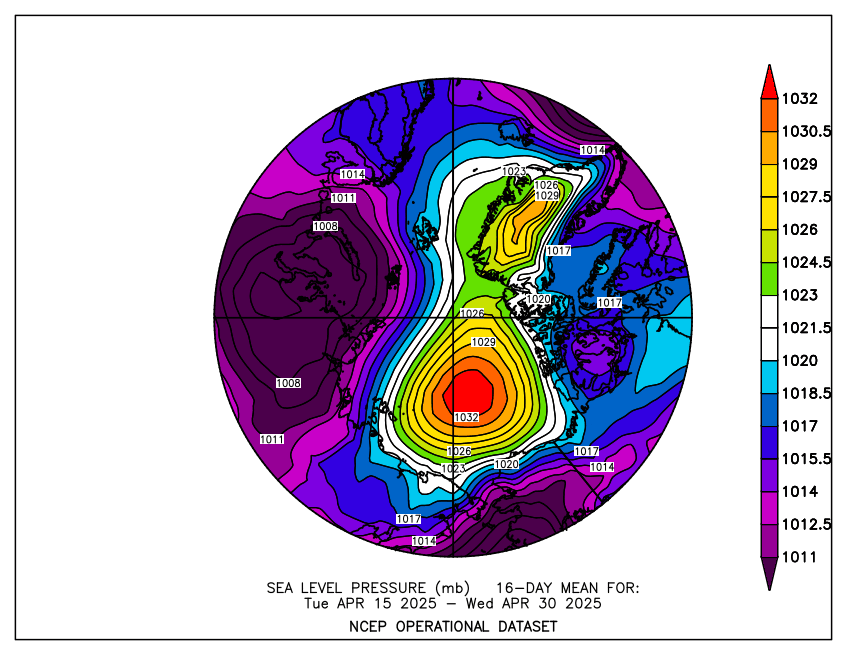
The high pressure area over the Central Arctic persisted through the second half of April, and so did the consequent drift of ice from the Pacific side of the Arctic to the Atlantic periphery:
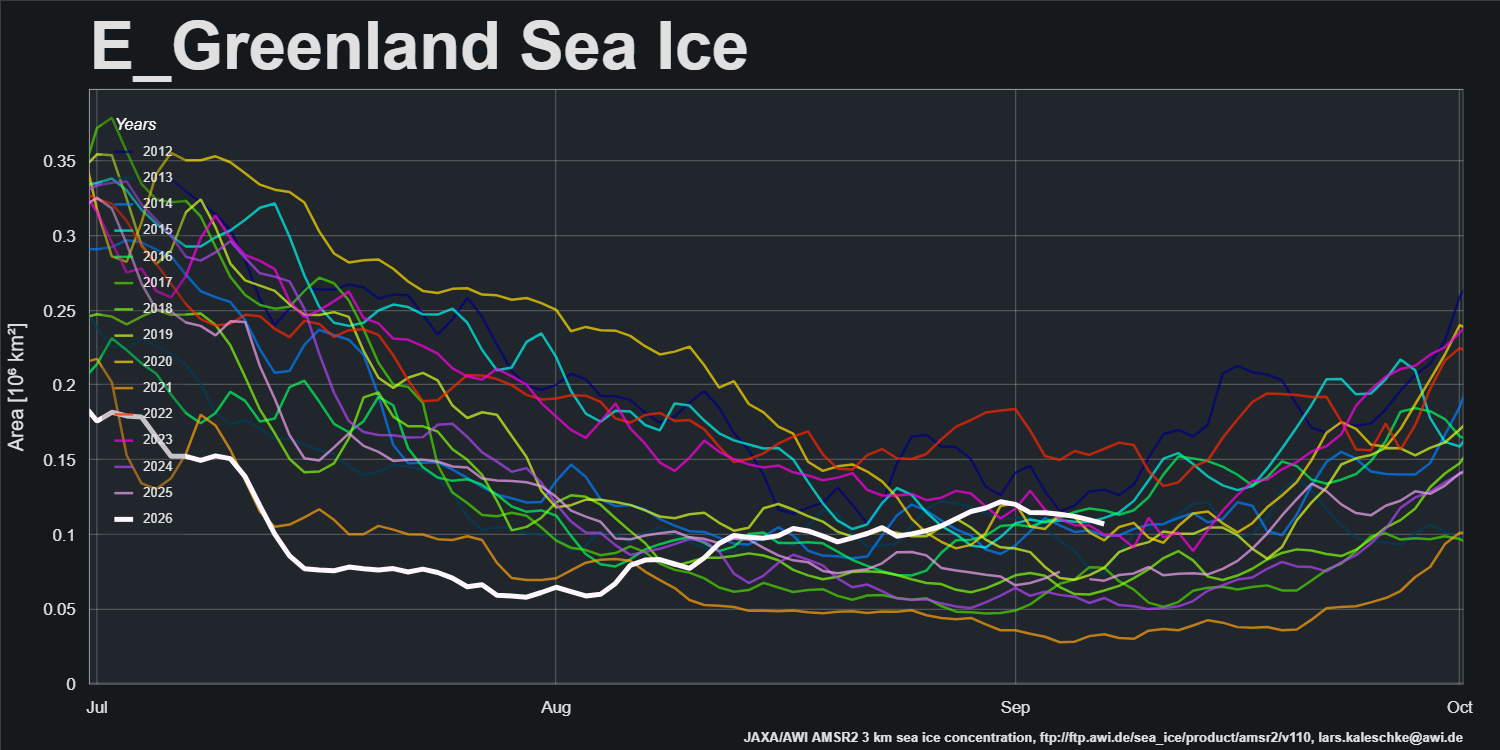
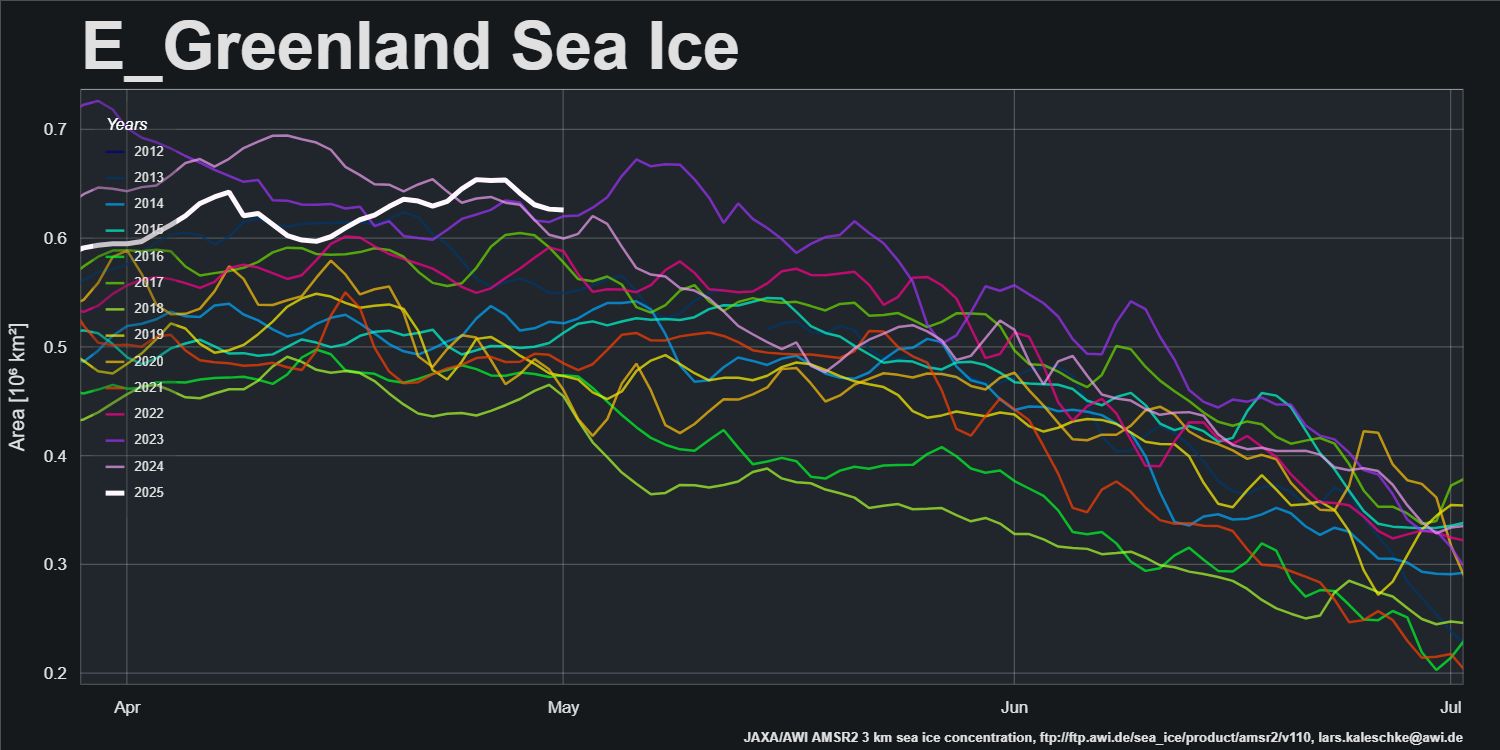
AWI’s sea ice area for the Greenland Sea is currently “highest for the date” in the AMSR2 record that started in July 2012:
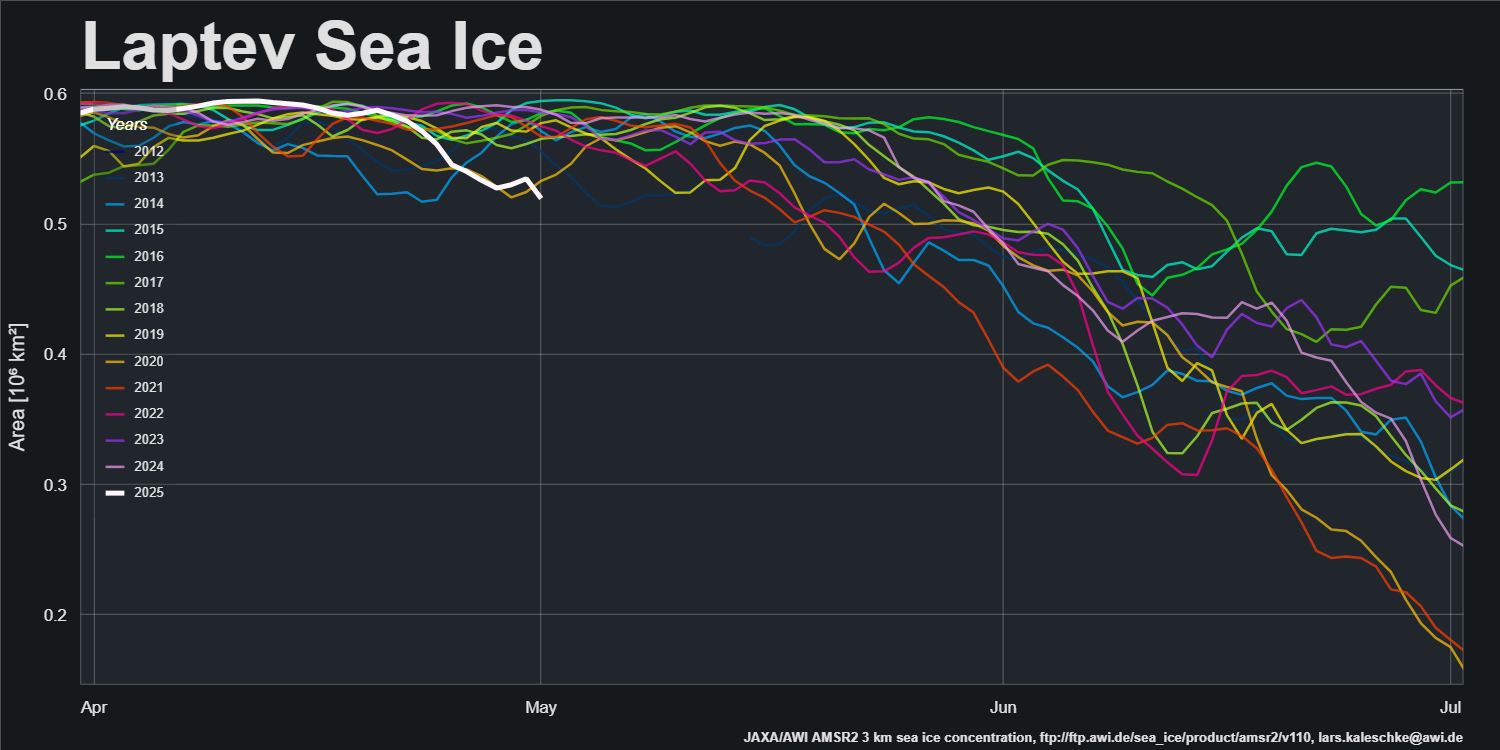
The offshore winds along the Laptev Sea coast have continued, and sea ice area is now “lowest for the date”:
The first signs of a break in the high pressure dominance are appearing. GFS currently forecasts that a low pressure area will enter the Central Arctic, bring above zero temperatures over the Kara Sea on Sunday:
This website uses cookies to improve your experience. We'll assume you're ok with this, but you can opt-out if you wish. Cookie settingsACCEPT
Privacy & Cookies Policy
Privacy Overview
This website uses cookies to improve your experience while you navigate through the website. Out of these, the cookies that are categorized as necessary are stored on your browser as they are essential for the working of basic functionalities of the website. We also use third-party cookies that help us analyze and understand how you use this website. These cookies will be stored in your browser only with your consent. You also have the option to opt-out of these cookies. But opting out of some of these cookies may affect your browsing experience.
Necessary cookies are absolutely essential for the website to function properly. This category only includes cookies that ensures basic functionalities and security features of the website. These cookies do not store any personal information.
Any cookies that may not be particularly necessary for the website to function and is used specifically to collect user personal data via analytics, ads, other embedded contents are termed as non-necessary cookies. It is mandatory to procure user consent prior to running these cookies on your website.