Tag Archives: PIOMAS

The Pan-Arctic Ice Ocean Modeling and Assimilation System

Facts About the Arctic in February 2025

This isn’t exactly “shock news”, since we (slightly hesitantly!) predicted this 5 days ago.

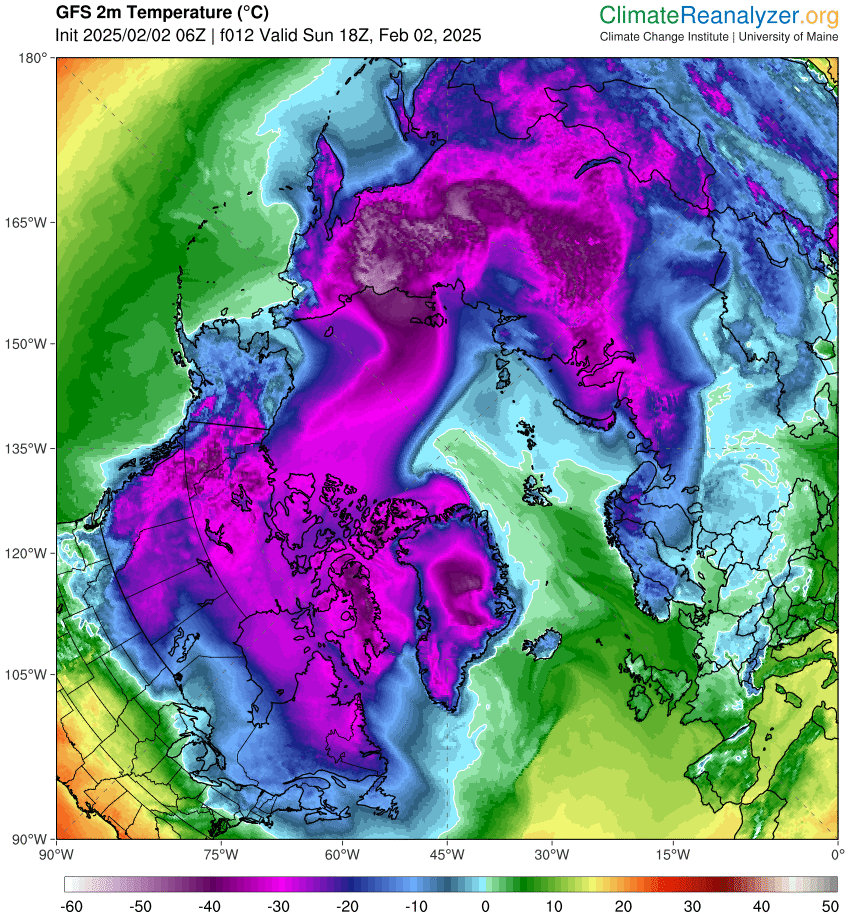
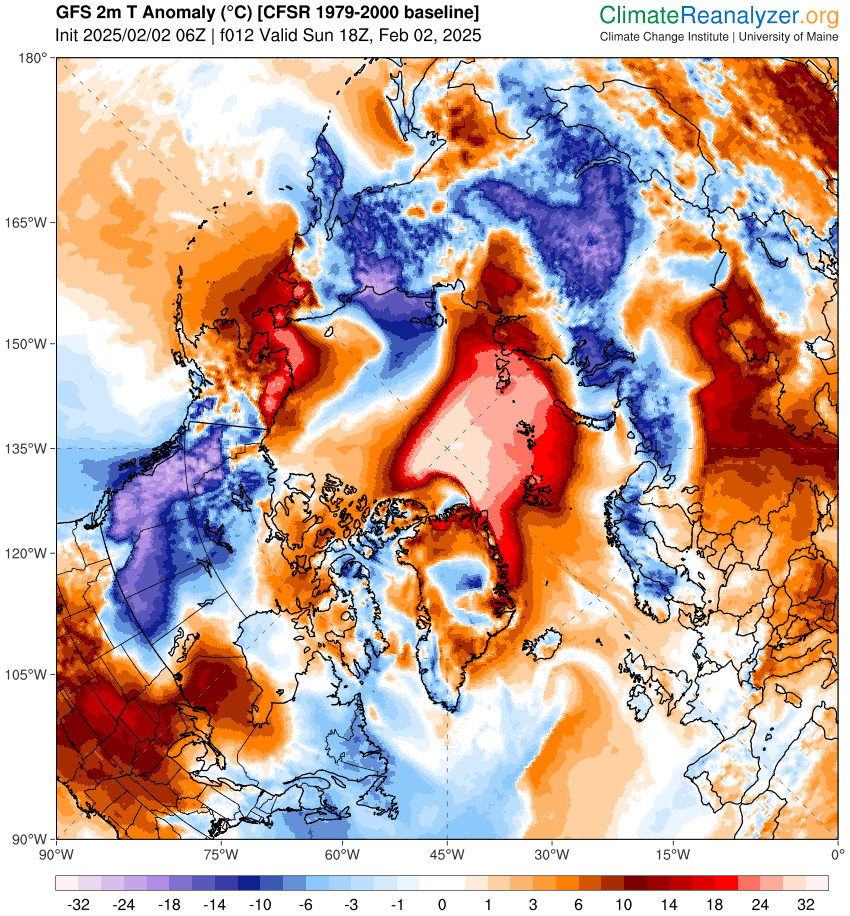
A GFS 2 meter temperature chart revealing greater than zero degrees Celsius at the North Pole later today:

The 2 meter temperature anomaly at the Pole is almost off the charts:

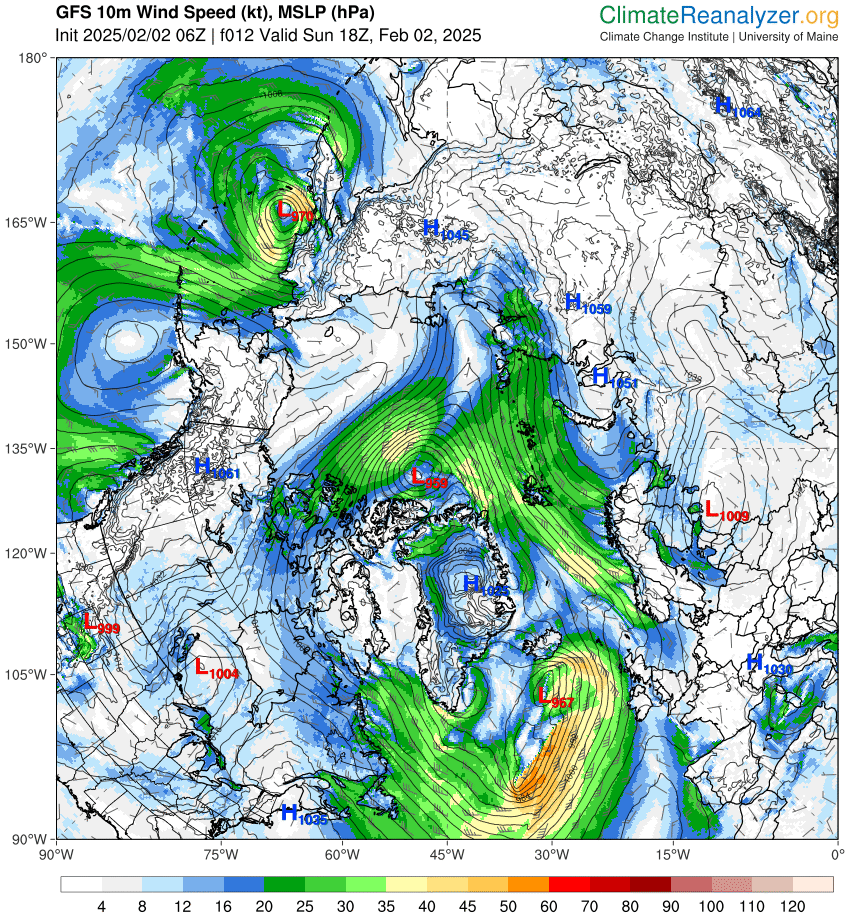
Plus the cause of these unusual numbers, a cyclone with central pressure of 959 hPa spinning north of Ellesmere Island at 18:00 UTC this evening:

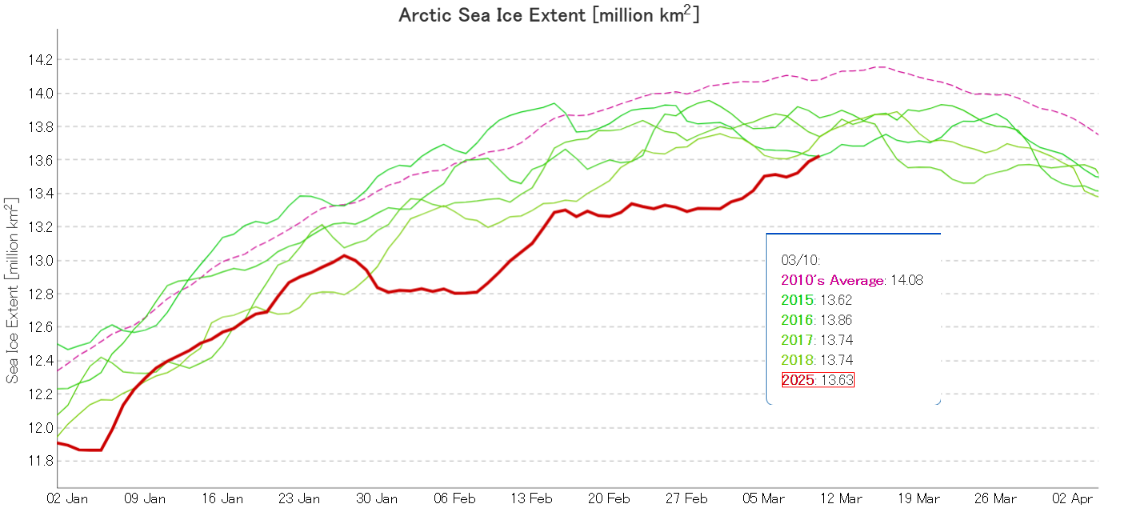
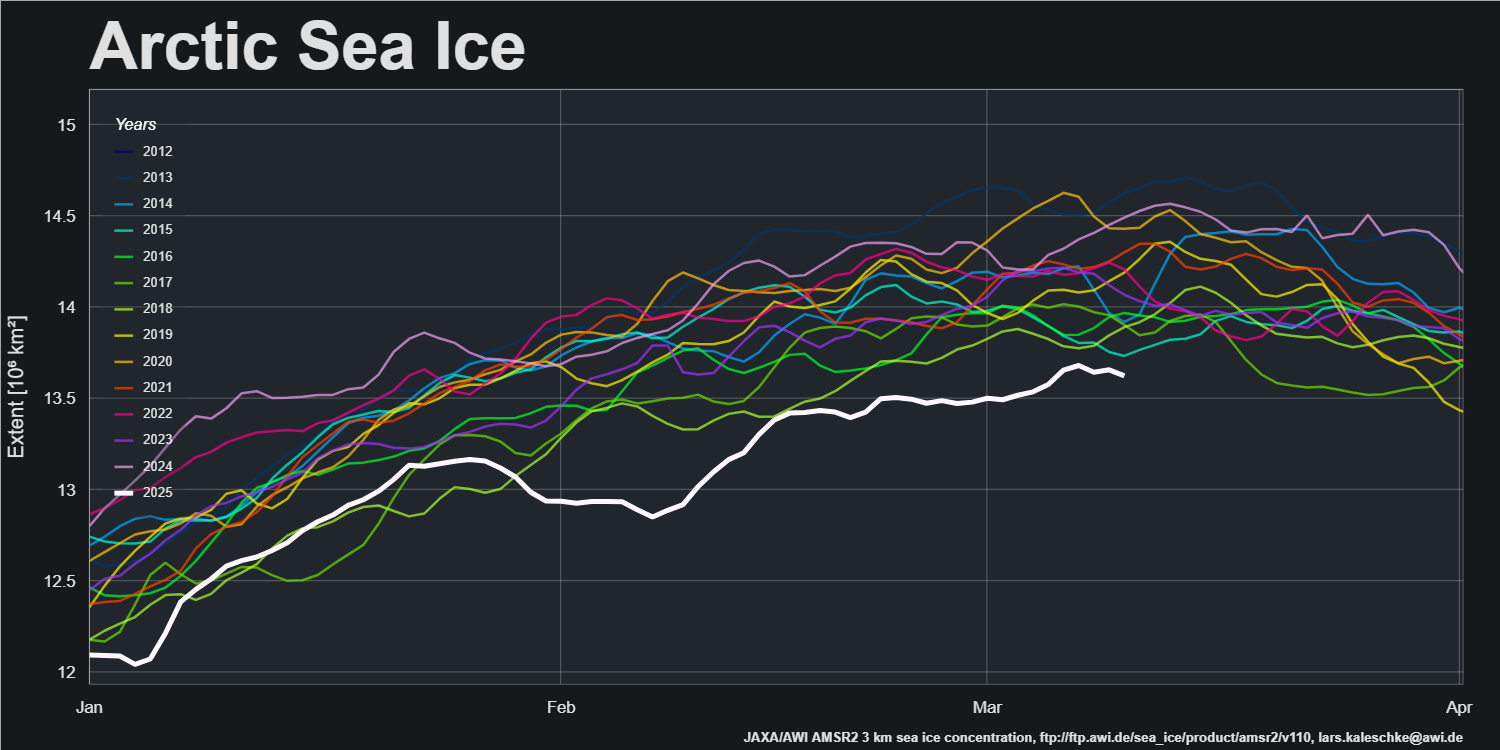
All of which has led to the JAXA/Vishop Arctic sea ice extent being the lowest for the date since 1979 at least by a significant margin:

Continue reading Facts About the Arctic in February 2025

Facts About the Arctic in December 2024

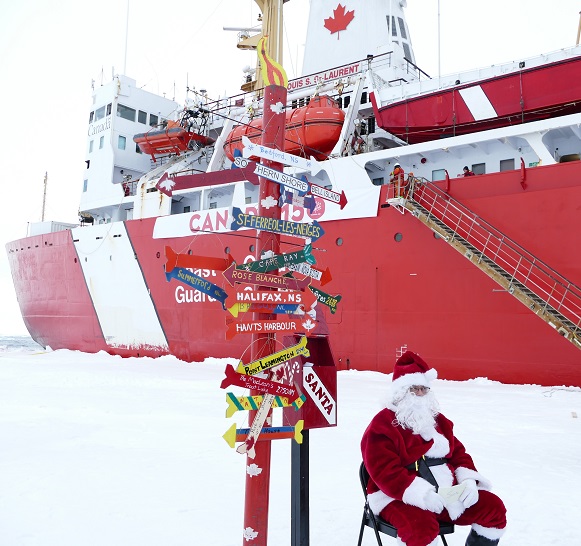
Christmas is coming, and even as we speak Snow White is heading for the geographical North Pole to assist Santa’s little helpers in their annual gift delivery mission:

Santa at the North Pole in August 2016

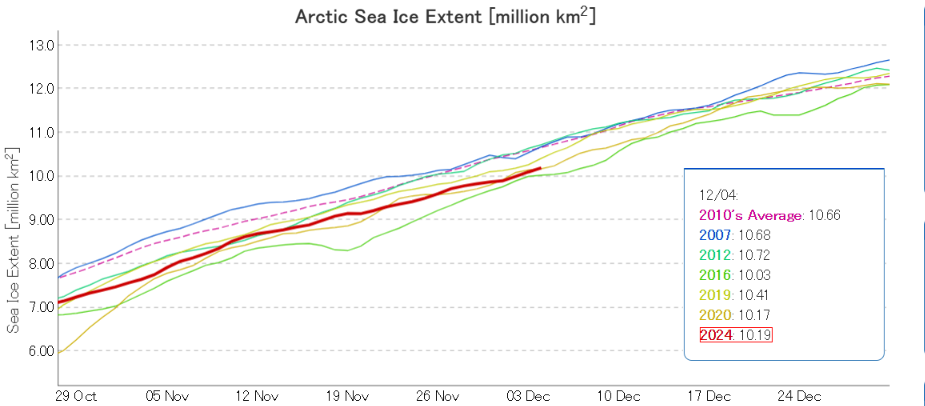
We’ll start the festive season with a graph of JAXA/ViSHOP extent, which is in a “statistical tie” with 2020 for 2nd lowest for the date in the satellite era:

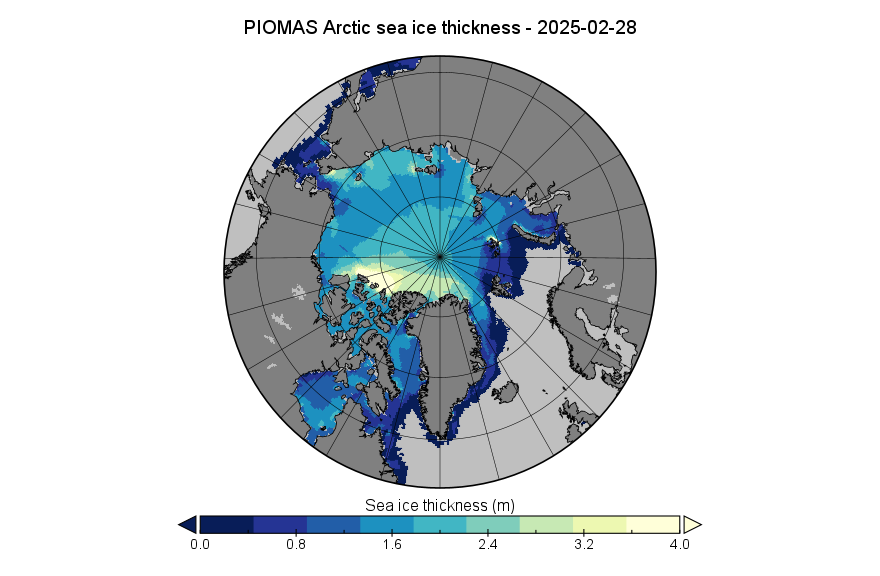
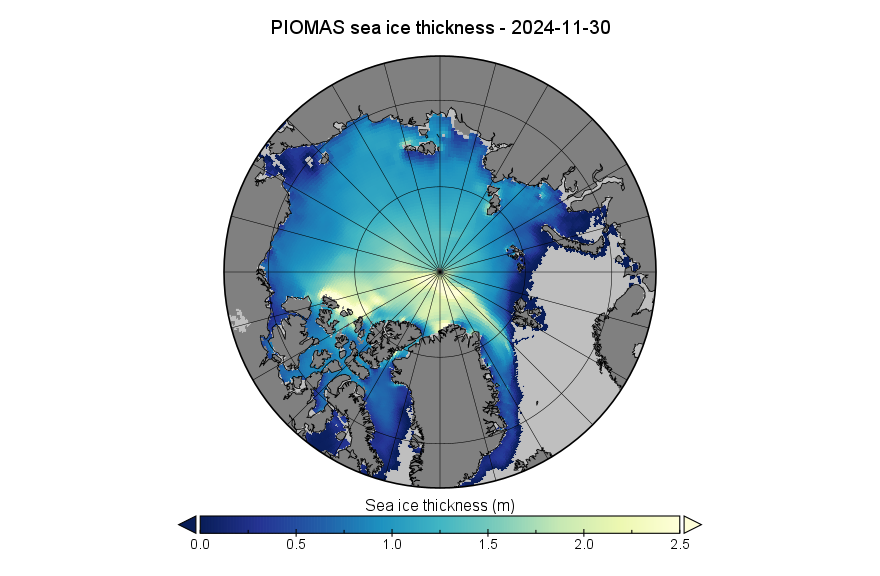
Here’s the PIOMAS gridded thickness data for the end of November 2024:

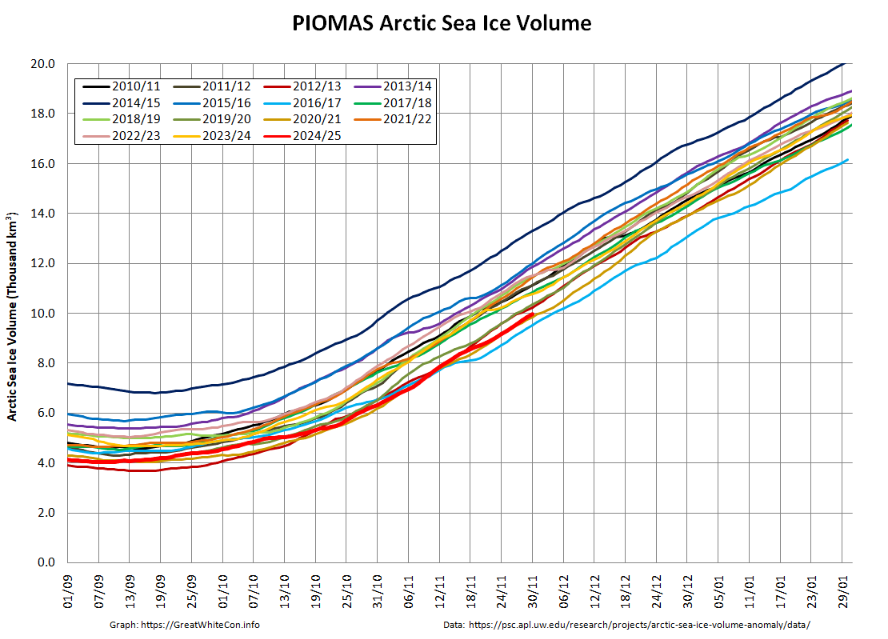
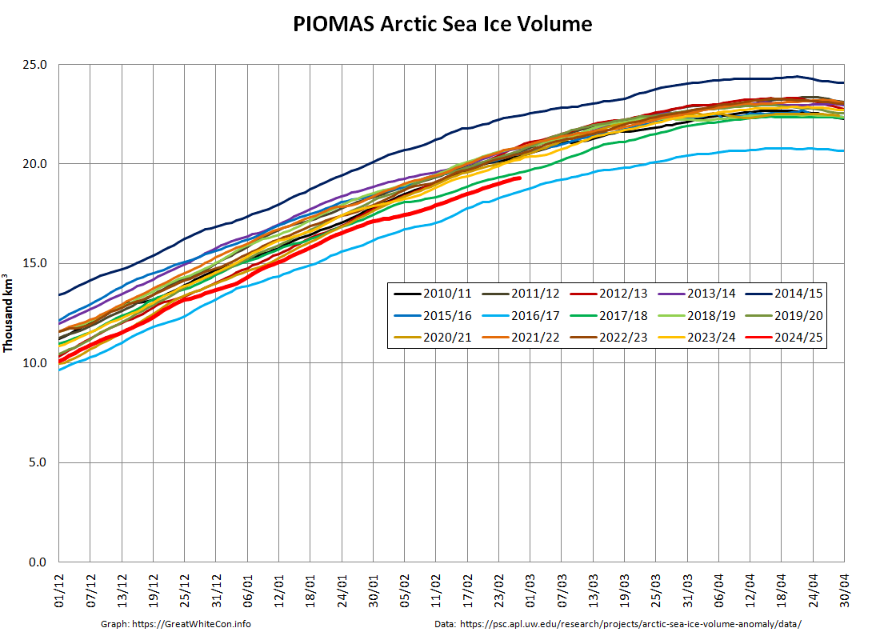
On November 30th Arctic sea ice volume had increased to 9.99 thousand km³, 3rd lowest for the date in the PIOMAS record:
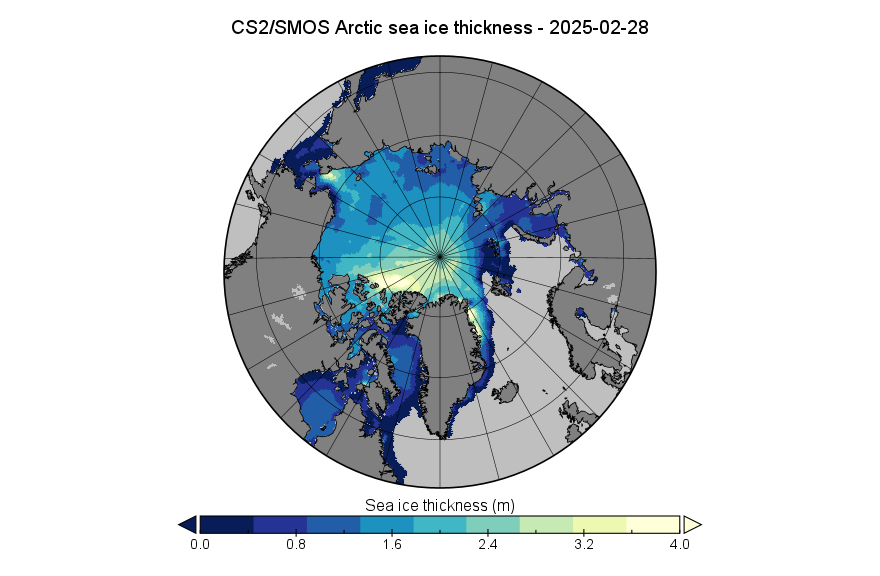
For comparison purposes, here is the “near real time” CryoSat-2/SMOS merged thickness data from the Alfred Wegener Institute: 
Continue reading Facts About the Arctic in December 2024

Facts About the Arctic in November 2024

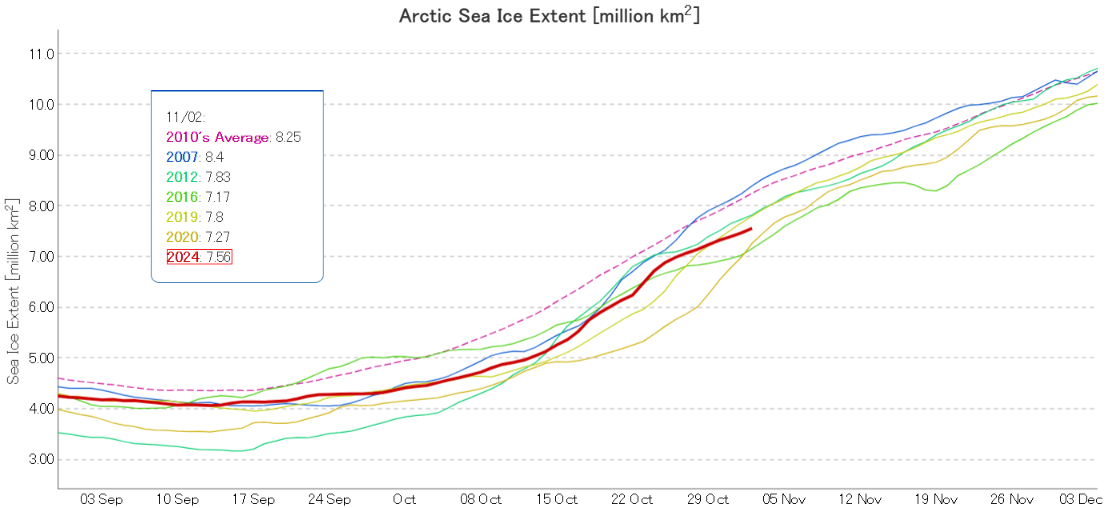
The Laptev and East Siberian Seas have now refrozen. Consequently Arctic sea ice extent is now increasing more slowly, and JAXA/ViSHOP extent is 3rd lowest for the date in the satellite era:

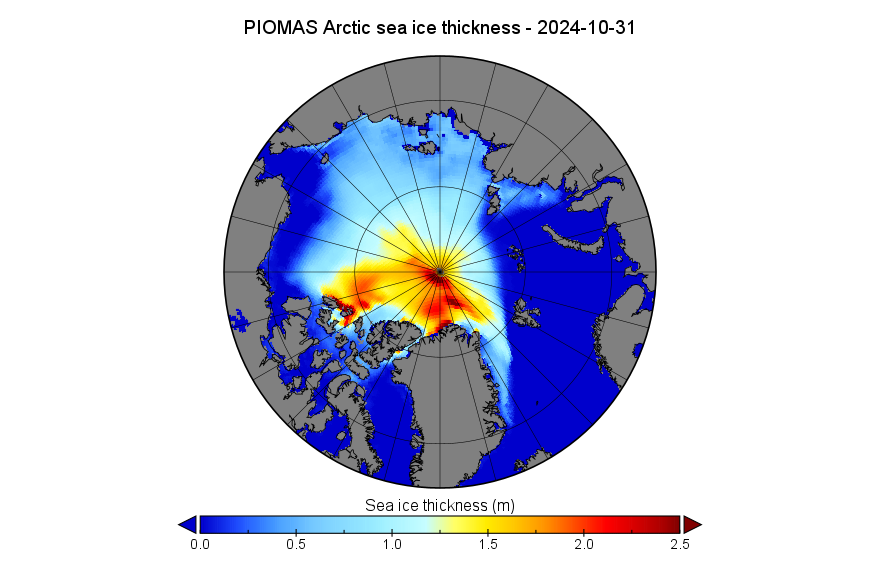
Introducing the third dimension, here’s the PIOMAS gridded thickness data for the end of October 2024:

Note the change in scale from previous months, to allow for easier comparison with the “near real time” CryoSat-2/SMOS merged thickness data from the Alfred Wegener Institute: 

Continue reading Facts About the Arctic in November 2024

Facts About the Arctic in October 2024

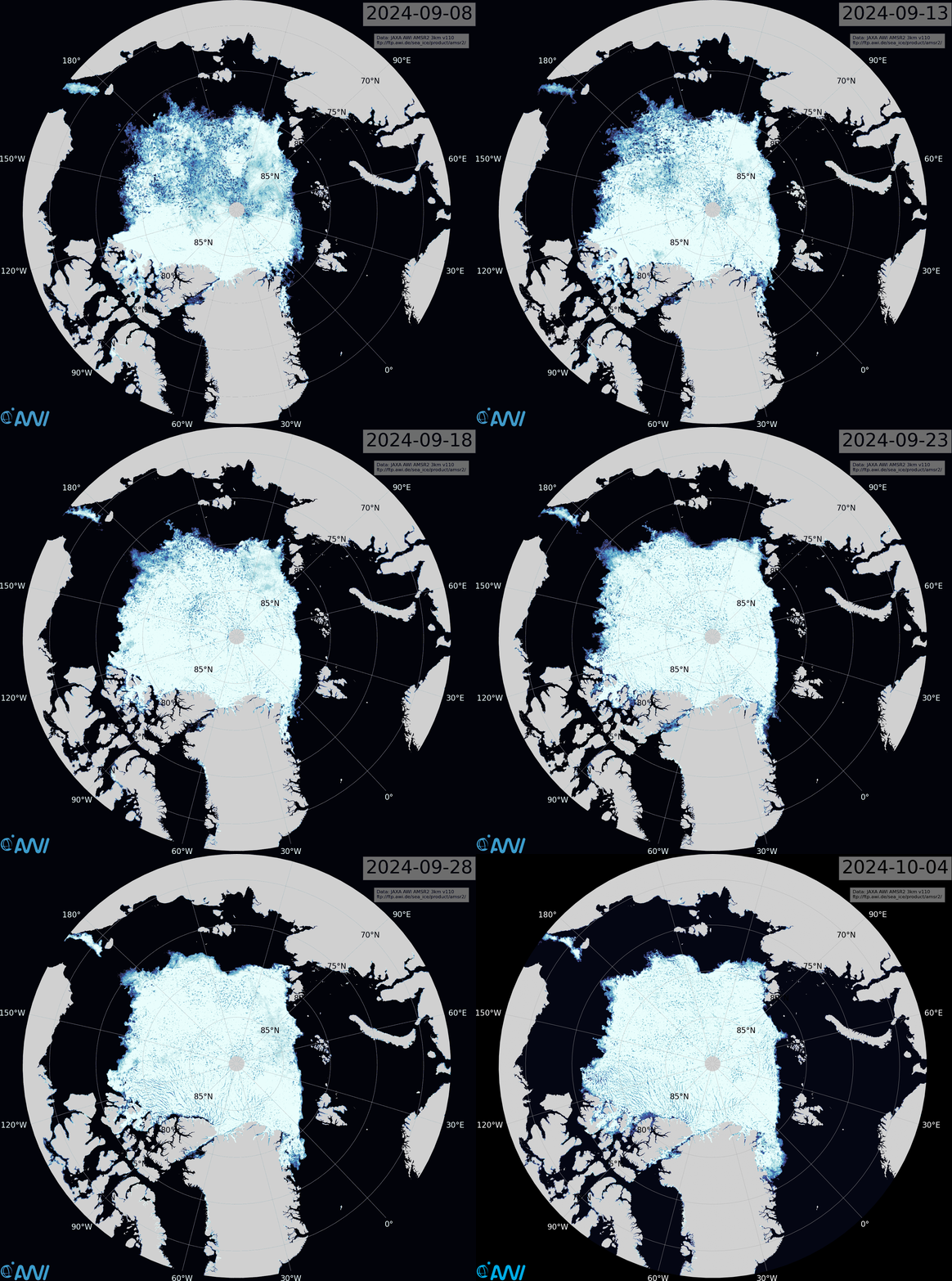
The JAXA extent graph is currently not updating, so let’s begin this month with the latest AMSR2 sea ice concentration map from the Alfred Wegener Institute. Click the image to see a ~10 Mb animation of the last four weeks:

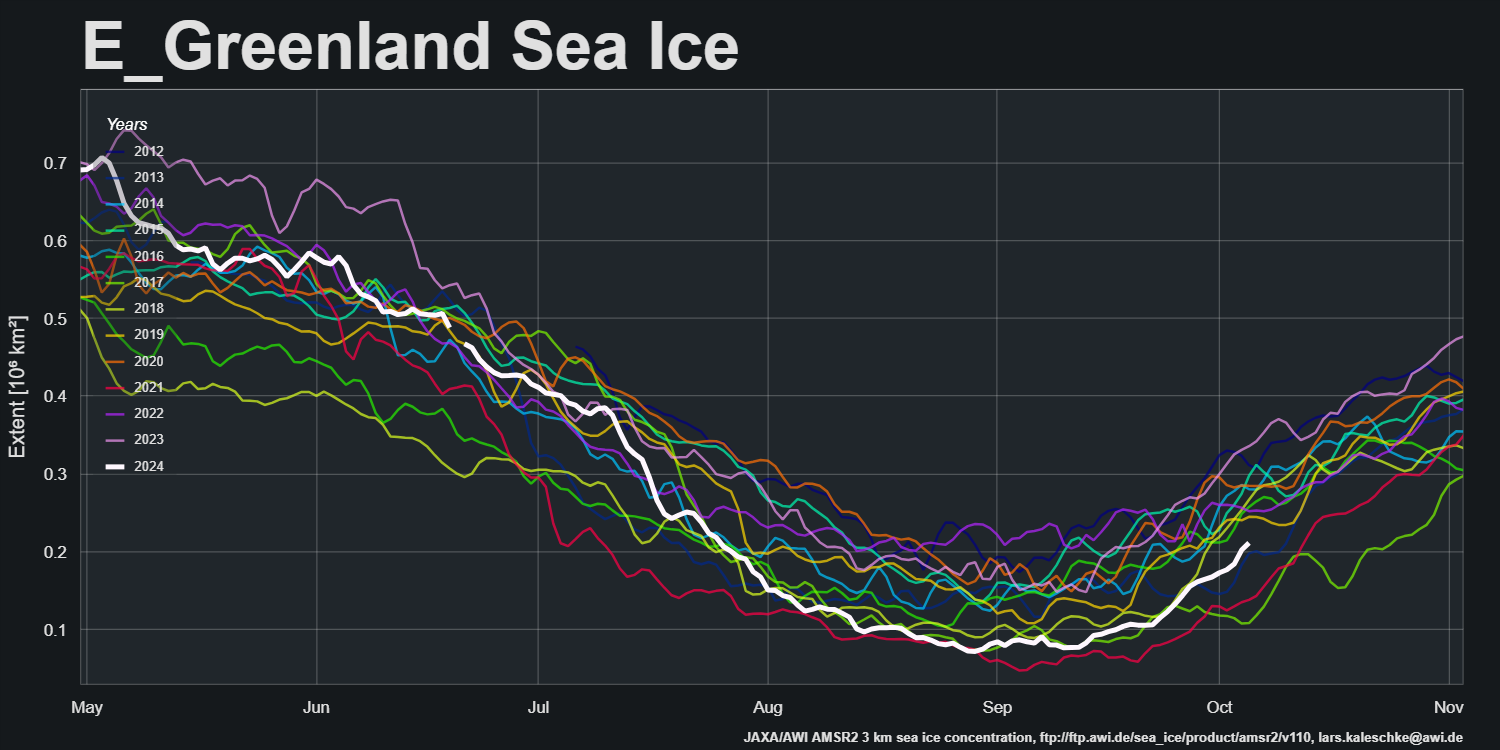
Note in particular the restart of export into the East Greenland Sea via the Fram Strait:

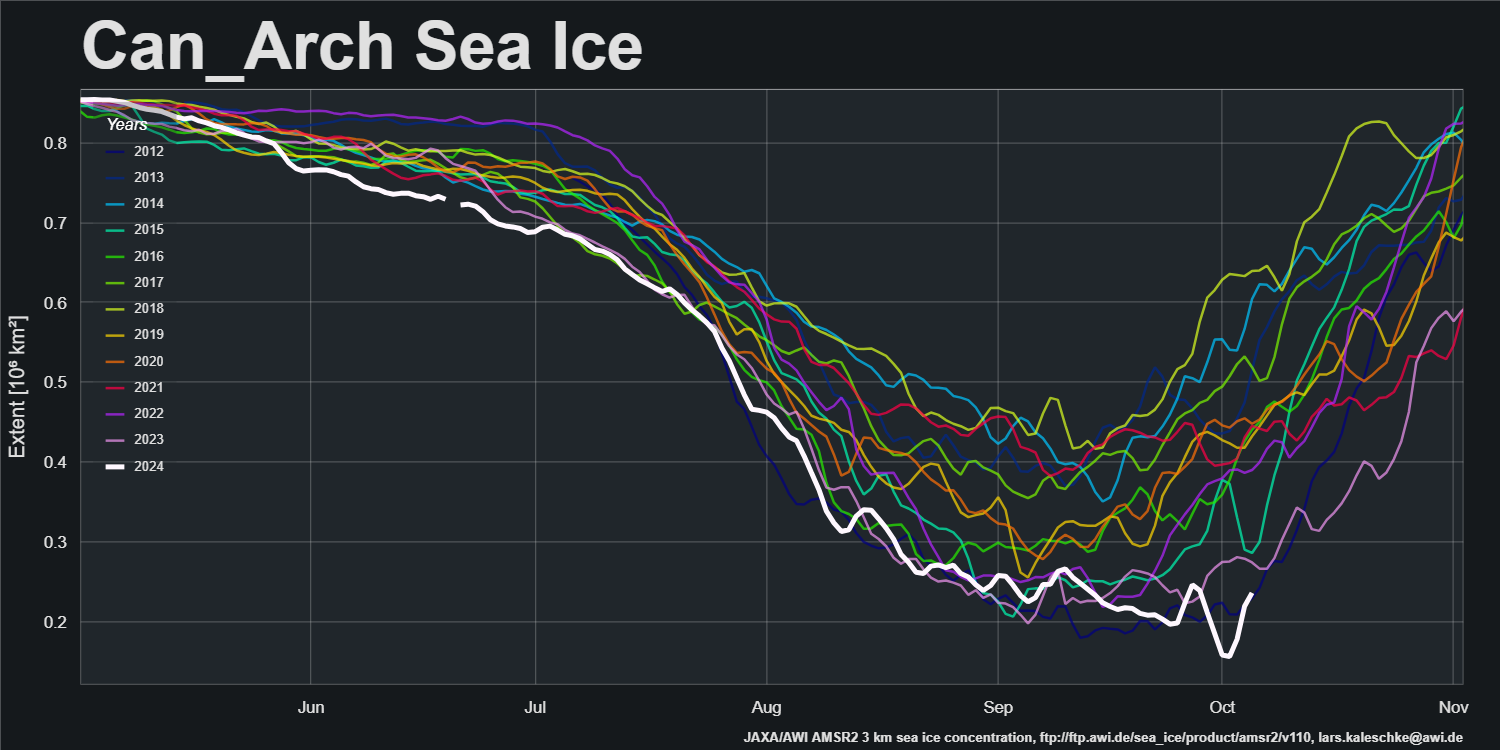
and the movement of ice within the Canadian Arctic Archipelago:

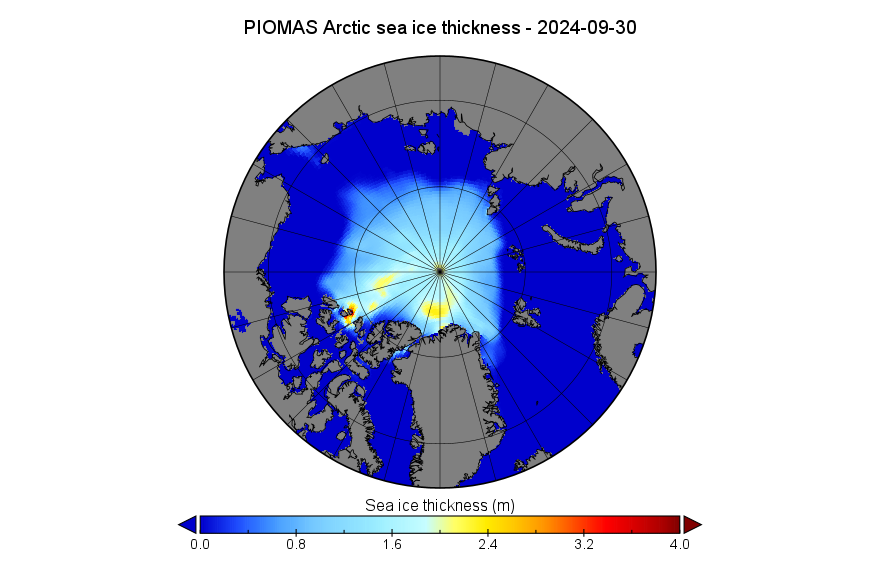
The PIOMAS gridded thickness data for September 2024 has been released:

Continue reading Facts About the Arctic in October 2024

Facts About the Arctic in September 2024

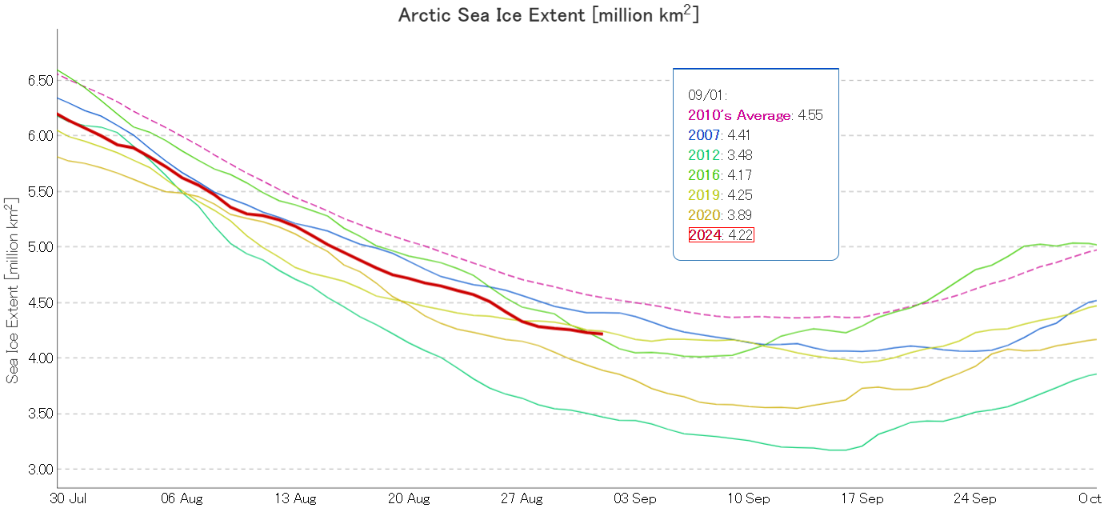
At the beginning of September JAXA/ViSHOP extent was 4th lowest for the date in the satellite era:

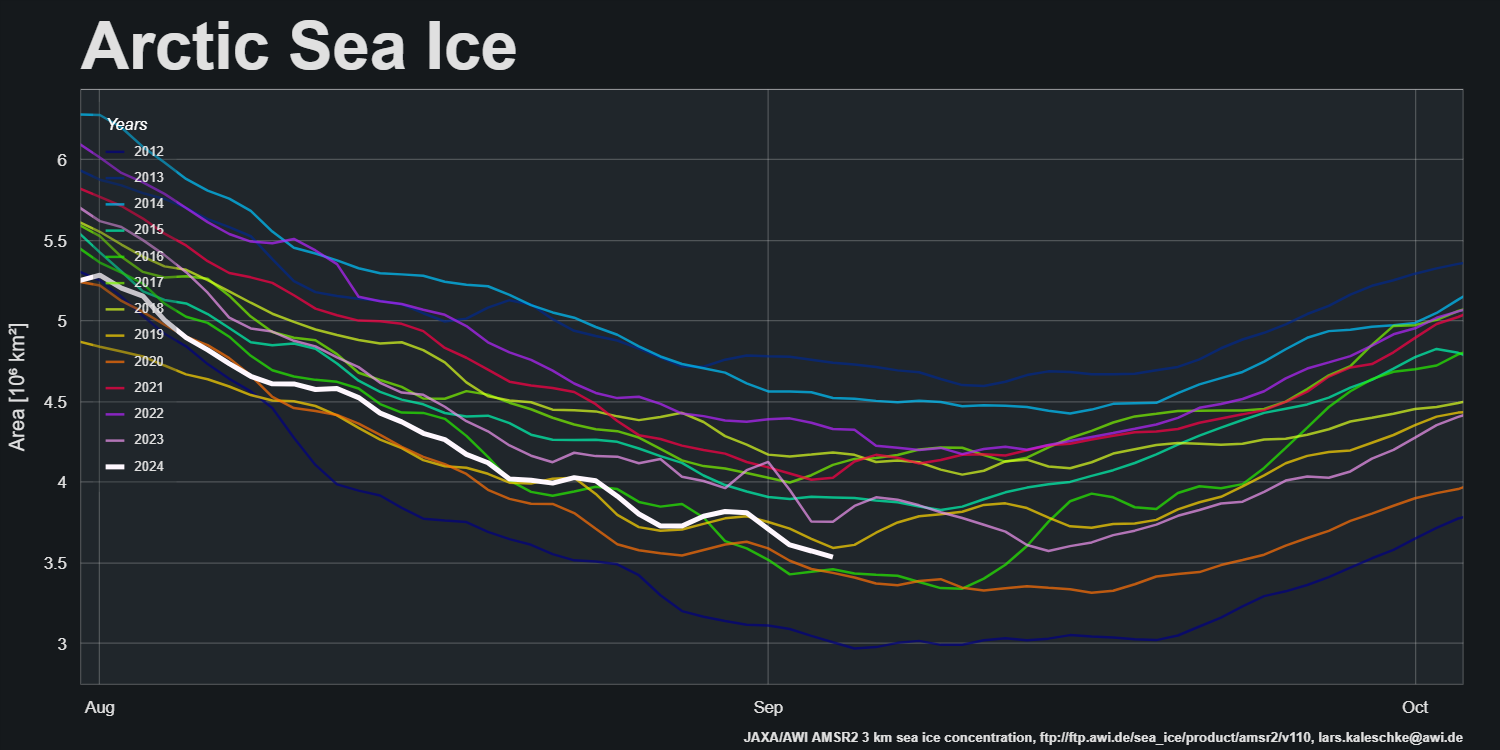
For much more detail on sea ice extent for the next few weeks please see the dedicated 2024 minimum thread. However, note that as extent has been flatlining sea ice area is still declining:

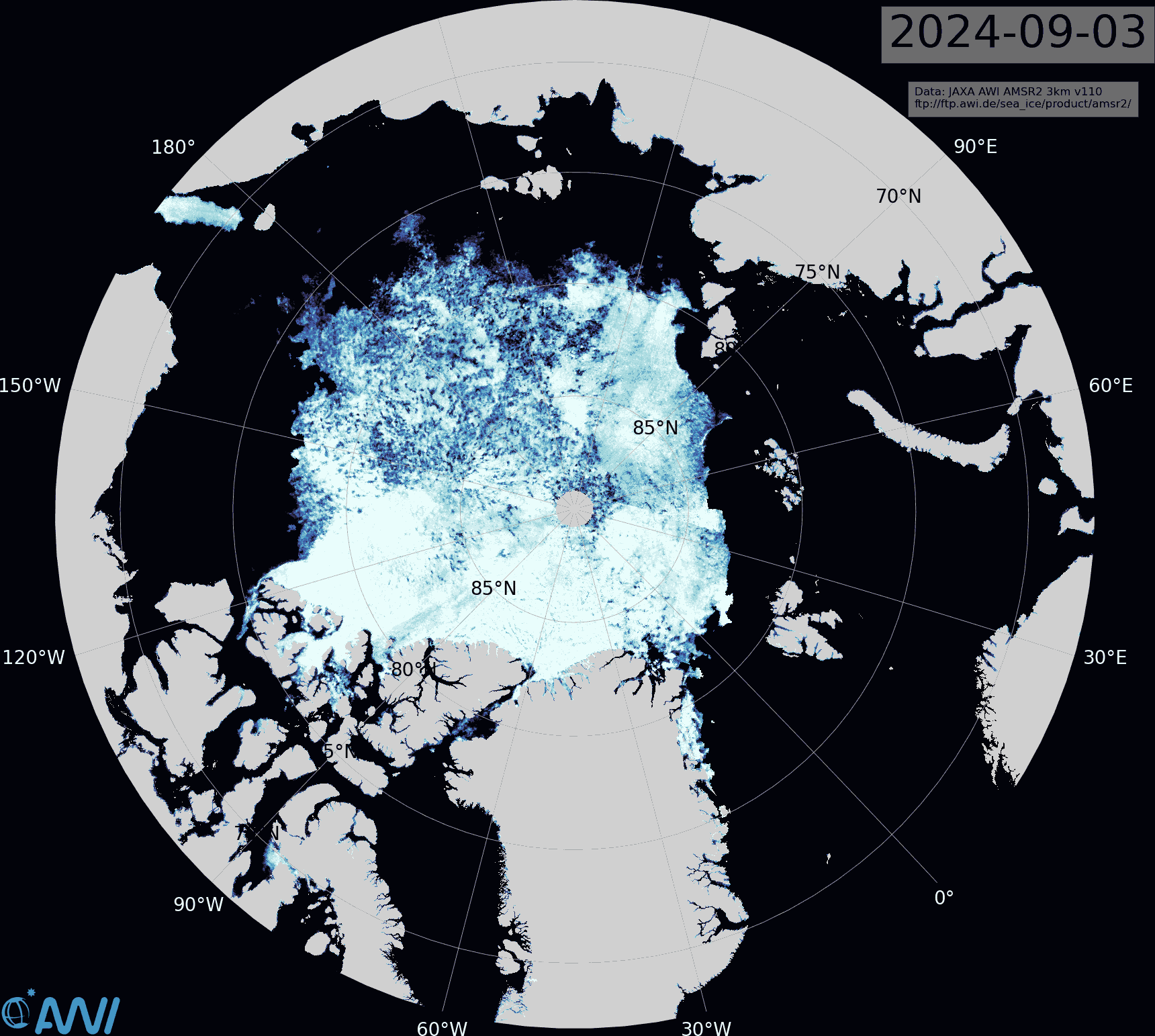
The latest AMSR2 sea ice concentration map from the Alfred Wegener Institute reveals that the area of thick ice in the Chukchi Sea has still not melted:

The most recent sea ice age map currently available dates from the beginning of August. Comparison with the concentration map shows that most of the remaining first year ice is highly fragmented, even close to the North Pole:

Continue reading Facts About the Arctic in September 2024

Facts About the Arctic in August 2024

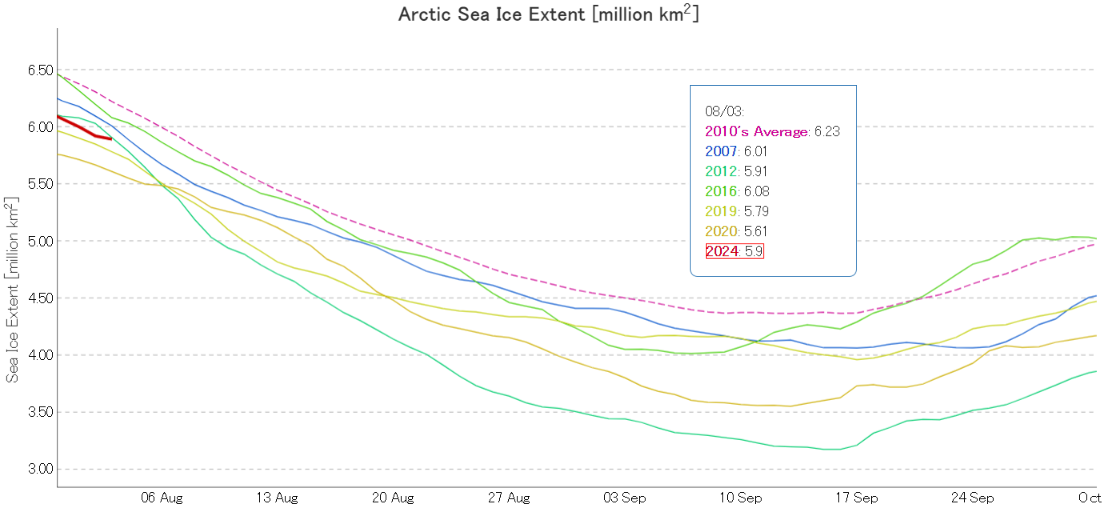
At the beginning of August JAXA/ViSHOP extent is 3rd lowest for the date in the satellite era:

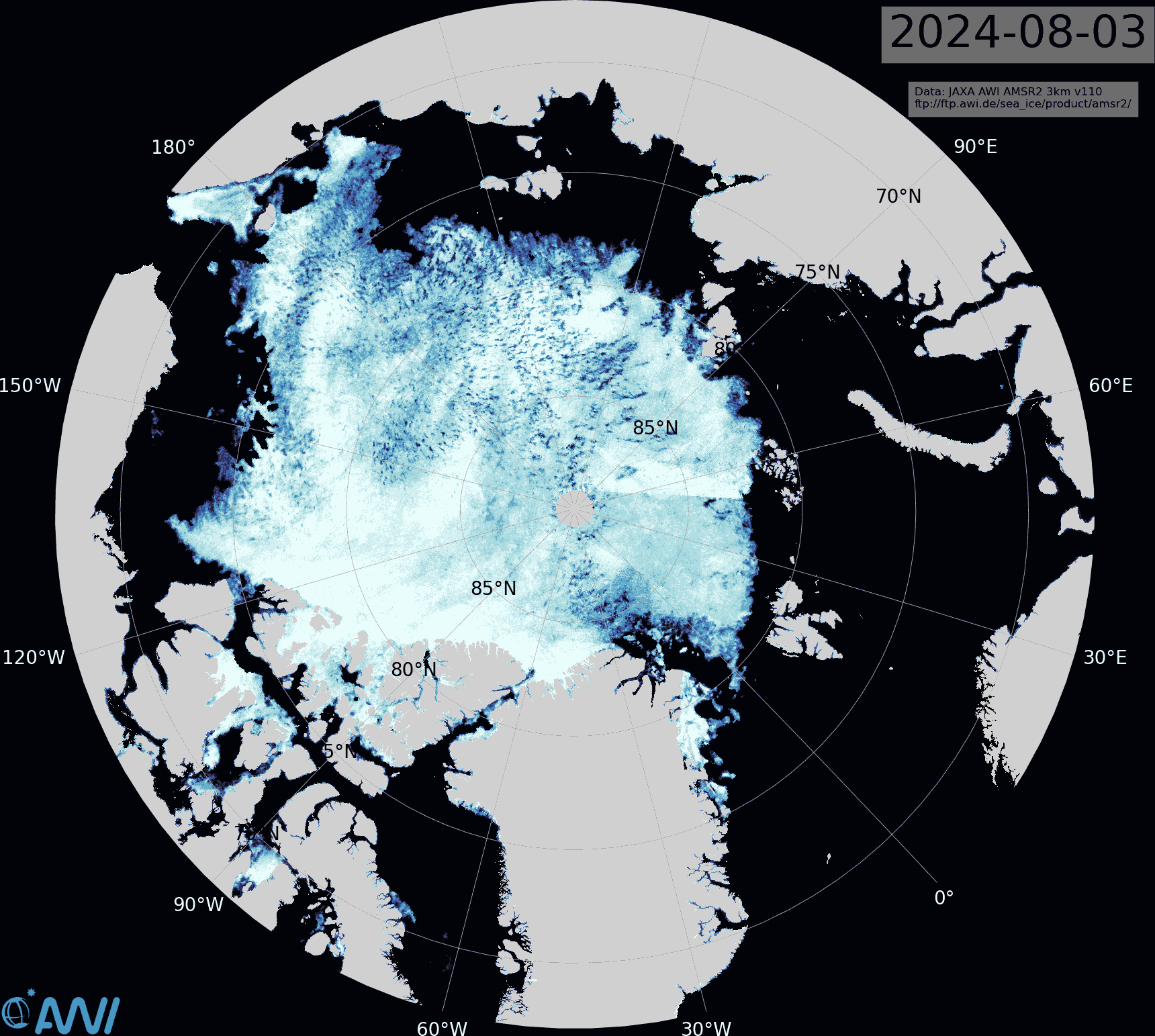
In 2012 extent had just started its unprecedented plunge towards the record September minimum, and 2024 seems certain to cross above the 2012 curve shortly. However, the latest AMSR2 sea ice concentration map from the Alfred Wegener Institute reveals areas of open water across the majority of the Central Arctic Basin:

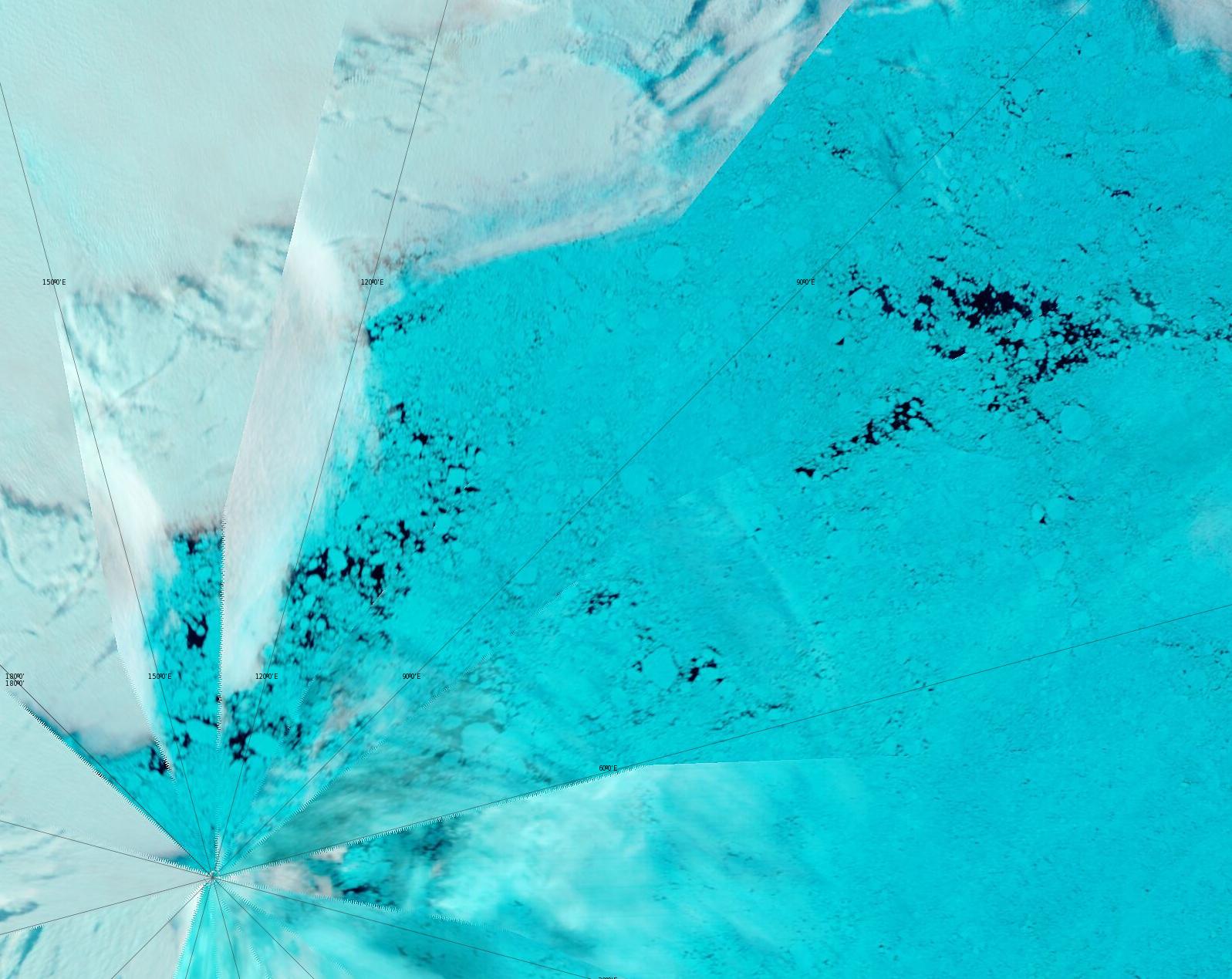
In particular the sea ice between the North Pole and northern Greenland is remarkably fragmented:

“False colour” image of the North Pole on August 3rd from the MODIS instrument on the Terra satellite
Continue reading Facts About the Arctic in August 2024

Facts About the Arctic in July 2024

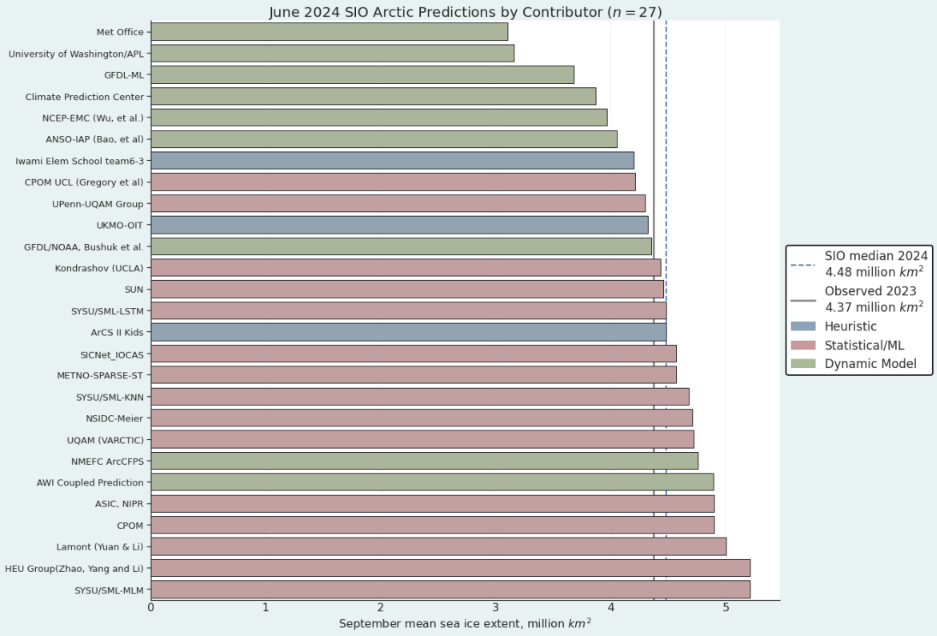
The first sea ice outlook report for 2024 has been published by the Sea Ice Prediction Network:

This year’s median forecasted value for pan-Arctic September sea-ice extent is 4.48 million square kilometers with an interquartile range of 4.21 to 4.74 million square kilometers. This is slightly lower than the 2022 (4.57 million square kilometers) and 2023 (4.54 million square kilometers) June median forecasts for September.

The lowest sea-ice extent forecast is 3.1 million square kilometers, from the UK Met Office, which would be a new record low for the satellite period (1979-present); the highest sea-ice extent forecast is 5.21 million square kilometers, submitted by both the HEU Group and SYSU/SML-MLM, which would be the highest September extent since 2015:

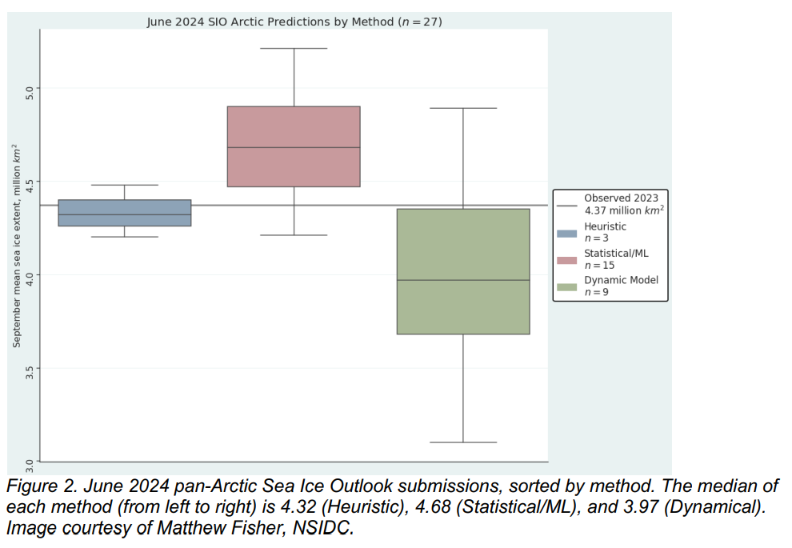
There are three heuristic Outlooks, with a median of 4.32 million square kilometers and an interquartile range of 4.26 to 4.4 million square kilometers. Statistical submissions total fifteen Outlooks with a median of 4.68 million square kilometers and an interquartile range of 4.47 to 4.9 million square kilometers. There are nine dynamical model contributions. The dynamical models have a median forecast of 3.97 million square kilometers with an interquartile range of 3.68 to 4.35 million square kilometers.

Continue reading Facts About the Arctic in July 2024

Facts About the Arctic in June 2024

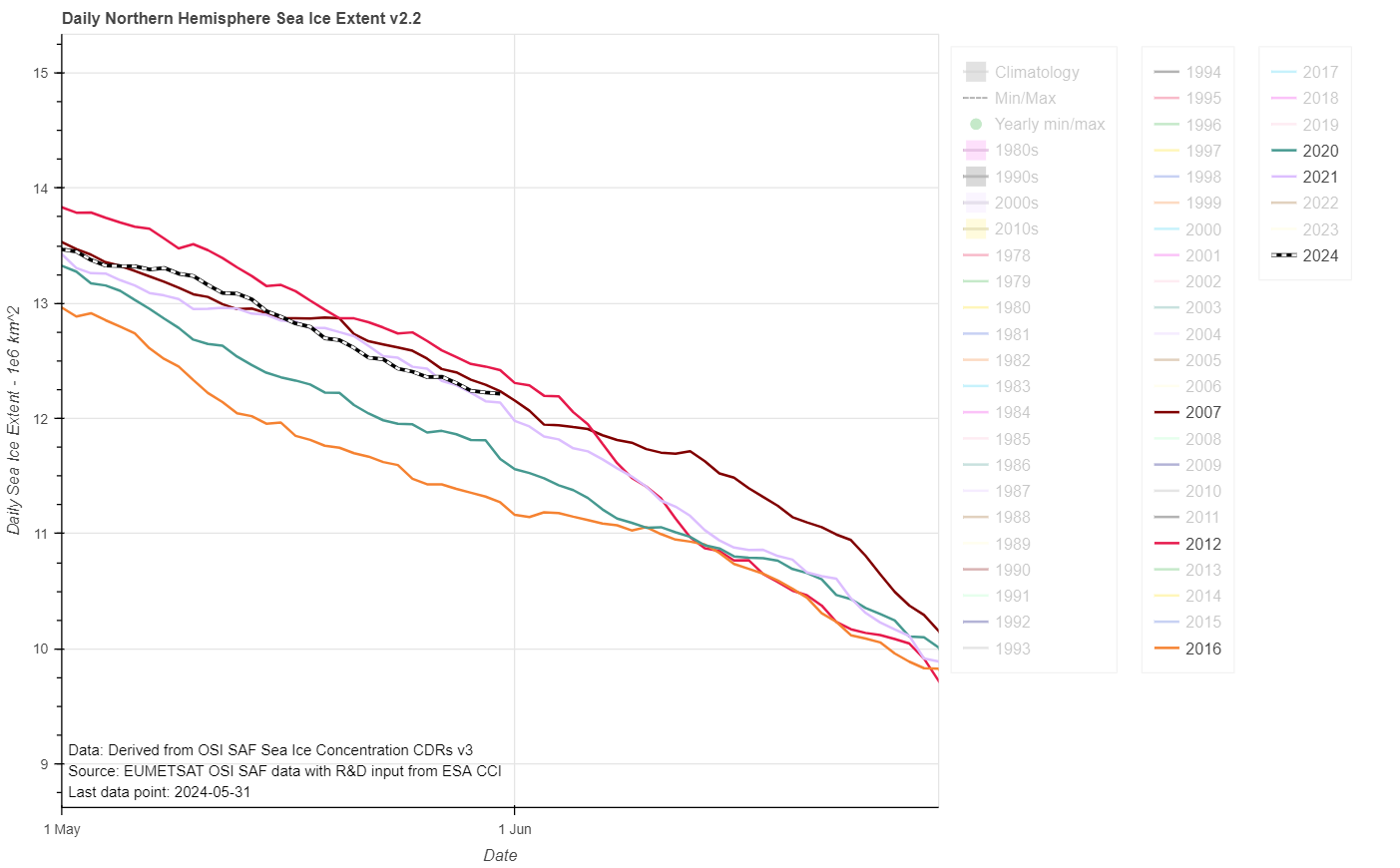
The JAXA/ViSHOP web site is currently down, so here is the current OSI SAF extent graph for the end of May:

2012’s “June cliff” is almost upon us, and if 2024’s current trajectory continues extent will cross above 2012 for the first time since February in a week or so.

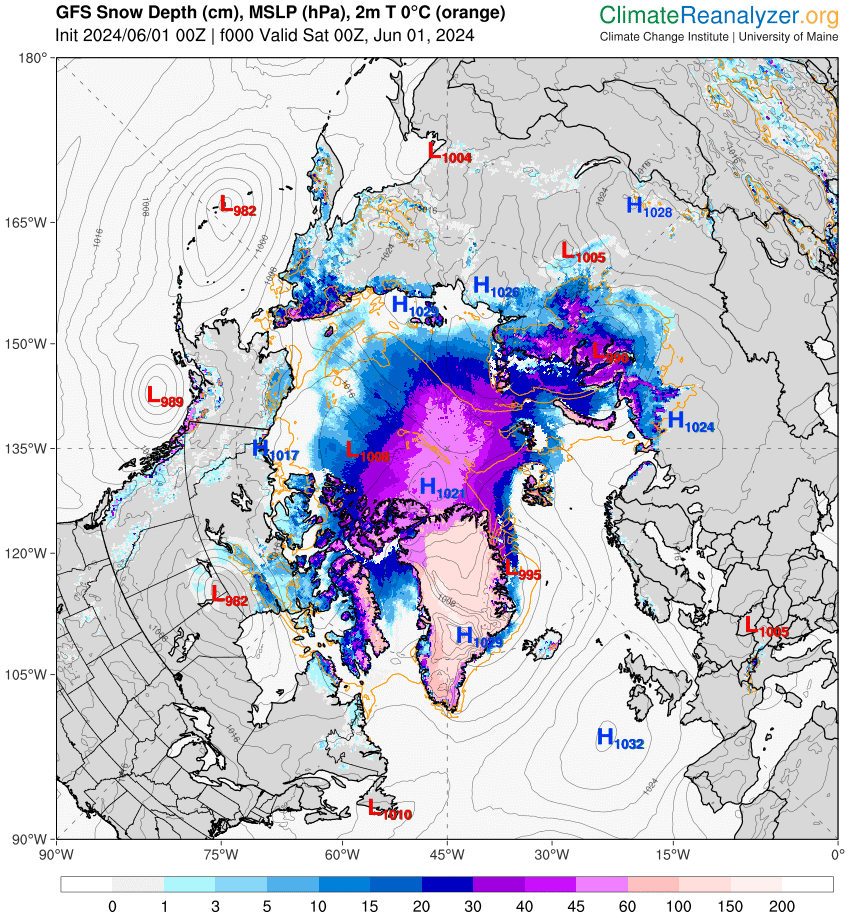
Here’s the GFS model’s current map of snow depth:

Melt ponds are now visible on the ice in the Laptev Sea:

Continue reading Facts About the Arctic in June 2024

Facts About the Arctic in May 2024

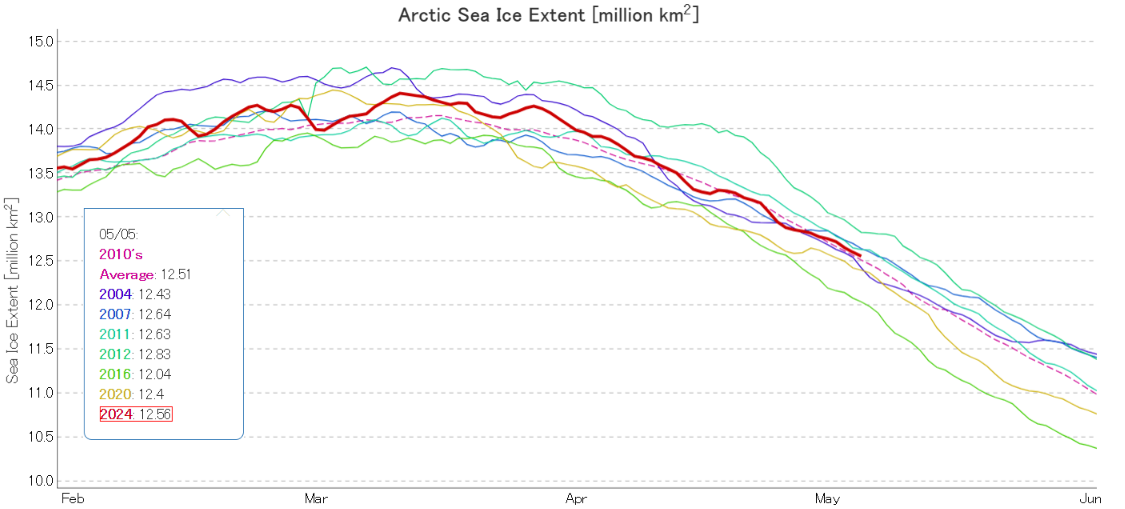
Since a certain “sceptic” has recently been comparing 2024 sea ice extent to “20 years ago”, here’s the current JAXA/ViSHOP extent graph of selected years, including 2004:

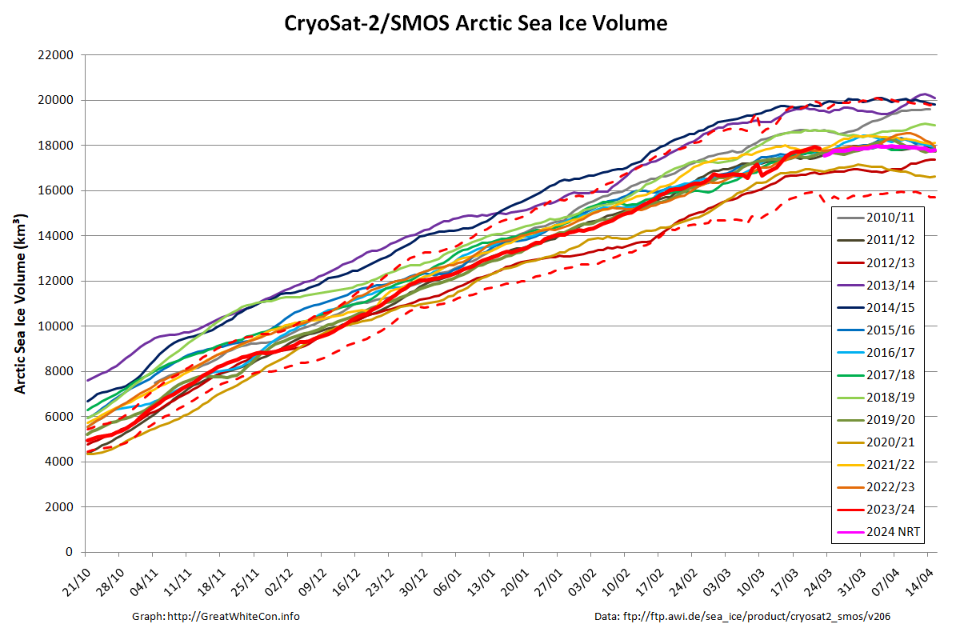
The CryoSat-2/SMOS merged Arctic sea ice volume graph finishes on April 15th, but older data is being reanalysed and here is the latest version:

The gap in the near real time data due to the problem with the SMOS satellite during the first half of March has been filled in, but the result doesn’t look very convincing to say the least!

The PIOMAS gridded thickness data for April 2024 is now available. Here’s the end of month volume graph:

Continue reading Facts About the Arctic in May 2024

Chris Martz Should’ve Gone To Specsavers

Chris Martz, the new kid on the “skeptical block”, proudly proclaimed on XTwitter yesterday that:

There’s more sea ice heading into the summer in the Arctic this year than there was in 1989.

That is of course a porky pie:

As you can see, Chris also invokes the age old canard of the “Mark Serreze Arctic sea ice death spiral”. I discussed that very topic with Mark in 2015:

Mark told me that he still stood by his 2030 estimate for the onset of a seasonally ice free Arctic, although: “Most models say more like 2050”.

Continue reading Chris Martz Should’ve Gone To Specsavers