Tag Archives: Temperature

The Awful Terrible Horrible Arctic Sea Ice Crisis

As our regular reader(s) will be aware, Anthony Watts has been plagiarising our content and republishing it on his “Watts Up With That” blog. In a perplexing perversity he has also been refusing to publish content that we have happily contributed to the self same blog. Hence we have taken the liberty of basing our title for today on a recent WUWT guest post by Willis Eschenbach entitled:

The Awful Terrible Horrible Global Sea Ice Crisis

Here’s what Willis had to say at the end of his article:

My Usual Request: Misunderstandings are the curse of the internet. If you disagree with me or anyone, please quote the exact words you disagree with, so we can all understand the exact nature of your objections. I can defend my own words. I cannot defend someone else’s interpretation of some unidentified words of mine.

My Other Request: If you believe that e.g. I’m using a method wrong or using the wrong dataset, please educate me and others by demonstrating the proper use of the method or the right dataset. Simply claiming I’m wrong about methods doesn’t advance the discussion unless you can point us to the right way to do it.

Data: The Hadley HadISST ice (and sea surface temperature) data is available here. I used the NetCDF file HadISST_ice.nc.gz (~15Mb) at the bottom of the page.

and here’s a copy of our still invisible comment:

2016-04-07_0600-WUWT

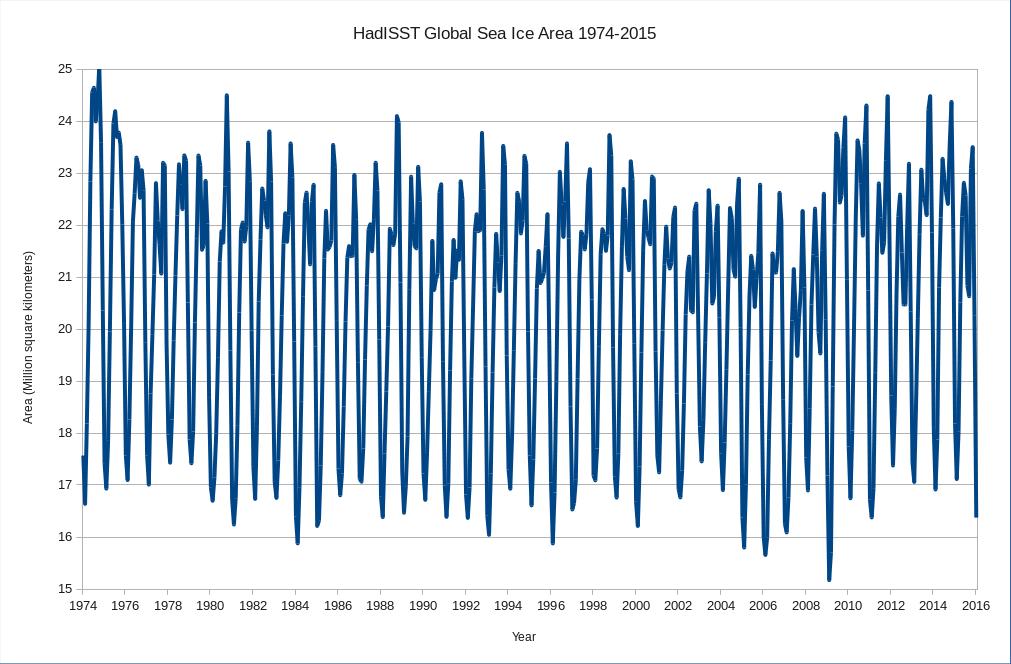
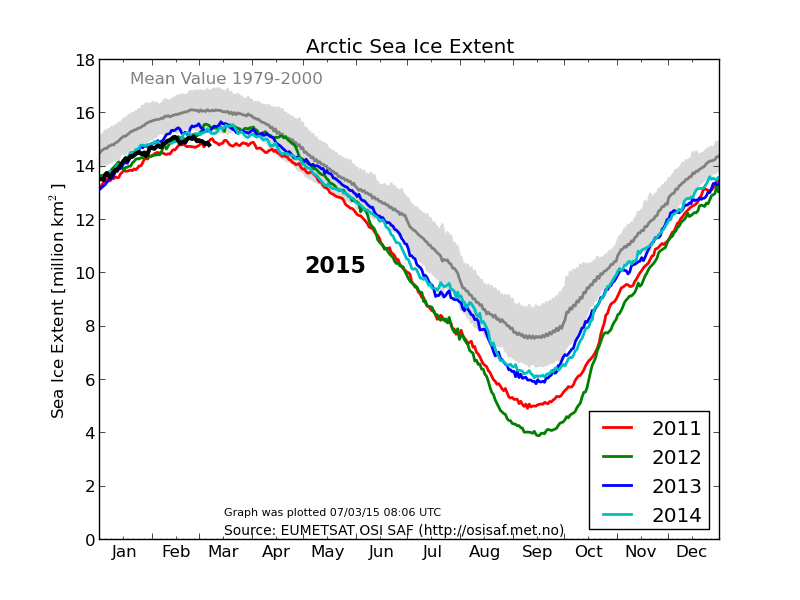
Epitomising the indomitable spirit of scientific skepticism we set out to duplicate the results obtained by Mr. Eschenbach and answer our own question as well as his. Here is what we’ve discovered. Firstly global sea ice area since 1974:

HadISST-Global

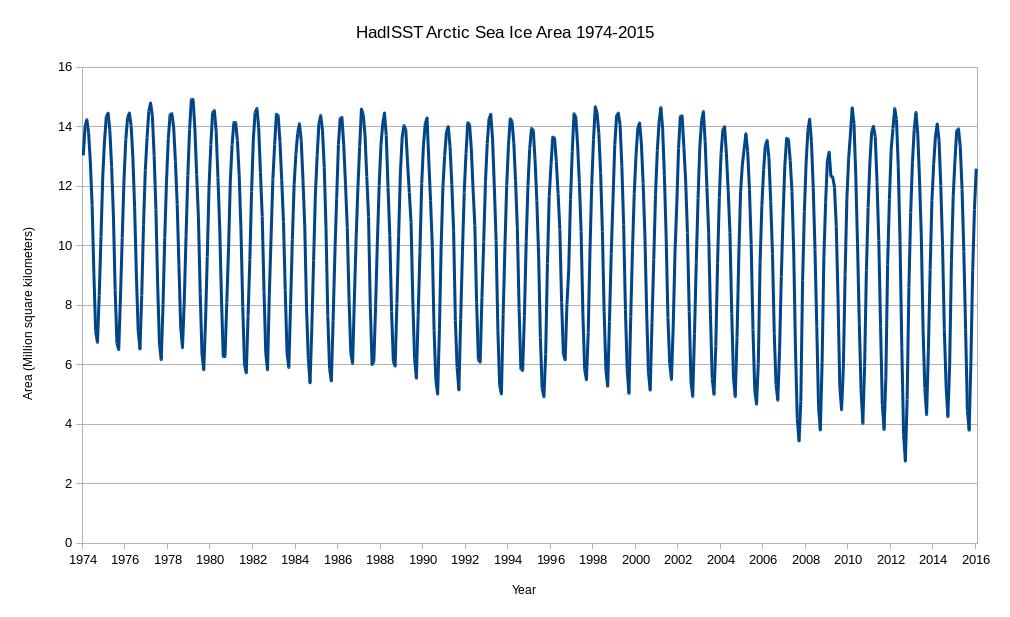
and then Arctic sea ice area since 1974:

HadISST-Arctic

Now as our very own learned guest poster Bill The Frog all too briefly pointed out to Willis Eschenbach on April 7th:

2016-04-07-1757-WUWT-BtF

Ignoring Bill’s helpful hint Willis concluded that:

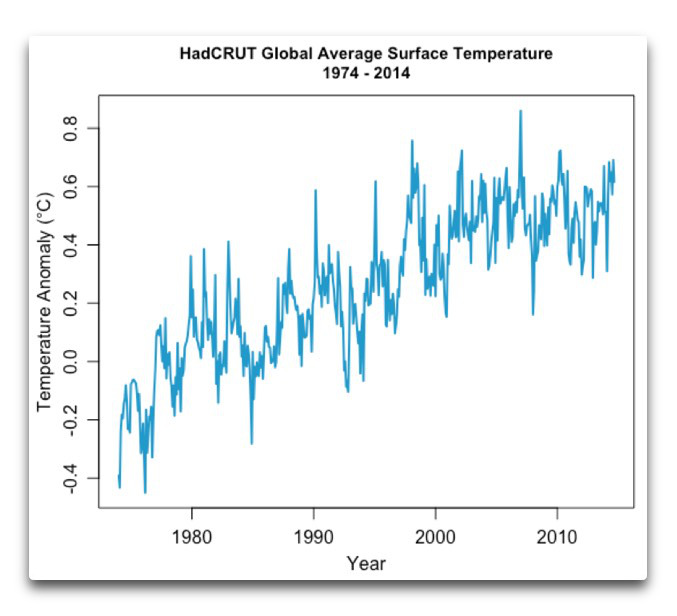
We’re pretty sure that the global average surface temperature increased from the mid-1970s to about 1998. However, we see no sign of this in the global sea ice area data. Instead, ice area remained stable throughout the 1980s and the 1990s, while temperatures climbed:

hadcrut-global-average-surface-temp-WUWT-20160406

Next, we’re also pretty sure that there was no significant change in the global average temperature from about 1998 to 2015, the end of the ice data. Despite that, starting in 2000 the ice area first dipped to a low in about 2007, and since then has been climbing rapidly.

This supports a curious conclusion, which is that in modern times at least, the global sea ice area is not particularly a function of the global average surface temperature. Go figure…

Now that we’re in possession of all this newly revealed data about historical sea ice area and censorship in the cryospheric blogosphere what should we “go figure”? Firstly one feels compelled to ask why Willis’s global average temperature graph neglects to mention 2015 when he implies that it does?

Should you figure anything else please free to answer our query on a virtual postcard, in the space provided for that purpose below. You may additionally like to vent your feelings concerning this controversial cover-up of our changing climate over on Twitter using the #SnipGate hashtag.

Claim – Arctic Sea Ice Holds Firm?

Today’s Arctic sea ice claim comes from the Bishop Hill blog of Andrew Montford, which recently stated that:

This morning’s story appears to be the hoary old “Arctic sea ice in freefall” one.

“The Arctic is in crisis. Year by year, it’s slipping into a new state, and it’s hard to see how that won’t have an effect on weather throughout the Northern Hemisphere,” said Ted Scambos, lead scientist at the Colorado-based NSIDC.”

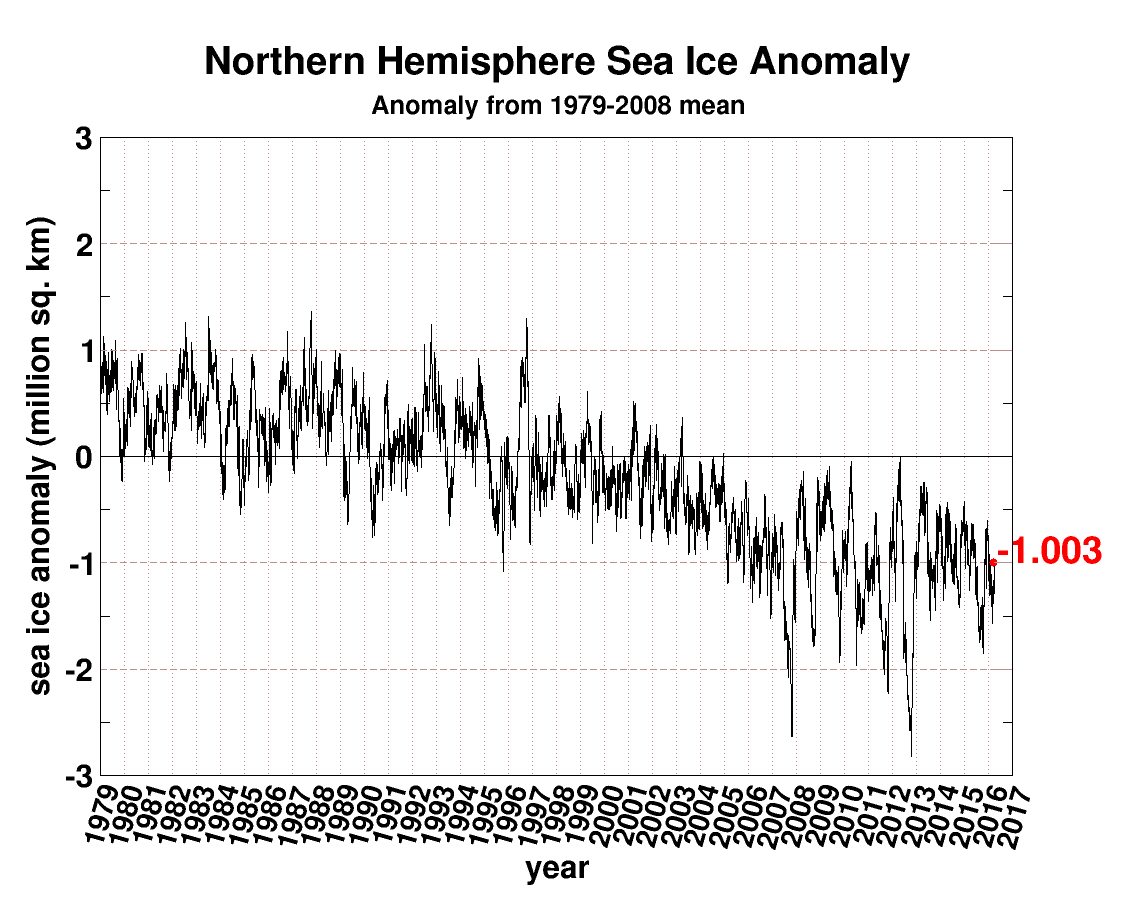
As usual on these occasions, I take a quick look at the Cryosphere Today anomaly page, where I find the sea ice apparently still stuck firmly in “pause” mode.

seaice.anomaly.-20160328

Having inadvertently wended my way onto The Bishop’s Hill via the northerly extension to Eli’s Rabett Warren I felt compelled, as usual, to quibble with Andrew’s “apparently firmly in ‘pause’ mode” claim. Since graphs in comments are not available over on The Hill, or The Rabett Run for that matter, let’s take a look at some graphic representations of the available data over here instead. Commenter “Golf Charlie” asks at The Bishop’s:

With CO₂ levels continuing to rise, why hasn’t temperature risen, and the ice disappeared as predicted?

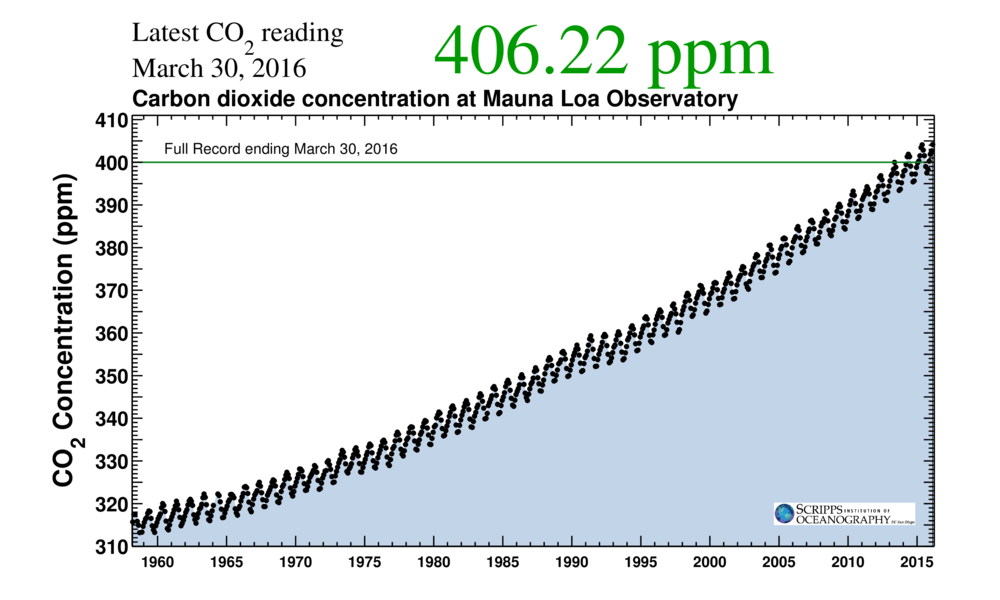
Let’s see shall we? CO₂ levels are indeed continuing to rise:

Keeling-20160330

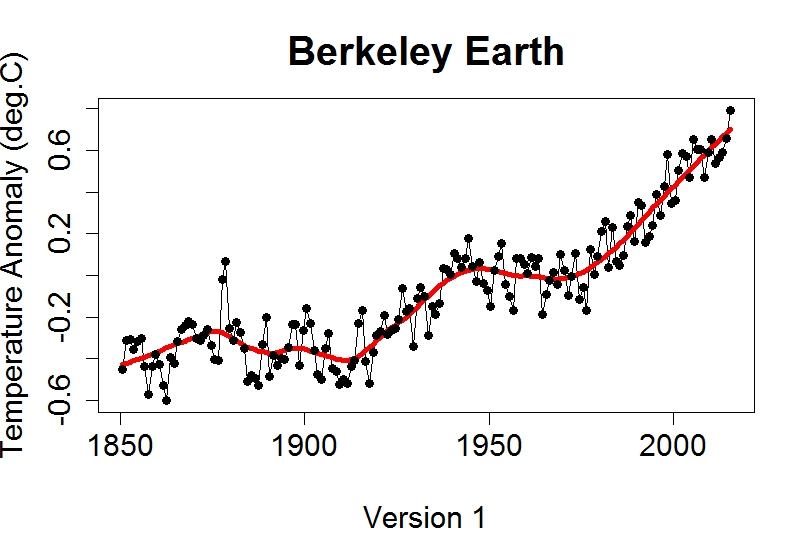
Temperature has risen, as predicted:

2015-berk1

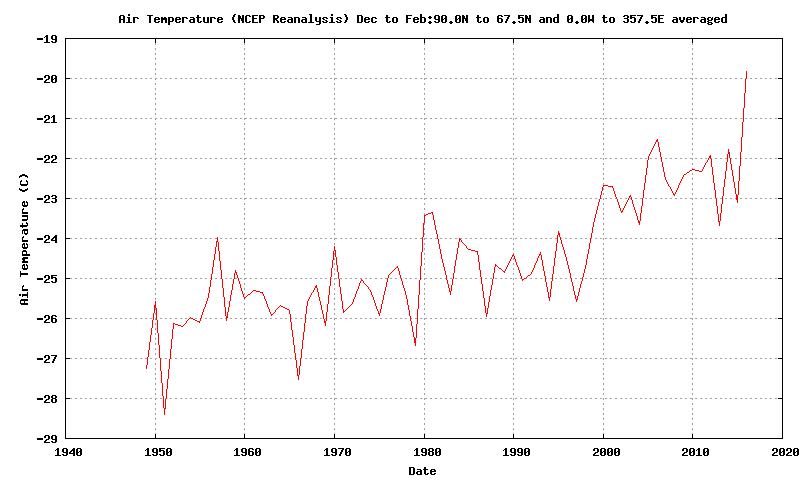
Arctic amplification is occuring, as predicted:

Time series of Arctic surface temperature in winter (Dec/Jan/Feb)

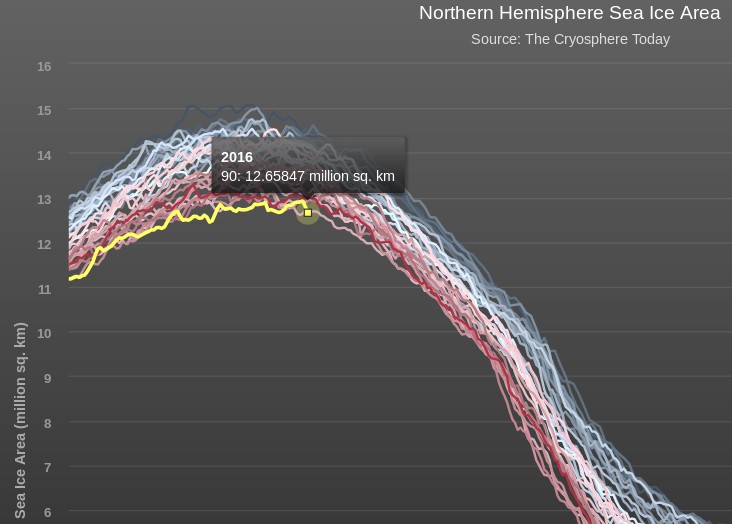
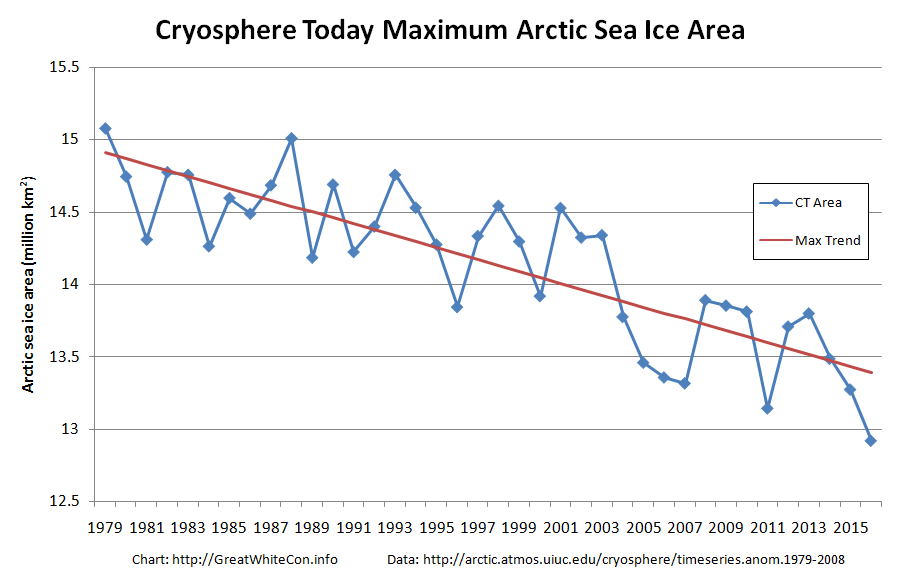
Arctic sea ice is disappearing, as predicted:

CT-20160330

CT-Max-2016-Final

Q.E.D?

Vanishing Svalbard Sea Ice

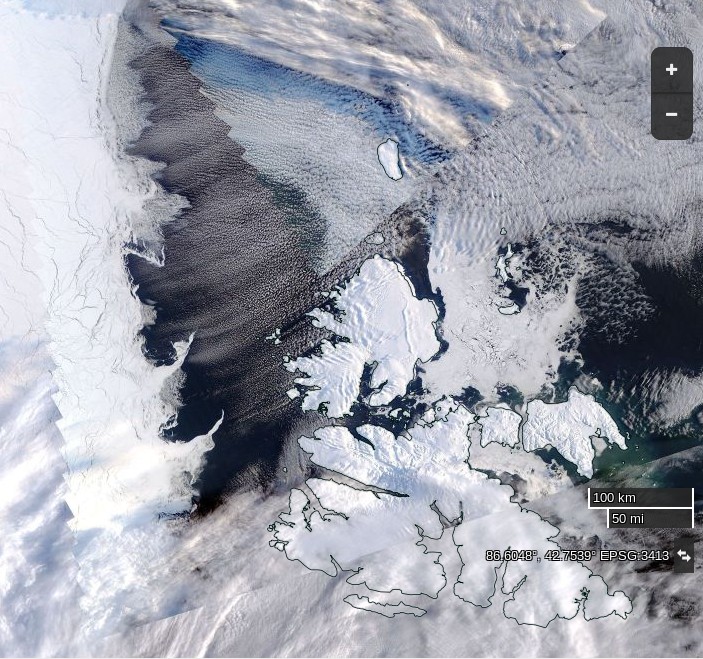
At the turn of the year we speculated about the potential effect of high temperatures and the swells caused by strong winds on sea ice in the Fram Strait and Barents and Greenland Seas. With the vernal equinox rapidly approaching let’s take stock of the state of Svalbard sea ice. Here’s one the first “visual” satellite images of the area in 2016 recorded yesterday by the Aqua satellite:

NASA Worldview “true-color” image of the Central Arctic north of Svalbard on March 14th 2016, derived from the MODIS sensor on the Aqua satellite

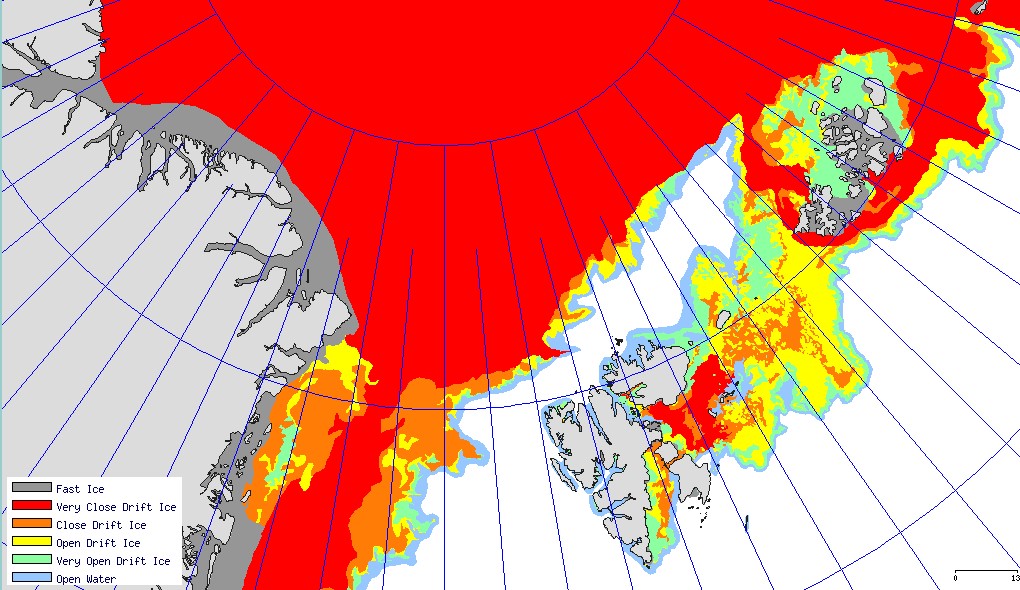
and here is the equivalent sea ice map from the Norwegian Meteorological Institute:

Svalbard-Map-20160314

Both sources reveal an unseasonable lack of solid sea ice around Svalbard. In fact an intrepid Northwest Passage navigator who didn’t mind the dark might well currently be able to circumnavigate Svalbard!

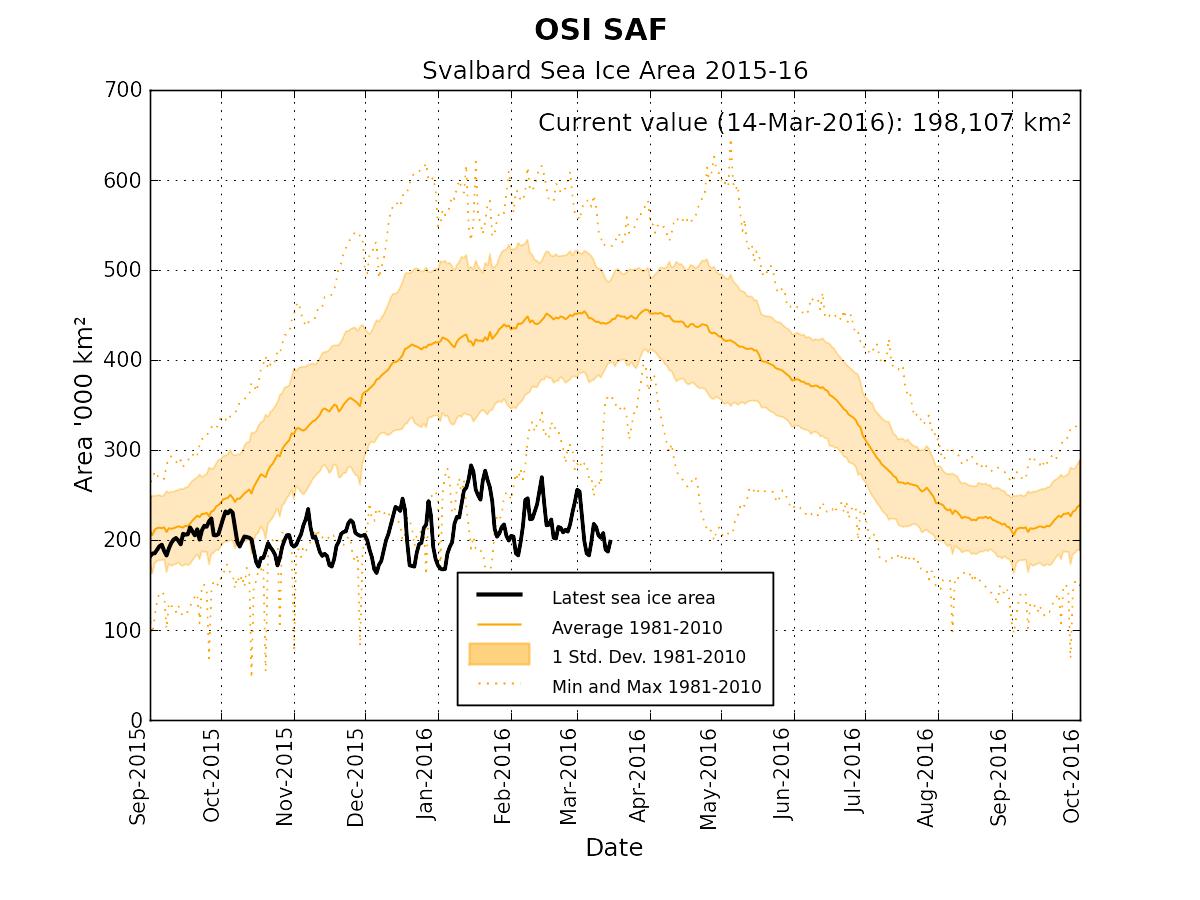
The Norwegian Meteorological Institute also produce a time series of sea ice area in the Svalbard region based on data from OSI-SAF. It currently looks like this:

osisaf-svalbard_20160314

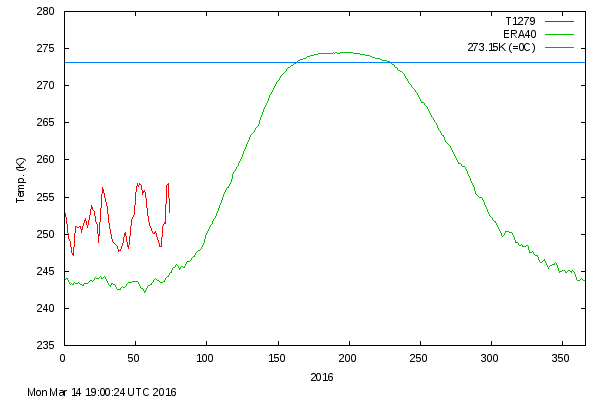
As sunlight returns to the Central Arctic north of 80 degrees there is an anomalously large area of open water ready to soak up the rays. Here is what the Danish Meteorological Institute timeseries of Central Arctic temperatures looks like at the moment:

DMI-meanT_20160314

and here is the current Svalbard surf forecast from Magic Seaweed:

MSW-20160315

Whilst we speculate on what all this might mean for the Atlantic side of the Arctic over the coming melting season, here’s our new Svalbard Sea Ice page which contains a variety of graphs and maps to help us keep track of events on that part of our planet.

More Heat Heading for the North Pole

We speculated a few days ago about whether the “Son of Storm Frank” might have battered Britain by now, and be sending a 10 meter swell past Svalbard towards the Arctic sea ice edge. That’s not quite how things have worked out in practice however! We haven’t had another named storm affecting the United Kingdom directly, but we have received a series of long distance swells from a sequence of hurricane force storms further out in the North Atlantic. I even managed to test my Arctic surfing equipment by personally partaking in the swell generated by Hurricane Alex!

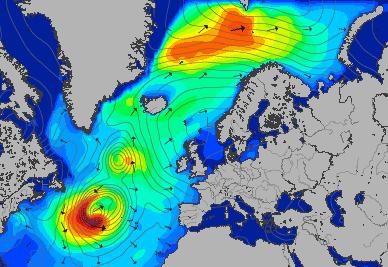
Moving from the water into the air, here’s the Danish Meteorological Institute’s forecast for Greenland tomorrow:

Greenland-20160123+24h

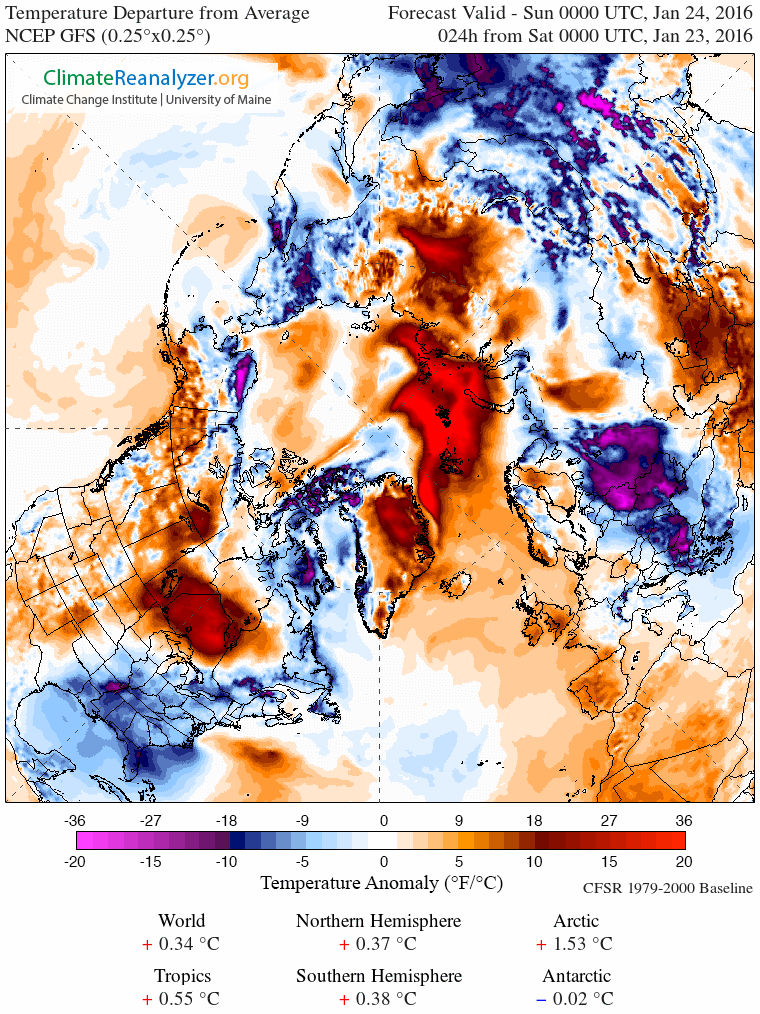
If you’re at all familiar with isobars you’ll note yet another storm off Southern Greenland and that comparatively warm, moist air will be heading up the east coast of Greenland towards the Fram Strait, albeit not at the speeds generated by Storm Frank! As a consequence here is Climate Reanalyzer’s surface temperature anomaly map for first thing tomorrow:

CCI-AnomT-20160123+24h

and here is how it looks by Wednesday lunchtime:

CCI-AnomT-20160123+108h

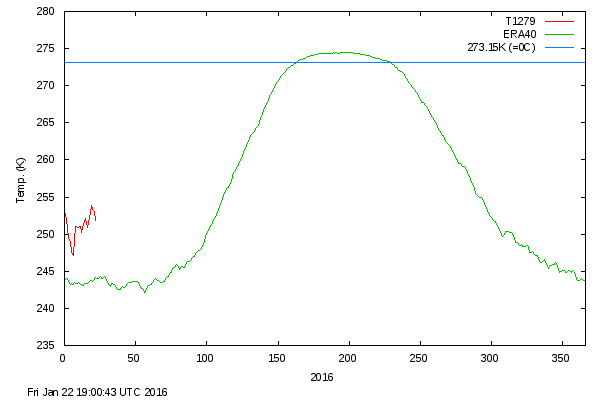
As you can see, the ultimate effect of the recent hurricane force storms in both the Atlantic and the Pacific is to attack the Arctic with warm, moist air from both sides. Whilst we wait to see exactly how this much shorter term forecast pans out, particularly at the North Pole itself, the DMI’s graph of temperatures in the central Arctic has burst back into life after a “brief hiatus” in the New Year. Here’s how it looks at the moment:

DMI-T80N-20160123

New Year 2016 Arctic Meltdown Update

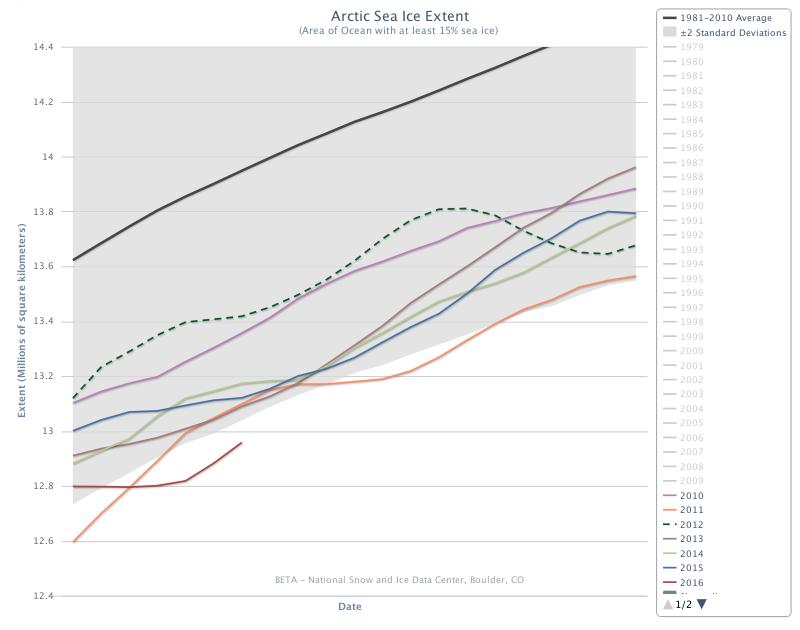
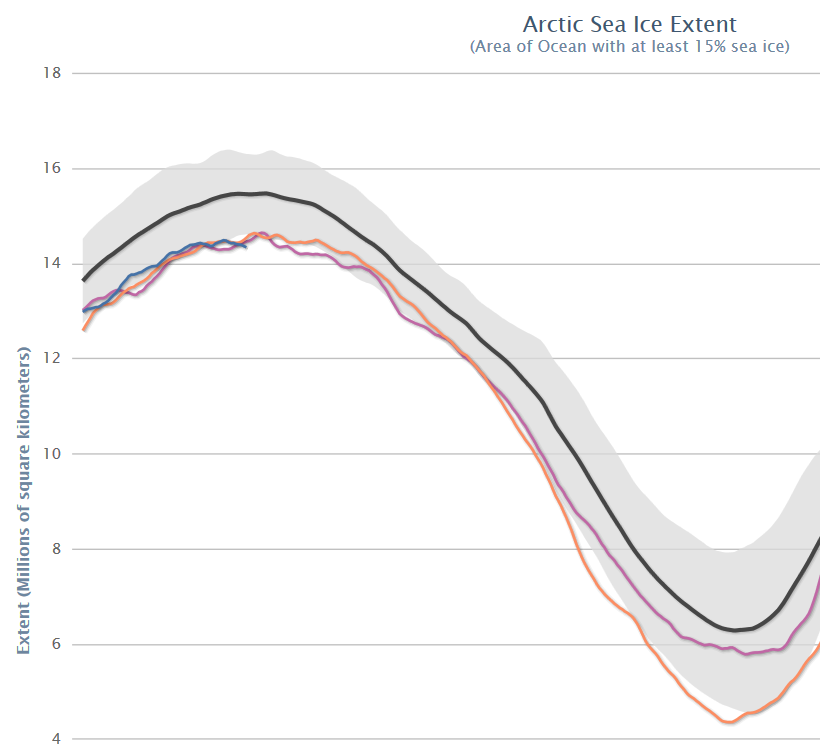
On January 1st 2016 the 15% concentration threshold daily Arctic sea ice extent metric reported by the United States National Snow and Ice Data Centre reached the lowest ever level for the first day of any year since their satellite derived records began in 1979. A couple of days later the more familiar 5 day trailing averaged extent also reached the lowest ever level for the date:

Charctic-20160107

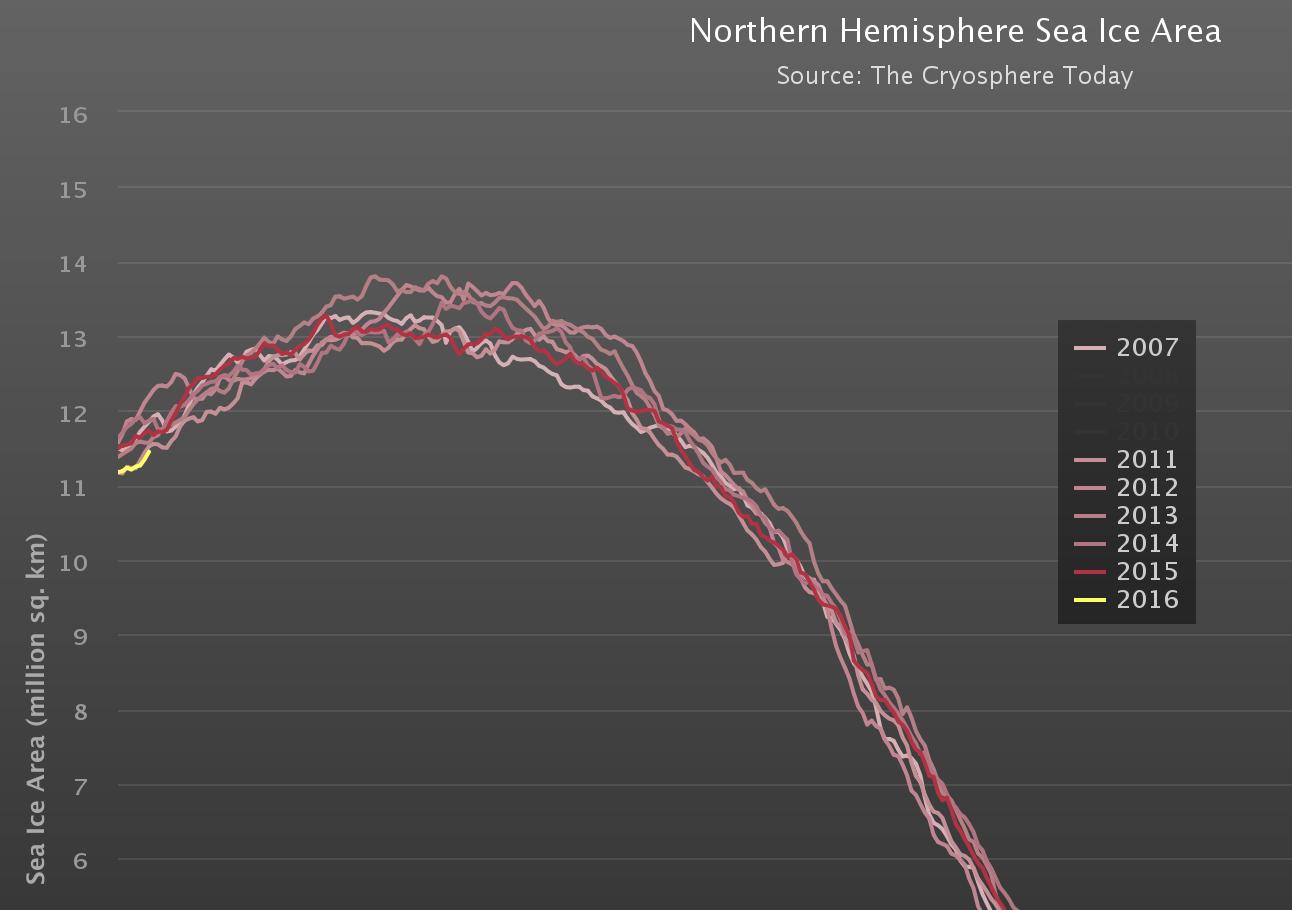
Cryosphere Today have been somewhat sluggish about updating their records of Arctic sea ice area, but have at long last revealed that their metric is now also at the lowest ever level for the date:

CT-NH-20160107

Meanwhile Great White Con commenter “Just A Thought” states that:

I find it hard, with what I do have access to, to see why everyone is so worried that the Arctic is melting.

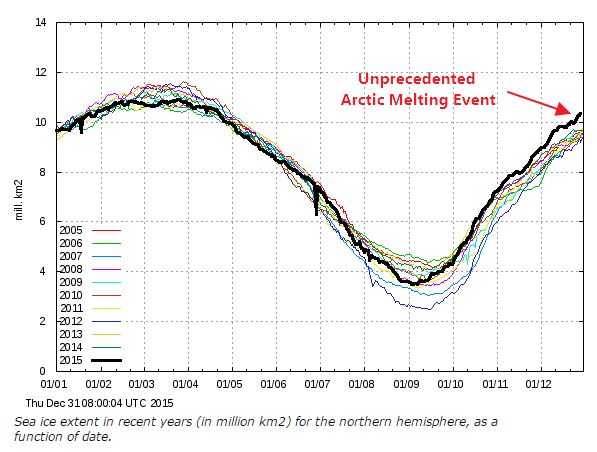
He or she has evidently only had access to the propaganda perpetrated by Tony Heller (AKA “Steve Goddard”) on his so called “Real Climate Science” blog. Mr. Heller’s latest Arctic pronouncement on December 31st 2015 is entitled “Arctic Meltdown Update” and claims that:

Experts say that a terrifying storm melted the North Pole yesterday. This unprecedented melting event has caused Arctic ice to reach its highest December extent in over a decade.

justifying that comment with the following graph of his beloved (albeit deprecated) 30% concentration threshold DMI extent metric:

DMI-30-2015-12-31-

Here’s a video revealing the effect of the recent “terrifying storm” on the sea ice on the North Atlantic side of the Arctic:

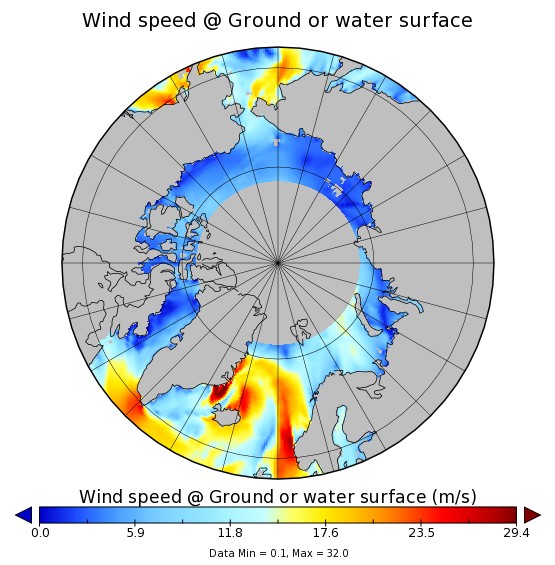
As you can see the ice at the North Pole didn’t melt away. However the ice edge did retreat in the immediate aftermath of what is referred to here in the United Kingdom as “Storm Frank“. Frank led to lots of flooding in the North of the nation, and also to some strong winds inside the Arctic Circle:

WW3Wind-20151230-1400

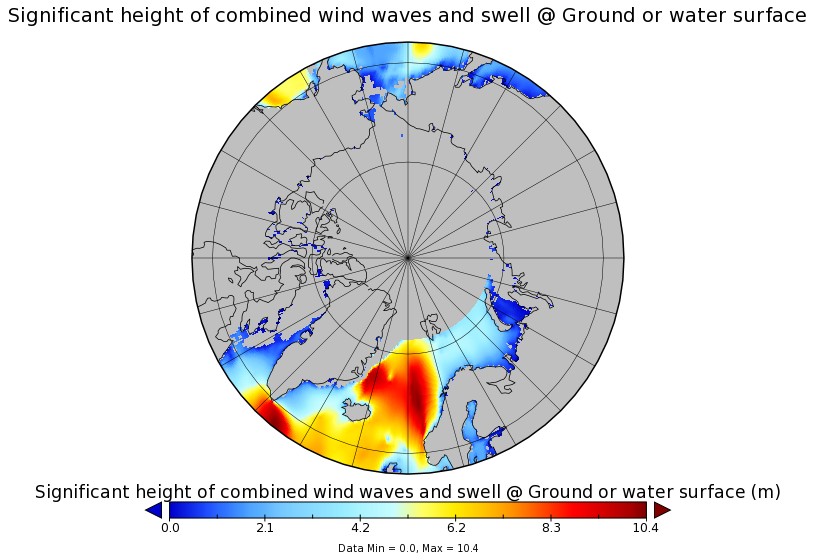
Those winds, travelling over a long stretch of open ocean, produced some pretty significant waves, speeding in the direction of the sea ice edge:

WWIII-20151231-0000

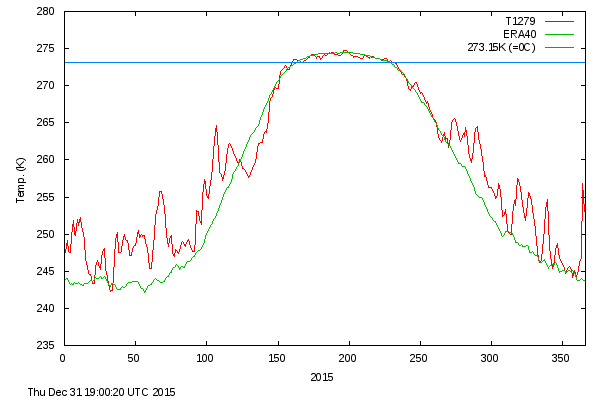
Meanwhile temperatures near the North Pole did briefly rise above the freezing point of sea ice in the middle of the Arctic winter. Here’s the Danish Meteorological Institute’s view of the air temperatures in the central Arctic:

meanT_20151231

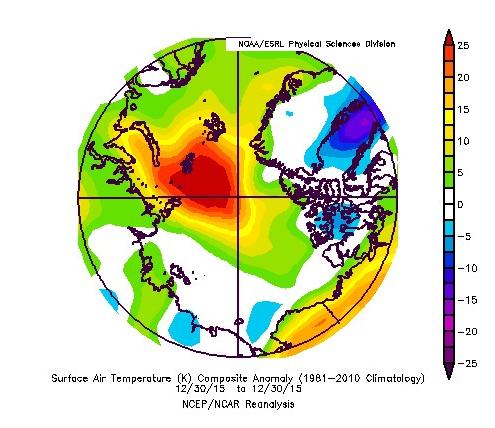
and here is NOAA’s temperature anomaly reanalysis for December 30th 2015:
NOAA-anomT_20151230

Personally I reckon the 25 m/s winds and resulting 10 meter waves had more effect on the sea ice metrics than the 25 °C above normal air temperatures, but your mileage may of course vary, especially if your pseudonym is “Steve Goddard”!

Alaska May Snow Cover At Record Low Levels

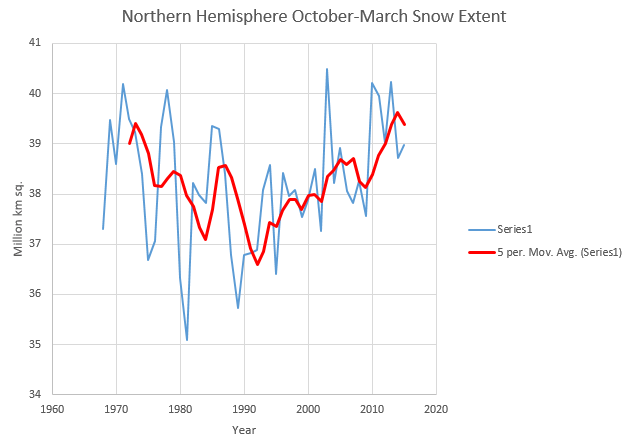
“Steven Goddard” is evidently magically turning into “Snow White’s” muse. His latest fairy tale addresses her second favourite subject after Arctic sea ice, which is of course northern hemisphere snow cover. The article is entitled “October-March Snow Cover At Record High Levels“, and proudly proclaims that:

Fifteen years ago, climate experts said that snow is a thing of the past. Since then, Northern Hemisphere snow cover has soared to record levels.

unRealSnow-20150607

Rutgers University Climate Lab :: Global Snow Lab

What this tells us is that cold air is intruding further south during the snow season. It also tells us that Tom Karl at NOAA is lying about global temperatures.

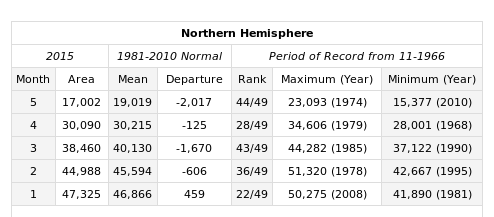
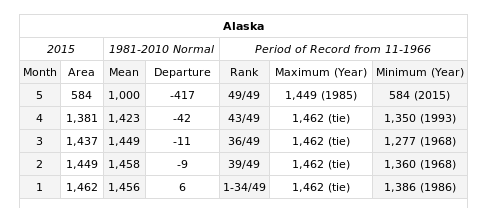
Snow White and I innocently followed Steve’s link, then clicked on the “Rankings” link on the left hand side, where we discovered this:

Selection_474

not to mention this:

Selection_473

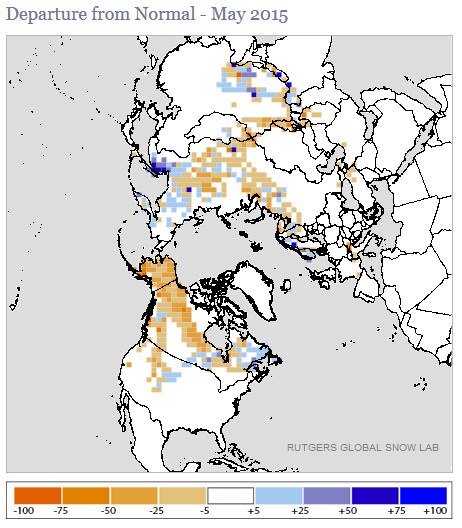
Feeling confident that all the Real Scientists would be interested in the latest data hot off the presses from the Snow Lab we showed them this picture:

maysnowmap2015

and enquired?

What does that tell us?

The initial response from “gator69”?

The fact that you refer to “normal” in climate or weather tells us that you have zero understanding of either.

When will you work to help the starving millions by confronting alarmists, and assist in diverting money to where it is desperately needed right now?

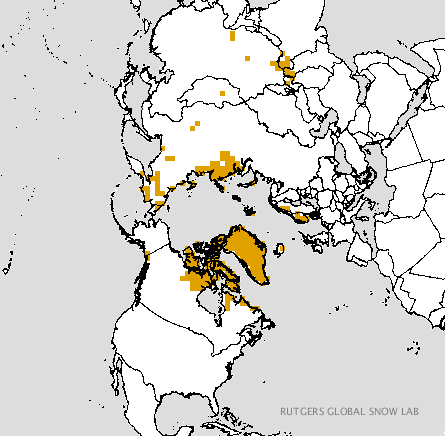
Since “Real Scientists” are apparently aghast at anomaly maps, here are the current absolute values from Rutgers:

RutgersSnow-20150607

Just in case you are wondering what all this has to do with Snow White’s favourite subject of all, here’s the current Topaz 4 map of Arctic sea ice snow cover:

Topaz4Snow-20150607

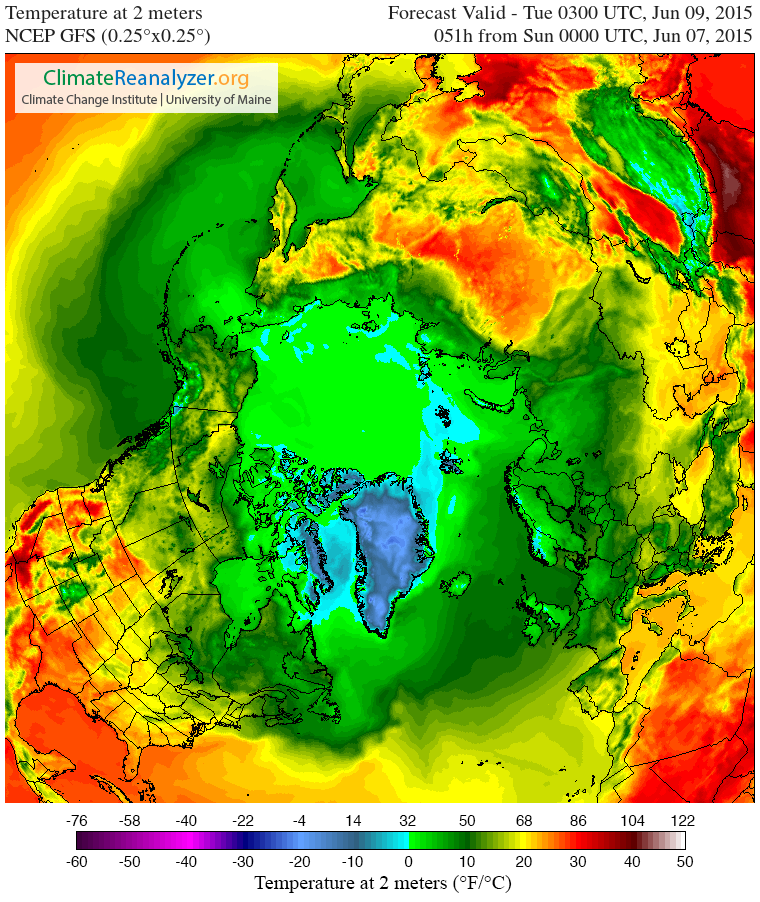
and here is the current northern hemisphere temperature forecast for Tuesday morning from the “Climate Reanalyzer

CCIT2-20150607+51

Snow White and I cannot help but wonder what effect temperatures above zero across virtually the entire Arctic Ocean will have on the snow cover that currently remains. We also cannot help but wonder whether 2015 Arctic sea ice extent will suddenly start tracking 1995 or 2006 as a consequence.

We also wondered what Tom Karl et al. of NOAA have been saying about the Arctic, and discovered this:

Since the IPCC report, new analyses have revealed that incomplete coverage over the Arctic has led to an underestimate of recent (since 1997) warming in the Hadley Centre/Climate Research Unit data used in the IPCC report. These analyses have surmised that incomplete Arctic coverage also affects the trends from our analysis as reported by IPCC.

Finally, for the moment at least, here’s the Topaz 4 snow depth forecast for June 16th 2015:

Topaz4Snow-20150616

Thanks to “Nightvid Cole” and “Vergent” at the Arctic Sea Ice Forum for bringing that view of things to our attention.

Arctic Sea Ice Area Lowest Ever (For the Date!)

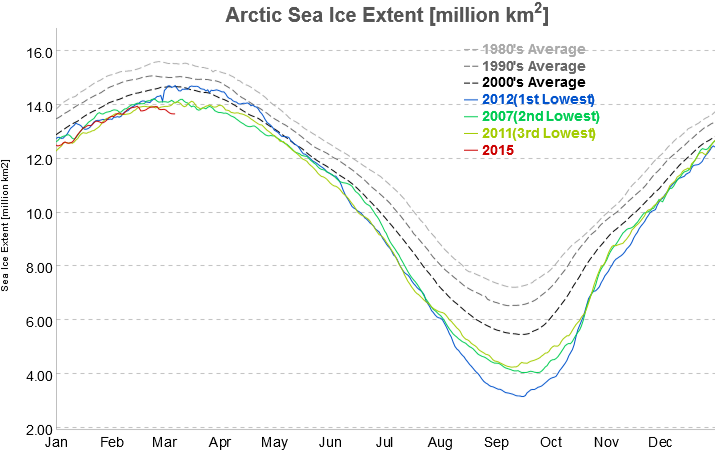
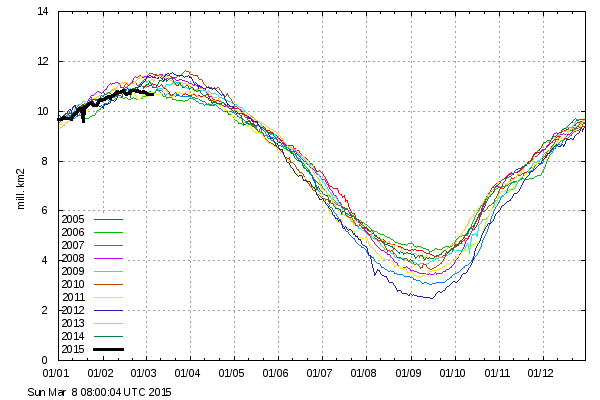
As we reported on February 18th, some of the Arctic sea ice extent metrics reached the lowest levels for the date in their respective histories quite some time ago. Today though, we’re looking at a full house. The daily NSIDC and IJIS extent numbers have both been at all time lows for the date for quite some time now. Here’s how the NSIDC 5 day average extent looks at the moment:

2015-03-06_NSIDC

and here’s the IJIS/JAXA daily extent:

vishop_sic_extent-20150307

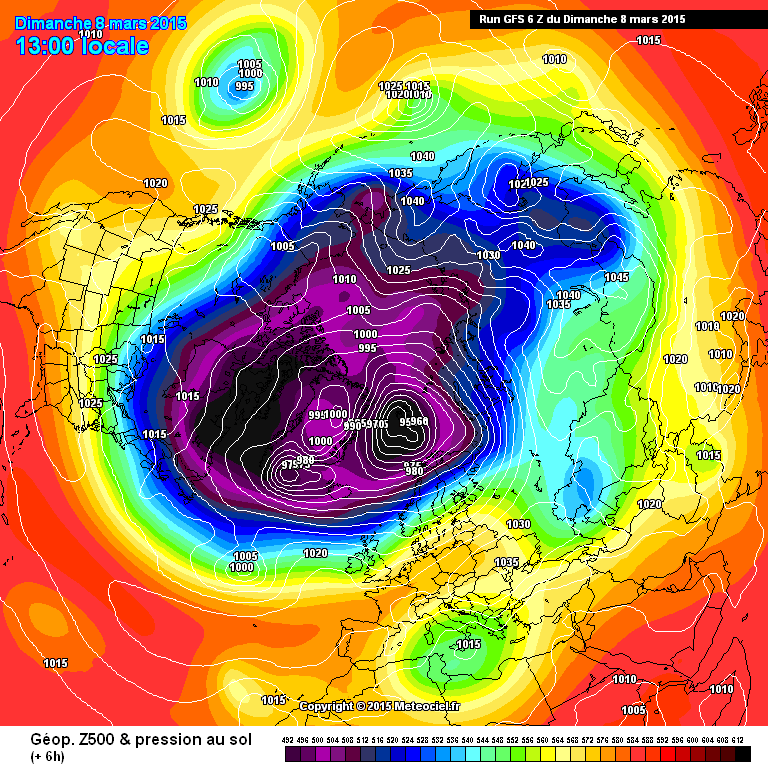
Meanwhile a series of storms in the North Atlantic have been bringing large surf to the shores of the Western United Kingdom, and battering the edge of the sea ice in the Greenland and Barents Seas. Here’s how GFS looks currently, as visualised by MeteoCiel:

gfsnh-20150308-6

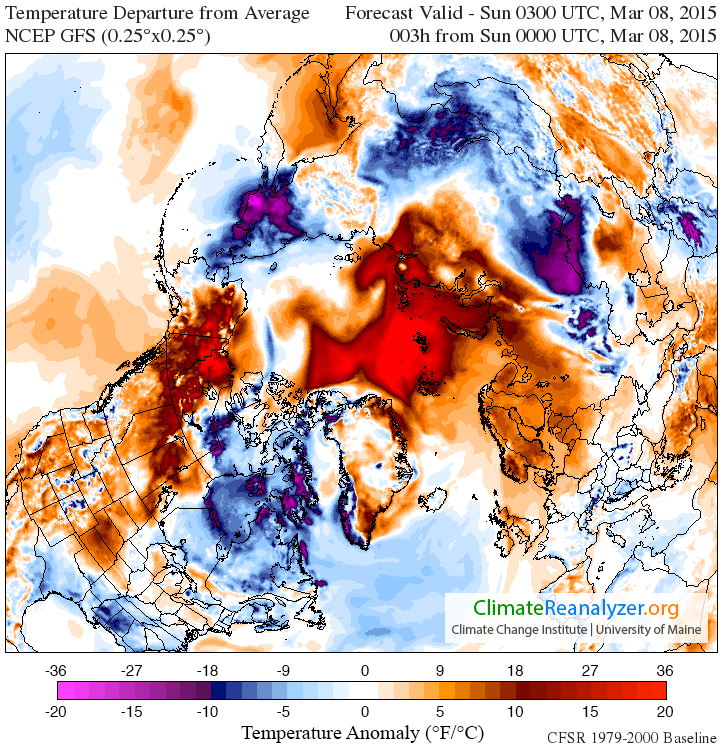
In addition this has  resulted in warm air from further south being funnelled into the high Arctic, so much so that the surface temperature anomalies currently look like this:

CCI-AnomT-20150308+003

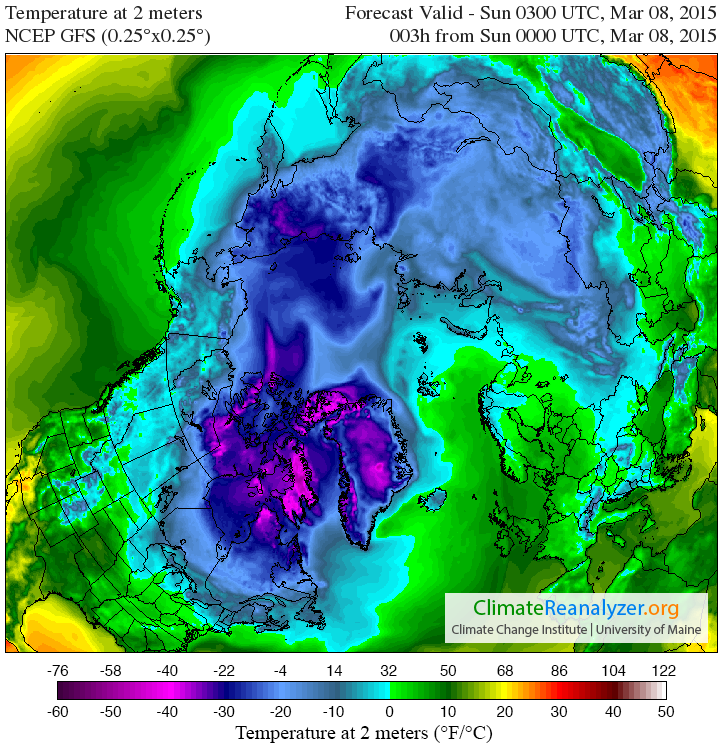
whilst the temperatures 2 metres above the surface of the Arctic look like this:

CCI-Temp2m-20150308+003

If you look closely you’ll see that air temperatures 2 metres above the North Pole are currently similar to those around the shores of the Great Lakes of North America.  As a result of all this atmospheric activity today we bring you news that both the Danish Meteorological Institute “new” 15% extent:

DMI-15-icecover_20150307

and “old” 30% metrics:

DMI-30-icecover_20150308

have now joined the club.

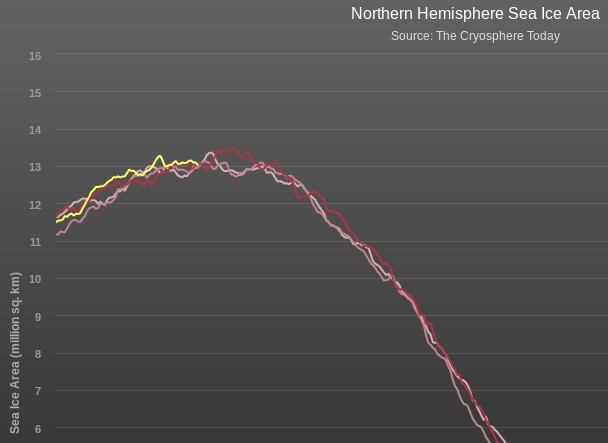
The Cryosphere Today area metric has been holding out against the trend in sea ice extent for weeks, but we can confidently predict that when their next update is released it too will also reveal the lowest ever Arctic sea ice area for the 65th day of the year, in records going back to 1979. Here’s how their graph looks currently:

CTArea-2015-Day64


The House of Lords Responds to a Changing Arctic

The United Kingdom’s House of Lords are an unlikely bunch to be bundled under the banner of “alarmist” or even “warmist”. Nevertheless their Select Committee on the Arctic has just published a report entitled “Responding to a Changing Arctic“, and in this video the chairman of that committee, Lord Teverson, briefly outlines their findings:


Note that he starts by saying that:

Absolutely the obvious thing first of all is that with the temperatures going up [in the Arctic] at twice the rate of the rest of the world the thing that everybody is seeing is reduction in sea ice which has reduced quite substantially over recent years, and of course a lot of the Arctic is land and we have the melting ice on Greenland particularly, which is causing sea level rises in the rest of the world.

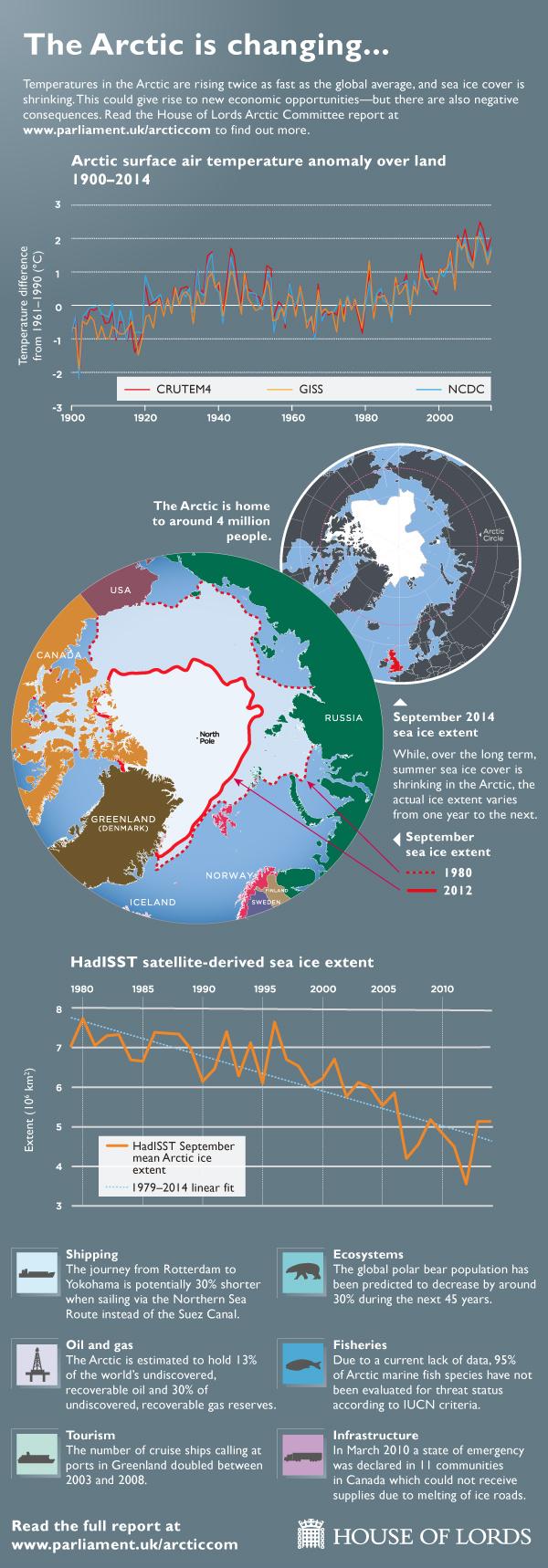
In order to get that message across the committee has also produced the following infographic:

LordsInfographic
 
which shows how the temperature over land has been increasing whilst the sea ice extent in the Arctic has been declining.  The committee have also made all the learned evidence they received whilst producing their report publicly available. Professor Andy Shepherd from the University of Leeds told the committee that:

The majority of sea ice changes witnessed in “the past 50 or 60 years” could be attributed to greenhouse gas emissions and their effect on temperatures in the Arctic region.

and:
Suggested that the length of the solar melt season had increased by around five days per decade, causing additional melting and retreat of the ice.

How strange then, that David Rose made no mention of any of this when reporting Prof. Shepherd’s views in his “Myth of Arctic meltdown” article of August 31st 2014?

How strange also, that Christopher Booker maintained in his “The fiddling with temperature data is the biggest science scandal ever” article of February 8th 2015 that:
The ice-melt is not caused by rising global temperatures at all.

The Greatest Scandal in the History of Science!

Christopher Booker has raised the stakes in the “ClimateGate 2.0” edition of ClimateBall™ in his article in this morning’s edition of the Sunday Telegraph:

It was only the adjusted surface records which showed 2014 to have been “the hottest year on record”. The other two official records, based on satellite measurements, which only go back to 1979, show nothing of the kind.

The international fallout from my two articles has been huge. The second, headed “The fiddling of temperature data has been the biggest science scandal ever”, scored a record 30,000 comments on The Telegraph website. But what is particularly telling has been the silence of GHCN and the compilers of the other surface records in response to requests from Homewood and others for a proper explanation of how and why they had needed to make so many adjustments to the original data.

What is now needed is a meticulous analysis of all the data, to establish just how far these adjustments have distorted the picture the world has been given. Although I cannot yet reveal any details, I gather that a responsible foundation is gathering an expert team to do just that. If the results confirm what has already been unearthed by Homewood and other analysts, from the US to New Zealand, this may indeed turn out to have been the greatest scandal in the history of science.

He is apparently being aided and abetted in his latest outlandish bid by BBC Radio 4 News, who reported on his article as follows in their 07:07:25 review of the Sunday newspapers this morning:

Christopher Booker in the Sunday Telegraph demands a meticulous analysis of the data used to justify the claim that last year was the warmest on record, something he suggests could turn out to be one of the greatest scandals in science. He says a growing number of experts around the world have found that the raw data originally gathered by weather stations was comprehensively adjusted to justify the claim.

This is of course all spectacularly shoddy science (SSS for short) by Homewood, Booker et. al. , as we informed Ian Marsden at the Telegraph Group after Booker’s previous climate bluff was trumped by a long list of climate scientists, who have in fact been anything but “particularly silent” this time around. By way of example, since Ian Marsden evidently hasn’t watched this video yet, here once again is a video by a scientist who has studied such matters, which explains the truth:


Once more unto the breach, dear friends!

Us:

not to mention:

https://www.facebook.com/GreatWhiteCon/posts/676792169109481


Next I called the Beeb’s complaints number (03700 100 222 – 24 hours, charged as 01/02 geographic numbers) and told Rachel that I wished to register a complaint. I manfully resisted the temptation to emit any expletives, and informed her that the BBC’s apparent belief that Mr. Booker’s article provides some sort of “scientific balance” to Ed Milibands remarks about the need for UK plc to up its “climate change” game is so utterly ludicrous that words had totally failed me.

Rachel wondered if I was talking about this morning’s edition of “Broadcasting House“. I assured her I was not, but it sounds as though I now ought to go away and listen to that from cover to cover!

It’s now the morning of Monday February 23rd 2013. I haven’t received the email confirmation from the BBC that Rachel promised me yet, so…..

BBC Radio 4 Swallows Booker’s Bait

I’ve also just spoken to Ian Marsden of the Telegraph Group once again. He assures me that my complaint about a previous article by Christopher Booker is being dealt with, and suggests that I file another one to ensure that I have “a proper audit trail” in this instance as well.

An IPSO complaints officer suggests following up our previous complaint via said complaints form, so….

Them:

We’ll keep you posted!

A Letter to the Editor of the Sunday Telegraph

I called Ian Marsden, managing editor at the Telegraph Media Group, earlier this week and informed him that I wished to register a complaint about some of their content. Ian told me that in the shiny new world of the Independent Press Standards Organisation the first thing I would need to do is fill in a form. That is what I have just done:

Us:

See also the print version of Christopher Booker’s article.

As I mentioned in my telephone conversation with Ian Marsden, this article is so full of scientific inaccuracies that it’s hard to know where to begin, and what actions The Telegraph could take that would be sufficient to correct the incredibly misleading portrayal of the underlying science.

As Ian is well aware, my particular specialisation is the Arctic, so let’s start there. Booker starts off:

“New data shows that the ‘vanishing’ of polar ice is not the result of runaway global warming”

What “new data”? There is none!

He goes on to say “Homewood has now turned his attention to the weather stations across much of the Arctic, between Canada (51 degrees W) and the heart of Siberia (87 degrees E). Again, in nearly every case, the same one-way adjustments have been made, to show warming up to 1 degree C or more higher than was indicated by the data that was actually recorded.”

That’s “old data” and the statement is inaccurate. Have you heard of Steven Mosher? The author of “Climategate – The Crutape Letters”? He tells me:

https://andthentheresphysics.wordpress.com/2015/02/09/guest-post-skeptics-demand-adjustments/#comment-47424

“Looking at some maps I have of the Arctic It looks to me like we “cool” the Arctic. That is but for our adjustments the raw data would show a warmer arctic. I’ll try to check that in detail.

The Homewood approach (and by extension Delingpole and Booker) is pretty simple. Look for stations that are warmed and complain. Of course, he fails to look at the entire picture, fails to look at the large parts of Africa (20% of the globe) that our algorithm “cools”.

By looking at the whole we know that the scientifically interesting result (the world is getting warmer) STANDS. it stands with adjustments. It stands with no adjustments. Any local detail that may be wrong or questionable is not material to this conclusion.”

Here’s a video by a scientist who has studied such matters, which explains the truth:

Watch it, check the inaccuracy of Booker’s statements for yourself if you so desire, then get back to me. I’ll be more than happy to go through all the other inaccurate and misleading statements in the article once you have attempted to justify this one.

Them:

From an email dated 20/02/2015 17:55:

Dear Mr Hunt

The fiddling with temperature data is the biggest science scandal ever, 7 Feb 2015
and The Sunday Telegraph, Feb 8 2015

Thank you for contacting us about this article.

As you are aware, climate change is a complex and controversial topic. A newspaper is not a scientific journal, and is not required to represent all the possible shades of evidence and interpretation that might have a bearing upon any given topic.

This is clearly an opinion article and identifiable as such. Against the background described above, readers can be expected to understand that any evidence offered is almost certainly contestable. It follows that in an opinion article of this nature only the most egregious inaccuracy could be significantly misleading. None of the points you raise qualify as such.

The phrase ‘new data’ is readily understandable, in context, as meaning the new study into existing Arctic weather station data undertaken by Paul Homewood, which is the focus of the article.

You say that Homewood’s analysis is ‘inaccurate’, and seek to prove this by reference to the work of others. The existence of contrary views and interpretations does not negate Christopher Booker’s right to describe Homewood’s findings and comment upon them. There is nothing in the points you raise that would engage the terms of the Editor’s Code of Conduct.

I trust this is of some assistance.

Yours sincerely

Jess McAree | Head of Editorial Compliance


Us:

Jess McAree’s email didn’t include a telephone number, so I called The Telegraph’s switchboard (on the morning of February 24th). They told me “He doesn’t take calls”. I persisted and they put me through to Andy, who assured me that whilst Mr. McAree was currently in a meeting he would tell him that I had called as soon as he emerged. Whilst waiting for a call back I registered another complaint via The Telegraph’s online form, this time checking the “Opportunity to reply” box:

This is a supplementary note to my original complaint of February 13th 2015, a copy of which is available online here:

https://greatWhiteCon.info/2015/02/a-letter-to-the-editor-of-the-sunday-telegraph/

It is now 11:30 on February 24th 2015. I spoke at length to Ian Marsden yesterday, and for some strange reason he didn’t mention Jess McAree’s email of the 20th inst. to me. Does the left hand at The Telegraph not know what the right hand is doing? I pointed out to Ian that your complaints policy states:

“We aim to acknowledge your complaint within 5 working days of receipt”

Ian reminded me about the “We aim” bit, and assured me that my complaint was being dealt with. Following the recommendation of an IPSO complaints officer I am registering this further complaint about the lack of a timely “right to reply” on what Ian referred to yesterday as The Telegraph’s “audit trail”. I shall also send a more detailed response to his email to Mr. McAree’s personal email address.


Them:
 
2015-02-24_1200_Telegraph 

Us:

We’ll keep you posted!