Tag Archives: MSLP

Facts About the Arctic in December 2025

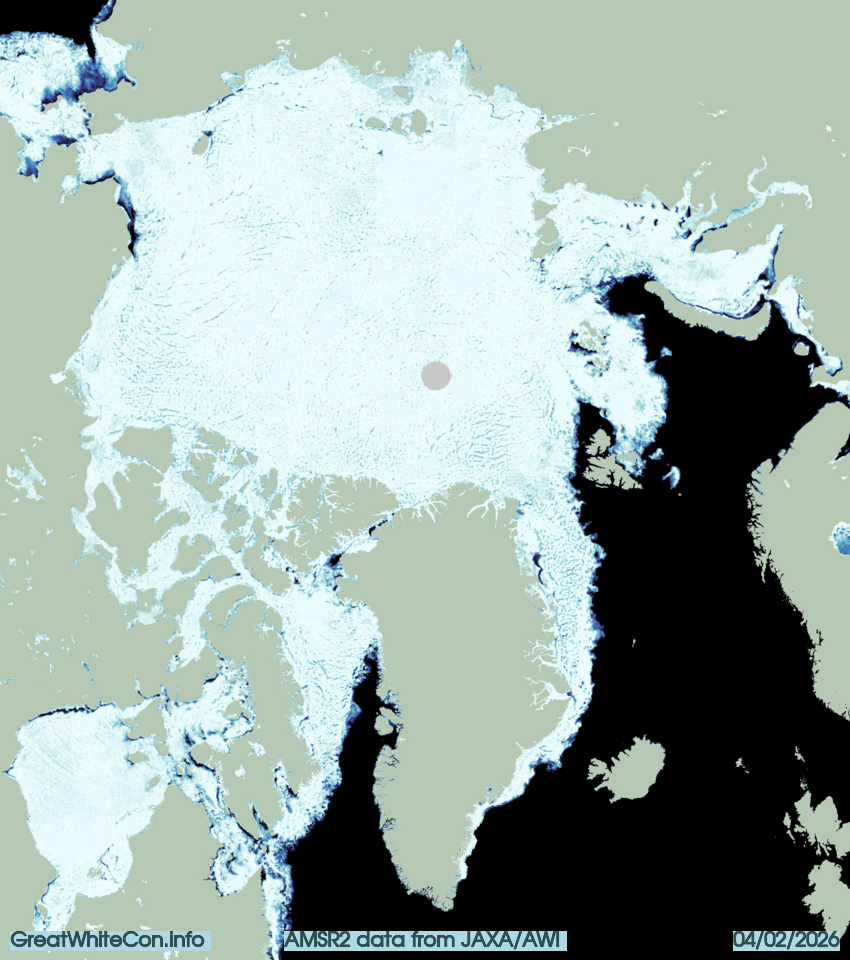
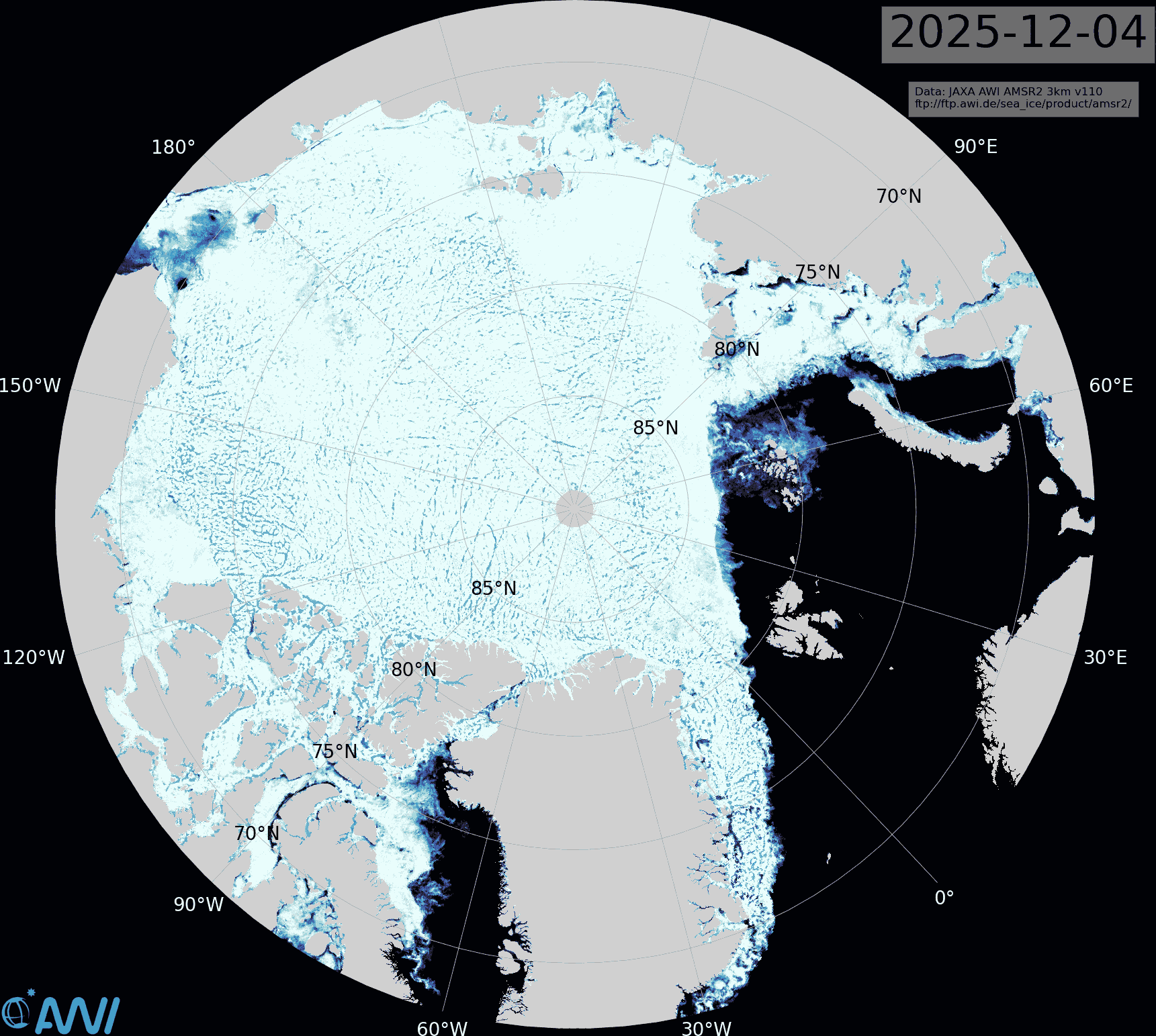
The latest Alfred Wegener Institute sea ice concentration map shows that the Pacific side of the Central Arctic Basin is now almost completely refrozen:

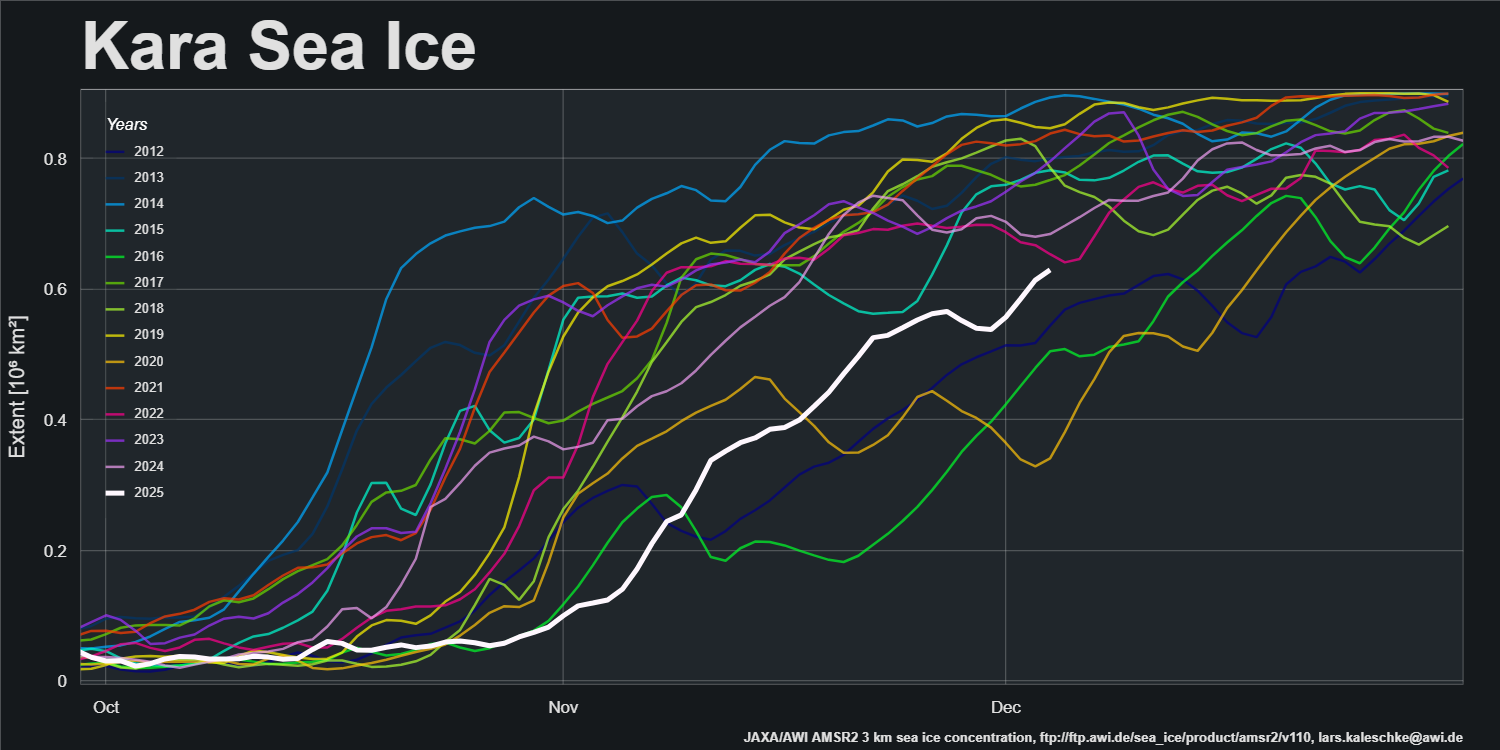
On the Atlantic side of the Arctic the Kara Sea is rapidly refreezing:

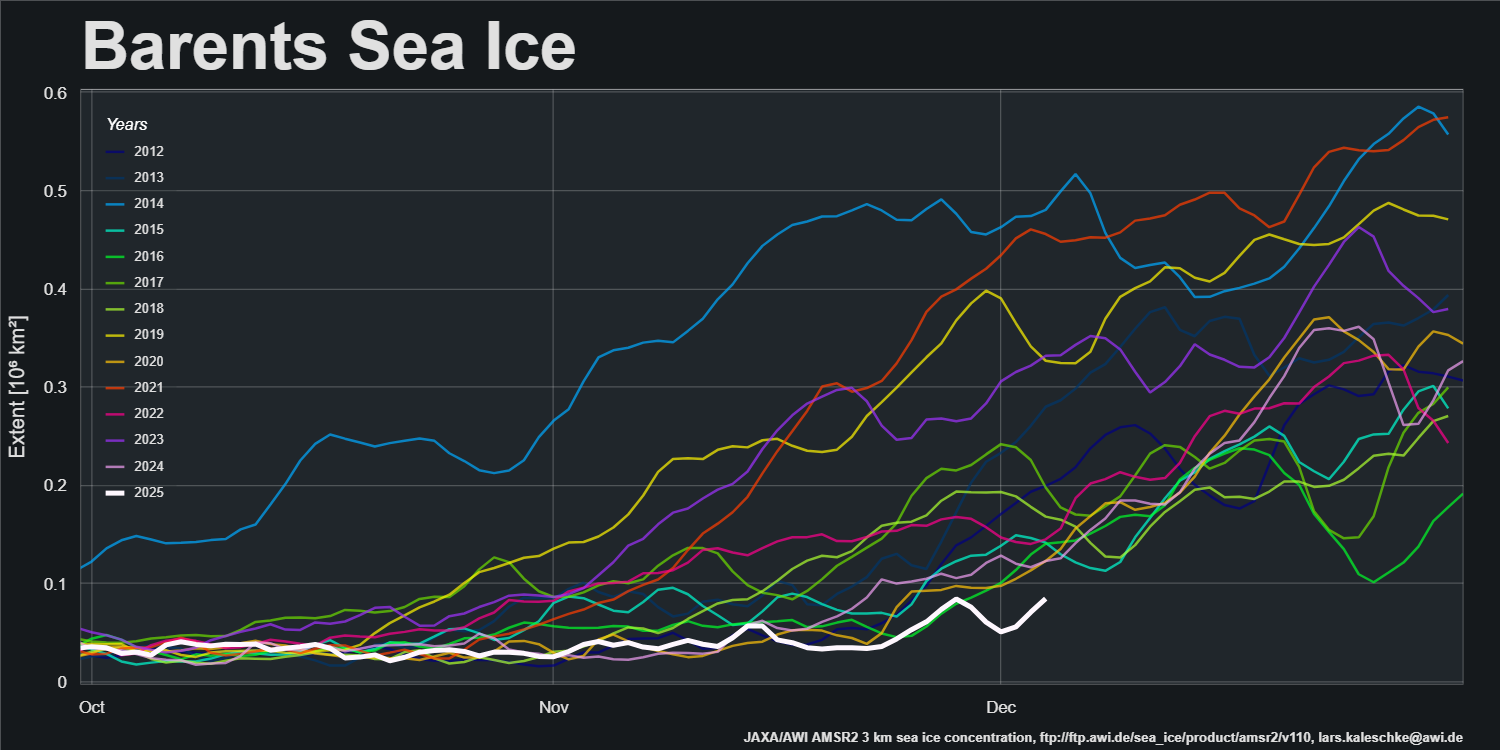
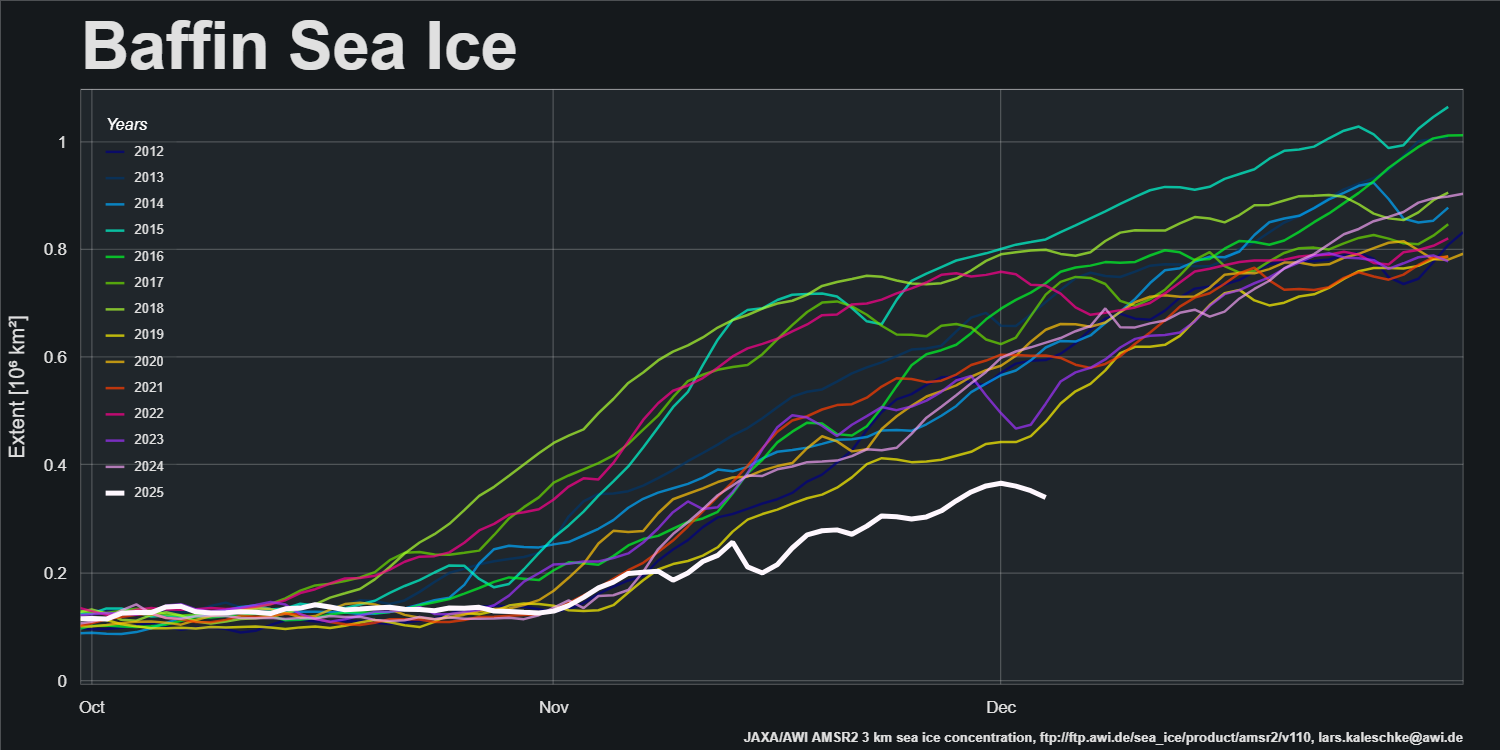
However, sea ice extent in the Barents Sea and Baffin Bay is currently lowest for the date in the AMSR2 record:

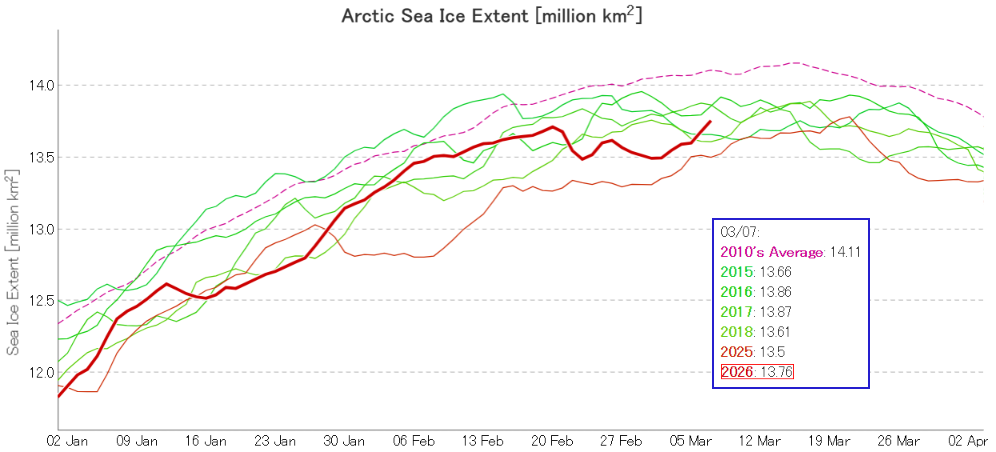
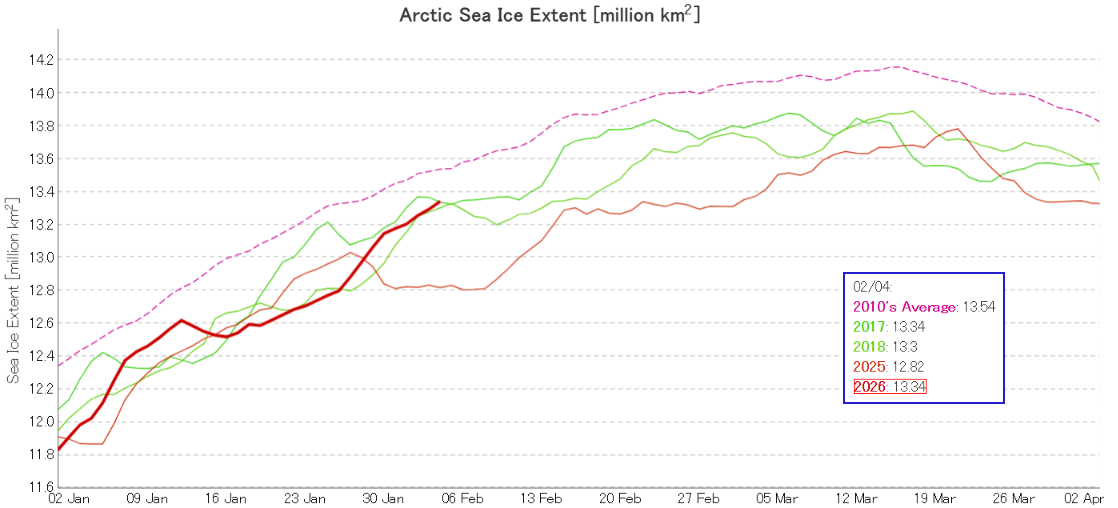
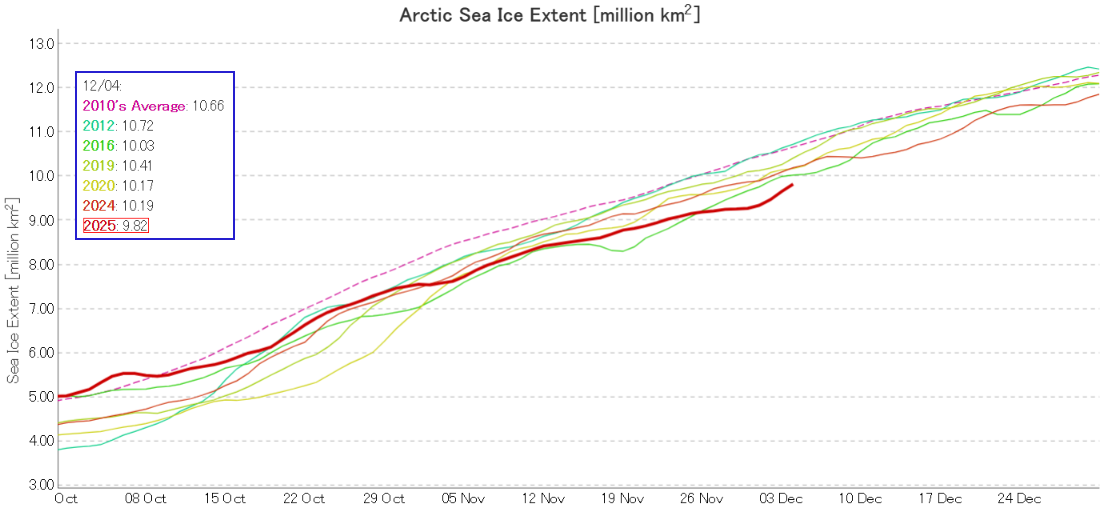
Pan Arctic JAXA/ViSHOP extent is currently lowest for the date in the satellite era:

Continue reading Facts About the Arctic in December 2025

Facts About the Arctic in May 2025

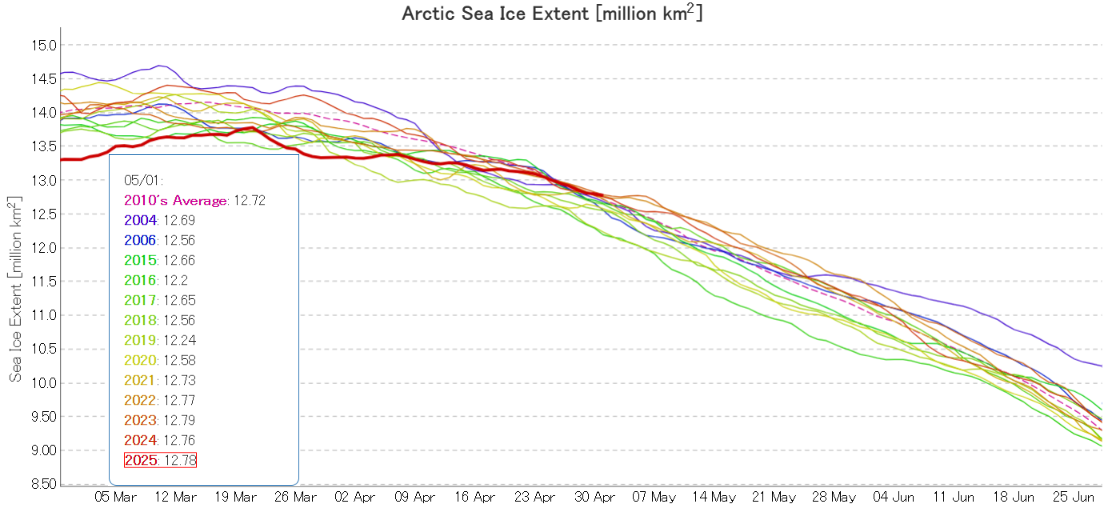
JAXA/ViSHOP extent is no longer “lowest for the date”! After “flatlining” for most of April the metric is now in the midst of a close knit group of the other years in the 2020s:

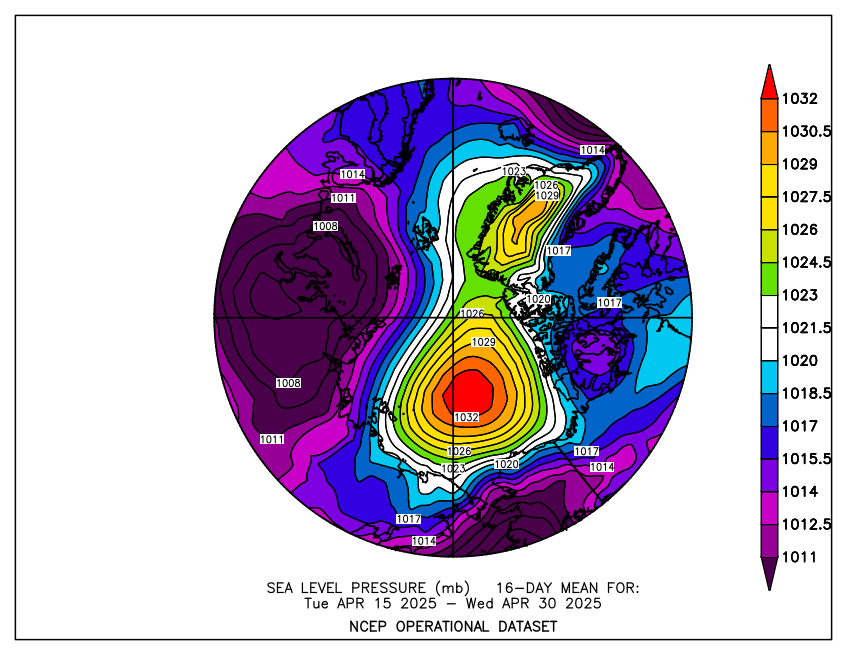
The high pressure area over the Central Arctic persisted through the second half of April, and so did the consequent drift of ice from the Pacific side of the Arctic to the Atlantic periphery:

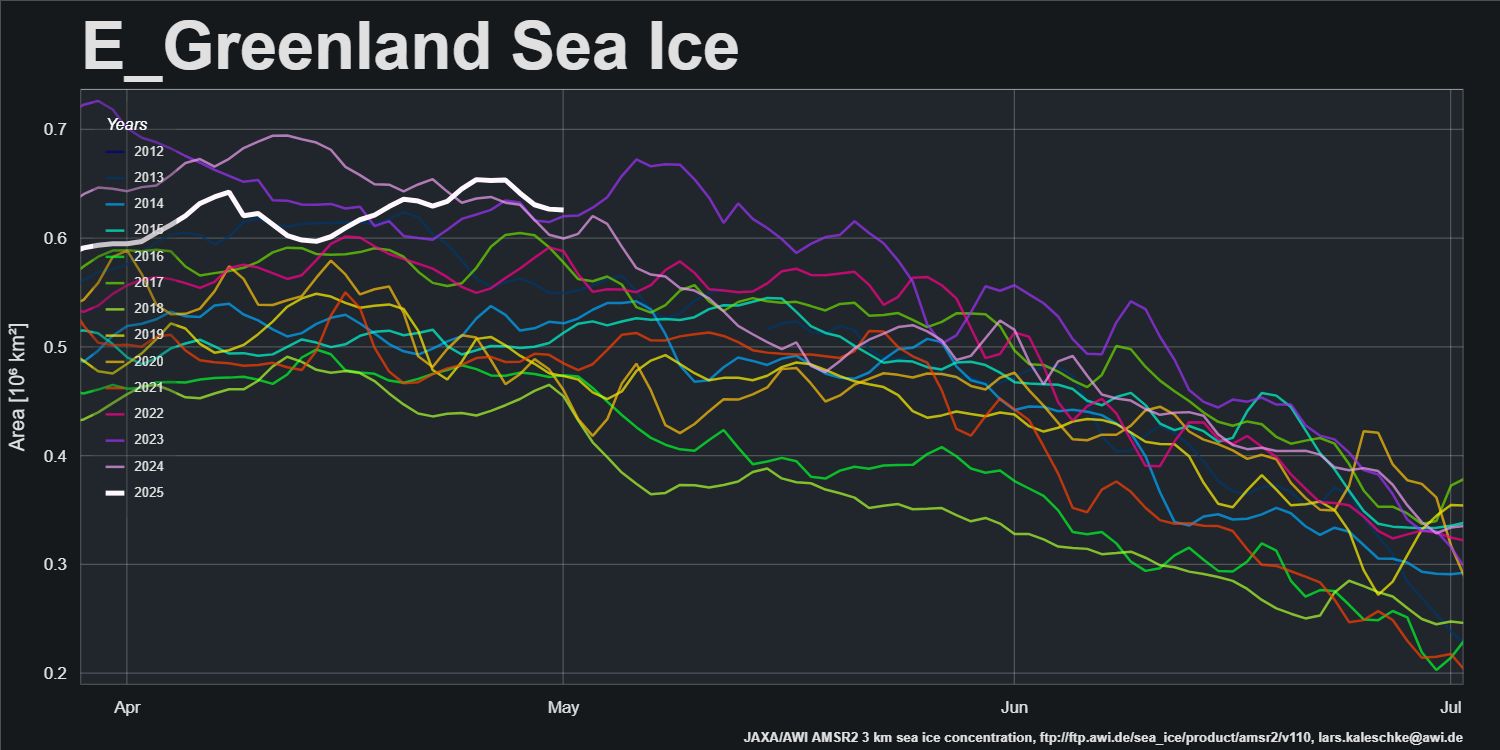
AWI’s sea ice area for the Greenland Sea is currently “highest for the date” in the AMSR2 record that started in July 2012:

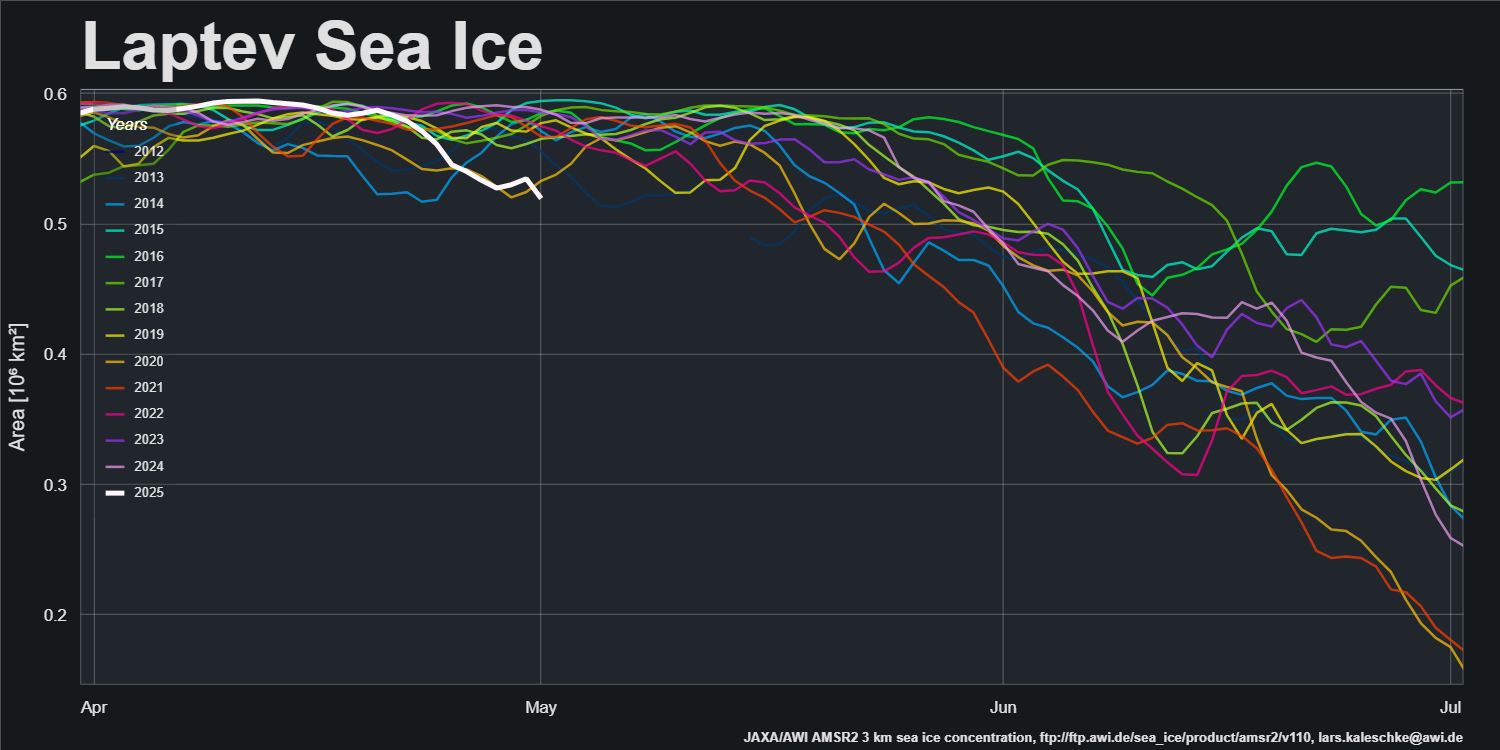
The offshore winds along the Laptev Sea coast have continued, and sea ice area is now “lowest for the date”:

The first signs of a break in the high pressure dominance are appearing. GFS currently forecasts that a low pressure area will enter the Central Arctic, bring above zero temperatures over the Kara Sea on Sunday:

Continue reading Facts About the Arctic in May 2025

Facts About the Arctic in February 2025

This isn’t exactly “shock news”, since we (slightly hesitantly!) predicted this 5 days ago.

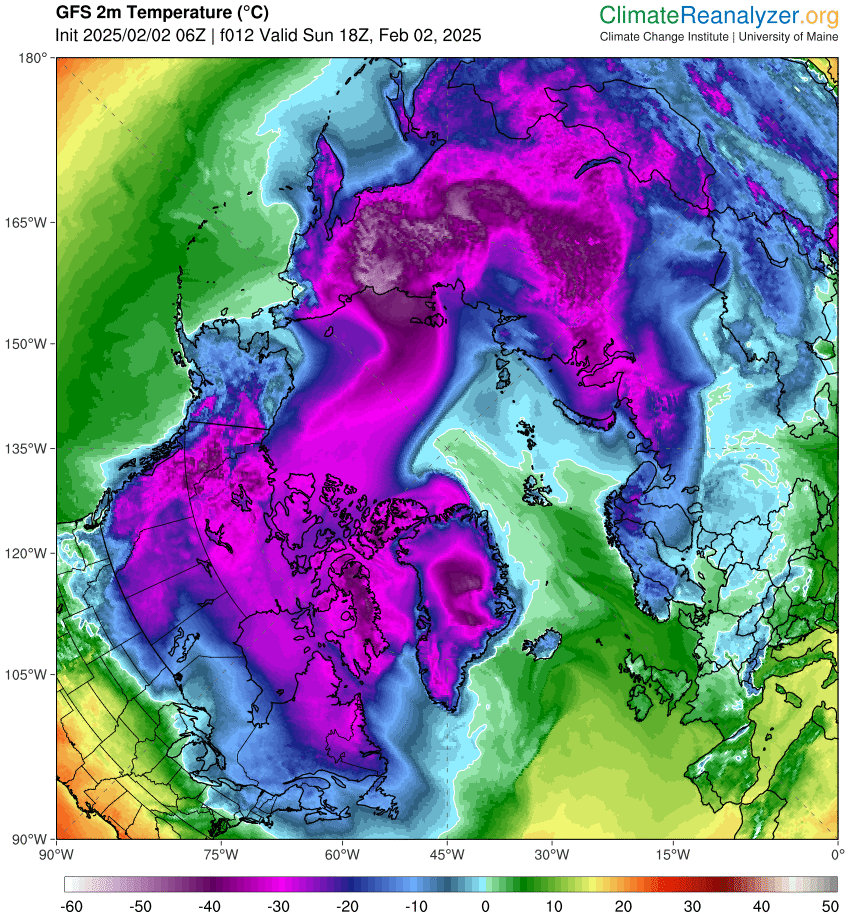
A GFS 2 meter temperature chart revealing greater than zero degrees Celsius at the North Pole later today:

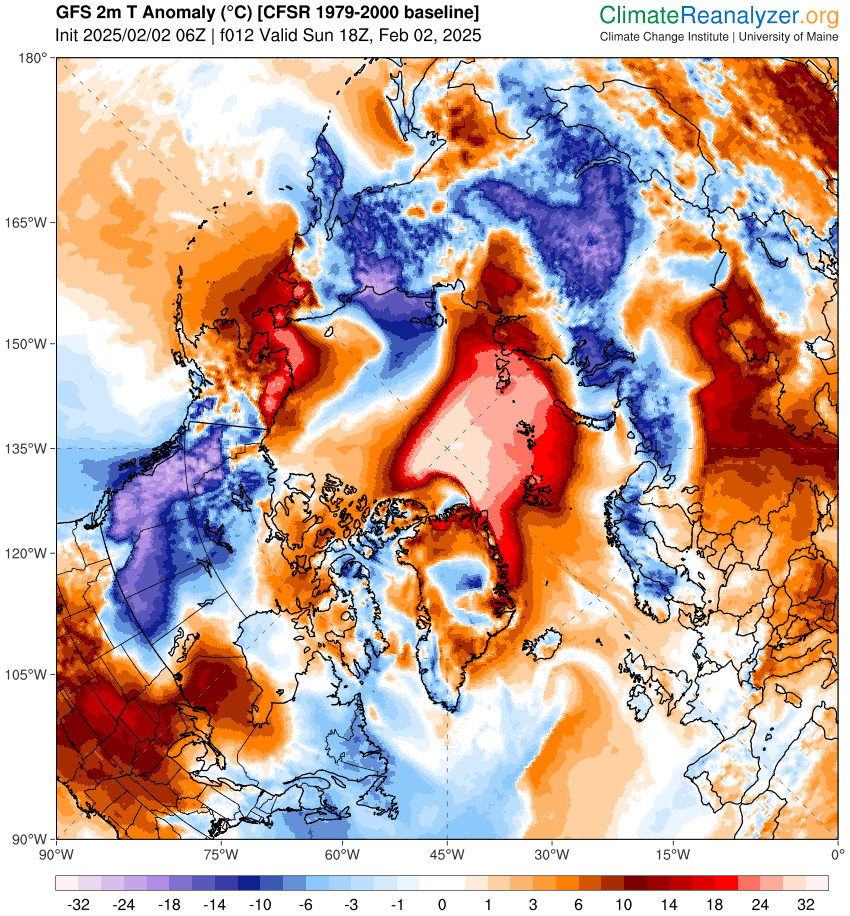
The 2 meter temperature anomaly at the Pole is almost off the charts:

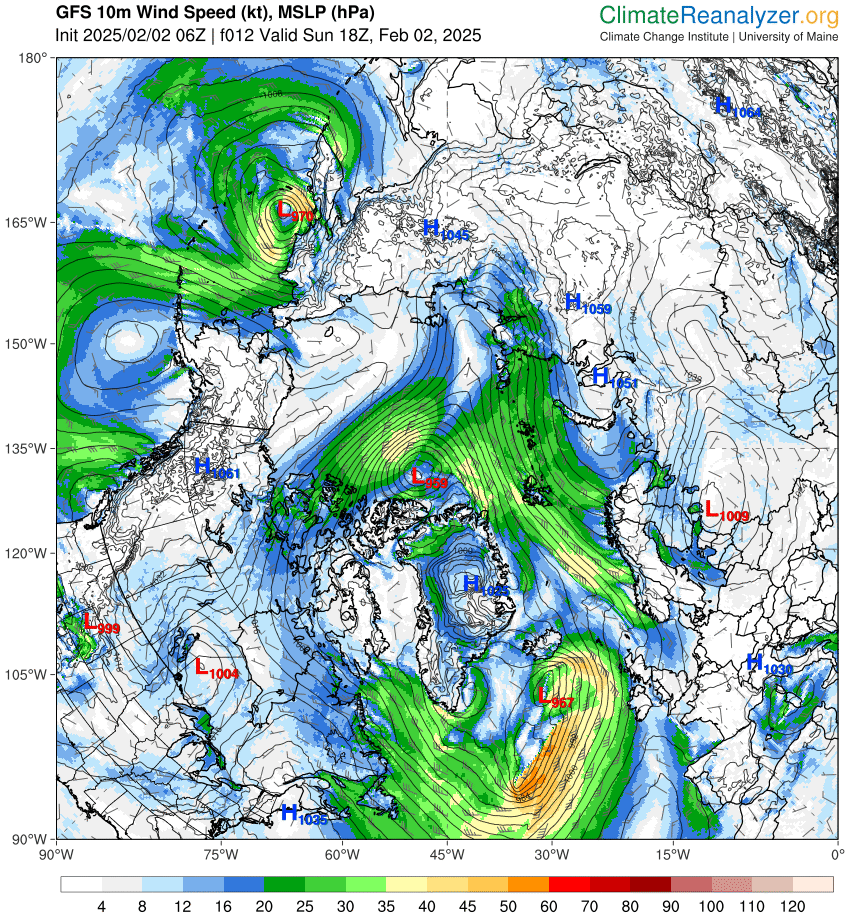
Plus the cause of these unusual numbers, a cyclone with central pressure of 959 hPa spinning north of Ellesmere Island at 18:00 UTC this evening:

All of which has led to the JAXA/Vishop Arctic sea ice extent being the lowest for the date since 1979 at least by a significant margin:

Continue reading Facts About the Arctic in February 2025

Facts About the Arctic in November 2024

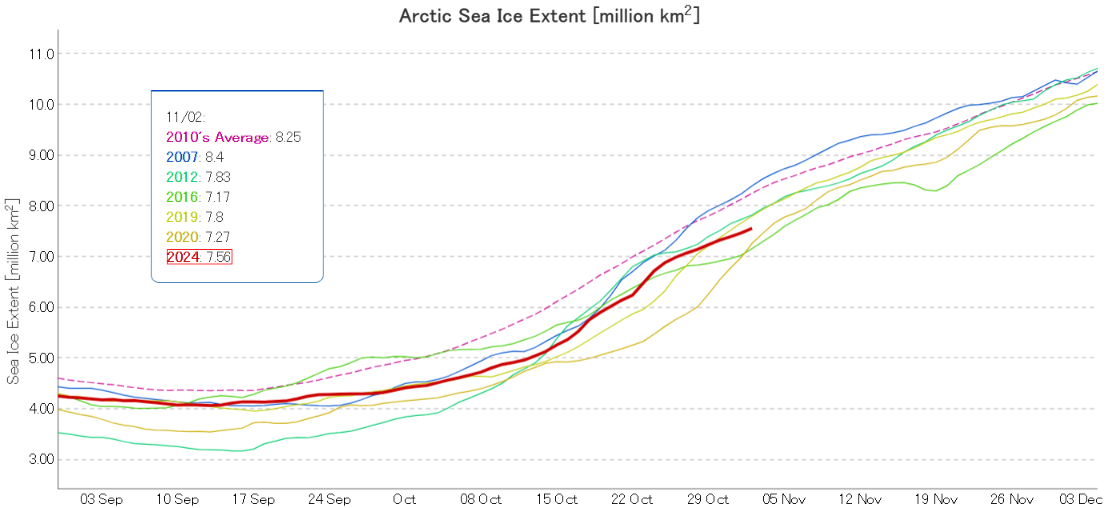
The Laptev and East Siberian Seas have now refrozen. Consequently Arctic sea ice extent is now increasing more slowly, and JAXA/ViSHOP extent is 3rd lowest for the date in the satellite era:

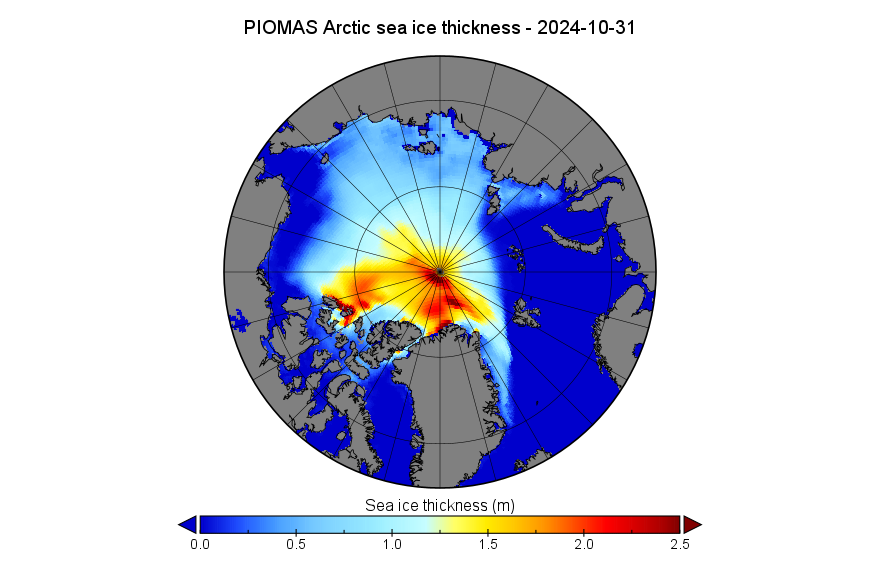
Introducing the third dimension, here’s the PIOMAS gridded thickness data for the end of October 2024:

Note the change in scale from previous months, to allow for easier comparison with the “near real time” CryoSat-2/SMOS merged thickness data from the Alfred Wegener Institute: 

Continue reading Facts About the Arctic in November 2024

Facts About the Arctic in August 2024

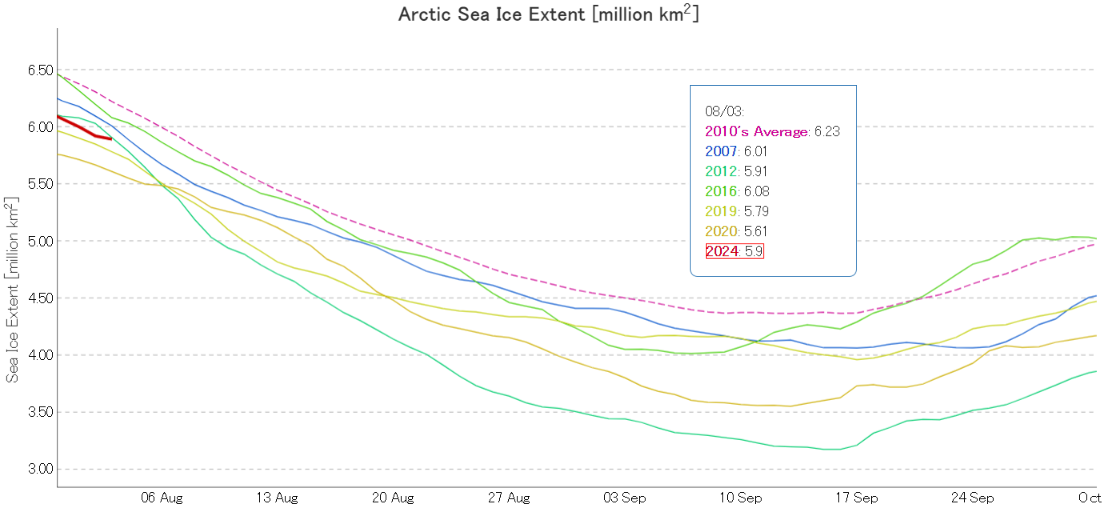
At the beginning of August JAXA/ViSHOP extent is 3rd lowest for the date in the satellite era:

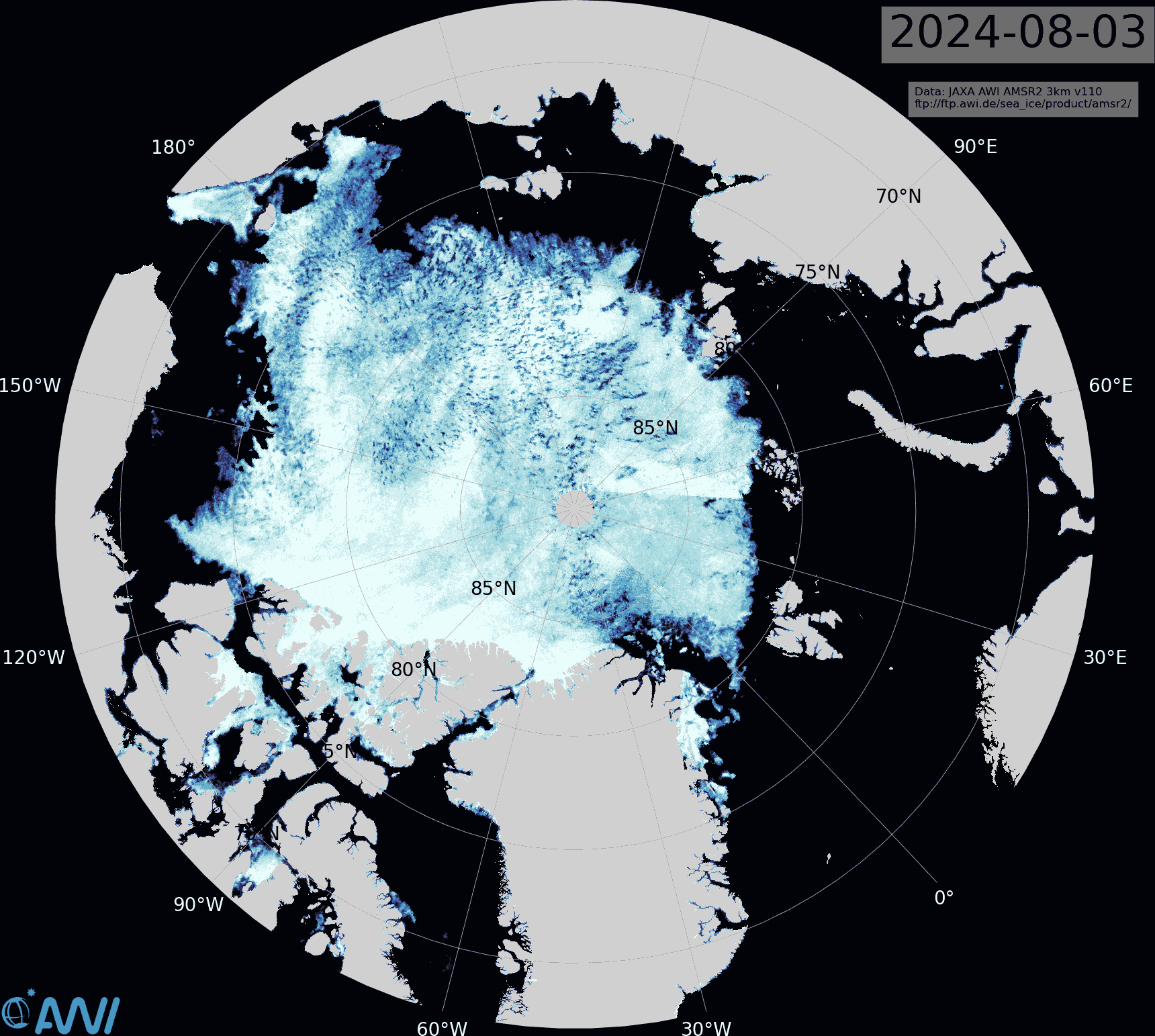
In 2012 extent had just started its unprecedented plunge towards the record September minimum, and 2024 seems certain to cross above the 2012 curve shortly. However, the latest AMSR2 sea ice concentration map from the Alfred Wegener Institute reveals areas of open water across the majority of the Central Arctic Basin:

In particular the sea ice between the North Pole and northern Greenland is remarkably fragmented:

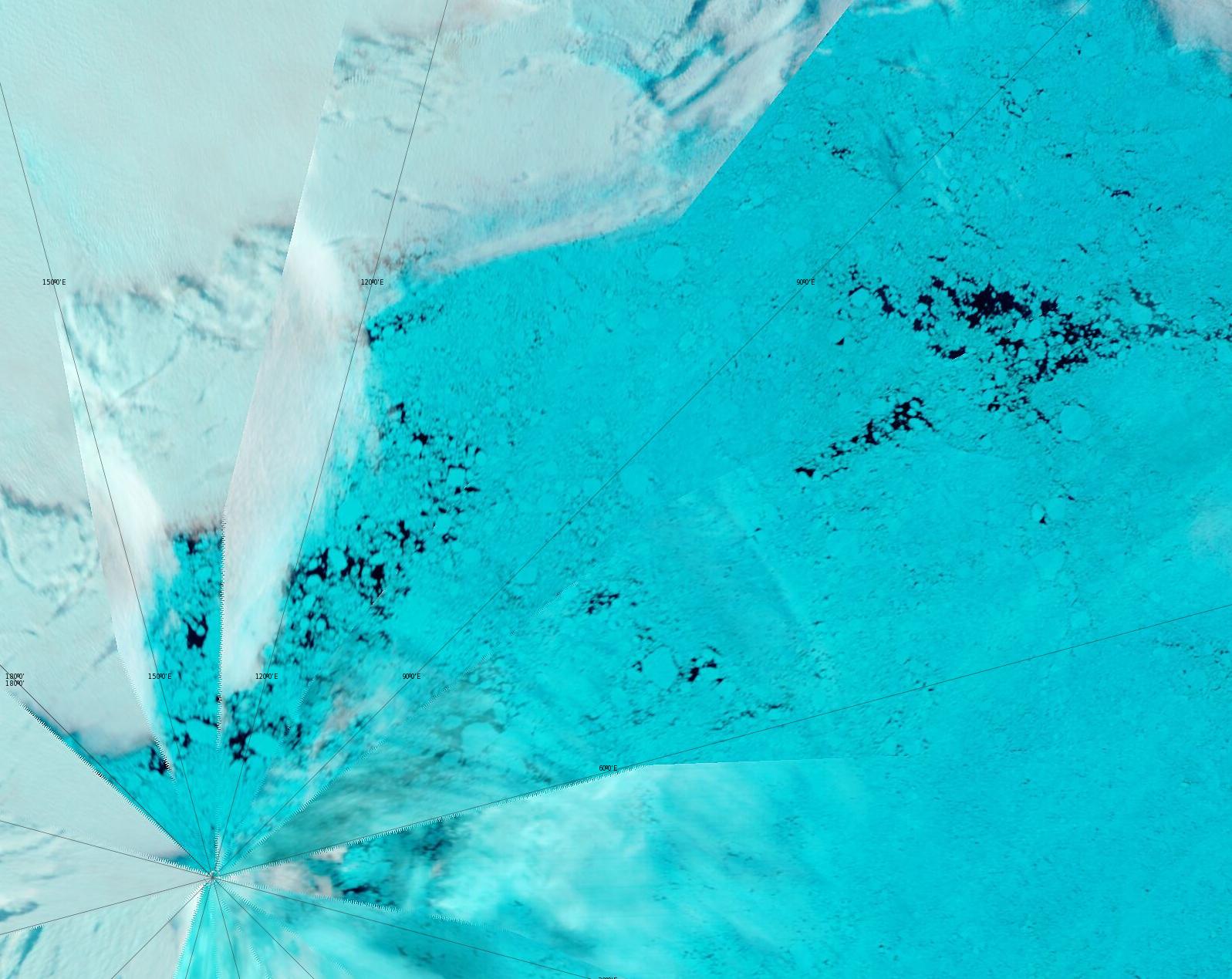
“False colour” image of the North Pole on August 3rd from the MODIS instrument on the Terra satellite
Continue reading Facts About the Arctic in August 2024

Facts About the Arctic in May 2024

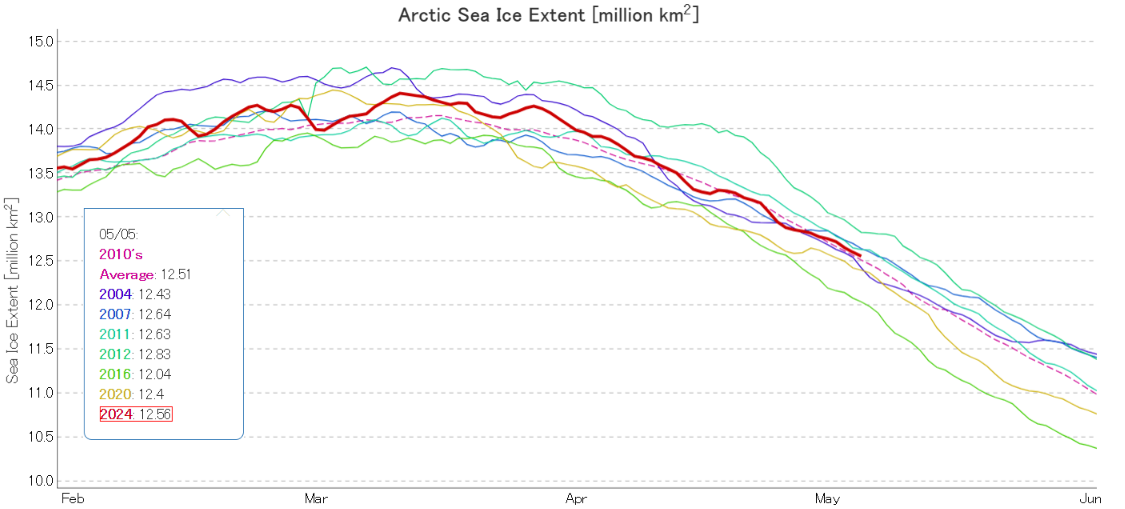
Since a certain “sceptic” has recently been comparing 2024 sea ice extent to “20 years ago”, here’s the current JAXA/ViSHOP extent graph of selected years, including 2004:

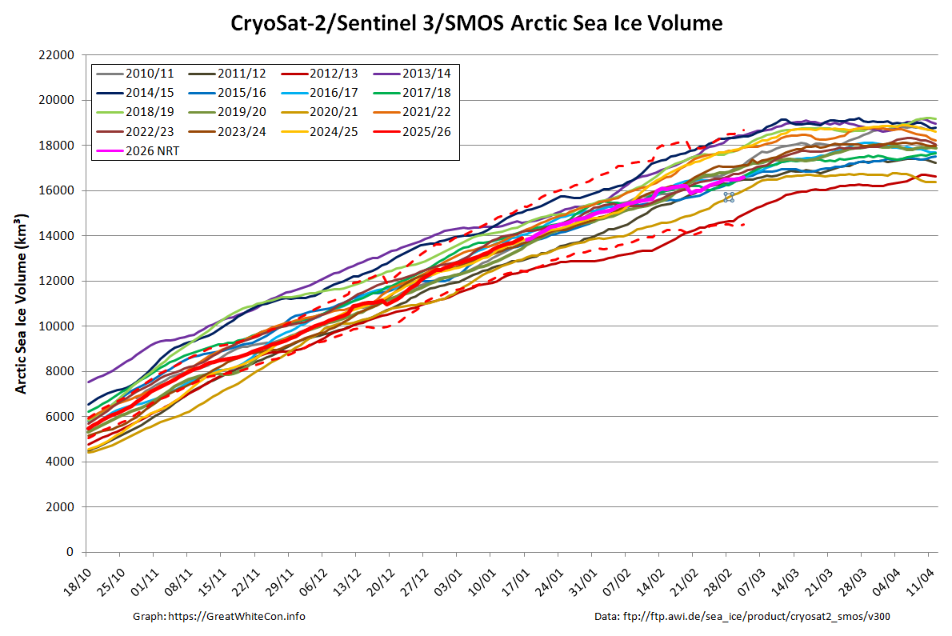
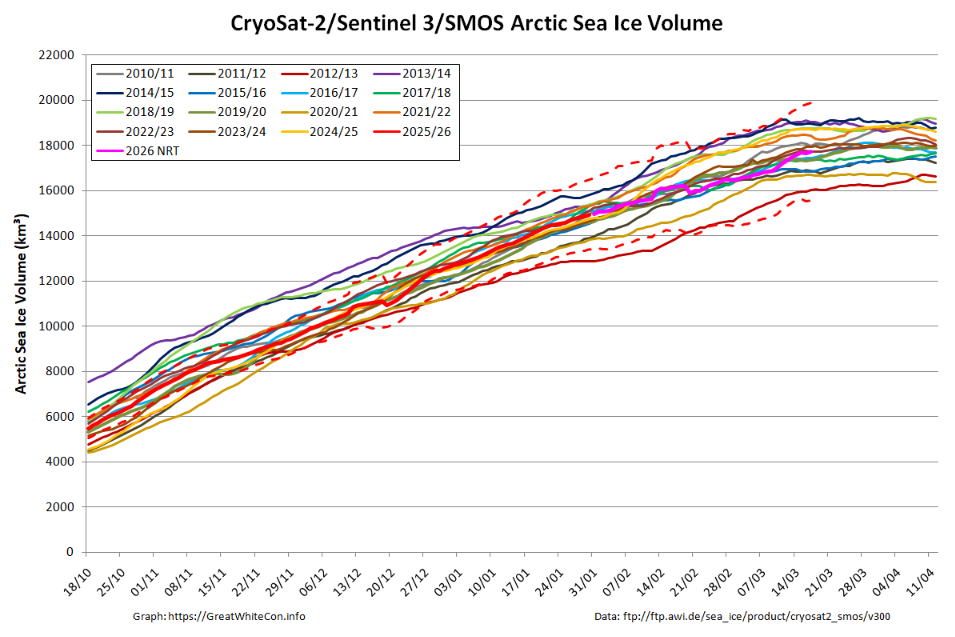
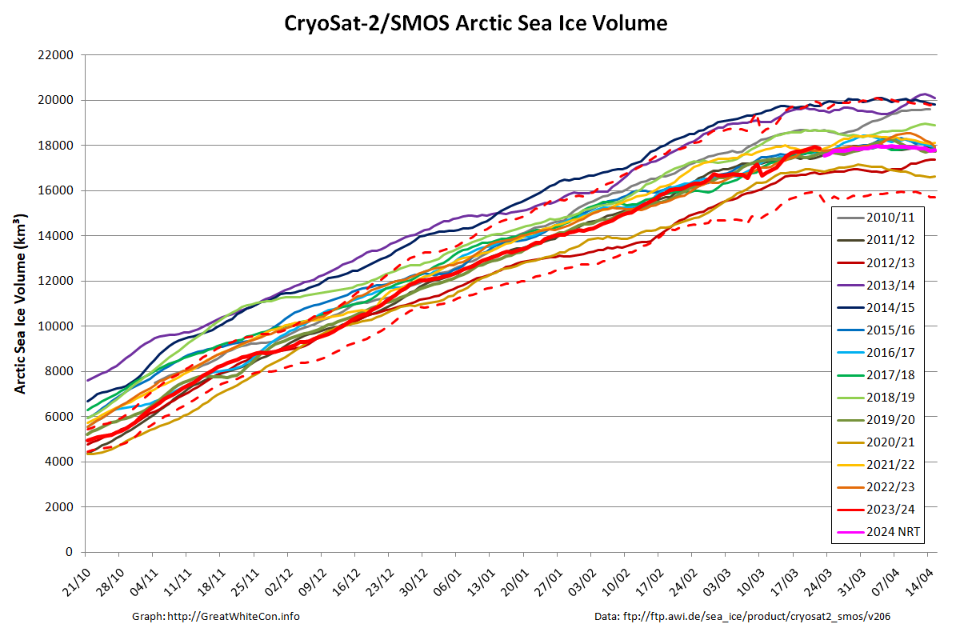
The CryoSat-2/SMOS merged Arctic sea ice volume graph finishes on April 15th, but older data is being reanalysed and here is the latest version:

The gap in the near real time data due to the problem with the SMOS satellite during the first half of March has been filled in, but the result doesn’t look very convincing to say the least!

The PIOMAS gridded thickness data for April 2024 is now available. Here’s the end of month volume graph:

Continue reading Facts About the Arctic in May 2024

Facts About the Arctic in February 2024

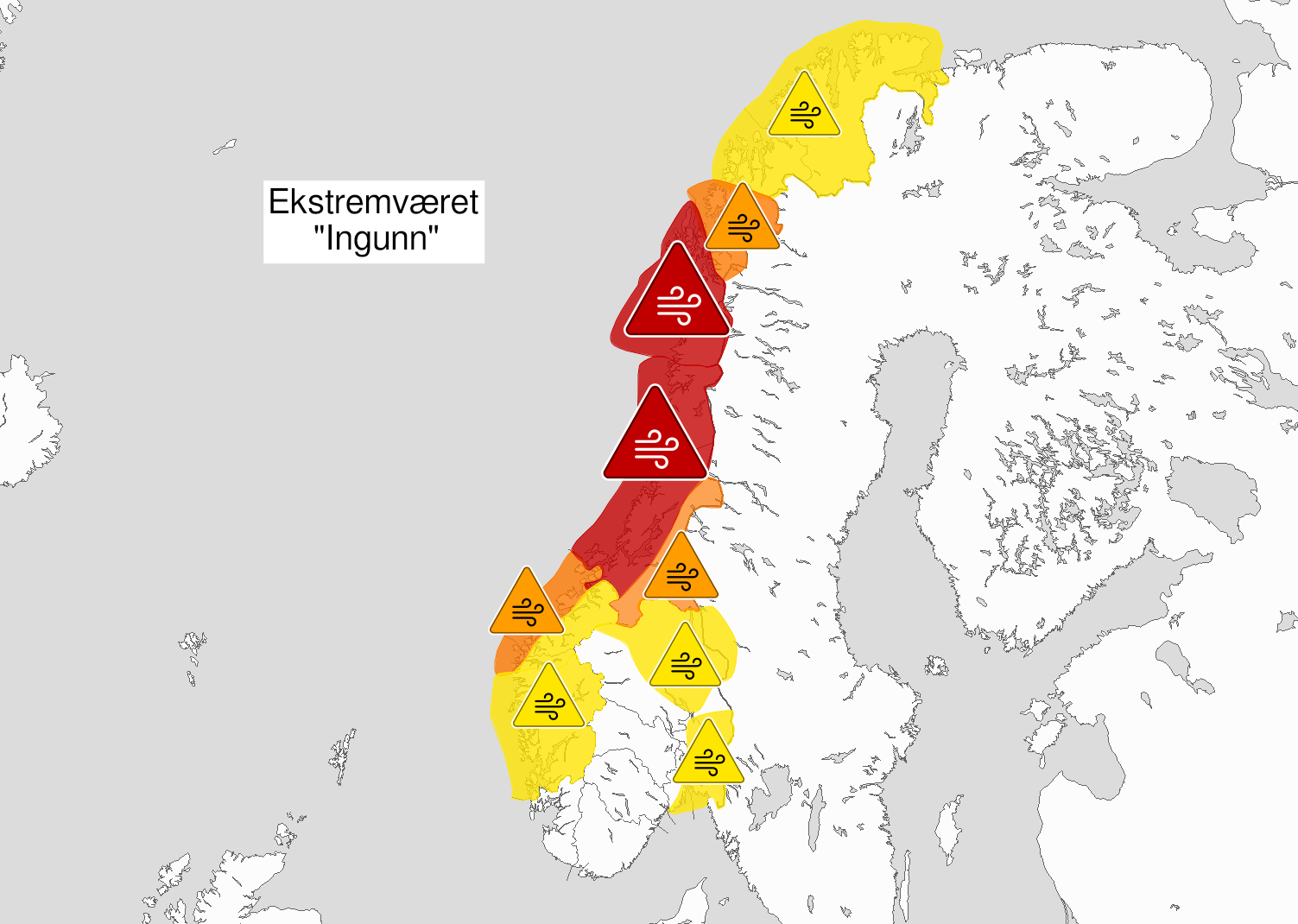
A change is perhaps even better than a rest? Let’s start February with a reminder that following close behind another recent Arctic cyclone, Storm Ingunn caused red weather warnings for high winds and avalanches in Norway two days ago:

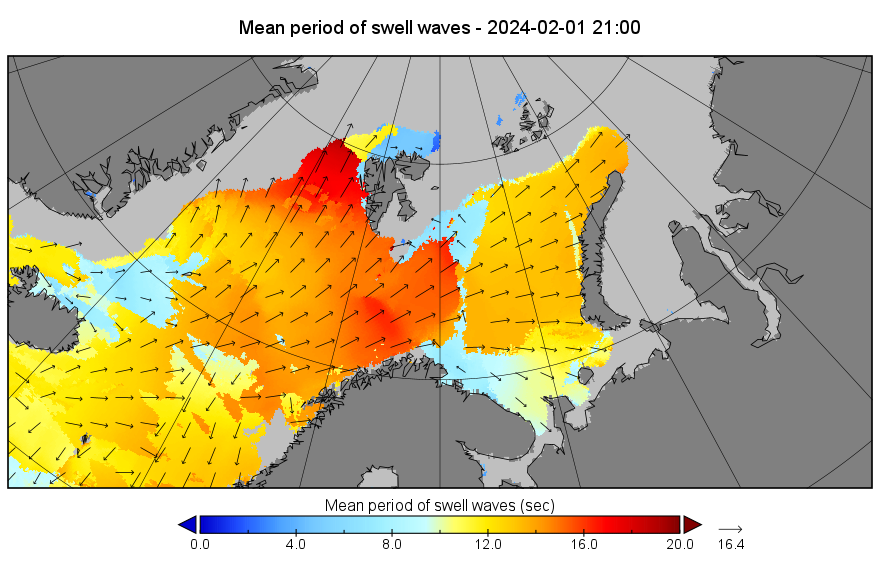
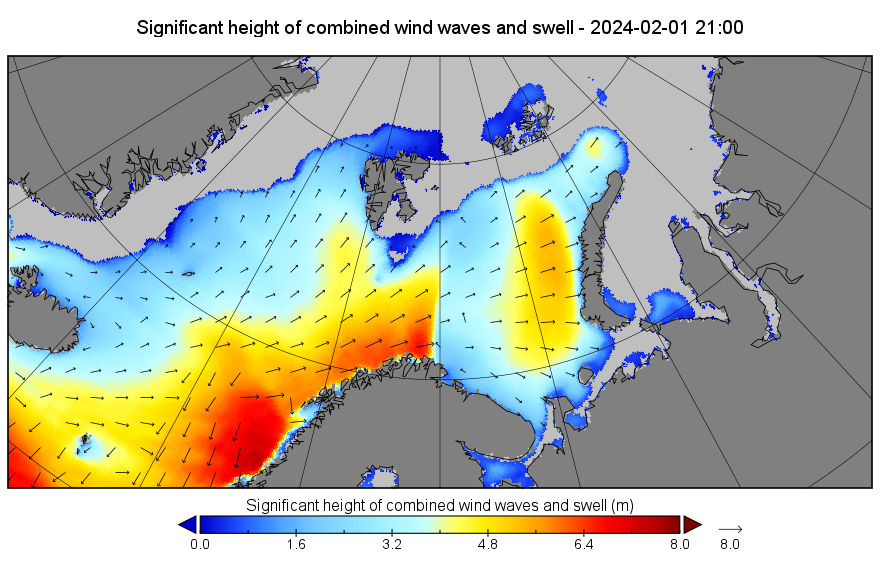
By yesterday evening another long period, storm driven swell was arriving at the sea ice edge in the Fram Strait, and to a lesser extent in the Barents Sea:

By this morning Ingunn had merged with the remnants of the prior cyclone, as revealed in Climate Reanalyzer’s visualisation of the latest GFS model run::

Continue reading Facts About the Arctic in February 2024

Facts About the Arctic in September 2023

There’s lots of coverage specifically about assorted Arctic sea ice extent metrics over on the “2023 Minimum Extent” thread. However we’ll start the September open thread ball rolling with a couple of cross posted images.

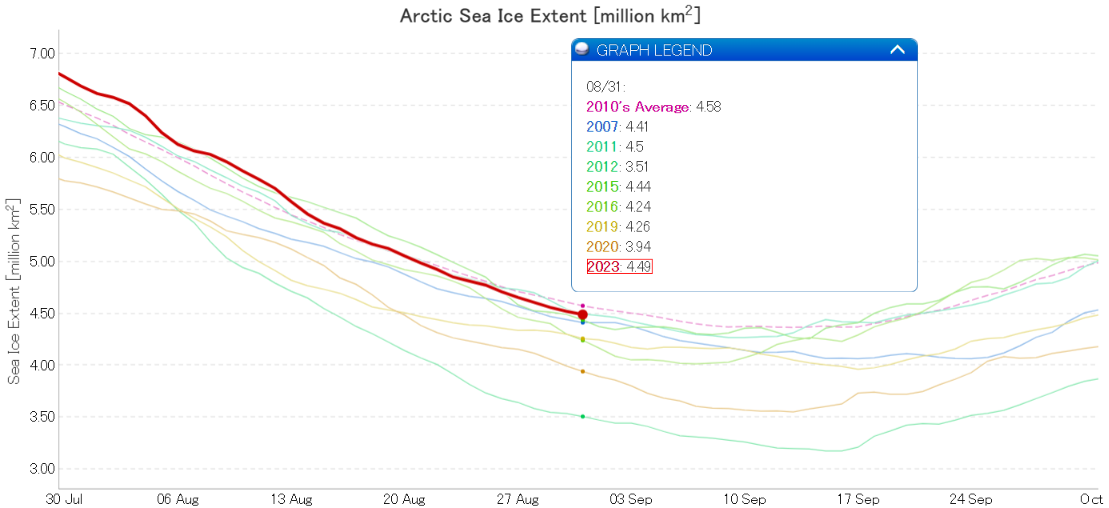
At the end of August JAXA daily extent was 7th lowest for the date, at 4.49 million km² :

The median prediction of the contributors to the August call by the Sea Ice Prediction Network for the September monthly average extent is 4.6 million km² :

Continue reading Facts About the Arctic in September 2023

Facts About the Arctic in February 2023

A new month has arrived, and during January several Arctic sea ice metrics have been drifting towards the bottom of their respective decadal ranges. To begin with here is AWI’s high resolution AMSR2 extent graph, which is currently very close to being lowest for the date in the AMSR2 record:

However that is less the case for area:

Taylor is keen to see the PIOMAS volume data for January, but whilst we wait for the latest Polar Science Center update here is the CryoSat-2/SMOS volume graph, which now includes a couple of month’s worth of reanalysed results as well as more recent near real time numbers:

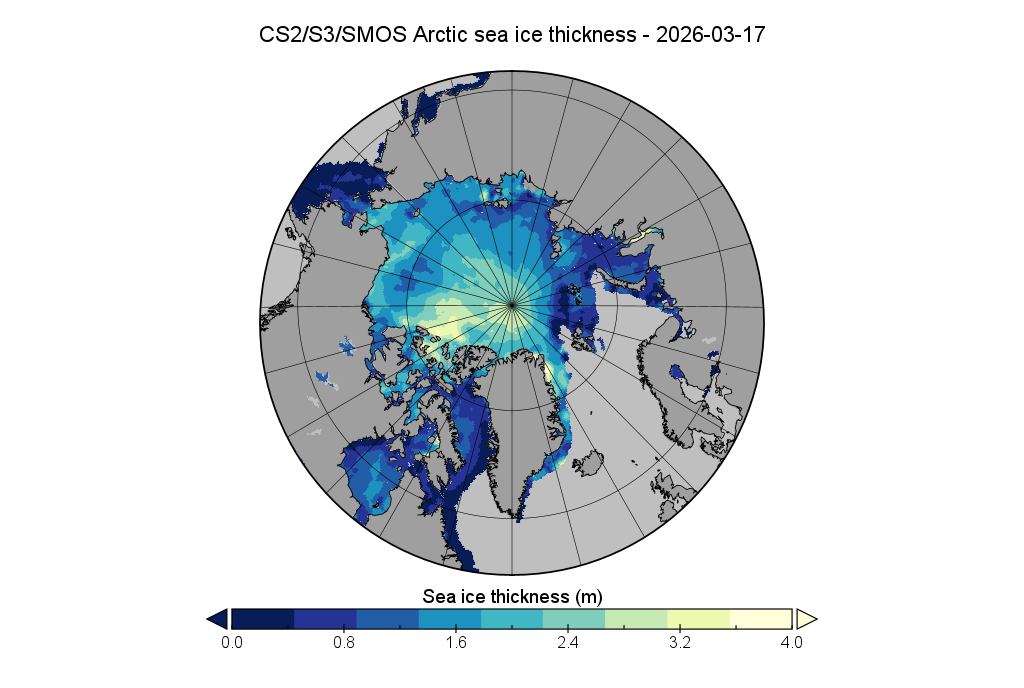
Here too is the start of month CS2/SMOS thickness map:

Continue reading Facts About the Arctic in February 2023

Facts About the Arctic in November 2022

A change is allegedly as good as a rest, so here’s an alternative view of high resolution AMSR2 area and extent created using the experimental tools provided by the AWI’s Lars Kaleschke at: https://sites.google.com/view/sea-ice/

After a brief pause mid-month the refreeze has accelerated again. Both metrics are in the upper half of the decadal range, with extent this year just above 2021 and area just below last year.

Next let’s take a look at sea ice concentration at the end of October:

Continue reading Facts About the Arctic in November 2022