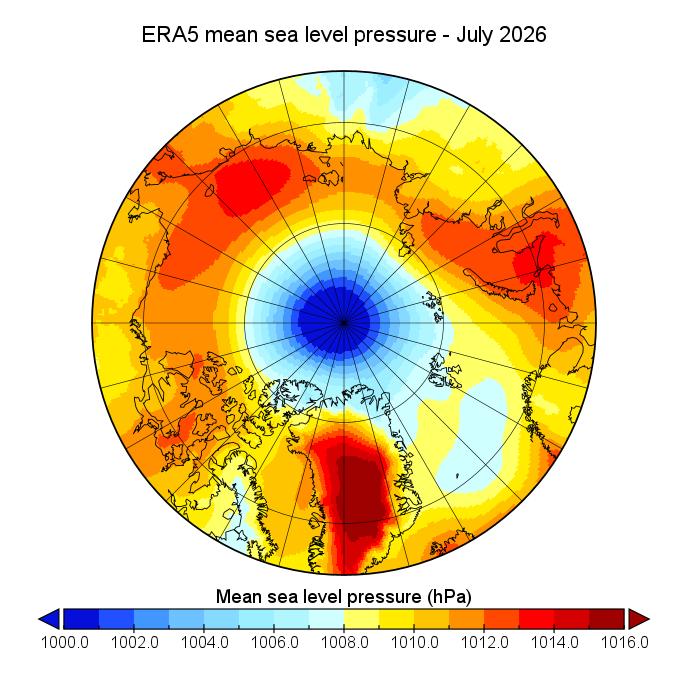
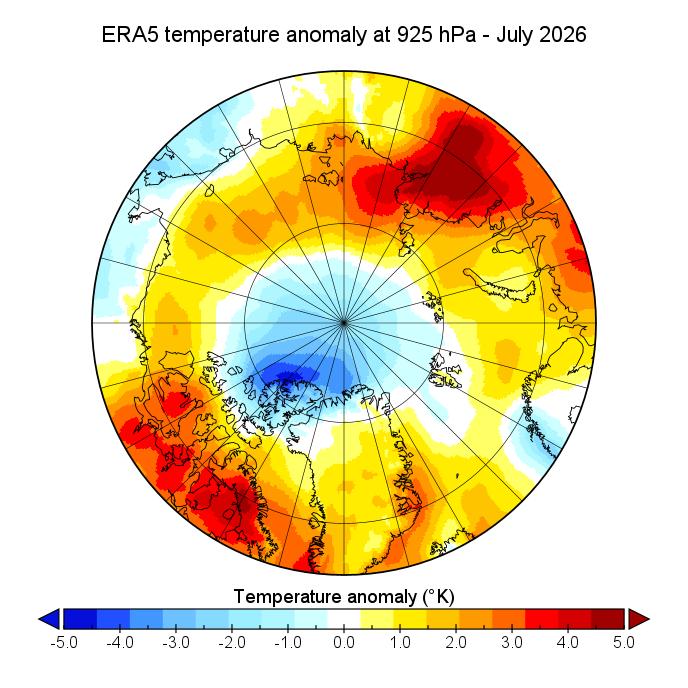
July was once again dominated by low pressure and anomalously low temperatures over the central Arctic:
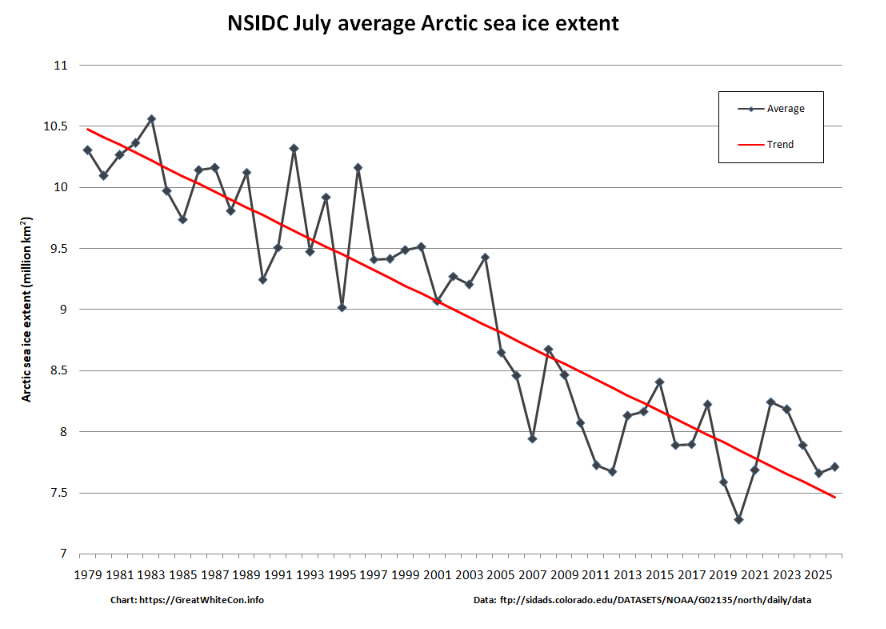
As a consequence the NSIDC monthly average extent for July was 6th lowest in their record going back to 1979:
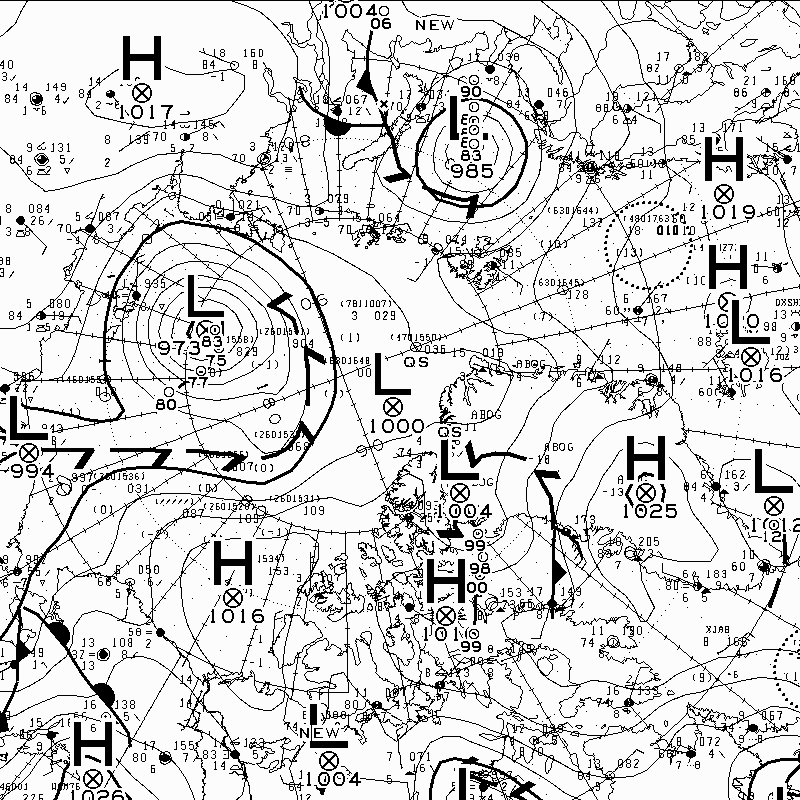
August began with low pressure still dominant. According to the Canadian Meteorological Centre yet another cyclone bottomed out with a mean sea level pressure of 973 hPa on the 4th:
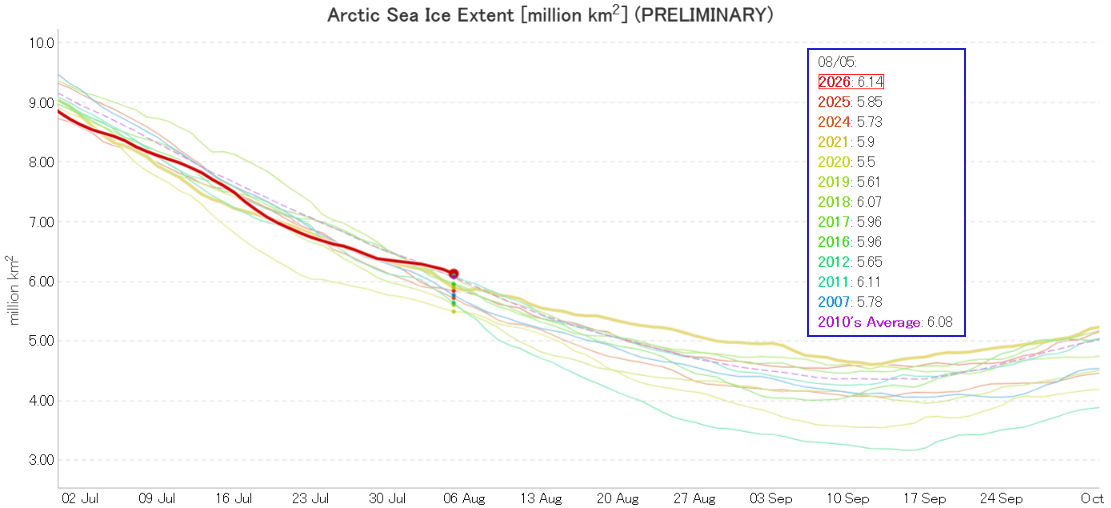
The continuing cyclonic activity has dispersed the sea ice, and JAXA extent is currently 12th lowest in their record:
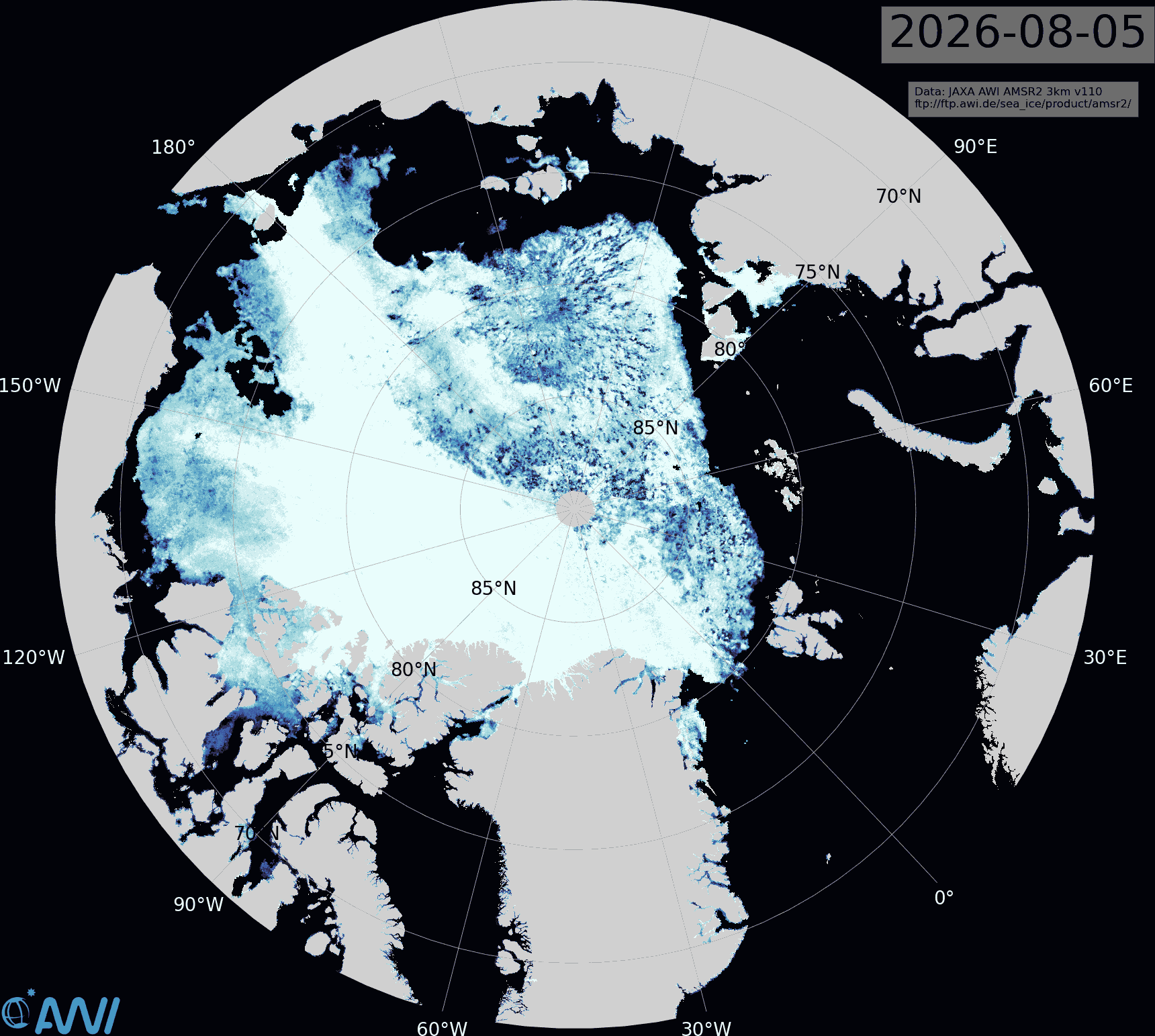
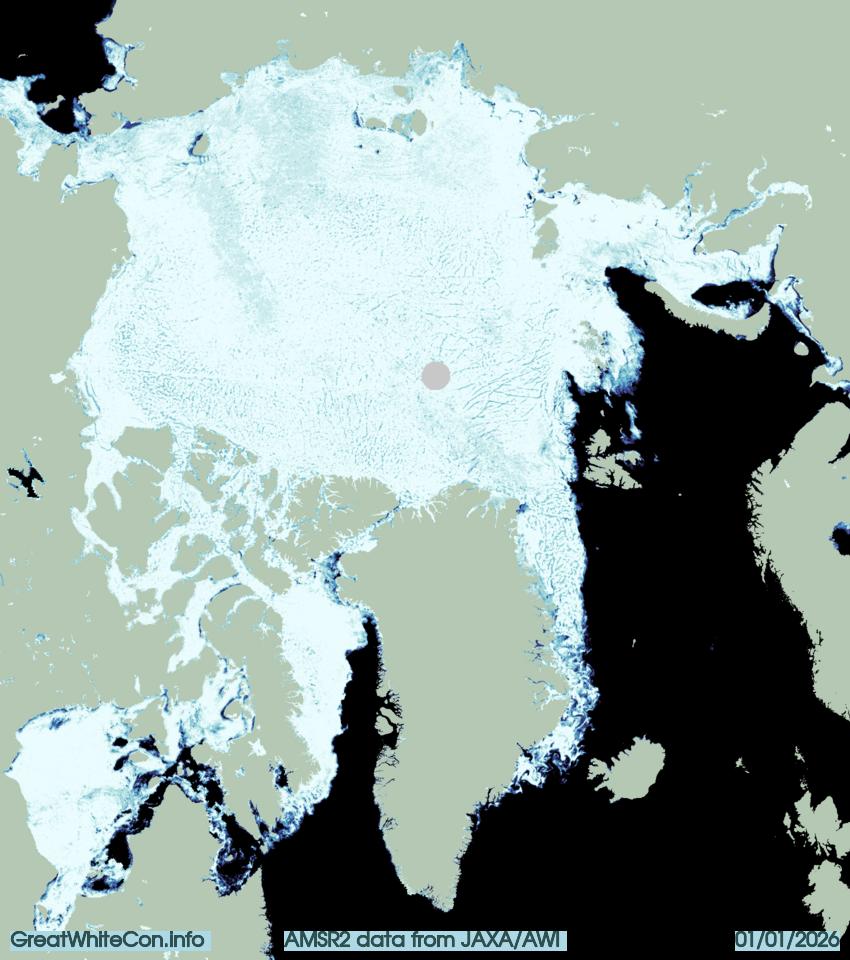
The other side of the same coin is that reduced sea ice concentration is now apparent across large areas of the Central Arctic Basin:
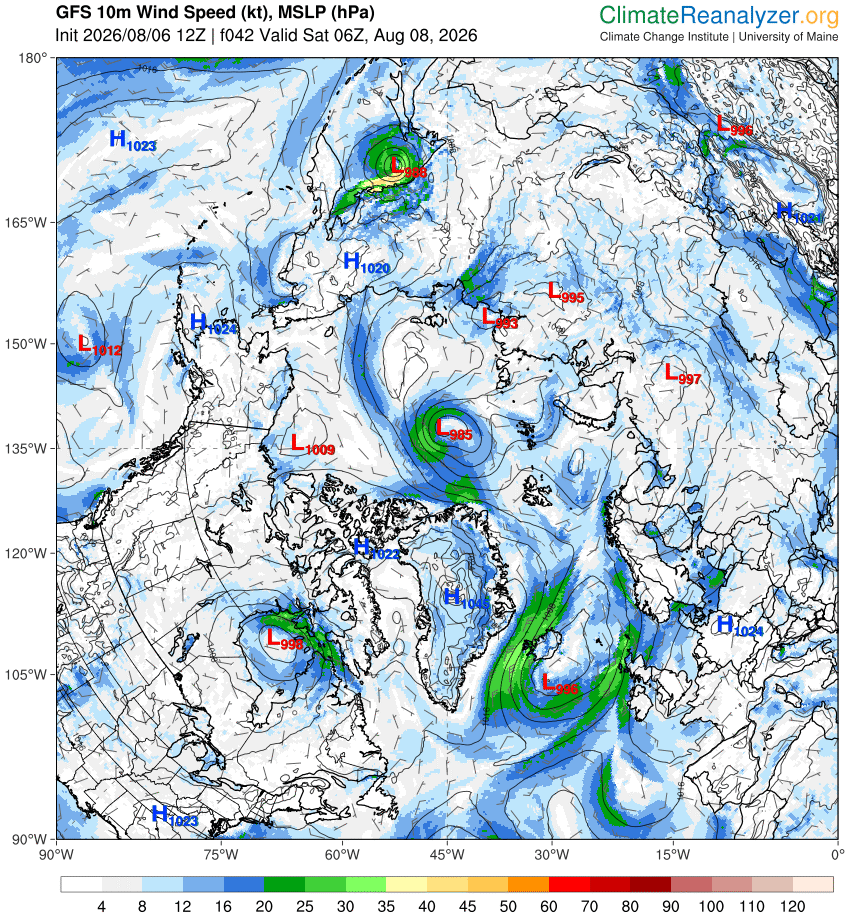
Another, less intense, storm is due to arrive over the coming weekend. Here is the current GFS forecast for Saturday morning:
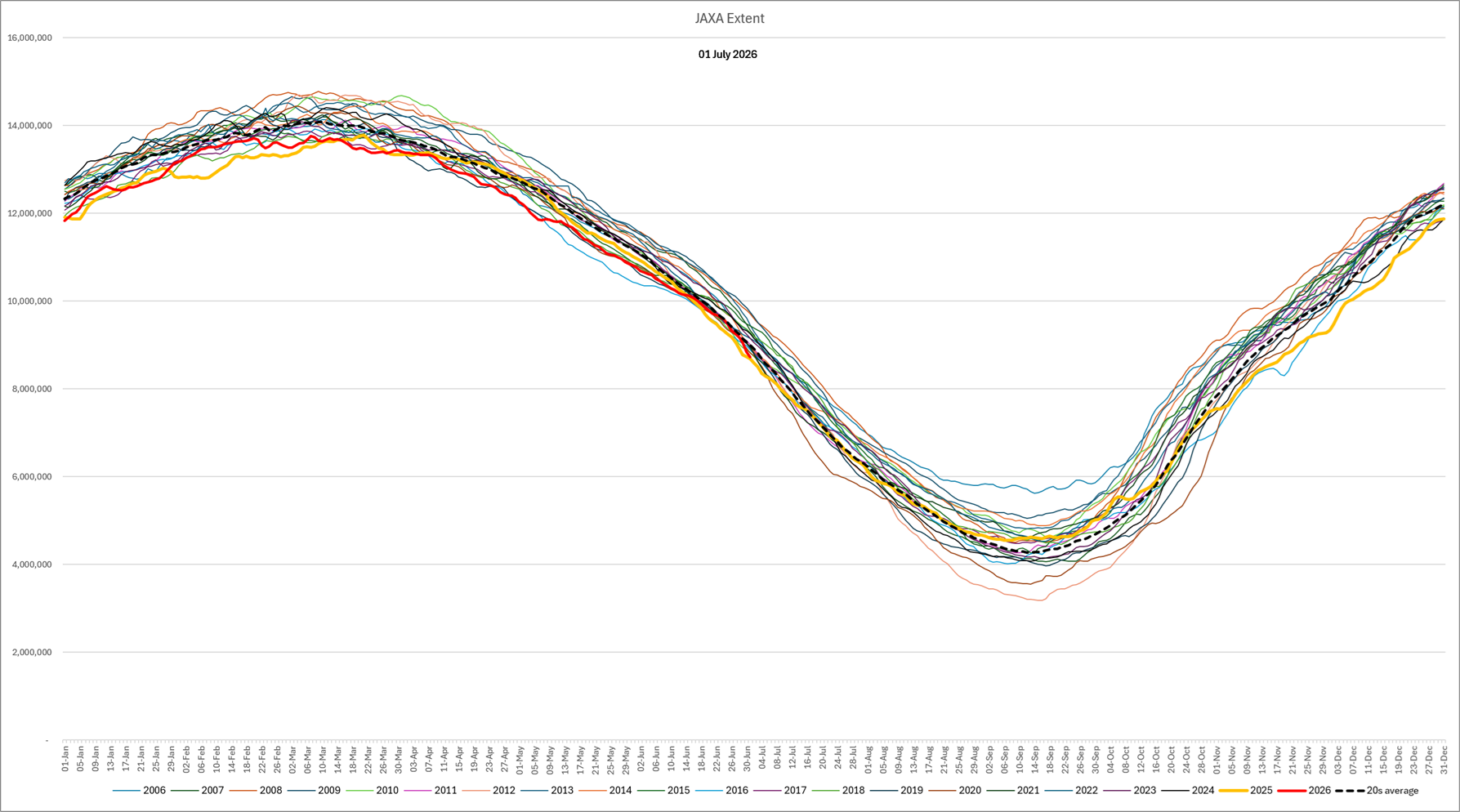
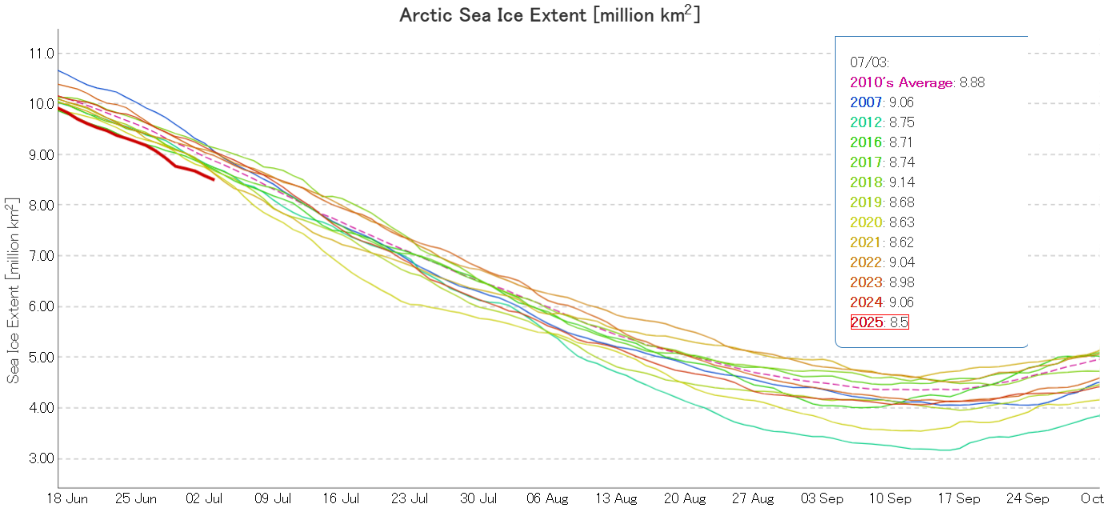
At the beginning of July the JAXA/ViSHOP web site is undergoing maintenance yet again! Here here is how their 2 day average extent graph looked for July 1st:
Extent is currently second lowest for the date, above 2025 by a whisker.
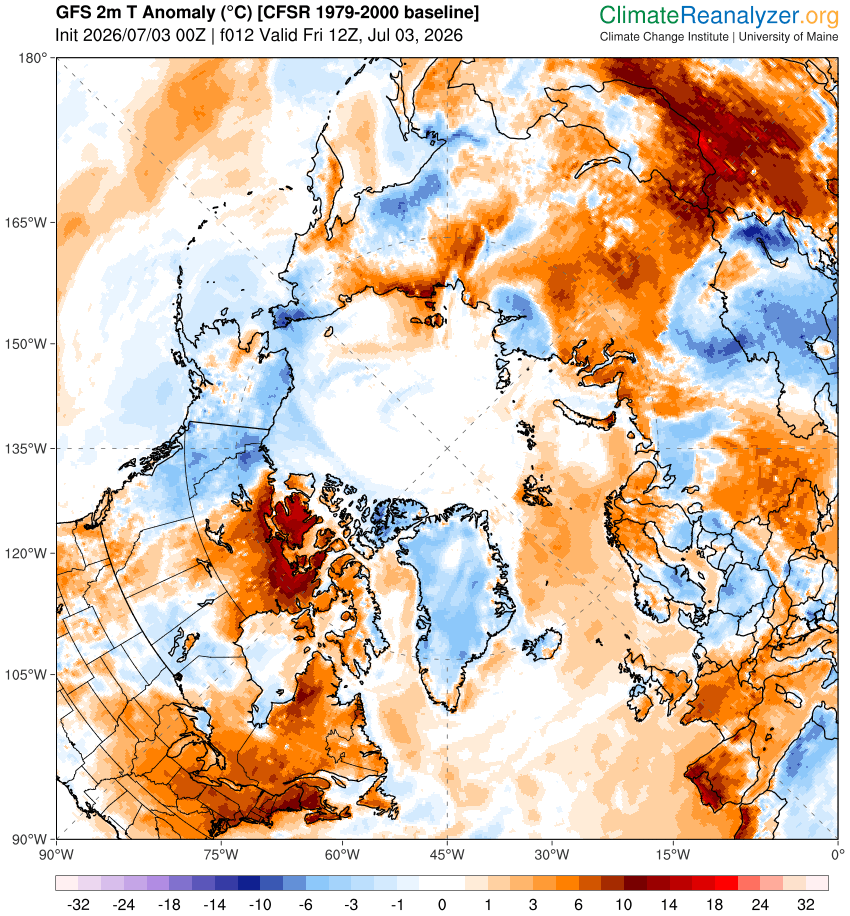
Looking next at temperature anomalies across the Arctic, the Beaufort and Chukchi Seas are slightly cooler than the 1979-2000 climatology. However, the East Siberian Sea and particularly the Canadian Arctic Archipelago are well above what used to be considered “normal”:
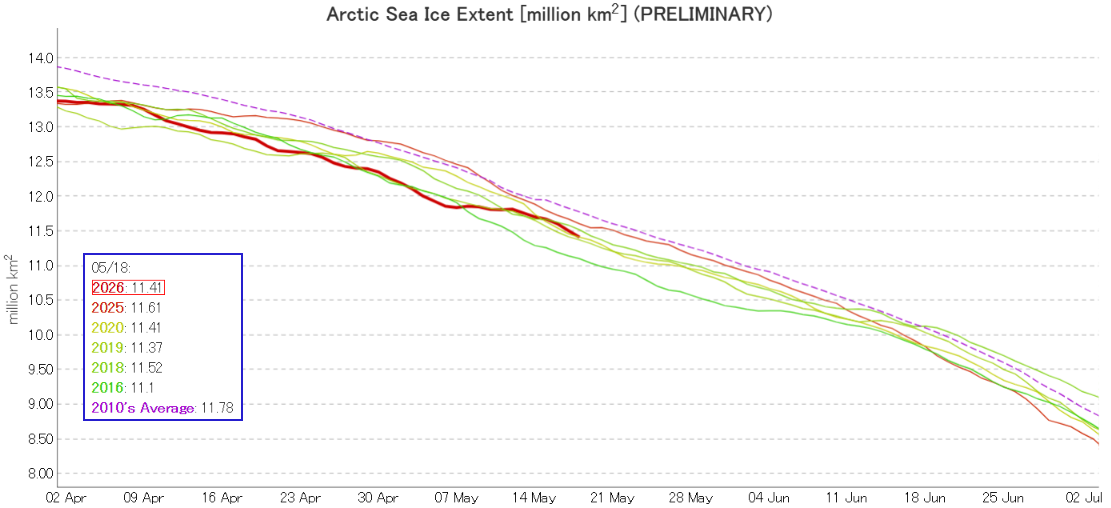
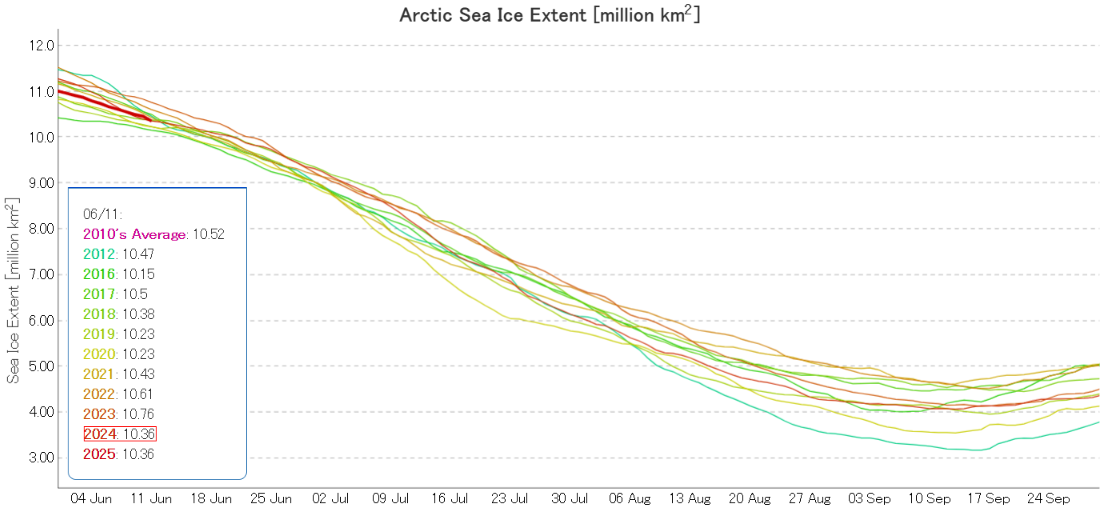
JAXA have updated their visualisations of Arctic sea ice extent data. The “traditional” 2 day average graph is now labelled “preliminary”, and currently shows 2026 in a tie with 2020 for third lowest for the date:
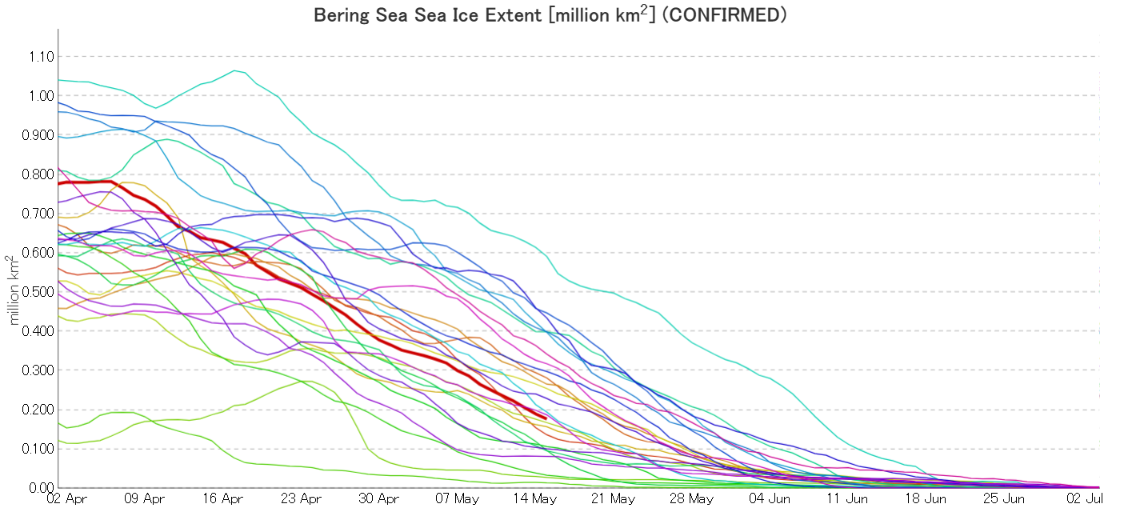
5 day averaged “confirmed” data is also available, including regional graphs. By way of example here’s JAXA’s latest extent graph for the Bering Sea, dated May 15th:
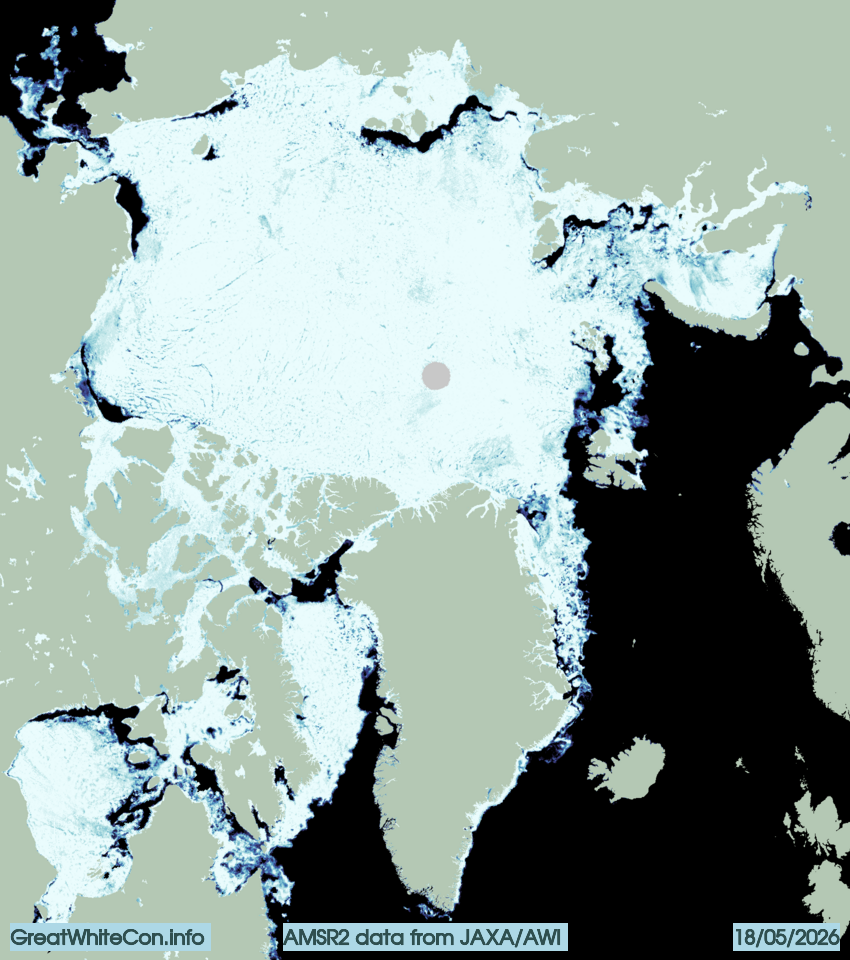
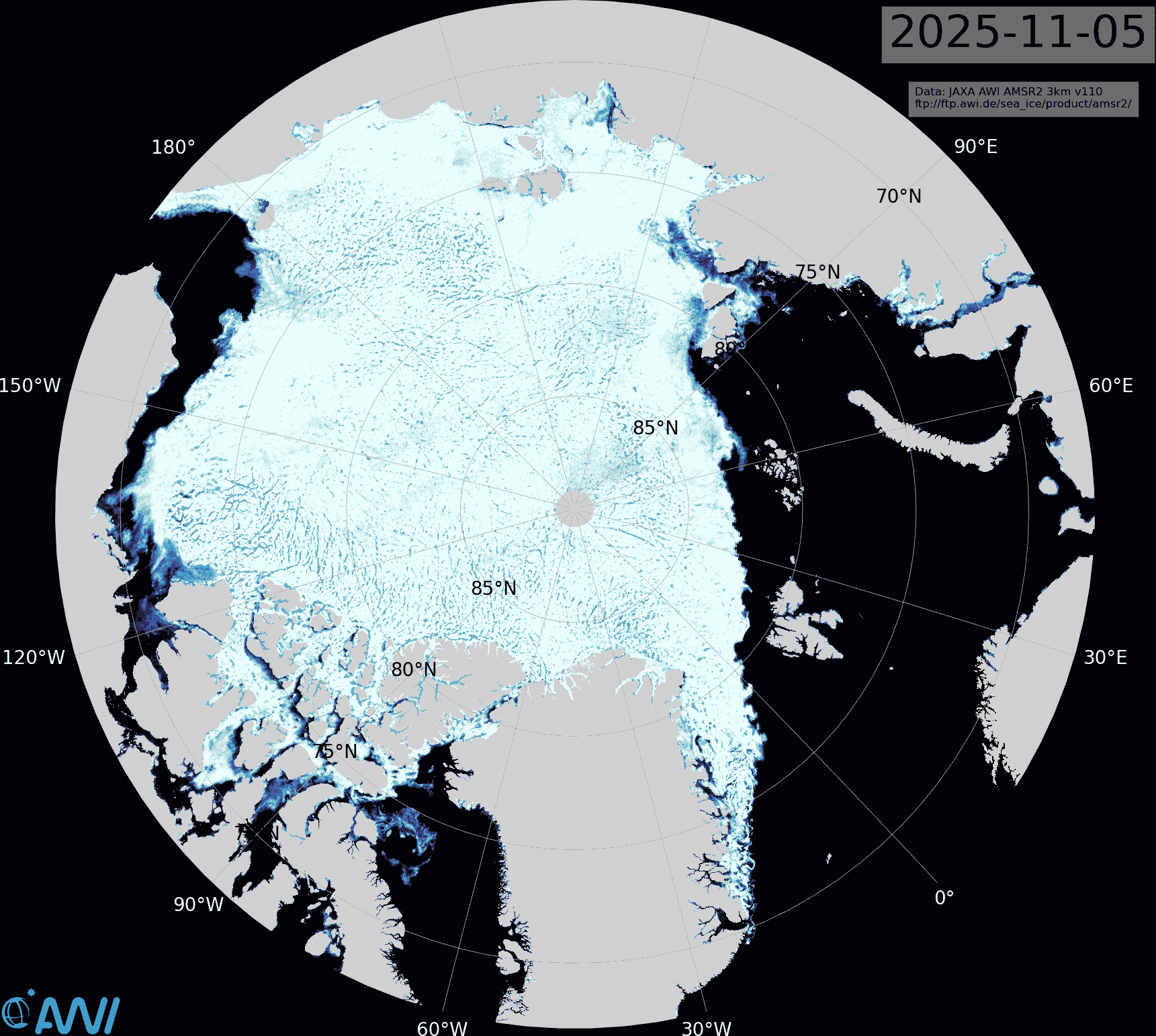
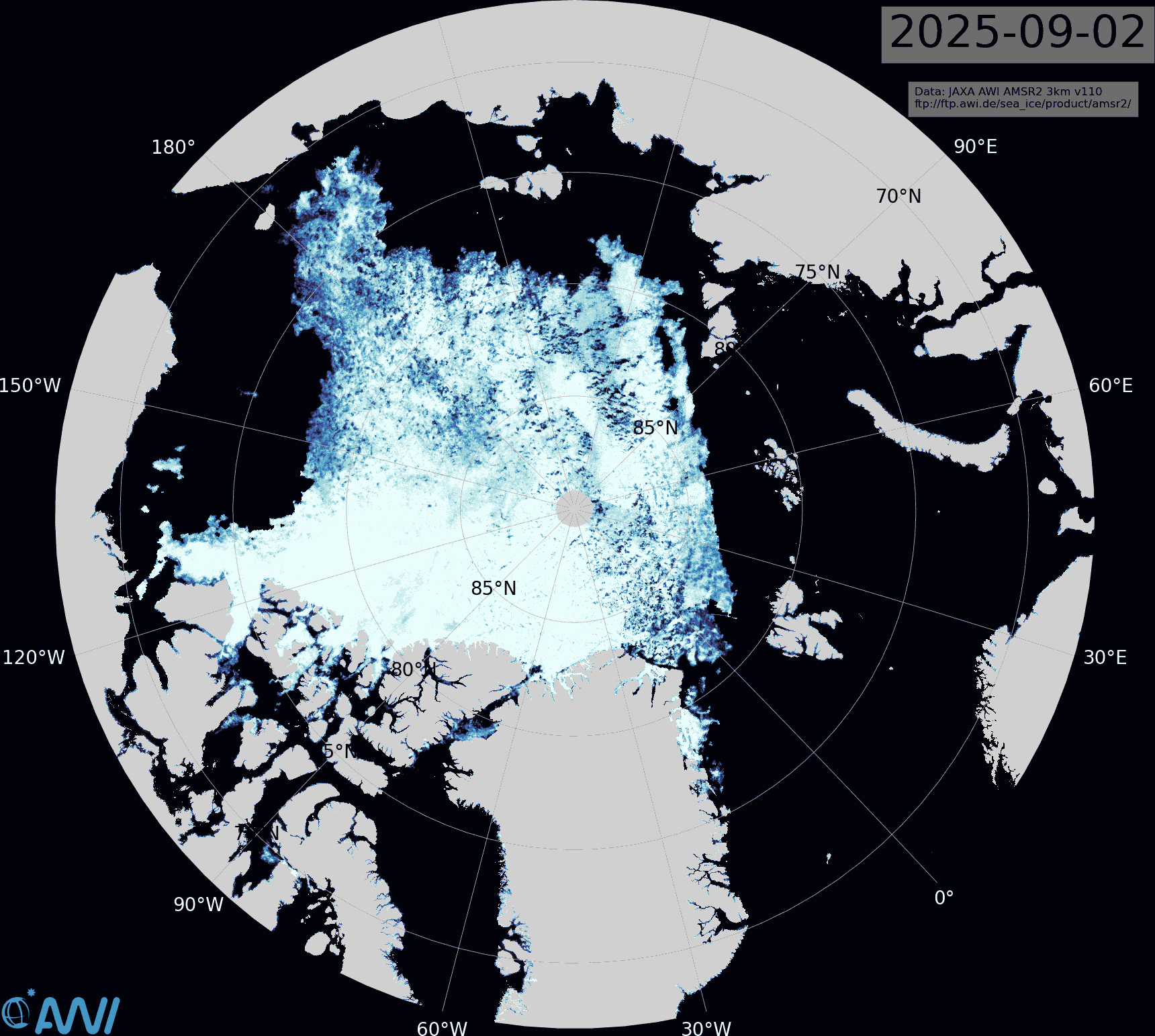
The Alfred Wegener Institute’s sea ice concentration data reveals open water in the Beaufort, Chukchi, East Siberian and Laptev Seas:
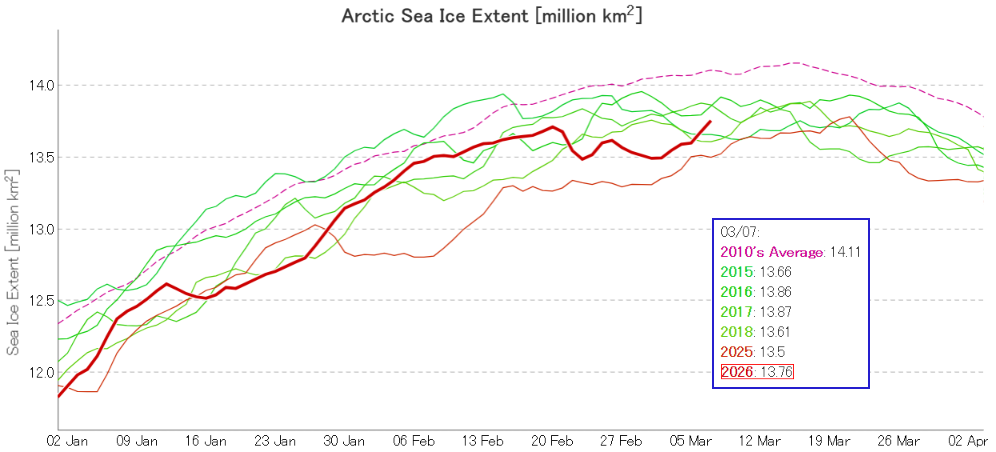
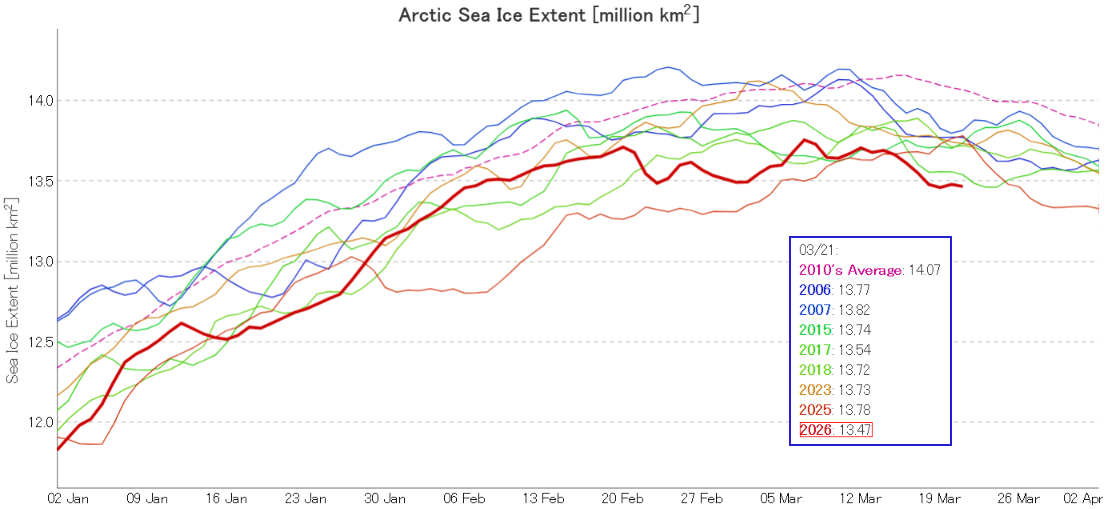
JAXA Arctic sea ice extent has just reached a new high for the year. At 13.76 million km² extent is currently 4th lowest for the date, just below last year’s maximum of 13.78 million km²:
JAXA extent is currently lowest for the date in their record going back to 1979. It’s highly likely that the metric peaked on March 7th which is a new record low maximum, albeit by a mere 20 thousand km²:
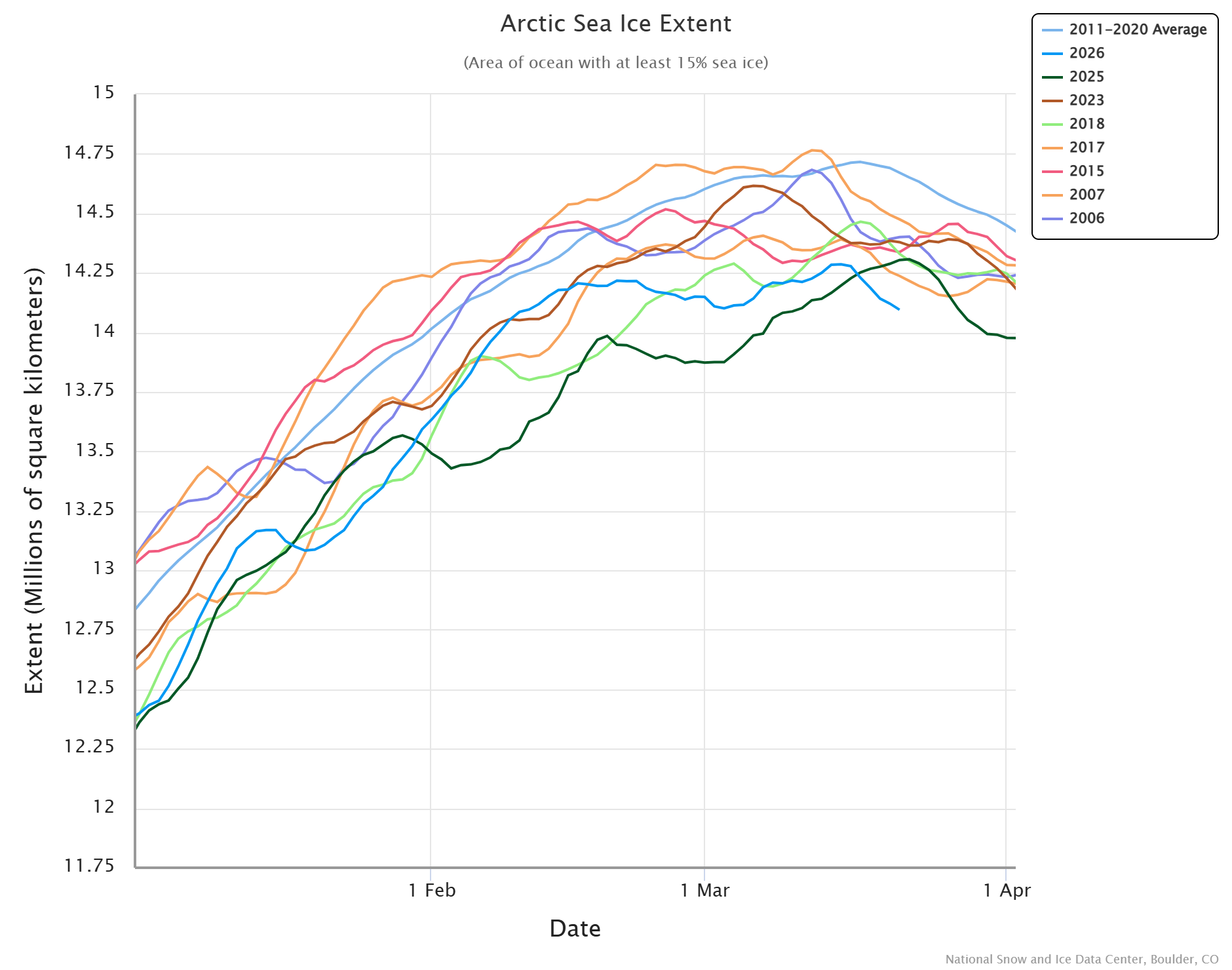
By way of a contrast, the National Snow and Ice Data Center’s 5 day averaged extent maximum of 14.29 million km² was reached on March 15th:
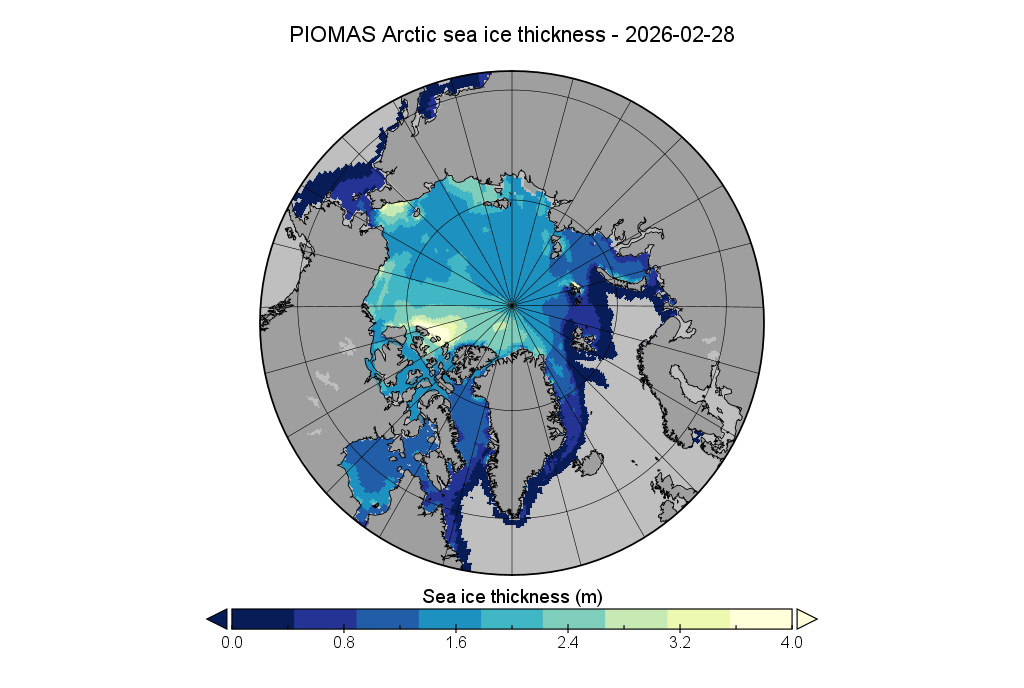
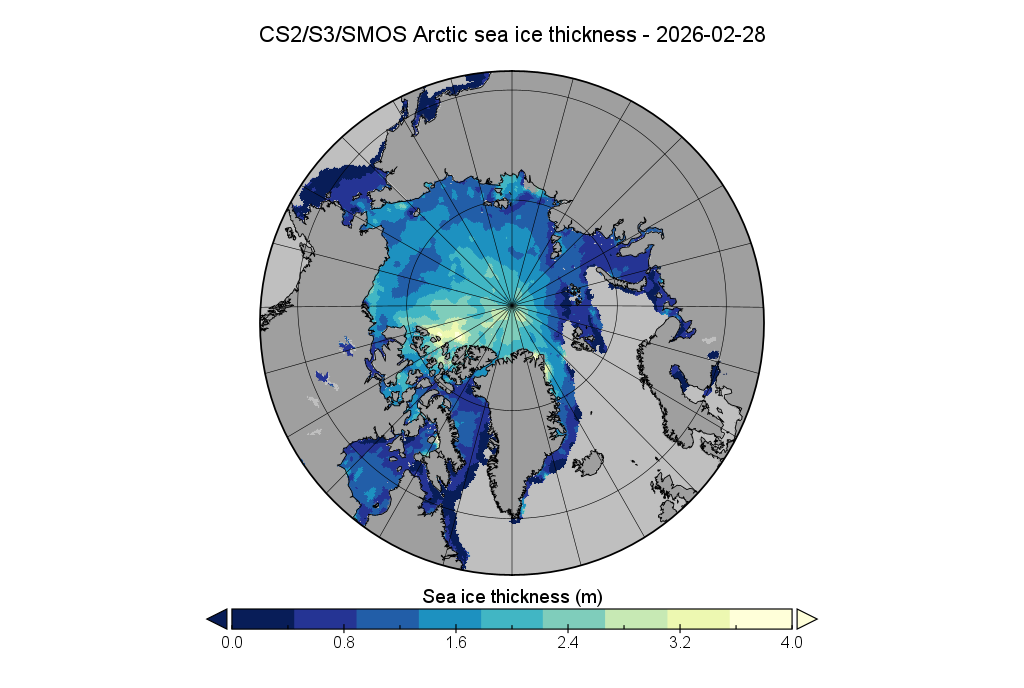
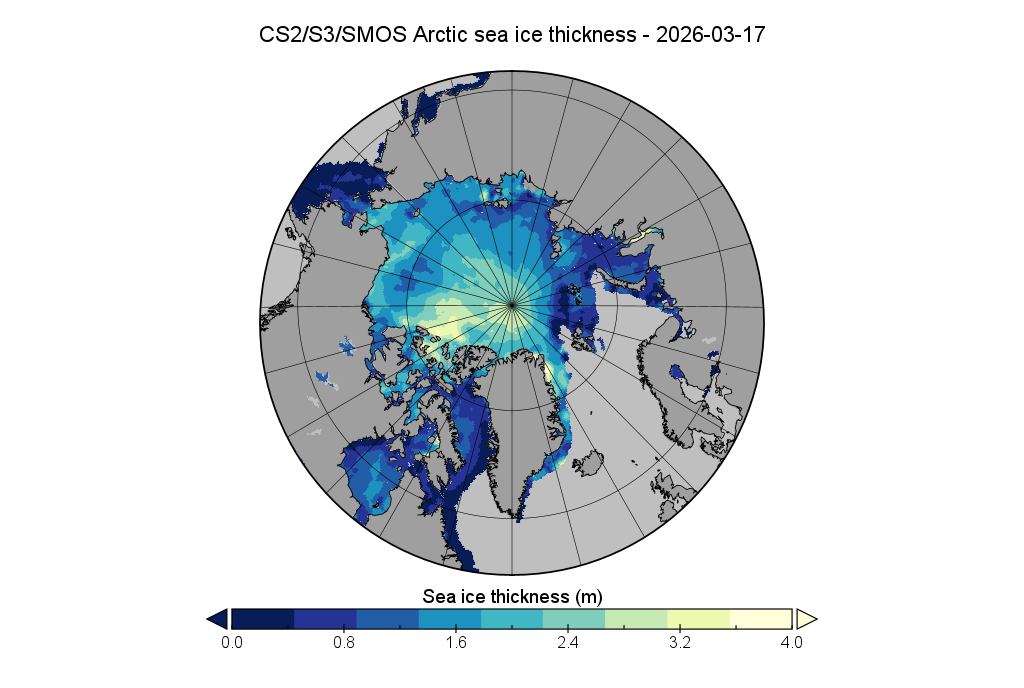
Here is the mid month update on the AWI’s CryoSat-2/Sentinel 3/SMOS Arctic sea ice thickness map:
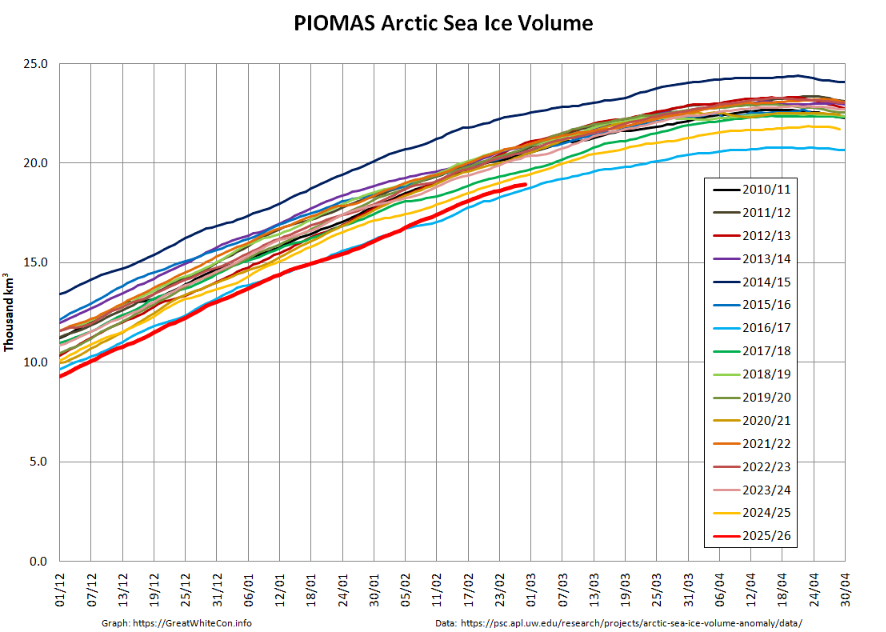
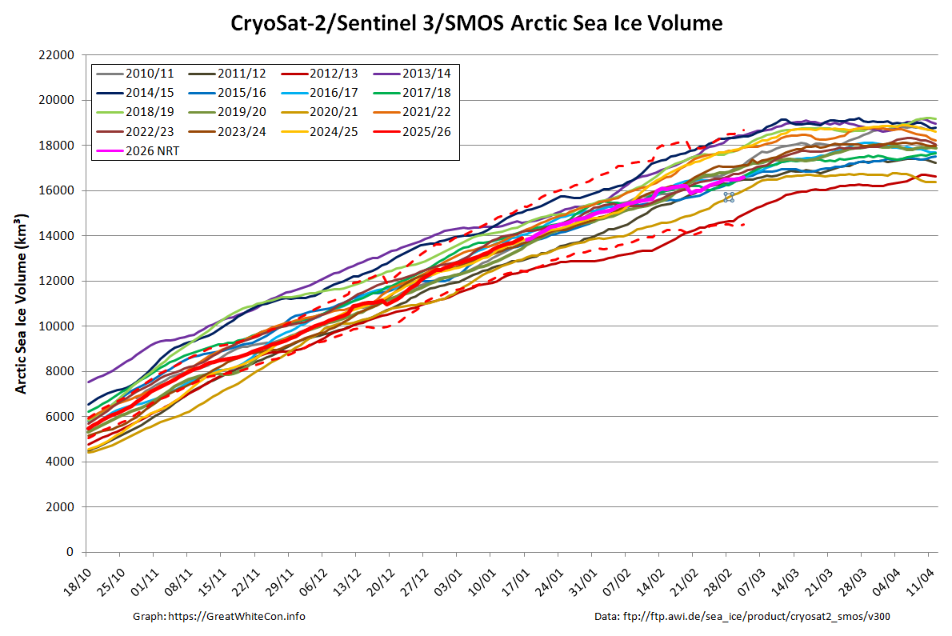
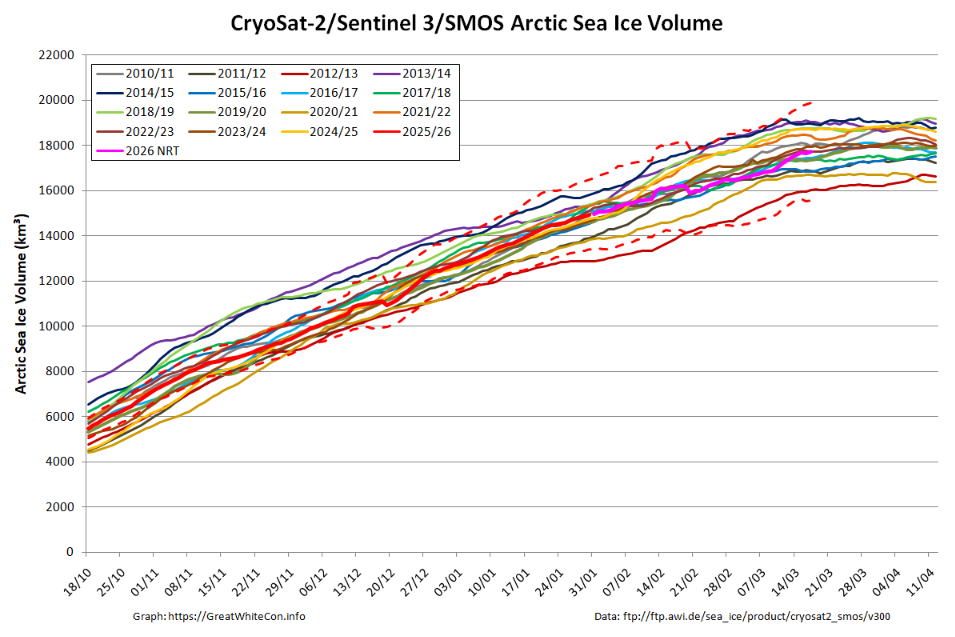
Here too is the associated sea ice volume graph:
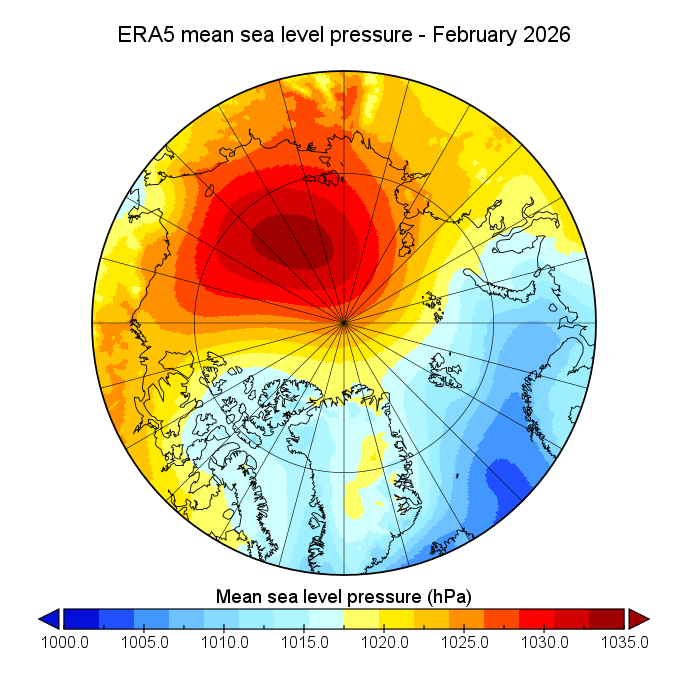
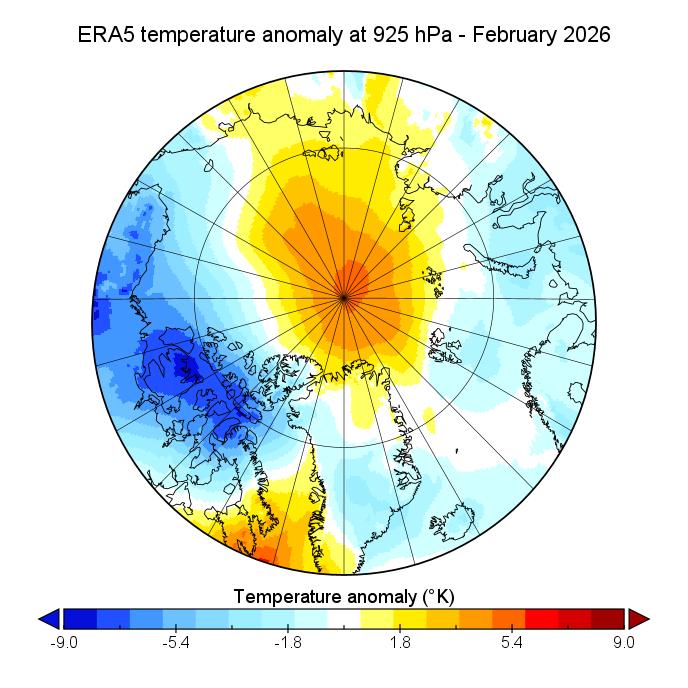
Next here are the ERA5 MSLP and 925 hPa air temperature anomaly maps for February 2026, now in “Greenland down” orientation to match the thickness maps:
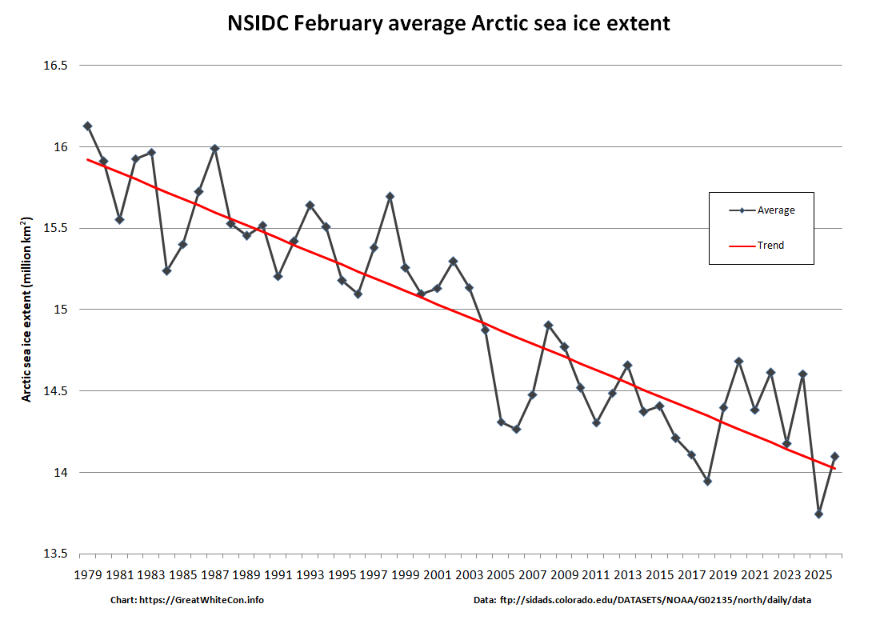
together with the NSIDC monthly average extent graph for February:
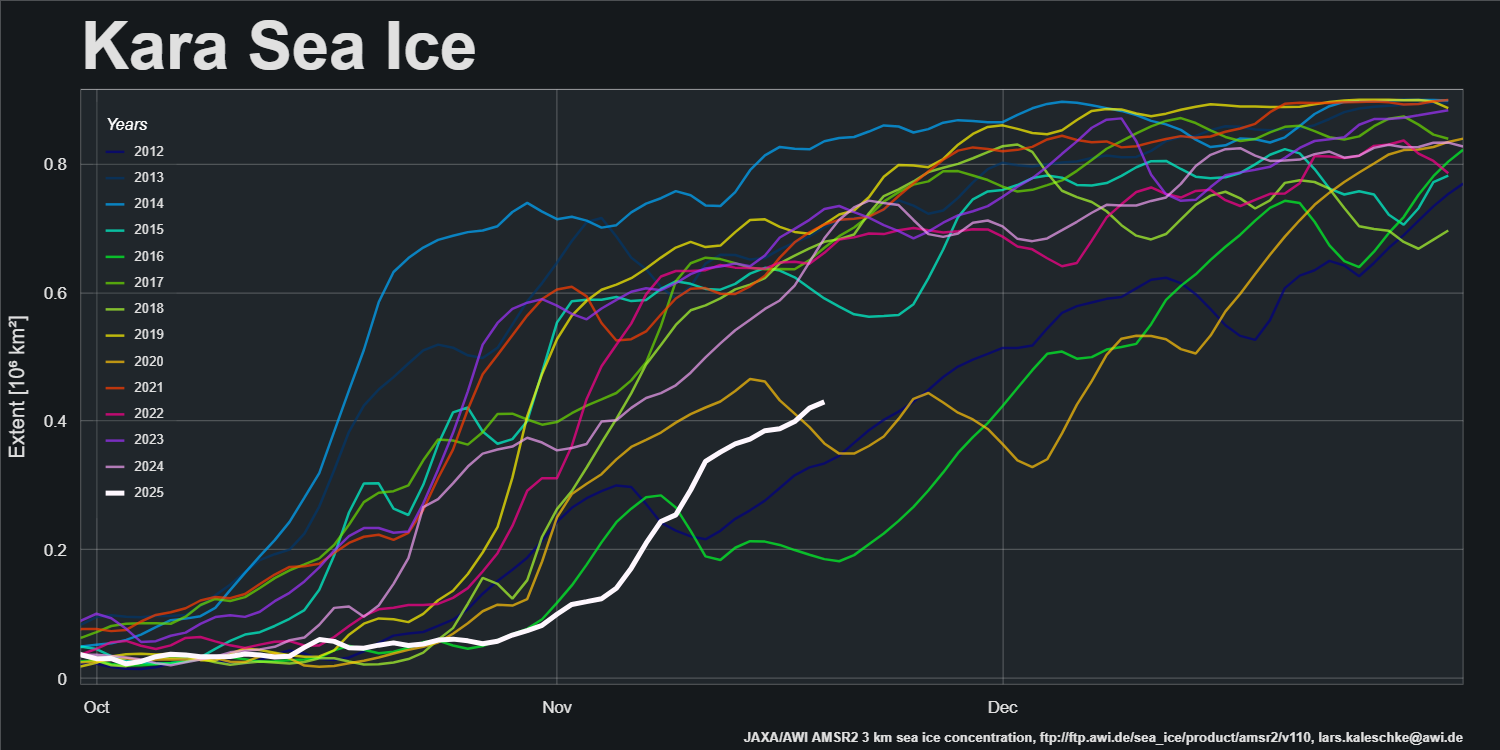
The latest Alfred Wegener Institute sea ice concentration map shows the East Siberian and Laptev Seas almost completely refrozen. However, refreeze of the Kara Sea has barely begun:
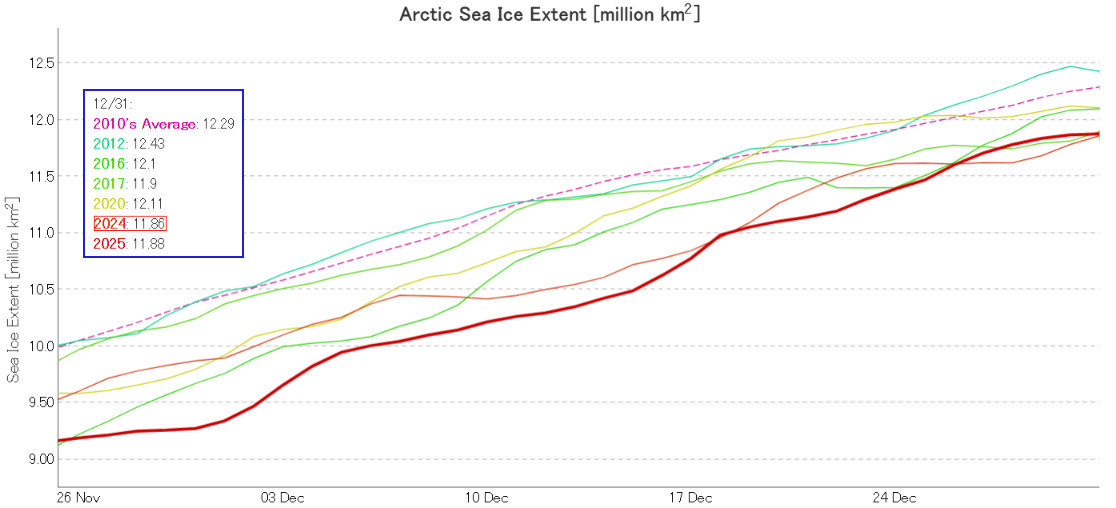
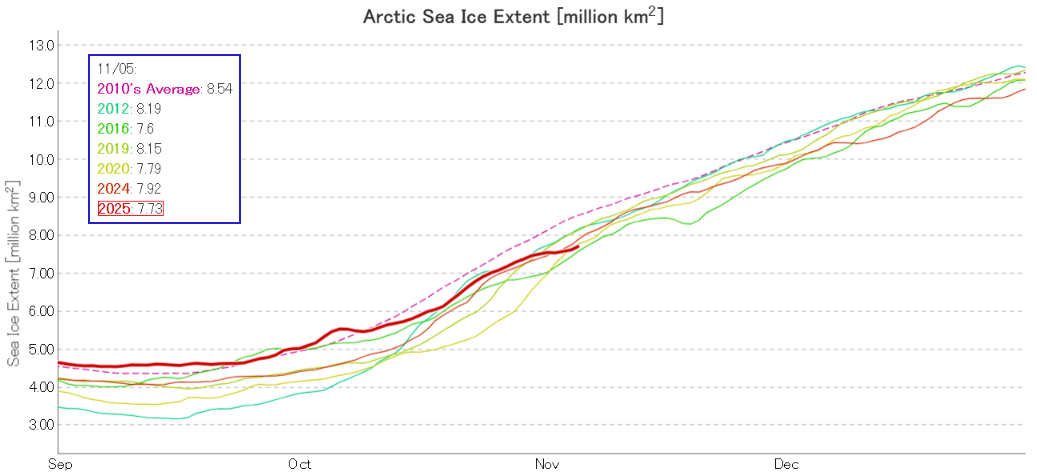
Across the Arctic as a whole the refreeze has slowed significantly, and JAXA/ViSHOP extent is now 2nd lowest in the satellite era:
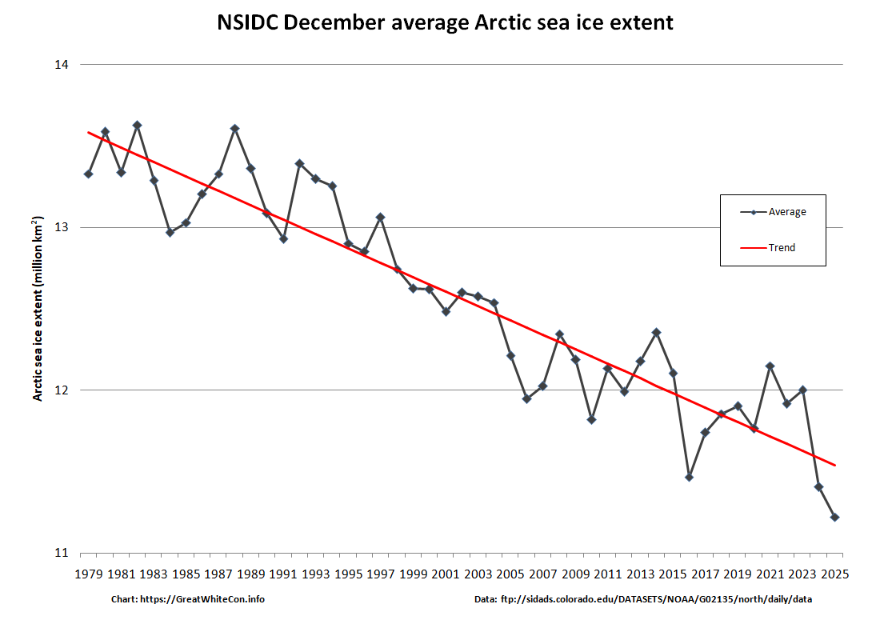
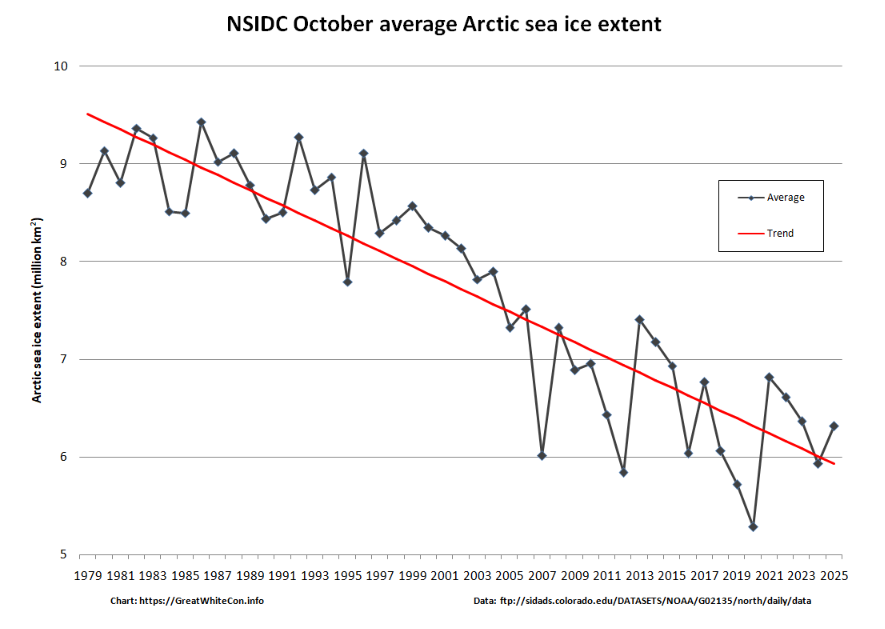
However, average NSIDC extent for the month of October was higher than last year and above the linear trend:
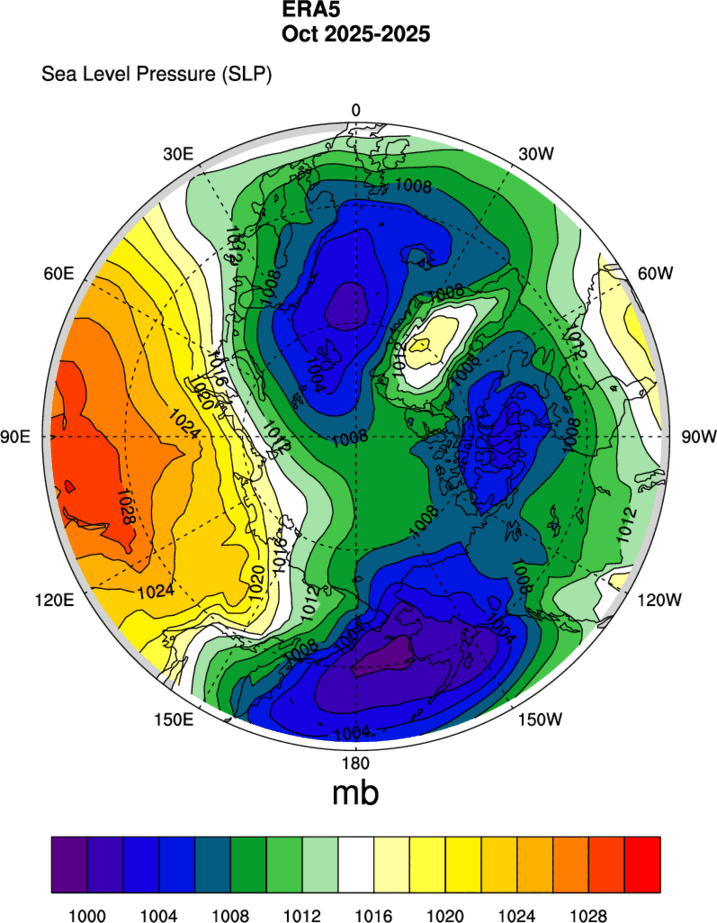
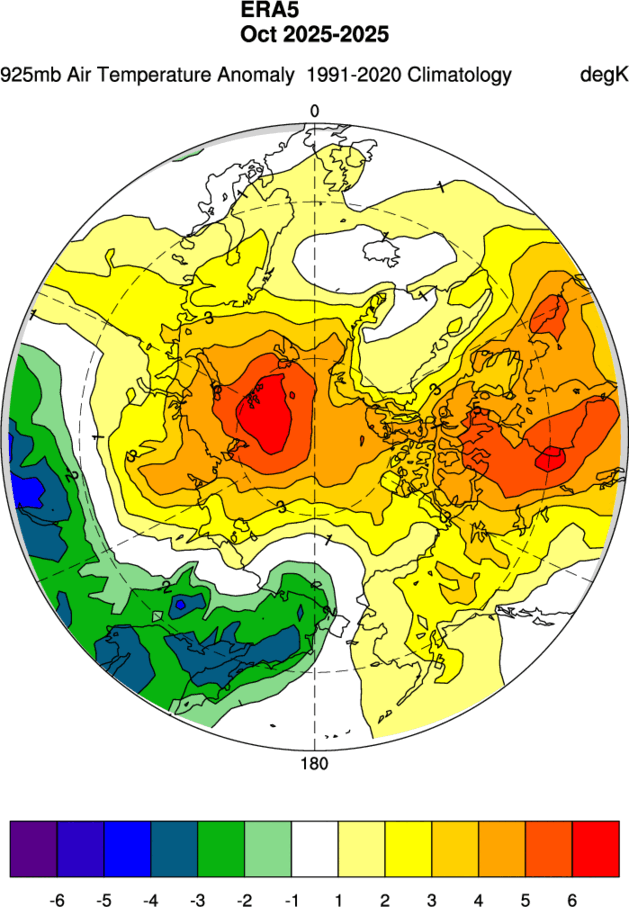
The ERA5 MSLP map for October shows high pressure over Siberia, associated with lower than normal air temperatures at 925 hPa across the region. However, temperatures across almost the entire Arctic Ocean were above normal:
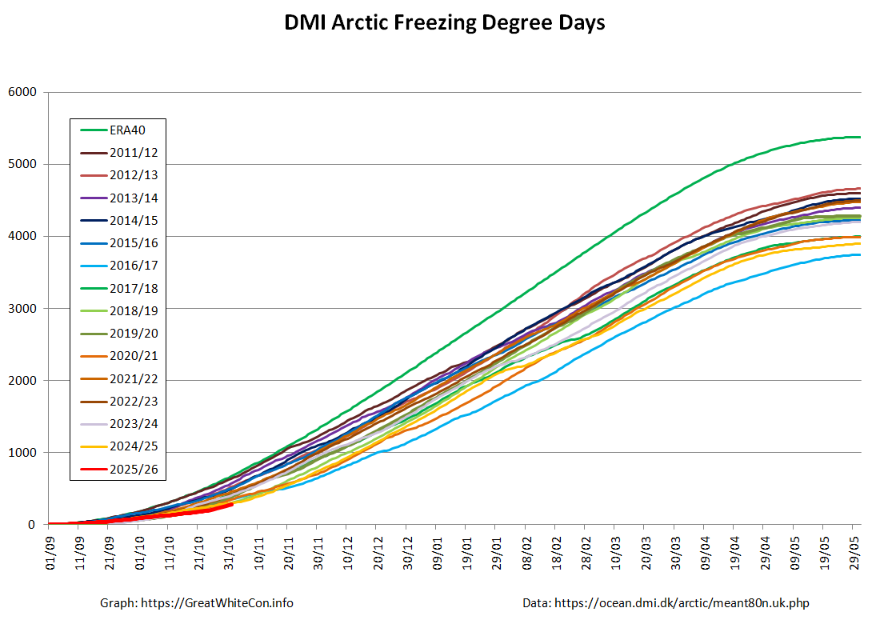
High Arctic freezing degree days based on DMI >80N data were lowest for the date at the beginning of November:
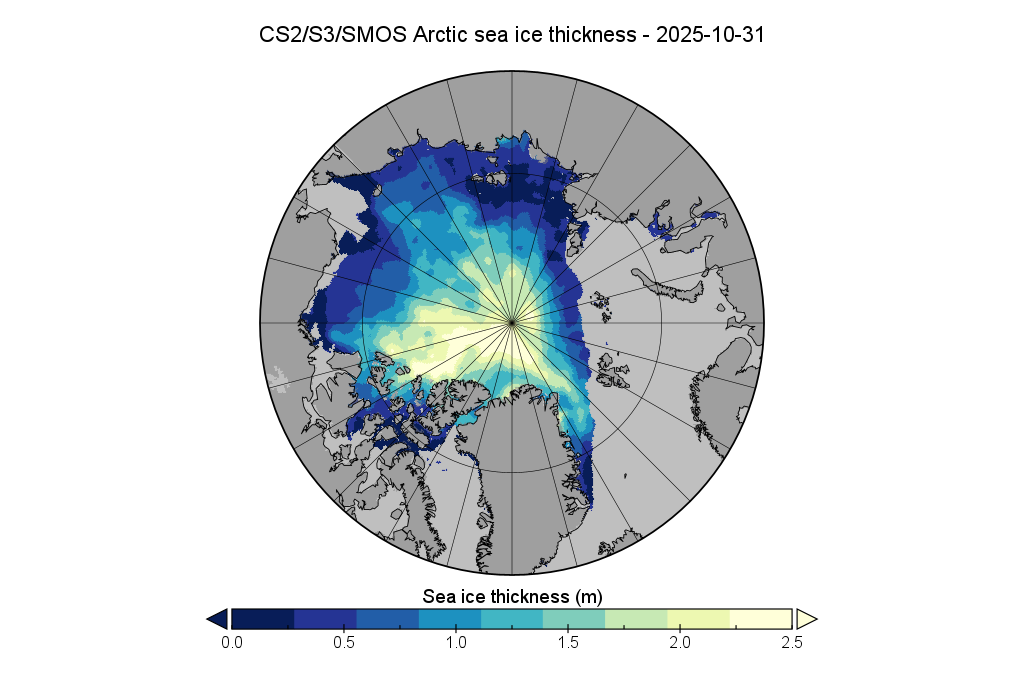
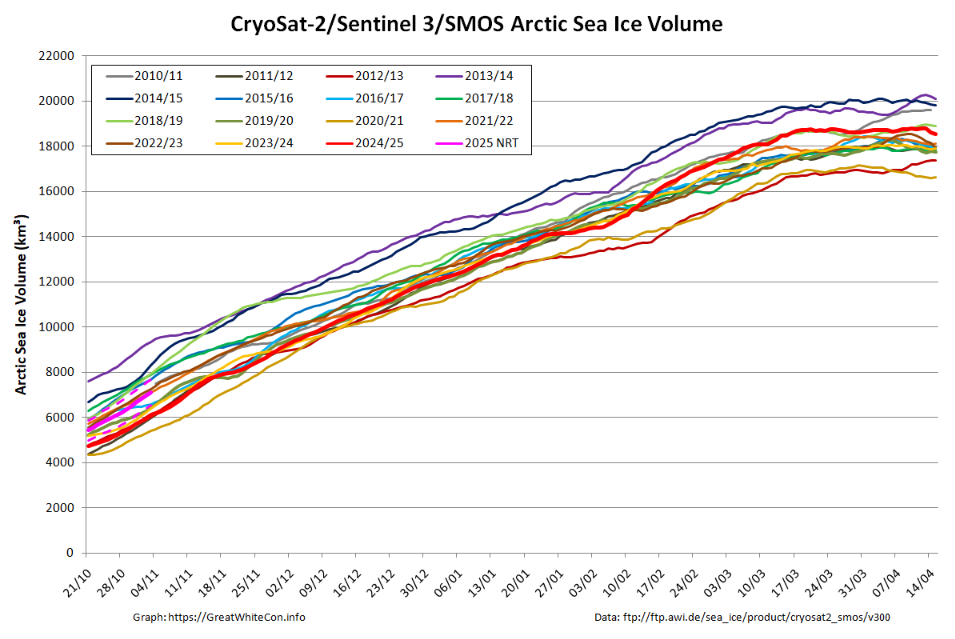
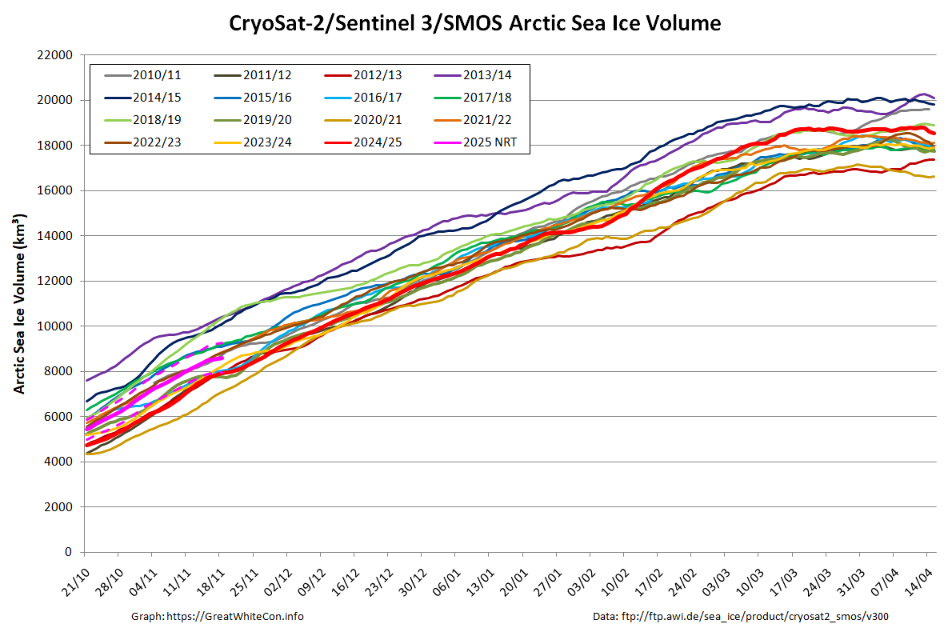
Bear in mind the caveats about the current lack of reliable SMOS data on the Atlantic side of the Arctic, and that Sentinel 3 data is only incorporated from Autumn 2023.
[Update – November 20th]
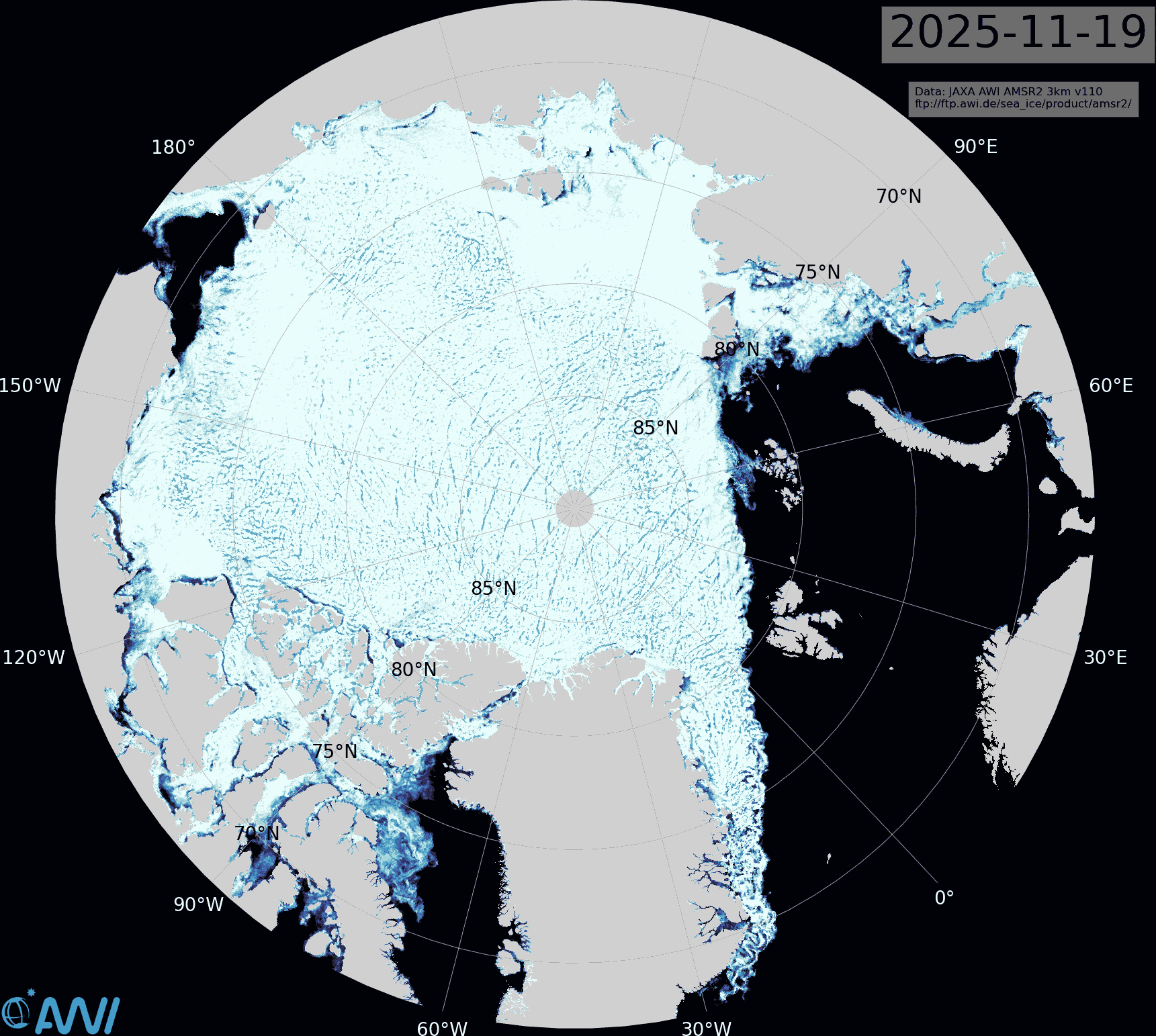
Refreeze of the Beaufort Sea is complete, and refreeze of the Kara Sea has started in earnest:
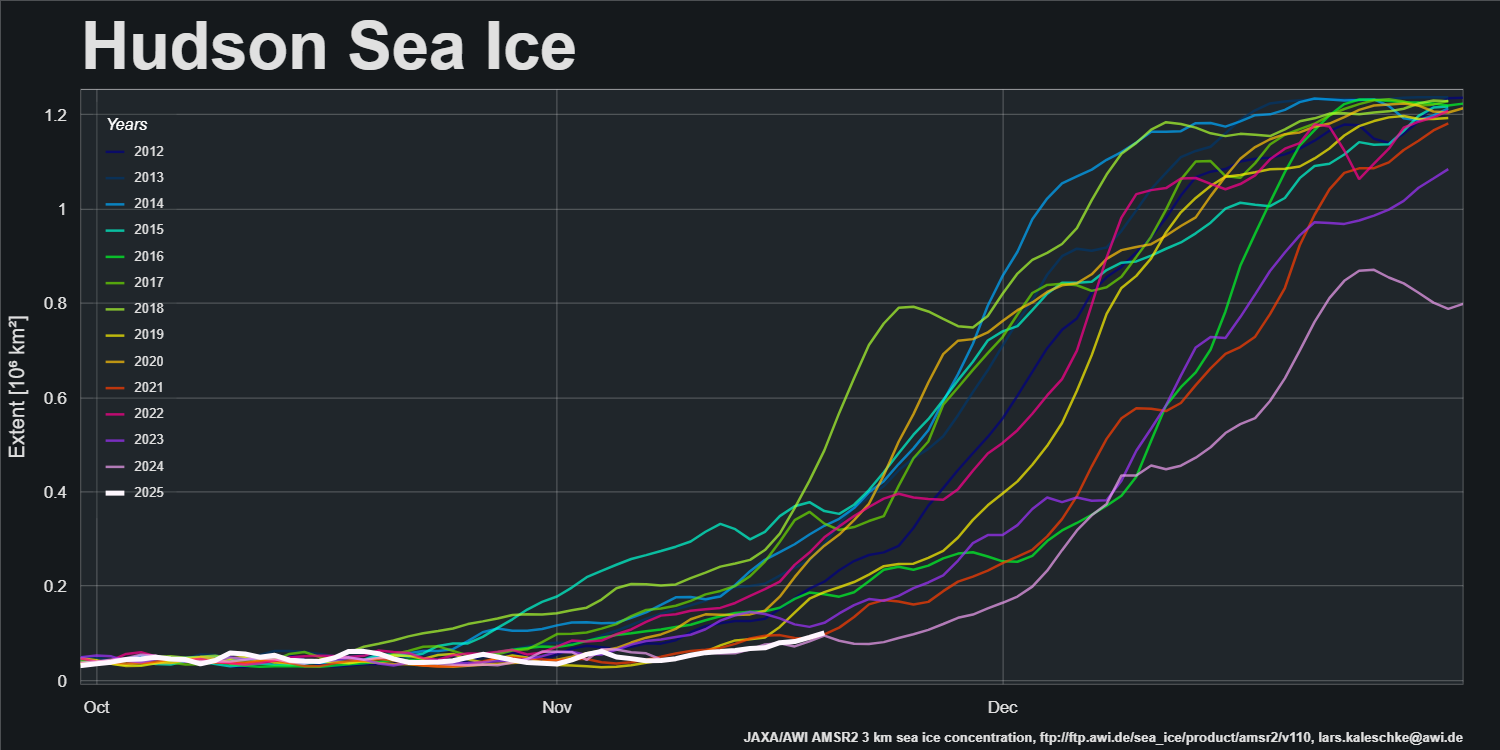
However, the Barents Sea is still sea ice free and refreeze of Hudson Bay has barely begun:
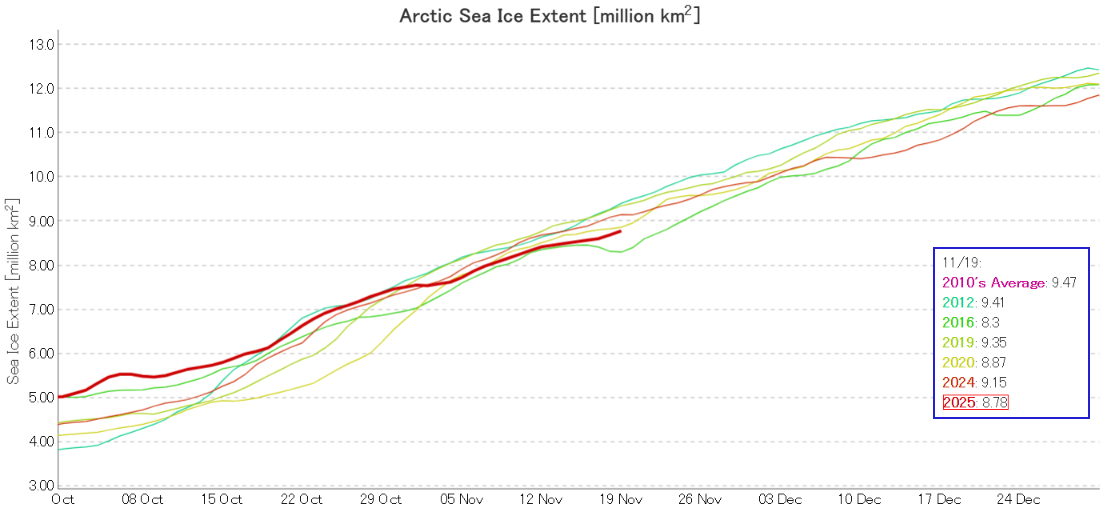
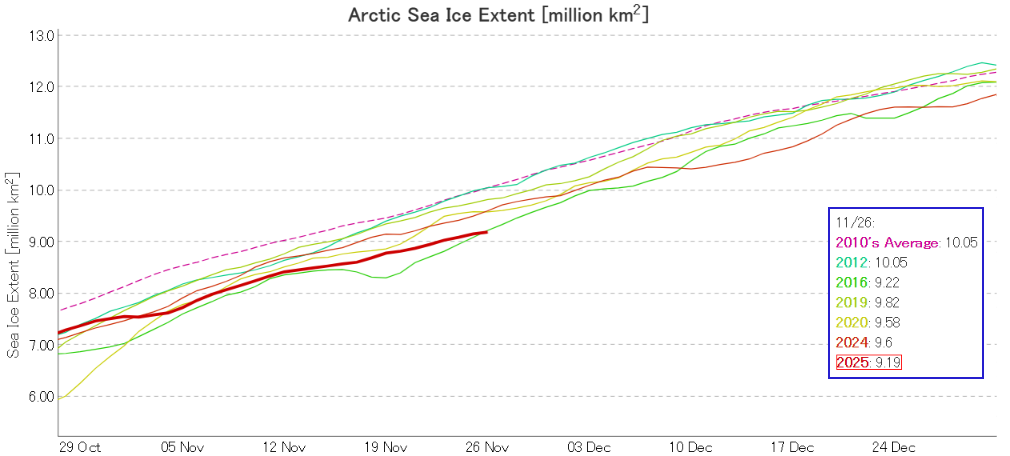
JAXA extent is still second lowest for the date:
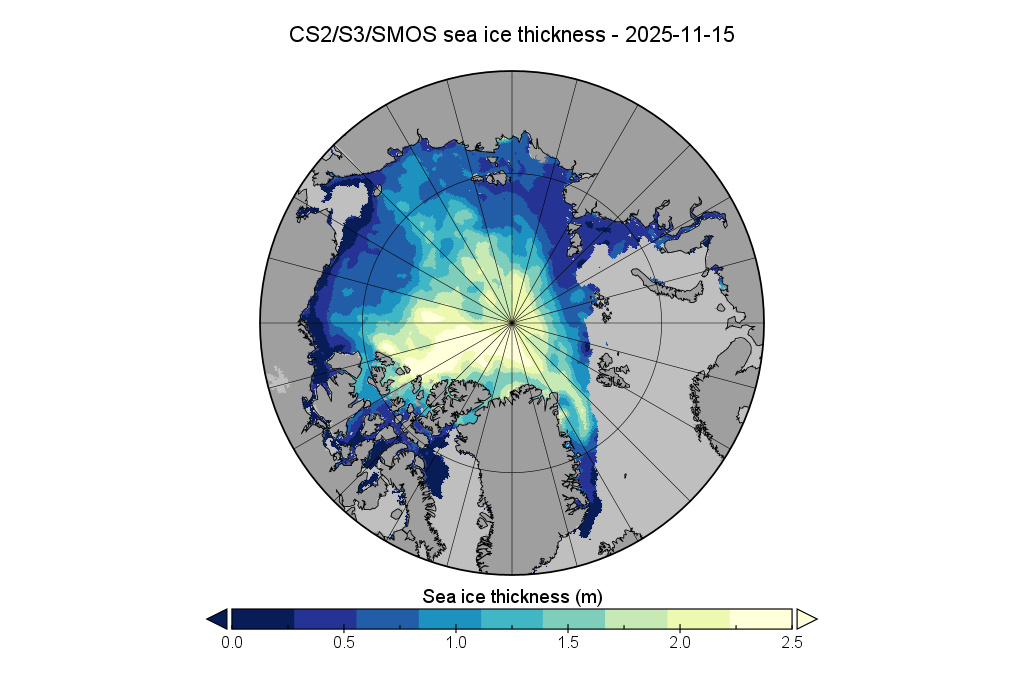
The PIOMAS gridded thickness data for October has yet to be corrected, but here is the mid month thickness map from AWI:
Here too is the associated volume graph:
[Update – November 27th]
JAXA/ViSHOP extent is now lowest for the date in their record going back to 1978:
[Update – December 5th]
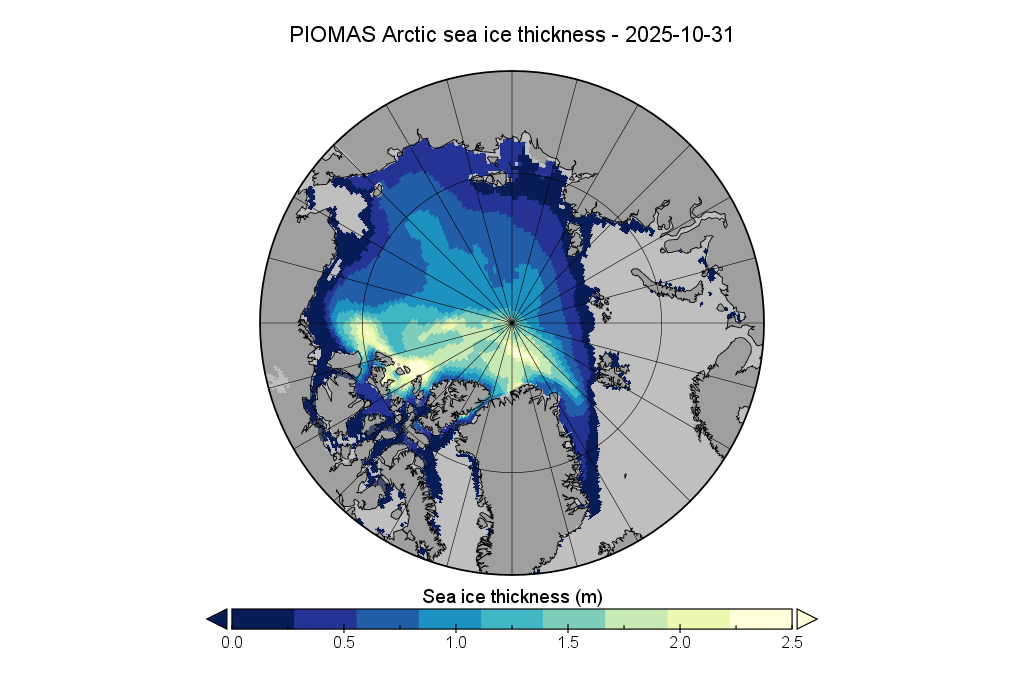
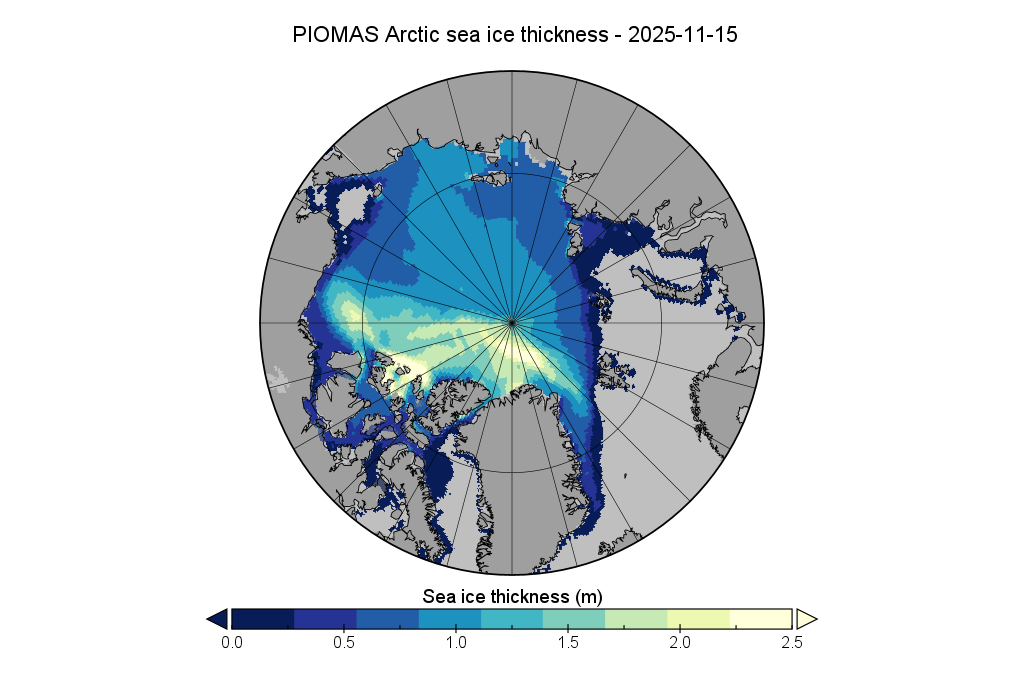
The PIOMAS team have finally published gridded thickness data for October and November, so here are the October 31st and November 15th thickness maps:
The conversation continues over on the December open thread, including the latest PIOMAS data.
Yes. NSIDC satellite data shows Arctic September sea ice extent declined from ~6.5 million km² in the early 2000s to ~4.2 million km² by 2024, while PIOMAS volume estimates fell from ~12,000 km³ to under 4,000 km³. Shellenberger's claim ignores these multi-decadal trends, though…
By way of additional background information, Wikipedia asserts that:
Grok is a generative artificial intelligence chatbot developed by xAI. It was launched in November 2023 by Elon Musk as an initiative based on the large language model (LLM) of the same name. Grok has apps for iOS and Android and is integrated with the social media platform X (formerly known as Twitter), Tesla vehicles, and Tesla’s Optimus robot. The chatbot is named after the verb grok, coined by American author Robert A. Heinlein in his 1961 science fiction novel Stranger in a Strange Land to describe a deeper than human form of understanding.
The bot has generated various controversial responses, including conspiracy theories, antisemitism, and praise of Adolf Hitler, as well as referring to Musk’s views when asked about controversial topics or difficult decisions. Updates since 2023 have shifted the bot politically rightward to provide conservative responses to user queries.
and that:
Michael D. Shellenberger is an American author and journalist. He is the first endowed professor at the University of Austin, serving as CBR Chair of Politics, Censorship, and Free Speech.
Shellenberger is a prominent heterodox thinker on topics including climate change and homelessness…
An archived photograph in the NHHC image collection: “USN 1040961 USS SKATE (SSN–578)” which shows the submarine moored to the ice pack. flickr.com
A blog article “USS Skate at the North Pole – Truth and Fantasy Fiction” that collects several of the historic photographs and discusses their context. greatwhitecon.info
I asked ChatGPT to check out the final link in more detail. I was informed:
What GreatWhiteCon does well:
It collects and reproduces the historic images and contemporary captions, and discusses how those images have been interpreted (or misinterpreted) over time. That makes it a handy one-stop place to see the pictures and some commentary.
What GreatWhiteCon is not:
It is a blog/analysis piece (2018) rather than an official or archival source. That means its interpretation is useful, but any factual claim that matters (dates, official captions, archival catalog numbers) is best checked against the primary records (Naval History & Heritage Command, National Archives, contemporary magazines, USNI Proceedings).
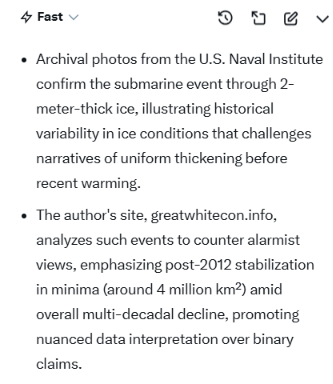
Grok has a rather different interpretation of what Great White Con does well. Allegedly “Snow White”:
Counters alarmist views… promoting nuanced data interpretation over binary claims.
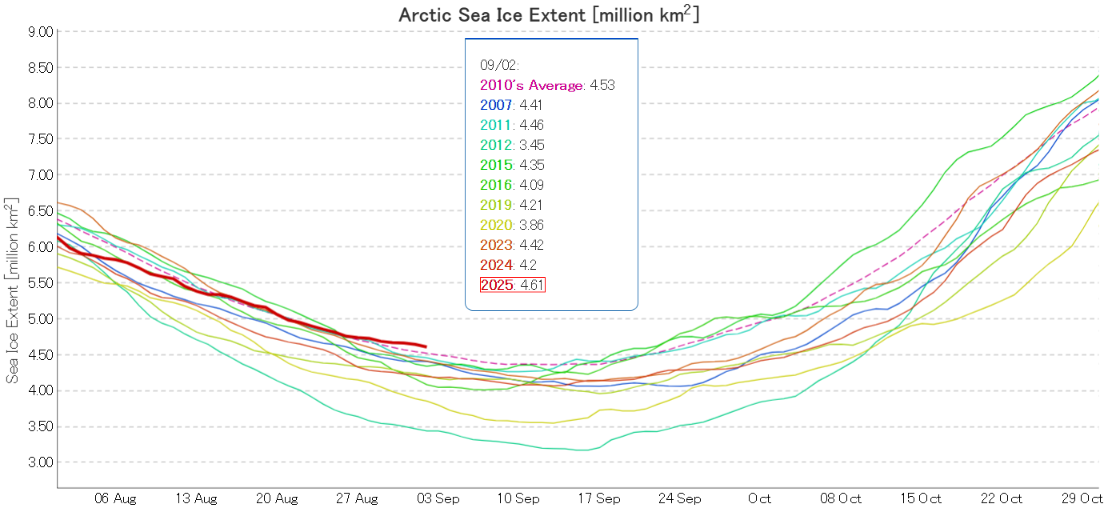
At the beginning of last month JAXA/ViSHOP extent was third lowest for the date in the satellite era. With the date of the 2025 minimum extent rapidly approaching that is no longer the case:
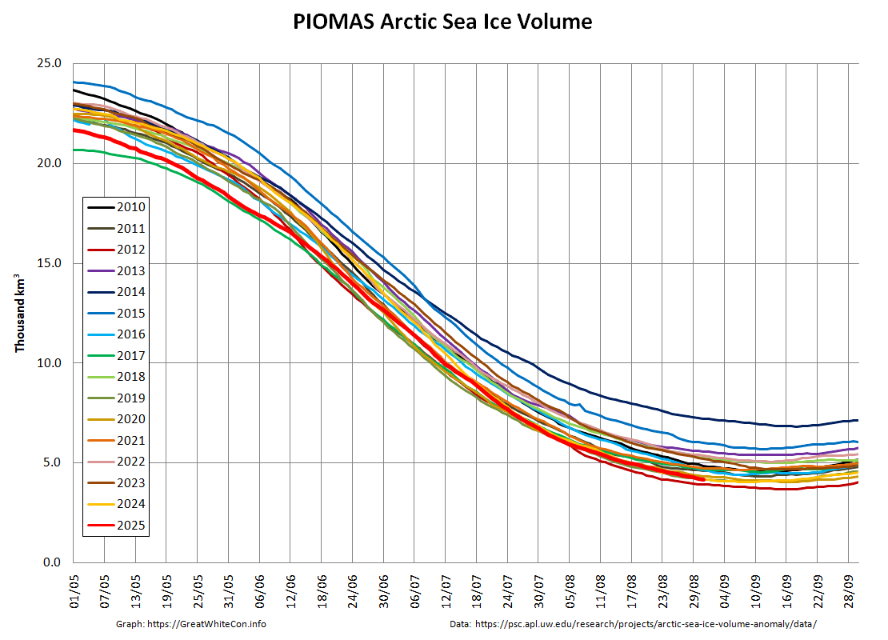
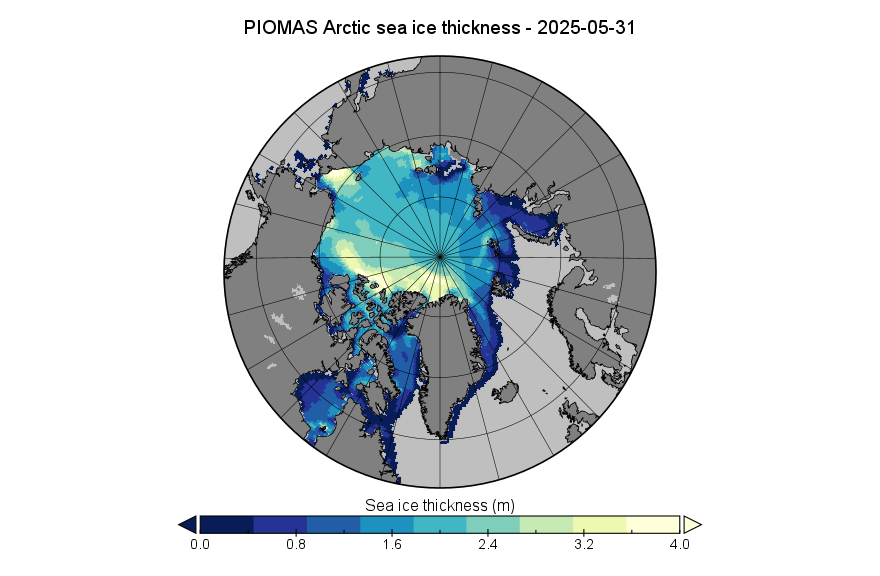
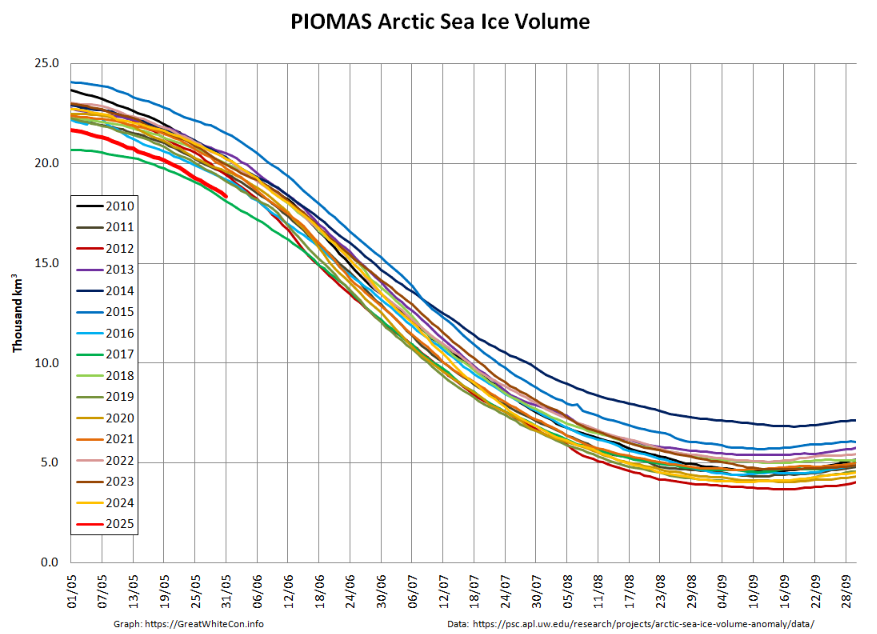
Whilst JAXA extent is now 10th lowest, PIOMAS volume remains second lowest for the date:
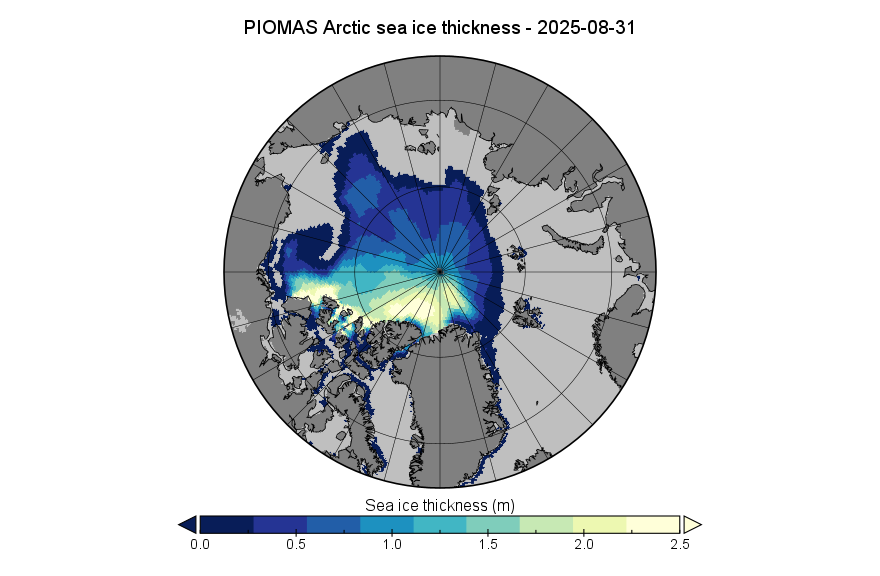
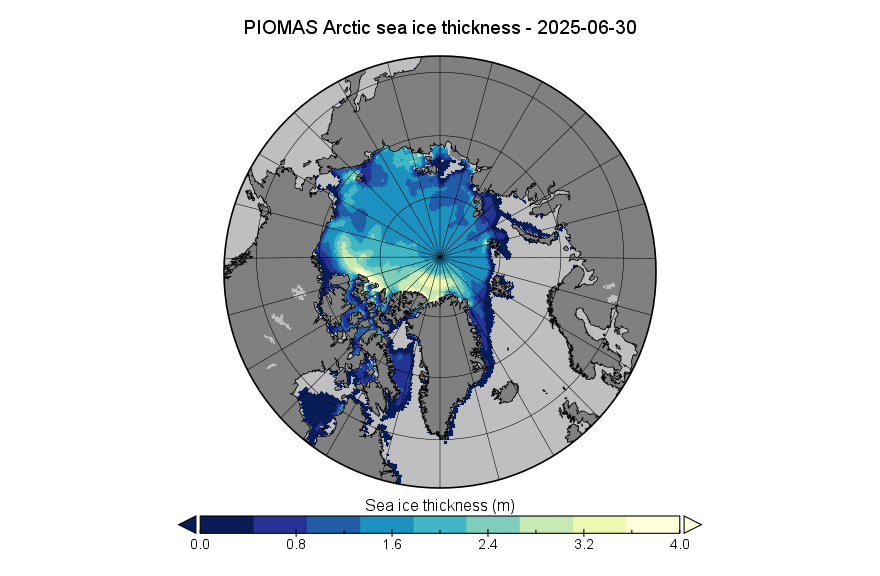
Here’s the associated thickness map. Note the change of scale from last month
Compare and contrast that map with the AWI’s sea ice concentration map, particularly in the Beaufort Sea area:
This website uses cookies to improve your experience. We'll assume you're ok with this, but you can opt-out if you wish. Cookie settingsACCEPT
Privacy & Cookies Policy
Privacy Overview
This website uses cookies to improve your experience while you navigate through the website. Out of these, the cookies that are categorized as necessary are stored on your browser as they are essential for the working of basic functionalities of the website. We also use third-party cookies that help us analyze and understand how you use this website. These cookies will be stored in your browser only with your consent. You also have the option to opt-out of these cookies. But opting out of some of these cookies may affect your browsing experience.
Necessary cookies are absolutely essential for the website to function properly. This category only includes cookies that ensures basic functionalities and security features of the website. These cookies do not store any personal information.
Any cookies that may not be particularly necessary for the website to function and is used specifically to collect user personal data via analytics, ads, other embedded contents are termed as non-necessary cookies. It is mandatory to procure user consent prior to running these cookies on your website.