Tag Archives: Extent

Arctic Sea Ice Fails To Track 2005/2006

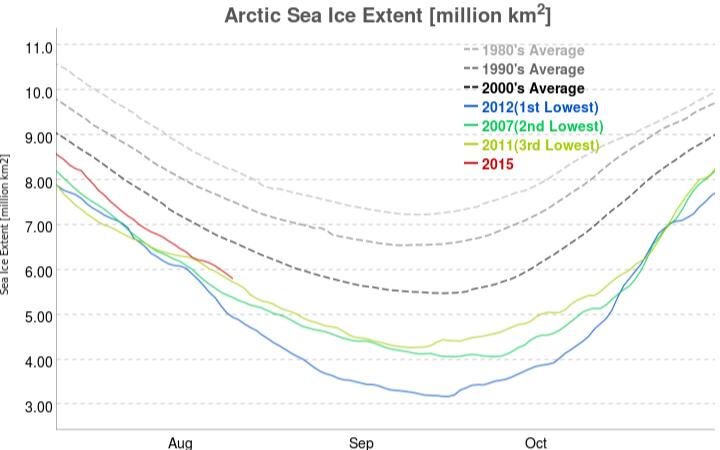
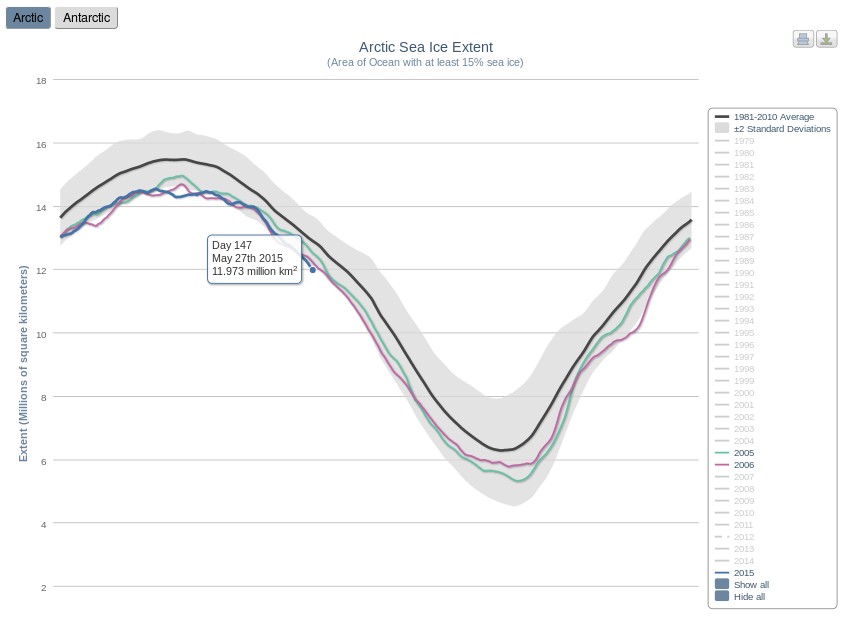
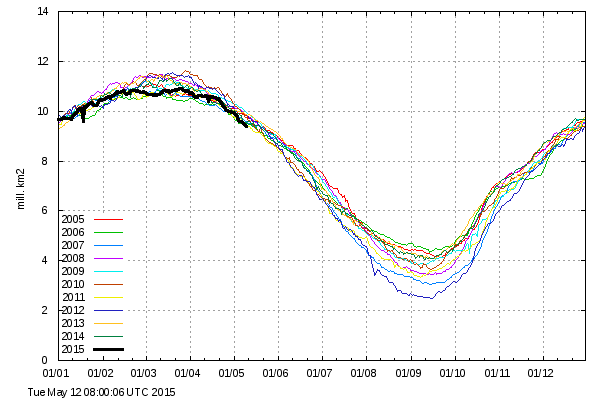
The pseudonymous “Steve Goddard” proudly proclaims this morning that “Arctic Sea Ice Continues To Track 2005/2006“. Tony Heller states:

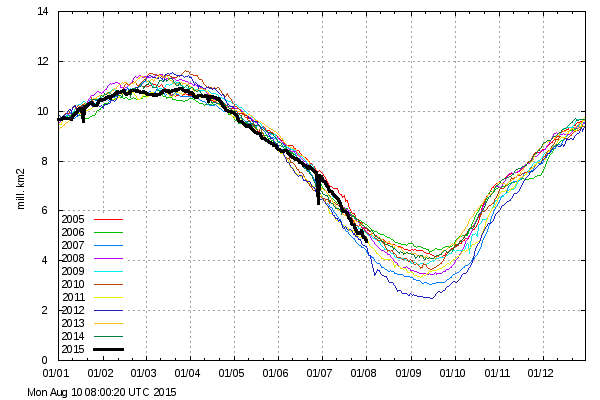
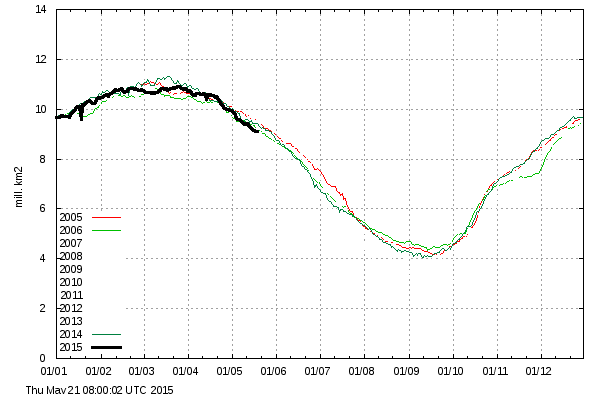
Experts say that the Arctic is in a “death spiral” – but for the past two years it has been tracking 2005/2006 – the years with the two highest summer extents of the past decade.
unReal_DMI-may-21-04-26

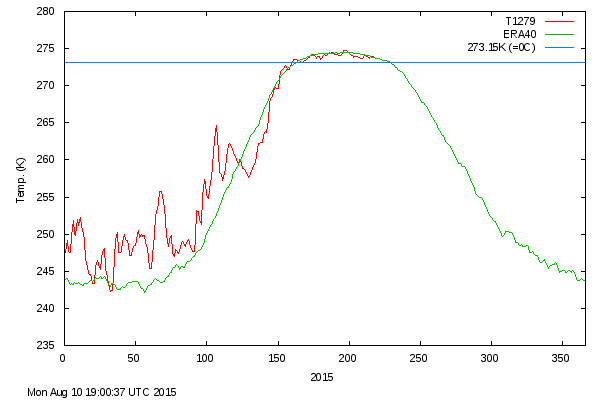
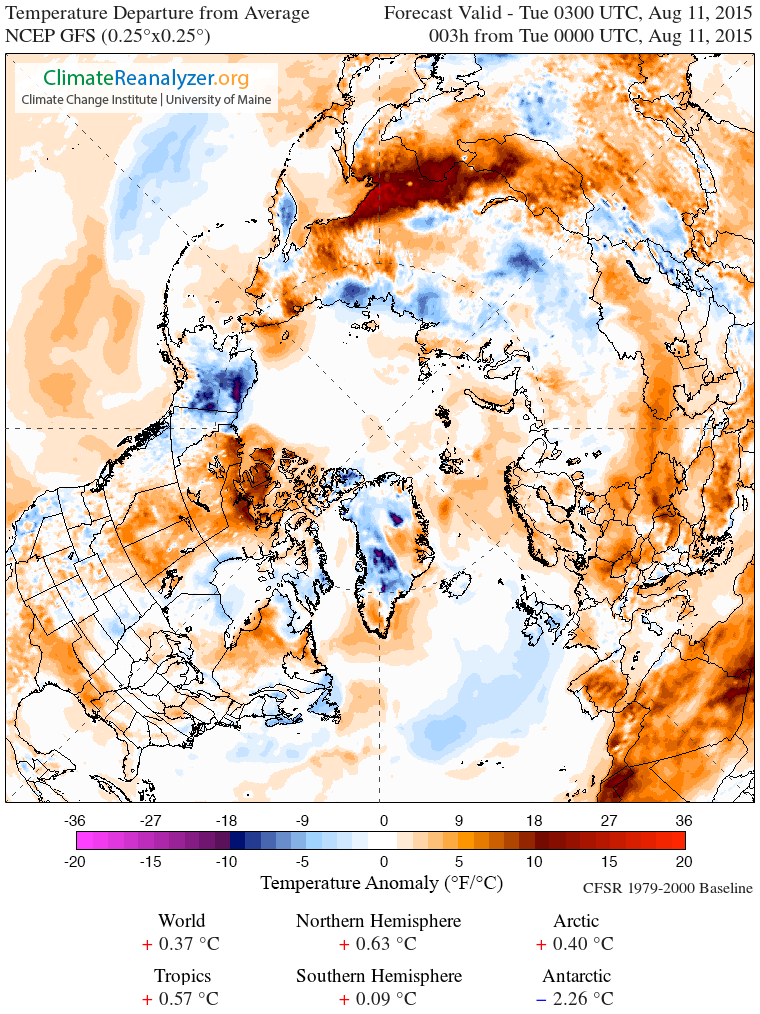
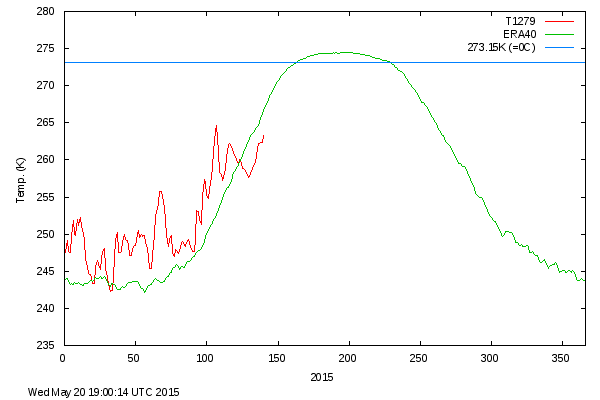
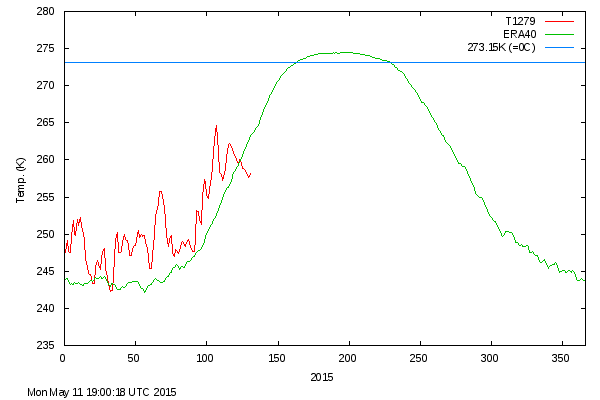
For the past four years, summer melt season temperatures in the Arctic have been well below normal.
unReal-DMI-T2_20150520

No matter how many times experts lie about it, the Arctic is not melting down.

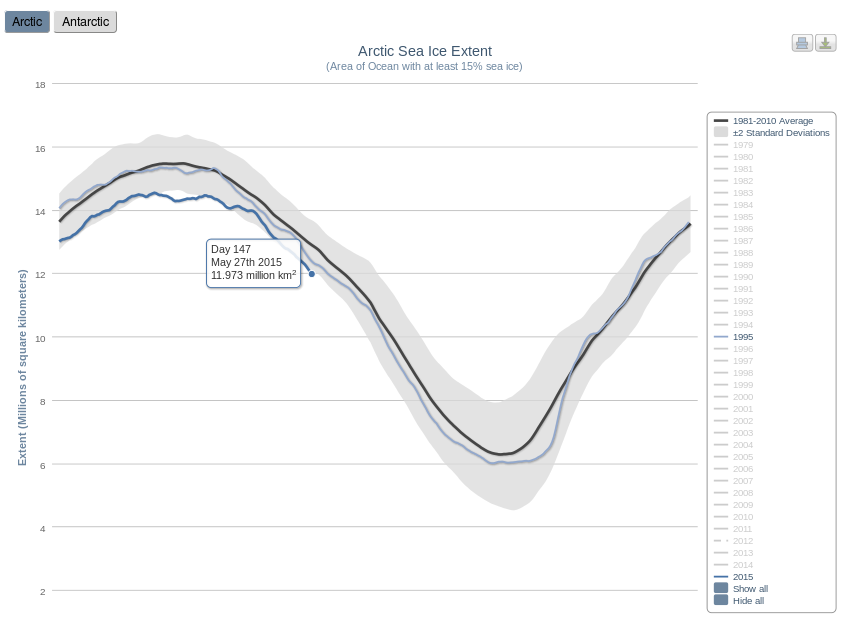
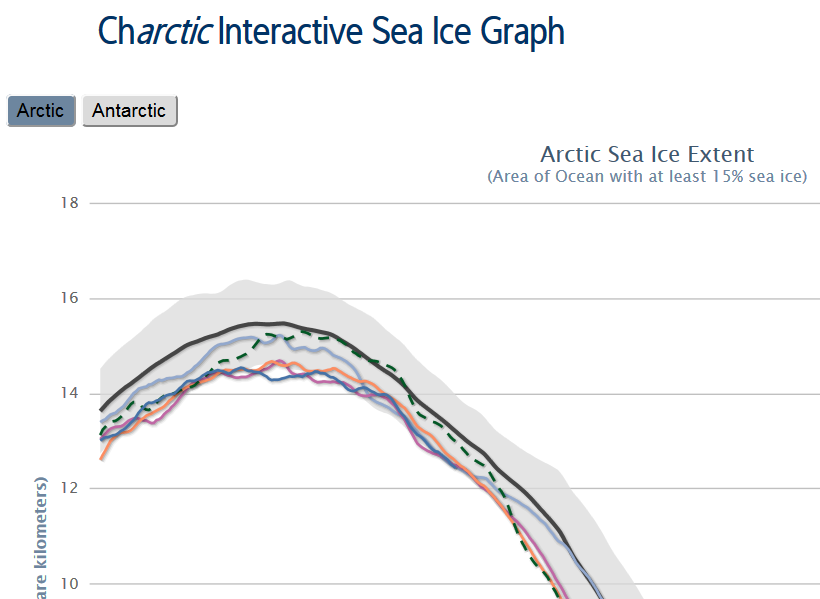
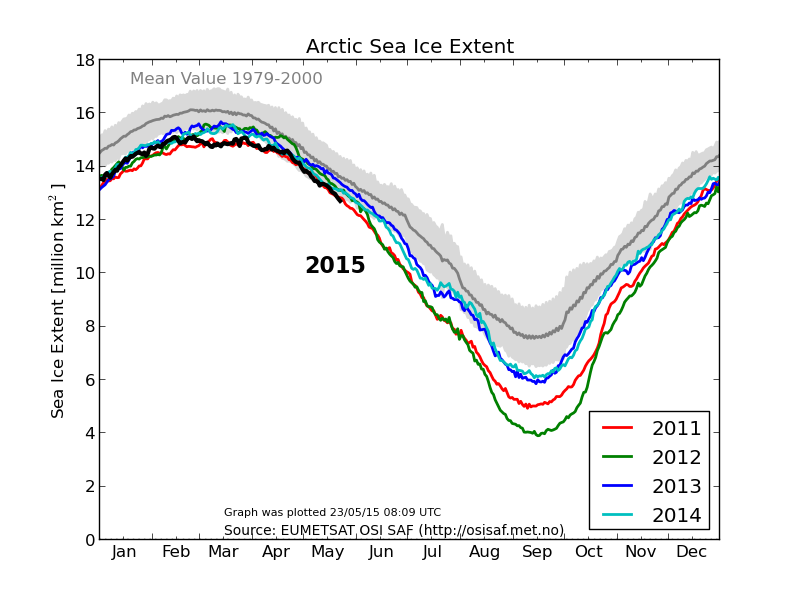
The Arctic, of course, has other ideas and continues to fail to conform to the narrative over at (un)Real Science. Today the NSIDC 5 day average extent Arctic sea ice extent is in actual fact at the lowest level for the time of year since their records began:
2015-05-20_Charctic
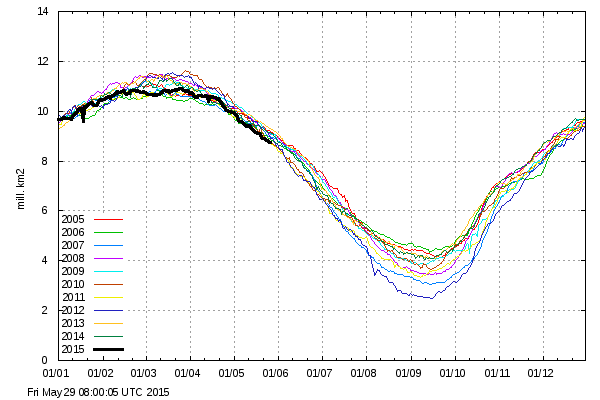
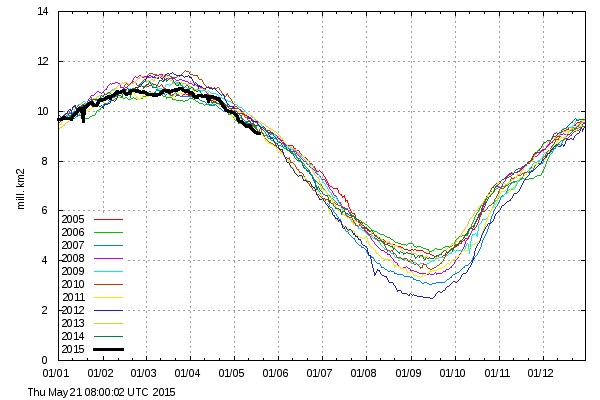
In view of “Steve”/Tony’s headline you may find it surprising that so is his much beloved DMI 30% threshold extent extent metric (displayed in full):
DMI-30-20150521
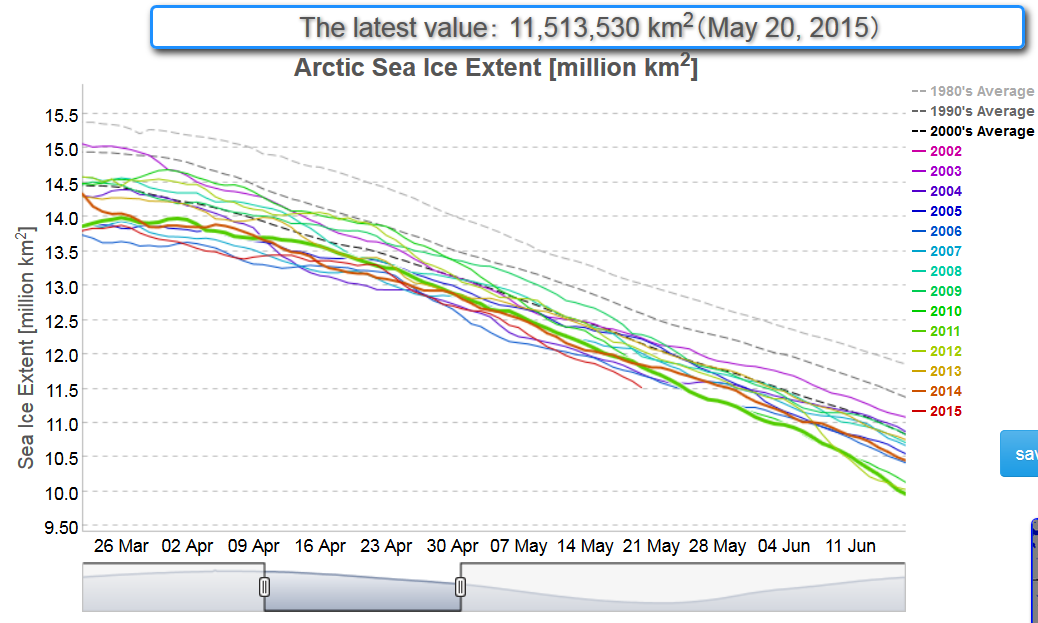
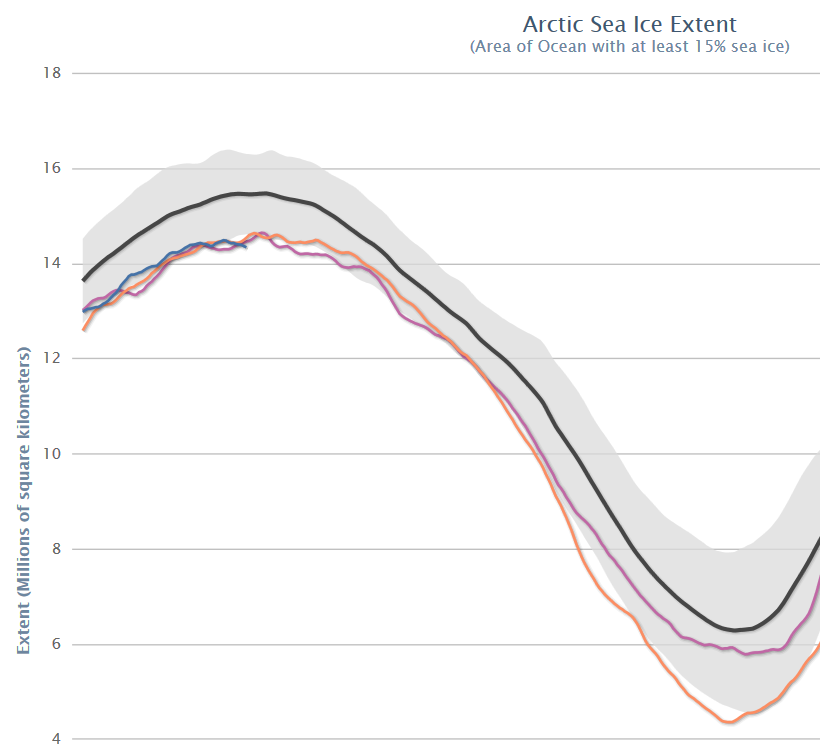
and so is the JAXA 15% extent extent:
JAXA-20150520
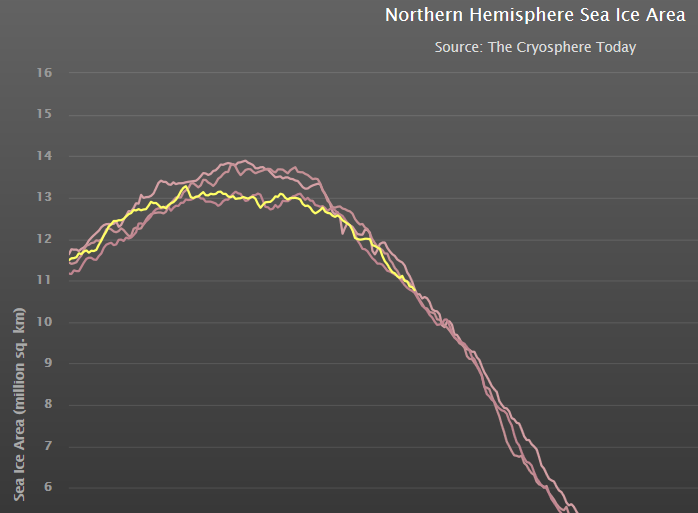
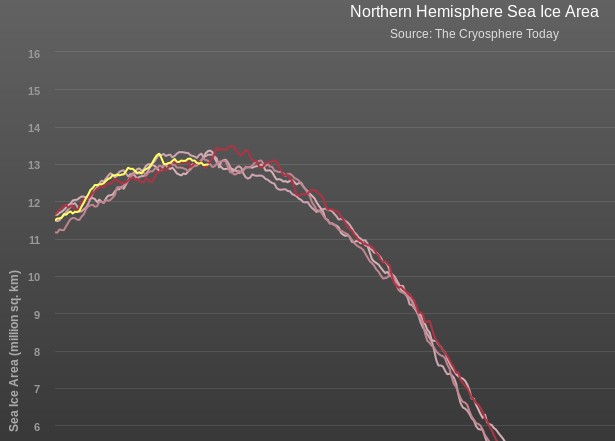
Holding out by the merest whisker (for the moment) is the Cryosphere Today area metric, which is nonetheless lower than on the same day in both 2005 and 2006:
2015-139-CTArea
Quod Erat Demonstrandum?


[Edit – May 23rd 2015]

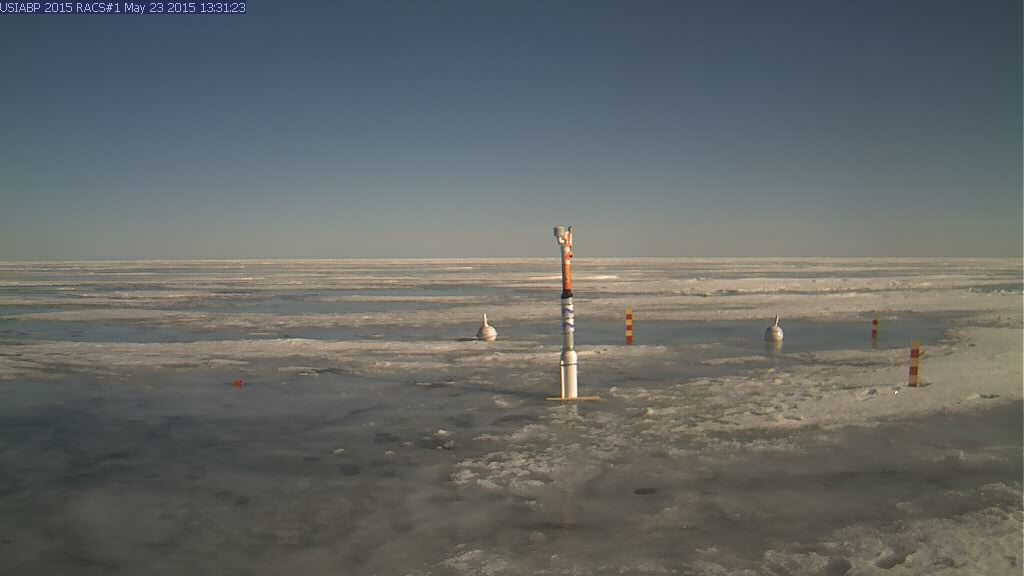
After being used by a polar bear to inspect its feet, the webcam trained on ice mass balance buoy 2015A is now pointing in the right direction again. It reveals that the Arctic is in fact “melting down” even as “Steve”/Tony maintains that it isn’t:

2015A-cam-20150523-2

As if further proof were needed, the DMI 15% threshold extent graph extent is also now clearly lower than previous years at this time:

DMI-15-20150523

The New Normal In The Arctic

The latest headline on the so called “Real Science” blog reads as follows:

The New Normal In The Arctic – Cold Summers

According to “Steven Goddard”:

For the third year in a row, near-polar temperatures have dropped below normal in May.

meant_20150511

Both of the last two years, temperatures stayed below normal for the entire melt season.

The below normal summer temperatures are keeping the ice from melting, and have led to a large expansion in the amount of thick multi-year ice.

However the Arctic is unfortunately failing to cooperate with that narrative. Today we are unhappy to report that Tony Heller‘s favourite Arctic sea ice metric, the Danish Meteorological Institute 30% threshold extent, is at the lowest level ever for the date since their records began:

DMI-30_20150512

What is more, so is the JAXA 15% extent metric:

2015-05-12_JAXA

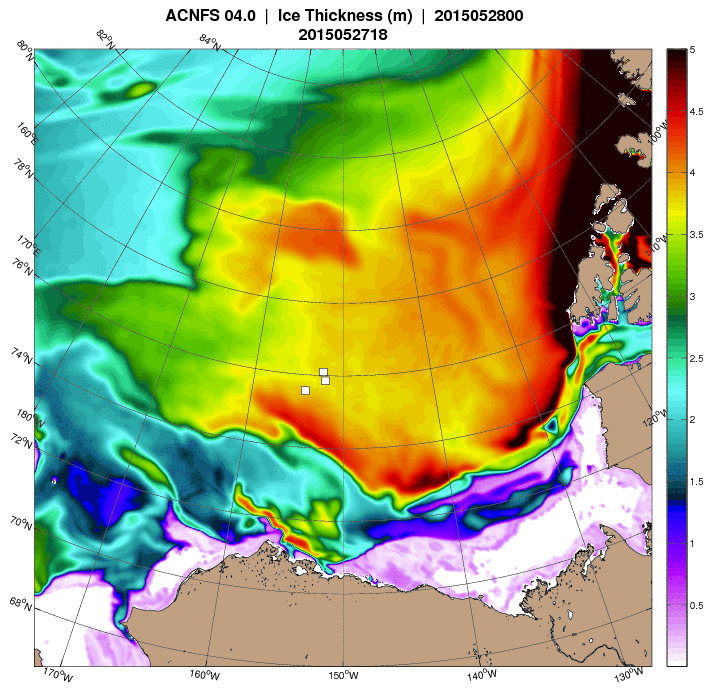
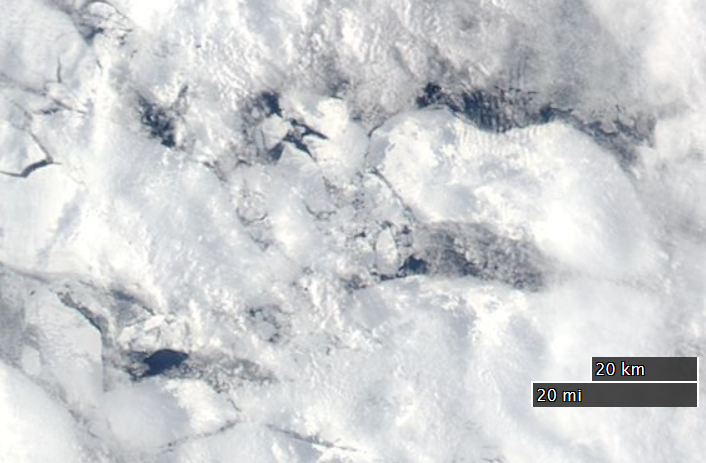
As if that wasn’t enough to be going on with, some big holes have already appeared in the middle of the supposedly multi-meter thick, multi-year sea ice in the Beaufort Sea, well away from the open water already warming up off the Mackenzie Delta:

NASA Worldview “true-color” image of The Beaufort Sea on May 11th, derived from bands 1, 4 and 3 of the MODIS sensor on the Aqua satellite

Gross Deception Measuring Arctic Sea Ice Trends

Our title today is inspired by Paul Homewood, who published an article earlier this week entitled “Why Measuring Arctic Ice Trends From 1979 Is Gross Deception” and which begins as follows:

Officially, we only started monitoring Arctic sea ice extents by satellite from 1979. We know however that this is not the whole story. For instance, HH Lamb tells us:

Kukla & Kukla (1974) report that the area of snow and ice, integrated over the year across the Northern Hemisphere, was 12% more in 1973 than in 1967, when the first satellite surveys were made.

I’ve added that link, since Paul neglected to include it. He concludes:

To draw any conclusions about Arctic ice or temperatures, using data that begins at the coldest point of the cycle is utterly worthless and grossly misleading. But this is climate “science” we are talking about.

Since this is Paul Homewood we are talking about I felt compelled to quibble about his grossly misleading assertion:
 

Us:

Here’s the NSIDC’s chart of Arctic sea ice extent anomalies since 1953:

You will no doubt note that it reveals an overall peak in the late 60s, not the late 70s


Them:

I note they don’t show the 1940’s


Us:

Whereas I note that 1969 is a much juicier looking cherry than 1979. Is 1949 better still?


Them:

They did not have satellite monitoring in 1969.


Even though I had already pointed out the error of his ways to him Paul Homewood decided at this juncture to publish another article, this time entitled “Satellite Monitoring Of Arctic Sea Ice Pre 1979“. It began:

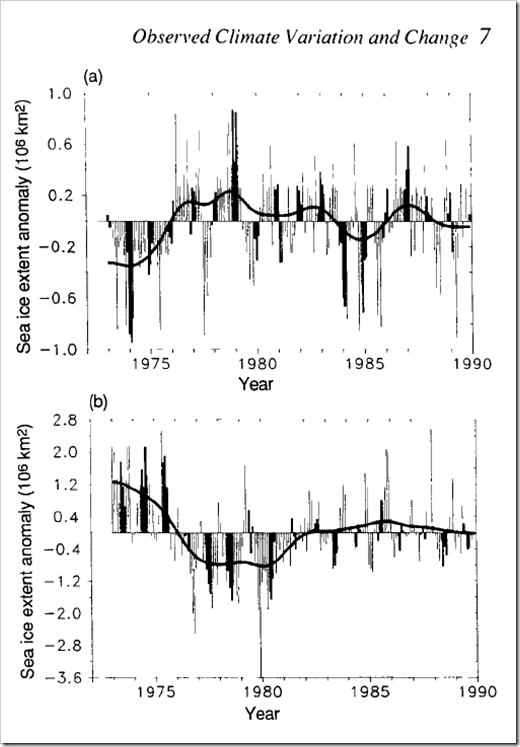
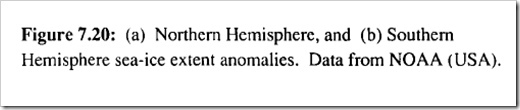
IPCC90-SeaIce IPCC90-Captionhttp://www.ipcc.ch/ipccreports/far/wg_I/ipcc_far_wg_I_full_report.pdf

I was pointing out yesterday why it was so inappropriate to deduce trends in Arctic sea ice, using 1979 as the start point. NSIDC, of course, do this supposedly because that is when satellite monitoring began.

Mr Biscuits, however, reminds me that the 1990 IPCC report showed the above graph, with Arctic sea ice extent back to 1972.


Us:

At the risk of repeating myself, what about this remarkable recent narrative?

https://archive.today/ADq4O#selection-1535.0-1547.25


Them:

They did not have satellites in 1953.


Us:

What the NSIDC actually say regarding their dataset that starts in 1978 is:

“This product is designed to provide a consistent time series of sea ice concentrations (the fraction, or percentage, of ocean area covered by sea ice) spanning the coverage of several passive microwave instruments.”

http://nsidc.org/data/nsidc-0051

Note that there is no mention of “when satellite monitoring began”. See also their Nimbus Data Rescue project, which has data going back to 1964:

http://nsidc.org/data/nimbus/data-sets.html

“Consistent time series” are the operative words


Them:

We’ll keep you posted!

IPSO Powerless to Prevent The Great White Con

In a blog post earlier this year entitled “IPSO, the press regulator created in the aftermath of the Leveson Inquiry, is not up to task” Bob Ward, Policy and Communications Director of the Centre for Climate Change Economics and Policy at the Grantham Research Institute, made a prophetic statement:

IPSO is also currently considering a complaint I made against another article by David Rose in The Mail on Sunday in September 2014 which wrongly suggested that Arctic sea ice extent has stopped declining. I am not optimistic that my complaint will be upheld, even though the newspaper again breached Section 1(i) of the Editors’ Code of Practice.

IPSO have now published their ruling on that complaint, and conclude that:

17. The complaint was not upheld.

Remedial Action Required: N/A

Date complaint received: 17/09/2014

Date decision Issued: 16/02/2015

By all means read the ruling in full, but here are our edited highlights:

13. The article presented the author’s view that forecasts regarding the melting of Arctic ice had overestimated the rate of decline. The complainant did not dispute that measures showed that the Arctic ice extent had increased over the last two years. The article had made clear that the long-term trend still showed a decline, and the coverage had included commentary from a number of scientists, expressing a variety of views on the matter, including one who had stated that he was “uncomfortable with the idea of people saying the ice had bounced back”, and warned against reading too much into the ice increases. The article had made clear that scientific opinions regarding the significance of the most recent data varied. In this context, the omission of the information that the measure in 2012 had been the lowest on record, and that 2014 had still been the seventh lowest since records began, was not significantly misleading. The article did not suggest that it had been established as fact that the long-term decline in Arctic sea ice had reversed.

I highlight that paragraph in particular because in our coverage of David Rose’s article here at Great White Con we have disputed that “measures showed that the Arctic ice extent had increased over the last two years”. I wonder what IPSO might make of that information?

The Guardian have recently published an article by Dana Nuccitelli on the IPSO ruling entitled “Ipso proves impotent at curbing the Mail’s climate misinformation“, which now contains this addendum:

We have appended the following response from Rose:

“Like anyone who challenges aspects of the so-called ‘consensus’ over climate change, I’ve grown inured to being called a ‘denier’, as some of the commenters ‘below the line’ claim I am here. It is with some weariness that I must point out, as I did in the article that started this fuss, that I accept that the long-term Arctic ice trend is down, that carbon dioxide of human origin is an important cause of this trend, and that, unchecked, it will lead eventually to ice-free Arctic summers – albeit perhaps not for decades.

“But to be attacked for something I didn’t actually write is unfortunate. The fact remains there are large uncertainties and intense debate among scientists on this and other climate change topics, even if, as has been said, 97 per cent agree that the world is warming and that humans are partly to blame. But that doesn’t take us very far, and there are important differences of opinion. Professor Judith Curry isn’t a ‘contrarian’ but a very distinguished scientist and ice expert with a long record of peer-reviewed publications, though she happens to disagree with Mr Nuccitelli.

We feel compelled to point out to David Rose once again that he actually wrote:

The Arctic ice cap has expanded for the second year in succession.

and that this is both inaccurate and significantly misleading.

Mr. Rose’s comments are also of interest to us because despite recently bringing her attention to the matter once again Professor Judith Curry’s personal blog still contains the inaccurate and/or misleading information first published by the Mail on Sunday on September 8th 2013 in an article by David Rose entitled “And now it’s global COOLING! Record return of Arctic ice cap as it grows by 60% in a year“.

What sort of “very distinguished scientist and ice expert” would continue to proudly proclaim the following inaccurate information after even the Mail on Sunday had retracted it?

2015-04-19_1251_JudyCurry


Some Statistics for the 2015 Economist Arctic Summit
Professor Jason Box was good enough to add some expert commentary to our recent story about a large calving of the Jakobshavn Glacier last month. Consequently we have just watched his presentation to the 2015 Economist Arctic Summit at the Hotel Bristol in Oslo with much interest. Here are our edited highlights from the conference’s Twitter feed:


Here are some relevant Arctic sea ice metrics. We will continue to update them as the latest figures arrive throughout the rest of today:

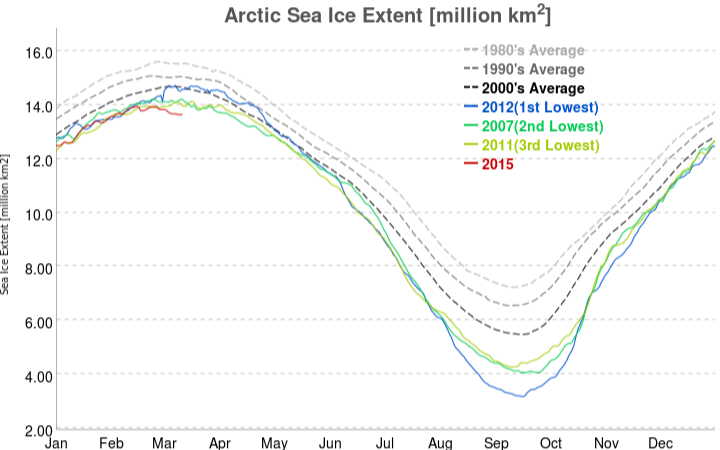
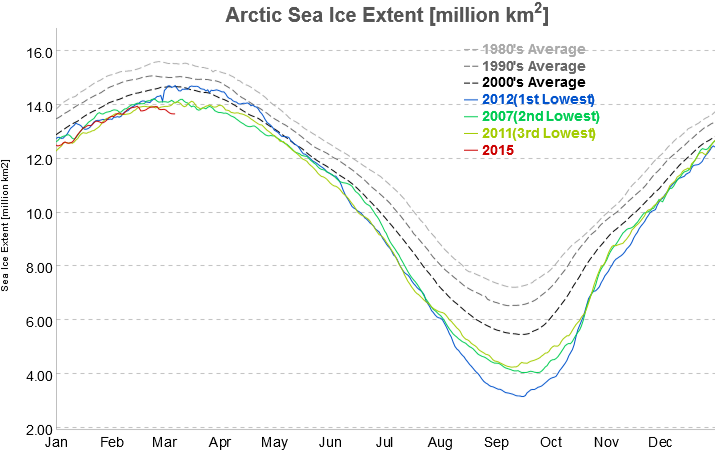
IJIS/JAXA daily extent: 13,648,280 km² – Lowest ever level for the date in records going back to 2003

vishop_sic_20150311
 

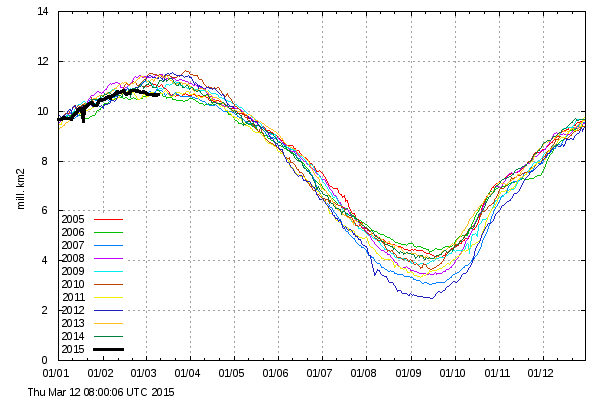
DMI “30%” daily extent: 10,676,900 km² – Lowest ever level for the date in records going back to 2005

DMI-30-icecover_20150312
 

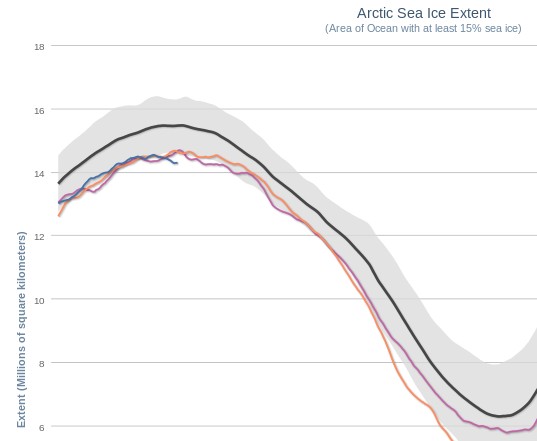
NSIDC daily extent: 14,330,000 km² – Lowest ever level for the date
NSIDC 5 day average extent: 14,280,000 km² – Lowest ever level for the date in records going back to 1979
Charctic-201503011Crop
 

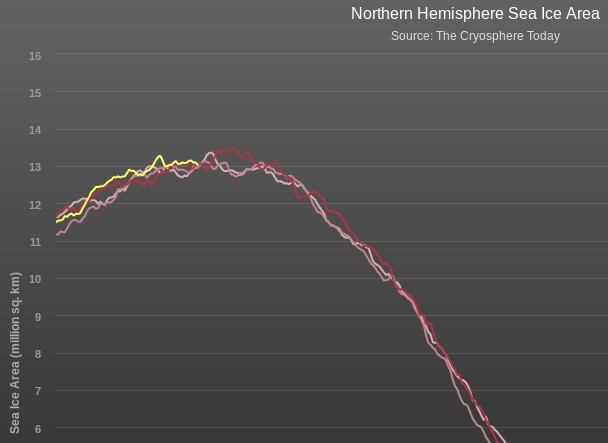
Cryosphere Today daily area: 12,984,410 km² – Lowest ever level for the date in records going back to 1979
CTArea-2015-Day69

Arctic Sea Ice Area Lowest Ever (For the Date!)

As we reported on February 18th, some of the Arctic sea ice extent metrics reached the lowest levels for the date in their respective histories quite some time ago. Today though, we’re looking at a full house. The daily NSIDC and IJIS extent numbers have both been at all time lows for the date for quite some time now. Here’s how the NSIDC 5 day average extent looks at the moment:

2015-03-06_NSIDC

and here’s the IJIS/JAXA daily extent:

vishop_sic_extent-20150307

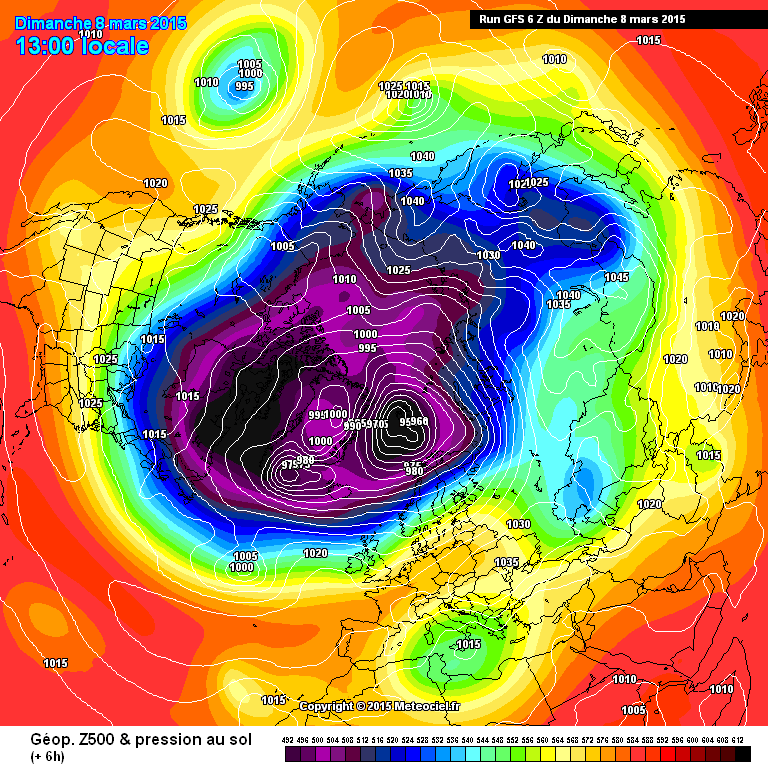
Meanwhile a series of storms in the North Atlantic have been bringing large surf to the shores of the Western United Kingdom, and battering the edge of the sea ice in the Greenland and Barents Seas. Here’s how GFS looks currently, as visualised by MeteoCiel:

gfsnh-20150308-6

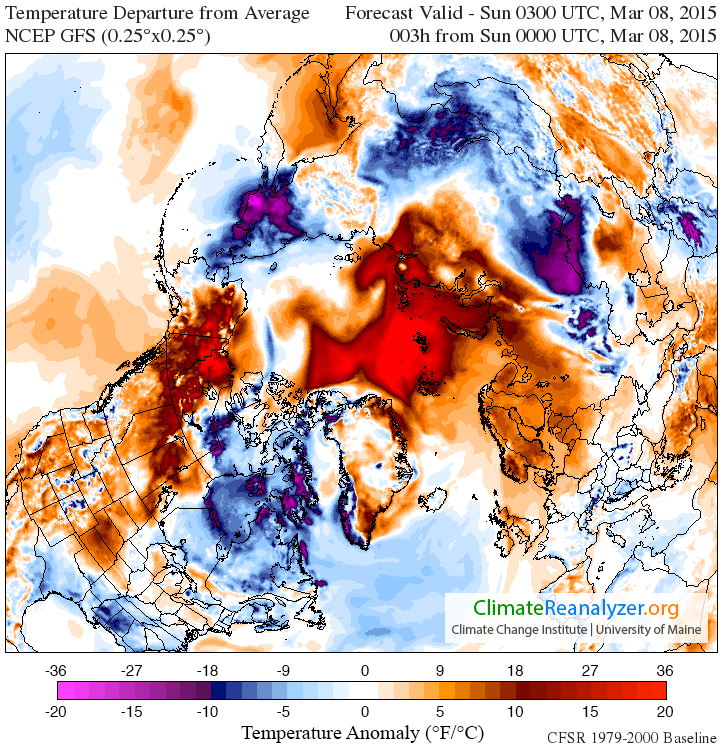
In addition this has  resulted in warm air from further south being funnelled into the high Arctic, so much so that the surface temperature anomalies currently look like this:

CCI-AnomT-20150308+003

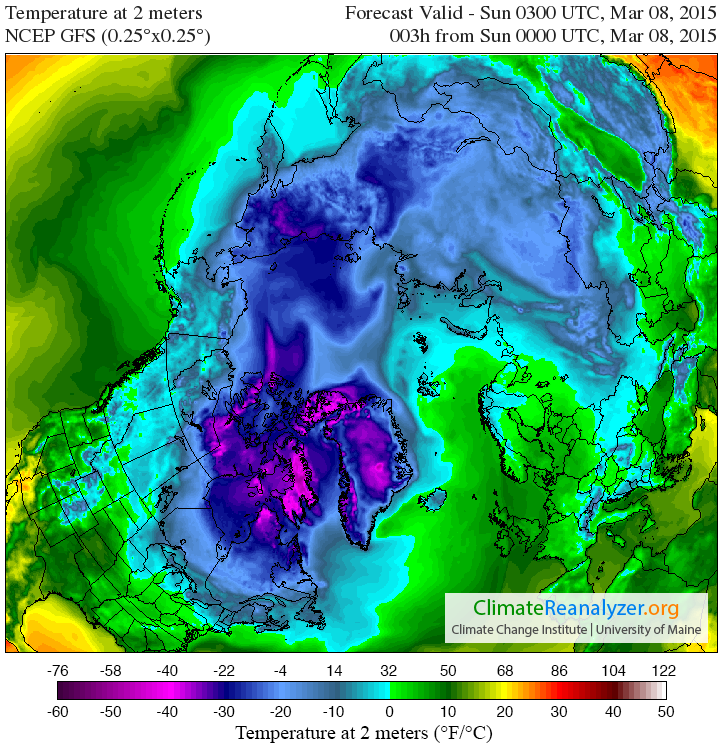
whilst the temperatures 2 metres above the surface of the Arctic look like this:

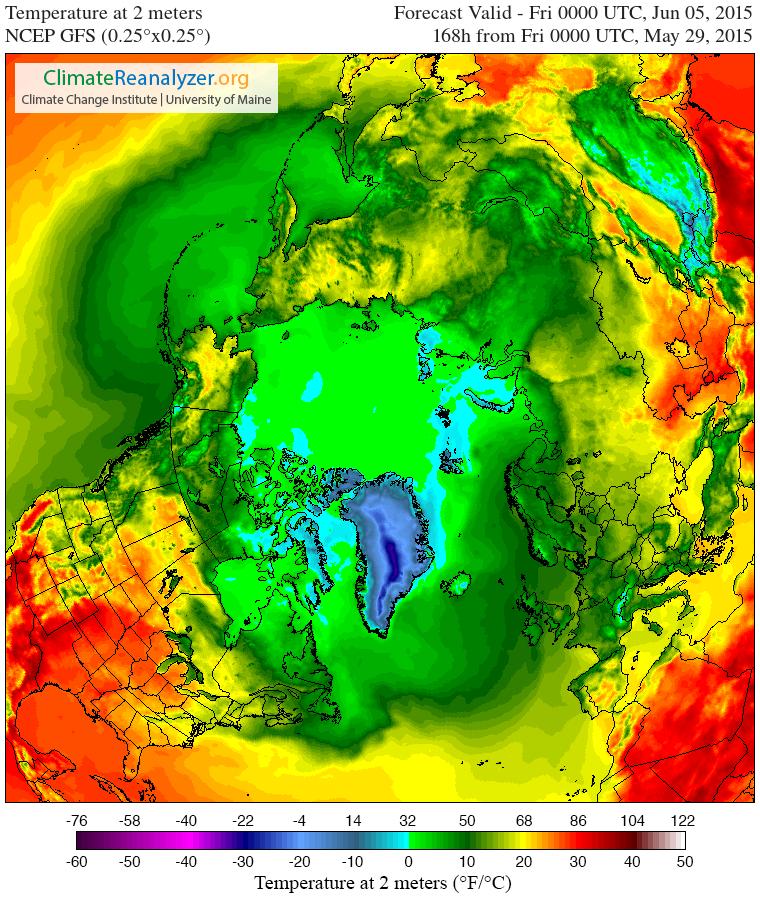
CCI-Temp2m-20150308+003

If you look closely you’ll see that air temperatures 2 metres above the North Pole are currently similar to those around the shores of the Great Lakes of North America.  As a result of all this atmospheric activity today we bring you news that both the Danish Meteorological Institute “new” 15% extent:

DMI-15-icecover_20150307

and “old” 30% metrics:

DMI-30-icecover_20150308

have now joined the club.

The Cryosphere Today area metric has been holding out against the trend in sea ice extent for weeks, but we can confidently predict that when their next update is released it too will also reveal the lowest ever Arctic sea ice area for the 65th day of the year, in records going back to 1979. Here’s how their graph looks currently:

CTArea-2015-Day64


The House of Lords Responds to a Changing Arctic

The United Kingdom’s House of Lords are an unlikely bunch to be bundled under the banner of “alarmist” or even “warmist”. Nevertheless their Select Committee on the Arctic has just published a report entitled “Responding to a Changing Arctic“, and in this video the chairman of that committee, Lord Teverson, briefly outlines their findings:


Note that he starts by saying that:

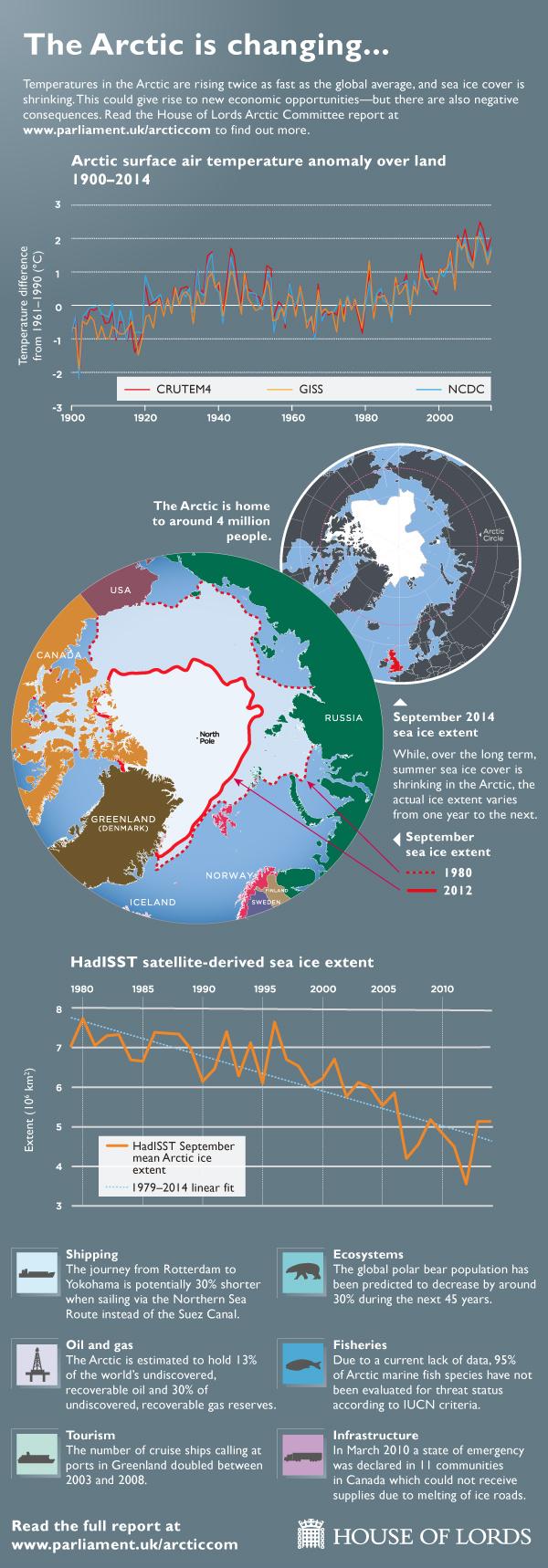
Absolutely the obvious thing first of all is that with the temperatures going up [in the Arctic] at twice the rate of the rest of the world the thing that everybody is seeing is reduction in sea ice which has reduced quite substantially over recent years, and of course a lot of the Arctic is land and we have the melting ice on Greenland particularly, which is causing sea level rises in the rest of the world.

In order to get that message across the committee has also produced the following infographic:

LordsInfographic
 
which shows how the temperature over land has been increasing whilst the sea ice extent in the Arctic has been declining.  The committee have also made all the learned evidence they received whilst producing their report publicly available. Professor Andy Shepherd from the University of Leeds told the committee that:

The majority of sea ice changes witnessed in “the past 50 or 60 years” could be attributed to greenhouse gas emissions and their effect on temperatures in the Arctic region.

and:

Suggested that the length of the solar melt season had increased by around five days per decade, causing additional melting and retreat of the ice.

How strange then, that David Rose made no mention of any of this when reporting Prof. Shepherd’s views in his “Myth of Arctic meltdown” article of August 31st 2014?

How strange also, that Christopher Booker maintained in his “The fiddling with temperature data is the biggest science scandal ever” article of February 8th 2015 that:
The ice-melt is not caused by rising global temperatures at all.

Shock News – IJIS Arctic Sea Ice Extent Lowest Ever!

You can of course argue that this is mere cherry picking on our part,  not to mention the slight economy with the truth in our necessarily punchy headline today. Nonetheless it is an actual fact that the IARC-JAXA Information System AMSR2 Arctic sea ice extent metric for February 17th 2015 reads 13,770,330 km² which is the lowest ever for the day of the year in a record going back to 2003. This follows a remarkably large fall (for the time of year) of  113,505 km² from yesterday’s reading of 13,883,835 km². Here’s our evidence:
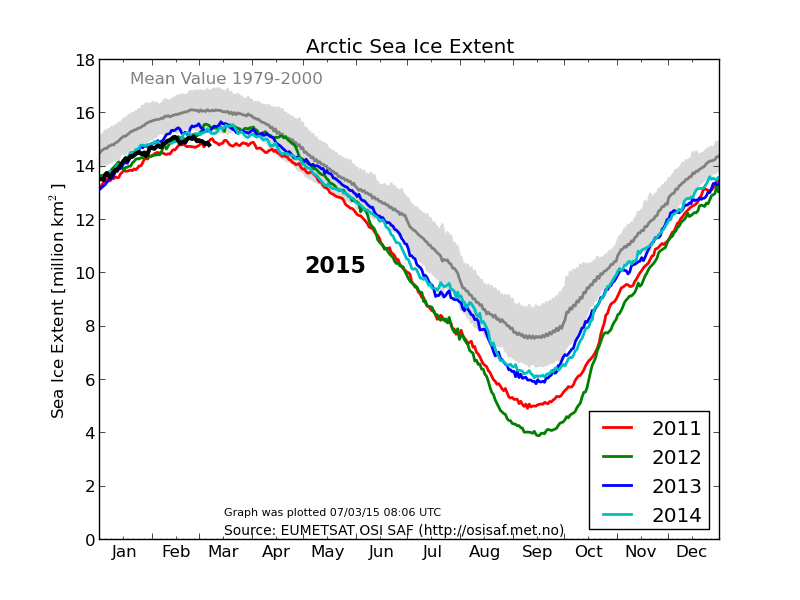
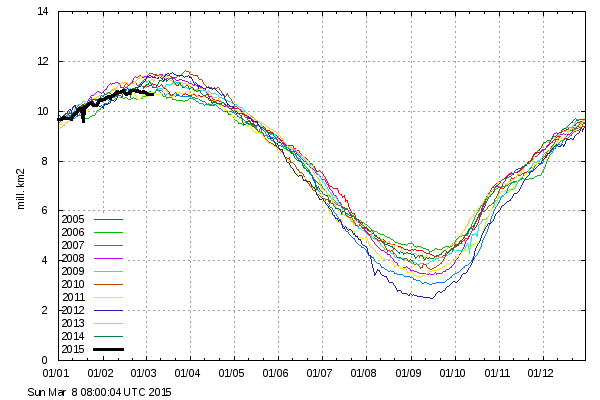
IJIS_Sea_Ice_Extent_N_20150217

If you prefer to look at numbers instead of pictures then by all means try here instead for proof of the latest shock news from the Arctic.

If instead you prefer moving pictures, here’s an animation based on high resolution AMSR2 data from the University of Hamburg that may provide a few clues about how all this came about:

Can you see how the recent storms in the North Atlantic have “pulled” and then “pushed” the sea ice to thisese new record lows?

Please also note this warning message on the IJIS “Arctic Sea Ice Monitor” web page:

Thank you for visiting our website.

This site will be closed on February 22, and might be unstable from February 15, 2015.

New sea ice monitor website will be coming soon. Stay tuned.

Meanwhile, almost equivalent information can be available at:

JAXA:

http://kuroshio.eorc.jaxa.jp/JASMES/daily/polar/index.html
http://kuroshio.eorc.jaxa.jp/JASMES/climate/index.html

NIPR: National Institute of Polar Research , Japan

https://ads.nipr.ac.jp/vishop/vishop-monitor.html?N
https://ads.nipr.ac.jp/vishop/vishop-extent.html?N
https://ads.nipr.ac.jp/vishop/data/graph/Sea_Ice_Extent_N_v2.png
https://ads.nipr.ac.jp/vishop/data/graph/Sea_Ice_Extent_N_v2_L.png

New Antarctic Sea Ice Resources

In the Arctic the refreeze is slowing down as the March maximum extent approaches. Meanwhile in the southern hemisphere Antarctic sea ice extent has taken a tumble as the annual minimum extent approaches.

Over the long cold Arctic winter “Wipneus” of ArctischePinguin fame has been porting his northern hemisphere regional sea ice area/extent methodology to cover the South Pole as well. We are pleased to be able to reveal the fruits of his labours on our new regional Antarctic Sea Ice Graphs page. The ultimate source of the information is the University of Hamburg’s sea ice concentration data based on a 3.125 km grid that uses data from the from the AMSR2  instrument on board the Japan Aerospace Exploration Agency’s SHIZUKU satellite. Here’s an overview of Antarctic sea ice area:

2015-02-07-Ant-Area and here’s a close up on the sea ice extent in the Bellingshausen and Amundsen Seas region, where what sea ice there is helps buttress the West Antarctic Ice Sheet:

2015-02-07-West-Extent

In future we will also be bringing you satellite images from Antarctica. By way of example, here’s the latest “Shock News!!!” from the Antarctic, courtesy of LandSat 8:

I
NASA report that:

While large icebergs calve regularly from fast-flowing ice shelves in West Antarctica, the coast of cooler, drier East Antarctica tends to be less active. That made it a mild surprise when a 70-square-kilometer chunk of ice broke off from the King Baudouin Ice Shelf in January 2015. The last time that part of King Baudouin calved such a large iceberg was in the 1960s.

and you can track the current position of the latest large chunk of ex ice shelf on their WorldView web site:

The recently calved King Baudouin Ice Shelf on February 3rd 2015

Thanks also to “Arcticio” from the Arctic Sea Ice Blog who pointed me in the direction of PolarView, where it was remarkably easy to locate this Sentinel-1A synthetic aperture radar image of the large iceberg in question on January 30th 2015:

RoiBaudouin-600

Mark Serreze and the Arctic Sea Ice Death Spiral

Anthony Watts has been telling porky pies again. He claims his blog is “The world’s most viewed site on global warming and climate change”, which may or may not be true. However Anthony published an article earlier today entitled “NSIDC Mark Serreze’s sea ice ‘death spiral’ no longer ‘screaming’ on the way down, now termed to be ‘erratic & bumpy’“, which most certainly contains an inaccuracy or two.

Here’s how Anthony introduces his “argument”:

From the University of Colorado at Boulder, where they are apparently attempting to explain away why Arctic sea ice isn’t living up to previous wild claims such as those made by Dr. Mark Serreze of the National Snow and Ice Data Center, who famously said that the Arctic is in a ‘Death Spiral’ in response to my writing on WUWT:

Exclusive: New NSIDC director Serreze explains the “death spiral” of Arctic ice, brushes off the “breathtaking ignorance” of blogs like WattsUpWithThat

Hence we are proud to be able to bring you this exclusive report on the “breathtaking ignorance” of the WattsUpWithThat blog! I’ve recently been publicly castigated on Twitter for our tongue in cheek “Us and Them” exposes:

I remain unrepentant, but just for once I’ll maintain a more conventional narrative. Anthony Watts continues his argument as follows:

Serreze also famously said two years earlier that “The Arctic is screaming,” and that summer sea ice may be gone in five years, in an interview with the unquestioning and compliant Seth Borenstein at the Associated Press:

He helpfully highlights in yellow what Seth Borenstein said Mark Serreze said way back when in 2007. Note that no “predictions” or even “projections” are mentioned. So where do you suppose Tony’s “summer sea ice may be gone in five years” came from?

Here we provide our own screenshot of the National Geographic article in question, grabbing a slightly larger area of the screen, and highlighting a section slightly further down the page:

Selection_387

For those who have difficulty reading small print, such as Anthony Watts and his merry band of unquestioning and compliant followers over at WUWT, here is the unexpurgated transcript of our highlight in large letters:

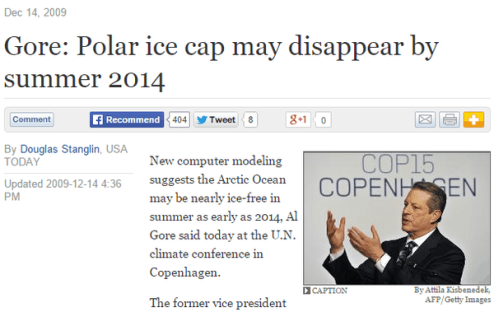
NASA climate scientist Jay Zwally said: “At this rate, the Arctic Ocean could be nearly ice-free at the end of summer by 2012, much faster than previous predictions.”

Note firstly that this is a projection rather than a prediction, and secondly that it was reportedly uttered by Jay Zwally of NASA, not Mark Serreze of NSIDC!

Quod erat demonstrandum, and if so one cannot help but wonder how many similar blunders Mr. Watts has made over the course of his illustrious publishing career?

As luck would have it I interviewed Mark Serreze, who is currently director of the NSIDC, not so very long ago. I enquired whether the “Death spiral” story was apocryphal or not. Mark told me he did recall saying something along those lines to a journalist, but that he couldn’t recall the exact circumstances. I also asked if he was willing to make any “predictions” about the decline of sea ice in the Arctic. Mark told me that he still stood by his 2030 estimate for the onset of a seasonally ice free Arctic, although:

Most models say more like 2050

Doing my own due diligence (unlike the readers of Watts Up With That!) the earliest reference I could find to such a “prediction” involved a telephone interview much like the one I had just conducted. In an article dated August 27th 2008 the Reuters environment correspondent reported that:

This year’s Arctic ice melt could surpass the extraordinary 2007 record low in the coming weeks. Last year’s minimum ice level was reached on September 16, according to the National Snow and Ice Data Center.

Even if no records are broken this year, the downward trend in summer sea ice in the Arctic continues, the Colorado-based center said. Last year’s record was blamed squarely on human-spurred climate change.

“No matter where we stand at the end of the melt season it’s just reinforcing this notion that Arctic ice is in its death spiral,” said Mark Serreze, a scientist at the center. The Arctic could be free of summer ice by 2030, Serreze said by telephone.

So there you have it. Unless someone can come up with some evidence to the contrary (unlike Watts and the Watties), it looks to me like Mark Serreze has been consistently saying for many years:

The Arctic could be free of summer ice by 2030

or words to that effect. Expect more from me on my interview with Mark Serreze in due course.

 
[Edit – February 1st]

Without a word of thanks to yours truly Anthony Watts has now published an “Update” to his original article. The salient bits read as follows:

The original article implied that NISDC’s Mark Serreze made the statement about sea ice being gone in 5 years, ending in 2012, when it was actually NASA’s Jay Zwally that made the claim in the National Geographic article. The language has been clarified in the paragraph to reflect this.

The offending paragraph now reads:

Serreze also famously said two years earlier that “The Arctic is screaming,” and a Arctic research associate, Jay Zwally of NASA, said in the same article that summer sea ice may be gone in five years, in an interview with the unquestioning and compliant Seth Borenstein at the Associated Press.

Anthony obviously hasn’t taken on board my helpful remarks about the difference between a prediction and a projection, and hence he waxes lyrical about how the sea ice in the Arctic didn’t vanish in the summer of 2012. He signs off by saying:

To my knowledge, Dr. Serreze has never publicly corrected the National Geographic article claim of 2012 being the ice-free year that wasn’t, suggesting he endorsed the idea at the time.

Have I got news for you Anthony. It doesn’t suggest anything of the kind! In addition to suggesting strange things to the suggestible Mr. Watts has so far neglected to answer this question posed by a commenter on the article in question:

I look forward to seeing any substantive replies to Jim Hunt’s clarifying post.

and so far he has also neglected to publish my response to that question. It included this video of my namesake, James Hunt, conversing with a couple of clueless mechanics:

Anthony Watts has also thus far neglected to explain how he inexplicably (in all the circumstances) successfully attributed the supposed 2012 “prediction” to Jay Zwally in this 2012 article, that also included a highlighted screenshot much like mine above:

In four months, just 132 days from now at the end of summer on the Autumnal Equinox September 22nd 2012, the Arctic will be “nearly ice free” according to a prominent NASA scientist in a National Geographic article on December 12, 2007.

Quod Erat Demonstrandum?

“There’s no answer to that”!

[/Edit]