Tag Archives: Concentration

New Year 2016 Arctic Meltdown Update

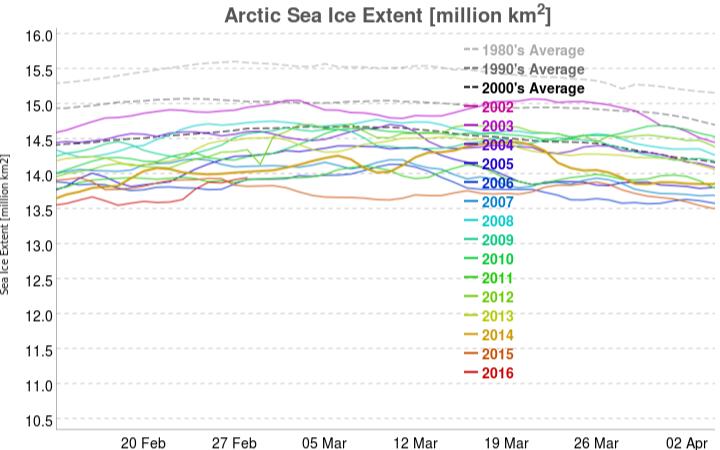
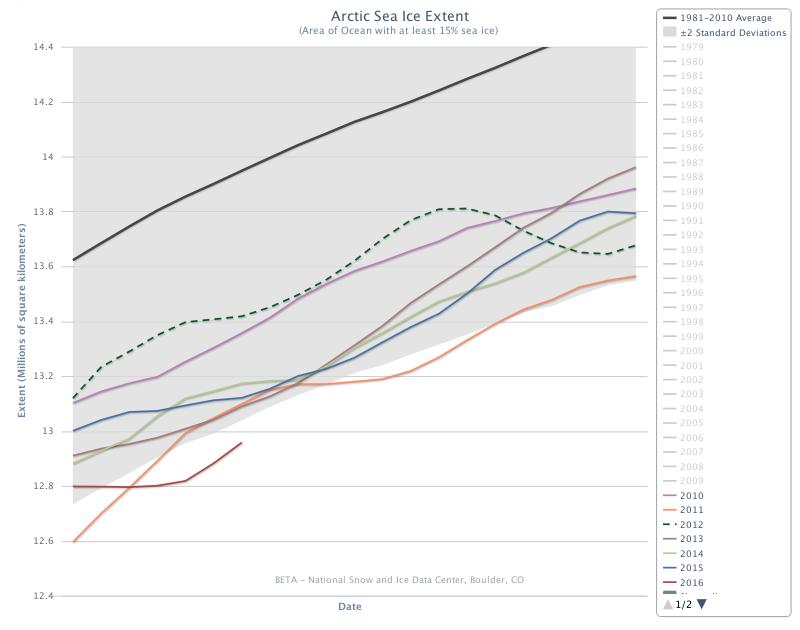
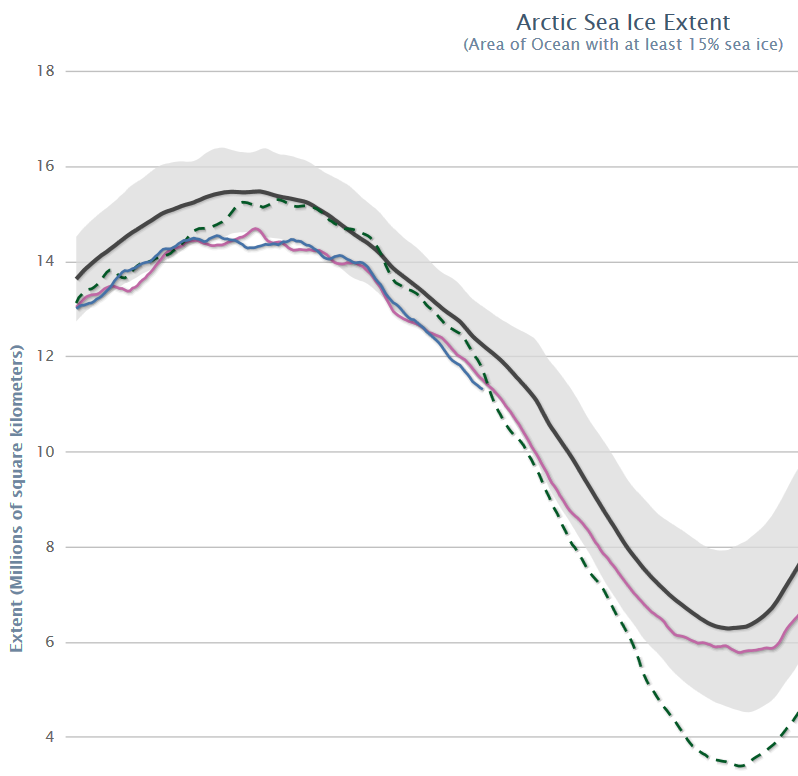
On January 1st 2016 the 15% concentration threshold daily Arctic sea ice extent metric reported by the United States National Snow and Ice Data Centre reached the lowest ever level for the first day of any year since their satellite derived records began in 1979. A couple of days later the more familiar 5 day trailing averaged extent also reached the lowest ever level for the date:

Charctic-20160107

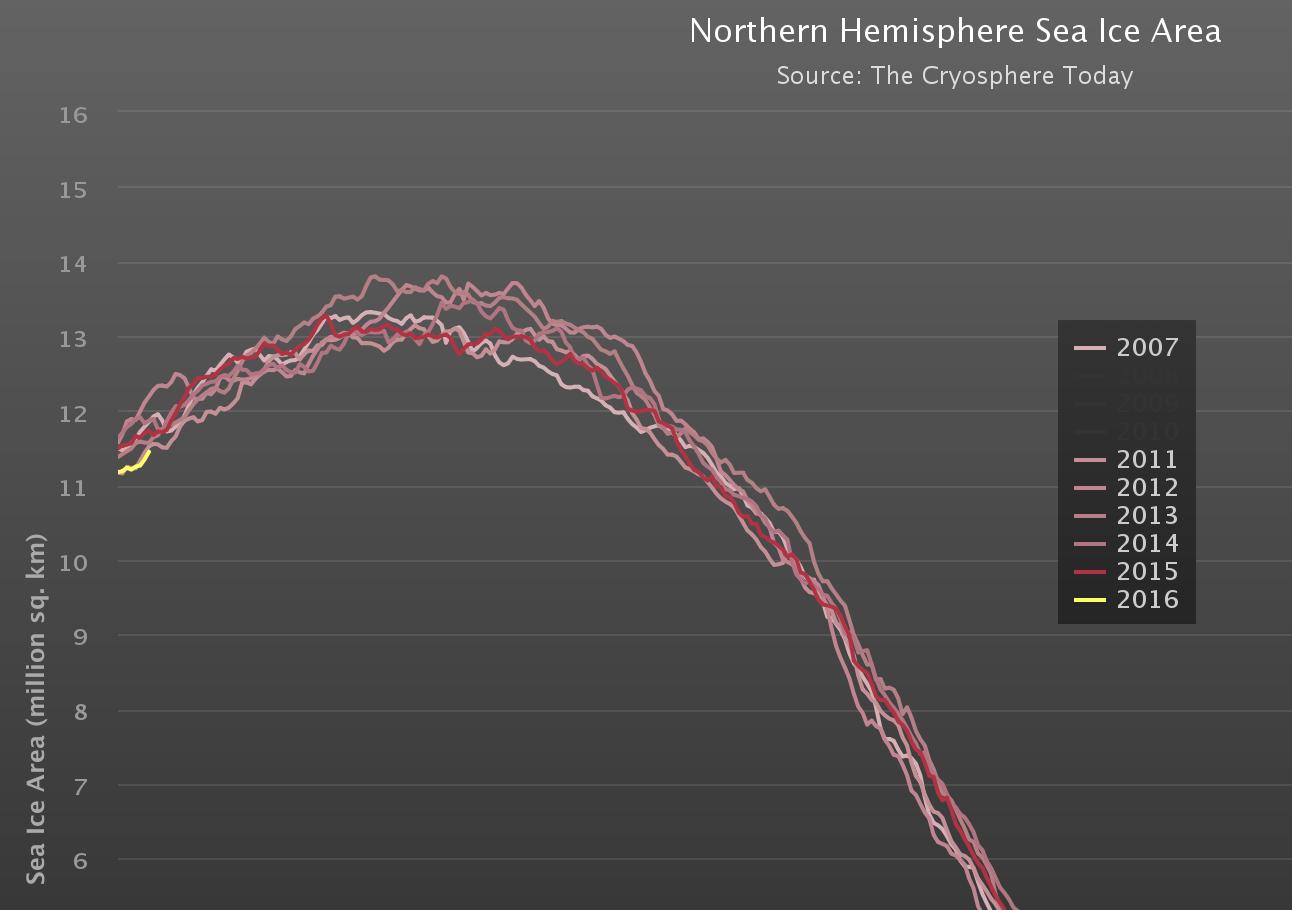
Cryosphere Today have been somewhat sluggish about updating their records of Arctic sea ice area, but have at long last revealed that their metric is now also at the lowest ever level for the date:

CT-NH-20160107

Meanwhile Great White Con commenter “Just A Thought” states that:

I find it hard, with what I do have access to, to see why everyone is so worried that the Arctic is melting.

He or she has evidently only had access to the propaganda perpetrated by Tony Heller (AKA “Steve Goddard”) on his so called “Real Climate Science” blog. Mr. Heller’s latest Arctic pronouncement on December 31st 2015 is entitled “Arctic Meltdown Update” and claims that:

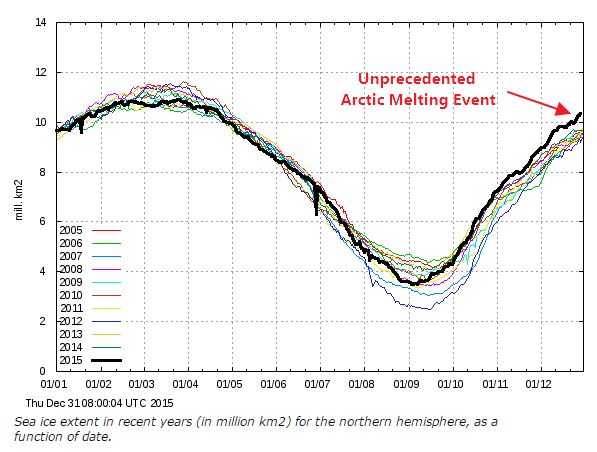
Experts say that a terrifying storm melted the North Pole yesterday. This unprecedented melting event has caused Arctic ice to reach its highest December extent in over a decade.

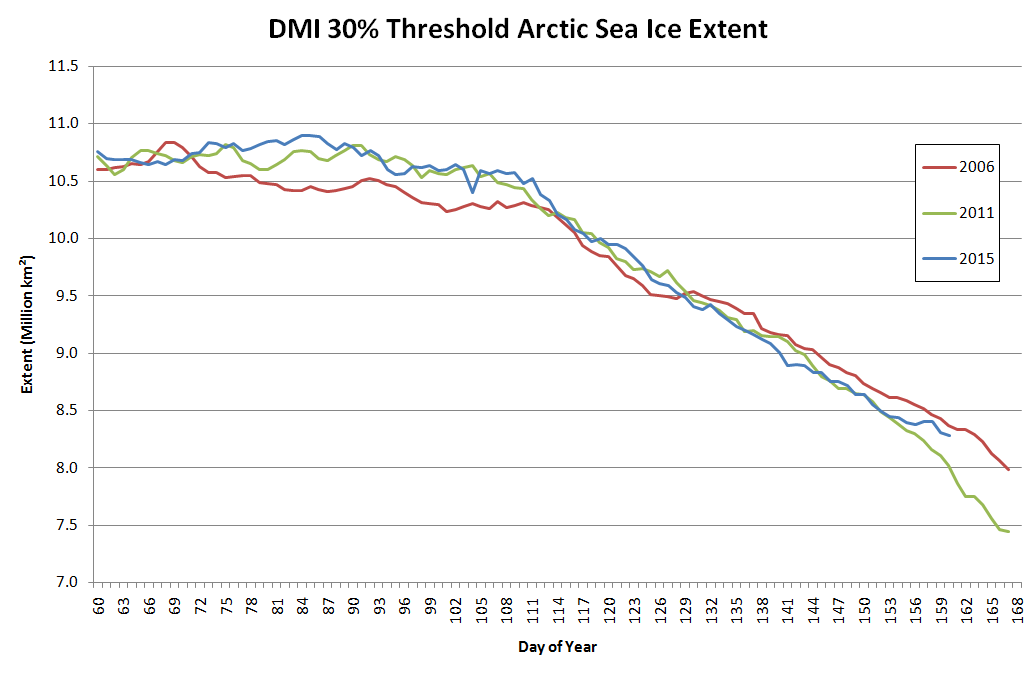
justifying that comment with the following graph of his beloved (albeit deprecated) 30% concentration threshold DMI extent metric:

DMI-30-2015-12-31-

Here’s a video revealing the effect of the recent “terrifying storm” on the sea ice on the North Atlantic side of the Arctic:

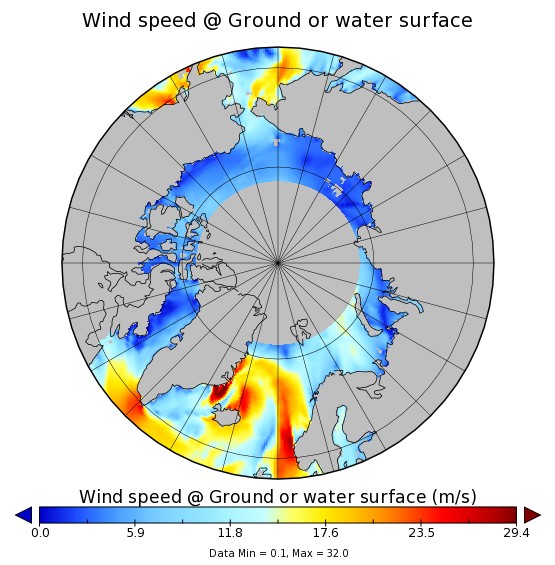
As you can see the ice at the North Pole didn’t melt away. However the ice edge did retreat in the immediate aftermath of what is referred to here in the United Kingdom as “Storm Frank“. Frank led to lots of flooding in the North of the nation, and also to some strong winds inside the Arctic Circle:

WW3Wind-20151230-1400

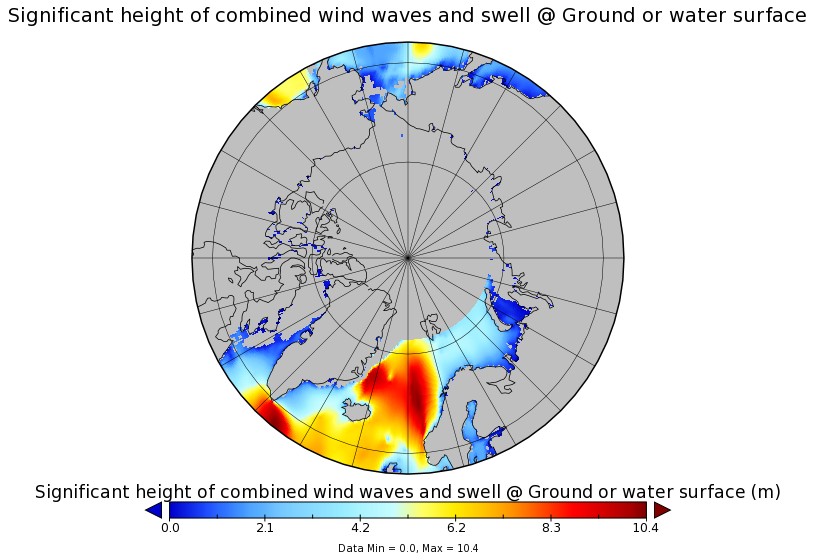
Those winds, travelling over a long stretch of open ocean, produced some pretty significant waves, speeding in the direction of the sea ice edge:

WWIII-20151231-0000

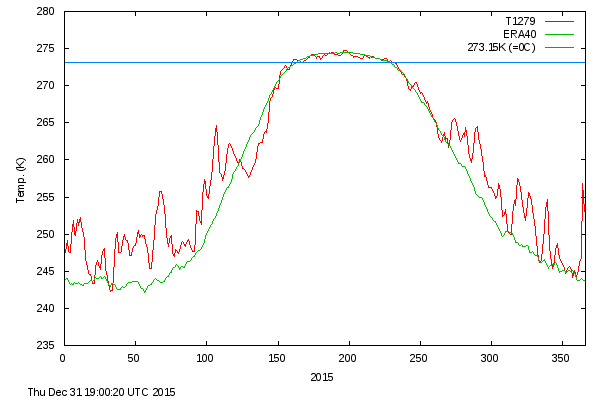
Meanwhile temperatures near the North Pole did briefly rise above the freezing point of sea ice in the middle of the Arctic winter. Here’s the Danish Meteorological Institute’s view of the air temperatures in the central Arctic:

meanT_20151231

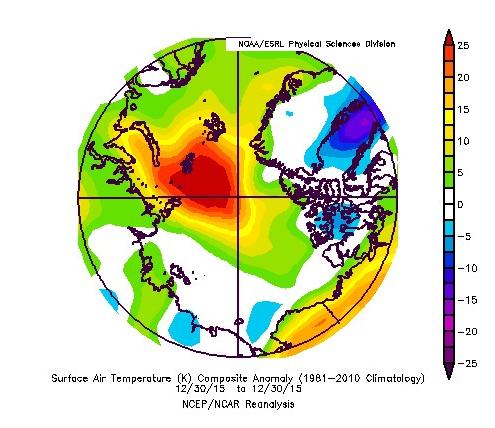
and here is NOAA’s temperature anomaly reanalysis for December 30th 2015:
NOAA-anomT_20151230

Personally I reckon the 25 m/s winds and resulting 10 meter waves had more effect on the sea ice metrics than the 25 °C above normal air temperatures, but your mileage may of course vary, especially if your pseudonym is “Steve Goddard”!

Is the Northwest Passage Open Yet?

People keep on posing that question just at the moment. Here’s a typical example from the Arctic Sea Ice Blog this morning:

Albeit not ‘officially’ declared as such, the daily Uni-Bremen chart shows Amundsen’s route is cleared and free now.

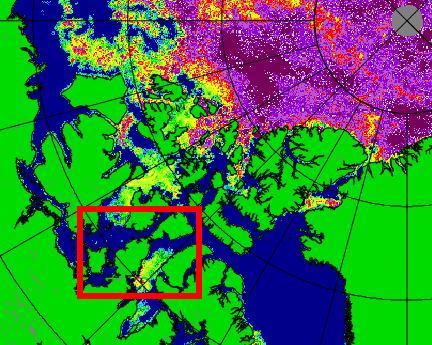
Here’s an extract from the “Daily Uni-Bremen chart” referred to, with an apparently “ice free” section of the southern route through the Northwest Passage highlighted:

asi-AMSR2-n6250-20150813-hilite

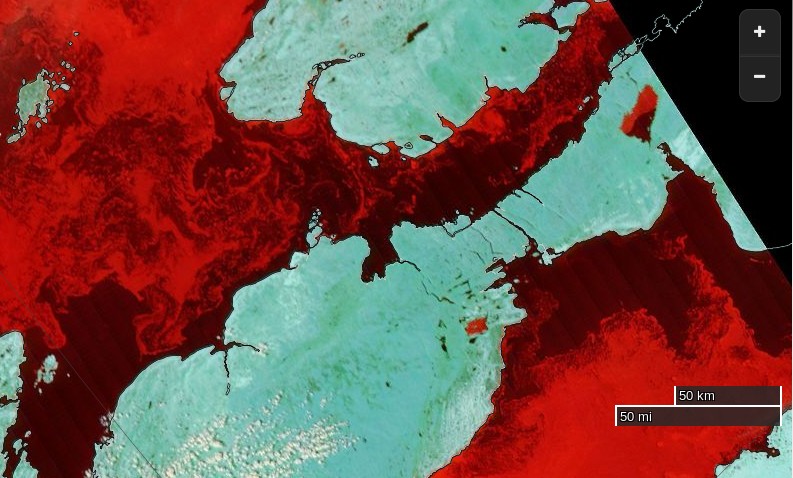
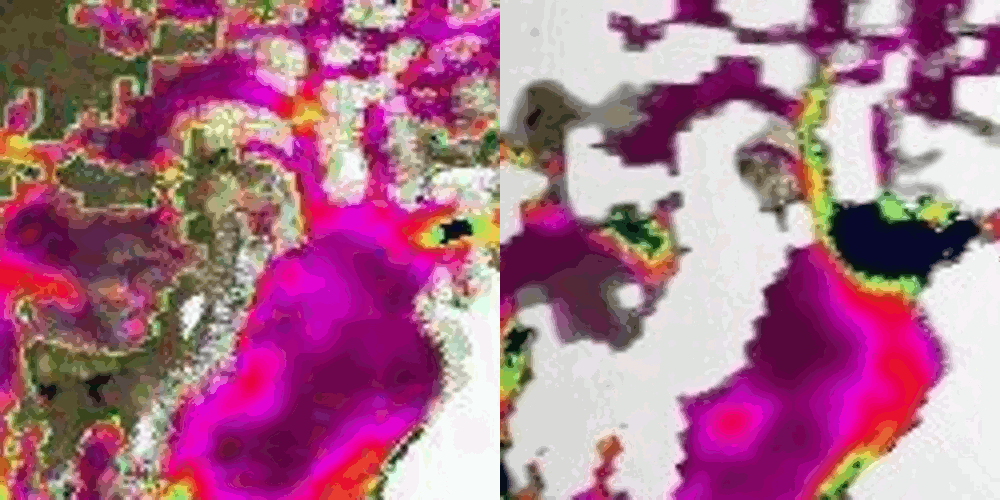
As we’ve been discussing here recently, the automated passive microwave based satellite Arctic sea ice concentration products can miss ice that’s visible to the naked human eye. Here’s some pictures from the Great White Con Northwest Passage page:

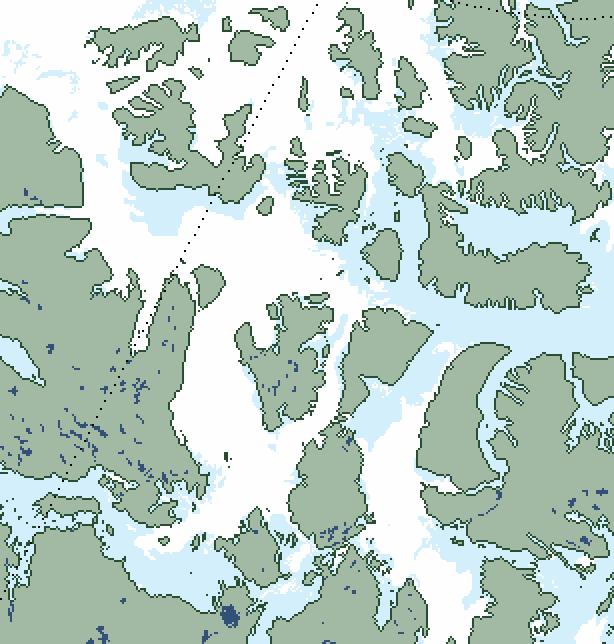
NASA Worldview “false-color” image of the Northwest Passage on August 13th 2015, derived from bands 7, 2 and 1 of the MODIS sensor on the Terra satellite

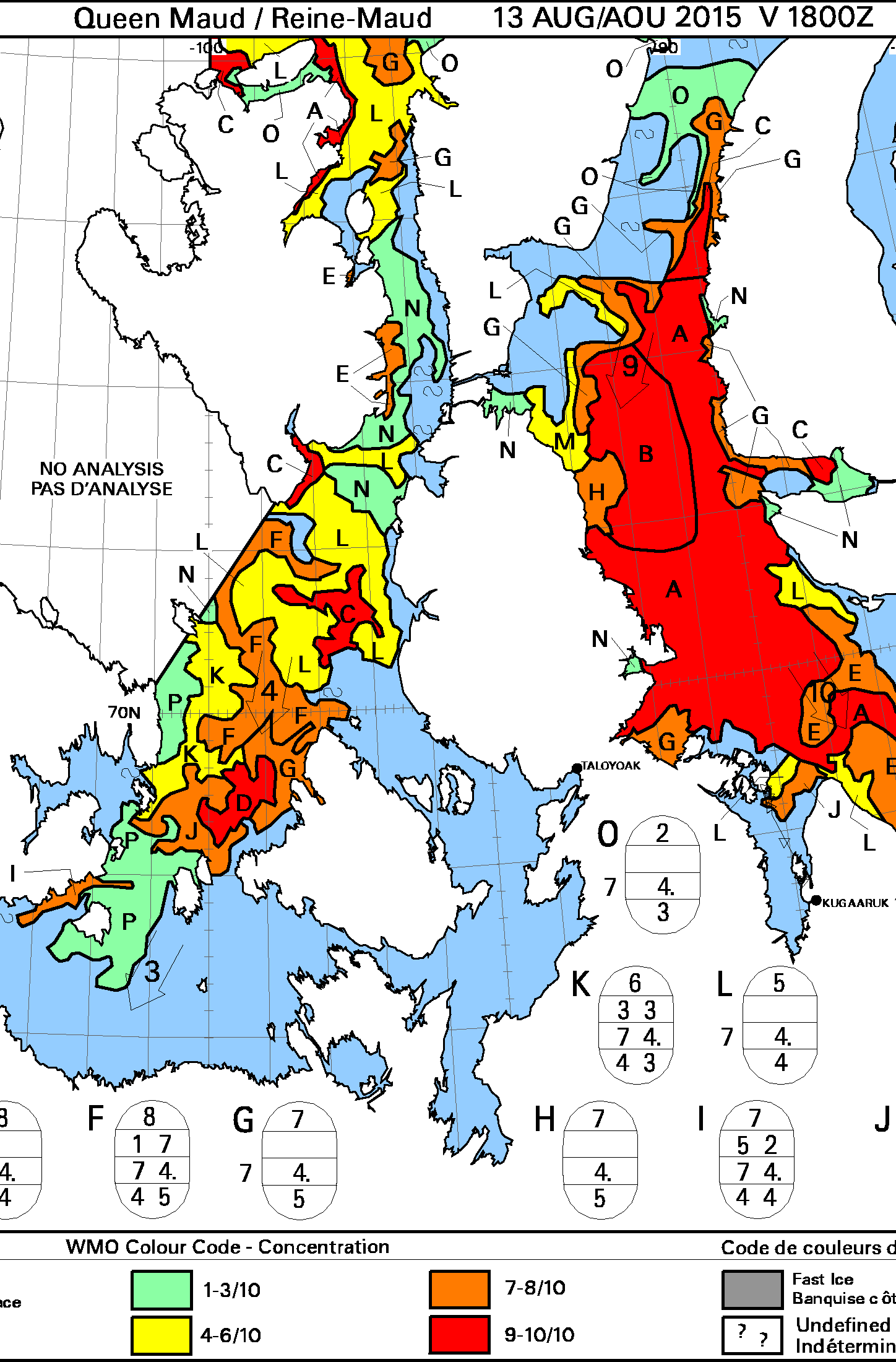
The Canadian Ice Service sea ice concentration chart for the Queen Maud Gulf on August 13th 2015

Here’s an extract from the NSIDC’s Multisensor Analyzed Sea Ice Extent (MASIE) product (currently for August 12th 2015):

masie_all_r00_v01_2015224_crop

and here’s an extract from an answer I gave to a similar question on the Arctic Sea Ice Forum earlier this morning:

The Canadian Ice Service still have 4-6/10 ice within a whisker of the coast. Would you fancy your chances in amongst that and a bit of a breeze?

The CIS definition of “navigable” is “a criteria of less than 60% ice cover over all sections of the Northwest Passage”. See:

http://ec.gc.ca/glaces-ice/default.asp?lang=En&n=765F63E4-1

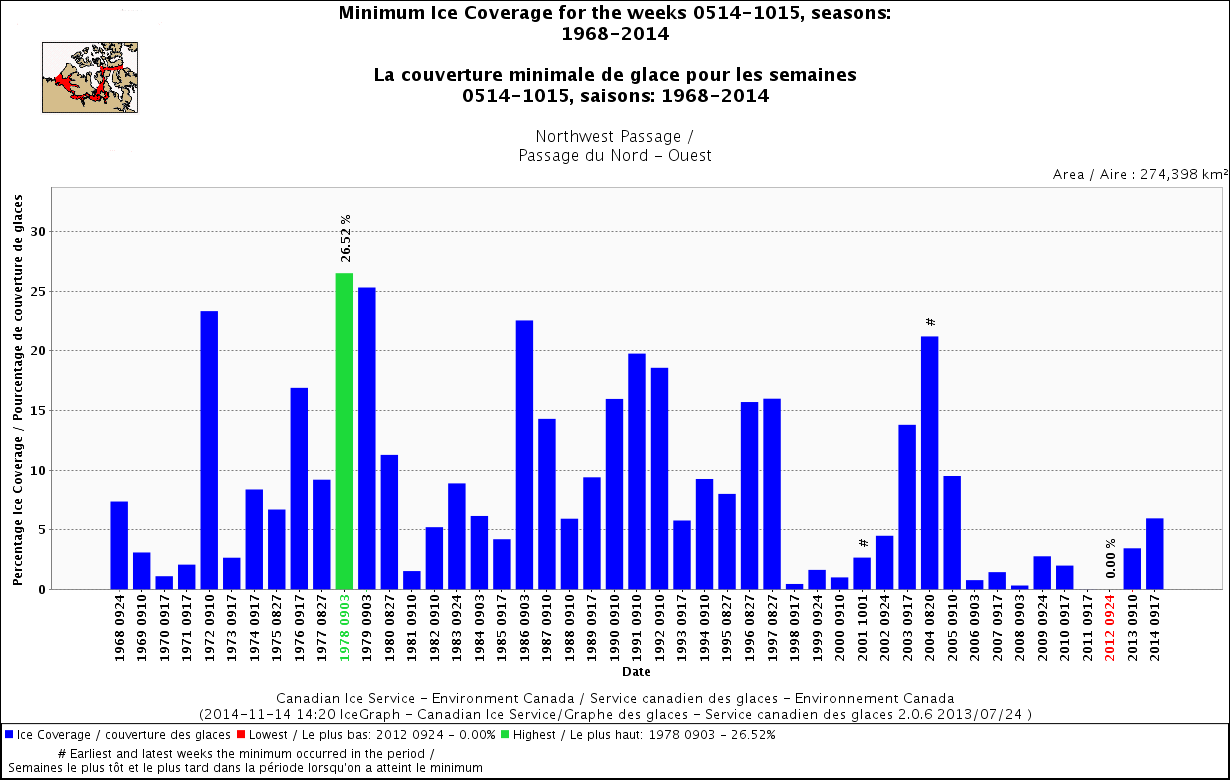
and the inset map at:

CIS-NWP-MinConc-2014

The answer to the question posed in the title to this article is therefore currently NO, the Northwest Passage is not open yet, both officially from the CIS and unofficially from any mariner with a sense of self preservation in charge of any vessel that isn’t “ice hardened”. In all the circumstances that answer might change quite quickly though!

[Edit 18/09/15]

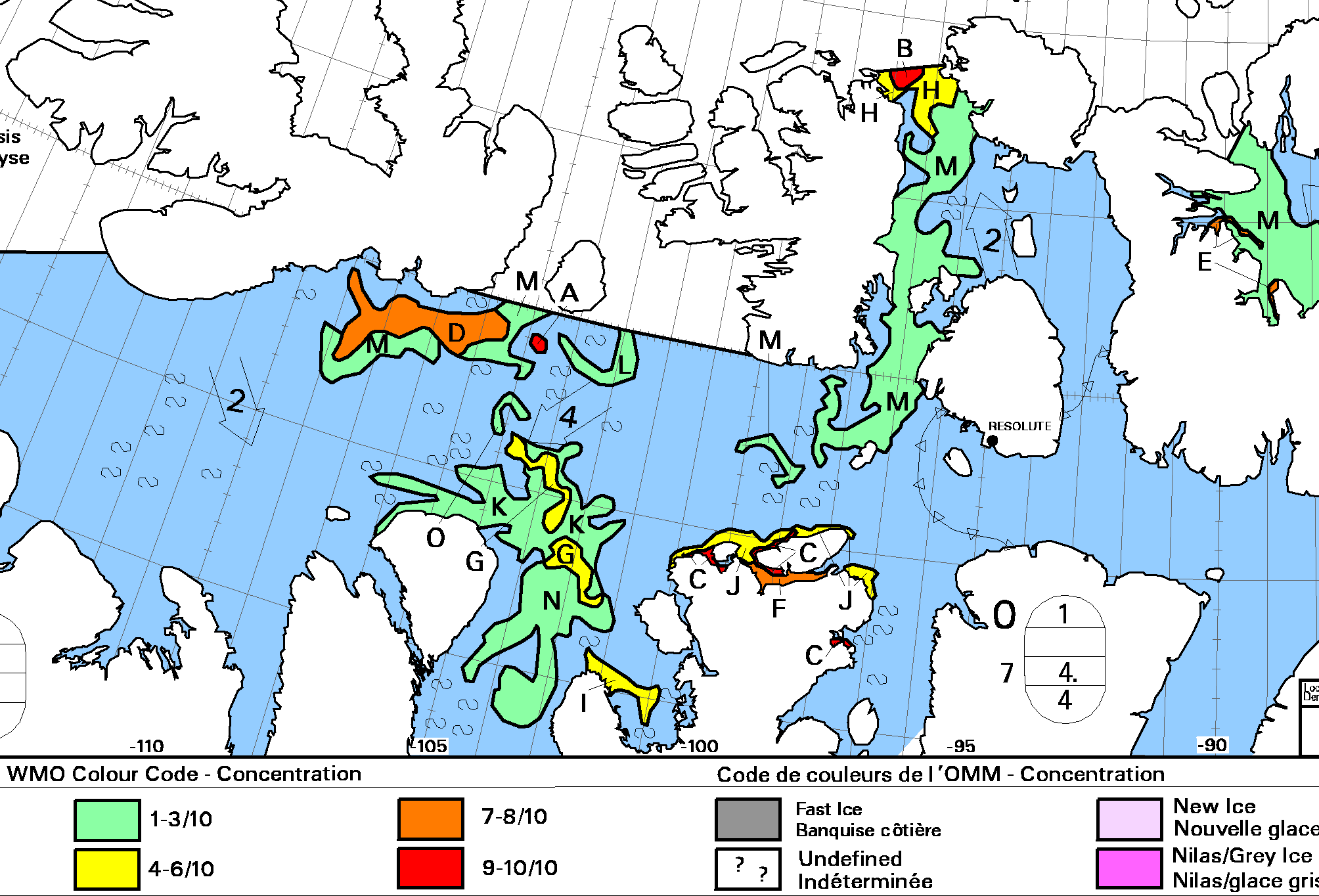
The Canadian Ice Service have finally published a close up map of the Parry Channel that doesn’t say “No Analysis”. Here it is:

CIS_Parry_20150917-Crop

There’s still a (narrow!) green path into McClure Strait, so I reckon we can at long last confidently declare the main Northwest Passage to be OPEN!

What Planet is Tony Heller On?

There’s no rest for the wicked! Tony Heller, still better known as the pseudonymous “Steven Goddard”, is promulgating his erroneous Arctic sea ice narrative once again this morning. In an article entitled “Rommulans Never Learn” he has this to say:

From five years ago, the Arctic was doomed and I was a denier. And five years later, the ice is still almost exactly the same as twenty years ago.

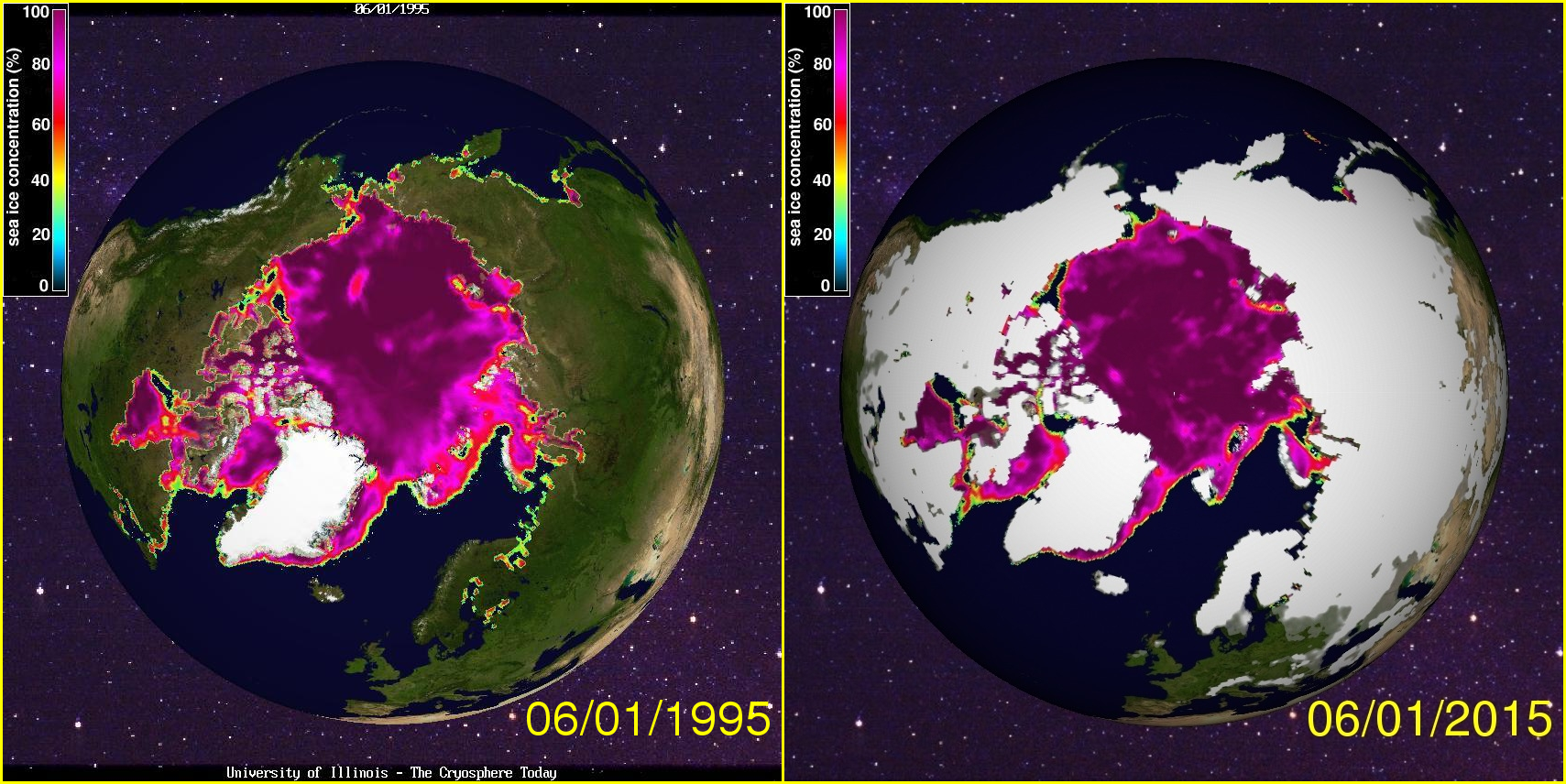
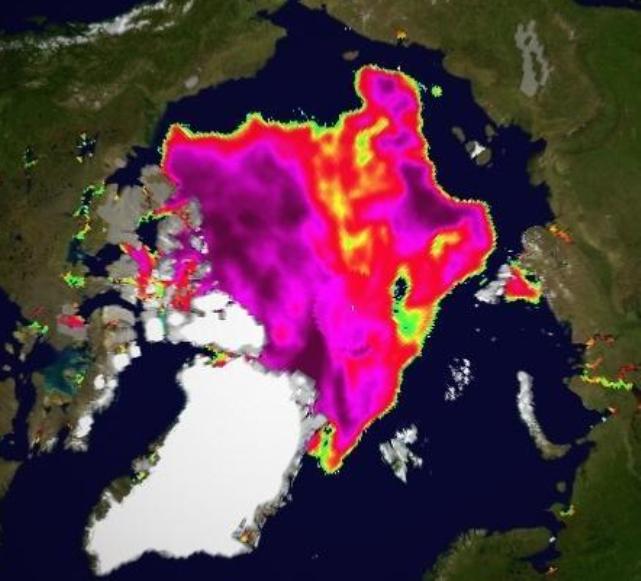
and he then presents this Cryosphere Today image comparing Arctic sea ice concentration on June 1st 2015 with the same date in 1995:

unRealScience-CTcombo-20150605

and comments:

Someone with an IQ over 30 might be able to figure it out, but not climate alarmists.

Obviously Steve/Tony hasn’t received our message yet, so we repeated it yet again:

At the risk of repeating myself repeating myself, the ice is NOT still almost exactly the same as twenty years ago:

https://stevengoddard.wordpress.com/2015/05/29/trouble-looming-for-arctic-alarmists/#comment-524677

“Can you see the dark blue areas in the 2015 image where there aren’t any in the 1995 image? Try looking at the Beaufort Sea, the Chukchi Sea, the Kara Sea and the North Water Polynya”

The shiny white area in the 2015 image is also of course a long way from the current reality.

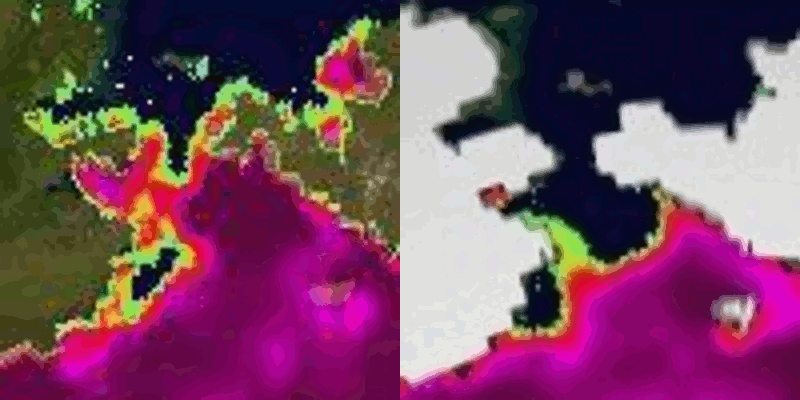
For those with an IQ of 30 or less who would like to play “spot the difference” with us, here is a hastily prepared animation of a somewhat pixellated Chukchi Sea:

1995-2015-0601-Chukchi


[Edit 15:15 BST July 5th 2015]

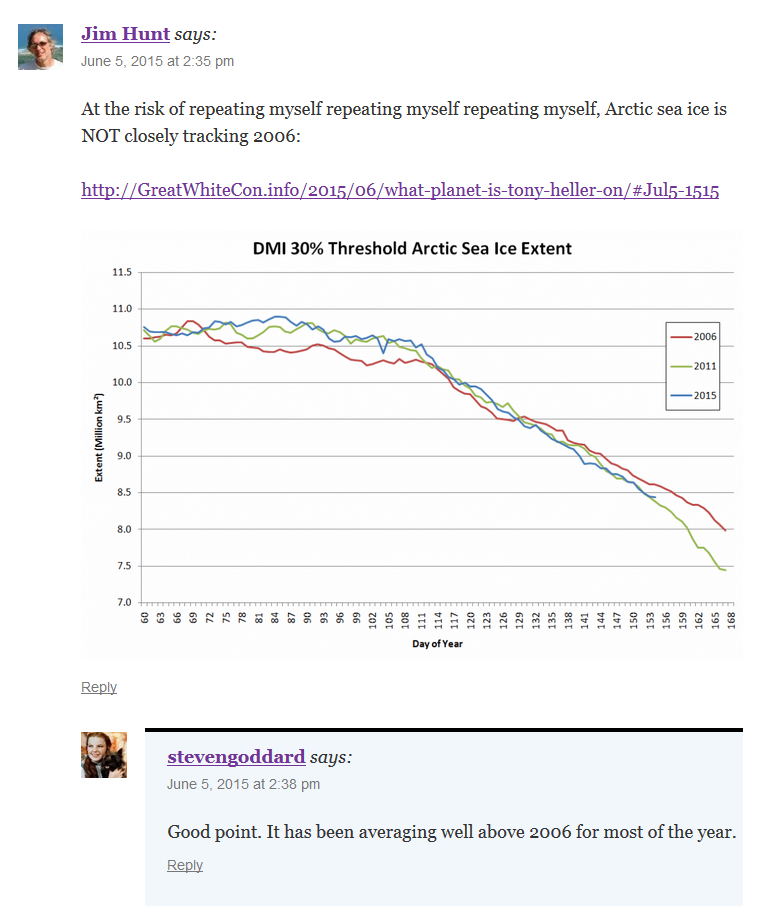
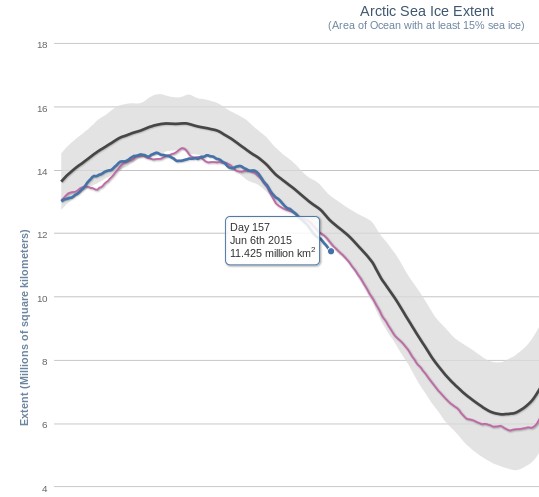
Steve/Tony has published another article about the Arctic today. This one is entitled “Scientific American Calls For An Ice-Free Arctic In 12 Weeks” and claims yet again that:

Arctic sea ice is closely tracking 2006, the summer with the highest minimum of the past decade.

Have we got news for you Tony? Using your preferred metric du jour:

2015-06-05_1600_unRealScience

[Edit 10:15 BST July 6th 2015]

“Caleb” is giving me still more stick over at “Real Science”:

It is my duty to report what actually is happening, even if it isn’t what I expect.

I sure do wish Mr. Hunt would learn to do the same. Why on earth he would want to tell us ice was melting when it seemed obvious it was refreezing is beyond me. Does he have some deep need to humiliate himself, like a medieval person undergoing self-flagellation?

Of course I couldn’t take that lying down, so:

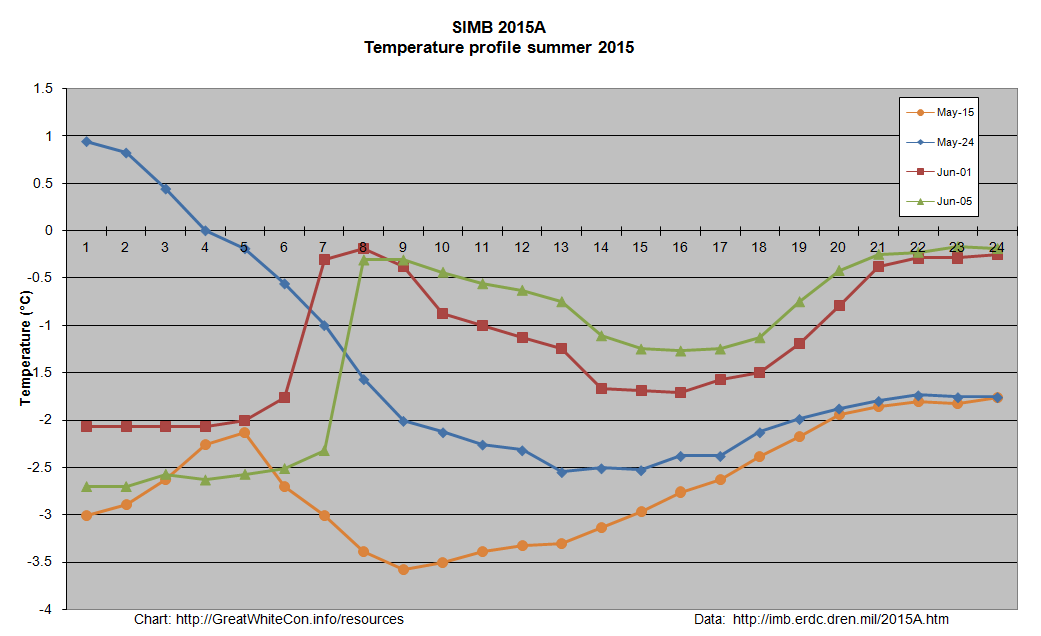
For your information, and that of anyone else who might be interested, the core temperature of the ice floe underneath 2015A got up to -1.34 °C yesterday:

2015-06-05-2015A

Finally, for the moment at least, here’s an animated GIF of the North Water Polynya which I fear won’t impress Treesong very much:

1995-2015-0601-NWPolynya

[Edit 16:00 BST July 7th 2015]

If you repeat something often enough does it eventually turn into the truth? Today’s Arctic article from Steve/Tony is strangely familiar. It is entitled “Arctic Sea Ice Continues To Track 2006“. However according to the NSIDC today:

Charctic-2006-20150606-1

[Edit 11:00 BST July 11th 2015]

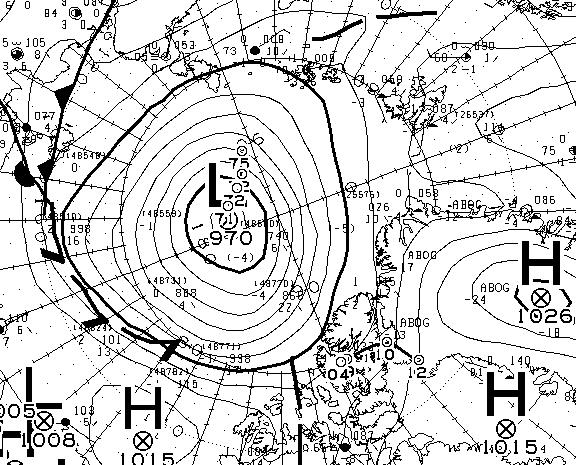
Steve/Tony keeps maintaining every day or two that “Arctic Sea Ice Continues To Track 2006”. There’s been a cyclone over the central Arctic with a minimum central pressure of 970 hPa (or mb if you prefer), which has caused some divergence of the sea ice:

Synopsis-20150607-crop

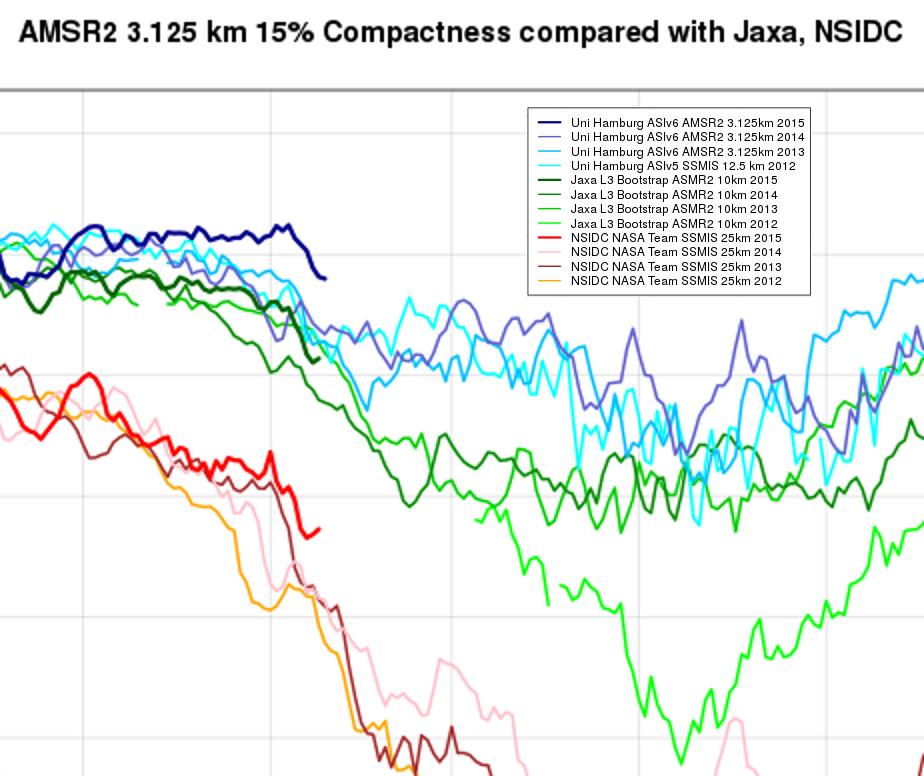
Here’s a closeup of the recent history of a variety of “compactness” metrics which illustrates that point:

amsr2-compact-20150610-crop

Across the board the sea ice in the Arctic is less compact than a few days ago as a result of the cyclone, but still more compact than on the same date in other recent years. Getting back to the extent metrics, here’s what the DMI 30% threshold version has been up to:

2015-06-10-DMI30

and here’s the NSIDC 5 day average of their 15% threshold flavoured variety:

2015-06-10-Charctic-2006

[/Edit]

Santa’s Secret Summer Swimming Pool Revisited

Regular readers may recall that way back when in September 2013 we wondered why David Rose hadn’t seen fit to reproduce any visualisations of Arctic sea ice concentration in a previous article about Arctic sea ice, particularly when his source materials from the NSIDC contained some very nice examples.

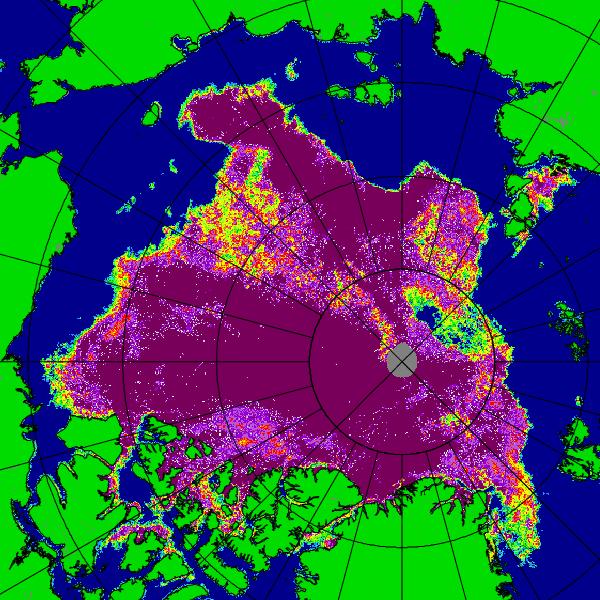
Today we are pleased to be able to inform you that David has now followed our long standing advice, and his article in the Mail on Sunday  yesterday included two such “stunning satellite images”. Of course they are not really “photographic” images, any more than the visualisations of Arctic sea ice extent that David was so keen to show his loyal readers last time around were. Unfortunately David neglected to include a “stunning satellite concentration visualisation” for August 25th 2013 in yesterday’s article. We are pleased to be able to help correct that no doubt inadvertent oversight, albeit somewhat belatedly, with the able assistance of the Department of Atmospheric Sciences at the University of Illinois and their Cryosphere Today web site:

Cryosphere Today Arctic sea ice concentration on August 25th 2013

Paraphrasing David Rose’s article yesterday, can you see all the yellow and green areas denoting regions where the ice pack is least dense?

Can you see “an unbroken ice sheet more than half the size of Europe stretch[ing] from the Canadian islands to Russia’s northern shores”?

Can you see Santa’s secret summer swimming pool, just a short sleigh ride away from his natty North Pole residence?

Answers on a virtual post card please, to the address below.

Censored Arctic Shipping Update

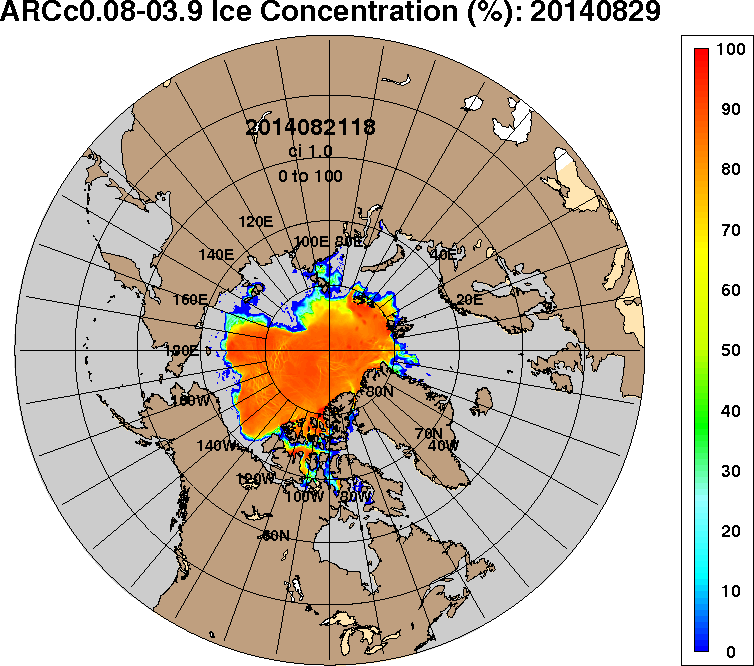
Our headline for today is only partially plagiarised from today’s “Arctic Shipping Update” article on “Steven Goddard’s” (un)Real Science blog. This morning Tony Heller posted the following ACNFS Arctic sea ice concentration visualisation:

icen2014082118_2014082900_039_arcticicen.001


Them:

Climate experts say that Northeast and Northwest Passages are open for business, but neither will open up this year.

Us:

Your comment is awaiting moderation.
August 23, 2014 at 12:37 pm

At the risk of repeating myself:


not to mention:


Time passes….


Whilst we wait for Steve/Tony to do the decent thing, I thought I might take this opportunity to point out that currently there are 555 vessels with official “Permission for navigation on the water area of the Northern Sea Route” this year.

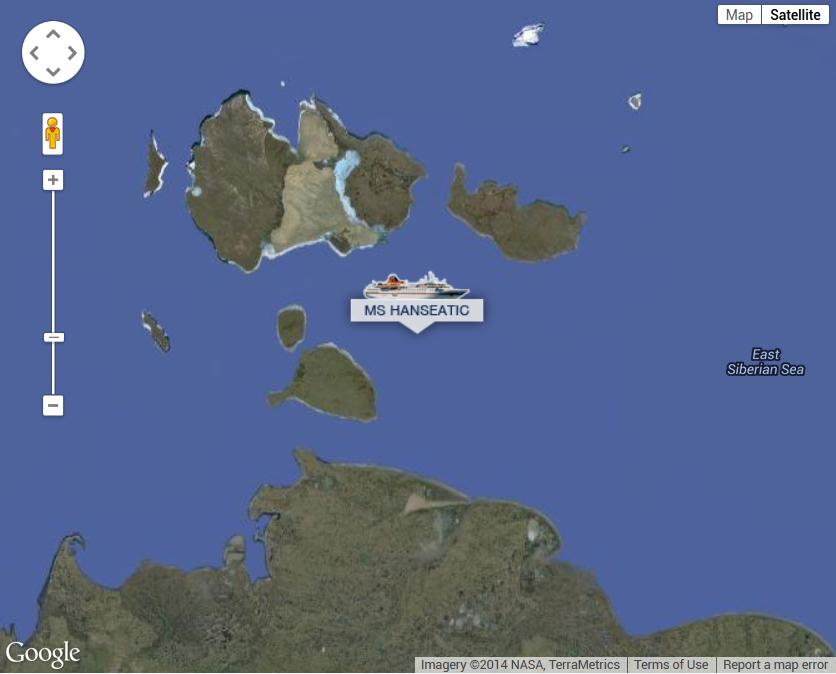
One of them is the Hapag-Lloyd cruise ship MS Hanseatic, which is currently wending its way through the New Siberian Islands:

2014-08-23_Hanseatic

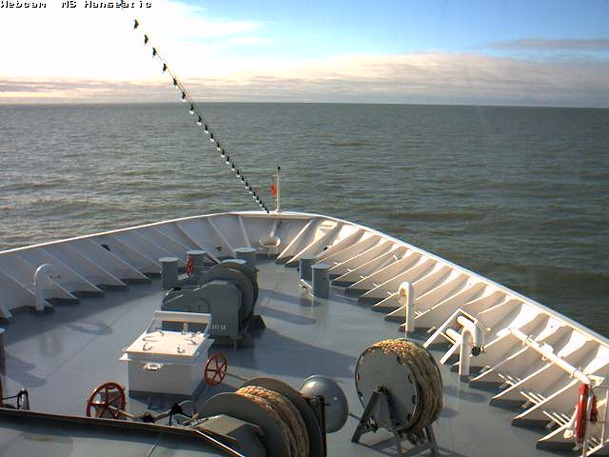
The Hanseatic also carries a webcam. Here’s what it reveals at the moment:

Hanseatic_2014_08_230410

It’s currently pretty plain sailing on that section of the Northern Sea Route by the look of things!

Us:

By the morning of Sunday August 24th (UTC) my dissenting comment had been released from limbo, although it had remained there the previous evening.
Them:

Somebody is telling a story aren’t they? Perhaps you’d like to tell us where the ship is. On the one hand I see a ship with the name Silver Explorer stuck in the ice, and then on the other I see your picture with green ice free waters. Everybody is going to be looking for this vessel now. Anybody with a satellite phone? Maybe they will wait it out till the ice thaws, like they did at the other pole. I will be saving that pretty picture of green, just in case you told us so.


Us:

Are you aware of the difference between the Northwest Passage and the Northern Sea Route, which is sometimes referred to as “the Northeast Passage”? That “pretty picture of green” is of the latter. Here’s the current position of the cruise ship MS Hanseatic in the Laptev Sea, coloured green on the map above:


You will note that my comment above was “stuck in Steve’s moderation queue” for many hours, which does rather spoil the flow of the conversation!


Them:

We’ll keep you posted!


The Mail’s Concentration on Sea Ice Extent

Further to our previous communications about what we refer to here as “The Great White Con” I have now received another email from John Wellington, Managing Editor of the Mail on Sunday.

Them:

Amongst other things it says that:

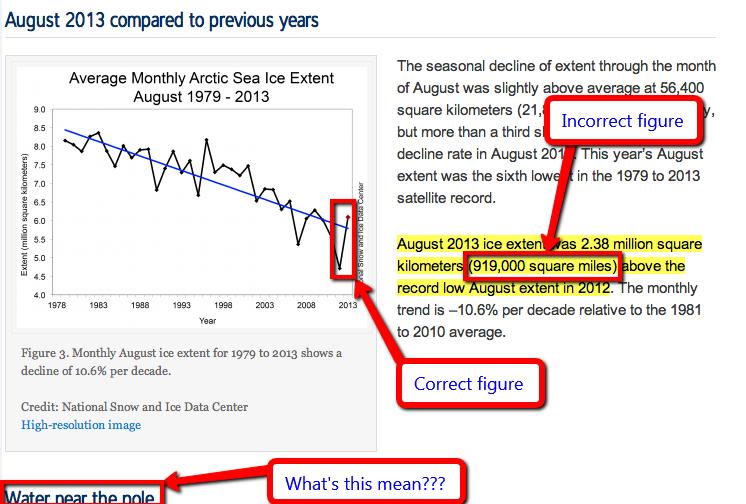
The incorrect figure published by the NSIDC was taken in good faith. Our writer [AKA David Rose] did not expect an institution of its stature to make such an error, so it is not reasonable to expect him to contact NSIDC to check it, specially as the general idea of an increase in the icepack was consistent with more anecdotal information such as the shipping information. You say we did not produce evidence of the NSIDC mistake. I am attaching a screen grab of their web site before they corrected it.

Mail on Sunday screen grab of NSIDC article entitled "A real hole near the pole"
Mail on Sunday screen grab of NSIDC article entitled “A real hole near the pole”

John’s latest email also included the following statement:

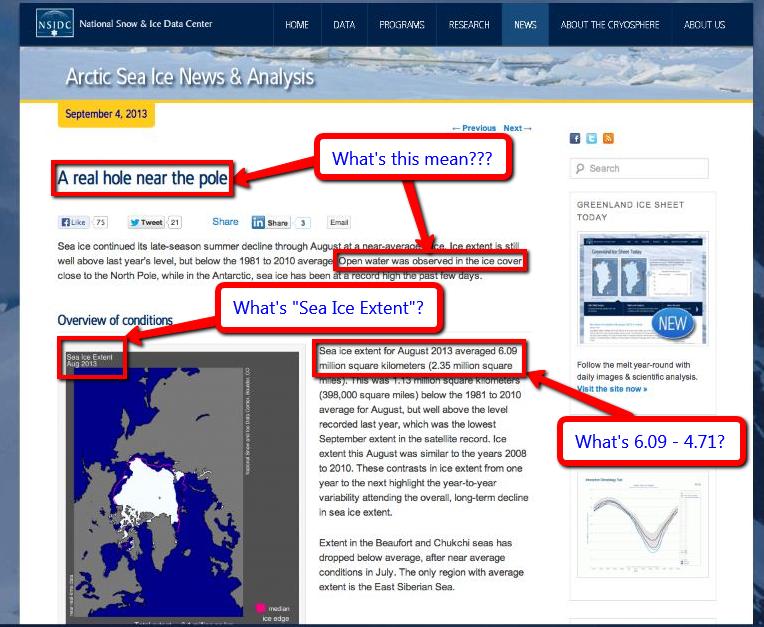
The August NSIDC report begins with a diagram (see  attachment). This shows the Arctic ice sheet stretching from Siberia to the Canadian islands:

Another Mail on Sunday screen grab of NSIDC "Arctic Sea Ice News" article of September 4th 2013
Another Mail on Sunday screen grab of NSIDC “Arctic Sea Ice News” article of September 4th 2013

Us:

You will note I have taken the liberty of annotating The Mail’s screen grabs with what seem to me to be reasonable questions for any vaguely competent investigative journalist to ask themselves when reading the NSIDC’s early September update. At this juncture I can only repeat this question from my most recent missive to The Mail:

This raises any number of questions about the Mail on Sunday misleading its readers, such as “Why didn’t The Mail ask the NSIDC about the apparently conflicting information, much like Bob Ward did, before publishing an article relying on that information?” not to mention “Why can’t David Rose perform accurate arithmetic?”

and provide my own screenshot from the “terminology” page of the NSIDC web site in a no doubt vain attempt to provide John and David with an answer to just one of those questions:

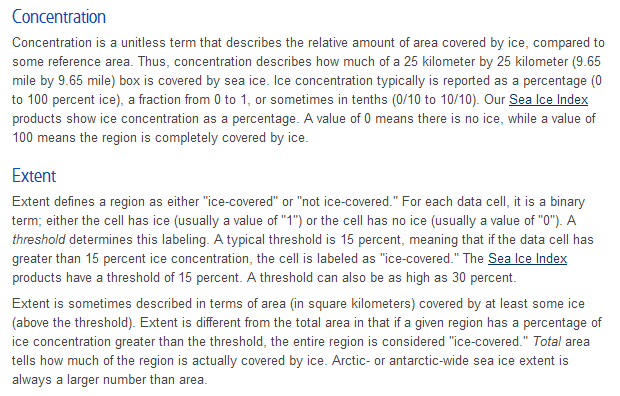
NSIDC explanation of the terms "concentration" and "extent"
NSIDC explanation of the terms “concentration” and “extent”

In brief:

Extent defines a region as either “ice-covered” or “not ice-covered.” For each data cell, it is a binary term; either the cell has ice (usually a value of “1”) or the cell has no ice (usually a value of “0”).

 Do you suppose that given their apparent difficulties in performing elementary arithmetic John and David are able to appreciate the difference between “1 or 0” and “low-concentration sea ice (20 to 80% cover) within our extent outline” or even “near-zero ice concentration“?

How about the readers of The Mail on Sunday, or the Press Complaints Commission for that matter?

The Balding Arctic Exposed

I’ve recently received a letter signed by John Wellington who is the Managing Editor of The Mail on Sunday.

Them:

Referring to David Rose’s Mail on Sunday article of September 8th 2013 John says amongst many other things that:

We deny that the article was significantly inaccurate apart from the original headline figure which we have already corrected.

and:

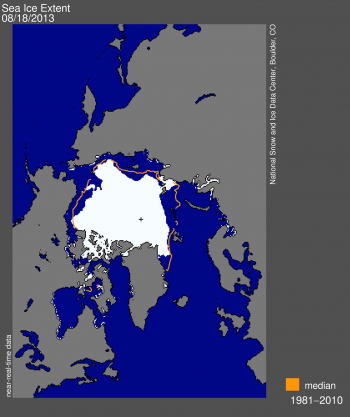
In August, ice did stretch from part of the Siberian shore to the Canadian islands. The image published in the newspaper and online supports this statement as does the enclosed image from the NSIDC site which shows the ice extent on August 18.

Here’s that image, which comes from the August 19th 2013 edition of the National Snow and Ice Data Center’s “Arctic Sea Ice News” entitled “The balding Arctic“:

National Snow and Ice Data Center graphic showing Arctic sea ice extent on August 18th 2013
NSIDC graphic showing Arctic sea ice extent on August 18th 2013

Us:

I’m currently writing a reply to John’s letter. Amongst many other things it directs his attention to this very article and says:

Images showing sea ice “extent” reveal remarkably little about whether an “ice sheet” is “unbroken” or not. If that is what you want to illustrate then an image showing “concentration” is much more helpful. In their report of September 4th upon which David Rose’s article is supposedly based, at least in part, the NSIDC helpfully provided such an image. The Mail on Sunday didn’t publish that image, or a similar image from 2012. In order to correct this inaccuracy they should do so.

Since they’ve evidently read the NSIDC’s news that the Arctic was “Balding” towards the end of August and there was “A real hole near the pole” by early September John and David should be aware of this already, but it seems a refresher course is necessary. On August 19th the NSIDC pointed out that:

Satellite data from the AMSR-2 instrument and MODIS show an unusually large expanse of low-concentration sea ice (20 to 80% cover) within our extent outline (15% or greater, using the SSM/I sensor) spanning much of the Russian side of the Arctic and extending to within a few degrees of the North Pole.

While some of the low concentrations recorded by AMSR-2 may be due to surface melt on sea ice, the MODIS image confirms that a large region is covered by isolated floes.

On September 4th the NSIDC also helpfully pointed out that:

A large hole (roughly 150 square kilometers or 58 square miles) of near-zero ice concentration appears to have opened up at about 87 degrees North latitude.

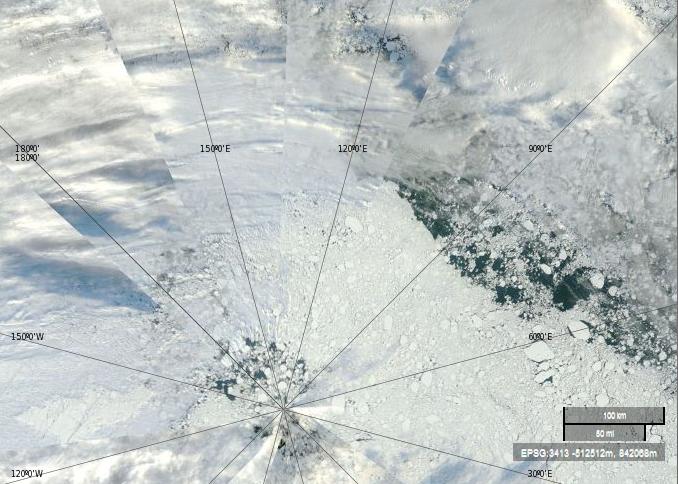
Here is a “true-color” image from September 4th 2013 using MODIS bands 1, 4 and 3, helpfully made available by NASA to anyone who might be interested via the EOSDIS Worldview web site:

NASA Worldview “true-color” image of the North Pole area on September 4th 2013 derived from bands 1,4 and 3 of the MODIS sensor on the Terra satellite
NASA Worldview “true-color” image of the North Pole area on September 4th 2013 derived from bands 1, 4 and 3 of the MODIS sensor on the Terra satellite

The lines in this image converge on the North Pole, the same location as the little cross in the NSIDC extent image near the top of this article. Let’s play “Spot the Difference” yet again shall we. Would you say that the sea ice underneath the clouds looks “broken” in this Worldview “true-color” image? How about in the the University of Bremen concentration images often shown by the NSIDC, or in the NSIDC “extent” image above, or in the NASA “extent” videos so beloved by David Rose and the Mail on Sunday?

Santa’s Secret Summer Swim

This weekend the Mail on Sunday admitted that the headline numbers in David Rose’s  “And now it’s global COOLING!” article published on September 8th were inflated by a factor of approximately two. This is how they explained that discrepancy to their faithful readers:

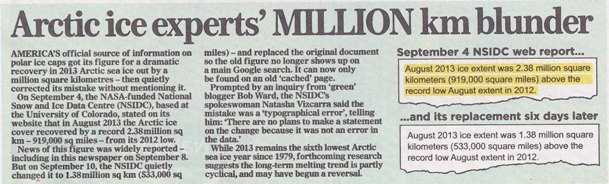
Scan of the bottom of page 31 in the September 29th 2013 edition of the Mail on Sunday
The bottom of page 31 in the September 29th 2013 edition of the Mail on Sunday

Can you spot the MILLION square km blunder by the Mail on Sunday? For the benefit of the scientifically illiterate amongst you I’ll explain, as I did yesterday in an email to the Mail on Sunday’s Managing Editor:

It appears that whoever writes your headlines is unaware of the difference between “A MILLION km” and “a million square km”. The former is a distance, and hence has no area. The latter IS an area.

Them:

As you can clearly see, the Mail reported yesterday that:

On September 4, NSIDC, based at the University of Colorado, stated on its website that in August 2013 the Arctic ice cover recovered by a record 2.38 million sq km – 919,000 sq miles – from its 2012 low.

News of this figure was widely reported – including by MailOnline – on September 8.

Us:

The headline of the report published on the NSIDC website on September 4th reads as follows:

A real hole near the pole

The related text reads as follows:

A large hole (roughly 150 square kilometers or 58 square miles) of near-zero ice concentration appears to have opened up at about 87 degrees North latitude. Small areas of open water are common within the ice pack, even at the North Pole, as the ice pack shifts in response to winds and currents, resulting in cracks (called leads) in the ice. The current opening seen in our satellite imagery is much larger.

and the relevant area of the accompanying satellite imagery looks like this:

University of Bremen colour visualisation of Arctic sea ice concentration for September 2nd 2013
University of Bremen AMSR2 colour visualisation of Arctic sea ice concentration for September 2nd 2013

Them:

Since the Mail’s intrepid reporter evidently read those words and looked at that picture, why on Earth do you suppose that the Mail on Sunday printed these words four days later?

Days before the annual autumn re-freeze is due to begin, an unbroken ice sheet more than half the size of Europe already stretches from the Canadian islands to Russia’s northern shores.

Even more to the point, why on Earth do you suppose that the Mail on Sunday left those words unaltered following their September 28th edit of the online version of that article?

Us:

Here’s our latest video update on the 2013 Arctic sea ice refreeze. The “Polar Polynya” is prominent by its presence, as is the broad band of open water between the “broken ice sheet” and “Russia’s northern shores”: