Monthly Archives: February 2024

The 2024 Maximum Arctic Sea Ice Extent

“The time has come”, the Walrus said, “to talk of many things… Of why the sea is boiling hot, and whether pigs have wings“.

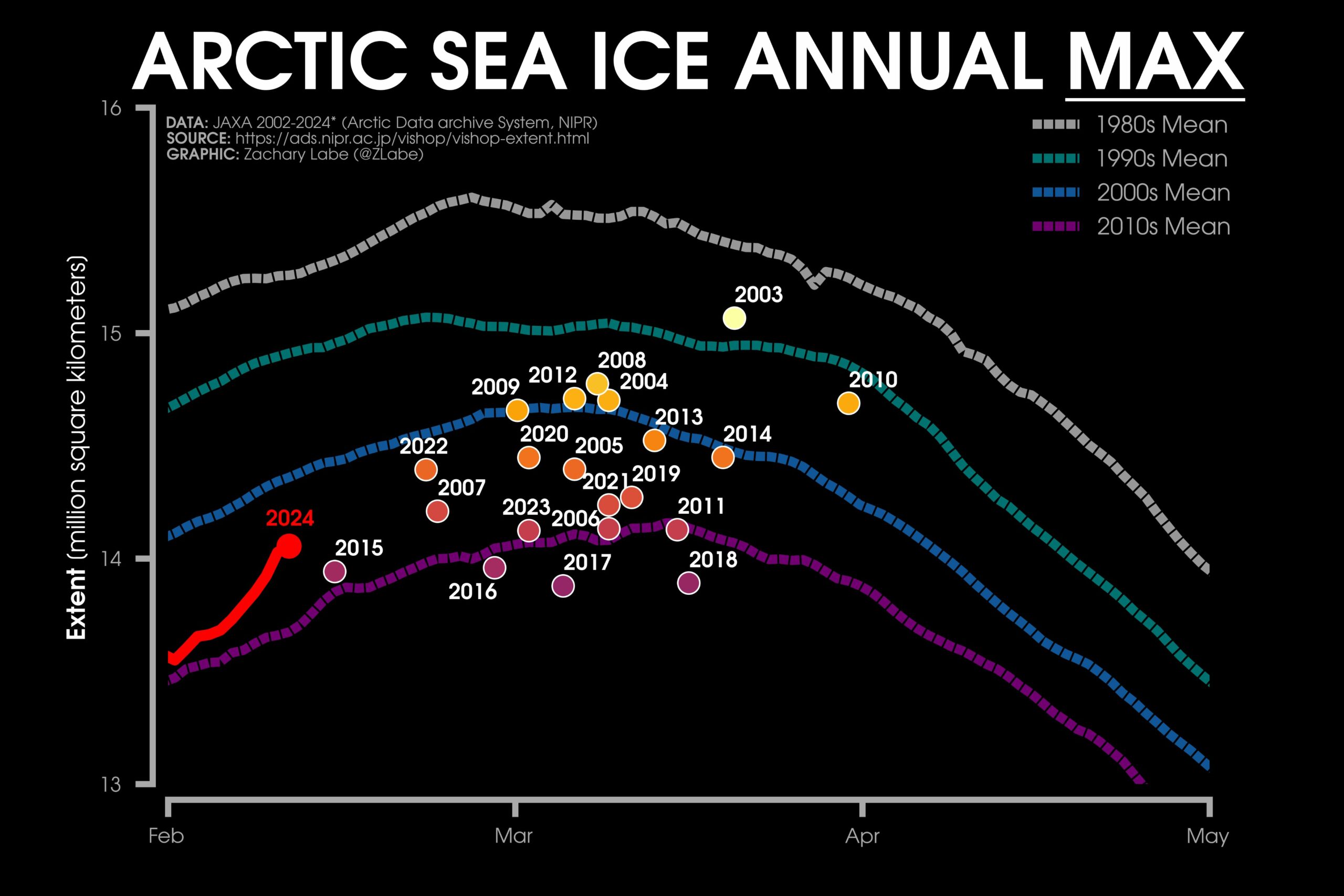
And also about the assorted different Arctic sea ice extent metrics, and in particular their respective maxima for 2024.

Here is Zack Labe’s overview of previous years’ maxima from a few days ago:

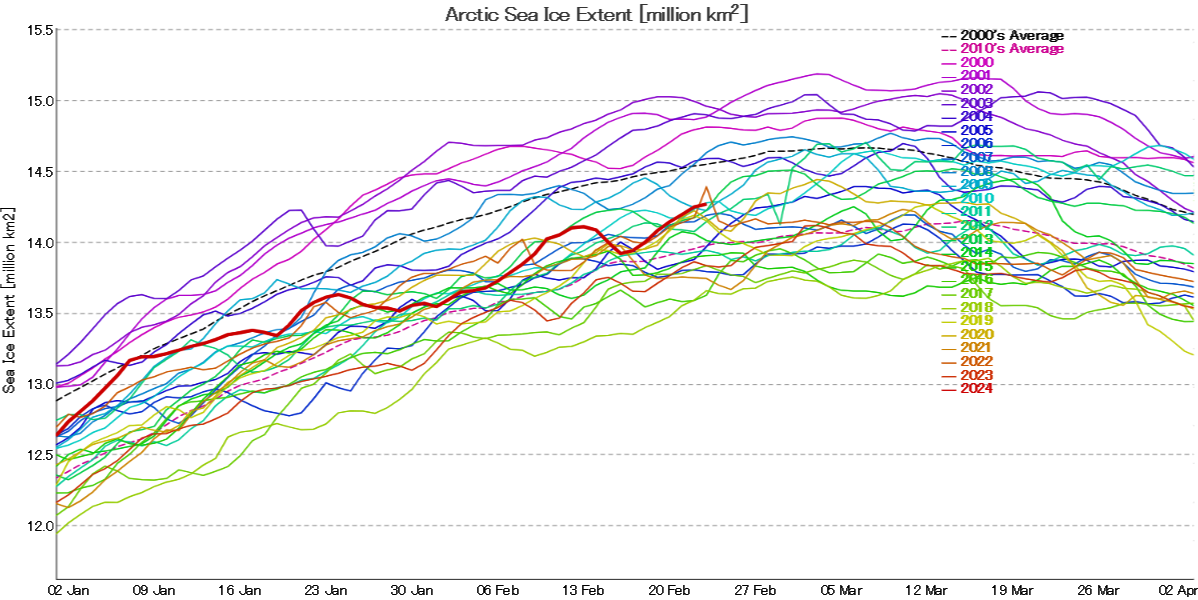
Zack’s graph displays the JAXA/ViSHOP version of Arctic extent, so here too is JAXA’s own graph of the current sea ice extent:

JAXA extent is based on data from the AMSR2 instrument on the GCOM-W satellite, and shows no evidence yet of a local maximum, let alone an annual one for 2024.

However see also AWI’s “high resolution” AMSR2 area metric:

Continue reading The 2024 Maximum Arctic Sea Ice Extent

Will the AMO Save Arctic Sea Ice?

According to Michael Mann he coined the name “Atlantic Multi-decadal Oscillation”:

Two decades ago, in an interview with science journalist Richard Kerr for the journal Science, I coined the term the “Atlantic Multidecadal Oscillation” (the “AMO” for short) to describe an internal oscillation in the climate system resulting from interactions between North Atlantic ocean currents and wind patterns. These interactions were thought to lead to alternating decades-long intervals of warming and cooling centered in the extratropical North Atlantic that play out on 40-60 year timescales (hence the name). Think of the purported AMO as a much slower relative of the El Nino/Southern Oscillation (ENSO), with a longer timescale of oscillation (multidecadal rather than interannual) and centered in a different region (the North Atlantic rather than the tropical Pacific).

More recently Mann et al. claimed that in actual fact the AMO does not exist.

For several decades the existence of interdecadal and multidecadal internal climate oscillations has been asserted by numerous studies based on analyses of historical observations, paleoclimatic data and climate model simulations. Here we use a combination of observational data and state-of-the-art forced and control climate model simulations to demonstrate the absence of consistent evidence for decadal or longer-term internal oscillatory signals that are distinguishable from climatic noise. Only variability in the interannual range associated with the El Niño/Southern Oscillation is found to be distinguishable from the noise background.


More recently still I discovered the source of Matt’s optimistic, AMO based prediction of Arctic sea ice recovery. Here is the latest edition, courtesy of Roger “Tallbloke” Tattersall:

Continue reading Will the AMO Save Arctic Sea Ice?

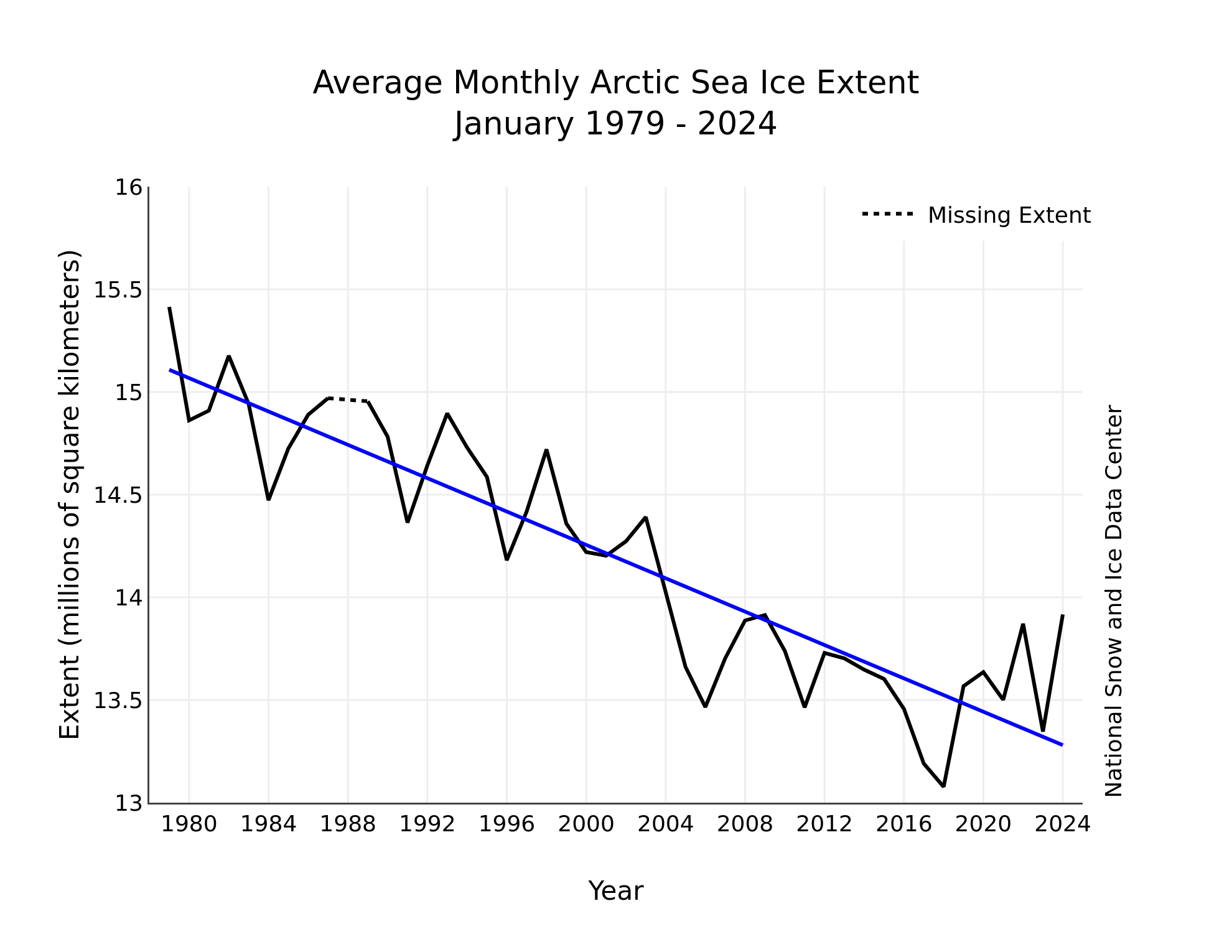
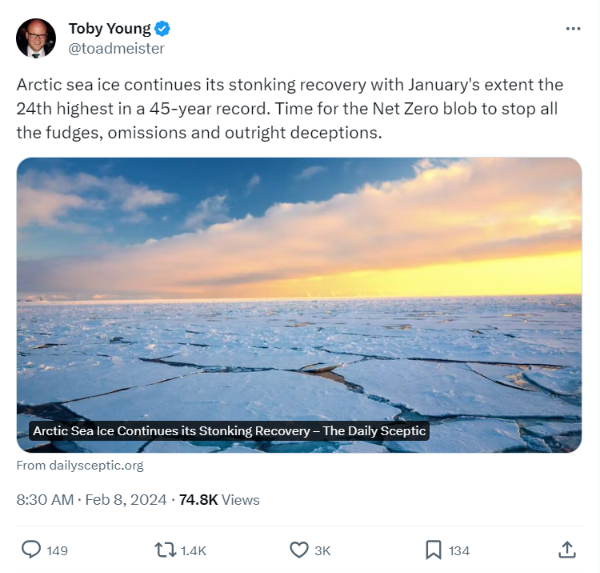
Time for Toby Young to Stop all the Fudges, Omissions and Outright Deceptions.

As I surmised only yesterday:

The so called “skeptics” are probably already salivating over that image!

The name may not be familiar on the other side of the Atlantic, but here in the once United Kingdom Mr. Toby Young self identifies as “skeptical”, having named his web site the “Daily Sceptic”. This morning he Xweeted thus:

The linked article was written by the Daily Sceptic’s alleged “Environment Editor” Chris Morrison. Mr. Morrison Xweeted thus:

Continue reading Time for Toby Young to Stop all the Fudges, Omissions and Outright Deceptions.

Facts About the Arctic in February 2024

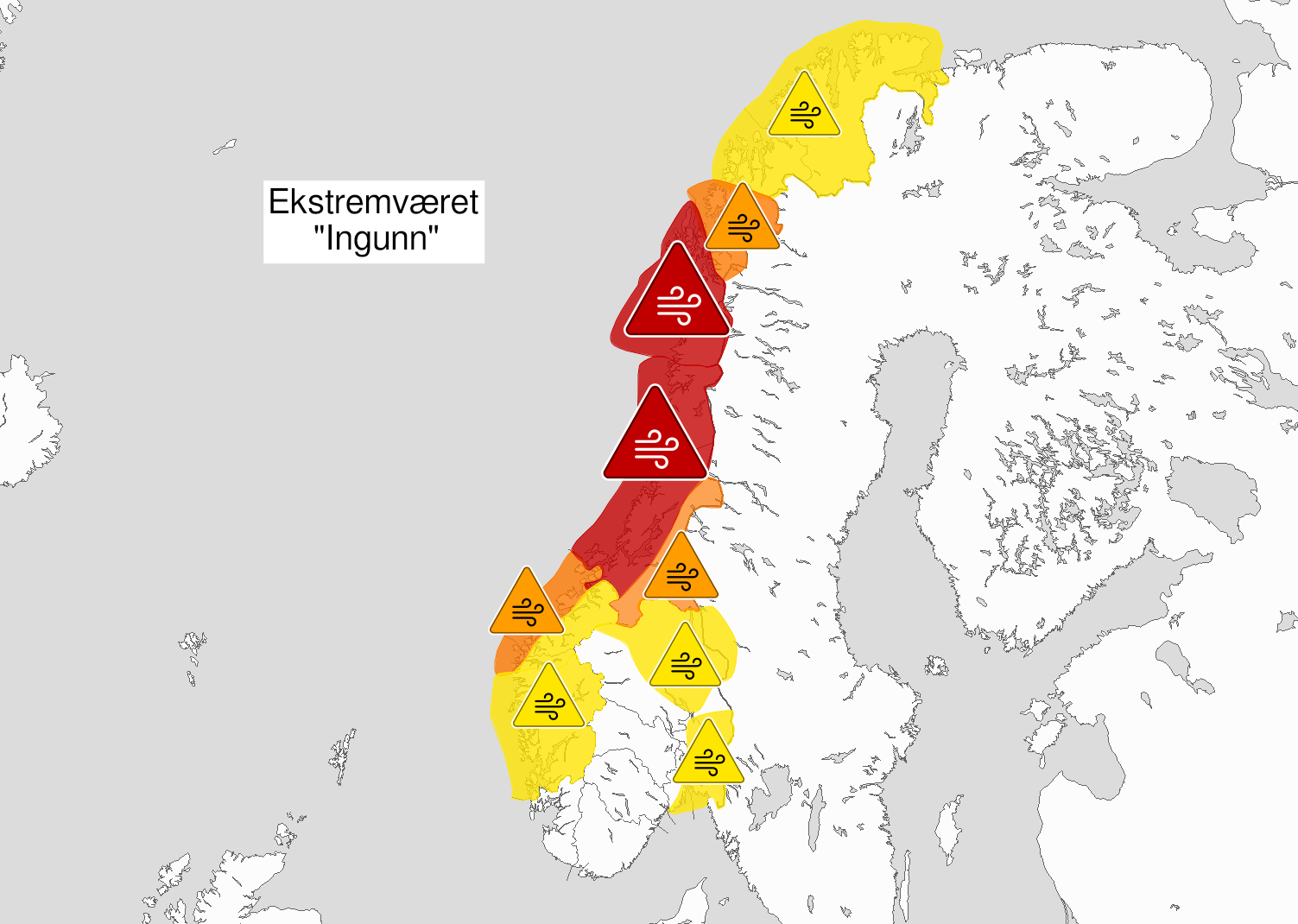
A change is perhaps even better than a rest? Let’s start February with a reminder that following close behind another recent Arctic cyclone, Storm Ingunn caused red weather warnings for high winds and avalanches in Norway two days ago:

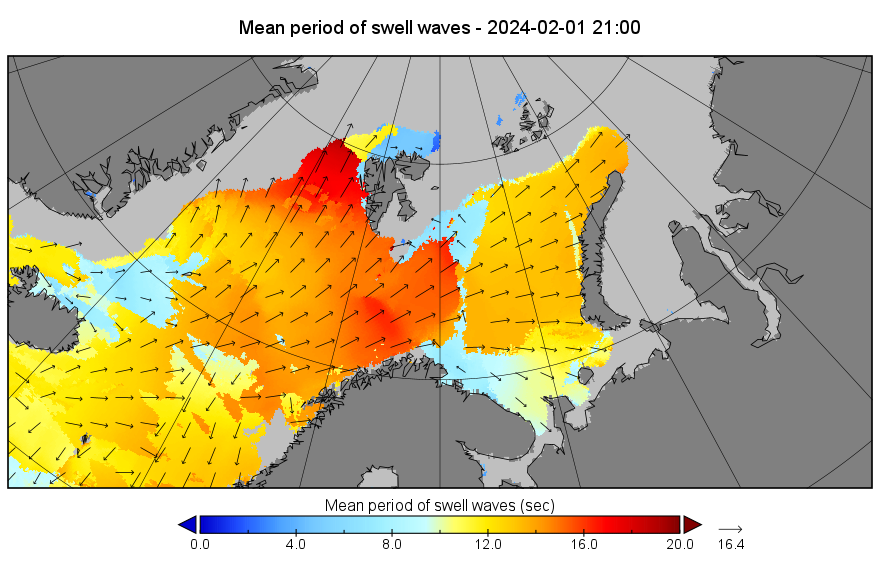
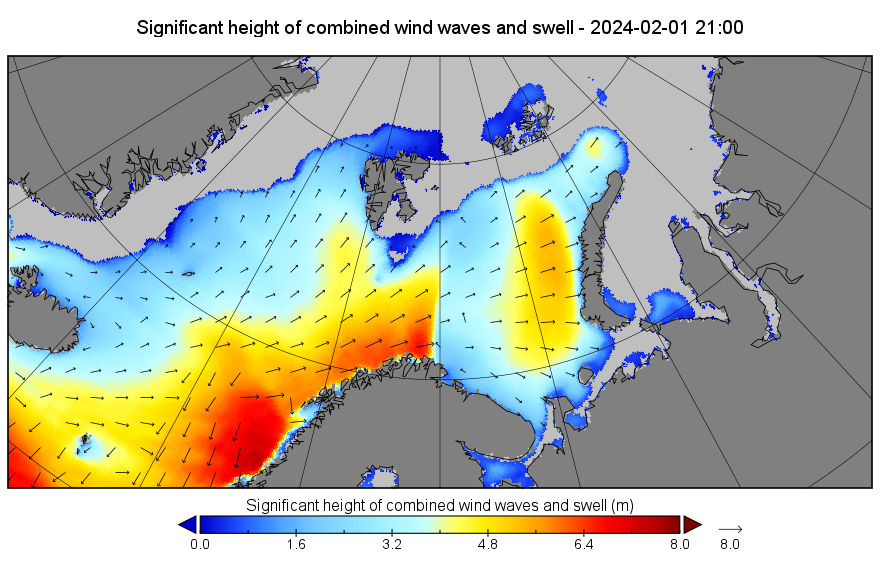
By yesterday evening another long period, storm driven swell was arriving at the sea ice edge in the Fram Strait, and to a lesser extent in the Barents Sea:

By this morning Ingunn had merged with the remnants of the prior cyclone, as revealed in Climate Reanalyzer’s visualisation of the latest GFS model run::

Continue reading Facts About the Arctic in February 2024

Climate Disinformation at a Glance

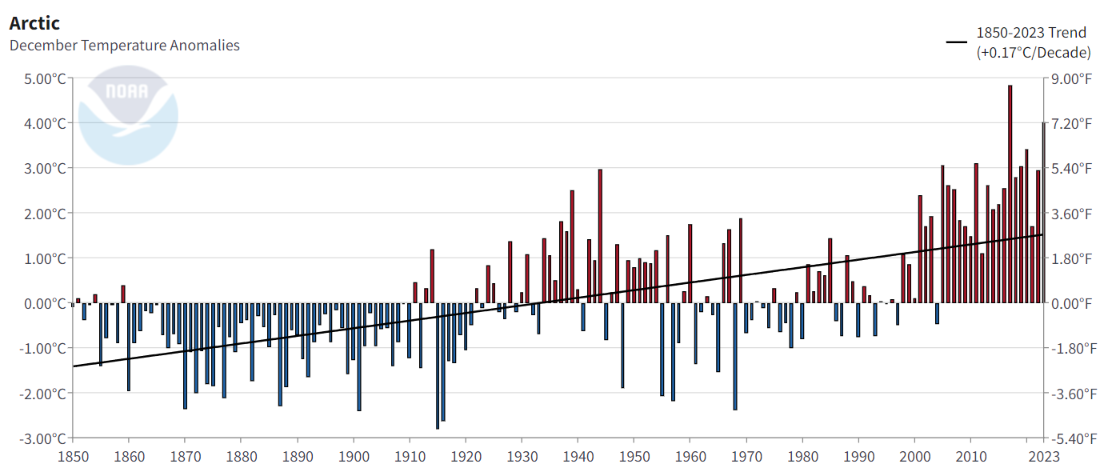
I was mildly surprised when a somewhat “skeptical” interlocutor of my Arctic alter ego linked to “Climate at a Glance” in the course of our alleged “debate”. I was even more surprised to discover that the far end of the suggested link was not NOAA’s familiar overview of the Arctic temperature trend:

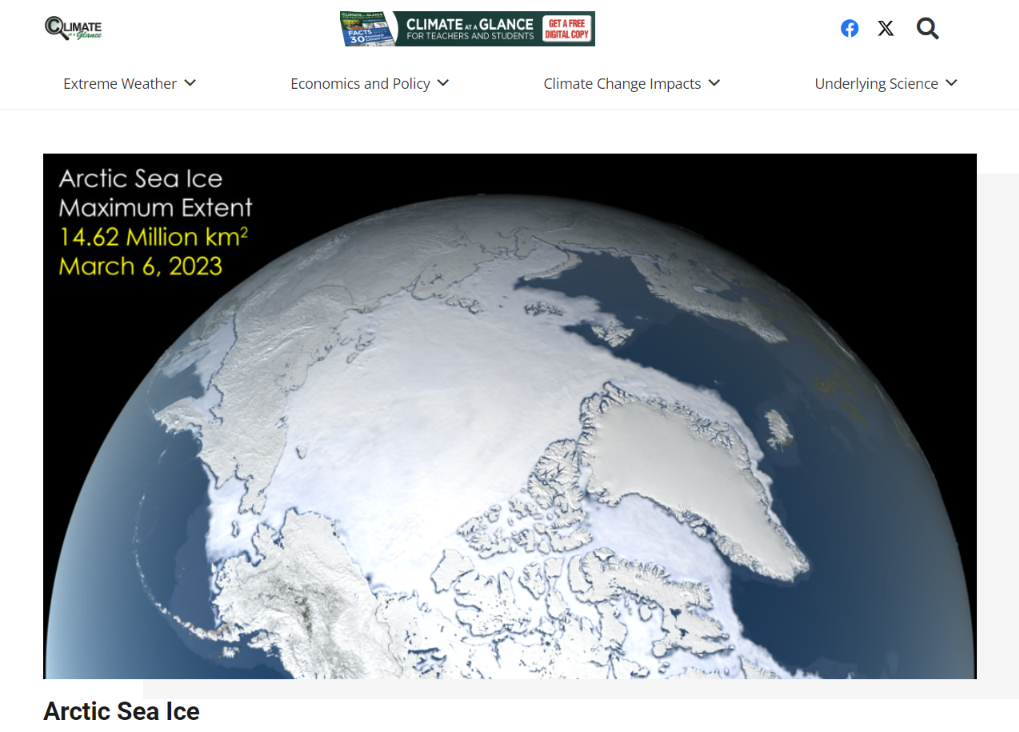
but instead a similarly named web site proudly sponsored by the Heartland Institute:

The “Climate at a Glance” home page currently features the Arctic at the top, and it probably won’t surprise you to learn that the linked article is full of half truths and untruths about “Snow White’s” favourite topic? Here are the Heartland Institute’s key Arctic takeaways:

Continue reading Climate Disinformation at a Glance