You may or may not be a fan of the likes of Brian Eno, Neil Gaiman and Kim Stanley Robinson but I thought I should point out to the assembled throng that attending this event live, albeit remotely, was the highlight of my recent COP26 experience:
https://youtu.be/PAtq2_nsjKo?t=341
Just as we need climate scientists to present the facts, we need the arts and culture to help us think and feel and talk about the climate crisis at all levels. The conversation needs scientists – but it urgently needs artists too. Science discovers, Art digests. Art and culture tell us stories about other possible worlds, lives, and ways of being. A novel or a film invites us to experience an imaginary world and see how we feel about it. Culture is where our minds go to experiment, to try out new feelings.
As Brian Eno put it whilst I was live Tweeting the 5×15 event:
It seems that Neil Gaiman was in Scotland for the recording of the second series of Good Omens. What is more not only did he retweet my Eno quote above but also my introduction to the event as well. What a nice man!
As indeed is Kim Stanley Robinson, although very sensibly he has better things to do than spend time on Twitter. Amongst a variety of other things “Stan” read an extract from his latest book, The Ministry for the Future:
We are a herd, made of individuals. We move in lines, one after another.
The land we walk over is mostly water. When we walk on water we grow frightened and hurry to return to land. Some of us lead astray the stupid, others urge fools to rash adventures.
If we follow the wrong leader we die. If we panic we die. If we stay calm we are killed. You could eat us but we are of more use to you in other ways, so you rarely do.
By our passing we render the land in ways you need more than ever before. We are caribou, we are reindeer, we are antelope, we are elephants, we are all the great herd animals of Earth, among whom you should count yourselves.
A recent paper by Kent Moore et al. has caused something of a stir in the mainstream media recently, as well as in cryospheric circles and amongst the cryodenialista:
The area to the north of Ellesmere Island and Greenland contains the Arctic’s thickest ice and it is predicted to be the last to lose its perennial ice, thus providing an important refuge for ice-dependent species. There is however evidence that this Last Ice Area is, like the entire Arctic, undergoing rapid changes that may reduce its suitability as a refuge. During May 2020, a polynya developed to the north of Ellesmere Island in a region where there are no reports of a previous development. We use a variety of remotely sensed data as well as an atmospheric reanalysis to document the evolution and the dynamics responsible for the polynya. In particular, we argue that anomalously strong divergent winds associated with an intense and long-lived Arctic anti-cyclone contributed to the development of the polynya as well as similar previously unreported events in May 1988 and 2004.
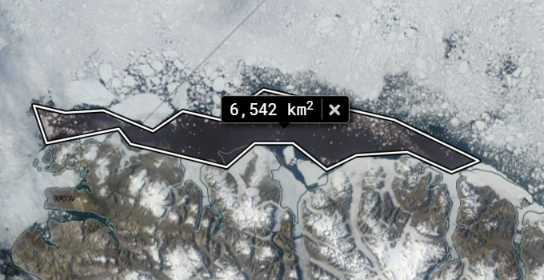
Curiously the paper neglects to mention a polynya in the same region that we reported on, albeit in passing, in August 2018. Here’s an updated video of that event, with the addition at the start of a yellow arrow to highlight the part of the Arctic’s “Last Ice Area” investigated by Moore et al. and a pale blue arrow to highlight Kap Morris Jesup, the most northerly point in Greenland:
Next here’s another animation, covering the time period discussed in the paper and continuing throughout the summer of 2020:
Comparing the two animations it is obvious that the August 2018 polynya is much larger than the one in May 2020, confirmed by a quick area computation using NASA WorldView:
The introduction to the paper states that:
Flaw leads, elongated regions of open water that develop along the interface between land fast and pack ice (Barber & Massom, 2007) are common in the region. Indeed Peary’s 1909 sledding expedition to the North Pole was delayed as a result of a large flaw lead that developed north of Ellesmere Island (Peary, 1910). However, the development of a polynya in this region has not been reported previously.
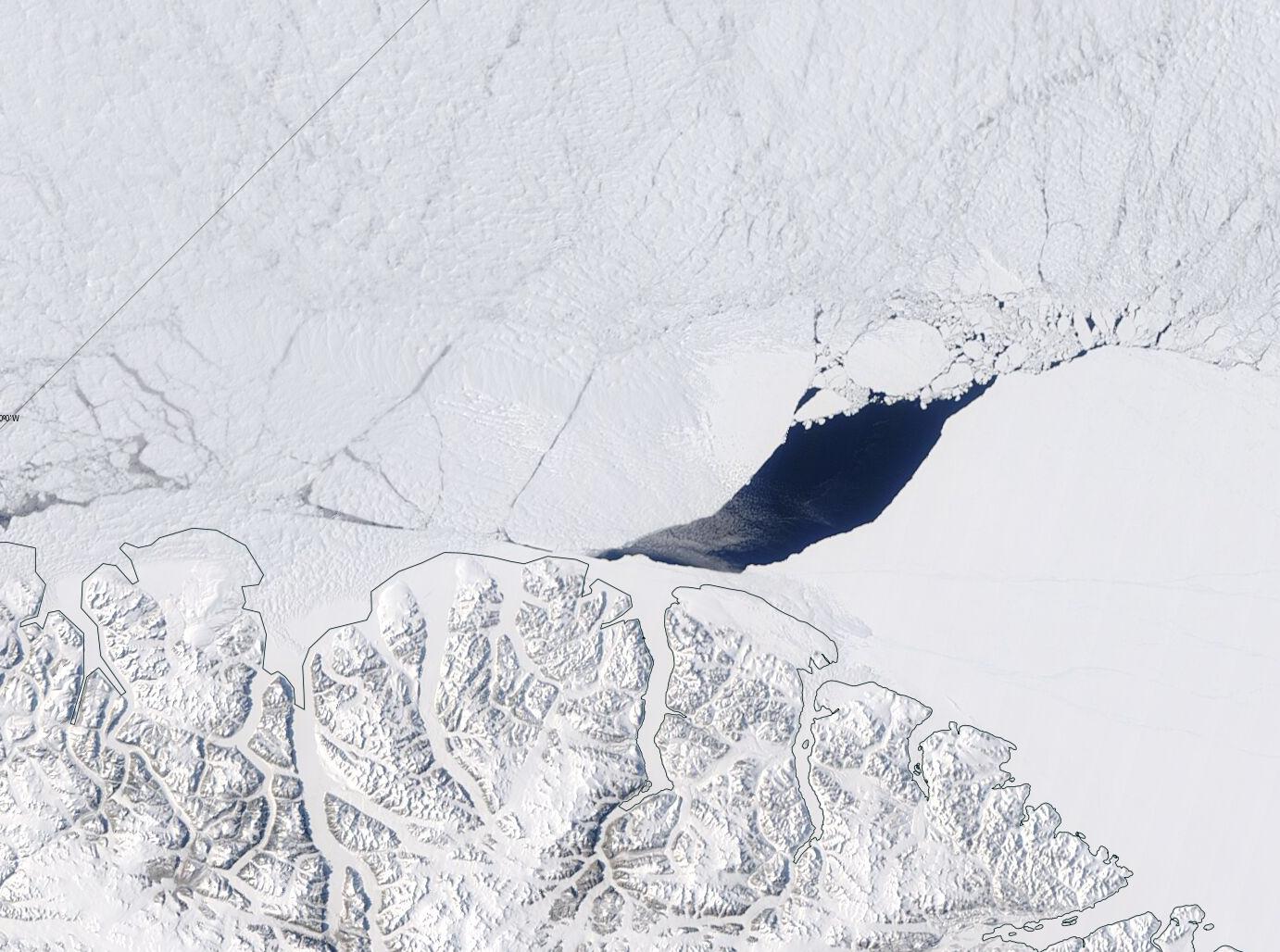
To my eye the image above reveals something far too wide to be described as a “flaw lead”, but let’s delve deeper into the paper:
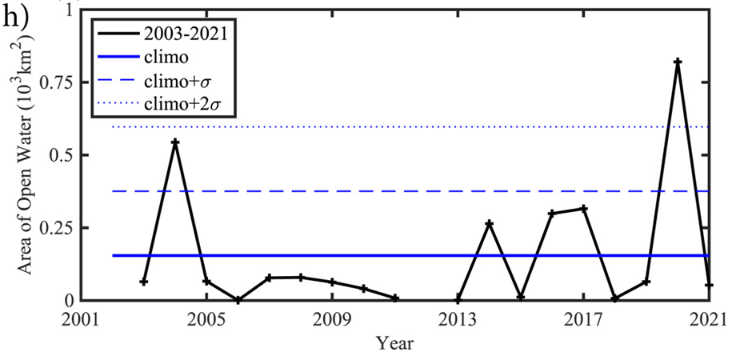
A perspective on the unique nature of the May 2020 event is provided by the monthly mean area of open water in the area of interest during May for the entire period of the ASI data set, 2003–2021 (Figure 2h). Typically the area of open water during May in the region is less than 160 km2. May 2020 is the only year in which the area of open water exceeds 2 standard deviations above the mean.
Perhaps the polynya in question is indeed “unique in the month of May”, in which case it would no doubt have been helpful if the abstract and/or the introduction to the paper had mentioned this subtlety. Then the plethora of erroneous statements in the media like the one recently referenced by Mark Lynas on Twitter might have been avoided?
The polynya is the first one that has been identified in this part of the Last Ice Area, according to a new study detailing the findings in the AGU journal Geophysical Research Letters.
Since Mark, amongst others, seem to be suffering from the misapprehension that “The Arctic’s ‘Last Ice Area’ is cracking, just in time for COP26” here is what’s been happening in the “Last Ice Area” this year, in the run up to next month’s conference in Glasgow:
Finally, for the moment at least, are MODIS images of the May 20th 2020 polynya:
and the one on May 12th 2004:
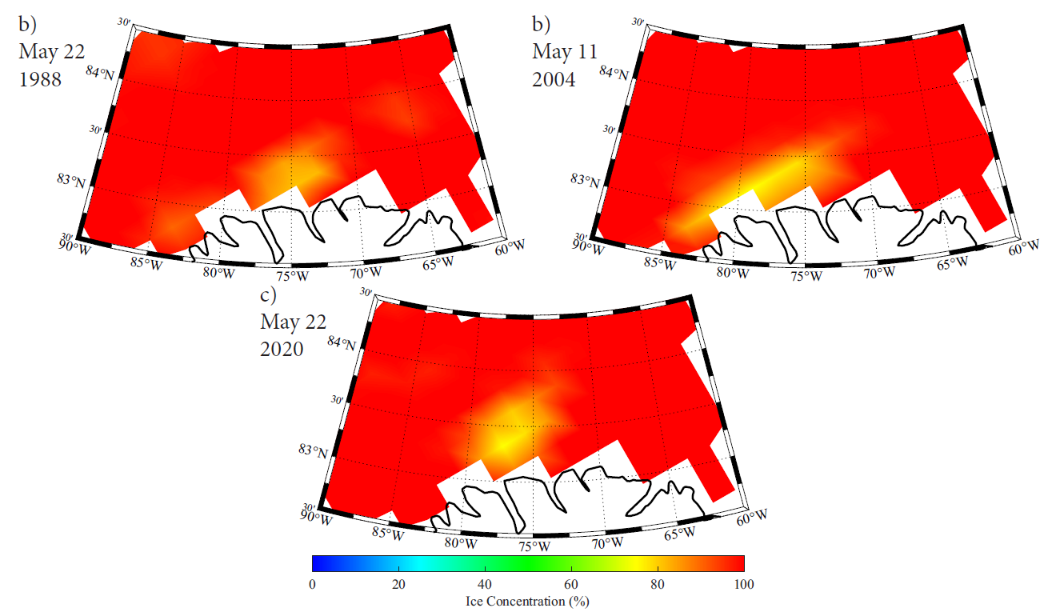
Neither Aqua or Terra had been launched in 1988 of course, and Landsat 5 didn’t cover the north of Ellesmere Island. This is the SSM/I & SSMIS visualisation of all three May polynyas from the supplement to Moore’s paper:
O frabjous day! Callooh! Callay!” He chortled in his joy.
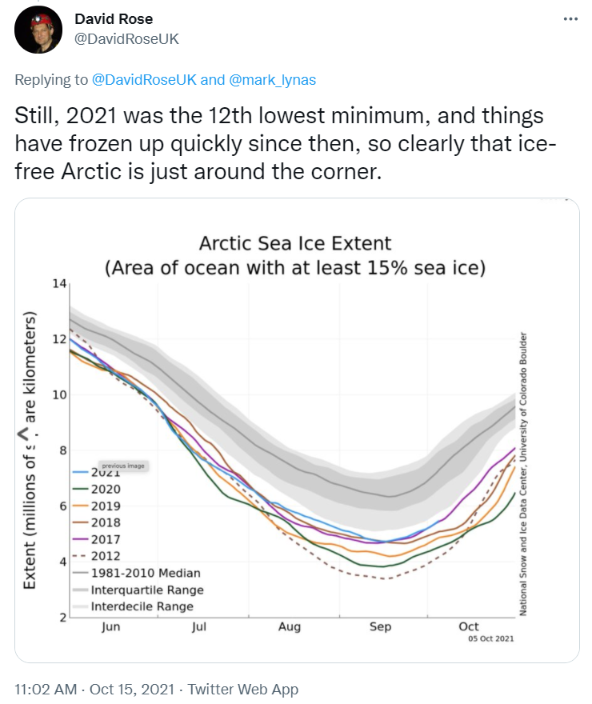
It has been brought to my attention (slightly belatedly) that in the run up to COP26 David Rose is once again pontificating about Arctic sea ice on Twitter. I have been in discussion about the “recently discovered” polynya in the so called “Last Ice Area” north of Ellesmere Island for a few days. Then this morning I discovered via a heads up from “ClimateVariability” that Mark Lynas has been tweeting about it too:
My Arctic alter ego and I were of course “blocked” by David Rose on Twitter many moons ago, and he has been quite quiet about the Arctic of late. However what with one thing and another he has now resumed his controversial commentary on the High North by commenting on Mark’s missive as follows:
A few days ago we posted an article about the recent surge in the amount of disinformation being published about Arctic sea ice. Eventually one of our long list of usual suspects, Anthony Watts, published a copy of an erroneous Arctic article by Paul Homewood.
Now the Watts Up With That Arctic porky pie production line is going into overdrive, so here’s an already long list of its output in the run up to the COP26 conference in Glasgow in a month or so. First up is the aforementioned clone from NALOPKT. Allegedly:
It is very easy to show that Arctic sea ice has stabilised. As their graph itself shows, there have only been three years since 2007 with lower ice extent than that year, and eleven have had higher extents. Also the average of the last ten years is higher than 2007’s extent.
In itself, this is too short a period to make any meaningful judgements. But that is no excuse for the Met Office to publish such a manifest falsehood.
This comment of mine on that article remains invisible at WUWT:
Who would have thunk it?
Not a lot of people know that @wattsupwiththat has just repeated Paul Homewood's allegations that @MetOffice has been economical with the truth about #Arctic#SeaIce.
Neither Paul nor Anthony have seen fit to publish my response yet:
With the COP26 conference starting in Glasgow in just over a month, and fresh from watching Boris Johnson invoking the spirit of Kermit the Frog in The Muppet Christmas Carol, it was an unanticipated pleasure to watch this speech by Mia Mottley, the Prime Minister of Barbados, to the United Nations’ General Assembly:
https://www.youtube.com/watch?v=wz_lDnay3H8
I highly recommend that you watch the entire speech. Whilst making numerous compelling points, especially regarding climate change, Mia also invoked the spirit of one Robert Nesta Marley:
Get up, stand up! Stand up for your rights! Get up, stand up! Don’t give up the fight!
There isn’t a million more square kilometers of ocean covered with ice than at the same time last year. Or is there?
For our younger readers perhaps I should point out that is a reference to the genesis of the Great White Con blog way back in the mists of time in September 2013, when a Daily Mail headline proudly, but erroneously, declared that:
And now it’s global COOLING! Record return of Arctic ice cap as it grows by 60% in a year.
With the COP26 conference due to start in Glasgow on October 31st UK Prime Minister Boris Johnson had this to say to the United Nations General Assembly yesterday, amongst other things:
In the words of the Oxford philosopher Toby Ord “we are just old enough to get ourselves into serious trouble”…
It is time for humanity to grow up.
It is time for us to listen to the warnings of the scientists – and look at Covid, if you want an example of gloomy scientists being proved right – and to understand who we are and what we are doing.
The world – this precious blue sphere with its eggshell crust and wisp of an atmosphere – is not some indestructible toy, some bouncy plastic romper room against which we can hurl ourselves to our heart’s content.
Daily, weekly, we are doing such irreversible damage that long before a million years are up, we will have made this beautiful planet effectively uninhabitable – not just for us but for many other species.
And that is why the Glasgow COP26 summit is the turning point for humanity.
If all that sounds unlikely, then take a look:
https://youtu.be/Z_YPE7vy_wQ?t=27
As we surmised at the time of the recent G7 Summit in Cornwall:
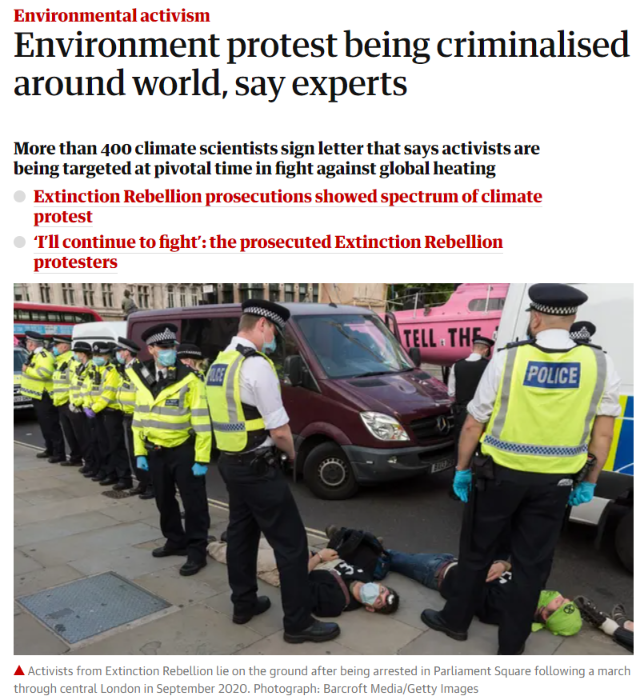
It may not have come to your attention yet, but a long list of over 400 climate scientists have recently signed an “open letter” to the UK and other Governments requesting:
As academics researching climate and environmental change, we have been encouraged to see increased focus on climate in politics and society in recent years. Considering the current trajectory of planetary change, such attention is welcome, even though action is still lacking. We know that our research alone was not enough for this recent awakening to climate breakdown as an existential crisis for humanity, and recognise that protest movements around the world have raised the alarm…
But around the world today, those who put their voices and bodies on the line to raise the alarm are being threatened and silenced by the very countries they seek to protect. We are gravely concerned about the increasing criminalisation and targeting of climate protestors around the world…
With the upcoming Conference of the Parties of the UN Climate Change Convention (COP26) in Glasgow, and the urgency for global action accelerating as global warming already reaches 1.2°C, 2021 is a critical year for climate governance. It has become abundantly clear that governments don’t act on climate without pressure from civil society: threatening and silencing activists thus seems to be a new form of anti-democratic refusal to act on climate.
See for example this tweet from “Scientist Rebellion”, the militant academic wing of Extinction Rebellion UK?
Open Letter: Stop Attempts To Criminalise Nonviolent Climate Protest- If you are a scientist or concerned about the attempt to criminalise climate protest globally, here's an open letter (signed by leading experts & IPCC authors):https://t.co/HfGbOHWoPw#climatejustice#Science
— Scientist Rebellion (@ScientistRebel1) April 2, 2021
The signatories to the open letter include a long list of well known names:
We, the undersigned, therefore urge all governments, courts and legislative bodies around the world to halt and reverse attempts to criminalise nonviolent climate protest.
Professor Julia Steinberger, Universities of Lausanne & Leeds
Dr Oscar Berglund, University of Bristol
Distinguished Professor Michael Mann, Penn State University
Professor Piers Foster, University of Leeds
Dr Leah Goldfarb, Universite Paris Saclay
Professor Catherine Mitchell University of Exeter
Dr Peter Gleick, Pacific Institute
Professor Stefan Rahmstorf, University of Potsdam
etc. etc.
On Monday the Guardian newspaper published an article about the climate scientist’s open letter:
That article has now disappeared from public view:
Our regular reader(s) will no doubt recall the good old days when several times each month an opportunity would present itself to debunk some “skeptical” nonsense from one or more of the usual suspects?
That all changed when Donald Trump was elected President of the United States. He was of course much more amenable to lobbying from fossil fuel interests than Barack Obama, and everything went (comparatively!) quiet.
Now that The Don has sailed off into the proverbial sunset and Joe Biden is top dog all that has changed. A return to the (not so) good old days comes as no surprise, and the porky pies have started coming off the denialospheric production line once again.
There have already been a few contrarian ripples on the surface of the climate science seas, which we may well come to in due course. However a set of substantial waves are now visible on the horizon. The proximate cause is the forthcoming summit of the G7 nations, which as luck would have it is taking place just down the road from the Great White Con winter holiday residence in North Cornwall. Then in November the COP26 conference is being held in Glasgow.
In June, Prime Minister Boris Johnson will welcome fellow G7 leaders to one of the most beautiful parts of the UK: Carbis Bay in Cornwall.
Other parts of the region will also play a key role in the Summit, including neighbouring St Ives, Falmouth and Newquay airport.
With over 400 miles of coastline, Cornwall’s stunning landscape provides a perfect setting for world leaders to come together and discuss how to respond to global challenges like coronavirus and climate change.
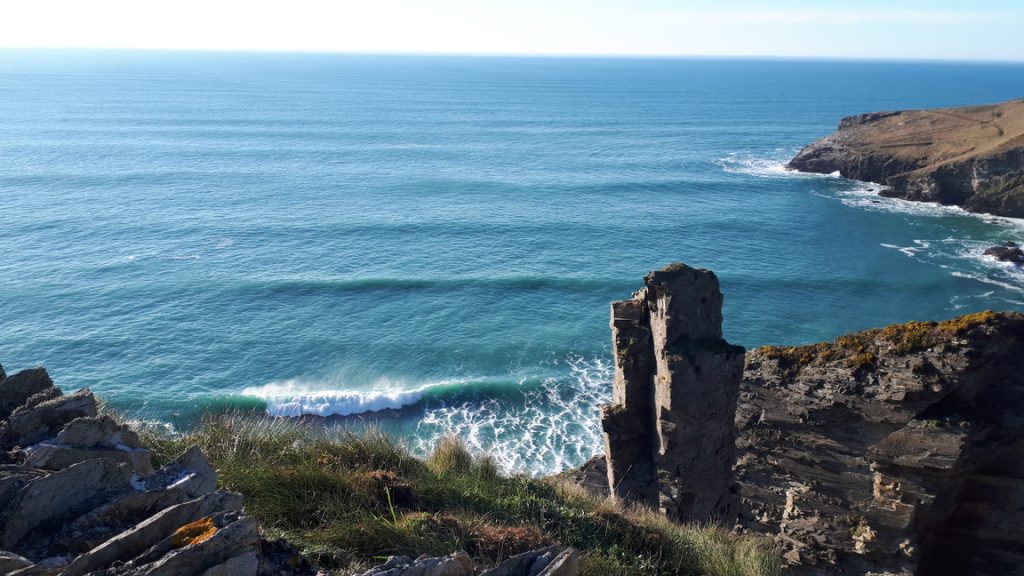
Here’s one of my recent pictures of some of that coastline, including part of Cornwall’s industrial heritage and some large waves!
Climate change is top of the G7 agenda along with Covid-19, and you can rest assured that vested interests will not miss any opportunity to promote those interests over the next two months and beyond. By way of example, one of our long standing “usual suspects”, Judith Curry, “tweeted” the following message to her followers on April 17th:
This website uses cookies to improve your experience. We'll assume you're ok with this, but you can opt-out if you wish. Cookie settingsACCEPT
Privacy & Cookies Policy
Privacy Overview
This website uses cookies to improve your experience while you navigate through the website. Out of these, the cookies that are categorized as necessary are stored on your browser as they are essential for the working of basic functionalities of the website. We also use third-party cookies that help us analyze and understand how you use this website. These cookies will be stored in your browser only with your consent. You also have the option to opt-out of these cookies. But opting out of some of these cookies may affect your browsing experience.
Necessary cookies are absolutely essential for the website to function properly. This category only includes cookies that ensures basic functionalities and security features of the website. These cookies do not store any personal information.
Any cookies that may not be particularly necessary for the website to function and is used specifically to collect user personal data via analytics, ads, other embedded contents are termed as non-necessary cookies. It is mandatory to procure user consent prior to running these cookies on your website.