Tag Archives: AWI

Facts About the Arctic in December 2025

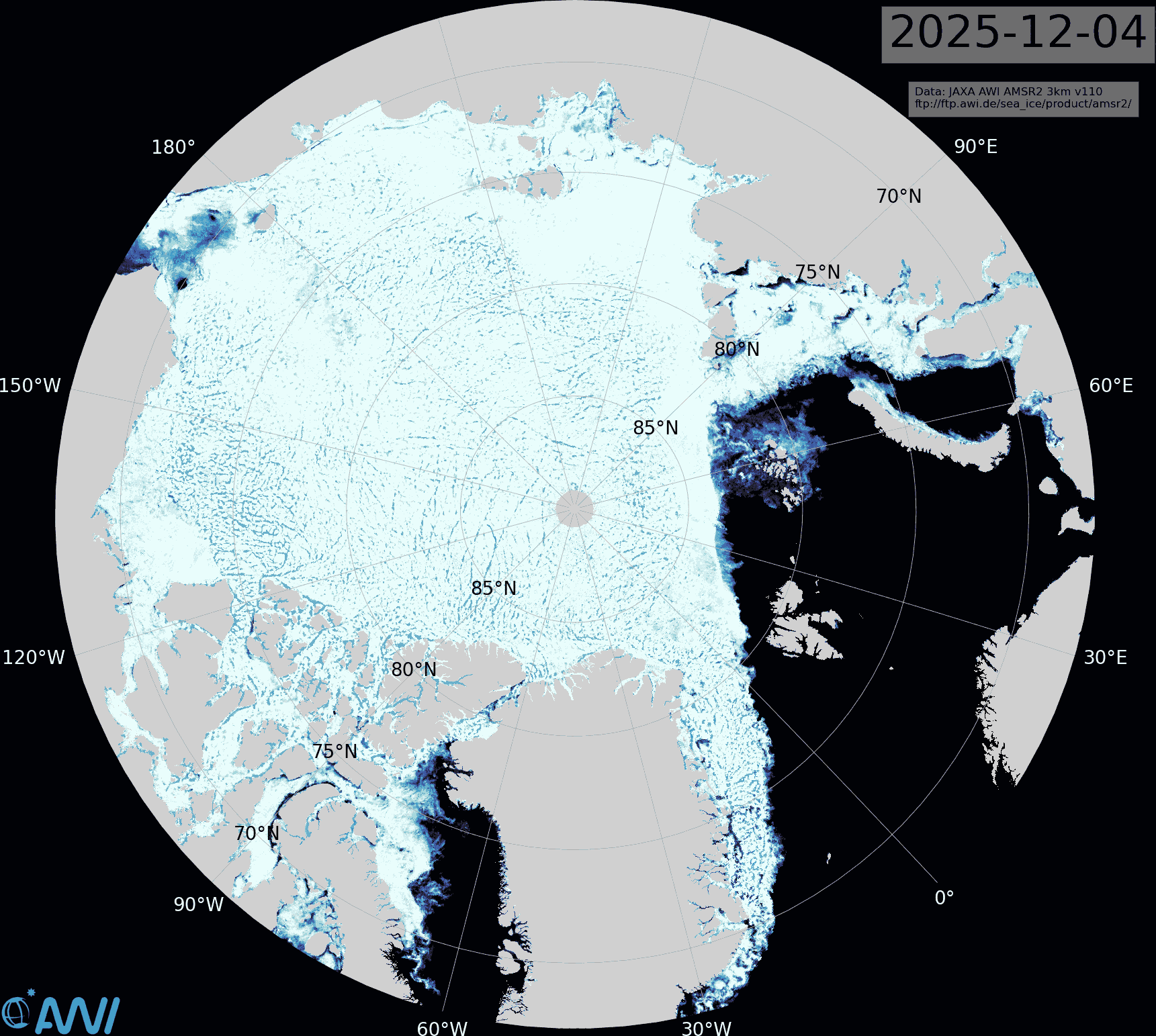
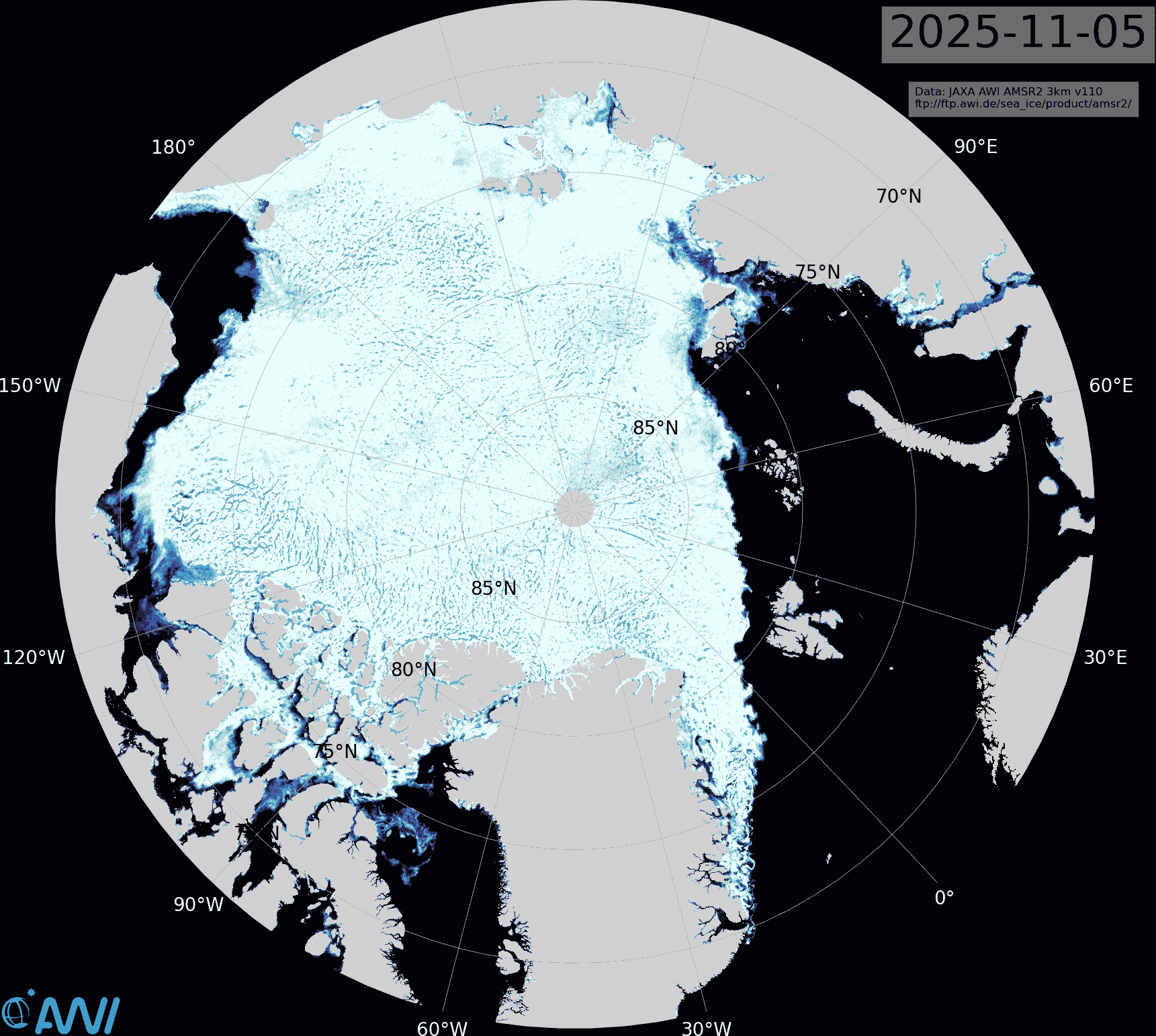
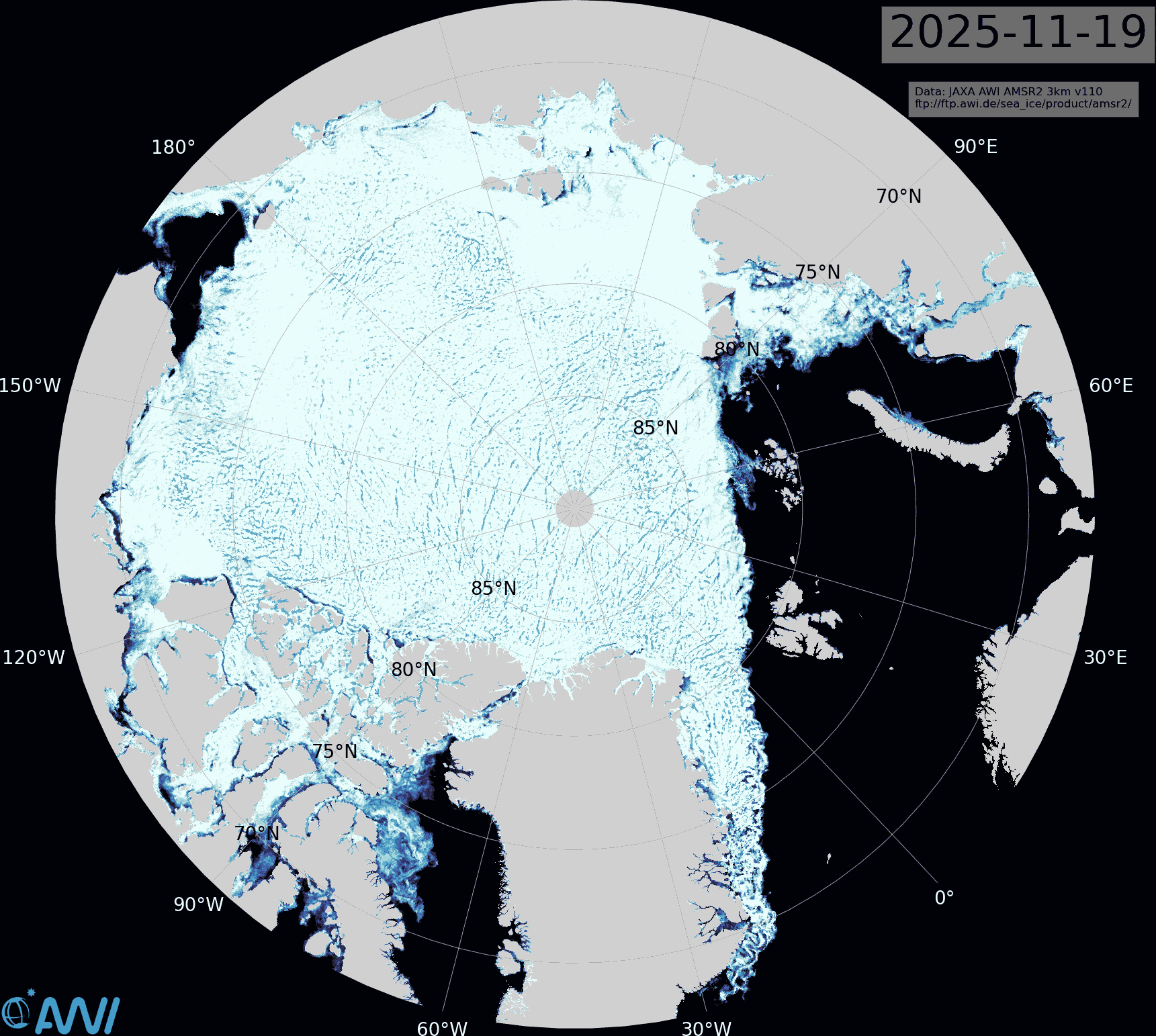
The latest Alfred Wegener Institute sea ice concentration map shows that the Pacific side of the Central Arctic Basin is now almost completely refrozen:

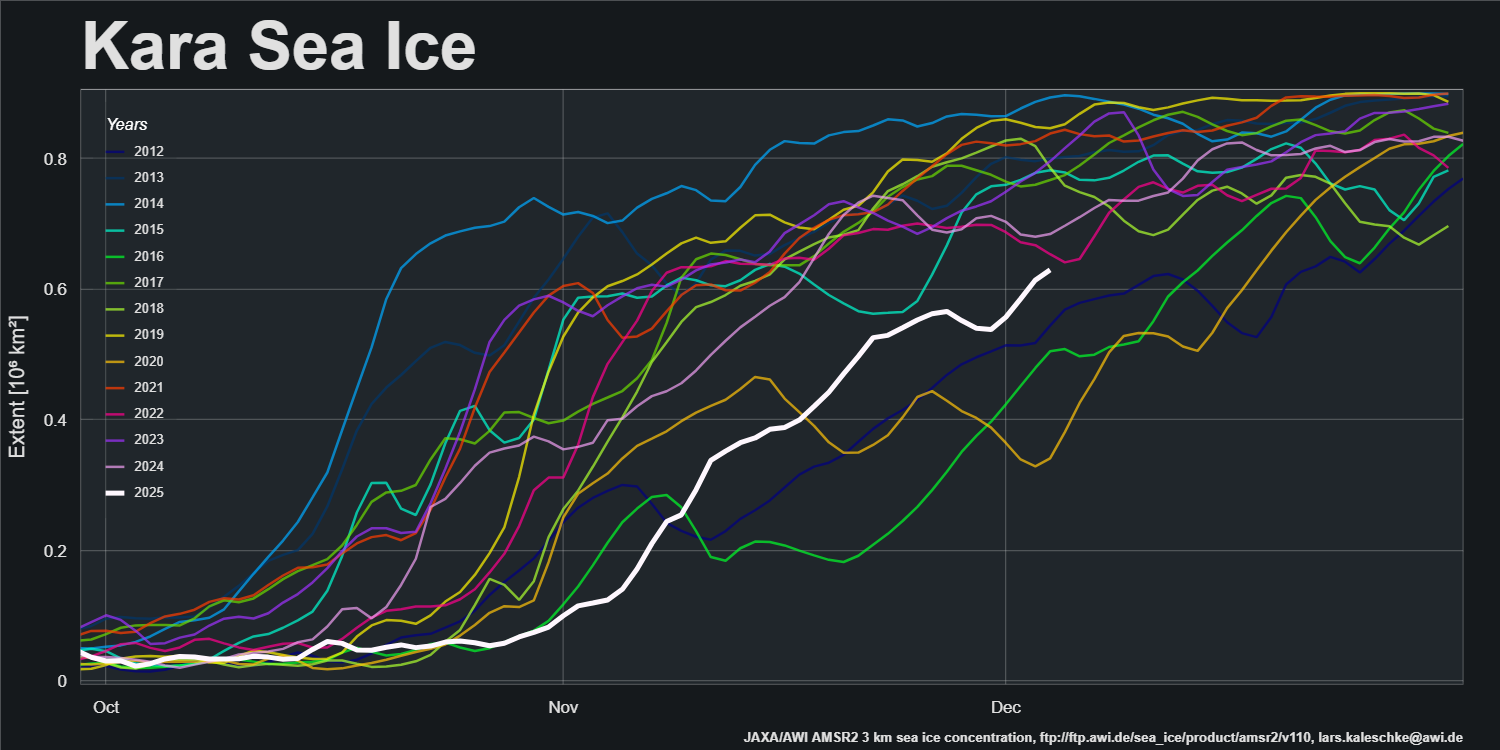
On the Atlantic side of the Arctic the Kara Sea is rapidly refreezing:

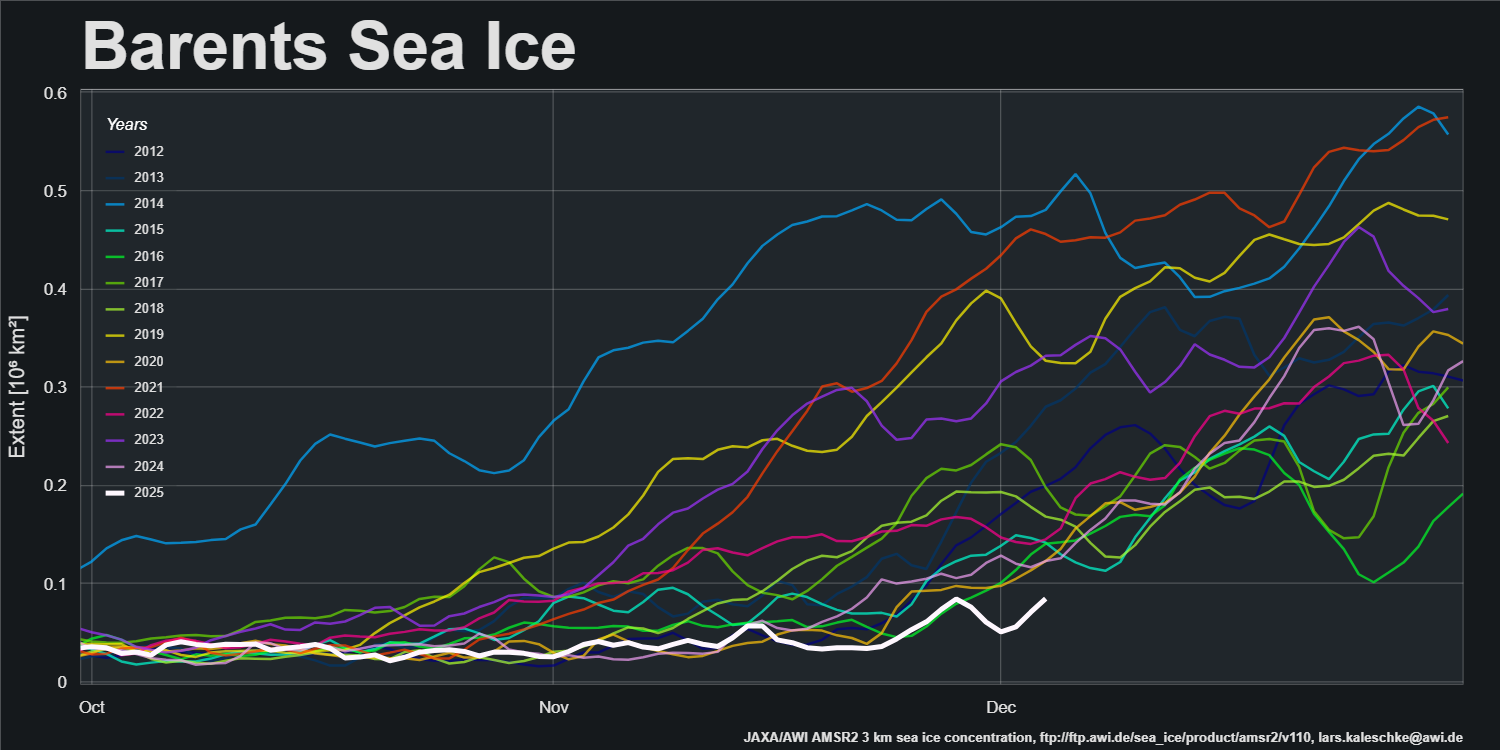
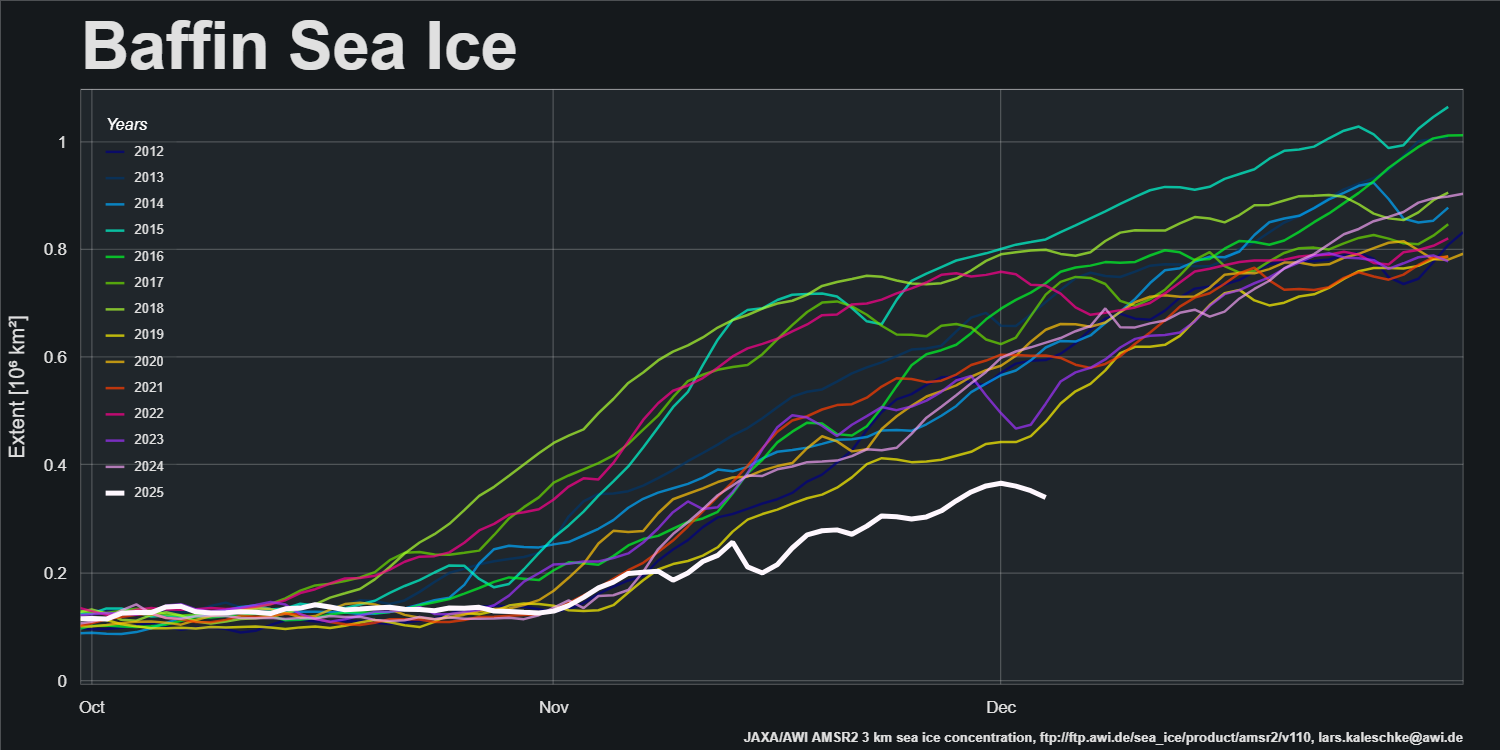
However, sea ice extent in the Barents Sea and Baffin Bay is currently lowest for the date in the AMSR2 record:

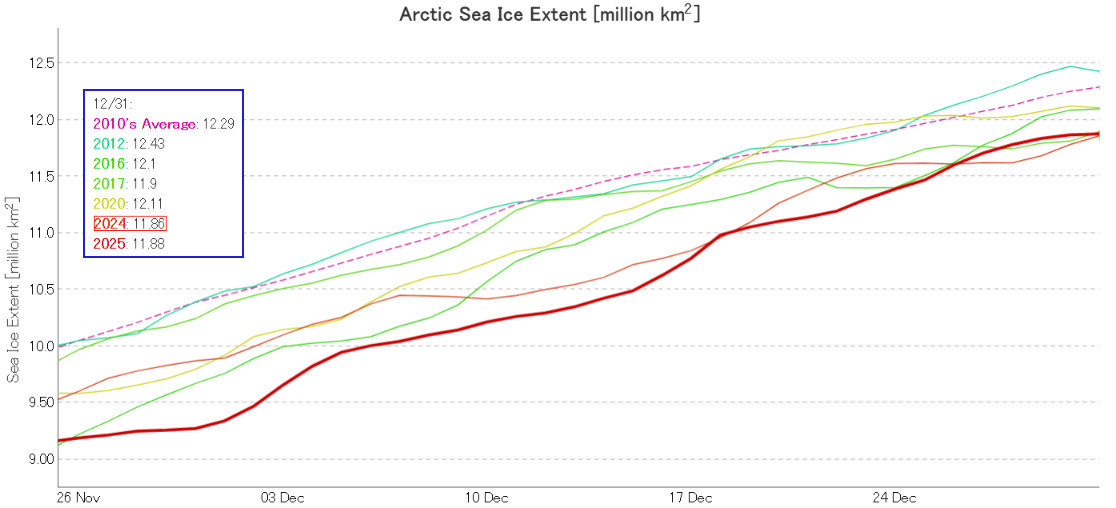
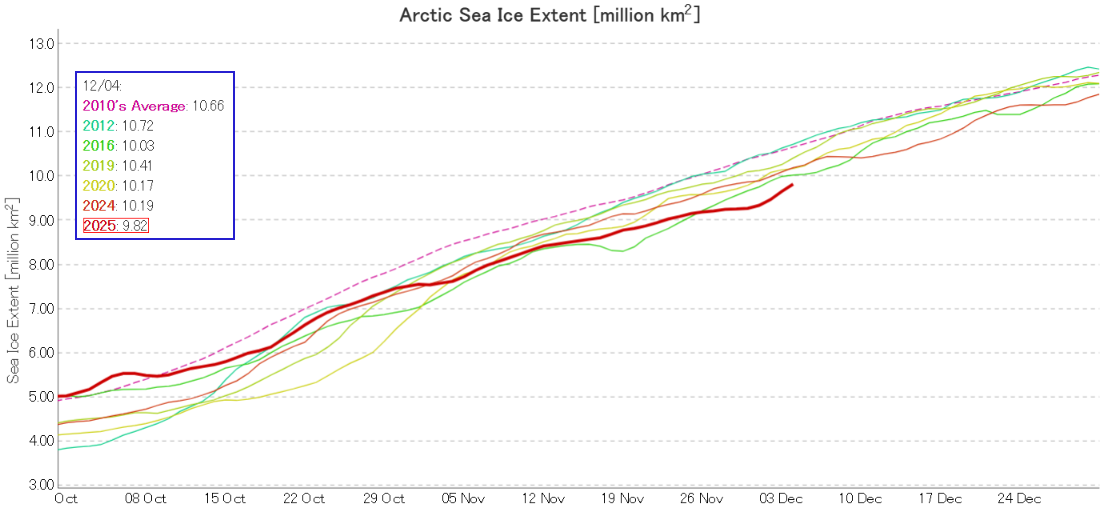
Pan Arctic JAXA/ViSHOP extent is currently lowest for the date in the satellite era:

Continue reading Facts About the Arctic in December 2025

Facts About the Arctic in November 2025

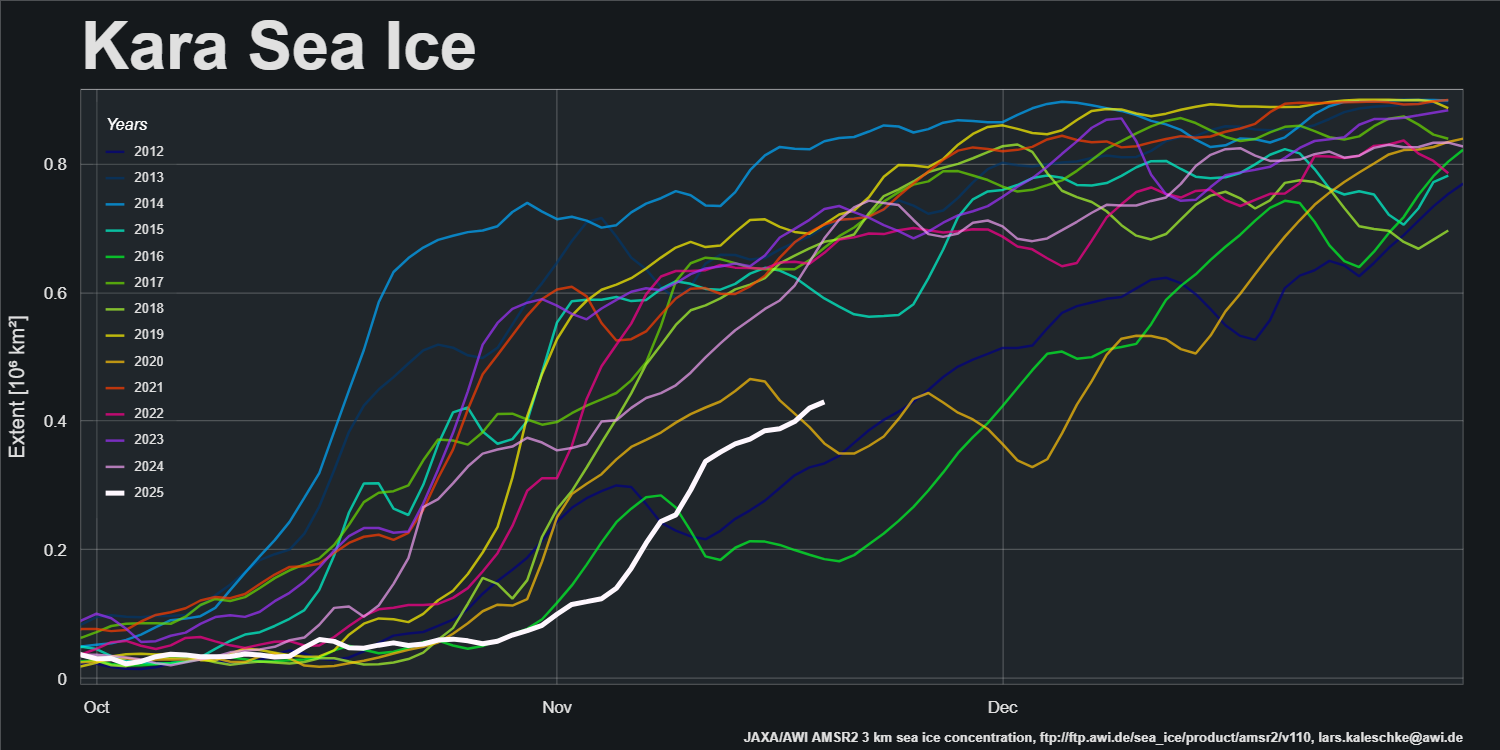
The latest Alfred Wegener Institute sea ice concentration map shows the East Siberian and Laptev Seas almost completely refrozen. However, refreeze of the Kara Sea has barely begun:

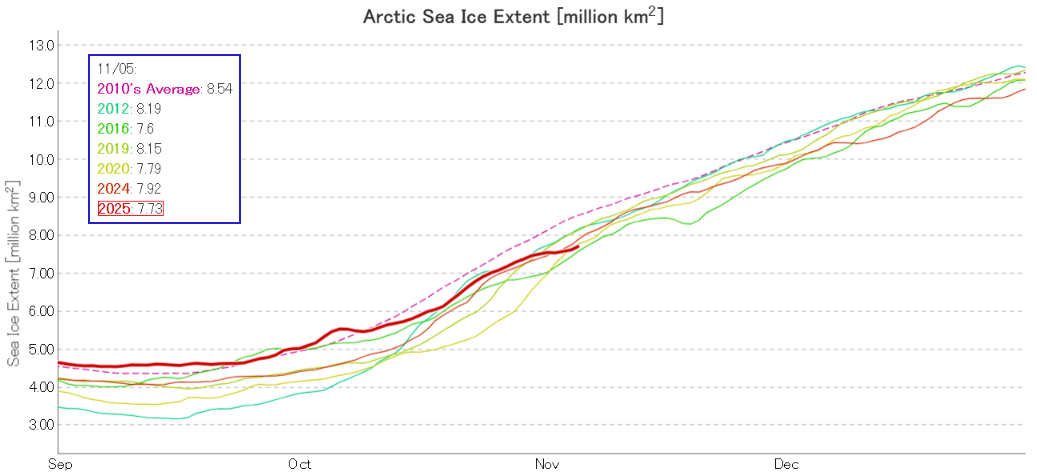
Across the Arctic as a whole the refreeze has slowed significantly, and JAXA/ViSHOP extent is now 2nd lowest in the satellite era:

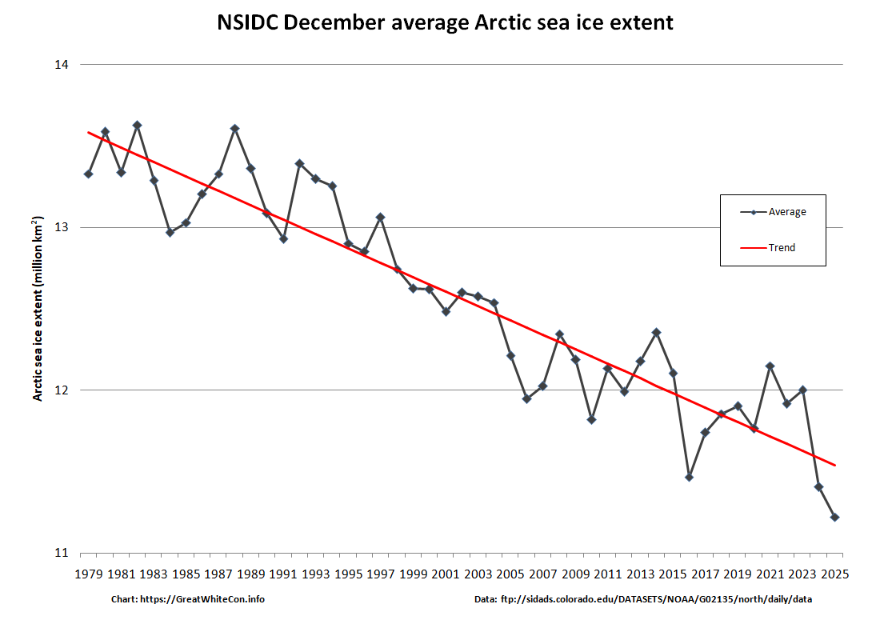
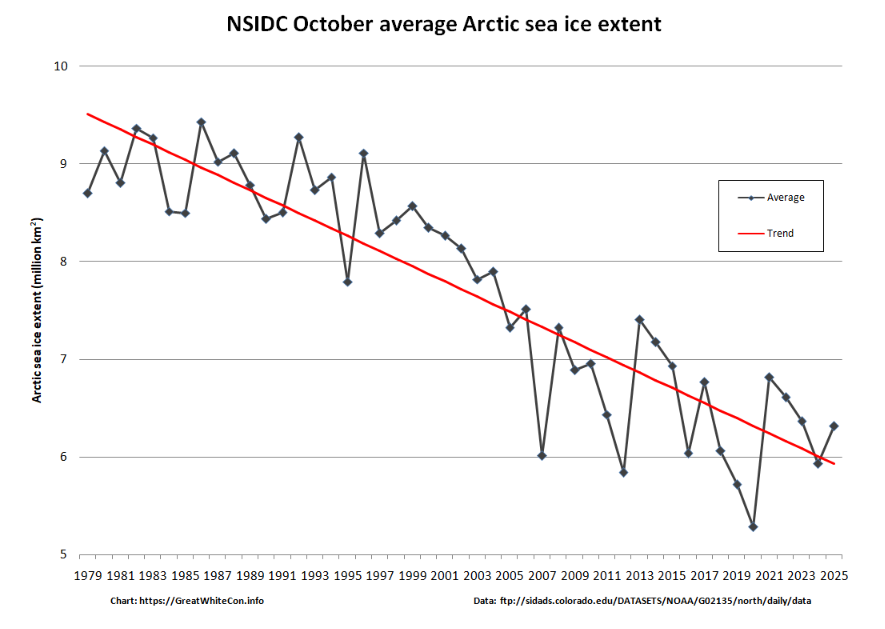
However, average NSIDC extent for the month of October was higher than last year and above the linear trend:

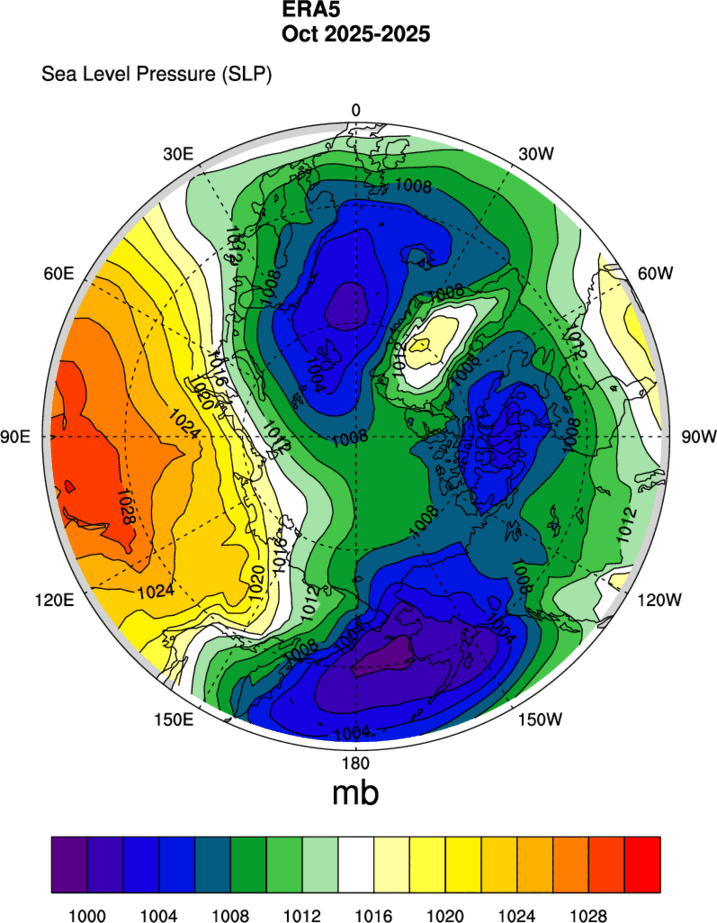
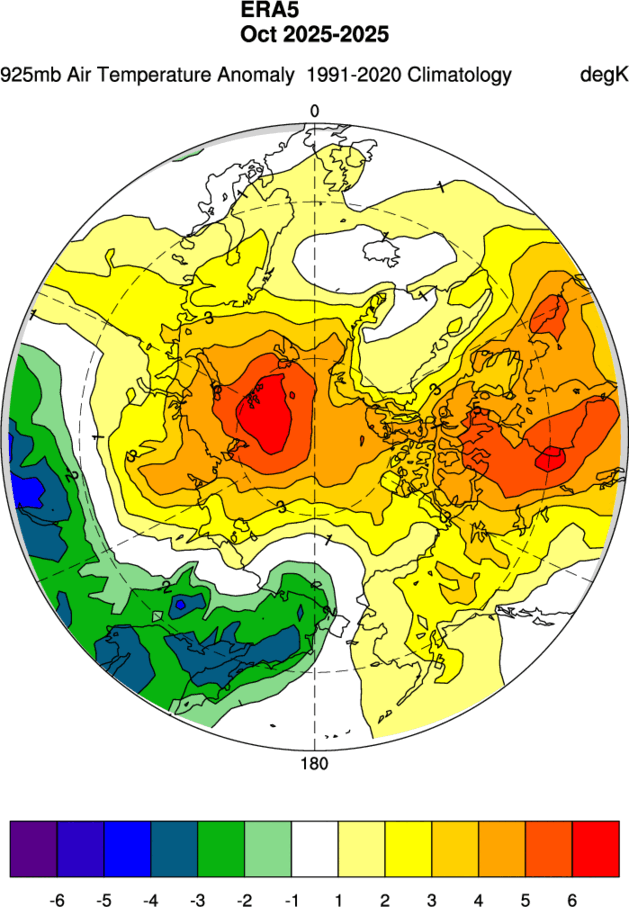
The ERA5 MSLP map for October shows high pressure over Siberia, associated with lower than normal air temperatures at 925 hPa across the region. However, temperatures across almost the entire Arctic Ocean were above normal:

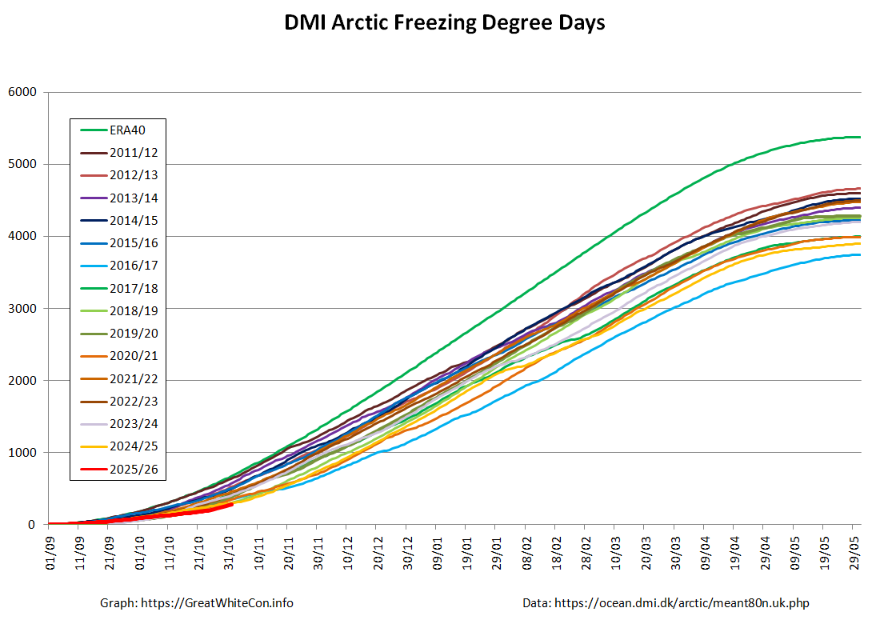
High Arctic freezing degree days based on DMI >80N data were lowest for the date at the beginning of November:

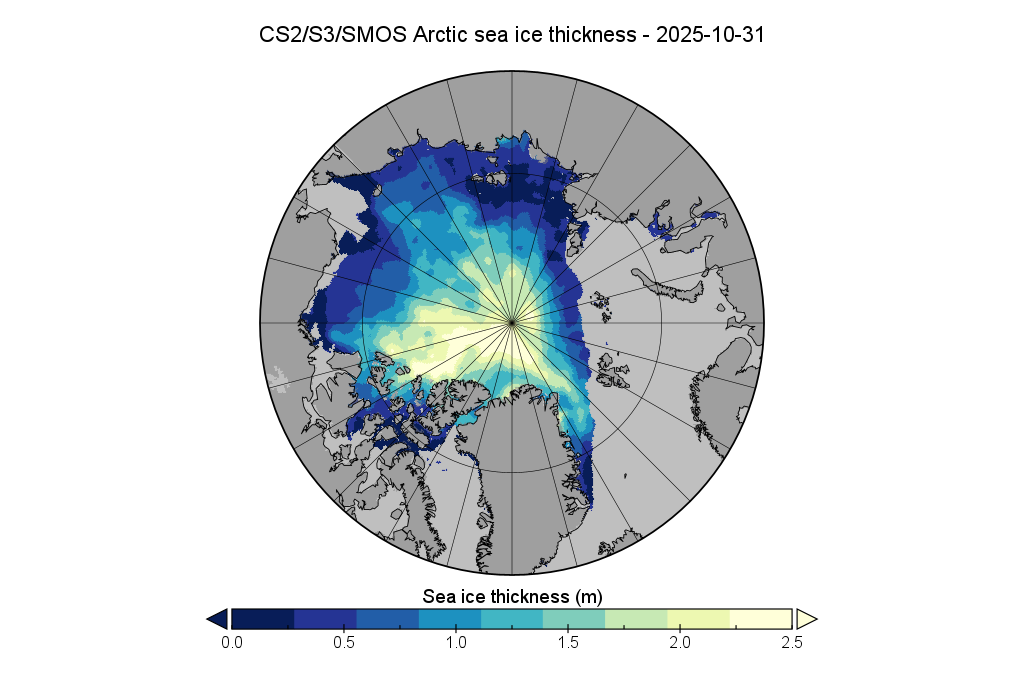
Here is the Alfred Wegener Institute’s CryoSat-2/Sentinel 3/SMOS Arctic sea ice thickness map at the end of October:

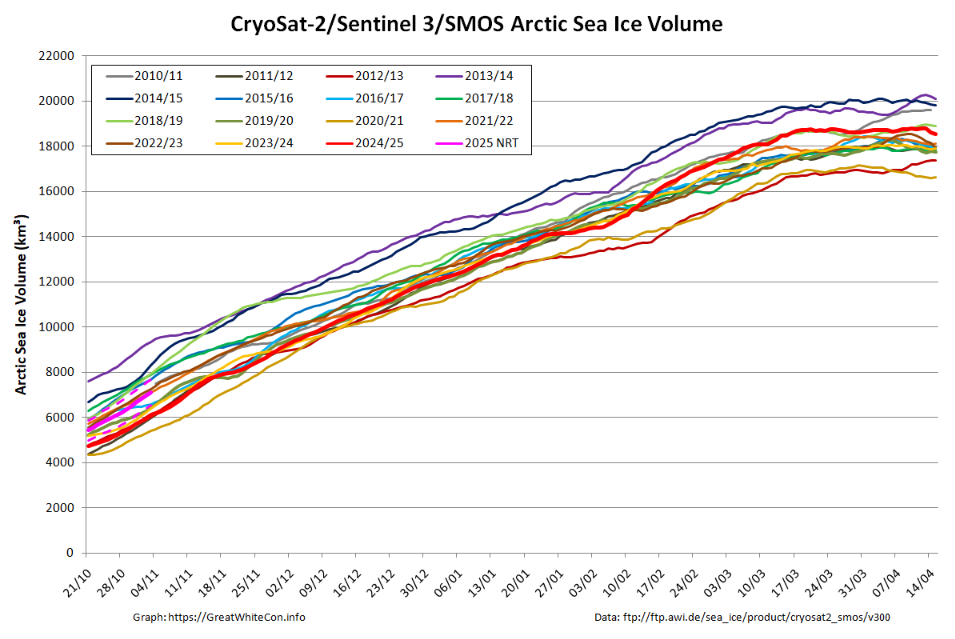
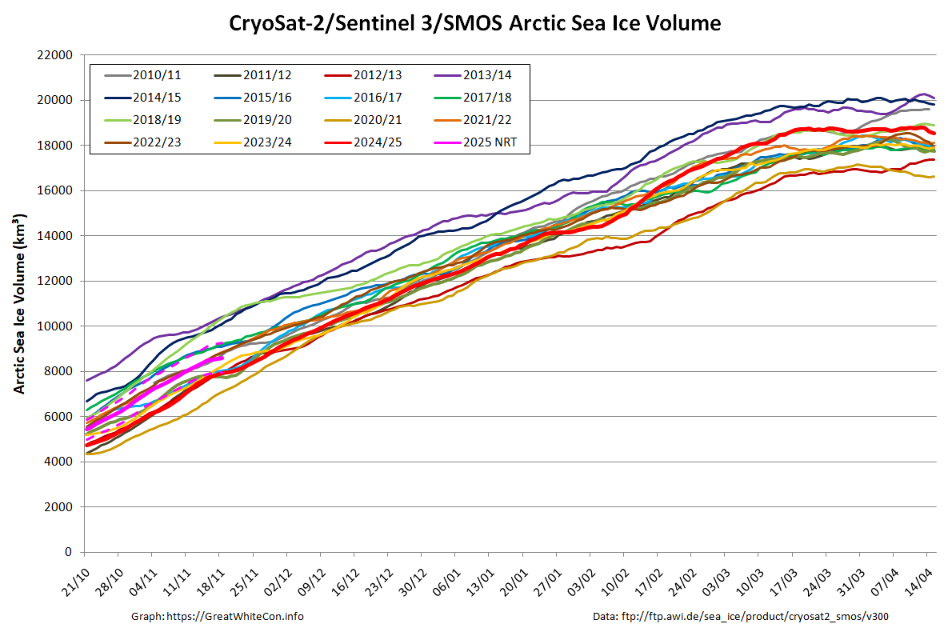
Here too is the associated sea ice volume graph:
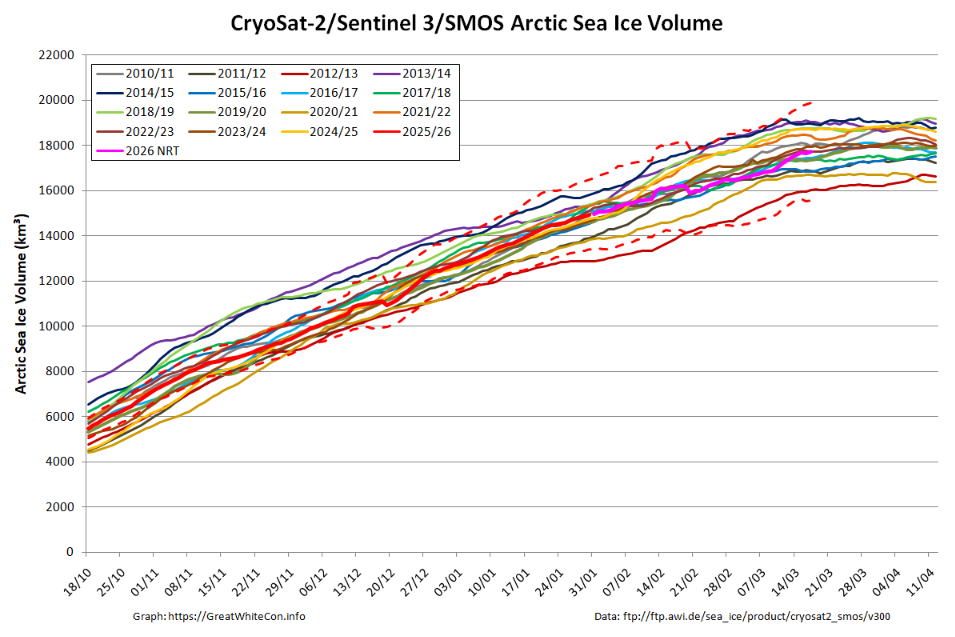
Bear in mind the caveats about the current lack of reliable SMOS data on the Atlantic side of the Arctic, and that Sentinel 3 data is only incorporated from Autumn 2023.

[Update – November 20th]

Refreeze of the Beaufort Sea is complete, and refreeze of the Kara Sea has started in earnest:

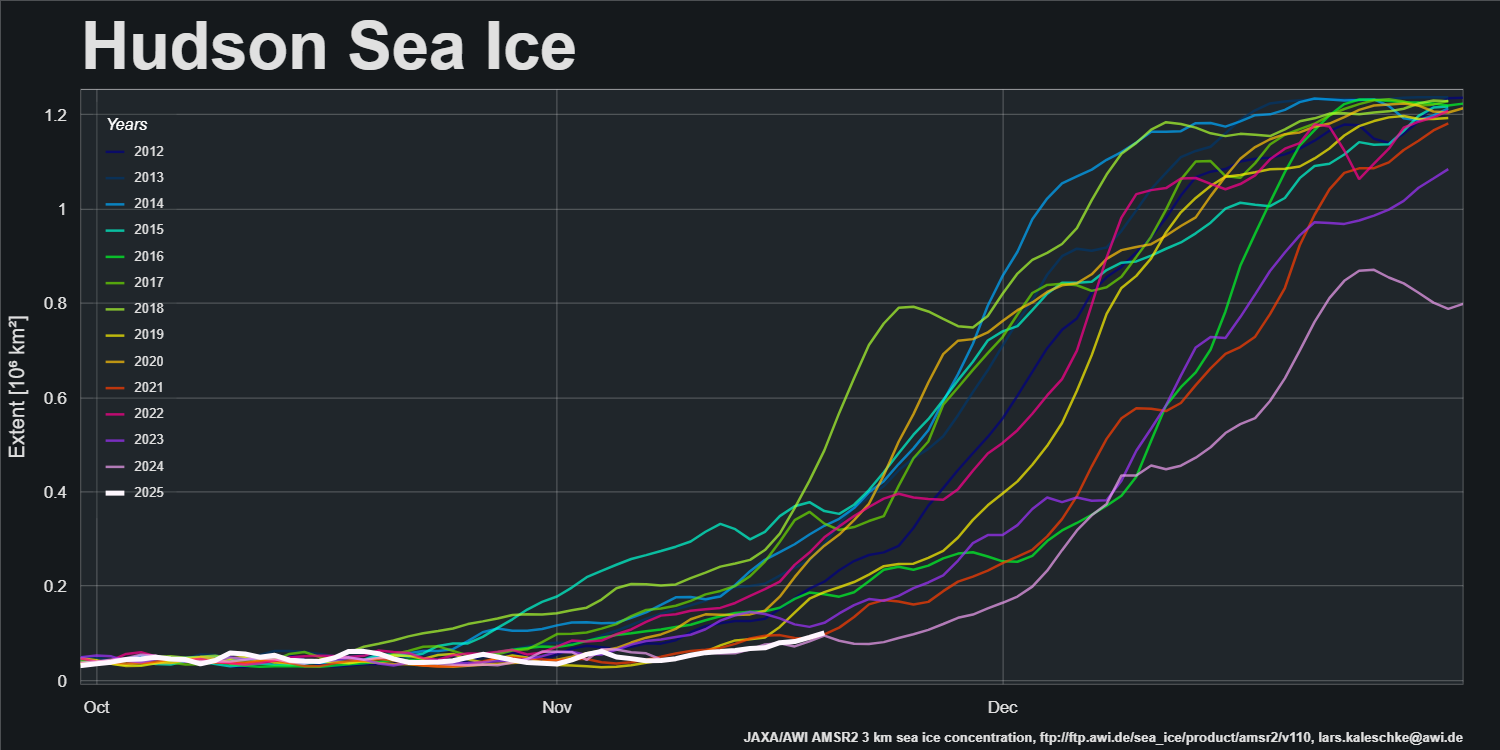
However, the Barents Sea is still sea ice free and refreeze of Hudson Bay has barely begun:

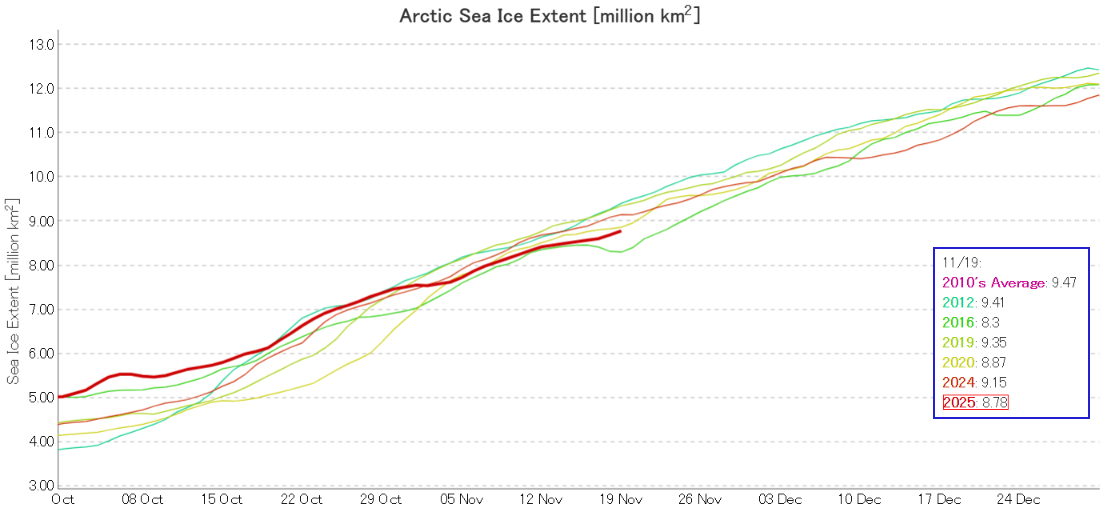
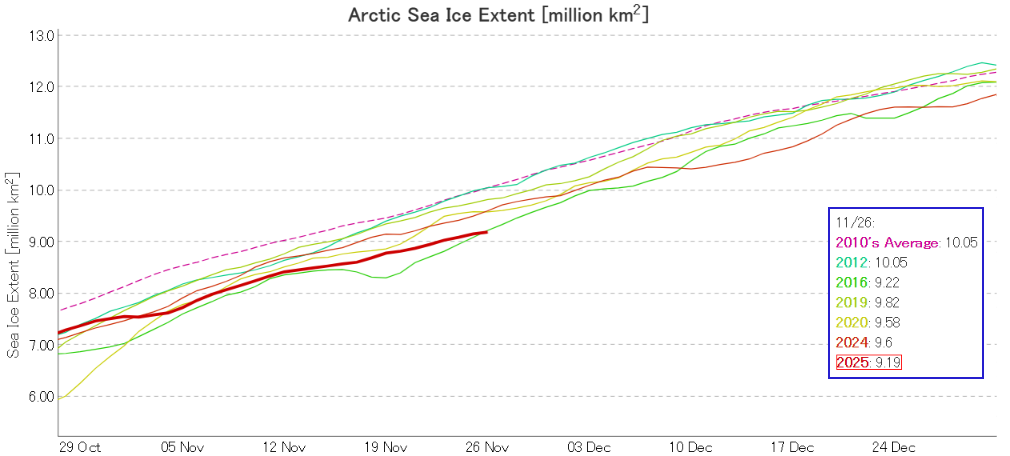
JAXA extent is still second lowest for the date:

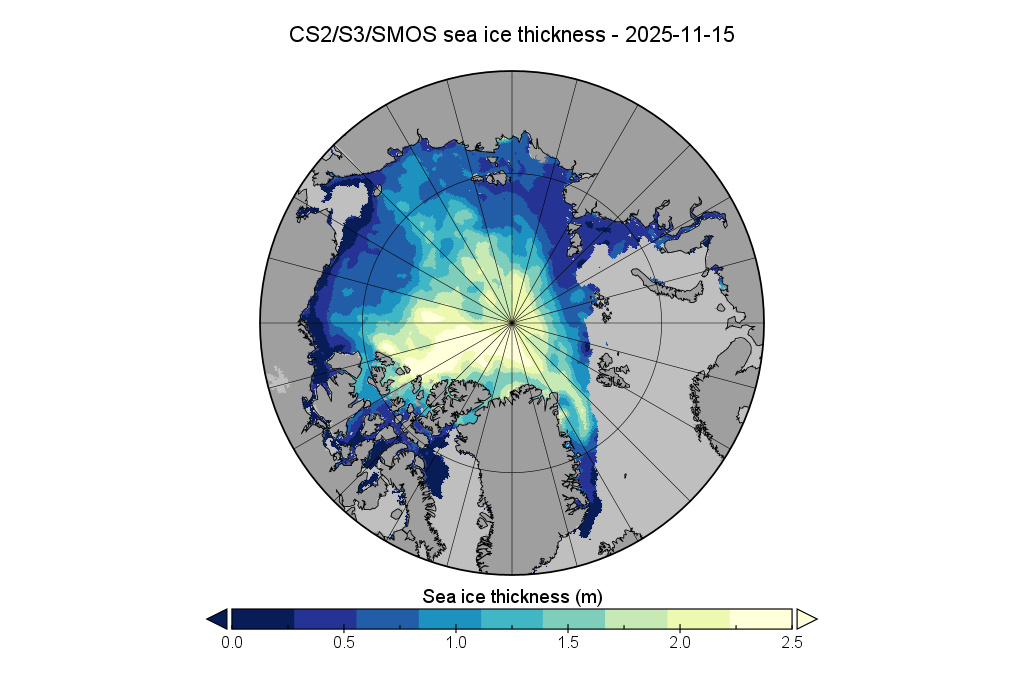
The PIOMAS gridded thickness data for October has yet to be corrected, but here is the mid month thickness map from AWI:

Here too is the associated volume graph:

[Update – November 27th]

JAXA/ViSHOP extent is now lowest for the date in their record going back to 1978:

[Update – December 5th]

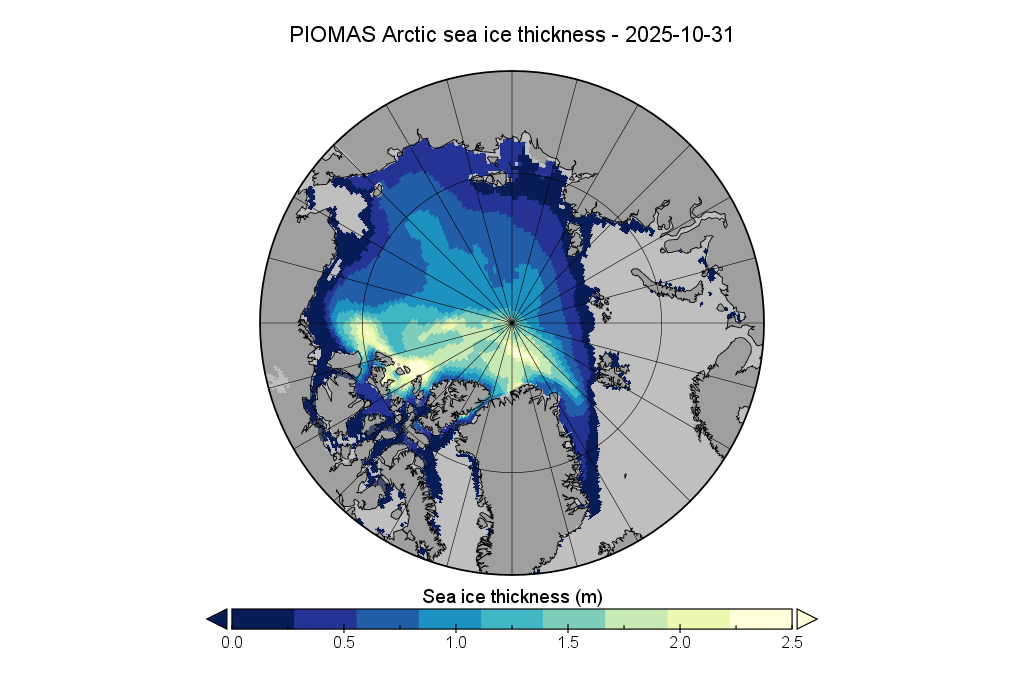
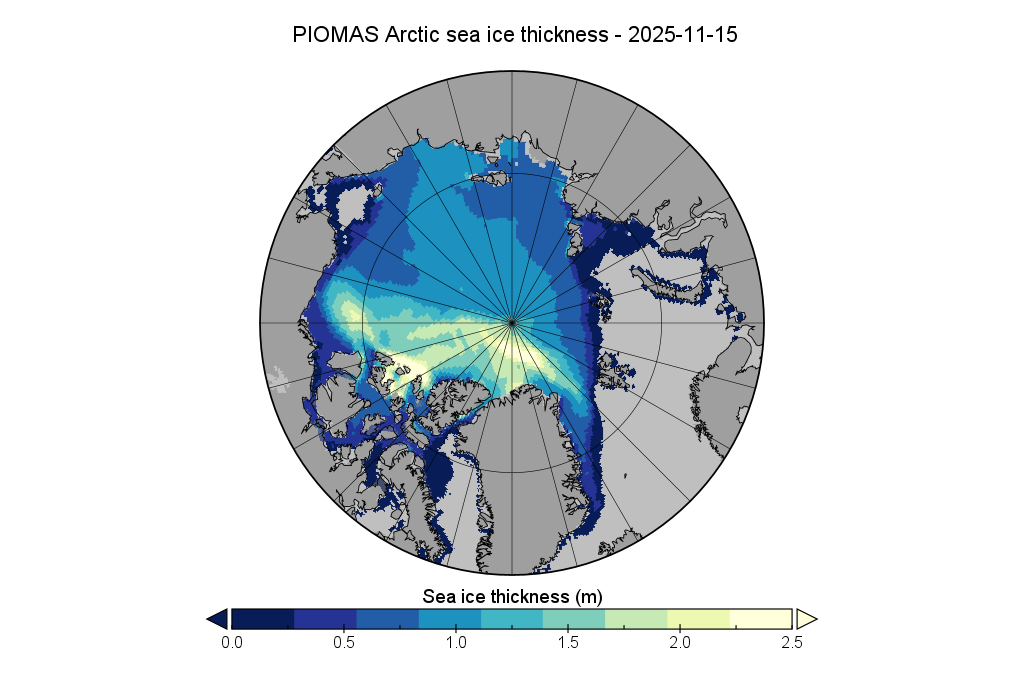
The PIOMAS team have finally published gridded thickness data for October and November, so here are the October 31st and November 15th thickness maps:

The conversation continues over on the December open thread, including the latest PIOMAS data.

Facts About the Arctic in September 2025

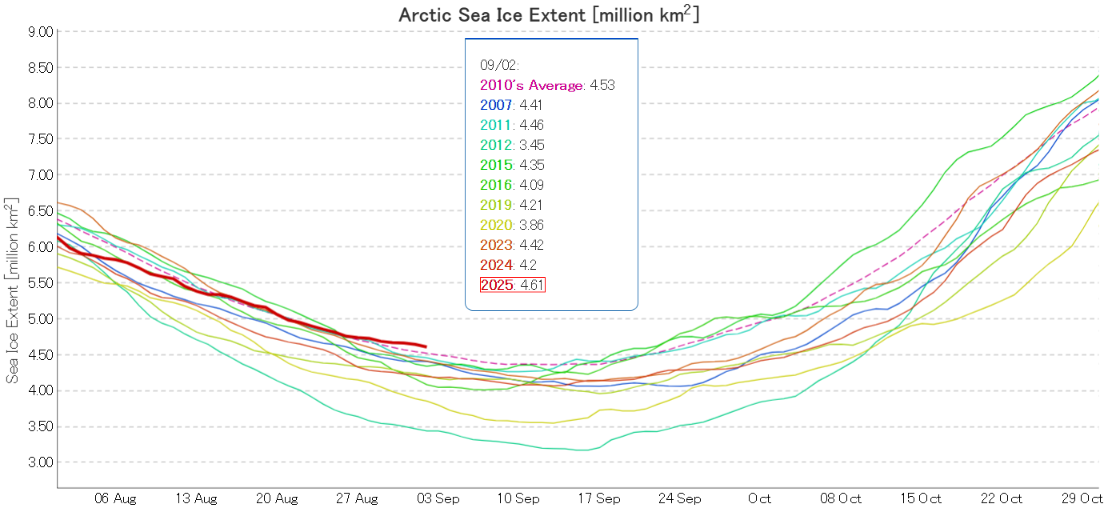
At the beginning of last month JAXA/ViSHOP extent was third lowest for the date in the satellite era. With the date of the 2025 minimum extent rapidly approaching that is no longer the case:

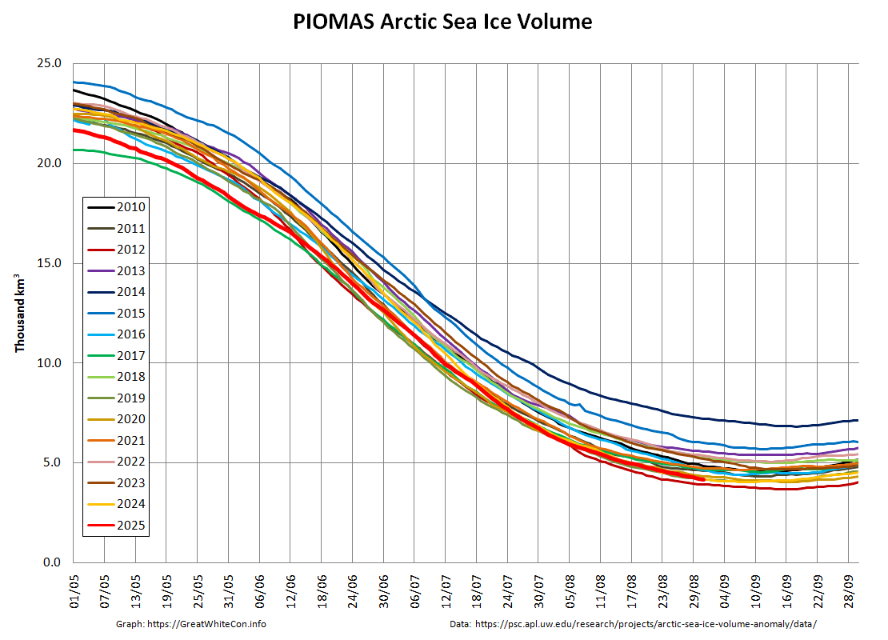
Whilst JAXA extent is now 10th lowest, PIOMAS volume remains second lowest for the date:

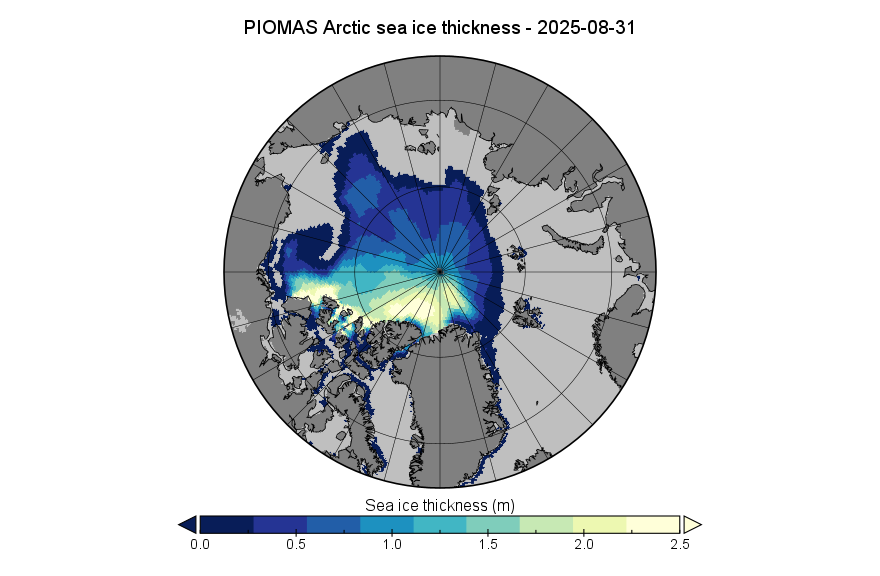
Here’s the associated thickness map. Note the change of scale from last month

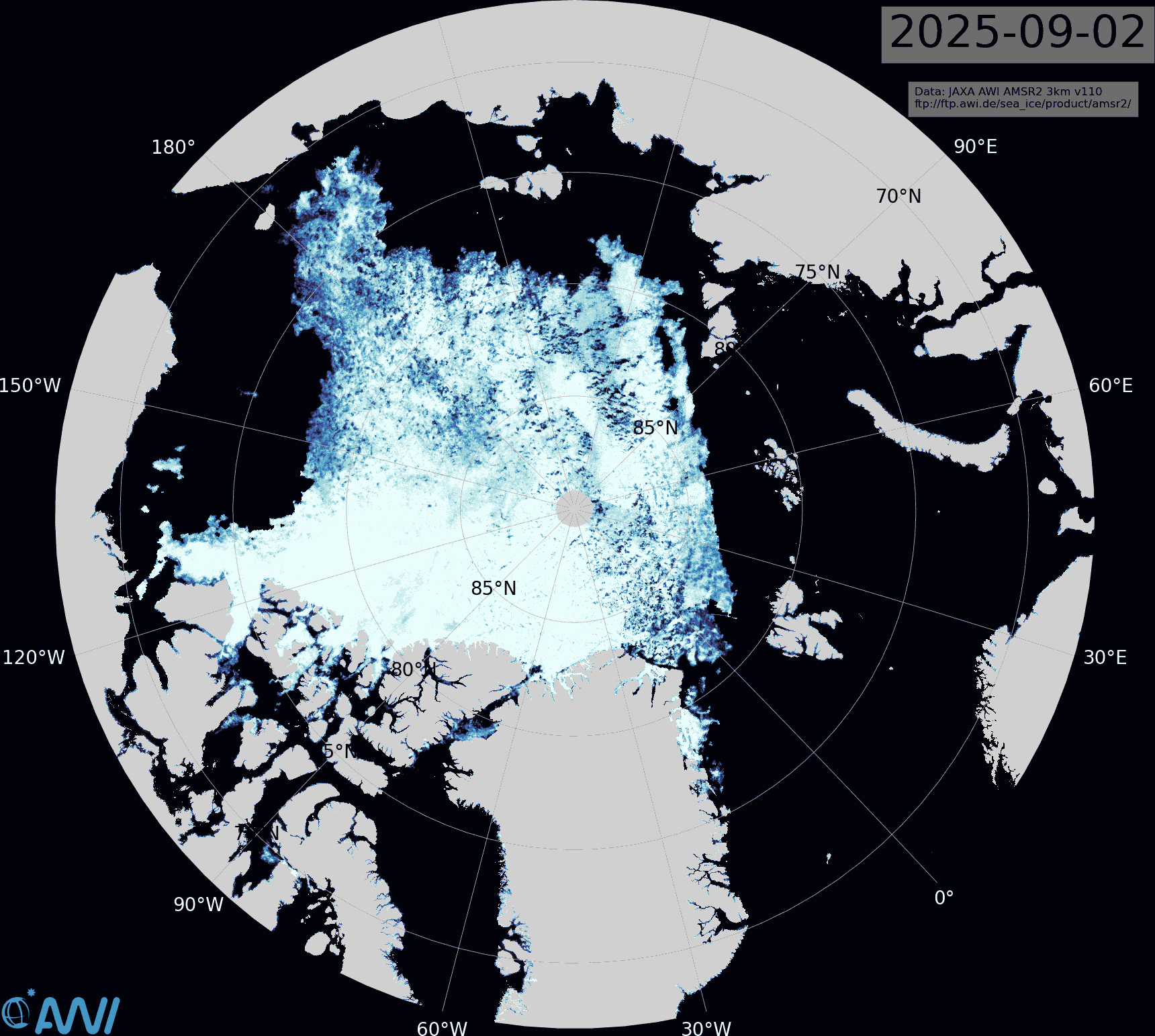
Compare and contrast that map with the AWI’s sea ice concentration map, particularly in the Beaufort Sea area:

Continue reading Facts About the Arctic in September 2025

Facts About the Arctic in August 2025

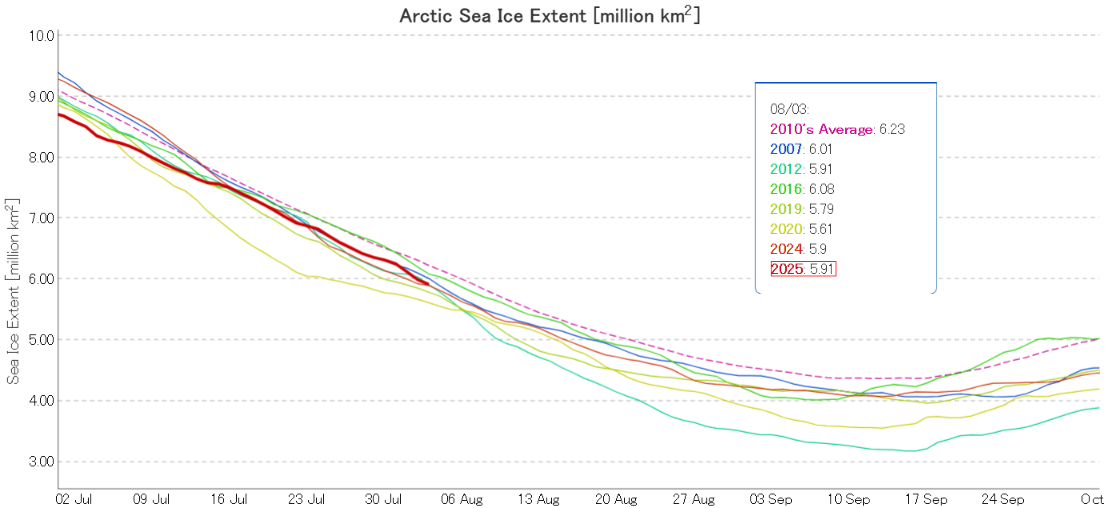
At the beginning of August JAXA/ViSHOP extent is in a “statistical tie” for 3rd lowest for the date in the satellite era:

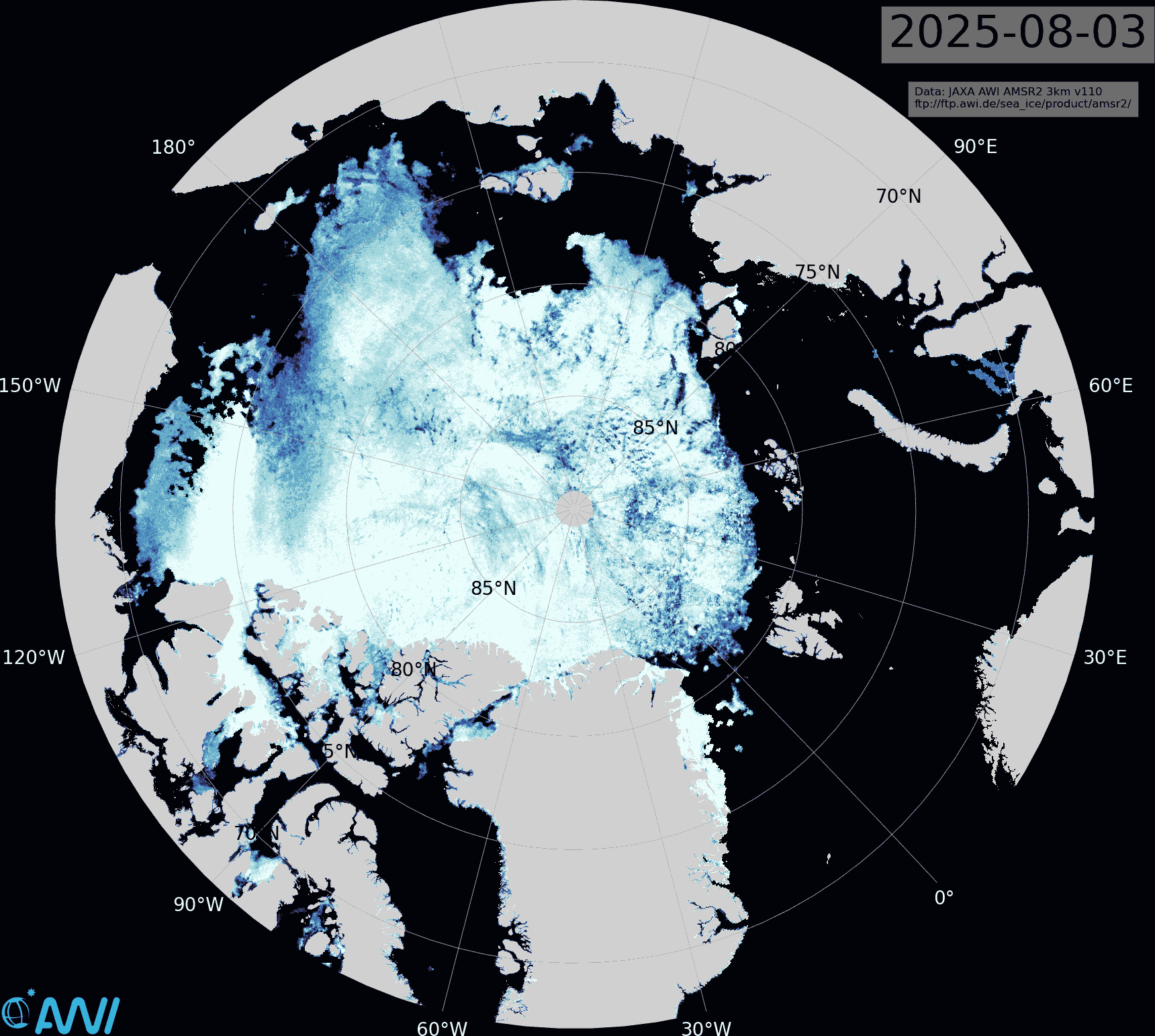
Extent has been declining rapidly for the past few days, and further losses look likely in the Beaufort Sea on either side of an arm of high concentration ice visible in the Alfred Wegener Institute’s map of sea ice concenration:

The ice on the Atlantic side of the Arctic is starting to look highly fragmented, all the way to the North Pole.

Continue reading Facts About the Arctic in August 2025

Facts About the Arctic in May 2025

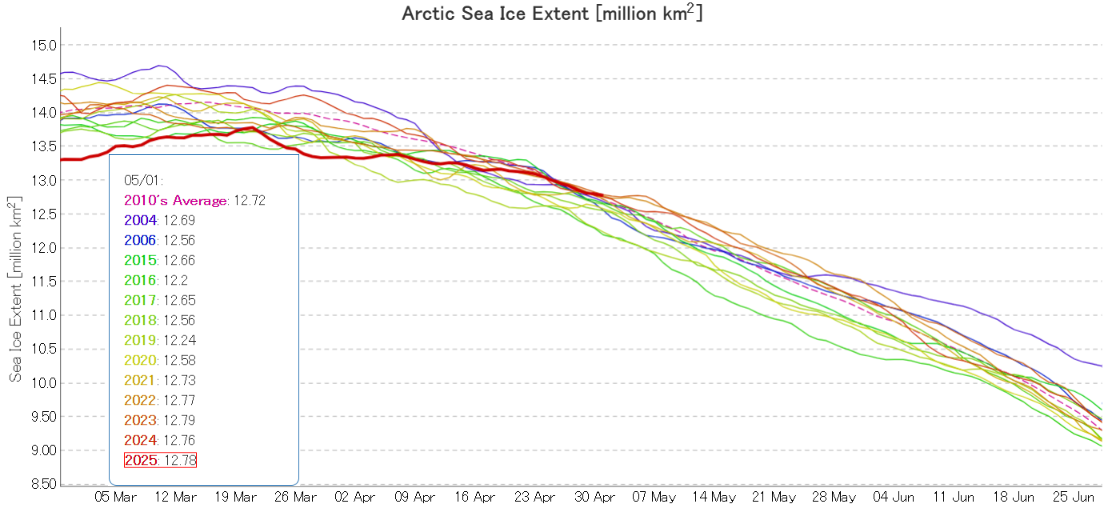
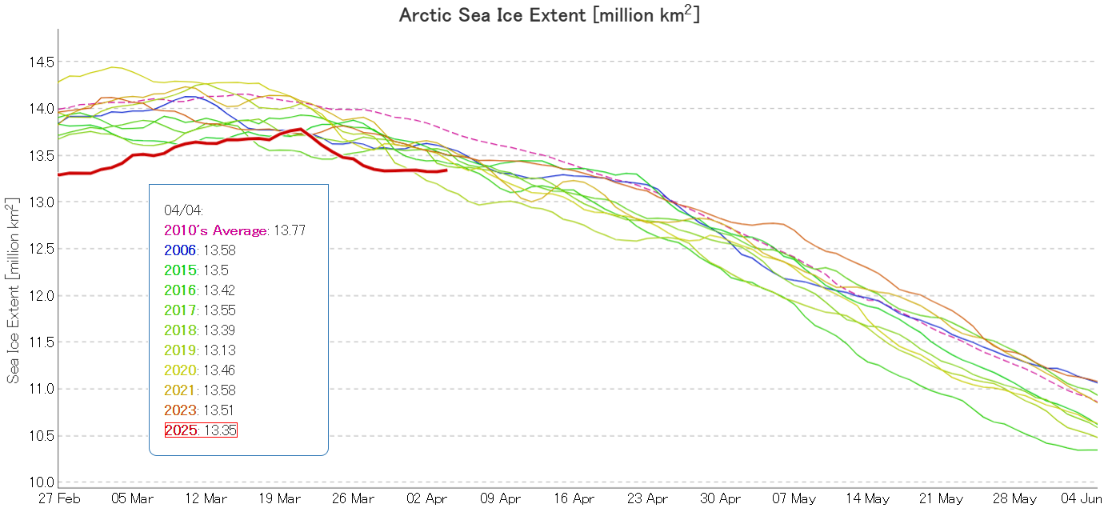
JAXA/ViSHOP extent is no longer “lowest for the date”! After “flatlining” for most of April the metric is now in the midst of a close knit group of the other years in the 2020s:
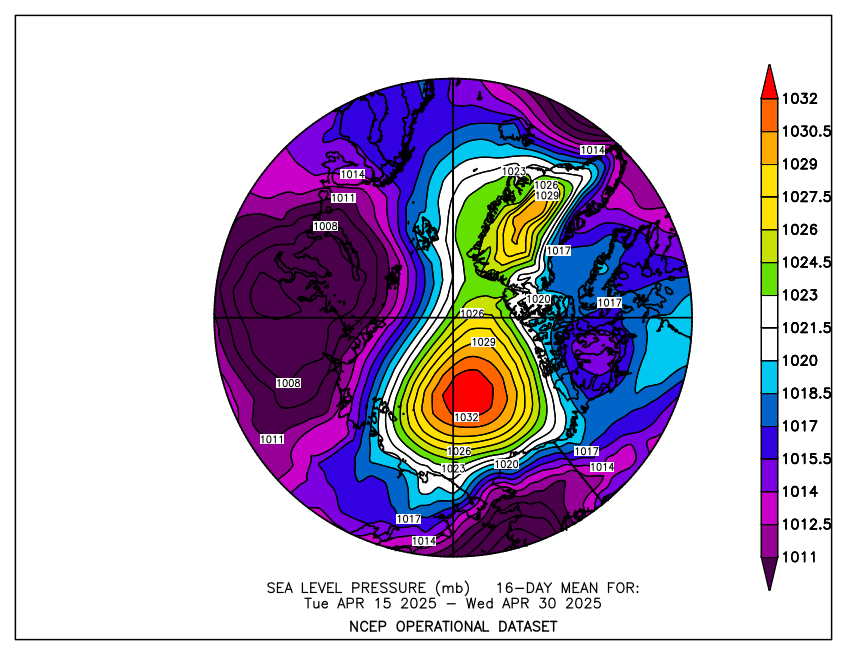
The high pressure area over the Central Arctic persisted through the second half of April, and so did the consequent drift of ice from the Pacific side of the Arctic to the Atlantic periphery:

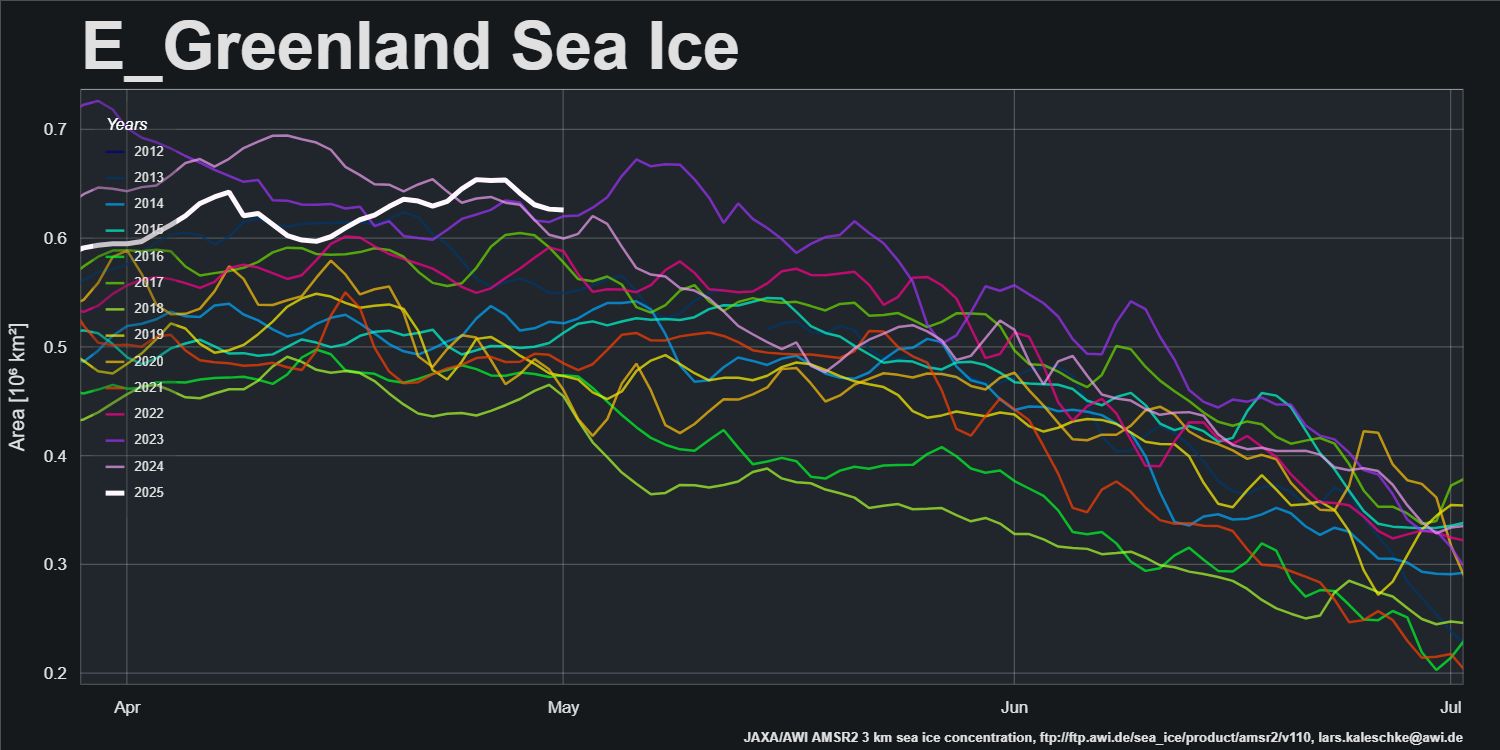
AWI’s sea ice area for the Greenland Sea is currently “highest for the date” in the AMSR2 record that started in July 2012:

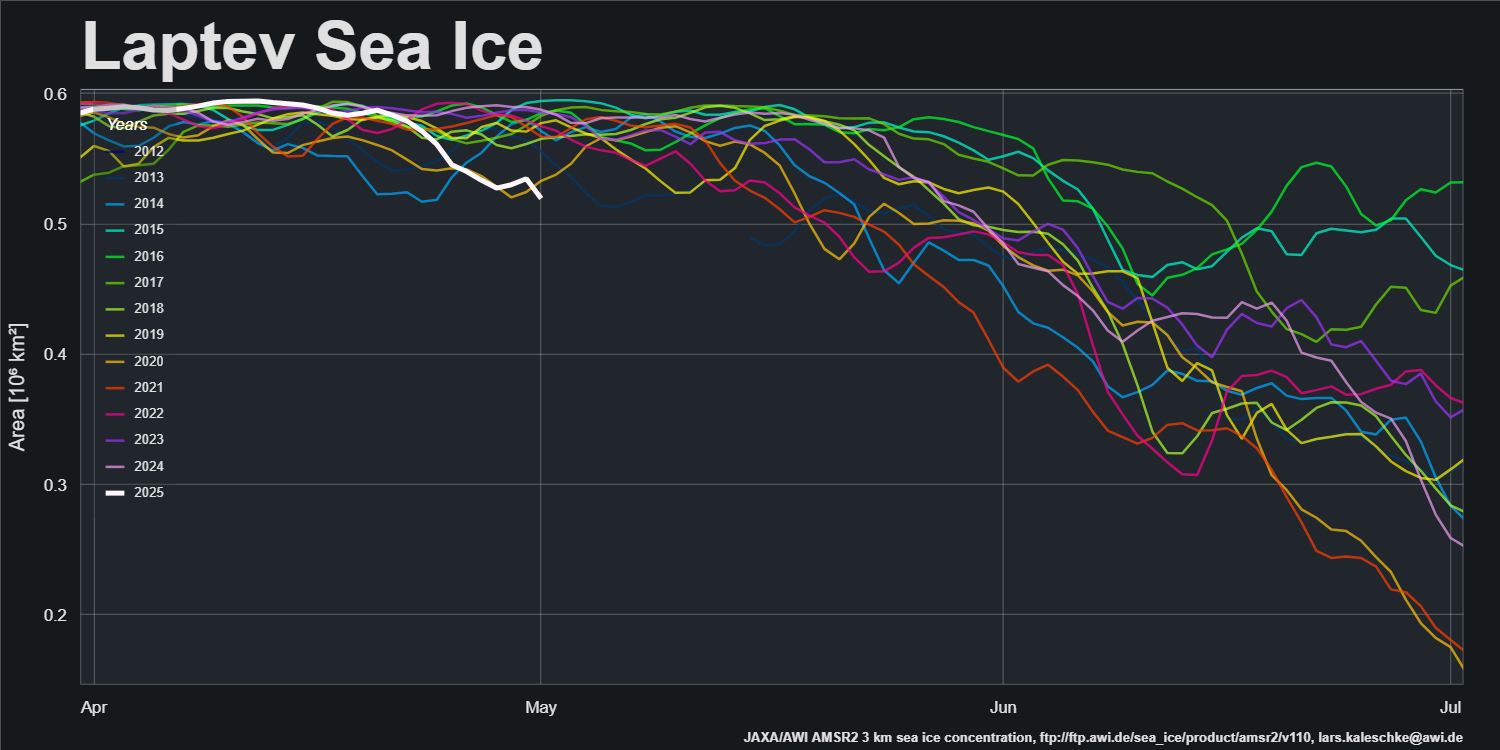
The offshore winds along the Laptev Sea coast have continued, and sea ice area is now “lowest for the date”:

The first signs of a break in the high pressure dominance are appearing. GFS currently forecasts that a low pressure area will enter the Central Arctic, bring above zero temperatures over the Kara Sea on Sunday:

Continue reading Facts About the Arctic in May 2025

Facts About the Arctic in April 2025

JAXA/ViSHOP extent finished the month of March “lowest for the date” once again:

However, since then the graph has been “flatlining” and extent is now above 2019 and rapidly approaching the rest of the recent pack.

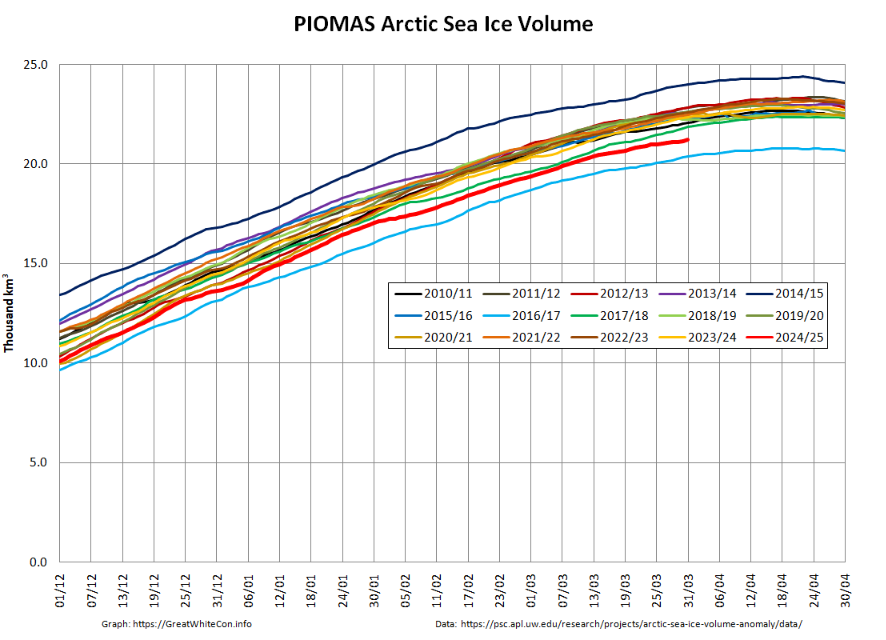
At the end of March PIOMAS Arctic sea ice volume had increased to 21.21 thousand km³, still 2nd lowest for the date in the PIOMAS record:

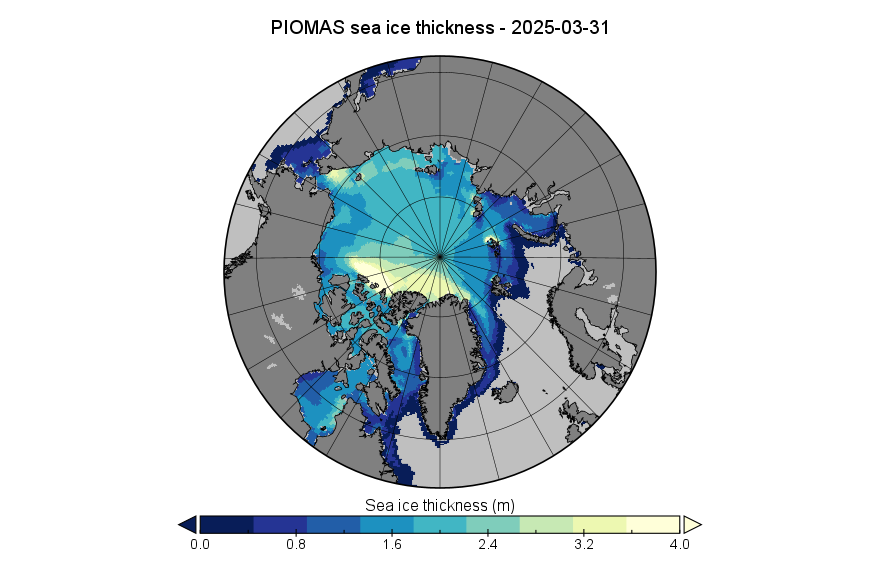
Here is the corresponding PIOMAS sea ice thickness map for March 31st 2025:

For comparison purposes, here is the “near real time” CryoSat-2/SMOS merged thickness data from the Alfred Wegener Institute: 

Continue reading Facts About the Arctic in April 2025

The 2025 Maximum Arctic Sea Ice Extent

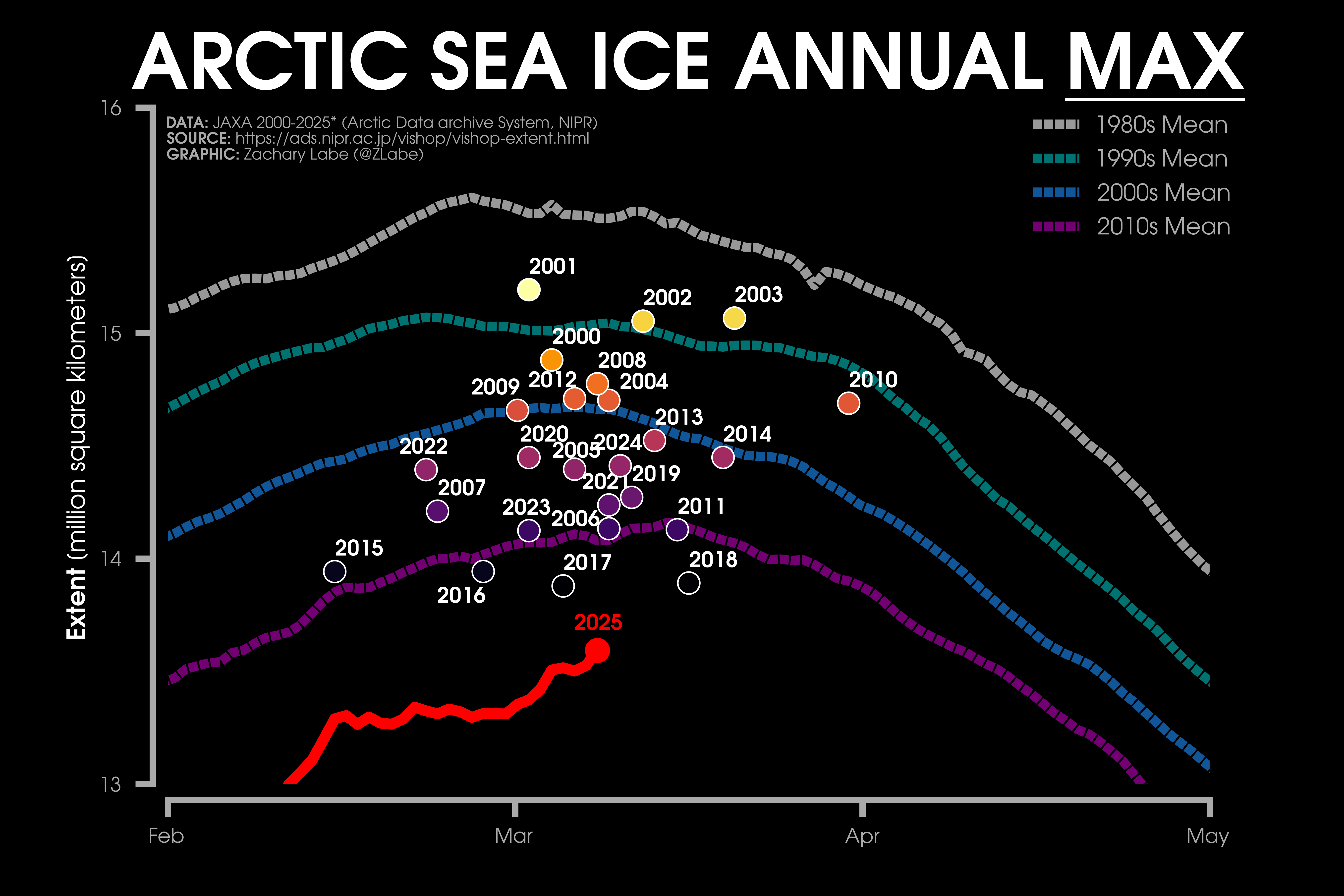
The time has arrived to start taking a close look at the assorted different Arctic sea ice extent metrics, in order to ascertain their respective maxima for 2025. To begin with here’s Zack Labe’s overview of previous years’ maxima:

It now seems highly likely that 2025’s maximum extent will ultimately prove to be the lowest in the satellite era. The remaining question is when this year’s maximum will occur.

My speculation yesterday that AWI’s flavour of Arctic sea ice extent had already achieved its maximum value for 2025 has been negated today:

The NSIDC 5 day average and JAXA extent metrics are also currently at their maximum levels for the year so far, so let’s wait and see which one is the first to take a downward turn.

[Update – March 28th]

The National Snow and Ice Data Center have called the maximum extent of Arctic sea ice for 2025:

On March 22, Arctic sea ice likely reached its maximum extent for the year, at 14.33 million square kilometers, the lowest in the 47-year satellite record. This year’s maximum extent is 1.31 million square kilometers below the 1981 to 2010 average maximum of 15.64 million square kilometers and 80,000 square kilometers below the previous lowest maximum that occurred on March 7, 2017.

Continue reading The 2025 Maximum Arctic Sea Ice Extent

Facts About the Arctic in March 2025

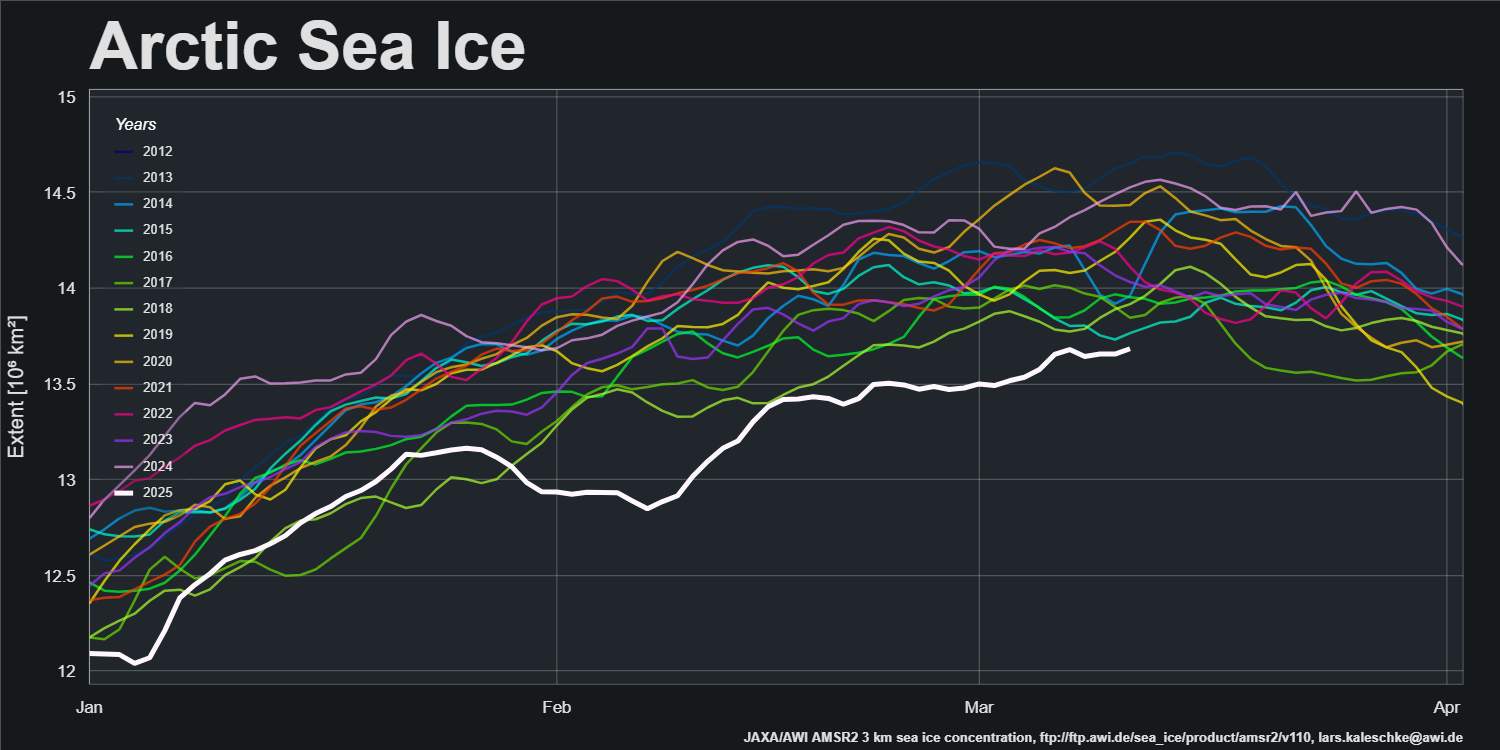
After spending several weeks in the unfortunate position of lowest for the date, JAXA/ViSHOP Arctic sea ice extent has just risen above 2015. By a mere 10,000 km²:

Despite the fact that JAXA extent is still rising, AWI extent has potentially already achieved its maximum value for 2025:

Somewhat belatedly, here is the PIOMAS sea ice thickness map for February 28th 2025:

At the end of February Arctic sea ice volume had increased to 19.32 thousand km³, still 2nd lowest for the date in the PIOMAS record:

For comparison purposes, here is the “near real time” CryoSat-2/SMOS merged thickness data from the Alfred Wegener Institute: 

AWI have also released a new version of their thickness product, incorporating additional data from the two Sentinel 3 satellites. The thickness data for February 28th, looks slightly different:

Continue reading Facts About the Arctic in March 2025

Facts About the Arctic in January 2025

The New Year began with JAXA/ViSHOP extent lowest for the date in the satellite era, just below 2018 . Since then extent has reduced, and there is now a large gap:

The primary reason for this is the remaining open water in Hudson Bay:

In previous years Hudson Bay has been covered by sea ice by this time of year, but in 2025 a large area remains unfrozen in early January!

Due to the way PIOMAS handles the leap years the last gridded thickness data of 2024 is dated December 30th:

By December 30th Arctic sea ice volume had increased to 13.61 thousand km³, 2nd lowest for the date in the PIOMAS record:

Continue reading Facts About the Arctic in January 2025

Facts About the Arctic in November 2024

The Laptev and East Siberian Seas have now refrozen. Consequently Arctic sea ice extent is now increasing more slowly, and JAXA/ViSHOP extent is 3rd lowest for the date in the satellite era:

Introducing the third dimension, here’s the PIOMAS gridded thickness data for the end of October 2024:

Note the change in scale from previous months, to allow for easier comparison with the “near real time” CryoSat-2/SMOS merged thickness data from the Alfred Wegener Institute: 

Continue reading Facts About the Arctic in November 2024