Tag Archives: Suomi

Facts About the Arctic in June 2021

Let’s begin the month with a “true colour” image from the Terra satellite of the Laptev Sea and thereabouts:

The blueish tinge indicates the appearance of melt ponds almost everywhere over the land-fast ice currently covering the majority of the Laptev Sea.

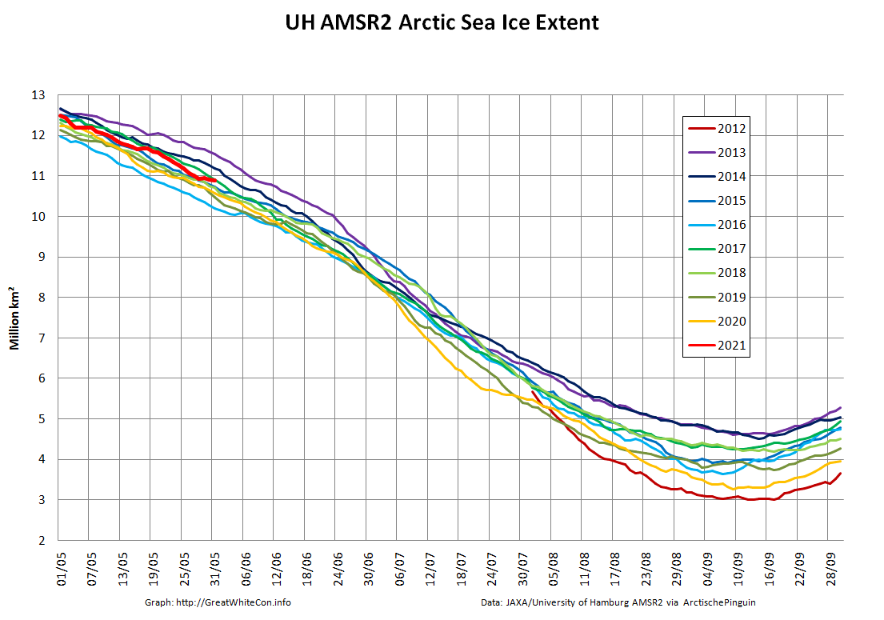
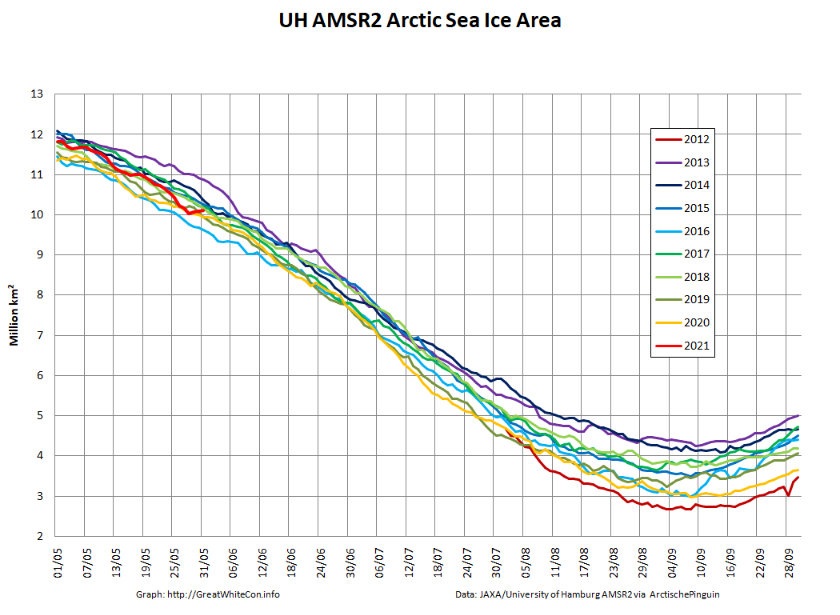
Let’s also take a look at the high resolution AMSR2 metrics for the end of May 2021:
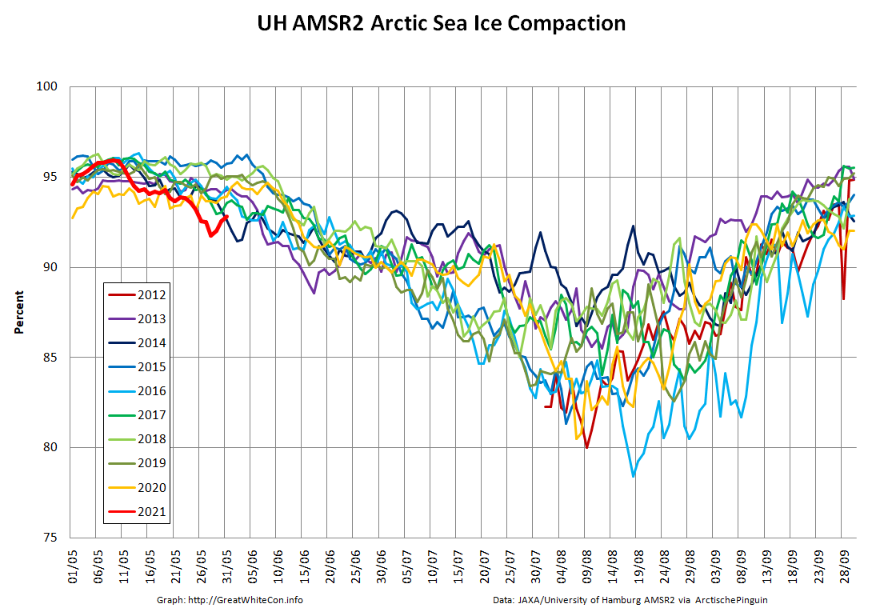
Thanks to the recent “brief hiatus” in areal decline, Arctic wide compaction is no longer in record territory:
Finally, for the moment at least, here is the Danish Meteorological Institute’s high Arctic temperature data in the form of a graph of freezing degree days:
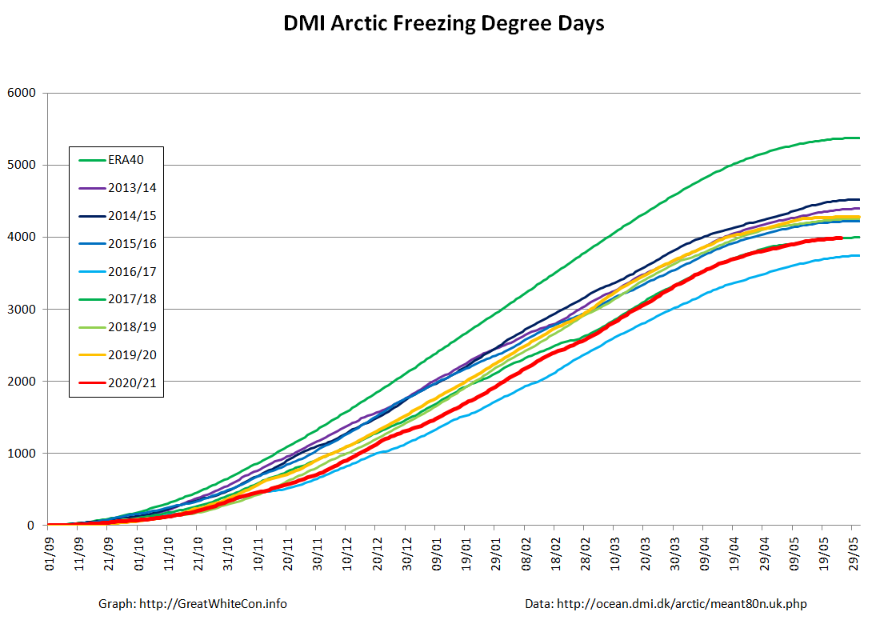
For some reason the data file still doesn’t include data to the end of May, but things won’t change much by then. Over the winter as a whole only 2016/17 was significantly warmer.

Let the 2021 Arctic sea ice summer melting season officially begin!

[Edit – June 4th]

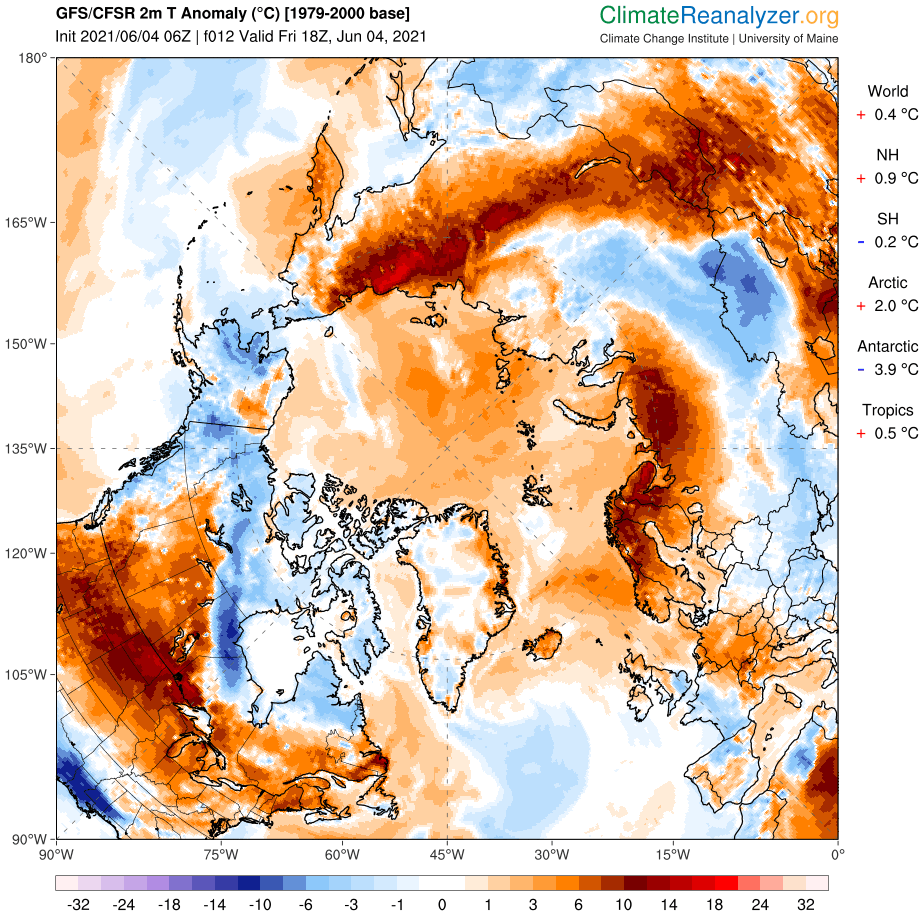
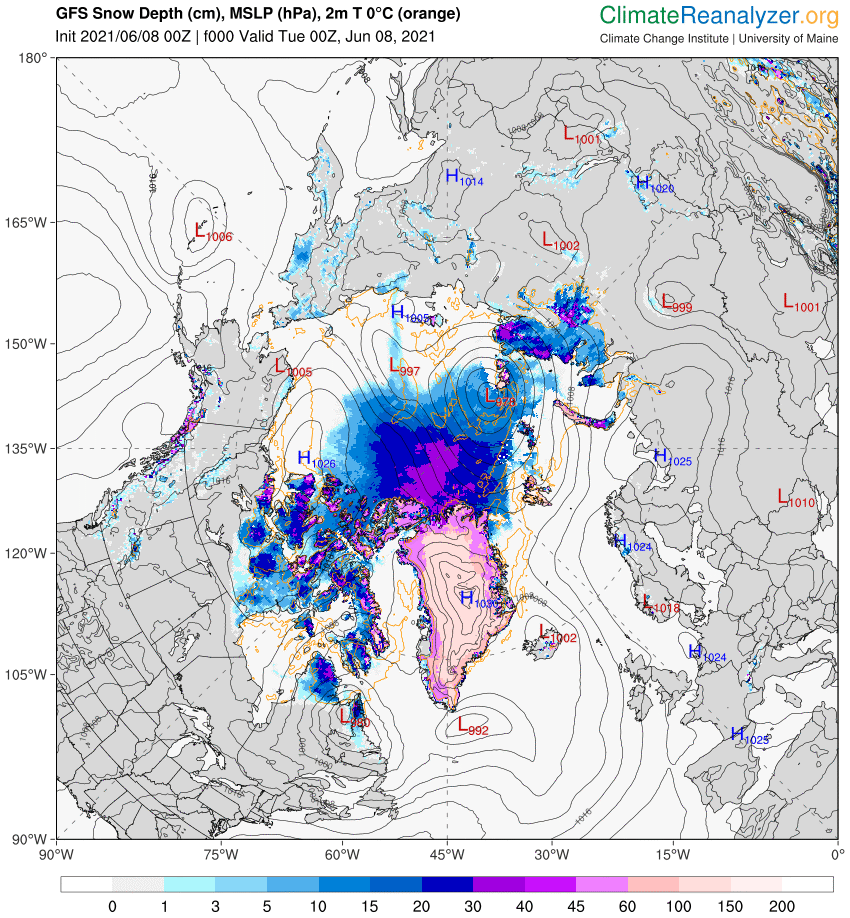
Perhaps unsurprisingly the GFS forecast from four days ago hasn’t quite worked out as predicted. The Arctic as a whole is certainly on the warm side, with a +2 C anomaly at this moment:
However the 966 hPa MSLP cyclone predicted for Monday is now forecast to be a mere 978 hPa:
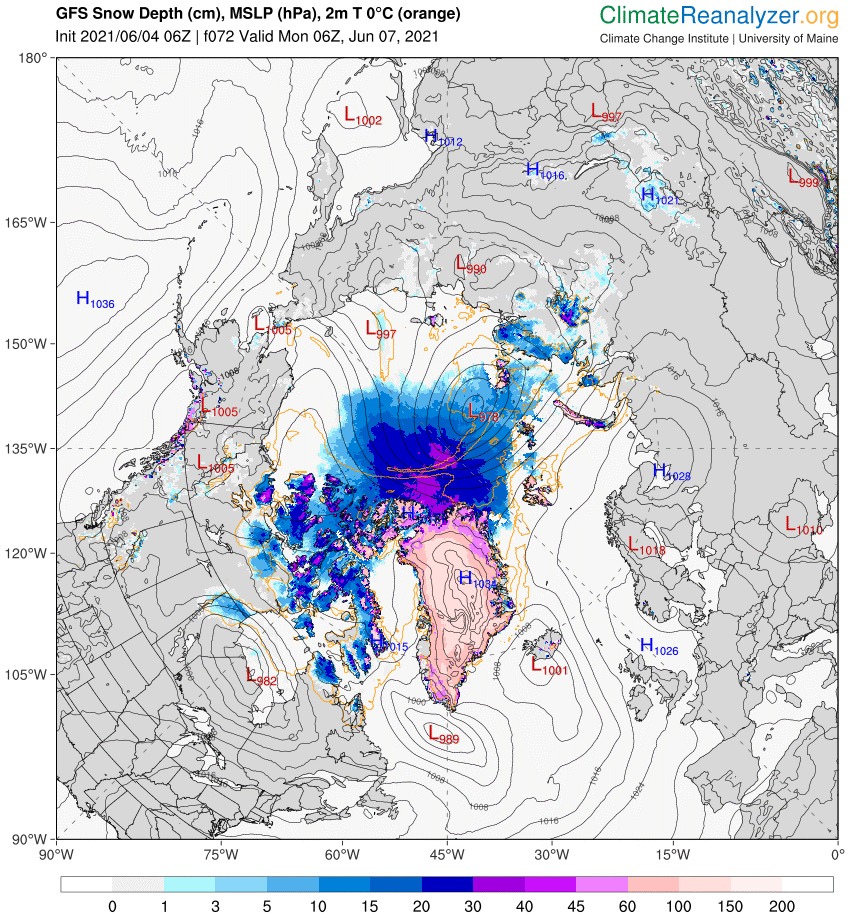
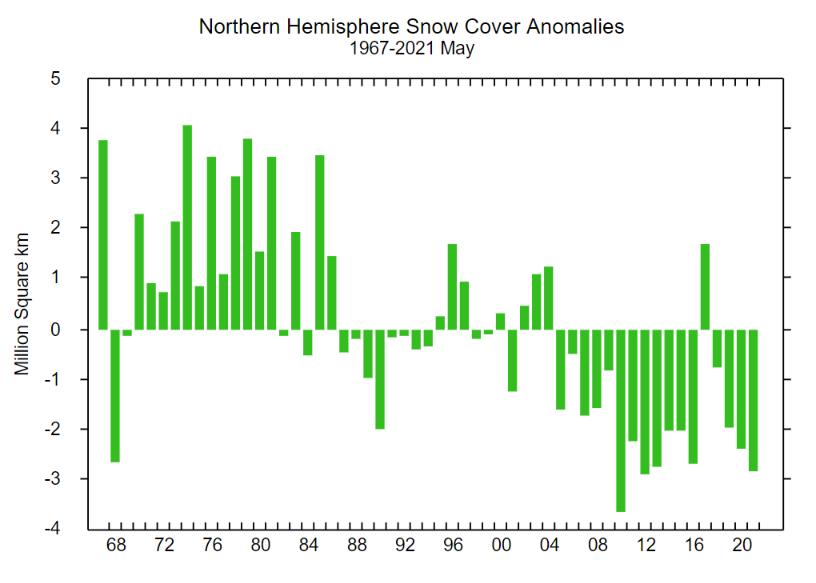
With 3 days to go there is a reasonable chance of it verifying in the “New Arctic” of 2021. As you can see from the map above a large area of the Central Arctic has now lost its snow cover. This is confirmed by the Rutgers Snow Lab northern hemisphere data for May:
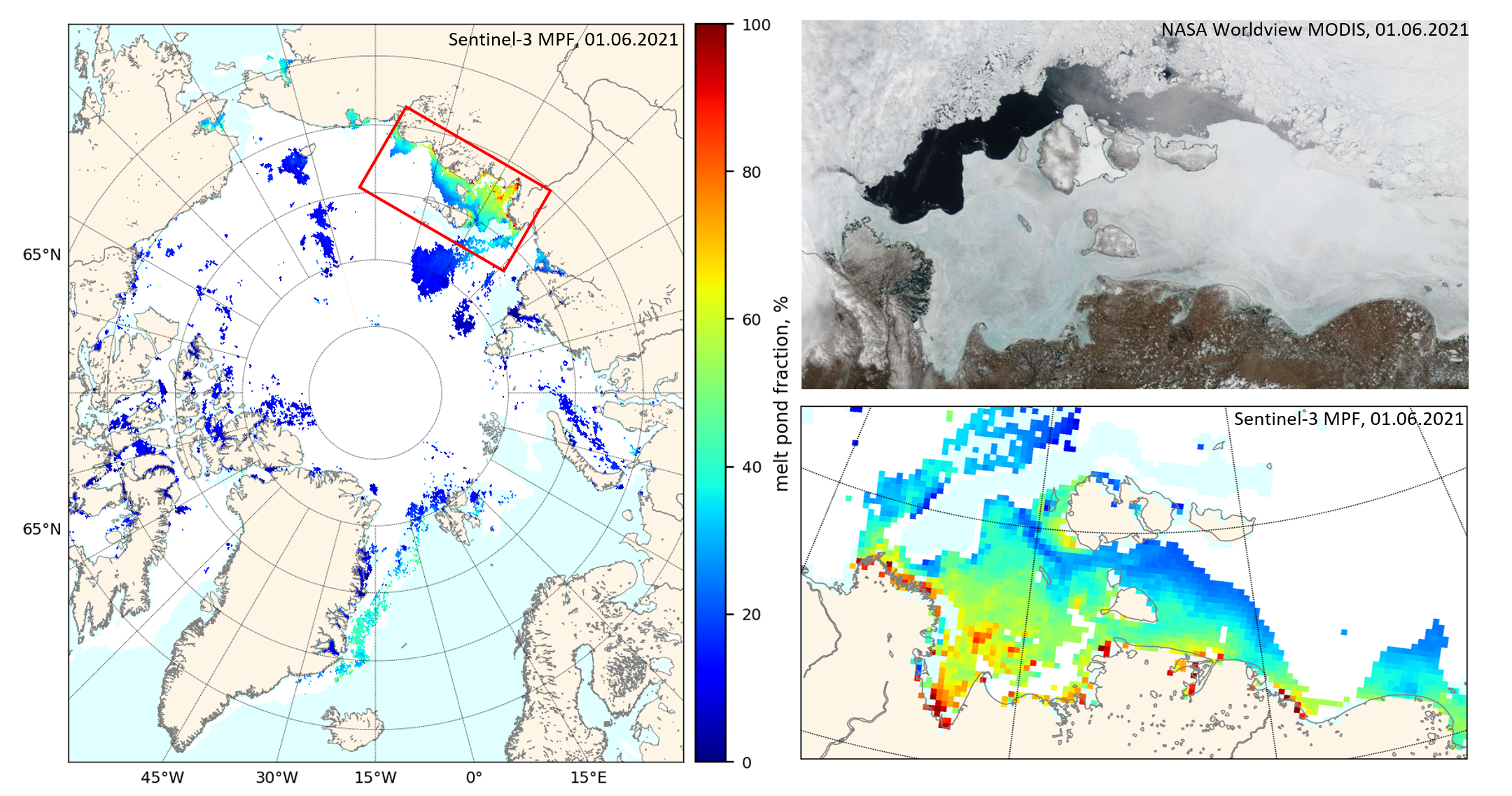
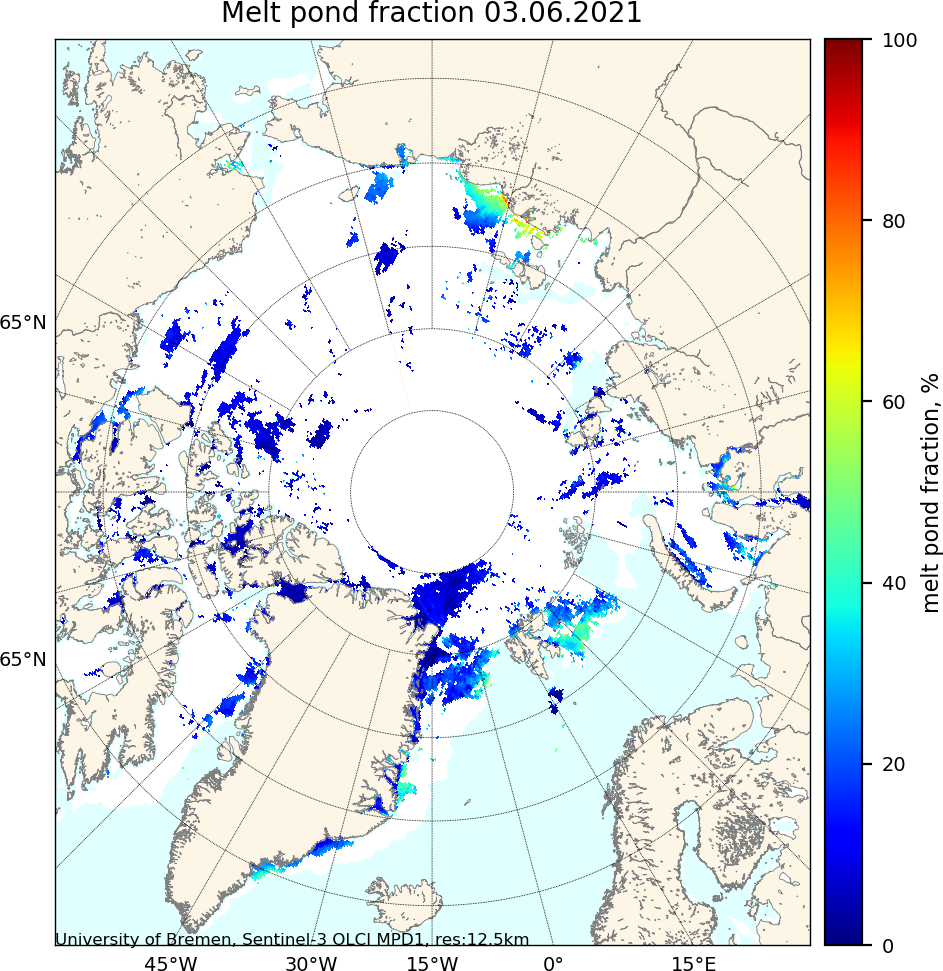
A new Sentinel 3 melt pond fraction product from the University of Bremen confirms that on the fast ice in the Laptev & East Siberian Seas snow cover has departed and melt ponds have arrived:
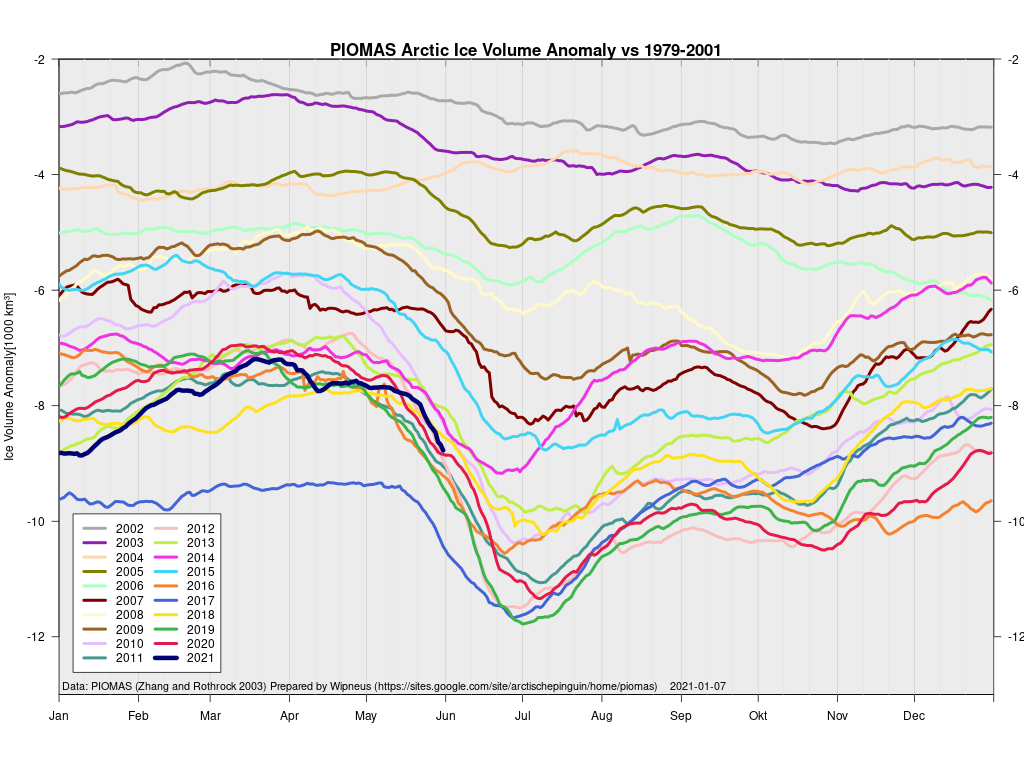
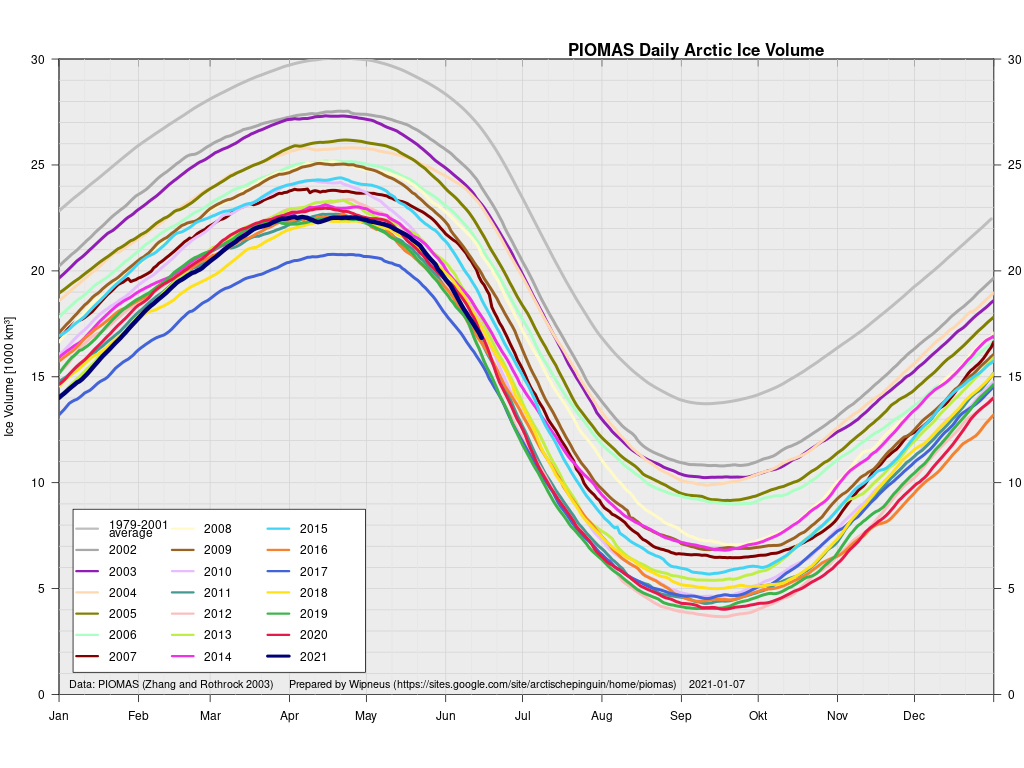
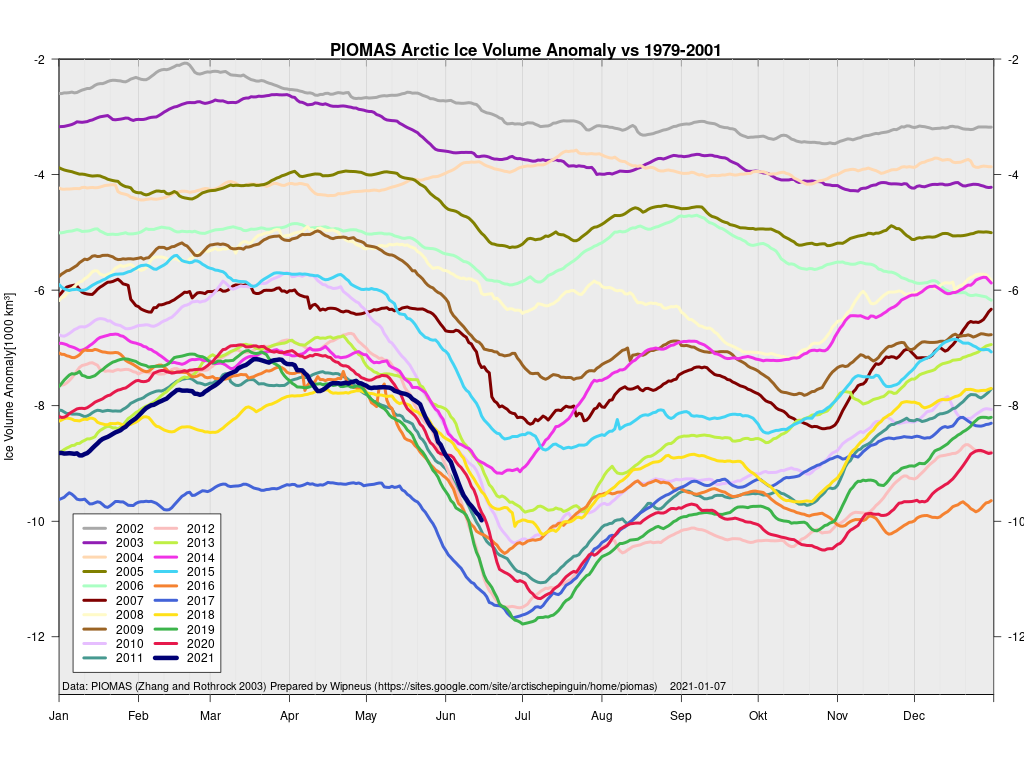
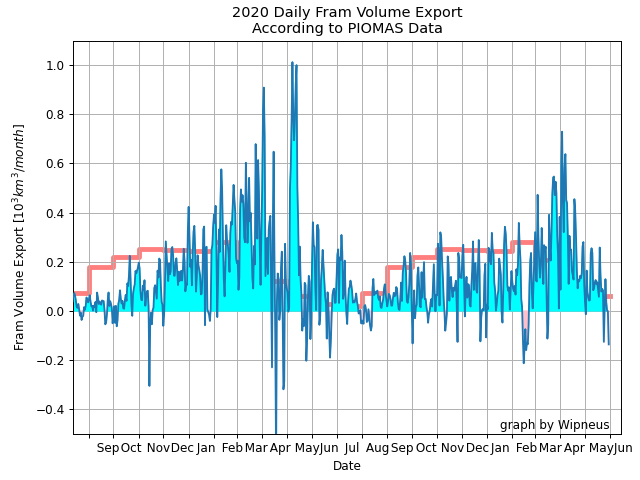
In other news Wipneus has released the latest PIOMAS gridded thickness and volume data on the Arctic Sea Ice Forum:
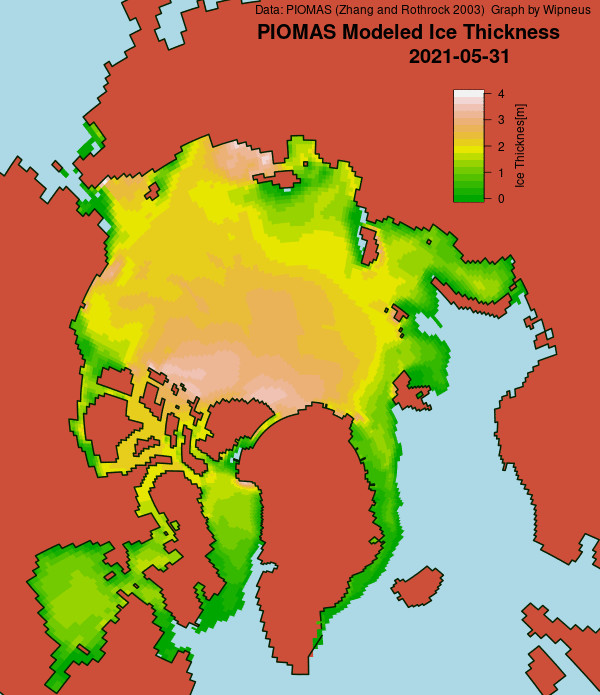
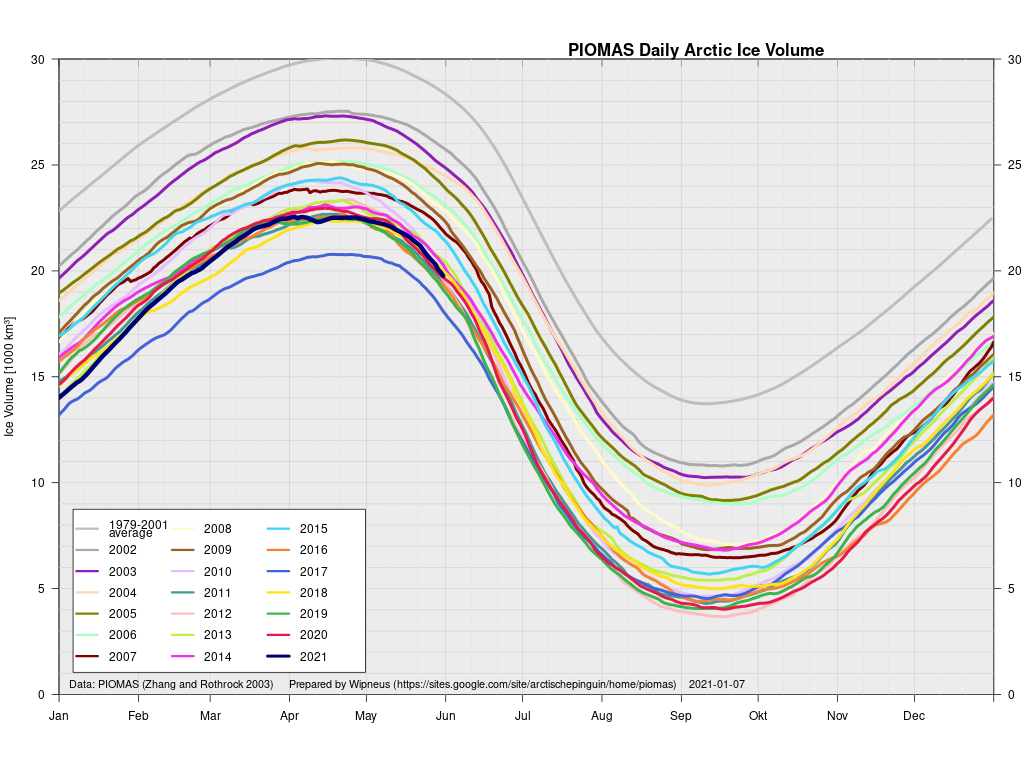
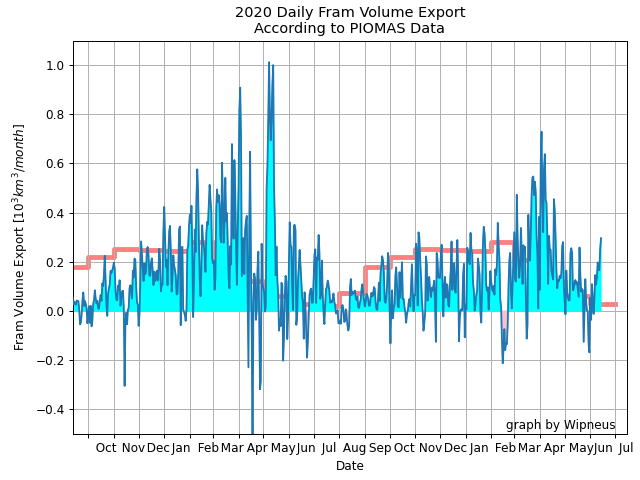
For some strange reason 2021 volume at the end of May is almost identical to 2012 and 2020! Plus of course there’s the modelled volume export from the Central Arctic via the Fram Strait:
[Edit – June 6th]

This “false colour” image reveals that there’s virtually no snow cover left on land, and this “false colour” image reveals that the land-fast ice in the East Siberian Sea is now awash with melt ponds:

[Edit – June 8th]

The forecast low pressure area appears to have bottomed out near the Severnaya Zemlya islands with a 978 hPa MSLP:
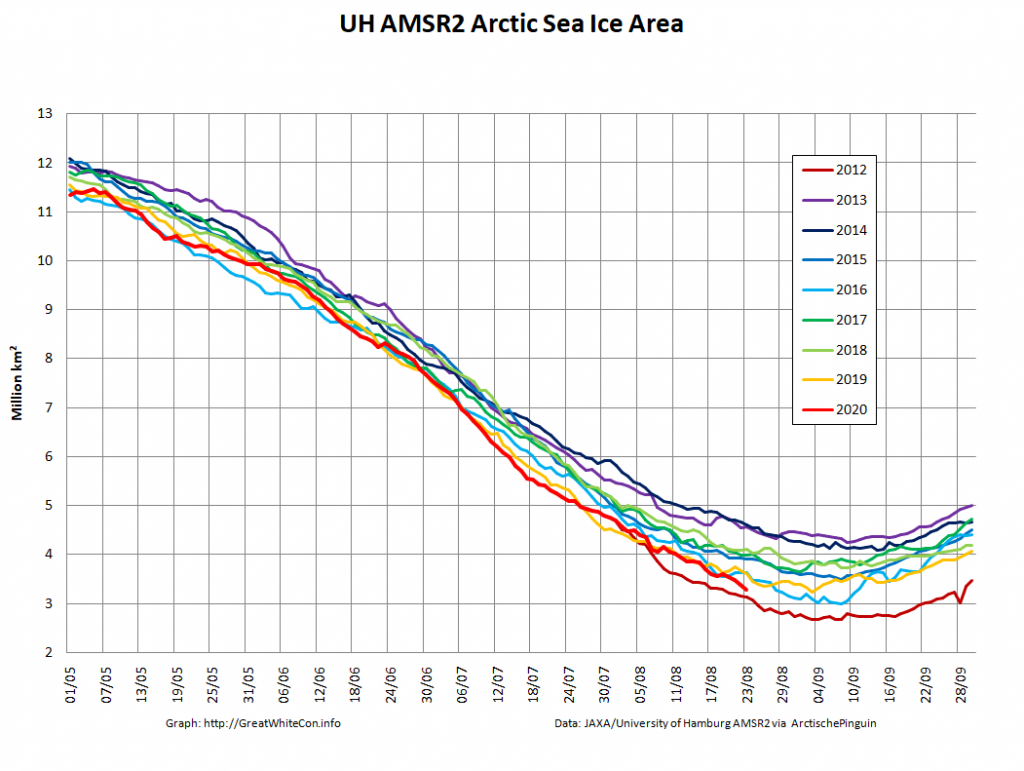
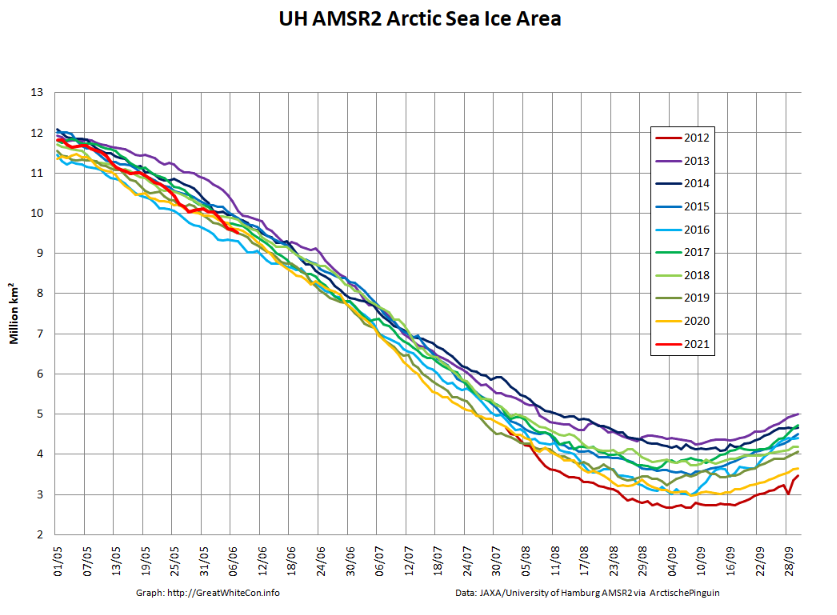
High resolution AMSR2 Arctic sea ice area is now 2nd lowest for the date after 2016:
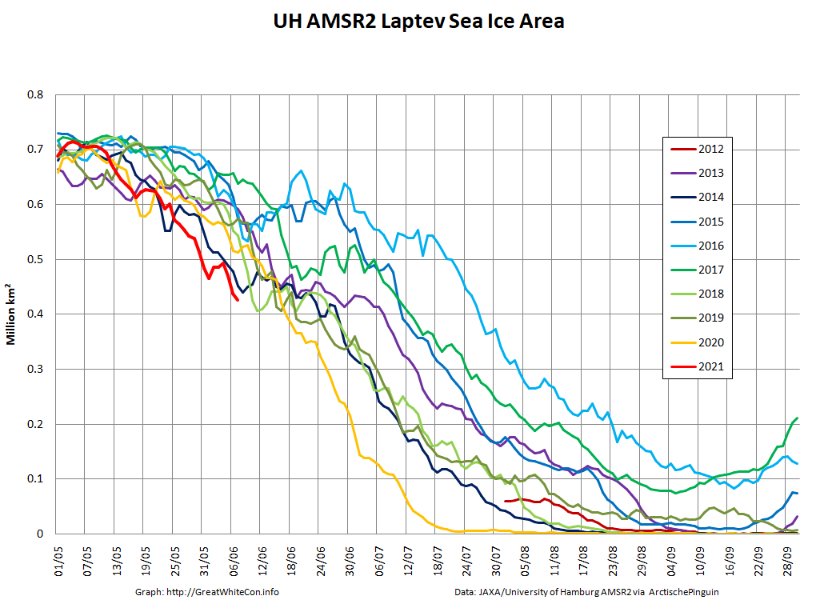
Laptev sea ice area is still lowest for the data, and looks as though it will retain that position for a while:
[Edit – June 9th]

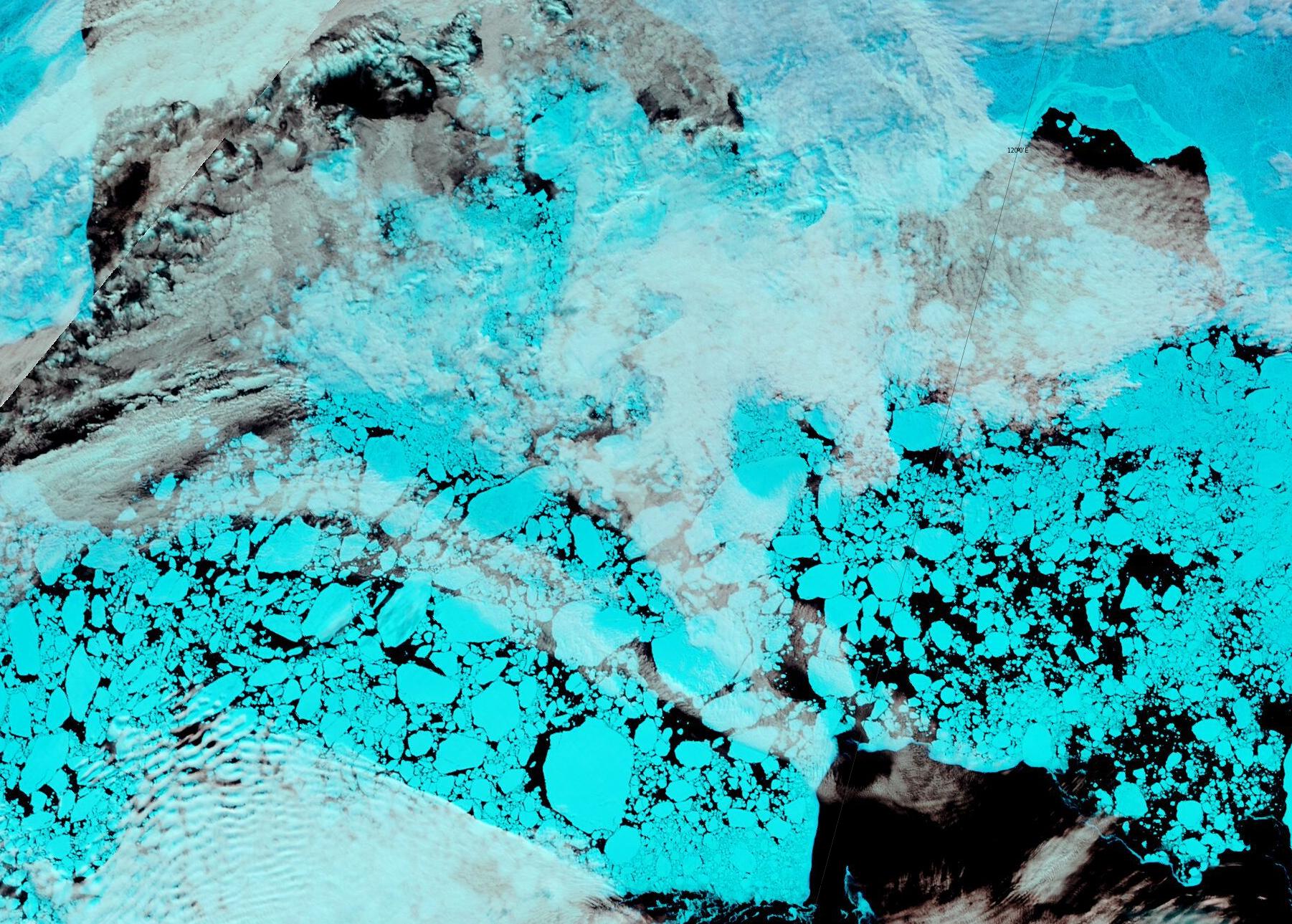
The effect of the recent heat and wind on the remaining sea ice in the Laptev Sea is now all too apparent:
It’s also evident in the DMI >80N temperature graph, which has now reached sea ice “melting point” ahead of the climatology:
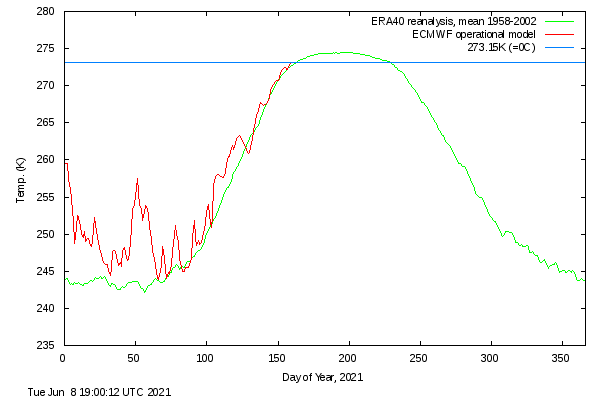
Note that the blue line is actually above the “freezing point” of salty Arctic sea water.

[Edit – June 13th]

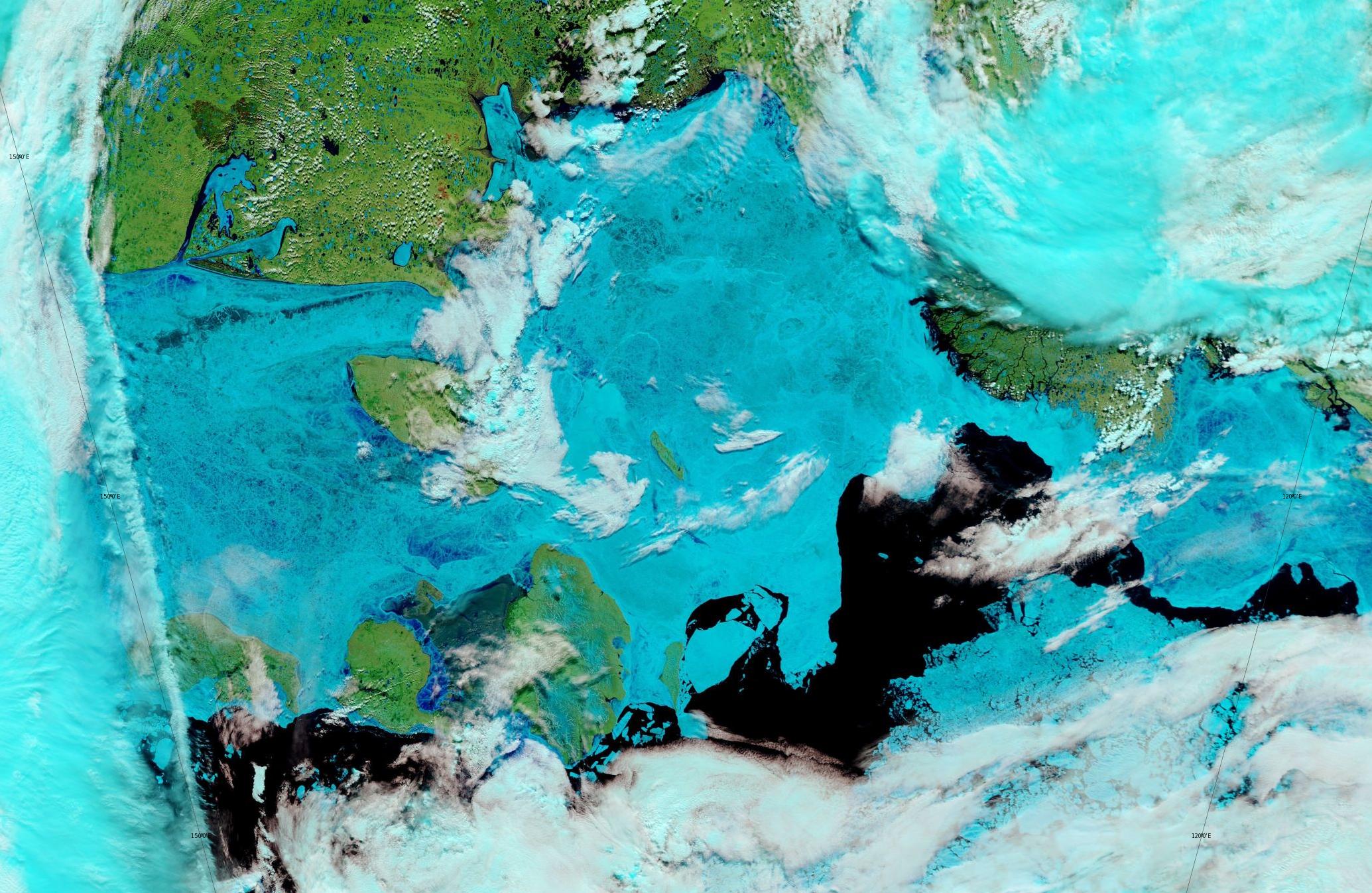
Fairly clear skies over the Laptev Sea and the western East Siberian Sea, revealing wall to wall melt ponds and the land-fast ice starting to break up near the coast as well as on the edge of the now open ocean:
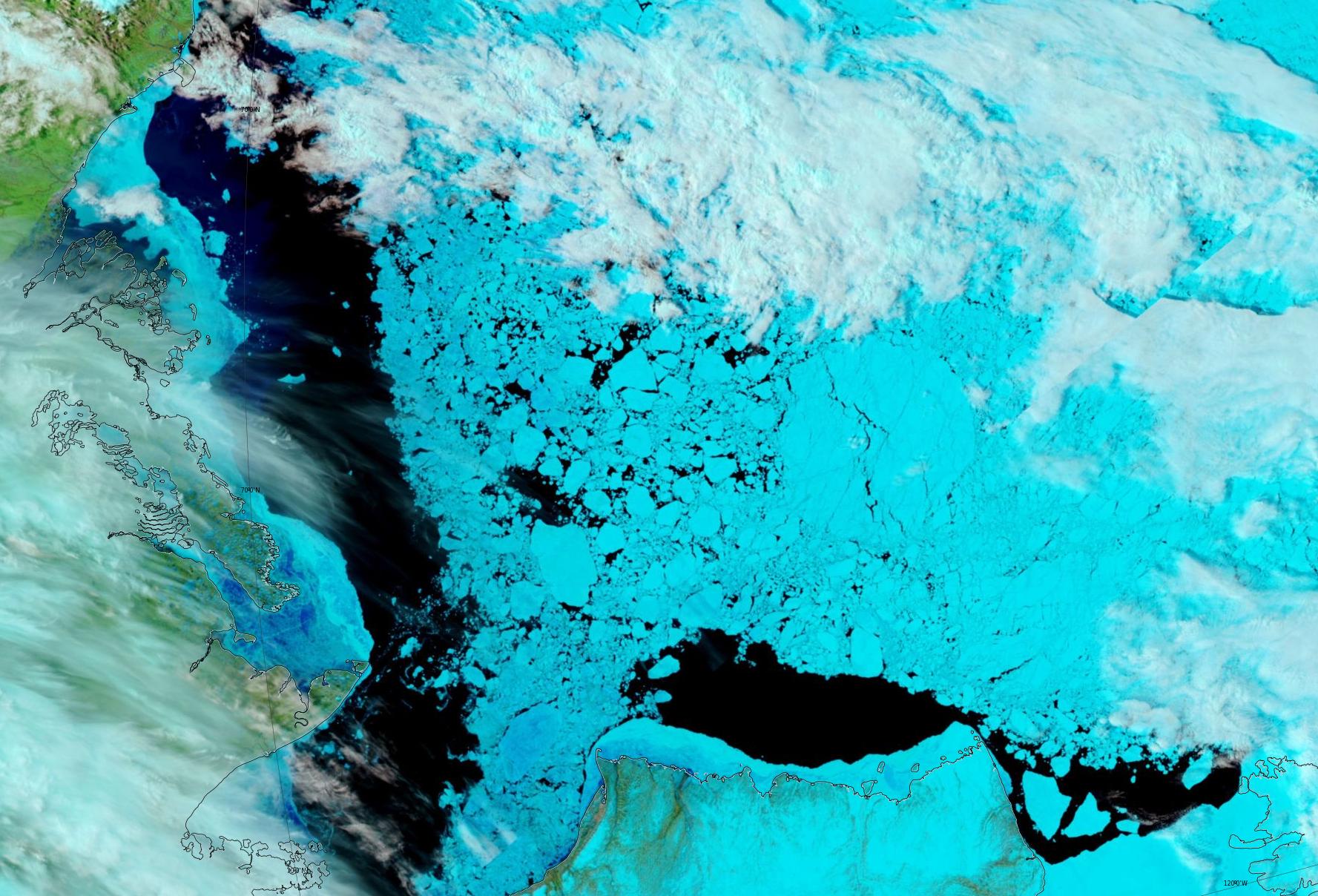
Plus yesterday’s view of the Beaufort Sea, revealing fast ice breaking up in the western entrance to the McClure Strait:
[Edit – June 18th]

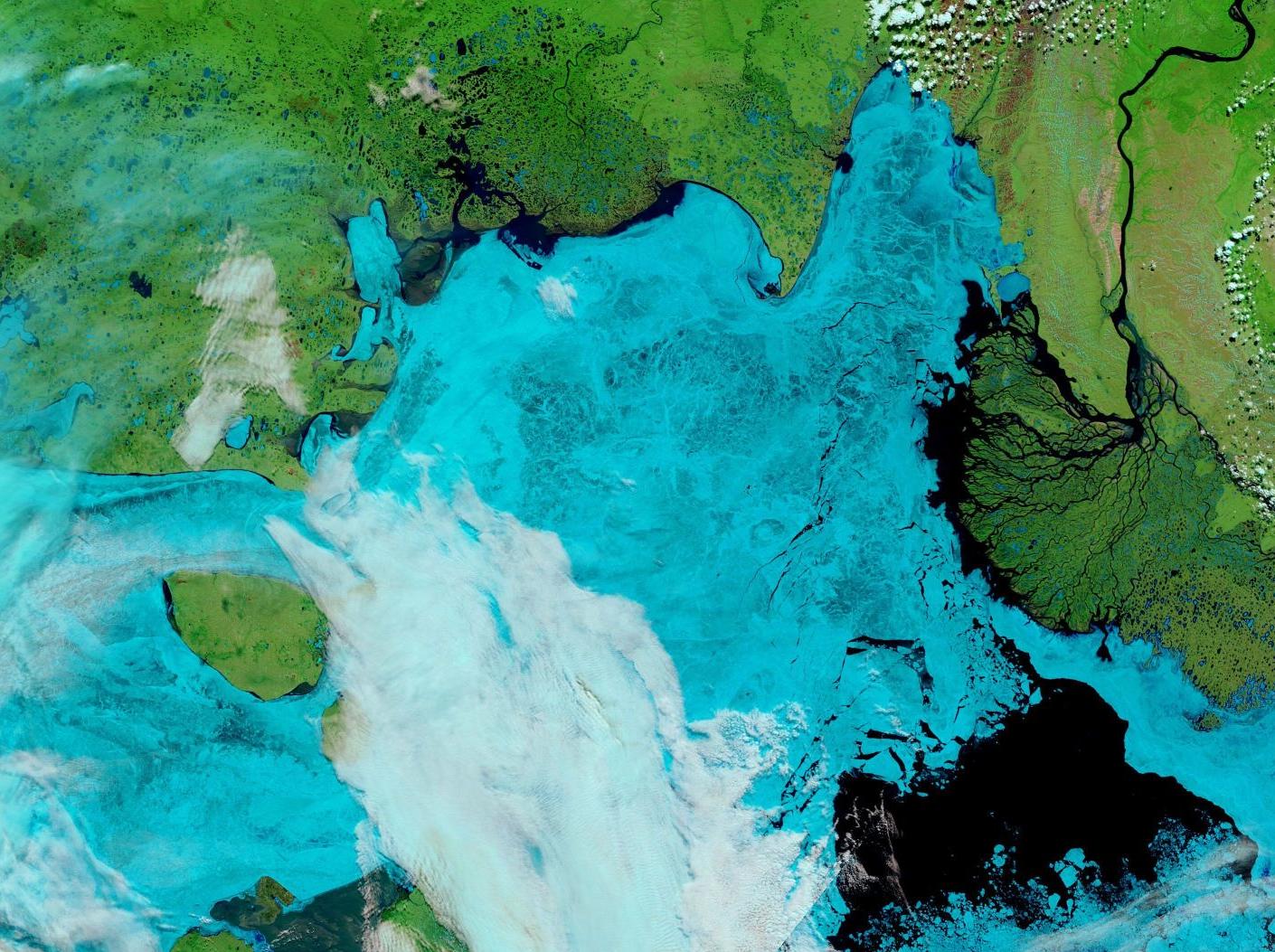
A clearish view of the Laptev Sea today, revealing assorted cracks in a variety of locations:
[Edit – June 20th]

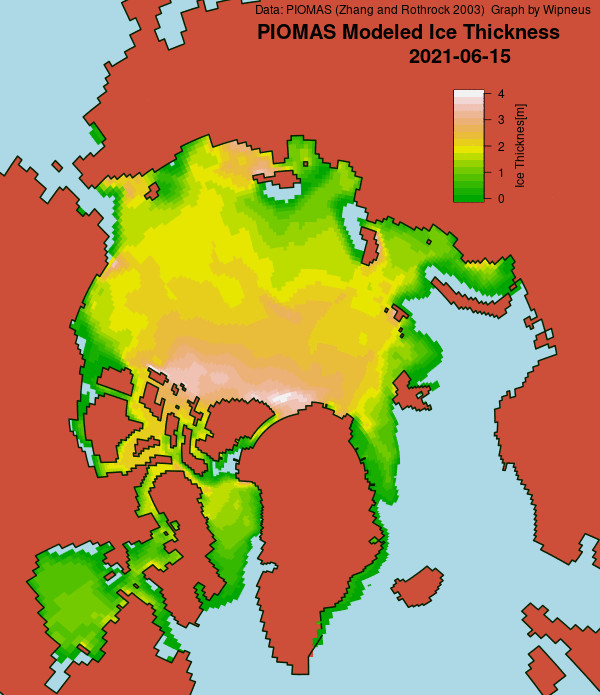
The latest mid-month PIOMAS thickness/volume numbers have been released:
[Edit – June 23rd]

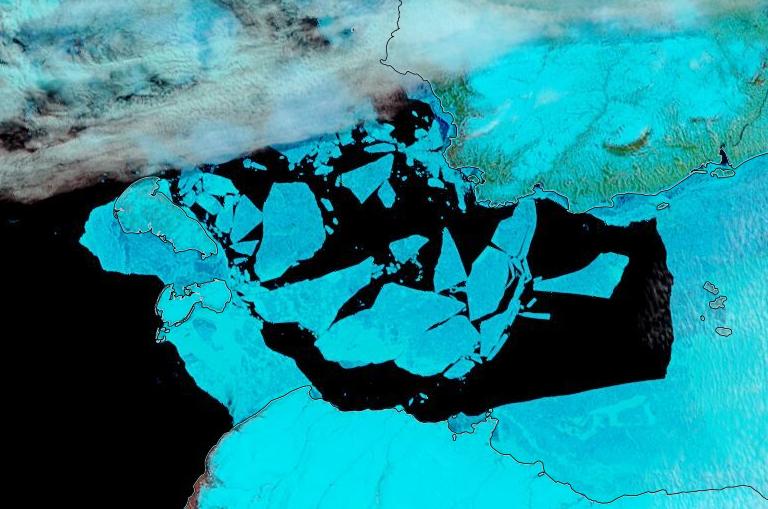
The skies over the Vilkitsky Strait have been cloudy for a few days. However a fairly clear view yesterday reveals that breakup is well under way in what is usually one the last areas along the Northern Sea Route to become navigable:
[Edit – June 26th]

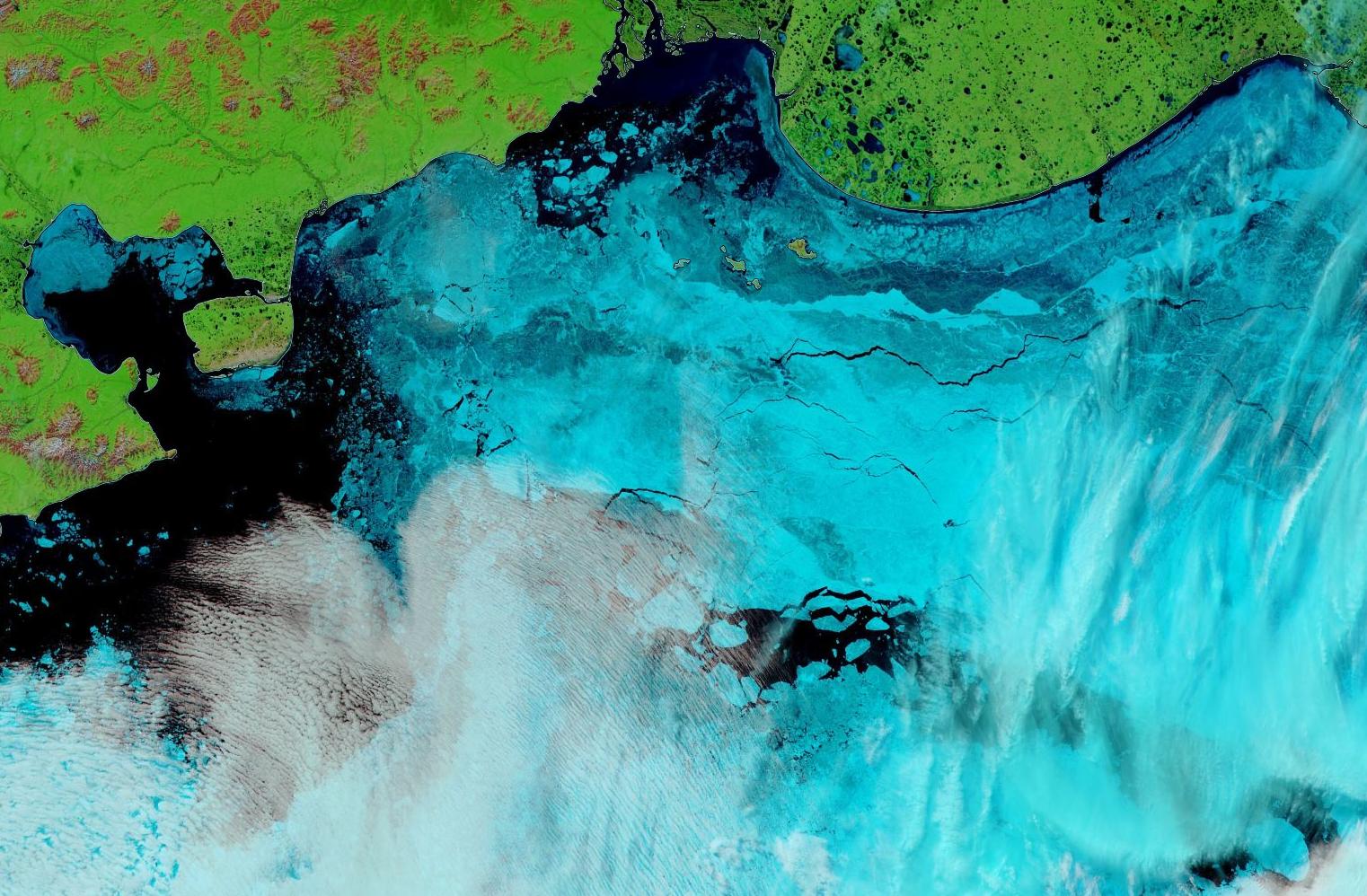
The land-fast ice in the East Siberian Sea has started to disintegrate en masse:
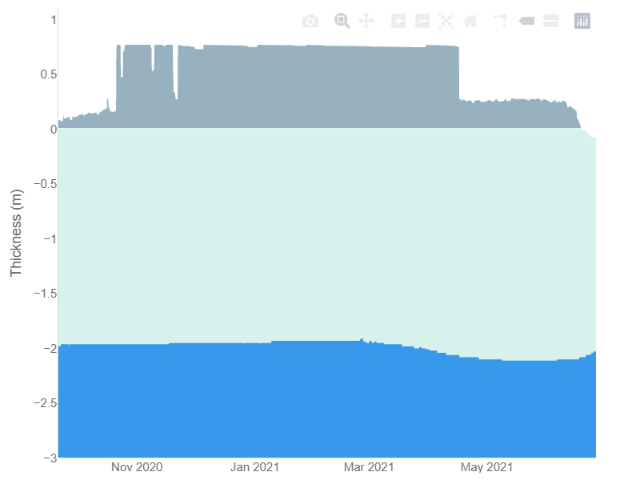
Data from ice mass balance buoy 441910, currently located at 76.1 N, 151.1 W in the Beaufort Sea, reveals the onset of both surface and bottom melt:
Watch this space!
Facts About the Arctic in August 2020

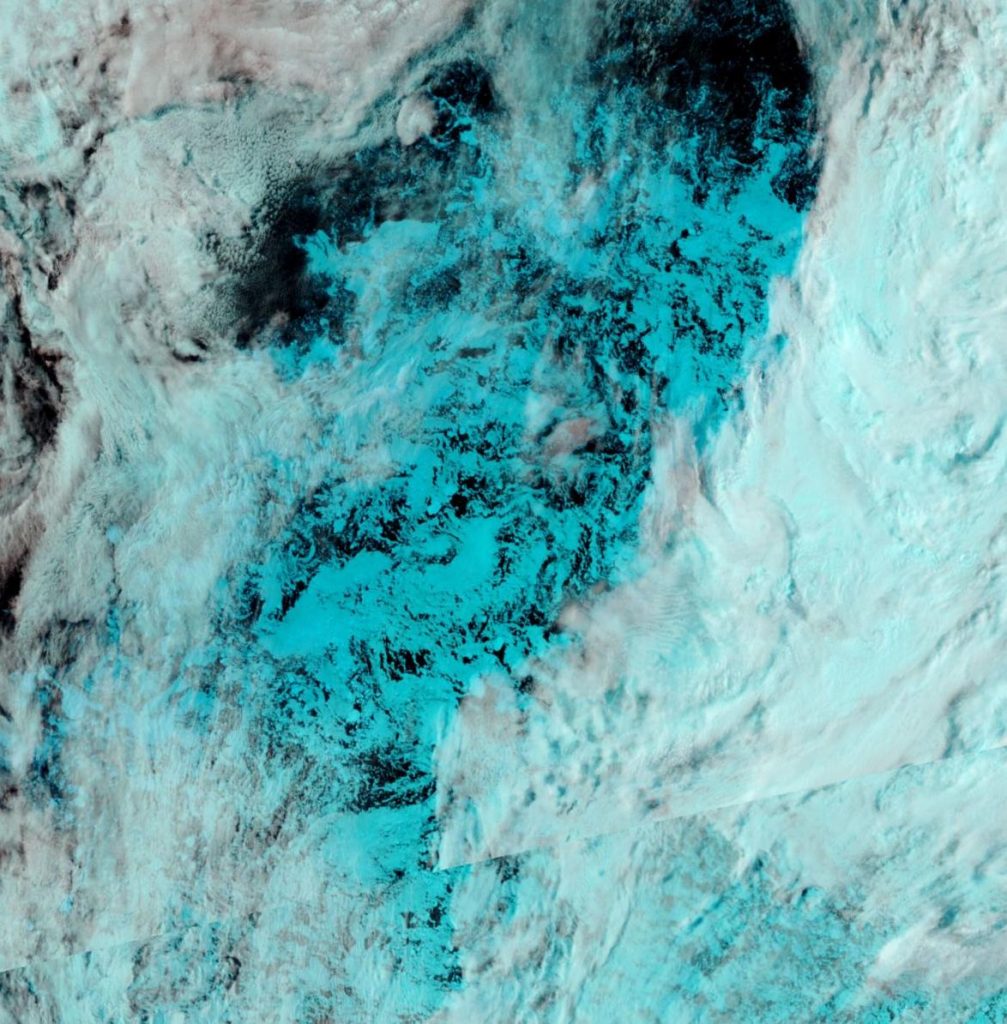
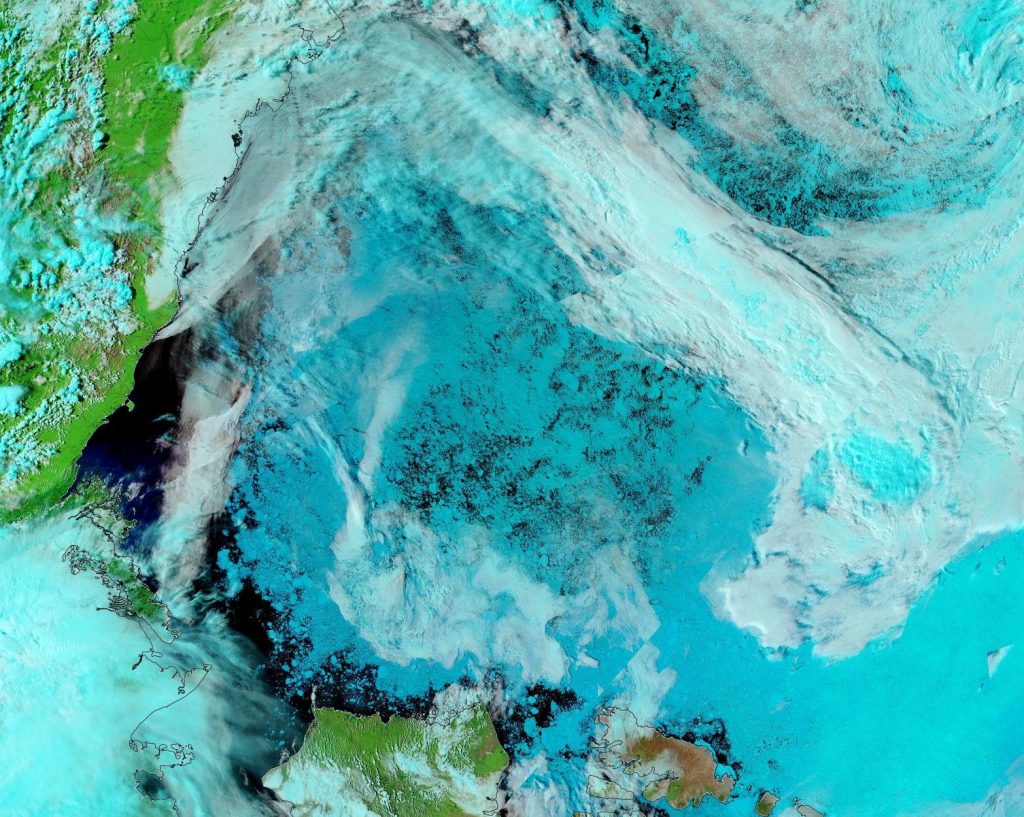
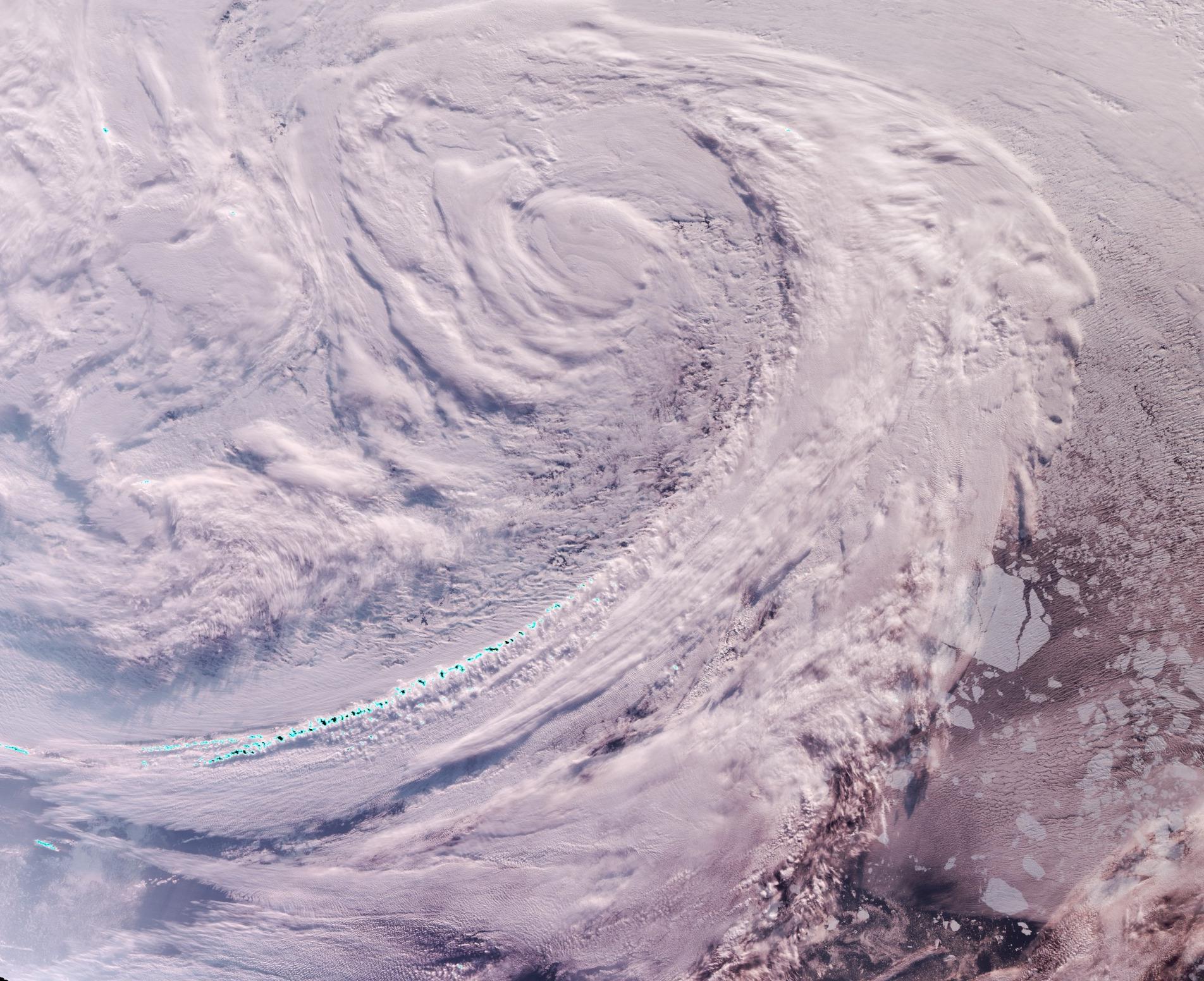
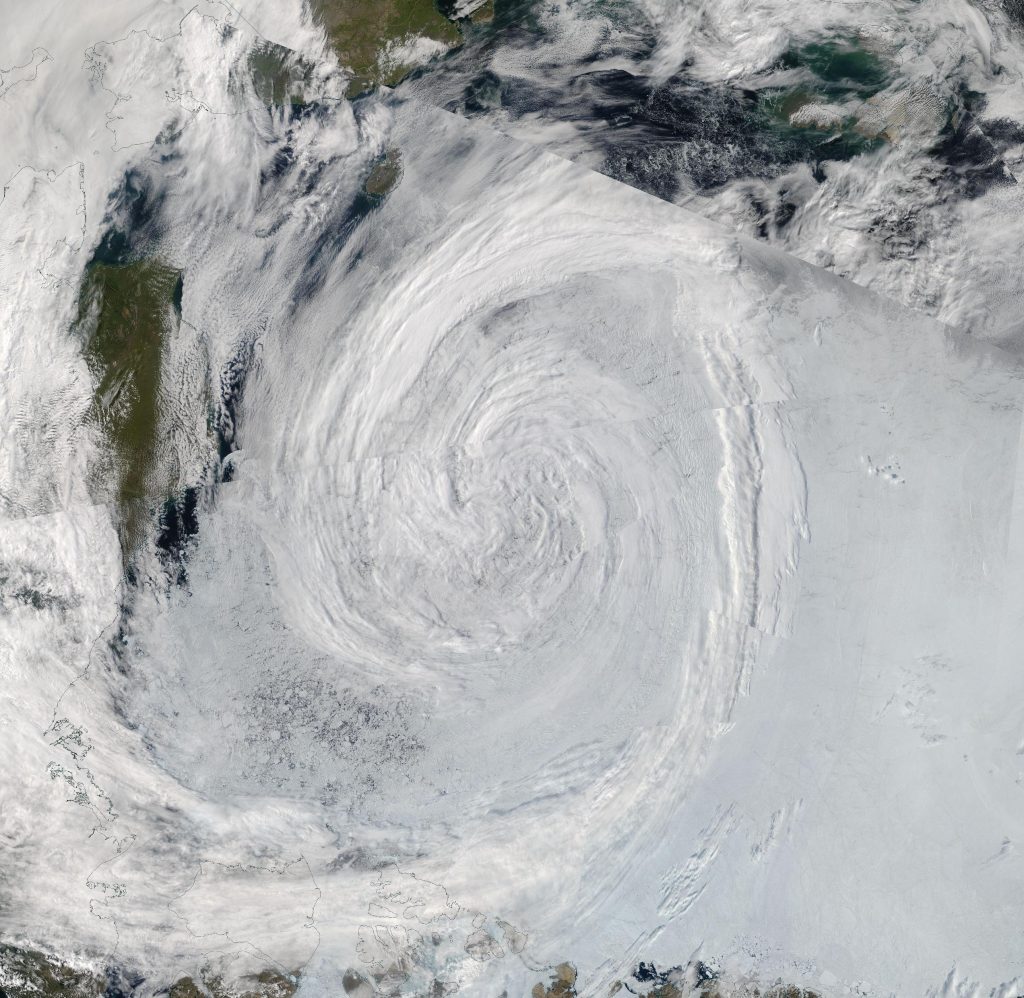
A new month begins today, and at the moment it looks as though it’s going to be the most interesting one since August 2012. Here once again is the satellite image of the enormous cyclone that was spinning over the Beaufort/Chukchi Seas just a few days ago:

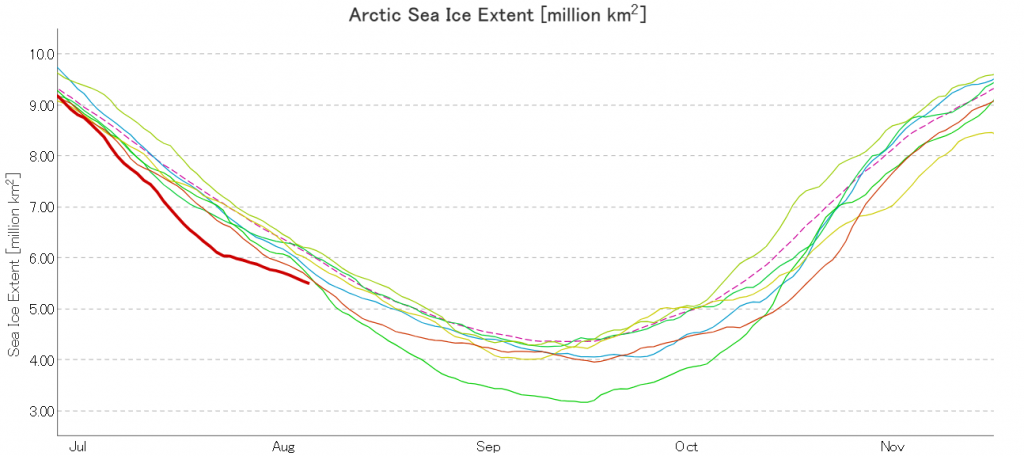
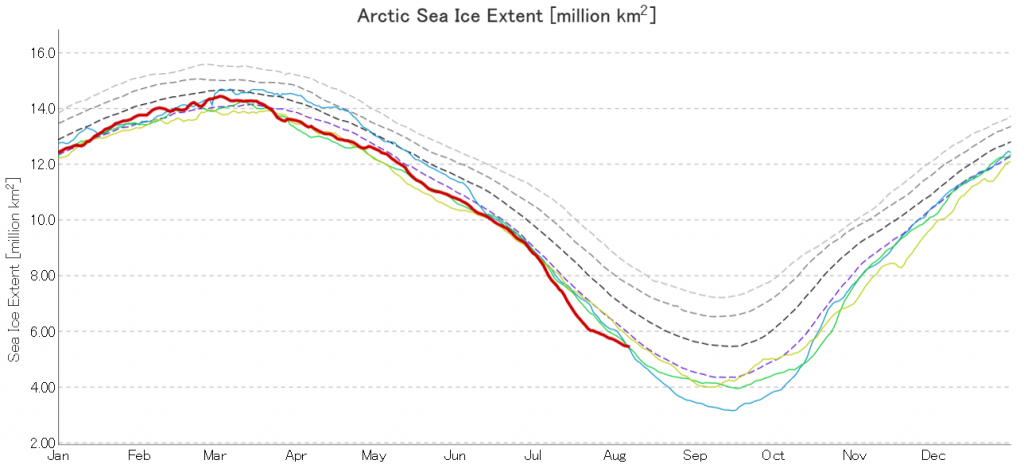
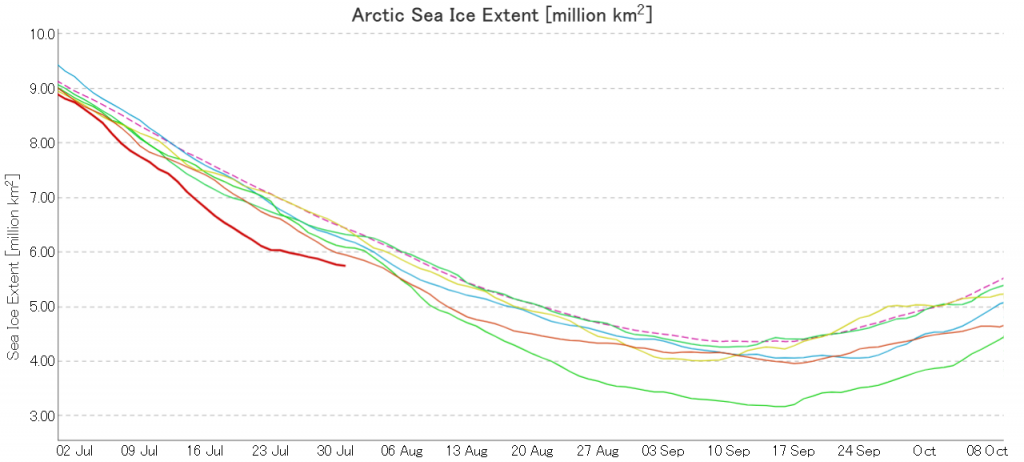
Here too is the effect of the cyclone on the trajectory of the JAXA Arctic sea ice extent graph:

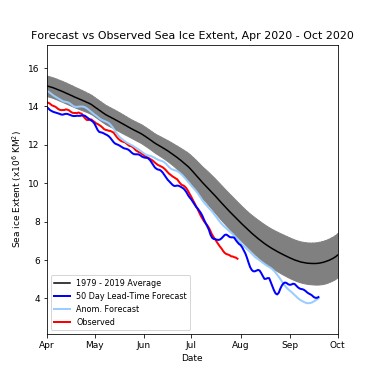
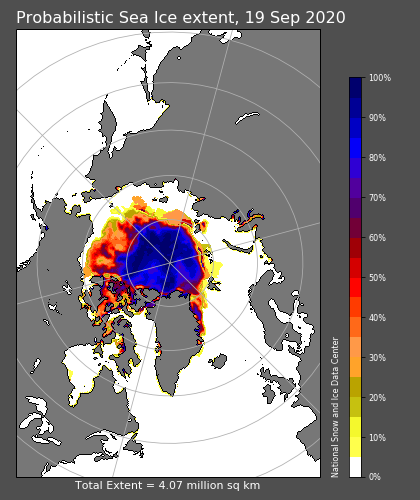
Here too is the current prognosis of the late Andrew Slater’s “Slater Probabilistic Ice Extent” 50 day forecast:

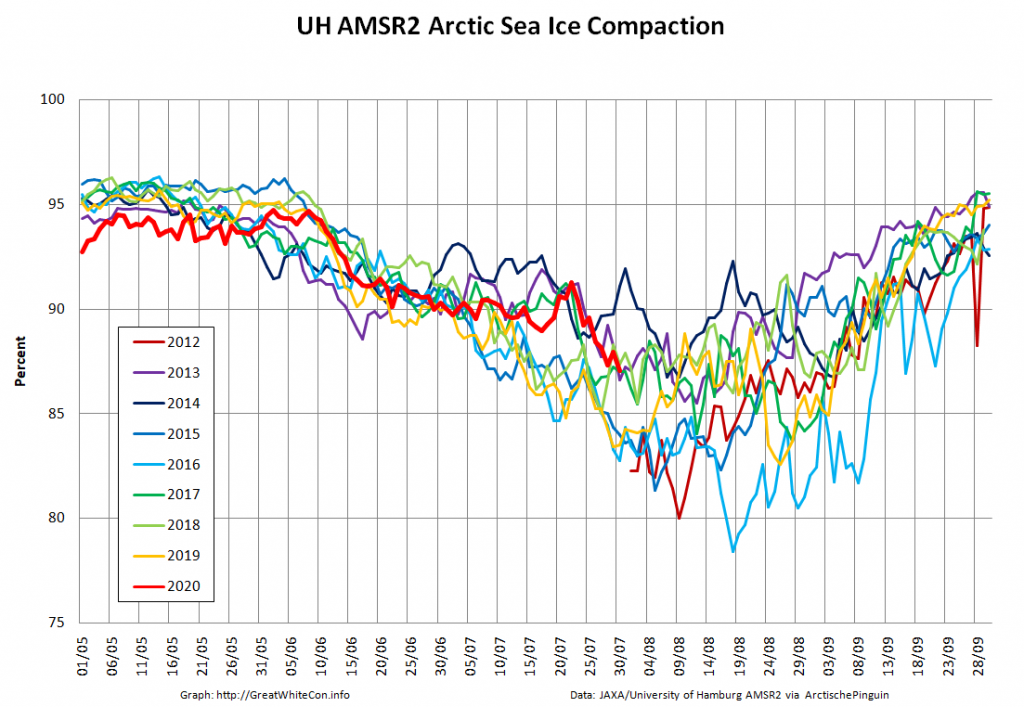
The cyclone has obviously resulted in a reduction in the rate of extent decline, but take a look at the high resolution AMSR2 “compaction” graph:

The gaps between the remaining sea ice floes have evidently increased, and hence the ice area is declining more rapidly than its extent.

[Edit – August 2nd]

Here’s an animation, based on the University of Hamburg’s AMSR2 concentration maps, which reveals the motion of the sea ice across the Beaufort and Chukchi Seas for the last two months:

Note in particular the side effects of the recent cyclone, visible at the end of the video.

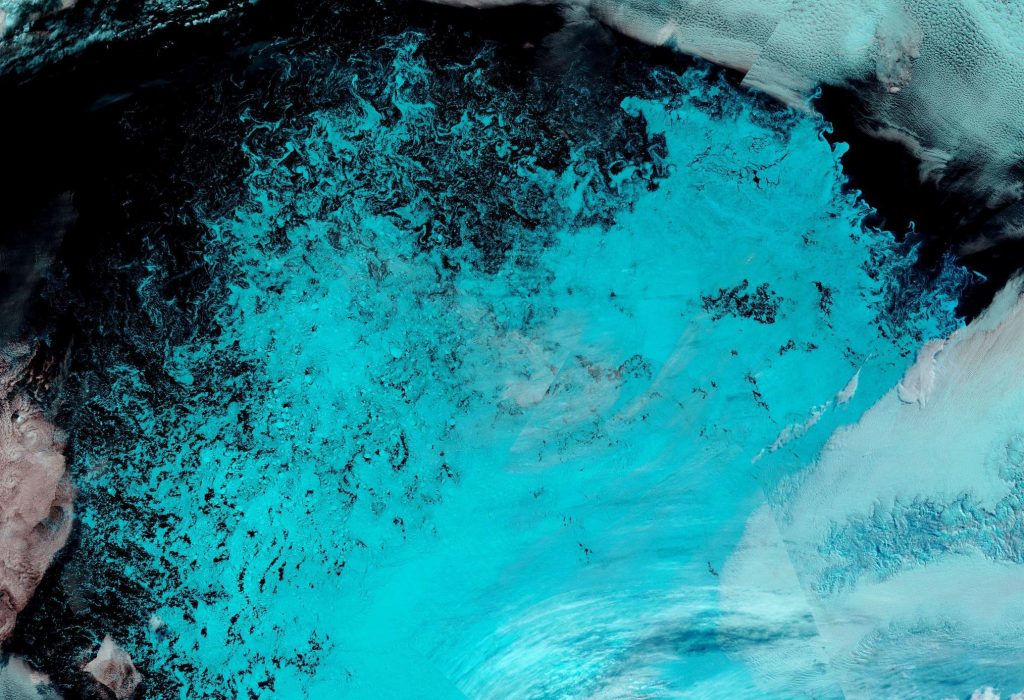
Here too is a close up of the current state of the remaining ice in the Chukchi Sea, snapped by the Suomi NPP satellite through a gap in the clouds:

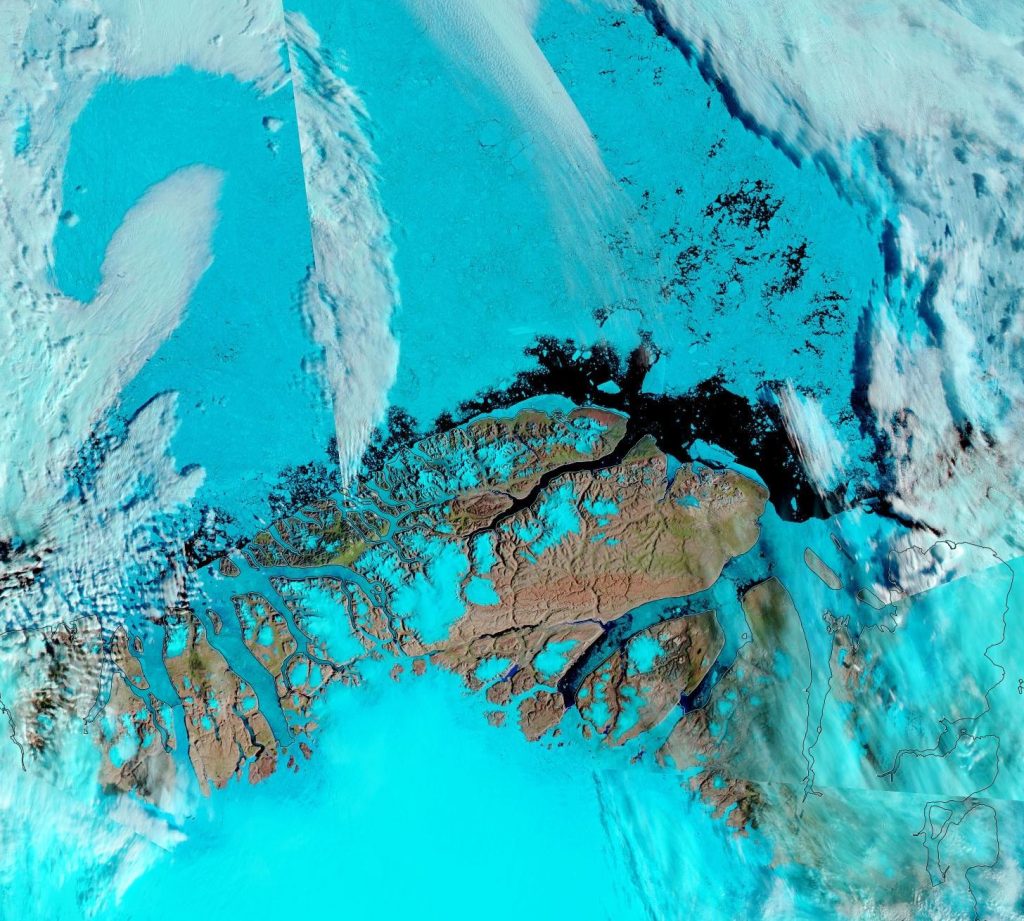
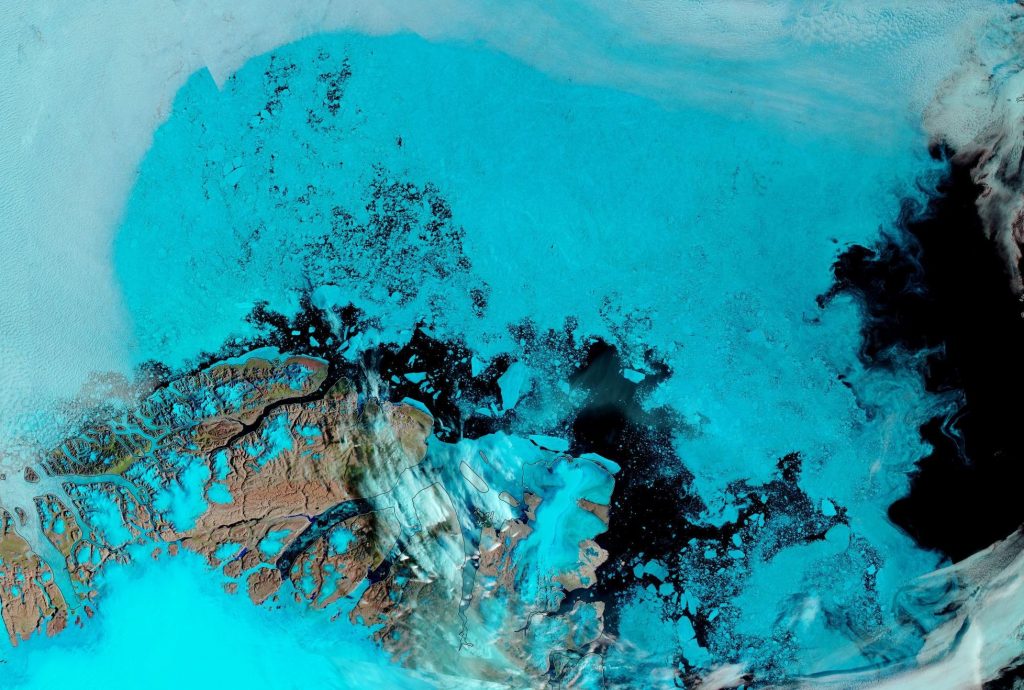
Plus the current open water north of Greenland. Perhaps once Polarstern has been flushed out into the open water of the Fram Strait at the end of the MOSAiC expedition she could take another look at this almost completely unexplored area of the Arctic Ocean?

[Edit – August 6th]

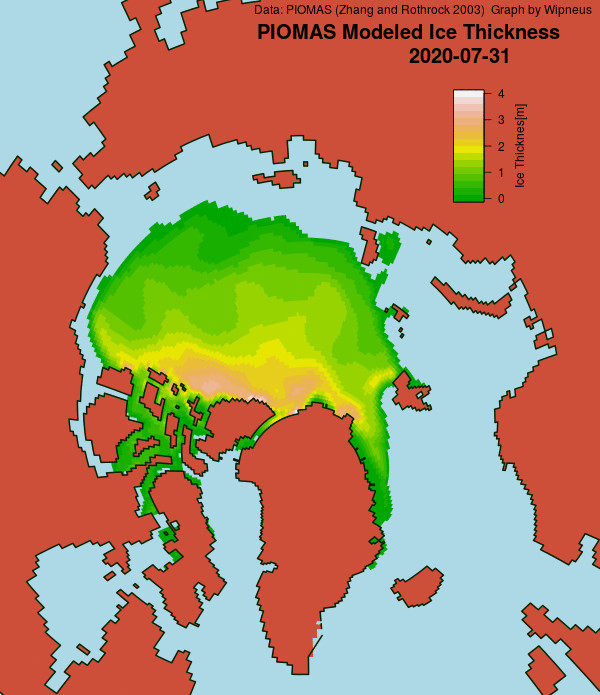
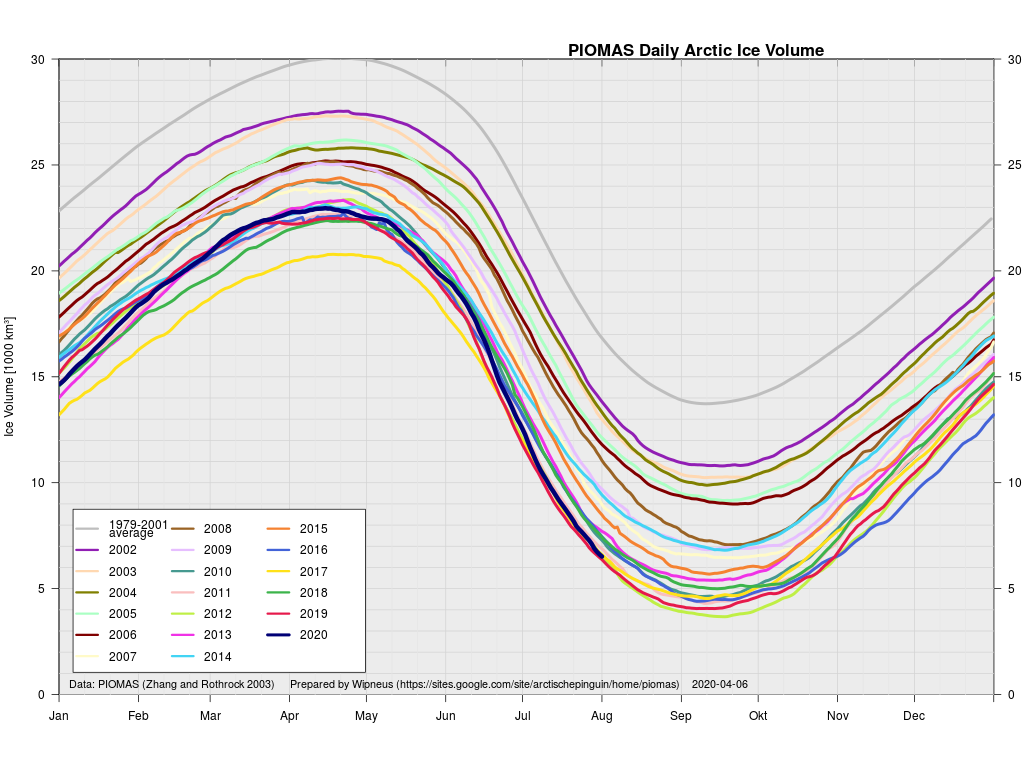
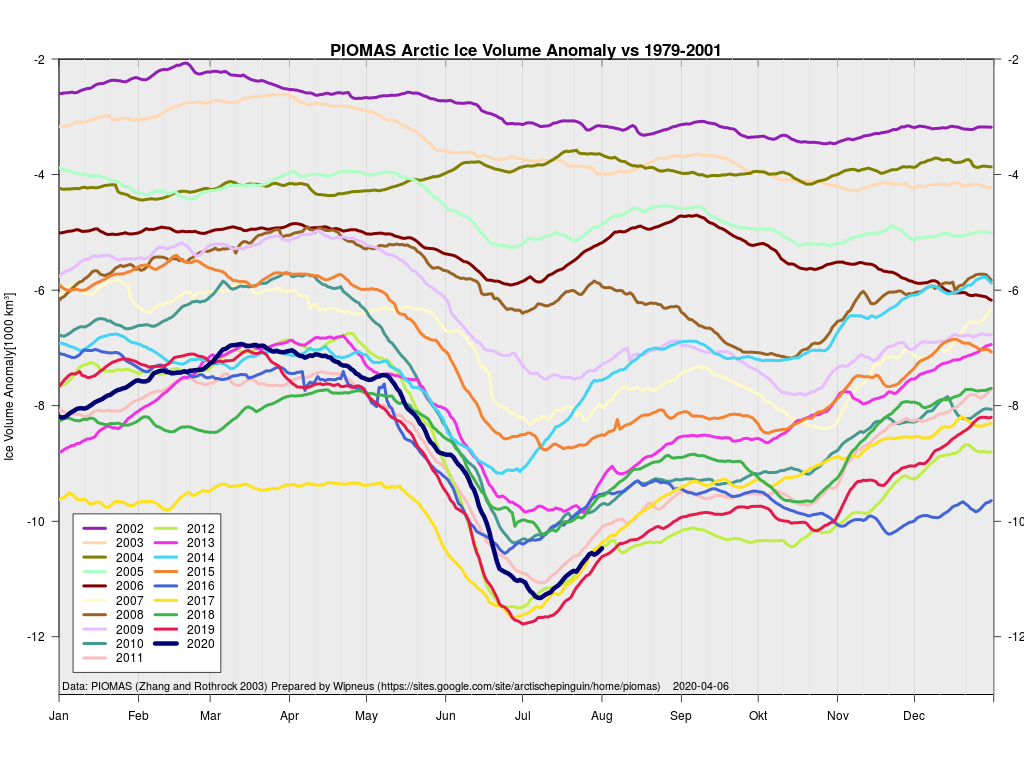
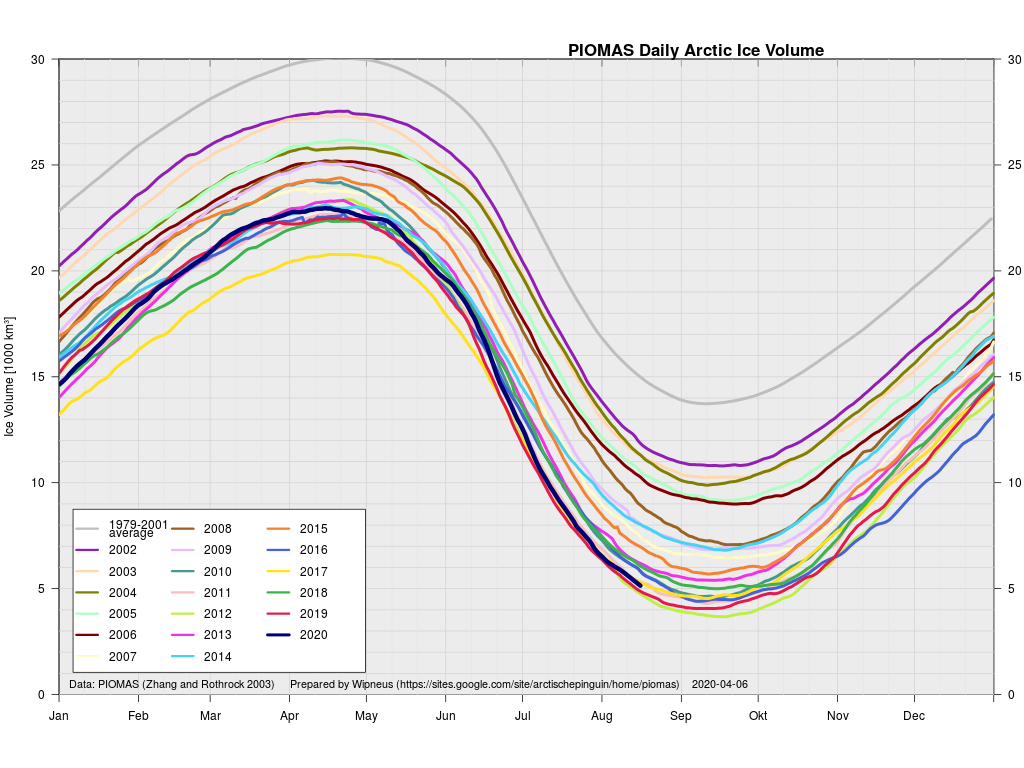
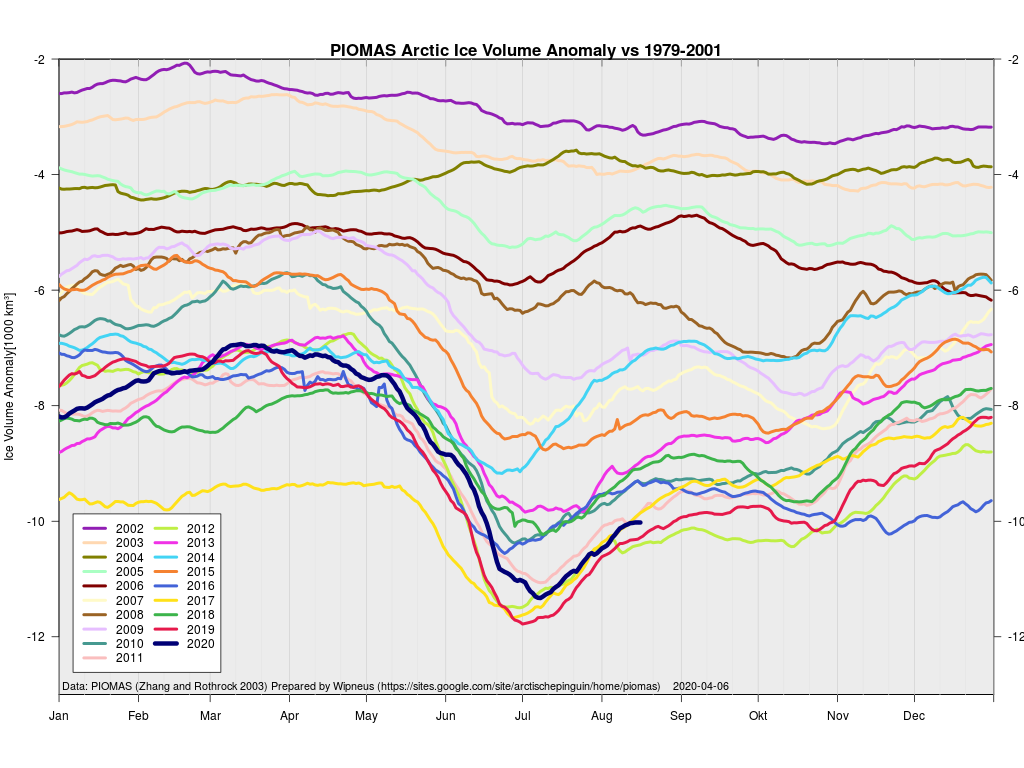
The latest gridded thickness data has been released by the PIOMAS team, and here are Wipneus’s visualisations:

According to the Polar Science Center:

Average Arctic sea ice volume in July 2020 was 9,300 km3. This value is  only 400 km3 above the  record minimum  value of 8,900 km3 set in 2019. This makes 2020 the fourth lowest on record for July with 2012, 2017,2019 falling just below 2020.

JAXA extent is still lowest for the date, but following the recent cyclone it looks as though it will not maintain that position for much longer:

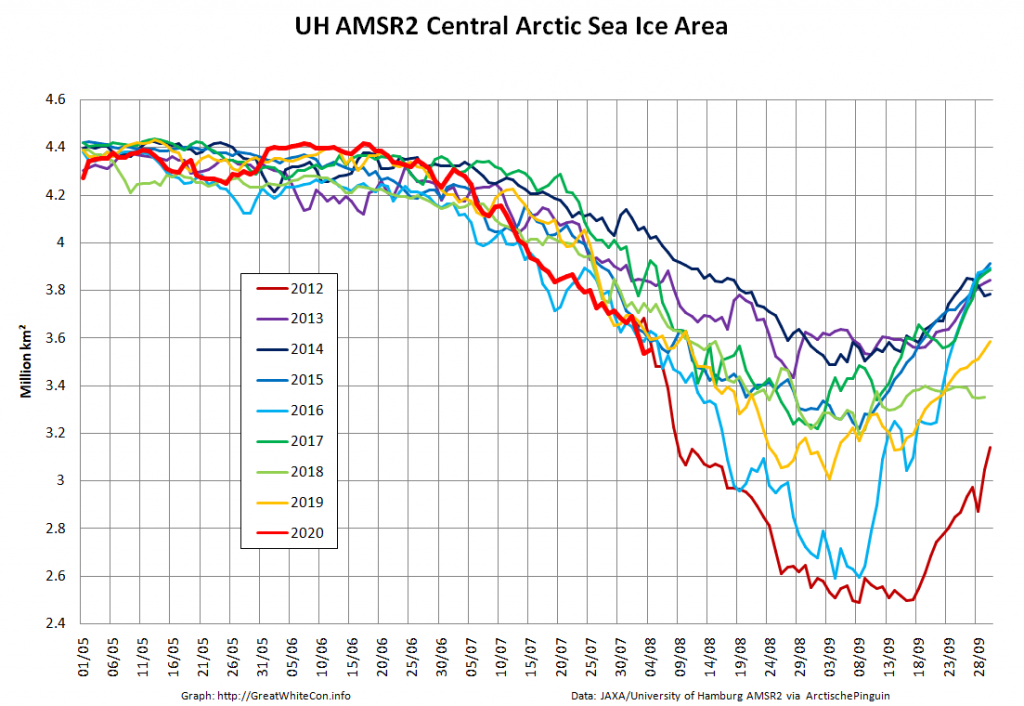
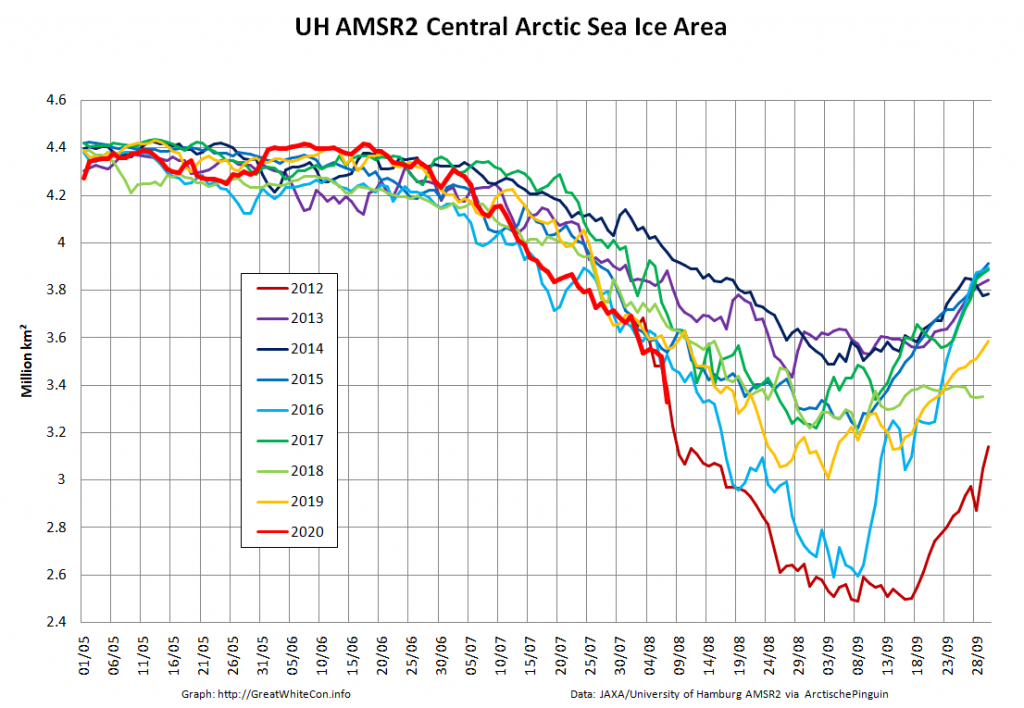
Now we’re in the month of August it’s possible to do a direct comparison with AMSR2 data for 2012. Here’s sea ice area for the Central Arctic Basin:

[Edit – August 8th]

All of a sudden JAXA extent is in 3rd place in the race to the minimum:

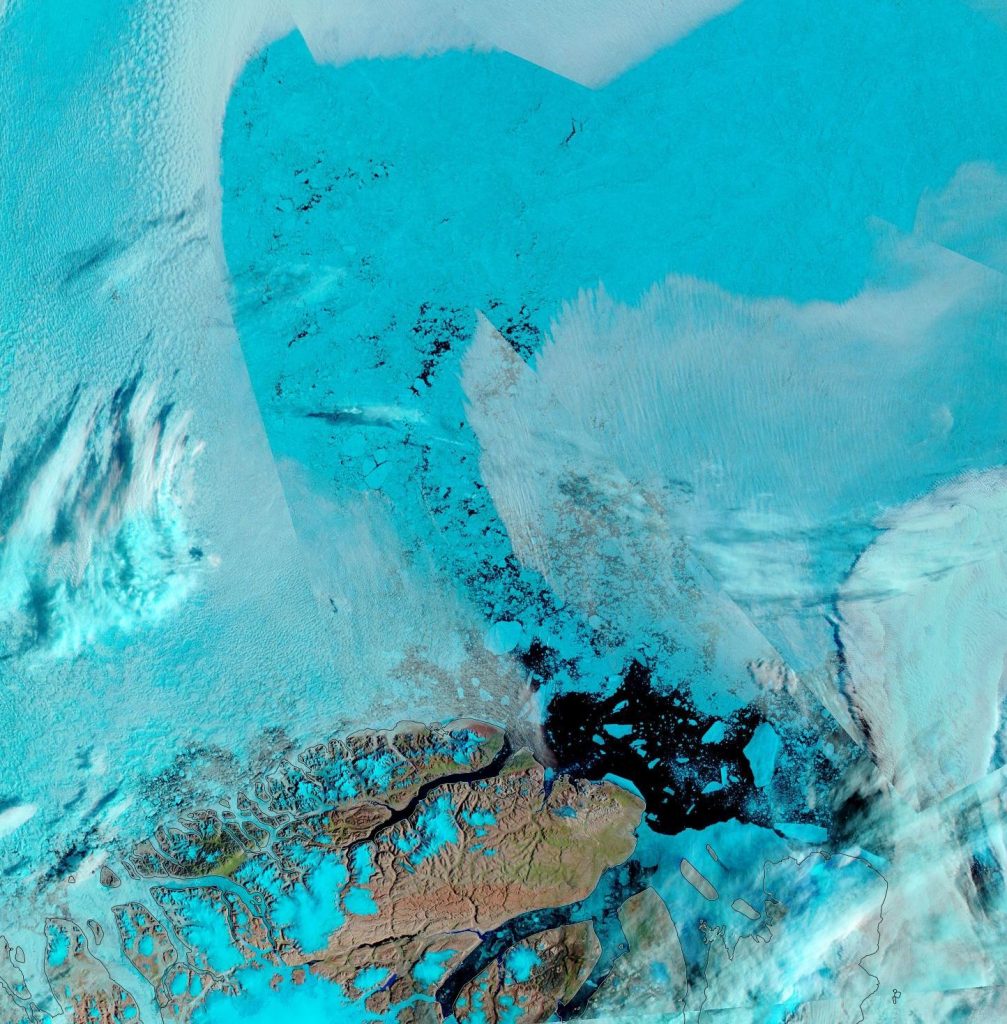
However let’s also take a close look at the state of the sea ice in the Beaufort and Wandel Seas shall we?

At this juncture I reckon that come mid September second place is now more likely than first. However as always, it still all depends on the weather.

[Edit – August 9th]

Surprising as it may seem, high resolution AMSR2 Central Arctic Basin sea ice area has so far managed to keep up with the precipitous drop in 2012:

North of Greenland the clouds have cleared closer to the North Pole, to reveal this:

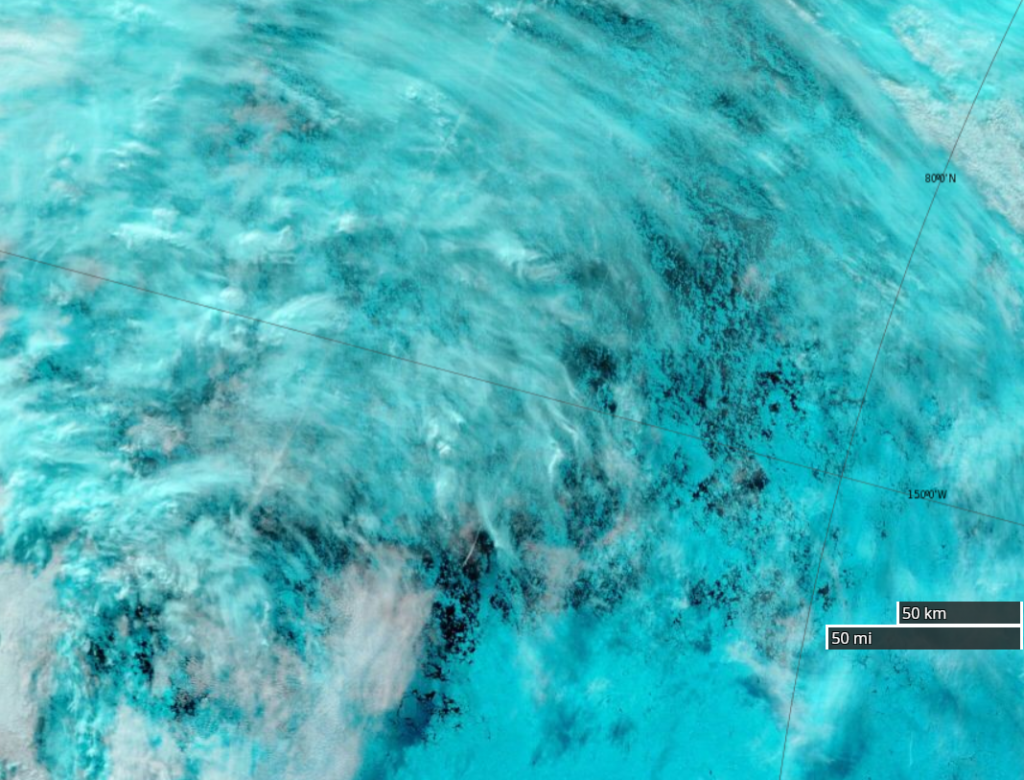
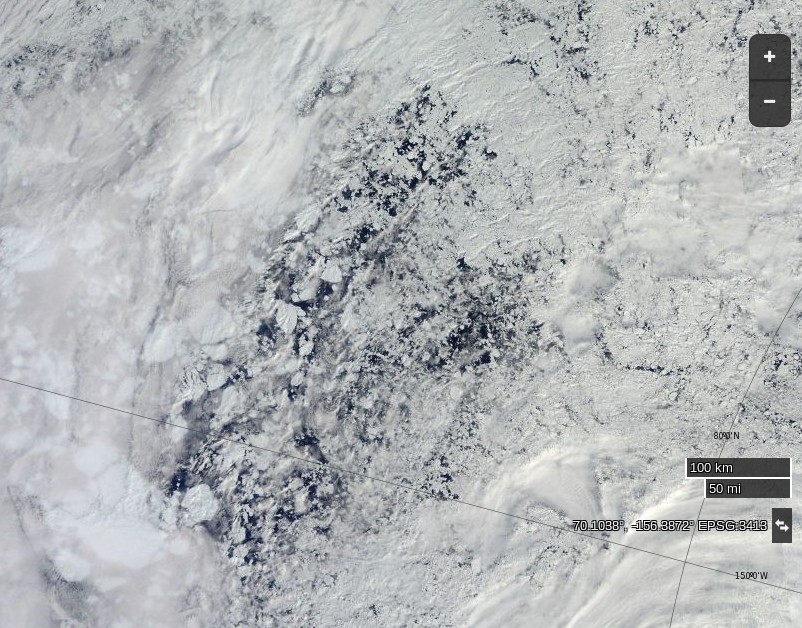
Fresh this morning from Terra, a rather cloudy view of the devastation near 80N, 150W:

[Edit – August 10th]

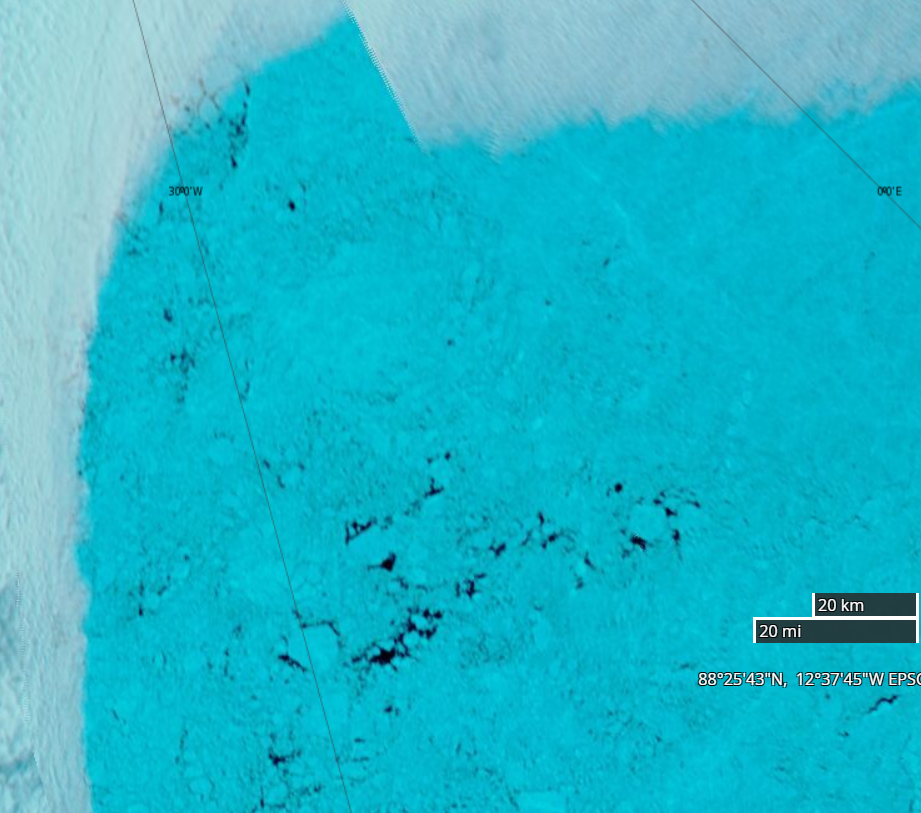
In a not entirely unexpected development one of ex Prof. Judy’s denizens is quibbling about the current condition of sea ice in the Arctic. Hence here is a close up of some “gaping holes in the sea ice cover” at 88N between Greenland and the North Pole:

[Edit – August 13th]

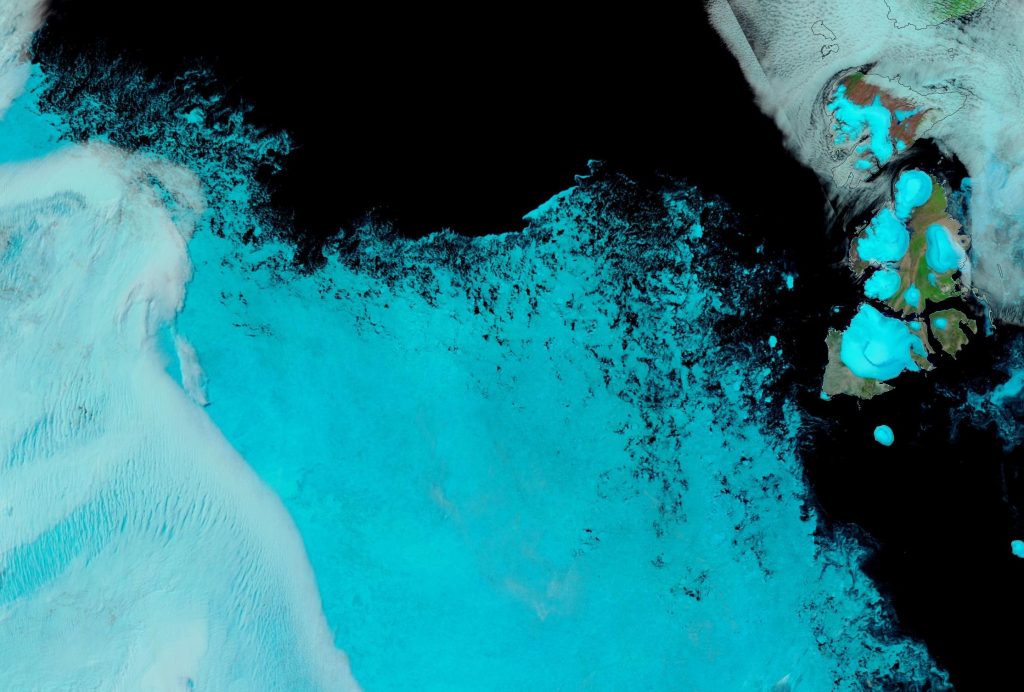
A nice clear view this morning of the marginal ice zone of the “Laptev Bite” and thereabouts from the Suomi satellite :

[Edit – August 16th]

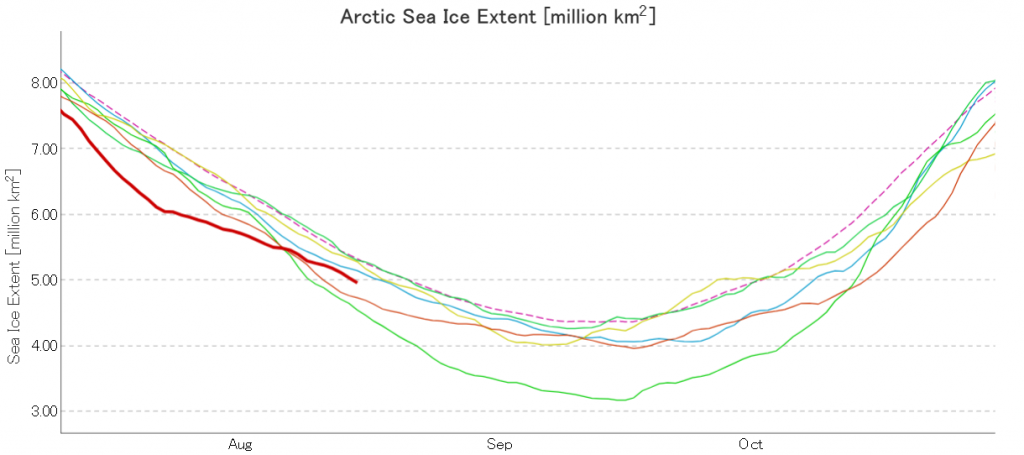
JAXA AMSR2 extent has fallen below 5 million km²:

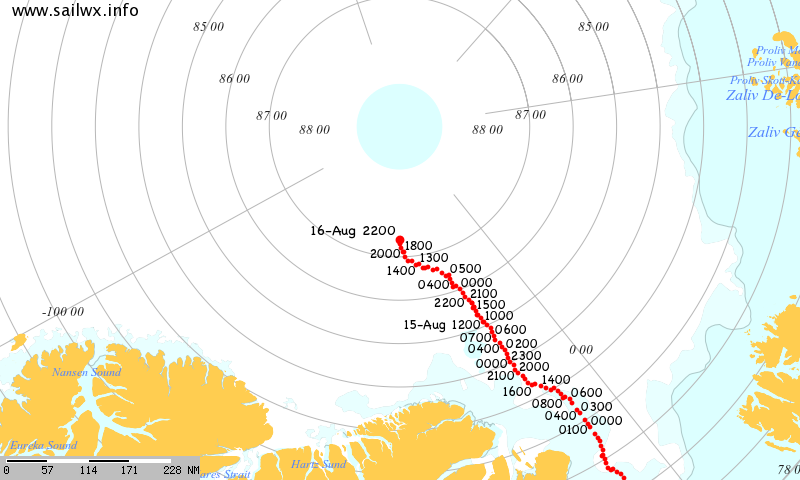
Having been flushed out of the Central Arctic through the Fram Strait the polar research vessel Polarstern is back, seemingly intent on taking a close look at the North Pole:

[Edit – August 19th]

The mid month PIOMAS gridded thickness numbers have been published:

According to the Polar Science Center model Arctic sea ice volume is currently third lowest after 2012 and 2019.

[Edit – August 24th]

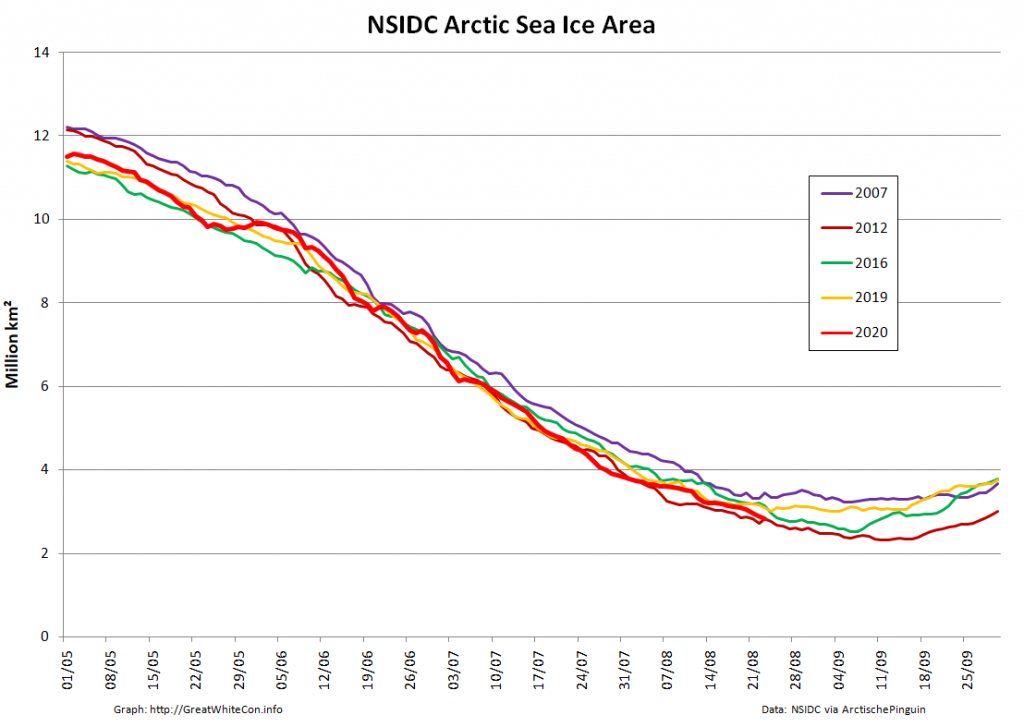
Arctic sea ice area based on NSIDC concentration data is now in a “statistical tie” with 2012 for the honour of “lowest for the date” in the satellite record:


High resolution AMSR2 area isn’t far behind:

[Edit – August 24th]

A nice clear view of the disintegrating sea ice north of the East Siberian and Chukchi Seas yesterday:

Watch this space very closely for the next few weeks!
Is the Northwest Passage Open Yet?

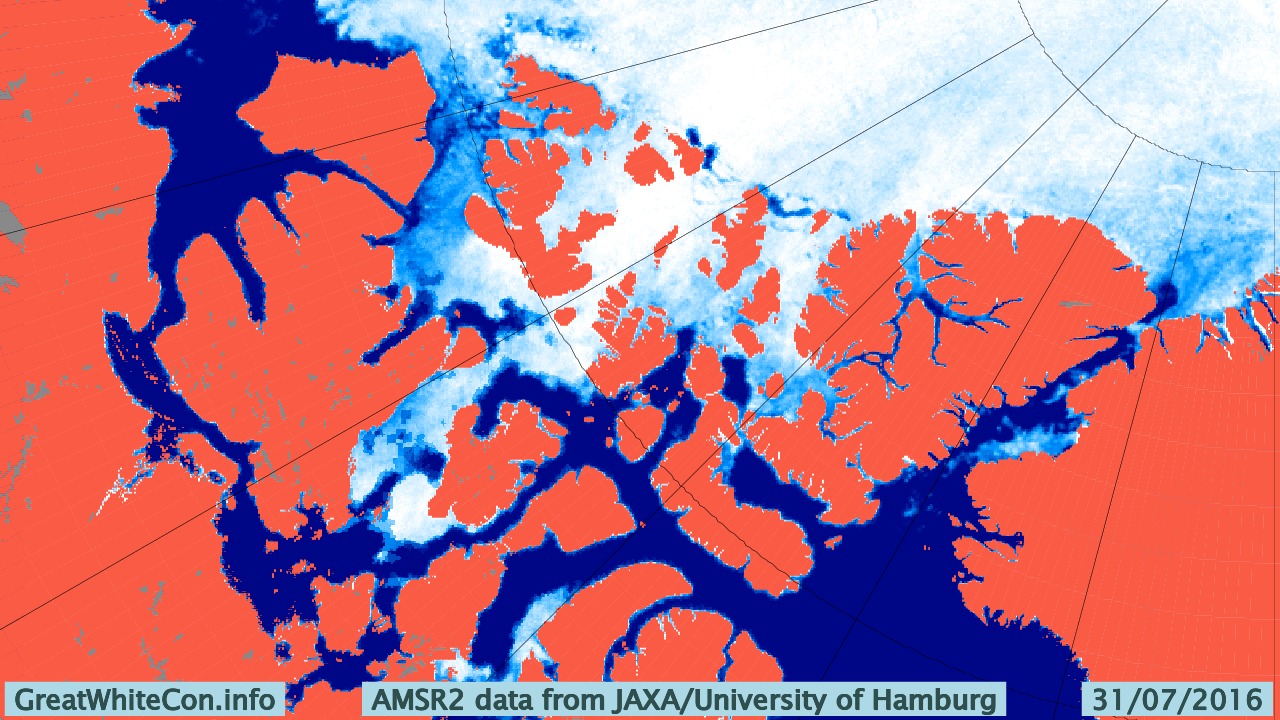
We asked this question last year, albeit a couple of weeks later. It looks like it is if you only peruse passive microwave visualisations such as this one:

Arc_20160731_res3.125_LARGE

However if you were the captain of a yacht attempting to sail through the Northwest Passage this year you might well have some reservations. For example, the Barrow webcam (currently stuck on July 31st) reveals this:

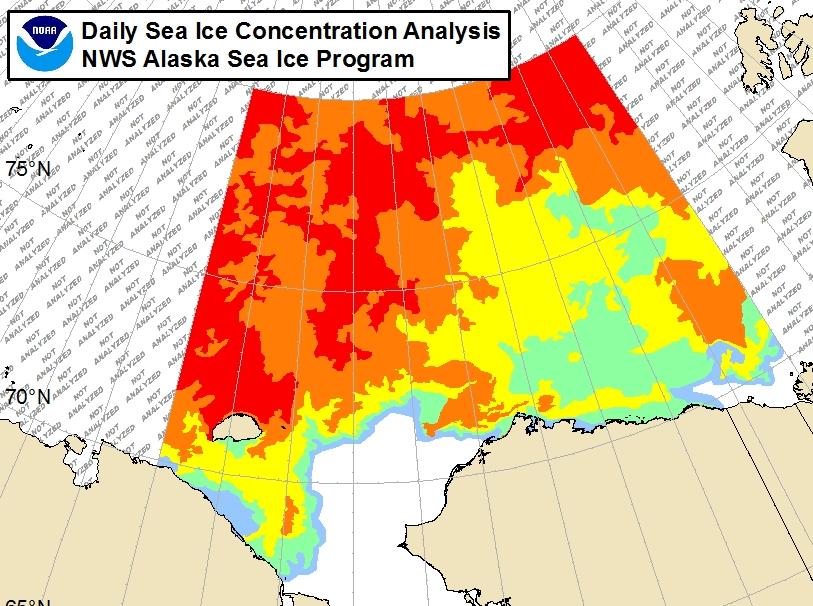
Here’s the associated National Weather Service ice chart:

NWS-Alaska-20160801-Crop

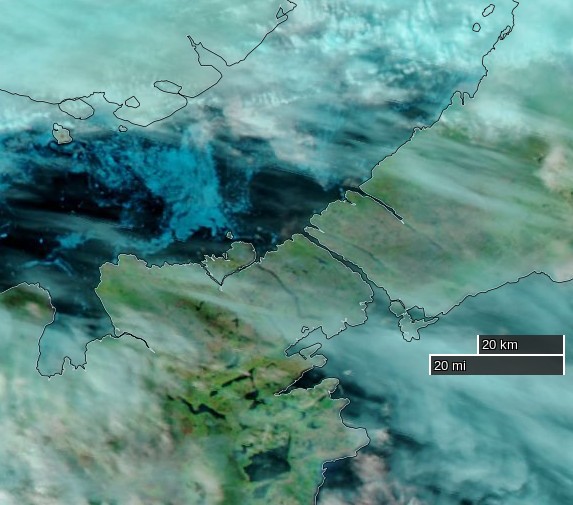
Meanwhile further east the approach to the often troublesome “choke point” of Bellot Strait looks like this from the Suomi satellite:

NASA Worldview “false-color” image of the Bellot Strait on August 1st 2016, derived from the VIIRS sensor on the Suomi satellite

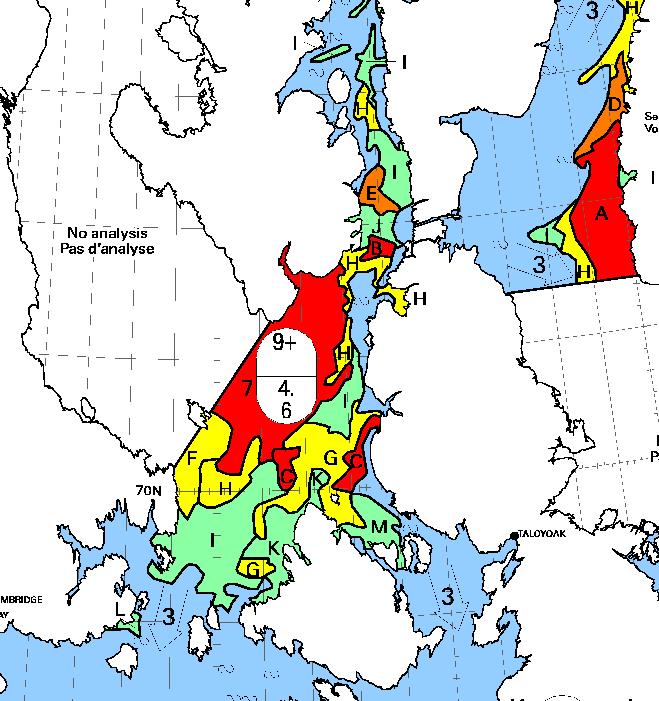
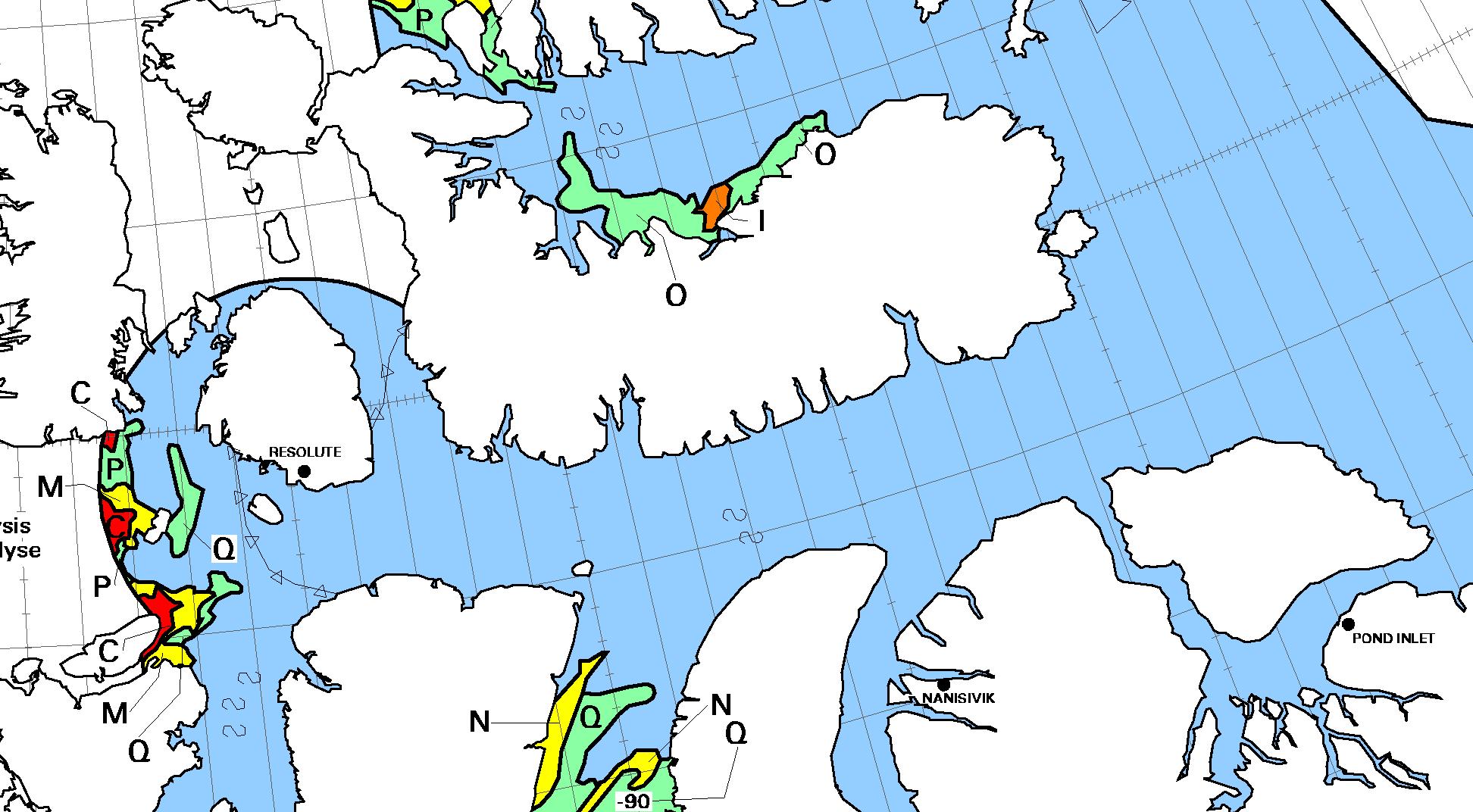
whilst the associated Canadian Ice Service ice chart looks like this:

QueenMaud-201608011800

Discretion being the better part of valour, in all the circumstances waiting a day or two longer before casting off might prove prudent:

Arc_20160801_res3.125_LARGE


[Edit – August 3rd]

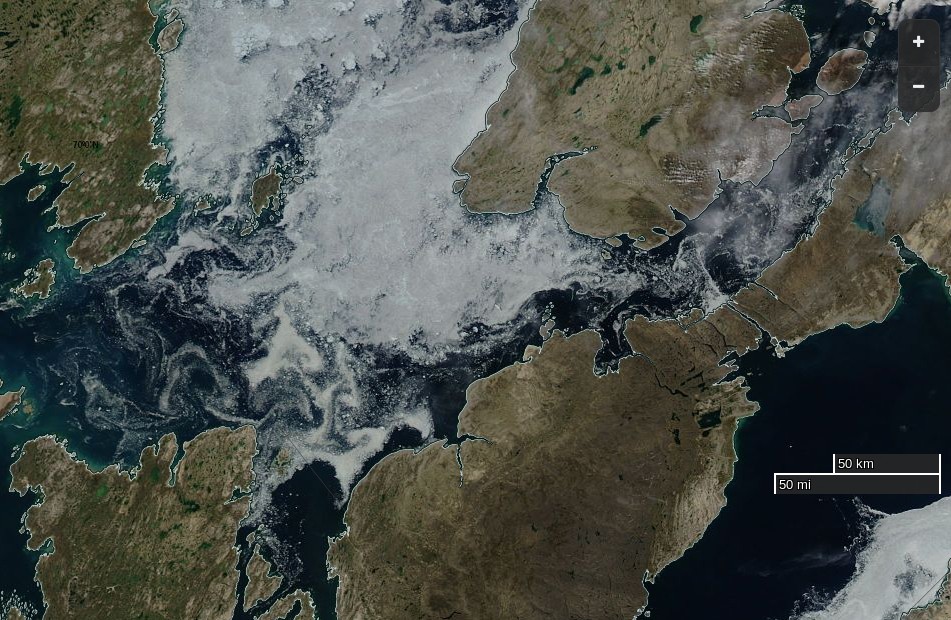
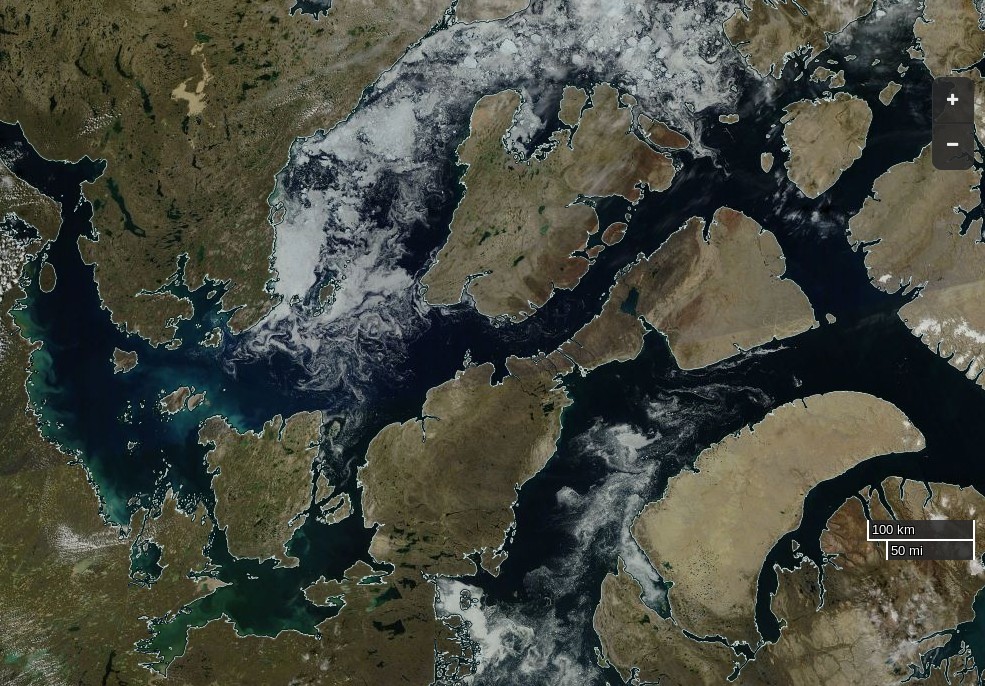
Clearer skies over the Northwest Passage yesterday reveal the remaining ice:

NASA Worldview “true-color” image of Larsen Sound on August 2nd 2016, derived from the MODIS sensor on the Aqua satellite

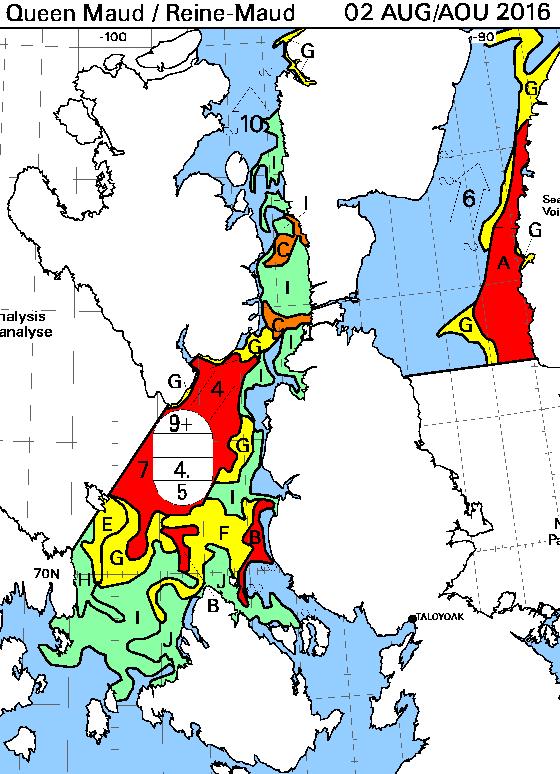
Here’s the CIS chart of the area from yesterday evening:

QueenMaud-201608021800


[Edit – August 7th]

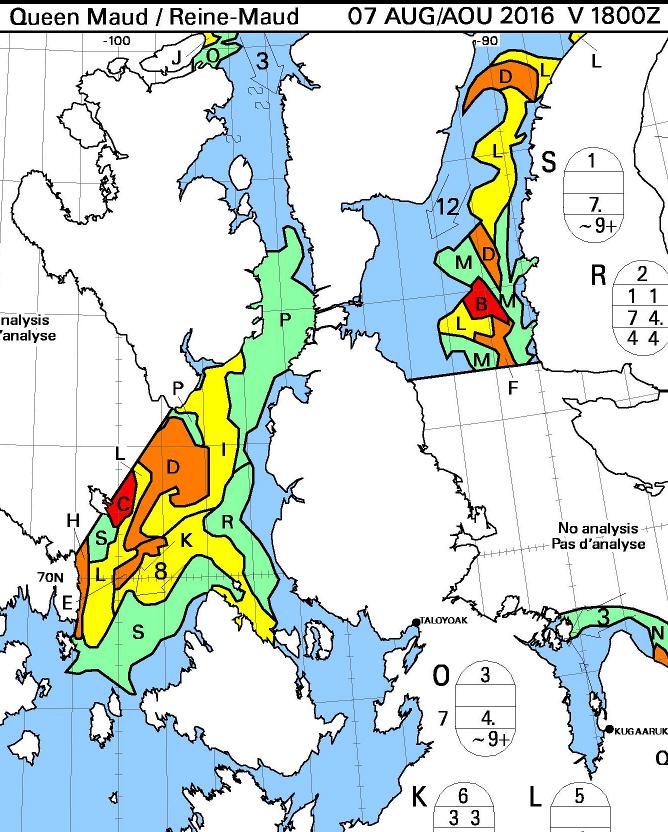
Here’s the August 7th CIS chart for the Queen Maud Gulf and points north:

QueenMaud-201608071800

Today there looks to be a route past Gjoa Havn and through Bellot Strait that doesn’t involve negotiating more than 3/10 concentration sea ice. The ice has been pushed back from Point Barrow too, so by my reckoning we can now declare one route through the Northwest Passage “open”, for the moment at least.


[Edit – August 10th]

A nice clear MODIS image of the Northwest Passage yesterday:

NASA Worldview “true-color” image of the Northwest Passage on August 9th 2016, derived from the MODIS sensor on the Terra satellite

backed up by the CIS ice charts:

Resolute-201608091800

QueenMaud-201608091800

The Mid July Surf Forecast for the Beaufort Sea

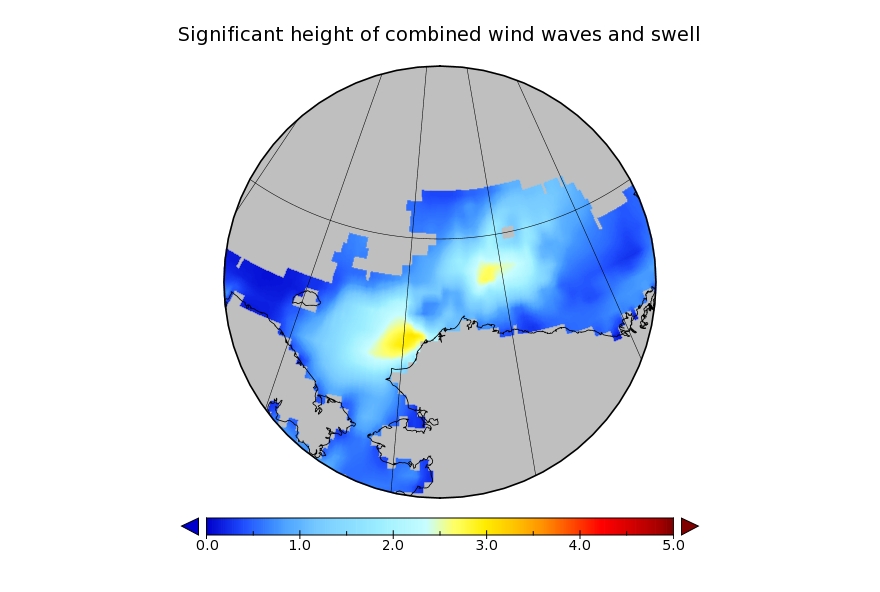
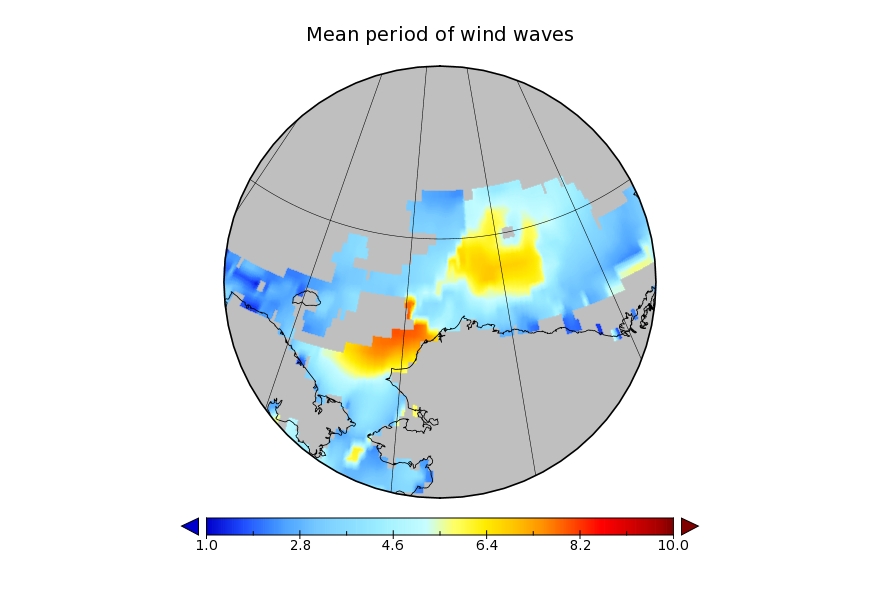
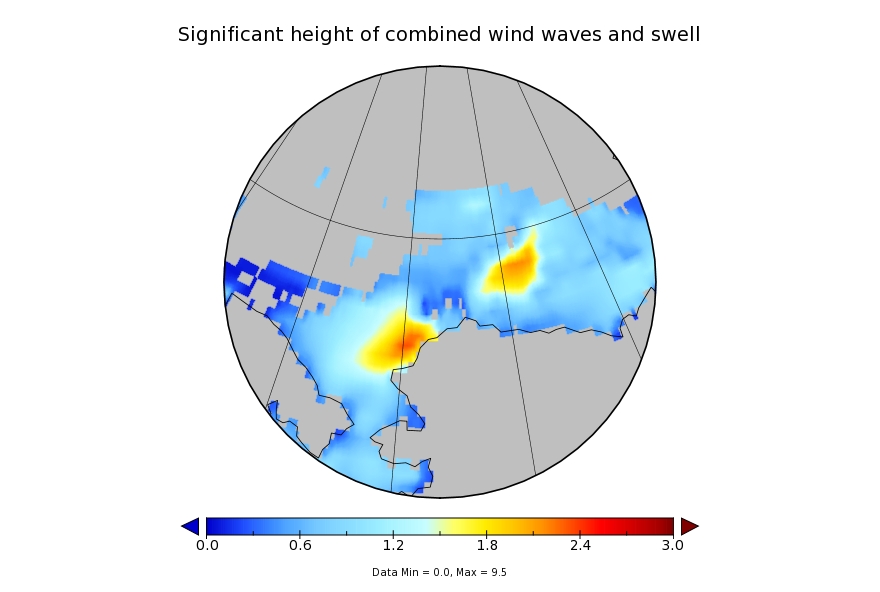
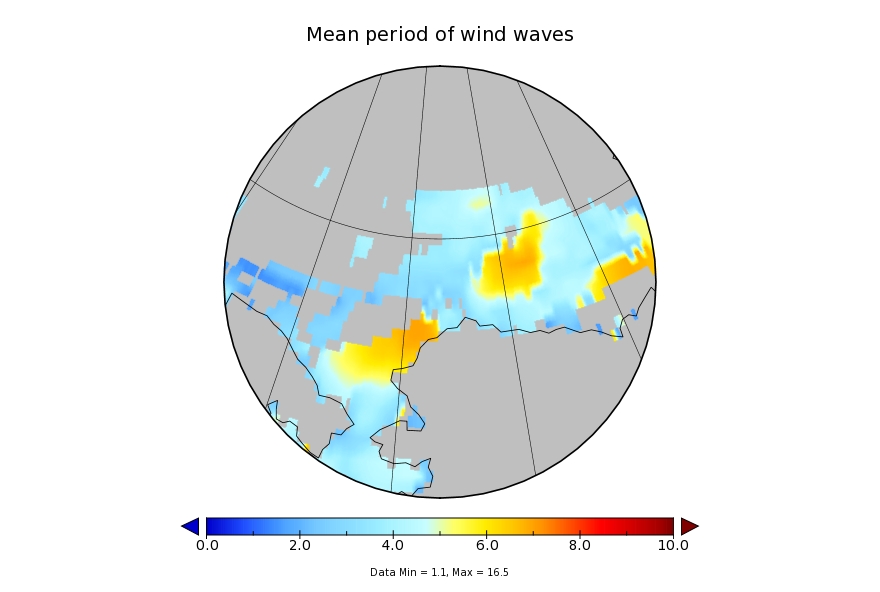
It looks like a storm is brewing in the Arctic. The long range weather forecasts for the Arctic have been remarkably unreliable recently, but this one is for a mere three days from now. WaveWatch III suggests there will be some significant waves in the Chukchi and Beaufort Seas this coming weekend, travelling in the direction of the ice edge:

WaveWatch III wave height forecast for July 17th

WaveWatch III wave period forecast for July 17th

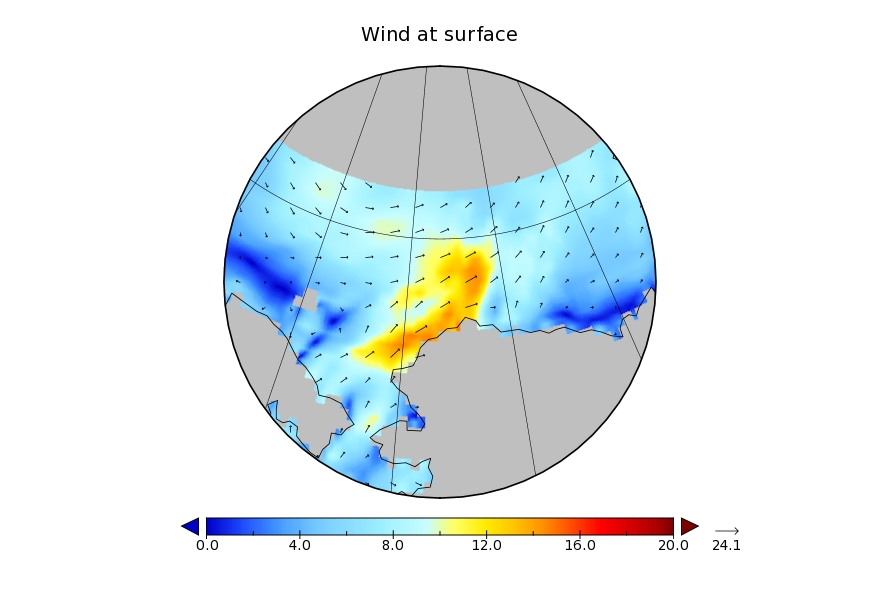
WaveWatch III wind forecast for July 17th


[Edit July 15th 2016]

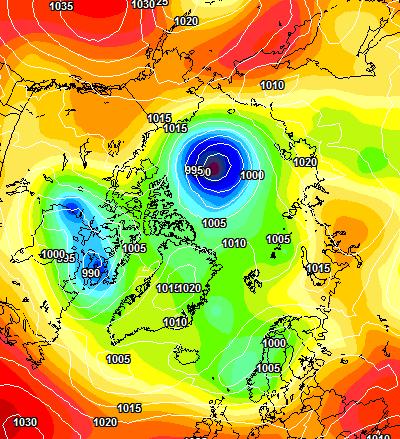
Sunday is only two days away now, and here is the current ECMWF prognosis:

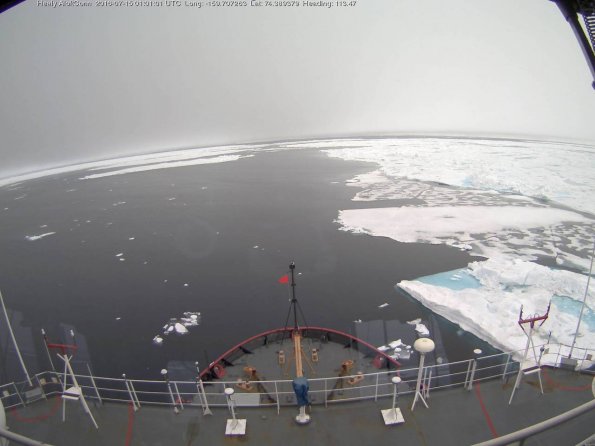
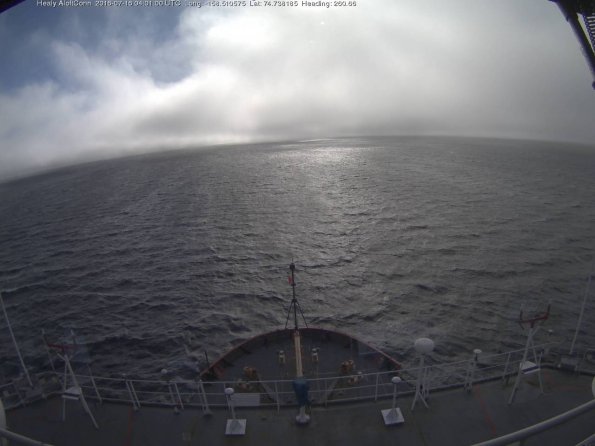
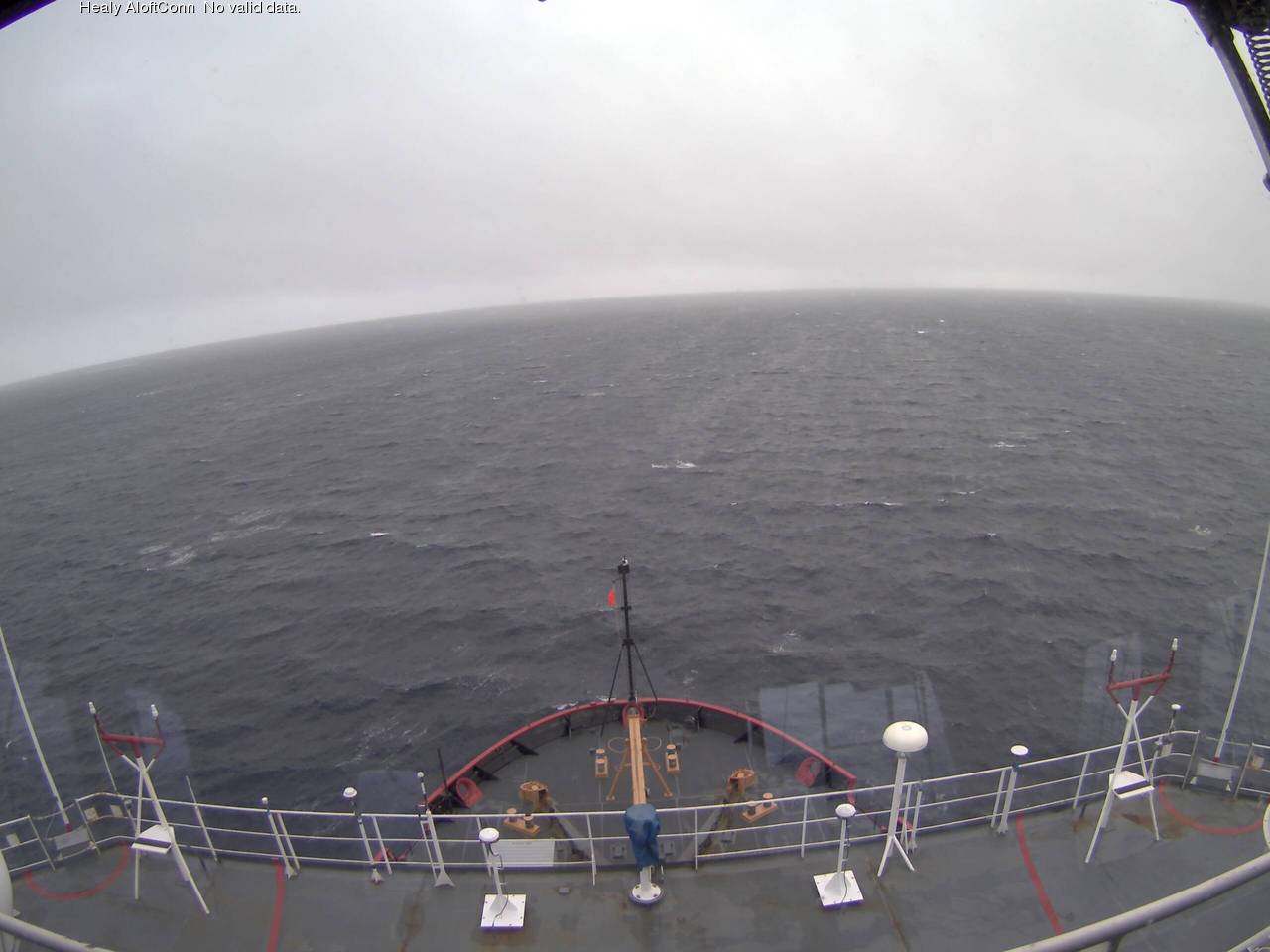
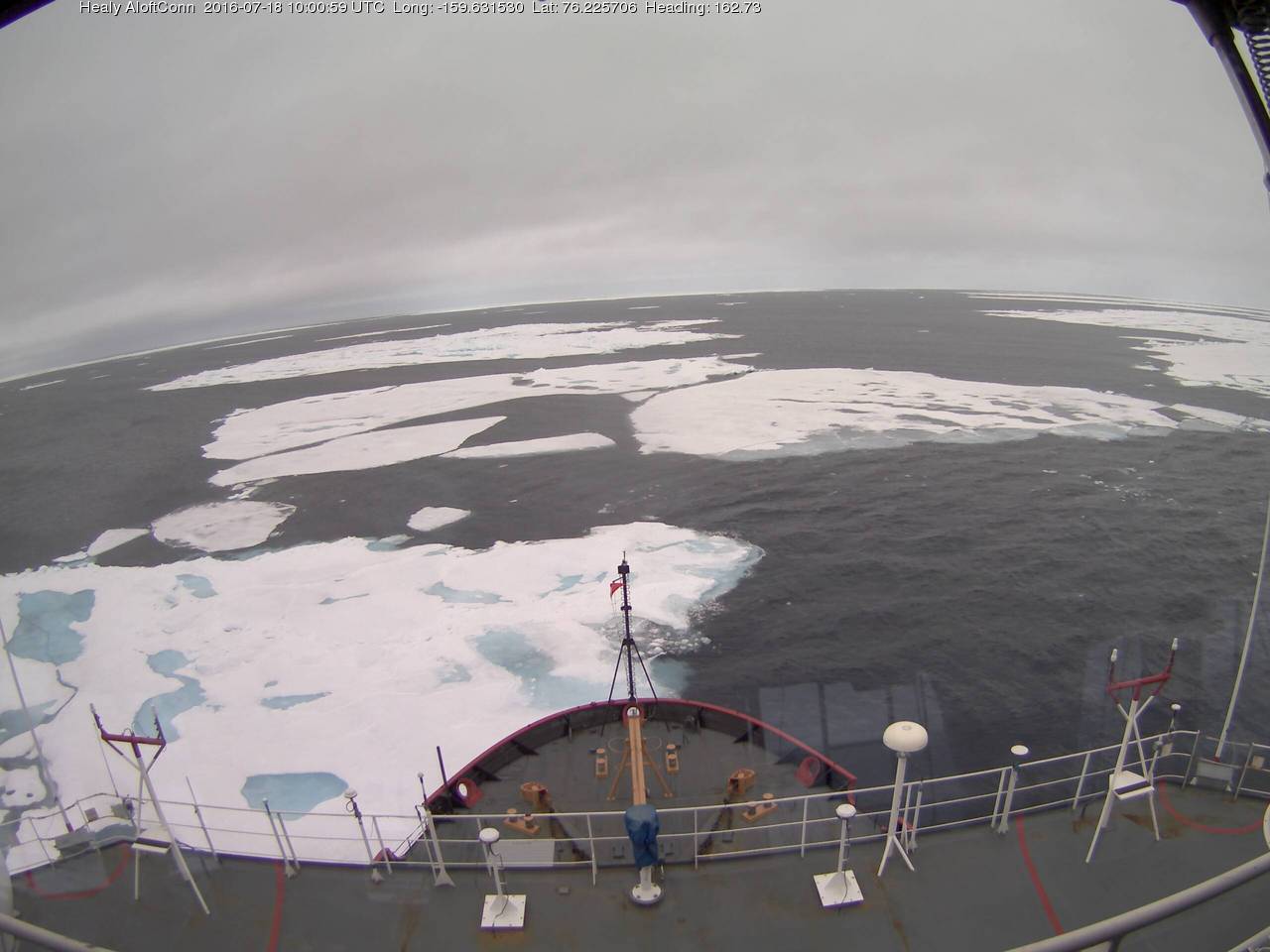
Here’s how “the surf” looks today, courtesy of United States Coast Guard Cutter Healy:


[Edit July 16th 2016]

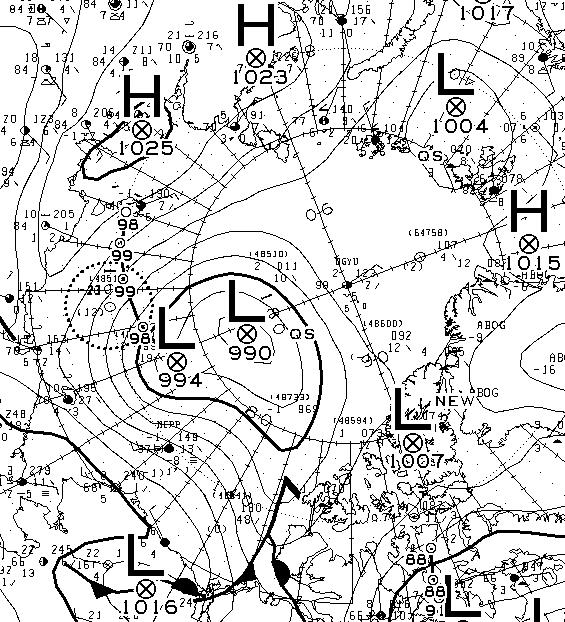
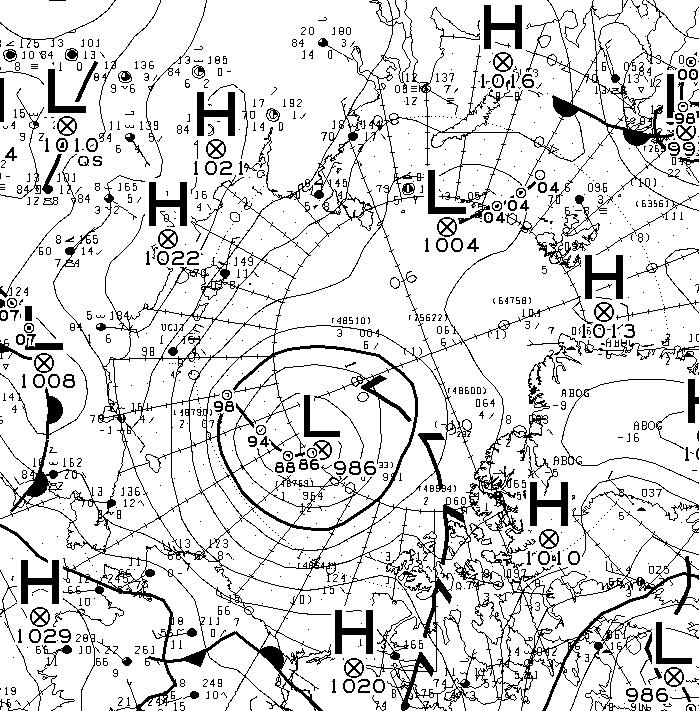
Another day has dawned, and the Environment Canada synoptic chart shows that the low pressure system currently over the Arctic has reached a central pressure of 990 hPa:

Synopsis-20160716-06Z

The latest ECMWF SLP forecast for tomorrow is firming up:

ECMWF-20160716+1d

A modest swell is now visible from USCGC Healy’s “AloftCon” webcam:

whilst the WaveWatch III forecast for tomorrow has dropped off to a significant wave height of around 2 metres with an average period of 7 seconds:

Height-20160716+1d

Period-20160716+1d

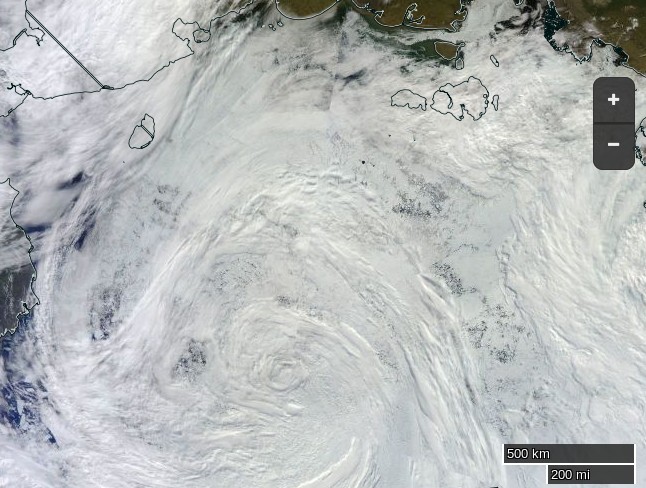
Meanwhile an image from the VIIRS instrument on the Suomi NPP satellite reveals the current storm in all its glory, together with confirmation that the “Big Block” multi-year ice floe north of Barrow has split asunder overnight:

Storm-VIIRS-20160716


[Edit July 17th 2016]

Sunday morning has now arrived. The storm in the Arctic looks to have bottomed out at 986 hPa central pressure. Here’s the Environment Canada synoptic chart for 00:00 this morning:

Synopsis-20160717-00Z

and here’s how the storm looks from the Terra satellite today:

Storm-Terra-20160717-1

This is how the resultant swell looked from USCGC Healy at 06:00:


[Edit July 18th 2016]

Here’s what the Beaufort and Chukchi Sea north of Barrow look like this morning through the clouds:

NASA Worldview “true-color” image of the Beaufort Sea on July 18th 2016, derived from the MODIS sensor on the Terra satellite

The remains of the now not so “Big Block” can just be made out in the bottom left. For a cloud free image here’s the latest AMSR2 passive microwave imagery of the area from the University of Hamburg:

Arc_20160717_res3.125_LARGE

The USCGC Healy and the remnants of the swell are in amongst the ice:


[Edit July 20th 2016]

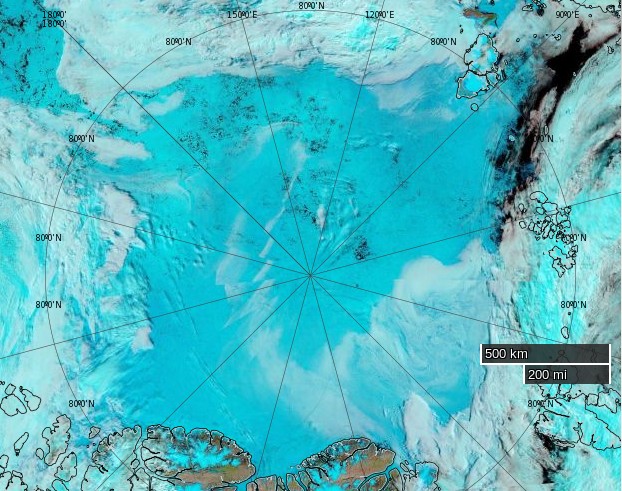
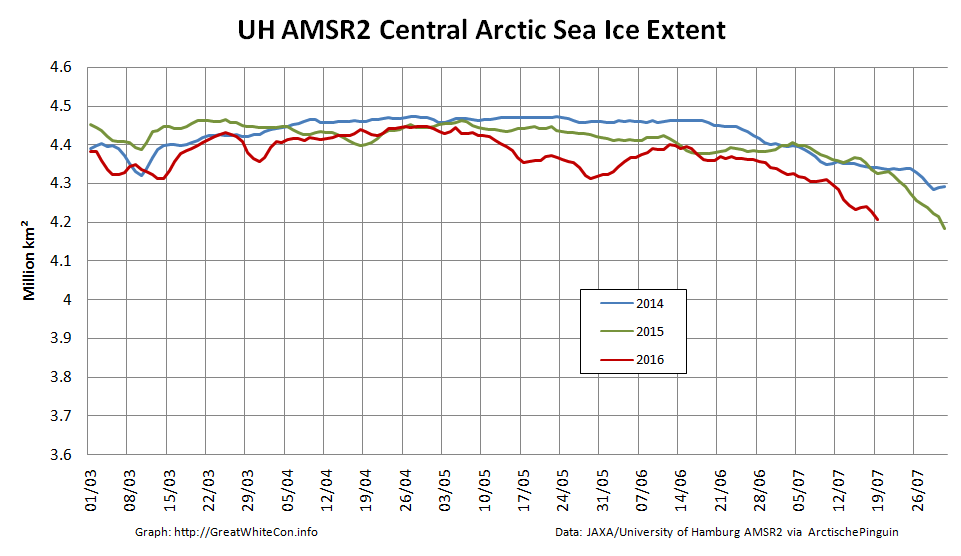
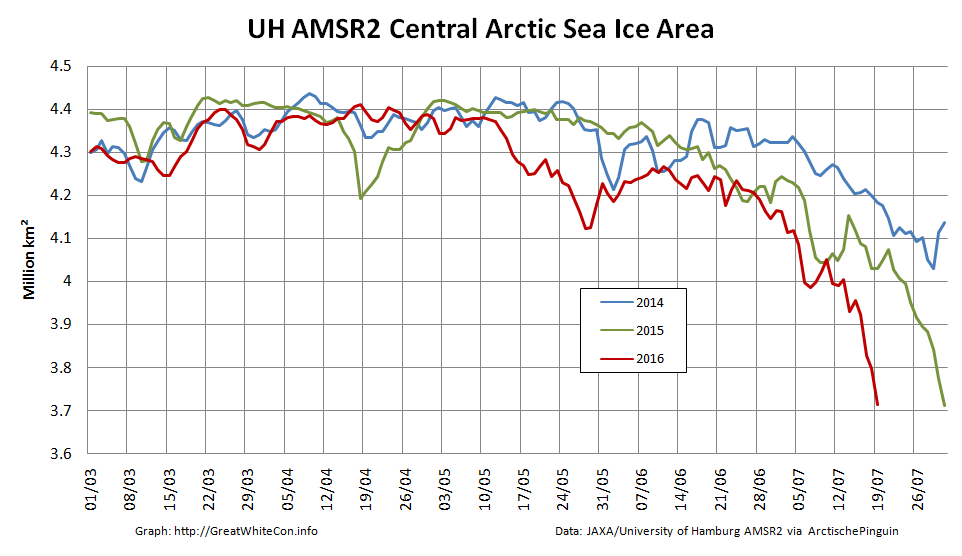
As the remnants of the storm head off across the Canadian Arctic Archipelago here is what it has left in its wake in the Central Arctic Basin:

NASA Worldview “false-color” image of the Central Arctic Basin on July 19th 2016, derived from the MODIS sensor on the Aqua satellite

University of Hamburg AMSR2 concentration visualisation of the Central Arctic on July 19th 2016

UH-CAB-Extent-2016-07-19

UH-CAB-Area-2016-07-19


[Edit July 21st 2016]

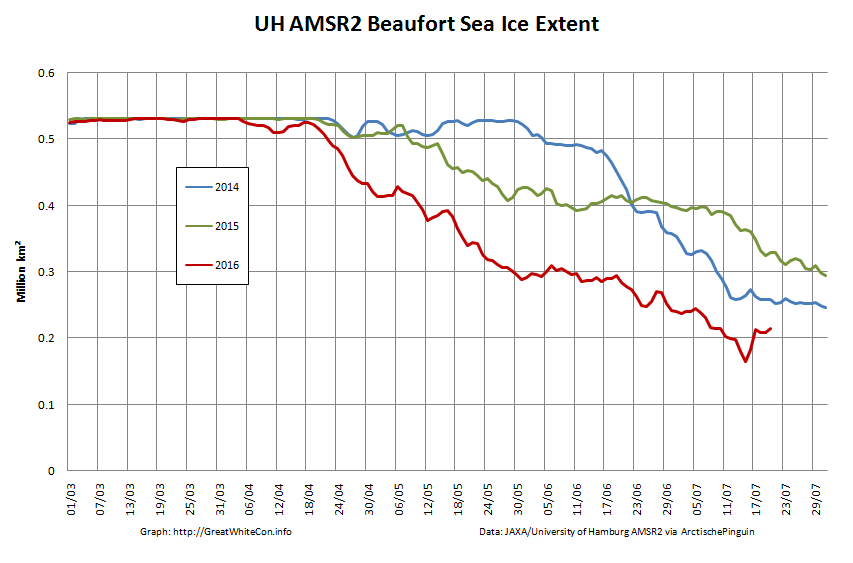
The storm has dispersed the remaining ice in the Beaufort Sea over the last few days:

UH-Beaufort-Extent-2016-07-20

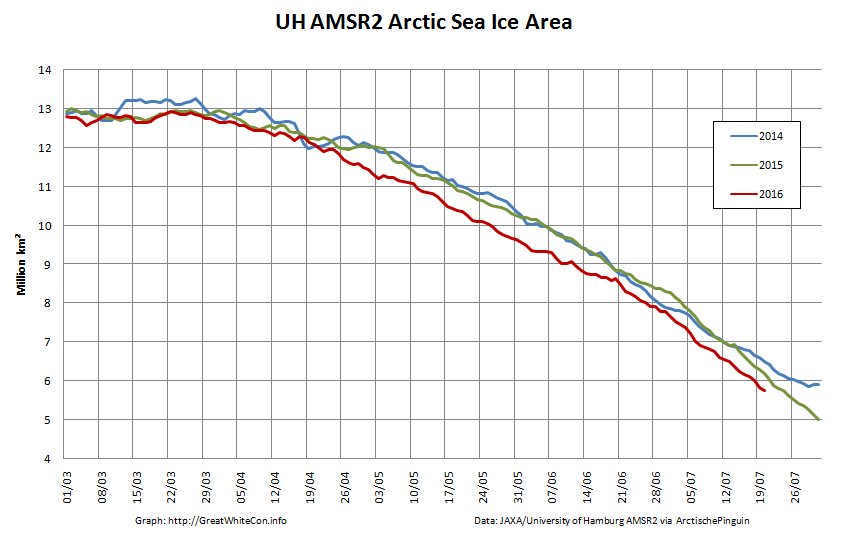
However across the Arctic as a whole sea ice area continues its downward trend:

UH-Arctic-Area-2016-07-20