Monthly Archives: November 2025

Facts About the Arctic in November 2025

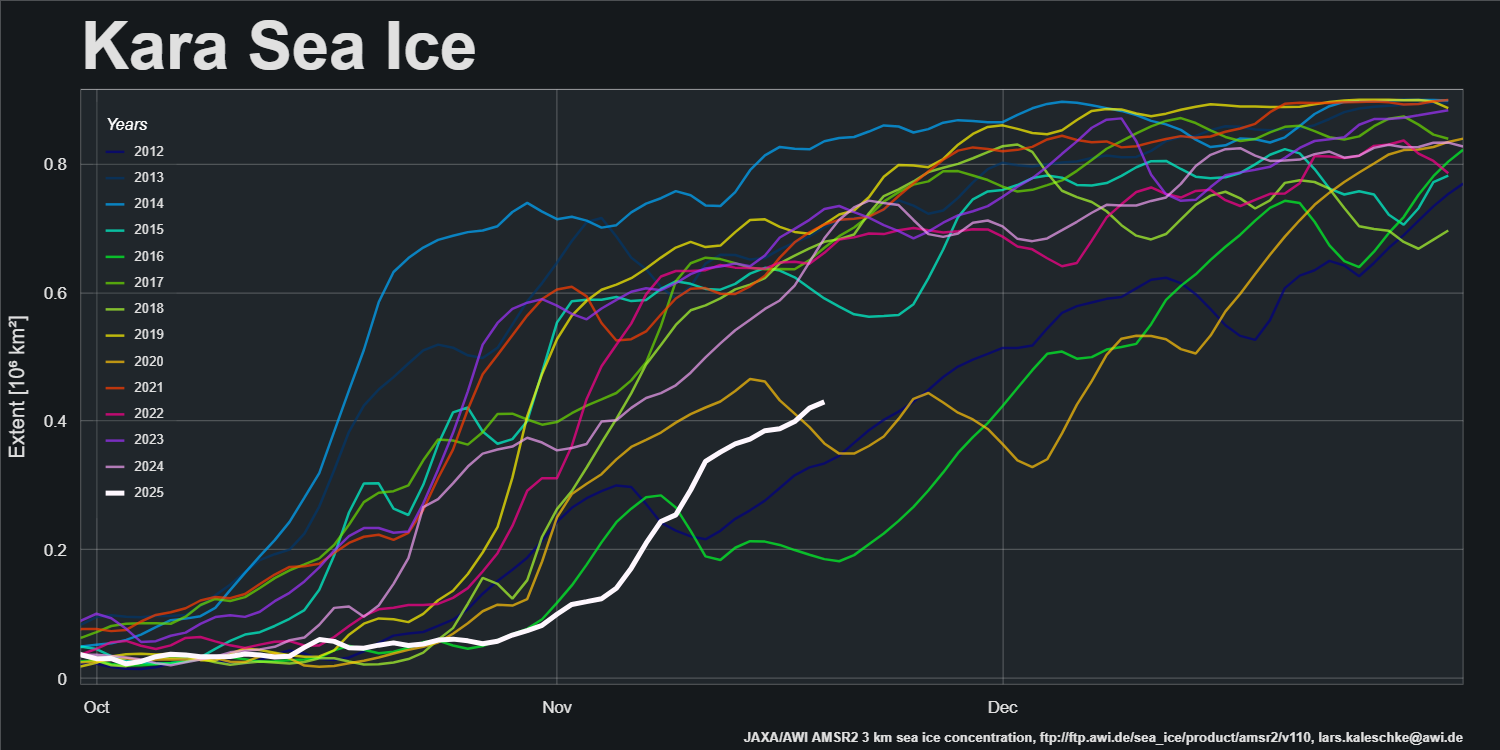
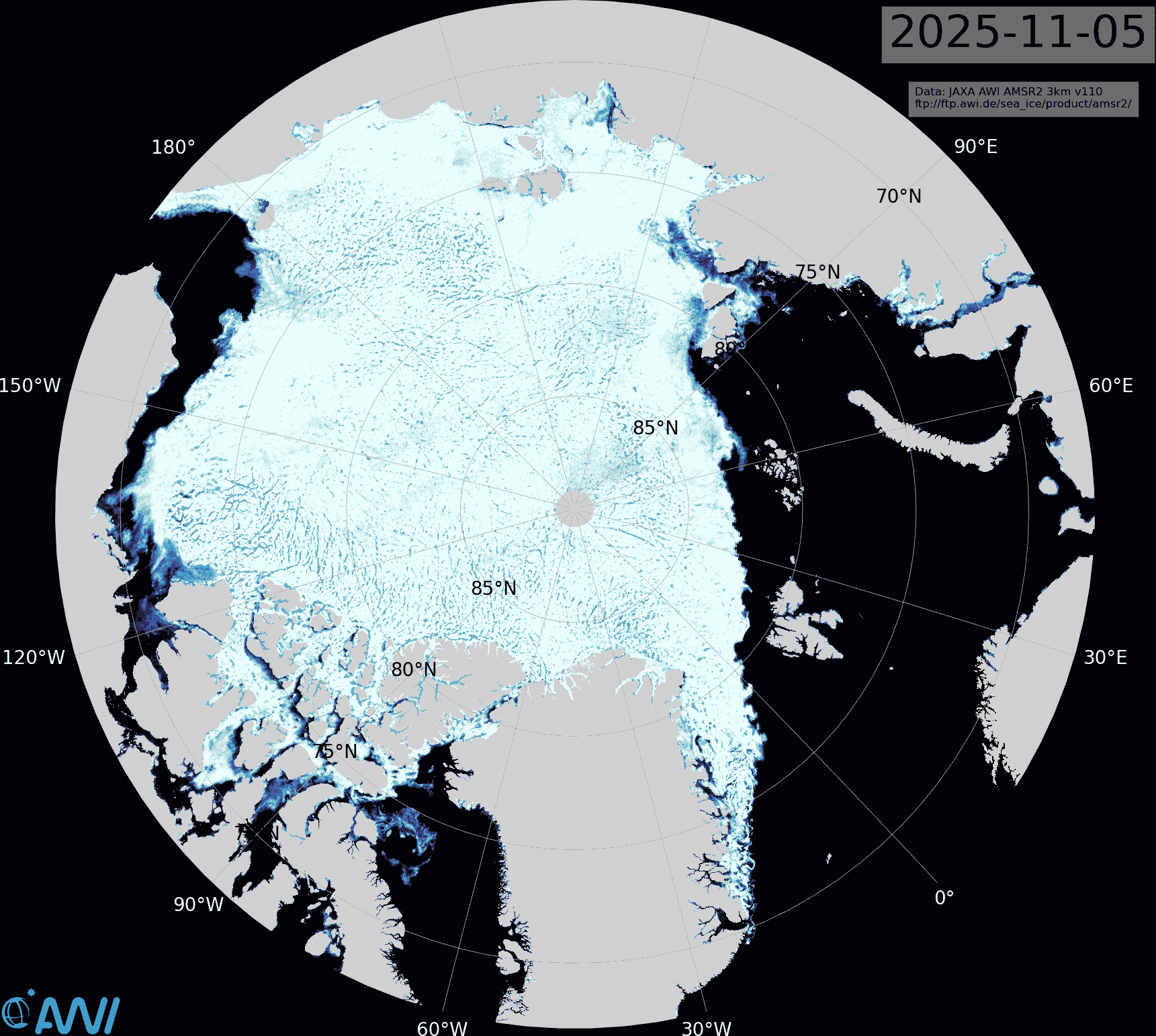
The latest Alfred Wegener Institute sea ice concentration map shows the East Siberian and Laptev Seas almost completely refrozen. However, refreeze of the Kara Sea has barely begun:
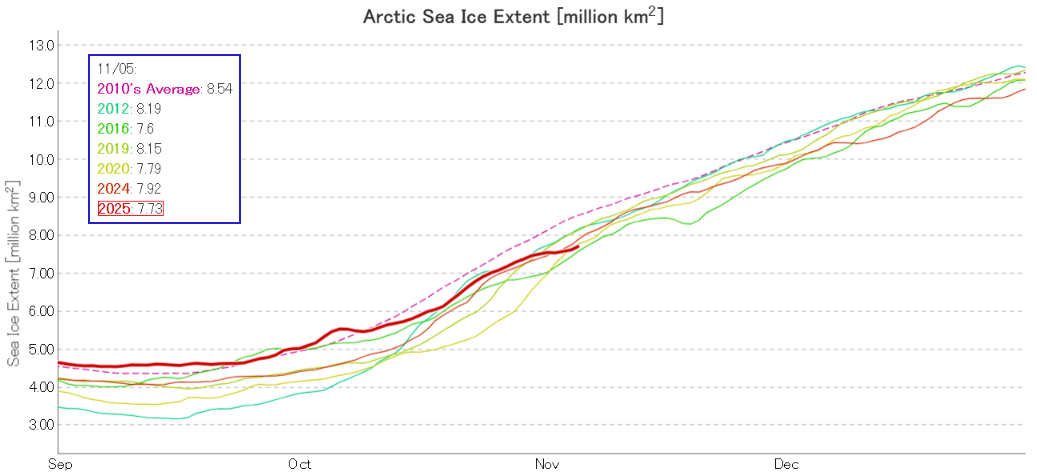
Across the Arctic as a whole the refreeze has slowed significantly, and JAXA/ViSHOP extent is now 2nd lowest in the satellite era:
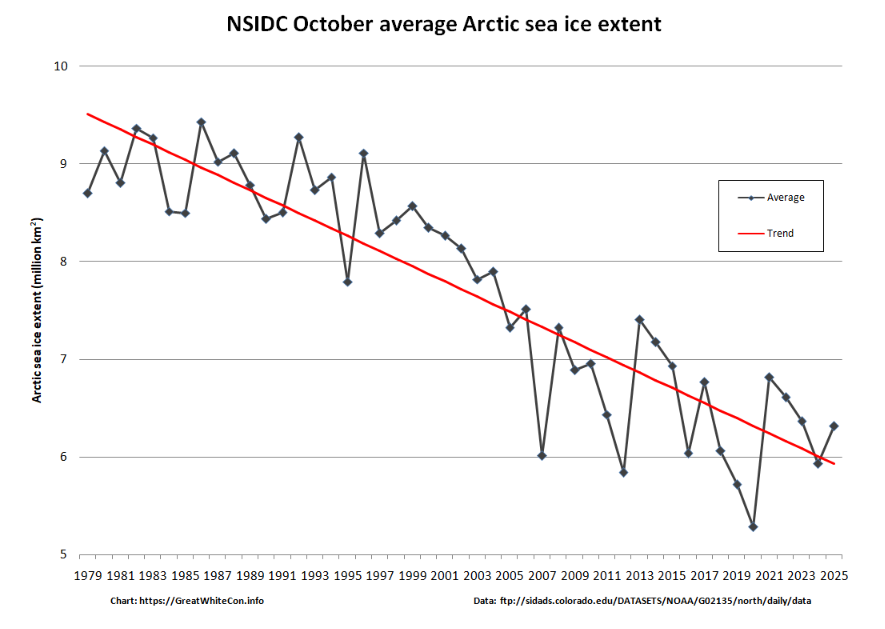
However, average NSIDC extent for the month of October was higher than last year and above the linear trend:
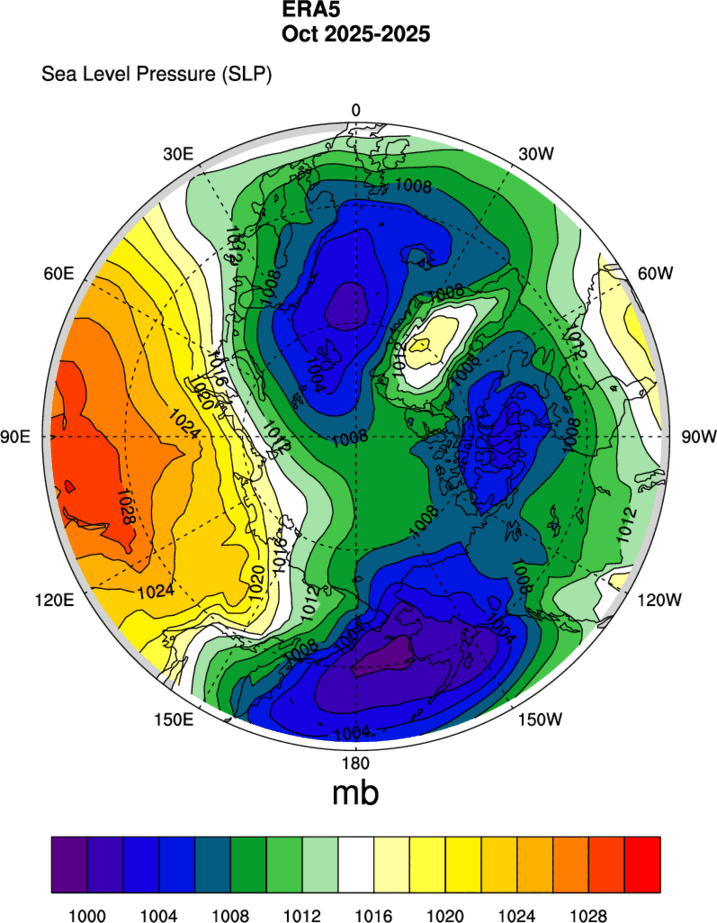
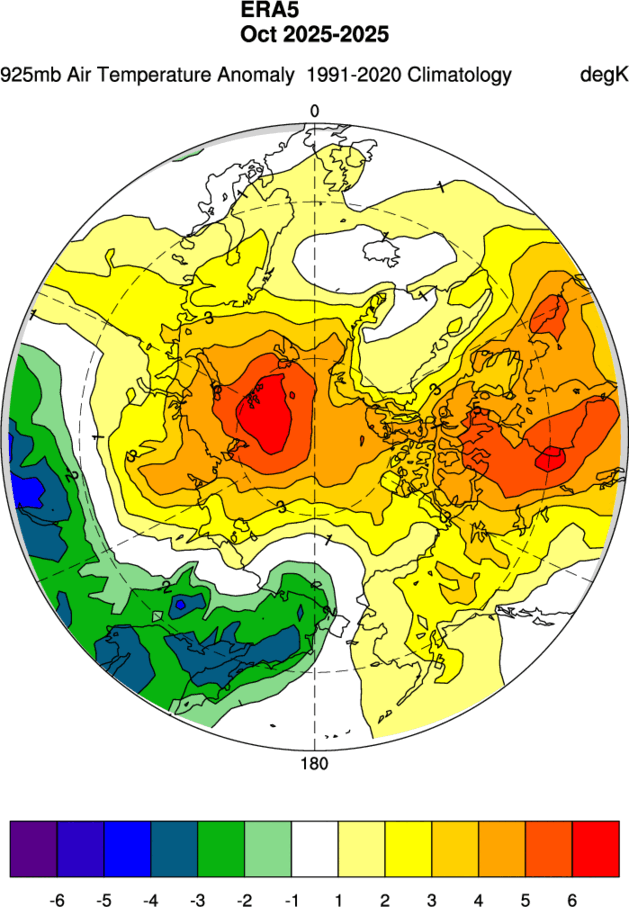
The ERA5 MSLP map for October shows high pressure over Siberia, associated with lower than normal air temperatures at 925 hPa across the region. However, temperatures across almost the entire Arctic Ocean were above normal:
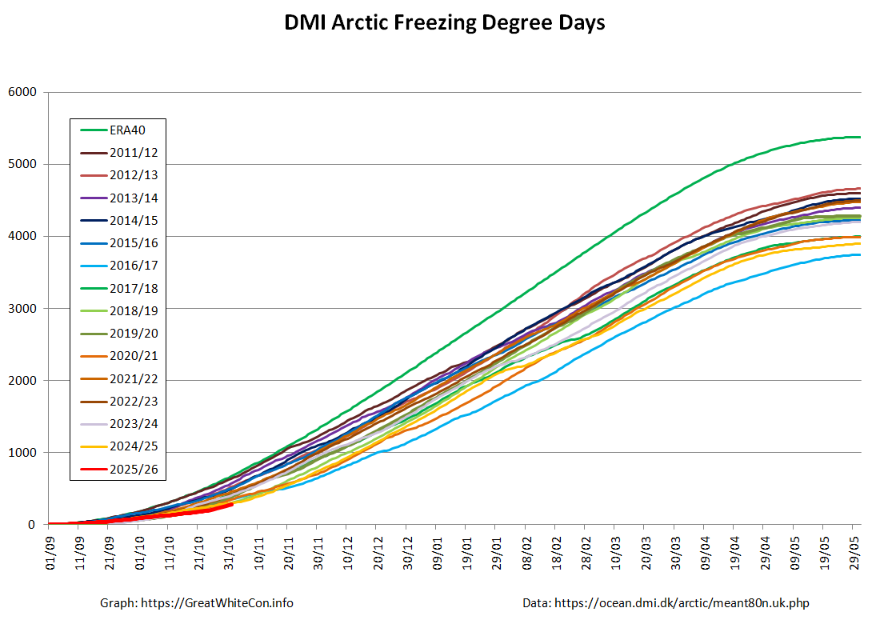
High Arctic freezing degree days based on DMI >80N data were lowest for the date at the beginning of November:
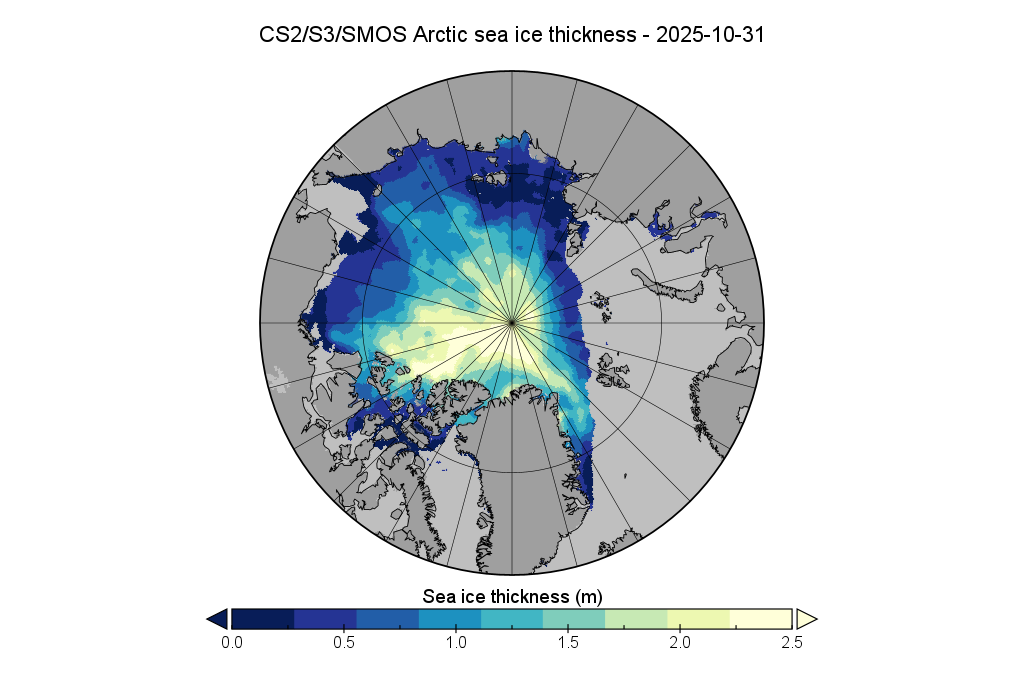
Here is the Alfred Wegener Institute’s CryoSat-2/Sentinel 3/SMOS Arctic sea ice thickness map at the end of October:
Here too is the associated sea ice volume graph:
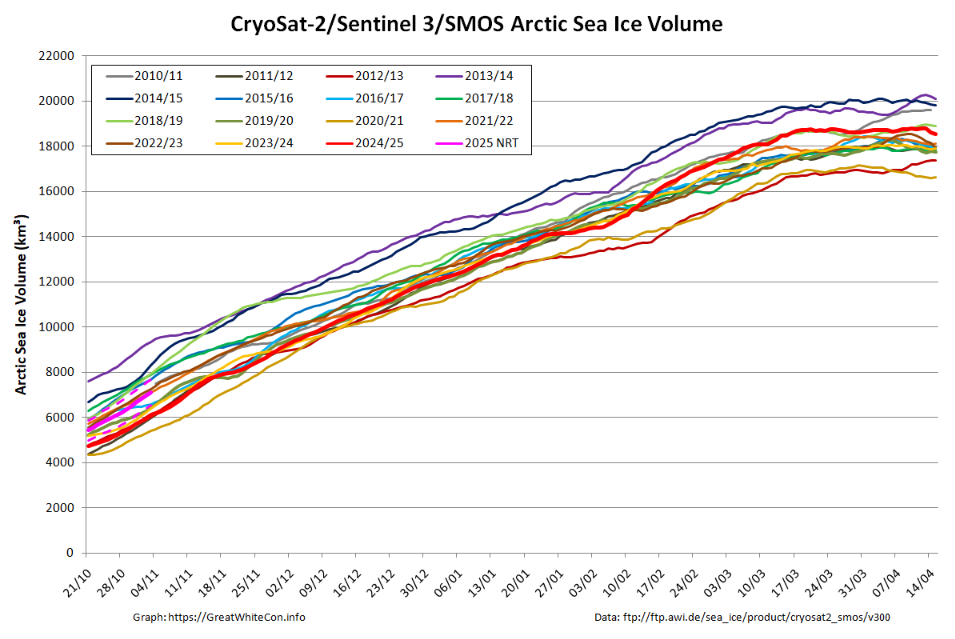
Bear in mind the caveats about the current lack of reliable SMOS data on the Atlantic side of the Arctic, and that Sentinel 3 data is only incorporated from Autumn 2023.

[Update – November 20th]

Refreeze of the Beaufort Sea is complete, and refreeze of the Kara Sea has started in earnest:
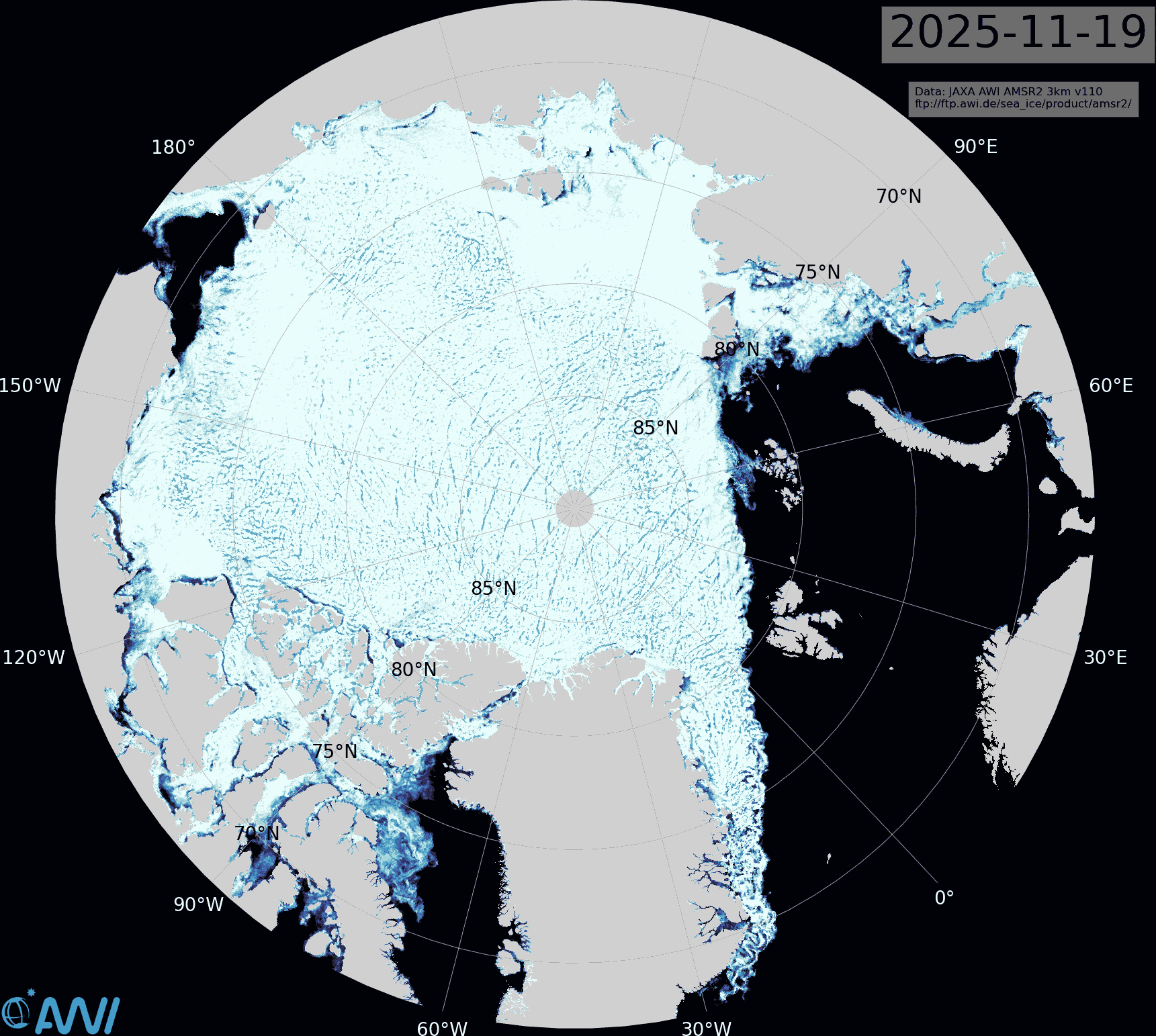
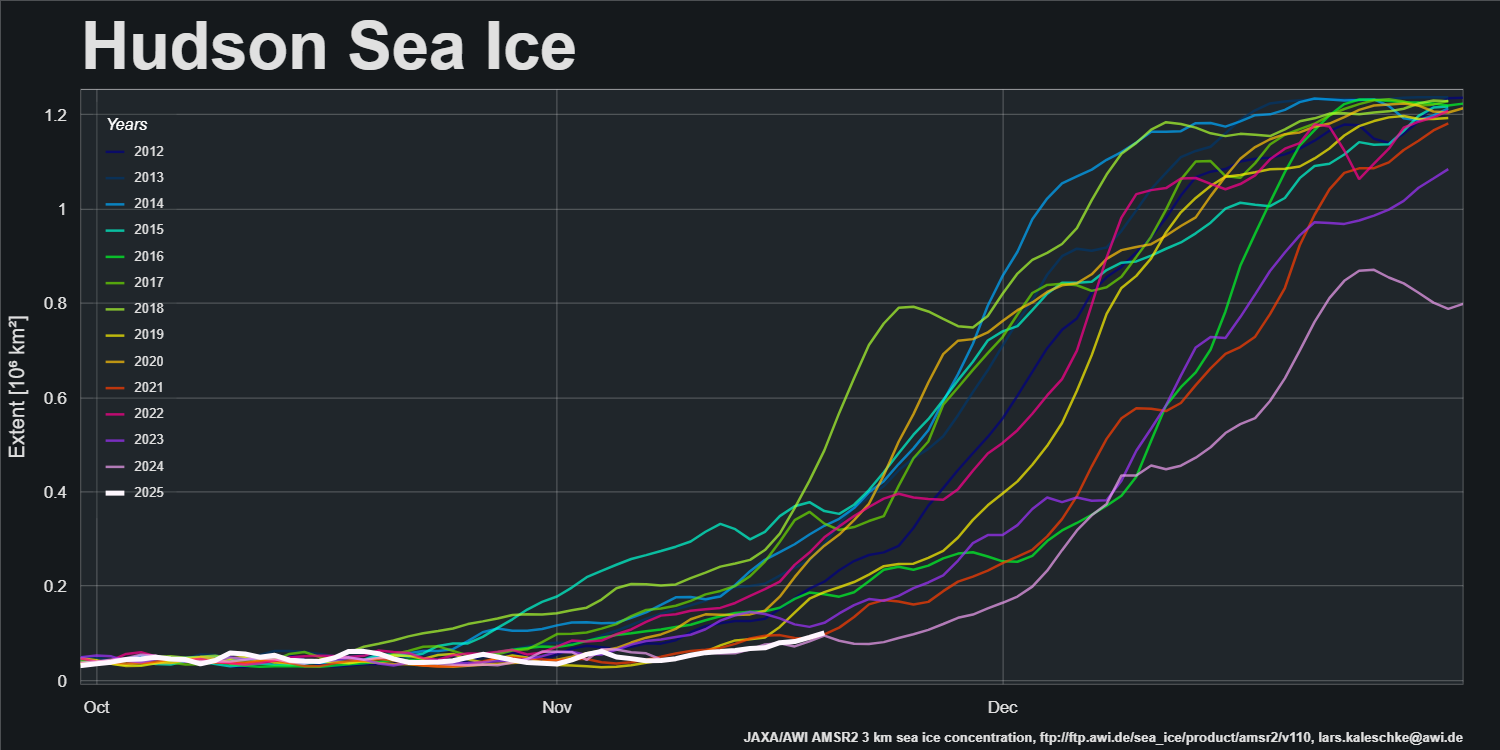
However, the Barents Sea is still sea ice free and refreeze of Hudson Bay has barely begun:
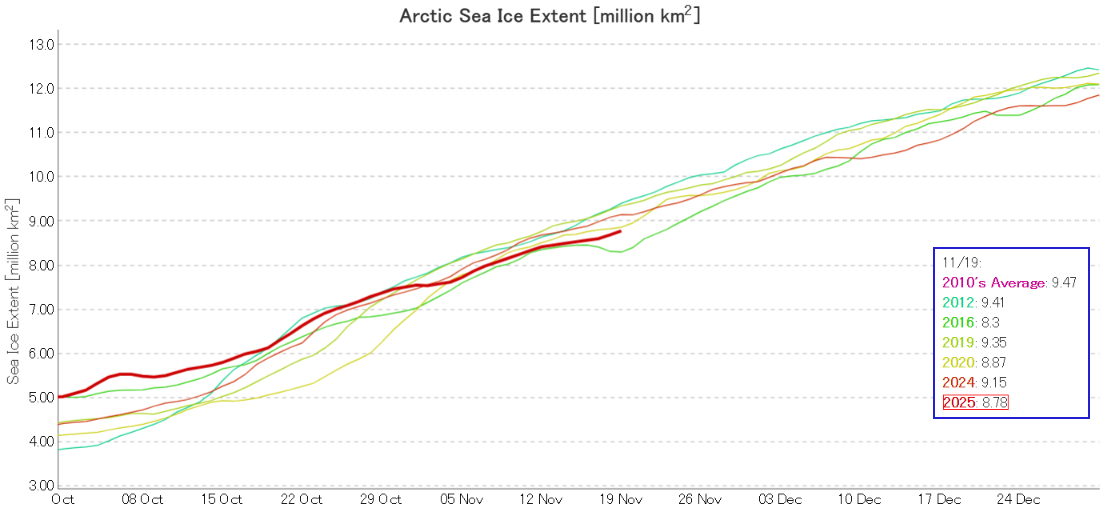
JAXA extent is still second lowest for the date:
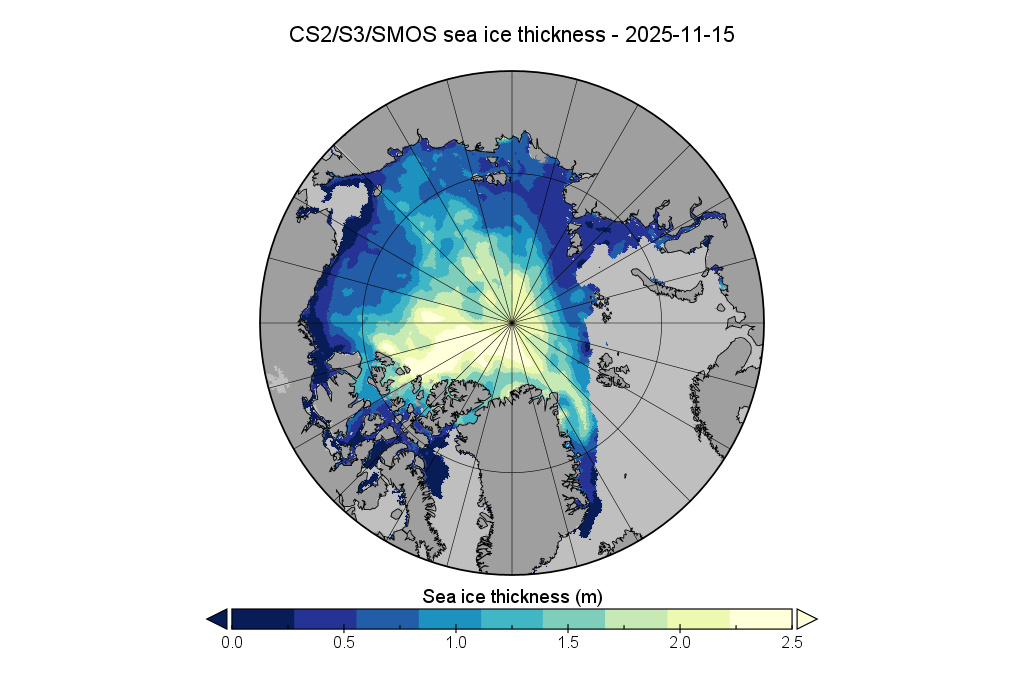
The PIOMAS gridded thickness data for October has yet to be corrected, but here is the mid month thickness map from AWI:
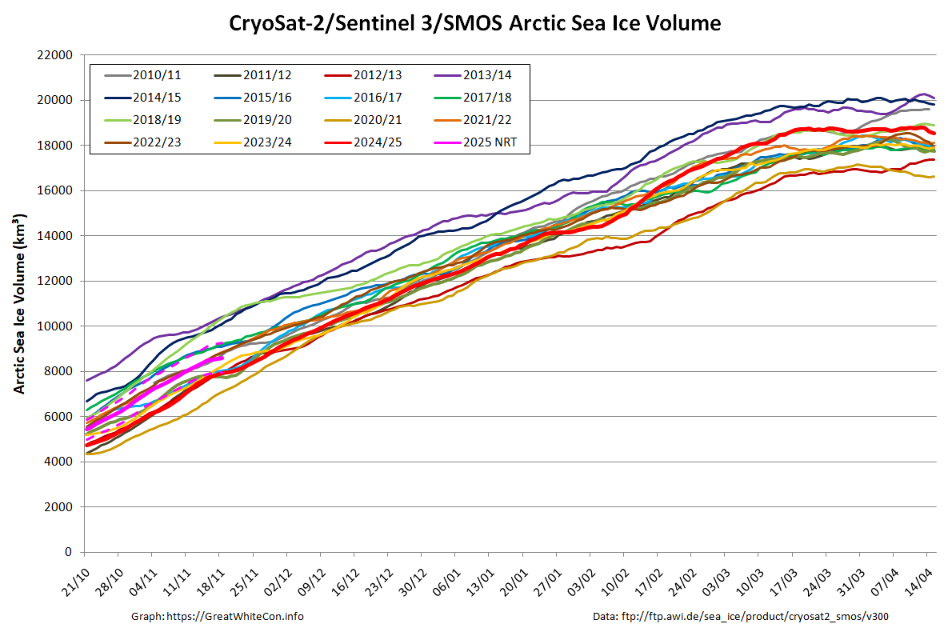
Here too is the associated volume graph:
[Update – November 27th]

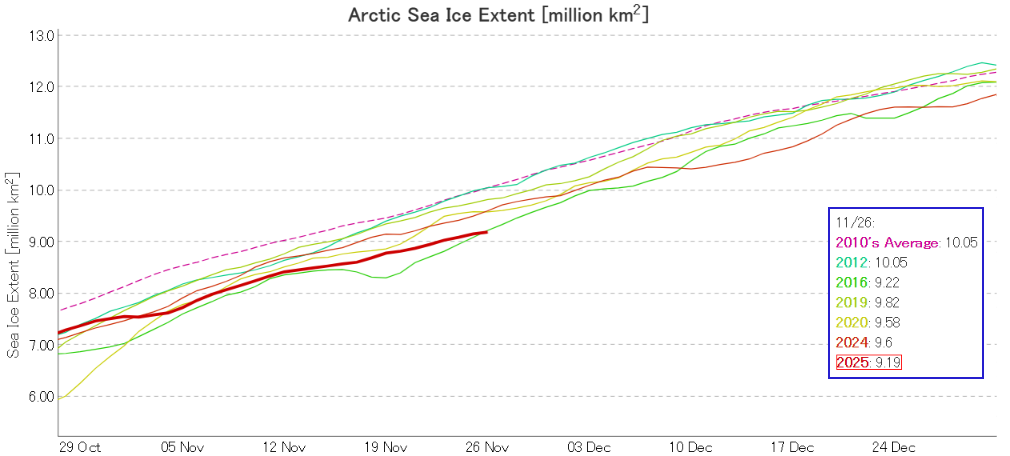
JAXA/ViSHOP extent is now lowest for the date in their record going back to 1978:
[Update – December 5th]

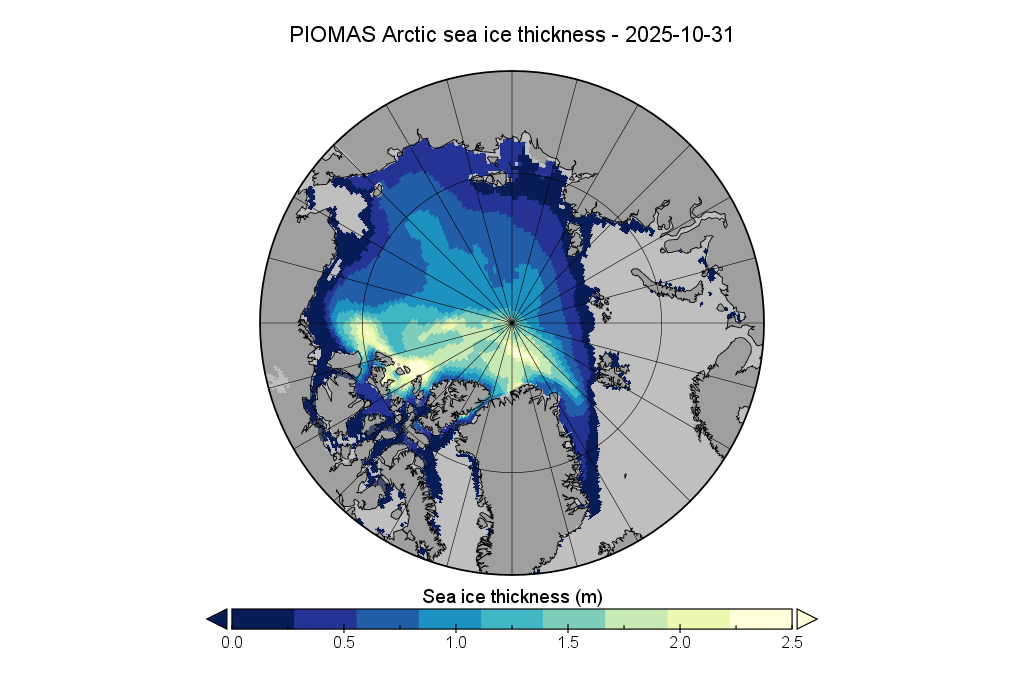
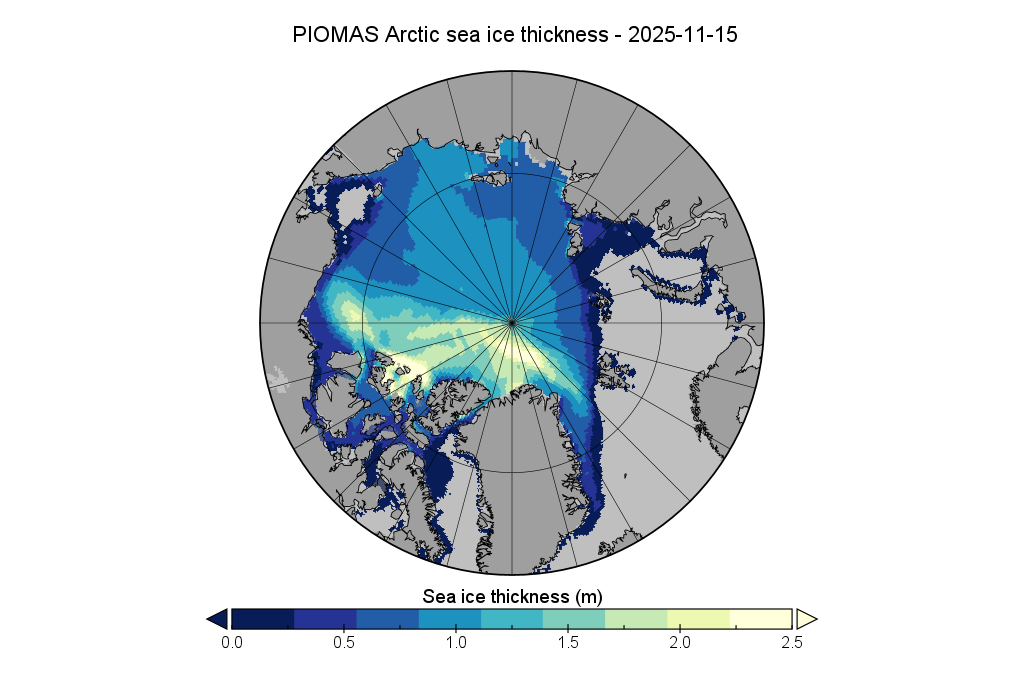
The PIOMAS team have finally published gridded thickness data for October and November, so here are the October 31st and November 15th thickness maps:
The conversation continues over on the December open thread, including the latest PIOMAS data.
Grok Confirms Michael Shellenberger Talks Abject Nonsense

Thanks to Going South for the heads up:

By way of additional background information, Wikipedia asserts that:

Grok is a generative artificial intelligence chatbot developed by xAI. It was launched in November 2023 by Elon Musk as an initiative based on the large language model (LLM) of the same name. Grok has apps for iOS and Android and is integrated with the social media platform X (formerly known as Twitter), Tesla vehicles, and Tesla’s Optimus robot. The chatbot is named after the verb grok, coined by American author Robert A. Heinlein in his 1961 science fiction novel Stranger in a Strange Land to describe a deeper than human form of understanding.

The bot has generated various controversial responses, including conspiracy theories, antisemitism, and praise of Adolf Hitler, as well as referring to Musk’s views when asked about controversial topics or difficult decisions. Updates since 2023 have shifted the bot politically rightward to provide conservative responses to user queries.

and that:

Michael D. Shellenberger is an American author and journalist. He is the first endowed professor at the University of Austin, serving as CBR Chair of Politics, Censorship, and Free Speech.

Shellenberger is a prominent heterodox thinker on topics including climate change and homelessness…

University of Austin is not a school recognized by the U.S. National Center for Education Statistics.

In other news, is Grok schizophrenic?

[Update – November 3rd]

Grok seem to having a lot of trouble answering this simple question:

He/she/it/they has been pondering the problem for over an hour now.

[Update – 15:00 UTC November 3rd]

I got bored waiting for Grok to get back to me, so I asked ChatGPT much the same question. I was informed:

Suggested links

The Naval History & Heritage Command (NHHC) entry: “Skate II (SSN-578)” on history.navy.mil — gives the official history and mentions the March 17, 1959 surfacing. history.navy.mil

An archived photograph in the NHHC image collection: “USN 1040961 USS SKATE (SSN–578)” which shows the submarine moored to the ice pack. flickr.com

A blog article “USS Skate at the North Pole – Truth and Fantasy Fiction” that collects several of the historic photographs and discusses their context. greatwhitecon.info

I asked ChatGPT to check out the final link in more detail. I was informed:

What GreatWhiteCon does well:

It collects and reproduces the historic images and contemporary captions, and discusses how those images have been interpreted (or misinterpreted) over time. That makes it a handy one-stop place to see the pictures and some commentary.

What GreatWhiteCon is not:

It is a blog/analysis piece (2018) rather than an official or archival source. That means its interpretation is useful, but any factual claim that matters (dates, official captions, archival catalog numbers) is best checked against the primary records (Naval History & Heritage Command, National Archives, contemporary magazines, USNI Proceedings).

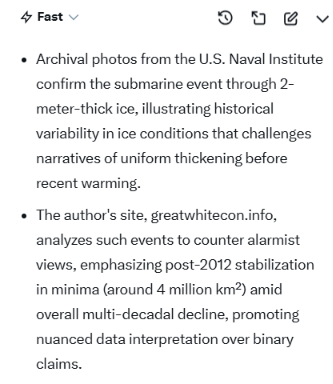
Grok has a rather different interpretation of what Great White Con does well. Allegedly “Snow White”:

Counters alarmist views… promoting nuanced data interpretation over binary claims.

[Update – November 4th]

Today my discussion with Grok on XTwitter turned (amongst other things) to the recent United States Department of Energy “Critical Review of Impacts of Greenhouse Gas Emissions on the U.S. Climate” report.

My conversation with Grok is remarkably reminiscent of mud wrestling with “skeptical” Twitter trolls:

Watch this space!