Tag Archives: R/V Lance

The MOSAiC Expedition

According to the MOSAiC Expedition’s web site:

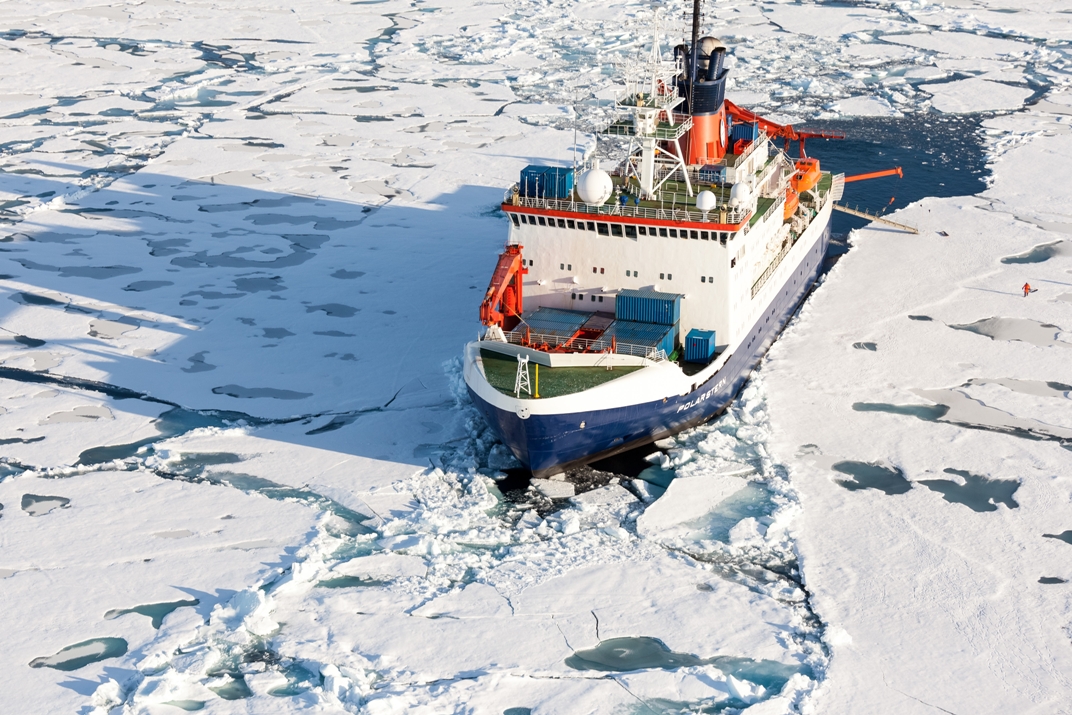
In September 2019, the German research icebreaker Polarstern will set sail from Tromsø, Norway, to spend a year drifting through the Arctic Ocean – trapped in ice. The goal of the MOSAiC expedition is to take the closest look ever at the Arctic as the epicenter of global warming and to gain fundamental insights that are key to better understand global climate change.

In essence Polarstern will be following in the illustrious footsteps of Tara and Fridtjof Nansen‘s Fram before her, but with vastly more scientists in attendance than previous transpolar drift expeditions.

Hundreds of researchers from 19 countries take part in this exceptional endeavour. The MOSAiC expedition will bring a modern research icebreaker close to the north pole for a full year including for the first time in polar winter. The data gathered will be used by scientists around the globe to take climate research to a completely new level.

The expedition also bears a lot of resemblance to the more recent Norwegian Young Sea ICE Expedition, during  which R/V Lance drifted embedded in winter sea ice, albeit nearer the North Atlantic.

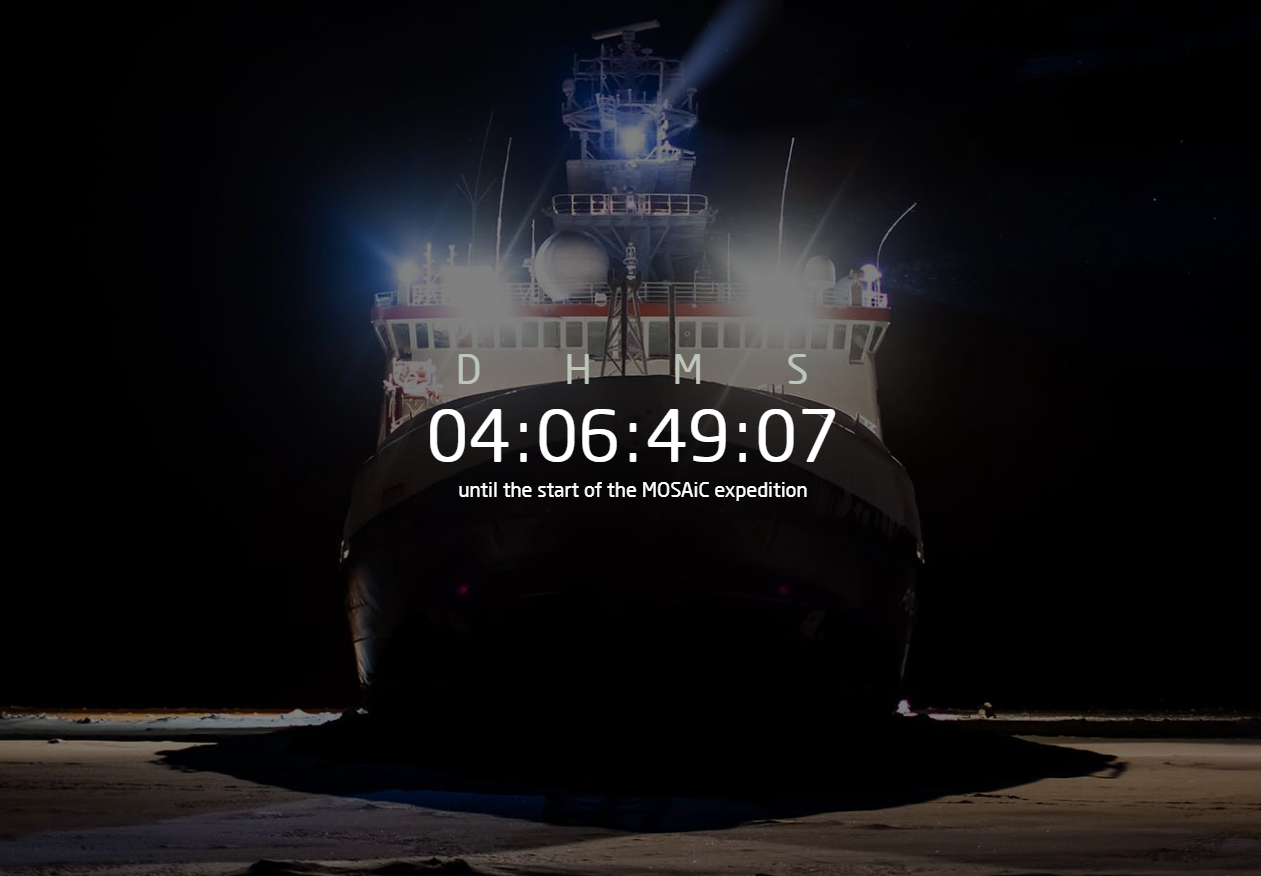
The countdown to “the largest polar expedition in history” has begun:
Here’s an infographic to help explain what happens next:

[Edit – September 20th]

The moment has arrived. The countdown is complete and the MOSAiC expedition begins today. According to the expedition web site:

After a decade of preparations, it’s finally time: this evening at 8:30 p.m. the German icebreaker Polarstern will depart from the Norwegian port of Tromsø. Escorted by the Russian icebreaker Akademik Fedorov, she will set sail for the Central Arctic. On board researchers will investigate a region that is virtually inaccessible in winter, and which is crucial for the global climate. They will gather urgently needed data on the interactions between the atmosphere, ocean and sea ice, as well as on the ecosystem. Thanks to the collaboration between international experts, the one-year-long ice drift past the North Pole will take climate research to a completely new level.

At the launch of MOSAiC Markus Rex, Head of the expedition from the Alfred Wegener Institute said that:

This mission is ground breaking. Never before has there been such a complex Arctic expedition.  For the first time we will be able to measure the climate processes in the Central Arctic in winter. And so for the first time we will be able to understand this region and correctly represent it in climate models. The Arctic is the epicentre of global warming and has already undergone dramatic changes. And it is the weather kitchen for our weather in Europe. Extreme weather conditions like outbreaks of cold Arctic air here in winter, or heat waves in summer are linked to the changes in the Arctic. At the same time, the uncertainties in our climate models are nowhere bigger than in the Arctic. There aren’t any reliable prognoses of how the Arctic climate will develop further or what that will mean for our weather. Our mission is to change that.
Here’s the Alfred Wegener Institute’s 3 hour plus recording of the send off for Polarstern and Akademik Federov from Tromsø:

Here too are some alternative sources of information about the expedition:

BBC – https://www.bbc.co.uk/news/science-environment-49760460

Guardian –  https://www.theguardian.com/science/2019/sep/20/climate-scientists-prepare-largest-ever-arctic-expedition

New York Times – https://www.nytimes.com/2019/09/19/climate/mosaic-expedition-arctic.html

[Edit – September 29th]

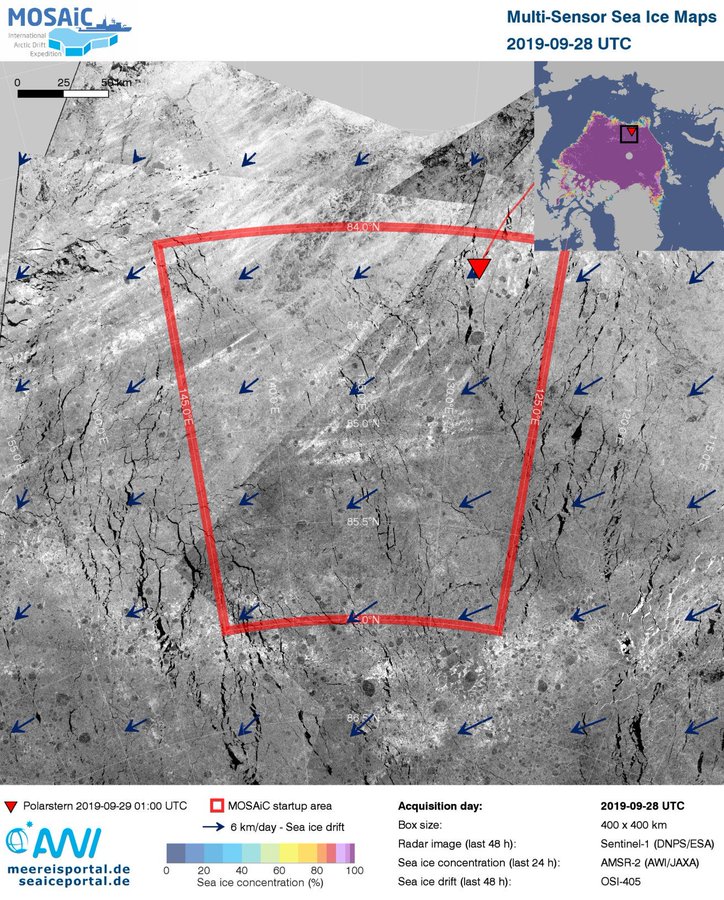
Polarstern is now within the initial target area, and is looking for a suitable ice floe to  which she can attach herself:
[Edit – October 2nd]

Polarstern and Akademik Fedorov are still searching for a suitable sea ice floe:

[Edit – October 4th]

According to an article by Janek Uin  from Brookhaven National Laboratory on the United States’ Department of Energy Atmospheric Radiation Measurement web site:

We finally found the piece of ice that will be the home for Polarstern for the next year. It’s a floe a few kilometers in diameter and with thickness ranging from half a meter to a few meters. Several ice floes were surveyed via helicopters from both icebreakers and by teams of scientists taking measurements on ice before a decision to pick this one was made. Now the two icebreakers are tied together as equipment, fuel, and people are transferred between the ships in preparation for deployment. While it’s exciting to see many new faces on Polarstern, we also had to say goodbye to some of the friends we had made on our way here.

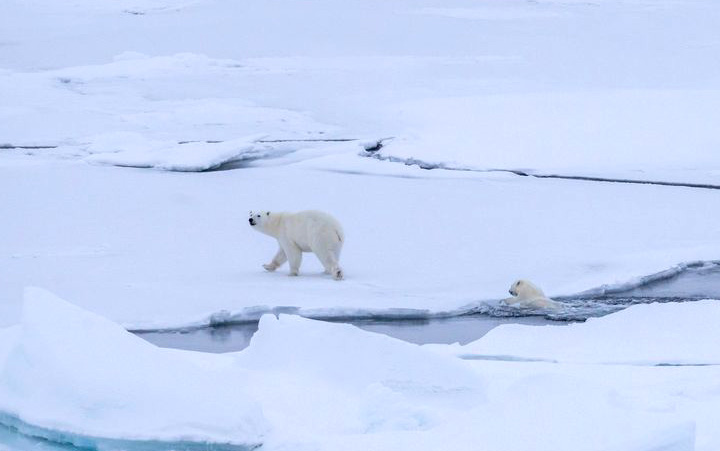
There was also a lot of excitement today as two polar bears—a mom with her cub—wandered very close to Polarstern. Everybody who could rushed to the deck to try to capture photos of them in the diminishing daylight.
[Edit – October 7th]

Via the MOSAiC Expedition Twitter feed:

Watch this space!

Arctic Sea Ice News from AGU

I just watched the live stream of the fall 2016 AGU press conference about the findings of the “First results from the Norwegian Young Sea ICE Expedition”.

Here’s the associated video of the expedition:

Here are the bullet points:

Initial results suggest that the thinner and younger ice is altogether different from older multiyear ice. It moves faster, breaks up easier, melts faster, and is more vulnerable to storms. This has important consequences for the Arctic as a whole, as our current knowledge is largely based on information from the “old Arctic.”

The Atmosphere

• For the first time, N-ICE2015 researchers directly observed large winter storms over sea ice and saw that they have significant effects on the young, thinner ice. The high winds create a lot of stress on the sea ice by pushing it around and breaking it up.
• One winter storm raised the air temperature from -40 F to +32 F in less than 48 hours, while the moisture in the air increased 10 times. All of these factors significantly warm the surface of the snow, even in mid-winter, and slow the growth of ice.

The Sea Ice and Snow Cover

• Researchers on the drifting ice camps found more snow on top of the ice than expected. This insulated the ice from the atmosphere, slowing its growth in winter and surface melt in summer.
• The sea ice was sometimes flooded by seawater as the large snow load pushed the thinner ice below sea level.
• The thinner sea ice was more dynamic than researchers have seen before. This could mean more ridging but also more cracks and leads between ice floes.

The Ocean

• Winter storms caused the sea ice to drift so fast that it increased mixing of the water beneath the ice. Deeper, warmer water was mixed up closer to the sea ice, causing it to melt from below despite winter air temperatures that were below freezing.
• Researchers saw summer storms stir up deep warm waters and melt as much as 25 cm of ice in a single day.

The Ecosystem

• For the first time, N-ICE2015 researchers observed an algae bloom under snow-covered pack ice. Thinner and more dynamic Arctic sea ice allows more light transmission to the ocean, especially through cracks and leads. This triggers earlier phytoplankton blooms under the snow-covered ice.
• The phytoplankton species that dominated the under-ice bloom does not sink to the deep ocean. Such shifts in phytoplankton species composition, associated with early under-ice phytoplankton blooms, could thus have important implications for the strength of the biological carbon pump in the Arctic.

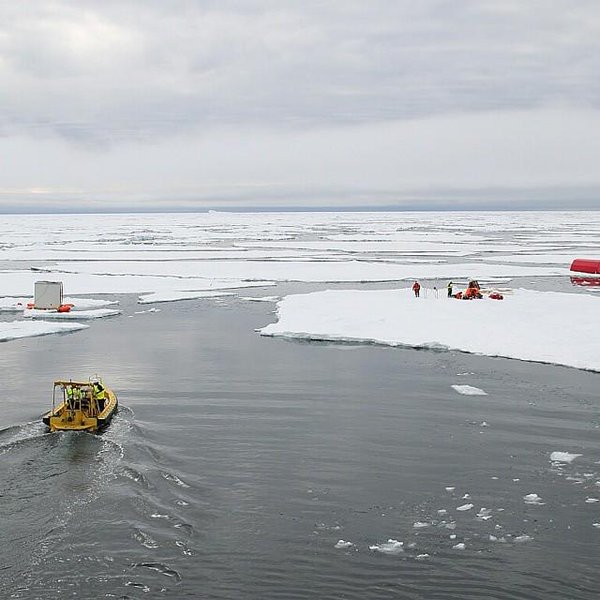
There was also mention of the “waves in ice” event that the R/V Lance experienced back in June 2015:

lance-waves-2015-1

P.S. A recording of the N-ICE2015 press conference is now available:

Next up on the live stream is was the 2016 “Arctic Report Card“. Here’s the associated video:

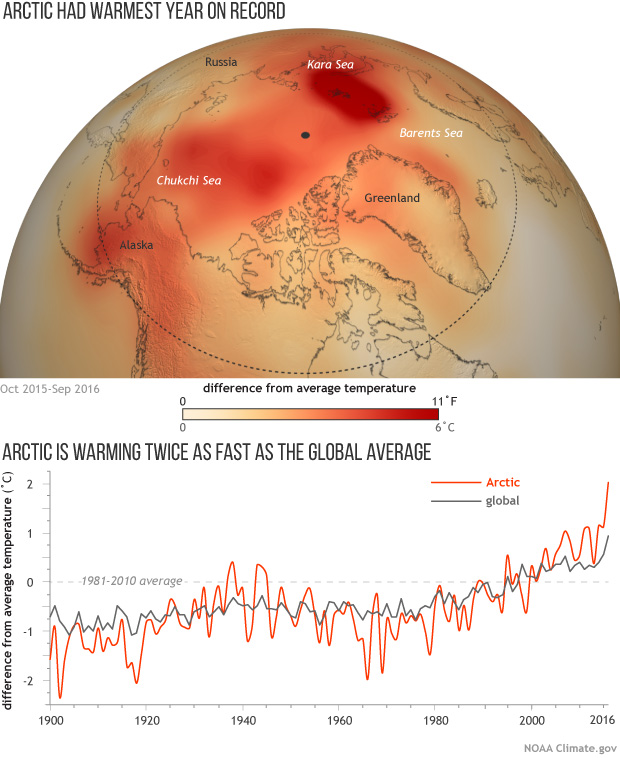
No doubt because of the recent controversy concerning the effects of the 2015/16 El Niño the first graphic that caught my eye was this one:

arctictemp_map_graph_2015-16_620

In the question and answer session the obvious question was asked. The answer was that while attribution is difficult the 2015/16 El Niño did have some effect on Arctic sea ice. However currently we’ve only seen “the first act of a 3 act play”. Act 2 will be the maximum extent in March.

In answer to another question, a focus of research over the next 10 years should be the interactions between mid latitudes and the Arctic.

P.S. A recording of the Arctic Report Card press conference is now available:

A variety of cryospheric posters are available via:

https://agu.confex.com/agu/fm16/meetingapp.cgi/Index/EPoster~1/Program/1175

R/V Lance Encounters Another Energetic Wave Event in the Arctic

Today’s title is inspired by a recent paper in the AGU’s Geophysical Research Letters, entitled “In situ measurements of an energetic wave event in the Arctic marginal ice zone“, by Collins, Rogers, Marchenko and Babanin. According to Collins et al. in the abstract:

R/V Lance serendipitously encountered an energetic wave event around 77°N, 26°E on 2 May 2010. Onboard GPS records, interpreted as the surface wave signal, show the largest waves recorded in the Arctic region with ice cover. Comparing the measurements with a spectral wave model indicated three phases of interaction:

  1. wave blocking by ice
  2. strong attenuation of wave energy and fracturing of ice by wave forcing, and
  3. uninhibited propagation of the peak waves and an extension of allowed waves to higher frequencies (above the peak)

Wave properties during fracturing of ice cover indicated increased groupiness. Wave-ice interaction presented binary behavior: there was zero transmission in unbroken ice and total transmission in fractured ice. The fractured ice front traveled at some fraction of the wave group speed. Findings do not motivate new dissipation schemes for wave models, though they do indicate the need for two-way, wave-ice coupling.

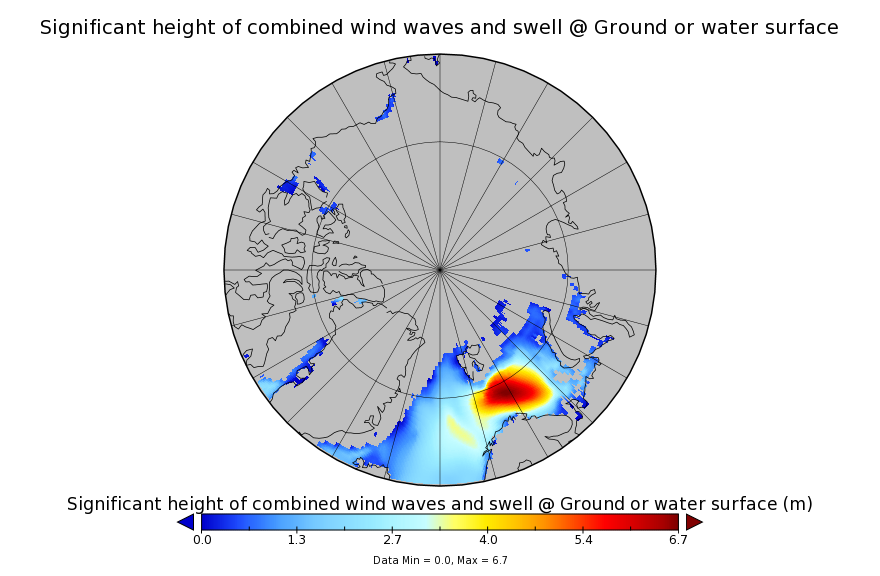
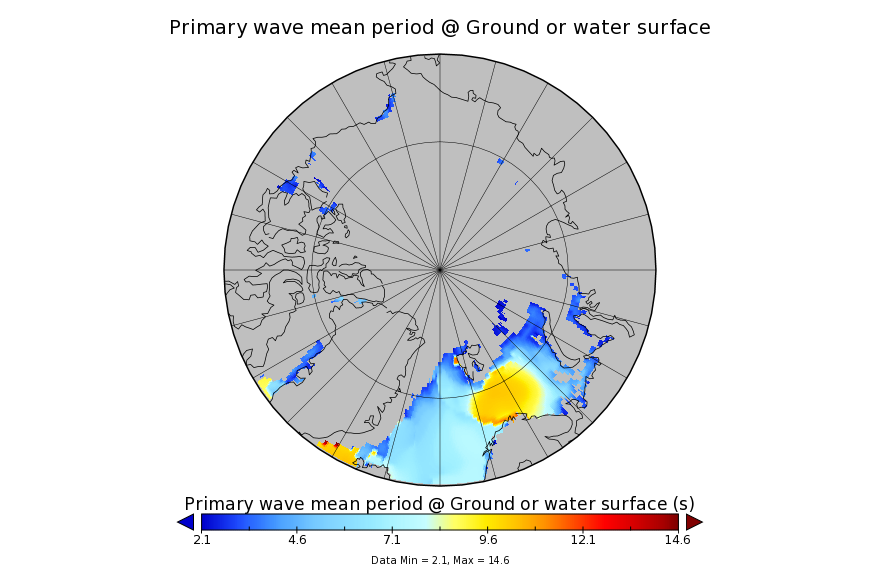
There’s a lot of equations and similarly technical stuff in the body of the paper which is nevertheless well worth a read even if you’re not a techie, as are the articles in the long list of references at the end. However, there aren’t any “swell forecasts” of the sort we like to put in our discussions of “waves-in-ice“, so firstly let’s fix that. Here’s some visualisations from NOAA’s WaveWatch III reanalysis for 18:00 on May 2nd 2010:

Significant_height_of_combined_w in multi_1.ao_30m.hs.201005

Primary_wave_mean_period_surface in multi_1.ao_30m.tp.201005

which reveal a swell with a significant height of 6 meters and a period of 11 seconds in the open ocean south of Hopen Island and Svalbard. Collins et al. concluded that:

Our results suggest that accurate wave prediction would have required coupling with an ice model which resolved scales of hours and kilometers. Implementation at such scales will no doubt be a future challenge. These are the largest known waves recorded in the Arctic with substantial ice cover present, and we expect the measurement of large-wave events to occur more frequently in the future due to the fetch wave-ice fetch feedback loop.

Now comes news that the R/V Lance has been subject to another “waves-in-ice” event, although this time it was north of Svalbard. First of all here’s a video showing an earlier stage of the Lance’s 2015 Arctic program:

Next the latest serendipitous encounter for the Lance. According to the Twitter feed of the Oceanography & Sea Ice department of the Norwegian Polar Institute on June 22nd 2015:

The sea ice floe with the N-ICE2015 research camp broke

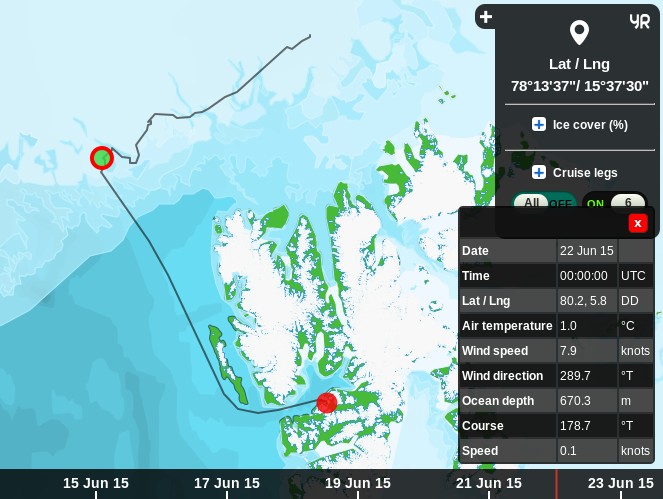
at which time the Lance was located in the marginal ice zone northwest of Svalbard:

RVLance-20150622

Now some further information (and more pictures!) has emerged via the Twitter feed of Harvey Goodwin, who says that:

When a light swell comes in the 5km sea ice floe we’d been working on broke into pieces not more than 30m [across] in an hour:

Equipment rescue[d] after sea ice breakup. Some cables cut but no equipment lost!

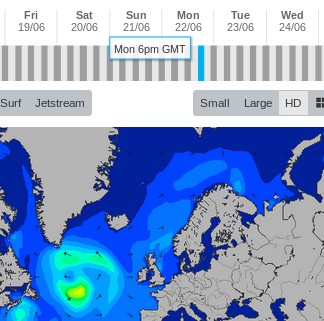
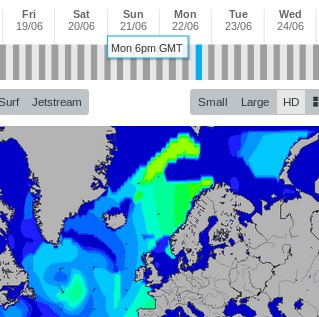
The WaveWatch III reanalysis for June 2015 isn’t available yet. We’ll bring you that information once it is, but for now here’s a couple of quick snapshots from the Magic Seaweed surf forecasting site:

NAtlanticWaves-20150622-1800

NAtlanticPeriod-20150622-1800

They suggest that a smaller but longer period swell was responsible for the ice break up this time around, compared to 2010. I wonder if it will take another 5 years for this latest event to be more fully documented in the scientific literature?