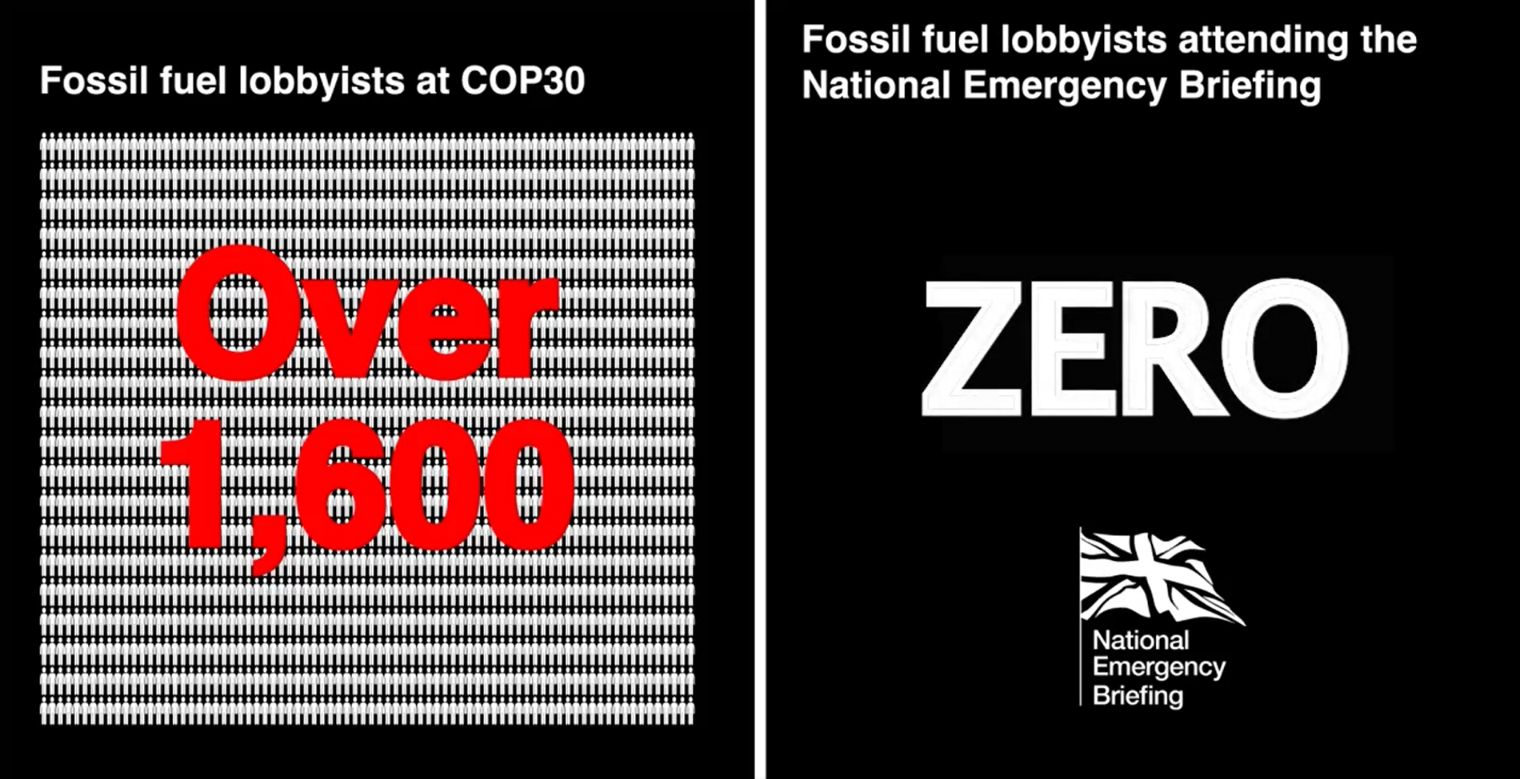
Sadly I missed the advance publicity for this event, part of which looked like this:
I’ve belatedly discovered that on November 27th at Westminster Central Hall:
Ten of the UK’s leading experts briefed an invite-only audience of around 1,250 politicians and leaders from business, culture, faith, sport and the media with the latest implications for health, food, national security and the economy.
According to the National Emergency Briefing’s web site:
These briefings are the clearest, most up-to-date picture of the climate and nature crisis in Britain. For the first time, the UK’s top experts give one integrated, unfiltered account of the risks and the solutions. This is the baseline the national conversation must now start from. Every policymaker needs to see it.
The talks will be available on our YouTube channel in the coming days…
A 45 minute documentary is now in production for release early next spring.
Whilst we wait for the official videos, here’s a summary of the event via Dave Borlace’s “Just Have a Think” YouTube channel:
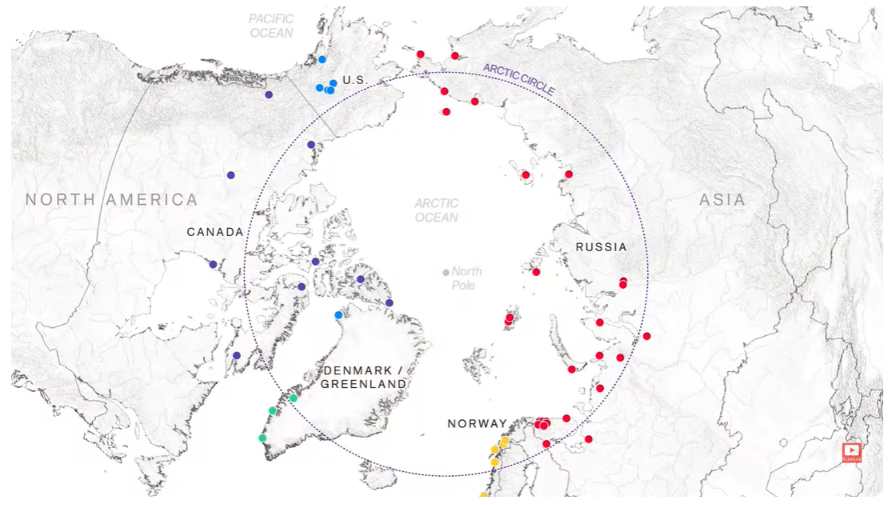
Lieutenant General (Ret’d) Richard Nugee CB CVO CBE spoke on “climate and national security”, and mentioned the Arctic in that context:
The Arctic is becoming a new flash point due to the climate crisis directly. You’ve heard how sea ice is receding and [the Arctic is warming] at four times the rate of the rest of the world. But let’s put that in a geopolitical context:
The Russian Duma has claimed [the Arctic Ocean] is a Russian internal sea, whereas we treat the Arctic as international waters. So there’s a risk of conflict over access, over resources and of course, over shipping routes. So the climate crisis is now shaping strategic and military competition.
The encouraging part is that what we need to do on climate also make Britain safer and more resilient. Take energy independence. Renewables, storage and a decentralised grid reduce our dependence on foreign oil and gas, and they are less vulnerable…
Some are using the threat from Russia to say “Let’s not worry about climate change now, or not at all”. But that’s a false choice. Tackling climate is central to our national resilience today. It’s part of our today’s security threat, not tomorrow’s.
According to the National Emergency Briefing web site once again:
81 MPs and 52 Peers signed up to attend, and many others arrived at the last minute without tickets.
Do you suppose that any of them were listening?
[Update – December 8th]
The “official” National Emergency Briefing videos are now arriving on YouTube. Here is Richard Nugee’s:
[Update – December 10th]
Another presentation at the National Emergency Briefing mentioning the Arctic was given by Professor Tim Lenton from the University of Exeter. Tim’s talk was on the topic of tipping points, and here’s the official video:
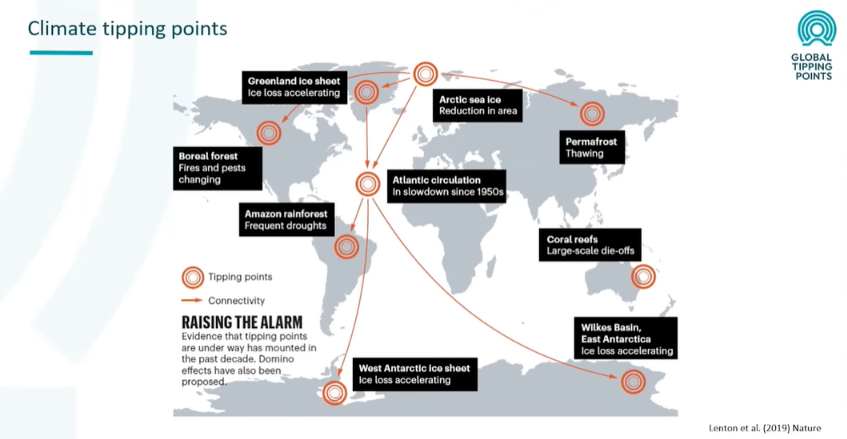
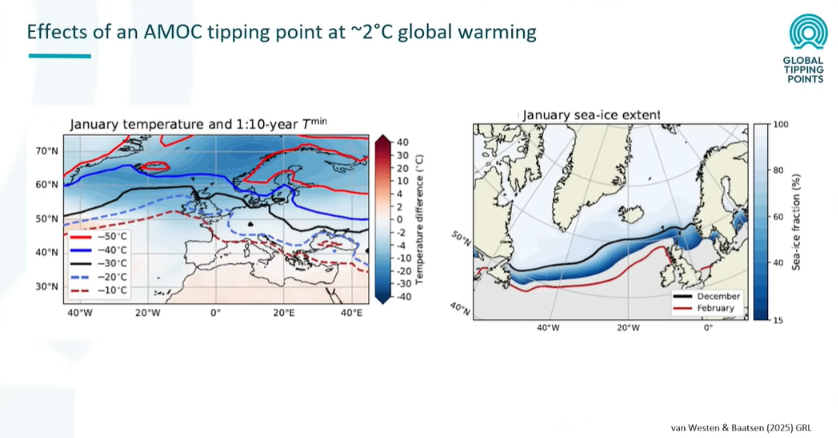
Here’s one of Tim’s slides, illustrating potential climate tipping points:
According to Tim:
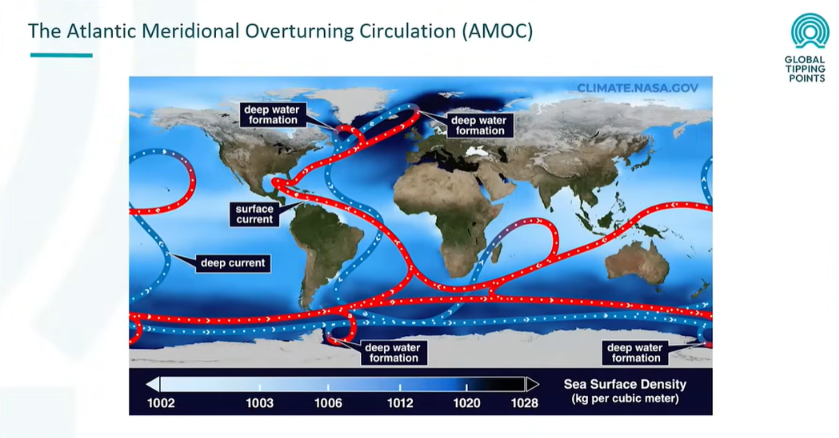
We’ve heard about unprecedented warming of the Arctic. That’s causing a bunch of consequences, including the unprecedented melting of the Greenland ice sheet. We’ve got fresh water pouring off the Greenland ice sheet. That’s one of the things, along with that Arctic warming, that’s contributing to a measured slowdown in the great overturning circulation of the Atlantic Ocean, which we’ll come back to… because that’s the big risk for us if that tips…
This red thing is the surface current heading northwards transporting massive amounts of heat to where we are and giving us [in the UK] our nice, mild, equable climate, especially winters. But you see either side of Greenland, something happens called deep water formation. Those waters that are heading north, they’re losing heat and they’re evaporating fresh water to the atmosphere. That makes them colder and saltier and therefore denser. And either side of Greenland they get so dense that these waters sink from the top of the ocean to thousands of meters down. And that propels the blue path which is cold water heading back thousands of meters down in the bottom of the Atlantic and closing the loop. If you lose the deep water formation, you can tip off this great overturning…
Unfortunately this circulation can pass and does pass a tipping point in a bunch of the state of the art climate models that we run.
In this one it’s happened at around 2 °C of global warming. On the right you’re seeing a remarkable comeback of Arctic sea ice cover that happens if we cross this tipping point with sea ice reaching down to The Wash and covering most of the North Sea by February each winter.
These presentations are not directly related to the Arctic but here are the recently released presentations by Professor Hayley Fowler on extreme weather:
In Perth, Western Australia, the price of public transport has significantly decreased (in the last two weeks!) for the greatly increasing number of desperados in our overpriced little alcove.
2026 seemingly realises the greater economy is broken, perhaps?
I say, but what do you all think about what I say?
* To me this seems like something to be keeping an eagle eye on..
This website uses cookies to improve your experience. We'll assume you're ok with this, but you can opt-out if you wish. Cookie settingsACCEPT
Privacy & Cookies Policy
Privacy Overview
This website uses cookies to improve your experience while you navigate through the website. Out of these, the cookies that are categorized as necessary are stored on your browser as they are essential for the working of basic functionalities of the website. We also use third-party cookies that help us analyze and understand how you use this website. These cookies will be stored in your browser only with your consent. You also have the option to opt-out of these cookies. But opting out of some of these cookies may affect your browsing experience.
Necessary cookies are absolutely essential for the website to function properly. This category only includes cookies that ensures basic functionalities and security features of the website. These cookies do not store any personal information.
Any cookies that may not be particularly necessary for the website to function and is used specifically to collect user personal data via analytics, ads, other embedded contents are termed as non-necessary cookies. It is mandatory to procure user consent prior to running these cookies on your website.
It seems South Devon MP Caroline Voaden was listening:
Here’s an interview with Professor Kevin Anderson following his presentation at the National Emergency Briefing:
These presentations are not directly related to the Arctic but here are the recently released presentations by Professor Hayley Fowler on extreme weather:
and Professor Paul Behrens on Food Security:
In Perth, Western Australia, the price of public transport has significantly decreased (in the last two weeks!) for the greatly increasing number of desperados in our overpriced little alcove.
2026 seemingly realises the greater economy is broken, perhaps?
I say, but what do you all think about what I say?
* To me this seems like something to be keeping an eagle eye on..