Tag Archives: Snow Cover

Greenland 2016 Melt Starts A Month Early

According to the Danish Arctic research institutions’ Polar Portal this year there’s been an “Unusually Early Greenland Melt“. The article by Ruth Mottram points out that:

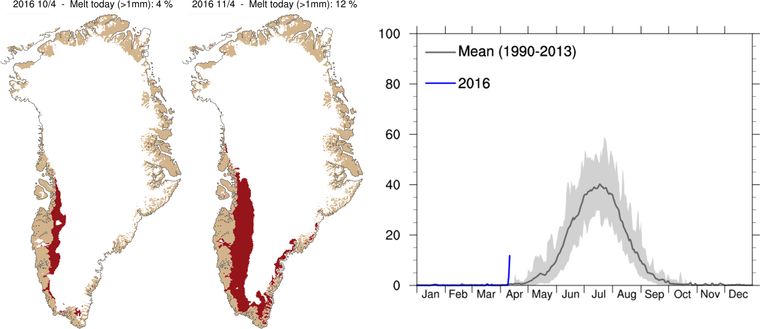
An early melt event over the Greenland ice sheet occurred this week, smashing by a month the previous records of more than 10% of the ice sheet melting.

Greenland-Melt-2016-04-11

Based on observation-initialized weather model runs by DMI, almost 12% of the Greenland ice sheet had more than 1mm of melt on Monday 11th April, following an early start to melting the previous day. Scientists at DMI were at first incredulous due to the early date. “We had to check that our models were still working properly” said Peter Langen, a climate scientist at DMI. “Fortunately we could see from the PROMICE.dk stations on the ice sheet that it had been well above melting, even above 10 °C. This helped to explain the results”. The former top 3 earliest dates for a melt area larger than 10% were previously all in May (5th May 2010, 8th May 1990, 8th May 2006).
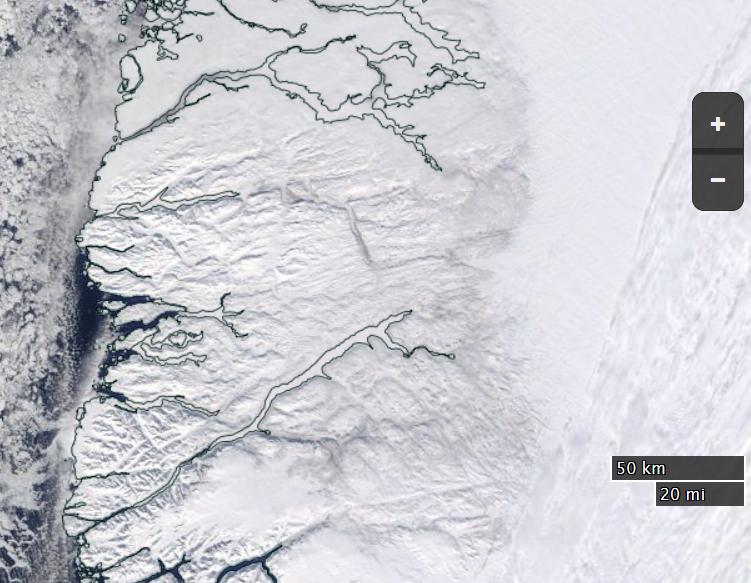
Just in case you think the DMI’s models really aren’t working properly, take a look at this satellite image of South West Greenland today:

NASA Worldview “true-color” image of South West Greenland on April 12th 2016, derived from the MODIS sensor on the Terra satellite

Then head over to NASA Worldview and flip back to last year using the controls at the bottom left:
SWGreenland-Terra-2015-04-12

Can you spot the difference? According to the Polar Portal once again:

Around the coast of Greenland where DMI has climate records dating back to 1873, Greenland came close to setting a record temperature for the whole of Greenland in April. Kangerlussuaq measured a daily maximum of 17.8°C, the previous record is 18.0°C and the DMI observation station at the Summit of Greenland set a new “warm” April record of -6.6°C. “Everything is melting” observed Nuuk resident Aqqaluk Petersen.

The melt was driven by warm air advected from the SW bringing rain along the coast, similar to an extreme melt event in 2012 when 95% of the surface of the ice sheet had melt, a situation that has been reported in detail by GEUS and DMI scientists (Fausto et al., 2016).

[Edit – April 15th 2016]

It has been brought to my attention that the cloud cover in the first image above makes it difficult to see the melting ice sheet. By way of explanation, at this time of year you can use images derived from the MODIS instrument on the Aqua and Terra satellites and the VIIRS instrument on the Suomi satellite to watch the snow cover retreat across Alaska, Canada, Siberia and indeed Greenland.

There is less snow on the ground in SW Greenland than “normal” this year, and hence lower albedo. This implies there will also be less snow on the ice sheet itself, which is hence more vulnerable to “early melt”. In order to get visual confirmation of melt ponds on the ice clear blue skies are needed. You can see hints of “blue ice” through the gaps in the cloud on my first image above. To bring out the “blue ice” try following the link above to NASA Worldview and then experiment with the controls on the left. If you select “Corrected Reflectance (Bands 7-2-1) you should be able to produce an image that looks like this:
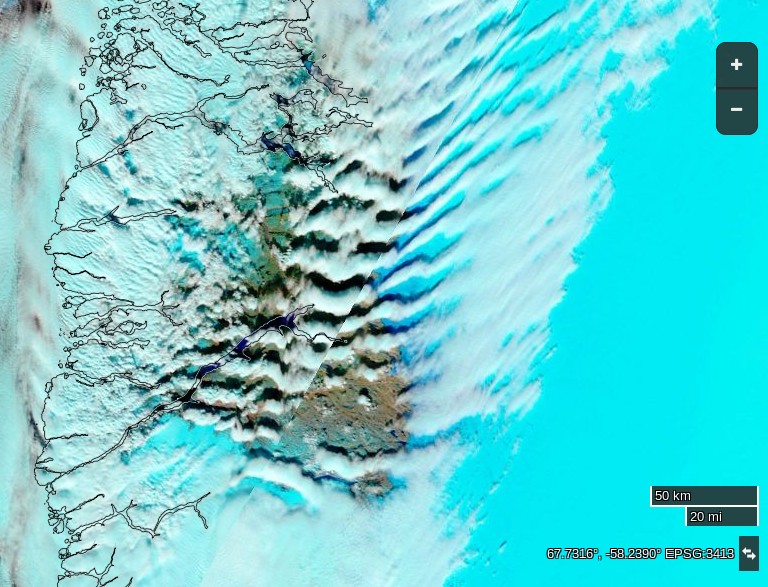
NASA Worldview “false-color” image of South West Greenland on April 12th 2016, derived from the MODIS sensor on the Terra satellite

For a closer look between the clouds here’s a “natural colour” image from Landsat 8:
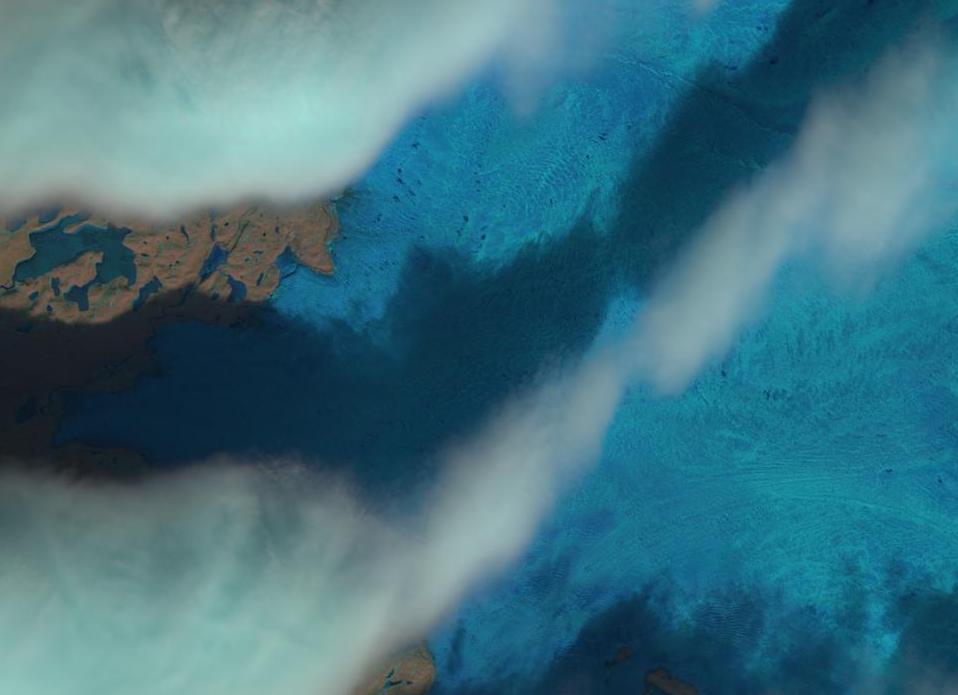
A “natural color” image of South West Greenland on April 12th 2016, from the Landsat 8  satellite
A “natural color” image of South West Greenland on April 12th 2016, from the Landsat 8 satellite

The Northwest Passage in 2016

Our coverage of the Northwest Passage is starting somewhat earlier then usual in 2016. That’s because an educational comment of mine seems to have gone permanently missing over at Andrew Montford’s blog. Over there commenter “Golf Charlie” suggested that:

Perhaps based on rumours, or folk stories, the possibility of a North West Passage, was the answer to many peoples dreams of wealth, fame and fortune. The Franklin Expedition set off, with all confidence, knowing that there had been an unprecedented retreat in Arctic sea ice extent. They never came home. The ships then sent to rescue them, never came home either, but some survivors did.

In July 2010, due to unprecedented ice loss, a team set out to find HMS Investigator, (one of the rescue ships) and found her within 15 minutes, exactly where she was trapped and abandoned. How had she got there?

This may be just a load of boring and irrelevant history to you, but as an ice expert keen to lecture others, it just seems strange that you don’t acknowledge the fact that before man made CO2 emissions could possibly had any remote chance of shrinking sea ice, it had all happened before.

It is likely that whatever caused the ice to retreat in the 1830s/40s, may have caused the current retreat. As no attempt has been made to explain this historical retreat, it seems premature to jump to conclusions about the present. What stories and folklore convinced Franklin there was a NWP? Had it opened before? Did the Vikings circumnavigate the North Pole? No one knows for sure.

Here’s the beginnings of my by now expanded reply:

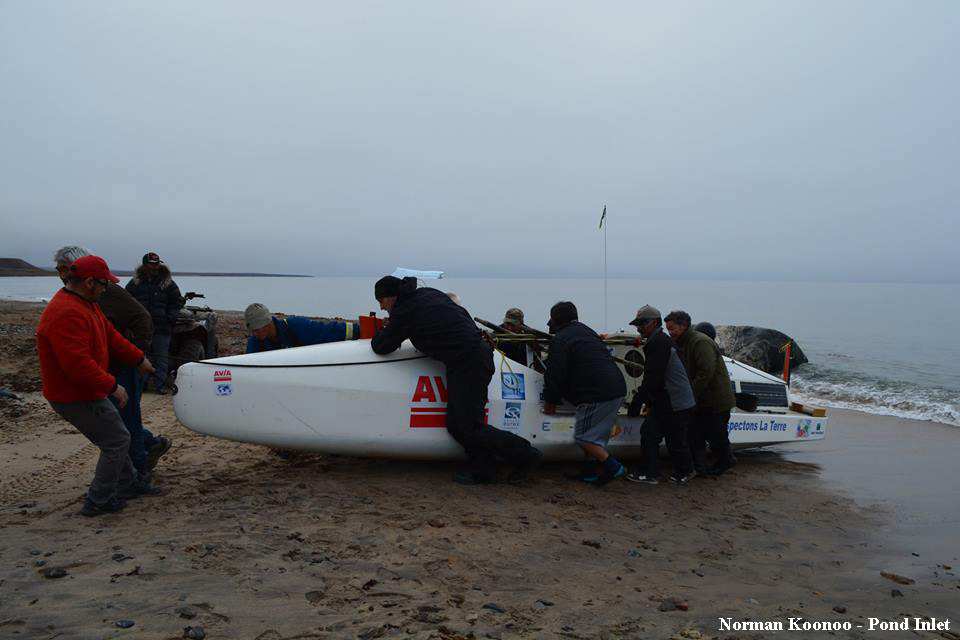
I am already very familiar with the sorry tale of Franklin’s ill fated expedition. By way of some more recent Northwest Passage history, were you previously aware that Charles Hedrich completed his own multi-year voyage through the NWP last summer? His vessel was much smaller than Franklin’s:

“He is now, the first man to have rowed solo the North-West Passage.”

charles_hedrich_pond_inlet

It’s not terribly clear, but apparently Charlie thinks his “unprecedented ice loss” in the Summer of 2010 had a precedent in the 1840s and/or 50s. Perhaps he will pop in and elucidate? Whilst we wait to see what transpires in that regard, here’s an animation of sea ice concentration across the Northwest Passage last summer:

You will note that the “southern route” taken by Roald Amundsen in Gjøa opens first, ultimately followed by the “main route” via the McClure Strait.

My missing comment also referenced (by way of example!) a 2015 academic journal paper entitled “Ice thickness in the Northwest Passage“. Amongst its other conclusions can be found this:

Global climate models with their coarse resolution likely have difficulty capturing intricate sea ice dynamic processes within the narrow channels of the CAA. Specifically, the import, survival, and thickness of MYI are difficult to predict and may in fact increase during the transition to a sea ice-free Arctic with more mobile ice conditions in the Queen Elizabeth Islands which are located between the Arctic Ocean and NWP. Presumably, MYI from the Arctic Ocean will be more heavily ridged and thicker than locally formed MYI, posing greater danger to transiting ships than locally grown MYI.

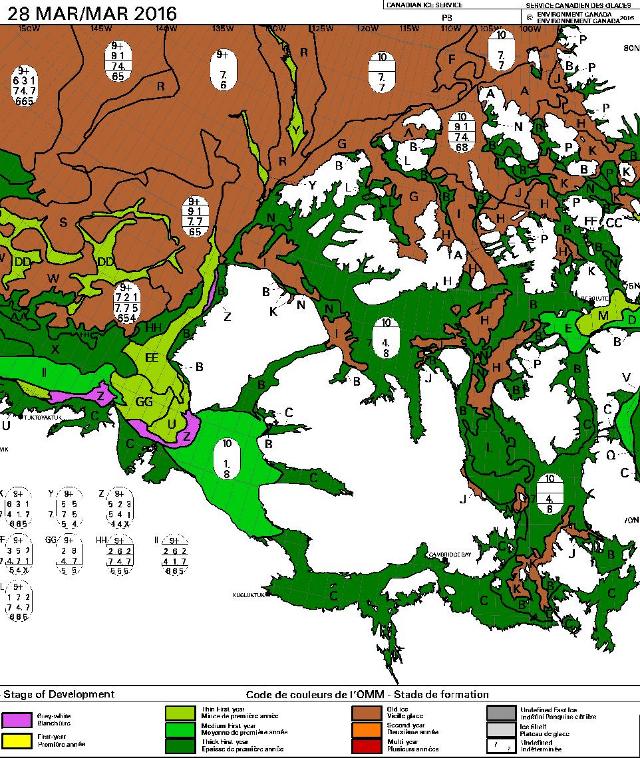
Whilst we look forward to the prospects of the “transition to a sea ice-free Arctic”, what about the prospects for the Northwest Passage in the summer of 2016. As you can see from the video there wasn’t much in the way of multi-year sea ice left there by the Autumn of 2015, and there doesn’t seem to have been much transport of ice into the Canadian Arctic Archipelago over the winter either.

NWP-Development-20160328

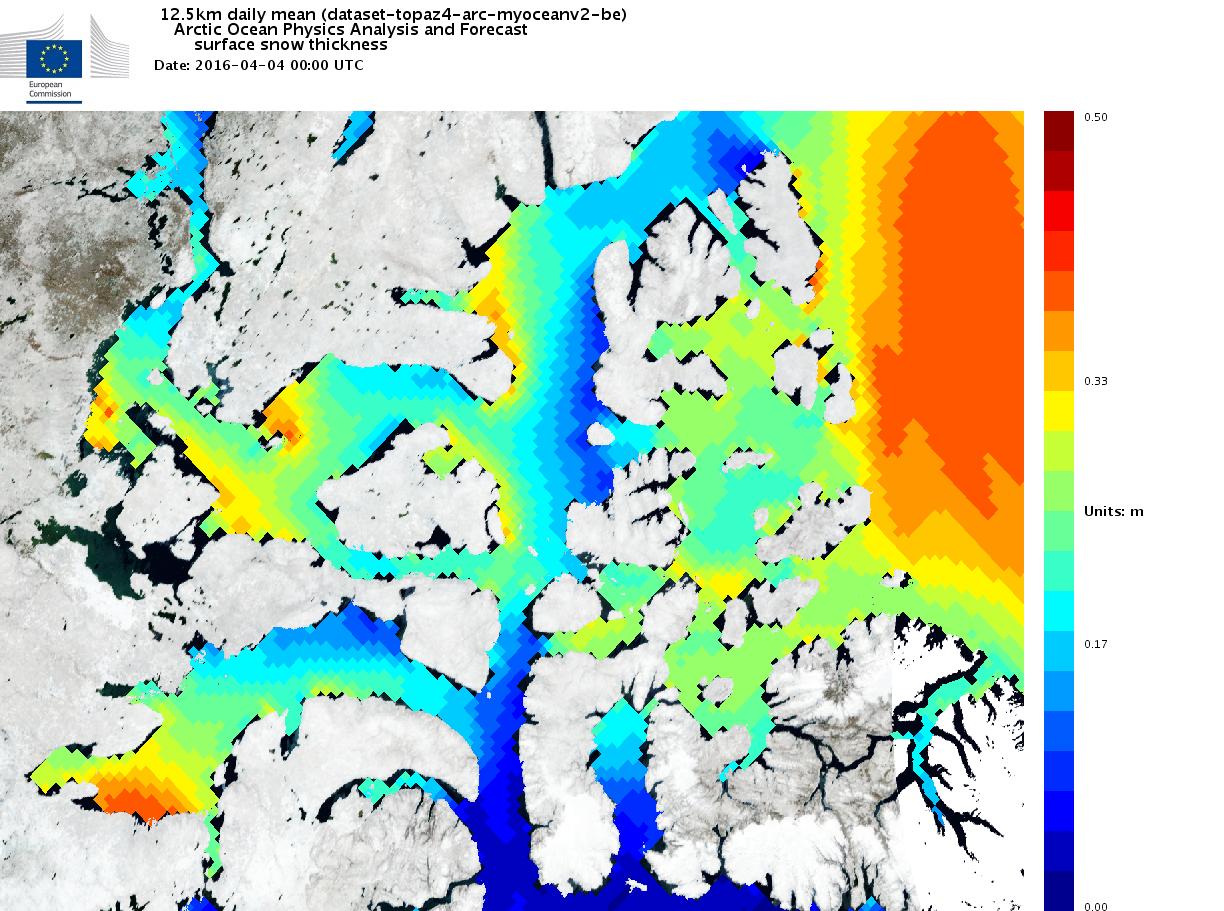
On top of the ice there will of course be some snow by now. Here’s how the Topaz 4 snow cover map of the area looks at the moment:

Topaz4-CAA-20160404

All in all it looks to me at this early stage of the 2016 Arctic sea ice melting season as though one or more of the assorted routes through the Northwest Passage will be open again this coming summer. Do you suppose that will look like yet another “unprecedented retreat” to “Golf Charlie’s” eyes?

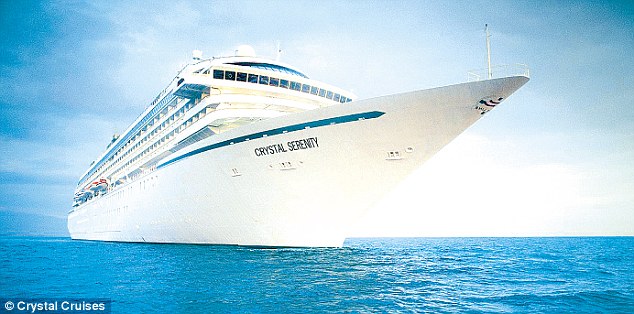
It seems as though a large commercial organisation sees things that way too. Crystal Cruises have concluded that in 2016 the Northwest Passage offers:

The ultimate expedition for the true explorer!

Anchorage to New York on Crystal Serenity
DATES : August 16 – September 17, 2016 (32 Days) CRUISE-ONLY FARES FROM : $21,855 Per Person

More than 18 months of careful planning and analysis has already gone into this project from January 2013 to July 2014, and will continue up to, and through, departure.

Crystal_Serenity

There will not be shore-based cell phone signals along the transit, except in the communities and towns we will be visiting. However, guests are requested to not use this signal when in port, as it will overwhelm the local system and disrupt the communication within the community.

While communication channels may be temporarily limited or unavailable to guests, the ship’s Captain and crew will always have operational and emergency communication throughout the entire voyage.

Alaska May Snow Cover At Record Low Levels

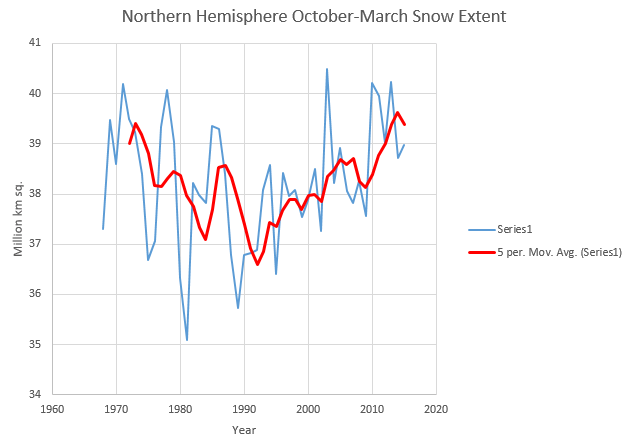
“Steven Goddard” is evidently magically turning into “Snow White’s” muse. His latest fairy tale addresses her second favourite subject after Arctic sea ice, which is of course northern hemisphere snow cover. The article is entitled “October-March Snow Cover At Record High Levels“, and proudly proclaims that:

Fifteen years ago, climate experts said that snow is a thing of the past. Since then, Northern Hemisphere snow cover has soared to record levels.

unRealSnow-20150607

Rutgers University Climate Lab :: Global Snow Lab

What this tells us is that cold air is intruding further south during the snow season. It also tells us that Tom Karl at NOAA is lying about global temperatures.

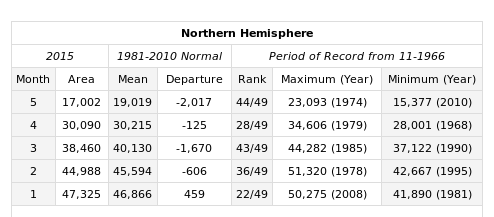
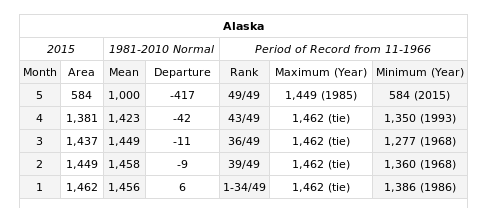
Snow White and I innocently followed Steve’s link, then clicked on the “Rankings” link on the left hand side, where we discovered this:

Selection_474

not to mention this:

Selection_473

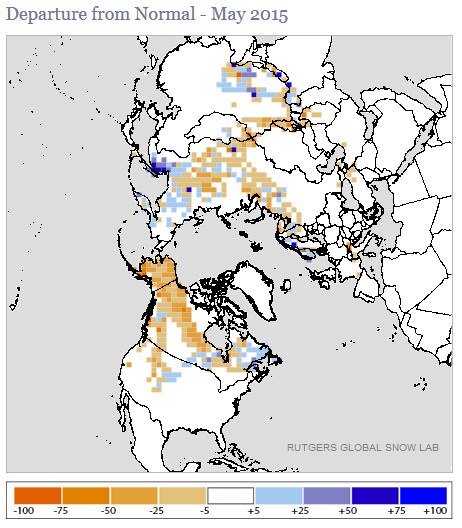
Feeling confident that all the Real Scientists would be interested in the latest data hot off the presses from the Snow Lab we showed them this picture:

maysnowmap2015

and enquired?

What does that tell us?

The initial response from “gator69”?

The fact that you refer to “normal” in climate or weather tells us that you have zero understanding of either.

When will you work to help the starving millions by confronting alarmists, and assist in diverting money to where it is desperately needed right now?

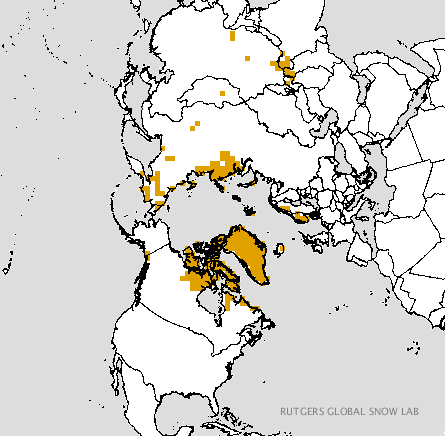
Since “Real Scientists” are apparently aghast at anomaly maps, here are the current absolute values from Rutgers:

RutgersSnow-20150607

Just in case you are wondering what all this has to do with Snow White’s favourite subject of all, here’s the current Topaz 4 map of Arctic sea ice snow cover:

Topaz4Snow-20150607

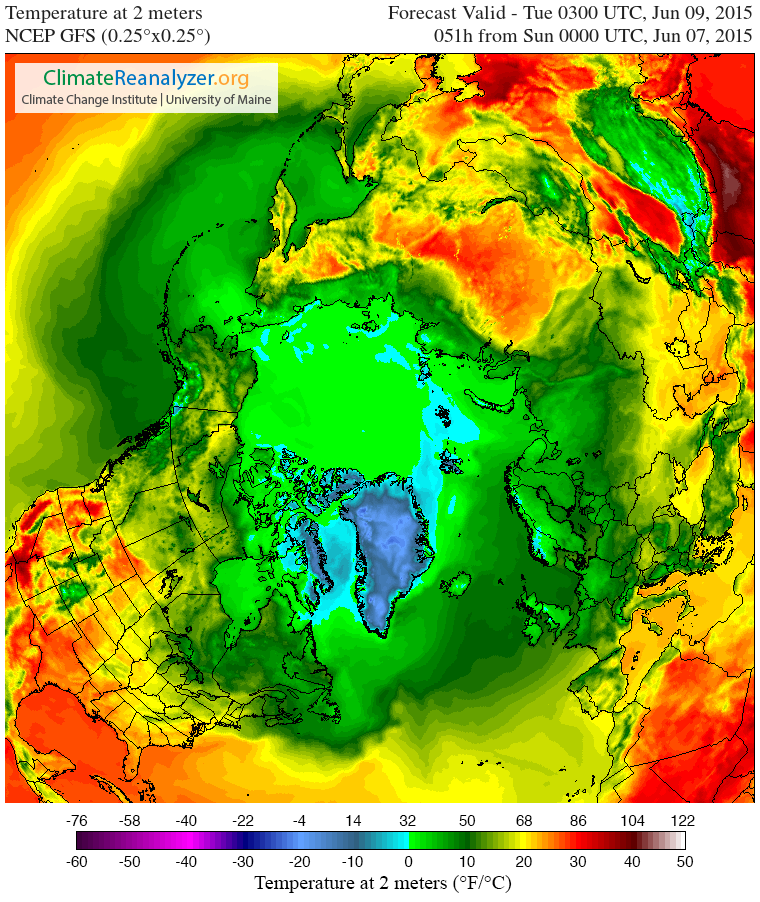
and here is the current northern hemisphere temperature forecast for Tuesday morning from the “Climate Reanalyzer

CCIT2-20150607+51

Snow White and I cannot help but wonder what effect temperatures above zero across virtually the entire Arctic Ocean will have on the snow cover that currently remains. We also cannot help but wonder whether 2015 Arctic sea ice extent will suddenly start tracking 1995 or 2006 as a consequence.

We also wondered what Tom Karl et al. of NOAA have been saying about the Arctic, and discovered this:

Since the IPCC report, new analyses have revealed that incomplete coverage over the Arctic has led to an underestimate of recent (since 1997) warming in the Hadley Centre/Climate Research Unit data used in the IPCC report. These analyses have surmised that incomplete Arctic coverage also affects the trends from our analysis as reported by IPCC.

Finally, for the moment at least, here’s the Topaz 4 snow depth forecast for June 16th 2015:

Topaz4Snow-20150616

Thanks to “Nightvid Cole” and “Vergent” at the Arctic Sea Ice Forum for bringing that view of things to our attention.