The Fifth US National Climate Assessment was published in November 2023 during the Biden/Harris administration. Here’s the announcement by Zeke Hausfather on X/Twitter:
After three years of work by a team of over 750 scientists, we are releasing the US 5th National Climate Assessment today!
— Zeke Hausfather (@hausfath) November 14, 2023
We see greater impacts of climate change on the US since the 2018 NCA4 report, but also some encouraging signs of progress.https://t.co/2WZOLOXoKo
The “NCA5” report begins as follows:
The Global Change Research Act of 1990 mandates that the US Global Change Research Program (USGCRP) deliver a report to Congress and the President not less frequently than every four years that “integrates, evaluates, and interprets the findings of the Program and discusses the scientific uncertainties associated with such findings; analyzes the effects of global change on the natural environment, agriculture, energy production and use, land and water resources, transportation, human health and welfare, human social systems, and biological diversity; and analyzes current trends in global change, both human-induced and natural, and projects major trends for the subsequent 25 to 100 years.”
You may well have noticed that Kamala Harris lost the subsequent election? Hence the Sixth US National Climate Assessment will be prepared during the term of the current Trump/Vance administration.
The first move by Trump et al. was for the US Department of Energy to commission a “Climate Working Group” to produce a report catchily entitled “A Critical Review of Impacts of Greenhouse Gas Emissions on the U.S. Climate“, which was published in July 2025. The authors of the report were listed alphabetically as John Christy Ph.D., Judith Curry Ph.D., Steven Koonin Ph.D., Ross McKitrick Ph.D. and Roy Spencer Ph.D.
Regular readers will recognise some or all of those names, and it will not surprise you to learn that there was plenty of pushback from a wide range of climate scientists. In particular, the “Climate Experts’ Review of the DOE Climate Working Group Report“, led by Andrew Dessler and Robert Kopp was published at the end of September 2025. This report begins as follows:
In response to the Department of Energy’s recent climate report, more than 85 scientists came together to submit a detailed rebuttal. Our motivation was simple: the DOE report misrepresents the state of climate science by cherry-picking evidence, exaggerating uncertainties, and ignoring decades of peer-reviewed research. Climate science is one of the most scrutinized and well-established fields, and the DOE report falls far short of that standard.
Our review demonstrates that many of the report’s central claims—such as the absence of trends in extreme weather, or the notion that carbon dioxide is broadly beneficial—are misleading or outright wrong. We conclude that the report undermines science in a way that echoes past efforts by the tobacco industry to manufacture doubt. Our comment, submitted to the DOE, EPA, and the National Academy review, underscore the broad scientific consensus that human-caused climate change is real, it is already driving potentially dangerous impacts, and efforts to obscure that reality should not go unchallenged.
On December 17th 2025 Russ Vought, Director of the United States Office of Management and Budget (“OMB” for short), announced on X/Twitter that:
The National Science Foundation will be breaking up the National Center for Atmospheric Research (NCAR) in Boulder, Colorado. This facility is one of the largest sources of climate alarmism in the country. A comprehensive review is underway & any vital activities such as weather…
— Russ Vought (@russvought) December 17, 2025
Subsequently Axios reported that:
The Trump administration plans to close the National Center for Atmospheric Research in Boulder, calling its research “climate alarmism.”
Why it matters: The Boulder lab is one of the world’s leading institutions for Earth systems and climate research, playing a crucial role in weather forecasting and climate modeling, and its absence would significantly impact U.S. scientific capabilities.
Climate scientist Katharine Hayhoe wrote in an X post Tuesday that closing NCAR would be “taking a sledgehammer to the keystone holding up our scientific understanding of the planet.”
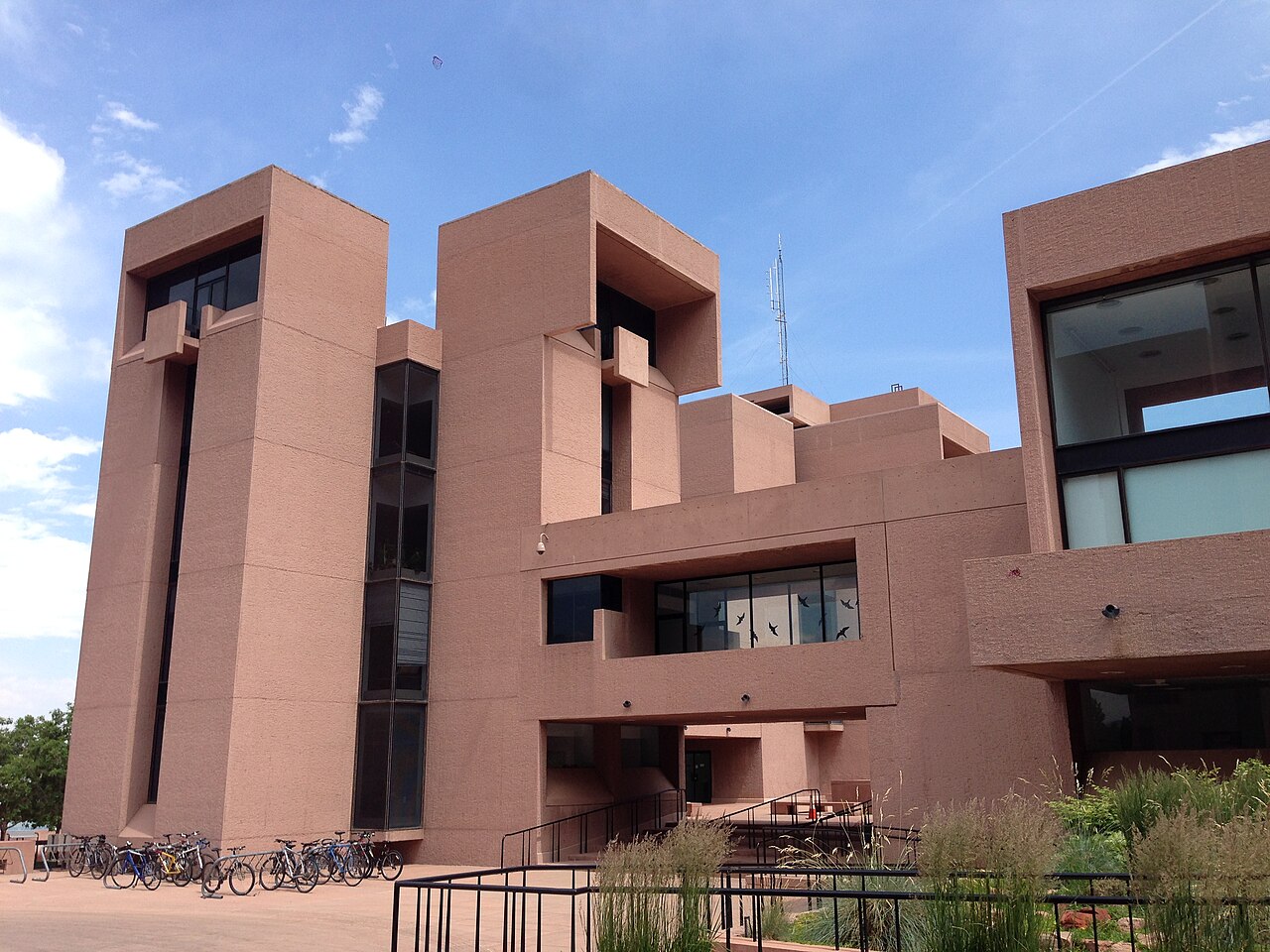
On January 9th 2026 Colorado Congressman Joe Neguse issued a press release stating that he:
Has forcefully condemned the White House’s attacks on the nation’s leading scientific research center, calling them reckless, dangerous, and blatantly retaliatory. During last Tuesday’s House Rules Committee hearing, he filed an amendment to reiterate sustained federal support for NCAR. House Republicans rejected the amendment by a 8-3 vote.
“Colorado’s research institutes and laboratories are central to the fabric of our state and our nation, and I’m deeply grateful to the colleagues who joined me in pushing back against the Trump administration’s attacks on the National Oceanic and Atmospheric Administration and the National Center for Atmospheric Research. While I’m proud that we succeeded in ensuring the CJS funding bill rolled back dangerous cuts to NOAA — preventing irreversible harm to critical programs — I could not, in good faith, support legislation that fails to safeguard the extraordinary work being done at NCAR. Dismantling this institution would be reckless, dangerous and place the United States at a serious competitive disadvantage. I urge the Trump administration to heed our bipartisan call for a halt to their attacks on this vital institution — and I’ll continue to work with Senators Bennet and Hickenlooper and the bipartisan coalition we’ve built to protect NCAR,”
It is already crystal clear that Katharine, Zeke and the other scientists who produced NCA5 will not be invited by the Trump administration to write NCA6. Which does rather beg the question, “Who or what will be?”.
[Update – January 22nd]Thanks to Gavin Schmidt on BlueSky for the heads up. According to a press release from the Environmental Defense Fund:
Newly disclosed records about the Trump administration’s “Climate Working Group” (CWG) reveal brazenly unlawful actions behind the creation of a report that underlies the administration’s attack on the Endangerment Finding – including evidence of at least 18 meetings held in secret.
The records – which also show politicization, reckless haste, disregard for public health, and contempt for rigorous science – are part of more than 68,000 pages of records obtained by Environmental Defense Fund (EDF) and the Union of Concerned Scientists (UCS) as the result of a lawsuit alleging violations of the Federal Advisory Committee Act regarding the secret creation of the CWG and its production of a widely discredited report.
EDF sent a portion of the records in a formal submission to the U.S. Environmental Protection Agency (EPA) late yesterday, along with a request for immediate withdrawal of the agency’s proposal to repeal the Endangerment Finding – which relies heavily on the CWG report…
The records show that CWG members recognized their objective was to “call into question” the basis for EPA’s long-standing determination that greenhouse gas pollution endangers public health and welfare.
The CWG openly injected policy and legal considerations into what was supposedly a scientific assessment.
To be continued…
In a perhaps surprising turn of events, several “contrarian” climate science commentators have proclaimed their public support for NCAR on Elon Musk’s (anti)social media platform “X”.
Ryan Maue, appointed as chief scientist of the National Oceanic and Atmospheric Administration during Donald Trump’s first term of office had this to say:
According to Roger Pielke Jr.’s profile on the Desmog Climate Disinformation Database:
He had this to say to his faithful followers on X regarding the imminent demise of NCAR:
Even “Snow White’s” old adversary Tony Heller insisted that:
A Carbon Brief interview in which renowned climate scientist Ben Santer explains why he has left the United States in order to continue his work in the United Kingdom:
The U.S. National Science Foundation issued a press release yesterday entitled “NSF Intent to Restructure Critical Weather Infrastructure” containing a letter addressed to the writer’s “Dear Colleagues”.
The sub-heading reads:
The letter begins:
Etc.
The Union of Concerned Scientists has issued a press release stating that:
The climate scientists over at Real Climate report that:
You can also (for the moment at least) read the climate science chapter of the Reference on Scientific Evidence “officially” on the web site of the US National Academies:
https://www.nationalacademies.org/read/26919/chapter/21
The Real Climate article continues:
Given the way things have been going over on the far side of the pond you will probably not be surprised to learn that:
Thanks, Jim.
On behalf of those f*cking idiots in my what is now a Christo-fascist dictatorship, I apologize.
According to Reuters:
https://www.reuters.com/business/energy/trump-directs-energy-department-issue-funds-keep-coal-plants-online-2026-02-11/
The United States’ alleged Environmental Protection Agency has just issued a press release, which reads in part as follows:
Etc. etc.
Plus some “small print” at the end:
Irony is not dead?
Yet.
In recent article in The Atlantic Brett Simpson bemoans “The Blind Spot at the Top of the World“:
Etc. etc.